

What if Sidney Rosen and top thinkers explored why stories heal when direct advice fails?
Introductio Sidney Rosen
There are books that explain methods, and there are books that carry a living voice. My Voice Will Go With You belongs to the second kind. When I gathered Milton Erickson’s teaching tales, I was not trying to preserve a museum of clever cases. I was trying to preserve something harder to define and much easier to lose: the strange, human, healing force of speech that reaches people when direct advice fails.
That is why this conversation matters.
We live in a time full of explanation. People diagnose each other endlessly. They offer tips, labels, opinions, systems, and corrections. Yet change often remains elusive. People hear what is true and still do not move. They know what is wise and still repeat what harms them. So the deeper question is not simply how to tell the truth. It is how truth can be spoken in a form the human being can actually receive.
Milton Erickson understood that problem in a rare way. He knew that resistance is not always stubbornness. Sometimes it is protection. He knew that indirectness is not always evasion. Sometimes it is mercy. He knew that humor can loosen what shame has frozen, that confusion can interrupt patterns that certainty keeps alive, and that the unconscious may hold not just buried pain but buried intelligence. He spoke in stories, tasks, images, tones, and suggestions that kept working after the moment had passed.
This panel has tried to explore the unfinished depth inside that achievement.
We began with the ethics of influence, since any serious use of suggestion must face moral scrutiny. We asked where healing ends and control begins, and whether indirect methods can sometimes respect a person more than confrontation. We moved into the hidden force of metaphor and saw that stories do more than decorate ideas. They allow recognition without humiliation and movement without argument. From there we turned to the unconscious, asking whether the hidden life within us is only a chamber of injury or also a source of resource, adaptation, and unclaimed wisdom. Then we faced the scandalous side of Erickson’s art: humor, surprise, and confusion. These can be dangerous in poor hands, yet in disciplined hands they may break old patterns that earnest speech leaves untouched. At the end, we arrived at the book’s most haunting idea: how to speak so that one’s words go with another person without colonizing that person’s soul.
What emerged is not a formula. It is a moral and psychological vision.
Speech can wound. Speech can trap. Speech can become an inner tyrant. Yet speech can also accompany, awaken, steady, reframe, liberate, and remain inwardly useful long after the speaker is gone. That possibility is what gives this book its enduring force. It is not simply about hypnosis. It is about the art of saying something in such a way that life itself can keep speaking through it.
That is the conversation we now enter.
(Note: This is an imaginary conversation, a creative exploration of an idea, and not a real speech or event.)
Topic 1: When does healing suggestion become manipulation?
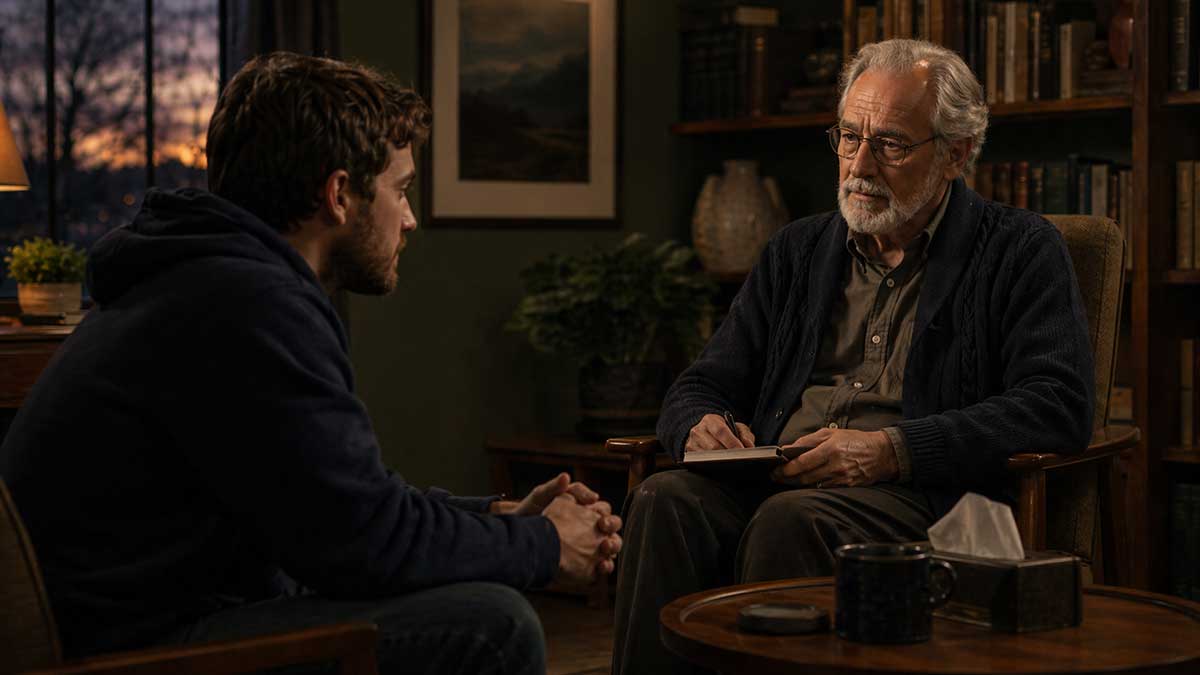
Opening
Sidney Rosen:
Welcome to the first part of this conversation. The question before us is not whether influence exists. It always does. Every therapist influences. Every parent influences. Every teacher influences. Every preacher, writer, filmmaker, friend, and lover influences. The real question is what kind of influence we are practicing when another human being is vulnerable, searching, resistant, wounded, or open.
In My Voice Will Go With You, I gathered Dr. Erickson’s stories because I believed they carried something living inside them. They were not lectures disguised as stories. They were interventions shaped with exquisite timing. They often reached people who could not be reached by argument. Yet that very fact creates an uneasiness we should not run from. If a person can be moved without fully seeing how they were moved, when are we still serving freedom, and when are we trespassing on it?
That is where I want to begin.
Dr. Erickson, your work has inspired admiration, gratitude, imitation, and at times suspicion. Some see artistry. Some see mystery. Some see danger. Before anyone praises or condemns too quickly, I want us to sit inside the hardest form of the question: when does healing suggestion remain healing, and when does it become control?
Question 1
Is all therapy a form of influence, and is influence itself morally neutral?
Milton H. Erickson:
Of course therapy is influence. A patient comes to you because life as presently organized is not working. They are already under influence: fear influences them, habit influences them, family influences them, memory influences them, shame influences them, rigid ideas influence them. The therapist does not introduce influence into an innocent vacuum. The therapist enters a field already crowded with influences and tries to alter the pattern.
Now the moral issue does not begin with whether one influences. That cannot be avoided. It begins with the aim, the respect, the flexibility, and the degree to which one is serving the patient’s own deeper movement rather than the therapist’s vanity. I did not want patients to become copies of me. I wanted them to discover possibilities they had trapped themselves from using.
People are often foolish about directness. They imagine that blunt speech is honest and indirect speech is suspect. That is childish. A surgeon may cut directly, and a mother may soothe indirectly. A joke may tell the truth more cleanly than a lecture. A story may free a person more effectively than an argument. Form alone does not tell you the ethics. The question is whether the intervention enlarges the person’s living range or narrows it.
Ernest Rossi:
I agree. Human beings are constantly in trance states, though they do not like that language. Repetition, anxiety, identity, expectation, cultural scripts, grief, and family myth all shape perception. One could say the person arrives already hypnotized by their suffering. In that sense, healing is often a reorganization of attention and response.
Still, ethics cannot rest only on intention. Many harmful people believe they are helping. So I would add this: moral influence in therapy must leave room for the patient’s own process to emerge. The therapist may guide, evoke, invite, or destabilize fixed patterns, yet the patient must remain more real than the method. The patient is not raw material for cleverness.
There is a temptation among admirers of genius clinicians to romanticize brilliance. That temptation must be resisted. Technique without reverence becomes intrusion. Charisma without humility becomes domination.
Gregory Bateson:
I would widen the frame. Influence is not a one-direction act from powerful therapist to passive patient. It is part of a system. Therapist and patient are inside recursive loops of response, interpretation, expectation, authority, language, and context. Moral trouble often begins when one person believes he stands outside the system and can engineer the other from above. That fantasy is more dangerous than influence itself.
A wise therapist, or wise communicator of any kind, works with feedback. He watches what the person’s mind is doing. He does not merely impose a prewritten script. Manipulation tends to treat the other as an object to be moved toward a desired result. Healing influence treats the other as a living system with its own intelligence, resistance, dignity, and self-correcting capacities.
So influence is not neutral in practice, though it may be unavoidable in structure. Its moral quality depends on whether it increases flexibility within the system or tightens a hidden hierarchy that keeps the patient dependent on the influencer.
Jay Haley:
I want to make this even more concrete. Therapy always has purpose. A person comes in with a problem. They want something to change. The therapist must act. If you are too frightened of influence, you become sentimental and useless. The patient does not need your moral delicacy if all it produces is paralysis.
Still, the danger is real. A therapist can enjoy being impressive. He can enjoy mystery. He can enjoy the emotional authority that comes from appearing deeper than everyone else in the room. Once that happens, the patient becomes audience. And when the patient becomes audience, the therapy has already begun to drift away from help and toward performance.
So yes, influence is unavoidable. But therapy should produce greater functioning, clearer agency, and less dependency. If the therapist’s style produces fascination without movement, one should ask hard questions.
Carl Jung:
Influence is never merely technical. It occurs soul to soul, image to image, wound to wound. One person does not enter another’s life as a sterile operator. He enters with his own unresolved ambitions, shadow, hunger, pride, and longing to matter. The patient does the same. In that sense, ethics cannot be solved by rules alone, since the hidden person inside the healer is always participating.
The psyche does not object simply to influence. It objects to violation. There are words, symbols, tones, and gestures that feel invasive because they bypass the person in a degrading way. Yet there are other forms of indirectness that feel almost merciful, since they allow truth to arrive without humiliating the ego. A symbol can protect the dignity of the person receiving it. A story can permit change without public defeat.
So I would say influence becomes moral when it serves individuation rather than possession. It becomes immoral when one psyche seeks to occupy the center of another.
Sidney Rosen:
That gives us a first distinction worth keeping: the issue is not whether influence happens, but whether it expands the person’s freedom, functioning, and depth, or whether it quietly recruits them into someone else’s power.
Question 2
What are the signs that a healer has crossed the line from helping to controlling?
Sidney Rosen:
Dr. Erickson, let us sharpen the question. Many gifted people justify a great deal in the name of results. What would you say are the clearest warning signs that a therapist, teacher, or guide has crossed that line?
Milton H. Erickson:
One clear sign is when the helper becomes more interested in demonstrating skill than in meeting the patient where the patient actually is. Another is when the helper forces a method despite the person’s nature, history, temperament, and readiness. If you listen carefully, patients tell you how they can be helped. They also tell you how they cannot be helped. Arrogant therapists hear only their own theories.
A third sign is unnecessary humiliation. Some discomfort is inevitable in growth. But humiliation for the sake of proving authority is not treatment. It is vanity wearing a white coat. I could be surprising, yes. I could be forceful, yes. But the aim was to unlock movement, not to make the patient admire me or submit to me.
And here is another sign: if the patient leaves more impressed than changed, something has gone wrong.
Ernest Rossi:
I would add that controlling therapy often collapses complexity into obedience. It pushes for compliance rather than emergence. The patient begins to sense, perhaps only dimly, that there is a preferred answer, a preferred reaction, a preferred identity being rewarded by the therapist. Once that happens, authentic inner process gets replaced by adaptation to authority.
There is a biological dimension here as well. Healing often unfolds in rhythms. Insight has timing. Integration has timing. The organism reorganizes itself in ways that are not always immediate. Manipulative helpers become impatient with that. They demand visible proof of progress on the helper’s schedule.
A related warning sign is dependence. If the patient cannot increasingly trust his own inner responses, if every gain must be validated by the authority figure, one should worry.
Gregory Bateson:
The line is crossed when the helper stops learning from the interaction. That may sound abstract, but it matters. Healthy influence remains responsive to feedback. Control begins when the authority figure has already decided what the interaction means and uses every response from the other person as confirmation of his own framework.
In such a structure, the patient cannot truly disagree. Resistance becomes pathology, compliance becomes health, confusion becomes evidence of the master’s subtlety. That is a closed epistemology. And closed epistemologies are dangerous, since they make self-correction nearly impossible.
One must always ask: does this method permit the reality of surprise? Can the healer still be wrong? Can the patient’s unexpected response revise the process? If the answer is no, one is nearing coercion.
Jay Haley:
I like practical tests. Here are a few.
If the method cannot be questioned, danger.
If the leader becomes larger and larger in the story, danger.
If followers start repeating special language that separates them from ordinary reality, danger.
If the patient’s life gets better only inside the therapeutic relationship and not outside it, danger.
I studied powerful methods. Power by itself does not offend me. Sloppy morality disguised as spirituality does offend me. Some clinicians hide behind softness. Some hide behind brilliance. Either way, the test is simple enough: is the person becoming more capable in life, or just more attached to the source of influence?
Carl Jung:
I would name possession. The healer becomes possessed by the archetype of the wise man, the savior, the magician, the one who sees more deeply than ordinary mortals. Once possessed by that role, he no longer relates to the patient as a person. He relates to the patient as a stage upon which his importance may appear.
At that point, even good insights are spoiled. The patient feels subtly colonized. A part of the soul withdraws. The outer relationship may still look impressive, yet inwardly something false has entered the room.
There is another warning sign. The healer leaves no honorable place for the patient’s own mystery. True help does not strip the other person of interior sovereignty. It does not make the patient transparent in order to feel masterful.
Sidney Rosen:
That is severe and useful. The line seems to appear when the helper wants too much ownership of the outcome, too much admiration, too much immunity from correction, or too much centrality in the patient’s story.
Question 3
Can indirect methods be more ethical than direct confrontation?
Sidney Rosen:
Let us end with the question many readers may resist. Some people assume that the most ethical communication is the most explicit. They suspect suggestion, indirection, and metaphor simply for being indirect. Yet Dr. Erickson often worked through stories, tasks, confusion, or surprising forms of redirection. So let us ask it plainly: can indirect methods sometimes be more ethical than direct confrontation?
Milton H. Erickson:
Certainly. Direct confrontation often satisfies the therapist more than the patient. Therapists like to feel clear, brave, honest, penetrating. But patients are not all waiting to be struck by clarity. Many are defended for good reason. Some have been shamed enough. Some have failed enough. Some cannot yet bear a direct assault on the structure that has kept them functioning, however badly.
Indirect methods can respect that reality. A story gives the patient room. It lets him discover without having to perform agreement. It lets him move without the indignity of public surrender. It also reduces argument. If I tell you that you are rigid, you may defend rigidity for an hour. If I tell you a story in which you recognize yourself without being pinned to the wall, movement can begin quietly.
That is not deceit. That can be kindness.
Ernest Rossi:
Indirect communication may also be more ethical when it honors the many-layered nature of human processing. People do not change only by conscious assent. Imagination, memory, bodily response, emotion, expectancy, and personal symbol all participate. A direct statement may hit only the thin surface. A metaphor may enter more gently and more deeply at once.
Still, indirect work must be earned. One cannot hide behind mystique. There must be attunement. The patient must be met as this person, in this moment, with this problem. When that is true, indirection can preserve dignity. When it is false, indirection becomes evasive theater.
Gregory Bateson:
There is a logical issue here. Some patterns cannot be changed from within the same level of communication that produced them. Direct confrontation often repeats the structure of the problem. The more one commands spontaneity, the less spontaneous the person becomes. The more one orders relaxation, the more failure gathers around the effort. In such cases, indirectness is not merely gentler. It is more intelligent.
One could say that metaphor provides a shift in logical type. It moves the person out of the imprisoning frame. That can be ethically superior when directness would intensify the bind. A person caught in a rigid pattern does not always need more force. He may need a new frame in which different responses become imaginable.
Jay Haley:
This is exactly right. There are people for whom direct confrontation works. Fine. Use it when it works. But there are many more for whom direct confrontation becomes a contest. The patient argues, defends, resists, stalls, performs insight, or submits without changing. Indirect methods can move around those traps.
The ethical key is whether the method serves the problem or serves the operator’s style. Some therapists confront because they like confrontation. Some tell stories because they like sounding mysterious. Both can be self-indulgent. The right question is: what intervention gives this person the best chance of real movement with the least unnecessary injury?
Carl Jung:
The soul often prefers image to command. A command presses the ego. An image invites the whole person. That difference matters. Human beings have a need to participate in meaning, not merely submit to instruction. A symbol does not shove. It beckons. It opens a chamber. It allows the patient to approach truth in a form that preserves inward freedom.
There are truths that become destructive when spoken too early, too nakedly, or too triumphantly. One must know when to speak into the center and when to circle around it. Indirectness, in the right hands, is not concealment. It is reverence for the pace at which the soul can bear transformation.
Sidney Rosen:
Then perhaps this is the final insight for this first topic: directness is not the same as honesty, and indirectness is not the same as manipulation. At times the straight line is merciful. At times it is crude. At times the story, the image, the pause, the unexpected task, or the gently planted phrase may respect a person more deeply than blunt interpretation ever could.
Sidney Rosen:
We began with suspicion, and we should. Any serious conversation about influence must keep its moral nerves alive. Yet what has emerged here is more precise than suspicion alone. Influence is unavoidable. The real issue is what kind of influence we become.
Healing influence does not seek ownership. It does not inflate itself by making others dependent. It does not confuse brilliance with permission. It does not hide from feedback. It does not turn another person into material for one’s own drama.
And still, we must not become so morally anxious that we lose the courage to help. The right word, the right story, the right interruption, the right image at the right moment can liberate a life that argument could not touch.
That is the tension I think this book still leaves us with: to speak in ways that enter deeply, but never possessively; to influence, but not colonize; to leave something living in another person, yet never make that person ours.
Topic 2: Why metaphor reaches people when direct truth does not

Opening
Sidney Rosen:
We now move into the heart of what made Dr. Erickson so unusual. Many therapists explain. Many analyze. Many interpret. He often told stories. At first glance, this can seem almost too simple. Why tell a tale when you could name the problem directly? Why circle when you could point? Why speak through image, memory, humor, or anecdote when the suffering person is sitting right in front of you?
Yet anyone who has lived long enough knows that direct truth does not always enter the soul when spoken plainly. A person can agree with an insight and remain unchanged. A person can hear the right sentence ten times and still not move. And then one odd story, one image, one half-forgotten example, one scene that slips past the guard—and something opens.
That opening is what I want us to examine.
Dr. Erickson, your stories often seemed to reach people without pinning them down. They gave them room, yet they also carried direction. Let us begin there.
Question 1
Why can a story change a person more deeply than an explanation?
Milton H. Erickson:
Because an explanation usually tells the patient what to think, and a story gives the patient a place in which to discover something. Discovery is stronger than instruction. What a person discovers inwardly has a different status from what he merely hears from another authority.
When you explain too directly, many patients begin defending themselves before you have finished the sentence. They hear accusation, correction, or demand. Their attention goes into self-protection. But a story can engage curiosity before resistance has organized itself. The patient begins listening. He wonders where the story is going. He recognizes a fragment of himself without being cornered. That changes the whole situation.
A good story does not merely decorate an idea. It creates an experience. And experience teaches in ways abstraction does not.
Ernest Rossi:
I would say that story works on many layers at once. Explanation often aims at conscious understanding alone. But a metaphor can activate memory, bodily feeling, emotion, expectation, imagination, and personal association in a single movement. The listener is not just receiving a concept. The listener is internally participating.
That participation matters. A person does not heal by collecting correct sentences. A person heals when inner patterns reorganize. Story can become a small internal event. It can loosen fixed meanings. It can allow new responses to form without demanding that the conscious mind approve every step.
So in that sense, the story is not weaker than explanation. It is often fuller.
Gregory Bateson:
Explanation tends to belong to linear thought. It says, here is the cause, here is the problem, here is the answer. Human life is often less tidy. People are formed inside patterns, contexts, relationships, contradictions, and repeated loops. Story can hold pattern in a way explanation often flattens.
A story permits multiple levels of meaning at once. It can say one thing and imply another. It can mirror a system without announcing that it is doing so. It can present a pattern for recognition rather than a proposition for debate. That is one reason it can enter more deeply. The listener does not merely judge the statement. The listener inhabits the pattern.
Jay Haley:
Let me put it more bluntly. Explanation often invites argument. Story often lowers the fight. That alone makes it useful. A person may reject your analysis of his life. He is less likely to interrupt a tale that seems to be about someone else. Yet by the time he sees the relevance, he has already gone farther than he would have gone in a direct confrontation.
There is another point. Explanations can feel generic. A story feels lived. It carries texture, timing, human detail. That makes it easier to remember. Many people forget advice by evening. They remember a striking story for years.
Carl Jung:
A story moves more deeply because the psyche is native to image. The deepest layers of the person do not live by concepts alone. They respond to symbol, drama, contrast, repetition, reversal, figure, shadow, and transformation. A story resembles dream life in that way. It speaks a language older than argument.
When an explanation reaches only the intellect, change may remain thin. When an image reaches the inner life, the person may feel that something true has happened before he can fully name it. That truth may then continue working in silence.
Sidney Rosen:
So a story is not merely a softer explanation. It is another kind of event—one that recruits more of the person than analysis alone often can.
Question 2
What happens inside a person when they recognize themselves in a metaphor?
Sidney Rosen:
Let us press deeper. There is a moment familiar to many readers and patients alike: suddenly the tale is no longer just a tale. Something in it turns, and the listener feels, “That is me.” Yet no one has accused them, exposed them, or forced confession. What is happening in that moment?
Milton H. Erickson:
The patient begins to cooperate with his own learning. That is the important thing. When the story is heard as “about me,” but not in a humiliating way, the patient can start exploring rather than defending. He fills in meanings from his own life. He completes the story inwardly. That self-completion gives the response its power.
A therapist should never underestimate how much patients teach themselves when given the right frame. If you tell them too much, you interfere. If you give them a useful metaphor, they may do the work more deeply than you could have done by pressing them.
Recognition in a metaphor is often gentle. It permits movement without requiring surrender.
Ernest Rossi:
Yes. It becomes an active process of internal association. The metaphor is heard outwardly, but its real life begins inwardly. Personal memories attach to it. Emotions attach to it. Possibilities attach to it. A kind of inner dialogue begins.
This is one reason two people may hear the same story and receive different medicine from it. The metaphor is not a fixed delivery system with one single payload. It becomes individualized by the listener’s own unconscious participation. That makes it flexible, alive, and often far more intimate than a universal explanation.
Gregory Bateson:
From a systems view, metaphor permits a shift in framing. The person no longer sees the problem only from the trapped position inside it. The story creates a parallel structure. Then the listener can perceive the pattern in another setting and bring that perception back to himself.
This is a major gain. Many people remain stuck because they cannot see the pattern they are inhabiting. They see only the content. Metaphor gives distance without disconnection. It lets them see the shape of their predicament in a form that is newly visible.
That visibility can change behavior before the person has fully theorized what happened.
Jay Haley:
I would say the person gets caught helping himself. That may sound funny, but it is close to the truth. He is listening to something that seems safe, external, or interesting, and then he starts making links on his own. Once he makes the link himself, it is harder to dismiss. It did not come as a lecture from above. It emerged inside him.
That gives the therapist a major advantage. You are not trying to win a debate. You are setting conditions in which the patient can see something he was refusing to see.
Carl Jung:
The metaphor offers a mirror that does not wound by blunt reflection. Many people cannot bear to see themselves named too quickly. The ego hardens. Shame rises. Pride rises. The inner doors close. But the symbol approaches at an angle. It grants the person a little sacred distance.
In that distance, recognition can occur without psychic violence. The person feels seen, yet not invaded. He meets himself in a disguised form, and that disguise is not always deception. Often it is protection.
Sidney Rosen:
That is beautifully put: the metaphor becomes a mirror with enough mercy in it for truth to be tolerated.
Question 3
Can metaphor heal without the listener fully knowing why it worked?
Sidney Rosen:
Now we come to a question that may trouble modern minds. We often want a full account of how change happened. We want the mechanism, the sequence, the proof, the map. Yet many people have had the experience of being changed by a story, image, or phrase without being able to explain exactly why. Is that a weakness in the process, or part of its strength?
Milton H. Erickson:
People often overvalue explanation after the fact. They think that if they cannot describe the exact steps of change, the change is somehow less real. Nonsense. Much of life is learned before it is verbalized. Children learn many things before they can explain them. Adults do too.
A patient need not know every mechanism in order to benefit. He needs to live differently. He needs relief, movement, flexibility, possibility. If a useful story helps him reorganize experience, that is enough. Explanation may come later, or it may not. It is not always the main point.
Now that does not excuse carelessness. A therapist must know what he is doing as well as he can. But the patient need not become a theoretician of his own improvement.
Ernest Rossi:
I agree, though I would add that there are levels here. Some changes are usefully explicit. Others ripen below the level of full verbal clarity and only later become available to reflection. The organism is often wiser than the immediate conscious narrative about what is happening.
When metaphor works, it may begin as an implicit process: a shift in attitude, a release of tension, a loosening of an old expectation, a new readiness to imagine action. The person may only later realize that the world feels less fixed than it did before. That is still real learning.
Gregory Bateson:
There is no reason to assume that verbal accounting is the final measure of validity. A great many human processes are meaningful long before they are reduced to conscious report. If one insists that nothing counts unless it can be fully stated, one risks blinding oneself to much of how minds actually change.
Metaphor can alter premises. And premises often operate beneath ordinary awareness. A person may suddenly stop enacting an old loop without being able to produce a clean verbal formula for the shift. That is not necessarily mystification. It may simply reflect the level at which the change occurred.
Jay Haley:
Let me keep one foot on the ground here. If the person improves, functions better, and lives better, I am not troubled that he cannot produce a lecture on the inner machinery. Many people talk brilliantly about their problems and never change. Others change first and make sense of it later.
I would be wary only when mystery itself becomes the product. Then you have trouble. If the therapist enjoys making everything seem magical, opaque, or beyond question, that is a bad sign. But if the patient gets freer and does not need a full theory to enjoy that freedom, that is fine by me.
Carl Jung:
The psyche often knows in image before it knows in doctrine. Dream, symbol, and myth have always worked this way. They alter inner relation first. Concept may follow, though sometimes only partially. The demand for total conscious mastery may itself be an expression of the modern ego’s insecurity.
There are times when one should interpret. There are times when one should remain near the image and let it continue working. A healing symbol can be damaged by premature dissection. One must know when meaning needs language and when language begins to thin the meaning out.
Sidney Rosen:
Then we might say that explanation is a worthy servant but a poor tyrant. It can clarify what has happened, yet it need not govern the whole mystery of change.
Sidney Rosen:
What emerges from this discussion is a richer picture of metaphor than many modern readers expect. Metaphor is not ornament. It is not a decorative wrapper for the real message. It is itself a mode of contact. It allows recognition without accusation, movement without humiliation, and learning without the sterile demand that every step be consciously audited before it counts.
A story can hold a person long enough for truth to arrive in tolerable form. It can show pattern without flattening life into formula. It can awaken participation instead of mere agreement. It can remain alive in memory long after explanations have faded.
That, I think, is part of why Dr. Erickson’s tales endured. They did not merely tell people what was wrong. They gave them something to live with, something to revisit, something that could continue speaking when the session had ended.
And perhaps that is the deepest point of all: sometimes the mind changes when it is not being pushed to surrender, but being invited to see.
Topic 3: The unconscious as an ally, not an enemy

Opening
Sidney Rosen:
Few ideas in modern psychology create more unease than the unconscious. For many people, the word suggests hidden damage, irrational impulses, forgotten wounds, or forces inside us that cannot be trusted. The unconscious appears as something dark beneath the floorboards, a place from which symptoms rise and self-command weakens.
Yet Dr. Erickson often approached the matter very differently. He did not treat the unconscious merely as a basement of trouble. Again and again, he seemed to assume that beneath confusion, resistance, fear, or paralysis there remained some living intelligence in the person that could still be approached, recruited, and trusted. He often worked as if the patient possessed more wisdom than the patient consciously knew how to use.
That is a startling thought.
If true, it changes the emotional tone of therapy itself. The hidden part of the person is no longer just a threat to master. It may be a source of adaptation, healing, invention, and reorganization. It may hold capacities the conscious mind has narrowed, shamed, or forgotten.
So I would like us to begin there. Is the unconscious mainly a danger to be handled, or can it be treated as a collaborator in human change?
Question 1
What did Erickson seem to believe about the hidden intelligence within people?
Milton H. Erickson:
I believed patients knew more than they knew they knew. That is not a trick sentence. It is a practical fact. People often come into treatment identifying with their failure, their fear, their symptom, their embarrassment, their stuckness. They tell you what they cannot do, what they have lost, what keeps happening. Fine. Listen carefully. But that is never the whole person.
A human being has learned many things that are not arranged in conscious speech. A person may know how to adapt, shift, improvise, endure, wait, observe, and respond without being able to give you a polished report on those capacities. Therapy can help recover use of what the person already has but is not consciously organizing well.
That is why I did not enjoy reducing patients to pathology. Symptoms matter. Pain matters. But the therapist must look for resources with as much seriousness as he looks for trouble. Otherwise he teaches the patient to identify too completely with what has gone wrong.
Ernest Rossi:
That fits closely with how I understood Dr. Erickson’s work. He did not approach the unconscious as a dead storage unit of buried material alone. He approached it as a living process that could generate new associations, new responses, even new integrations. There was an expectancy in his work, a quiet confidence that under the right conditions people could reorganize from within.
This is one reason his work often felt so different from more purely interpretive models. He did not always ask, “What hidden cause produced this?” He often asked, in effect, “What hidden learning, hidden flexibility, or hidden adaptive possibility can now be invited into use?”
That posture changes everything. The patient is no longer merely excavated. The patient is evoked.
Gregory Bateson:
I would say Erickson treated the person as a system with far more ongoing intelligence than conscious linear description usually captures. The conscious self tends to narrate life in narrow strips. It makes local reports. It defends its preferred picture. But the wider system is registering much more: pattern, context, relation, timing, contradiction, tone.
From that angle, the unconscious is not simply “down below.” It may be a name for forms of organizing that lie outside ordinary verbal control. Those forms are not always benevolent, of course. Yet neither are they simply enemies. They are part of the total ecology of mind. If therapy works only with conscious declaration, it may miss where the larger adjustments can actually occur.
Jay Haley:
Erickson was practical about this. He watched what people could do, not just what they said they could do. A patient might claim total helplessness and then reveal, in some small behavior, that other capacities were still present. Erickson noticed those cracks in the story. He treated them as openings.
That is one reason he could seem so confident. He was not hypnotized by the symptom report. Many therapists hear a patient’s description and accept it too completely. Erickson listened for the unused parts, the exceptions, the odd reactions, the signs that the patient’s life was not as sealed shut as the patient believed.
Carl Jung:
There is a deep dignity in that view. Much suffering comes from the conscious personality becoming too narrow, too identified with a wound, a role, a fear, a moral demand, or an image of itself. Then the deeper life of the psyche appears only as disruption. Yet beneath that disruption there may remain corrective movement, neglected energy, symbolic truth, unrealized possibility.
The hidden intelligence within the person is not always comfortable. It may disturb vanity. It may overturn a false life. It may bring conflict to the surface. Yet it does so in service of a wider wholeness. The healer must be able to see that possibility without sentimentalizing it.
Sidney Rosen:
Then the unconscious, in this view, is not merely the place where things go wrong. It may also be the place where buried competence, wider perception, and unused forms of healing still wait.
Question 2
Is the unconscious merely buried pain, or can it be a source of solutions?
Sidney Rosen:
Many people today have learned to think of depth mainly in terms of trauma. Pain hidden below the surface, pain shaping behavior, pain needing witness. That is real and should not be dismissed. Yet if the hidden life is only a chamber of injury, therapy may become a long descent into damage. Dr. Erickson, did you see the unconscious as holding remedies too?
Milton H. Erickson:
Of course. Pain can be buried there, yes. Fear can be buried there. Old learning can be buried there. But so can strength. So can skill. So can forgotten experiment, resilience, playfulness, endurance, and new arrangement. Why should one imagine that only suffering hides outside awareness?
The human body learns. The human mind learns. Life stores experience in many forms. Sometimes patients lose conscious access to capacities they still possess. A task, a story, a shift in attention, a trance experience, a reframing of expectation—any of these may help restore contact with what has remained available but unused.
If you only search the unconscious for pathology, you train yourself to find only pathology.
Ernest Rossi:
Yes, and I would add that healing may occur through states of heightened receptivity in which new connections become possible. The unconscious is not just a museum of old material. It is part of the process by which new learning can be encoded. That is why expectancy, imagination, and therapeutic ritual can matter so much. They create conditions under which the organism may shift.
A narrow medicalized imagination often asks only what is broken. A fuller therapeutic imagination asks what can still emerge. Both questions matter. Yet if the second is forgotten, treatment becomes lopsided and bleak.
Gregory Bateson:
Pain and solution may be less separate than people think. The same system that generates trouble may also contain the pattern by which the trouble can be revised. A maladaptive loop is still a loop. Once seen differently, interrupted differently, framed differently, it may become reorganizable.
This is one reason that searching for a single buried cause can be too crude. The deeper issue may be the pattern of relations. And pattern can be altered. The unconscious, then, is not simply a vault of pain but part of the larger field in which learning and correction occur.
Jay Haley:
A therapist who goes looking only for damage can become boring and ineffective. Patients already know they suffer. What they often do not know is how to move. Erickson’s genius was that he did not let the story of pain become the whole story. He looked for leverage.
Now, that does not mean he denied suffering. It means he did not worship it. He did not make pain the final authority on what a person could become. He kept looking for a next step, a next task, a next shift, a next use of what was still alive.
Carl Jung:
Pain is real, and hidden pain has its own claim on us. Yet the psyche is not arranged only as a record of injury. It is also a field of compensation, symbol formation, renewal, and latent direction. In dreams, fantasies, intuitions, and symptoms, the inner life may reveal wounds, yes, but it may also point beyond them.
There is danger in a culture that knows how to uncover hurt but has forgotten how to recognize emerging form. The soul does not wish only to confess its damage. It wishes to move toward shape, relation, and meaning.
Sidney Rosen:
That sharpens the matter. A hidden part of us may carry pain, but it may also carry pathways. Therapy is diminished when it knows how to uncover suffering but not how to trust emergence.
Question 3
What changes when therapy stops trying to overpower the mind and starts cooperating with it?
Sidney Rosen:
This brings us to the practical core. If the unconscious is treated as an ally, then therapy itself changes character. It becomes less a battle of wills and more an act of recruitment, listening, timing, and cooperation. What becomes possible once the therapist stops trying to dominate the mind and begins working with its own tendencies?
Milton H. Erickson:
You stop making unnecessary enemies inside the patient. That alone is a major gain. Many patients already feel divided against themselves. They are ashamed of their fear, furious at their dependency, impatient with their symptoms, harsh with their failures. If therapy joins that internal war too eagerly, it may intensify the very split it hopes to heal.
Cooperation means using what is there. If a person is stubborn, use the stubbornness. If a person is imaginative, use the imagination. If a person is skeptical, use the skepticism. If a person is resistant, study the resistance until it becomes informative. Do not waste energy trying to make every mind look obedient before change can begin.
People change more easily when their own patterns are recruited rather than insulted.
Ernest Rossi:
Cooperation also permits timing. The organism often has rhythms of receptivity. A forceful model wants change on command. A cooperative model watches for moments when new learning can actually take hold. This calls for respect, patience, and accurate observation.
There is a paradox here. Working with the mind can produce change that is faster and more durable than trying to batter it into submission. A patient who feels inwardly joined in the process may reorganize much more deeply than one who merely complies.
Gregory Bateson:
Overpowering the mind usually repeats the same epistemological mistake: the conscious controller imagines it can dominate the wider system from above. This is often what created the trouble in the first place. The person was already trying to command what required relation, not domination.
When therapy cooperates, it changes levels. It asks how the system can learn, not how the commander can win. That shift may reduce double binds, reduce defensive escalation, and permit the person to experience himself less as a battlefield and more as an adaptive whole.
Jay Haley:
A cooperative approach is not passive. Let me be clear about that. It can be highly strategic. Erickson was strategic. He used what the patient brought in. That is very different from sitting back and hoping insight floats down from the ceiling.
But it is often smarter than force. When a therapist fights the patient’s style, he may get locked in a useless struggle. When he uses the patient’s style, he gains leverage. That is one reason Erickson could work with people who had already failed in other treatments. He did not demand that they first become ideal patients.
Carl Jung:
The inner life is not a machine to be subdued. It is a living order, disturbed at times, hidden at times, divided at times, yet still deserving of relation. When therapy cooperates with that order, the person may begin to feel less alien to himself. Conflict remains, but it is no longer pure civil war. There is more listening, more symbolic patience, more room for what has not yet found language.
This does not remove struggle. It changes its quality. The person is no longer trying to destroy part of himself in order to be whole.
Sidney Rosen:
So the shift is profound: therapy becomes less a campaign against defective machinery and more an art of joining, redirecting, and awakening what the person’s own life still contains.
Sidney Rosen:
What we have uncovered here is one of the most humane implications of Dr. Erickson’s work. Beneath the symptom, beneath the embarrassment, beneath the conscious report of helplessness, there may remain a richer intelligence than many people have been taught to expect. Not innocence, perhaps. Not simplicity. Certainly not automatic goodness. But hidden competence, hidden adaptation, hidden movement.
That possibility matters.
Once the unconscious is viewed only as threat, therapy becomes too grim, too suspicious, too committed to excavation without enough faith in emergence. Once it is viewed as a possible ally, the whole emotional atmosphere shifts. The person is no longer just a problem to decode. He is someone whose own deeper life may still be trying to help him in forms he has not yet learned to trust.
That does not cancel pain. It does not deny trauma. It does not turn suffering into romance. It simply refuses to believe that the hidden life of the person contains only injury.
And that refusal may itself be therapeutic.
Topic 4: Can humor, surprise, and confusion become tools of transformation?

Opening
Sidney Rosen:
There is something almost scandalous in Dr. Erickson’s way of working. Many people expect healing to arrive in solemn language. They expect depth to look grave, orderly, and clear. Yet again and again, Erickson used oddity, wit, reversal, indirection, unexpected tasks, mischievous turns, and moments of disorientation. He could unsettle a person, amuse a person, puzzle a person, even frustrate a person—and somehow that disturbance could become useful rather than cruel.
To many observers, this is hard to trust. Confusion sounds risky. Humor can look evasive. Surprise can appear theatrical. One may well ask: are these genuine tools of change, or are they tricks that flatter the therapist’s cleverness?
That is the question before us.
I do not want easy answers. Used badly, these methods can humiliate. Used well, they may loosen a rigid mind more effectively than earnest explanation ever could. We must examine both possibilities.
Question 1
Why do shock, oddness, and playful confusion sometimes break old patterns?
Milton H. Erickson:
People often remain stuck by repeating the same internal instructions in the same old way. They tell themselves the same story, expect the same failure, defend the same position, and organize attention around the same narrow possibilities. If you respond to that pattern too predictably, you may simply join it. Then therapy becomes another scene in the patient’s old play.
A surprising intervention can interrupt that repetition. It can make the patient pause, reorient, and attend differently. That pause is valuable. In it, the person is no longer running entirely on habit. He is momentarily off balance, yes, but also more open to new arrangement.
Confusion is not always an enemy. A rigid certainty may need to be unsettled before learning can begin.
Ernest Rossi:
I would say that oddness can open a small gap in habitual processing. In that gap, new associations may occur. A person whose responses are tightly overlearned may need an interruption strong enough to disturb automatic expectation. Surprise does this. So can paradox. So can a task that does not fit the patient’s usual frame.
Yet the disturbance must serve reorganization. Mere puzzlement is not treatment. The aim is not to leave a person lost, but to create a transitional state in which fresh learning becomes possible.
That is why timing and attunement matter so much. The same intervention can be freeing in one context and damaging in another.
Gregory Bateson:
Shock and oddness matter because they expose the frame. Most people do not see the frame through which they are living. They see only the content inside it. A surprising response can reveal that the frame itself was contingent, not inevitable. Once that occurs, alternative responses become thinkable.
This is not magic. It is a disruption of a self-sealing pattern. The person discovers, perhaps only for a moment, that what seemed necessary was partly organized by expectation. That moment can be deeply useful.
Confusion, in this sense, may be the temporary cost of leaving a cramped order behind.
Jay Haley:
I like the plain version. When a patient is stuck, more of the same often fails. A strange intervention can get movement where respectable method stalls. That is why one should not be too precious about appearances. A clever task, a surprising instruction, a humorous turn—these can cut through deadlock.
Still, the therapist should ask: what exactly is being interrupted? If the answer is “I just want to impress the patient,” then you are already off course. The point is not to look original. The point is to break the pattern that keeps the problem alive.
Carl Jung:
Oddness has an ancient role in the life of the soul. Many traditions have known that the expected mind is not the only mind. Symbolic reversal, sacred foolery, paradox, and dislocation can all disrupt the ego’s rigid control. The person who thinks he already knows what reality is may need to be inwardly displaced before a deeper truth can enter.
Yet one must be careful. Disorientation strips the person of ordinary defenses. That can be useful, but it also creates vulnerability. It must never be used without moral seriousness.
Sidney Rosen:
Then the first point is this: surprise and confusion may help not by dazzling the person, but by interrupting repetition and exposing the frame that kept the old pattern in place.
Question 2
When does humor open a locked mind more effectively than seriousness?
Sidney Rosen:
Humor in therapy can make some people uneasy. Suffering is real. Pain is real. Fear is real. So why would laughter belong anywhere near the process of healing? Dr. Erickson, you often worked with a dry, earthy, unexpected sense of humor. What did humor do that solemnity could not?
Milton H. Erickson:
Humor can loosen shame. It can soften defensiveness. It can reduce the deadly seriousness with which people cling to their symptoms, their self-images, and their fears. Many patients are trapped in constriction. Humor can create breathing room.
Now I do not mean mockery. I do not mean making light of pain. I mean helping the patient experience that the problem is not the whole universe. A small laugh can restore proportion. It can remind the patient that life contains movement beyond the prison of the symptom.
Sometimes the most merciful thing is not another heavy interpretation, but a change in emotional posture.
Ernest Rossi:
Humor may also open receptive states. It alters physiology, expectation, and emotional tone. A person who has been braced for judgment or analysis may suddenly find that a playful shift lowers tension enough for a new response to emerge.
There is also a creative quality to humor. It joins unlike things. It permits reversal. It reveals that meanings are not as frozen as they seemed. In that sense, humor is close kin to metaphor. Both can free the mind from literalism.
Gregory Bateson:
Humor often works by revealing a double level. One thing is said, another is implied, and the listener suddenly sees the mismatch. That flash of recognition can reframe experience. Serious discourse sometimes stays too obedient to the existing frame. Humor steps outside it.
A locked mind is often overcommitted to one level of interpretation. Humor can reopen the play of levels. That reopening may be epistemologically useful. The person learns that his previous certainty was not the only possible reading.
Jay Haley:
Humor is excellent when the patient is stuck in self-importance, despair, or grim repetition. It can puncture drama without a frontal attack. That is one reason it can work better than solemnity. Solemn therapists sometimes strengthen the patient’s stuck identity simply by treating it as sacred.
But humor must be targeted. Good humor releases tension. Bad humor humiliates. If the therapist laughs at the patient rather than with the patient’s humanity, trust collapses. So one needs precision here.
Carl Jung:
There is a profound humility in true humor. The ego is rarely cured by being worshiped. It is often helped by being gently relativized. Humor reminds us that the psyche is larger than the pose in which we are frozen. It restores movement where self-seriousness has become idolatrous.
Yet I must repeat the warning. Humor can redeem, but it can also violate. The wounded soul must not become entertainment for the healer.
Sidney Rosen:
So humor, at its best, does not trivialize suffering. It restores proportion, lowers fear, and helps the person step outside the cramped dignity of the problem.
Question 3
What is the line between genius, manipulation, and genuine healing?
Sidney Rosen:
Now we come to the hardest question in this topic. Any highly unusual method attracts both admiration and suspicion. A brilliant intervention may look liberating to one observer and manipulative to another. A startling technique may produce change, yet still raise moral concern. So how do we tell the difference between genius at work, mere cleverness, and authentic healing?
Milton H. Erickson:
Genius, if you must use that word, means very little if it does not help the patient become more free in his actual life. Cleverness can produce memorable moments. Healing must produce usable change.
I was never interested in cleverness for its own sake. The patient’s problem dictated the work. The patient’s needs dictated the timing. If an odd method was useful, good. If a plain method was useful, use that. The therapist who falls in love with his own originality becomes dangerous.
The real test is simple enough: does the intervention enlarge the patient’s range of living, or merely enlarge the therapist’s legend?
Ernest Rossi:
I would add that genuine healing leaves the person with more internal participation, not less. Manipulation tends to bypass the person in order to secure an outcome. Healing may be indirect, yes, but it still invites the patient’s organism into a larger process of self-reorganization.
A second test is whether the method remains accountable to observation. One need not reduce everything to crude formulas, yet one must still ask what changed, how it changed, and whether the person is better able to live. Romanticizing the healer is always a danger in fields that involve mystery.
Gregory Bateson:
Genius without feedback control becomes hazardous. The more original the method, the more necessary self-correction becomes. If the clinician’s brilliance exempts him from ordinary scrutiny, then manipulation may hide under the prestige of insight.
Healing remains part of a learning system. It can be questioned. It can be revised. It can acknowledge error. Manipulation tends to seal itself off. It makes doubt look foolish, resistance look sick, and ambiguity look like evidence of depth.
That is one of the clearest differences.
Jay Haley:
Let me make it sharper. If the therapist always wins, be careful. If every response proves the therapist right, be careful. If students start imitating style without grasping purpose, be very careful. Many people copy the sparkle of a method and lose the discipline behind it.
Genuine healing does not need mystification to survive. It may contain artistry, yes. It may contain boldness. It may contain things outsiders do not fully grasp at first glance. But it should still cash out in better living, clearer functioning, and less dependency on the operator.
Carl Jung:
The distinction lies partly in attitude. Genius may bring extraordinary perception. Manipulation seeks possession. Healing serves transformation without claiming ownership of it. The healer may be memorable, but he does not become the inner sovereign of the patient’s life.
There is a spiritual temptation here. The gifted person may begin to believe that unusual methods place him above ordinary ethical demands. That is precisely when the dark turn begins. No gift cancels the need for humility.
Sidney Rosen:
Then perhaps the line is this: genuine healing may surprise, unsettle, amuse, or disorient, yet it remains answerable to the patient’s freedom, dignity, and actual growth. Cleverness that seeks admiration drifts away from healing, no matter how dazzling it looks.
Sidney Rosen:
This topic leaves us with a demanding insight. Humor, surprise, and confusion are not automatically virtuous, and they are not automatically suspect. They are human instruments, powerful precisely because they can interrupt fixed patterns that ordinary speech often leaves untouched. Used with care, they may create the small opening through which a new life begins. Used carelessly, they can humiliate, dominate, or convert therapy into theater.
That is why these methods require more than creativity. They require discipline, timing, moral seriousness, and a refusal to confuse the patient’s liberation with the therapist’s performance.
What fascinates me still about Dr. Erickson is that he seemed willing to use whatever form the moment required—story, paradox, task, silence, reversal, laughter—without worshiping any one form for its own sake. He appeared to trust movement more than display.
Perhaps that is the final lesson here. The unusual intervention is justified only when it serves something plain and human: a person becoming less trapped, less frightened, less repetitive, less at war with life.
Topic 5 How to speak so your words keep working after you leave

Opening
Sidney Rosen:
We arrive now at what may be the most haunting question in this whole book. A therapist speaks, and then the session ends. A teacher speaks, and then the class is over. A parent speaks, and the child grows up. A writer publishes, and the reader closes the book. In each case, the visible encounter finishes. Yet sometimes the words do not finish. They continue inwardly. They return at strange hours. They ripen years later. They become part of the listener’s private language for life.
That mystery is gathered in the title itself: My Voice Will Go With You.
The phrase carries tenderness, influence, memory, and danger all at once. It suggests comfort, guidance, presence, suggestion, and inner continuation. It also raises a grave moral question: when should another person’s voice continue in us, and in what form should it remain?
If a healing voice stays alive after the speaker has gone, what makes that continued presence liberating rather than intrusive? What kind of speech leaves behind not dependence, but freedom? That is where I want us to end.
Question 1
What makes certain words stay alive in someone long after the conversation ends?
Milton H. Erickson:
Words endure when they are tied to experience, timing, and personal reality. People forget many things said to them in the abstract. They remember what met them at the exact point where they were ready to hear it. The sentence lands differently when it belongs to the person’s own situation rather than the speaker’s wish to sound wise.
Another point is that memorable words often do not arrive alone. They come inside tone, pause, relationship, context, expectation, image, or task. A phrase may remain alive because it was not just heard. It was lived in a moment of heightened meaning.
And let me say this: the words that stay are often the words that permit movement. A person does not keep repeating a sentence inwardly merely because it was clever. He keeps it because it continues to organize possibility.
Ernest Rossi:
Yes, and I would add that enduring words often act as cues that reactivate a larger state. A phrase may call back calm, courage, playfulness, permission, focus, or an inward sense of orientation. In that sense, the words are not just carrying information. They are reopening a pattern of experience.
This is why a small phrase can matter so much. It becomes a kind of key. Later in life, under stress or confusion, the person hears it again internally, and the earlier learning becomes available. That is far more than memory in the ordinary sense.
Gregory Bateson:
Certain words persist because they reorganize context. They do not merely add content. They alter the frame in which later experience is interpreted. Once a person has received a different frame, many future events are read differently. The words continue working because they changed the pattern of meaning, not just the immediate mood.
This is common in human life. A statement, gesture, or story may become a premise by which later situations are understood. Then the original speaker is gone, yet the pattern remains operative.
Jay Haley:
I would put it plainly. Words last when they are useful. If a phrase helps someone act differently, see differently, interrupt panic, stop a useless fight, or take a needed risk, it earns a permanent place. People do not keep carrying language that has no practical life in it.
Still, usefulness is not mechanical. A line stays because it arrives with force, fit, and relevance. A therapist can talk all day and leave little behind. One sharp sentence at the right moment may do more than an hour of explanation.
Carl Jung:
Words remain when they touch something archetypal in the person, something older and wider than the passing conversation. A true phrase may feel at once intimate and universal. It seems spoken to this individual, yet it also carries a resonance from deeper chambers of the psyche.
Such language is rarely noisy. It bears weight. The person feels, perhaps without fully explaining it, that something inwardly rightful has been named. Then the words remain as companions.
Sidney Rosen:
So lasting speech seems to join timing, lived experience, inner usefulness, and a depth of resonance that exceeds clever phrasing. The words remain because something in the person keeps needing what they opened.
Question 2
What does “my voice will go with you” reveal about memory, suggestion, and inner change?
Sidney Rosen:
This title can be heard in more than one register. It may sound caring. It may sound hypnotic. It may sound almost parental, as if another person’s voice becomes part of one’s inner life. So I want to ask directly: what is really being claimed in that phrase? What happens when a voice goes with someone?
Milton H. Erickson:
A useful therapeutic voice does not remain as command. It remains as permission, direction, reminder, or possibility. That distinction matters. I never wanted patients to become obedient to me in my absence. I wanted them to be able to mobilize their own responses more effectively when I was not there.
When a helpful voice goes with you, it is often because the person has internalized a better way of speaking to himself. The voice serves as a bridge until the person’s own capacities are strong enough to function more freely. In that sense, the therapist’s voice should become less foreign over time. It should help awaken the patient’s own voice.
Ernest Rossi:
I agree. The phrase points to post-session continuation. Learning does not stop when the appointment ends. Suggestion, image, expectation, and state-dependent learning may continue unfolding. The therapeutic encounter plants seeds that germinate later.
Memory here is active, not passive. The remembered voice can reactivate a process of change. A phrase returns, an image returns, a felt sense returns, and with it the possibility of a different response returns. That is why therapeutic language must be chosen with such care. It may continue living in the person for a long time.
Gregory Bateson:
The idea of a voice going with you suggests that communication can become internal context. The external relationship becomes part of the system by which the person later organizes perception. This can be benign, healing, and deeply useful. It can also become dangerous if what is internalized is dependency or hidden authority.
So the phrase raises a systemic question: what kind of internal voice is being installed? One that widens feedback and flexibility, or one that narrows life around a borrowed center? That is the difference between good influence and colonization.
Jay Haley:
Exactly. The title sounds beautiful, but one should not romanticize it. A therapist’s voice can stay in a person for good or ill. Some voices become inner critics. Some become inner judges. Some become permanent authorities. So the test is simple: what happens to the person when the voice returns?
If the remembered voice helps him function, calm down, choose better, or break old patterns, fine. If it makes him dependent on the absent expert, that is trouble. Good therapy should leave behind competence, not lifelong subordination.
Carl Jung:
A voice that goes with us becomes part of the inner company by which we live. No person is formed in isolation. Parents, teachers, lovers, enemies, sacred texts, and decisive encounters all continue speaking inwardly. The real issue is whether the voice deepens the person’s path to wholeness or displaces it.
A healing voice should not remain as an occupying power. It should become assimilated into the person’s own unfolding center. One might say that the right outer voice awakens a more truthful inner one.
Sidney Rosen:
Then the title carries both promise and warning. A voice may go with someone as an instrument of continued freedom, or as a subtle form of continued rule. The ethics lie in what kind of inner presence is left behind.
Question 3
How can parents, teachers, writers, and leaders speak in ways that plant freedom rather than control?
Sidney Rosen:
Let us end with the largest human application. This book is not only for therapists. All of us leave language behind in other people. Parents do it. Teachers do it. Writers do it. Pastors, managers, coaches, and friends do it. Some speech enlarges the soul. Some shrinks it. Some remains as courage. Some remains as shame. So what kind of speech plants freedom?
Milton H. Erickson:
Speak to what is possible in the person, not only to what is wrong. That is one principle. Another is to respect the person’s own pace and style of learning. Do not try to force everyone into your favored form. Learn how the other person organizes experience, then speak in a way that can actually be received.
And give language that can be used later. A good sentence is one a person can carry into difficulty. It should help him do something, not merely admire you. If your words are memorable but not usable, they have failed.
Ernest Rossi:
I would say: speak in ways that evoke participation. Freedom grows when the other person becomes active in the learning, active in the discovery, active in the reorganization. Control grows when the other person is reduced to compliance.
There is another point. The language should be light enough to allow adaptation. A phrase that is too rigid may later become another prison. Helpful speech often leaves room for living reinterpretation. It guides without freezing.
Gregory Bateson:
Plant freedom by speaking in a way that preserves context and complexity. Control often enters through oversimplified labels, fixed identities, and commands that ignore the larger system. Freedom grows when speech increases a person’s capacity to notice relation, pattern, and alternatives.
In plain terms: do not speak as though the person is a machine waiting for instructions. Speak as though he is part of a living order capable of learning.
Jay Haley:
I would add that authority itself is not the enemy. Parents must guide. Teachers must guide. Leaders must guide. The issue is whether their speech leaves the other person more able to function independently later.
That means no constant inflation of your own importance. No making the other person feel he can only succeed under your supervision. Teach something portable. Give instructions that become skill, not dependence. That is real success.
Carl Jung:
Speech that plants freedom does not merely direct behavior. It protects inward dignity. It does not reduce the listener to an object of correction. It does not stamp the soul with contempt. It may be firm, even severe at times, yet it does not poison the person’s relation to himself.
The most fruitful words are often those that awaken responsibility without crushing being. They call the person upward, yet leave him still human in his own eyes.
Sidney Rosen:
That may be the clearest practical lesson of all: to speak well is to leave behind something portable, humane, and life-giving—something the other person can use without becoming owned by its source.
Sidney Rosen:
We end, then, where the book’s title has been quietly leading us all along. Human speech does not finish when the mouth stops moving. It enters memory. It enters expectation. It enters self-talk. It enters the hidden chambers from which future choices are made.
That is why words matter more than many speakers understand.
A healing voice is not the loudest voice, nor the most dazzling. It is the one that remains inwardly useful without becoming tyrannical. It gives courage without demanding worship. It gives orientation without stealing authorship. It stays alive, yet it does not occupy the center forever. In its best form, it becomes part of the listener’s own recovered wisdom.
Perhaps that is the most generous meaning of the phrase My Voice Will Go With You. Not that one human being should rule another from the inside, but that a timely, humane, skillful voice may accompany a person until he can hear more clearly the wiser voice already forming within.
That, to me, is where this whole conversation belongs: not in fascination with influence for its own sake, but in the hope that speech can leave people more free than it found them.
Final Thoughts by Sidney Rosen

What stays with me after a conversation like this is a sharpened sense of responsibility. Not only for therapists, but for anyone whose words enter another person’s life. Parents, teachers, writers, friends, leaders, spouses, pastors, and healers all leave voices behind in other people. The only real question is what kind of voice we leave there.
Milton Erickson’s genius was never just that he was unusual. Many people are unusual. Many are clever. Many can mystify, surprise, or impress. His deeper gift was that he seemed to sense how to speak into the exact form of a person’s stuckness without reducing that person to the stuckness itself. He did not merely attack symptoms. He looked for movement. He did not merely expose weakness. He looked for unused strength. He did not merely interpret resistance. He often respected it enough to work around it, through it, or with it.
That is why his stories endure.
They remind us that truth is not enough if it is delivered in a form the soul cannot bear. They remind us that indirectness can be honest, that humor can be humane, that surprise can wake the mind from repetition, and that the hidden part of a person may contain more help than modern cynicism expects. They remind us, too, that influence must always be judged by whether it leaves the other person more free, more capable, more inwardly alive, or merely more attached to the one who influenced them.
That distinction is everything.
A healing voice does not seek permanent rule inside another human being. It does not demand endless dependence. It does not make itself the final authority in the inner world of the listener. It stays only in the right way: as courage, permission, steadiness, widened possibility, recovered humor, restored proportion, or a better form of self-speech. It goes with the person until the person can walk more freely in his own life.
That, to me, is the most beautiful meaning of this book’s title.
My Voice Will Go With You is not, at its deepest, a claim of possession. It is a hope that one human being may speak to another in such a living, humane, skillful way that something good continues after the moment is over. A phrase returns in difficulty. A story rises when shame tightens. A remembered tone softens panic. A different frame appears when life begins to close in. The voice remains, yet it remains as aid, not occupation.
So perhaps the final lesson is simple, though not easy: speak in ways that leave others larger inside themselves.
That is rare. That is healing. And that is why Milton Erickson’s voice still travels.
Short Bios:
Sidney Rosen
Psychiatrist, psychoanalyst, editor, and author best known for bringing Milton H. Erickson’s teaching tales to a wider audience through My Voice Will Go With You. He serves here as the curator of Erickson’s legacy and the guide for the conversation.
Milton H. Erickson
American psychiatrist and psychotherapist whose work transformed modern hypnosis and indirect therapeutic communication. Famous for using stories, paradox, humor, and strategic suggestion to help people change when direct advice failed.
Ernest L. Rossi
Psychotherapist, writer, and one of the leading interpreters of Erickson’s work. Known for helping explain Ericksonian healing in relation to mind-body process, creative states, and the deeper rhythms of psychological change.
Gregory Bateson
British thinker whose work on communication, pattern, systems, and the ecology of mind shaped many fields, including psychotherapy. His presence adds a wider lens on paradox, framing, learning, and the hidden structures inside human behavior.
Jay Haley
Psychotherapist and influential writer who helped introduce Erickson’s methods to a larger clinical audience. Known for his strategic, practical attention to how communication and intervention can break rigid patterns.
Carl Jung
Swiss psychiatrist and founder of analytical psychology. Known for his work on the unconscious, symbol, archetype, dream, and individuation, he brings depth, image, and inner meaning into the discussion of why stories can transform human lives.
Leave a Reply