

|
Getting your Trinity Audio player ready...
|
Dolores Cannon:
Through thousands of regressions, my clients have revealed something extraordinary: our lives are not accidents. Each incarnation is carefully chosen by the soul before birth, with guidance from higher beings. We come to Earth because it is a school, and karma is our curriculum.
Now, people misunderstand karma. They think it’s punishment, as though the universe is keeping score. It isn’t like that at all. Karma is simply unfinished business—lessons we have chosen for ourselves, experiences that must be lived from both sides so we can fully understand.
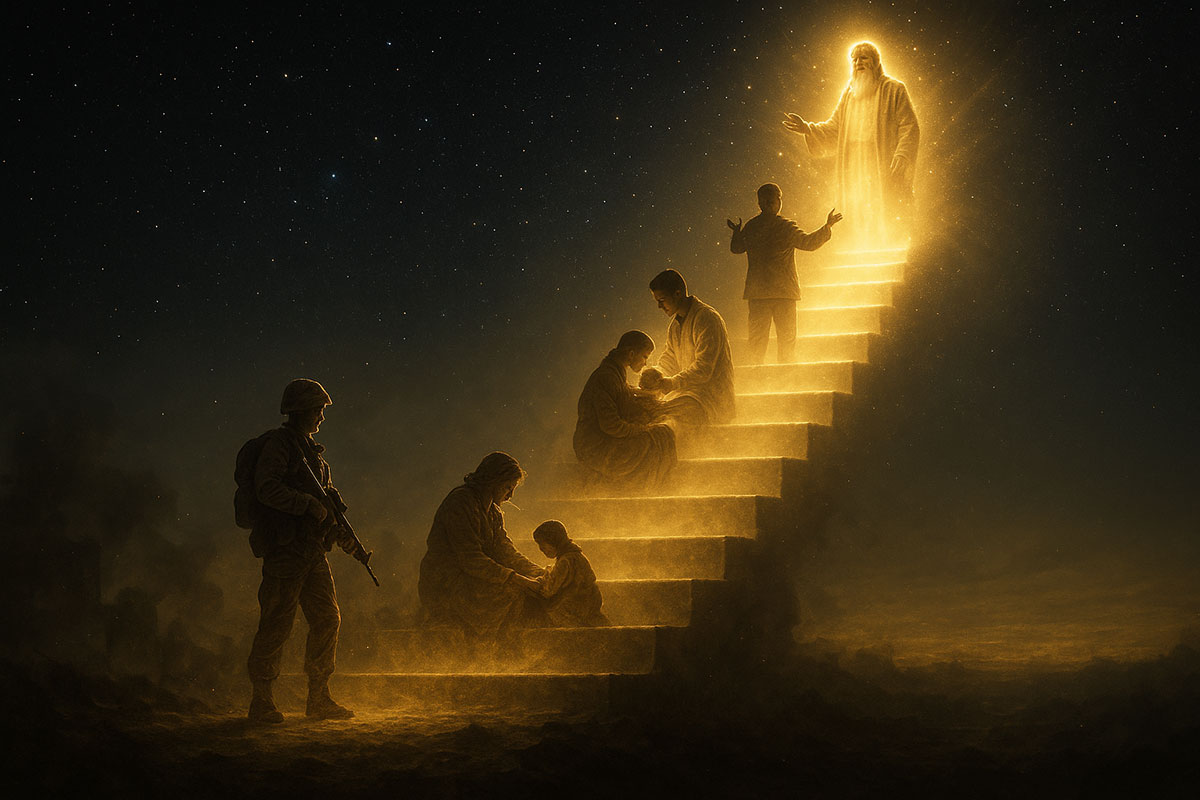
In this story, you will see one soul’s journey across more than three centuries. In the early 1700s, the soul lived as Johann Müller, a frightened soldier who caused harm. In the 1800s, it returned as Elisabeth Moreau, the victim of violence, to feel the grief it once caused. By the early 1900s, as Matteo Rossi, the soul became a healer, turning sorrow into compassion. Later, in America, it lived as James Carter, a leader guiding his community with integrity. And finally, in our time, as David Williams, it became a Teacher of Light, radiating wisdom that transcends all roles.
This is how karma works. Not as punishment, but as a classroom. Every role—perpetrator, victim, healer, leader, teacher—is chosen before birth for the soul’s growth. And through it all, the goal is the same: to learn love.
(Note: This is an imaginary conversation, a creative exploration of an idea, and not a real speech or event.)

Topic 1 — The Soldier (Johann Müller’s Story, Early 1700s Europe)
The Perpetrator’s Life
The year was 1708. Winter gripped the Rhineland, and the War of the Spanish Succession raged across Europe. Villages burned, armies marched endlessly, and young men were conscripted into battles they barely understood. Among them was Johann Müller, a farmer’s son from a small village in Prussia. He was just nineteen, thrust into uniform, a musket shoved into his hands, told that honor and duty demanded obedience.
Johann had grown up working in fields, his hands more accustomed to scythes than to rifles. Before the war, his world had been one of earth and harvest, of family dinners around a wooden table. Now it was mud, hunger, and orders shouted in languages he barely recognized.
The Raid
One evening, Johann’s regiment was ordered to sweep through a French village rumored to be hiding enemy partisans. “Clear every house,” the captain barked. “If they resist, kill them.”
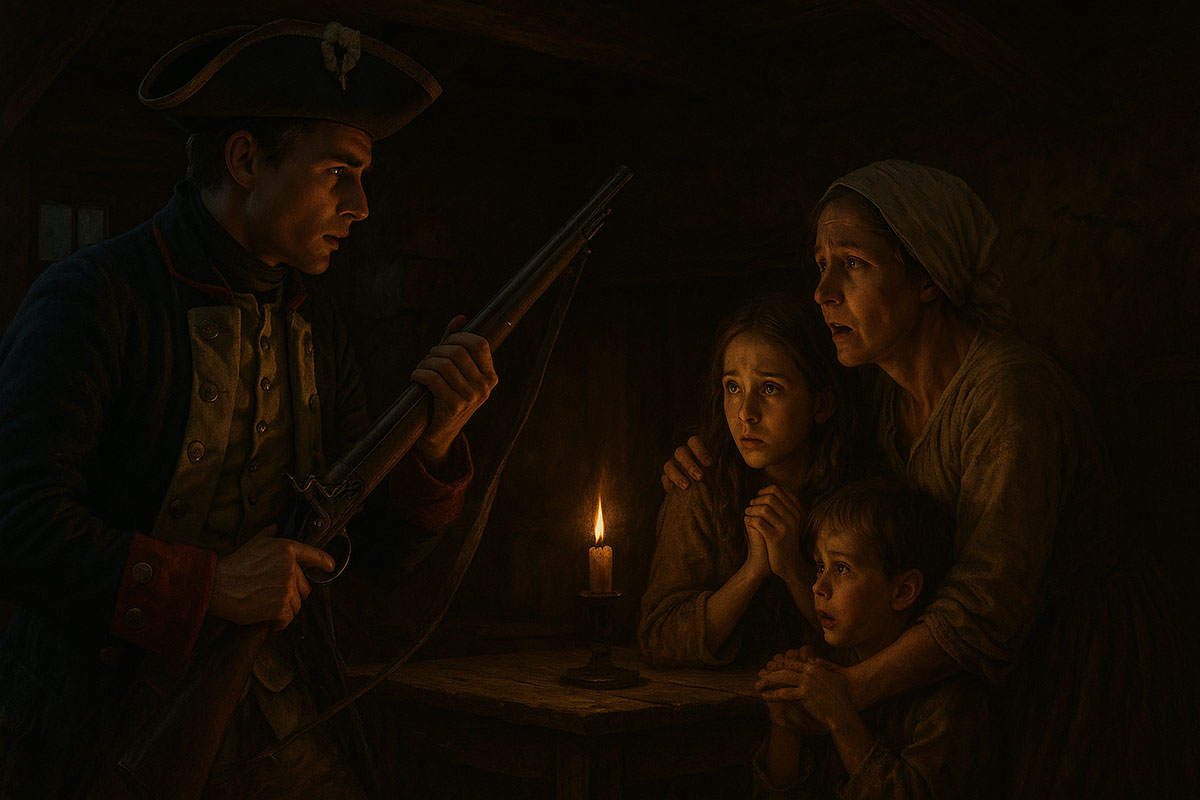
Johann’s boots crunched across the snow as he entered a stone cottage. Inside, the flickering light of a fire revealed a family huddled together—a man, a woman, and two children. Their eyes widened in fear. The man raised his hands, speaking rapidly in French Johann could barely follow: “We are not soldiers… please…”
But Johann’s nerves were frayed. His stomach knotted with fear. He saw the man step forward, perhaps to shield his children. In the shadows, Johann thought he glimpsed steel. His training screamed: enemy. His hands trembled, but his finger squeezed the trigger.
The musket thundered. The man collapsed in a heap. Blood pooled on the floor. The woman’s scream pierced the air as she threw herself across his body. The children wailed, clutching their mother’s skirts.
Johann froze. The man had held no weapon, only desperation. He had killed not an enemy, but a father.
From outside, the sergeant barked, “Müller! Move!”
Johann staggered back into the cold night, his body obeying orders while his soul cracked under the weight of what he had done.
Haunted by Guilt
That night, Johann sat by the campfire, his rations untouched. His comrades muttered jokes, sang half-hearted songs, anything to drown their own demons. But Johann’s mind returned again and again to the man’s pleading eyes, the children’s cries.
I killed him, Johann thought. I killed him, and nothing can ever undo it.
The war dragged on. Johann fought in other battles, saw comrades die, endured endless marches. But none of it stayed with him like that moment in the cottage. The weight of it pressed into his chest like an iron chain.
At times, he tried to justify it—I thought he had a weapon. I was following orders. But deep down, he knew it was fear that pulled the trigger, and fear could not absolve him.
Coming Home
When the war ended, Johann returned to his village. The land was scarred, his parents older, the farm in decline. Outwardly, he resumed the life of a farmer. Inwardly, he was a hollow man.
Neighbors found him kind but distant. He worked hard, drank heavily, and never married. At times, they saw him staring off at the horizon, his eyes wet with a grief he never spoke aloud.
When children laughed in the fields, it made him ache. When women wept in church, he turned away, unable to bear their sound. His sin had fused itself to his very being.
The Final Years
As he grew old, Johann’s health faltered. He spent long evenings by the fire, clutching a wooden cross, whispering prayers. But his confessions were vague, never naming the moment that had broken him.
On his deathbed, in the stillness of his small cottage, he finally whispered into the darkness: “I am sorry… forgive me…”
With that, he drew his last breath.
The Soul’s Perspective
When Johann Müller’s soul slipped from his body, he entered the stillness of the spirit world. And there, no illusion could shield him.
Before him appeared the man he had killed, his wife, and his children. Their faces were not filled with rage, but with sorrow. And in their presence, Johann felt everything. He felt the father’s terror, the wife’s anguish, the children’s grief. Their pain poured into him until it was his own.
But this was not punishment. It was education. For the first time, Johann understood the true weight of his actions. Not as a soldier following orders, but as a soul awakening to empathy.
The lesson was clear: to truly understand, he would need to live on the other side. He would need to be the one who lost, the one who wept, the one who cried out for mercy that never came.
Preparing the Next Life
The soul lingered in the spirit world for decades, reflecting, growing, waiting. Centuries passed. And then, in the early 19th century, Johann Müller was reborn—this time not as the one who harms, but as the one who suffers.
She was born as Elisabeth Moreau in France, destined to lose her mother in an act of violence and to feel the helplessness that Johann had once caused.
Transition
This was the second stage of karma: the victim. To harm was one lesson, but to be harmed was another. Only by walking both paths could the soul begin to awaken compassion.
Topic 2 — The Victim (Elisabeth Moreau’s Story, Early 1800s France)
The Victim’s Life
The year was 1815. France was weary from years of revolution and war. Napoleon’s fall had left scars across the nation—burned villages, broken families, and grief woven into every household. In a modest town outside Lyon, a girl named Elisabeth Moreau was born.
Her childhood was simple but fragile. Her mother, Claire, worked tirelessly as a seamstress, while her father had died years before she could remember. Though poor, they clung to each other with fierce love. For Elisabeth, her mother was everything—her comfort, her protector, her world.
The Day of Violence
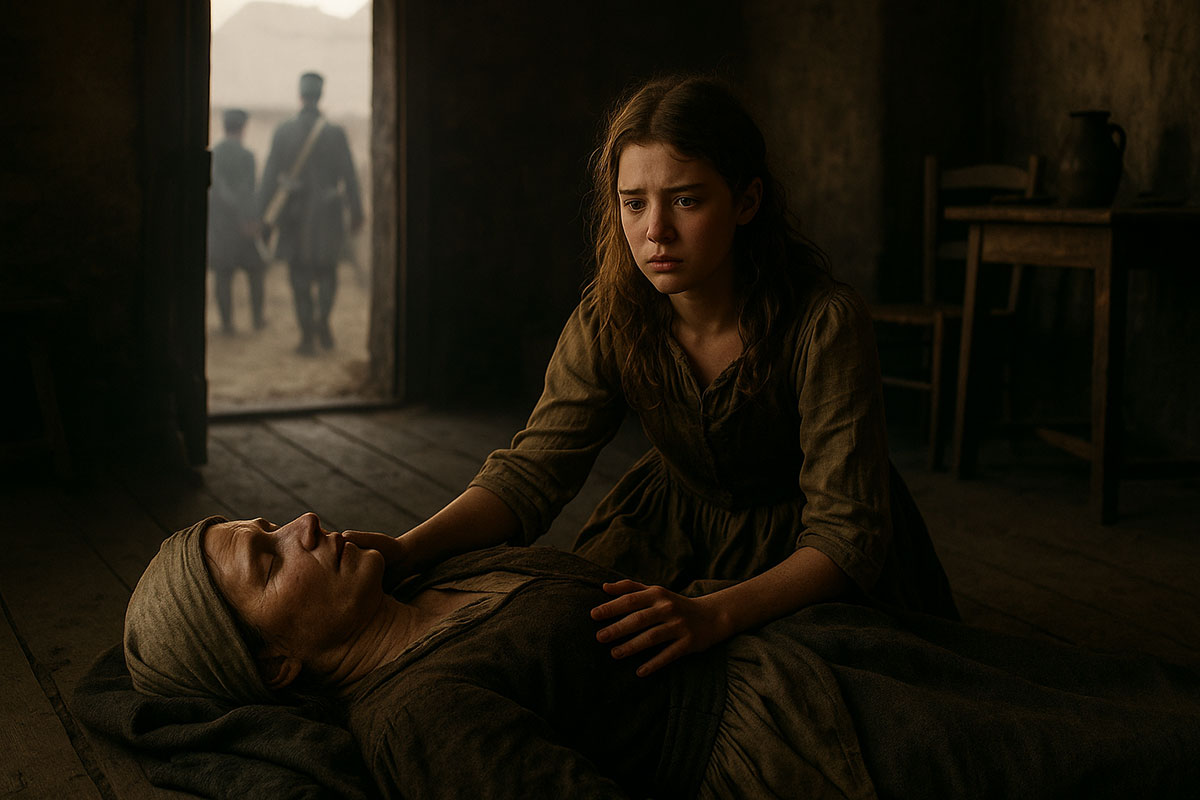
When Elisabeth was fourteen, unrest broke out in their region. Soldiers marched through the countryside, quelling dissent, punishing villages accused of harboring rebels. One gray afternoon, Elisabeth and her mother heard shouting outside their cottage. Soldiers burst into the street, muskets raised.
“Stay inside,” Claire whispered, clutching her daughter. But it was too late. The door was kicked open, boots trampling their small home. The soldiers demanded food, accused them of hiding fugitives. Claire pleaded, “We have nothing but bread and thread.”
One soldier, drunk and angry, shoved her aside. When she stood her ground to shield Elisabeth, his musket fired. The crack split the air. Claire collapsed, blood spilling onto the floorboards.
Elisabeth fell to her knees, screaming. She shook her mother, begging her to breathe, to open her eyes, but the light was already gone.
The soldiers left without remorse, their boots echoing in the silence they left behind. Elisabeth clutched her mother’s body, her cries filling the cottage until exhaustion silenced her.
The Depth of Loss
In the days that followed, neighbors helped bury Claire in a small churchyard. Elisabeth stood by the grave in numb disbelief. She felt hollow, as though her very heart had been ripped out.
Grief soon gave way to anger. She replayed the moment endlessly in her mind—the musket’s roar, her mother’s final gasp. How could they? she asked again and again. How could anyone be so cruel?
But there was no answer. Only silence.
A Life Shaped by Grief
Elisabeth lived on, but her life was never the same. She worked where she could—sewing, scrubbing floors, carrying water—but joy rarely touched her. When others laughed, she felt alien, as though laughter belonged to a different world.
At night, she often woke in tears, her dreams filled with the sight of her mother falling. Sometimes she screamed in her sleep, waking the neighbors. They pitied her, but they could not understand the depth of her wound.
Her heart hardened. She vowed never to forgive. The world was cruel, she told herself, and she would never forget what it had taken from her.
The Soul’s Shadow
What Elisabeth could not know was that the soul within her had once lived as Johann Müller, the soldier who had killed a father before his children’s eyes. Now, reborn on the other side, she was living the grief she had once caused.
This was not punishment, but balance. The soul could not understand the pain of the victim until it had lived as one. Every sob Elisabeth cried, every night she trembled alone, was part of the education her soul demanded: You must know what it feels like to lose what you love most.
A Small Glimpse of Healing
Later in life, Elisabeth became known in her village for her kindness to orphans and widows. Though she herself remained scarred, she had an instinct to comfort others who grieved. She would sit silently beside them, holding their hands, understanding without words.
In those moments, the bitterness within her eased. She did not realize it, but her soul was already preparing for its next stage: to turn grief into compassion.
The Final Years
Elisabeth never married. She carried her mother’s scarf with her always, worn thin from years of clutching it in her sleep. When she died in her sixties, she whispered her mother’s name with her last breath.
Her passing was quiet, but her soul’s lesson was profound.
The Soul’s Perspective
When Elisabeth’s soul left her body, she rose again into the stillness of the spirit world. And there, the truth unfolded before her.
She saw her mother’s face, radiant now, free from suffering. She felt again the grief of losing her, but she also felt the deeper purpose behind it. She remembered Johann Müller—the soldier she had once been—and understood that the pain she had inflicted centuries earlier had now been lived within her own heart.
For the first time, her soul grasped the symmetry of karma. To harm and to be harmed were two halves of the same coin. Both were necessary for compassion to awaken.
But the soul also knew the journey was not complete. Feeling grief was only the beginning. The next stage was to take that grief and transform it into healing—not just for herself, but for others.
Preparing the Next Life
And so, the soul prepared. Decades passed in the spirit world until it was time to be born again—this time in Italy, around 1900, as Matteo Rossi, a healer who would devote his life to tending the sick and comforting the broken.
Transition
Thus, the third stage of karma awaited: the healer. The same soul that had once harmed as Johann Müller, and wept as Elisabeth Moreau, would now learn the grace of mending others’ wounds.
Topic 3 — The Healer (Matteo Rossi’s Story, Early 1900s Italy)
The Healer’s Life
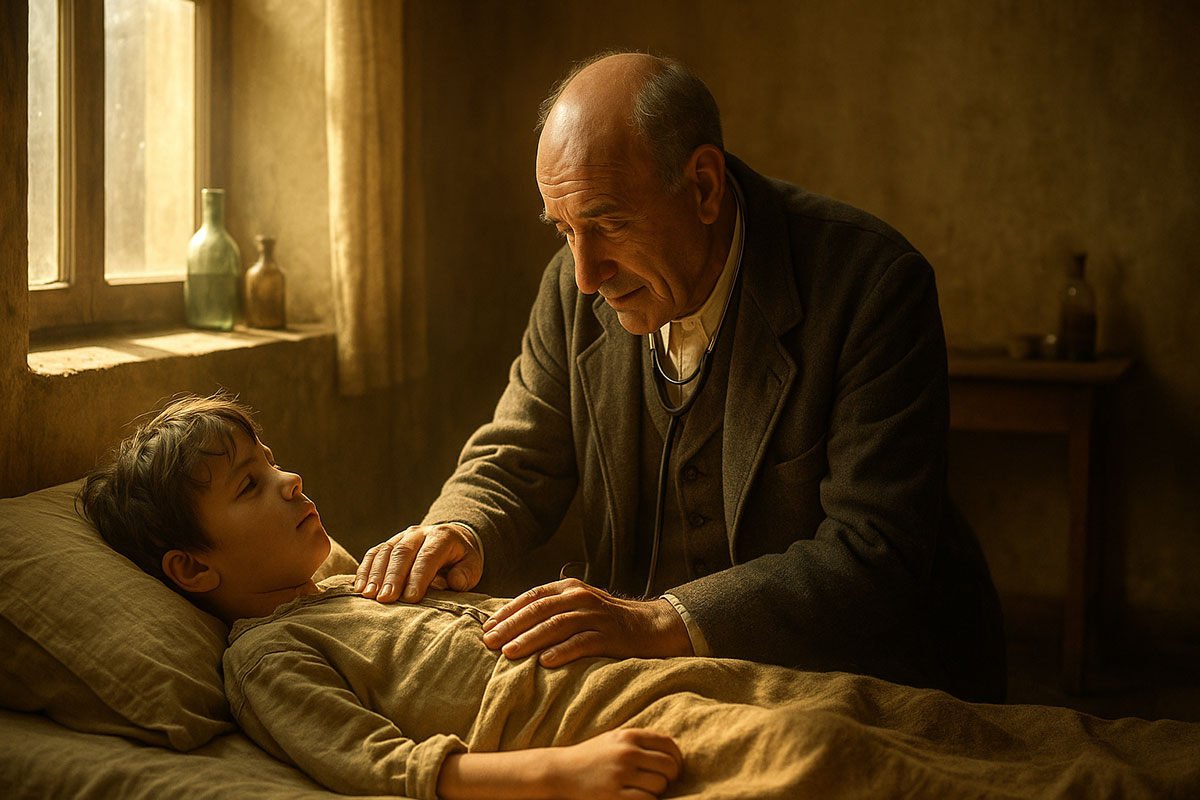
The year was 1902. In a small town nestled among the rolling hills of northern Italy, Matteo Rossi was born to a family of modest farmers. From the start, Matteo was different. As a boy, when animals were sick, he would sit beside them for hours, stroking their fur, whispering comfort. When neighbors fell ill, he would fetch water, grind herbs, or simply hold their hand until help arrived.
His mother often said, “Matteo has the heart of a priest, but the hands of a healer.”
As he grew older, Matteo pursued medicine. Against the odds, and with the help of a village priest who saw his promise, he studied in Turin, training to become a doctor. While other young men dreamt of wealth or prestige, Matteo’s only dream was simple: to ease suffering wherever he found it.
A Shadow Beneath the Gift
Though Matteo never spoke of it, he carried a heaviness within him, as though his soul remembered sorrows too deep for one lifetime. At night, he dreamed of a musket firing, of children crying in terror, of a mother falling to the ground in blood. He would wake shaken, his heart pounding, tears on his cheeks.
What he could not know was that these were fragments of lives past—Johann Müller, the soldier who killed, and Elisabeth Moreau, the daughter who wept at her mother’s grave. Their pain lived on within him, shaping his instinct toward compassion.
Where Johann had harmed, and Elisabeth had suffered, Matteo was now determined to heal.
The Village Doctor
By the 1930s, Matteo had returned to his hometown to open a small clinic. The walls were simple, the shelves lined with bottles of herbs and tinctures, the smell of disinfectant and soap lingering in the air. Farmers, widows, and children came to him not only for medicine, but for comfort.
One afternoon, a mother carried in her feverish child. “Doctor, please,” she begged. “We have no money.”
Matteo smiled gently. “You owe me nothing,” he said. “Your child’s health is payment enough.” He worked tirelessly through the night, cooling the boy’s brow, mixing remedies, whispering encouragement. By morning, the fever had broken.
The mother wept in gratitude, clutching Matteo’s hands. He only shook his head. “No thanks are needed. This is what I was born to do.”
Healing Beyond Medicine
Matteo’s gift was not only his medical skill, but his presence. Patients often said that when he sat with them, they felt calmer, as if their pain had been shared.
One widower came to him, complaining of aches that no medicine could cure. Matteo examined him, then said softly, “Your pain is not of the body, but of the heart. Sit with me.” For hours, he listened as the man poured out his grief. When the man finally left, his steps were lighter, though Matteo had written no prescription.
Matteo believed healing was not just about curing illness, but about restoring dignity and hope.
War Returns
By the 1940s, war once again swept across Europe. Soldiers marched, bombs fell, and families were displaced. Matteo’s clinic became a refuge. He tended to the wounded without asking sides, treating both villagers and soldiers alike.
When questioned why he helped the enemy, he replied simply, “A wounded man is not my enemy. Pain has no nationality.”
Though the war raged outside, within his small clinic the light of compassion never dimmed. In every bandaged wound, in every fever cooled, Matteo was not only healing bodies—he was healing fragments of his own soul’s ancient wounds.
Echoes of the Past
One evening, after tending to a child injured in a bombing, Matteo sat by the bedside, watching the boy breathe. Tears filled his eyes. In that moment, he felt as though he were kneeling centuries earlier, watching Elisabeth Moreau weep over her mother’s body, or hearing the cries of the children in Johann Müller’s cottage.
But this time, he was not the one causing grief, nor the one consumed by it. This time, he was the one who brought comfort, who turned suffering into compassion. The circle of karma was beginning to balance.
The Final Years
Matteo never married. His patients were his family, his village his parish. In his old age, he was known simply as il dottore buono—“the good doctor.”
When he passed away in 1970, the entire town gathered for his funeral. Hundreds walked behind his coffin, not in silence but in gratitude, remembering the man who had eased their pain, who had never asked for wealth or recognition.
The Soul’s Perspective
When Matteo Rossi’s soul entered the spirit world, there was peace in his being. He reflected on his journey:
As Johann Müller, he had harmed in fear.
As Elisabeth Moreau, he had wept in grief.
As Matteo Rossi, he had healed with compassion.
For the first time, the soul felt balance. Pain had not been wasted—it had been transformed into light. Yet the journey was not complete. Healing individuals was one step, but the soul sensed the next lesson would be larger: to guide entire communities, to lead not through power, but through service.
Preparing the Next Life
And so, after resting a short while in the spirit world, the soul crossed the ocean. In the mid-20th century, it was reborn in America as James Carter, destined to become a veteran who would lead his struggling town with integrity.
Transition
Thus, the fourth stage of karma awaited: the leader. From harm, to grief, to healing, the soul would now learn how to guide others, carrying its lessons into the heart of a community.
Topic 4 — The Leader (James Carter’s Story, Mid-20th-Century America)
The Leader’s Life
The year was 1952. In a small Midwestern town in the United States, James Carter was born to working-class parents. His father worked in a steel mill, his mother in a diner. Life was modest, but James grew up with a sense of community: neighbors helped neighbors, church bells called families together, and the rhythm of small-town life kept people bound to one another.
Yet James carried something deeper within him—a seriousness beyond his years, as though his soul had lived much before. While other boys dreamed of adventure, James often felt a quiet responsibility, a need to step up when others faltered.
The Call to Serve
When James turned eighteen, America was embroiled in the Vietnam War. Like many of his generation, he enlisted, believing it was his duty. Training was grueling, the jungles unforgiving. He witnessed combat, loss, and fear—echoes of battles his soul had fought centuries before as Johann Müller and Matteo Rossi.
But unlike Johann, who had fired in fear, James carried compassion into battle. He was known among his unit for putting others before himself—dragging wounded comrades to safety, sharing his rations, speaking words of encouragement when morale was low.
Even so, the war left scars. James returned home in the 1970s to a divided nation, struggling to reconcile what he had seen overseas with the bitterness he found at home. Many called veterans villains or victims. James chose neither. He decided his life would stand for service in a different way.
A Town in Decline
By the 1980s, James had settled back in his hometown. But the place he had once known was fading. The steel mill closed. Families moved away. Those who remained battled unemployment, addiction, and despair.
The town meetings grew tense, full of blame but short on solutions. Neighbors who had once trusted each other now argued bitterly. The sense of community James remembered from childhood seemed gone.
He could have withdrawn, as so many veterans did. But something in him—a thread stretching back through lifetimes—would not let him turn away. He had healed as Matteo Rossi, now he must lead as James Carter.
Mentoring the Young
It began small. James noticed a group of restless boys loitering downtown, already flirting with trouble. Instead of scolding them, he invited them to the local football field on Saturday mornings.
There, he taught them discipline, teamwork, and respect. “Show up on time. Work hard. Take care of each other,” he told them. These were the same principles that had carried him through combat, reshaped now for ordinary life.
The boys responded. Slowly, they began to stand taller, help their families, dream of futures beyond trouble. Word spread. More kids joined. Parents began to thank him. James’s small mentoring circle grew into a community movement.
Rebuilding Trust
Encouraged, James expanded his efforts. He worked with local churches to start food drives. He organized volunteers to fix the crumbling community hall. He convinced neighbors to speak again, to set aside grudges and rebuild trust.
When people asked why he gave so much of himself, James simply said, “Because someone has to. And if I can, then I must.”
His leadership was not loud or political. It was steady, rooted in presence and integrity. People trusted him not because he made promises, but because he lived what he spoke.
Echoes of the Past
At times, James felt emotions rise within him that seemed older than his own life. He would look into the eyes of a grieving parent and feel the anguish of Elisabeth Moreau. He would watch a sick child recover and feel the compassion of Matteo Rossi. He would see soldiers marching on television and feel the fear of Johann Müller.
He could not explain it, but his soul remembered. And these echoes made him a leader not only of minds, but of hearts.
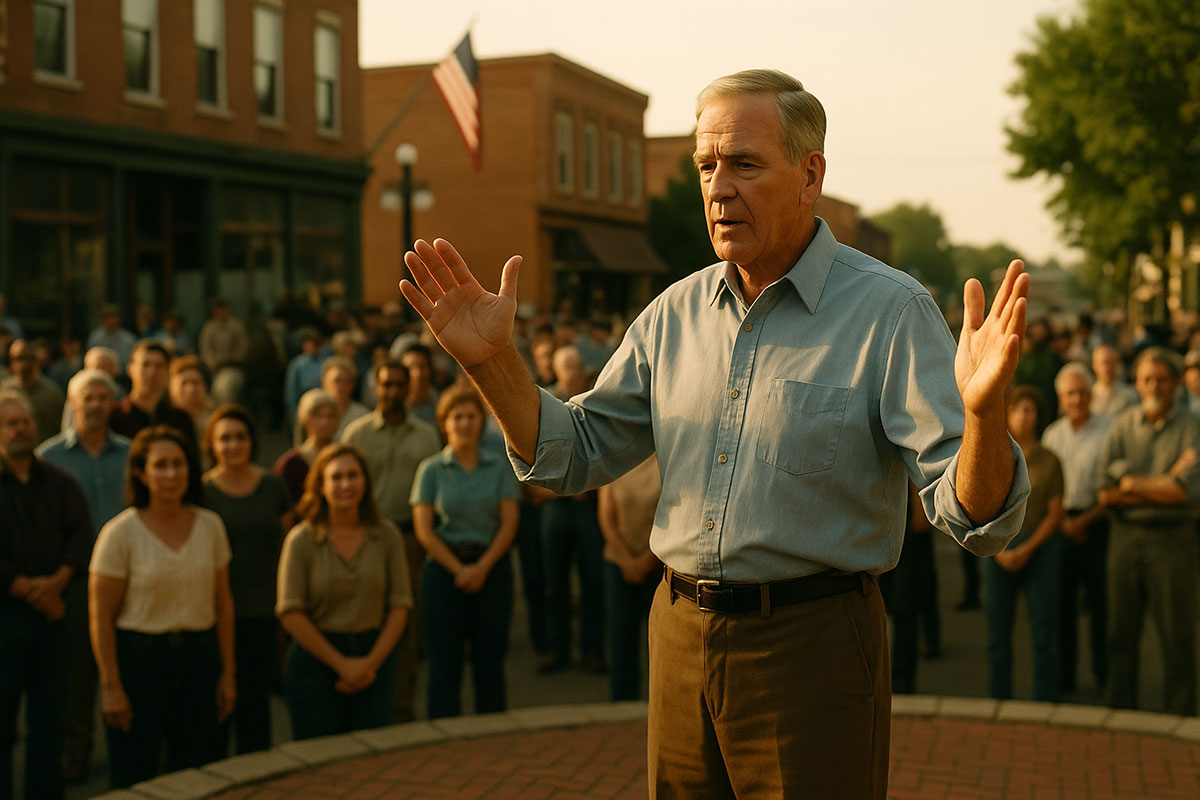
The Town Hall Speech
One autumn evening, the townspeople gathered in the old community center, now partially restored thanks to James’s efforts. The issue was urgent: young people were leaving, opportunities vanishing.
James stood before them, his voice firm but kind:
“I’ve seen what happens when people give up on each other. I’ve seen it in war, and I’ve seen it here. But I also know this: we are stronger when we carry one another. We don’t need a miracle—we need to remember who we are. We need to show up, do the work, and never stop believing in each other. That is how we heal. That is how we build a future worth staying for.”
The hall fell silent, then erupted in applause. Not because the speech was grand, but because it was true.
A Legacy of Service
Over the years, James became a cornerstone of the town. He mentored hundreds of young people, guided families through crises, and inspired neighbors to trust again. He never sought office, never demanded recognition. His authority came not from titles, but from the quiet strength of his character.
When he died in 2005, the town turned out in thousands to honor him. At his funeral, a young man he had once mentored said through tears, “He saved me. Without James Carter, I don’t know where I would be.”
The Soul’s Perspective
When James Carter’s soul crossed into the spirit world, it reflected on its journey:
As Johann Müller, it had harmed.
As Elisabeth Moreau, it had been harmed.
As Matteo Rossi, it had healed.
As James Carter, it had guided.
For the first time, the soul felt the strength of responsibility, not as a soldier bound to orders, but as a leader bound to service. It understood that leadership is not control—it is lifting others so they can stand on their own.
But the soul also sensed there was one final step left. Beyond guiding a single town, it must now share wisdom that reached across humanity itself.
Preparing the Next Life
And so, the soul prepared for its final earthly incarnation. A short time later, it was reborn in America again, as David Williams, destined to live into the early 21st century as a quiet Teacher of Light.
Transition
This was the fifth and final stage of karma: to teach. The soul that had once killed, wept, healed, and guided would now shine with wisdom that transcended all roles—reminding others that love is the true purpose of life.
Topic 5 — The Teacher of Light (David Williams’s Story, Ending in 2025)
A Quiet Presence
The year was 2025. In a small cabin at the edge of the Blue Ridge Mountains, an elderly man named David Williams sat on his porch, gazing at the stars. His hair was silver, his body frail, but his eyes shone with a depth that drew people from across the country.
David was not a celebrity. He never ran for office or led a movement. And yet, seekers traveled long distances to sit with him, to hear his words, or simply to rest in his presence. They said he carried a peace that felt rare in the world of noise, division, and unrest.
What they didn’t know was that this peace had been forged across centuries.
The Soul’s Long Journey
David’s soul remembered, even if his mind did not:
As Johann Müller in the 1700s, he had harmed out of fear, killing an innocent man.
As Elisabeth Moreau in the 1800s, he had been harmed, losing his mother in an act of violence.
As Matteo Rossi in early 1900s Italy, he had healed, tending to the sick with compassion.
As James Carter in 20th-century America, he had led, guiding his community with service and integrity.
Now, as David Williams, all those lessons converged into light.
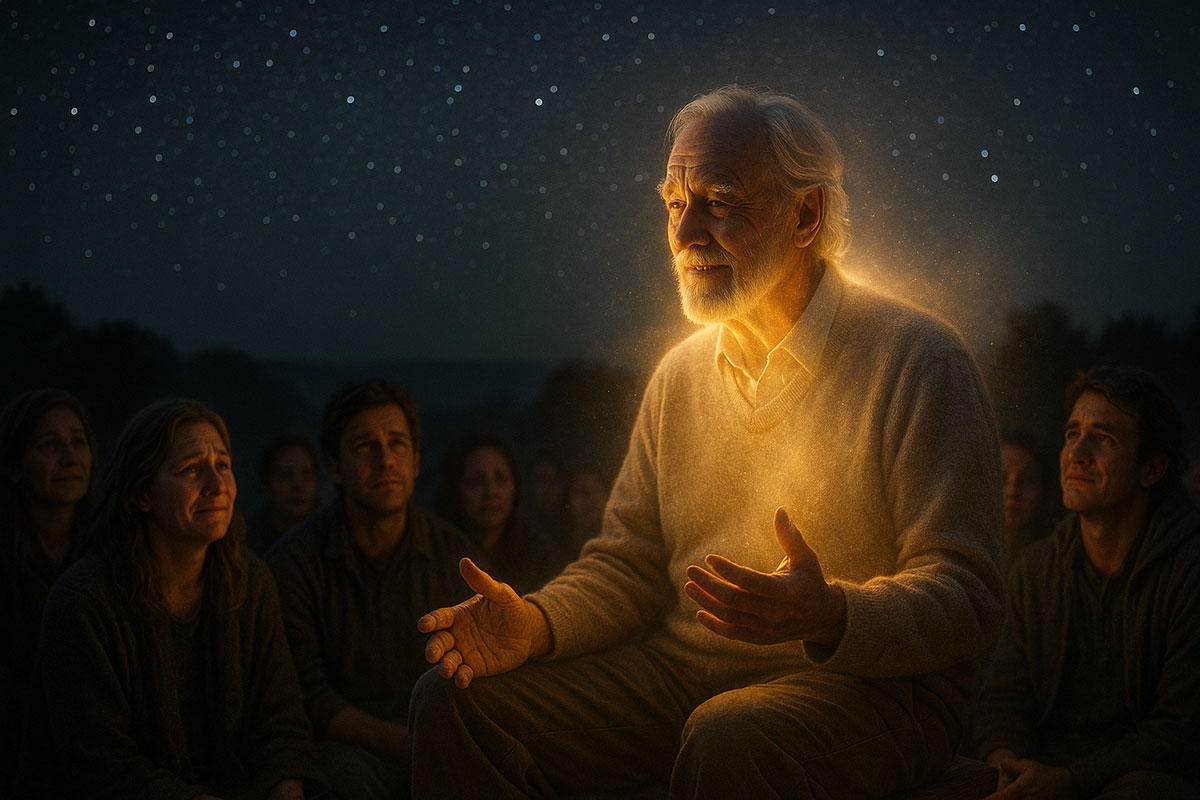
The Gathering
On a cool spring evening, a group of students gathered around David beneath the starlit sky. They came from many walks of life: a young teacher overwhelmed by her classroom, a veteran haunted by war, a mother grieving her child, a businessman tired of endless competition.
They sat in silence, waiting. David closed his eyes, then spoke softly, his voice steady but warm:
“Life gives us roles. Sometimes we harm. Sometimes we are harmed. Sometimes we heal. Sometimes we lead. And one day, if we are willing, we teach—not with authority, but with understanding. Because every soul is on the same path, whether it knows it or not.”
The group leaned closer. Some wept quietly, others simply breathed deeply, as if the weight they carried was being lifted.
Beyond Division
One student asked, “But David, the world is so divided—politics, religion, even families. How can we ever be united?”
David smiled gently. “Division comes when we forget we are souls. We cling to labels—‘soldier,’ ‘victim,’ ‘doctor,’ ‘leader,’ ‘liberal,’ ‘conservative.’ But these are costumes. Underneath, the soul is the same.
“One life, you may be the one who harms. Another, the one who suffers. Another, the one who heals or leads. None of these roles are permanent. They are classrooms. Karma does not punish—it teaches. Every life is a lesson, and every lesson points us back to the same truth: we belong to one another.”
His words sank deep into the night. The students realized that the divisions they clung to were small compared to the vast journey of the soul.
The Power of Presence
David’s teaching was not in eloquent speeches, but in presence. He listened more than he spoke. He would sit with a grieving widow in silence, holding her hand until her sobs softened. He would share bread with a stranger, treating them as family. He would smile at children, seeing in their laughter the innocence of every soul beginning its journey.
In these small gestures, people felt something larger than words: the peace of a soul that had lived through harm, grief, compassion, and service—and emerged with light.
The Final Teaching
In the summer of 2025, sensing his time was near, David gathered his closest students. He sat beneath the stars, his face illuminated by lantern light, and spoke his final message:
“Do not fear the roles you are given. Even the painful ones. Each role is a teacher. To harm teaches us the weight of our actions. To suffer teaches us the depth of love. To heal teaches us compassion. To lead teaches us responsibility. And to teach is to share the wisdom of it all.
“One day, each of you will see that nothing was wasted—not your tears, not your scars, not your joys. All of it was guiding you toward the same truth: love is the end of every lesson.”
His voice grew soft. “Carry that truth into the world. Not as my students, but as lights yourselves.”
The Passing
That autumn, David passed away quietly in his sleep. He was eighty-five. At his funeral, people from across the country came to honor him—former students, neighbors, strangers who had once sat in his presence and left changed.
They spoke not of grand achievements, but of small moments: a kind word, a patient ear, a reminder that love was stronger than fear.
The Soul’s Perspective
When David Williams’s soul rose into the spirit world, it looked back on its journey:
Johann Müller: the one who harmed.
Elisabeth Moreau: the one who was harmed.
Matteo Rossi: the one who healed.
James Carter: the one who guided.
David Williams: the one who taught.
Each role had seemed separate, but together they formed a staircase of growth, rising from darkness into light. For the first time, the soul felt whole. The cycle of karma was complete.
No longer bound by the need to return, the soul radiated outward, becoming a light for others still walking the path.
The Universal Lesson
The story of David Williams is not his alone. It is ours. Each of us walks this staircase in our own way, across our own lifetimes. Perhaps you are in the stage of harming, or of being harmed, or of healing, or of leading. Wherever you are, know that you are still in class, and the lesson is always love.
And when the lessons are done, when all the roles are complete, you too will become a Teacher of Light—your presence itself a beacon, reminding others that every tear and every joy was always leading back to love.
Final Thoughts By Dolores Cannon
When my clients reached the deepest states of hypnosis, they often described the moment between lives. They would say, ‘I see it now. I understand why it had to be this way.’ What felt like cruelty during life revealed itself as a lesson carefully chosen out of love.
The soul in this story chose to harm, to suffer, to heal, to lead, and finally to teach. At each step, it grew closer to compassion. By the end, as David Williams, it no longer needed to reincarnate. It had graduated. That is what happens when karma is complete—you are free.
And I want you to remember this: whatever role you are playing now, you chose it. If you are suffering, it is not a punishment. It is a lesson you designed for yourself, because you knew it would awaken you. If you have harmed others, you will one day stand in their place—not to be punished, but to understand. If you are healing, guiding, or teaching, it is because you have already walked through pain and turned it into wisdom.
There is no judgment. There is only learning. And when the lessons are finished, when all sides of the story have been lived, the soul shines with light. That is the purpose of karma—not fear, not punishment, but love.
Dolores Cannon (1931–2014)
Dolores Cannon was a pioneering hypnotherapist and past-life regressionist who worked with thousands of clients over several decades. Through deep trance hypnosis, she documented detailed accounts of reincarnation, life between lives, soul contracts, and karmic lessons. Author of more than 20 books, including Between Death and Life and The Convoluted Universe series, she brought forward a body of work that emphasized karma not as punishment, but as a classroom for the soul. Her teachings continue to inspire those seeking to understand the deeper purpose of life on Earth.
Johann Müller (1700–1730)
Johann Müller was a Prussian farmer’s son conscripted into the War of the Spanish Succession. As a frightened young soldier, he killed an innocent man in front of his family, an act that haunted him until his death. His soul carried the weight of this guilt forward, becoming the foundation of his karmic journey.
Elisabeth Moreau (1800–1840)
Born in France during the turmoil following the Napoleonic era, Elisabeth Moreau lost her mother in a violent clash between soldiers and civilians. She lived much of her life in grief, never fully recovering from the tragedy. Through her suffering, the soul that once harmed as Johann Müller now experienced the depth of loss as a victim.
Matteo Rossi (1902–1970)
Matteo Rossi was an Italian physician remembered for his compassion. Practicing medicine in rural villages between the World Wars, he treated both the poor and the wounded, never refusing help. Known as il dottore buono (“the good doctor”), his healing spirit represented the soul’s evolution from grief to compassion.
James Carter (1952–2005)
James Carter, a U.S. Army veteran, returned home from Vietnam to a struggling Midwestern town. Refusing to withdraw, he dedicated his life to mentoring youth, rebuilding community trust, and guiding his neighbors through hardship. His leadership reflected the karmic stage of service and responsibility, transforming individual compassion into collective guidance.
David Williams (1940–2025)
David Williams was a quiet teacher whose wisdom drew seekers from across America. Without seeking fame, he became a spiritual guide, radiating peace and understanding. His presence embodied the culmination of centuries of karmic lessons, as he taught that love and compassion are the true purposes of life.
Leave a Reply