
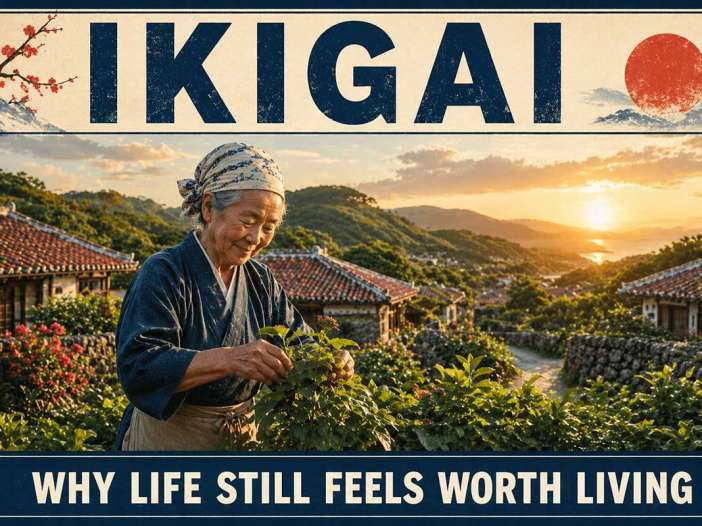
What if Héctor García’s top thinkers revealed why ikigai is not one grand purpose, but many small reasons to live?
introduction by Nick Sasaki
Today’s conversation has circled around a simple but quietly demanding idea: ikigai—a reason to live that does not shout, but stays.
Inspired by Ikigai: The Japanese Secret to a Long and Happy Life, we explored five dimensions of a life that continues with meaning:
- What ikigai truly is
- How daily rhythm shapes longevity
- Why usefulness matters more than status
- How belonging sustains life
- And why small joys may be the deepest foundation of all
Across these topics, one pattern kept returning: meaning is not something you find once. It is something you keep renewing through how you live.
(Note: This is an imaginary conversation, a creative exploration of an idea, and not a real speech or event.)
Topic 1 — What Ikigai Really Means
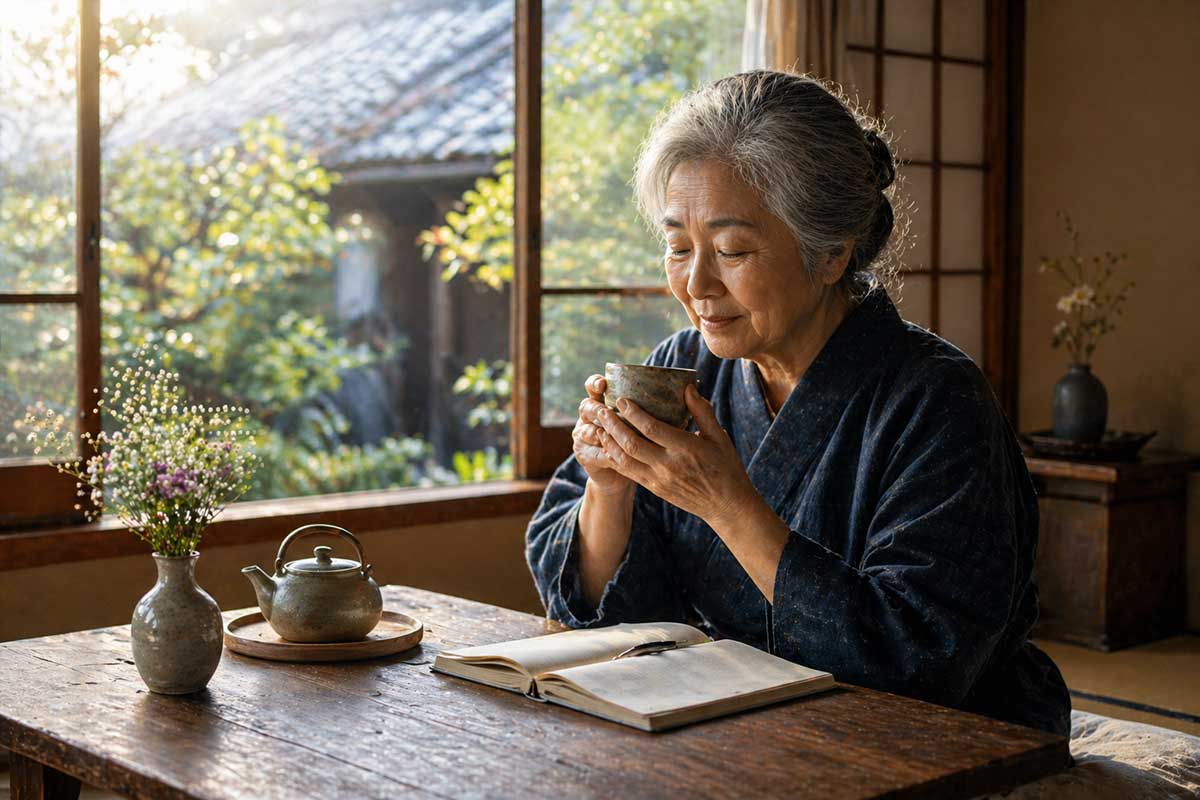
Participants: Héctor García, Francesc Miralles, Ken Mogi, Gordon Mathews, Mieko Kamiya
Moderator: Nick Sasaki
Question 1
Is ikigai a grand life purpose, or something found in ordinary daily life?
Nick Sasaki:
When people hear ikigai, they often think it means finding one huge life mission. Is that accurate?
Ken Mogi:
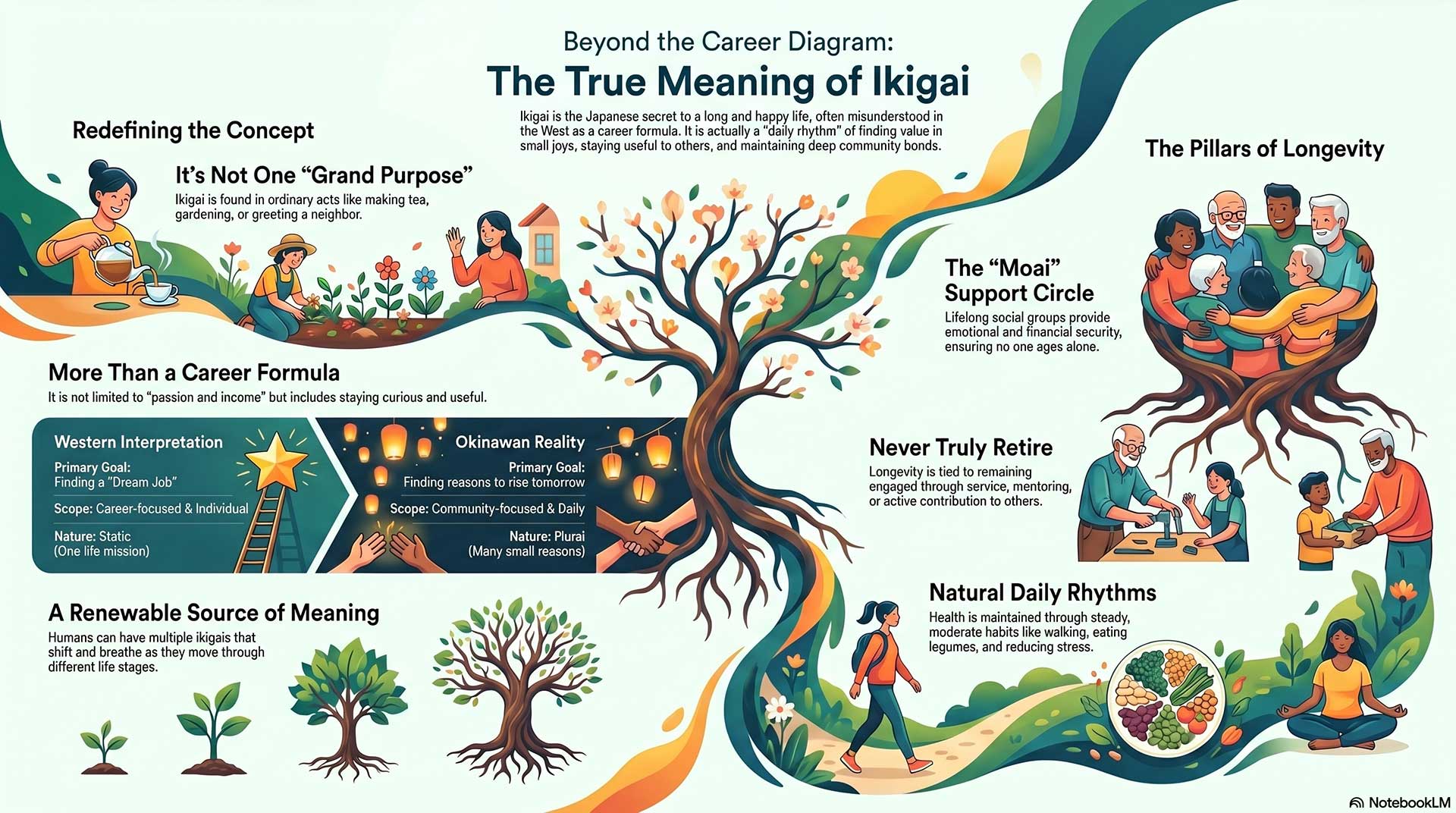
Ikigai begins smaller than most people expect. It can be the pleasure of making tea, caring for a plant, greeting a neighbor, or improving a craft. Its power comes from being close to daily life.
Héctor García:
In Okinawa, we saw people who didn’t speak in big theories. They had gardens, friends, food, routines, and reasons to wake up. Their ikigai was practical and lived.
Mieko Kamiya:
Ikigai includes both joy and direction. It is not only pleasure. It is the feeling that one’s life has value, even through difficulty.
Francesc Miralles:
The modern reader wants a formula. But ikigai is more like a quiet relationship with life. It reveals itself through repetition, attention, and care.
Gordon Mathews:
Different cultures frame meaning differently. Western people often search for a personal mission. Japanese ikigai can be more modest, social, and everyday.
Question 2
Why do Western readers often reduce ikigai to career, passion, or success?
Nick Sasaki:
Why does ikigai so often get turned into a career diagram?
Gordon Mathews:
Modern Western culture loves identity through work. So when it meets ikigai, it translates it into career language: passion, income, skill, market value.
Ken Mogi:
That is too narrow. Ikigai does not need applause. A retired person, a child, a homemaker, or a craftsman can all have ikigai without “success” in the public sense.
Héctor García:
The book was never meant to say, “Find your perfect job and you’ll be happy.” It points more toward staying active, connected, curious, and useful.
Francesc Miralles:
Career can be part of ikigai, but it becomes dangerous when work must carry the whole weight of meaning.
Mieko Kamiya:
A person may lose work, status, or health and still find ikigai. That is why ikigai cannot be reduced to achievement.
Question 3
Can a person live with several small ikigai instead of one central mission?
Nick Sasaki:
Is it better to have one central purpose, or many small reasons to live?
Mieko Kamiya:
Several small ikigai can sustain a person deeply. A letter from a friend, a walk, prayer, study, caregiving—each may hold life together.
Héctor García:
Many long-lived people we met had many sources of meaning. They didn’t depend on one dream. Their life was supported by many small roots.
Ken Mogi:
This is healthier. One large purpose can become fragile. Small ikigai are renewable.
Francesc Miralles:
A person may have one ikigai in youth, another in family life, another in older age. Life changes, so meaning must breathe.
Gordon Mathews:
The idea of one fixed destiny is attractive, but often unrealistic. Human meaning is plural, shifting, and shaped by culture, relationships, and time.
Nick Sasaki:
So ikigai is not simply “find your dream job.” It is not a slogan for ambition. It is closer to the quiet evidence that life still calls you forward.
It may be found in work.
It may be found in friendship.
It may be found in service, routine, beauty, food, study, prayer, or care.
The deeper question is not only, “What is my purpose?”
It may be:
What still makes life feel worth receiving tomorrow?
Topic 2 — Okinawa, Longevity, and Daily Rhythm
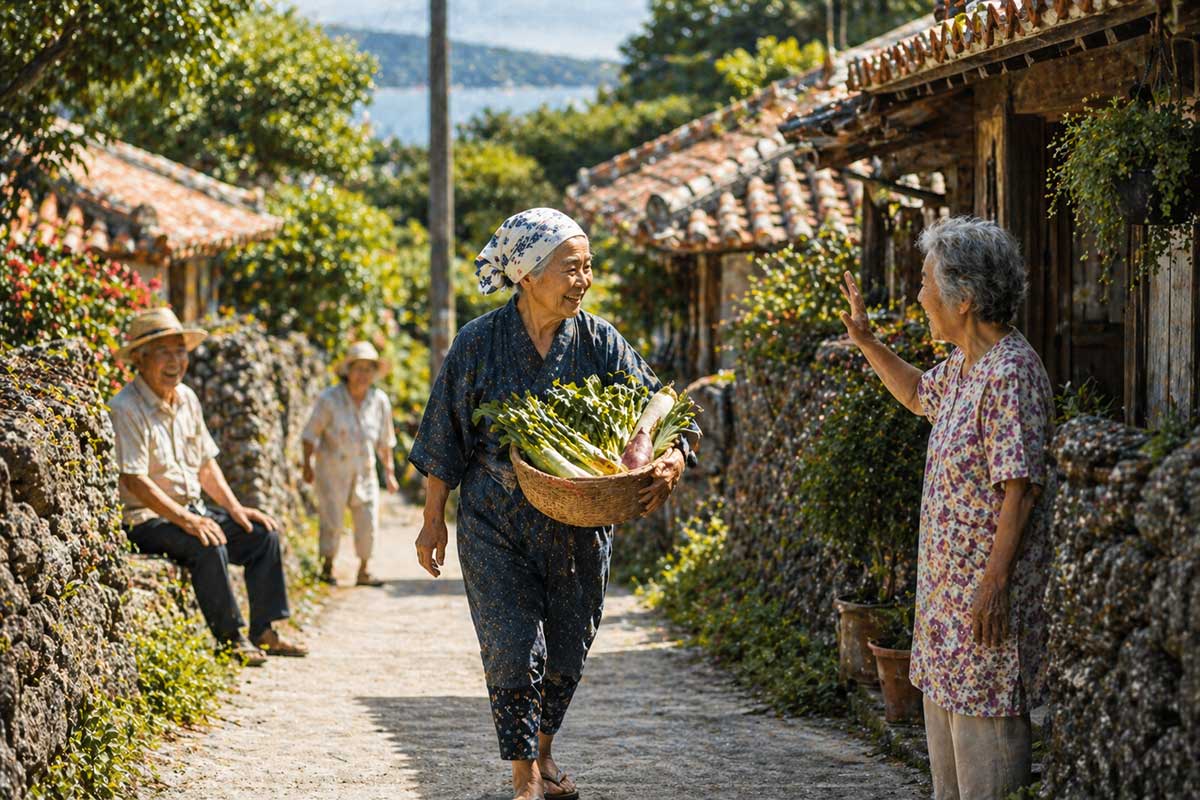
Participants: Dan Buettner, Shigeaki Hinohara, Makoto Suzuki, Craig Willcox, Bradley Willcox
Moderator: Nick Sasaki
Question 1
What did Okinawan elders understand about longevity that modern people overlook?
Nick Sasaki:
When we look at Okinawan elders, it feels like they knew something modern life forgot. What was it?
Dan Buettner:
They didn’t chase health as a project. Their environment made health normal. They moved naturally, ate modestly, stayed connected, and had reasons to get up.
Makoto Suzuki:
Okinawan longevity was not one secret. It was diet, activity, social ties, attitude, and daily rhythm working together.
Shigeaki Hinohara:
People live longer when they remain engaged. A life with service, curiosity, and movement keeps the spirit awake.
Craig Willcox:
Their habits were consistent. Not extreme. Just steady. Sweet potatoes, vegetables, legumes, walking, gardening, and lifelong friendships.
Bradley Willcox:
Modern people want supplements or hacks. Okinawan elders show a different lesson: build a life where healthy behavior happens naturally.
Question 2
Why do food, movement, social rhythm, and low stress matter more than extreme self-improvement?
Nick Sasaki:
Why are simple daily rhythms more powerful than dramatic personal transformation?
Bradley Willcox:
Extreme change usually fails. The body responds better to patterns repeated over years.
Dan Buettner:
The longest-lived people are not running marathons or following complicated programs. They are walking, gardening, cooking, laughing, and belonging.
Makoto Suzuki:
The Okinawan principle of eating moderately matters. The body does not need excess. Balance protects health.
Craig Willcox:
Social rhythm lowers stress. When people eat together, move together, and support each other, health becomes shared.
Shigeaki Hinohara:
A meaningful life does not require force. It requires staying alive to others, to learning, to joy, and to duty.
Question 3
Is long life created by purpose, or does purpose grow from living well each day?
Nick Sasaki:
Which comes first: purpose that creates long life, or daily living that creates purpose?
Shigeaki Hinohara:
They feed each other. Purpose invites a person to keep living. Daily discipline gives purpose a body.
Dan Buettner:
In Blue Zones, people don’t separate purpose from lifestyle. Their reason to live is built into family, community, food, work, and faith.
Craig Willcox:
Purpose is not abstract there. It is embedded in daily activity: tending a garden, helping grandchildren, preparing food, visiting friends.
Makoto Suzuki:
A long life without meaning is incomplete. But meaning without healthy habits can become fragile.
Bradley Willcox:
Longevity is a system. Purpose, diet, movement, stress reduction, and relationships reinforce one another.
Nick Sasaki:
Okinawa teaches that longevity is less about heroic discipline and more about a life shaped wisely.
Move a little every day.
Eat with restraint.
Stay useful.
Belong to people.
Keep rhythm.
Let purpose live inside ordinary actions.
The secret is not one dramatic answer.
It is a daily life that quietly keeps saying:
There is still a reason to rise tomorrow.
Topic 3 — Work, Usefulness, and Never Truly Retiring
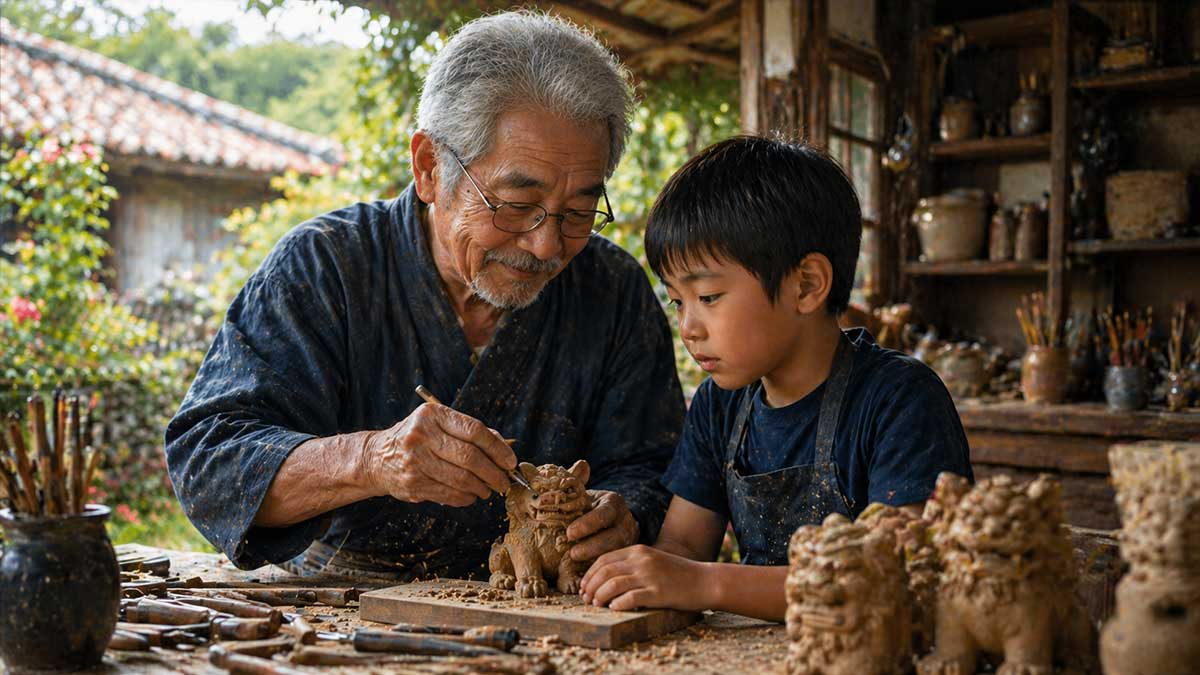
Participants: Ken Honda, Marc Freedman, Viktor Frankl, Yuval Noah Harari, Lynda Gratton
Moderator: Nick Sasaki
Question 1
Why do people often decline when they lose usefulness, role, or contribution?
Nick Sasaki:
Many people seem to lose energy after retirement, job loss, or a major identity change. Why does usefulness matter so much?
Viktor Frankl:
A human being needs meaning. When a role disappears, the danger is not only lost activity, but lost responsibility. People must still feel that life expects something from them.
Marc Freedman:
We often treat later life as withdrawal. That is a mistake. People need purpose, contribution, and intergenerational connection. Retirement should not mean being removed from usefulness.
Ken Honda:
When people feel they no longer matter, their heart closes. But usefulness can be small. Helping a neighbor, teaching a child, sharing wisdom, blessing money, giving encouragement—these restore joy.
Lynda Gratton:
The old life model—study, work, retire—is too rigid. Longer lives require multiple chapters. Purpose must be redesigned across different seasons.
Yuval Noah Harari:
Modern society ties identity tightly to economic productivity. When that role ends, people may feel invisible. We need a broader definition of human value.
Question 2
What is the difference between meaningful work and work that quietly drains the soul?
Nick Sasaki:
Many people are busy, but not fulfilled. How do we know when work is meaningful versus draining?
Ken Honda:
Meaningful work lets energy circulate. You give something, but you also receive joy, gratitude, and connection. Draining work feels like money moving without heart.
Lynda Gratton:
Meaningful work gives agency. It lets people grow, contribute, and use their strengths. Draining work traps people in repetition without learning or dignity.
Viktor Frankl:
Work becomes meaningful when it points beyond the self. If it only serves fear, status, or compulsion, it cannot satisfy the deeper person.
Marc Freedman:
The best work often connects generations. Teaching, mentoring, caregiving, building institutions—these remind people that their effort continues beyond them.
Yuval Noah Harari:
A job can be economically useful yet spiritually empty. The future will force us to separate income, identity, and meaning more clearly.
Question 3
How can someone rebuild purpose after retirement, career change, failure, or loss of identity?
Nick Sasaki:
What should someone do when the role that once defined them is gone?
Marc Freedman:
Start by asking, “Who needs me now?” Purpose often returns through service, especially across generations.
Viktor Frankl:
Do not ask life to restore the old identity. Ask what this moment demands. Meaning is always available, but it may ask for a new answer.
Lynda Gratton:
Build a portfolio life. Combine learning, relationships, contribution, paid work, unpaid work, and renewal. A longer life needs flexible identity.
Ken Honda:
Begin with gratitude. Thank the old chapter, then let money, work, and purpose become friends again. A happy next chapter comes from generosity, not panic.
Yuval Noah Harari:
Train the mind to adapt. In a changing world, the stable self cannot depend on one profession. Inner flexibility may become the most important skill.
Nick Sasaki:
This topic changes the meaning of work.
Work is not only a paycheck.
Retirement is not only stopping.
Usefulness is not only status.
Purpose is not only a title.
A person can lose a job and still be needed.
A person can retire and still contribute.
A person can fail and still become useful in a deeper way.
Maybe the question is not:
“What do I do for a living?”
Maybe the better question is:
“Who still needs the life I have lived?”
Topic 4 — Community, Moai, and Belonging
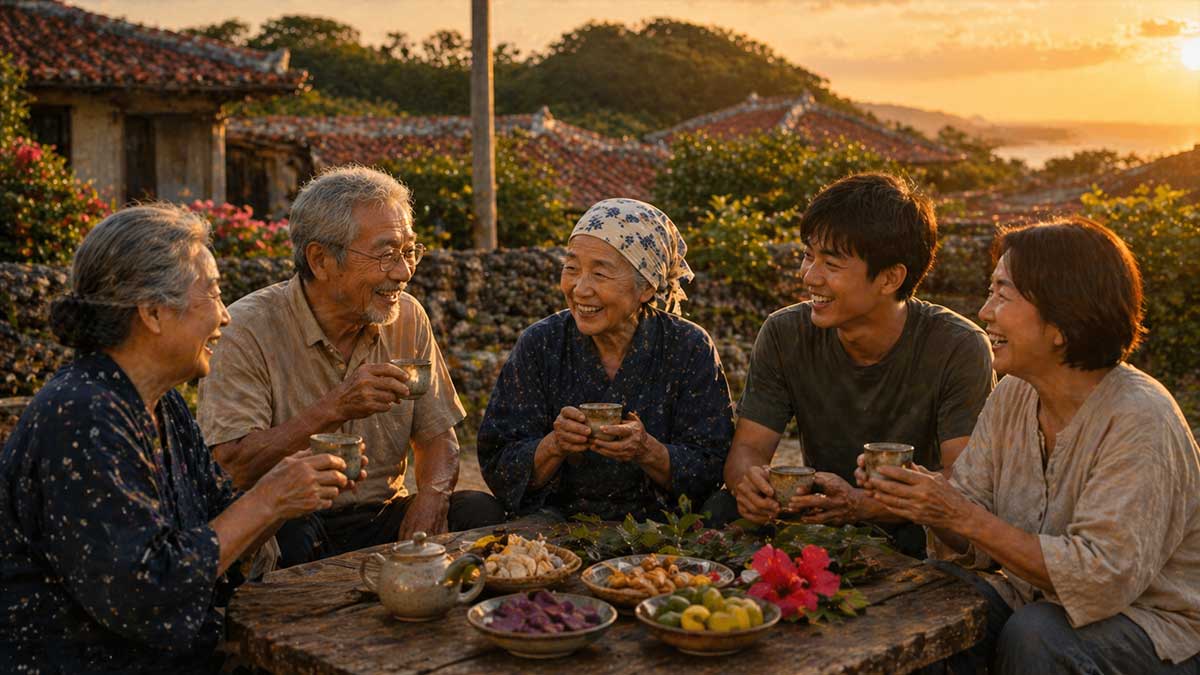
Participants: Dan Buettner, Robert Waldinger, Vivek Murthy, Robin Dunbar, Ichiro Kawachi
Moderator: Nick Sasaki
Question 1
Why are relationships so closely tied to health, happiness, and meaning?
Nick Sasaki:
Why do relationships seem to affect not just emotions, but health and longevity?
Robert Waldinger:
The longest study we have followed shows a simple pattern: good relationships help people stay healthier and happier. Connection protects the body and the mind.
Vivek Murthy:
Loneliness is not just sadness. It creates stress, fear, and disconnection. People need to feel seen, needed, and known.
Dan Buettner:
In Blue Zones, people don’t usually age alone. Their lives are woven into family, neighbors, faith groups, and lifelong circles.
Ichiro Kawachi:
Social trust matters. When people live in communities where support is expected, health improves across the group.
Robin Dunbar:
Human beings are built for layered relationships. We need close bonds, familiar faces, shared rituals, and repeated contact.
Question 2
What makes a lifelong support circle different from casual friendship or online connection?
Nick Sasaki:
The Okinawan moai is often described as a lifelong support group. What makes that different from ordinary friendship?
Dan Buettner:
A moai is not just people chatting. It is commitment. Members help each other emotionally, socially, and sometimes financially across life.
Robin Dunbar:
Regularity matters. Deep bonds form through repeated time together. Online contact can support connection, but it rarely replaces embodied presence.
Vivek Murthy:
A true support circle gives people permission to be honest. You can share fear, grief, hope, and need without performing.
Robert Waldinger:
Close relationships are not always perfect. What matters is reliability. Can you call someone when life breaks open?
Ichiro Kawachi:
A support circle also creates shared norms. People eat better, move more, check on each other, and reduce risk together.
Question 3
How can modern people rebuild small circles of trust in a lonely society?
Nick Sasaki:
Many people live near others but still feel alone. How can they rebuild real belonging?
Vivek Murthy:
Start small. One honest conversation. One weekly meal. One person you check on. Belonging returns through repeated acts.
Robert Waldinger:
Prioritize relationships like health habits. We schedule work, workouts, and errands. We need to schedule people too.
Dan Buettner:
Design your life so connection happens naturally. Walk with someone. Eat with others. Join a group that meets again and again.
Robin Dunbar:
Rituals help. Shared meals, walking groups, prayer groups, hobby circles, weekly calls—repetition turns strangers into trusted people.
Ichiro Kawachi:
Communities need places where trust can grow: parks, churches, libraries, local groups, safe neighborhoods, and shared civic life.
Nick Sasaki:
Ikigai is not only inside the individual.
It lives between people.
In the friend who calls.
In the group that notices when you are missing.
In the meal shared again and again.
In the quiet knowledge that your life is tied to others.
Maybe the question is not only:
“What is my reason to live?”
Maybe it is:
“Who would notice if my light grew dim?”
Topic 5 — Small Joys, Flow, and the Life Worth Repeating
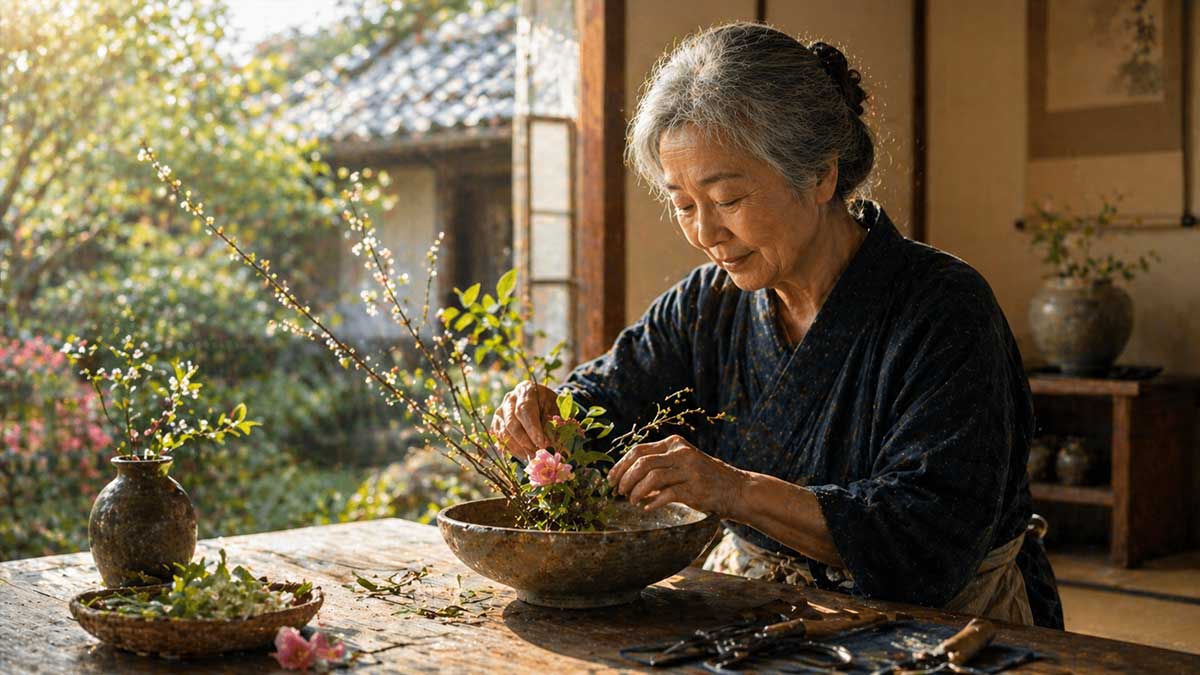
Participants: Ken Mogi, Mihaly Csikszentmihalyi, Shunmyo Masuno, Marie Kondo, Gretchen Rubin
Moderator: Nick Sasaki
Question 1
Why are small daily joys central to a meaningful life?
Nick Sasaki:
Many people search for one huge breakthrough, but Ikigai seems to point back to small daily joys. Why do those matter so much?
Ken Mogi:
Small joys are not small to the nervous system. A good cup of tea, sunlight through a window, a familiar walk, a sincere greeting—these give life continuity.
Marie Kondo:
Joy is a way of listening. When we notice what sparks joy, we begin to understand what kind of life wants to remain close to us.
Shunmyo Masuno:
Daily joy is found by paying attention. Washing a cup, sweeping a floor, arranging flowers—ordinary acts become peaceful when the mind is present.
Gretchen Rubin:
Happiness is shaped by habits. People underestimate how much repeated small actions influence the emotional tone of life.
Mihaly Csikszentmihalyi:
Joy often comes when attention is fully engaged. It is not passive pleasure, but the deep satisfaction of being absorbed in life.
Question 2
How does flow turn ordinary work, hobbies, and rituals into life-giving meaning?
Nick Sasaki:
How does flow transform something ordinary into something meaningful?
Mihaly Csikszentmihalyi:
Flow happens when challenge and skill meet. The self becomes quiet, time changes, and the activity itself becomes rewarding.
Ken Mogi:
This fits ikigai beautifully. One does not need fame. A baker, gardener, teacher, musician, or parent can enter flow through repeated devotion.
Gretchen Rubin:
People need activities that pull them into engagement. Too much convenience can remove challenge, and without challenge, happiness becomes thin.
Marie Kondo:
Ritual helps. When we care for objects, spaces, and routines, we create an environment where attention can settle.
Shunmyo Masuno:
Flow is close to Zen practice. When you are fully doing one thing, the distance between yourself and the act disappears.
Question 3
What daily practice helps someone notice what makes tomorrow worth waking up for?
Nick Sasaki:
What simple practice can help someone discover what keeps life worth repeating?
Gretchen Rubin:
Track your energy. Notice what gives you more patience, more lightness, more willingness to begin again. Patterns reveal purpose.
Ken Mogi:
Begin the morning with one small pleasure. Do not wait for a perfect life. Let the day begin with a tiny reason to say yes.
Marie Kondo:
Choose one space or object each day and care for it with gratitude. Life becomes clearer when your surroundings reflect what you value.
Mihaly Csikszentmihalyi:
Give yourself one activity that fully engages attention. It can be writing, cooking, fixing something, learning, or walking with intention.
Shunmyo Masuno:
End the day quietly. Ask, “What moment today was enough?” If you can see one such moment, tomorrow already has a door.
Nick Sasaki:
The final lesson of ikigai may be softer than expected.
It is not always a grand calling.
It is the cup you enjoy making.
The walk you take again.
The room you care for.
The craft you return to.
The person you greet.
The small act that says, “I am still here.”
Maybe the deepest question is not:
“What huge purpose will define my life?”
Maybe it is:
“What small joy makes life worth repeating?”
Final Thoughts by Nick Sasaki
What stands out is how ordinary a meaningful life looks from the outside.
There is no single dramatic answer.
No perfect moment of discovery.
No requirement to become extraordinary.
Instead, there is:
A reason to wake up.
A person to connect with.
Something to care for.
Something to improve.
Something to return to tomorrow.
Ikigai does not demand clarity before action.
It grows through repetition, attention, and quiet commitment.
You may not need to solve your whole life.
You may only need to notice:
What gives you energy.
What keeps you steady.
What feels quietly worth continuing.
And protect those things.
Short Bios:
Héctor García: Japan-based writer and co-author of Ikigai, focused on Japanese culture, daily life, and longevity.
Francesc Miralles: Author and journalist exploring purpose, creativity, and meaningful living.
Ken Mogi: Japanese neuroscientist studying everyday joy, flow, and the psychology of ikigai.
Gordon Mathews: Cultural anthropologist known for research on identity, happiness, and meaning across societies.
Mieko Kamiya: Japanese psychiatrist and author who explored ikigai as a source of human value and resilience.
Dan Buettner: Blue Zones researcher studying lifestyle patterns of long-lived populations.
Shigeaki Hinohara: Japanese physician who promoted active aging, lifelong contribution, and purposeful living.
Makoto Suzuki: Gerontologist who studied Okinawan centenarians and their health patterns.
Craig Willcox: Researcher specializing in aging, diet, and lifestyle in Okinawa.
Bradley Willcox: Physician and scientist focused on longevity, nutrition, and healthy aging.
Ken Honda: Author known for ideas on happy money, generosity, and emotional freedom around work and life.
Marc Freedman: Advocate for purposeful aging and intergenerational contribution.
Viktor Frankl: Psychiatrist and author of Man’s Search for Meaning, focused on purpose through responsibility and experience.
Yuval Noah Harari: Historian exploring human identity, work, and meaning in changing societies.
Lynda Gratton: Scholar on the future of work and multi-stage life design.
Robert Waldinger: Psychiatrist and director of a long-term study on adult development and relationships.
Vivek Murthy: Physician focused on loneliness, connection, and public health.
Robin Dunbar: Anthropologist studying social bonds and human relationship limits.
Ichiro Kawachi: Public health researcher focused on social cohesion and community well-being.
Mihaly Csikszentmihalyi: Psychologist known for the concept of flow and deep engagement.
Shunmyo Masuno: Zen monk teaching mindful living through simple daily practices.
Marie Kondo: Organizing consultant emphasizing joy, clarity, and intentional living.
Gretchen Rubin: Writer focused on habits, happiness, and everyday behavior patterns.
Leave a Reply