
|
Getting your Trinity Audio player ready...
|
What if the real story is not one nation, but the chain reaction linking them all?
Introduction by Craig Hamilton-Parker
Well, welcome again, and what I want to do here is step back from the individual headlines for a moment and ask whether we may actually be looking at one much bigger pattern unfolding across the world. People tend to take Iran, Japan, North Korea, Cuba, and even strange warnings from the sky as separate subjects, separate crises, separate stories. But I’m not at all sure they are separate. I think we may be living through a period in which the pressure is rising in many places at once, and each pressure point is showing us something about the deeper condition of humanity.
Now, Iran is one of the clearest signs of this. It is not only a political conflict. It is a struggle over identity, faith, power, suffering, and what comes after fear has ruled too long. Then you look at Japan, and there you see another side of the same age: a nation long defined by restraint beginning to face the possibility that restraint alone may no longer be enough. Then North Korea, where the question is whether a system can keep standing when it is being hollowed out slowly from within. Then Cuba, which may yet be pushed into change by forces far away from its own shores. And above all this hangs one more possibility, one far stranger and far larger — the question of whether humanity only truly wakes up when the threat is so great that no nation can pretend it belongs only to somebody else.
You see, one of the mistakes people make is they think prophecy is simply prediction. It is not. Prophecy is pattern. Prophecy is seeing the shape of an age before all the pieces have fully fallen into place. And what I feel here is not merely that five dramatic things might happen. It is that the world is being brought into a period of reckoning. Old systems are being tested. Old assumptions are being tested. The way nations think, the way leaders think, the way ordinary people think about safety, freedom, survival, and even the purpose of civilization itself — all of that is being pressed.
So as we go into these five themes, I would ask you not to think of them only as political forecasts. Think of them as signs of a wider turning point. Something is shifting in the world. Something is being exposed. And the deeper question in all of it is not simply what happens next in Iran, or Japan, or North Korea, or Cuba. The deeper question is what kind of humanity is going to emerge through the pressure.
(Note: This is an imaginary conversation, a creative exploration of an idea, and not a real speech or event.)
Topic 1: What If Cuba Opens After Iran Changes the World Energy Map?
Moderator
Richard Haass
Participants
Raúl Castro
Yoani Sánchez
Moisés Naím
Carlos Alberto Montaner
Lee H. Hamilton
A shock in the Middle East has disturbed oil flows, trade routes, sanctions policy, and the balance of power. In that unsettled moment, Cuba faces a new possibility. Not a romantic reopening. Not a simple collapse. Something harder to define. If old energy lifelines weaken and outside pressure grows, could Cuba be pushed into a new era from forces far beyond Havana?
In this imagined conversation, the question is not only whether Cuba opens. The deeper question is who writes the terms of that opening.
Richard Haass:
Let me begin with the central premise. A distant conflict alters energy markets, weakens old support systems, and suddenly Cuba faces pressure to change. If that moment comes, what kind of opening are we really talking about? A national renewal, a controlled adjustment, or a struggle over who gets the island first?
Raúl Castro:
The first mistake is in the language. People speak of “opening” as if it were always a gift. For Cuba, such language has often meant exposure, pressure, and the return of foreign appetite. A nation that has fought to preserve its independence does not casually welcome a flood of outside money and call that freedom. If Cuba changes, it must do so with discipline, with order, and with the state strong enough to prevent the country from being bought piece by piece.
Yoani Sánchez:
And yet the state has used those same words for years — discipline, order, protection. The people know what those words have meant in daily life. Restricted speech. Limited movement. Fear of dissent. Stagnation dressed as sacrifice. So if there is an opening, the real test will not be how many contracts are signed or how many hotels are built. The test will be whether Cubans can speak without fear, publish without punishment, organize without permission, and build a life that does not depend on silent obedience.
Moisés Naím:
That is exactly where so many transitions deceive people. A country looks as if it is moving. The airports get busier. Investors arrive. Fancy districts improve. New language appears — reform, modernization, efficiency. Yet beneath that new surface, the old power networks remain intact. The men who once controlled ideology learn to control licenses, ports, permits, telecom, land, and currency access. Then the world says, “Look, change has come,” when in fact the same people are sitting at the cash register.
Carlos Alberto Montaner:
Yes, and Cuba has always lived under the shadow of that danger. The regime learned long ago how to survive by changing its vocabulary without surrendering power. It can call scarcity resistance. It can call censorship unity. It can call fear patriotism. In a new phase, it may call selective capitalism progress. But liberty is not a decoration placed on top of state control. Liberty must be the base. If the citizen stays politically weak, the opening will be cosmetic.
Lee H. Hamilton:
The first years would be full of competing pressures. Some outside voices would want a quick opening. Some would demand caution. Some would seek restitution. Some would seek influence. The country would be pulled in many directions at once. In such a moment, pace matters. Sequencing matters. Institutions matter. If the process moves too fast without fair rules, the island could become prey to money and grievance. If it moves too slowly, the people may lose another generation waiting for rights that keep being postponed.
Richard Haass:
So let us narrow it. Who gains first in a real opening: the public, the state, or outside capital?
Raúl Castro:
The state must remain the spine of the country in the first phase. If you weaken it too much, too early, you do not get justice. You get chaos. You get opportunists. You get those who left returning with money and claims, ready to take control of property and policy. I know many will dislike that answer, but a weak state at such a moment invites humiliation.
Yoani Sánchez:
The people have heard that argument all their lives: first preserve the state, then someday freedom will come. Yet “someday” never arrives. The state speaks as guardian, but who guards the citizen from the guardian? If an opening protects the structure above all else, then it is not a national rebirth. It is a rescue plan for those already in charge.
Moisés Naím:
There is a pattern here seen in many countries. The elite says, “We must prevent disorder.” That sounds wise, and often part of it is true. But inside that warning is a quiet bargain: let us manage the transition, let us keep control of timing, let us decide who enters the market, let us judge who is responsible enough for freedom. That is how managed openings become elite transfer systems.
Carlos Alberto Montaner:
And that is why civic life must come first. Free press. Real parties. Independent courts. Protection for dissent. Open debate. This is not romantic talk. It is practical talk. If citizens cannot see clearly, speak openly, and challenge power without fear, they cannot stop the theft of the future.
Lee H. Hamilton:
I would frame it this way. A responsible transition would try to keep three tracks moving together: political rights, economic change, and legal fairness. None can safely wait too long on the others. If only markets open, insiders will dominate. If only politics opens without economic relief, frustration may rise fast. If legal systems remain weak, both politics and commerce will be distorted from the start.
Richard Haass:
Let’s move to sovereignty. Cuba’s defenders have long argued that outside pressure is not reform but intrusion. Is there a path where Cuba opens and still keeps its dignity?
Raúl Castro:
A country keeps dignity by setting terms, not by accepting terms written elsewhere. Cuba must never become a showroom for American nostalgia, foreign speculation, and shallow claims of rescue. The island has a history, a spirit, and a price paid in struggle. Those things cannot be treated as obstacles to commerce.
Yoani Sánchez:
I agree that Cuba must not be reduced to a commodity. But dignity is not preserved by denying citizens freedom. A nation does not keep its soul by keeping its people small. I reject the idea that Cubans must choose between national dignity and personal liberty. A mature country can defend both.
Moisés Naím:
A nation loses itself in two ways. One is by surrendering to foreign appetite. The other is by freezing itself in fear of that appetite until decay becomes normal. Cuba’s challenge is not whether to meet the world. It will meet the world. The challenge is whether the citizen meets the world with rights or without them.
Carlos Alberto Montaner:
Yes. The regime has often spoken as if poverty were a shield of honor. It is not. A poor nation can still be proud, of course. But poverty is not proof of virtue. Silence is not proof of unity. Closed doors are not proof of sovereignty. Those are false equations that have harmed Cuba for a very long time.
Lee H. Hamilton:
Strong countries are not strong because they refuse contact. They are strong because they have enough confidence, enough law, and enough civic balance to engage without disappearing. Cuba will need exactly that kind of confidence. Not theatrical anti-foreign slogans. Not blind faith in capital. Real confidence built on rules.
Richard Haass:
Suppose money begins to move in — tourism, shipping, telecom, real estate, finance. What is the first thing each of you would watch?
Raúl Castro:
Land. Land tells you who the country belongs to.
Yoani Sánchez:
Speech. If journalists still fear prison or intimidation, nothing else can be trusted.
Moisés Naím:
Licenses and banking access. That is where the hidden winners will appear.
Carlos Alberto Montaner:
The courts. If the courts are weak or obedient, the transition is already compromised.
Lee H. Hamilton:
Local participation. If ordinary Cubans are shut out of early opportunity, social resentment will grow and the legitimacy of reform will weaken.
Richard Haass:
That is a revealing set of answers. It suggests that the contest is not merely economic. It is moral, legal, and national all at once.
Richard Haass:
Let me take the hardest part now. In the first five years, what should come first: liberty, growth, or protection from elite capture?
Raúl Castro:
Protection and continuity. A nation cannot live in permanent upheaval. If the foundation breaks, freedom itself becomes fragile. The state must hold the center.
Yoani Sánchez:
Liberty. Without liberty, all the other promises become tools of delay. Speak first of rights. Then people can protect themselves from false reform.
Moisés Naím:
Protection from elite capture, because elite capture can wear the mask of both liberty and growth. A transition can use democratic words and still be stolen. It can use market words and still be stolen. Watch the ownership map. Watch who gets the first advantage.
Carlos Alberto Montaner:
I would say liberty with institutional teeth. A free press with no court behind it can be harassed. Elections with no honest legal system can be manipulated. Property reform with no civic voice can become auctioned privilege. The first years demand vigilance.
Lee H. Hamilton:
No single answer is enough. Yet if forced to choose a governing principle, I would choose accountability. Accountability is what makes political rights usable, economic change fairer, and state action more limited.
Richard Haass:
There is another layer here. If Cuba opens in response to outside shocks, would the people feel this as freedom, or as a change imposed from the outside?
Raúl Castro:
That depends on whether the nation is permitted to move at its own pace. If outside powers treat Cuba as a strategic prize, the people may feel more occupied than liberated.
Yoani Sánchez:
The people have already lived through imposed realities. The difference is that many of those realities came wrapped in revolutionary language. Cubans do not need a new script written abroad. True. But they also do not need the old script recited again by men who have denied them voice.
Moisés Naím:
The emotional texture of transition matters. Citizens must feel they are authors, not scenery. If they become spectators in a contest between insiders and foreigners, bitterness will outlast the deals.
Carlos Alberto Montaner:
That is why moral clarity matters so much. The first sentence of a new Cuba cannot be “The state has decided to modernize itself.” The first sentence must be “The citizen has returned.”
Lee H. Hamilton:
If people see their lives improving and their voice respected, they may accept a difficult and uneven process. If they see wealth arriving without fairness, they will suspect, with reason, that history has merely changed costume.
Richard Haass:
I want to ask each of you to complete two sentences. First: The greatest danger in a Cuban opening is...
Raúl Castro:
...that sovereignty is sold in the name of rescue.
Yoani Sánchez:
...that reform becomes a new excuse to postpone freedom.
Moisés Naím:
...that the old ruling class becomes the new owning class.
Carlos Alberto Montaner:
...that appearances of change replace the substance of liberty.
Lee H. Hamilton:
...that speed outruns justice and law.
Richard Haass:
Now the second sentence: The greatest hope in a Cuban opening is...
Raúl Castro:
...that Cuba changes without being stripped of itself.
Yoani Sánchez:
...that ordinary Cubans no longer live with fear as a condition of daily life.
Moisés Naím:
...that power disperses, rather than simply repainting its walls.
Carlos Alberto Montaner:
...that the citizen, after so many years, becomes the true center of the republic.
Lee H. Hamilton:
...that a strategic shift becomes a civic rebirth.
Richard Haass:
One final round. Imagine you are speaking to a young Cuban, twenty-five years old, who has heard promises all their life and trusts none of them. What do you say?
Raúl Castro:
I would say: do not let strangers teach you to despise your country. Reform may come, and it may be needed, but a nation that forgets its own worth becomes easy to exploit.
Yoani Sánchez:
I would say: your life is not meant to be lived in waiting. You are not here to protect the comfort of a system. You are here to speak, create, choose, love, work, and build without fear.
Moisés Naím:
I would say: study power. Do not listen only to slogans. Watch who owns, who signs, who benefits, who is exempt, who is protected, who is silenced. That is where truth lives.
Carlos Alberto Montaner:
I would say: do not confuse patience with passivity. A free republic needs citizens with memory, courage, and standards. If you lower your standards at the founding moment, the future shrinks at once.
Lee H. Hamilton:
I would say: a stable country needs people who can resist both cynicism and illusion. Demand rights. Demand fairness. Demand calm judgment. Those things together give a nation a chance.
Richard Haass:
Then perhaps that is the real heart of this discussion. Cuba may face a day when the world changes around it and the old walls no longer hold as they once did. On that day, the issue will not simply be whether the island opens. The issue will be whether the opening belongs to the citizen, to the state, or to those waiting offshore with contracts in hand.
And that question is still before us.
Topic 2 What If Iran’s Future Belongs to a Woman No One Sees Coming Yet?
Moderator
Christiane Amanpour
Participants
Reza Pahlavi
Masih Alinejad
Shirin Ebadi
Narges Mohammadi
Azar Nafisi
Iran has lived under layers of fear, pride, memory, faith, exile, and control. Revolutions were promised before. Reforms were promised before. Patience was demanded again and again. Yet beneath the surface, something deeper has been forming for years: women refusing humiliation, citizens refusing silence, and a nation slowly asking whether its future can still be written by the same old hands.
In this imagined conversation, the question is not only whether Iran changes. The deeper question is this: what if the truest sign of Iran’s rebirth is a woman rising into leadership in a country that once treated such a future as unthinkable?
Christiane Amanpour:
Let’s begin with the heart of the matter. Many revolutions imagine a dramatic fall, a triumphant return, a single face at the center. Yet Iran may not change that way. What if the real transformation comes later, and comes through a woman leader who symbolizes a deeper break from the old order? Is that realistic, or is it still too far beyond the country’s political imagination?
Reza Pahlavi:
It is realistic only if we understand that political change alone is never enough. Iran does not simply need a replacement of rulers. It needs restoration of trust, of civic dignity, of national confidence. A woman in leadership would indeed symbolize something profound, yet the country would need institutions strong enough to protect such a figure from becoming merely symbolic. The danger in any transition is confusing poetry with structure.
Masih Alinejad:
I think the country is far ahead of many political analysts. Iranian women have already been leading. They have been leading in courage, in sacrifice, in moral clarity, in refusal. The system has beaten them, imprisoned them, humiliated them, even killed them, yet it has not broken them. So the real question is not whether Iran can imagine a woman leader. The real question is whether the old political class can admit that women have already become the conscience of Iran.
Shirin Ebadi:
A woman leader is possible. I do believe that. Yet possibility is not the same as preparation. If the legal structure remains rotten, if the security system remains untouched, if the judiciary remains obedient to power, then one woman at the top changes less than people hope. We must not romanticize leadership. Real freedom requires law, rights, enforcement, and limits on power.
Narges Mohammadi:
Yes, and I would say something even more painful. Iran has learned to celebrate courage and still betray it. Many brave people are praised in prison and forgotten in negotiations. Many women become symbols for the world and burdens to the state. If a woman rises to leadership, she must not be used as decoration for a half-free Iran. She must belong to a real transformation, not to a carefully managed illusion.
Azar Nafisi:
Iran’s crisis is political, yes, but it is also emotional and imaginative. Tyranny damages the inner life of a nation. It teaches citizens to perform, to hide, to divide the self in two. So when we speak of a woman leader, we are really speaking of a new moral language. Could Iran one day be led by someone who embodies not domination, not theatrical masculinity, not clerical authority, but moral steadiness, intelligence, and civic tenderness? That would signal more than political change. That would signal cultural healing.
Christiane Amanpour:
Then let me sharpen it. If the regime fell tomorrow, what would matter more in the first years: justice, stability, or vision?
Reza Pahlavi:
The country would need all three, yet stability would be the condition that allows the other two to breathe. A broken state invites revenge, factional struggle, foreign interference, and exhaustion. Iran has seen enough chaos in its history. The transition must keep the nation intact.
Masih Alinejad:
I agree that chaos is dangerous. Yet “stability” has too often been the word used to suffocate justice. Women are told to wait. Prisoners are told to wait. Families of the dead are told to wait. Entire generations are told to wait for the proper moment. No. The first years must include truth. Not slogans. Truth. Who ordered the beatings? Who ordered the killings? Who built the machinery of fear?
Shirin Ebadi:
Justice without procedure can become vengeance. Stability without justice can become recycled repression. Vision without institutions can become fantasy. That is why the early design of a transition matters so much. A constitutional process, an independent judiciary, protection for speech, equal rights before the law, protection for minorities — these are not secondary details. They are the foundation.
Narges Mohammadi:
The people who suffered most cannot be asked to disappear politely into a technocratic future. Iran’s wounds are not abstract. They live in cells, graves, mothers, scars, and silence. Any new order that does not honor that suffering from the start will carry poison inside it.
Azar Nafisi:
A nation must tell the truth in order to imagine itself again. That is why literature survives tyrannies. Stories preserve the soul that power tries to flatten. The first years after a fall would require tribunals, yes, courts, yes, law, yes. Yet they would also require language that restores personhood. Iran has been spoken over for too long.
Christiane Amanpour:
Can a woman leader unite Iran’s competing worlds — secular, religious, reformist, nationalist, exiled, wounded, suspicious — or would she become the battlefield onto which every unresolved conflict is projected?
Reza Pahlavi:
That depends on the kind of leader she is and the terms of transition. If she arrives through national consent, through legitimacy, through a broad civic process, she could become a unifying force. If she is seen as the project of one faction, she will be torn apart by every other faction. Iran cannot afford another narrow victory.
Masih Alinejad:
She would be attacked mercilessly. We should be honest about that. Men who tolerated corruption may suddenly discover “principle” when a woman claims authority. Old opposition figures may praise women in speeches and fear them in practice. Yet that is exactly why such leadership would matter. It would expose who truly believes in freedom and who merely wants new furniture in the same old house.
Shirin Ebadi:
Iranian society is more complex than outsiders think. There are religious women who oppose tyranny. There are secular women who cherish tradition. There are men who support equality from conviction, not performance. A woman leader need not erase these differences. She must create a legal and civic structure in which these differences can coexist without domination.
Narges Mohammadi:
She must also be prepared to disappoint those who want a miracle. One person cannot heal everything. If she is wise, she will refuse to be treated as a savior. Iran does not need another cult. It needs a republic of accountable adults.
Azar Nafisi:
And yet symbols matter. We should not be afraid of saying that. A woman at the center of public life in Iran would shatter an old theatrical order of power. It would tell girls that the nation no longer imagines authority only through the face of the father, the cleric, the strongman, the martyr, the commander. It would open psychic space.
Christiane Amanpour:
Let’s turn to exile and return. Many transitions are haunted by the question of who stayed and who left. Who suffered inside, who organized outside, who speaks for the nation, who merely speaks about it. How would this tension shape the future?
Reza Pahlavi:
Exile is a painful condition. It gives perspective, and it creates distance. Those outside must not pretend they carry the whole burden of Iran. Those inside must not dismiss every outside voice as detached. The nation will need both memory and presence, both continuity and renewal.
Masih Alinejad:
Yes, but let’s say this plainly. Nobody owns the struggle. Not exiles. Not insiders. Not famous figures. The people inside Iran paid with their bodies. That truth must never be softened. At the same time, voices outside kept the world from forgetting. A free Iran must be generous enough to hold both.
Shirin Ebadi:
The law must treat each citizen equally, whether they suffered at home or campaigned abroad. Otherwise transition becomes a competition of grief. That would poison the future very quickly.
Narges Mohammadi:
Those in prison did not suffer so they could be replaced by polished elites with better media access. A future Iran must guard against that. The moral authority of sacrifice matters. Not as entitlement, but as warning.
Azar Nafisi:
Exile teaches you what absence does to love. It makes memory both sharper and less reliable. A reborn Iran will need dialogue between those who preserved hope in fragments and those who survived the machine directly. Both know part of the truth. Neither knows all of it.
Christiane Amanpour:
What would a woman leader have to say, very early, to persuade Iran that she is not merely historic, but trustworthy?
Reza Pahlavi:
She would need to say that no group owns the state. That Iran belongs equally to believer and skeptic, woman and man, Persian and non-Persian, insider and exile. Equal citizenship must be her opening principle.
Masih Alinejad:
She would need to say, “No woman will ever again be beaten, jailed, or killed for how she lives in her own body.” If she cannot say that with full force, the old fear is still alive.
Shirin Ebadi:
She would need to say that the law will stand above ideology. That no office, no security apparatus, no clergy, no military power will remain beyond legal scrutiny.
Narges Mohammadi:
She would need to say the names of the wounded and the dead. A nation listens differently when truth is spoken without bargaining.
Azar Nafisi:
She would need to speak with moral confidence and with restraint. Iran has had enough shouting men. The future may need a different register — one that does not confuse cruelty with seriousness.
Christiane Amanpour:
Let’s go to the deepest question. Could Iran become free politically, yet remain imprisoned culturally? Put another way, can a regime fall and the old habits stay?
Reza Pahlavi:
Yes. That is entirely possible. Authoritarian habits survive in families, institutions, and reflexes. A constitutional order can restrain them, but it cannot erase them overnight.
Masih Alinejad:
This is why women matter so much in Iran’s future. Women have had to resist not only the state, but also social habits, family pressures, inherited fears, and selective male courage. Their struggle has always been political and cultural at once.
Shirin Ebadi:
Legal equality helps reshape culture over time. It does not solve everything at once, yet it matters enormously. A culture can evolve when the law stops blessing inequality.
Narges Mohammadi:
Prison teaches you something terrible: domination becomes ordinary very quickly. That is why vigilance matters after victory. The habits of humiliation do not vanish because the flag changes.
Azar Nafisi:
Freedom begins in imagination before it stabilizes in law. Tyranny shrinks the imagination. It tells people that only one kind of voice is serious, only one kind of body is respectable, only one kind of power is real. A woman leader would challenge that script at its root.
Christiane Amanpour:
I want one direct response from each of you. Complete this sentence: If Iran one day is led by a woman, the greatest resistance will come from...
Reza Pahlavi:
...those who fear equal citizenship more than they fear tyranny.
Masih Alinejad:
...men who praised women’s bravery until women asked for power.
Shirin Ebadi:
...institutions built to preserve unaccountable authority.
Narges Mohammadi:
...every habit that learned to survive by silencing women first.
Azar Nafisi:
...the old imagination of power itself.
Christiane Amanpour:
And now the opposite sentence: The greatest hope in such a moment would be...
Reza Pahlavi:
...that Iran finally joins dignity with modern citizenship.
Masih Alinejad:
...that fear loses its costume of holiness.
Shirin Ebadi:
...that justice becomes normal rather than heroic.
Narges Mohammadi:
...that the suffering of women helps give birth to a freer nation for everyone.
Azar Nafisi:
...that Iran rediscovers its soul through a different moral voice.
Christiane Amanpour:
Final round. Speak to a young Iranian girl, fifteen years old, watching all of this from inside a country that still tells her to shrink. What do you say?
Reza Pahlavi:
I would say: your future must not be defined by fear inherited from the past. Iran is older and greater than the ideology that tries to contain you.
Masih Alinejad:
I would say: the system is afraid of you. Never forget that. It is afraid of your hair, your voice, your choice, your laughter, your refusal. That fear is proof of your strength.
Shirin Ebadi:
I would say: know your rights, even before the law recognizes them fully. Rights live first in conviction, then in institutions.
Narges Mohammadi:
I would say: your life is not a footnote to someone else’s authority. Hold on to your dignity. Tyranny survives by trying to make people small inside themselves.
Azar Nafisi:
I would say: protect your inner world. Read, imagine, question, remember. Power fears the girl who can still name herself.
Christiane Amanpour:
Then perhaps that is where we end. Iran’s future may not be saved by nostalgia, or by force, or by another man promising order. It may come through a longer struggle, a deeper change, and a different kind of authority altogether. Not authority built on fear, but on dignity. Not on theatrical strength, but on moral seriousness. And if that day comes, Iran will not simply have chosen a new leader. It will have chosen a new image of itself.
Topic 3: What If North Korea Starts Falling Without a Single Invasion?
Moderator
Victor Cha
Participants
Thae Yong-ho
H.R. McMaster
Andrei L.ankov
Jung H. Pak
Yeonmi Park
For decades, North Korea has been imagined through missiles, parades, nuclear threats, and sudden crisis. Most people picture its end in dramatic form: war, collapse, coup, or invasion. Yet history often works in quieter and more unsettling ways. States can weaken from within long before they break in public. They can hollow out, tighten control, lose supply, lose belief, lose margins, and still keep standing for years.
In this imagined conversation, the question is not whether North Korea can be defeated from outside. The deeper question is this: what if the regime begins to fail through slow pressure on its lifelines, its economy, and its internal fear system — without a single invasion ever taking place?
Victor Cha:
Let’s begin with the central premise. Suppose North Korea does not face immediate invasion, yet its external supports weaken over time — energy constraints, sanctions pressure, fewer dependable partners, more internal strain. What breaks first in such a system: the economy, elite cohesion, public fear, or military confidence?
Thae Yong-ho:
The first crack would likely appear inside the elite, not in the streets. The outside world often imagines collapse beginning with the people rising up. That is not how such a system usually weakens. The regime survives by feeding the core first — the party, the security class, the military command, the families tied to power. If resources shrink badly enough, the question becomes simple: who inside that privileged circle begins to doubt the permanence of the arrangement?
H.R. McMaster:
I think that is right. Highly coercive states often look strongest just before they enter a more dangerous phase. Pressure does not always soften them. It can make them harsher, more erratic, more willing to provoke. A regime under strain may choose escalation, not restraint, if it believes external crisis can restore internal discipline.
Andrei Lankov:
Yes, and we should be careful not to exaggerate the speed of decay. North Korea has survived famine, isolation, sanctions, leadership succession, and tremendous structural weakness. It is a far more adaptive system than many outsiders wanted to believe. It has black markets, informal exchange, corruption networks, and survival habits. So the question is not whether pressure matters. It does. The question is how much pressure is absorbed by ordinary people before it becomes dangerous to the regime itself.
Jung H. Pak:
That is the policy dilemma. Outside governments want pressure to change elite behavior. Yet authoritarian systems are built to redirect pain downward. The leadership protects its strategic assets and political control first. Citizens absorb scarcity. Border communities absorb scarcity. Families absorb scarcity. So weakening lifelines may create vulnerability, but it can also deepen humanitarian suffering long before it changes state behavior.
Yeonmi Park:
That is always the tragedy. People talk about the regime like it is a machine. For us, it was hunger, fear, silence, informants, and the destruction of trust. When the system tightens, the powerful still eat. The poor disappear more quietly. So if North Korea starts falling slowly, the first sound the world may hear is not a political speech. It may be the silence of people suffering where nobody can see them.
Victor Cha:
Then let’s sharpen it. If energy flows tighten and outside support weakens, does North Korea become more dangerous or more open to negotiation?
Thae Yong-ho:
More dangerous first. The regime has always treated fear as a political resource. If it senses weakness, it may stage provocation to prove vitality. It may test a missile, mobilize rhetoric, threaten conflict, or carry out selective violence. The purpose is not only external signaling. It is internal reassurance.
H.R. McMaster:
Exactly. We should never assume a pressured regime will behave like a fatigued democracy. North Korea is built on confrontation. It may believe tension is stabilizing. It may believe that strategic aggression secures concessions, divides adversaries, and reminds domestic elites why the leadership must remain absolute.
Andrei Lankov:
At the same time, the regime is not suicidal. It can be brutal and rational in its own way. It wants survival. The leadership may provoke in calibrated fashion, then reopen channels, then trade temporary calm for material advantage. This is an old pattern. The danger is that one cycle eventually runs too hot.
Jung H. Pak:
That is why reading signals matters so much. A weakened system may send mixed signals at once — outward aggression, inward anxiety, selective diplomacy, sudden purges, strange propaganda emphasis. Analysts need to read not only what Pyongyang says, but what it repeats, what it omits, and what internal audiences it seems desperate to reassure.
Yeonmi Park:
And in the middle of all that, the people remain trapped in a country that tells them every hardship proves the greatness of sacrifice. The regime can turn scarcity into ideology. It can say, “Your suffering is patriotism.” That makes slow collapse very difficult to read from outside because pain itself becomes part of the script of loyalty.
Victor Cha:
Let’s talk about fear. In a system like North Korea, what fails first: material control or psychological control?
Thae Yong-ho:
Psychological control weakens quietly, material control visibly. That is an important distinction. People may continue obeying outwardly long after they stop believing inwardly. Once private disbelief spreads far enough, the system becomes brittle. It still functions, but it no longer inspires. It only threatens.
H.R. McMaster:
And a state that rules almost entirely through threat must constantly demonstrate its capacity to punish. If its ability to reward shrinks and its ability to terrify becomes less certain, the coercive equation changes. That does not guarantee collapse. It does increase volatility.
Andrei Lankov:
We have already seen elements of this in marketization from below. Informal trade and private coping mechanisms change consciousness. A person who survives through small market logic learns something dangerous from the regime’s point of view: the state is not the sole source of life. That insight matters.
Jung H. Pak:
Yes, yet we should not romanticize it. Informal markets can weaken total control, but they can also be taxed, infiltrated, and manipulated by the state. Regimes learn. They do not simply sit still and decay.
Yeonmi Park:
Still, once a person begins comparing official lies with actual life, something changes forever. Fear remains, yes. Yet fear no longer feels holy. It feels imposed. That is a different inner world. A society can live in that condition for a long time, but it is no longer the same society.
Victor Cha:
Suppose the system starts cracking indirectly, not dramatically. No invasion. No spectacular overthrow. Just tighter lifelines, weaker faith, and more hidden strain. How should the outside world respond?
Thae Yong-ho:
The world must prepare for fragmentation, not only collapse. There may be zones of weakened command, competing security interests, local opportunism, and confused chains of order. It would be dangerous to think only in terms of one clean end.
H.R. McMaster:
And deterrence must remain firm. A stressed nuclear regime is not the moment for wishful thinking. Military readiness, alliance coordination, and clear signaling would remain essential. Humanitarian concern is necessary, but strategic discipline cannot be abandoned.
Andrei Lankov:
I would add patience and realism. The outside world has often predicted sudden transformation in North Korea. Usually it was wrong. The regime may decay for many years without breaking in the way outsiders expect. Policymakers must prepare for long ambiguity.
Jung H. Pak:
That means layered policy. Pressure where needed. Information where possible. Humanitarian channels where feasible. Coordination among allies. Quiet contingency planning. And restraint against fantasy scenarios that assume a quick democratic dawn the moment central control weakens.
Yeonmi Park:
Please do not forget the human side. A falling North Korea is not just a strategic event. It is children, mothers, prisoners, trafficked women, soldiers, border families, people who have never had the right to trust their own thoughts. If the world prepares only for weapons and maps, it will fail the people again.
Victor Cha:
That leads to a hard moral question. If pressure contributes to weakening the regime but also increases civilian suffering, how should the world think about that tradeoff?
Thae Yong-ho:
There is no clean answer. The regime already produces suffering as a condition of rule. Yet outside measures can worsen scarcity in the short term. The key issue is whether pressure is targeted intelligently or applied bluntly.
H.R. McMaster:
The worst mistake would be to confuse inaction with compassion. A regime armed with nuclear weapons, built on repression, and accustomed to extortion poses grave risks beyond its borders. Yet policy has to distinguish between strategic instruments and indiscriminate pain.
Andrei Lankov:
That is correct. Sanctions and isolation can damage elite capacity, but the regime is skilled at shifting burden downward. So policy must remain modest about what it can achieve quickly. Too many outside actors have imagined that enough pressure produces moral clarity. It usually produces complexity.
Jung H. Pak:
Which is why information access matters so much. Humanitarian policy is stronger when it is paired with efforts to widen truth, widen communication, widen external awareness. Total isolation leaves people trapped inside the regime’s explanation of their own pain.
Yeonmi Park:
People inside North Korea are told that the outside world hates them. They are told suffering proves loyalty. They are told escape is betrayal. Truth is a form of mercy there. Not sentimental mercy. Real mercy.
Victor Cha:
Let’s turn to China. If North Korea weakens slowly, what role does China play?
Thae Yong-ho:
China will fear disorder more than repression. It would much rather see a controlled, intact buffer than an unpredictable vacuum near its border.
H.R. McMaster:
China’s interest is stability on its terms. It does not want war, refugees, uncontrolled weapons risk, or a unified Korea aligned tightly against it. So it may support enough continuity to prevent collapse without solving the root problem.
Andrei Lankov:
Yes, China is not looking for a moral resolution. It is looking for manageable outcomes. That is why North Korea has survived longer than many expected. Strategic inconvenience is often tolerated if the alternatives seem worse.
Jung H. Pak:
Any slow destabilization would force China into difficult calculations — how much support to extend, how openly to extend it, how to signal restraint without inviting disaster, how to preserve influence without owning the consequences. Beijing would not have easy choices.
Yeonmi Park:
And yet many North Koreans know, in fragments, that the world beyond the border is different. Borders are not only fences. They are mirrors. Once people glimpse another reality, even imperfectly, it becomes harder to imprison imagination forever.
Victor Cha:
I want to ask about the military. In a weakening state, does the military hold the system together, or become the place where fractures begin?
Thae Yong-ho:
It can be both. The military is central to regime survival, yet military institutions also feel scarcity, hierarchy, resentment, and fear. If confidence weakens at the upper levels, the military becomes a sensitive indicator of deeper problems.
H.R. McMaster:
In nuclear states, military cohesion is one of the most serious concerns in any destabilization scenario. That is why allied planning cannot be improvised. There must be readiness for uncertainty, loose command structures, and rapid shifts.
Andrei Lankov:
Still, we should resist dramatic assumptions. Military institutions in authoritarian systems can remain functional long after civilian life has frayed badly. Decay is not always visible from the outside.
Jung H. Pak:
True, but pay attention to unusual personnel changes, purges, public symbolism, command appointments, and internal propaganda emphasis. Those signals can reveal insecurity before open fracture appears.
Yeonmi Park:
The military is also made of sons, brothers, hungry young men, frightened men, indoctrinated men. A machine is made of human beings. That is easy to forget from a distance.
Victor Cha:
Let me ask each of you to complete this sentence: If North Korea starts falling without a single invasion, the first real sign will be...
Thae Yong-ho:
...private doubt spreading inside circles that once performed absolute confidence.
H.R. McMaster:
...more dangerous external behavior meant to mask internal weakness.
Andrei Lankov:
...small shifts in the balance between official control and informal survival.
Jung H. Pak:
...mixed signals — harsher propaganda, strange diplomacy, tighter control, and unusual elite movement all at once.
Yeonmi Park:
...people losing fear in silence before the world notices anything at all.
Victor Cha:
And now the second sentence: The greatest danger in that process would be...
Thae Yong-ho:
...fragmentation without direction.
H.R. McMaster:
...miscalculation by a nuclear regime under strain.
Andrei Lankov:
...outsiders projecting fantasies onto a situation they do not actually control.
Jung H. Pak:
...failing to pair strategic planning with humanitarian realism.
Yeonmi Park:
...that the people suffer again and the world speaks only of missiles.
Victor Cha:
Final round. Imagine you are speaking to a young North Korean, twenty years old, who has lived inside the system long enough to feel its fear but also its cracks. What do you say?
Thae Yong-ho:
I would say: systems that appear eternal are often weaker than they look. Guard your mind. Regimes fear that first.
H.R. McMaster:
I would say: your life matters beyond the designs of those who use fear as government. History can change faster than it seems.
Andrei Lankov:
I would say: learn to distinguish what is performed from what is real. That skill is one form of survival.
Jung H. Pak:
I would say: the world’s duty is not only to judge your rulers, but to remember your humanity. You are not your regime.
Yeonmi Park:
I would say: the lies told around you are not the measure of your worth. The hunger is not your shame. The fear is not your identity. Keep something inside untouched.
Victor Cha:
Then perhaps that is where we end. The future of North Korea may not arrive as one dramatic event. It may come through erosion, strain, hidden disbelief, improvised survival, and dangerous overreaction from a state trying to prove it is still unbreakable. If that happens, the true challenge for the world will be to see clearly — not only the weapons, not only the maps, but the people living inside the slow cracking of power.
Topic 4: What If Japan Becomes Asia’s New Moral and Military Hinge?
Moderator
David Sanger
Participants
Sanae Takaichi
Shinichi Kitaoka
Joseph Nye
Pankaj Mishra
Sheila A. Smith
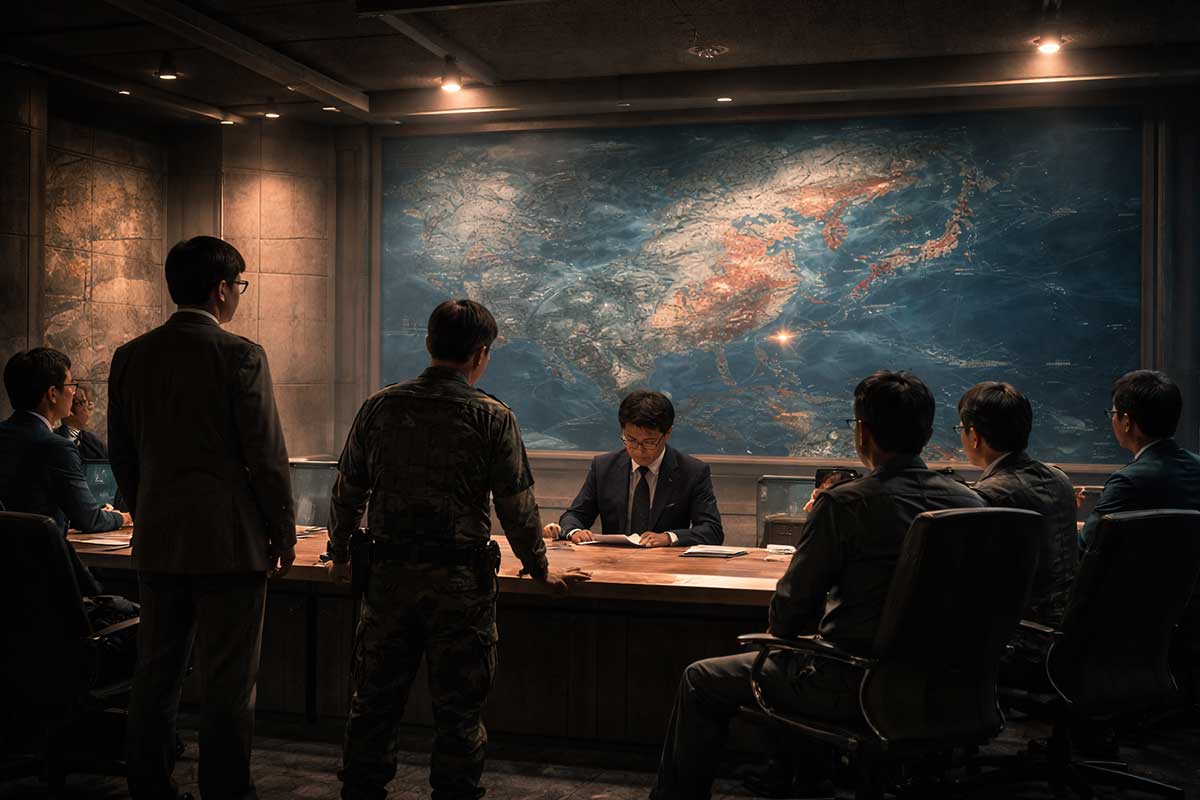
For much of the postwar era, Japan has lived inside a careful identity: economically formidable, politically stable, technologically advanced, yet restrained in military posture by history, law, memory, and the shadow of Hiroshima and Nagasaki. That identity gave Japan moral weight, but it also tied Japan to a security order built under American protection.
Now the region is shifting. China is more forceful. North Korea remains dangerous. Taiwan sits inside growing tension. Faith in old assumptions is thinning. In that setting, Japan faces a deeper question than rearmament alone. What if Japan is moving toward a role in which it becomes not only a major power again, but the moral and military hinge of Asia?
Would that steady the region, or unsettle it? Would Japan’s strength restore balance, or reopen buried fears that never fully disappeared?
David Sanger:
Let me begin with the central premise. Japan has long balanced economic power with military restraint. Yet the regional climate is changing. If Japan steps into a much stronger defense role, perhaps even redefining its old limits, does that create stability in Asia, or does it awaken anxieties that the postwar order kept contained?
Sanae Takaichi:
It creates stability, if it is done with seriousness and clarity. Japan cannot remain permanently dependent on assumptions from another era. We live in a region where missiles are real, coercion is real, and strategic intimidation is real. Restraint has value, yes, but restraint without readiness becomes vulnerability. A country has a duty to protect its people, its territory, and its future.
Shinichi Kitaoka:
Japan is at a turning point, but it must act with historical intelligence. The issue is not whether Japan should become “normal” in some simplistic sense. The issue is what kind of normality suits a nation with our history, our institutions, and our regional responsibilities. Japan cannot behave as if memory does not matter. Yet memory alone cannot be its security doctrine.
Joseph Nye:
That is exactly right. Power in Asia is never only military. Japan’s unique strength has long come from the mixture of legitimacy, competence, alliance reliability, economic weight, and a reputation for restraint. If Japan strengthens militarily without losing that legitimacy, it could become a stabilizing force. If it strengthens in a way that appears historically tone-deaf, it could lose one of its greatest assets.
Pankaj Mishra:
I would press harder there. We should not speak as though militarization were simply a technical adjustment to a new environment. In Asia, history lives close to the surface. Japanese rearmament is not heard in a vacuum. It is heard in China, Korea, Southeast Asia, and across a region still marked by empire, occupation, humiliation, and competing national memories. Strategy cannot float above memory.
Sheila A. Smith:
True, but Japan’s present dilemma is not imaginary. The threats are real, alliance structures are under stress, and the domestic mood is shifting. Japanese leaders are not asking abstract questions. They are asking what it means to be secure in a region where the old guardrails feel less certain. The challenge is to build strength without abandoning the civic and diplomatic discipline that made Japan trusted in the first place.
David Sanger:
Then let’s sharpen it. What would actually force Japan across its deepest postwar threshold? China? North Korea? Taiwan? Or a simple loss of faith in the existing security order?
Sanae Takaichi:
It would be the accumulation of all of those pressures. Nations do not change at the deepest level from one headline. They change when reality keeps arriving and the old vocabulary no longer answers it. Japan has watched missile threats, gray-zone pressure, and strategic uncertainty increase year after year. At some point, seriousness demands more than symbolic adjustments.
Shinichi Kitaoka:
I would place special emphasis on confidence in the alliance system. As long as Japan believes the American commitment is fully credible, its own transformation can remain measured. If that confidence weakens, then domestic debate changes very quickly. The more uncertain the external shield feels, the more urgent self-strengthening becomes.
Joseph Nye:
Yes, alliances are psychological structures as much as military ones. Deterrence depends on capability, but also on belief. If Japan begins to doubt that others will bear the final burden of its defense, the logic of strategic restraint weakens. Still, that does not mean every path leads to the same endpoint. Japan has choices in how it strengthens.
Pankaj Mishra:
And those choices will reveal what sort of nation Japan believes itself to be. A fearful nation may strengthen harshly. A confident nation strengthens with self-knowledge. The danger here is that security debate becomes stripped of moral reflection. Then the language of necessity starts excusing everything.
Sheila A. Smith:
That is why public consensus matters. Japan’s most important decisions cannot be built on panic or elite impatience. They must be grounded in democratic legitimacy. The country has to decide not only what dangers it sees, but what kind of country it wants to remain under pressure.
David Sanger:
Let’s turn to morality. Can Japan become much stronger militarily without losing the special moral authority it built after the war?
Sanae Takaichi:
Yes, if Japan acts defensively, transparently, and constitutionally. Moral authority does not come from being weak. It comes from being disciplined. A nation can be prepared for danger without becoming reckless or aggressive. In fact, failing to protect peace can itself become a moral failure.
Shinichi Kitaoka:
Japan’s postwar moral standing came from more than restraint. It came from reconstruction, democratic seriousness, and peaceful contribution to the world. If military strengthening serves those same ends rather than displacing them, the moral core can survive. But this balance must be guarded carefully.
Joseph Nye:
The distinction here is between raw force and legitimate power. Japan has long had soft power rooted in trust. If stronger defense policy is embedded in alliance cooperation, regional dialogue, legal process, and visible restraint, Japan can preserve legitimacy. If it appears triumphalist or careless with historical memory, it will pay a price.
Pankaj Mishra:
I am less comfortable with how easily moral continuity is assumed here. Once a country begins reimagining itself through military necessity, it often rediscovers older emotional patterns — pride, grievance, masculinity, wounded prestige. These forces do not remain neatly under constitutional language. They gather cultural energy. Japan must watch not only what it buys, but what it begins to admire.
Sheila A. Smith:
That is a strong warning, and a useful one. Yet the opposite danger is paralysis through memory. Japan cannot remain frozen by the fear that any increase in strength will automatically corrupt its character. Democracies are capable of self-correction, public debate, and boundary-setting. The question is whether Japan uses those capacities well.
David Sanger:
Suppose Japan becomes the central balancing power in Asia. How would its neighbors interpret that?
Sanae Takaichi:
Some would welcome it quietly, perhaps more than they say publicly. Countries under pressure from larger powers often want a stronger Japan, provided Japan remains predictable and principled. Stability is not created by wishful thinking. It is created by capable states that make aggression more costly.
Shinichi Kitaoka:
Reactions would vary. Some neighbors would feel reassured. Others would feel anxious. Much would depend on Japan’s diplomatic style. Strength presented with humility is heard differently from strength presented with self-importance.
Joseph Nye:
Exactly. Regional reception would depend on narrative and practice. Japan would need to frame its role as one of balance, not dominance; support, not nostalgia; deterrence, not revivalism. Language matters, symbols matter, visits matter, curricula matter. Strategy is communicated in culture too.
Pankaj Mishra:
And let us not forget that many Asian societies have their own nationalist stories. They will interpret Japan through their own wounds and ambitions. A stronger Japan might reassure some elites and unsettle publics. It may harden regional blocs rather than quiet them. There is no clean script here.
Sheila A. Smith:
Japan would need intense diplomatic investment to accompany any strategic rise. More dialogue with Seoul. More clarity with Southeast Asia. More consistent signaling to Washington. More care with domestic rhetoric. The military piece alone cannot carry the burden of regional confidence.
David Sanger:
Let’s move to the hardest threshold. Could Japan one day decide that nuclear deterrence is necessary?
Sanae Takaichi:
Japan must examine every serious option in light of the threats it faces. That does not mean rushing recklessly into decisions. But a mature nation does not forbid itself from thinking clearly about survival.
Shinichi Kitaoka:
The nuclear question is unlike any other for Japan. It is strategic, yes, but also civilizational, emotional, and historical. The burden of history there is immense. Any move in that direction would transform Japan’s self-image as much as its military posture.
Joseph Nye:
It would also reshape the region. Japan’s security choices cannot be isolated from alliance credibility and regional signaling. A move toward independent nuclear capability would send enormous signals, many of them destabilizing. So the threshold is very high, and rightly so.
Pankaj Mishra:
A nuclear Japan would mark the failure of the postwar moral imagination, not simply the adjustment of a security doctrine. It would say something dark about the region’s inability to build trust except through the logic of annihilation.
Sheila A. Smith:
And yet the fact that such questions are even being asked tells us how much the strategic climate has shifted. Whether or not Japan ever crosses that line, the debate itself is evidence of a changed era.
David Sanger:
Let’s speak about identity. For decades, Japan’s place in the world was tied to a certain idea of itself: disciplined, peaceful, advanced, restrained. If Japan becomes harder strategically, does it remain the same country?
Sanae Takaichi:
A nation is not defined by passivity. Japan’s identity has many layers — resilience, craftsmanship, continuity, seriousness, loyalty, responsibility. Strategic strength does not erase those qualities. It may be required to defend them.
Shinichi Kitaoka:
National identity does change when states take on new burdens. The question is whether Japan’s change would be reactive and brittle, or reflective and self-aware. A reflective change can preserve continuity within adaptation.
Joseph Nye:
Countries are never static. The test is whether change expands or weakens legitimacy. Japan’s great postwar achievement was not simply avoiding war. It was building trust. Any harder strategic identity must protect that achievement, not trade it away for a narrower conception of power.
Pankaj Mishra:
I worry that once nations begin speaking too much in the grammar of burden, deterrence, resolve, and prestige, older human lessons are forgotten. Postwar Japan offered Asia one of the most remarkable examples of reinvention. It should be very careful before sacrificing that moral distinctiveness on the altar of strategic realism.
Sheila A. Smith:
Still, moral distinctiveness must survive contact with reality. If Japan’s citizens feel that the state cannot answer danger, then even noble postwar identity may begin to feel incomplete. The future may require Japan to integrate peace-mindedness with greater readiness rather than choosing one at the expense of the other.
David Sanger:
I want a direct answer from each of you. Complete this sentence: If Japan becomes Asia’s new hinge, the greatest risk will be...
Sanae Takaichi:
...hesitation that invites coercion before readiness is complete.
Shinichi Kitaoka:
...forgetting that strength without historical awareness breeds mistrust.
Joseph Nye:
...losing legitimacy while gaining capability.
Pankaj Mishra:
...that militarization reshapes the culture more deeply than its advocates admit.
Sheila A. Smith:
...trying to move strategically faster than democratic trust can support.
David Sanger:
And now the second sentence: The greatest hope in that shift would be...
Sanae Takaichi:
...a Japan strong enough to protect peace rather than merely wish for it.
Shinichi Kitaoka:
...a mature state that joins responsibility with memory.
Joseph Nye:
...a stabilizing balance built on credible strength and trusted restraint.
Pankaj Mishra:
...that Japan remembers moral seriousness even inside strategic necessity.
Sheila A. Smith:
...that Japan proves democratic societies can adapt without losing themselves.
David Sanger:
Final round. Speak to a young Japanese citizen, twenty-two years old, hearing all this and wondering what kind of nation they are inheriting. What do you say?
Sanae Takaichi:
I would say: peace is precious, and that is exactly why it must be defended seriously. Do not confuse preparedness with aggression. A serious nation protects what it loves.
Shinichi Kitaoka:
I would say: study your history honestly, then face your future without illusion. Neither guilt nor innocence alone can guide a nation. Wisdom must.
Joseph Nye:
I would say: your country’s influence has long rested on more than force. Protect that wider inheritance. It is one of Japan’s greatest strengths.
Pankaj Mishra:
I would say: be wary whenever power asks you to admire hardness too quickly. Nations need courage, yes, but courage includes memory and moral resistance.
Sheila A. Smith:
I would say: democracy asks citizens to think before fear hardens into policy. Your generation will help decide whether Japan’s next chapter is anxious, wise, or both.
David Sanger:
Then perhaps that is where we end. Japan may be entering an era in which old restraints feel less sufficient and old certainties less secure. If so, the question will not be whether Japan becomes stronger. The question will be what kind of strength it chooses — strength that alarms, strength that steadies, or strength that carries memory forward into a harsher century without betraying the best of what postwar Japan became.
Topic 5: What If Humanity Only Unites When the Threat Comes From the Sky?
Moderator
Carl Sagan
Participants
Neil deGrasse Tyson
Yuval Noah Harari
Jane Goodall
Dalai Lama
Michio Kaku
Human history is full of warnings that failed to unite us. War did not do it. Famine did not do it. genocide did not do it. Ecological destruction did not do it. Even the splitting of the atom did not teach us enough humility to act like one species sharing one fragile home.
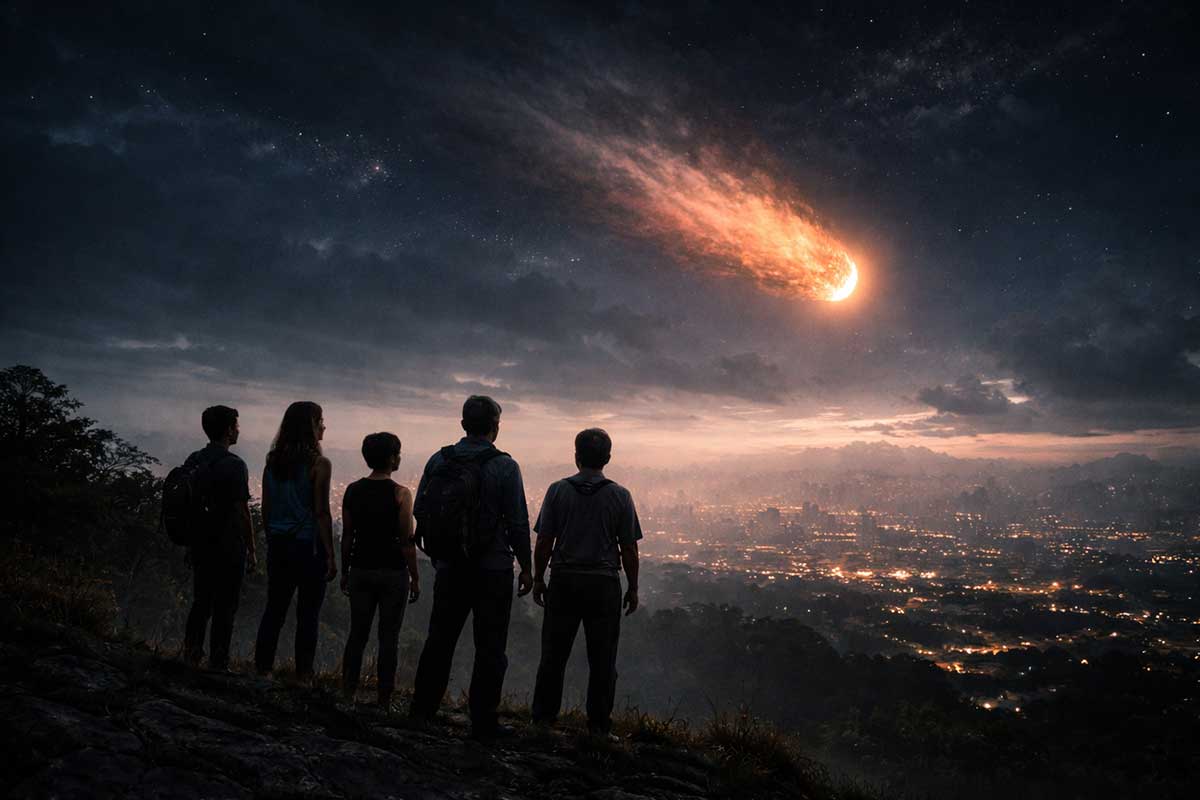
And so a deeper question appears. Not political, not national, not ideological, but civilizational. What if the thing that finally forces humanity to see itself as one is not a treaty, not a war, not a religion, not a leader — but a real threat from the sky? A meteor. An impact event. A deadline too large for propaganda. A danger that no border can argue with.
In this imagined conversation, the issue is not only whether humanity could survive such a threat. The deeper question is whether we would become wiser under pressure — or simply more frightened, tribal, and desperate.
Carl Sagan:
Let us begin with the simplest and hardest truth. For all our science, all our flags, all our ideologies, we remain a tiny species on a small world circling an ordinary star. Yet most of human life is organized as if we were separate destinies. So I want to ask the first question plainly: if a genuine sky-borne threat were detected — one large enough to end the illusion of safety for all nations at once — would humanity finally act as one species?
Neil deGrasse Tyson:
We would say we are one species. That would be the first performance. The real test would begin the next morning. Who controls the data? Who verifies the trajectory? Who controls the launch systems? Which governments tell the truth, and which manage panic? The science would be global by necessity, yet the institutions handling the science would still be national, military, political, and human. So yes, the threat would reveal our unity. It would also reveal how badly our systems lag behind the facts of the universe.
Yuval Noah Harari:
That is precisely the issue. Human beings are capable of cooperating at enormous scale, but usually through shared stories. Nations are stories. Religions are stories. currencies are stories. Human rights are stories. A cosmic threat would confront us with a story so large that smaller stories might either collapse into it or cling to themselves more fiercely. We should not assume shared danger creates shared wisdom. Very often shared danger produces the opposite — myth, blame, panic, scapegoating, emergency power, and intensified tribal loyalty.
Jane Goodall:
And yet there is another side. When human beings are forced to confront vulnerability, some of the deepest qualities in them can emerge — tenderness, courage, practical care, sacrifice. I have seen this in people facing great difficulty. The question is not whether humanity contains the capacity for unity. It does. The question is whether we have nurtured that capacity enough before the emergency begins.
Dalai Lama:
A threat from the sky would not create wisdom. It would reveal the degree of wisdom already present. Fear can make the mind narrow. Compassion can make the mind spacious. If people face danger with only fear, they become more selfish. If they face danger with awareness of interdependence, then perhaps the threat becomes a teacher.
Michio Kaku:
From the technological side, this kind of scenario is one of the few that immediately turns philosophy into engineering. You need telescopes, tracking systems, computation, launch capability, international coordination, deep-space intervention, planetary defense protocols. Suddenly the survival of civilization becomes a physics problem, a logistics problem, and a governance problem all at once. And that’s exactly where our species tends to get exposed — not in intelligence alone, but in coordination.
Carl Sagan:
So let’s sharpen it. If the threat were credible and time-limited, would the great powers cooperate — or would they compete for control over the response?
Neil deGrasse Tyson:
Both. Instantly. That is the honest answer. Some scientists would collaborate across borders within hours. Governments would form emergency channels. Yet the intelligence services would still hold things back. Militaries would still classify pieces of the response. Leaders would still calculate domestic image, blame, leverage, and prestige. Human beings do not stop being political just because the cosmos interrupts them.
Yuval Noah Harari:
And power does not disappear in emergency. It mutates. The leaders who claim to protect humanity may also seize extraordinary authority in the name of necessity. We must remember that the story “We are saving the species” can itself become a tool of control. So unity is not enough. The form of unity matters.
Jane Goodall:
I think ordinary people would grasp the moral truth faster than many governments. A child understands fragility. A mother understands fragility. A village understands fragility. Often the tragedy is that human institutions are slower to become honest than human hearts.
Dalai Lama:
Yes. The ordinary mind can sometimes respond more wisely than the powerful mind. Powerful mind often thinks first, “How do I preserve my position?” Compassionate mind thinks, “What do we all need now?” Human survival may depend on which mind is leading.
Michio Kaku:
In practical terms, no single nation could carry the whole burden elegantly. You would want distributed observation, shared computation, multiple launch windows, redundant systems, open scientific review, manufacturing chains, and contingency planning. If nationalism dominates, the response becomes weaker. Physics does not care about ideology. The asteroid will not honor sovereignty.
Carl Sagan:
That phrase may be the heart of it: the asteroid will not honor sovereignty. So I want to ask the deeper question. Does humanity need a danger larger than war before it can understand that survival itself is shared?
Neil deGrasse Tyson:
Sadly, maybe yes. War still lets people imagine victory for one side. A cosmic event removes that illusion. You cannot negotiate with an asteroid. You cannot embargo a comet. You cannot condemn a meteor at the United Nations and expect orbital mechanics to care. The sky has a way of stripping away human vanity.
Yuval Noah Harari:
And yet I would add this: humanity already has dangers large enough to teach that lesson. Climate change should have done it. Nuclear weapons should have done it. Pandemic vulnerability should have done it. The problem is not lack of warning. The problem is the weakness of our psychological and political operating system.
Jane Goodall:
Yes, we have been warned many times. That is why the moral issue is so painful. We are not innocent. We are capable of insight and still delay. A threat from the sky might force action, but it would also stand as an indictment of how many earthly warnings we ignored.
Dalai Lama:
Human beings like to postpone inner change. They say, “Tomorrow I will become wiser. Tomorrow I will become less selfish.” Sometimes life does not wait. Then suffering becomes the messenger. Better to learn sooner, but many do not.
Michio Kaku:
Civilizations often evolve after shock. That is not ideal, but it is common. The positive side is that a planetary emergency could accelerate scientific cooperation, shared infrastructure, off-world planning, better observation systems, and long-term thinking by decades. A species under pressure can mature fast, if it does not panic itself into paralysis first.
Carl Sagan:
Let’s turn to psychology. If people knew a major impact was possible, what would happen first — global solidarity or global disorder?
Neil deGrasse Tyson:
Information chaos first. That’s my bet. The internet would explode. Fake trajectories, false cures, prophecy channels, underground bunkers, political spin, fake experts, conspiracy industries — all of it. Before the truth could settle, the noise would arrive in force.
Yuval Noah Harari:
Yes. Data alone does not create clarity. It can create overwhelm. The central battle would not only be physical survival. It would be narrative survival. Which story wins public trust? “We can act together”? “The elites are lying”? “This is divine judgment”? “Only our nation will survive”? The struggle to govern attention would become one of the main arenas of the crisis.
Jane Goodall:
And still, in homes and communities, people would turn to one another. They would gather children. Share food. Look at the sky together. Hold one another. We must never speak of humanity only at the scale of systems. Human goodness often becomes visible first in small circles.
Dalai Lama:
Fear spreads quickly, but calm also spreads. One person grounded in compassion can steady many others. In crisis, the quality of mind becomes contagious.
Michio Kaku:
That is why communication strategy would be almost as important as technical response. The public would need timelines, probabilities, visible international cooperation, credible spokespeople, and regular updates. Secrecy breeds panic. Disorder breeds more disorder.
Carl Sagan:
Now let us move to the spiritual question. If the universe suddenly reminded us how small we are, would humanity become more humble — or simply more terrified?
Neil deGrasse Tyson:
For some people, humility. For others, terror. The cosmos is beautiful, but it does not flatter us. A real celestial threat would confront people with scale in a brutal way. Some would grow. Some would cling harder to comforting illusions.
Yuval Noah Harari:
A great shock often does both. It can dissolve false certainties, but it can also increase the hunger for absolute answers. That is why moments of civilizational fear are spiritually dangerous as well as politically dangerous.
Jane Goodall:
I would hope it would awaken reverence. Not passive reverence. Active reverence. The kind that says: we were given this astonishing world, and we behaved as if domination were intelligence. Perhaps then we might learn care at a deeper level.
Dalai Lama:
Humility is healthy when it is joined with compassion. Terror alone closes the heart. True humility opens it. Then one sees: “My life depends on all life. My safety depends on others. My mind affects the world around me.” This is already true now. A sky threat would only make it harder to ignore.
Michio Kaku:
And it might change the civilizational frame entirely. We could stop thinking like competing nations on a single planet and start thinking like a technological species responsible for its own continuation. That is a very different level of self-awareness.
Carl Sagan:
Let me ask the bluntest question of all. If the response required sacrifice — money, freedom of movement, military disclosure, industrial control, resource rationing — would democracies hold together?
Neil deGrasse Tyson:
That would depend on trust. Democracies can mobilize at astonishing scale when people believe the threat and believe the process is legitimate. Without trust, every sacrifice looks manipulated.
Yuval Noah Harari:
And that is why truth matters more before crisis than during it. A society that already lives in epistemic chaos will have much greater difficulty responding wisely. If nobody agrees on reality, coordination collapses.
Jane Goodall:
This is why everyday moral life matters. A civilization does not suddenly invent trust in the final hour. It lives on reservoirs built earlier — truthfulness, cooperation, care, shared responsibility.
Dalai Lama:
Outer systems reflect inner habits. If greed rules the mind in ordinary times, greed appears in emergency. If compassion is practiced in ordinary times, compassion is available in emergency. Crisis reveals preparation of the heart.
Michio Kaku:
And technical preparation matters too. We should not wait for the sky to threaten us before building the instruments, institutions, and agreements needed for planetary defense. The species should act like a species before it is forced to.
Carl Sagan:
I’d like each of you to complete this sentence: If a real threat came from the sky, the first thing humanity would discover about itself is...
Neil deGrasse Tyson:
...how much our science has outrun our political maturity.
Yuval Noah Harari:
...that our stories can save us or destroy us faster than the object itself.
Jane Goodall:
...that fragility and goodness are closer together than we admit.
Dalai Lama:
...that fear and compassion are both waiting inside the human mind.
Michio Kaku:
...that intelligence without coordination is not enough.
Carl Sagan:
And now the second sentence: The greatest hope in such a moment would be...
Neil deGrasse Tyson:
...that facts would become more sacred than pride.
Yuval Noah Harari:
...that humanity would finally tell a story large enough for all of us.
Jane Goodall:
...that love would become practical.
Dalai Lama:
...that interdependence would no longer be philosophy but lived reality.
Michio Kaku:
...that we would begin acting like a planetary civilization.
Carl Sagan:
Final round. Speak to a twelve-year-old child who hears all this and becomes afraid. What do you say?
Neil deGrasse Tyson:
I would say: being small in the universe does not make you meaningless. It makes knowledge precious. Human beings can learn extraordinary things, and learning is one way we protect one another.
Yuval Noah Harari:
I would say: do not let fear choose your story for you. Human beings are dangerous, yes, but also capable of surprising cooperation. History is not finished.
Jane Goodall:
I would say: whenever you feel afraid, do something that protects life near you. Care is a form of courage. It keeps the heart from becoming helpless.
Dalai Lama:
I would say: breathe, and remember that you are connected to many others. Fear feels lonely. Compassion reminds you that you are not alone.
Michio Kaku:
I would say: the future is not shaped only by threats. It is shaped by minds that prepare, invent, build, and refuse to give up. Human intelligence is one of the great forces of nature too.
Carl Sagan:
Then perhaps that is where we end. The sky has always carried human meaning — gods, destiny, navigation, wonder, prophecy. Yet one day it may carry a more direct message: that no nation survives alone, no border protects against everything, and no mythology is large enough unless it includes the whole Earth. If that day ever comes, the final question will not be whether the universe is hostile. The final question will be whether humanity, at last, is ready to become worthy of its own survival.
Final Thoughts by Caig Hamilton-Parker
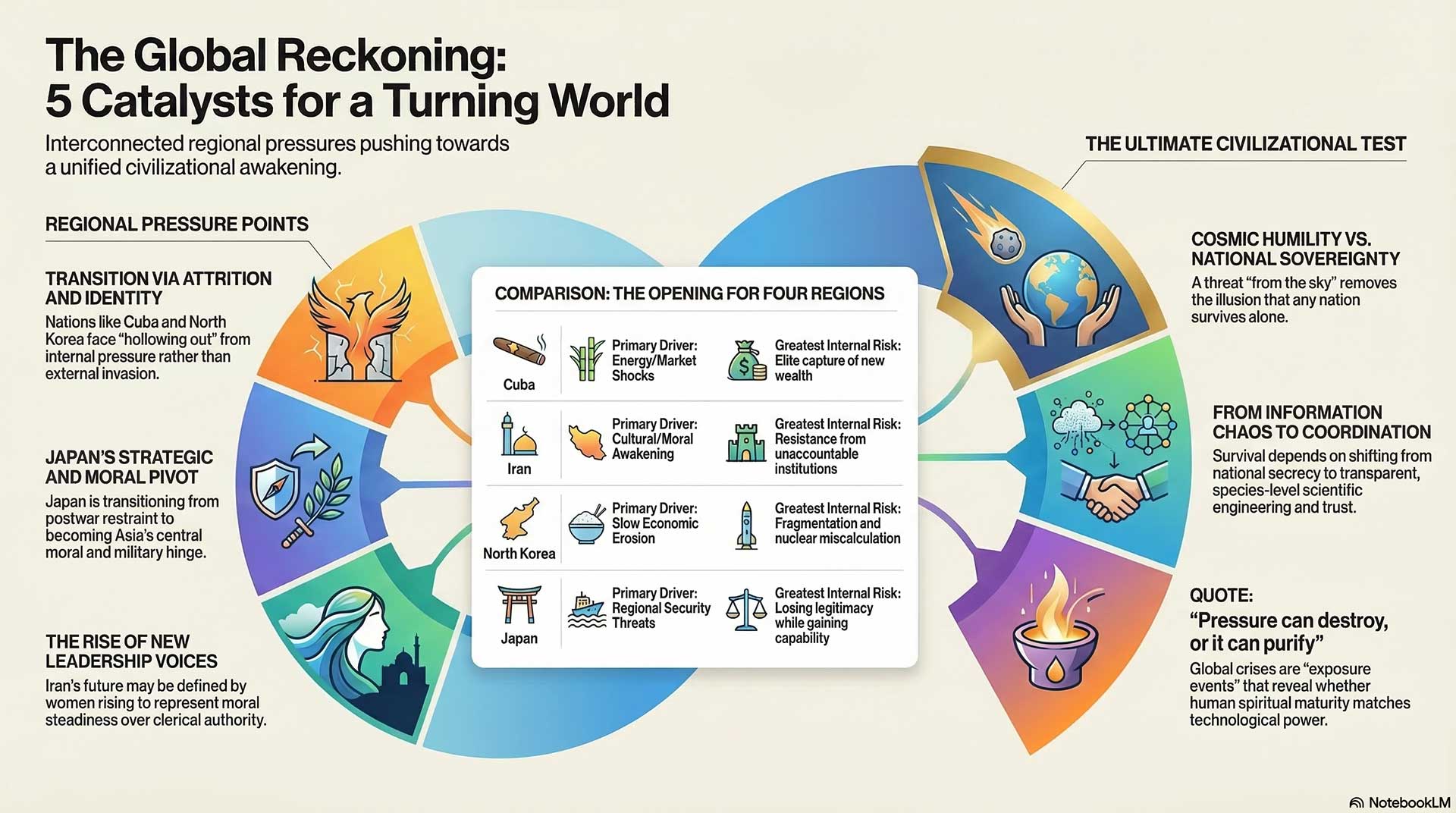
So when you stand back and look at all of this together — Iran, Japan, North Korea, Cuba, and even the possibility of a threat from the sky — what strikes me most is not only the danger, but the scale of the lesson. Humanity is very clever, very resourceful, very inventive, but also very slow to grow inwardly. We keep waiting for the next crisis to teach us what the last crisis should already have taught us. And that is why these moments matter.
Iran may show us whether suffering can eventually give birth to renewal. Japan may show us whether strength can return without losing conscience. North Korea may show us how long fear can govern before it begins to crack. Cuba may show us whether opening brings freedom or simply new forms of control. And the final question, the greatest one, is whether humanity can ever truly see itself as one before it is forced to.
That, to me, is the thread running through all of this. We are watching not only events, but exposure. Exposure of weak systems. Exposure of hidden ambitions. Exposure of national character. Exposure of whether our spiritual maturity has kept pace with our technological and political power. And very often the answer, if we are honest, is no. It has not. But there is still hope in that, because exposure is the beginning of awakening. You cannot heal what you refuse to see.
I’ve always felt that the years leading up to the end of this decade would be years of pressure, years of shaking, years in which many things people thought were stable would prove less stable than they imagined. Yet I do not say that only in a spirit of doom. Pressure can destroy, yes. But pressure can purify too. It can strip away illusion. It can force nations and people to decide what really matters.
So the real issue is not whether these five possibilities are dramatic. Of course they are. The real issue is whether humanity learns anything from them. Does it become more truthful, more humble, more serious, more united in spirit? Or does it simply stumble from one fear to the next? That is the deeper prophecy before us. Not only what happens in the world, but what happens in us as the world changes.
Short Bios:
Craig Hamilton-Parker — British psychic medium, spiritual commentator, and host of Coffee with Craig, known for combining prophecy, world events, and spiritual interpretation in his discussions.
Topic 1:
Richard Haass — American diplomat and foreign policy thinker known for measured analysis of global transition, statecraft, and restraint.
Raúl Castro — Former Cuban leader representing regime continuity, sovereignty, and revolutionary state logic.
Yoani Sánchez — Cuban journalist and dissident known for speaking on liberty, truth, and everyday life under control.
Moisés Naím — Writer and analyst known for his work on power, corruption, elite capture, and political transition.
Carlos Alberto Montaner — Cuban liberal-democratic intellectual and critic of authoritarian rule.
Lee H. Hamilton — Former American statesman known for calm bipartisan thinking on diplomacy, institutions, and global stability.
Topic 2:
Christiane Amanpour — International journalist known for serious, unsparing conversations on war, power, exile, and moral consequence.
Reza Pahlavi — Iranian opposition figure and son of the last Shah, often associated with national continuity and post-regime transition.
Masih Alinejad — Iranian activist and writer known for outspoken resistance to compulsory control over women’s lives.
Shirin Ebadi — Iranian lawyer, former judge, and Nobel Peace Prize laureate known for work on human rights and rule of law.
Narges Mohammadi — Iranian human rights defender whose moral authority comes from long personal sacrifice under repression.
Azar Nafisi — Iranian writer and thinker known for exploring memory, freedom, literature, and the inner life under tyranny.
Topic 3:
Victor Cha — Korea specialist and strategist known for serious analysis of North Korea, alliance structure, and regional security.
Thae Yong-ho — Former North Korean diplomat with firsthand insight into elite mentality, control, and regime behavior.
H.R. McMaster — American military strategist and former national security official focused on deterrence, state threats, and miscalculation.
Andrei Lankov — Scholar of North Korea known for deep knowledge of its society, survival mechanisms, and long-term structural weakness.
Jung H. Pak — Policy expert on North Korea, sanctions, intelligence signals, and US strategy.
Yeonmi Park — North Korean defector and public voice on lived fear, suffering, escape, and human dignity under repression.
Topic 4:
David Sanger — Veteran journalist and analyst of national security, alliances, nuclear risk, and strategic transition.
Sanae Takaichi — Japanese political figure associated with a firmer national-security posture and stronger strategic self-reliance.
Shinichi Kitaoka — Japanese scholar and policy thinker known for work on diplomacy, statecraft, and Japan’s historical role.
Joseph Nye — American thinker known for alliance theory, legitimacy, soft power, and the relationship between force and trust.
Pankaj Mishra — Essayist and critic known for probing the moral and historical tensions beneath modern power politics.
Sheila A. Smith — Expert on Japanese politics and security policy, known for careful analysis of strategy, public opinion, and regional risk.
Topic 5:
Carl Sagan — Astronomer and public thinker known for joining science, humility, wonder, and civilizational perspective.
Neil deGrasse Tyson — Astrophysicist and science communicator known for translating cosmic reality into clear public thought.
Yuval Noah Harari — Historian and writer known for analyzing how human societies organize themselves through shared stories and systems.
Jane Goodall — Naturalist and moral voice known for compassion, species-level reflection, and hope grounded in responsibility.
Dalai Lama — Spiritual teacher known for compassion, interdependence, and calm moral clarity in times of fear.
Michio Kaku — Physicist and futurist known for linking science, technology, and long-range civilizational possibilities.
Leave a Reply