
What if Neil Howe and Sun Myung Moon revealed that history repeats until responsibility is fulfilled?
Introduction by Neil Howe
In The Fourth Turning, William Strauss and I described a recurring rhythm in history—one shaped by generations moving through life and reshaping society in cycles of order, rebellion, fragmentation, and crisis.
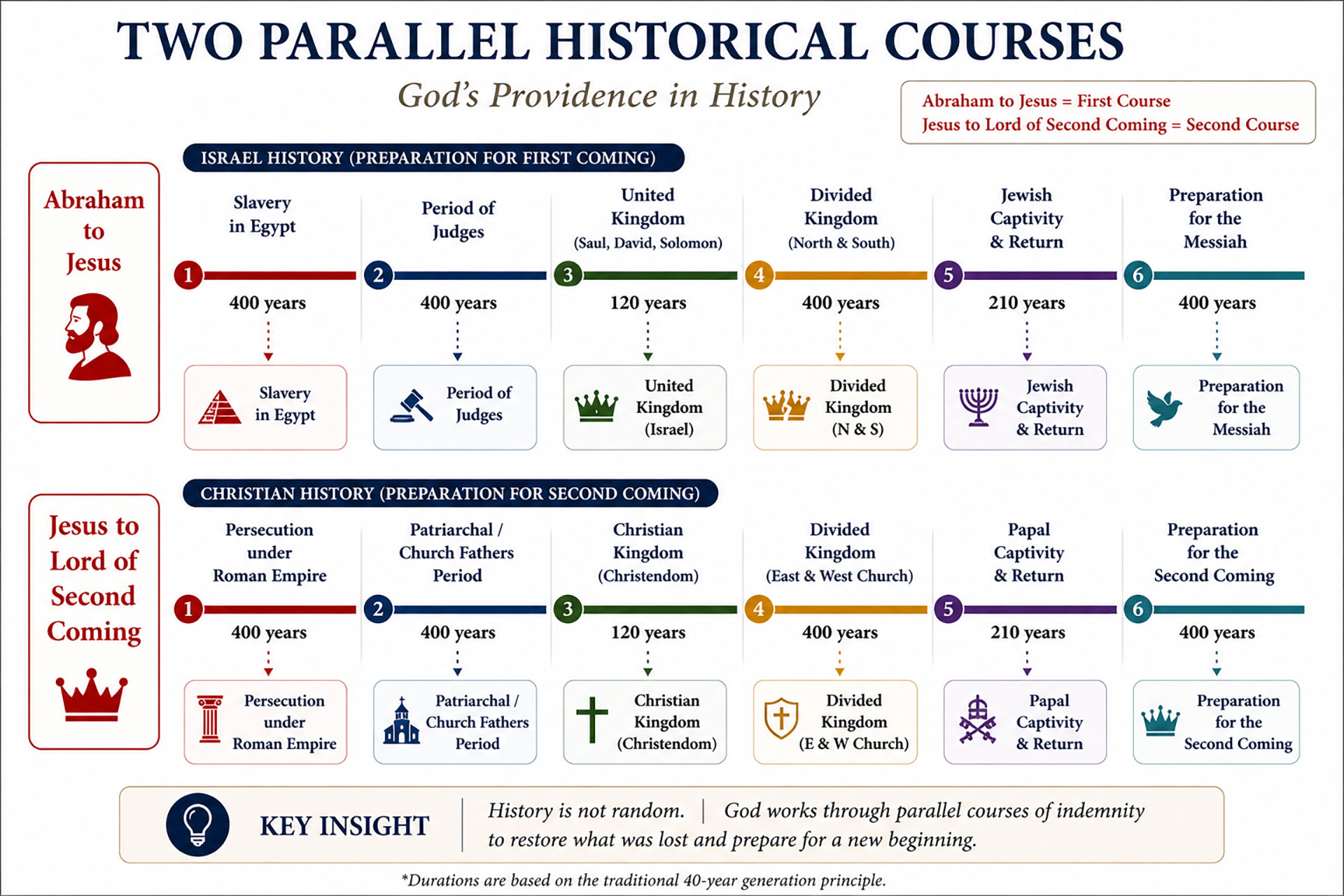
In the teaching of Sun Myung Moon, history is not only cyclical. It is providential. When human beings fail to fulfill their responsibility, heaven does not abandon the purpose. Instead, similar people, events, and conditions return through what is called dispensational time-identity—a repeated opportunity to restore what was lost.
This conversation brings these two frameworks together.
Across five topics, we explored:
- Whether history repeats through human behavior or divine purpose
- Why failure causes missions to return across time
- How the Four Turnings align with symbolic, image, and substantial ages
- Why the stage of history expands from family to nation to world
- And whether today’s crisis is only a reset—or a moment of restoration
Both perspectives challenge the idea that history is random.
One reveals a rhythm.
The other reveals a direction.
If the theory holds, then our present crisis is not just instability.
It is a returning responsibility.
(Note: This is an imaginary conversation, a creative exploration of an idea, and not a real speech or event.)
Topic 1 — Is History Cyclical or Providential?
Opening — Neil Howe
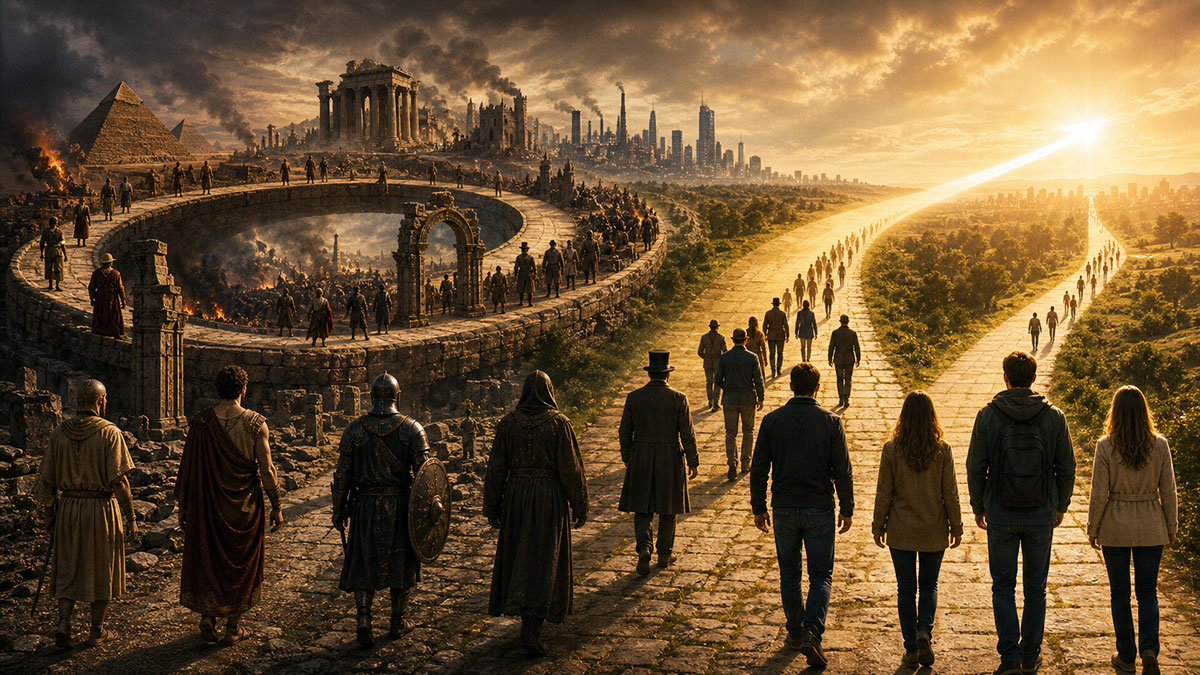
History often feels chaotic when we are inside it.
Wars, awakenings, collapses, reforms, revolutions, and renewals appear to arrive through accidents, personalities, and sudden shocks. Yet when we step back, patterns begin to emerge.
Strauss and I described one pattern: generations are shaped by the era that raises them, then later shape the era their children inherit.
Divine Principle points to another pattern: when human responsibility fails, providence is prolonged, and similar people, events, and conditions return in later ages.
So we begin with the central question:
Does history repeat only because human beings forget?
Or does it repeat because heaven keeps trying to restore what was lost?
Question 1
Does history repeat through human behavior, divine providence, or both?
Ibn Khaldun:
Societies rise through shared hardship, then weaken through comfort, division, and loss of cohesion. I saw this pattern in dynasties and civilizations. Human beings build strength, then forget the discipline that created it.
Rev. Sun Myung Moon:
Human responsibility is real. God’s will is absolute, but the fulfillment of that will requires people to respond. When the central person fails, God does not abandon the purpose. Providence continues, and history must repeat in a new form.
William Strauss:
Our work focused on generations. We saw that children raised in one public mood become adults who produce another. This does not require divine intervention to be meaningful. It shows how collective memory shapes collective behavior.
Arnold Toynbee:
Civilizations face challenges, and their survival depends on creative response. If a society cannot answer its challenge, decline begins. Whether one calls that providence or historical rhythm, the test remains real.
Neil Howe:
I would say the cycle is visible sociologically. But the question of purpose is larger than sociology. Generational theory can describe the rhythm. It cannot fully answer whether the rhythm has a divine destination.
Question 2
What is the difference between a generational cycle and dispensational time-identity?
William Strauss:
A generational cycle describes recurring social moods: confidence, rebellion, fragmentation, and crisis. It is built around how age groups move through life and reshape public expectations.
Rev. Sun Myung Moon:
Dispensational time-identity is not only repetition. It is restoration. Similar people, events, and periods return because heaven seeks to recover a failed foundation. History repeats with purpose, not merely pattern.
Neil Howe:
In generational theory, repetition emerges from human lifecycle. Elders, midlife leaders, young adults, and children each play different roles depending on the historical season. Time-identity, as described in Divine Principle, gives those repetitions theological meaning.
Ibn Khaldun:
In my view, social cohesion rises and falls. A people grows strong, then weak. Dispensational time-identity adds a sacred aim: the return of unfinished responsibility until it is fulfilled.
Arnold Toynbee:
The generational cycle asks, “Why do societies pass through similar moods?” Dispensational time-identity asks, “Why do similar missions return?” One is descriptive. The other is teleological.
Question 3
Can history have both repeating patterns and a final purpose?
Arnold Toynbee:
Yes. A pattern does not exclude purpose. A civilization may pass through cycles, yet the meaning of those cycles depends on whether people grow through them.
Rev. Sun Myung Moon:
History has a goal: the fulfillment of God’s original ideal. Repetition appears because human beings fail to complete their portion of responsibility. The cycle continues until restoration is accomplished.
William Strauss:
As historians of generations, we must be careful. We can identify recurring eras, but final purpose belongs to faith, philosophy, and theology. Still, people live differently when they believe history has meaning.
Neil Howe:
A cycle without purpose can become fatalistic. A purpose without attention to cycles can become naïve. Perhaps wisdom requires both: seeing the rhythm of crisis and renewal, and asking what the crisis is calling us to restore.
Ibn Khaldun:
Every age receives a test. Some pass it. Some waste it. If there is a final purpose, it is reached not by escaping cycles, but by learning from them before decay returns.
Closing — Neil Howe
The Fourth Turning and Dispensational Time-Identity begin from different places.
One studies generations.
The other studies providence.
One sees recurring social moods.
The other sees unfinished restoration returning in new historical forms.
Yet both challenge the modern assumption that history is random.
They suggest that crisis is not only interruption. It may be repetition with meaning.
And if history keeps returning to similar trials, the most urgent question is not simply, “What cycle are we in?”
It is:
“What responsibility has returned to us?”
Topic 2 — Failure, Delay, and the Return of Unfinished Missions
Opening — Rev. Sun Myung Moon
God’s purpose does not fail.
But human beings can fail to fulfill their responsibility.
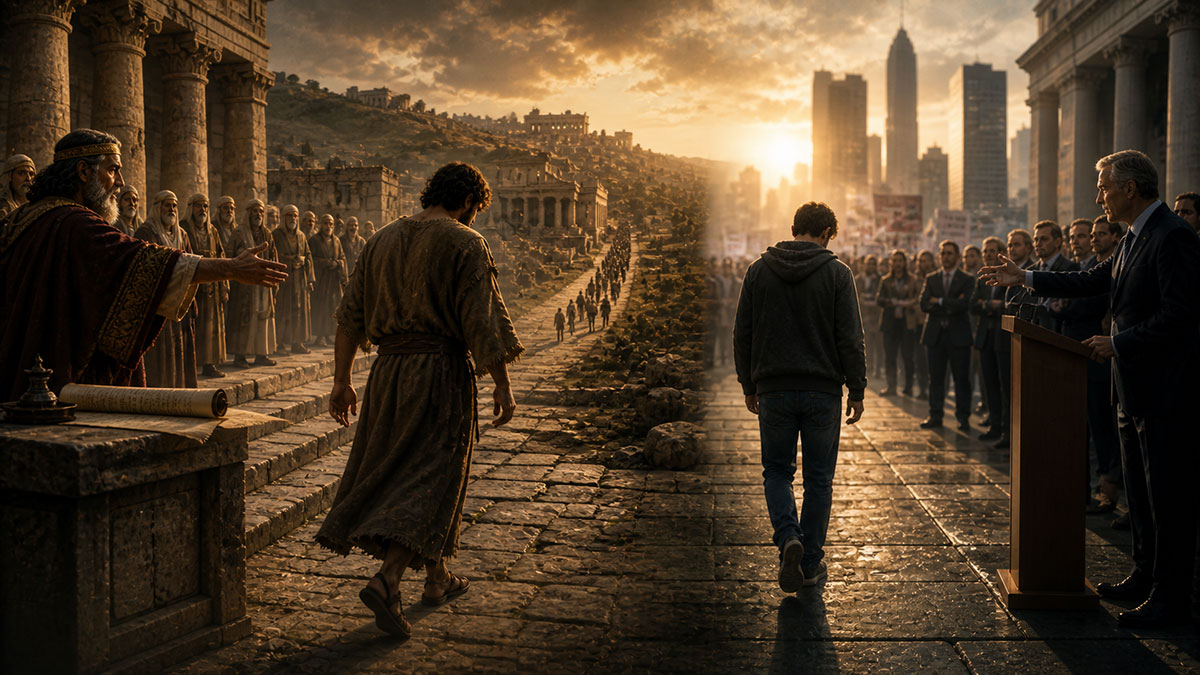
When that happens, history does not simply move forward as if nothing was lost. The mission returns. The foundation must be restored. The conditions must be rebuilt. The same pattern appears again, but in a later age, with different people, greater scope, and heavier consequence.
This is why history feels repetitive.
Not only because people forget, but because unfinished responsibility comes back.
Question 1
Why do unresolved missions return in later eras?
Moses:
A people may leave Egypt physically and still carry Egypt within them. The mission returns because freedom is not complete until the heart, the law, and the community are restored.
Neil Howe:
In generational theory, unresolved problems are passed forward. One generation avoids the hard settlement, so the next receives the accumulated pressure. The mission returns because postponement has a memory.
Barbara Tuchman:
History is full of warnings ignored. Leaders often know enough to act, but lack courage, imagination, or humility. What is not handled wisely returns later under worse conditions.
Jesus:
A mission returns because love was not received. God sends truth, but people must recognize it. When they do not, the path of restoration continues through suffering, waiting, and renewed calling.
Rev. Sun Myung Moon:
A failed mission returns because God must restore what was lost. Heaven cannot abandon the original ideal. If the foundation for the Messiah is not completed, God prepares another course, another central person, another providential age.
Question 2
What happens when central people fail their responsibility?
Rev. Sun Myung Moon:
When a central person fails, providence is prolonged. God chooses another person, but similar circumstances, events, and people reappear. This is time-identity. The goal remains absolute, but fulfillment is delayed.
Moses:
When leadership fails, the people wander. The distance may be short, but the inner course becomes long. The wilderness becomes a school of indemnity, where faith must be remade.
Neil Howe:
In secular terms, failed leadership transfers burden forward. Institutions lose credibility. Younger generations inherit distrust. What could have been resolved by reform becomes resolved later by crisis.
Barbara Tuchman:
Failure at the center often begins with pride. Leaders imagine their office protects them from consequence. But history is merciless to illusions. The bill arrives, often paid by people who did not create the debt.
Jesus:
When responsibility is rejected, God does not stop loving. But love must find another road. The cross was not the original desire of heaven; it became the path when faith was not offered.
Question 3
Is crisis punishment, correction, or another chance?
Barbara Tuchman:
Crisis is consequence. Whether one calls it punishment or correction, it exposes the cost of refusing reality. The disaster often looks sudden, but the causes were visible.
Jesus:
Crisis can become another chance when people repent, forgive, and return to God. Suffering by itself does not restore. The heart must change.
Neil Howe:
A Fourth Turning is not punishment in our framework. It is a seasonal crisis created by accumulated social pressure. Yet it does create an opening for rebuilding, if people respond wisely.
Moses:
Crisis is a crossing. Egypt behind, wilderness ahead, promise beyond. It can destroy faith or purify it. The difference is whether people complain only—or become a covenant people.
Rev. Sun Myung Moon:
Crisis is indemnity and opportunity. It is the cost of restoring failure, but also the doorway to a higher foundation. If people unite with God’s purpose, prolonged history can be shortened and restoration can advance.
Closing — Rev. Sun Myung Moon
Failure does not erase the purpose.
It delays it.
The Divine Principle teaches that when responsibility is not fulfilled, providence is extended, and history repeats in parallel forms. Strauss and Howe show that unresolved social tensions also return through generational cycles.
Together, they point to one sobering truth:
The past does not disappear.
It waits.
And when it returns, it asks a harder question:
Will this generation fulfill what the last one could not?
Topic 3 — The Four Turnings and the Three Dispensational Ages
Opening — William Strauss
The Fourth Turning theory describes history through recurring public moods.
Divine Principle describes history through recurring providential missions.
At first, these may sound different. One is sociological. The other is theological. Yet both notice something striking:
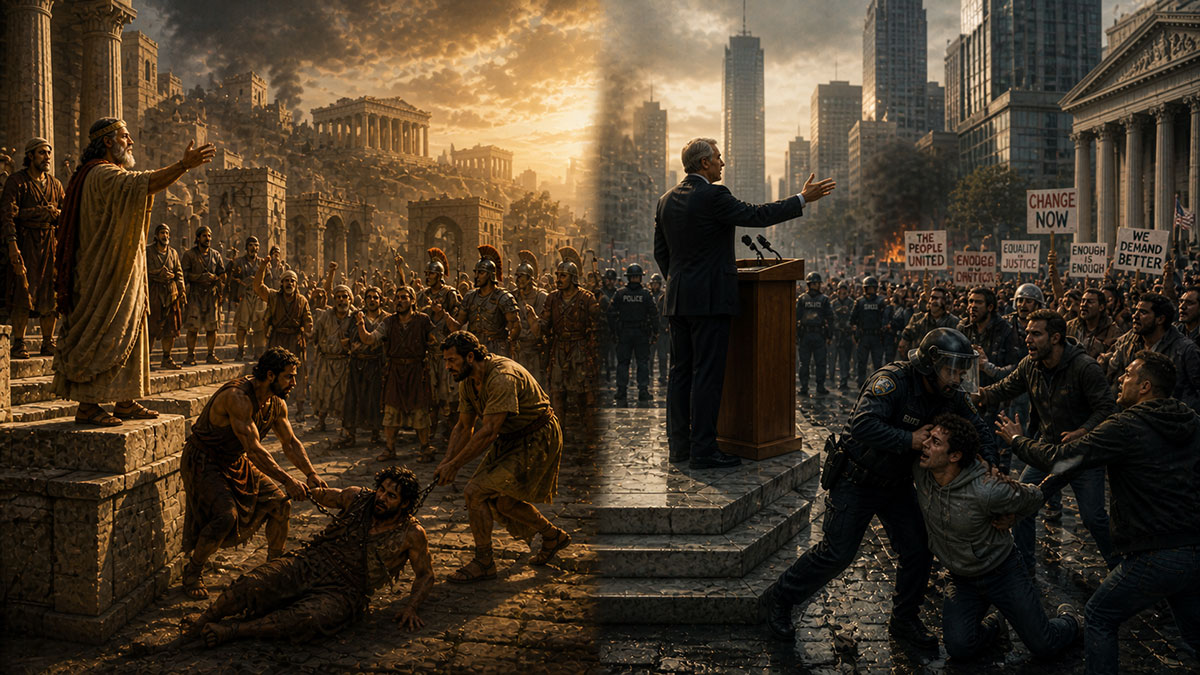
Later ages often echo earlier ages.
The names change.
The empires change.
The culture changes.
But the pattern returns.
So our question is whether repeated historical forms are accidental—or whether they reveal a deeper structure beneath history itself.
Question 1
How do High, Awakening, Unraveling, and Crisis compare with Symbolic, Image, and Substantial time-identity?
Neil Howe:
The four turnings describe recurring moods within a historical cycle: order, rebellion, fragmentation, and crisis. They help explain why societies feel different across generations.
Rev. Sun Myung Moon:
Symbolic, Image, and Substantial time-identity describe how providence develops through stages. God begins from a symbolic foundation, then moves through image-level fulfillment, then toward substantial fulfillment at the world level.
St. Augustine:
Human history may appear scattered, but the city of man and the city of God move through time together. Earthly events can carry spiritual meaning beyond what people see at the moment.
Mircea Eliade:
Sacred history often works through repetition. Ritual, memory, and sacred time return people to an original pattern. In this sense, repetition is not merely recurrence—it is re-entry into meaning.
William Strauss:
Our model does not claim sacred fulfillment, but it does suggest that societies repeat recognizable emotional seasons. Divine Principle adds another layer: repetition is not just social rhythm, but restoration moving through stages.
Question 2
Why do similar people, events, and conditions reappear across history?
Rev. Sun Myung Moon:
They reappear because restoration requires indemnity. If a responsibility is not fulfilled, God prepares another time, another person, and another setting with similar conditions. Heaven works until the foundation is restored.
Neil Howe:
From our view, similar conditions return because generations repeat broad social roles. A generation raised after crisis behaves differently from one raised during cultural revolt or institutional decline.
Mircea Eliade:
Human beings return to patterns because they need meaningful structure. Sacred time is not simple chronology. It is a repeated drama in which people rediscover their place in the cosmos.
St. Augustine:
Pride, sin, longing, repentance, and grace recur because the human heart remains unstable. Empires rise and fall, but the struggle between self-love and divine love continues.
William Strauss:
Cycles create repeated roles: visionary elders, pragmatic midlife leaders, civic young adults, protected children. Divine Principle’s time-identity suggests that these roles may also carry unfinished spiritual responsibility.
Question 3
Does repetition show human weakness—or divine consistency?
St. Augustine:
It shows both. Human beings repeat error because they love themselves in disordered ways. Yet God’s patience remains. The repeated chance to return is itself evidence of mercy.
Rev. Sun Myung Moon:
History repeats because human beings fail, but God does not fail. Divine consistency means heaven continues the providence until the original ideal is fulfilled.
Mircea Eliade:
Repetition can degrade into habit, but it can also restore meaning. Sacred repetition allows people to stand again before the original question: who are we, and what must we become?
Neil Howe:
In generational terms, repetition shows that people are shaped by social memory and forgetfulness. Each generation reacts to what came before, often correcting one imbalance by creating another.
William Strauss:
If we only see weakness, we become cynical. If we only see destiny, we become passive. The wiser view is that repetition is warning. It asks whether this time we can respond better.
Closing — William Strauss
The Fourth Turning shows recurring social seasons.
Dispensational Time-Identity shows recurring providential opportunities.
One explains why societies move through order, rebellion, fragmentation, and crisis.
The other explains why similar missions return when responsibility remains unfinished.
Together, they suggest that repetition is never empty.
It is a mirror.
It is a warning.
It may even be mercy.
History repeats not only to show what failed before.
It repeats to ask whether this time, someone will complete the task.
Topic 4 — From Family to Nation to World: Why the Stage Keeps Expanding
Opening — Rev. Sun Myung Moon
When responsibility is fulfilled at one level, providence can advance.
When responsibility fails, God does not abandon the purpose. Heaven restores what was lost by raising the mission to a greater level.
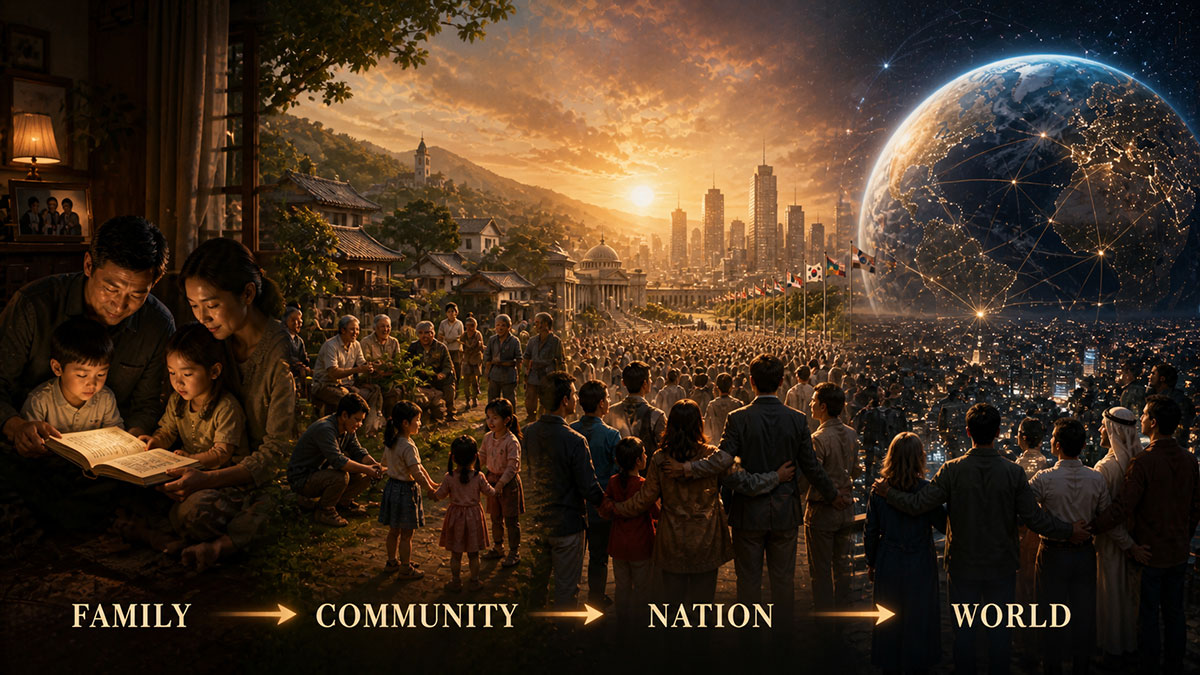
This is why restoration history expands:
From one person.
To one family.
To one nation.
To one world.
The question is whether the crisis of our time feels global not by accident, but because the mission of restoration itself has become global.
Question 1
Why does failure expand history from family level to national and world level?
Abraham:
A family can become the seed of a people. But if the family foundation is wounded, the wound does not stay small. It travels into descendants, tribes, nations, and history.
Rev. Sun Myung Moon:
The family is the first foundation for God’s ideal. But when that foundation fails, God must restore it through larger courses. What was lost at the family level appears again at national and world levels.
Neil Howe:
Generational theory sees something similar socially. Private failures become public patterns over time. Family instability, mistrust, economic anxiety, and cultural loss can grow into national crisis.
Martin Luther King Jr.:
The moral law is not limited to private life. Injustice in one home, one city, or one nation expands unless love and justice interrupt it. What is untreated locally becomes a public wound.
Arnold Toynbee:
Civilizations are tested by expanding challenges. A failure to respond creatively at a smaller scale can grow until it threatens the whole civilization.
Question 2
Is the modern crisis global because restoration itself has become global?
Rev. Sun Myung Moon:
Yes. The providence of restoration has moved to the world level. Modern communication, transportation, science, and global interdependence prepared humanity to face one shared mission.
Neil Howe:
Our Fourth Turning framework began with national cycles, but modern conditions make crisis more interconnected. Debt, technology, war, climate, migration, and trust no longer stay inside borders.
Martin Luther King Jr.:
We are tied together in a single garment of destiny. A crisis anywhere now touches people everywhere. The moral task must also become global: justice, reconciliation, and beloved community beyond tribe.
Abraham:
God’s promise began with one family, but it was never meant to end there. The blessing given to one house was meant to reach all families of the earth.
Arnold Toynbee:
A world civilization faces world-level tests. No nation can solve spiritual emptiness, violence, technology, or ecological danger alone. The challenge has outgrown the old containers.
Question 3
What does it mean for a generation to inherit a world-level mission?
Neil Howe:
It means young adults are not merely inheriting local problems. They inherit systems: economic, technological, ecological, geopolitical, and cultural. Their Hero role becomes harder because the battlefield is global.
Martin Luther King Jr.:
It means conscience must expand. A generation cannot love only its own group and call that peace. A world-level mission requires a world-level heart.
Rev. Sun Myung Moon:
It means humanity must restore the family of God beyond race, nation, and religion. The mission is not merely to survive crisis, but to build one world centered on true love.
Arnold Toynbee:
A generation with a world mission must give a creative response greater than nationalism. If the response is narrow, the challenge will defeat it.
Abraham:
A promise can begin in one tent and reach the world. But every generation must decide whether it will protect only its own inheritance—or become a blessing to others.
Closing — Rev. Sun Myung Moon
History expands because restoration expands.
A failure at one level returns at a greater level until it is resolved. The family becomes the seed, the nation becomes the field, and the world becomes the stage.
The Fourth Turning helps us see the crisis rhythm.
Dispensational Time-Identity helps us see why the same mission reappears.
Our age is not only global in technology, trade, and conflict.
It is global in responsibility.
The question is no longer whether one people can be saved apart from the rest.
The question is whether humanity can finally become one family under God.
Topic 5 — Crisis, Restoration, and the New World After the Turning
Opening — Jesus
A crisis can reveal what has been hidden.
It can expose fear, pride, violence, and false security. But it can also reveal hunger for truth, longing for family, and the desire to return to God.
A Fourth Turning asks how a society will survive the reset.
Dispensational Time-Identity asks what heaven is trying to restore through it.
So the deepest question is not only what comes after the crisis.
It is whether the world after the crisis becomes closer to God’s original ideal—or merely more organized around fear.
Question 1
Is a Fourth Turning only a reset—or a providential opening?
Neil Howe:
In our framework, a Fourth Turning is a crisis that ends one order and creates another. It is a reset socially and institutionally. Whether it is providential depends on what meaning people bring to it.
Rev. Sun Myung Moon:
A crisis can become a providential opening when people fulfill their responsibility. Heaven prepares moments when history can turn. But human beings must respond with faith, love, and unity.
William Strauss:
A Fourth Turning creates pressure for collective action. That pressure can be destructive or creative. It can build a new order, but the moral quality of that order is not automatic.
Jane Jacobs:
A reset is not enough. A society can rebuild systems and still fail people. Renewal must reach homes, streets, neighborhoods, and daily life. Otherwise, the new order remains distant and hollow.
Jesus:
A crisis becomes an opening when hearts change. If people only seek safety, they may rebuild the same fear in a stronger form. If they seek love, forgiveness, and truth, the new world can begin differently.
Question 2
What kind of renewal would satisfy both social rebuilding and spiritual restoration?
Jane Jacobs:
It must be local enough to be real. People need schools, streets, work, homes, and communities that support human dignity. Grand plans cannot replace daily trust.
William Strauss:
It must create institutions that can endure. After a crisis, people need order, but the order must serve life, not suppress it.
Rev. Sun Myung Moon:
True renewal begins with true families and expands into society, nation, and world. Institutions alone cannot restore humanity. The heart must be restored.
Neil Howe:
A new High usually brings confidence and civic strength. But if that unity lacks spiritual depth, it can become rigid or shallow. A healthy renewal needs both structure and meaning.
Jesus:
The kingdom begins within and then becomes visible through love. A restored world is not only efficient. It is reconciled: parent and child, husband and wife, neighbor and stranger, people and God.
Question 3
What must people build now so the next age is not just stable, but restored?
Rev. Sun Myung Moon:
Build families centered on true love. Build communities that live for the sake of others. Build bridges between religions, nations, and races. The next age must be one family under God, not merely a calmer civilization.
Neil Howe:
Build trustworthy institutions. Crisis will force change, but people can choose whether those institutions become freer, wiser, and more service-oriented.
Jane Jacobs:
Build human-scale trust. Know your neighbors. Strengthen local life. Create places where people can meet, disagree, cooperate, and solve problems together.
William Strauss:
Build generational responsibility. Elders must offer wisdom, midlife leaders must organize, young adults must rebuild, and children must be protected without being trapped by fear.
Jesus:
Build the heart that can forgive before victory, serve before recognition, and love beyond tribe. Without that heart, the next order will carry the old wound into a new age.
Closing — Jesus
A turning can change systems.
Restoration must change hearts.
If the Fourth Turning ends with new institutions but old resentment, the cycle will begin again with the same wound hidden inside it.
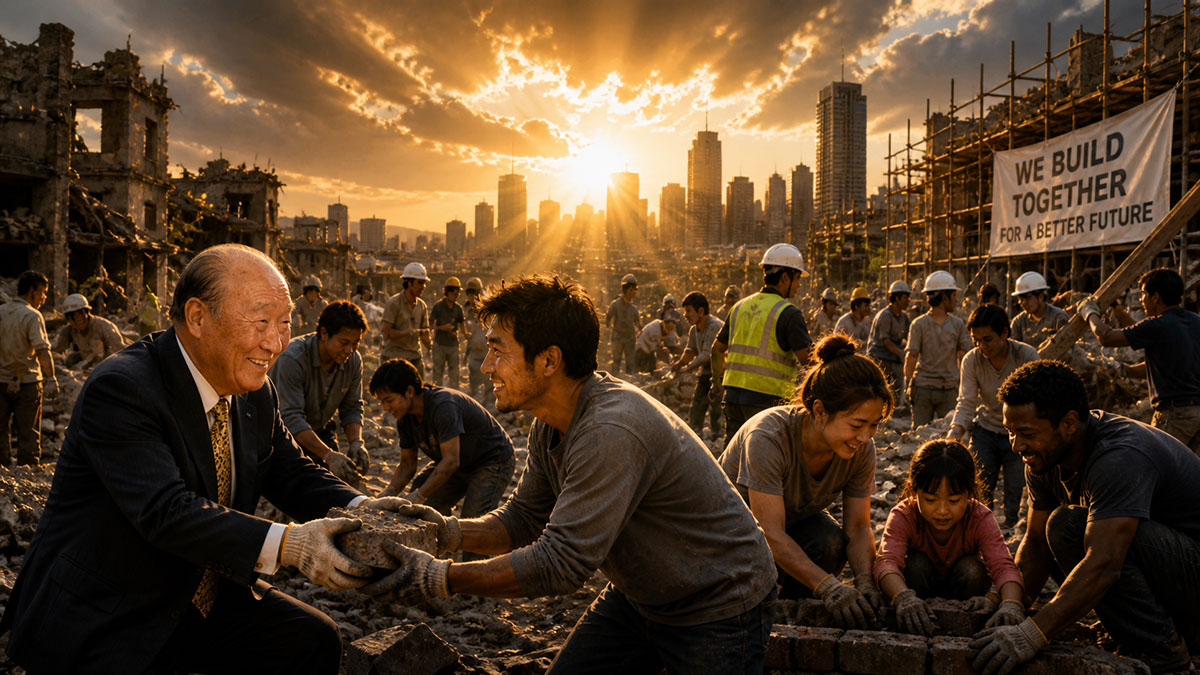
If restoration reaches the family, the community, the nation, and the world, then crisis can become more than collapse.
It can become a doorway.
History has repeated because love was not fulfilled.
The next age must not only be rebuilt.
It must be restored.
Final Thoughts by Rev Moon
History has not repeated by accident.
It has repeated because the work was not finished.
Heaven has continued the providence through different people, different ages, and different conditions, yet with the same purpose: to restore the original ideal of creation.
The Fourth Turning shows that crisis will come when problems accumulate.
Dispensational time-identity shows that crisis comes when responsibility is delayed.
Together, they reveal something deeper:
The crisis of our time is not only about systems breaking.
It is about the return of a mission.
That mission is not limited to one nation or one people.
It is global.
It is to restore the family, the society, and the world to a condition where love, truth, and responsibility are fulfilled.
If people respond with fear alone, the cycle will repeat.
If people respond with faith, unity, and action, the prolonged history can be shortened.
The next age will not be decided only by events.
It will be decided by whether this generation fulfills what previous generations left undone.
Short Bios:
Leave a Reply