
|
Getting your Trinity Audio player ready...
|
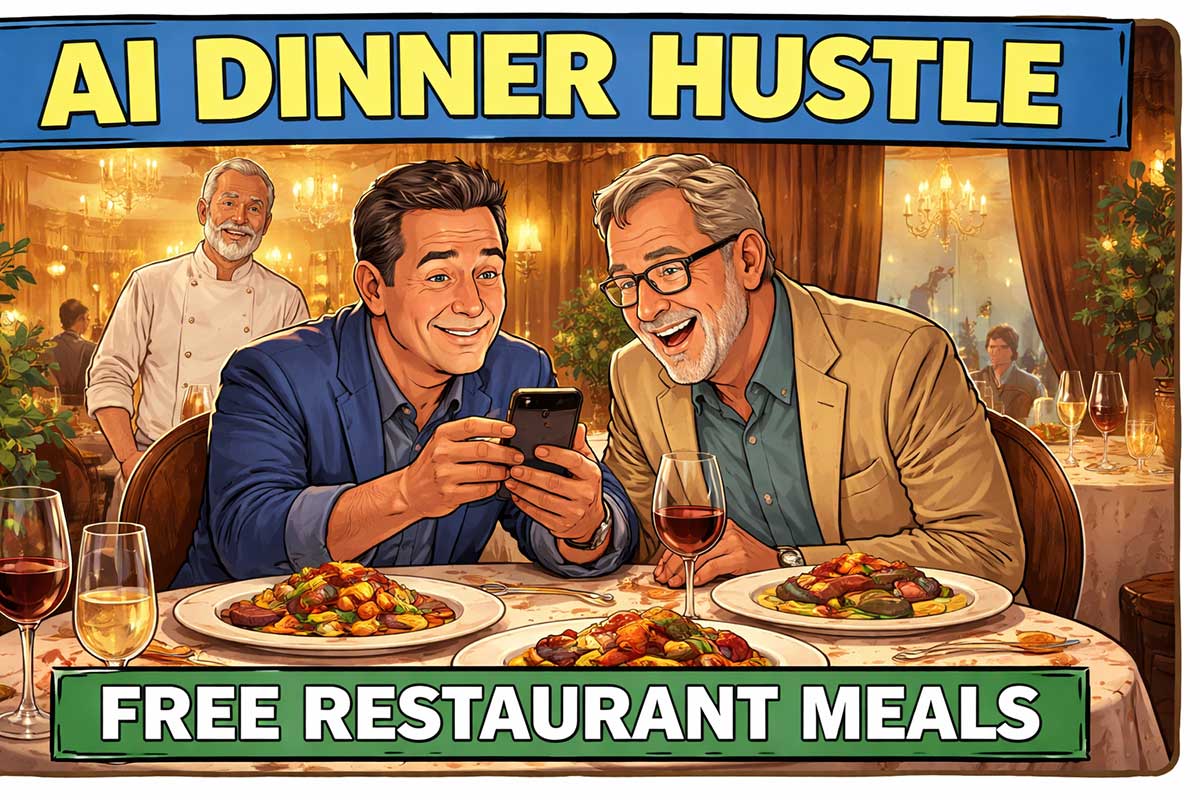
What if your favorite restaurant could become your next AI side hustle client?
Introduction — Nick Sasaki
When Perry Belcher invited me to dinner, I expected good food and interesting conversation. What I did not expect was a live demonstration of how small business opportunities hide in plain sight—sometimes right on the table in front of you.
Restaurants are fascinating businesses. They operate on thin margins, depend heavily on reputation, and compete in an environment where the first impression is often made online before a customer ever walks through the door. A single photograph on a review site, a menu layout, or a delivery app image can influence whether someone chooses one restaurant over another.
That night, Perry showed me something simple but powerful: most restaurants already have great food, beautiful spaces, and passionate owners. What they often lack is the digital presentation that communicates that value to the outside world.
Over several dinners with Marco, the restaurant owner, I watched Perry do something that looked almost effortless. He didn’t come in with complicated marketing theory or a long sales pitch. Instead, he noticed small gaps—the kind of details that are easy to overlook when you run a busy restaurant every day.
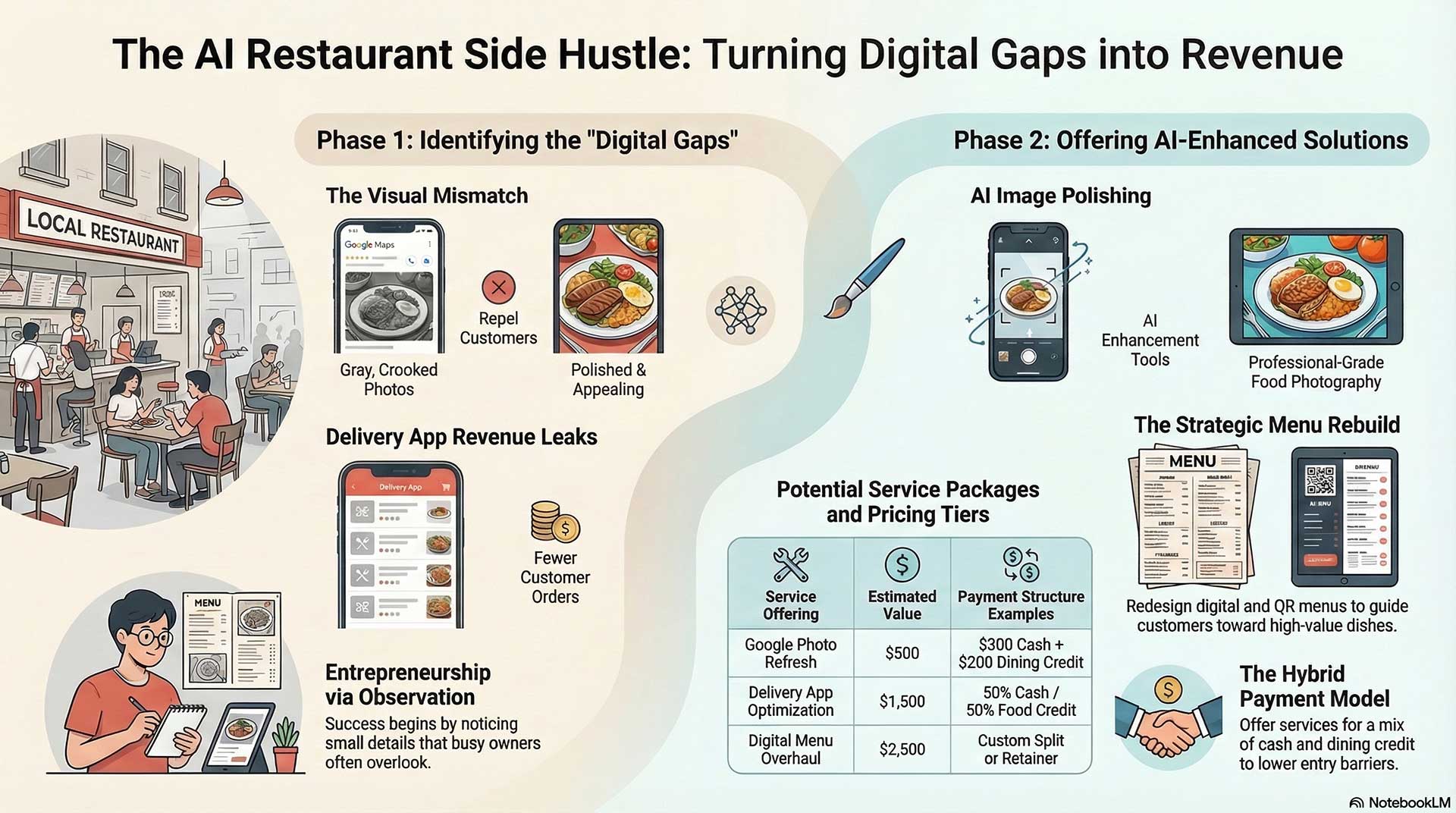
A bad food photo on Google.
Unappealing images on delivery apps.
A menu that informs but doesn’t inspire.
Social media that feels random instead of intentional.
Each small problem had a simple solution. With a smartphone, a bit of creativity, and AI tools that enhance images and content, Perry could transform how the restaurant appeared online.
What made it even more interesting was the spirit of the exchange. Marco gained tools that helped his restaurant attract more customers. Perry earned income and, occasionally, dining credit that turned business meetings into enjoyable evenings. Everyone left the table feeling like they had gained something.
It was a reminder that entrepreneurship often begins with observation. Opportunities rarely arrive with a sign attached. They appear as ordinary moments that someone decides to look at differently.
Those dinners became a masterclass in seeing possibility where others see routine.
(Note: This is an imaginary conversation, a creative exploration of an idea, and not a real speech or event.)
Scene 1 — The Google Photos Fix
Date: April 3
Perry invites me to a beautiful Italian restaurant downtown. The dining room glows with warm lights and polished wood. It feels expensive the moment we walk in.
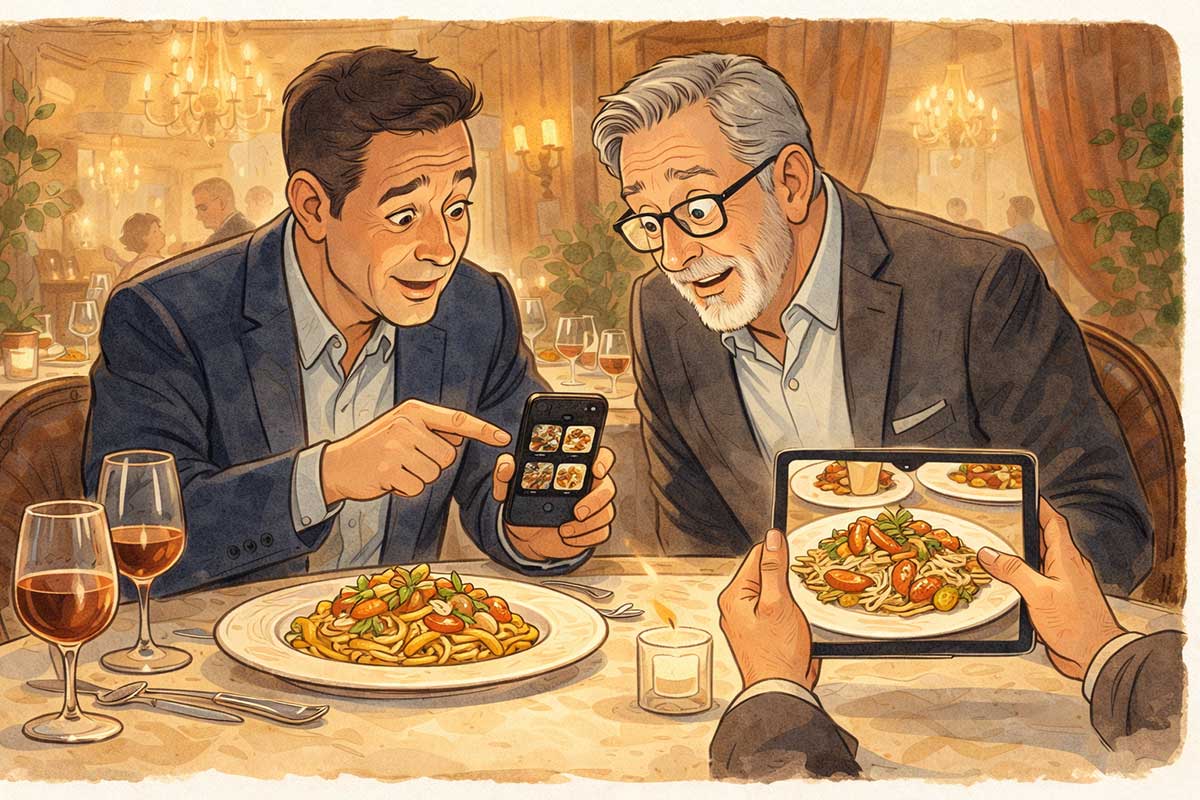
We sit down and Perry quietly opens the restaurant’s Google listing on his phone.
He shows me the photos.
One plate of pasta looks gray. Another picture is crooked. One photo shows the dining room with harsh flash lighting. None of them match the elegant place we are sitting in.
Perry whispers, “Great restaurant, terrible photos. That gap is money.”
The owner, Marco, stops by the table to greet Perry.
Perry turns the phone around.
“Marco, this is what people see before they decide to come here.”
Marco groans. “That looks awful.”
Perry nods. “Tonight your food looks amazing. I could take ten shots, polish them, and replace these. Your listing would finally match your restaurant.”
Marco studies the screen.
“How much?”
“Five hundred,” Perry says casually. “Or if you'd rather, three hundred plus five hundred in dining credit.”
Marco laughs. “You want to eat here more?”
Perry smiles. “Your chef makes that an easy decision.”
Marco nods. “Take the photos. Let’s do the credit option.”
Dinner arrives. Perry quietly takes a few pictures of the dishes.
Later that night, Marco thanks him again.
“Those photos will help us a lot.”
Perry just smiles.
Scene 2 — Delivery App Images
Date: April 10
We return the next week.
Marco greets us like old friends now.
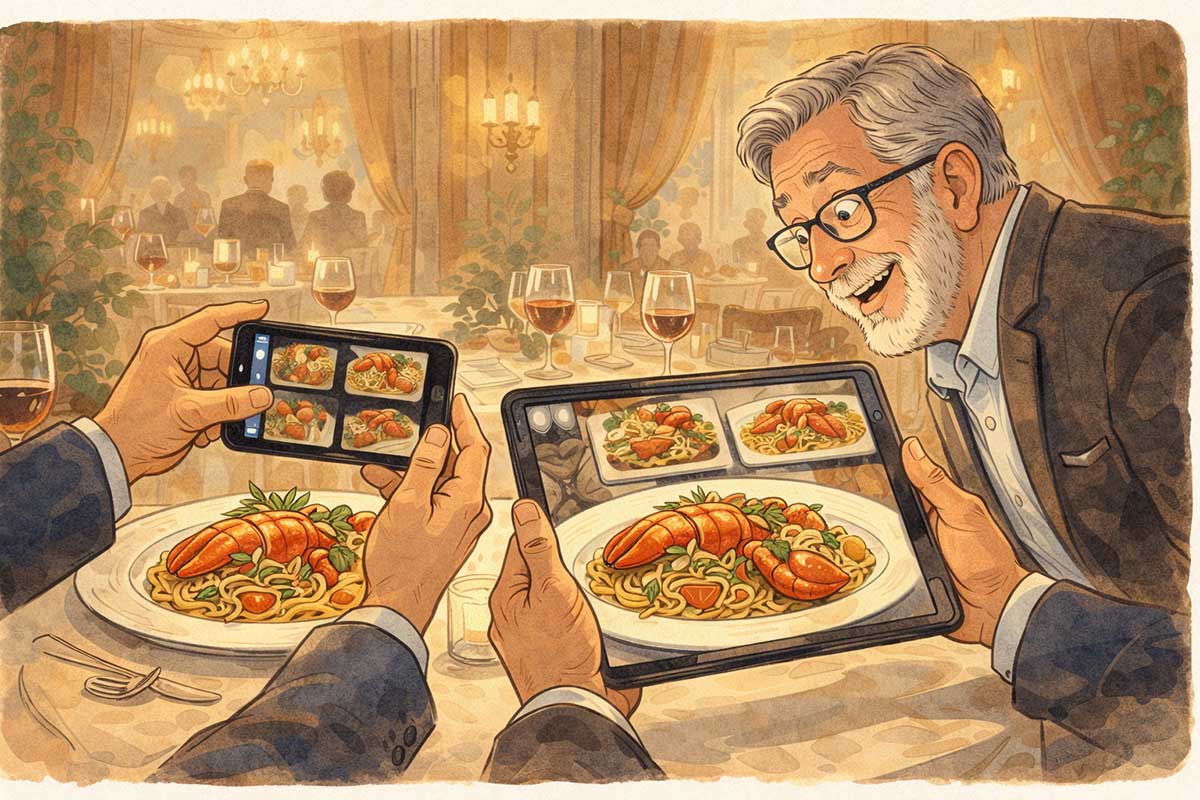
After appetizers arrive, Perry pulls up the restaurant’s delivery listing.
The images look random. One photo is yellow. Another looks like it came from a customer review.
Perry shows Marco.
“These are costing you delivery orders.”
Marco studies the screen.
“I hate those pictures.”
Perry says, “Your food already looks great. I can shoot and enhance the top twenty dishes. Perfect for delivery apps.”
Marco leans forward.
“What’s the cost?”
“Fifteen hundred. Or half cash and half food credit.”
Marco laughs again.
“You two plan to keep eating here, don’t you?”
Perry nods. “If the lobster pasta stays this good.”
Marco says, “Deal. Let’s split it.”
We raise our glasses.
Another small win for Marco. Another great dinner for us.
Scene 3 — The Digital Menu
Date: April 18
This time Marco sits with us for a moment.
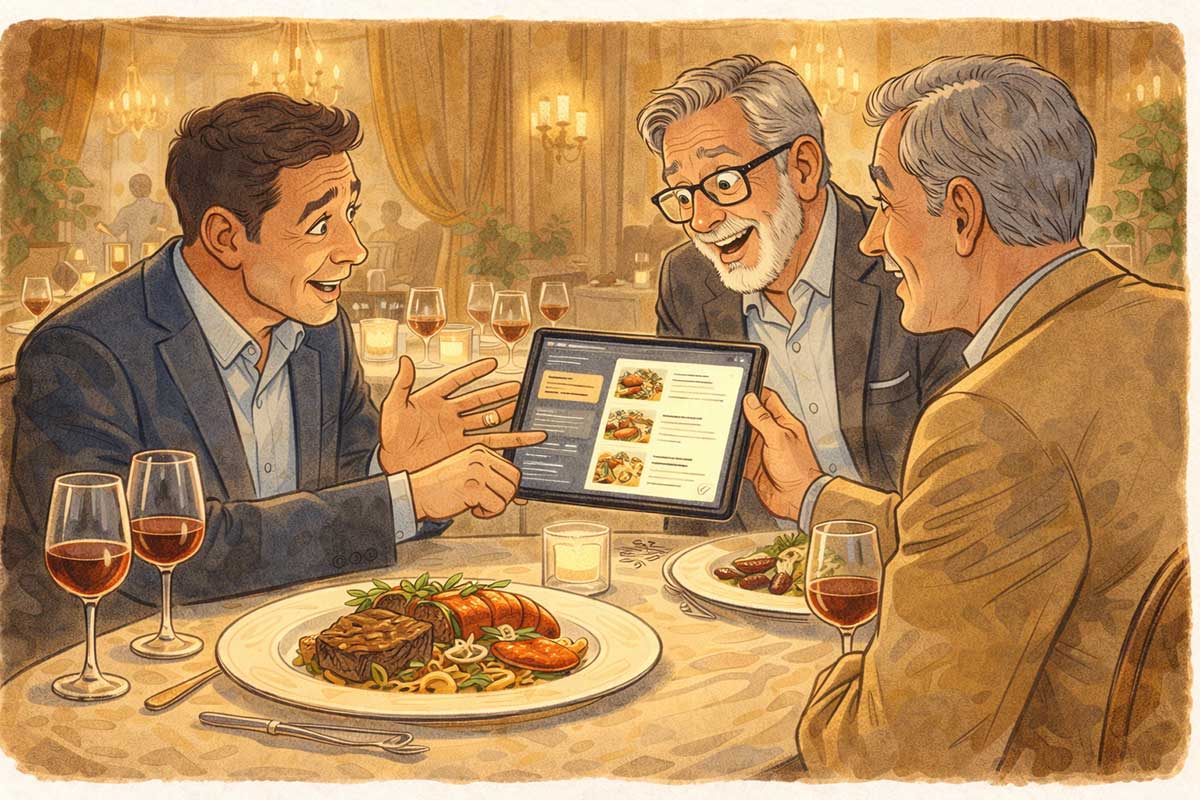
Perry studies the menu carefully.
“It’s elegant,” he says, “but it doesn’t sell your best dishes.”
Marco raises an eyebrow.
Perry explains how menu layout guides what people order. Placement, spacing, highlights. Some dishes deserve more attention.
Marco listens closely.
“You can rebuild this?”
Perry nods.
“Digital version. Website version. QR menu. Better structure.”
Marco asks the familiar question.
“How much?”
“Twenty-five hundred,” Perry says. “Or we can split it between cash and credit again.”
Marco laughs.
“My accountant would think I hired you as a consultant and a regular customer.”
Perry smiles.
“That means it’s working.”
Marco agrees.
Scene 4 — Instagram Content
Date: April 25
The restaurant is packed tonight.
Couples celebrating anniversaries. Groups laughing over wine. The room has that lively energy that great restaurants have on a Friday night.
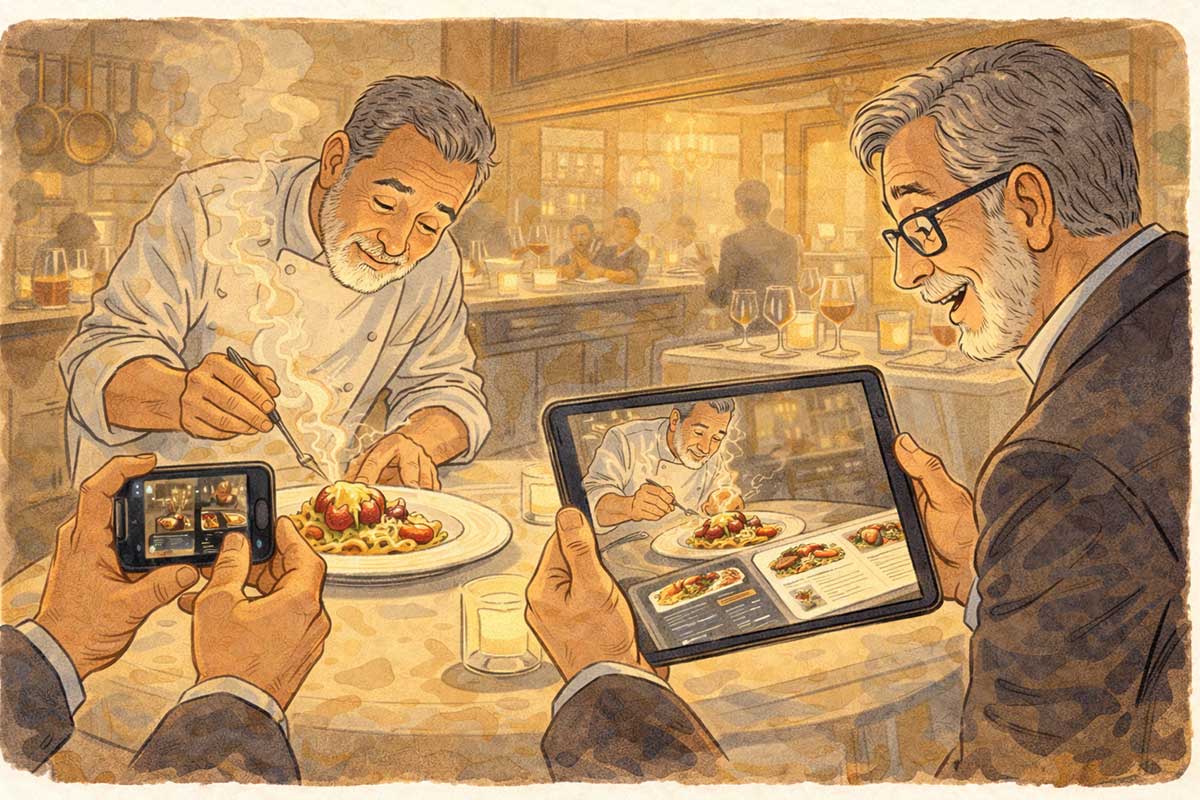
Perry takes a short video of the chef plating dessert.
He shows Marco the clip.
Marco’s eyes widen. “That looks like a commercial.”
Perry says, “Restaurants need steady social content. Not random posts.”
Marco nods slowly.
Perry explains a simple system:
reels of dishes
short chef moments
romantic table shots
seasonal specials
Marco smiles.
“Now I see what you mean.”
Perry offers a package for monthly content.
Marco considers it.
“We’ll start small,” Marco says. “Maybe a few reels first.”
Perry agrees.
Another easy deal. Another good dinner.
Scene 5 — The Menu Printing Idea
Date: May 2
Our final dinner in this little series.
Marco stops by the table holding a worn laminated insert.
“This is the last ugly thing in my restaurant,” he jokes.
The edges are peeling. The print looks dull.
Perry studies it.
“You deserve better menus.”
Marco laughs.
“You’ve already improved half my business.”
Perry offers a simple fix.
Clean design. High-quality print layout. Strong lamination.
Marco nods.
“Let’s do that too.”
This time Marco chooses full food credit instead of cash.
“You’ve helped us so much,” he says. “Dinner is on us for a while.”
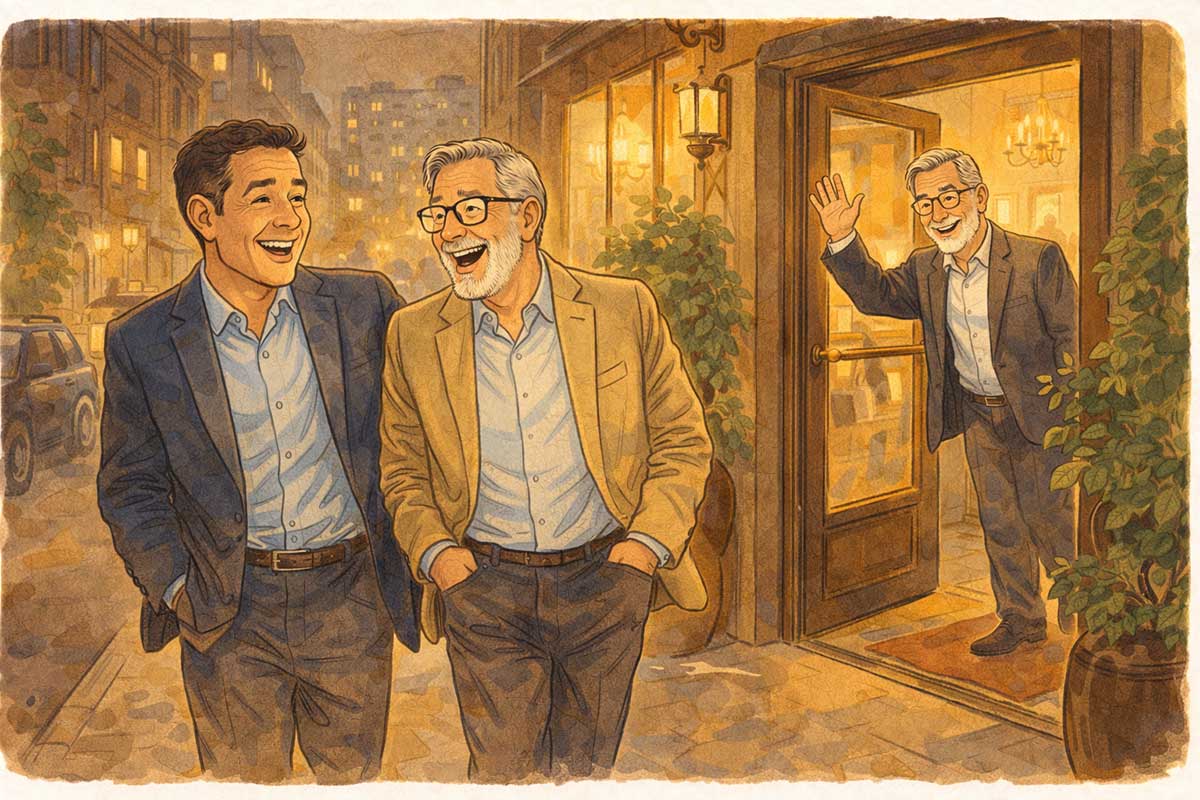
After the meal, Perry and I step outside.
The night air is cool.
I start laughing.
“So all those dinners came from fixing small problems?”
Perry laughs too.
“Restaurants succeed or struggle on small details.”
We walk down the street still laughing.
A win for Marco.
A win for Perry.
And one of the most educational dinners I’ve ever had. 

Final Thoughts by Nick Sasaki
Looking back on those evenings with Perry and Marco, what stays with me is how naturally the entire process unfolded.
There was no pressure, no complicated contracts, and no sense that anyone was being taken advantage of. Instead, there was curiosity, conversation, and a shared recognition that small improvements can make a meaningful difference for a business.
Marco’s restaurant already had the essentials: great food, a beautiful dining room, and a loyal customer base. The upgrades Perry suggested simply helped the outside world see what was already there.
Better photographs helped the restaurant shine on review pages.
Clearer images made delivery orders more tempting.
Improved menus guided customers toward dishes they were excited to try.
Social media content gave potential guests a glimpse of the experience waiting inside.
From Marco’s perspective, these improvements were practical investments. From Perry’s perspective, they were opportunities to provide a valuable service.
And from my perspective, sitting there watching it all happen, the lesson was something deeper.
Entrepreneurship is often portrayed as something dramatic—big inventions, large investments, or complicated technology. Yet many opportunities are much simpler. They begin with noticing what others overlook and offering a thoughtful solution.
The restaurant industry is full of talented people focused on cooking, hospitality, and running a busy establishment. When someone comes along who can strengthen the way their story is presented to the world, that contribution can be surprisingly valuable.
In the end, those dinners were more than just meals. They were a series of small collaborations—moments where creativity, technology, and human connection met at the same table.
And as Perry and I walked out into the night after our final dinner, laughing about everything we had seen unfold, I realized something.
Sometimes the best business ideas arrive not in a boardroom, but over a good meal shared with friends.
Short Bios:
Perry Belcher
Perry Belcher is a digital marketing strategist and entrepreneur known for helping businesses grow through practical, creative marketing techniques. As a founder of several successful companies and a regular voice in the AI Morning Club, he shares hands-on strategies that combine emerging technology with simple business ideas anyone can apply.
Nick Sasaki
Nick Sasaki is the creator of ImaginaryTalks.com, a platform exploring ideas through creative conversations with thinkers, innovators, and cultural figures. His work blends storytelling, entrepreneurship, and technology to reveal how new tools—especially AI—can open unexpected opportunities in everyday life.
Marco Rossi (Restaurant Owner)
Marco Rossi is the owner of a high-end Italian restaurant known for its elegant dining atmosphere and carefully crafted dishes. Passionate about hospitality and great food, he constantly looks for ways to improve how his restaurant connects with customers both inside the dining room and online.
Leave a Reply