

What if cheering a villain’s collapse stains the watcher more than the watched?
“Do not gloat when your enemy falls; when they stumble, do not let your heart rejoice.”
I did not speak these words to protect evil men from judgment.
I spoke them to protect the heart from corruption.
For I have watched people speak of righteousness with their mouths, yet feast on another man’s ruin in secret. I have seen men call it justice when their true delight was revenge. I have seen the crowd grow warm at the sight of a rival brought low. I have seen the heart smile at the very thing it ought to fear.
When your enemy falls, a great test comes upon you.
Will you become sober, or swollen?
Will you tremble, or celebrate?
Will you remember your own weakness, or use another man’s shame as a ladder for your pride?
This is why I warned the heart, not merely the tongue. Many can hide their joy in silence. Few can keep the inner chamber clean.
The fall of the guilty may reveal their sin.
Your reaction reveals yours.
So let the wise gather and speak on this matter. Let them ask why men enjoy the downfall of the guilty. Let them ask whether justice can remain pure when hatred hides inside it. Let them ask what stories do to the soul when they train people to clap at destruction. Let them ask what is lost in the spirit when a person feeds on contempt. Let them ask what becomes of a nation that turns shame into public bread.
For wisdom is not proved when we judge the wicked.
Wisdom is proved when we judge without becoming wicked in heart.
This is a hard saying. Yet hard sayings often guard the gates of life.
Come then. Let us look deeply into this mystery of the heart.
(Note: This is an imaginary conversation, a creative exploration of an idea, and not a real speech or event.)
Topic 1: Why do people enjoy the fall of the guilty?
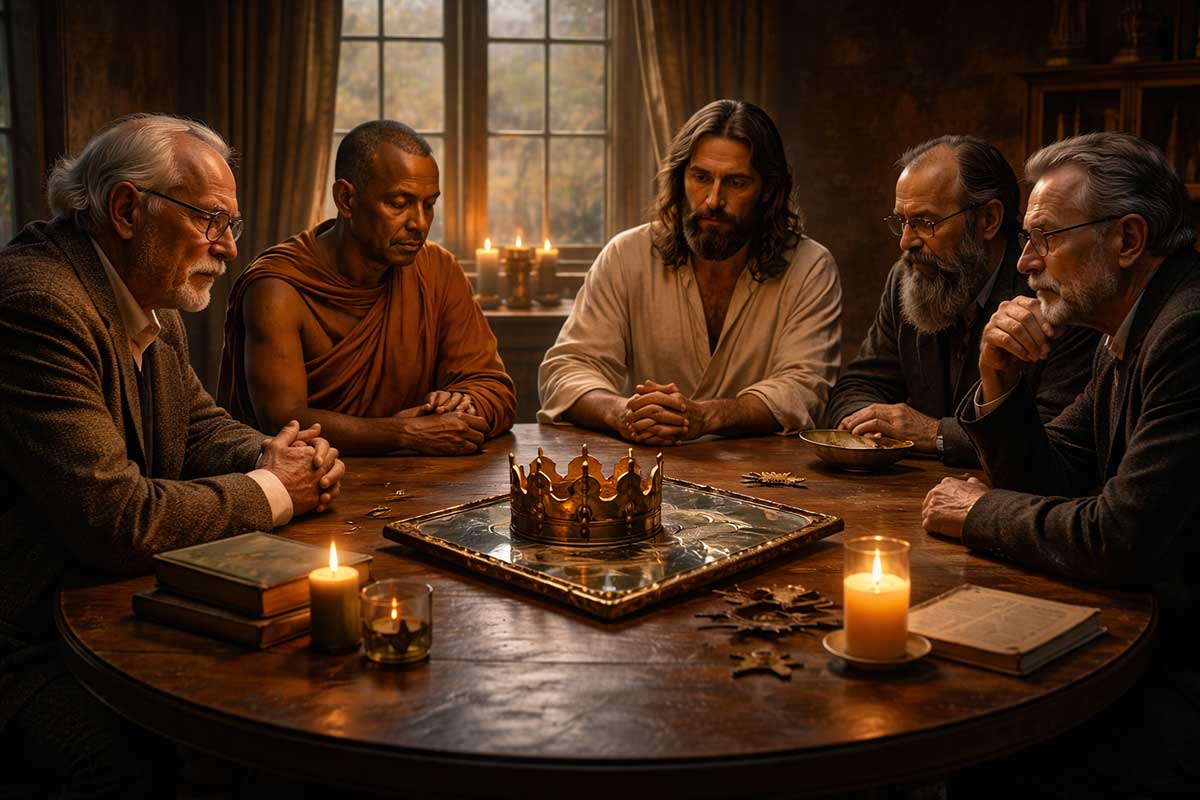
Participants:
Jesus
Buddha
Carl Jung
René Girard
Fyodor Dostoevsky
Guiding questions:
How does the human heart take pleasure in the downfall of the guilty?
When does justice slip into self-righteous delight?
What happens to the soul when it enjoys another person’s collapse?
The room is quiet. No stage, no crowd, no spectacle. Only five chairs in a circle and a question that seems older than law itself.
Jesus:
People love to separate the world into the righteous and the condemned. Once that division feels secure, mercy becomes difficult. The heart says, “At last, the evil one has fallen. Now I may rejoice.” Yet the one who rejoices in another’s ruin has already stepped away from love. He may still speak the language of justice, but something darker has entered his joy.
Buddha:
The mind clings to aversion as much as to desire. Many think hatred is strong, but hatred binds the one who holds it. When a hated person falls, the mind feels a brief sweetness. That sweetness is poison mistaken for relief. It does not free the heart. It deepens the chain.
Jung:
There is great danger in the image of “the guilty one.” Of course some people do grave harm. Yet the psychic process does not stop there. Once the mind places evil entirely outside itself, it gains a secret pleasure. “That darkness is his, not mine.” This gives a false sense of purity. In truth, the delight comes from projection. One feels cleansed by another man’s disgrace.
Girard:
Yes. The fall of the guilty often serves a social purpose. A group in tension seeks release. Resentments accumulate. Rivalries become unbearable. Then, when one figure is marked as corrupt, dangerous, or cursed, the group can unite against him. His downfall feels cleansing. Peace appears to return. People call it justice, but many times it is relief through expulsion.
Dostoevsky:
And how eagerly the human creature seeks that relief. We are not content that evil be restrained. We want the sinner humiliated. We want to look upon him and feel our own innocence glow brighter by contrast. This is not law. It is theater. It is vanity dressed as moral seriousness.
Jesus:
That is why the heart must be watched more closely than the event itself. One may say, “I only honor righteousness.” Yet inwardly one is feasting on another’s shame. It is possible to condemn what is evil and still grieve over the soul that has fallen. Many do not want grief. They want satisfaction.
Buddha:
Satisfaction through another’s pain is unstable. It fades quickly. Then the mind searches for another enemy, another wrongdoer, another scene of downfall. It becomes hungry for condemnation. That hunger can never be filled.
Jung:
This hunger has a psychological function. It protects the ego from self-knowledge. If I remain fascinated by the wickedness of the other, I postpone the painful work of meeting my own shadow. Public contempt becomes a defense against inward honesty.
Girard:
And the crowd rewards that defense. Once condemnation becomes communal, each person borrows certainty from the others. Doubt weakens. Compassion weakens. One does not merely say, “A wrong has been done.” One says, “At last we are united against the one who deserves it.” This unity feels sacred, though it often rests on violence.
Dostoevsky:
There is something almost voluptuous in moral outrage. People tremble with it. They feel alive. Their own failures disappear for an hour. They become judges, avengers, prophets. Yet beneath this excitement one finds great misery. The soul that delights in judgment is rarely at peace.
Jesus:
A person may think, “My enemy has fallen, and heaven agrees with me.” Yet heaven is not so eager to celebrate destruction. There is mourning where man expects applause. There is compassion where man expects contempt. The one who truly sees from above does not rejoice lightly when a soul collapses, no matter how guilty.
Buddha:
Compassion does not deny harm. Compassion sees clearly that unwholesome actions bear fruit. Yet compassion does not add hatred to suffering. If a person falls through greed, rage, or delusion, that fall is already painful. To build our joy on it is to join the delusion.
Jung:
This is where many modern moral systems fail. They assume that correct judgment is enough. Yet the psyche is shaped by how judgment is carried. One person punishes from sober necessity. Another punishes with secret delight. Outwardly the act may look similar. Inwardly the results are far apart.
Girard:
The difference is huge. A community that acts from sober necessity seeks order. A community that tastes pleasure in punishment begins to hunger for more victims. The act no longer serves justice. Justice begins to serve appetite.
Dostoevsky:
Yes, appetite. That is the right word. It is not enough that the sinner be stopped. He must be exposed, stripped, mocked, turned into an object of common satisfaction. This reveals something deeply embarrassing about man: he does not merely hate evil; he enjoys drama, especially when it flatters him.
Jesus:
Then the question becomes: what does one truly seek when the guilty fall? Restoration? Protection? Truth? Or emotional reward? Many speak as if they seek righteousness, but what they crave is permission to despise.
Buddha:
And permission to despise soon becomes habit. Habit becomes character. Character becomes destiny. The mind becomes shaped by what it repeatedly enjoys.
Jung:
This is why ancient wisdom warns against rejoicing at an enemy’s fall. That warning is not sentimental. It is psychologically exact. Repeated pleasure in downfall forms a personality. One becomes less capable of mercy, less capable of self-criticism, less capable of wholeness.
Girard:
It forms societies too. Once a culture learns to heal its tensions by public ruin, it will keep seeking public ruin. New guilty figures will always appear. The ritual must continue.
Dostoevsky:
And then one day, the same crowd that cheered yesterday will need a new criminal tomorrow. Such crowds are never healed. They are only fed.
A silence settles over the room.
Then Jesus speaks again, more softly.
Jesus:
There is a way to stand for truth without drinking from the cup of contempt. Few want that way. It asks for clean judgment, sorrow, restraint, and humility. It asks a person to remember: “Had grace not carried me, I too might have fallen in another form.”
Buddha:
That remembrance softens the mind.
Jung:
It makes self-knowledge possible.
Girard:
It breaks the pleasure of the crowd.
Dostoevsky:
And it leaves a man less thrilled, perhaps, but more human.
The question remains in the air, still unfinished:
When the guilty fall, what exactly is it inside us that wants to smile?
Topic 2: Can justice exist without hatred?
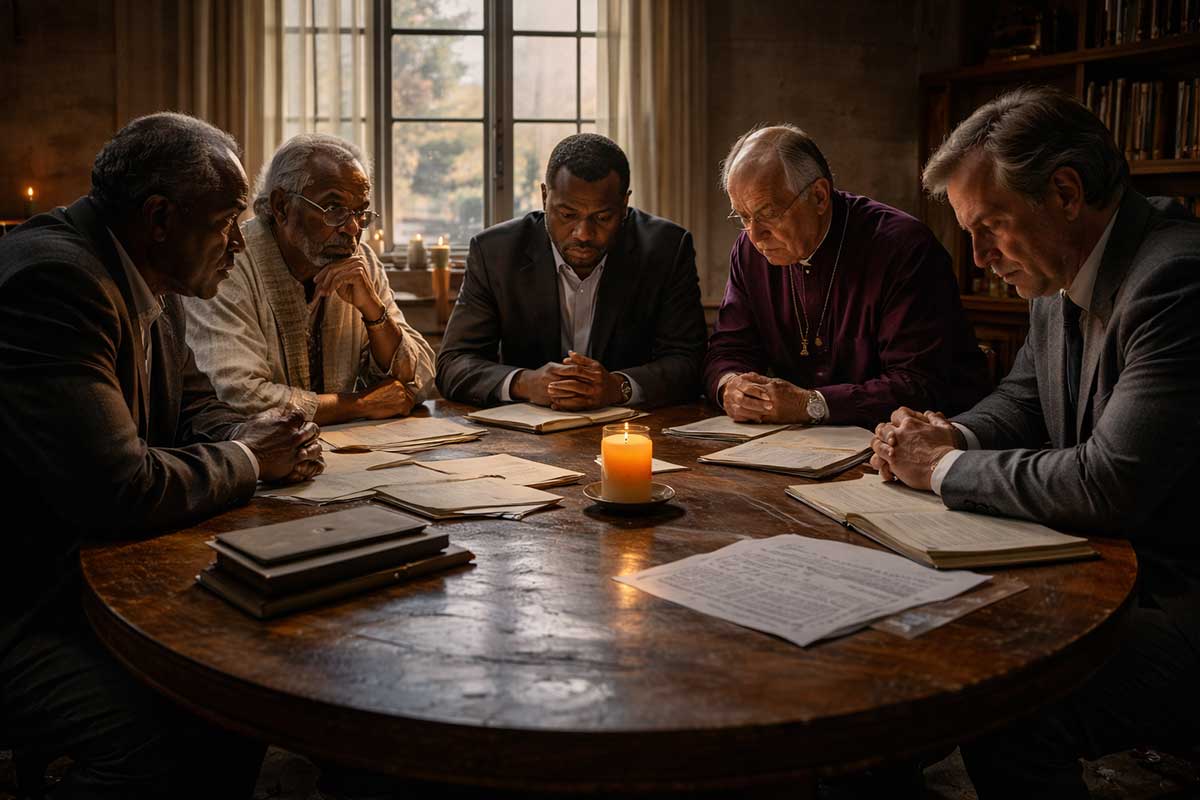
Participants:
Martin Luther King Jr.
Nelson Mandela
Mahatma Gandhi
Desmond Tutu
Bryan Stevenson
Guiding questions:
How do we resist evil without becoming inwardly violent?
Can punishment remain clean if the heart is full of revenge?
What separates moral courage from the desire to wound?
The circle is calm, yet the subject carries heat. Each person here has stood near brutality, public wrong, and the temptation to answer injury with injury.
Martin Luther King Jr.:
The first danger is this: once a person has suffered deeply, he may begin to believe that his pain gives him the right to hate. That belief feels justified. It feels earned. Yet hate does something terrible to the one who carries it. It reshapes the soul into the image of the very evil it claims to oppose.
Nelson Mandela:
Yes. Many speak of freedom as if it means defeating the oppressor and then taking his place emotionally. That is not freedom. If your jailer lives inside your heart, you are still confined. A nation may change its flag, its laws, its rulers, yet if bitterness becomes the inner law, then the old prison remains.
Gandhi:
A person may say, “I seek justice,” yet his pulse reveals another wish: “I want my enemy to feel my pain.” That is where the line begins. Justice seeks truth, restoration, restraint, and order. Revenge seeks emotional repayment. It wants suffering to move from one body into another.
Desmond Tutu:
And revenge rarely stops where it claims it will stop. It always says, “Just this much.” Then grief speaks again. Then anger speaks again. Then humiliation asks for one more act, one more penalty, one more public disgrace. Soon the wound is running the court.
Bryan Stevenson:
That is something we see in legal systems too. A society can speak the language of fairness and still act from fear, racial prejudice, class contempt, or the desire to discard human beings. A sentence may be legal and still come from a damaged moral center. Law by itself does not purify motive.
King:
Exactly. One can enforce justice in a fallen spirit. That is the hidden issue. The question is not only, “Was the wrong named correctly?” The deeper question is, “What kind of heart named it?” If the heart longs to crush, then it has already crossed into spiritual danger.
Mandela:
Yet many people hear this and grow uneasy. They fear mercy will weaken resistance. They think any refusal to hate will make one soft before evil. My experience taught me the opposite. Hatred clouds judgment. It narrows vision. It makes strategy poorer. It binds action to old injuries.
Gandhi:
A disciplined soul can oppose wrongdoing with firmness greater than rage can produce. Rage burns hot, then burns out. Discipline lasts. Clarity lasts. The refusal to hate can demand more courage than retaliation.
Tutu:
And one must speak plainly here: forgiveness is not pretending evil did not happen. It is not sentimental. It is not a warm blanket spread over cruelty. Forgiveness looks straight at the wound and says, “I will not let this injury decide the shape of my heart.”
Stevenson:
That is why proximity matters. When people stay far from those they judge, punishment becomes abstract, easy, clean on paper. Up close, things change. You see broken histories, childhood trauma, mental illness, addiction, fear, inherited damage, and the terrible mix of choice and circumstance. That does not erase accountability. It makes contempt harder.
King:
The public often prefers contempt. It is simpler. It flatters the self. It offers the sweet feeling of moral distance. Yet the beloved community cannot be built on emotional distance. If justice has no room for human dignity, then it cannot heal. It can control, it can strike back, it can terrify, yet it cannot heal.
Mandela:
Healing requires memory without poison. That is no small task. A people emerging from oppression have every reason to rage. Yet if rage becomes national identity, the future is consumed by the past. A people must remember the wound without worshiping it.
Gandhi:
Yes. The wound must not become sacred. Once pain becomes sacred, anyone blamed for it becomes disposable. Then justice has already been lost.
Tutu:
That is why truth is so central. People often want either vengeance or denial. Both are false answers. Vengeance says, “Let pain rule.” Denial says, “Let lies rule.” Truth says, “Let us look directly, mourn honestly, judge fairly, and refuse to become what we hate.”
Stevenson:
Fairness without mercy becomes cold. Mercy without truth becomes empty. Human dignity requires both. I have met people who committed terrible acts. I have met victims whose suffering cannot be put into neat language. The law must respond. Yet none of us are only the worst act we have committed, and none of us are healed by cruelty dressed up as justice.
King:
There is another point. Hatred often hides inside righteous speech. A person may use noble words, quote noble causes, cite noble harms, and still inwardly desire humiliation. So each generation must ask itself: do we want repair, or do we want an enemy to break in front of us?
Mandela:
That question belongs to leaders in a special way. Crowds can be led by injury. Leaders must resist that temptation. The easiest path is to feed resentment. The harder path is to honor pain, then guide it away from vengeance.
Gandhi:
That guidance begins in the self. No public ethic survives if private discipline is absent. A man who cannot govern anger within will never build a peaceful order outside.
Tutu:
And there is joy on the far side of that discipline. People speak as if mercy is loss. It is not. Mercy restores one’s own humanity. It keeps grief from turning into a throne.
Stevenson:
A society shows its true moral quality by what it does with the broken, the guilty, the condemned, the feared. Anyone can defend the lovable. The test comes when the person before you is stained, dangerous, or hated. Then your principles are no longer decorative.
A pause comes. No one rushes to fill it.
Then King speaks again, gently.
King:
Justice without hatred is possible, yet it asks something rare. It asks us to hold firm lines without letting anger own the heart. It asks us to protect the vulnerable without surrendering another person’s humanity. It asks us to fight evil with clean hands inwardly, not merely outwardly.
Mandela:
And that inner cleanliness is costly.
Gandhi:
Yet without it, victory carries poison.
Tutu:
Without it, the wound simply changes address.
Stevenson:
Without it, punishment may satisfy a crowd for a moment, yet leave the deeper human problem untouched.
The question remains near the center of the room:
Can we tell the truth about evil, restrain it, judge it, and still refuse the dark pleasure of hate?
Topic 3: How do movies and mass culture train us to cheer at downfall?

Participants:
Marshall McLuhan
Neil Postman
C.S. Lewis
Hayao Miyazaki
Christopher Nolan
Guiding questions:
What kind of inner life is formed when revenge becomes entertainment?
Why does public humiliation feel satisfying to crowds?
Can stories show evil clearly without training people to enjoy collapse?
The room feels different this time. Less like a chapel, more like a quiet screening space after the audience has left. The images are gone, yet their aftertaste remains.
McLuhan:
Most people think the lesson lies in the plot: hero, villain, conflict, defeat. Yet the deeper lesson lies in the form of delivery. Fast cuts, swelling sound, the close-up on fear, the crowd reaction, the pause before impact. These things tutor the nervous system. The audience does not merely watch downfall. It is conditioned to crave its rhythm.
Postman:
Yes. Once public life is shaped by entertainment habits, moral judgment starts to borrow the same grammar. Good and evil become easier to consume when turned into spectacle. The slow work of discernment does not hold attention as easily as the dramatic fall. So the culture starts preferring scenes of exposure, disgrace, and collapse.
Lewis:
And a grave thing happens there. The moral imagination, which ought to help us love the good and hate evil rightly, becomes disordered. One may still use noble language. One may still praise justice. Yet inwardly one has grown attached to the thrill of seeing another person reduced. That is a corruption of delight.
Miyazaki:
I have always felt that when a story hates its villain too much, the story becomes smaller. It loses air. It loses sorrow. Human beings are rarely clean monsters. They are frightened, hungry, wounded, greedy, lonely, foolish. If a story teaches the audience to clap at destruction, it may succeed as excitement, yet it fails as insight.
Nolan:
There is real tension here. Stories need stakes. They need conflict. They need consequences. A viewer needs to feel that choices matter and that evil has weight. If a film refuses that, it drifts into softness. Yet I agree that many works do something easier: they hand the audience a target, intensify moral certainty, then reward the viewer with emotional release through punishment.
McLuhan:
That reward is the key. The screen is not a neutral window. It is an environment that rehearses response. If collapse is framed as climax, the audience learns to feel completion through ruin. That lesson does not remain in the theater. It leaks into politics, scandals, online outrage, even private relationships.
Postman:
Public humiliation then becomes legible as entertainment. A person is exposed, clipped, mocked, turned into content. The audience says it cares about truth, and perhaps part of it does. Yet the format itself encourages appetite. The appetite is for a moment of shared pleasure: “There. He is finished.”
Lewis:
What concerns me is not only the punishment of the wicked, but the education of the watcher. Every repeated pleasure forms taste. If one repeatedly enjoys contempt, one becomes the sort of person to whom contempt feels natural. The soul may keep its manners for a time. Its palate has already changed.
Miyazaki:
That is why gentleness in storytelling matters. Not weakness. Gentleness. A story can show great wrong and still keep pity alive. It can show danger and still leave room for mystery. I do not trust a story that wants me to feel clean through someone else’s destruction.
Nolan:
Yet audiences often want clarity. They want to know who deserves what. They want the release that comes from seeing disorder answered. The craft question is how to satisfy the moral demand for consequence without flattering the darker part of the audience.
McLuhan:
One answer lies in pacing. Spectacle compresses moral time. Reflection lengthens it. If the viewer is given no space to feel the cost of collapse, then collapse becomes pleasure. If the form allows silence, aftermath, ambiguity, then the event can register as tragedy rather than reward.
Postman:
And the market often resists that. Spectacle sells more easily than contemplation. Humiliation gets circulated faster than repentance. Clean moral binaries spread better than painful complexity. So a commercial culture tends to make vice convenient for storytelling.
Lewis:
There is an old temptation here: to enjoy punishment as proof of one’s own righteousness. Stories can baptize that temptation. A villain falls, and the viewer feels morally taller. Yet the viewer may never have learned mercy, self-examination, or restraint. He has only learned alignment with the winning side.
Miyazaki:
Yes. In many stories, the enemy is not understood. He is arranged. He is designed as fuel for the audience’s release. I do not think art should be so cruel to human reality. A person may need to be stopped. A force may need to be resisted. Yet hatred is too easy a brush for art.
Nolan:
There is a craft problem here that serious filmmakers wrestle with. If you humanize the antagonist too much, some viewers think you are excusing him. If you flatten him, you create a moral toy. The balance is hard. Yet without that effort, films become machines for emotional simplification.
McLuhan:
And simplification at scale becomes culture. Once millions consume the same moral reflex, the reflex gains social power. People begin to live as audiences, scanning for the next figure to condemn, the next plot turn, the next dramatic unmasking. Reality is then treated as serialized conflict.
Postman:
That is when civic life starts speaking in trailers. Everything must be heightened, compressed, and emotionally decisive. The slow language of truth becomes weak in comparison. A culture raised on spectacle loses patience for sober judgment.
Lewis:
Then even religion can be infected. A person may speak of evil in holy terms, yet secretly hunger for the delicious moment when the sinner is broken. The heart says, “Now my side is vindicated.” That is not charity. It is vanity dressed in moral clothing.
Miyazaki:
A good story leaves the viewer larger inside, not smaller. It may leave grief. It may leave unease. It may leave no easy victory. Yet it should widen compassion, not narrow it. If an audience leaves hungry for more humiliation, something has gone wrong.
Nolan:
I think the best stories carry consequence and sadness together. The antagonist may fall, yet the fall costs something. The world is not made brighter by the collapse alone. There is damage, inheritance, regret. Then the viewer cannot rest in simple celebration.
McLuhan:
Yes. The medium can teach sobriety too. Image, sound, duration, silence, framing — all of it can make a fall feel grave instead of sweet. Form can protect moral perception, or it can cheapen it.
Postman:
And viewers need habits of resistance. A culture built on amusement will not produce those habits automatically. People must learn to ask: what am I being trained to feel here? What appetite is this scene feeding? Is this truth, or is this theater using truth as bait?
Lewis:
That last question is close to the center. The devil does not always tempt by making evil attractive in a direct sense. Sometimes he makes self-righteousness pleasurable. The viewer comes away thinking, “I love justice,” when in fact he has simply enjoyed an approved form of malice.
Miyazaki:
That is why tenderness matters so much in art. Tenderness does not erase judgment. It keeps judgment from turning dead. A world without tenderness becomes efficient at condemnation and poor at wisdom.
Nolan:
So perhaps the question for artists is this: can we stage moral conflict in a way that honors consequence, resists cheap release, and leaves the audience more awake to the cost of hatred? I think we can. Yet it takes restraint. It takes trust in the viewer. It takes refusing the easiest payoff.
The room grows still.
Then Lewis speaks once more.
Lewis:
A story should not merely ask, “Did evil lose?” It should ask, “What kind of heart did this victory produce in the watcher?” If the answer is a heart more eager for contempt, then the story has done hidden damage.
McLuhan:
The audience has been trained.
Postman:
The culture has been nudged.
Miyazaki:
The soul has been narrowed.
Nolan:
And justice has been confused with release.
The screen remains dark. The real question hangs there, invisible:
When we cheer at the end, what exactly are we cheering for?
Topic 4: What is the spiritual cost of rejoicing at an enemy’s collapse?
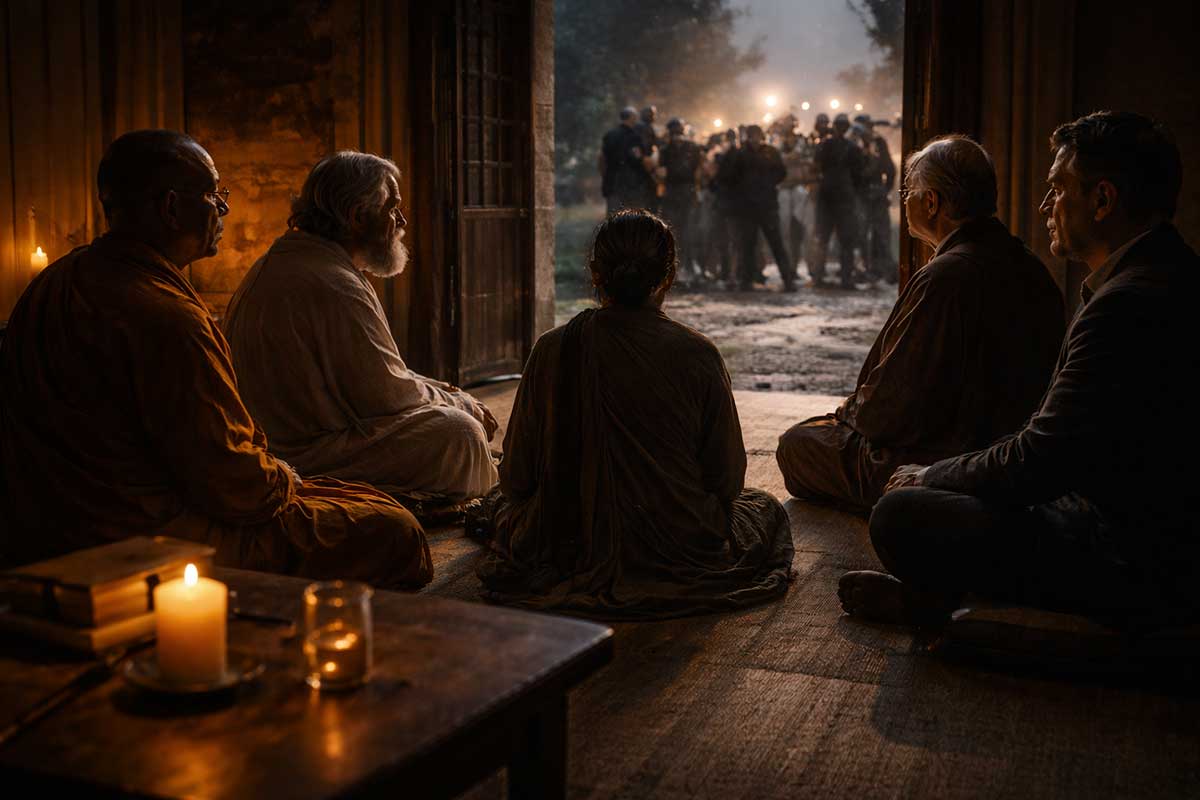
Participants:
Rumi
Thomas Merton
Simone Weil
Thich Nhat Hanh
Hitori Saito
Guiding questions:
Why is mercy a higher state than vindication?
What is lost in the unseen world when a person enjoys another’s ruin?
Why do the spiritually mature refuse to celebrate collapse?
The room is plain and quiet. No stage. No audience. Just five chairs and a question that feels almost dangerous in its honesty.
What happens to the soul when it smiles at the fall of an enemy?
Rumi:
A person may say, “Now justice has come, and my heart is satisfied.” Yet the heart was never made to eat another person’s ruin. It was made for truth, love, and nearness to the Beloved. The joy of contempt is a false sweetness. It tastes bright for a moment, then leaves ash.
Thomas Merton:
Yes. A man can be right in judgment and still wrong in spirit. He can name evil correctly and yet secretly feed on the shame of the one who fell. That inward feeding clouds prayer. It narrows vision. It makes the soul less able to receive God.
Simone Weil:
The soul is wounded the moment it consents to force inwardly. Force is not only in the blow or the chain. It exists in the gaze that turns a person into an object. The instant we rejoice in another’s reduction, we enter that same world. We become obedient to it.
Thich Nhat Hanh:
When someone falls, many seeds can be watered in us. Compassion is one. Pride is one. Anger is one. Relief mixed with cruelty is one. If we are not awake, the wrong seed grows. Then we call our feeling justice, yet it is often intoxication.
Hitori Saito:
I like what everyone is saying. Let me put it in very simple words. If you feel happy over someone else going down, your soul goes down too. It may be only a tiny smile inside, only a tiny bit of gloating, yet that tiny thing matters. People think, “It’s small, so it’s fine.” It is not fine. The spirit becomes heavy from small things too.
A hush settles over the room.
Rumi:
Yes. The lower self loves those small secret victories. It says, “I am above him now.” Yet each time it says that, it moves farther from love.
Merton:
The ego is clever in this area. It can make contempt feel moral. It can make harshness feel pure. It can make inner cruelty feel honest. The spiritual life asks a harsher question than most people want to face: what in me enjoys condemning?
Weil:
That question is severe and clean. A soul rises by consent to the good. The joy of another’s collapse is consent to gravity. It pulls downward. Grace moves in the other direction.
Thich Nhat Hanh:
And the body knows this. When we delight in another’s suffering, the body tightens. The mind burns. The scene repeats in consciousness. So the enemy falls once outside us, yet many times inside us.
Hitori Saito:
That is right. Some people think heaven is reached by grand ideas. Many times it is reached by your smallest reactions. Can you say “good for you” when another person rises? Can you refuse to laugh when another person slips? Can you keep your heart bright when life gives you a chance to feel superior? That is where the test is.
Rumi:
The soul does not become luminous by winning over others. It becomes luminous by dropping the pleasure of comparison.
Merton:
And by refusing to build identity on contrast. Many people feel good only when someone else looks lower. That is a miserable way to live. It is dependency on the failures of others.
Weil:
There is another loss here. Attention becomes impure. Real attention is sacred. It allows us to see another person without turning him into food for the ego. The soul that enjoys downfall no longer sees clearly. It sees usefulness. It sees proof of its own innocence. That is a corruption of sight.
Thich Nhat Hanh:
Deep looking changes this. When we look deeply, we see causes and conditions. We see pain handed down, fear handed down, confusion handed down. This does not erase responsibility. Yet it stops the mind from making destruction into celebration.
Hitori Saito:
Yes, and people miss this point. You do not lift yourself by pushing someone else down in your heart. It only feels that way for a moment. It is like standing on a paper box and saying you became taller. The box breaks. Then you are even lower than before.
Rumi:
A beautiful image. False height is still low.
Merton:
The real danger is self-deception. A soul can survive failure. It can survive pain. What damages it deeply is to mistake its own ugliness for righteousness.
Weil:
Yes. To believe one is ascending at the very moment one is descending — that is a grave error.
Thich Nhat Hanh:
This is why mindfulness is needed at the exact moment of the enemy’s fall. That is the test. Not later. Not in theory. At that moment, can you breathe? Can you notice the pleasure rising and not feed it? Can you say, “This person must face consequences, yet I will not poison my own mind”?
Hitori Saito:
That is the whole thing in plain language. If you poison your heart, you carry the poison. The other person may already be falling. Why fall together? Better to keep a good spirit. Better to say, “I do not need to become dirty inside.” That kind of person rises. The other kind stays low, no matter how correct they seem.
Rumi:
Love does not mean weakness toward evil. It means refusing to become its mirror.
Merton:
Yes. The enemy’s fall asks each of us: do you want truth, or do you want the intoxication of being above him?
Weil:
And only one of those belongs to grace.
Thich Nhat Hanh:
Compassion protects both sides. It does not cancel justice. It keeps justice from being filled with poison.
Hitori Saito:
And from a very practical point of view, cheerful people rise higher than bitter people. A person who blesses others becomes light. A person who gloats becomes heavy. The spirit world is not fooled by nice words. It responds to the weight of your heart.
The room grows still.
Then Rumi speaks softly.
Rumi:
The soul does not grow by standing over ruins and smiling. It grows by keeping mercy alive when pride wants a feast.
Merton:
And by refusing contempt as nourishment.
Weil:
And by giving consent to grace over force.
Thich Nhat Hanh:
And by guarding the mind at the moment of impact.
Hitori Saito:
And by never thinking a tiny bit of malice is harmless. Small darkness still darkens the heart.
The question remains in the center of the room:
When your enemy falls, does your spirit become lighter — or lower?
Topic 5: Can a society heal if it feeds on public shaming?
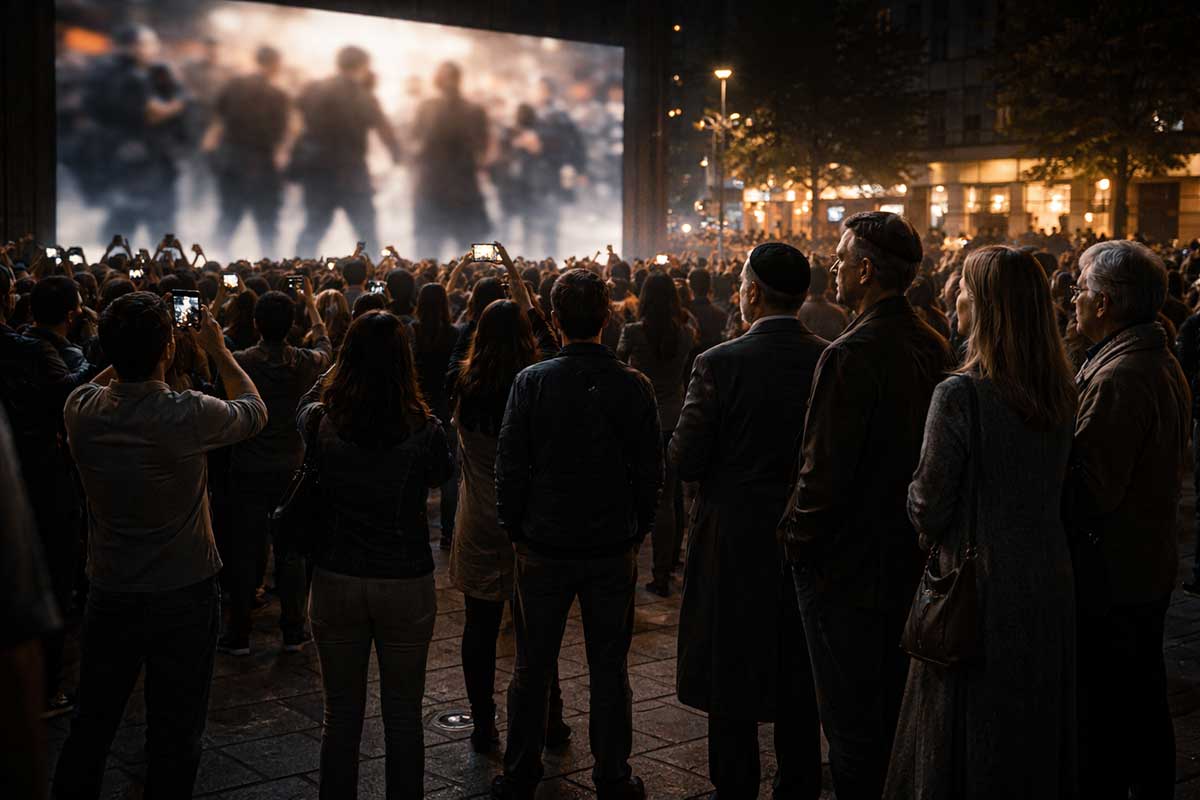
Participants:
Hannah Arendt
Aleksandr Solzhenitsyn
Václav Havel
Rabbi Jonathan Sacks
Jonathan Haidt
Guiding questions:
What kind of culture is formed by constant public disgrace?
Can a nation survive when mercy is treated as weakness?
What would a healthier public moral life look like?
The room feels more civic than sacred this time. It carries the atmosphere of a parliament after midnight, a courtroom after the crowd has gone home, a nation looking at itself in a mirror it does not fully trust.
At the center is a hard question:
Can a society recover if it learns to live on humiliation?
Hannah Arendt:
A society fed by public shaming becomes shallow in judgment. It begins by claiming moral seriousness, yet soon it prefers exposure to thought. The public square turns into a theater of denunciation. People no longer ask, “What is true? What is just? What is proportionate?” They ask, “Who can be displayed next?”
Solzhenitsyn:
Yes. A people can be corrupted by lies, yet they can also be corrupted by the ecstasy of accusation. Once the crowd discovers the pleasure of righteous condemnation, each new sinner becomes useful. Public fury then acts like a drug. It gives common purpose without requiring repentance from the accusers.
Havel:
And in such a culture, truth itself becomes strained. A person learns to perform the proper outrage rather than speak honestly. The public script grows stronger than conscience. Many no longer ask what they really believe. They ask what must be said to remain safe.
Rabbi Jonathan Sacks:
That is one of the gravest losses. A moral culture depends on the dignity of persons and the restraint of judgment. Once dignity is gone, justice becomes brittle. Once restraint is gone, correction becomes cruelty. A free society cannot last long if it is held together by cycles of contempt.
Jonathan Haidt:
There is a psychological mechanism here. Public shaming bonds groups. It gives members a quick sense of unity, clarity, and moral elevation. People feel close to one another when they punish a common offender. The problem is that this feeling is socially powerful and morally unreliable. It rewards the group for intensity, not for fairness.
Arendt:
And fairness is slow. Spectacle is fast. That is the basic danger. Healthy judgment requires distinctions, degrees, and patience. Public shaming hates those things. It prefers compression. A complex life becomes a single offense. A human being becomes a symbol. Once that happens, thinking has already failed.
Solzhenitsyn:
I would say more. When a people grow accustomed to disgrace as a public ritual, they prepare the ground for harsher forms of injustice. The line between moral condemnation and dehumanization grows thin. Many atrocities began with language that made certain people fit subjects for humiliation.
Havel:
Yes. A society does not become cruel all at once. It first becomes insincere. It learns to speak in formulas. It learns to enjoy public submission. It learns that visible repentance matters more than inward truth. That is a very dangerous education.
Sacks:
And it destroys covenantal life. A society is not merely a collection of individuals enforcing standards on one another. It is a moral community bound by mutual responsibility. Responsibility means I care what you become. Contempt means I enjoy your fall. Those are not the same world.
Haidt:
Social media intensified this. It makes punishment public, permanent, and scalable. It shortens the distance between accusation and judgment. It removes the friction that once slowed moral frenzy. That changes character. People train themselves to react in front of others. Outrage becomes performative, and performance feeds more outrage.
Arendt:
Which leaves almost no room for thinking. Thinking requires a kind of inner solitude, a pause in which one weighs matters without surrendering to the crowd. Public shaming abolishes that pause. It says: decide now, condemn now, signal now. Under those conditions, conscience becomes fragile.
Solzhenitsyn:
And fear enters. Not only fear of punishment, but fear of mercy. A person begins to fear being seen as too generous, too hesitant, too humane. He worries that compassion itself will be treated as betrayal. Then even good people become agents of hardness.
Havel:
That is very true. In diseased public life, courage can mean refusing the script of collective contempt. It can mean saying, “Yes, wrong was done, yet I will not join this feast of humiliation.” Such words sound weak to the crowd. In fact, they may be the last defense of civilization.
Sacks:
Mercy is often misunderstood. It is not moral confusion. It is not refusal to judge. Mercy is the act of placing judgment back inside a larger view of the human person. Without that larger view, all penalties become spiritually dangerous. The law may still function, yet society begins to lose its soul.
Haidt:
There is also the problem of moral addiction. Once a culture gets used to the emotional payoff of public shaming, it needs repeated hits. One scandal fades, so another must come. Standards can become unstable because the system rewards outrage itself. People become more punitive than they intended, then call it progress.
Arendt:
This is one reason total moral certainty should worry us. The more certain the crowd feels, the less likely it is to examine proportion, context, or common guilt. A nation that always locates evil outside itself is preparing itself for blindness.
Solzhenitsyn:
The line between good and evil cuts through every human heart. Any society that forgets this will produce moral vanity. And moral vanity is fertile soil for cruelty. People excuse in themselves what they condemn in others, simply because they believe they stand on the proper side.
Havel:
So the question becomes: what would honest public life look like instead? I think it would begin with truth spoken without theatrical hatred. It would ask for responsibility without public appetite. It would make room for confession, restitution, limits, and return.
Sacks:
Yes, return is vital. If a culture has no path back for the fallen, then it is not teaching morality; it is teaching permanent exclusion. That kind of society cannot heal, since healing requires the possibility that broken people may yet become more than their failure.
Haidt:
And from a social science angle, societies need norms that reduce conflict escalation. Public shaming often does the opposite. It hardens identities, freezes people into camps, and turns every incident into a loyalty test. A healthier culture would build norms of proportion, forgiveness, due process, and humility.
Arendt:
Humility is indispensable. Politics without humility becomes moral exhibition. Citizens begin to treat one another as props in a drama of virtue. Then public life is no longer a shared world. It becomes a contest of exposure.
Solzhenitsyn:
A shared world can survive many wrongs. It cannot survive endless contempt. Contempt hollows language first, then institutions, then souls.
Havel:
And once souls are hollowed, institutions cannot save them. The renewal must begin deeper. It must begin in the refusal to lie, the refusal to imitate cruelty, the refusal to gain moral energy from another person’s disgrace.
Sacks:
That is where covenant is reborn: when people decide that justice will be real, yet never severed from human dignity. The strongest societies are not those with the fiercest punishments. They are those with the deepest moral grammar.
Haidt:
That grammar has to be practiced. People need habits, not slogans. Pause before joining the mob. Check facts. Ask what outcome you want. Leave room for rehabilitation. Refuse to enjoy destruction. Those habits sound simple. In group settings, they are very hard.
A long silence settles across the table.
Then Arendt speaks once more.
Arendt:
A society begins to recover when it prefers judgment to spectacle.
Solzhenitsyn:
When it remembers that the accuser too is morally dangerous.
Havel:
When truth is spoken without the intoxication of public hatred.
Sacks:
When dignity remains, even in correction.
Haidt:
When its moral instincts are trained by humility instead of reward loops.
The room grows still, as if the question has turned from public life back to the person listening.
Can a society heal if it feeds on public shaming?
Perhaps only when enough people decide that another person’s disgrace will no longer be their source of emotional food.
Final Thoughts
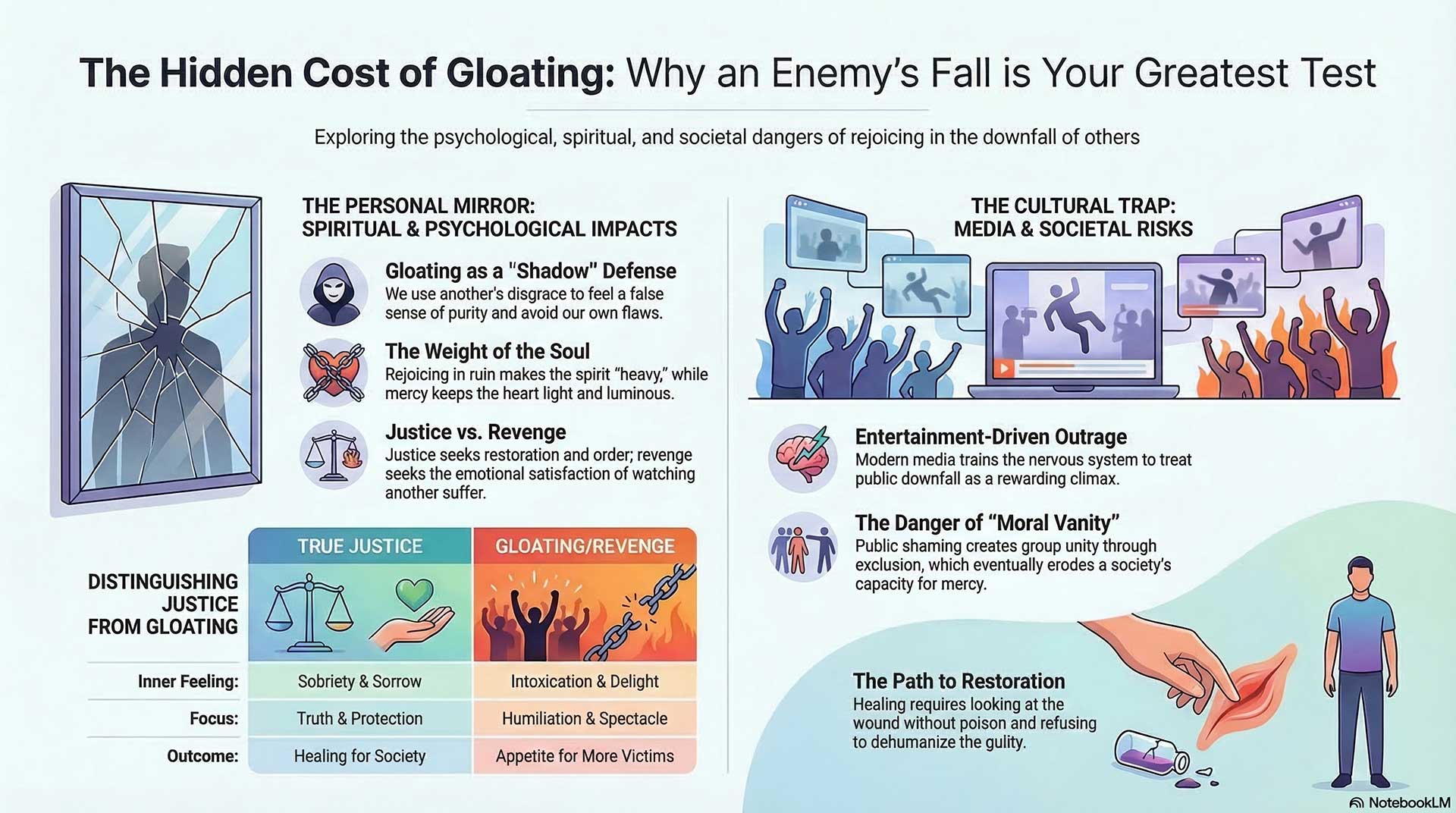
In the voice of the wisdom writer behind Proverbs 24:17
Now you have heard many voices, and they have circled one truth from many sides.
A man may think the great question is whether his enemy deserved to fall.
Yet the deeper question is this: what entered your heart when he did?
Did pride enter?
Did sweetness rise at the sight of shame?
Did you feel taller when another was cast down?
Then do not call that wisdom.
For the heart that delights in ruin is already in danger, though it sits in the seat of judgment. The man who rejoices at another’s collapse may appear upright before others, yet inwardly he is drinking from a bitter cup. And bitter cups do not make clean souls.
I have long observed the ways of men.
Some are ruined by their crimes.
Others are ruined by their reactions to those crimes.
One falls by wickedness.
Another falls by gloating.
So I say again: guard the heart at the moment of your enemy’s stumbling. That is the hour when many lose the fear of God and call their malice righteousness. That is the hour when the crowd grows loud and wisdom grows quiet. That is the hour when a man must choose whether he will be governed by heaven or by appetite.
Grieve if you must. Judge if you must. Restrain evil if you must.
Yet do not make another person’s downfall your delight.
For the soul does not rise by standing over the broken.
It rises by remaining humble when it has every chance to become proud.
This is the path of the wise:
to see clearly,
to judge rightly,
to remain low before God,
and to keep the heart free from secret celebration when another man is brought down.
He who learns this has understood much.
He who lives this has understood more.
Short Bios:
Jesus
Central figure of Christianity, teacher of radical love, mercy, inner purity, and the command to love even one’s enemies.
Buddha
Founder of Buddhism, whose teachings exposed attachment, hatred, and delusion as roots of suffering and pointed people toward compassion and awakening.
Carl Jung
Swiss psychiatrist and founder of analytical psychology, known for his work on the shadow, projection, individuation, and the hidden depths of the human psyche.
René Girard
French thinker best known for mimetic desire and scapegoat theory, explaining how societies unite by casting guilt onto a chosen victim.
Fyodor Dostoevsky
Russian novelist of profound moral and spiritual insight, famous for probing guilt, freedom, suffering, pride, and the contradictions of the human soul.
Martin Luther King Jr.
American civil rights leader and Christian minister who joined moral courage with nonviolence, insisting that hatred destroys both oppressor and oppressed.
Nelson Mandela
South African anti-apartheid leader and president who emerged from long imprisonment with a vision of justice that refused to be ruled by bitterness.
Mahatma Gandhi
Leader of India’s independence movement, known for satyagraha, disciplined nonviolence, and the belief that means shape the moral quality of ends.
Desmond Tutu
South African archbishop and moral leader whose work for truth and reconciliation showed how justice and forgiveness can meet after deep national wounds.
Bryan Stevenson
American lawyer and founder of the Equal Justice Initiative, known for defending the condemned and arguing that human dignity must remain at the center of justice.
Marshall McLuhan
Canadian media theorist famous for showing that the medium itself reshapes perception, culture, and human behavior.
Neil Postman
American cultural critic who warned that entertainment-driven media can weaken public seriousness and turn civic life into spectacle.
C.S. Lewis
British writer and Christian thinker whose fiction and essays explored moral imagination, temptation, pride, and the formation of the inner life.
Hayao Miyazaki
Japanese filmmaker and master storyteller known for humane, spiritually sensitive films that resist shallow villainy and preserve wonder, sorrow, and moral complexity.
Christopher Nolan
Contemporary filmmaker known for morally layered narratives that ask how consequence, guilt, sacrifice, and perception shape human choices.
Rumi
Thirteenth-century Persian poet and mystic whose writings speak of love, ego, longing, and the soul’s return to the Divine.
Thomas Merton
American Trappist monk and spiritual writer whose work explored contemplation, ego, violence, mercy, and the search for inner truth.
Simone Weil
French philosopher and mystic known for fierce moral clarity on force, attention, suffering, and the soul’s need for grace.
Thich Nhat Hanh
Vietnamese Zen teacher and peace activist who taught mindfulness, compassionate presence, and the healing of anger through deep awareness.
Hitori Saito
Japanese bestselling author, entrepreneur, and widely known self-development teacher who emphasized cheerful living, clean-hearted speech, and the spiritual cost of envy and badmouthing.
Hannah Arendt
Political thinker known for her work on totalitarianism, responsibility, public life, and the dangers that arise when thought gives way to ideological certainty.
Aleksandr Solzhenitsyn
Russian writer and dissident whose witness against oppression stressed moral courage, truthfulness, and the line between good and evil in every heart.
Václav Havel
Czech playwright, dissident, and president who wrote powerfully about living in truth under systems built on fear, performance, and lies.
Rabbi Jonathan Sacks
British rabbi and public intellectual who argued that free societies need moral responsibility, covenant, dignity, and restraint in public life.
Jonathan Haidt
Social psychologist known for research on moral intuition, group identity, polarization, and the social forces that shape public judgment.
Leave a Reply