
What if the real story is not the latest strike, but the system behind it?
Introduction by John Mearsheimer
People often talk about the Iran–Israel confrontation as though it were a sudden emergency, a sharp break produced by a single strike, a single leader, or a single outrage. That way of seeing the conflict is tempting, but it is shallow. What we are dealing with is not one episode. It is a long strategic rivalry that has been building through history, fear, statecraft, covert action, nuclear anxiety, proxy warfare, and competing visions of regional order.
That is why this discussion matters. If we look only at the latest attack or the latest headline, we miss the deeper machinery driving events. We miss the long memory of the Iranian Revolution. We miss the effect of the Iraq War on the regional balance. We miss the rise and fall of diplomacy. We miss the hidden struggle of sabotage, infiltration, and targeted killing. We miss the role of militias, patrons, and outside powers. And we miss the uncomfortable fact that prolonged instability often strengthens the very actors who claim to be trying to end it.
Our five topics follow that deeper structure. First, we ask when this present escalation truly began and which past choices narrowed the room for peaceful adjustment. Second, we examine the hidden war beneath the visible one: intelligence, assassinations, sabotage, and covert pressure. Third, we confront the nuclear issue, which is at once a real strategic concern and a powerful political instrument. Fourth, we widen the map and look at the regional chessboard of proxies, states, alliances, and outside patrons. Fifth, we ask the hardest question of all: who actually gains when a crisis keeps expanding and the politics of fear become permanent?
The point is not to reduce everything to conspiracy or fate. States make choices. Leaders make mistakes. Institutions defend their interests. Narratives shape what societies think is possible. In a conflict like this, all of those things operate at once. So if we want to understand where the rivalry may go next, we have to see it as more than a military contest. It is a historical structure, a strategic competition, a political theater, and a regional system of entanglement all at the same time.
That is what this conversation is really about.
(Note: This is an imaginary conversation, a creative exploration of an idea, and not a real speech or event.)
Topic 1: The Long Timeline Behind the Conflict
John Mearsheimer:
Let’s begin with a hard question. When did the present Iran–Israel escalation truly begin? Was it born in the 1979 Iranian Revolution, in the Iraq War era, in the collapse of the nuclear deal, or in the aftermath of October 7? And just as important, did major leaders build this crisis step by step, or did they set forces in motion that later escaped their control?
Question 1: When did the present escalation really begin?
Trita Parsi:
If we want a serious answer, we have to begin with 1979. That is when Iran ceased being a pillar of the American-led regional order and became its challenger. Before that, Iran and Israel were not natural enemies in the form we know today. The Iranian Revolution transformed the political meaning of the state. It fused anti-monarchical revolt, anti-Americanism, anti-imperial self-image, and hostility to Israel into one governing worldview. From that point forward, Iran was no longer just another state with interests. It became, in the eyes of Washington and Tel Aviv, a revisionist force.
But 1979 is only the starting line, not the full explanation. The pattern hardened over time. The Iran-Iraq War deepened Iran’s siege mentality. Sanctions created a national security culture centered on self-reliance and asymmetric leverage. The U.S. invasions of Afghanistan and Iraq removed two major enemies of Iran, yet they also brought American military power right to Iran’s borders. That paradox made Tehran more influential and more fearful at the same time. So the current crisis did not spring from one event. It grew layer by layer across decades.
Jeffrey Sachs:
I would place the true beginning in the collision between regional history and great-power intervention. Yes, 1979 matters enormously. Yet the deeper story is that the Middle East has been repeatedly reengineered by outside powers, especially the United States, often with very little grasp of long-term consequences. The 2003 Iraq invasion was a major turning point. It shattered a state, inflamed sectarian conflict, expanded Iran’s reach, and pushed Israel and the Gulf monarchies into a more intense anti-Iran posture.
Then came the lost diplomatic opening. The 2015 nuclear deal showed that negotiated limits and mutual restraint were possible. Its collapse was not a small diplomatic setback. It was a signal that even a functioning agreement could be discarded. Once that happened, distrust became structural. Iran read the message clearly: concessions do not buy security. Israel read another message: pressure works better than diplomacy. That is one reason the present phase feels less like a sudden crisis and more like an accumulation of broken decisions.
Ray McGovern:
From an intelligence standpoint, you cannot separate the visible timeline from the hidden one. The public sees the revolution, the sanctions, the failed deals, the militia attacks, the assassinations. Beneath that sits another history: covert operations, penetration attempts, sabotage, targeted killings, cyberwar, quiet proxy building. The open conflict has been under construction for years in a shadow domain.
I would date the current form of escalation to the period when covert pressure became normalized as a substitute for statecraft. Once assassinations and sabotage become routine tools, each side stops reading the other as a negotiable adversary and starts reading the other as a system to be degraded. That is a very different psychology. So yes, 1979 matters. So does 2003. So does the collapse of the 2015 agreement. Yet the most dangerous shift came when hidden warfare ceased to be exceptional and became ordinary.
Yuval Noah Harari:
History does not move only through missiles, treaties, or oil flows. It also moves through narratives people tell about themselves. The conflict we see now rests on two profound historical memories. On one side, Israel carries the memory of existential vulnerability, persecution, siege, and the belief that delay can be fatal. On the other side, post-revolutionary Iran carries the memory of humiliation, foreign interference, imposed dependency, and moral mission. These are not small emotional decorations attached to policy. They are engines of policy.
So the escalation began when each side built an identity that made the other side symbolically intolerable. Iran did not become only a strategic threat to Israel. It became part of a larger story about encirclement and survival. Israel did not become only a rival state to Iran. It became part of a larger story about injustice, resistance, and corrupted world order. Once rival states become sacred symbols inside national stories, compromise becomes much harder.
John Mearsheimer:
I see it as a classic security competition that kept intensifying across distinct phases. The revolution is phase one. The American regional order’s failures are phase two. The collapse of diplomacy is phase three. The Gaza war and its aftermath pushed it into a new and more combustible phase. States do not need ancient hatred to fall into this pattern. Fear, alliance commitments, strategic geography, and worst-case thinking are enough.
The key point is that each turning point narrowed room for maneuver. Each side came to believe that inaction was more dangerous than action. That is how long confrontations become self-reinforcing. No single beginning explains everything. But 1979 started the hostility, 2003 altered the balance, and the destruction of the nuclear framework stripped away one of the last barriers against direct escalation.
Question 2: Which past decisions locked both sides into a path that kept narrowing their options?
Jeffrey Sachs:
The first disastrous choice was the preference for force over durable regional diplomacy. Time and again, military pressure was sold as a shortcut to stability. It rarely delivered that. The Iraq War is the clearest example. It radically changed the regional balance, empowered Iran indirectly, terrified neighboring states, and deepened Israel’s sense that the region was slipping into a more dangerous structure.
The second mistake was abandoning functioning diplomacy. The nuclear agreement was imperfect, as most agreements are. Yet it created inspection, communication, and constraint. Once it was cast aside, suspicion rushed back in. After that, every Iranian nuclear move was read as proof of ambition, and every external pressure campaign was read in Tehran as proof that the real goal was regime strangulation, not arms control. That is how options shrink: each side stops believing that the other side has limited aims.
Ray McGovern:
I would name assassination and covert sabotage as turning points of major importance. A state can survive rhetorical hostility for a long time. It can survive sanctions for some time. It can survive military posturing. But once scientists, commanders, facilities, and networks become regular targets, the conflict enters a different moral and operational territory. The leadership under pressure begins to think less about bargaining and more about internal discipline, retaliation, and deterrent image.
A second narrowing decision was the use of proxy conflict as a standing instrument. Proxies give states deniability, leverage, and cheap reach. They also create constant friction. One strike, one rocket, one militia action, one border incident, and suddenly no one knows whether a local actor acted locally or as part of a larger strategic message. That ambiguity is not stabilizing. It is combustible.
John Mearsheimer:
From a realist point of view, the central error was refusing to accept that the other side had enduring security interests. Israel and its supporters increasingly treated Iran as a threat that had to be rolled back comprehensively. Iran treated Israel as a regional outpost of a hostile order that had to be resisted through every available channel. Once each side refuses to define a stable equilibrium, the contest becomes open-ended.
The collapse of the nuclear deal was especially important because it removed a mechanism that could have frozen one major dimension of the rivalry. Another key factor was the deepening of regional alignments around anti-Iran balancing. That boxed Tehran in and encouraged it to lean more heavily on proxies and asymmetric tools. One side’s balancing move becomes the other side’s encirclement nightmare.
Yuval Noah Harari:
One narrowing decision was psychological rather than technical: leaders on all sides kept rewarding narratives of purity, destiny, and total innocence. Once political communities are taught that they are always defending civilization and the other side always represents barbarism, every concession starts to feel like betrayal. That is a dangerous mental architecture.
Another narrowing decision was to build legitimacy on crisis itself. Governments under pressure often gain cohesion by pointing to external enemies. Movements do the same. Fear can unify. Anger can simplify. The cost is that leaders then become prisoners of the very drama that sustains them. If your legitimacy depends on permanent danger, peace becomes politically awkward.
Trita Parsi:
I would stress the loss of political off-ramps. For years there were moments when de-escalation was possible. Quiet talks, nuclear diplomacy, regional dialogue, backchannel messages. But each time domestic politics in one country or another undercut the process. In Washington, in Tehran, in Jerusalem, hardliners repeatedly gained from the failure of diplomacy.
A second narrowing choice was the belief that coercion alone would force a favorable outcome. Pressure can change calculations at the margins. It rarely creates a stable order when the other side sees the pressure as existential. Iran responded to pressure by expanding leverage, not surrendering it. Israel responded to Iranian entrenchment by intensifying preemption. That cycle is exactly how options narrow.
Question 3: Did leaders create this crisis step by step, or did they slowly lose control of forces they thought they could manage?
Ray McGovern:
Both. Leaders absolutely created key parts of it. They authorized operations, rejected openings, amplified narratives, armed partners, and institutionalized covert pressure. None of that was accidental. Yet once these systems are built, leaders no longer possess full control over them. Intelligence networks develop their own momentum. Militias pursue local agendas. Domestic factions weaponize foreign policy. Media ecosystems harden public expectations.
That is the danger of secret warfare and proxy warfare. Policymakers often think they are using flexible instruments. In fact, they are planting time bombs with delayed and unpredictable detonation. At some point, leaders stop steering events and start reacting to machinery they built earlier.
Trita Parsi:
I agree. Policymakers were not sleepwalking, but they were overconfident. Many assumed they could calibrate escalation forever: enough pressure to weaken the other side, not enough to trigger uncontrollable war. That belief has failed repeatedly across the region. Every actor thought it could stay just below the threshold. In reality, thresholds move. Domestic politics change. Symbolic events transform calculations overnight.
There is a tragic irony here. Many leaders believed that controlled escalation would preserve deterrence. It often did the reverse. It normalized the use of force and made the next step easier. So yes, they built the staircase one step at a time. Then they discovered it was leading somewhere much steeper than they expected.
Yuval Noah Harari:
Human beings like to believe they are writing history. Often they are writing myths that later trap them. Leaders created the crisis through choices, no doubt. Yet they also inherited stories larger than themselves: revolutionary mission, redemptive nationalism, civilizational survival, sacred geography, memory of massacre, memory of humiliation. Once those stories take hold, leaders gain strength from them but also lose freedom inside them.
That is why crises of this kind often feel scripted. Not because a secret group controls every event, but because the range of imaginable action has already been compressed by history, fear, and identity. People perform roles they believe history assigned to them. That can be as powerful as any formal plan.
John Mearsheimer:
Statesmen have more agency than many people think, but less than they often imagine. They chose strategies that made war more likely. They chose alliance commitments, red lines, covert campaigns, and maximalist rhetoric. Those were not acts of fate. Yet international politics has a punishing logic. Once major actors begin preparing for worst cases, the structure of the competition starts to constrain everyone inside it.
This is why security dilemmas are so dangerous. One side says it is acting defensively. The other side experiences the move as offensive. Each side then doubles down. Over time, intentions matter less than capabilities and expectations. That is how leaders create a trap that later seems to run on its own.
Jeffrey Sachs:
I would put it this way: the crisis is man-made, but it is now larger than any single maker. The decisions were real, the missed chances were real, and the ideology was real. Yet the region now sits inside overlapping systems of insecurity: military alliances, sanctions, domestic fragility, proxy networks, historical trauma, great-power rivalry, energy routes, and informational warfare. Once so many systems are entangled, even wise leadership has limited room.
That is why returning to diplomacy is hard but necessary. A long timeline of escalation cannot be reversed by one speech or one strike. It has to be unwound layer by layer. The tragedy is that many leaders still behave as if one more act of pressure will restore order, when the record shows the opposite.
Closing Reflection — John Mearsheimer
What stands out from this discussion is that the present confrontation did not emerge out of nowhere. It grew through decades of revolution, intervention, failed diplomacy, covert action, proxy entrenchment, political myth, and strategic fear. Some of this was built intentionally. Some of it became self-propelling. That combination is what makes the conflict so dangerous. Once a rivalry becomes historical, ideological, covert, and regional all at once, every new event feels immediate, but its roots run very deep.
Topic 2: Intelligence, Assassinations, and Invisible Warfare
John Mearsheimer:
Let’s move to the hidden layer of this conflict. Open war gets the headlines, but long before missiles fly, states are already fighting through spies, sabotage, cyber operations, targeted killings, and internal penetration. The question is not whether this shadow struggle exists. It is how much of the real conflict is being decided there, out of public view, before leaders ever speak openly about war.
Question 1: How much of modern conflict is decided by covert action before open war begins?
Ray McGovern:
A great deal of it is decided there. By the time the public sees a strike, a counterstrike, or an official warning, the groundwork has usually been laid far earlier. People imagine war begins when jets take off or missiles launch. In truth, modern conflict often begins when systems are mapped, habits are tracked, insiders are cultivated, communications are penetrated, and weak points are quietly identified.
In a confrontation like Iran and Israel, covert action is not a side note. It is part of the main arena. If one side can blind radar, penetrate leadership circles, disrupt procurement, sabotage a facility, or remove a key individual without launching full-scale war, it changes the balance before the public even realizes a new phase has begun. That hidden preparation shapes what later appears possible in the visible stage.
Trita Parsi:
Yes, and this matters because covert action changes the tempo of decision-making. It keeps pressure alive between formal crises. Instead of long periods of calm broken by major war, you get a constant state of low-visibility confrontation. Scientists are killed. Facilities are disrupted. cyber units probe each other. regional commanders are watched. Proxies test limits. Every side keeps sending messages.
That creates a climate in which leaders stop thinking in terms of peace and war as separate conditions. They begin to live inside permanent strategic friction. In that sense, covert action decides much of the conflict by shaping perceptions: who feels exposed, who feels humiliated, who feels confident, who feels desperate. Those emotional and political effects can matter as much as battlefield losses.
Jeffrey Sachs:
What troubles me is that covert action often escapes the discipline that formal diplomacy imposes. In public diplomacy, leaders must explain, negotiate, justify, and face scrutiny. In covert struggle, the incentives are different. Success brings prestige inside security institutions. Failure can be hidden. Consequences are delayed and diffused. This makes secret operations look cheap in the short term, though their long-run effects are often destructive.
So yes, a great deal is decided in that domain. Yet “decided” does not mean “resolved.” Covert action can weaken, delay, embarrass, or deter. It rarely builds a stable peace. More often it poisons trust, destroys channels, and leaves both sides more convinced that only pressure works.
Yuval Noah Harari:
Invisible warfare is powerful in part because it affects imagination. When a state cannot see where the threat begins or ends, fear becomes much more fertile. A bomb is terrifying, but a hidden network inside your own institutions is in some ways more terrifying. It tells a society that the enemy may already be inside the walls.
This is why covert action has such deep psychological force. It makes leaders suspicious of aides, systems, routines, even ordinary life. It teaches them that what appears solid may already be compromised. That suspicion then alters political culture. States under this kind of pressure often become harsher inwardly as well as outwardly.
John Mearsheimer:
In strategic terms, covert action is often used to shape the battlefield before open war or to avoid open war altogether. States use it when they want leverage without full escalation. It can buy time, create uncertainty, and impose costs. Yet it also creates false confidence. Leaders start believing they can keep striking below the threshold forever.
That is the trap. They think they are controlling escalation when in fact they may simply be pushing the confrontation into a more unstable form. The hidden contest can weaken an adversary, but it can also prepare the ground for a larger rupture.
Question 2: What do targeted killings, sabotage, cyber attacks, and infiltration do to the chance of future diplomacy?
Trita Parsi:
They make diplomacy much harder, though not impossible. The biggest damage is not only operational. It is political. Each successful covert hit humiliates the other side. Once humiliation enters the picture, diplomacy becomes costly for leaders. If a government looks weak, compromised, or penetrated, talking can look like surrender rather than strategy.
That is why backchannels often collapse after covert escalations. It is not only that trust vanishes. It is that each side now has domestic reasons to reject compromise. Hardliners gain status. Security institutions gain more room. The public is taught to see the other side as treacherous beyond negotiation. The practical space for diplomacy shrinks.
Ray McGovern:
I would go further. Targeted killing changes the moral grammar of the conflict. Once assassination becomes normal, both sides start to believe that every person is either a hunter or a target. That mindset is toxic for diplomacy. Negotiation requires some minimum assumption that the other side is a political actor with whom one can bargain. Secret killing turns the other side into a problem to be removed.
Cyber attacks and sabotage add another layer. They blur the line between war and non-war. A country may find its systems compromised, its infrastructure weakened, or its plans exposed without any official declaration. Then the leadership has to ask: Are we at war already? If the answer becomes yes in their minds, the case for diplomacy weakens sharply.
Jeffrey Sachs:
And yet diplomacy often returns only after these methods fail to produce final outcomes. That is one of the great tragedies. States exhaust more and more coercive instruments, then rediscover that they still need negotiation. By that point, the terms are worse, the bitterness is deeper, and the region is more unstable.
The hidden war does not only damage trust between governments. It damages trust between peoples. It feeds a public culture in which every event is read through conspiracy, revenge, and betrayal. Then leaders who seek dialogue face suspicion from their own side. This is why covert warfare may look tactically clever but strategically poor. It wins episodes and loses futures.
John Mearsheimer:
Diplomacy survives when both sides think the alternative is worse. Covert action can cut in two directions. At times it can pressure a state into talks by showing vulnerability. But repeated covert pressure usually hardens positions. It convinces the targeted state that compromise will merely invite more pressure. In realist terms, coercion without credible limits often fails because it expands the target’s fear of where the pressure may lead.
So the effect on diplomacy depends on context, but the broader pattern is clear. The more secret warfare becomes routine, the more difficult it is to build stable political agreements. Each side keeps wondering whether paper promises matter when the hidden campaign never stopped.
Yuval Noah Harari:
Diplomacy depends on language. Secret warfare attacks language itself. It creates a condition in which public words and private actions no longer match. Leaders say they seek stability while their systems are busy undermining the other side in silence. Citizens absorb this contradiction. The result is cynicism.
A cynical political culture is dangerous because it stops believing in the sincerity of peace. People may still accept negotiations as tactics, but not as truth. Once that happens, diplomacy becomes theater, not transformation. It may still postpone disaster, but it struggles to heal the deeper story of the conflict.
Question 3: At what point does secret warfare become more destabilizing than open warfare?
Yuval Noah Harari:
It becomes more destabilizing when uncertainty itself becomes the main condition of life. Open warfare is terrible, but it has some terrible clarity. People know they are in a war. Secret warfare can spread fear everywhere without giving society that clarity. You do not know where the next breach will occur, who is compromised, what system is vulnerable, or which rumor is true.
That atmosphere corrodes institutions from the inside. It can make a society paranoid, punitive, and fragmented. In such conditions, even without formal war, people begin to live in a mental state of siege. That can be deeply destabilizing over time.
Ray McGovern:
I would say secret warfare becomes more destabilizing when it normalizes retaliation without accountability. In open war, at least the lines of responsibility are more visible. In covert conflict, states retaliate for things they cannot fully admit, against actors they may not fully name, using methods that remain off the books. This is a recipe for endless escalation.
There is another danger. Security agencies often gain influence in such environments because they are the custodians of hidden knowledge. Civilian oversight weakens. Public debate shrinks. The national security state grows in shadow. That can damage the internal life of a country as much as the external conflict damages its enemies.
John Mearsheimer:
Open warfare is more destructive in immediate material terms. Cities burn. Armies clash. Economies break. But secret warfare can become more destabilizing strategically when it produces continuous escalation without decisive outcome. If both sides believe they can keep inflicting pain below the threshold, the conflict can stretch on indefinitely, with no stable equilibrium.
At that stage, secret warfare may not replace open war. It may become the conveyor belt carrying both sides toward it. Each covert success tempts one side to go further. Each covert humiliation pushes the other side to restore credibility. Then what was meant to avoid war ends up preparing it.
Jeffrey Sachs:
There is a political threshold too. Secret warfare becomes more destabilizing when it starts governing public life through rumor, fear, and permanent emergency. A healthy society needs room for ordinary politics, social repair, and future planning. When everything is filtered through hidden threat, those civic functions weaken.
And in international terms, it is deeply destabilizing when covert action becomes an accepted substitute for lawful order. Once major powers and regional actors all behave this way, norms erode fast. Others copy the methods. The hidden war spreads. Then the whole regional system becomes harder to calm.
Trita Parsi:
I think the tipping point comes when leaders lose confidence that escalation can still be calibrated. Secret warfare is often chosen because it seems manageable. It looks precise, deniable, and limited. The trouble begins when each side finds that the other keeps absorbing the blows and adapting. Then leaders either intensify or broaden their methods.
That is the moment when the shadow war turns into an engine of instability. Not because covert tools are new, but because they stop functioning as limited tools and start shaping the entire logic of the conflict. At that point, diplomacy is weaker, trust is gone, deterrence is blurred, and one misread signal can trigger a much larger crisis.
Closing Reflection — John Mearsheimer
What this discussion makes clear is that invisible warfare is not a sideshow. It is one of the central mechanisms through which this rivalry has evolved. Targeted killings, sabotage, cyber operations, and infiltration can weaken an adversary and shape its choices. Yet they also deepen humiliation, erode trust, and keep escalation alive in forms that are hard to contain. States often turn to these tools to avoid open war. The danger is that they may instead be building the conditions that make open war harder to prevent.
Topic 3: The Nuclear Question — Real Threat, Political Tool, or Both?
John Mearsheimer:
Now we come to the question that often sits at the center of the public argument: nuclear weapons. Are they the true core of the Iran–Israel confrontation, or are they the language used to justify moves driven by wider strategic aims? And once nuclear fear enters a rivalry, does it clarify reality, or distort it?
Question 1: Is the nuclear issue the real center of the conflict, or the public argument used to justify action already desired for other reasons?
John Mearsheimer:
The nuclear issue is real, but it is not the whole story. States do not accept lightly the possibility that a major adversary may acquire a nuclear deterrent. From Israel’s point of view, a nuclear-capable Iran would change the regional balance in a profound way. It would reduce Israel’s freedom of action, raise the cost of military pressure, and alter the strategic psychology of the region. So the concern is genuine.
At the same time, nuclear fear is politically useful. It takes a broad and tangled rivalry and gives it a sharp public focus. It is much easier to mobilize support around the image of a coming bomb than around a complex struggle involving influence, proxies, ideology, deterrence, and regional order. So the answer is both. The nuclear issue is real enough to matter deeply, yet useful enough to be used as the public face of a wider contest.
Trita Parsi:
I agree that it is both, but I would stress that the nuclear question often becomes a vessel into which every other fear is poured. When policymakers say “the nuclear issue,” they may also mean Iranian regional influence, missile development, support for armed groups, resistance to U.S. regional dominance, or the survival of the Islamic Republic itself. The bomb becomes a shorthand for a much larger discomfort.
This is why diplomatic progress is so difficult. A narrow nuclear agreement can solve only a narrow nuclear problem. But many opponents of such agreements are not actually worried only about centrifuges or enrichment levels. They want a deeper strategic rollback. So a deal can be judged inadequate not because it fails on its own terms, but because it does not solve everything else that was quietly bundled into the same fear.
Jeffrey Sachs:
This is exactly why diplomacy becomes fragile. If the real goal is arms control, then negotiated inspection, limitation, and verification can work. If the real goal is to cripple or transform the regime itself, then no nuclear agreement will ever feel sufficient. It will always be dismissed as temporary, partial, or naive.
That is one reason public debate can become misleading. Citizens are told the issue is purely nuclear, as though the entire conflict turns on a technical problem with technical remedies. In truth, nuclear language often masks a wider argument about power: who gets to shape the region, who gets to define legitimacy, and who must remain vulnerable.
Ray McGovern:
From the intelligence angle, nuclear fear is one of the most effective tools for shaping elite and public judgment. It compresses time. It creates urgency. It makes delay look reckless. Once leaders say an adversary may soon cross a threshold, every action starts to look like prevention rather than escalation.
That does not mean the threat is invented. It means the fear has extraordinary strategic value. It can rally allies, quiet skeptics, widen executive room, and cast dissent as irresponsibility. In that sense, the nuclear issue becomes more than a security concern. It becomes a narrative engine.
Yuval Noah Harari:
Nuclear weapons carry a unique symbolic force. They do not represent only military capability. They represent finality, irreversibility, and existential dread. When a society imagines its enemy obtaining such power, it does not merely calculate risks. It imagines a future in which its whole story could be ended.
This symbolic weight makes the nuclear issue unusually powerful in politics. It can take a rivalry that might otherwise be understood in ordinary strategic terms and lift it into the realm of apocalypse. Once that happens, moderation becomes harder. People do not like compromise when they feel history itself is at stake.
Question 2: Why are some states treated as legitimate nuclear powers and others treated as existential dangers?
Trita Parsi:
This question exposes the hierarchy beneath the international system. Nuclear policy has never been governed by one universal moral standard. It has been governed by power, alliances, trust, and political alignment. Some states are viewed as responsible, others as reckless. Some are folded into the accepted order, others remain outside it. This is not a neutral arrangement. It reflects who wrote the rules and who benefits from them.
For countries outside that circle, the lesson is deeply corrosive. They are told that nuclear restraint is virtuous, but they also see that vulnerability often invites pressure. So the system asks weaker states to trust an order that they believe is stacked against them. That trust is hard to build when the standards appear uneven.
John Mearsheimer:
That is right, though I would frame it in plain strategic terms. The international system is not built on fairness. It is built on power. States that belong to the dominant security architecture are treated one way. States that challenge it are treated another. This may offend moral sensibility, but it is not mysterious. Major powers tolerate what supports their position and resist what threatens it.
So when people ask why one state’s arsenal is accepted and another state’s program is treated as a crisis, the answer is simple. One fits the prevailing balance; the other may alter it. Nuclear legitimacy is not an abstract moral title. It is a political fact shaped by the distribution of power.
Jeffrey Sachs:
Still, one must say clearly that this double standard has costs. It weakens the credibility of nonproliferation itself. If the system appears selective, then appeals to law and principle lose force. Countries hear the language of rules, but see the practice of privilege. That gap breeds resentment and cynicism.
And cynicism matters. Arms control works only when states believe there is some connection between restraint and security. If restraint appears to preserve only the advantage of stronger states, then the moral and diplomatic basis of the regime begins to erode.
Ray McGovern:
The intelligence world understands this well. Perceptions of hypocrisy are not side effects; they are strategic conditions. Adversaries watch very closely where rules are enforced, where they are bent, and where silence prevails. A state that believes the system is dishonest is more likely to hedge, conceal, deceive, or resist inspections.
This is why double standards are dangerous beyond the moral issue. They feed the very secrecy and mistrust that nonproliferation is supposed to reduce. When one side says, “The rules are universal,” and the other side hears, “The rules are for you,” the whole structure becomes brittle.
Yuval Noah Harari:
There is a human story here too. Communities like to imagine that their own power is rational and safe, and that the power of their enemies is irrational and threatening. This is not only strategy. It is identity. We narrate ourselves as guardians and the other as danger.
Nuclear politics intensifies this tendency because the stakes feel absolute. A nation may tell itself that its own arsenal preserves peace, but the enemy’s imagined arsenal would destroy the world. Such stories can coexist even when both sides use similar logic. This is one reason nuclear disputes are so resistant to mutual understanding.
Question 3: Does fear of a future bomb create the logic for present war?
Ray McGovern:
Yes, very often it does. Once leaders decide that a future capability is intolerable, they begin to argue that waiting is the greater danger. The threat no longer has to exist in completed form. It is enough that it may exist later. That transforms speculation into strategy.
This is a very dangerous logic, because intelligence about future intentions is rarely perfect. Leaders are then tempted to act under conditions of uncertainty, convinced that uncertainty itself justifies action. The result can be a war fought against what might happen rather than what has happened.
John Mearsheimer:
This is one of the central pathologies of preventive war. Deterrence may work against current capability. It is much harder to trust deterrence against a capability that is still emerging, especially when the adversary is already seen as hostile. So states reason that they must strike before the balance changes.
The trouble is that preventive logic can become self-fulfilling. If a state is constantly threatened with force before it acquires a deterrent, it may conclude that the very absence of such a deterrent is what places it in danger. Pressure then drives the motivation it sought to stop.
Trita Parsi:
Exactly. This is why maximum pressure can backfire. If Iranian leaders conclude that concessions do not reduce threat, and vulnerability invites attack, then the strategic value of nuclear latency or deterrent capacity rises in their minds. The policy meant to stop the bomb may strengthen the reasoning behind it.
This is one of the saddest patterns in modern security policy. States often create the incentives they claim to be resisting. They say, “We must act now so the adversary never gets there.” The adversary hears, “They will never leave us secure unless we change the cost of attacking us.”
Jeffrey Sachs:
And once this logic takes over, diplomacy becomes politically weak. Negotiation appears slow. Verification appears uncertain. Military action appears clean and decisive, though history shows it rarely is. Fear compresses public patience. It creates a hunger for action, not settlement.
Yet a war launched to prevent a future bomb may leave the region more shattered, more radicalized, and more determined than before. In that sense, the preventive argument often misunderstands time. It says, “Act now to avoid danger later.” But the act itself may deepen later danger.
Yuval Noah Harari:
Fear of the future is one of the strongest motives in politics. People will accept present violence more easily when told it is the price of avoiding final catastrophe. The imagined future bomb becomes a moral alibi for present destruction.
That is why societies must be careful with apocalyptic imagination. A danger may be real, but the picture built around it can become so total that it overwhelms every slower instrument of reason. Then war begins not from certainty, but from a story of dread powerful enough to feel like certainty.
Closing Reflection — John Mearsheimer
The nuclear issue is neither a simple pretext nor a simple fact. It is both a real strategic concern and a political instrument that carries extraordinary force. It matters because it touches deterrence, survival, and the future balance of power. Yet it also simplifies a much wider rivalry into one emotionally charged question. That is what makes it so potent and so dangerous. Once leaders and publics start thinking in preventive terms, fear of what might happen tomorrow can become the basis for what they choose to do today.
Topic 4: Proxy Forces and the Regional Chessboard
John Mearsheimer:
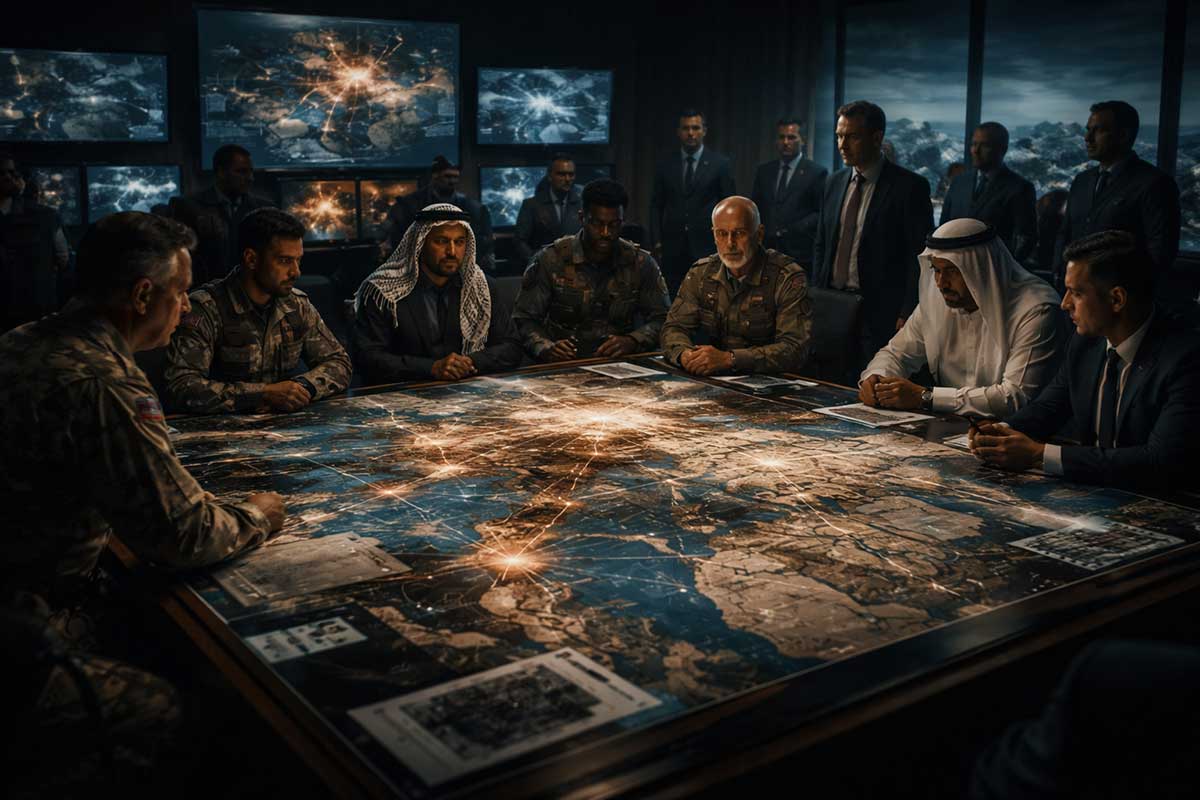
Let’s widen the frame. People often speak as though this is a direct two-state confrontation, Iran versus Israel, but that misses how the conflict actually operates across the region. Militias, partner states, intelligence services, shipping routes, air corridors, and great-power patrons all shape the struggle. So the real question is this: are we looking at one war, or a network of interlocked contests that can ignite one another?
Question 1: Is this really a two-sided conflict, or a many-sided struggle spread across militias, states, and outside powers?
Trita Parsi:
It is absolutely a many-sided struggle. Iran and Israel are central poles, but they are not the only meaningful actors. Hezbollah, Hamas, militias in Iraq and Syria, Gulf monarchies, the United States, and to a lesser degree Russia and China all change the strategic meaning of every move. A strike never lands only where it lands. It sends signals across the whole network.
This is what makes the region so volatile. A local event can carry several meanings at once. It can be tactical on one level, symbolic on another, and geopolitical on a third. A militia action may be partly local, partly regional signaling, and partly tied to the calculations of actors far away. That layered quality is why outsiders often misread the conflict as simpler than it is.
Ray McGovern:
Yes, and the intelligence side makes it even more tangled. States do not just use proxies for firepower. They use them for deniability, testing, messaging, disruption, and pressure. A rocket launched by a militia may be a local initiative, a tolerated action, or a carefully timed signal. The ambiguity is part of the instrument.
The problem is that once many actors operate in the same arena, nobody controls the full script. One militia commander, one misread signal, one retaliation taken too far, and a wider crisis begins. That is why proxy-heavy conflicts are so unstable. Leaders think they are gaining flexibility, but they are often multiplying uncertainty.
Jeffrey Sachs:
I would add that outside powers have helped build this fragmented structure. The Middle East did not become a chessboard by accident. Decades of intervention, alliance engineering, sanctions, regime change efforts, occupation, and arms flows turned it into a landscape where many actors survive by tying themselves to larger patrons. That means even local grievances are often fused with wider power competition.
So no, this is not a simple binary conflict. It is a layered regional system in which states and non-state actors are constantly interacting. That is why escalation is so hard to contain. The region has too many triggers and too many actors who gain something from remaining relevant inside permanent crisis.
Yuval Noah Harari:
There is a deeper human pattern here. When people tell stories about war, they like clean lines: hero and enemy, one border, one battlefield, one decision point. Proxy war destroys that simplicity. It produces a moral and political fog. Responsibility becomes diffuse. Suffering spreads across places that were not central in the public imagination.
This matters because public understanding then lags behind reality. Citizens may think their country is engaged only at the edges, when in fact it is already woven into the emotional and strategic structure of a regional conflict. By the time they realize how many players are involved, the entanglement is already deep.
John Mearsheimer:
From a realist standpoint, proxy structures are normal when direct war is costly. States seek influence without paying the full price of conventional confrontation. That is what Iran has done with considerable skill, and what its opponents have had to factor into every strategic calculation. Israel may possess superior conventional and technological capabilities, but Iran has built reach through networks.
That means the rivalry is regional by design. One cannot assess deterrence, escalation, or balance by looking only at the two capitals. The contest runs through southern Lebanon, Gaza, Syria, Iraq, the Gulf, shipping lanes, and the wider alliance system anchored by Washington.
Question 2: How do Hezbollah, Hamas, Iraq, Syria, Gulf states, Russia, China, and the United States change the meaning of each strike?
Jeffrey Sachs:
They turn every strike into a message addressed to several audiences at once. A strike may target one site, but it is read in Beirut, Tehran, Washington, Riyadh, Moscow, and Beijing. That is the nature of a heavily internationalized conflict. The military event is one thing; the diplomatic echo is another.
The United States changes the meaning of events by giving Israel strategic depth and deterrent backing. Gulf states change the meaning by signaling whether they lean into fear of Iran or fear of wider chaos. Russia and China matter in a quieter way, less as immediate battlefield actors and more as part of the global distribution of leverage. Their presence tells regional players that the conflict is nested inside a larger contest over world order.
John Mearsheimer:
Hezbollah is particularly important because it raises the cost of any broader confrontation. It is one thing for Israel to think about Iran in isolation. It is another to factor in a northern front with serious missile capacity. That means any move against Iran has to be assessed through a regional deterrence lens, not a narrow bilateral lens.
The United States is decisive because it is the ultimate external balancer in the region. Its military assets, guarantees, logistics, and political backing shape what Israel thinks is feasible. At the same time, Washington’s role also broadens the conflict. Actions that might have remained regional can become tests of American credibility, which is always dangerous.
Trita Parsi:
Hamas and Hezbollah also matter symbolically, not only militarily. They shape identity and legitimacy. Iran’s support for these actors is part of how Tehran presents itself as the center of resistance to Israel and Western dominance. Israel, in turn, reads these groups as extensions of Iranian strategy. So each clash involving them strengthens the sense that the whole region is one interconnected battlefield.
Iraq and Syria matter because they provide geography for pressure, transit, militia presence, and strategic ambiguity. Gulf states matter because they sit between fear of Iran and fear of total regional breakdown. They may dislike Iranian influence, yet they also fear becoming battlegrounds. Their caution tells us something important: many regional actors want containment, but not explosion.
Ray McGovern:
Russia and China introduce another layer. They may not run the daily tempo of conflict, but their shadow matters. If local actors believe that a wider breakdown could pull great powers into sharper competition, their calculations change. A conflict that feels purely regional may suddenly be read through questions of energy, shipping, sanctions, technology, and alignment.
And then there is intelligence sharing. The United States and its partners do not merely offer public support. They contribute data, detection, surveillance, tracking, and strategic warning. That means what looks like one country’s operation may rest on a much wider infrastructure. This can magnify both effectiveness and political consequence.
Yuval Noah Harari:
In narrative terms, each outside actor expands the story being told. A strike is no longer only about immediate retaliation. It becomes a chapter in resistance, deterrence, imperial pressure, alliance credibility, civilizational struggle, or energy security. Different actors tell different stories about the same event, and those stories shape what comes next.
This is why regional wars so easily become mythic in the eyes of participants. Too many layers of meaning attach themselves to each incident. A missile can be a tactical act, a sacred insult, a strategic signal, and a media symbol all at once. That density of meaning makes moderation hard.
Question 3: Can any country in the region stay outside the consequences once escalation begins?
Ray McGovern:
In practical terms, no. Some countries may avoid direct military involvement for a time, but they cannot stay outside the consequences. Intelligence pressure spreads. Refugee flows spread. cyber risks spread. shipping disruption spreads. energy shocks spread. Even governments that want distance find themselves forced into contingency planning.
That is the cost of a deeply networked region. You may not choose the conflict, but the conflict can still choose you. Once the shadow war thickens into open escalation, every nearby state starts asking what it must defend, what routes must remain open, what domestic tensions may ignite, and which patrons it can rely on.
Trita Parsi:
I agree. Geography alone makes neutrality hard. Gulf states live close to critical infrastructure and sea lanes. Iraq and Syria already carry the burden of fragmented sovereignty and armed networks. Lebanon cannot escape consequences when Hezbollah is central to the equation. Jordan and Egypt may want stability above all, yet they feel every tremor in security and public opinion.
What varies is not exposure, but form of exposure. One state may face missiles. Another may face economic shock. Another may face domestic unrest. Another may face pressure from Washington, Tehran, or both. The region is too interconnected for clean insulation.
John Mearsheimer:
This is what balance-of-power politics looks like in a compact and heavily militarized region. Security competition spills outward. States cannot simply opt out when the structure around them tightens. They may delay choices, hedge, or speak cautiously, but eventually they must position themselves in relation to the conflict.
That does not mean everyone joins in the same way. Some states align openly. Some hedge. Some free ride under another power’s umbrella. But once escalation reaches a certain intensity, nobody remains strategically untouched. The map is too dense, and the stakes are too broad.
Jeffrey Sachs:
This is another reason diplomacy is indispensable. In a region where consequences spread so widely, the cost of “managing” conflict through force alone becomes immense. Leaders may think a strike is localized. Markets, transport systems, populations, and governments quickly reveal that it is not.
And let us remember the human cost. When analysts say the region cannot stay outside the consequences, they do not mean only states and elites. They mean ordinary families, workers, students, migrants, and children whose lives are reshaped by inflation, displacement, fear, and disruption. Regional war is never regional only in a strategic sense. It becomes social and human very fast.
Yuval Noah Harari:
There is also a psychological contagion. Once escalation begins, people far from the first battlefield begin living in imagined proximity to danger. They follow each strike as if it might alter their own future, and often they are right. Anxiety spreads through media, markets, religious feeling, identity politics, and national memory.
So no, countries do not remain outside. Some are pulled in by missiles, others by meaning. In modern conflict, meaning itself is a vector of spread. A war expands not only through armies, but through stories, fear, and anticipation.
Closing Reflection — John Mearsheimer
This discussion shows why it is misleading to treat the Iran–Israel rivalry as a narrow bilateral struggle. It is a regional contest embedded in a wider structure of proxies, alliances, intelligence systems, strategic geography, and outside-power involvement. That makes every move more consequential than it first appears. A strike is never only a strike. It is a message, a test, a warning, and a trigger inside a crowded chessboard where few actors control all the pieces and none can ignore the board itself.
Topic 5: Who Gains if the Crisis Keeps Expanding?
John Mearsheimer:
We’ve looked at history, covert action, nuclear fear, and the regional network. Now we come to the hardest question. When a crisis keeps widening, who actually benefits? Not in the moral sense, but in the political, strategic, economic, and institutional sense. Who gains room, time, money, legitimacy, or control when instability becomes the normal condition?
Question 1: Which actors gain power, time, money, legitimacy, or distraction when conflict keeps growing?
John Mearsheimer:
In raw strategic terms, prolonged crisis often benefits actors who are already organized for confrontation. Security institutions gain influence. Militaries gain budgetary priority. Intelligence agencies gain latitude. Leaders under domestic pressure may gain breathing room if the public shifts attention from internal failure to external danger. Conflict has a way of rearranging priorities in favor of those who speak the language of necessity.
There is also a broader balance-of-power effect. Some outside powers gain when regional rivals are weakened through mutual exhaustion. Some local actors gain by becoming indispensable to the larger struggle. In this kind of environment, relevance itself becomes a form of power. A militia, a patron state, or a political faction may gain standing simply by being central to the crisis.
Jeffrey Sachs:
I would add that economic interests can quietly flourish in the background. Arms producers benefit when fear drives procurement. Energy traders and financial actors may gain from volatility. Governments seeking bigger defense budgets find it easier to justify them. Emergency politics tends to move public money quickly and with less scrutiny.
Political distraction is another gain. Leaders facing criticism at home can redirect public emotion outward. A frightened public is often more willing to rally, defer, and simplify. This does not mean every conflict is manufactured for those reasons. It does mean that once a conflict expands, many institutions discover that crisis is useful to them.
Ray McGovern:
From the intelligence perspective, crisis expands the operating space of the security state. More secrecy, more surveillance, more covert authorities, more protected budgets, more room to classify, conceal, and act without serious public debate. That is a real institutional gain, and it should never be ignored.
Another group that gains is the hardline political class on all sides. Why? Because crisis makes their worldview look correct. They have long said the enemy cannot be reasoned with, that danger is permanent, that compromise is weakness. Every new round of escalation appears to confirm them. That gives them moral and political capital.
Trita Parsi:
Yes, and one reason diplomacy so often loses ground is that its successes are quiet, but crisis rewards are immediate. A hardliner can say, “See, we told you.” A negotiator has to prove invisible futures that did not collapse. That is a much harder political task.
Some non-state actors gain too. Militias, ideological movements, and resistance networks often gain legitimacy when the region is on fire. They can present themselves as defenders, avengers, or essential actors in a historic struggle. Conflict enlarges their symbolic weight, not only their military relevance.
Yuval Noah Harari:
Conflict also benefits stories. By that I mean grand narratives of destiny, righteousness, betrayal, sacrifice, and survival. Such stories gain emotional force in periods of danger. Leaders who can embody these narratives grow stronger. Communities that feel fragmented may recover unity through fear.
This is one of the darkest truths of politics. Crisis can give meaning to people who feel lost. It can transform ordinary governments into guardians of history. It can turn factions into embodiments of national purpose. That kind of symbolic gain is harder to measure than money or weapons, but often just as powerful.
Question 2: How do war, fear, elections, domestic pressure, and ideology feed one another?
Trita Parsi:
They form a cycle. A leader under domestic pressure may adopt tougher external positions to appear strong. Those positions raise tensions. Rising tensions generate fear. Fear strengthens the political appeal of toughness. Elections then reward those who can claim they alone understand the danger. Ideology enters by giving the whole cycle moral language.
This is why de-escalation is so politically difficult. It can look weak at exactly the moment leaders feel they must look strong. Once elections or internal legitimacy are tied to crisis management, leaders may start managing the symbolism of conflict more than the reality of peace.
Ray McGovern:
Fear is a multiplier. It compresses public patience and reduces tolerance for ambiguity. Under normal conditions, people may accept complexity. Under fear, they want certainty, protection, and decisive action. That gives political advantage to those willing to speak in absolutes.
Intelligence assessments can be pulled into this cycle too. Not always through direct dishonesty, but through selective emphasis, worst-case framing, and institutional pressure. When the political atmosphere rewards alarm, alarm tends to travel farther than caution. That is how states drift into decisions that later look more ideological than analytic.
Jeffrey Sachs:
Domestic pressure also shapes foreign policy through economic frustration, social division, and leadership insecurity. When internal systems are strained, external conflict can appear useful. It offers a simpler drama. It creates national focus. It lets governments say, “The danger is out there,” rather than asking why life at home feels more fragile.
Ideology then turns policy into mission. Instead of saying, “We are pursuing interests,” leaders say, “We are defending civilization, justice, faith, survival, or history.” Once that happens, compromise is recast as betrayal. The political temperature rises sharply.
John Mearsheimer:
From a structural view, domestic politics and international rivalry are often tightly linked. States still pursue strategic interests, but those interests are interpreted through political coalitions at home. If a coalition gains from portraying the adversary as permanent danger, its policy choices will reflect that.
Elections matter because they shorten time horizons. Leaders start thinking in campaign cycles rather than strategic decades. That can encourage symbolic shows of force over patient diplomacy. The result is a politics of visible resolve, which may play well domestically but worsen the international environment.
Yuval Noah Harari:
Fear changes how societies tell time. In fear, the future collapses into the immediate. People become less interested in long repair and more interested in instant protection. That gives ideology a fertile field, because ideology offers quick moral clarity inside confusion.
What is most dangerous is when fear and ideology begin to sanctify one another. Fear says, “We are under threat.” Ideology says, “Our cause is pure.” Together they produce a mood in which almost any measure can be justified. That is when war stops being only a policy choice and becomes part of a society’s emotional identity.
Question 3: When both sides say they are defending themselves, how do we identify who is truly benefiting from permanent instability?
Yuval Noah Harari:
One clue is to ask who loses if peace breaks out. Not who says they want peace, but who would actually lose power, status, budget, relevance, or identity if the crisis faded. If an institution, movement, or leader draws meaning from permanent emergency, then stability may threaten them more than conflict does.
Another clue is emotional. Who repeatedly turns tragedy into renewed justification for the same pattern? Who uses each wound as proof that endless escalation is necessary? Those who metabolize every shock into greater appetite for crisis may not love suffering, but they have learned to live from it.
John Mearsheimer:
I would ask a simpler question: who gains material leverage from the absence of settlement? Look at budgets, military deployments, alliance tightening, domestic approval, energy leverage, and the growing authority of security institutions. Permanent instability is not neutral. It shifts resources and decision-making power in recognizable directions.
That does not mean there is one mastermind controlling events. It means the structure of prolonged conflict consistently favors certain kinds of actors. If you want to know who benefits, watch who becomes more central, more funded, less accountable, and harder to challenge as the crisis deepens.
Jeffrey Sachs:
We should also look at who blocks off-ramps. In many conflicts, the beneficiaries of instability reveal themselves not only by what they support, but by what they sabotage. Ceasefires, inspections, backchannels, confidence-building measures, regional talks, prisoner exchanges, deconfliction mechanisms — who undermines these when they become politically possible?
That question often reveals more than rhetoric does. Plenty of actors speak the language of peace in public. The real test is whether they tolerate any process that might gradually reduce their centrality. If they cannot, then instability is serving them in ways they may not admit.
Ray McGovern:
I would pay special attention to secrecy. Permanent instability benefits those who operate best in shadows. When the public cannot see clearly, institutions with classified access gain disproportionate influence. Policies get justified by hidden threats, hidden evidence, hidden assessments, hidden operations. That can create a self-reinforcing system.
So ask: who is always saying, “Trust us, the danger is greater than you know”? Sometimes that may be true. But when such claims become the permanent basis of power, democratic accountability weakens and crisis becomes a governing method.
Trita Parsi:
I would end with this: the beneficiaries of instability are often those least exposed to its human cost. The families displaced, the civilians killed, the ordinary people living under sanctions, rockets, fear, and uncertainty — they are not the ones gaining. The ones gaining are often farther from the blast zone, politically or physically.
That is why moral clarity matters here. When both sides say they are defending themselves, we should ask not only who feels threatened, but who turns threat into an enduring political asset. Permanent instability is never ownerless. Someone is learning how to profit from it, even when everyone claims to be suffering.
Closing Reflection — John Mearsheimer
What emerges from this discussion is not a simple answer about villains and victims, but a clear pattern. Expanding crisis tends to strengthen security institutions, hardline factions, ideological movements, arms networks, and leaders who thrive on fear. It narrows public debate, raises the status of emergency politics, and rewards those who can convert instability into authority. That does not mean every actor wants endless war in some grand conscious sense. It means that once crisis becomes durable, many actors adapt to it, feed on it, and begin to need it. That is one reason these conflicts become so hard to end.
If you’d like, I can now write the main introduction and final thoughts by John Mearsheimer for all five topics as one complete piece.
Final Thoughts by John Mearsheimer
After moving through these five topics, a broader picture comes into view. The Iran–Israel confrontation is not best understood as one dispute over one issue. It is a layered struggle in which past decisions, hidden operations, nuclear fear, regional alliances, and domestic political incentives all reinforce one another. Each layer by itself is serious. Taken together, they create a rivalry that is exceptionally hard to calm.
The first lesson is that long conflicts are rarely born overnight. They are built through cumulative choices. Revolutions alter alignments. wars rearrange balances. failed agreements destroy trust. leaders come to see pressure as safer than patience. Over time, what began as competition hardens into structure. Once that happens, each new crisis feels immediate, but its roots are old.
The second lesson is that modern conflict is shaped heavily in the shadows. Covert action can weaken an opponent, expose vulnerabilities, and delay dangerous developments. But it also humiliates, deepens mistrust, and keeps both sides inside a permanent state of strategic friction. A shadow war may appear limited. In practice, it often prepares the psychological and operational ground for wider escalation.
The third lesson is that the nuclear issue is both real and politically powerful. It cannot be dismissed, since a major shift in deterrent capability would alter the regional balance. Yet it also compresses a much wider rivalry into one emotionally charged image: the future bomb. That image can be used to mobilize support, justify urgency, and turn preventive thinking into a basis for present force. Fear of what may happen later can become the logic for what is done now.
The fourth lesson is that this is not a simple bilateral contest. It is a regional network of linked fronts, proxies, patrons, strategic corridors, and outside interests. Hezbollah, Hamas, Iraq, Syria, Gulf states, the United States, and other powers all affect how every move is interpreted. In such a system, no strike is isolated. Each one sends signals across a crowded field of actors who may respond in different ways and for different reasons.
The fifth lesson is perhaps the bleakest. Prolonged instability creates beneficiaries. Security institutions gain room. hardliners gain authority. arms networks gain contracts. ideological movements gain emotional force. leaders under domestic strain gain distraction and rally effects. This does not mean all conflict is staged for profit. It does mean that once a crisis becomes durable, many actors adapt to it and begin to draw strength from it. That is one reason settlement becomes so difficult. Too many people learn how to live politically from danger.
So where does that leave us? It leaves us with a sober conclusion. This rivalry will not be understood through headlines alone, and it will not be resolved through force alone. The forces driving it are too deep, too layered, and too widely distributed across the region. Any serious effort at de-escalation would have to rebuild limits where limits have broken down: limits on covert action, limits on preventive logic, limits on proxy escalation, and limits on the political use of fear.
Whether such restraint is likely is another matter. The region is filled with actors who believe they are acting defensively, yet whose defensive moves are experienced by others as offensive threats. That is the classic structure of a security dilemma, and it is one of the most dangerous patterns in international politics.
Still, seeing the structure clearly is the first step. If we misunderstand the conflict as a series of disconnected shocks, we will keep reacting to symptoms. If we understand it as a long strategic trap built over decades, we at least begin to see why each new round of escalation feels so hard to stop.
That is the real value of stepping back. Not to simplify the crisis, but to see its full shape.
Short Bios:
Leave a Reply