
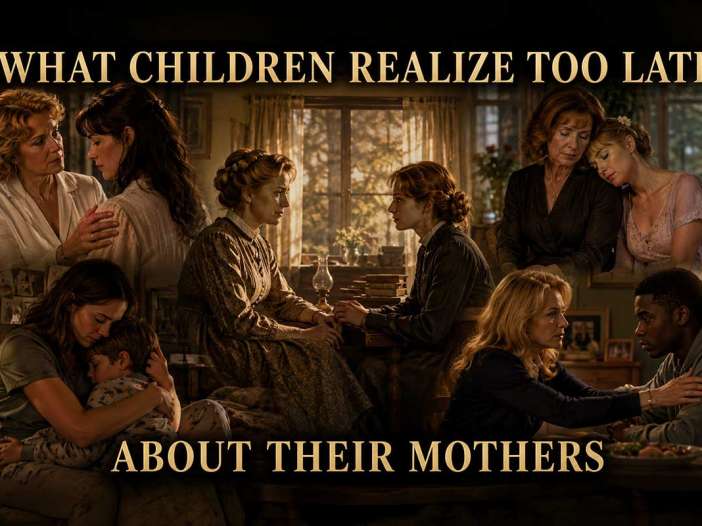
What if five legendary movie mothers finally explained what they were silently carrying?
What if the mothers children resisted were the ones who loved them most deeply?
What if the mothers children resisted were the ones who loved them most deeply?
What if the mothers children resisted were the ones who loved them most deeply?
What if the mothers children resisted were the ones who loved them most deeply?
What if the mothers children resisted were the ones who loved them most deeply?
What if the mothers children resisted were the ones who loved them most deeply?
What if the mothers children resisted were the ones who loved them most deeply?
There are many films about mothers.
Some show sacrifice.
Some show protection.
Some show grief, patience, survival, or unconditional love.
But these five stories reveal something deeper:
Children often understand their mothers fully only after time, suffering, distance, or loss changes them.
As children, they see rules, pressure, worry, embarrassment, anger, sacrifice, or control.
Later, they begin to see fear.
Responsibility.
Sleepless nights.
Silent endurance.
The unbearable hope that a child will survive life safely.
In this imaginary gathering, five unforgettable movie mothers sit across from the children they loved.
No dramatic soundtrack.
No final hospital scenes.
No rushing years.
Only honesty.
Together, they explore difficult love, loss, wisdom, survival, and chosen family — revealing that motherhood is rarely perfect, but often far greater than children realize while living inside it.
(Note: This is an imaginary conversation, a creative exploration of an idea, and not a real speech or event.)
Topic 1 — Aurora and Emma from Terms of Endearment
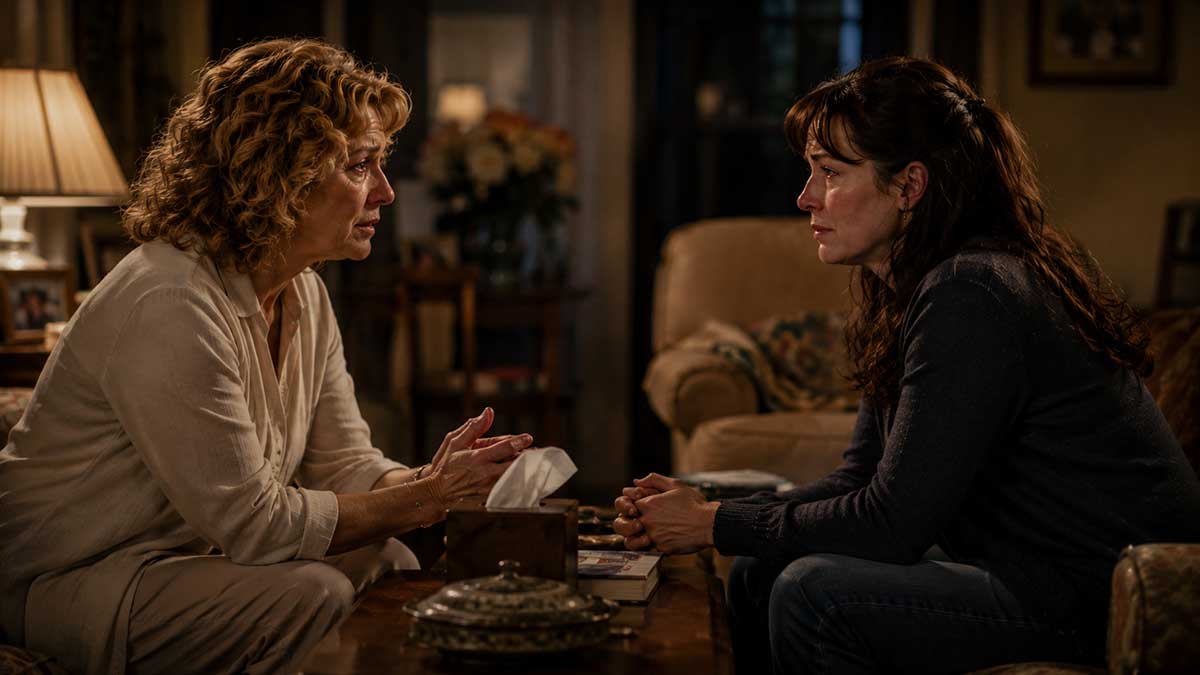
A Mother’s Love That Looked Difficult, Intense, or Controlling
Years have passed since the hospital room, since the last arguments, since the words that came too late.
Emma sits across from Aurora now, no longer as the daughter trying to escape her mother’s judgment, but as a woman who finally understands how much fear was hidden inside love.
Aurora looks at Emma with the same sharp eyes, but softer now.
Not less loving.
Just less afraid.
Question 1
Emma, what did you misunderstand most about your mother’s love?
Emma:
I thought Mama wanted to control my life.
I thought every question was criticism. Every warning was an insult. Every silence was disappointment.
When she asked about my marriage, my children, my choices, I heard, “You are failing.”
But now I think she was asking something else.
She was asking, “Are you safe?”
She was asking, “Are you loved?”
She was asking, “Will someone be there when I cannot be?”
I did not hear that then.
I was so busy defending my life from her that I did not see she was trying to stand guard around it.
Aurora:
You make me sound kinder than I was.
Emma:
No. I make you sound more afraid than I knew.
Aurora:
That may be fair.
I was not always gentle. I did not know how to be easy. Love came through me like an alarm bell. Too loud. Too sharp. Too constant.
But I saw danger quickly. I saw loneliness quickly. I saw disappointment coming before you wanted to admit it.
A mother sees the small crack before the wall falls.
The trouble is, children think we are criticizing the wall.
We are terrified of the collapse.
Emma:
I wish I had known that.
Aurora:
I wish I had said it better.
Question 2
Aurora, what were you trying to protect Emma from, even when your love came out badly?
Aurora:
From settling.
From being loved halfway.
From becoming smaller inside a life that asked too much and gave too little.
I saw you giving pieces of yourself away and calling it maturity.
I saw you forgiving things that should have been confronted.
I saw you smiling when you were tired.
And I was furious.
But my anger was grief arriving early.
Emma:
You were angry before I even knew I was sad.
Aurora:
Yes.
That is one of the curses of motherhood.
You feel the wound before your child admits they are bleeding.
Emma:
But sometimes I needed comfort, not judgment.
Aurora:
I know.
That is where I failed you.
I mistook warning for comfort.
I thought if I could name the danger, I could save you from it.
But daughters do not always need their mothers to be right.
Sometimes they need their mothers to sit beside them and say, “This hurts. I am here.”
Emma:
You did that at the end.
Aurora:
Too late.
Emma:
No.
At the end, I knew.
That mattered.
Question 3
What does this story reveal about mothers who are not soft, but love fiercely?
Emma:
Some mothers do not love like a blanket.
They love like a storm door.
They slam. They rattle. They make noise.
But they are trying to keep something terrible from getting in.
Aurora:
And some daughters mistake shelter for imprisonment.
Emma:
Yes.
I wanted freedom from you.
Then, when I became sick, I wanted you near me.
That is the truth I still carry.
The mother I resisted became the person I needed most.
Aurora:
A mother’s greatness is not always sweetness.
Sometimes it is staying close after being rejected.
Sometimes it is loving a child who rolls her eyes, walks away, marries badly, calls less, hides pain, and still expects you to be there when the world breaks.
Emma:
And you were.
Aurora:
Of course I was.
I was your mother.
Emma:
I think children understand too late that a mother’s love may be imperfect, embarrassing, dramatic, difficult…
But under all of it is one unbearable sentence:
“Please live. Please be loved. Please do not suffer more than you must.”
Aurora:
That is motherhood.
Not always beautiful.
But always watching.
Always hoping.
Always afraid.
Emma:
And always loving.
Aurora:
Yes.
Even when we do it badly.
Topic 2 — M’Lynn and Shelby from Steel Magnolias
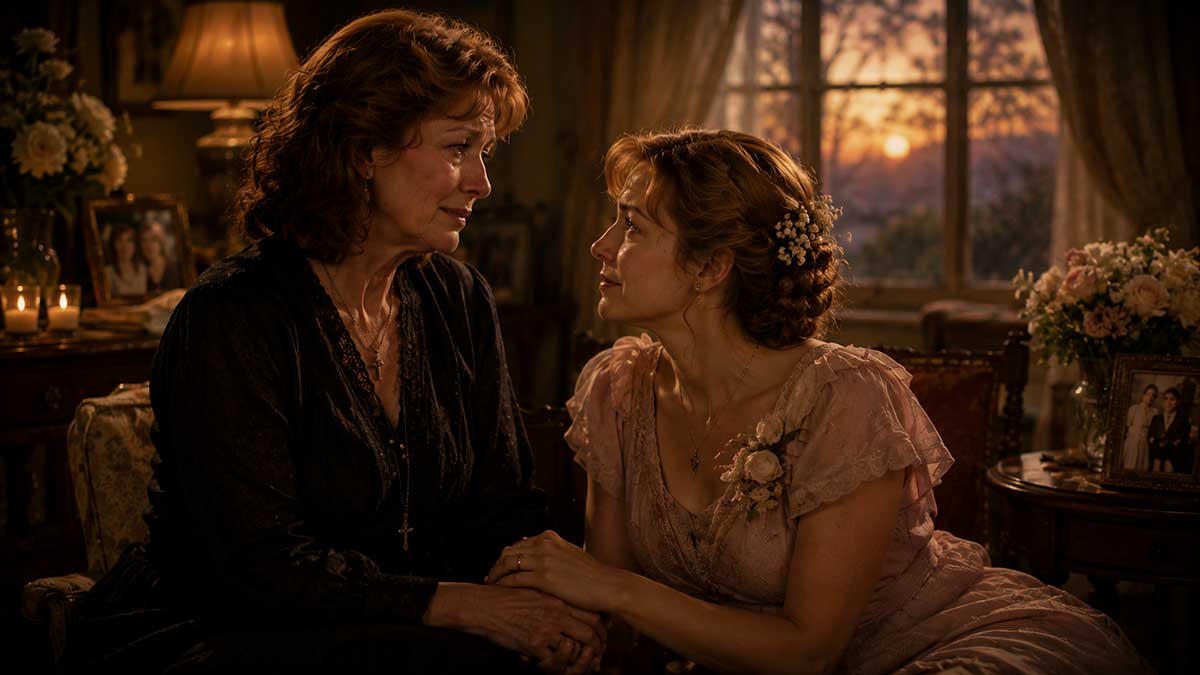
A Mother Who Could Not Save Her Child
There are wounds that time does not close.
It only teaches the heart how to keep beating around them.
M’Lynn sits across from Shelby now, no hospital machines, no funeral flowers, no room full of women trying to hold her up.
Shelby looks young, radiant, stubborn, tender.
Still her daughter.
Still beyond reach.
M’Lynn reaches for her hand before either of them speaks.
Question 1
Shelby, what did you only understand about your mother after your suffering became real?
Shelby:
I thought Mama was trying to steal my life.
Every warning felt like she was saying I was too fragile to dream. Too sick to choose. Too much of a risk to become a wife, a mother, a woman with her own future.
I heard fear, and I hated it.
But I did not understand that her fear was not small.
It was love seeing the bill before joy had finished eating.
M’Lynn:
Shelby.
Shelby:
I know.
I wanted the life everyone else seemed allowed to want.
Marriage. A baby. A home. A reason to wake up that was not just survival.
And you saw danger in every dream.
M’Lynn:
I saw you.
That was the problem.
Everyone else saw your smile. Your pink dresses. Your confidence. Your stubborn little chin.
I saw the child I had taken to doctors. The girl whose blood sugar could frighten me in the middle of the night. The daughter whose body had already taught me that ordinary dreams could carry terrible costs.
Shelby:
I thought you did not believe in me.
M’Lynn:
I believed in you more than anyone.
I did not believe the world would be merciful.
Question 2
M’Lynn, what happens inside a mother when love cannot stop death?
M’Lynn:
Something breaks that does not make a sound.
People think grief is crying.
It is not.
Grief is waking up and remembering, again, that your child is not in the world.
It is seeing her hairbrush.
It is hearing a laugh in the grocery store and turning before you can stop yourself.
It is standing in a room full of people and feeling that the only person missing is the whole room.
Shelby:
Mama, I never wanted to leave you with that.
M’Lynn:
No child does.
But mothers make a secret bargain the day their child is born.
We never say it out loud.
We think, “Let me go first. Let pain find me first. Let danger pass through me before it touches my child.”
And when the child goes first, the order of the universe feels broken.
Shelby:
You kept standing.
M’Lynn:
I did not feel like standing.
I felt like screaming until heaven opened and gave you back.
I wanted someone to blame. The doctors. Your body. Your choices. God. Myself.
Mostly myself.
A mother can turn any tragedy into a question of what she failed to prevent.
Shelby:
You did not fail me.
M’Lynn:
My mind knows that.
A mother’s heart is slower to agree.
Question 3
What does this story reveal about the strength of mothers who keep standing after loss?
Shelby:
I used to think strength meant getting what you wanted.
Now I think strength is what Mama did after she lost what she loved most.
She still loved my son.
She still lived inside the same town.
She still let people speak to her, feed her, hold her, irritate her.
She did not disappear, though part of her had every reason to.
M’Lynn:
I stayed because love had changed shape.
I could not mother you the way I wanted.
I could not call you, argue with you, tell you to rest, tell you to come home.
But I could carry you.
I could speak your name.
I could love your child.
I could let my friends keep me from turning grief into a sealed room.
Shelby:
That is greatness, Mama.
Not the kind people clap for.
The kind that gets out of bed.
M’Lynn:
There is no heroism in losing a child.
No lesson worth the price.
But if there is any grace left, it is this:
A mother’s love does not end at death.
It becomes memory, anger, prayer, duty, tenderness.
It becomes the hand that still reaches for the child who is gone.
Shelby:
And the child still reaches back.
M’Lynn:
Do you?
Shelby:
Always.
M’Lynn:
Then maybe that is how mothers survive.
Not by letting go.
By learning that love can remain where arms cannot.
Topic 3 — Marmee and Jo Little from Women
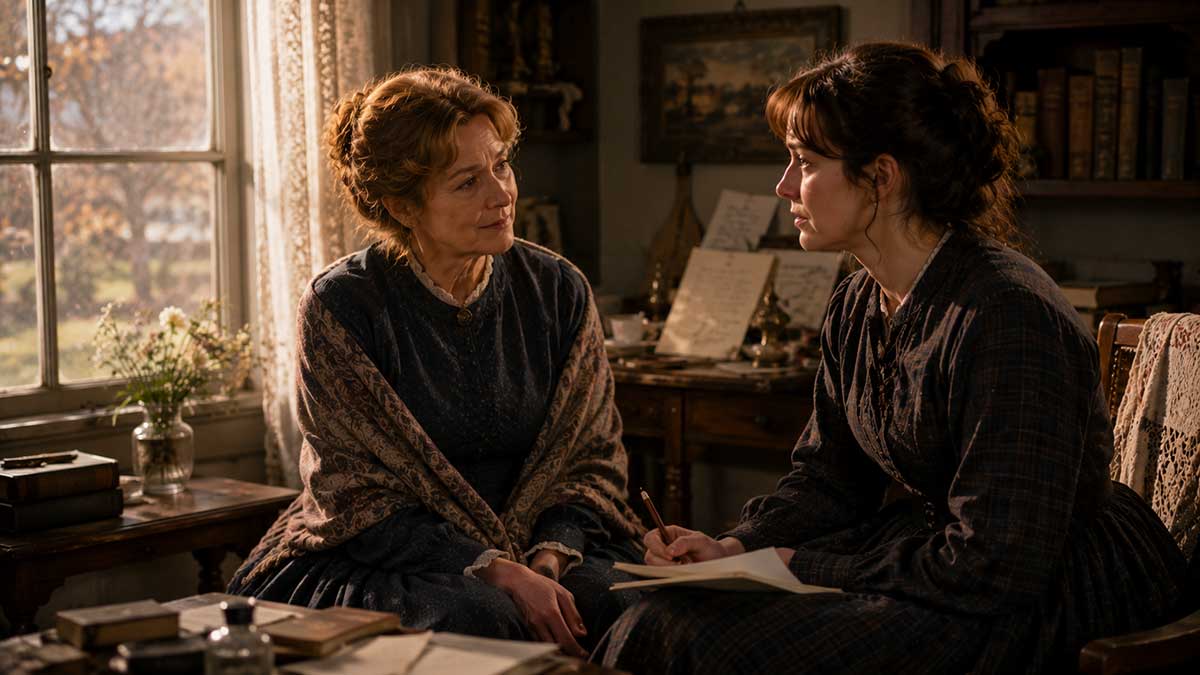
Quiet Wisdom, Moral Strength, and Patient Guidance
The house is quiet now.
No sisters running through rooms.
No ink-stained pages scattered on the table.
No urgent young voices insisting that life must begin immediately.
Jo sits across from Marmee, older now, but still with fire in her eyes.
Marmee looks at her daughter with the calm patience of a woman who never needed to win every argument to shape a life.
Question 1
Jo, what did your mother teach you that you resisted at first?
Jo:
I resisted almost everything.
Your patience.
Your gentleness.
Your belief that anger should be understood before it is released.
I thought strength meant refusing to bend.
I thought independence meant needing no one.
I thought my ambition made me different from other women, maybe freer than them.
But you never tried to make me smaller.
You only tried to make me deeper.
Marmee:
You had a great spirit, Jo.
I did not want to tame it.
I wanted you to trust it without being ruled by it.
Jo:
That is what I understand now.
You were not asking me to become quiet.
You were teaching me that passion without love can wound people.
And love without courage can become fear.
Marmee:
A mother must teach both.
Tenderness and backbone.
Mercy and truth.
A warm heart and a clear conscience.
Jo:
I thought you were too good to understand anger.
Marmee:
No, my dear.
I understood it very well.
That is why I feared what it could do if left alone.
Question 2
Marmee, how did you guide your daughters without breaking their spirits?
Marmee:
By remembering they were not mine to possess.
They were entrusted to me.
There is a difference.
A child is not clay for the mother’s unfinished dreams.
A child is a soul passing through the mother’s care.
Jo:
You let us become ourselves.
Meg with her longing for home and beauty.
Amy with her art and pride.
Beth with her goodness.
Me with my wildness.
Marmee:
Each of you needed a different kind of love.
To mother equally does not mean to mother identically.
Meg needed reassurance that ordinary happiness was not a failure.
Amy needed refinement without humiliation.
Beth needed protection without pity.
You needed freedom without abandonment.
Jo:
That is hard.
Marmee:
Very.
A mother must correct without crushing.
Guide without owning.
Watch without controlling.
And pray that when her child runs ahead, the lessons will follow quietly behind.
Jo:
They did.
Not right away.
But they did.
Question 3
What does this story reveal about mothers who shape character more than destiny?
Jo:
Some mothers try to arrange the future.
You shaped the person who would enter it.
You did not promise us easy lives.
You gave us inner furniture.
A conscience.
A capacity to love.
A way to come back after mistakes.
Marmee:
Destiny is not fully in a mother’s hands.
Character is not fully there either.
But a mother can plant seeds.
She can model restraint when anger burns.
She can show generosity when money is scarce.
She can teach dignity when society offers narrow choices.
She can make home a place where truth is not punished.
Jo:
That may be the quietest greatness.
No dramatic rescue.
No final speech.
Just years of being steady.
Marmee:
Steadiness is not small, Jo.
A child often remembers the house by the feeling of the mother’s heart.
Was there fear?
Was there shame?
Was there warmth?
Could the child fail and still return?
Jo:
With you, we could return.
That is why we left bravely.
Marmee:
Then I did my work.
Jo:
You gave us something larger than protection.
You gave us a moral home inside ourselves.
Marmee:
And you, my Jo, carried it into your own words.
Jo:
I think children understand too late that a mother’s wisdom is often hidden in repetition.
Be kind.
Hold your temper.
Think of your sisters.
Do not trade your soul for applause.
Come home.
At the time, it sounds ordinary.
Later, it becomes the voice that saves you.
Marmee:
Then let that be my answer.
A mother’s greatness is not always seen in the moment.
Sometimes it is heard years later, when the child faces life alone and still hears love telling her how to stand.
Topic 4 — Ma and Jack from Room
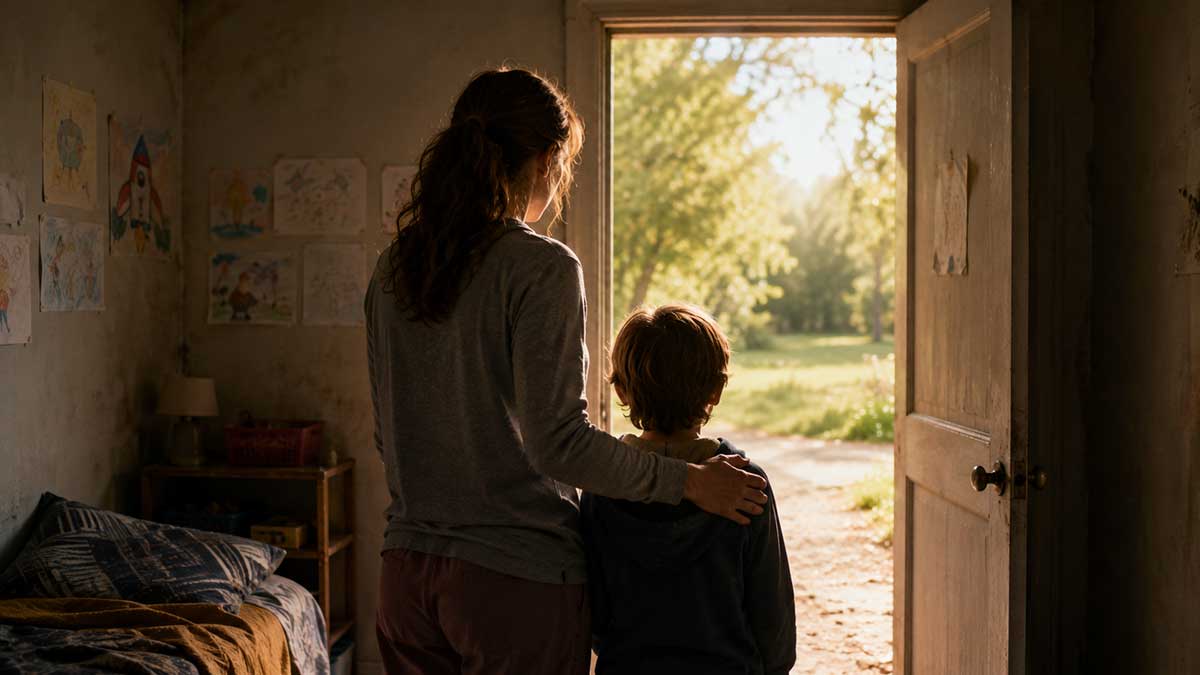
Protecting a Child’s Soul Under Impossible Conditions
The room is gone now.
No locked door.
No tiny skylight.
No walls pretending to be the whole world.
Jack sits across from Ma, older, quieter, still carrying memories he once did not have words for.
Ma watches him carefully.
Not like a prisoner now.
Like a mother who survived long enough to ask whether her child’s heart survived too.
Question 1
Jack, what did you think your mother was doing then, and what do you understand now?
Jack:
I thought you were making the world.
Room was table.
Room was bed.
Room was sink.
Room was everything.
When you told stories, I thought stories were just stories.
When you made games, I thought games were just games.
When you smiled, I thought you were happy.
Now I know you were building a sky inside a cage.
Ma:
Jack.
Jack:
You gave every object a name so I would not feel alone.
You made ordinary things feel alive because there was almost nothing else.
You made days.
You made rules.
You made birthdays.
You made me believe there was a world worth reaching, even before I knew it existed.
Ma:
I was trying to keep you from becoming smaller than that room.
Jack:
I know now.
You were trapped.
But you would not let my soul be trapped.
Question 2
Ma, how did you keep Jack alive inside when the outside world was stolen?
Ma:
I made choices every day that no mother should have to make.
I had to decide when to tell the truth and when to protect you from it.
I had to decide how much fear a child could carry.
I had to make a prison feel like a home, without lying so deeply that you could never leave it.
That was the hardest part.
Jack:
You made it feel safe.
Ma:
I tried.
But I was not safe.
I was scared all the time.
Scared he would come in.
Scared you would get sick.
Scared I would break in front of you.
Scared you would believe Room was all there was.
A mother can be terrified and still sing.
A mother can be broken and still make breakfast.
A mother can want to disappear and still count the minutes until her child wakes up.
Jack:
I did not know you were sad.
Ma:
That was part of my work.
Not to hide everything.
But to give you enough childhood to survive.
Question 3
What does this story reveal about motherhood as protection, imagination, and survival?
Jack:
I used to think escape was the day we left.
Now I think escape began before that.
Every time you told me there was more.
Every time you made me believe I was loved.
Every time you turned fear into a story I could hold.
Ma:
Motherhood was not magic.
It was repetition.
Wake up. Feed you. Teach you. Calm you. Watch the door. Hide the terror. Try again.
People call it courage after it is over.
Inside it, it felt like breathing one more minute.
Jack:
But that was courage.
Ma:
Maybe.
A mother’s greatness is sometimes invisible because it happens in conditions no one sees.
No applause.
No witness.
Only a child looking up, needing the mother to make the next moment livable.
Jack:
You made me believe the world was bigger than pain.
Ma:
And you made me remember why I had to reach it.
Jack:
I think children understand too late that mothers do not just protect bodies.
They protect meanings.
They protect hope.
They protect the part of the child that says, “Life is still good.”
Ma:
That is what I wanted for you.
Not just survival.
A life after survival.
Jack:
You gave me that.
Ma:
No, Jack.
We found it together.
But I held the door in my mind until you were strong enough to run through it.
Topic 5 — Leigh Anne and Michael from The Blind Side
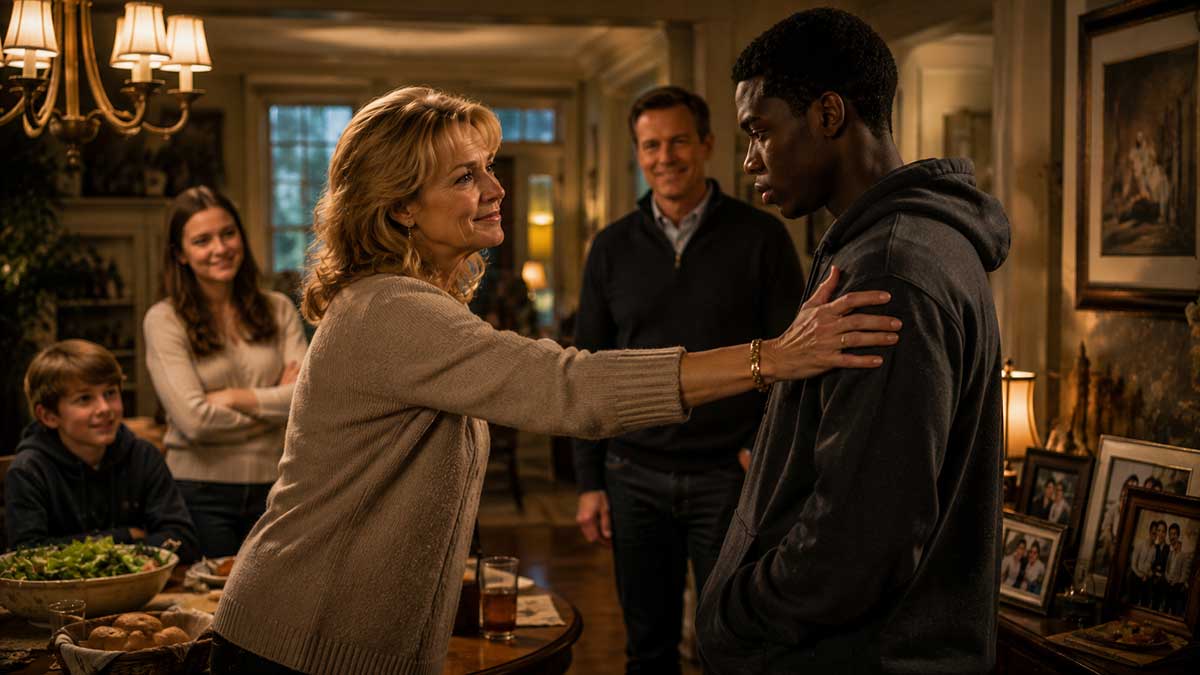
Chosen Motherhood and Love That Becomes Family
The house is quiet now.
No football recruiters.
No crowded dinner table.
No awkward first nights when everyone was still learning what to call one another.
Michael sits across from Leigh Anne, larger than life to the world, but still quiet in the way she remembers.
Leigh Anne looks at him the way she always did.
Directly.
Without pity.
Without fear.
Like he belonged before he knew how to believe it.
Question 1
Michael, when did Leigh Anne stop being a helper and become family?
Michael:
I do not think it happened all at once.
At first, I thought it was temporary.
A ride.
A meal.
A place to sleep.
A kindness I should not get used to.
When you have been left before, kindness feels dangerous.
You do not know what it will cost.
You do not know when it will end.
Leigh Anne:
I remember that.
You were polite, but you kept part of yourself far away.
Michael:
I had to.
People had rooms. Families. Pictures on walls. Holiday plans.
I had learned how to stand near those things without believing they were for me.
But then you kept showing up.
Not once.
Again.
You asked questions. You got involved. You bought clothes. You made space at the table.
You did not treat me like a project.
You treated me like someone whose life mattered now.
Leigh Anne:
That is what family does.
Michael:
Yes.
Family is when help stops feeling like rescue and starts feeling like home.
Question 2
Leigh Anne, what made you step forward when others looked away?
Leigh Anne:
I wish I could say I had a grand plan.
I did not.
I saw a boy walking alone in the cold.
That should have been enough for anyone.
But the truth is, many people see.
They just keep driving.
Maybe they think someone else will help.
Maybe they are afraid of getting involved.
Maybe they have trained themselves not to feel responsible for pain that does not live inside their own house.
I could not do that.
Michael:
You were not scared?
Leigh Anne:
I was scared of what would happen if no one stopped.
There is a moment when compassion becomes a decision.
Before that, it is only a feeling.
A mother is not great because she feels more than others.
She becomes a mother when she acts.
Michael:
You made room before you knew everything about me.
Leigh Anne:
Love often begins before certainty.
If we wait until every risk is gone, many children stay outside.
Question 3
What does this story reveal about motherhood beyond blood?
Michael:
Blood can explain where a person comes from.
It does not always explain who stays.
You stayed.
You did not replace my past.
You did not pretend my pain was simple.
You gave me another place to stand.
Leigh Anne:
Chosen motherhood does not erase the first story.
It adds shelter to it.
It says, “Your life is not finished being loved.”
Michael:
That is what I needed.
Not someone to say my past did not matter.
Someone to say my future still mattered.
Leigh Anne:
Motherhood is not only biology.
It is responsibility accepted.
Love practiced.
Presence repeated.
It is noticing the child others have learned not to see.
Michael:
You saw me before I could fully see myself.
Leigh Anne:
And you let us become your family.
That took courage too.
People speak of giving love as if receiving it is easy.
Sometimes being loved is the harder thing.
Michael:
I think children understand too late that a mother is not always the person who gave them life.
Sometimes she is the person who gives life back to them.
Leigh Anne:
And sometimes the child gives life back to the mother too.
Michael:
Did I?
Leigh Anne:
Yes.
You widened our house.
You widened our hearts.
You made family mean more than we had allowed it to mean.
Michael:
Then maybe chosen motherhood is not charity.
Leigh Anne:
No.
It is belonging.
And once belonging becomes real, no one is standing outside anymore.
Final Thoughts
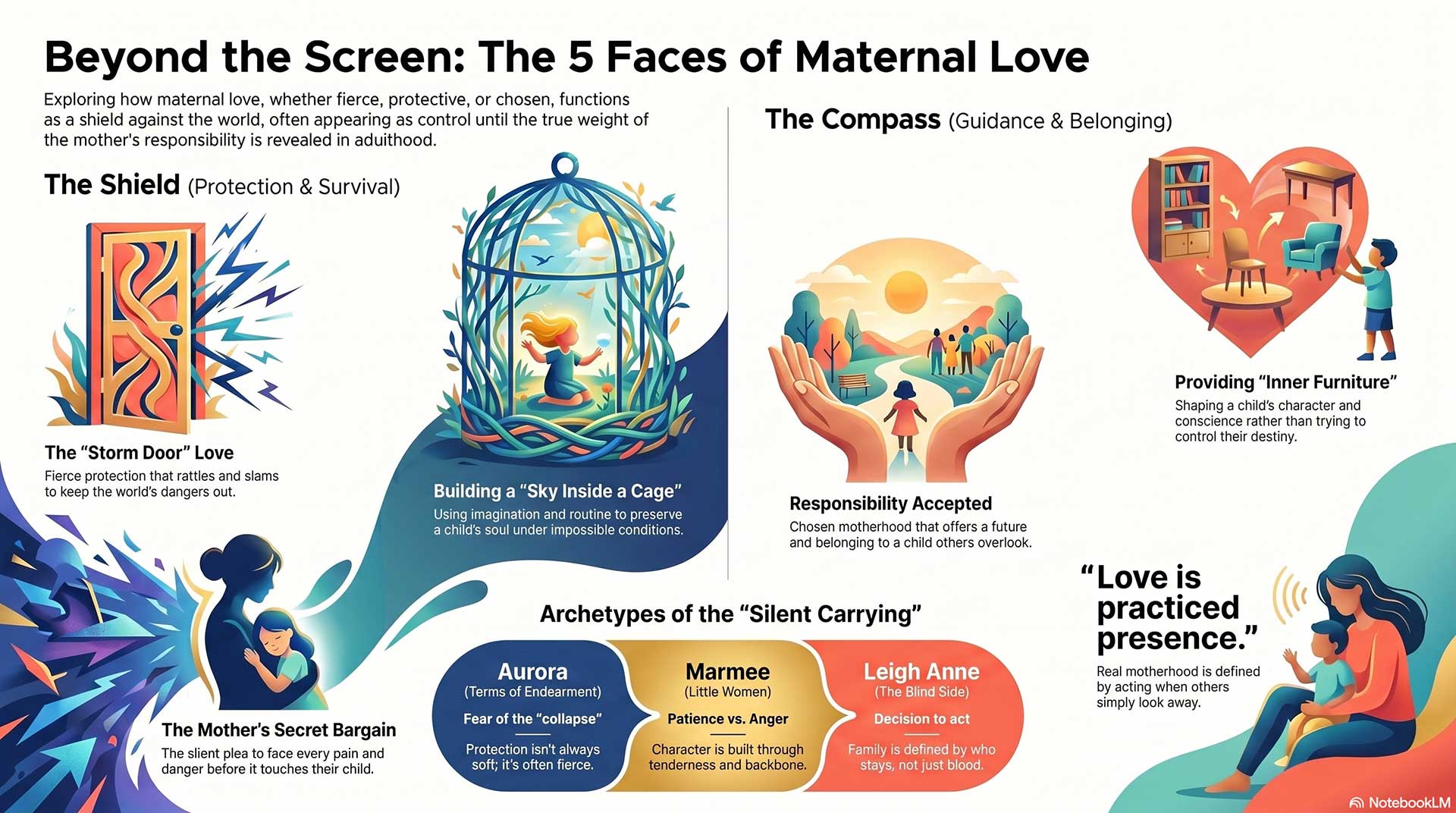
At the end of these conversations, one truth slowly becomes clear:
A mother’s greatness is often invisible while it is happening.
Children notice the restrictions before the protection.
The worry before the sacrifice.
The imperfections before the devotion.
Only later do many realize:
The mother who seemed controlling was afraid.
The mother who argued was watching for danger.
The mother who kept repeating the same lessons was building character.
The mother who smiled through exhaustion was carrying pain silently.
The mother who stayed after rejection was practicing unconditional love.
These five stories reveal different faces of motherhood:
- fierce love
- enduring grief
- quiet wisdom
- impossible protection
- chosen belonging
None of these mothers were flawless.
That is exactly why they feel real.
Motherhood here is not presented as sainthood.
It is presented as continuous giving under emotional pressure.
And perhaps the deepest tragedy of life is this:
Many children fully understand their mothers only after becoming adults themselves… or after the mother is gone.
Yet perhaps the deepest grace is this:
Love still reaches across time.
Through memory.
Through values.
Through sacrifice remembered too late.
Through words never forgotten.
A mother’s love may change form, but it rarely disappears.
Sometimes it becomes the voice inside the child saying:
“Be careful.”
“Come home.”
“You are loved.”
“Keep going.”
“I am still with you.”
And sometimes, many years later, the child finally answers:
“I understand now.”
Short Bios:
Aurora Greenway
A fiercely loving, emotionally intense mother from Terms of Endearment. Aurora struggles to express love gently, yet her devotion to her daughter remains unwavering through conflict, regret, and loss.
Emma Greenway Horton
Aurora’s daughter. Independent, warm, and emotionally caught between wanting freedom and needing her mother’s love more deeply than she realizes.
M'Lynn Eatenton
A strong Southern mother from Steel Magnolias whose emotional endurance after losing her daughter became one of cinema’s most remembered portrayals of maternal grief.
Shelby Eatenton-Latcherie
M’Lynn’s spirited daughter who longs for a full life despite serious health risks, forcing both mother and daughter to confront love, fear, and mortality.
Marmee March
The moral and emotional center of Little Women. Wise, compassionate, and quietly strong, she guides her daughters without crushing their individuality.
Josephine March
Known as Jo, she is ambitious, independent, emotional, and creative. Her relationship with Marmee reveals how patient motherhood shapes character over time.
Joy Newsome
Known as “Ma” in Room, she protects her son emotionally and psychologically while trapped under horrific circumstances, preserving his humanity through imagination and love.
Jack Newsome
Ma’s son, raised inside captivity without understanding the outside world. Through his mother’s care, he learns hope, trust, and eventually freedom.
Leigh Anne Tuohy
A determined and compassionate mother figure from The Blind Side who transforms compassion into action, offering belonging and stability to a neglected child.
Michael Oher
A quiet and deeply resilient young man whose life changes after being welcomed into the Tuohy family, revealing the transformative force of chosen motherhood.
Leave a Reply