
What if disclosure is real, but still carefully shaped?
The modern UFO discussion is no longer just about strange lights in the sky.
It has become a deeper argument about secrecy, authority, technology, evidence, and public trust. What makes this subject so powerful now is not only the possibility that something unusual has been seen. It is that the meaning of those sightings is being fought over from several directions at once. Journalists ask whether disclosure is real or carefully managed. Pilots ask whether something dangerous is moving through sensitive airspace. Scientists ask what can actually be measured. Intelligence officials ask what must remain controlled. Whistleblowers ask whether the public system of oversight has been kept away from the full picture. And ordinary citizens ask why this topic keeps returning at moments when institutional trust already feels fragile.
That is why these five topics belong together.
First, we begin with the question of disclosure itself. Is the public finally being told the truth, or only being allowed to see part of a larger story? Second, we move into the most dramatic possibility: whether some of these cases point to nonhuman craft, or whether hidden human technology remains the more grounded explanation. Third, we step into the issue of whistleblowers, secrecy, and the state, where the mystery becomes less about what is in the sky and more about who inside government may know what. Fourth, we turn to the struggle between science and intelligence, because this subject remains stuck partly because the people best equipped to measure anomalies and the people best positioned to access the data do not work by the same rules. Fifth, we widen the lens and ask why this subject surges now — why UFO stories intensify in times of distrust, overload, and cultural strain.
The result is not a simple yes-or-no answer to the UFO question. It is something more interesting. It is a portrait of a society trying to decide who gets to interpret the unknown.
That is the deeper story behind UFO disclosure.
(Note: This is an imaginary conversation, a creative exploration of an idea, and not a real speech or event.)
Topic 1: Disclosure or Managed Narrative?
This is the right opening topic for a UFO/UAP series because it gets to the deepest first question: are we watching truth finally surface, or are we watching a carefully shaped story reach the public in stages? The panel below fits that tension well: Ross Coulthart brings the disclosure-journalism angle, Leslie Kean brings mainstream investigative reporting and helped co-report the 2017 New York Times UAP story, Lue Elizondo brings the former government-insider frame, Mick West brings rigorous skeptical analysis through Metabunk, and Yuval Noah Harari brings the wider question of how states and societies build narratives around the unknown.
Participants
Ross Coulthart
Leslie Kean
Lue Elizondo
Mick West
Yuval Noah Harari
Moderator
Ross Coulthart
For decades, UFOs were treated as a joke, a stigma, or a career-killing subject. Then, suddenly, the tone changed. Military videos were discussed openly. Congress held hearings. Whistleblowers came forward. Journalists who would once have stayed away stepped in. Yet that shift creates its own mystery. Are we watching a genuine opening of the archives of power, or are we being allowed to see only what institutions want us to see, when they want us to see it?
That is the question here. Not simply whether something unexplained is in the sky, but whether “disclosure” itself is a managed event.
Question 1: Why did public discussion change so suddenly after so many years of silence?
Leslie Kean:
I do not think it changed as suddenly as it appears. The groundwork was laid by many people over many years: pilots who spoke quietly, officials who pushed internally, journalists who kept running into the same wall of silence, and witnesses whose credibility was stronger than the stereotype allowed. What changed was not only the evidence. What changed was that enough serious people reached a point where ridicule no longer worked as a containment strategy.
Still, I would not call this full transparency. It feels more like the edge of transparency. Institutions may release enough to acknowledge the subject without releasing enough to settle it. That middle zone is where things become most interesting and most frustrating.
Lue Elizondo:
From inside government culture, I would say the shift happened when the issue became impossible to dismiss purely as folklore. Once the national security angle became harder to ignore, it forced a change in posture. If trained military personnel are repeatedly seeing objects or events they cannot identify, and if some of those cases intersect with sensitive airspace or military capabilities, then bureaucracies eventually have to engage.
But bureaucracies do not open all at once. They leak, they resist, they compartmentalize, and they protect themselves. So yes, something changed. But what changed may be less “the truth is being revealed” and more “the system can no longer keep the old silence intact.”
Mick West:
I think part of the answer is cultural, not cosmic. Once a few cases got serious media treatment, people reinterpreted a huge range of older sightings through a new lens. That does not mean nothing unusual exists. It means public attention can swing fast once the stigma drops. A military video that once would have been shrugged off becomes a symbol of hidden reality.
That is why I remain cautious. A change in tone is not proof of a change in evidence. It may simply mean the same ambiguous data is now being framed as historic. We need to separate the sociology of belief from the quality of the underlying cases.
Yuval Noah Harari:
Silence is never just absence. It is often a political arrangement. A society decides that certain things belong outside respectable conversation. Then, when that boundary changes, people experience it as revelation. But often the deeper story is not that reality changed overnight. It is that the rules governing speech changed.
This is why the UFO issue is so revealing. It tells us as much about institutions, authority, and permissible thought as it does about the objects themselves. The suddenness may be less about the phenomenon and more about the management of legitimacy.
Ross Coulthart:
That is exactly why so many people feel the shift and mistrust it at the same time. They sense that something real pushed its way into view, but they also sense that the doorway did not open evenly. It opened selectively.
Question 2: If disclosure is happening, who is controlling the pace and shape of it?
Lue Elizondo:
In any national security system, information is rarely held in one place by one hand. It is distributed across compartments, clearances, agencies, contractors, and oversight channels that do not always see the same picture. So when people imagine one master switch being turned on or off, I think that is too simple.
What is more plausible is that different parts of the system have different motives. Some want the issue taken seriously for defense reasons. Some want to protect programs. Some want public trust. Some want plausible deniability. What the public sees may be the visible outcome of those internal pressures, not a single unified plan.
Leslie Kean:
I agree with that. It is a mistake to imagine either total openness or total control. Journalists often work in a field of partial permissions, partial leaks, partial access. The same is true here. There are people who want facts out. There are people who want them contained. There are people who want the issue framed narrowly as airspace safety, and others who think that framing is much too small.
That makes disclosure feel fragmented. You get one hearing here, one testimony there, one official denial, one private confirmation, one carefully worded source, one sudden silence. The pattern itself tells you that the public is not seeing a settled institutional position.
Mick West:
Or it tells you that institutions are reacting to public pressure and ambiguity, not sitting on world-changing certainty. I think people too quickly treat inconsistency as proof of hidden knowledge. Bureaucracies are inconsistent all the time. They are slow, defensive, political, and messy.
So when I hear “the pace is being controlled,” I ask, controlled by what exactly? Hidden truth, or ordinary institutional confusion? Those are very different possibilities. We should not always choose the more dramatic one.
Yuval Noah Harari:
Still, even confusion has patterns. Institutions do not need perfect unity in order to shape a public story. A state may not know the final truth of a phenomenon, yet still manage how uncertainty is presented. In fact, managing uncertainty may be one of its core skills.
That is why this topic matters so much. The question is not only whether someone knows everything. The question is who has the power to define what counts as a serious question, what counts as evidence, and what counts as responsible public interpretation.
Ross Coulthart:
That is well put. In my view, the issue may not be a neat disclosure plan. It may be a struggle over framing. One side says: national security anomaly. Another says: evidence of nonhuman intelligence. Another says: sensor error and human misinterpretation. The public is entering that fight late.
Question 3: How do we tell the difference between genuine transparency and a guided public narrative?
Mick West:
For me, the answer is simple: open data, replicable analysis, and independent scrutiny. If a case is real and extraordinary, it should become stronger under examination, not weaker. Guided narratives often depend on mystery being preserved. Genuine transparency should reduce mystery by letting more people check the work.
So when dramatic claims are made without usable evidence, I become skeptical. Not because I think every witness is dishonest, but because extraordinary framing without transparent substance is exactly how narratives outrun facts.
Leslie Kean:
That standard is valuable, but we also have to be realistic about the nature of national security evidence. Some cases will never arrive in a neat scientific package. Journalists work with testimony, corroboration, documents, institutional reaction, and credibility patterns. That does not solve the mystery, but it can establish that the subject deserves serious public attention.
For me, the distinction lies in whether the process expands public access over time. Does each stage bring more accountable evidence, more witnesses on the record, more oversight, more pressure for openness? Or does it simply keep producing suggestive fragments without real movement? That is the test.
Lue Elizondo:
I would say genuine transparency carries risk for the institution. If what you are watching costs people power, comfort, secrecy, or control, then you may be looking at something real. Guided narratives usually preserve institutional advantage. They release enough to direct attention, but not enough to disrupt the structure.
Real transparency is uncomfortable. It creates oversight pressure. It creates conflict inside the system. It forces questions that bureaucracies would rather postpone. If none of that is happening, then I would be cautious about calling it disclosure.
Yuval Noah Harari:
I would add one more test: does the narrative make the public more mature, or merely more dependent? Genuine transparency helps citizens think more clearly, even if the truth is unsettling. A guided narrative may excite, frighten, or fascinate them, but it keeps them reliant on authorized interpreters.
This matters because mystery can be politically useful. A population that is always on the edge of revelation can be held in a state of suspended judgment. That state can serve institutions very well.
Ross Coulthart:
So perhaps the true measure is this: does each new wave of disclosure move us toward independent understanding, or keep us orbiting authority? If it is the second, then we may be watching narrative management dressed as openness.
This first topic sets the tone for the whole UFO/UAP series. Before asking what the phenomenon is, it asks who is telling the story, who is filtering it, and whether the public is being brought into the truth or brought into a script. That makes it the perfect doorway topic.
Topic 2: Alien Craft or Secret Human Technology?
This is the natural second step. After asking whether disclosure is genuine or curated, the next question is sharper: what are people actually seeing? This panel is strong for that. David Fravor and Ryan Graves bring pilot testimony from high-profile military cases; Sean Kirkpatrick brings the official investigative lens from AARO; Avi Loeb brings the open-science approach through the Galileo Project; Annie Jacobsen brings the history of secret aerospace and defense programs. Publicly available reporting and official material show the split clearly: witnesses describe unusual objects and patterns, AARO says it has found no verified extraterrestrial evidence, and scientists like Loeb argue for more direct, instrument-based study.
Participants
David Fravor
Ryan Graves
Sean Kirkpatrick
Avi Loeb
Annie Jacobsen
Moderator
David Fravor
People keep jumping to the last question first: aliens, black projects, foreign systems, or something else entirely. But the reason this topic refuses to die is simple. Trained people have reported things they could not explain, some in military contexts where misreading the sky is not a casual matter. I saw something that did not fit my expectations. Ryan Graves has spoken about repeated encounters by aviators. The Pentagon created AARO to examine such cases, and AARO later said it found no verified extraterrestrial evidence. That leaves us in a serious middle ground: something is being reported, but the interpretation remains contested.
So the real question is not whether mystery exists. The question is whether that mystery points beyond human technology, or back into hidden corners of our own world.
Question 1: What makes a case feel beyond known human technology?
Ryan Graves:
For me, the issue begins with operational context. When military aviators report recurring objects in training or mission environments, that matters before we attach any grand theory to it. My focus has been aviation safety and domain awareness. Americans for Safe Aerospace describes itself as a military-pilot-led nonprofit focused on UAP as a safety and national security issue, and that is a fair frame for where the conversation should start. If people in controlled airspace are seeing things they cannot identify, that is already serious.
What makes a case feel unusual is not one dramatic story by itself. It is repetition, trained observation, and patterns that do not sit comfortably with ordinary explanations. That still does not prove nonhuman origin. It means the burden to investigate is real.
Sean Kirkpatrick:
What makes a case feel extraordinary is often the gap between perception and available explanation at the time. But feeling extraordinary is not the same as being beyond known technology. AARO’s historical report said it found no verifiable evidence that the U.S. government possessed extraterrestrial technology or had reverse-engineering programs based on alien craft. In many cases, the problem is poor data, incomplete context, or misinterpretation of sensor behavior.
The right standard is disciplined analysis. What was recorded, from which sensor, under what geometry, under what atmospheric conditions, with what corroboration? Once you ask those questions, many cases become less magical and more technical.
Avi Loeb:
I agree with the need for discipline, but I would stress that “no verified extraterrestrial evidence” is not the same as “nothing unusual exists.” The Galileo Project was created precisely because open scientific inquiry can gather better data rather than live forever inside argument from authority. If the evidence base is weak, the answer is to improve the evidence base.
A case begins to look beyond ordinary technology when multiple lines of observation converge and remain hard to explain after serious scrutiny. But that threshold should be crossed through measurement, not mood.
Annie Jacobsen:
I would bring history into this. The American national security world has a long record of hidden aerospace work, compartmentalization, and secrecy. My work on places like Area 51 and DARPA sits inside that history. That does not mean every UFO report is a black program. It means the black-program hypothesis should never be treated as exotic. It is one of the most grounded possibilities on the table.
People often underestimate how much can remain hidden for years when programs are protected by classification, contractors, and need-to-know structures. So when something looks impossible, one question should always be: impossible for whom?
David Fravor:
From a pilot’s standpoint, the striking part is when an object appears to break the mental model you have built from real-world flight. That is why certain cases stay with people. Still, Annie’s point is important. “I have never seen this before” does not equal “humans could not have built it.” It means the encounter exceeded the witness’s known frame.
Question 2: Why does the black-project explanation persuade some people and fail to persuade others?
Annie Jacobsen:
It persuades people who know the history of defense secrecy. Secret aviation programs were hidden in plain sight for long stretches of time. The public often met them only after years of denial or silence. In that sense, black projects are not a fringe answer. They are part of modern military history. My books on Area 51 and The Pentagon’s Brain sit right inside that world.
It fails to persuade others because some reported performance characteristics sound too extreme, too elegant, or too far beyond acknowledged aerospace development. So the black-project idea feels plausible up to a point, then starts to feel strained for those who think the observed behavior crosses a deeper threshold.
Sean Kirkpatrick:
It also fails when people use “secret program” as a placeholder for anything unexplained. That is not analysis. It is just another mystery label. The fact that black programs exist does not mean every unresolved case belongs to one. One still has to build the chain of evidence.
This is where skepticism is healthy. A poor explanation is not improved merely by being classified. We should not swap one speculative leap for another.
Avi Loeb:
The black-project explanation is attractive because it preserves a human-centered universe. It says the answer is hidden, not alien. That can feel more comfortable to institutions and to the public. Yet comfort is not evidence. A secret human system is possible in some cases. But if all unusual observations are funneled into that explanation without sufficient proof, then “black project” becomes a belief system too.
The way out is not rhetoric. It is better sensors, more data, and open evaluation.
Ryan Graves:
For aviators, the problem is more immediate. If objects are showing up in operational airspace, the first duty is safety and reporting, not cosmic interpretation. The black-project theory can become frustrating when it is used as a conversation stopper. If it is ours, there should still be a process to protect pilots and manage encounters. If it is not ours, the problem is even bigger.
That is why this issue should not stay trapped in internet camps of believer versus skeptic. Airspace is real. Safety is real. Reporting channels matter.
David Fravor:
I think the black-project explanation stays alive because it is rational. We know secret systems exist. Yet it also has limits. If every strange case is waved away as classified, the public is asked to accept permanent mystery by default. That is not satisfying either.
Question 3: What would it take to move this debate from endless interpretation to real resolution?
Avi Loeb:
Open, calibrated, multi-sensor data. That is the clean answer. The Galileo Project was created to gather just that kind of evidence through systematic observation rather than anecdote alone. If the phenomenon is real and unusual, better instruments should help us sort out what is ordinary, what is advanced human technology, and what may remain genuinely anomalous.
The public has lived too long in a world of blurry videos and secondhand claims. Resolution needs a higher standard.
Sean Kirkpatrick:
I agree on better data, though I would add chain of custody, context, and disciplined analytic methods. AARO was created in 2022 to address UAP cases across domains, and one of its central tasks was to move from excitement to structured review. The weakness in many famous cases is not always dishonesty. It is incomplete information.
Resolution comes when the question is narrowed carefully. What exactly was observed? What can be ruled out? What remains after that? Too many public debates begin at the far end of the conclusion.
Ryan Graves:
It would also take culture change. Pilots and operators need clean reporting channels without stigma. One reason this issue stayed muddy for so long is that many people did not want to speak up. If reporting improves, the data improves. If the data improves, the debate gets less theatrical.
That is one piece people often miss. Better truth starts with better reporting habits.
Annie Jacobsen:
I would say resolution also requires historical honesty. Governments and defense institutions should be far more candid about the extent of past secrecy, testing, deception, and compartmentalization. Without that, every new case gets dropped into a swamp of mistrust. The public does not know whether it is being informed, misled, or managed.
When history is opaque, mystery expands.
David Fravor:
For me, real resolution would mean one of two things: either a convincing ordinary explanation with enough detail to withstand scrutiny, or enough strong evidence to justify a genuinely new conclusion. What keeps the issue alive is the space between those two. That space is where argument thrives.
This second topic keeps the conversation grounded where it should be: between witness testimony, institutional analysis, scientific method, and the long history of hidden military capability. The strongest version of the debate is not “believe” or “dismiss.” It is this: are we seeing the edge of nonhuman mystery, or the shadow of human secrecy? Right now, that remains unresolved. What is clear is that the answer will need better evidence than either camp usually gives.
Topic 3: Whistleblowers, Secrecy, and the State
This is the point where the UAP conversation stops being only about objects in the sky and becomes a question about power, compartmentalization, and democratic oversight. This panel fits that turn well. David Grusch became the central whistleblower figure after his 2023 public testimony. Christopher Mellon brings the intelligence and defense-bureaucracy angle. Marik von Rennenkampff brings policy and national security analysis. Ralph Blumenthal represents the journalism that helped move the issue into mainstream reporting. Glenn Greenwald is useful here as a hard-edged critic of secrecy, media incentives, and state narrative control. Grusch’s 2023 House testimony put allegations of hidden programs and blocked oversight into the public arena, whereas the Pentagon’s AARO later said it found no verifiable evidence of extraterrestrial technology or secret reverse-engineering programs based on nonhuman craft.
Participants
David Grusch
Christopher Mellon
Marik von Rennenkampff
Ralph Blumenthal
Glenn Greenwald
Moderator
Ralph Blumenthal
The UAP debate changed once whistleblowers entered the picture in public form. Before that, the subject could still be framed as footage, sightings, or unexplained reports. After whistleblower testimony, the issue widened into something else: whether parts of the state know more than they are telling Congress, the press, and the public. David Grusch testified in July 2023 that he had been told of long-running crash-retrieval and reverse-engineering efforts, and that information had been improperly withheld from lawful oversight. The Pentagon’s AARO later rejected those claims in its historical review.
That leaves us with a very serious question. Are whistleblowers exposing a hidden reality, or are they revealing something more familiar and still disturbing — a system of secrecy so fragmented and insulated that truth itself becomes impossible to verify from the outside?
Question 1: What happens when insiders say the public system of oversight is not actually seeing the full picture?
David Grusch:
That is the heart of it. The deepest claim is not merely that unusual material or programs may exist. The deeper claim is that lawful oversight may be incomplete or blocked. In 2023, I testified under oath that I had been informed of alleged multi-decade UAP crash-retrieval and reverse-engineering activity, and that I believed information had been concealed from Congress. Whether people accept every part of that claim is one question. The institutional question is just as serious: what if parts of the national security structure have become so compartmentalized that even elected oversight cannot fully penetrate them?
If that possibility is real, then the UAP issue becomes a constitutional issue as much as an aerospace one. It becomes a question about who governs hidden programs and who is allowed to know.
Christopher Mellon:
That concern is why this subject drew my attention. In a healthy system, classified work can remain protected without escaping lawful supervision. The trouble begins when secrecy becomes self-justifying. Then access narrows, accountability weakens, and institutional habit starts to replace formal control. My own work and public writing on UAP have stressed that the issue deserves serious review within proper oversight channels, not ridicule or reflex dismissal.
The public often imagines secrecy as a vault with one door. In reality, it is more like a maze of compartments, contractors, programs, and authorities. That maze can become very hard to map from the outside.
Marik von Rennenkampff:
From a policy perspective, the troubling part is not just whether a sensational claim is true or false. It is that the system may be structured in ways that make validation unusually hard. If people with relevant knowledge can speak only in fragments, if records are dispersed, if access is tightly nested, then oversight bodies may struggle to reconstruct the full shape of the issue. That can happen without any single dramatic conspiracy. It can happen through bureaucratic architecture.
That is why the debate should not get trapped in “believe or dismiss.” The structure of secrecy matters even before the final truth is settled.
Glenn Greenwald:
This is a classic problem of state power. The same institutions that claim the need for secrecy are often the institutions asking to be trusted about what that secrecy contains. That does not prove any given UAP allegation. It does mean skepticism should apply in more than one direction. Many people are skeptical of witnesses. Good. They should be. They should be just as skeptical of security bureaucracies that say, in effect, “There is nothing to see, trust our internal review.”
Modern states are very good at creating zones where public accountability thins out. The question is whether UAP secrecy is one of those zones.
Ralph Blumenthal:
That is what makes the issue so sticky. If oversight is incomplete, denial from inside the system may not settle the matter. Yet if evidence remains indirect, public suspicion can outrun proof. The subject lives in that tension.
Question 2: How should we weigh whistleblower testimony against official denials?
Christopher Mellon:
Carefully, case by case. Testimony under oath matters. It is not gossip. It establishes that serious claims are being made by people willing to attach their identity and legal exposure to them. Yet testimony is still one form of evidence, not the endpoint. Official denials matter too, though they are only as persuasive as the scope and credibility of the review behind them.
AARO’s 2024 historical report said it found no verifiable evidence of extraterrestrial technology or hidden reverse-engineering programs. That is a major official statement. The public question then becomes: how broad was the access, what records were examined, who was interviewed, and what could still sit outside the search perimeter?
David Grusch:
That is exactly where the dispute sits. My position has never been that the public should accept extraordinary claims without process. My point is that process itself may be obstructed. If an official review is denied access to the right compartments, the review can come back empty without settling the underlying allegation.
So yes, weigh testimony against denial. Yet do not assume a denial automatically defeats a whistleblower claim if the whistleblower’s complaint is about access and concealment in the first place.
Glenn Greenwald:
Official denials are often treated as neutral facts when they are really institutional acts. They tell you what a body is prepared to affirm publicly under present conditions. That may be meaningful. It may be limited. It may be strategic. Journalism should not treat official reassurance as the same thing as final truth.
On the other hand, heroic storytelling around whistleblowers can become lazy too. A whistleblower is not automatically right just because the state is powerful. The job is to test both sides without worshipping either one.
Marik von Rennenkampff:
This is where procedural clarity matters. What authorities exist to inspect sensitive programs? What protections exist for reporting? What classification barriers can be lawfully crossed for oversight purposes? Those questions are less glamorous than alien craft, but they are the ones that decide whether truth can be adjudicated inside government.
The strongest path is not blind faith in whistleblowers or agencies. It is building review mechanisms strong enough that either side can be proven wrong.
Ralph Blumenthal:
As a reporter, I would say testimony gains weight when it is corroborated by patterns: other witnesses, official concern, blocked access, unusual legislative interest, or historical consistency across unrelated sources. The 2017 New York Times reporting helped shift the field precisely because it was not one voice speaking into emptiness. It tied people, documents, and official behavior together.
That is often how hidden subjects move forward — through accumulation, not one final reveal.
Question 3: If the real issue is hidden compartments inside the national security state, what kind of reform would actually matter?
Marik von Rennenkampff:
The first reform is stronger and clearer oversight architecture. Congress created AARO to improve collection and analysis of reports across domains, which was a start. But any serious reform has to address access, subpoena power, contractor relationships, records retention, and protected channels for reporting highly classified material. Otherwise you build a review body without giving it the keys to the right doors.
A second reform is cultural. Stigma and ridicule have long weakened reporting quality. If people think the subject is career poison, the evidence stream gets distorted before review ever begins.
Christopher Mellon:
I would put lawful access at the center. Oversight that depends entirely on voluntary cooperation is fragile. You need mechanisms that can compel disclosure to designated authorities without throwing legitimate secrets into the open. This is not a demand for chaos. It is a demand for constitutional order inside secrecy.
There is a wider point here. A state strong enough to keep real secrets must be matched by oversight strong enough to review them. One without the other produces imbalance.
Glenn Greenwald:
The reform question is broader than UAPs. It touches the permanent expansion of secret governance. Intelligence agencies, defense bureaucracies, and contractors have accumulated enormous power through classification and public deference. A genuine reform would not just create one more office. It would challenge the habit of letting “national security” end debate before it begins.
A democracy cannot function if too many crucial facts are always one clearance level away from public accountability.
David Grusch:
Protected reporting channels matter too. If insiders believe they can raise concerns only by risking retaliation, silence will dominate. Whistleblower frameworks are supposed to create a lawful route for surfacing hidden issues. If those channels fail or are feared, then secrecy wins by default.
That is one reason this topic matters beyond any single claim. It tests whether the system can hear uncomfortable information about itself.
Ralph Blumenthal:
So the real reform may be twofold: stronger internal mechanisms for lawful review and a healthier public culture around the subject. A hidden issue stays hidden more easily when institutions are insulated and the press is timid.
This third topic moves the UAP debate into one of the most serious terrains in public life: who knows, who can ask, who can verify, and who gets blocked. The drama here is not only “Are there extraordinary programs?” It is “Can a democratic system meaningfully supervise its own most secret corners?” Whistleblowers matter because they test that question in public. Official denials matter because they show how institutions respond under pressure. The truth may turn out to be less cosmic than many hope or fear. Yet the secrecy question is already profound on its own.
Topic 4: Science vs Intelligence: Who Gets to Interpret the Unknown?
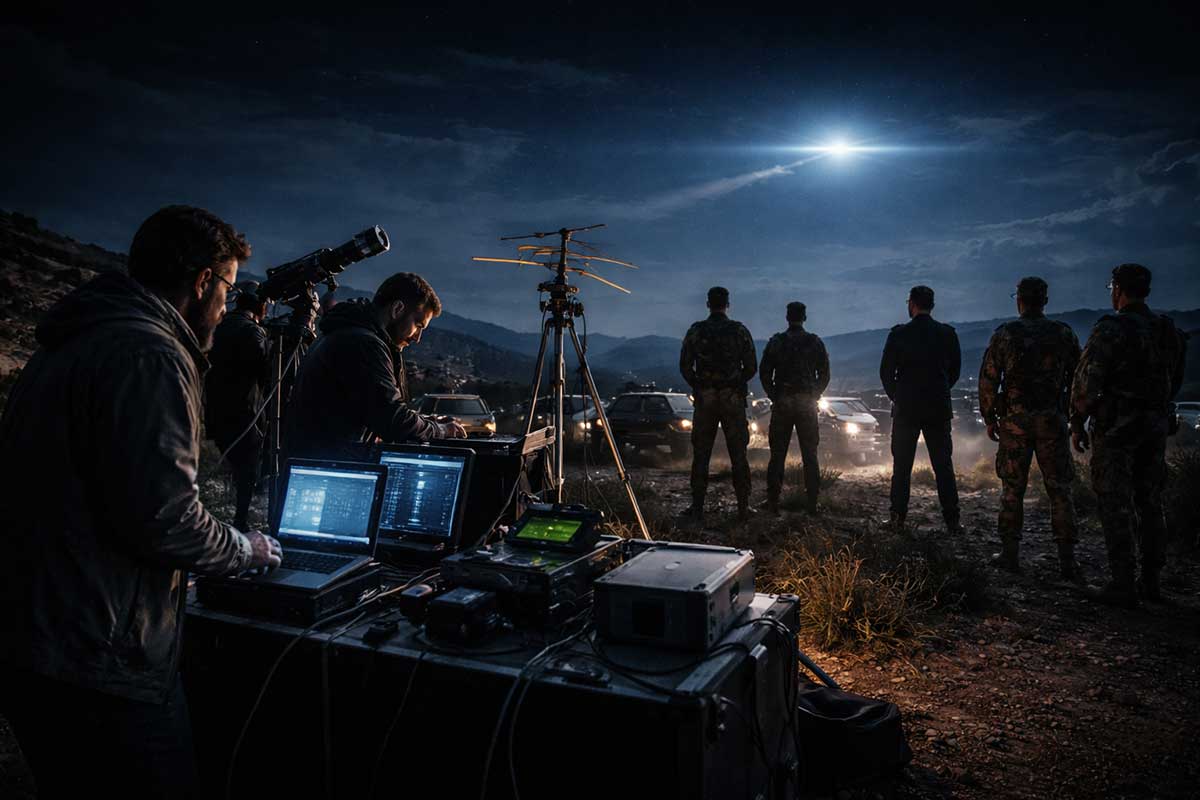
This is where the UFO/UAP discussion turns from witnesses and secrecy to method. Once unusual reports exist, who should decide what they mean? Intelligence agencies are built to protect sensitive information, assess threats, and work under classification. Science is built to test ideas openly, share methods, and invite criticism. Those two cultures do not think the same way, and on a subject like UAP, that gap may be one of the biggest reasons the public still feels stuck.
Participants
Avi Loeb
Sean Kirkpatrick
Neil deGrasse Tyson
Jacques Vallée
Gary Nolan
moderator
Avi Loeb
For many years, the UAP subject has been shaped more by secrecy than by open measurement. That creates a basic problem. If the best data sits behind classified walls, scientists cannot study it freely. If scientists do not study it freely, the subject remains trapped inside rumor, testimony, and institutional trust. Then the public is asked to choose between authorities instead of evidence.
That is why this topic matters. The real question may not be only what these objects are. It may be who has the right tools, the right habits, and the right intellectual culture to study them honestly.
Question 1: Why do intelligence culture and scientific culture clash so strongly on this subject?
Sean Kirkpatrick:
They clash because they are trying to do different jobs. Intelligence work is built around uncertainty, threat assessment, source protection, and incomplete information. You often cannot reveal how data was collected or what system captured it. That means your conclusions may be cautious, partial, and tightly held. Science wants the opposite. It wants methods shown, data shared, and claims challenged in public.
So the tension is not surprising. On a subject like UAP, intelligence sees possible national security risk. Science sees a question of evidence. Those two instincts can complement each other, but they can also frustrate each other.
Neil deGrasse Tyson:
Science gets irritated when mystery is preserved instead of reduced. If someone says, “We have extraordinary evidence, but you cannot see it,” that is not how science works. Science is not built on trust in a chain of command. It is built on reproducibility and exposure to criticism. That does not mean intelligence is wrong to classify things. It means classified claims have a natural ceiling when they try to enter scientific debate.
This is why the public gets confused. One culture says, “Take us seriously because we know more than we can show.” The other says, “Show us, or stop making grand conclusions.”
Jacques Vallée:
And yet science can also be too narrow when it approaches an anomaly only through current categories. Intelligence culture may distort a mystery through secrecy, but science can distort a mystery through premature dismissal. If a phenomenon does not fit accepted models, institutions of science may defend the model rather than study the anomaly with enough patience.
That is why this subject has remained difficult for so long. One side hides too much. The other side often rejects too quickly. The phenomenon, whatever it is, slips between those habits.
Gary Nolan:
I think both cultures carry blind spots. Intelligence systems can overclassify and overcontrol. Scientific communities can overprotect status and reputation. On a topic that already carries stigma, those weaknesses become worse. Researchers may avoid it. Agencies may overcontain it. Then the result is a vacuum where speculation grows faster than serious work.
That is why the method question matters so much. If neither culture can correct its own weakness, the subject stays muddy.
Avi Loeb:
Exactly. The clash is not just about evidence. It is about temperament. Intelligence asks, “What risk does this pose?” Science asks, “What can be learned?” Those are not identical questions, and on UAP they often pull in different directions.
Question 2: Should unusual aerial cases stay mostly inside government review, or move into open scientific inquiry?
Neil deGrasse Tyson:
If the goal is truth, open inquiry has to play a major role. Science does not guarantee immediate answers, but it gives you the best long-term filter against fantasy, bias, and authority-driven storytelling. If the subject remains mostly inside government, then the public gets conclusions without the process behind them. That is not a healthy place for extraordinary claims to live.
Of course, some raw data may involve sensitive systems. Fine. Then sanitize what must be sanitized and release what can be released. But if the whole topic lives behind the curtain forever, it will never mature.
Sean Kirkpatrick:
There are cases where government review has to come first. If an event occurs near sensitive operations or may involve adversary technology, you cannot begin with open publication. You have to begin with security. That is just reality. The challenge is knowing when the security need ends and when broader analysis can begin.
So I would not say it is one or the other. It is a sequence. Some material starts under restricted review. The harder question is whether there is a real handoff into broader inquiry, or whether the process stays closed too long.
Avi Loeb:
I would push harder for open inquiry. If unusual objects exist, then we should build systems designed to gather our own data rather than waiting forever for classified systems to release fragments. That is one reason I have argued for instrument-based observation in the open. A mystery does not become clearer by sitting in a vault.
Science should not be begging intelligence agencies for permission to think. It should be building its own evidence base.
Jacques Vallée:
I agree with that in spirit, but I would add that open inquiry should not assume the phenomenon will behave conveniently for our instruments. Some anomalies appear brief, evasive, or inconsistent. That is part of why witness testimony and historical pattern recognition still matter. Purely laboratory habits may miss something that appears at the edge of human systems rather than neatly inside them.
So yes, open science. But science with imagination, patience, and humility.
Gary Nolan:
Open inquiry is the only path that can gradually cool the temperature of this subject. Right now people often sort themselves into camps: believer, debunker, insider, skeptic. Open scientific work gives everyone something better to argue about. It moves the discussion from identity to method.
That does not remove intelligence review. It just stops intelligence review from being the only gatekeeper of meaning.
Question 3: What would real evidence look like if we wanted to move beyond endless debate?
Gary Nolan:
Real evidence would be multi-layered. Not a single dramatic clip, not one excited witness, not one official hint. You would want converging lines: good sensor data, clean timing, environmental context, repeatability if possible, and analysis that survives strong criticism. One reason the field stays hot and unresolved is that most people build their certainty from thin slices.
If the subject is real in a strong sense, it should leave stronger tracks than rumor alone.
Jacques Vallée:
I agree, but I would resist reducing evidence to one modern standard only. History matters. Patterns matter. Recurring structures in reports across decades matter. Human testimony is imperfect, yes, but it is still part of the evidence landscape. The mistake is either to treat testimony as everything or to treat it as nothing.
Real evidence may emerge from the meeting point between hard data and long-pattern observation.
Neil deGrasse Tyson:
For me, the gold standard is very plain. Data that can be independently analyzed and that narrows the explanation space in a durable way. The subject has had more than enough mystery. It needs measurement. If the best case still depends on “you had to be there” or “trust the classified people,” then the debate will keep looping forever.
Evidence should lower dependence on personality.
Sean Kirkpatrick:
And it should lower dependence on speculation too. Many cases become inflated by assumptions added later. A clean evidentiary process removes layers rather than adding them. What did the sensor actually record? What did the witness actually say at the time? What alternatives remain after serious review? A disciplined chain matters.
Without that, every anomaly becomes a screen onto which people project whatever they already want to believe.
Avi Loeb:
I would put it this way: real evidence is evidence that changes the conversation even among serious critics. Not because it is dramatic, but because it is hard to dismiss honestly. That is the threshold worth aiming for. Until then, the subject remains a debate about authority and interpretation more than a settled discovery.
This topic gets to one of the deepest bottlenecks in the entire UFO/UAP question. The problem may not be only lack of answers. It may be lack of agreement about who is allowed to ask, who is allowed to see, and what kind of proof counts. Intelligence can protect data, but it can also trap meaning inside secrecy. Science can test claims openly, but it can also lag when the subject is stigmatized or hard to capture. Until those two worlds find a better relationship, the mystery will remain suspended between classification and speculation.
Topic 5: Why Now? Timing, Politics, and Public Psychology
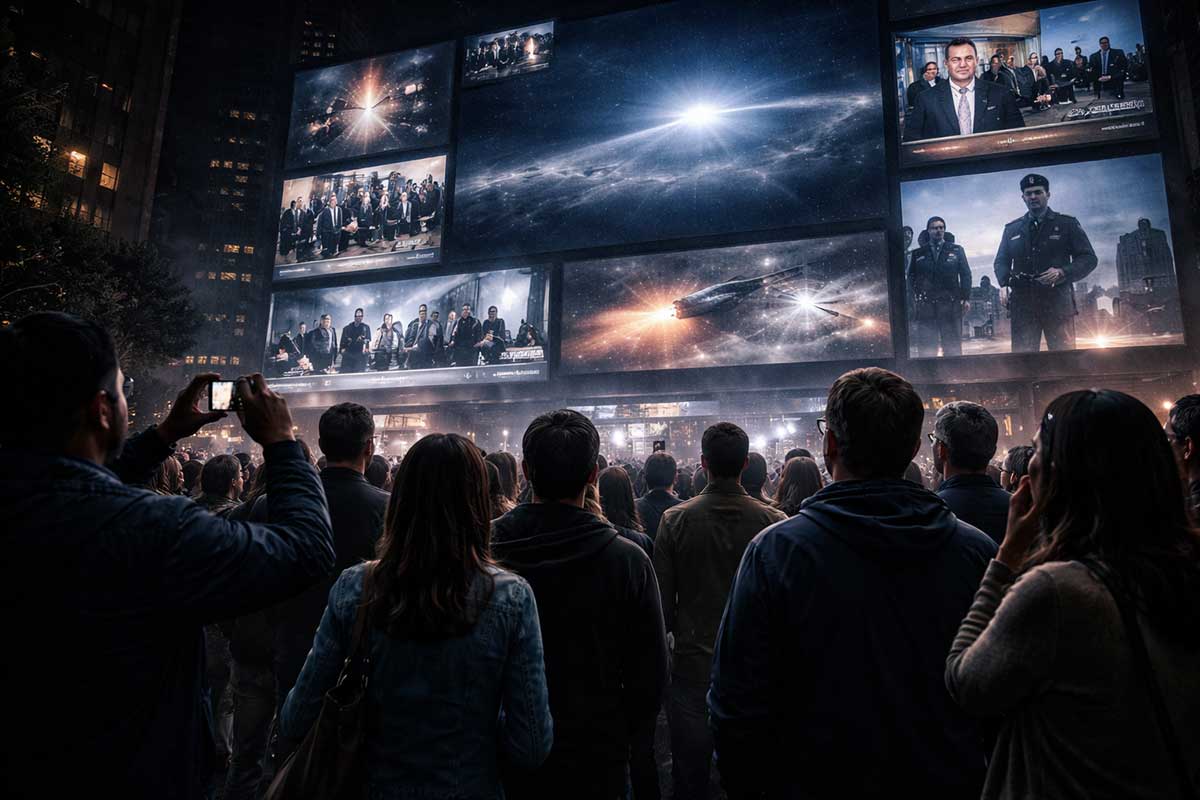
This is the right closing topic because it steps back from craft, secrecy, and method and asks a broader question: why does UFO/UAP attention surge at certain moments? Ross Coulthart is a visible UAP journalist and commentator, Douglas Rushkoff is a media theorist focused on how stories and systems shape public behavior, Peter Bergen brings a national-security lens, Anil Seth studies consciousness and perception, and Yuval Noah Harari is especially strong on myth, information, and collective meaning.
Participants
Yuval Noah Harari
Ross Coulthart
Douglas Rushkoff
Peter Bergen
Anil Seth
Moderator
Yuval Noah Harari
The UFO/UAP question is usually framed as a problem of objects: what is in the sky, who built it, what does the government know. But there is another layer that may be just as important. Why does the subject become culturally hot at some moments and not others? Why do institutions open the door a little, then pause? Why does public fascination rise when trust is strained, politics are polarized, and people feel that official reality is somehow incomplete?
Perhaps the final mystery is not only in the sky. Perhaps it is in the timing.
Question 1: Why do UFO/UAP stories flare up most strongly during periods of institutional distrust or social strain?
Ross Coulthart:
Part of it is that people become more willing to question the old gatekeepers. For decades, the subject could be shut down through ridicule. Once faith in institutions weakens, ridicule loses force. People start asking whether the taboo existed to protect good judgment or to protect control. That does not prove every dramatic claim. It does explain why audiences become more open when official trust is already damaged.
There is another factor. UAP stories offer a rare mix of danger, wonder, and hidden knowledge. In tense periods, that combination is irresistible. It gives the public a mystery big enough to carry all their doubt about the system.
Douglas Rushkoff:
Yes, and media systems reward that. Periods of stress create demand for stories that break open the ordinary frame. UFO/UAP narratives do that perfectly. They tell people that what appears settled may not be settled at all. In a culture where many already suspect they are being managed by unseen forces, the idea of concealed truth in the sky fits the emotional weather of the time.
The deeper point is that media does not merely report mystery. It circulates it, intensifies it, and turns it into a social experience. A mystery shared at scale becomes a way of thinking together.
Peter Bergen:
From a national-security angle, surges in attention can happen for simpler reasons too. When governments face new aerial risks, unknown drones, surveillance concerns, or geopolitical strain, unusual sightings become more salient. That does not mean institutions are inventing stories. It means the environment changes what counts as urgent. A public already anxious about security is more likely to read UAP reports through the lens of threat.
So there are at least two layers here: distrust of institutions and genuine concern about airspace, security, and the unknown.
Anil Seth:
There is also a perceptual layer. Human beings do not experience uncertainty as empty. We fill it with meaning. Under stress, that tendency can grow stronger. Ambiguous events may feel more charged, more connected, more significant. This is not dishonesty. It is how perception and expectation work together. My own research focuses on consciousness and perception, and one recurring lesson is that experience is not a passive mirror of reality. It is an active construction.
That matters here because a culture under strain may become more ready to interpret ambiguity as revelation.
Yuval Noah Harari:
A society that loses confidence in its official stories becomes hungry for deeper stories. UFO/UAP narratives can serve that hunger. They suggest that behind visible politics there may be a more profound layer of reality. That is a very powerful idea in unstable times, because it turns confusion into myth. And myth is often more emotionally satisfying than uncertainty.
Question 2: Could disclosure talk function as distraction, theater, or soft social management — even if some underlying cases are real?
Peter Bergen:
In politics and national security, timing always matters. Governments do not release sensitive information into a vacuum. They do so in contexts shaped by elections, wars, scandals, competing headlines, and bureaucratic goals. That does not mean every disclosure is a deliberate distraction. It does mean the public should ask why this piece of information appears now and not six months earlier or later.
The mistake is to treat two extremes as the only options. It does not have to be pure truth or pure manipulation. Real information can still be released in politically useful ways.
Ross Coulthart:
I think that is exactly right. One reason the public stays suspicious is that disclosure often feels partial and oddly timed. You get a hearing, a leak, a denial, a fragment of testimony, then silence. That rhythm creates the sense that something is being managed, even if different factions inside the system are pulling in different directions.
The public then has to ask two questions at once: Is the issue real? And is the rollout being shaped for reasons beyond simple truth-telling?
Douglas Rushkoff:
A managed narrative does not need to be false in order to function as management. That is the key thing people miss. Institutions can release selected truths to channel public interpretation. They can frame the unknown as threat, wonder, patriotism, or technical anomaly. Each frame produces a different public response.
This is why media literacy matters here. The question is not only what is said. It is what patterns of feeling are being produced around what is said.
Anil Seth:
From a psychological standpoint, partial revelation is potent. It keeps attention active. It sustains uncertainty. It can make people more dependent on future signals from authority. Full clarity often cools emotion. Partial clarity keeps the brain engaged. That pattern is not unique to UFO/UAP stories, but it is especially strong here because the topic already mixes fear and fascination.
So yes, even a partly real issue can be socially managed through timing and incompleteness.
Yuval Noah Harari:
States have always managed uncertainty, not just facts. A mystery can be politically useful because it keeps citizens oriented around institutions that claim privileged access. The public remains in a waiting posture: perhaps the next hearing, the next leak, the next official phrase will resolve things. In that sense, managed ambiguity can become a mode of governance.
Question 3: Why are humans so drawn to nonhuman-intelligence stories in moments of instability?
Anil Seth:
One reason is cognitive. Minds look for agency. When faced with events that are strange, large, or difficult to explain, people naturally ask who is behind them. Nonhuman-intelligence stories give ambiguity a shape. They replace diffuse uncertainty with a more vivid possibility. From the standpoint of perception and cognition, that is very understandable.
Such stories can feel clarifying, even if they remain unproven, because they turn formless doubt into a concrete narrative.
Douglas Rushkoff:
They also speak to a media age in which many people feel that reality is already layered, unstable, and mediated. Hidden algorithms, hidden power, hidden networks, hidden systems — UFO/UAP stories fit that cultural grammar. The nonhuman becomes the ultimate hidden actor, the final unseen intelligence in a world already saturated with unseen forces.
So the appeal is not only cosmic. It is cultural. The story feels native to our time.
Ross Coulthart:
I would add that many people feel boxed in by ordinary explanations. Politics disappoints them. Institutions disappoint them. Expert language often feels dry, incomplete, or distrusted. The UFO/UAP question cracks that surface open. It says reality may be stranger than the official menu suggests. That possibility can feel liberating.
This is part of why the subject carries so much emotional charge. For some, it is not just about craft. It is about permission to think that the world is bigger than it has been presented.
Peter Bergen:
There is a national-security counterpart to that too. Unknowns are magnets for fear and speculation. When people know there are real threats in the world but cannot easily map them, they may attach large meaning to any unresolved anomaly. That is why governments must be careful. Vagueness around unusual phenomena can feed rumor far beyond the facts.
An unresolved mystery never stays empty for long. It attracts stories.
Yuval Noah Harari:
Nonhuman-intelligence stories matter because they stand at the border between science, religion, and politics. They can function like modern myth without requiring ancient language. They ask whether humanity is alone, whether authority has hidden the truth, whether history may be entering a new chapter. In unstable times, such questions become irresistible because they make ordinary crisis feel part of a larger drama.
That is why the topic keeps returning. It is not only a puzzle about what people saw. It is a mirror held up to what civilization fears, hopes, and suspects about itself.
This final topic brings the whole UFO/UAP arc into focus. The mystery is not only about objects, data, or classified files. It is also about timing, public mood, and the stories societies tell when ordinary authority feels thin. UFO/UAP surges happen in a human environment shaped by distrust, media amplification, psychological pattern-making, and political framing. That does not make the phenomenon unreal. It means the social life of the phenomenon is part of the phenomenon.
Final Thoughts by Nick Sasaki
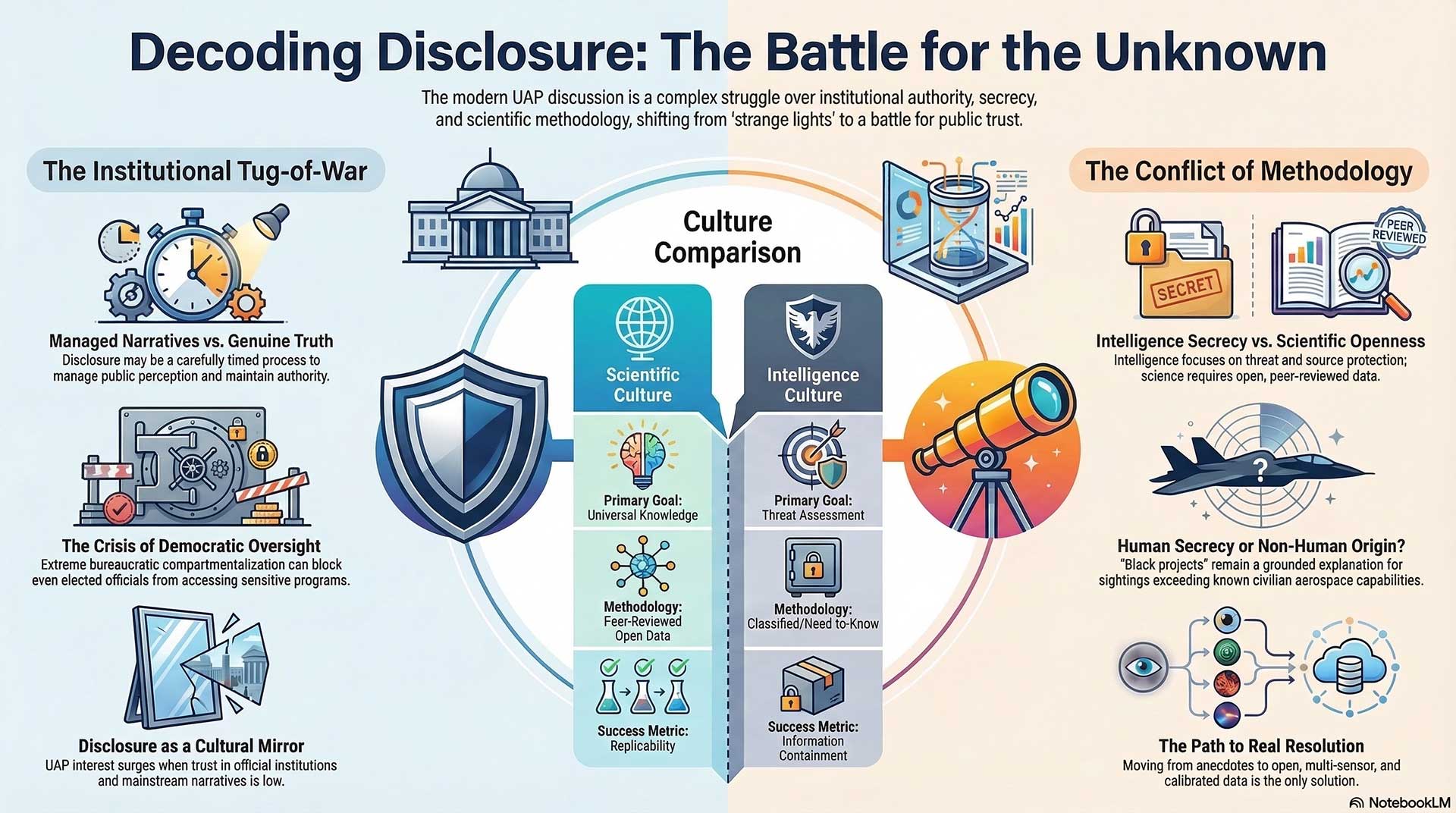
After moving through these five topics, one thing becomes clear: the UFO question is no longer a fringe curiosity that can be dismissed as fantasy or settled by mockery. It has become a pressure point where several larger tensions meet.
One tension is between disclosure and narrative control. The public may indeed be learning more than before, but that does not mean it is learning everything, or learning it in a neutral way. Information can be real and still be shaped, timed, framed, and released in fragments. That leaves people with a lingering suspicion that they are being brought near the truth without being fully allowed inside it.
Another tension is between mystery and explanation. Some cases may point to misidentification, sensor limits, or advanced hidden human systems. Some may remain unresolved for more serious reasons. But the strongest version of this discussion is not built on instant certainty. It is built on disciplined tension between witness testimony, technical analysis, historical secrecy, and open scientific inquiry.
A third tension lies inside the state itself. Once whistleblowers enter the picture, the issue changes. It is no longer only about what was seen. It becomes a question of oversight, compartmentalization, and whether democratic institutions can truly supervise their own most secret corners. That question matters even if the ultimate answer turns out to be less exotic than many imagine.
Then there is the conflict between science and intelligence. Science wants open data, repeatable method, and independent challenge. Intelligence protects sources, systems, and classified context. Each has a valid role, but together they create a bottleneck. One side cannot freely see what the other side controls. Until that changes, the subject will remain suspended between guarded knowledge and public speculation.
And finally, there is the question of timing. UFO stories rise in moments when people already feel that official reality is incomplete. In such periods, the subject becomes bigger than itself. It becomes a vessel for doubt, wonder, distrust, fear, and the hope that something larger may explain the cracks in the world as it is usually presented. That does not make the phenomenon unreal. It means the social meaning of the phenomenon is part of its power.
So the final lesson is this: the UFO issue is not only about objects in the sky. It is about the structures through which modern people decide what is credible, what is hidden, what is measurable, and what is still beyond reach. That is why the topic keeps returning. It does not just ask whether we are alone. It asks whether we are being told the full truth about the world we already live in.
Short Bios:
Ross Coulthart — Australian investigative journalist, author, and documentary producer, known for high-profile reporting on UAP and disclosure claims; he has worked with NewsNation and other major outlets.
Leslie Kean — Independent investigative journalist and author of UFOs: Generals, Pilots, and Government Officials Go on the Record, known for bringing unusual subjects into mainstream reporting.
Lue Elizondo — Former U.S. Defense Department official and counterintelligence officer, widely known for his role in the modern Pentagon UAP conversation and his connection to AATIP.
Mick West — Writer and skeptical investigator, creator of Metabunk, known for technical analysis of UFO videos, conspiracy claims, and visual evidence.
Yuval Noah Harari — Israeli historian, philosopher, and bestselling author of Sapiens and Homo Deus, known for exploring history, myth, technology, and human meaning.
David Fravor — Retired U.S. Navy commander and former fighter pilot, best known publicly for the 2004 “Tic Tac” encounter off the California coast.
Ryan Graves — Former U.S. Navy F/A-18F pilot and the first active-duty pilot to speak publicly about regular UAP encounters; he is linked with Americans for Safe Aerospace.
Sean Kirkpatrick — Physicist and intelligence official who served as the first director of the Pentagon’s All-domain Anomaly Resolution Office, or AARO.
Avi Loeb — Harvard astrophysicist and head of the Galileo Project, known for arguing that unusual phenomena should be studied through open scientific observation.
Annie Jacobsen — Investigative journalist and Pulitzer Prize finalist whose books focus on war, secret programs, intelligence, and places like Area 51.
David Grusch — Former U.S. Air Force intelligence officer and National Geospatial-Intelligence Agency official whose 2023 testimony made him the central UAP whistleblower figure.
Christopher Mellon — Former Deputy Assistant Secretary of Defense for Intelligence and longtime defense and intelligence oversight figure who has pushed for more UAP transparency.
Marik von Rennenkampff — National security analyst and commentator whose work has appeared in The Hill and who often writes on defense, policy, and UAP-related oversight questions.
Ralph Blumenthal — Veteran journalist and author, formerly of The New York Times, known for co-reporting key stories that pushed the UAP issue into mainstream attention.
Glenn Greenwald — Investigative journalist, author, and former constitutional lawyer, known for adversarial reporting on secrecy, surveillance, and state power.
Neil deGrasse Tyson — Astrophysicist and science communicator, educated at Harvard and Columbia, known for explaining science to broad audiences and pressing for strong evidence standards.
Jacques Vallée — French computer scientist, former astronomer, early internet pioneer, and one of the most influential long-term researchers of UFO phenomena.
Garry Nolan — Stanford professor of pathology and immunology whose research has placed him near some of the scientific debate around anomalous materials and UAP-related claims.
Douglas Rushkoff — Writer, documentarian, and media theorist known for exploring digital culture, public psychology, and how narratives spread in technological society.
Peter Bergen — Journalist, documentary producer, CNN national security analyst, and author known for long-running work on terrorism, intelligence, and security affairs.
Anil Seth — Professor of cognitive and computational neuroscience at the University of Sussex and a leading voice on consciousness, perception, and how the brain constructs experience.
Leave a Reply