
What if Prof. Jiang and top thinkers revealed that America’s defense strategy is also a map of empire?
Introduction by Prof. Jiang
Most people misunderstand national defense strategy because they read it as a military document.
It is not only a military document.
It is a map of power.
It tells you what a nation fears. It tells you what a nation wants to control. It tells you who it sees as rivals, who it sees as allies, and who it expects to carry the cost of its strategy.
The 2026 National Defense Strategy says America must defend the homeland, secure the Western Hemisphere, deter China, make allies do more, and rebuild the defense-industrial base.
That is the official language.
But if you read the document carefully, you see something deeper.
America is trying to solve the problem every declining empire faces. It wants to protect its homeland, but it also wants to preserve global dominance. It wants to avoid endless wars, but it also wants to control the key regions, routes, resources, and alliances that keep the American system alive.
This is why the Western Hemisphere matters. It is not just geography. It is the foundation of Fortress America.
This is why China matters. China is not only a rival country. It is the main challenger to American economic and military dominance in the Indo-Pacific.
This is why allies matter. America wants partners, but it also wants them to carry more of the burden in Europe, East Asia, and the Middle East.
This is why the defense-industrial base matters. If America is going to compete with China, pressure Russia, manage allies, protect sea lanes, and control strategic terrain, it needs factories, weapons, ships, drones, missiles, and munitions.
So the question is not whether America needs defense.
Every nation needs defense.
The real question is whether this strategy is only about protecting America, or whether it is about preserving American hegemony in a world where that hegemony is being challenged.
That is what this conversation is about.
Is America First a defensive strategy, or an imperial strategy?
Does securing the Western Hemisphere protect the homeland, or dominate neighbors?
Is China containment really deterrence, or is it economic strangulation?
Are allies partners, dependents, or pawns?
Does rebuilding the defense-industrial base create security, or does it create permanent incentives for war?
If you want to understand the future, do not only listen to speeches.
Read the strategy.
Follow the map.
Follow the money.
Follow the military production.
Then ask who benefits, who pays, and who is expected to fight.
Introduction by Rev. Sun Myung Moon
America was not created only to protect itself.
America was created for a providential purpose.
This nation was blessed with freedom, faith, resources, creativity, and influence so that it could serve the world, not dominate it. But when a blessed nation forgets why it was blessed, its strength becomes confused. It begins to think that military power alone can save it. It begins to think that money alone can guide history. It begins to think that media, politics, and weapons are enough.
They are not enough.
The National Defense Strategy speaks about America First, homeland defense, the Western Hemisphere, China, allies, and the defense-industrial base. These are serious matters. A nation must defend its people. A nation must be strong. A nation must understand its enemies. A nation must not be naive.
I spent my life opposing communism because communism denies God, weakens the family, reduces human beings to economic units, and creates systems where the state replaces conscience. America must understand this. The struggle is not only between armies. It is between worldviews.
But America must be careful.
If America says “America First” only for selfish reasons, then it will lose Heaven’s support. If America seeks strength only to control other nations, then it will become the very thing it claims to oppose. If America builds weapons but loses families, truth, faith, and moral courage, then America may win battles but lose its soul.
This is why media matters.
When I founded The Washington Times, I did not do it merely to create another newspaper. I did it because a nation cannot remain free if its media becomes one-sided, hostile to faith, blind to communism, and controlled by ideological fashion. A free nation needs truthful media. It needs balanced media. It needs media that can challenge power without destroying moral foundations.
The National Defense Strategy asks how America can be safe.
But the deeper question is this:
What kind of America is being defended?
An America of faith, family, freedom, responsibility, and service?
Or an America of fear, division, materialism, and power without purpose?
If America wants to lead, it must first repent. It must restore the family. It must tell the truth about communism and all anti-God ideologies. It must defend religious freedom. It must create media that serves truth rather than resentment. It must use strength for peace, not domination.
The question is not whether America should be strong.
America must be strong.
The question is whether America’s strength will be centered on God, truth, family, and service.
Only then can America defend itself without becoming arrogant.
Only then can America oppose communism without becoming spiritually empty.
Only then can America help the world without trying to own it.
(Note: This is an imaginary conversation, a creative exploration of an idea, and not a real speech or event.)
Topic 1: Is “America First” a Defense Strategy or an Imperial Strategy?
Nick Sasaki opened the discussion with the document lying on the table.
“The National Defense Strategy says America must protect its homeland, secure its borders, strengthen its defense industry, push allies to carry more responsibility, and prevent rivals from threatening American freedom and prosperity.”
He paused.
“But critics hear something else. They hear a great power declaring that its security zone includes not only its own territory, but nearby regions, global trade routes, allied countries, and rival economies.”
At the table sat Donald Trump, Noam Chomsky, George Washington, and Reinhold Niebuhr.
Nick continued.
“So our first question is this: Is ‘America First’ a defense strategy, or an imperial strategy?”
Question 1: When a nation says it is putting itself first, where is the line between legitimate self-defense and domination of others?
Donald Trump:
America First means exactly what it says. For too long, America paid the bills, protected other countries, let factories leave, let borders weaken, and let allies take advantage of us. That was not leadership. That was stupidity.
A country has the right to defend itself. It has the right to protect its borders, its workers, its military, its currency, its industry, and its people. If America does not put Americans first, who will?
The line is simple. We do not want to run every country. We want other countries to stop taking advantage of us. We want fair deals. We want strong borders. We want peace through strength. Weakness invites war. Strength prevents it.
Noam Chomsky:
That is the language every empire uses. It rarely says, “We seek domination.” It says, “We seek security.” But when a powerful state defines its security so broadly that it includes control over regions, resources, trade routes, and other nations’ choices, the word “defense” becomes a disguise.
The question is not whether Americans have a right to safety. Of course they do. The question is whether U.S. safety requires other countries to accept U.S. dominance. If smaller nations cannot make independent choices without being treated as threats, then this is not defense. It is hegemony.
“America First” may sound like national self-care. But in practice, it can become: America decides first, America controls first, America punishes first.
George Washington:
A nation must guard its independence with vigilance. No people can remain free if it neglects its own defense. Yet a republic must also beware the passions that accompany power.
The young United States needed strength, but it also needed restraint. Foreign attachments can drag a nation into quarrels not its own. Permanent hostility can corrupt public judgment. A republic must not confuse self-defense with appetite.
The line is crossed when national security becomes a reason to command others rather than preserve one’s own liberty. The purpose of strength is independence, not vanity.
Reinhold Niebuhr:
The moral difficulty is that nations are never as innocent as they believe themselves to be. Self-defense is real. Power politics is real. Threats are real. But self-deception is real too.
A nation may begin by seeking protection and slowly come to believe that its own security requires another nation’s obedience. This is the tragic pattern of power. The stronger a nation becomes, the more easily it mistakes its interests for justice.
The line between defense and domination is crossed when a nation loses the ability to ask: “How does our security feel to those living under its shadow?”
Nick Sasaki:
“So America First may begin as a correction against overextension. But if it expands into a claim over neighbors, allies, routes, and rivals, it becomes something more than defense.”
Question 2: Can a great power protect its people without turning every rival, neighbor, and trade route into a security threat?
Washington:
It must, or it will destroy its own peace. A republic should be strong enough to defend itself, yet calm enough not to be governed by suspicion. If every rival is an enemy, every neighbor a danger, and every trade route a battlefield, then the republic lives in permanent alarm.
A free people cannot flourish under constant agitation. Commerce, agriculture, family life, religion, and local virtue require peace. Defense must protect these things, not consume them.
The danger is not only foreign invasion. The danger is becoming a people whose imagination is ruled by fear.
Trump:
You call it fear. I call it reality. Look at the world. China wants dominance. Criminal cartels cross borders. Allies do not pay enough. Our factories were sent overseas. Our workers were betrayed. Our enemies laugh when America is weak.
You do not protect people by pretending threats are not there. You protect them by being ready. You secure the border. You rebuild industry. You make allies pay. You control what matters before your enemies do.
A great power that waits until the threat is already inside the gate is not wise. It is late.
Chomsky:
The problem is that “threat” becomes elastic. Any country that acts independently can be called a threat. Any economic competitor can be called a threat. Any government that resists U.S. policy can be called a threat. This creates a world where American policymakers see danger everywhere, including in the sovereignty of others.
That is how military systems expand. They do not need an invasion to justify themselves. They need scenarios, forecasts, intelligence warnings, and ideological language.
Once every trade route is a security issue, the military enters everything. Once every neighbor is a possible vulnerability, diplomacy becomes coercion.
Niebuhr:
Both of you reveal part of the truth. It is foolish to deny danger. It is equally foolish to absolutize danger. Political wisdom requires a disciplined imagination: enough realism to see threats, enough humility to avoid inventing them for convenience.
Fear can be useful when it awakens prudence. It becomes destructive when it becomes identity.
A great power protects its people best when it distinguishes vital interests from imperial habits. Not every discomfort is a threat. Not every rival is an existential enemy. Not every sphere of influence is morally defensible.
Nick Sasaki:
“That may be the heart of the strategy debate. Does America First clarify priorities, or does it expand suspicion until the whole world becomes a defensive perimeter?”
Question 3: Does the language of “peace through strength” reduce war, or does it prepare citizens to accept permanent confrontation?
Trump:
Peace through strength works. The world respects strength. They do not respect weakness. When America is strong, enemies think twice. They do not attack. They negotiate. They make deals.
Weak leaders create wars because enemies see opportunity. Strong leaders prevent wars because enemies know the cost will be too high.
We are not talking about endless war. We are talking about deterrence. Strong military. Strong borders. Strong economy. Strong industry. That is how you get peace.
Chomsky:
“Peace through strength” is one of the most effective phrases in modern political language because it makes militarization sound peaceful. It tells citizens that more weapons, more bases, more pressure, and more confrontation are not signs of war preparation, but signs of peace.
The result is that citizens accept military expansion without feeling militarized. They accept confrontation while believing they oppose war. They accept vast defense budgets while social needs go unmet.
Peace through strength can become a permanent argument for never reducing strength, never trusting diplomacy, and never questioning the institutions that profit from fear.
Washington:
Strength is necessary. But if strength is not governed by republican virtue, it becomes dangerous. A standing military establishment, foreign rivalry, factional anger, and public debt can all work upon each other.
A free people must not be defenseless. Yet neither should they become habituated to military excitement. The spirit of liberty requires a certain simplicity of purpose: defend the republic, preserve independence, avoid unnecessary quarrels, and do not let military glory become a national temptation.
Peace through strength must be judged by whether it truly produces peace.
Niebuhr:
The phrase contains both wisdom and danger. Strength can deter aggression. But strength can also become self-justifying. Nations rarely say, “We have enough power.” They say, “One more weapon, one more base, one more intervention, one more emergency.”
The moral test is whether strength remains connected to restraint. Strength without restraint is not peace. It is intimidation. Restraint without strength may become helplessness. Wisdom requires both.
Peace through strength is noble only if the final word is peace, not strength.
Nick Sasaki:
Nick looked at the document again.
“Perhaps the National Defense Strategy can be read in two ways.”
He turned to Trump.
“To one side, it is a correction: protect the homeland, rebuild industry, force allies to contribute, and deter rivals.”
He turned to Chomsky.
“To the other side, it is a clearer statement of dominance: secure the hemisphere, control strategic terrain, pressure allies, contain China, and tie national renewal to military production.”
He looked at Washington.
“The founding warning is that a republic must defend itself without becoming addicted to power.”
Then to Niebuhr.
“And the moral warning is that no nation can safely assume its motives are pure.”
Nick paused.
“Maybe America First becomes legitimate when it means: protect our people, restore our home, avoid foolish wars, and preserve independence.”
His voice grew quieter.
“But it becomes imperial when it means: our security requires your obedience, our prosperity requires your dependency, and our fear gives us the right to decide your future.”
The room remained silent.
Nick closed the topic.
“Perhaps the real question is not whether America should come first for Americans. Every nation has duties to its own people. The deeper question is whether America can put itself first without making the rest of the world live second.”
Topic 2: Does Securing the Western Hemisphere Protect the Homeland, or Dominate Neighbors?
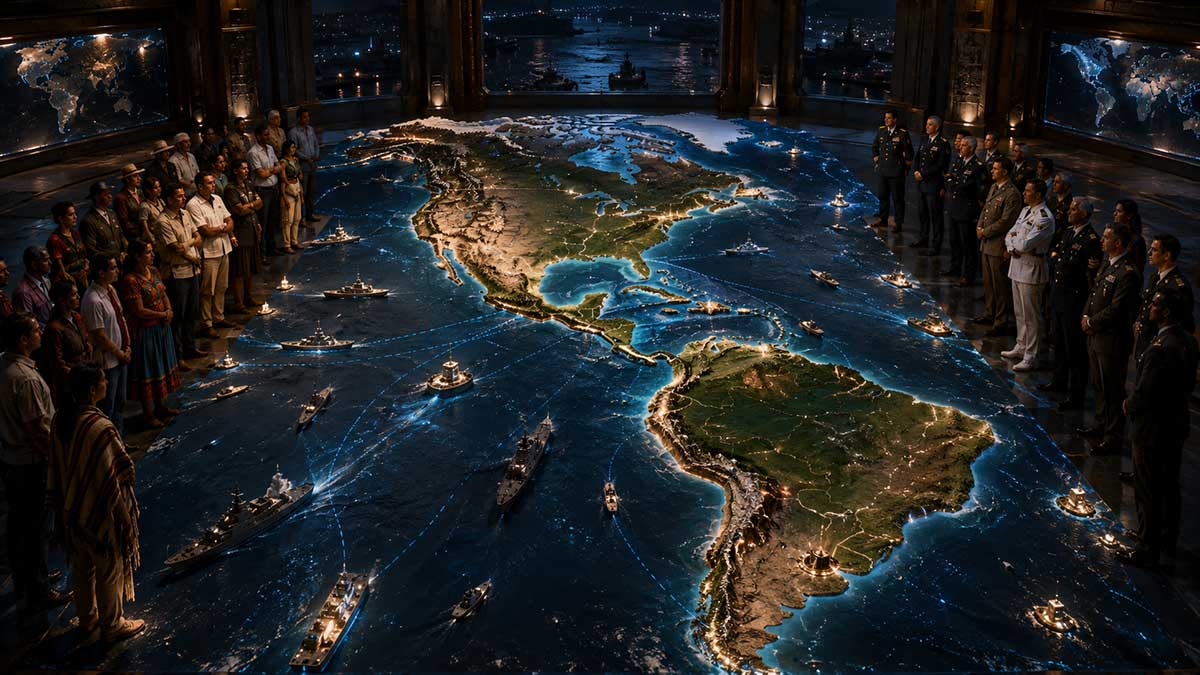
Nick Sasaki turned to the second question with a map of the Americas projected behind him.
“The National Defense Strategy speaks strongly about the Western Hemisphere. It argues that America must defend its homeland, its borders, its maritime approaches, and key terrain such as the Panama Canal, Greenland, and nearby waters.”
He paused.
“To its defenders, this is basic national security. No great power can allow rival powers to gain influence near its home. But to critics, this sounds like the old Monroe Doctrine returning in a harder form: America claiming the right to decide what its neighbors may do.”
At the table sat Theodore Roosevelt, Simón Bolívar, John Quincy Adams, and Alfred Thayer Mahan.
Nick continued.
“So our second question is this: Does securing the Western Hemisphere protect the homeland, or dominate neighbors?”
Question 1: When the United States claims special responsibility for the Western Hemisphere, is it protecting the region from outside powers or claiming ownership over it?
Theodore Roosevelt:
A great nation must accept great responsibility. If disorder, foreign intrigue, hostile powers, or criminal forces take root near American shores, the United States cannot pretend it is none of our affair. Weakness in our own hemisphere invites outside interference.
The Monroe Doctrine was not a polite suggestion. It was a statement that the New World would not be treated as a playground for Old World empires. If America does not maintain strength here, others will come. They will build ports, influence governments, control resources, and threaten our safety.
Protection requires action. A nation that sees danger and refuses to act is not moral. It is timid.
Simón Bolívar:
But who decides what protection means? Latin America knows the language of protection very well. Empires always say they are protecting order, civilization, trade, stability, or security. Yet beneath those words, smaller nations often feel the weight of someone else’s hand.
The peoples of the Americas did not throw off European empire so that another power could appoint itself guardian of our destiny. A republic may oppose foreign domination and still become a dominator.
If the United States says, “No foreign empire may control this hemisphere,” that may sound noble. But if it then says, “Only we may decide the future of this hemisphere,” it has merely replaced one master with another.
John Quincy Adams:
The original spirit of American independence was not conquest. The United States was to be a well-wisher to freedom everywhere, but not the ruler of everyone’s fate.
There is wisdom in resisting European imperial interference in the Americas. But there is danger if that resistance becomes an American claim to superiority over neighboring republics. The United States must distinguish between opposing foreign empire and exercising empire itself.
The moral line is this: Are we defending the independence of our neighbors, or limiting it?
Alfred Thayer Mahan:
From the standpoint of sea power, the Western Hemisphere cannot be treated casually. Geography matters. The Caribbean, the Panama Canal, the Gulf, Atlantic approaches, Pacific routes, northern passages, and island chains all affect American security and commerce.
No maritime power can ignore the waters near its own coast. Control of sea approaches is not decorative. It is the foundation of survival, trade, and strategic mobility.
But naval strength should serve policy. It should not become policy by itself. The fleet can protect commerce and deter rivals, but statesmen must decide whether that protection respects the sovereignty of others.
Nick Sasaki:
“So the same map can produce two arguments. Roosevelt sees responsibility. Bolívar sees domination. Adams sees the need for restraint. Mahan sees the strategic reality of water, ports, and routes.”
Question 2: Can smaller nations in the Americas truly remain sovereign if a larger power decides their ports, resources, canals, and alliances are part of its security zone?
Bolívar:
Sovereignty becomes fragile when a larger power says, “Your choices are my security problem.” A small nation may have a flag, president, parliament, and anthem, yet still find that its deepest decisions are not fully its own.
Can it choose its trading partners? Can it control its resources? Can it make alliances without punishment? Can it refuse military access? Can it govern its ports and canals without being suspected?
If the answer is no, then its independence has become ceremonial. A nation cannot be sovereign only in matters that do not matter.
Roosevelt:
Sovereignty is not a license for irresponsibility. If a government permits hostile powers to establish strategic positions that threaten the hemisphere, then it is not merely making a private choice. It is creating danger for others.
The United States does not need to micromanage every neighbor. But it cannot allow strategic gateways to fall under the influence of powers hostile to American interests. A canal, a port, or a naval base is not only local property. It can affect the safety of millions.
Great powers live with wider responsibilities because the consequences of neglect are wider.
Adams:
Responsibility must be bounded by law and principle. A great republic must be careful when invoking necessity. Necessity has often been the favorite argument of ambition.
If a neighboring country enters into arrangements that genuinely threaten American safety, diplomacy must come first. If influence is needed, it should be exercised through lawful means, commerce, persuasion, and treaty, not domination.
A small nation’s sovereignty should not vanish merely because geography makes it useful.
Mahan:
The difficulty is that strategic geography does not ask permission to matter. A canal can be the hinge of hemispheric commerce. A port can support a hostile fleet. An island can observe or block movement. These are facts.
But facts do not answer moral questions alone. Sea power requires bases and routes, but strategy must be combined with legitimacy. If local populations see protection as occupation, the strategic gain may produce political resentment that lasts generations.
Security built against the will of those being “protected” is unstable.
Nick Sasaki:
“That may be the hidden tension. The powerful nation sees geography. The smaller nation sees dignity. The powerful nation sees access. The smaller nation sees ownership. The powerful nation sees threat prevention. The smaller nation asks whether its consent still matters.”
Question 3: Is the Monroe Doctrine a shield against foreign empire, or did it become an American version of the same imperial logic it once opposed?
Adams:
The Monroe Doctrine, in its proper form, declared that the Americas should not be recolonized by European powers. It was a defensive warning, rooted in the desire that newly independent nations should not be dragged back into imperial systems.
But every doctrine can be corrupted by ambition. What begins as defense may become license. What begins as a shield may become a sword.
The test is simple: does the doctrine preserve liberty for the nations of the hemisphere, or does it place them under American tutelage?
Roosevelt:
I will not apologize for strength. A doctrine without enforcement is a sermon. If the United States announces a principle but lacks the will to defend it, rival powers will test it.
The Roosevelt Corollary recognized that chronic disorder or foreign debt crises could invite European intervention. American action was meant to prevent a worse imperial intrusion.
Was this hard? Yes. Did it create resentment? Often. But a leader must choose between imperfect action and dangerous passivity. The world is not governed by wishful language.
Bolívar:
A people under pressure can always be told that domination is better than chaos. That argument is endless. It can justify intervention today, control tomorrow, and dependency forever.
If the Monroe Doctrine truly protects the Americas, then it should protect Latin America’s freedom from all empires, including Washington’s. If it says only that Europe must stay away so America can command, then it is not anti-imperial. It is regional empire.
Our nations must not be treated as children whose freedom depends on pleasing a stronger neighbor.
Mahan:
A maritime doctrine must match the actual strategic environment. If foreign powers gain footholds in the hemisphere, the balance changes. If they control canals, ports, or islands, American security changes. The doctrine has strategic logic.
But strategy must evolve with political legitimacy. In a world of sovereign states, influence cannot rest only on naval reach. It must rest on durable partnerships, mutual advantage, and trust.
Naval force can keep rivals out. It cannot, by itself, make neighbors trust you.
Nick Sasaki:
Nick looked at the map again.
“Perhaps the Monroe Doctrine contains two spirits.”
He turned to Adams.
“One spirit says: this hemisphere should not be recolonized by foreign empires.”
He turned to Roosevelt.
“Another says: America must be strong enough to keep danger away from its shores.”
He turned to Bolívar.
“But a darker spirit says: smaller republics are free only as long as their freedom does not inconvenience Washington.”
He turned to Mahan.
“And the strategic spirit says: sea lanes, canals, ports, and islands will always matter, whether moral language admits it or not.”
Nick paused.
“Maybe securing the Western Hemisphere protects the homeland when it defends genuine independence, lawful cooperation, and shared safety.”
His voice grew firmer.
“But it dominates neighbors when protection becomes permission, when partnership becomes obedience, and when sovereignty becomes something granted by the stronger power instead of possessed by the smaller one.”
The room was quiet.
Nick closed the topic.
“Perhaps the real question is not whether America has legitimate interests in its own hemisphere. It does. The deeper question is whether America can protect those interests without asking its neighbors to live as guests in their own home.”
Topic 3: Is China Containment Deterrence, or Economic Strangulation?
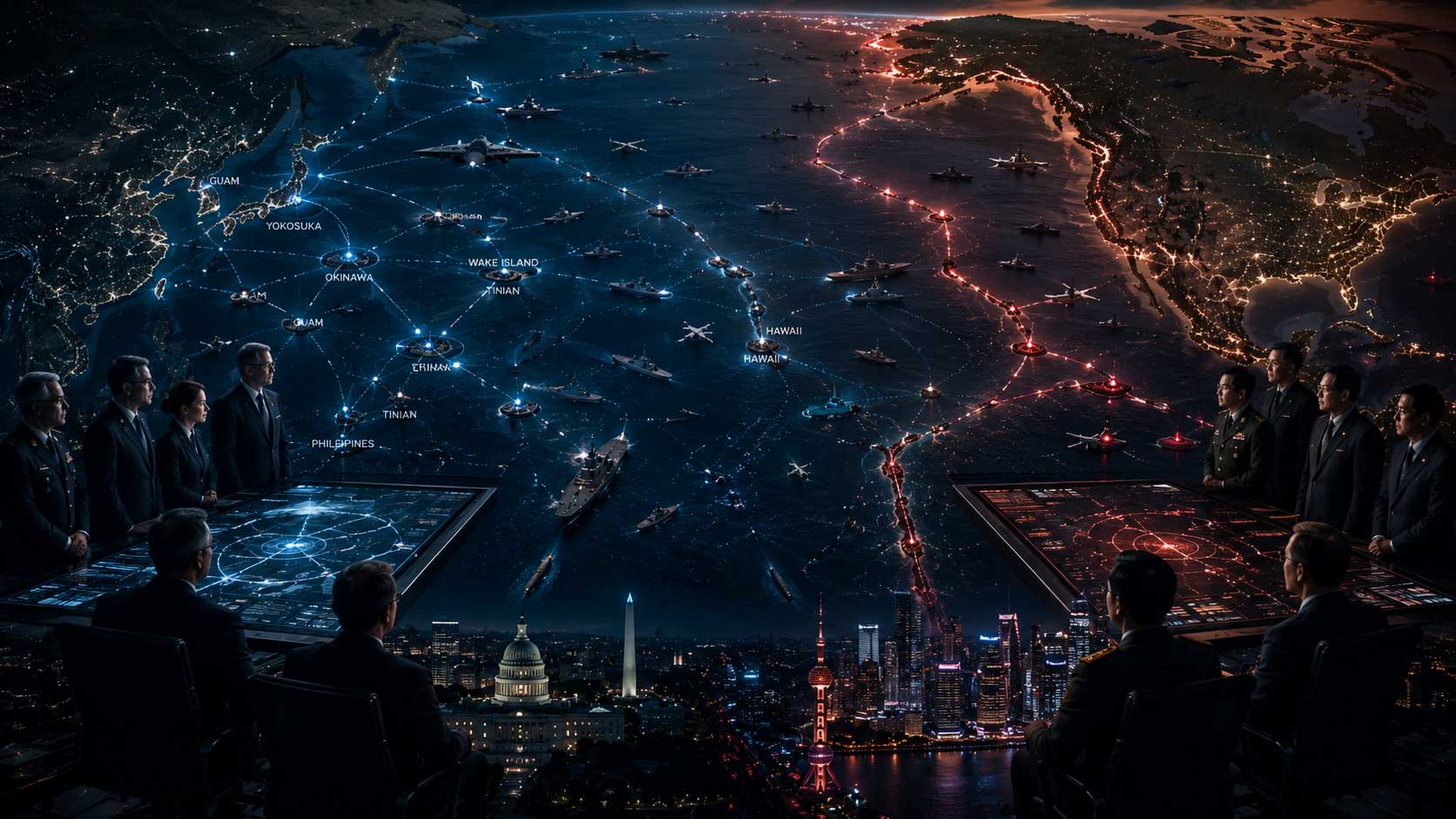
Nick Sasaki turned from the Western Hemisphere to the Pacific.
“The National Defense Strategy says China is America’s most serious long-term military competitor. It speaks of deterrence, Indo-Pacific stability, sea lanes, allies, technology, and preventing any single power from dominating the region.”
He paused.
“But from Beijing’s side, the same policy may look very different: island chains, naval pressure, chip restrictions, military alliances, energy-route vulnerability, and economic containment.”
At the table sat Henry Kissinger, Zhou Enlai, Lee Kuan Yew, and George Kennan.
Nick continued.
“So our third question is this: Is China containment deterrence, or economic strangulation?”
Question 1: When Washington calls its China policy deterrence, why might Beijing experience the same policy as encirclement?
Henry Kissinger:
The difference lies in perception and historical memory. American officials may describe their policy as defensive. They may say they seek balance, stable trade, freedom of navigation, and prevention of regional domination.
But China’s memory is shaped by humiliation, foreign intrusion, unequal treaties, civil war, invasion, and encirclement. A policy that Washington regards as prudent may be received in Beijing as another attempt to limit China’s return to historic importance.
This is the danger in great-power politics. Each side sees its own actions as necessary and the other side’s actions as aggressive. The task of statesmanship is to prevent these perceptions from becoming destiny.
Zhou Enlai:
China remembers what happens when foreign powers control the seas around us, the ports near us, the markets near us, and the rules imposed upon us. When America places military alliances, bases, patrols, and economic restrictions around China, it may call this deterrence. We may call it containment.
A great civilization cannot accept permanent inferiority. China does not seek humiliation of America, but it will not accept humiliation from America.
If the United States says, “You may rise only within limits we define,” then this is not balance. It is hierarchy.
George Kennan:
Containment, properly understood, is not a demand for humiliation. It is a disciplined policy meant to prevent expansion without rushing into unnecessary war. Its success depends on patience, clarity, and restraint.
The danger is that containment can become overextended. It can lose its political purpose and become a reflex. Every move by the rival is treated as a threat. Every compromise is treated as appeasement. Every ally is pulled into a forward line.
If containment becomes psychological habit rather than strategic discipline, it feeds the very hostility it claims to manage.
Lee Kuan Yew:
Asia does not want to choose between American domination and Chinese domination. Small and medium-sized countries want room to trade, grow, and survive.
Washington sees Chinese power growing and wants to prevent coercion. Beijing sees American networks along its coast and feels boxed in. Regional countries see both and ask: Will this competition bring stability, or force us into someone else’s quarrel?
A policy is not judged only by what it says. It is judged by what it makes others prepare for.
Nick Sasaki:
“So deterrence and encirclement may be the same policy seen through different histories. One side says, ‘We are preventing aggression.’ The other says, ‘You are preventing our rise.’”
Question 2: Can one great power prevent another from dominating Asia without creating the very fear that makes war more likely?
Kennan:
It can, but the policy must be limited and coherent. The United States can help preserve a balance in Asia without seeking to control every outcome. The goal should be to prevent coercive domination, not to deny China any legitimate role.
The danger of excessive pressure is that it strengthens hardliners in the rival state. It confirms their argument that negotiation is useless and that only military strength earns respect.
Wise containment gives the other side a path to restraint. Foolish containment gives the other side only a choice between submission and confrontation.
Kissinger:
A balance of power requires recognition of interests. If China feels that the regional order gives it no honorable place, it will challenge that order. If America feels that China’s rise threatens all access, allies, and trade, it will resist with increasing intensity.
The question is whether the two powers can define boundaries. What does China require for security? What does America require for access and stability? What do Asian states require for independence?
Diplomacy begins when each side accepts that the other cannot simply disappear.
Zhou Enlai:
No great nation accepts being surrounded and then lectured about restraint. If America wishes to prevent conflict, it must stop treating China’s neighborhood as a military chessboard.
China can discuss trade, security, and regional stability. But if every island, every strait, every chip factory, every shipping route, and every alliance becomes part of a strategy to limit China, then fear will grow.
A nation under pressure will not become more trusting. It will become more determined.
Lee Kuan Yew:
The United States should remain present in Asia. Many countries want that presence to balance China. But America must not ask Asian countries to damage their future by cutting themselves away from China completely.
China is a neighbor. America is a power across the ocean. Both matter. The skill for Asian nations is to benefit from both without becoming captive to either.
The best American policy is steady, predictable, and practical. The worst is moral drama mixed with military pressure.
Nick Sasaki:
“So the challenge is not whether America should disappear from Asia. The challenge is whether America can balance China without making China believe its only future lies in breaking the balance.”
Question 3: Is control of sea lanes, island chains, chips, energy routes, and trade access a defensive necessity, or a modern form of economic siege?
Kissinger:
Modern power is no longer measured only in territory. It is measured in routes, technologies, financial systems, data, energy, and supply chains. Control of these systems can shape the choices of nations without a formal declaration of war.
From the American view, preventing a rival from dominating these systems is defensive. From the Chinese view, restrictions on ships, chips, energy, and trade may appear as slow suffocation.
This is precisely why great powers must be careful. Tools designed for leverage can become instruments of escalation.
Zhou Enlai:
If you control the route by which a nation receives energy, the chips by which it builds its future, the sea through which it trades, and the alliances surrounding its coast, then what name should we give this?
You may call it deterrence. We may call it siege.
China cannot allow its development to depend on permission from another power. A nation that accepts such dependency is not truly sovereign.
Kennan:
Economic pressure is sometimes necessary. But it must be tied to clear political aims. Sanctions, export controls, naval postures, and alliance structures should not become endless instruments used without a defined endpoint.
A siege mentality can be created unintentionally. The rival becomes more autarkic, more militarized, more suspicious, and less willing to compromise.
Strategic pressure must be matched with diplomatic exits. Without exits, pressure becomes a road to collision.
Lee Kuan Yew:
Chips, sea lanes, and energy are not abstract. They determine whether countries grow. If these systems are divided into hostile blocs, Asia will suffer.
The region needs open trade, stable rules, and credible deterrence. It does not need reckless dependency on one power or reckless decoupling from another.
A smart order gives everyone enough confidence to trade and enough caution not to dominate.
Nick Sasaki:
Nick looked at the Pacific map.
“A sea lane can be a commercial highway or a weapon. An island chain can be a defensive perimeter or a cage. A chip restriction can be national security or technological strangulation. An alliance can be reassurance or encirclement.”
He turned to Kissinger.
“The strategist asks how to prevent domination.”
He turned to Zhou Enlai.
“The rising power asks whether prevention has become denial.”
He turned to Kennan.
“The diplomat asks whether pressure has a political endpoint.”
He turned to Lee Kuan Yew.
“And the smaller nations ask whether they will be allowed to live between giants without being crushed.”
Nick paused.
“Perhaps China containment becomes legitimate deterrence when it prevents coercion, protects open access, and leaves room for China’s dignity.”
His voice became quieter.
“But it becomes economic strangulation when it seeks not balance, but permanent limitation; not peace, but submission; not regional freedom, but control over the conditions of another civilization’s future.”
The room fell silent.
Nick closed the topic.
“Maybe the deepest danger is that both sides may believe they are defending themselves. America may believe it is defending order. China may believe it is defending its rise. And in that mirror of fear, a defensive strategy can become the road to war.”
Topic 4: Are Allies Partners, Dependents, or Pawns?
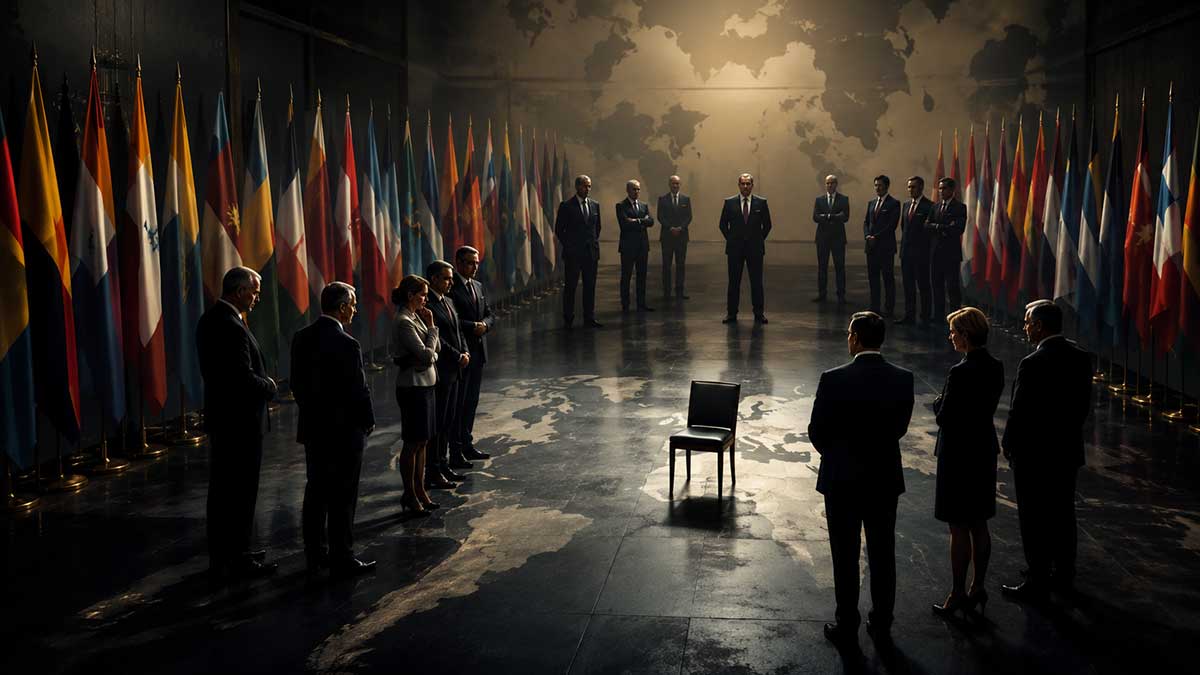
Nick Sasaki turned from China and the Pacific to the countries standing beside America.
“The National Defense Strategy says allies must carry more of the burden,” Nick began. “Europe must do more for its own defense. Japan and South Korea must play larger roles in Asia. NATO must spend more. Partners must become stronger, more capable, and less dependent.”
He paused.
“To one side, this sounds fair. Why should America carry so much of the cost? But to another side, it raises a troubling question: are allies being treated as genuine partners, or as front-line tools in a larger great-power strategy?”
At the table sat Dwight D. Eisenhower, Václav Havel, Empress Myeongseong, and Hannah Arendt.
Nick continued.
“So our fourth question is this: Are allies partners, dependents, or pawns?”
Question 1: When powerful nations ask allies to “do more,” are they inviting shared responsibility or shifting risk onto smaller countries?
Dwight D. Eisenhower:
Shared responsibility is necessary. An alliance cannot survive if one nation pays, arms, plans, and bleeds while others contribute only words. In war and deterrence, credibility depends on real capacity.
A free alliance must be made of capable members. If Europe wants security, Europe must invest in security. If Asian allies live near serious threats, they must develop real defense strength. Dependence creates weakness, and weakness invites danger.
But shared responsibility must not become reckless delegation. A great power cannot simply push risk outward and call it fairness. Leadership means bearing responsibility too.
Václav Havel:
A small nation may welcome protection, but it must never lose its dignity. When a powerful ally says, “Do more,” the small nation must ask: do more for what? For our freedom? For our region? Or for a strategy written elsewhere?
Responsibility is noble when it grows from consent and truth. It becomes dangerous when smaller nations are pressured to absorb danger for slogans they did not create.
A real partner is listened to. A dependent is instructed. A pawn is moved.
Empress Myeongseong:
Small nations know the weight of promises. A stronger country may say, “We will protect you.” Another may say, “We are your natural friend.” Another may say, “Join us and survive.”
But the small nation must ask what happens when the great powers change their minds. What happens when our land becomes the buffer, our ports become the prize, our people become the cost?
If “do more” means strengthen ourselves, it may be wise. If it means stand in the first line while others decide the war, it is a warning.
Hannah Arendt:
Responsibility cannot be transferred by language. If a powerful state creates a strategic system and then asks smaller allies to bear its consequences, it must not hide behind words like partnership.
Political responsibility requires public judgment. Citizens in allied nations must understand what they are being asked to support. Are they defending their own freedom? Are they serving a regional balance? Are they becoming instruments of another state’s policy?
The danger is thoughtlessness: everyone performs a role, no one asks who designed the stage.
Nick Sasaki:
“So shared burden can be fair. But the moral issue is who defines the burden, who carries the danger, and who gets to say no.”
Question 2: Can countries like Japan, South Korea, Taiwan, Ukraine, and NATO states remain partners with agency, or do they become front-line tools in a larger strategy?
Havel:
They can remain partners only if they keep moral and political agency. A small or medium nation must never let fear turn it into someone else’s symbol. The world may call it a front line of freedom, but it is still a home.
Agency means speaking truth even to friends. It means refusing lies from enemies and refusing illusions from allies. It means asking whether a policy protects life or merely prolongs danger.
Freedom is not only being rescued from outside control. Freedom is also the ability to think and act with one’s own conscience.
Eisenhower:
Agency requires capability. A nation that cannot defend itself has limited choices. That is hard truth. Japan, South Korea, Taiwan, Ukraine, and NATO states must have serious defense, strong civil institutions, and public will.
But allies must coordinate. Individual agency cannot mean strategic chaos. The purpose of an alliance is to align plans before danger arrives.
The best alliance is one where every member contributes, every member is heard, and every member understands the risks.
Empress Myeongseong:
A nation caught between giants must master inner unity. If one faction says, “Trust this empire,” another says, “Trust that empire,” and another says, “Trust no one,” the country becomes weak before foreign armies arrive.
Agency begins at home. A divided court invites manipulation. A divided people becomes easy to pressure.
Japan, Korea, Taiwan, Ukraine, and NATO states must ask not only, “Who will defend us?” They must ask, “Are we united enough to survive being defended?”
Arendt:
Agency also requires public truth. Citizens must not be treated as spectators of decisions made by security elites. War, bases, sanctions, alliances, troop deployments, and defense spending are not technical matters alone. They are political choices affecting the life of the whole people.
A nation becomes a front-line tool when its citizens are trained to accept necessity without judgment. They are told, “There is no choice.” But politics begins when people ask what choices remain.
A partner deliberates. A pawn obeys necessity.
Nick Sasaki:
“Maybe countries remain partners when they retain three things: capacity to defend themselves, unity to resist manipulation, and public truth to debate the risks.”
Question 3: What does loyalty mean in an alliance when the strongest member can change policy, abandon commitments, or define the enemy for everyone else?
Eisenhower:
Loyalty must be mutual. The strongest member has obligations precisely because it is strongest. It must not treat allies as disposable, nor should allies treat America as an endless insurance policy.
Commitments must be credible, but they must also be wise. A promise made too casually can lead to disaster. A promise broken too easily can destroy trust.
Alliances require constant maintenance: military planning, diplomacy, honesty, and respect. Loyalty is not blind obedience. It is disciplined commitment to a shared purpose.
Havel:
Loyalty without truth is not loyalty. It is submission. A smaller nation should be loyal to allies who defend human dignity and political freedom, but it must also be loyal to its own conscience.
If the strongest member defines every enemy, every danger, and every duty, then the alliance becomes morally hollow. The smaller countries become performers in a script written by power.
True loyalty allows disagreement. It allows the weak to speak honestly to the strong.
Empress Myeongseong:
For a small nation, loyalty must never mean surrendering judgment. Great powers change. Leaders change. Treaties are interpreted. Interests shift. Today’s promise may become tomorrow’s regret.
A wise small nation remembers friendship, but prepares for abandonment. It receives help, but builds its own strength. It honors allies, but does not place its entire soul in foreign hands.
The strongest alliance is not the one that demands dependence. It is the one that helps a smaller nation stand more firmly on its own feet.
Arendt:
Loyalty becomes dangerous when it replaces thinking. In political life, people often hide behind roles: soldier, official, ally, citizen, expert. They say, “I only followed the alliance.” But responsibility cannot be dissolved into structure.
The strongest member may define the enemy, but each member still bears responsibility for accepting that definition.
An alliance among free peoples must remain a space of judgment. If judgment disappears, the alliance may preserve security while weakening freedom.
Nick Sasaki:
Nick looked around the table.
“An ally can be a partner, a dependent, or a pawn. The difference may not be visible from the outside. The uniforms look the same. The joint statements sound the same. The flags stand side by side.”
He paused.
“But the inner reality is different.”
He looked at Eisenhower.
“A partner contributes and is heard.”
He looked at Havel.
“A partner keeps conscience.”
He looked at Empress Myeongseong.
“A partner remains united and does not surrender its future.”
He looked at Arendt.
“A partner continues to think.”
Nick closed the topic.
“Perhaps the National Defense Strategy asks a fair question: why should allies not do more? But the deeper question is what they are being asked to become. Stronger nations? Freer partners? Or forward positions in a conflict whose true shape they did not choose?”
The room grew quiet.
“Maybe the test of an alliance is not whether the strongest nation can command loyalty. It is whether the smallest nation can still speak truth without fear of being abandoned.”
Topic 5: Does Rebuilding the Defense-Industrial Base Create Security, or Permanent War Incentives?
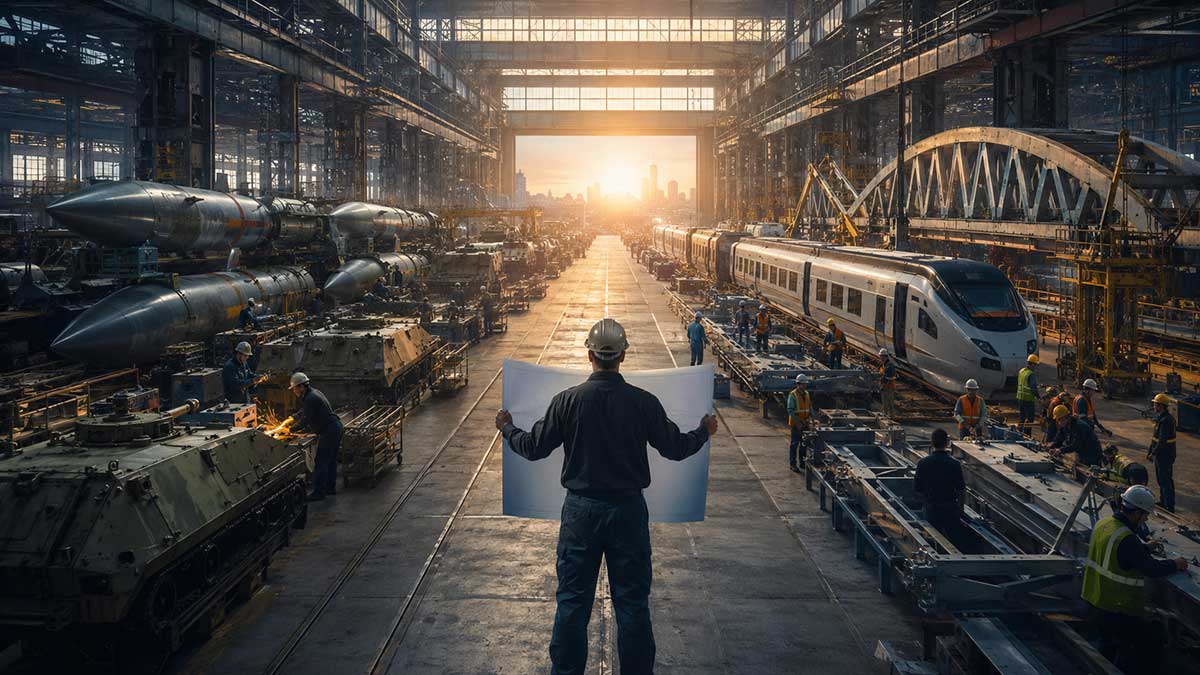
Nick Sasaki turned to the final question.
“The National Defense Strategy calls for rebuilding America’s defense-industrial base. It speaks of military readiness, industrial capacity, manufacturing strength, supply chains, munitions, shipyards, advanced weapons, and national mobilization.”
He paused.
“To one side, this sounds necessary. A nation that cannot build its own weapons, ships, drones, aircraft, and ammunition cannot defend itself for long. But to another side, it raises a troubling question: what happens when the economy, politics, technology, and employment become tied to the production of weapons?”
At the table sat Franklin D. Roosevelt, Smedley Butler, John Maynard Keynes, and Martin Luther King Jr.
Nick continued.
“So our final question is this: Does rebuilding the defense-industrial base create security, or permanent war incentives?”
Question 1: When a nation rebuilds its weapons industry in the name of deterrence, how can it prevent that industry from needing future enemies to justify itself?
Franklin D. Roosevelt:
A nation facing danger must be able to produce. In my time, the arsenal of democracy was not a slogan of greed. It was a necessity of survival. Factories, workers, engineers, ships, aircraft, and munitions were needed because tyranny was armed and advancing.
A free people cannot rely on wishful thinking when hostile powers prepare for war. Deterrence requires visible capacity. If aggressors know a democracy cannot sustain a long struggle, they will test it.
But the answer to your concern is civilian control. Industry must serve democratic policy. It must not define policy. Weapons production is justified when it protects freedom from real danger. It becomes corrupt when danger is manufactured to protect production.
Smedley Butler:
That is exactly the problem. Once fortunes are built around weapons, those fortunes become political. The factories do not vote, but the owners do. The lobbyists do. The contractors do. The campaign donors do. The think tanks do. The newspapers supported by defense money do.
War becomes a racket when the people who profit do not pay the real price. The soldier pays. The family pays. The taxpayer pays. The country pays in debt and sorrow.
If a nation wants to prevent the weapons industry from needing enemies, then strip war of private profit. Make every contractor’s books public. Cap profits during war. Make the people who call for conflict bear its cost. Then you will see how many enemies suddenly become negotiable.
John Maynard Keynes:
The danger is structural. A defense industry creates employment, regional dependency, political influence, and technical specialization. Once communities rely on military contracts, opposition to militarization becomes economically painful.
The solution is not simply moral condemnation. Workers need livelihoods. Engineers need projects. Factories need orders. If society says, “Stop building weapons,” but offers no serious economic transition, militarization will continue.
A nation must design a peace-capable industrial base: factories that can produce both defense goods and civilian infrastructure, engineers who can build military systems but also energy grids, railways, hospitals, housing, and climate resilience. The productive capacity should remain, but its purpose must not be trapped inside war.
Martin Luther King Jr.:
A nation reveals its soul by what it funds with urgency. When schools decay but weapons systems expand, when neighborhoods suffer but bombs are perfected, when poverty is treated as unfortunate but war production is treated as sacred, the moral order has been inverted.
The defense industry will always claim necessity. Sometimes there is necessity. But a nation must ask: necessity for whom? Security for whom? Prosperity for whom?
A society prevents permanent war incentives only when it values human uplift with the same seriousness it gives to military readiness. A nation that can mobilize factories for war can mobilize compassion for peace.
Nick Sasaki:
“So deterrence may require production, but production can create its own appetite. The danger begins when the nation builds weapons to meet threats, and then begins needing threats to justify what it has built.”
Question 2: Can military production strengthen national security without quietly reshaping the economy, politics, and media around conflict?
Keynes:
It can, but only with strong public design. Defense spending must not become an uncontrolled substitute for industrial policy. A government may use defense contracts to preserve technical capacity, but it must not let the entire innovation system become dependent on conflict.
Military production shapes politics because it creates concentrated benefits and dispersed costs. A factory in one district creates jobs there. The cost is spread across the nation through debt and taxes. This gives defense firms political durability.
To limit this, contracts must be transparent, profits disciplined, and civilian investment equally ambitious. Otherwise military spending becomes the easiest form of government spending to defend.
Roosevelt:
Industry must be guided by national purpose. During a true emergency, speed matters. You cannot debate every rivet while enemies advance. But after the emergency, democratic government must restore balance.
The mistake is allowing wartime habits to become peacetime identity. Mobilization must be tied to clear objectives. If the objective is survival, build what survival requires. If peace returns, shift the industrial strength toward national renewal.
Factories that built tanks can build bridges. Shipyards that built warships can build commercial vessels. Scientists who solved military problems can solve public problems. The question is whether leadership has vision after the crisis.
Butler:
Media is part of the machinery. Citizens are sold fear. They are shown maps, threats, flags, enemies, and speeches about strength. Rarely are they shown profit margins, lobbying networks, stock prices, or the dead after the cameras leave.
Military production cannot remain contained if the people who benefit from it can shape public opinion. They will call critics weak. They will call peace naive. They will call restraint appeasement.
A democracy that does not follow the money will follow the drumbeat.
King:
Conflict reshapes the spirit before it reshapes policy. A nation that organizes its economy around war begins to organize its imagination around enemies. Children grow up under the shadow of emergency. Citizens learn to fear before they learn to love.
Media can magnify this fear. Politics can exploit it. Industry can profit from it. Soon the public mind becomes trained to accept military answers to human problems.
Security is more than the absence of invasion. It is the presence of justice, dignity, food, shelter, education, health, and hope. A nation may be heavily armed and still deeply insecure.
Nick Sasaki:
“Then the danger is not only that weapons are built. The danger is that the whole society begins to think in weapons: jobs, news, patriotism, elections, technology, and even identity.”
Question 3: Is an “arsenal of democracy” still noble when weapons manufacturing becomes a permanent economic engine rather than a temporary wartime necessity?
Roosevelt:
The phrase “arsenal of democracy” had nobility because it answered a specific crisis. Democracy was under threat. Nations were falling. People needed arms to resist conquest.
But permanence changes the meaning. A temporary arsenal can defend liberty. A permanent arsenal risks becoming a system that seeks purpose in conflict.
The moral task is to remember why the arsenal exists. It must serve democracy, not consume it. It must defend free society, not become the center around which free society revolves.
Butler:
Once it becomes permanent, the nobility is gone. Then it is business. Very profitable business. The speeches stay noble, but the contracts tell the real story.
If democracy needs weapons, build them. But do not pretend the contractors are saints. Do not let millionaires wrap themselves in the flag while privates come home broken.
An arsenal of democracy becomes a racket when democracy cannot question the arsenal.
Keynes:
Permanent defense production may appear economically useful because it provides demand, employment, research, and manufacturing discipline. But this is a poor substitute for a healthier public economy.
A nation can create full employment through constructive investment. It can build transportation, science, housing, energy, medicine, education, and cultural institutions. War production is not the only way to mobilize unused capacity.
The question is whether the state has the courage to spend for life with the same confidence it spends for war.
King:
An arsenal of democracy becomes morally empty if democracy itself becomes spiritually poor. What is the meaning of defending freedom abroad while neglecting human beings at home? What is the meaning of protecting civilization while allowing poverty, racism, despair, and loneliness to grow?
The triple evils I warned about—racism, poverty, and militarism—feed one another. Militarism drains resources from justice. Poverty makes recruitment easier. Racism makes it easier to disregard distant suffering.
A democracy worth defending must be visible in the lives of its people.
Nick Sasaki:
Nick looked at the table, then at the silent room.
“Perhaps a defense-industrial base is necessary. But necessity is not innocence.”
He turned to Roosevelt.
“It can protect democracy in moments of real danger.”
He turned to Butler.
“It can become a racket when profit hides behind patriotism.”
He turned to Keynes.
“It can preserve productive capacity, but it can also trap the economy inside military demand.”
He turned to King.
“And it can defend the nation’s borders while starving the nation’s soul.”
Nick paused.
“The deepest danger is not that a nation builds weapons. The deepest danger is that it forgets how to build anything else with the same urgency.”
He let that sentence sit.
“A nation that can mobilize for war can mobilize for schools. It can mobilize for hospitals. It can mobilize for energy, housing, infrastructure, mental health, family stability, and spiritual renewal. If it cannot, then the obstacle is not capacity. It is priority.”
The room grew quiet.
Nick closed the topic.
“Maybe the final test of the National Defense Strategy is not whether America can build more weapons. It almost certainly can. The deeper test is whether America can rebuild strength without becoming dependent on conflict, whether it can deter enemies without needing them, and whether it can remain a democracy whose greatest industry is not fear, but the flourishing of its own people.”
Final Thoughts
Final Thoughts by Prof. Jiang
The National Defense Strategy is important because it says out loud what many people still refuse to see.
America understands that the old world order is under pressure.
China is rising. Russia is resisting. Iran is defiant. The dollar system is being questioned. Allies are nervous. The Western Hemisphere is no longer taken for granted. The defense-industrial base is not strong enough for the level of conflict America may face.
So America is trying to reorganize itself.
It wants a secure hemisphere behind it.
It wants allies in Europe and Asia to carry more military responsibility.
It wants China contained before China becomes too strong to contain.
It wants the defense industry rebuilt so America can produce the weapons needed for long-term competition.
That is the logic of the strategy.
From the American point of view, this is common sense. Protect the homeland. Rebuild strength. Deter rivals. Stop allies from free-riding. Restore manufacturing. Prepare for a dangerous world.
But from the outside, it looks very different.
To Latin America, securing the Western Hemisphere can look like Washington saying, “Your sovereignty ends where our security begins.”
To China, deterrence can look like encirclement.
To allies, burden-sharing can look like being pushed closer to the front line.
To ordinary Americans, defense-industrial revival can look like jobs and strength, but it can also mean a future where more of the economy depends on enemies, weapons, and confrontation.
That is the danger.
A national defense strategy can begin as protection and slowly become a system that requires fear to keep functioning.
It can begin by saying, “We must be strong.”
Then it says, “We must control our neighborhood.”
Then it says, “We must contain our rival.”
Then it says, “Our allies must fight harder.”
Then it says, “Our factories must prepare for permanent conflict.”
At every step, the logic seems reasonable.
But taken together, the strategy creates a world in which everyone else feels threatened.
That is how great-power conflict expands.
Not necessarily through one crazy decision.
Not necessarily through one evil leader.
It expands through rational steps taken by frightened powers.
America says it is defending itself.
China says it is defending its rise.
Russia says it is defending its security.
Iran says it is defending its sovereignty.
Small nations say they are defending survival.
Everyone claims defense.
And that is precisely why the situation is so dangerous.
The deepest problem is not that America wants to be safe. The deepest problem is that America’s definition of safety may require too many other nations to accept limitation, dependence, or obedience.
That is where defense becomes empire.
That is where strategy becomes destiny.
And that is where the world becomes more unstable, not less.
So the final question is simple.
Can America rebuild strength without turning the world into a battlefield?
Can it protect the homeland without claiming the hemisphere?
Can it deter China without humiliating China?
Can it ask allies to do more without turning them into pawns?
Can it build weapons without building an economy that needs war?
If the answer is yes, then this strategy may protect America.
If the answer is no, then the National Defense Strategy is not just a defense document.
It is a roadmap to a more dangerous world.
Final Thoughts by Rev. Moon
The National Defense Strategy is not only a document about military planning.
It is a mirror.
It shows what America fears. It shows what America wants to protect. It shows what America thinks its enemies are. It shows how America sees the Western Hemisphere, China, allies, industry, and war.
But it does not fully answer the deeper question.
What is America’s soul?
If America has no moral center, then every strategy will eventually become self-interest. Homeland defense will become fear. Hemispheric security will become control. China containment will become hatred. Alliance leadership will become manipulation. Defense industry will become profit from conflict.
This is why strategy must be judged by conscience.
America cannot defeat communism only with missiles. America cannot defeat tyranny only with ships. America cannot defeat propaganda only with official statements. America cannot defeat moral confusion only with elections.
America must become morally stronger.
Communism rose because many people saw injustice, poverty, exploitation, and hypocrisy. It gave them a false answer, but it spoke to real wounds. If America wants to defeat communism and every new form of anti-God ideology, America must not only condemn it. America must offer something better.
America must show a society where freedom does not become selfishness.
Where capitalism does not become greed.
Where religion does not become empty ritual.
Where media does not become ideological warfare.
Where family is honored.
Where young people have purpose.
Where truth is stronger than propaganda.
Where love is stronger than resentment.
When I created media institutions, including The Washington Times, my purpose was to strengthen a public voice that could resist one-sided ideology. Media shapes the mind of a nation. If media loses truth, politics loses wisdom. If politics loses wisdom, defense strategy loses moral direction. If defense strategy loses moral direction, strength becomes dangerous.
America must defend itself, yes.
But America must defend more than territory.
It must defend truth.
It must defend religious freedom.
It must defend the family.
It must defend moral education.
It must defend honest media.
It must defend the dignity of every person as a child of God.
Then America’s strength can serve peace.
But if America only builds weapons, pressures allies, controls regions, and treats rivals as permanent enemies, then it will deepen the crisis. It may call this security, but other nations will experience it as domination. Fear will answer fear. Strategy will answer strategy. Weapons will answer weapons.
This is not the path to peace.
The path to peace begins when powerful nations learn that strength must serve love.
Not sentimental love.
Responsible love.
Disciplined love.
God-centered love.
A love strong enough to resist evil, but humble enough not to become evil.
That is the test for America.
Can America oppose communism without hating the people trapped inside it?
Can America challenge China without humiliating China?
Can America protect the Western Hemisphere without treating its neighbors as servants?
Can America ask allies to share responsibility without turning them into pawns?
Can America rebuild industry without making war the center of its economy?
If America can do this, then the National Defense Strategy may become part of a larger providential mission.
But if America cannot do this, then the strategy may protect the body of the nation while leaving its spirit undefended.
And a nation whose spirit is undefended cannot lead the world for long.
Short Bios:
Donald Trump — U.S. president associated with America First, border security, peace through strength, industrial revival, and a more direct national-interest approach to foreign policy.
Noam Chomsky — Linguist, political critic, and public intellectual known for his critiques of U.S. foreign policy, propaganda, empire, and hidden power structures.
George Washington — First U.S. president and revolutionary leader who warned against foreign entanglements, factional passions, and the dangers facing a young republic.
Reinhold Niebuhr — American theologian and public thinker known for moral realism, national self-deception, sin, pride, justice, and the limits of political innocence.
Theodore Roosevelt — U.S. president associated with naval strength, the Roosevelt Corollary, assertive hemispheric policy, and the belief that great powers must act decisively.
Simón Bolívar — South American independence leader who fought Spanish imperial rule and became a symbol of Latin American sovereignty and resistance to foreign domination.
John Quincy Adams — U.S. president and diplomat known for supporting American independence while warning against crusading foreign policy and unnecessary intervention.
Alfred Thayer Mahan — Naval historian and strategist known for his theory of sea power, maritime chokepoints, naval strength, trade routes, and strategic access.
Henry Kissinger — Diplomat and strategist known for balance-of-power diplomacy, U.S.-China opening, realism, great-power negotiation, and strategic restraint.
Zhou Enlai — Chinese premier and diplomat known for strategic patience, diplomacy, revolutionary statecraft, and representing China’s view of sovereignty and humiliation.
Lee Kuan Yew — Founding leader of modern Singapore, known for small-state realism, Asian balance, sovereignty, discipline, economic strategy, and survival between larger powers.
George Kennan — American diplomat and strategist known for containment, strategic patience, restraint, and caution against overextension in U.S. foreign policy.
Dwight D. Eisenhower — U.S. general and president who led Allied forces in World War II, managed Cold War alliances, and warned about the military-industrial complex.
Václav Havel — Czech playwright, dissident, and president who defended truth, human dignity, moral responsibility, and the rights of small nations under imperial pressure.
Empress Myeongseong — Korean queen whose life symbolizes the danger faced by smaller nations caught between rival empires and competing foreign pressures.
Hannah Arendt — Political philosopher known for her work on totalitarianism, responsibility, public judgment, bureaucracy, truth, and the dangers of thoughtless obedience.
Franklin D. Roosevelt — U.S. president during World War II who led American mobilization, framed the “arsenal of democracy,” and connected industry to national survival.
Smedley Butler — Decorated U.S. Marine Corps general who later became a sharp critic of war profiteering and famously described war as a racket.
John Maynard Keynes — British economist whose ideas shaped modern economic policy, war finance, public investment, debt management, and postwar economic order.
Martin Luther King Jr. — Civil rights leader and moral voice against racism, poverty, militarism, and the spiritual damage caused by societies that fund war over human uplift.
Rev. Sun Myung Moon — Founder of the Unification Movement, known for his strong anti-communist activism, interfaith vision, family-centered theology, and creation of media institutions such as The Washington Times to challenge ideological bias and promote a more balanced public voice.
Nick Sasaki — Creator of Imaginary Talks, where historical, spiritual, philosophical, and political voices meet in imaginary conversations about power, conscience, civilization, and the human future.
Leave a Reply