
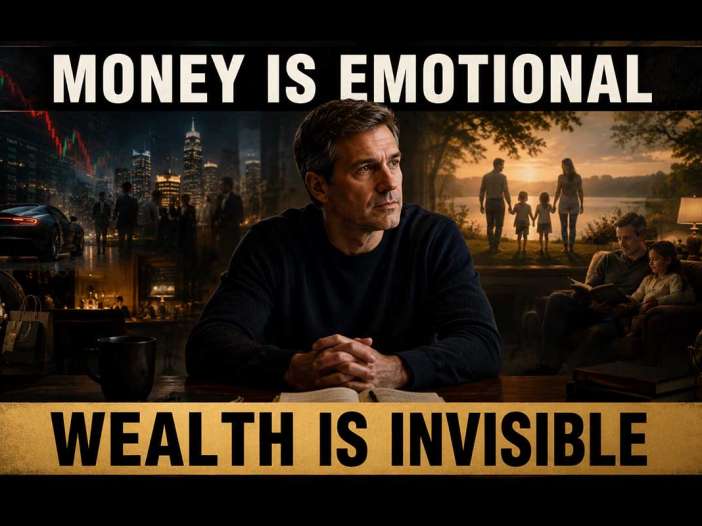
What if Morgan Housel and top financial thinkers revealed why intelligence alone cannot create wealth?
Introduction by Morgan Housel
When people think about money, they often think about numbers.
Interest rates. Investments. Income. Net worth. Market returns.
But after years of writing about finance, I realized something surprising: the biggest financial decisions are usually not mathematical. They are emotional.
Two people can earn the same income and end up in completely different places. One becomes calm and financially independent. The other remains anxious and trapped. The difference is often behavior, not intelligence.
Money touches survival, status, identity, childhood memory, fear, ambition, and comparison. That makes it deeply human.
This conversation is not really about getting rich quickly. It is about learning how to think clearly in a world filled with pressure, envy, uncertainty, and noise.
The people in this discussion each approach money differently, but together they reveal a shared truth:
Financial success is less about mastering spreadsheets and more about mastering yourself.
(Note: This is an imaginary conversation, a creative exploration of an idea, and not a real speech or event.)
Topic 1: Why Smart People Make Terrible Money Decisions

Opening — Nick Sasaki
A strange thing happens with money.
People can be brilliant in business, science, law, medicine, or technology, yet still make painful financial mistakes. They panic sell. They chase trends. They overspend to impress people they barely know. They confuse confidence with wisdom. They mistake a rising market for their own genius.
Morgan Housel’s great insight is simple: money is not only about numbers. It is about behavior.
Tonight, we ask why smart people can be so foolish with money.
Guests: Morgan Housel, Daniel Kahneman, Charlie Munger, Suze Orman, Naval Ravikant
Question 1: Why do intelligent people still make emotional money mistakes?
Morgan Housel:
Intelligence does not erase emotion. A person can understand compound interest and still panic when their portfolio drops 30%. Money touches survival, pride, family, status, and fear. That makes it different from solving a math problem.
Daniel Kahneman:
The mind has shortcuts. We are loss-averse. Losing $10,000 feels more painful than gaining $10,000 feels joyful. Intelligence can explain the bias, but it does not automatically remove it.
Charlie Munger:
Smart people get into trouble when they think being smart protects them. Overconfidence is deadly. A high IQ can make a person better at defending a bad idea.
Suze Orman:
Many money mistakes come from fear. People buy things to feel worthy. They avoid looking at debt because shame is painful. Until you face the emotional truth, the financial truth will not change.
Naval Ravikant:
Money mistakes often come from desire. You want what others have. You want speed. You want proof that you matter. Peace is a better financial strategy than envy.
Question 2: How much of personal finance is really psychology rather than math?
Morgan Housel:
The math is simple. Save. Invest. Avoid ruin. Let time work. The hard part is living through fear, temptation, greed, and boredom without breaking the plan.
Charlie Munger:
Most financial success comes from avoiding stupidity. Don’t envy. Don’t gamble. Don’t borrow too much. Don’t interrupt compounding. That is psychology in practical form.
Daniel Kahneman:
People do not experience money objectively. They compare it. They frame it. They attach stories to it. A bonus feels different from regular income, even if the amount is the same.
Suze Orman:
Personal finance is deeply emotional because money often represents safety. For many people, the real question is not “Can I afford this?” It is “Do I feel secure?”
Naval Ravikant:
The best money plan is the one that matches your nature. Some people can handle risk. Some cannot sleep at night. The right answer is not only mathematical. It must fit the person.
Question 3: What hidden beliefs from childhood shape our adult financial choices?
Suze Orman:
If you grew up hearing “we can’t afford it,” you may become fearful. If money was used as control, you may overspend to feel free. Childhood becomes the invisible script.
Morgan Housel:
Your personal history shapes what feels risky. Someone who lived through poverty may see cash as safety. Someone who grew up in a boom may see debt as normal. Neither is purely rational.
Daniel Kahneman:
Early experience becomes a mental reference point. People judge money not by absolute numbers, but by what those numbers mean compared with memory, family, and expectation.
Naval Ravikant:
Many people inherit ambition without examining it. They chase wealth to heal an old wound. The wiser path is asking, “What am I really trying to prove?”
Charlie Munger:
Good habits matter early. Thrift, patience, honesty, delayed gratification—these are not small things. They are the foundation. A bad inner model can destroy a great income.
Closing — Nick Sasaki
This topic reveals the heart of The Psychology of Money.
Smart people fail with money not because they lack facts, but because they underestimate themselves—their fear, ego, envy, shame, impatience, and need for approval.
Money exposes character.
The best financial wisdom may not begin with charts or formulas. It may begin with a quieter question:
What emotion is controlling my decision right now?
Topic 2: The Hidden Difference Between Being Rich and Being Wealthy

Opening — Nick Sasaki
One of Morgan Housel’s most memorable points is that wealth is often invisible.
We see the car, the watch, the vacation, the house, the lifestyle. But those things may show spending, not wealth.
Real wealth is the money not spent. The options preserved. The quiet account balance. The freedom nobody claps for.
Tonight, we ask why people confuse looking rich with becoming free.
Guests: Morgan Housel, Warren Buffett, Ramit Sethi, Thomas J. Stanley, Dave Ramsey
Question 1: Why do people confuse visible spending with real financial success?
Morgan Housel:
People judge money by what they can see. But the richest part of someone’s life may be hidden. A paid-off home, a quiet investment account, no debt, and the ability to walk away from a bad job do not photograph well.
Warren Buffett:
A car can tell you someone spent money. It cannot tell you whether they have money. The scorecard people admire is often the wrong one.
Ramit Sethi:
People want symbols. They want the dinner, the trip, the apartment, the clothes. That is not always bad. The problem is when they buy symbols without knowing what their rich life actually means.
Thomas J. Stanley:
Many millionaires live far more quietly than people expect. They drive ordinary cars, avoid status neighborhoods, and keep expenses below income. The appearance of wealth can be very misleading.
Dave Ramsey:
A lot of people are broke at a higher level. Bigger house, bigger payment, bigger stress. They look successful from the road, but inside they are one emergency away from disaster.
Question 2: What does quiet wealth look like in daily life?
Thomas J. Stanley:
Quiet wealth looks ordinary. It is a family that budgets carefully, invests consistently, avoids showing off, and keeps control of lifestyle. The neighbor may never know.
Morgan Housel:
It looks like endurance. You keep your savings, avoid panic, and let time work. Wealth is the gap between what you could spend and what you choose not to spend.
Warren Buffett:
It looks like independence. You do not need applause. You do not need to impress anyone. You just keep making sensible decisions for a long time.
Ramit Sethi:
Quiet wealth can still include joy. It is not about denying yourself everything. It is about spending extravagantly on what you truly love and cutting ruthlessly on what you do not care about.
Dave Ramsey:
It looks like peace. No car payment. No credit card debt. Emergency fund ready. You sleep better when nobody owns your paycheck before you receive it.
Question 3: How can people resist status pressure without feeling left behind?
Ramit Sethi:
Define your own rich life clearly. When you know what matters to you, it becomes easier to ignore what does not. Maybe you love travel but do not care about cars. Great. Spend there, cut elsewhere.
Morgan Housel:
Understand that comparison never ends. There will always be someone richer, younger, luckier, louder. The goal is not to win the status game. The goal is to leave the game.
Dave Ramsey:
You need boundaries. Do not buy things you cannot afford to impress people who are not paying your bills. Freedom feels better than fake approval.
Warren Buffett:
Inner scorecard matters. If your decisions depend on outside applause, money will never satisfy you. You need to know what you value before the crowd tells you what to want.
Thomas J. Stanley:
Many people who build wealth are comfortable being underestimated. That is a strength. They would rather own assets quietly than display liabilities loudly.
Closing — Nick Sasaki
This topic turns financial success upside down.
Being rich can be loud. Being wealthy is often quiet.
Rich may mean high income, visible spending, and social admiration. Wealth means stored freedom, fewer obligations, more choices, and less fear.
The deeper lesson is simple:
The money you do not spend may be the money that saves your future.
Topic 3: Why Freedom Is the Real Purpose of Money

Opening — Nick Sasaki
Money is easy to misunderstand.
People think it is mainly about buying better things: a bigger house, a nicer car, a more impressive lifestyle.
But Morgan Housel argues that the highest dividend money pays is control over your time.
That means the ability to say no. The ability to rest. The ability to choose your work. The ability to be with your family when they need you.
Tonight, we ask what kind of freedom money can truly buy.
Guests: Morgan Housel, Vicki Robin, Tim Ferriss, Mr. Money Mustache, Seneca
Question 1: What kind of freedom does money actually buy?
Morgan Housel:
Money buys control. Not perfect control, but more control than you had before. It lets you avoid desperate decisions. It gives you room to wait, think, and choose.
Vicki Robin:
Money buys life energy back. Every dollar represents time, attention, and effort. When you spend unconsciously, you trade pieces of your life without noticing.
Tim Ferriss:
Money can buy optionality. You can test a new business, take a sabbatical, hire help, or design a life that does not require waiting until retirement to enjoy freedom.
Mr. Money Mustache:
Money buys distance from dependency. When your expenses are low and your savings are high, you do not need to obey every paycheck, every boss, every emergency.
Seneca:
The person who needs little is already rich. Wealth is not freedom if desire keeps multiplying. Freedom begins when your wants become manageable.
Question 2: When does earning more stop improving life?
Vicki Robin:
Earning more stops helping when the extra money no longer brings extra fulfillment. Many people keep climbing without asking whether the climb still serves their life.
Morgan Housel:
There is a point where more money becomes less about comfort and more about comparison. Once basic needs, security, and dignity are covered, the next dollar may mostly feed ego.
Seneca:
No amount of wealth satisfies the person who has not disciplined desire. If the appetite grows with the income, the person remains poor in spirit.
Tim Ferriss:
The question is not only how much you earn. It is what your income costs you. If more money requires losing health, family, sleep, and freedom, the math may be bad.
Mr. Money Mustache:
Lifestyle inflation is the trap. People double their income and double their spending, then wonder why they still feel stuck. The goal is not more income forever. The goal is enough plus freedom.
Question 3: How should people balance security, ambition, and peace?
Morgan Housel:
The balance comes from knowing what game you are playing. Some people want maximum returns. Others want maximum peace. Both can be reasonable, but confusing the two causes pain.
Tim Ferriss:
Ambition should serve life design, not consume it. Build income streams, reduce unnecessary obligations, and create space to experiment. Security and adventure do not have to be enemies.
Vicki Robin:
Ask whether your spending reflects your values. Peace grows when money decisions line up with what you truly care about: health, relationships, service, creativity, and time.
Mr. Money Mustache:
Keep the machine simple. Spend less than you earn, invest the gap, avoid debt, and stop buying things that make you weaker. That creates both security and peace.
Seneca:
Ambition without wisdom becomes slavery. Security without courage becomes fear. Peace comes when the soul is not ruled by either greed or panic.
Closing — Nick Sasaki
This topic shows why money is not only a financial tool. It is a life tool.
The real purpose of money is not to look successful. It is to gain space.
Space to think.
Space to choose.
Space to care for the people you love.
Space to live without constant fear.
The deeper lesson is this:
Money becomes meaningful when it gives your life back to you.
Topic 4: Luck, Risk, and the Myth of Self-Made Success

Opening — Nick Sasaki
Success stories often sound cleaner than real life.
Someone works hard, makes smart choices, takes bold risks, and wins. That story feels inspiring. But Morgan Housel reminds us that every success story has invisible forces behind it: timing, family, birthplace, market cycles, health, mentors, and random events nobody controlled.
Tonight, we ask how much of financial success comes from skill, and how much comes from luck and risk.
Guests: Morgan Housel, Nassim Nicholas Taleb, Malcolm Gladwell, Annie Duke, Howard Marks
Question 1: How much success comes from skill, and how much comes from timing?
Morgan Housel:
Skill matters. Discipline matters. But timing matters more than people like to admit. Someone who invested during a long bull market may look brilliant. Someone equally smart who began before a crash may look foolish. The lesson is humility.
Nassim Nicholas Taleb:
People mistake survivorship for wisdom. We interview the winners and forget the thousands who made similar choices and disappeared. Randomness often wears a suit and calls itself strategy.
Malcolm Gladwell:
Success is rarely isolated. It grows out of culture, opportunity, family support, timing, and access. We love individual hero stories, but the background often explains more than the hero admits.
Annie Duke:
A good decision can have a bad outcome. A bad decision can have a good outcome. People confuse outcome quality with decision quality. That is one of the biggest mistakes in money and life.
Howard Marks:
Markets teach this repeatedly. You can be early and look wrong. You can be reckless and look smart for a season. Over time, skill matters, but timing can dominate the short run.
Question 2: Why do people underestimate risk after winning?
Annie Duke:
Winning creates a dangerous story: “I knew it all along.” Once people believe that, they stop reviewing their process. They forget that uncertainty was present before the result.
Morgan Housel:
Success lowers your guard. After winning, people may assume the world is more predictable than it is. But risk is what you do not see. The danger is greatest when confidence rises faster than wisdom.
Howard Marks:
Good times make people aggressive. Risk looks lowest when prices are highest and optimism is strongest. That is exactly when future returns may be weaker and mistakes become expensive.
Nassim Nicholas Taleb:
The turkey is fed every day and believes humans are generous. Then Thanksgiving arrives. Past comfort can be the evidence that blinds you to future ruin.
Malcolm Gladwell:
Human beings build narratives from recent experience. If the last chapter was victory, we expect the next chapter to reward the same behavior. But context changes.
Question 3: How can humility make someone better with money?
Howard Marks:
Humility makes you respect cycles. You do not assume today’s conditions will last forever. You leave room for error, control risk, and avoid betting your future on one forecast.
Morgan Housel:
Humility lets you say, “I might be wrong.” That sentence can save you. It leads to diversification, savings, patience, and realistic expectations.
Annie Duke:
Humility improves decision-making because it keeps learning open. When you admit uncertainty, you ask better questions: What would change my mind? What could I be missing?
Malcolm Gladwell:
Humility helps people see the system around them. It encourages gratitude instead of arrogance. It reminds winners that their path included help, timing, and circumstances beyond their control.
Nassim Nicholas Taleb:
True humility is not weakness. It is survival intelligence. You avoid fragility. You do not build a life that collapses from one surprise.
Closing — Nick Sasaki
This topic challenges the most comforting money story: “I succeeded because I deserved it.”
Maybe partly. But no one succeeds alone. No one controls all risk. No one sees every hidden variable.
The wiser financial life begins with gratitude, caution, and room for error.
The deeper lesson is this:
Success should make us thankful, not arrogant.
Topic 5: The Quiet Miracle of Patience and Compounding
Opening — Nick Sasaki
Patience sounds simple until money is involved.
People want fast results. Fast income. Fast investing wins. Fast proof that they are ahead.
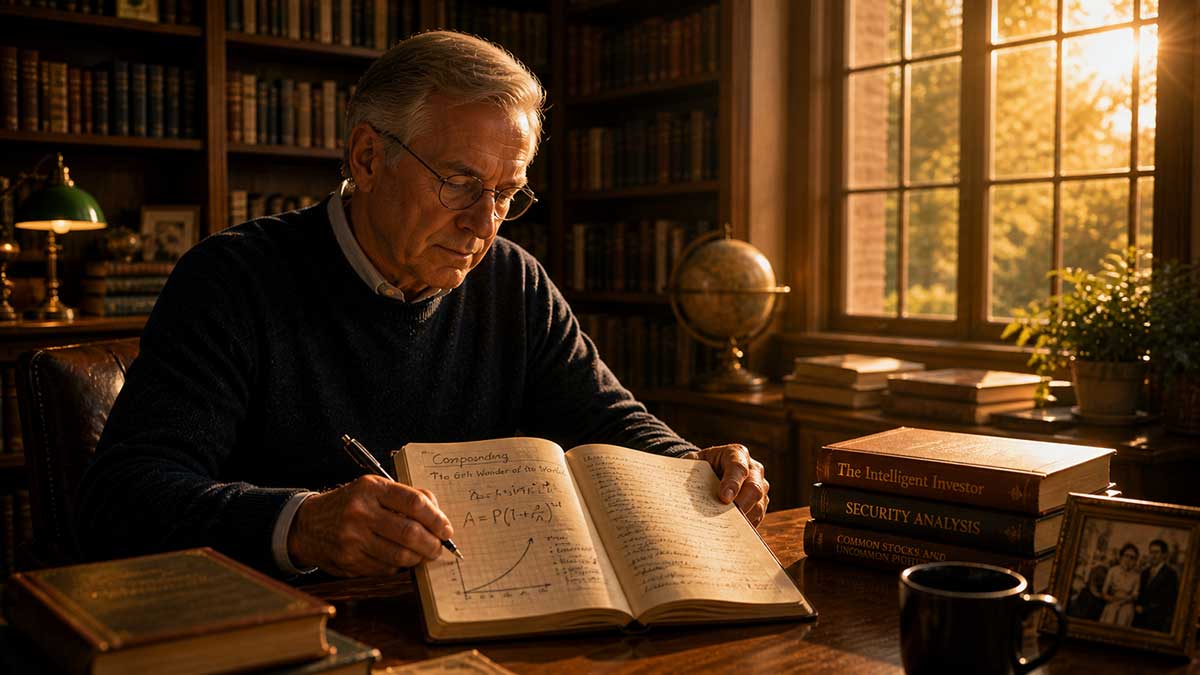
But Morgan Housel reminds us that the greatest financial force is usually slow, quiet, and almost invisible at first: compounding.
Tonight, we ask why patience is so hard, and why the people who endure often win.
Guests: Morgan Housel, Warren Buffett, John Bogle, Ray Dalio, Benjamin Graham
Question 1: Why is patience so hard when compounding is so powerful?
Morgan Housel:
Compounding is hard because it looks unimpressive for a long time. People quit before the curve becomes visible. The greatest results often come after years of boredom.
Warren Buffett:
You cannot speed up time. A good business, a good habit, or a good investment needs years. Most people want the harvest without waiting for the season.
John Bogle:
The market rewards patience, but the industry rewards activity. There is always someone telling you to trade, switch, chase, or react. Staying the course is simple, but not easy.
Ray Dalio:
People struggle with patience because emotion rises during cycles. When things go up, greed says buy more. When things fall, fear says run. The disciplined person studies patterns instead of obeying impulses.
Benjamin Graham:
Patience requires a margin of safety. If you buy with judgment and avoid overpaying, you give time a better chance to work in your favor.
Question 2: What destroys long-term financial plans the most?
John Bogle:
Costs, speculation, and impatience. Investors often lose not because the market failed them, but because they interfered too much with their own plan.
Morgan Housel:
The biggest threat is a plan that only works in good times. Life brings job loss, illness, market crashes, family needs, and surprise expenses. A plan must survive reality.
Benjamin Graham:
Overconfidence is dangerous. When investors forget the difference between investing and speculation, they begin depending on favorable guesses rather than sound judgment.
Ray Dalio:
Ignoring cycles destroys people. Debt feels easy when conditions are good. Then the cycle turns, and what looked manageable becomes pressure. Long-term plans need balance.
Warren Buffett:
Trying to get rich too quickly can ruin the chance to get rich slowly. Leverage, envy, and impatience have destroyed many capable people.
Question 3: How can ordinary people build wealth without chasing the next big thing?
Warren Buffett:
Buy productive assets, keep costs low, avoid debt that can hurt you, and let time work. You do not need extraordinary intelligence. You need temperament.
John Bogle:
Own the market broadly, keep fees low, invest consistently, and stay the course. The simple path is often better than the exciting one.
Morgan Housel:
Build a plan around endurance. Save more than you think you need. Expect surprises. Do not need the highest return. Need returns you can actually stick with.
Ray Dalio:
Diversify. Know that different assets perform differently in different environments. The goal is not to predict perfectly, but to avoid being destroyed by one wrong view.
Benjamin Graham:
Think like an owner, not a gambler. Demand value, control emotion, and never confuse popularity with safety.
Closing — Nick Sasaki
This topic brings the book’s wisdom down to one quiet truth:
Most financial miracles do not feel miraculous while they are happening.
They feel slow. Repetitive. Boring. Almost invisible.
But over time, patience becomes strength. Savings become freedom. Small returns become large results. Good habits become a different life.
The deeper lesson is this:
You do not need to beat time. You need to let time work for you.
Final Thoughts by Morgan Housel
If there is one lesson I hope people remember, it is this:
A good financial life is not built only by maximizing returns. It is built by maximizing endurance.
Can you survive hard times without panic?
Can you avoid envy when others appear ahead?
Can you save consistently without applause?
Can you define what “enough” means before greed defines it for you?
Those questions matter more than predicting the next market trend.
Wealth is valuable because it creates freedom. Freedom to think. Freedom to rest. Freedom to spend time with people you love. Freedom to say no to things that damage your peace.
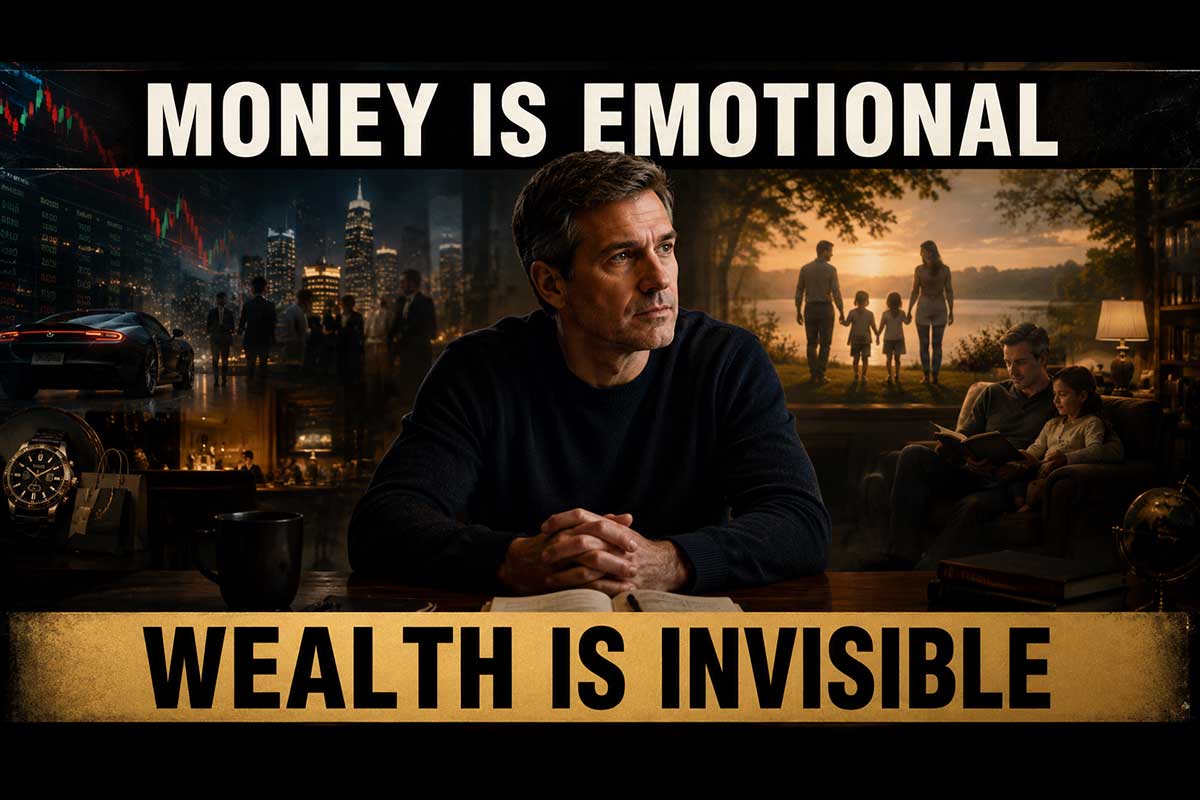
The strange thing about money is that the most important parts are often invisible.
Patience is invisible.
Discipline is invisible.
Savings are invisible.
Emotional control is invisible.
Yet those invisible habits quietly shape entire lives.
The goal is not to become the richest person in the room.
The goal is to build a life where money serves your values instead of controlling them.
Short Bios:
Morgan Housel
Financial writer and author of The Psychology of Money, known for explaining how behavior, emotion, and long-term thinking shape financial success more than technical knowledge.
Daniel Kahneman
Nobel Prize-winning psychologist whose work on cognitive bias and decision-making transformed behavioral economics.
Charlie Munger
Vice chairman of Berkshire Hathaway and longtime partner of Warren Buffett, respected for his blunt wisdom on investing, psychology, and human behavior.
Suze Orman
Personal finance expert focused on emotional financial healing, debt reduction, retirement planning, and financial security.
Naval Ravikant
Entrepreneur and thinker known for combining ideas about wealth creation, freedom, leverage, happiness, and modern life.
Warren Buffett
Legendary investor and CEO of Berkshire Hathaway, famous for value investing, patience, and long-term compounding.
Ramit Sethi
Author of I Will Teach You to Be Rich, known for practical advice about conscious spending and designing a “rich life.”
Thomas J. Stanley
Researcher and author who revealed that many wealthy people live modest, disciplined lives far from public attention.
Dave Ramsey
Financial personality known for debt-free living principles and practical budgeting advice.
Vicki Robin
Co-author of Your Money or Your Life, focused on the connection between money, meaning, and life energy.
Tim Ferriss
Author of The 4-Hour Workweek, known for lifestyle design, productivity, and alternative approaches to work and freedom.
Mr. Money Mustache
Influential advocate of financial independence through frugality, investing, and intentional living.
Seneca
Ancient Roman Stoic philosopher whose writings on desire, simplicity, and peace continue to influence modern thought.
Nassim Nicholas Taleb
Author of The Black Swan, known for his work on uncertainty, randomness, and fragility in financial systems.
Malcolm Gladwell
Writer known for exploring hidden social patterns behind success, opportunity, and human behavior.
Annie Duke
Decision-making expert who studies uncertainty, probability, and judgment under pressure.
Howard Marks
Co-founder of Oaktree Capital Management, respected for his writings on market cycles, risk, and investor psychology.
John Bogle
Founder of Vanguard and pioneer of low-cost index investing for ordinary investors.
Ray Dalio
Founder of Bridgewater Associates, known for macro investing, economic cycles, and principles-based thinking.
Benjamin Graham
Father of value investing and author of The Intelligent Investor, emphasizing discipline and margin of safety.
Leave a Reply