
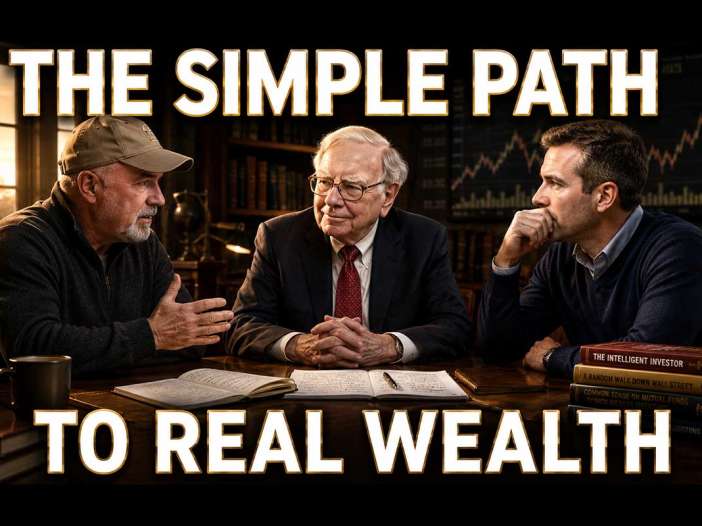
What if J. L. Collins and top investing legends revealed why simplicity beats Wall Street complexity?
Introduction by Nick Sasaki
Money is one of the most emotional forces in human life.
People fight over it, fear it, chase it, hide it, worship it, and sometimes destroy themselves trying to obtain it. Entire societies quietly organize around debt, status, consumption, and comparison.
Yet beneath all the noise, the deeper human longing is usually much simpler:
People want peace.
They want enough security to sleep without fear. Enough freedom to make honest decisions. Enough stability to care for the people they love. Enough margin to breathe.
In The Simple Path to Wealth, J. L. Collins presented a surprisingly simple argument:
Avoid unnecessary debt.
Save aggressively.
Invest consistently in broad index funds.
Ignore market noise.
Keep your financial life simple.
Let time work.
At first glance, this may sound like ordinary financial advice.
But the deeper we explore it, the more it becomes a conversation about human psychology, identity, fear, discipline, ego, freedom, and purpose.
That is why tonight’s discussion brings together voices with very different philosophies:
- Dave Ramsey
- Suze Orman
- Robert Kiyosaki
- Elizabeth Warren
- Mr. Money Mustache
- Vicki Robin
- Ramit Sethi
- Morgan Housel
- John C. Bogle
- Warren Buffett
- Charlie Munger
- Benjamin Graham
- Burton Malkiel
- Charles D. Ellis
- William Bernstein
- Rick Ferri
- David Swensen
- Naval Ravikant
- Tim Ferriss
Some believe debt is nearly always dangerous.
Some see strategic leverage as useful.
Some focus on emotional healing.
Some focus on systems and economics.
Some emphasize discipline.
Others emphasize balance and meaning.
Yet all of them, in different ways, are wrestling with the same question:
How can a person build a financial life that creates freedom instead of fear?
Tonight is not merely about becoming rich.
It is about becoming less controlled by money itself.
(Note: This is an imaginary conversation, a creative exploration of an idea, and not a real speech or event.)
Topic 1: Avoid Debt

Participants
- J. L. Collins
- Dave Ramsey
- Suze Orman
- Robert Kiyosaki
- Elizabeth Warren
Opening
Nick Sasaki:
When people hear the word “wealth,” many immediately think of income, investments, luxury homes, or retirement accounts. Yet for millions of people, the first financial reality they wake up to every morning is debt.
Student loans. Credit cards. Medical bills. Car payments. Mortgages.
Debt has become so normalized that many people no longer ask whether it is helping or quietly controlling their lives.
Tonight, I want us to explore something deeper than financial advice alone.
At what point does debt stop being a useful tool and become a psychological, emotional, and even spiritual burden?
And perhaps more importantly:
What kind of freedom becomes possible once a person escapes it?
Question 1: When does debt stop being a financial tool and start becoming a form of bondage?
Dave Ramsey
Debt becomes bondage the moment your life choices are controlled by monthly payments.
People think freedom means making a lot of money. No. Freedom means keeping control over your decisions.
If you cannot leave a miserable job because your bills are too high, the debt owns part of your life.
If your marriage is constantly stressed by financial pressure, the debt is sitting at your dinner table every night.
What scares me most is how culturally accepted this has become. Entire generations think endless payments are just adulthood.
J. L. Collins
I see debt as dangerous mainly because it reduces flexibility.
Financial independence is really about options. Debt quietly removes options.
You become fragile. A job loss becomes terrifying. Economic downturns become personal crises. Risk-taking becomes harder.
Ironically, many people borrow money trying to feel secure, but the debt itself creates insecurity.
That is why simplicity matters so much to me. Simplicity creates resilience.
Robert Kiyosaki
I agree with much of this, but I think we should distinguish between productive debt and destructive debt.
Debt used to buy liabilities — expensive cars, luxury lifestyles, consumption — can trap people for decades.
But debt used to buy productive assets can create future cash flow and freedom.
The wealthy often use debt strategically.
The deeper issue is that most people are never taught financial education. So they borrow to consume instead of borrowing to produce.
Suze Orman
What I see underneath debt is often emotional pain.
People overspend because they are trying to soothe insecurity, loneliness, fear, or low self-worth.
Debt becomes emotional bondage before it becomes financial bondage.
You cannot heal a shopping addiction with spreadsheets alone. The emotional wound must also be addressed.
Many people buy things hoping to become someone else socially.
That desire creates endless financial pressure.
Elizabeth Warren
I think we should also recognize that many people are not in debt because they are careless.
Medical emergencies, housing costs, stagnant wages, and education expenses have placed enormous pressure on ordinary families.
Sometimes debt is survival.
A single illness can financially destroy even responsible households.
So I think we should be careful not to reduce every debt situation to morality or discipline alone. Economic structures matter too.
Question 2: Why do people often defend debt even when it quietly limits their freedom?
Robert Kiyosaki
Because consumer culture teaches people to confuse appearance with wealth.
Many people buy symbols of success long before building actual assets.
They want the lifestyle first.
Suze Orman
And emotionally, debt allows instant gratification.
People can purchase the feeling immediately and postpone the pain emotionally into the future.
That is very seductive psychologically.
Dave Ramsey
The culture has normalized being broke.
Car payments are normal. Credit card balances are normal. Massive student loans are normal.
But normal does not mean healthy.
Elizabeth Warren
Social pressure also plays a huge role.
Parents fear their children falling behind educationally or socially. Families feel pressure to maintain appearances.
Debt often becomes tied to dignity and survival.
J. L. Collins
Humans adapt to whatever surrounds them.
When debt becomes universal, people stop questioning it.
That normalization may be one of the most dangerous parts.
Question 3: How should a person rebuild confidence after years of living under debt pressure?
Dave Ramsey
Momentum matters.
People underestimate how important small wins are psychologically.
Pay off one debt. Then another. Confidence grows through action.
J. L. Collins
I would focus on reducing fragility first.
Simplify expenses. Build margin. Reduce dependence on constant income pressure.
Even small breathing room changes a person emotionally.
Elizabeth Warren
People also need compassion for themselves.
Financial struggle is not always personal failure.
Sometimes people are carrying burdens larger than any individual could easily manage.
Robert Kiyosaki
Education changes fear.
Once people understand assets, cash flow, investing, and leverage properly, they stop feeling powerless.
Knowledge creates confidence.
Suze Orman
And emotionally, forgiveness matters.
Shame keeps people trapped.
The moment a person becomes honest without self-hatred, healing can finally begin.
Closing
Nick Sasaki:
Tonight’s conversation revealed that debt is never just mathematical.
It affects freedom, identity, emotional stability, relationships, risk-taking, and even hope itself.
Some debt may build productive assets. Some debt may emerge from survival or crisis. Yet everyone here agreed on one important truth:
Debt becomes dangerous when it quietly takes away a person’s ability to choose their own life freely.
Perhaps the deepest form of wealth is not luxury or status.
Perhaps it is waking up in the morning without fear controlling your next decision.
Topic 2: Save Aggressively

Participants
- J. L. Collins
- Mr. Money Mustache
- Vicki Robin
- Ramit Sethi
- Morgan Housel
Opening
Nick Sasaki:
Many people think saving money is simply math.
Earn more. Spend less. Invest the difference.
But if it were that easy, far more people would be financially free.
The deeper challenge is emotional. Saving forces a person to confront desire, comparison, fear, lifestyle inflation, and the need to appear successful.
Tonight, we ask:
Is aggressive saving really about money, or is it about reclaiming control over life itself?
Question 1: Is saving money mainly a financial habit, or is it a spiritual discipline of self-control?
Vicki Robin
Saving begins as a financial habit, but it becomes a question of consciousness.
Every dollar represents life energy. You traded time, attention, and part of your limited life for that money.
So the question changes.
You stop asking, “Can I afford this?”
You begin asking, “Is this worth my life?”
That is where saving becomes deeper than budgeting.
Morgan Housel
Wealth is what you do not see.
People notice the car, the house, the vacation. They do not notice the money quietly invested, the freedom quietly growing, the options quietly preserved.
Saving requires emotional strength because humans naturally want visible proof of success.
The hard part is choosing invisible wealth over visible approval.
Mr. Money Mustache
A lot of modern spending is weakness dressed up as normal life.
People buy convenience, distraction, luxury, and upgrades because they are uncomfortable with simplicity.
Aggressive saving is not punishment.
It is waking up.
You discover that many things you thought you needed were just expensive habits.
Ramit Sethi
I agree with the value of saving, but I do not believe people should turn money into self-denial.
Some extreme savers become afraid to spend.
That is not freedom.
The better question is: What is your rich life?
Spend generously on what you truly love. Cut deeply from what you do not care about.
J. L. Collins
Saving creates margin.
Margin creates safety.
Safety creates freedom.
The reason I like simplicity is that it protects people from fragility.
A person who saves aggressively is not merely building an account balance. They are building options.
Question 2: How much lifestyle sacrifice is healthy before aggressive saving becomes emotional deprivation?
Ramit Sethi
The line is crossed when saving makes life smaller in the areas that genuinely matter.
If you love travel, family dinners, or meaningful experiences, cutting all of that may not be wise.
A good financial plan should support life, not shrink it.
Mr. Money Mustache
True, but most people call everything meaningful.
A nicer car becomes meaningful. A bigger house becomes meaningful. Expensive restaurants become meaningful.
We need honesty.
Much spending does not create joy. It creates maintenance.
Vicki Robin
The central question is: What is enough?
Without that answer, people overspend endlessly or save anxiously.
Enough is not poverty.
Enough is clarity.
Morgan Housel
Comparison is the danger.
A person can live well and feel poor if surrounded by people spending more.
Saving becomes easier when you stop using other people’s lifestyles as your measuring stick.
J. L. Collins
The sacrifice is often misunderstood.
People think they are sacrificing pleasure by saving.
But they may actually be sacrificing decades of freedom by spending.
The cost of unnecessary spending is not only money. It is time.
Question 3: Why does a high savings rate create freedom faster than chasing higher income alone?
J. L. Collins
A high savings rate works from both sides.
You invest more money.
And you learn to live well on less.
That means your required freedom number becomes smaller, and your investments grow faster.
Morgan Housel
Income can hide bad habits.
A high earner can still be fragile if every dollar is already promised to lifestyle expenses.
Wealth comes from the gap between ego and income.
Mr. Money Mustache
People chase bigger paychecks but keep the same dependency.
They upgrade the house, the car, the vacations, the subscriptions.
Then they wonder why freedom still feels far away.
A high savings rate cuts dependency at the root.
Ramit Sethi
Income matters too.
The strongest path is not only cutting expenses. It is earning more, spending intentionally, and investing consistently.
Saving alone can become limited if income stays too low.
Vicki Robin
Saving is storing future choice.
Every dollar kept is a small piece of your life returned to you later.
That is why saving is emotional, practical, and philosophical at the same time.
Closing
Nick Sasaki:
Tonight’s conversation showed that saving aggressively is not merely a financial tactic.
It is a confrontation with desire, ego, comparison, fear, and the meaning of enough.
Some argued for discipline. Others warned against joyless self-denial.
But everyone seemed to agree on one deeper truth:
Saving creates freedom because it gives tomorrow’s self more choices.
Perhaps the question is not, “How much can I buy today?”
Perhaps the better question is:
“How much of my future do I want to own?”
Topic 3: Invest in Index Funds
Participants
- John C. Bogle
- J. L. Collins
- Warren Buffett
- Burton Malkiel
- Charles D. Ellis
Opening
Nick Sasaki:
Most people enter investing with the same hope.
They want to find the perfect stock, the perfect timing, the perfect expert, or the perfect secret.
But The Simple Path to Wealth argues almost the opposite.
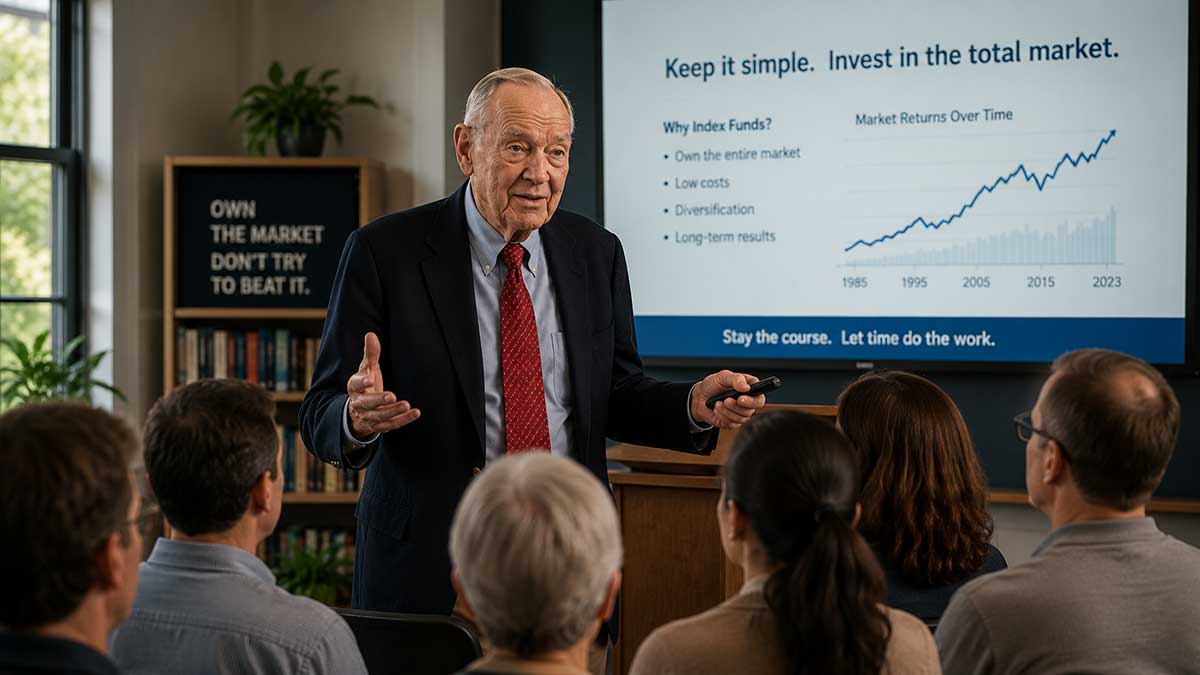
Do not try to beat the market.
Own the market.
Tonight, we ask why such a simple idea can be so difficult to accept.
Question 1: Why is buying the whole market often wiser than trying to find the perfect stock?
John C. Bogle
Buying the whole market is wise because it removes the impossible burden of prediction.
The investor no longer needs to know which company will win, which manager will outperform, or which sector will dominate.
The total market fund says, “I will own capitalism itself.”
That is a profoundly simple idea.
You capture the return of businesses collectively, and you avoid the high costs of constant guessing.
Warren Buffett
Most people should not be picking stocks.
There is nothing wrong with admitting that.
The market has thousands of intelligent people studying every detail. If you think you can consistently outguess them, you need a very good reason.
For most families, a low-cost index fund is the most sensible answer.
It lets them participate in American business without pretending to be professionals.
J. L. Collins
Index funds work because they are simple, cheap, and broad.
That combination is powerful.
You do not need to spend your life reading financial news, watching charts, or worrying about individual companies.
You put your money to work in the broad market, keep adding to it, and let time do the heavy lifting.
Burton Malkiel
The evidence has been clear for decades.
Markets are difficult to beat consistently after costs.
Professional managers often underperform broad indexes over long periods.
The ordinary investor gains an advantage by refusing to play a difficult game.
Indexing is not laziness. It is humility backed by data.
Charles D. Ellis
Investing is often a loser’s game.
The winner is not necessarily the person who makes brilliant moves.
The winner is often the person who avoids costly mistakes.
Index funds help investors avoid the most common mistakes: high fees, overtrading, emotional decisions, and overconfidence.
Question 2: What makes simplicity so difficult for investors who want to feel smart?
J. L. Collins
Simplicity feels unsatisfying to the ego.
People want investing to feel like expertise.
They want complexity to prove they are doing something serious.
But wealth does not care whether your strategy feels impressive.
It cares whether the strategy works.
Charles D. Ellis
Many investors confuse activity with progress.
They think researching, switching funds, watching forecasts, and reacting to headlines means they are taking control.
Often, they are simply increasing the chances of error.
Sometimes the best investment action is no action.
That is emotionally difficult.
Warren Buffett
People love stories.
A hot company has a story. A new technology has a story. A market prediction has a story.
An index fund sounds boring.
But boring can be beautiful when it compounds for decades.
You do not need excitement from your portfolio. You need results.
Burton Malkiel
Complexity also sells.
Wall Street earns money when investors believe they need help, products, forecasts, and constant adjustment.
A simple index strategy is hard to monetize.
That is one reason it is often made to seem less sophisticated than it is.
John C. Bogle
The miracle of indexing is that it gives investors their fair share of market returns.
That may sound ordinary.
But over decades, ordinary returns at low cost can produce extraordinary outcomes.
The simplicity is the strength.
Question 3: How can ordinary people trust long-term investing when the market feels uncertain?
Warren Buffett
Uncertainty is not a temporary condition. It is always present.
People think there were easy times to invest in the past. There were not.
There was always war, inflation, recession, political fear, technological change, and panic.
The market climbs a wall of worry.
John C. Bogle
The investor must understand the difference between the stock market and business.
The market price moves every day.
Business value grows over time through productivity, innovation, earnings, and human effort.
Index investing is faith in long-term enterprise, not faith in tomorrow’s headlines.
J. L. Collins
Crashes are not interruptions of the plan.
They are part of the plan.
If you invest for decades, you will see frightening declines.
The key is to expect them before they arrive.
When the market falls, keep buying. Shares are on sale.
Burton Malkiel
Diversification is what allows trust.
You do not depend on one company, one sector, or one prediction.
You own a broad slice of the economy.
That does not remove volatility, but it greatly reduces the risk of one bad choice destroying your future.
Charles D. Ellis
Trust is easier when the plan is written before fear arrives.
Decide your strategy during calm times.
Then, during panic, follow the plan rather than your emotions.
The greatest enemy is usually not the market.
It is the investor’s own reaction to the market.
Closing
Nick Sasaki:
Tonight’s conversation revealed that index investing is simple, but not shallow.
It asks investors to practice humility, patience, discipline, and trust in long-term human productivity.
The temptation is always to find the clever move, the hidden winner, the perfect timing.
But perhaps the wiser path is quieter.
Own the market.
Keep costs low.
Stay patient.
Let time work.
Maybe the simple path to wealth is difficult not because the strategy is complicated, but because the ego wants investing to feel more dramatic than it needs to be.
Topic 4: Ignore Market Noise
Participants
- Morgan Housel
- Warren Buffett
- Charlie Munger
- Benjamin Graham
- J. L. Collins
Opening
Nick Sasaki:
Every investor says they want long-term wealth.
Yet every day, headlines scream for immediate attention.
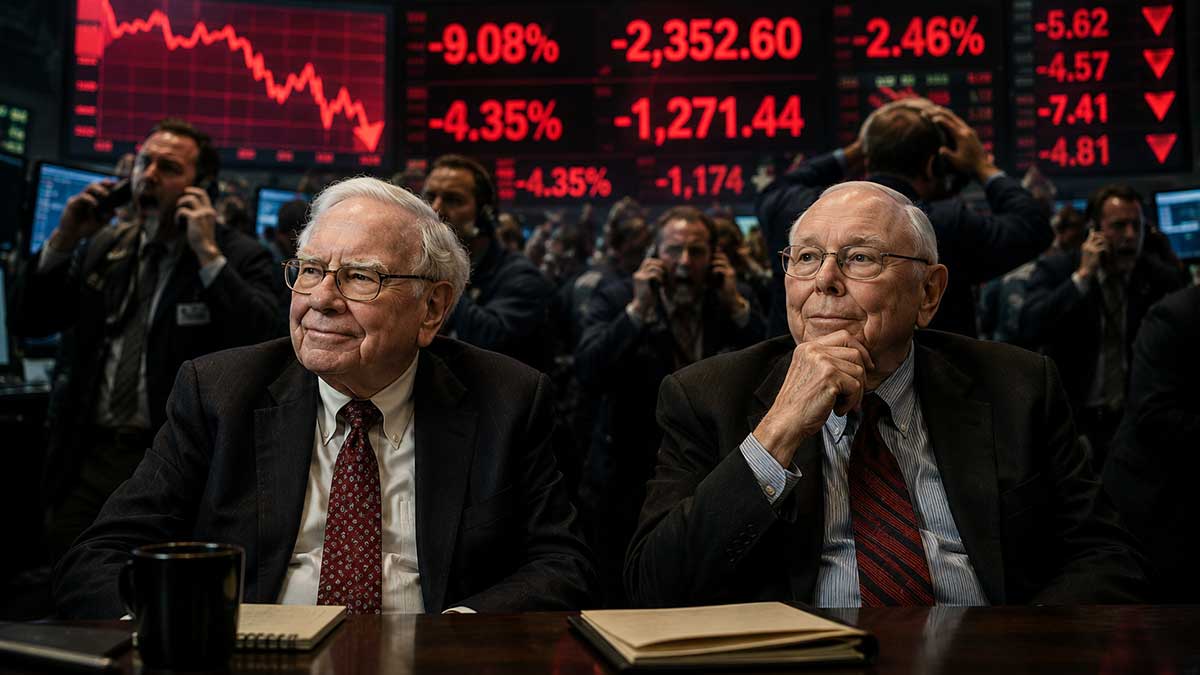
Markets rise. Markets fall. Experts predict crashes. Commentators warn of bubbles. Friends brag about quick gains. Fear and greed move faster than reason.
Tonight, we ask why market noise has such emotional control over investors — and how a person can stay calm when everyone else is reacting.
Question 1: Why do fear, headlines, and expert predictions have such strong control over investors?
Morgan Housel
Money is emotional because it touches survival, status, family, and identity.
A headline about the market is not just information. It can feel like a threat to your future.
That is why people react so strongly.
The problem is that financial news is built around what happened today, but wealth is built through what you do for decades.
Warren Buffett
Forecasts sound intelligent, but most of them are not useful.
Nobody knows exactly what the market will do next month or next year.
The investor’s job is not to predict every storm.
The job is to own good assets, behave sensibly, and avoid being frightened out of a good plan.
Charlie Munger
The world is full of incentives to make you stupid.
People earn money by getting your attention.
They do not earn money by helping you sit quietly with a good portfolio.
That is why investors must protect their minds.
You need patience, discipline, and a willingness to look boring.
Benjamin Graham
The market is often a voting machine in the short term and a weighing machine in the long term.
Daily prices reflect moods, fear, excitement, and temporary opinions.
Long-term value reflects business reality.
The investor must learn not to confuse market emotion with actual value.
J. L. Collins
Noise is powerful because it creates urgency.
Urgency makes people feel they must act.
But for the index investor, action is often unnecessary.
Keep investing. Stay the course. Let the market do what it has always done: rise, fall, frighten people, recover, and continue.
Question 2: How can someone stay calm during a market crash without pretending losses do not hurt?
J. L. Collins
First, expect crashes before they happen.
If you invest for decades, deep declines are guaranteed.
That does not mean they are comfortable.
It means they are normal.
When you understand that crashes are part of the path, they become less surprising.
Morgan Housel
You do not need to pretend losses feel fine.
They hurt.
The goal is not emotional numbness.
The goal is having a plan strong enough to survive your emotions.
A good investor feels fear but does not let fear make the final decision.
Warren Buffett
If you own a farm and the quoted price of the farm falls, you do not sell the farm just because someone offered less today.
You look at what the farm produces.
Stocks are pieces of businesses.
During panic, remember what you own.
Benjamin Graham
The investor should use market fluctuations rather than be used by them.
Mr. Market comes every day with a price.
Sometimes he is optimistic. Sometimes he is depressed.
You are not required to obey his mood.
Charlie Munger
The best way to stay calm is to avoid putting yourself in a position where panic is rational.
Do not use too much debt.
Do not invest money you need tomorrow.
Do not build a portfolio that requires perfect courage.
Good behavior begins with good structure.
Question 3: What daily habits protect investors from panic, greed, and constant financial distraction?
Charlie Munger
Avoid stupidity.
That sounds simple, but it is powerful.
Avoid constant financial television. Avoid people who are always gambling. Avoid the illusion that every new idea deserves your money.
Good judgment often comes from subtraction.
Morgan Housel
Create distance between information and action.
Reading news is one thing.
Changing your portfolio because of every story is another.
Most investors need fewer decisions, not more information.
J. L. Collins
Automate your investing.
Make the process boring.
Boring is not bad. Boring protects you.
The less often you touch the portfolio, the less chance you have to damage it.
Warren Buffett
Temperament matters more than intelligence.
You do not need a high IQ to invest successfully.
You need the ability to stay rational when others are euphoric or afraid.
Benjamin Graham
Write down your principles before emotion arrives.
A clear investment policy can become a guardrail.
When fear rises, you return to reason already written in calmer times.
Closing
Nick Sasaki:
Tonight’s conversation revealed that market noise is not just financial information.
It is emotional temptation.
It tempts investors to panic, chase, predict, compare, and abandon patience.
The wiser path is quieter: build a simple plan, expect storms, avoid unnecessary decisions, and refuse to let headlines own your future.
Perhaps the strongest investor is not the one who reacts fastest.
Perhaps it is the one who can remain still when the whole world is shouting.
Topic 5: Simple Asset Allocation

Participants
- William Bernstein
- John C. Bogle
- J. L. Collins
- Rick Ferri
- David Swensen
Opening
Nick Sasaki:
After avoiding debt, saving aggressively, and investing simply, one question remains:
How should a person divide money between growth and safety?
Stocks can build wealth, but they can fall sharply.
Bonds may feel safer, but they usually grow more slowly.
Tonight, we ask how ordinary investors can build a simple portfolio that protects both their future and their peace of mind.
Question 1: How should a person decide the right balance between growth and safety?
William Bernstein
The right balance depends on one honest question:
How much loss can you endure without abandoning your plan?
Many people think they can handle risk until the market falls 40%.
Your asset allocation should match your emotional reality, not your fantasy of courage.
John C. Bogle
The purpose of bonds is not excitement.
The purpose of bonds is ballast.
Stocks provide long-term growth. Bonds provide stability. Together, they help investors stay the course.
A good allocation is one you can live with through both rising markets and frightening declines.
J. L. Collins
During the wealth-building years, I favor a strong stock allocation because time is on your side.
But as you approach financial independence, adding bonds can make sense.
The goal is simplicity.
You do not need dozens of funds. A broad stock index fund and a bond index fund can carry most people very far.
Rick Ferri
Asset allocation should be simple enough to maintain.
Many investors fail because their portfolios become too complicated.
They own overlapping funds, expensive products, and strategies they do not understand.
A simple allocation is easier to rebalance, easier to trust, and easier to follow.
David Swensen
The key is diversification with purpose.
You do not diversify randomly.
You diversify to reduce unnecessary risk without destroying long-term return.
For individuals, low-cost index funds are usually the cleanest way to do this.
Question 2: When should someone shift from building wealth to protecting wealth?
J. L. Collins
The shift begins when the money has a job beyond growth.
Early on, the job of money is to grow.
Later, the job becomes supporting your life.
That is when stability matters more.
William Bernstein
The most dangerous period is near retirement.
A major market decline right before or right after retirement can do real damage.
That is why a person needs safer assets before they actually need the money.
David Swensen
Protection should not mean abandoning growth completely.
Inflation, longevity, and rising living costs remain real risks.
A portfolio must protect against market decline and protect against losing purchasing strength over time.
John C. Bogle
The investor must avoid extremes.
All stocks can be too volatile for someone near retirement.
All bonds can be too slow for someone who still needs growth.
Balance is the art of staying invested without losing sleep.
Rick Ferri
A good rule is to adjust gradually.
Do not wake up one day and completely change everything.
Build a glide path: more stocks when younger, more bonds as the need for stability grows.
Question 3: What does a simple portfolio reveal about a person’s true relationship with risk?
Rick Ferri
A simple portfolio reveals whether you are investing or collecting investments.
Many people collect funds because they think more funds means more safety.
Often, it just means more confusion.
William Bernstein
Risk tolerance is not discovered in a questionnaire.
It is discovered in a crash.
A simple portfolio makes the test clearer.
You know what you own. You know why you own it. Then you see whether you can stay disciplined.
John C. Bogle
Simplicity reflects trust.
Trust in broad markets.
Trust in low costs.
Trust in patience.
Trust that you do not need to outsmart everyone to succeed.
David Swensen
A simple portfolio shows intellectual restraint.
The investor accepts that every added strategy must justify itself.
Complexity should earn its place.
Most of the time, it does not.
J. L. Collins
A simple portfolio reveals whether you truly want freedom or constant financial drama.
Some people say they want wealth, but they keep chasing excitement.
The simple path is not exciting every day.
That is why it works.
Closing
Nick Sasaki:
Tonight’s conversation showed that asset allocation is not only about percentages.
It is about fear, patience, age, purpose, and the kind of life money is meant to support.
Stocks build the future.
Bonds steady the journey.
A simple portfolio helps a person avoid panic, avoid confusion, and keep moving.
Perhaps the best portfolio is not the one that looks most impressive.
Perhaps it is the one you can hold with confidence when the market tests your soul.
Topic 6: Financial Independence Means Freedom

Participants
- J. L. Collins
- Vicki Robin
- Mr. Money Mustache
- Naval Ravikant
- Tim Ferriss
Opening
Nick Sasaki:
For many people, money means survival.
For others, it means status.
But in The Simple Path to Wealth, money points to something deeper:
Freedom.
Freedom from debt.
Freedom from panic.
Freedom from jobs that drain the soul.
Freedom to choose how time is spent.
Tonight, we ask what financial independence really gives a person beyond numbers in an account.
Question 1: What does financial independence give a person beyond money?
J. L. Collins
Financial independence gives options.
That is the heart of it.
You can work because you choose to, not because fear is forcing you.
You can leave a bad job. You can move. You can rest. You can help family. You can take risks.
Money is not the final goal.
Freedom is.
Vicki Robin
It gives you your life energy back.
Every person has a limited amount of time, attention, strength, and creativity.
Financial independence lets you ask, “What is my life actually for?”
That is a spiritual question, not only a financial one.
Mr. Money Mustache
It gives you the ability to stop being a consumer machine.
A lot of people work hard, spend hard, recover from stress, then repeat.
Financial independence breaks that cycle.
It lets you build, repair, create, move your body, raise children, serve people, and live more deliberately.
Naval Ravikant
Freedom is not needing permission.
Not from your boss. Not from social expectation. Not from your monthly bills.
But outer freedom is only half the story.
If your mind is still trapped by status, envy, and fear, money will not free you completely.
Tim Ferriss
It gives you the chance to redesign life.
Most people accept default schedules, default careers, default assumptions.
Financial independence creates room to ask better questions.
What work would I do if money were no longer the main driver?
Who would I spend time with?
What would I stop tolerating?
Question 2: Can freedom become empty if a person has no deeper purpose after leaving work?
Vicki Robin
Yes.
Many people believe they want escape, but escape is not the same as fulfillment.
If work gave structure, identity, community, and usefulness, leaving it can create emptiness.
Financial independence should be paired with inner clarity.
What do you want to give?
What do you want to heal?
What do you want to become?
Tim Ferriss
I’ve seen people optimize their way into boredom.
They escape the office, then discover they never built a meaningful life outside work.
Freedom creates space.
But space can feel uncomfortable if you have no experiments, relationships, missions, or creative projects to fill it.
Naval Ravikant
Purpose cannot be imported from a job title.
A person must know themselves.
Money can remove certain problems, but it cannot answer existential questions for you.
If you are miserable before wealth, you may become a more comfortable version of miserable after wealth.
Mr. Money Mustache
I think purpose often appears when people stop being exhausted.
Once you are free, you can become useful in simpler ways.
You can parent better. Help neighbors. Build things. Volunteer. Learn skills. Take care of your health.
Purpose does not always need to be grand.
J. L. Collins
Financial independence is not retirement in the old sense.
It is not about sitting around doing nothing.
It is about gaining control.
What you do with that control matters deeply.
Question 3: How should someone use financial freedom to build a richer life, not just escape a stressful one?
Tim Ferriss
Start testing before you reach full freedom.
Do not wait until retirement to ask what gives you energy.
Run small experiments.
Take mini-retirements. Try new skills. Build friendships outside work. Create side projects.
You are not only building a portfolio. You are building a future self.
Naval Ravikant
Use freedom to reduce desire, not multiply it.
Many people become wealthier and simply upgrade their cages.
More status, more comparison, more anxiety.
A richer life comes from peace, curiosity, health, love, and inner independence.
Vicki Robin
Reconnect money with meaning.
Ask whether your spending, saving, working, and giving reflect your deepest values.
Financial independence is not the end of the journey.
It is the beginning of living consciously.
J. L. Collins
Keep life simple.
A complicated lifestyle can re-trap you, even after wealth arrives.
Low expenses, meaningful relationships, useful work, and a calm portfolio can create a deeply rich life.
Mr. Money Mustache
Use freedom to become more alive.
Ride your bike. Make things. Cook. Teach. Spend time with your kids. Fix your house. Be part of your community.
The best life is often cheaper, healthier, and more human than the expensive one people were sold.
Closing
Nick Sasaki:
Tonight’s conversation showed that financial independence is not simply about quitting work.
It is about reclaiming the authorship of life.
Money can remove fear, but it cannot create meaning by itself.
Freedom must be filled with purpose, service, health, creativity, relationships, and inner peace.
Perhaps the richest person is not the one who owns the most.
Perhaps it is the one who wakes up each morning and can honestly say:
“My time belongs to me.”
Final Thoughts by Nick Sasaki
Over the course of these conversations, one truth became increasingly clear:
The simple path to wealth is emotionally difficult because it requires resisting many of the strongest pressures in modern society.
Debt promises immediate comfort.
Consumption promises identity.
Market noise promises certainty.
Status promises validation.
But each promise often carries hidden costs.
The guests disagreed on many details. Some defended strategic debt. Some favored stronger discipline. Some warned against excessive sacrifice. Some emphasized emotional healing and purpose beyond money.
Yet across all six topics, several deeper themes kept returning.
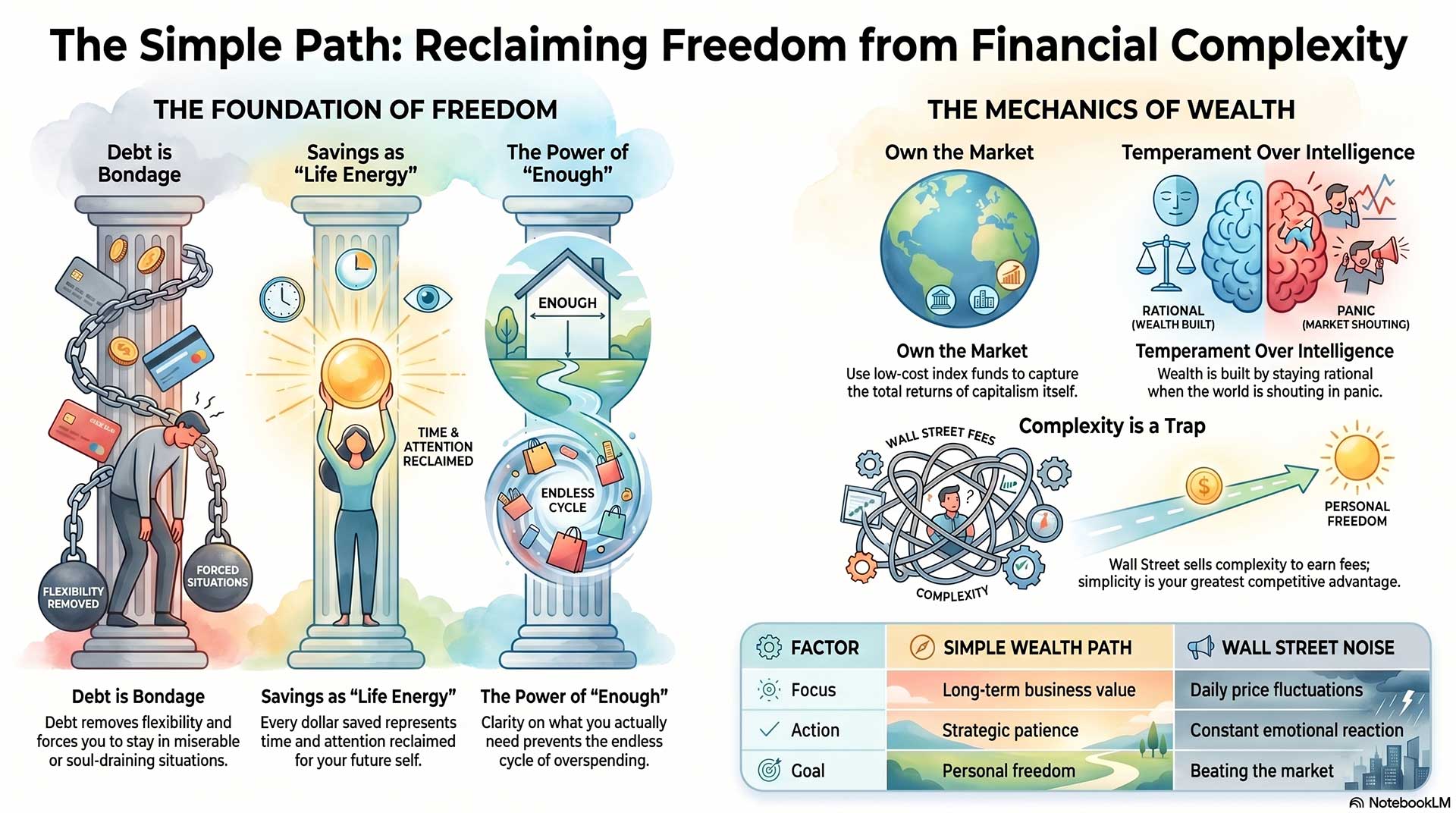
Freedom matters more than appearance.
Simplicity is often stronger than complexity.
Patience quietly defeats panic.
Low-cost consistency beats emotional reaction.
Wealth is less about income than about control over desire and lifestyle.
And financial independence without purpose can still feel empty.
Perhaps that is why so many financially successful people still feel trapped.
They mastered earning money without mastering their relationship to money.
What struck me most tonight was how often the conversation returned to fear.
Fear of falling behind.
Fear of losing status.
Fear of uncertainty.
Fear of market crashes.
Fear of not having enough.
Fear of wasting life itself.
Maybe the deepest purpose of financial independence is not luxury.
Maybe it is reducing fear enough that a person can finally live honestly.
To spend time with family without panic.
To leave unhealthy environments.
To create meaningful work.
To rest without guilt.
To help others without insecurity.
To wake up without financial dread controlling every decision.
In the end, perhaps wealth is not mainly measured by net worth.
Perhaps true wealth is measured by how much freedom, peace, clarity, and purpose remain once the noise quiets down.
And maybe that is why the path looks so simple from the outside.
Because the hardest battle was never mathematical.
It was always internal.
Short Bios:
J. L. Collins
Financial independence writer known for promoting simple index-fund investing and long-term wealth building through low-cost investing and disciplined saving.
Dave Ramsey
Radio host and financial educator known for debt-free living strategies and practical budgeting advice focused on personal responsibility.
Suze Orman
Financial expert focused on emotional relationships with money, retirement planning, and financial security for ordinary households.
Robert Kiyosaki
Entrepreneur and author known for emphasizing financial education, cash-flowing assets, and strategic investing.
Elizabeth Warren
Former Harvard professor specializing in bankruptcy law and middle-class economic pressures before entering politics.
Mr. Money Mustache
Influential FIRE movement writer advocating frugality, intentional living, and early financial independence.
Vicki Robin
Author and speaker known for connecting money with personal values, life energy, and conscious living.
Ramit Sethi
Personal finance author focused on conscious spending, automation, and building a rich life aligned with personal priorities.
Morgan Housel
Writer exploring how emotions, behavior, and psychology shape financial decisions more than technical knowledge alone.
John C. Bogle
Founder of Vanguard and pioneer of low-cost index funds that transformed modern investing.
Warren Buffett
Legendary investor known for value investing, long-term thinking, and disciplined business analysis.
Charlie Munger
Investor and thinker recognized for multidisciplinary reasoning, rationality, and mental-model decision making.
Benjamin Graham
Economist and investor widely regarded as the father of value investing and mentor to Warren Buffett.
Burton Malkiel
Economist and author known for popularizing efficient-market theory and index investing.
Charles D. Ellis
Investment consultant and author recognized for explaining investing as a long-term behavioral discipline.
William Bernstein
Neurologist turned financial theorist known for portfolio construction and rational investing principles.
Rick Ferri
Investment advisor focused on low-cost indexing, portfolio simplicity, and evidence-based investing.
David Swensen
Legendary institutional investor known for managing Yale University’s endowment and advancing diversified portfolio strategies.
Naval Ravikant
Entrepreneur and philosopher known for reflections on wealth, leverage, happiness, and freedom.
Tim Ferriss
Author and podcaster focused on lifestyle design, productivity, experimentation, and alternative approaches to work and freedom.
Leave a Reply