
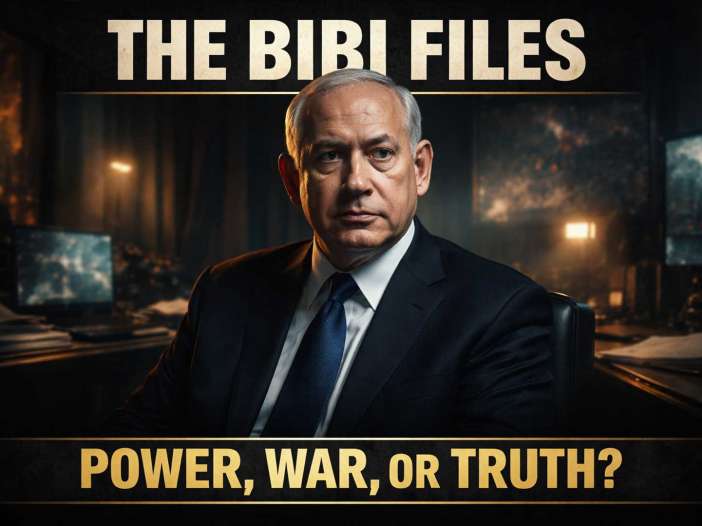
What if Benjamin Netanyahu became impossible to separate from the crisis itself?
Tonight’s subject is not just Benjamin Netanyahu. It is what happens when a leader stays at the center of history for so long that the line between the fate of the nation and the fate of the man begins to blur.
That is the real tension behind The Bibi Files.
On the surface, this is a story about corruption allegations, leaked interrogation footage, media warfare, political survival, and the long shadow of October 7. But underneath that is a bigger question, and it is the one most people are afraid to ask honestly: when a country lives under real threat for generations, how does it keep fear from becoming the permanent language of power?
That is not a small question. It is not only about Israel. It is about every democracy that tells itself emergency justifies more secrecy, more loyalty, more moral compromise, more silence from people who know something is wrong but keep saying, “Now is not the time.”
And that is why this subject matters.
Because the most dangerous political stories are never only about one scandal, one court case, one war, or one documentary. They are about the habits a nation forms when it feels cornered. They are about what kind of leader rises in those conditions, what kind of public keeps defending him, and what kind of truth can still break through once power, media, law, and fear all become tangled together.
So this conversation is not here to flatten Netanyahu into a cartoon. That would be too easy and too dishonest. He is clearly not a simple figure. He can be read as protector, strategist, survivor, manipulator, patriot, accused man, and symbol of a whole era all at once. That is what makes him worth examining.
The point is to go deeper than the headlines.
Who does long power turn a man into?
When does loyalty become corruption?
Can a leader be necessary in wartime and still responsible for the conditions that made disaster more likely?
Is a documentary exposing truth, or packaging a verdict?
And darkest of all: what happens to the soul of a nation when survival begins excusing almost everything?
Those are the questions here.
Not because they are comfortable.
Because they are unavoidable.
(Note: This is an imaginary conversation, a creative exploration of an idea, and not a real speech or event.)
Topic 1 — The Man Behind the Image
Participants: Benjamin Netanyahu, Douglas Murray, Thomas Friedman, Bari Weiss, Yuval Noah Harari
Question 1
What kind of man is formed when a leader lives for decades inside conflict, pressure, and the belief that history may judge him alone?
Yuval Noah Harari:
A man like that begins by carrying history, but after many years he may begin to believe he is history. That is the danger. A statesman is meant to serve the story of a people. A ruler who stays too long can start rewriting the story so that his own survival feels identical to the survival of the nation. He may still speak the language of duty, memory, and threat, yet deep inside there can be a shift: the line between “Israel needs me” and “without me Israel cannot endure” starts to fade. Once that happens, every criticism feels like betrayal, every rival feels reckless, and every moral limit begins to look like a luxury.
Douglas Murray:
I think people who speak about Netanyahu often miss the obvious fact that he comes from a civilization under permanent moral and physical assault. A man formed under those conditions will not sound like a professor in peacetime Switzerland. He will sound hard, suspicious, disciplined, and at times cold. That does not prove corruption of soul. It may simply show what repeated danger does to a serious patriot. The trouble is that the same traits that help a leader protect a nation can, over years, calcify into a permanent posture. Alertness becomes suspicion. Discipline becomes rigidity. Conviction becomes self-justification. Yet none of this should make us forget that Israel has not had the privilege of innocence.
Bari Weiss:
I think he was formed by a double inheritance: Jewish historical memory and modern media power. That creates a very unusual kind of politician. On one side, there is a deep sense that Jews are never far from danger, that weakness invites catastrophe, that hesitation can be fatal. On the other side, he became one of the first leaders in his world to grasp that survival is rhetorical too. You do not just win wars; you frame reality. So the man who emerges is not simply a strategist or an ideologue. He is someone who learned to fight on every front at once: military, political, psychological, symbolic. That can make him formidable. It can also make him incapable of resting inside truth that does not flatter him.
Benjamin Netanyahu:
People who psychoanalyze leadership from a distance usually live in countries where failure means a bad headline. In Israel, failure can mean dead children, burning homes, and enemies celebrating in the street. I did not form myself in a vacuum. I was formed by history, by the murder of Jews, by the murder of my own brother in a rescue mission, by a region where weakness is read as permission. So when people say I am too vigilant, too forceful, too unwilling to gamble with national security, I say: good. That is exactly what this job required. If history judged me harshly for caution, at least it would judge a living nation.
Thomas Friedman:
Long tenure inside siege politics can produce a leader who is brilliant at reading threats and very poor at reading what his own methods are doing to his society. That is what worries me. A leader can become so fluent in the language of danger that he loses the language of renewal. He can still speak of destiny, but he no longer knows how to build trust. He can still speak of survival, but he has forgotten that democratic health is part of survival too. So what kind of man is formed? Often, a man who becomes more tactically gifted and more spiritually narrowed at the same time.
Question 2
When does a leader stop protecting a nation and start treating the nation as the stage for his own destiny?
Bari Weiss:
The turning point comes when criticism is no longer heard as part of democratic life but as a personal attack on the sacred mission of the leader himself. That is the moment to watch for. Every great democratic temptation has this structure: “I alone understand the stakes, so my enemies are not merely mistaken; they are dangerous.” Once a leader starts talking that way for too long, the nation becomes theater. Its grief becomes his validation. Its fear becomes his fuel. That does not mean every such leader is insincere. Many truly believe what they are saying. But sincerity can be the most effective disguise for self-absorption.
Benjamin Netanyahu:
That is a false distinction when you lead a country like Israel. Destiny is not an ego trip here. Destiny is geography, memory, and reality. The Jewish state does not have the luxury of pretending history is over. So when I speak in large terms, I do so because the stakes are large. My critics hear self-dramatization. I hear the echoes of generations that paid the price for Jewish weakness. If a leader refuses that burden in this part of the world, he is not modest. He is irresponsible.
Thomas Friedman:
A leader crosses that line when he begins treating institutions as obstacles rather than inheritances. Courts, professional military judgment, a free press, norms of restraint, public trust: these are not decorative pieces. They are the internal organs of democratic endurance. Once a leader starts weakening those organs to preserve his own room to maneuver, he is no longer merely serving the nation. He is reorganizing the nation around his own political metabolism. That is the warning sign.
Douglas Murray:
I would put it a bit more carefully. Great leaders are often accused of ego when what they really possess is historical seriousness. Churchill was accused of melodrama too. The real issue is not whether a leader speaks in civilizational terms. The issue is whether he still accepts limits, whether he still permits correction, whether he still recognizes that the nation is older and more sacred than his own career. If those checks remain alive, strong leadership is not narcissism. If they die, it becomes something darker.
Yuval Noah Harari:
A nation becomes a stage for personal destiny when the leader’s narrative cannot tolerate endings. Democracies require leaders who can leave. That is one of their deepest moral tests. When a ruler cannot imagine honorable exit, he begins bending time itself. He turns each election into apocalypse, each legal challenge into persecution, each replacement into national suicide. At that point, the nation is no longer a community with many possible futures. It is a hostage to one man’s refusal to become ordinary.
Question 3
Is Netanyahu, at his core, a guardian shaped by danger, or a master survivor who learned how to turn fear into legitimacy?
Douglas Murray:
He is plainly a guardian shaped by danger. That is the primary truth. The easy international caricature is to treat his security language as cynical branding, but Israel’s enemies are not theoretical. They are armed, ideological, and often genocidal in intent. Any honest reading has to begin there. Yet once that is granted, a second truth may be added: he also became a master survivor. Long political life teaches a person how public fear works, how memory works, how fatigue works. So yes, he learned how to use these things. The harder judgment is deciding where realism ended and instrumentality began.
Yuval Noah Harari:
I think he is both, and the tragedy lies exactly there. History does not usually give us cartoon villains or spotless guardians. It gives us mixtures. A man can begin with a genuine sense of civilizational duty and still become captive to the political rewards that duty brings him. He can speak truth about danger and still exploit danger. He can defend a people and still weaken the ethical texture of that people’s democracy. The deepest danger is not hypocrisy. It is fusion. He may no longer know where the guardian ends and the survivor begins.
Benjamin Netanyahu:
This question assumes manipulation where there has been responsibility. I never needed to “turn fear into legitimacy.” The Middle East supplied enough facts. Suicide bombings were facts. Iranian ambitions are facts. Hamas is a fact. Hezbollah is a fact. October 7 was a fact. Leadership in Israel means telling people the truth they may wish were less severe. If that truth gave me legitimacy, it is because reality vindicated seriousness over fantasy. History is full of leaders who promised comfort. I did not.
Thomas Friedman:
He is one of the most gifted political survivors of his age. That does not erase the reality of the threats Israel faces. It just means that he learned, with exceptional skill, how to place himself at the emotional center of that danger. He built a political identity in which fear, strength, grievance, and indispensability reinforced each other. The more threatened the country felt, the more natural he seemed. The more natural he seemed, the harder it became for Israelis to ask whether his style of leadership was feeding the very exhaustion it claimed to cure.
Bari Weiss:
I would say he became convincing to millions because he touched a real nerve. Jews do know danger. Israelis do live with forms of pressure outsiders often misread. So the legitimacy was not manufactured from nothing. But once a leader finds the deepest nerve of a people, he has a choice. He can guard it with humility, or he can keep pressing it until the people feel they can never stop trembling. That is where the moral judgment begins. A guardian steadies a frightened people. A survivor may keep them frightened enough to keep needing him.
Topic 2 — Corruption, Loyalty, and the Uses of Power
Participants: Alan Dershowitz, Preet Bharara, Raviv Drucker, Victor Davis Hanson, Ayaan Hirsi Ali
Question 1
When a leader is under legal threat, how can we tell the difference between real persecution and real corruption?
Preet Bharara:
You begin with something very simple: evidence, pattern, and standard. Not mood, not tribe, not whether you admire the leader. Powerful people always claim persecution when the law finally reaches them. Sometimes they are right. Many times they are not. So the first test is whether the accusations are specific, documented, and tied to conduct that would matter if done by anyone else. The second test is whether there is a recurring pattern rather than one ambiguous incident. The third test is whether supporters would still call it innocence if the same behavior came from an opponent. That last one is where many societies fail. They do not judge the act. They judge the actor they already love or hate.
Alan Dershowitz:
One must be very careful here. In modern democracies, prosecutors are not saints, media are not neutral, and political enemies do not suddenly become fair simply because they put their accusations into legal language. A prosecution may be real in form and distorted in spirit. I am not saying every case against a leader is false. I am saying selective prosecution is one of the easiest ways to dress politics in moral clothing. So we should ask whether the standards being applied are clear, longstanding, and evenly used. If the rules become strangely creative only when a hated leader is in the dock, suspicion is justified.
Raviv Drucker:
That is exactly why facts matter more than rhetoric. People who want to protect a leader often speak as if every accusation is born from hatred. That lets them avoid the actual material. What did he do? Who benefited? What favors were discussed? What pattern emerged? Did the circle around him begin acting as though public office and personal interest were blending into one system? That is the real issue. If every investigation becomes “a coup,” then law itself becomes impossible. A democracy cannot survive if leaders teach the public that all accountability is persecution.
Victor Davis Hanson:
There is a larger civilizational backdrop here. Elites in media, law, and academia often loathe strong nationalist figures and treat them as moral contaminations. That atmosphere can shape prosecutions without anyone needing a formal conspiracy. A leader may commit errors, foolish acts, or even ethically compromised acts, yet still be targeted with unusual zeal because he represents a deeper class and cultural threat to those institutions. So persecution and misconduct are not always opposites. A flawed man can still be singled out in a way that reveals the bias of the system hunting him.
Ayaan Hirsi Ali:
The deepest test is moral consistency. A society begins to decay when it excuses corruption from people it sees as necessary saviors. At the same time, a society also decays when it weaponizes ethics only against those it already fears politically. So what do we do? We ask whether truth still matters more than identity. If the answer is no, then the case will be poisoned no matter what the facts show. The tragedy is that many nations lose trust in law long before they lose law itself.
Question 2
Does corruption begin with money and favors, or much earlier, when a leader starts believing he alone must remain in power?
Ayaan Hirsi Ali:
It begins much earlier. Money is often the visible symptom, not the spiritual origin. The real corruption starts when a leader tells himself that his staying in power is a moral necessity. Once that thought takes root, almost anything can be justified. Loyalty becomes holier than truth. Critics become threats. Boundaries become inconveniences. A man no longer asks, “Is this right?” He asks, “Can I afford not to do this?” That is a dangerous transformation, and it can happen long before envelopes, gifts, or favors enter the scene.
Victor Davis Hanson:
I agree that the psychological stage often comes first. Still, politics has never been the monastery that intellectuals pretend it should be. Leaders who operate at the highest level live inside constant bargaining, coalition management, donor pressure, and media warfare. The line between practical politics and corruption is not always as neat as moral commentators want it to be. That said, the line is crossed when survival becomes the highest good. Once remaining in office takes priority over the health of institutions, decay sets in. Then every compromise becomes easier than the last.
Raviv Drucker:
Yes, it begins earlier. It begins when the people around a leader start acting as though normal rules no longer apply to him. That is when the atmosphere changes. You hear the language of exception, of destiny, of unfair treatment, of how this one man is too important to be constrained like ordinary officials. By the time gifts and favors become public, there has usually already been a long moral drift. Corruption is not just a transaction. It is an ecosystem. It is a culture around power that slowly stops blushing.
Alan Dershowitz:
I would still resist expanding the definition too far. Ambition is not corruption. Believing oneself uniquely equipped for office is not corruption. Many great leaders thought they were indispensable; some of them were right for a period of time. The problem comes when that belief is paired with conduct that violates law or clearly subverts ethical standards. We should not criminalize ego or longevity in politics. Those are as old as politics itself. We should focus on acts, proof, and fairness in prosecution.
Preet Bharara:
That is fair as a legal caution, but morally the rot often begins earlier. Prosecutors charge conduct, not metaphysical pride. Yet the frame of mind matters. A leader who sees himself as the nation’s last barrier against disaster becomes vulnerable to rationalization. That does not prove guilt in court, but it does create the conditions in which lines blur. A free trip becomes harmless. A private favor becomes trivial. A media arrangement becomes part of a larger necessity. The law often arrives late to a story that has already been unfolding in the conscience for years.
Question 3
Can a nation stay morally healthy if its people excuse private decay for the sake of public strength?
Raviv Drucker:
Not for long. A nation that keeps telling itself, “Yes, he may be compromised, but he protects us,” is trading long-term moral clarity for short-term emotional comfort. That bargain feels safe at first. It can even feel patriotic. But over time it teaches citizens that results matter more than integrity, that power excuses contamination, that fear should silence scrutiny. Then the sickness spreads beyond one leader. It enters journalism, policing, party culture, public language, everyday civic trust. Soon people are not arguing about facts any longer. They are arguing about which corruption is useful.
Victor Davis Hanson:
There is a danger in the opposite direction too. Civilizations under siege cannot survive if they become so obsessed with purifying every private flaw that they paralyze public leadership. History is full of states that lost strength because they demanded saintliness in an age that required hardness. Moral health is not fragility. It is the ability to distinguish between serious compromise and politically motivated perfectionism. A people must ask not only, “Is this leader flawed?” but, “Can the nation endure the costs of removing him in this moment?” That is an ugly question, but history is full of ugly questions.
Ayaan Hirsi Ali:
And yet the soul of a nation is often lost through exactly that excuse. “This is not the right time.” “We cannot afford internal division.” “The enemies are too dangerous.” These sentences can become a ritual by which societies slowly train themselves to accept what once would have shocked them. Strength without moral seriousness becomes brutality wearing the mask of necessity. I do not ask nations to be naive. I ask them to remember that corruption accepted in an emergency rarely leaves when the emergency ends.
Alan Dershowitz:
A morally healthy nation must do two things at once: defend itself fiercely and preserve legal fairness. It cannot allow hatred of a leader to become hatred of due process. If the public begins to cheer weak cases simply because it wants symbolic cleansing, that too is moral decay. The rule of law is tested most when the accused is polarizing. So the answer is no, a nation cannot stay healthy by excusing private decay. But neither can it stay healthy by pretending accusation alone is purification.
Preet Bharara:
That is why institutions matter so much. Citizens should not have to choose between safety and conscience in such crude terms. Good institutions are meant to keep a nation from facing that impossible bargain. They let a country remove or discipline wrongdoing without collapsing into chaos. When the public starts saying, “We know he may be compromised, but we need him,” it usually means trust in institutions is already badly damaged. At that point, the issue is larger than one politician. The country is beginning to lose faith that truth and survival can still live together.
Topic 3 — War, Security, and the Burden of October 7
Participants: Bret Stephens, John Mearsheimer, Haviv Rettig Gur, Sam Harris, Dennis Ross
Question 1
If a leader spends years strengthening short-term political coalitions, can that quietly weaken national judgment at the very moment danger is growing?
Haviv Rettig Gur:
Yes, and the danger is not always visible in the way outsiders think. It is not usually that a coalition partner orders a border to be left open or a military unit to stand down. It is more subtle. A political system can become so consumed by internal bargaining, ideological appeasement, and symbolic fights that it loses the calm seriousness needed for national attention. The country still looks strong. The army still exists. The speeches still sound confident. But the inner focus of the state is fragmented. When that happens, warning signs can sit in plain sight and still go underread, because the governing class is absorbed in surviving itself.
Bret Stephens:
That is one of the oldest dangers in democratic politics. A leader can become extremely skillful at coalition maintenance and still fail at strategic maintenance. One is about staying in office. The other is about keeping a nation mentally sharp. They are not the same talent. In fact, they can work against each other. If too much political energy goes into holding together a difficult alliance, the country may begin to drift into habits of self-distraction. Then a real enemy appears, and what looked like political mastery is suddenly revealed as a form of national sleep.
John Mearsheimer:
Of course it can. States pay a price when leaders focus on domestic political survival over hard-headed strategic thinking. This is not unique to Israel. Great powers and small states alike do it. Leaders often believe they can manage both spheres at once, but domestic coalitions create distortions. They reward rhetoric, punish restraint, and narrow room for sober reassessment. In a dangerous region, those distortions can become fatal. The structure of the system does not forgive sentimental mistakes, and it does not forgive leaders who confuse political advantage with strategic wisdom.
Sam Harris:
I think there is another layer. A society can become so habituated to living beside danger that it starts treating extreme threat as background noise. Then political theater fills the foreground. Outrage at judges, outrage at media, outrage at rivals, outrage at allies. The moral attention of the public gets captured by what is loud, immediate, and identity-confirming. But the enemy is patient. The enemy does not need your society to become weak in some absolute sense. It only needs your society to become fractionally less lucid than it should be. That can be enough.
Dennis Ross:
Leadership in Israel has always required balancing domestic survival with external vigilance. That is not new. What matters is whether the leadership circle preserves disciplined channels for hearing unwelcome assessments. If those channels get weakened, then coalition logic starts bleeding into security logic. That is when trouble comes. You do not need outright negligence. You only need a climate in which contradictory intelligence, uncomfortable warnings, or politically inconvenient judgments lose force. In that kind of environment, the state still appears functional right up until the day it is shocked.
Question 2
How should history judge a wartime leader when the enemy is real, but the failures before the attack may also be real?
John Mearsheimer:
History should judge him on both fronts, not one. The existence of a ruthless enemy does not erase prior failure. In fact, the more dangerous the enemy, the less excuse there is for strategic blindness. States exist to anticipate threats. If a leader later responds forcefully in war, that may speak to resolve. It does not automatically redeem the inability to prevent disaster in the first place. Too many political cultures fall into a false choice: either the leader was a villain or a hero. Serious judgment is harsher than that. It says a leader may be strong in reaction and still deeply at fault in preparation.
Dennis Ross:
That is right, though history should stay careful and disciplined. In the aftermath of trauma, people want a single clean answer. But intelligence failure, political distraction, enemy deception, bureaucratic assumptions, and operational gaps often converge. A prime minister is responsible, yet responsibility is not always solitary. History should ask: Did the leader create a culture able to hear bad news? Did he encourage realism or complacency? Did he preserve trust between institutions or deepen internal fracture? A wartime leader must be judged by what he inherited, what he worsened, and how he responded once crisis came.
Bret Stephens:
The temptation after catastrophe is to excuse everything in the name of wartime necessity. The opposite temptation is to convert legitimate grief into a total moral verdict on one man. History must resist both. It should say something like this: the enemy remains guilty for the attack, and the leadership remains accountable for the failure to foresee, deter, or disrupt it. These are not competing truths. They are simultaneous truths. Mature democracies must learn how to hold them at once, though almost none do it gracefully in real time.
Sam Harris:
There is a moral confusion that often follows terror. People begin speaking as though recognizing failure at home somehow diminishes the evil of the aggressor, or as though naming the evil of the aggressor erases failure at home. That is intellectual collapse. The enemy can be barbaric, and your government can still be incompetent or distracted. If we lose the ability to say both, we become useless. In moral reasoning, false binaries are among the most dangerous lies people tell themselves when they are frightened.
Haviv Rettig Gur:
For Israelis, this question is painfully intimate because the stakes are existential and the failures are not abstract. History will not judge only a leader’s speeches or military orders. It will judge whether he helped shape a political culture capable of seriousness before the disaster. Did he help preserve common purpose? Did he keep institutions trusted enough to work together under strain? Did he leave the country sharper or more divided? Those questions linger longer than wartime rhetoric. They touch the deeper inheritance a leader leaves behind.
Question 3
Can a prime minister be both indispensable in war and culpable for the conditions that made catastrophe more likely?
Sam Harris:
Yes, and that is exactly the kind of truth frightened societies resist. People crave moral simplicity under pressure. They want a protector without stain or a culprit without redeeming function. But real political life is more terrible than that. A leader may possess the temperament, experience, and rhetorical force needed for wartime command, and still have spent years contributing to the distortions, complacencies, or fractures that helped produce disaster. That is not paradoxical. That is politics under conditions of danger.
Bret Stephens:
I think that is precisely the dilemma. There are leaders who become most convincing after the fire starts, partly because they spent years teaching the public that only they know how to face fire. Then the fire comes, and the public feels trapped inside its own previous choices. “He failed us, but now we need him.” That is a devastating democratic sentence. It means the leader’s strengths and failures have become intertwined in a way that makes accountability feel almost impossible at the worst possible moment.
Dennis Ross:
In practice, yes. Wartime does not reset the moral ledger to zero. It changes priorities, but it does not erase responsibility. A country may reasonably conclude that continuity of command matters during active conflict. Yet once that necessity passes, serious accounting must follow. Otherwise the lesson absorbed by future leaders is dangerous: survive the crisis and the causes of the crisis will be forgotten. Healthy states cannot afford that lesson. They need memory strong enough to separate immediate need from final judgment.
Haviv Rettig Gur:
For Israelis, this is more than theory. The burden of leadership here has always included a strange mixture of admiration, dependency, suspicion, and grief. A prime minister can appear uniquely fitted for the battlefield moment and still have failed at the deeper work of civic stewardship. That is part of what makes this so emotionally difficult. People do not only ask, “Can he lead us now?” They ask, “Why are we in a position where this is still the question?” That second question cuts much deeper.
John Mearsheimer:
A state can become dependent on a leader whose long tenure helped narrow the range of alternatives. Then, when crisis hits, he appears indispensable partly because the political system has been arranged around him. That is not only a reflection of his abilities. It is a reflection of structural dependency. So yes, he can be useful in war and culpable for prewar conditions. In fact, long-serving leaders often produce exactly that outcome. They make themselves central, and then their centrality is mistaken for innocence.
Topic 4 — Media, Narrative, and Who Gets to Tell the Truth
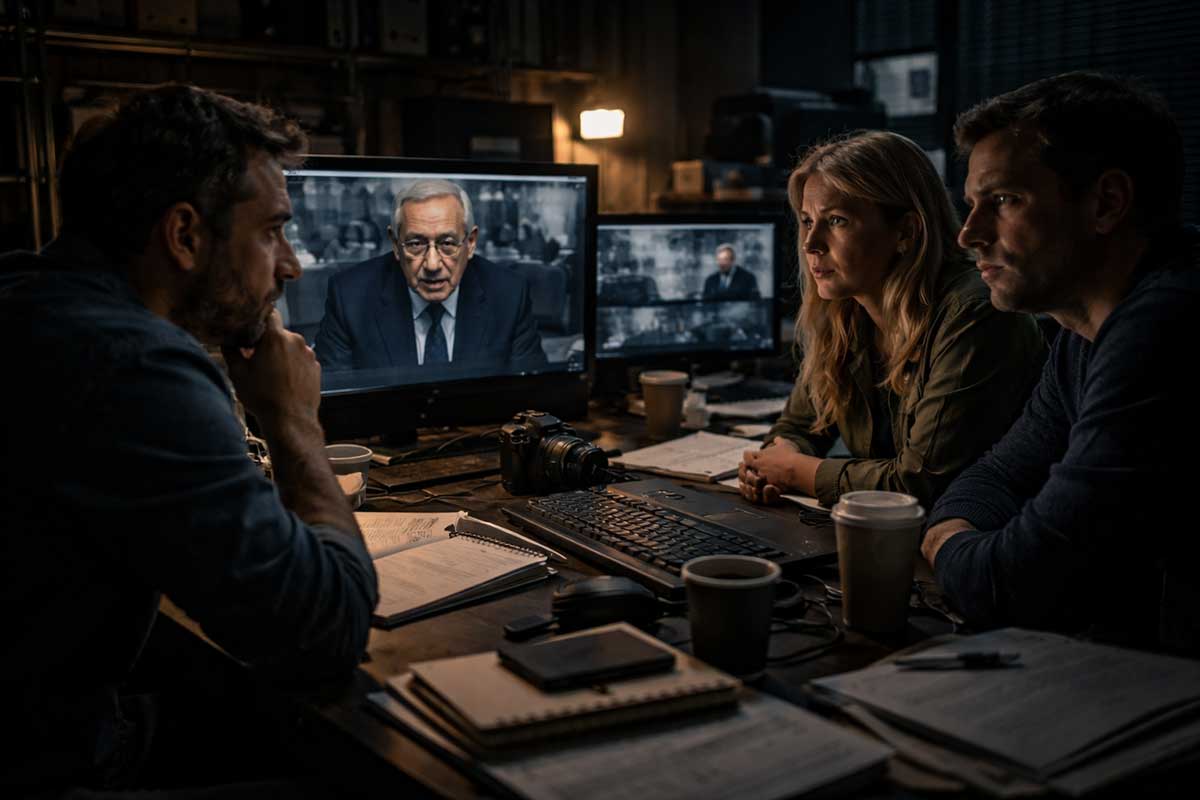
Participants: Tucker Carlson, Alex Gibney, Glenn Greenwald, Matt Taibbi, Douglas Murray
Question 1
When leaked footage reaches the public through a film, are we seeing hidden truth at last, or a story shaped to produce one verdict?
Alex Gibney:
A documentary is never pure raw reality. The moment you choose what to include, what to cut, what to place beside what, you are making meaning. But that does not make the work false. It means the filmmaker has a duty to be honest about the argument being made. When leaked footage exists, the public should not pretend it is meaningless until some official institution blesses it. Real power often hides behind process, delay, secrecy, and intimidation. A film can break that barrier. Still, viewers should know they are seeing evidence arranged into a case, not reality untouched by interpretation.
Glenn Greenwald:
Leaked material matters precisely because official narratives are so often curated by the people with the most to lose. The public is trained to be skeptical of leaks the moment they threaten powerful interests, yet strangely trusting of anonymous claims when they serve establishment aims. That double standard is one of the defining pathologies of modern media. So yes, leaked footage can reveal truth that would otherwise stay buried. At the same time, every platform has an angle, every editor has motives, every distribution system has incentives. The answer is not to reject the material. The answer is to look at it harder.
Douglas Murray:
I would put the caution more strongly. A film built from explosive material can create the illusion that one is receiving unfiltered reality, when in fact one is receiving something highly dramatized. The more sensational the footage, the more careful the audience should be. A documentary can smuggle argument into the bloodstream by making the viewer feel like a witness rather than a recipient of persuasion. That is a powerful thing. It can expose truth, yes, but it can also turn ambiguity into moral certainty far too quickly.
Tucker Carlson:
People hear “shaped narrative” and suddenly act as if that discredits the entire enterprise. But every institution shaping public opinion has a narrative, especially the ones pretending they do not. Governments have narratives. Intelligence agencies have narratives. corporate press has narratives. The difference here is that a film can put material in front of ordinary people and let them see the faces, hear the tones, watch the evasions, and make up their own minds. That is a lot more honest than being told, for the hundredth time, to trust unnamed officials and approved experts.
Matt Taibbi:
What the public gets now is rarely truth in the pure sense. It gets competing packaging. One side says, “This is the revelation they hid from you.” The other says, “This is a dangerous distortion.” Usually there is some truth in both claims. The problem is that people no longer know how to watch anything without joining a team before the first frame ends. So the footage comes out, and instead of asking, “What am I actually seeing?” they ask, “Which tribe will claim this?” That ruins judgment before it starts.
Question 2
Is journalism still exposing power, or has it become another front in political war?
Matt Taibbi:
It has plainly become another front in political war. That does not mean real reporting no longer exists. It means reporting is now filtered through identities that are almost impossible to separate from factional incentives. Newsrooms once liked to imagine they were outside the struggle, judging it from above. That illusion is gone. Journalists now perform for their own side, fear their own side, flatter their own side, and punish defections from their own side. Once that happens, exposure of power becomes selective. Corruption is a scandal when enemies do it and a nuance problem when allies do it.
Glenn Greenwald:
Exactly. The press still talks about truth in sacred language, yet much of it functions as an enforcement mechanism for ideological conformity. The public senses this, which is why trust keeps collapsing. People are tired of discovering that “misinformation” often means unapproved information, and that “context” often means protective framing for power centers favored by the journalist class. Journalism should expose power wherever it sits. The trouble is that many journalists no longer see themselves as adversaries of power. They see themselves as custodians of the correct political outcome.
Alex Gibney:
I think that critique has force, but I would resist total cynicism. Real investigative work still exists, and it still matters. The trouble is that the information environment has become so polarized that exposure itself is instantly politicized. A documentarian can uncover something real, serious, and newsworthy, and half the country will ask first which side it helps. That is a tragic change in civic culture. Journalism used to be contested on facts and methods. Now it is often judged first as weapon, then later, if ever, as truth-seeking work.
Douglas Murray:
There is another issue here. Some journalists still think their political commitments are morally superior enough to justify imbalance. They tell themselves they are defending democracy, decency, or civilization, and from that point onward they permit themselves distortions they would never forgive in opponents. That habit is toxic. Once a journalist starts writing with the secret belief that the stakes are too high for fairness, truth becomes a servant rather than a master. Then journalism is no longer merely flawed. It becomes sanctified advocacy.
Tucker Carlson:
Most major media institutions are already in the war. They picked sides long ago. They just keep the old vocabulary of objectivity around as costume. What frightens them about outsider platforms is not that those platforms are biased. It is that they break the monopoly on whose bias gets called authoritative. When people can watch a film, hear a banned interview, or see material filtered through a nonapproved channel, the old gatekeepers lose their priesthood. That is the real fight.
Question 3
Why do people trust a documentary instantly when it confirms what they already fear about a leader?
Douglas Murray:
Because modern political life is saturated with suspicion, and suspicion longs for images. Once viewers see a face under interrogation, a nervous glance, an awkward pause, they feel they have penetrated the mask. That sensation is intoxicating. It gives the illusion of certainty. “At last,” they think, “I am seeing the real man.” But human beings are very poor judges of truth when emotion is already leaning one way. A documentary that confirms existing fears can feel like revelation when it may only be a highly skilled reinforcement of prejudice.
Alex Gibney:
Yes, but that cuts both ways. Skeptical viewers often dismiss a documentary instantly when it threatens what they need to believe about a leader. So trust and distrust are both tribal reflexes now. The healthier response is slower: ask what the evidence is, what the argument is, what is missing, and what counterevidence would matter. The problem is that documentaries operate through rhythm, image, voice, sequence, and moral atmosphere. They do not just state claims. They lead the viewer into a felt conclusion. That can awaken judgment, or it can bypass it.
Glenn Greenwald:
People trust confirming material because institutions have squandered credibility for years. Once the public decides official channels lied or manipulated too often, any counter-establishment revelation starts gaining a presumption of authenticity. That can be healthy when real secrets are being exposed. It can be unhealthy when anti-establishment branding itself becomes a substitute for proof. So the public is swinging between two naive positions: “trust the official version” and “trust anything that enrages the official version.” Neither is serious enough.
Matt Taibbi:
People are exhausted. They no longer have time or patience to build a full map of reality every week. So they use emotional shortcuts. “This fits.” “This feels right.” “This sounds like him.” That is how a lot of political belief works now. The documentary becomes a delivery system for that feeling. It does not need to prove every point in a strict sense. It just needs to resonate with the story already forming in the viewer’s head. Once that happens, skepticism often shuts off.
Tucker Carlson:
People trust it because they know leaders lie, institutions protect them, and official stories are often managed long before the public hears them. So when something breaks through with force, people react with relief. They think, “Finally, someone is saying it.” Of course that reaction can be manipulated too. But the larger reason it exists is that institutional trust was destroyed by the institutions themselves. You cannot spend years gaslighting the public and then act shocked when they believe the forbidden film.
Topic 5 — Israel, Democracy, and the Soul of a Nation
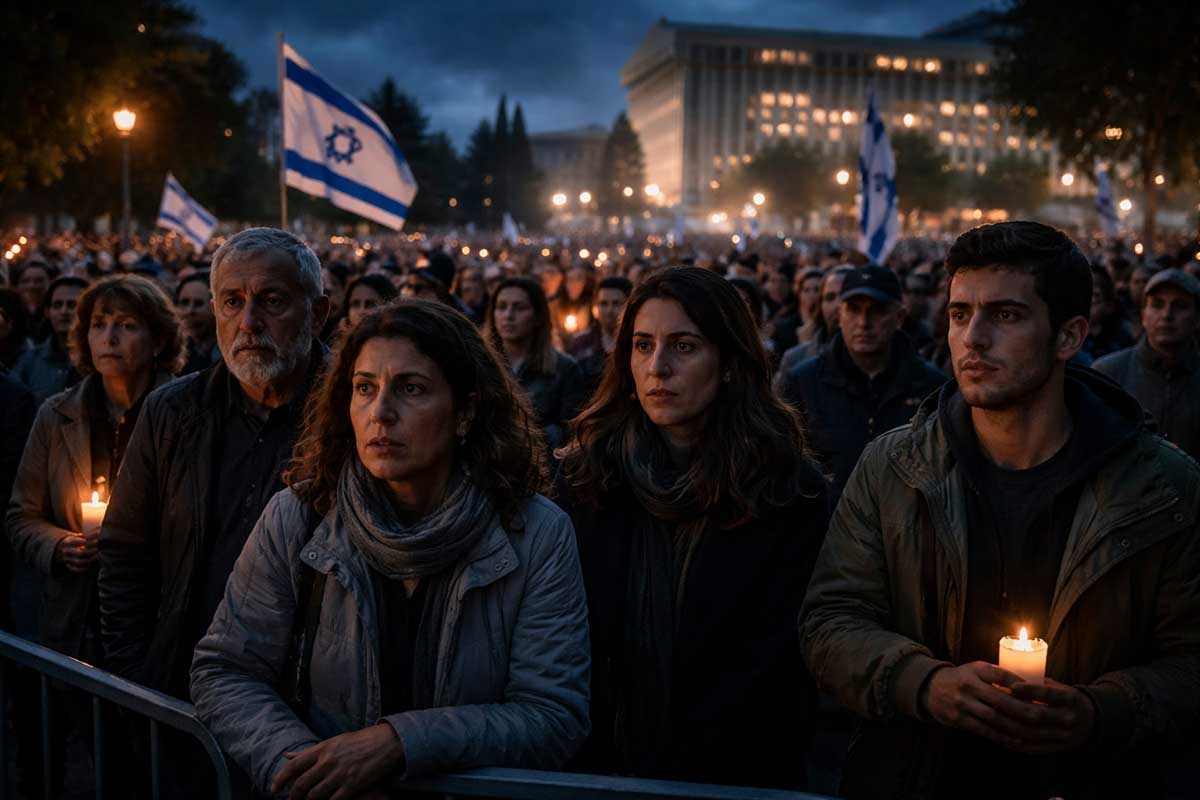
Participants: Natan Sharansky, Yuval Noah Harari, Bret Stephens, Ayaan Hirsi Ali, Yossi Klein Halevi
Question 1
What happens to a democracy when existential fear becomes the permanent language of politics?
Yuval Noah Harari:
A democracy can survive periods of fear. What it cannot survive indefinitely is the conversion of fear into political atmosphere. Once fear becomes the air a nation breathes every day, citizens begin surrendering inner freedoms long before formal freedoms disappear. They stop asking whether something is wise and start asking only whether it feels protective. They stop judging leaders by character and start judging them by intensity. In that climate, emergency becomes identity. A people no longer says, “We are enduring a crisis.” It begins to say, “Crisis is who we are.” That is when democracy starts shrinking from the inside.
Natan Sharansky:
Fear is sometimes unavoidable. Israel was not invented in a peaceful neighborhood, and Jewish history did not prepare us for innocence. Still, democracy is tested by whether fear produces courage or dependency. Courage says, “We will defend ourselves and remain free.” Dependency says, “Protect us, and we will stop asking questions.” That second path is very dangerous. A free people must never hand over its moral muscles to a single leader, party, or security class. If that happens, then external enemies have not defeated democracy, but fear has wounded it deeply.
Bret Stephens:
The permanent language of danger has a strange effect. It can make true warnings sound stale. A population hears alarms so often that urgency becomes routine. At that point, political leaders may keep drawing on fear and still lose the ability to awaken clarity. Citizens grow tired, cynical, reactive. They may still vote in large numbers, still argue loudly, still call themselves free, yet a certain civic balance is gone. They become easier to rally and harder to persuade. That is never a healthy sign in democratic life.
Ayaan Hirsi Ali:
There is no shame in naming danger truthfully. The shame begins when fear becomes a tool for moral exemption. A democracy under pressure still has the duty to tell the truth about itself. It still has to ask whether strong measures are clean or dirty, necessary or excessive, temporary or habitual. A frightened people often wants permission to stop looking inward. But a society that stops examining itself in hard times will become coarse in ways it may not notice until much later.
Yossi Klein Halevi:
In Israel this question is painfully close to daily life. Fear is not abstract here. It is not a campaign slogan floating above a peaceful reality. It is woven into memory, army service, funerals, borders, buses, sirens, and the stories families tell their children. That is why this question is so difficult. The nation cannot simply “move past fear.” Yet it must not let fear become its theology. The moment fear becomes sacred, compromise feels like betrayal, self-criticism feels like treason, and democracy starts sounding to many people like an unaffordable luxury.
Question 2
Can a nation defend itself from enemies without letting permanent emergency reshape its soul?
Ayaan Hirsi Ali:
Yes, but only if it refuses to flatter itself. A nation can remain strong and morally awake only when it admits that emergency is spiritually seductive. Emergency makes people feel clear, righteous, united, and excused. It simplifies judgment. It blesses hardness. It lets people avoid slower questions about who they are becoming. So the real discipline is not military first. It is moral. A nation must keep asking: what habits are we forming while we fight? What kind of people are we becoming through repeated necessity? If those questions die, then the soul begins to deform long before anyone says so aloud.
Yossi Klein Halevi:
A people can defend itself and keep its soul, but it takes conscious work. It takes teachers, parents, writers, soldiers, rabbis, judges, and ordinary citizens who refuse to let necessity become cruelty. It takes memory of suffering that does not harden into permanent permission. Israel’s deepest challenge has never been only survival. It has been what kind of Jewish state can be built under conditions where survival is never fully settled. That is a hard burden. The answer cannot be innocence. Yet it cannot be surrender to spiritual numbness either.
Natan Sharansky:
A free society must preserve zones of conscience inside conflict. That means real argument, real courts, real journalism, real dissent, real civic memory. If a nation keeps those alive, then emergency does not own the whole society. It remains only one part of national life, however intense. But if every institution becomes subordinate to urgency, then the nation may still survive physically while becoming inwardly less free. For a people with Jewish history, that loss would carry a special sorrow.
Bret Stephens:
The challenge is that enemies often exploit the very scruples of democracies. They hide among civilians, weaponize moral language, and manipulate images. That puts pressure on any nation trying to defend itself cleanly. So the question is not whether a democracy can fight without stain. It cannot. The question is whether it can keep stain from becoming self-justification. A society with a living conscience feels the weight of tragic choices. A society losing its soul starts treating tragic choices as proof of its virtue.
Yuval Noah Harari:
A nation keeps its soul only when it remembers that security is not the final good. Security is a vessel. The question is what the vessel is meant to protect. If the answer is only more security, then the nation enters an empty circle. It survives, but it does not know what survival is for. A democracy must defend life, yes, but also law, plurality, restraint, and a future in which citizens are more than frightened survivors. If that horizon disappears, then emergency has already won a quiet victory.
Question 3
Is the deeper tragedy here the fall of one leader, or the possibility that an entire people may grow used to moral compromise in the name of survival?
Bret Stephens:
The fall of one leader is dramatic, but nations recover from dramatic things more easily than from habits. A country can replace a prime minister. It is much harder to replace a civic instinct once it has been trained into the bloodstream. If citizens get used to saying, “This is ugly, but necessary,” over and over, they may one day discover that they have forgotten how to distinguish the truly necessary from the merely convenient. That is a deeper crisis than any one political downfall.
Yossi Klein Halevi:
I think that is exactly the wound many Israelis fear but do not always name. The question is not only what one leader did, failed to do, or defended. The question is what we became while living under years of fear, suspicion, factional struggle, and war. Did we grow harsher than we meant to? Did we begin expecting less of ourselves? Did we start protecting our pain so fiercely that we lost room for humility? Those are national soul questions, and they are far more painful than partisan questions.
Natan Sharansky:
A people must never become comfortable with compromise of conscience. Survival matters immensely. For the Jewish people, survival has never been a theoretical word. Yet survival stripped of moral aspiration is too small for our history. The deeper tragedy would be a nation that still fights bravely, votes passionately, and speaks proudly, but quietly lowers its standards for truth, restraint, and self-scrutiny. That would not mean the democratic story is finished. It would mean the story is in danger and needs renewal.
Yuval Noah Harari:
Yes. The fall of a leader belongs to biography. The normalization of moral compromise belongs to civilization. One is an event. The other is a pattern. Events attract cameras; patterns reshape generations. A society can spend so much time defending its urgent choices that it forgets to examine the psychological world those choices create. Children grow up inside it. Institutions adjust to it. Language becomes coarser. Imagination narrows. Fear becomes inheritance. Once that happens, the crisis is no longer about a ruler. It is about the invisible architecture of collective life.
Ayaan Hirsi Ali:
A people becomes truly endangered when it starts praising itself for compromises it once would have mourned. That is the line to watch. Tragic necessity should leave a bruise on the conscience. It should not become a source of self-congratulation. If the nation still feels sorrow over what survival demands, there is hope. If it begins calling all compromise noble by definition, then it is teaching itself a dark lesson. The worst loss is never only political. It is moral memory.
Final Thoughts
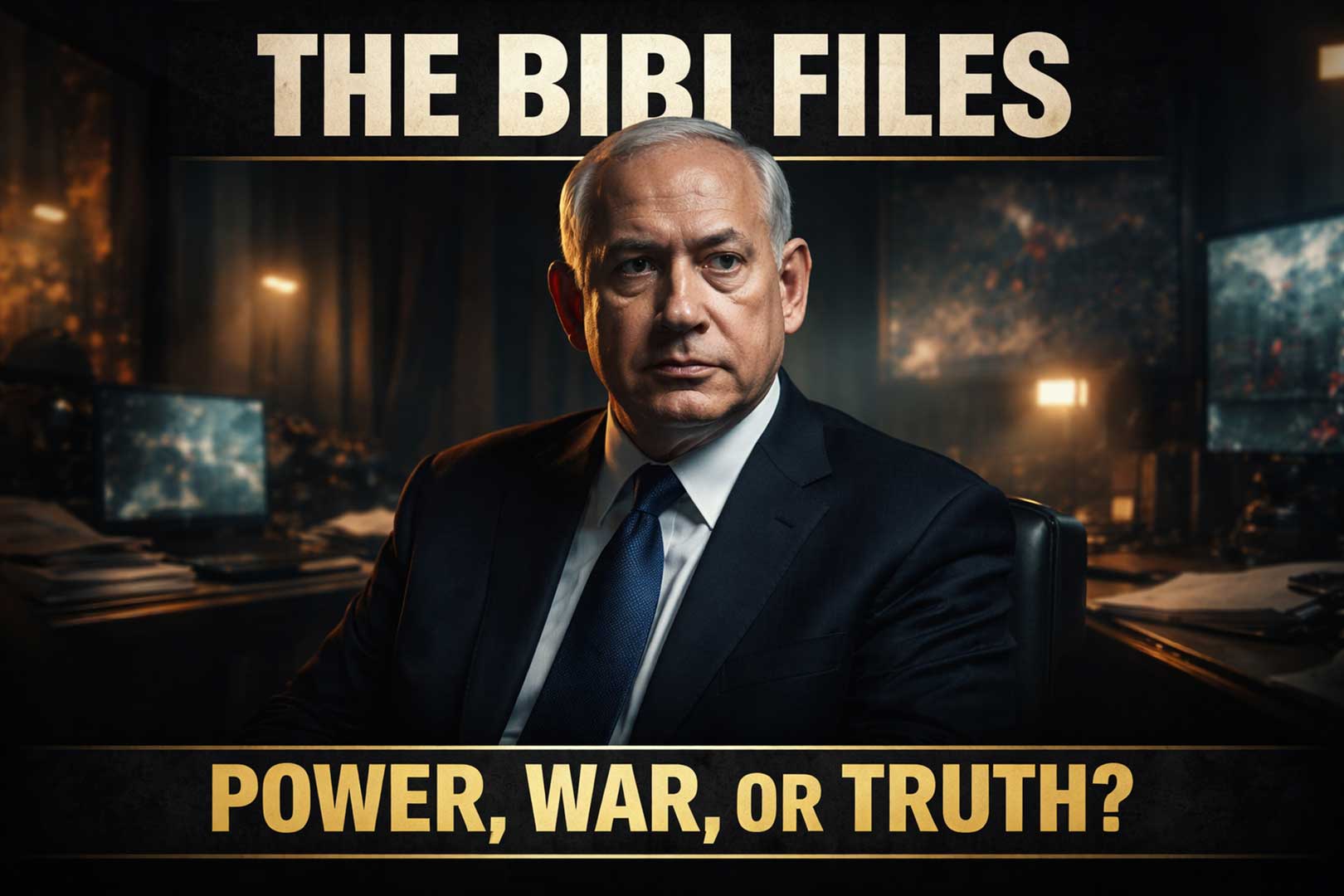
After hearing all of this, the deepest takeaway is not that one side is pure and the other side is evil. Political reality is almost never that clean. The real danger is that people start needing reality to be clean so badly that they stop seeing what is right in front of them.
A leader under siege may truly believe he is defending his people. His critics may truly believe they are defending democracy. Journalists may believe they are revealing truth. Filmmakers may believe they are exposing power. Citizens may believe they are choosing survival. And still, somewhere inside all of that sincerity, something may be decaying.
That is the unsettling part.
A nation can get so used to permanent danger that it starts mistaking fear for wisdom. It can get so used to loyalty that it forgets how to judge. It can get so used to political emergency that it no longer notices how much of its moral language has been stripped down to one sentence: we have no choice.
But nations always have a choice.
Not always between peace and war.
Not always between innocence and guilt.
But between honesty and self-deception.
Between accountability and excuse.
Between using fear for clarity and using fear for control.
That is the real issue at the center of this whole story.
So whether The Bibi Files is, in the end, a revelation, a prosecution, or a weapon, it has still forced one question back onto the table, and it is the question that matters most:
What kind of people do we become when survival is no longer just a necessity, but a justification?
That question is bigger than Netanyahu. Bigger than this film. Bigger than Israel.
And until a country can answer that question without propaganda, without tribal reflex, and without hiding behind the comforting lie that power always belongs to the good guys, the crisis is not over.
If you want, I can next turn this into a full article opening and closing for ImaginaryTalks in the same tone.
Short Bios:
Benjamin Netanyahu — Israeli politician and one of the country’s longest-serving prime ministers, known for his hardline security stance, global diplomacy skills, and central role in Israel’s modern political crises.
Douglas Murray — British author and commentator known for writing on Western identity, immigration, Islamism, and civilizational conflict, often from a strongly anti-radical and pro-Israel perspective.
Thomas L. Friedman — American columnist for The New York Times, known for analyzing foreign policy, globalization, the Middle East, and the moral direction of modern politics.
Bari Weiss — American journalist and editor known for writing on free speech, Jewish identity, antisemitism, media culture, and ideological conformity.
Yuval Noah Harari — Israeli historian and bestselling author of Sapiens, known for exploring history, power, technology, myth, and the future of human civilization.
Alan Dershowitz — American legal scholar and defense attorney known for his work on constitutional law, civil liberties, and high-profile political and criminal cases.
Preet Bharara — Former U.S. Attorney for the Southern District of New York, known for anti-corruption prosecutions and clear public commentary on law, institutions, and abuse of power.
Raviv Drucker — Israeli investigative journalist known for reporting on corruption, political power, and major controversies surrounding Benjamin Netanyahu and Israeli public life.
Victor Davis Hanson — American historian and commentator known for writing on war, classical history, nationalism, and the decline of Western institutions.
Ayaan Hirsi Ali — Author and public intellectual known for her critiques of religious extremism, defense of liberal values, and reflections on freedom, conscience, and civilization.
Bret Stephens — American columnist and foreign policy writer known for hawkish views on world affairs, strong support for Israel, and sharp critiques of political and cultural dogma.
John Mearsheimer — American political scientist known for realist international relations theory and blunt analysis of power, strategy, and state behavior.
Haviv Rettig Gur — Israeli journalist and analyst known for explaining Israeli history, identity, politics, and the deeper cultural tensions shaping the country.
Sam Harris — Author and podcast host known for work on reason, ethics, religion, terrorism, meditation, and moral clarity in public life.
Dennis Ross — Veteran American diplomat and Middle East negotiator known for decades of involvement in U.S.-Israel-Arab diplomacy and regional strategy.
Tucker Carlson — American media host and political commentator known for skeptical, anti-establishment framing on media, elite power, foreign policy, and political narrative.
Alex Gibney — Academy Award-winning documentary filmmaker known for investigative films on power, secrecy, corruption, and institutional misconduct.
Glenn Greenwald — Journalist known for adversarial reporting on surveillance, civil liberties, media bias, and state secrecy, with a strong emphasis on independent journalism.
Matt Taibbi — Reporter and essayist known for sharp writing on media, political corruption, populism, and the performance culture of modern journalism.
Natan Sharansky — Former Soviet dissident and Israeli statesman known for his moral witness on freedom, Jewish identity, democracy, and resistance to oppression.
Yossi Klein Halevi — Israeli author and thinker known for writing on Jewish identity, Israeli society, spiritual conflict, and the moral burden of national survival.
Leave a Reply