
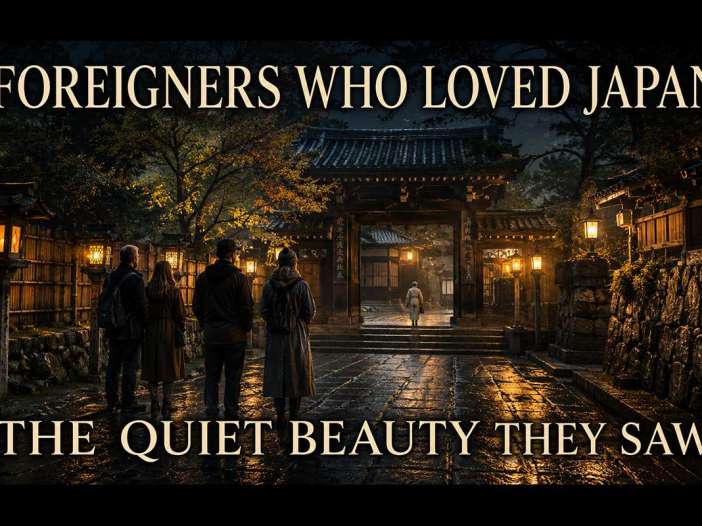
What if the quiet beauty of Japan is exactly what the modern world needs before it loses its soul?
Introduction by Nick Sasaki
There are countries admired for their power.
Countries admired for wealth, military strength, technology, or influence.
And then there is Japan.
A country that somehow entered the hearts of millions of people who were not born there.
Writers crossed oceans searching for it.
Painters dreamed about it without ever arriving.
Architects stood inside its quiet rooms and felt transformed.
Travelers walked through small streets at dusk and suddenly felt homesick for a place that was never originally theirs.
Why?
That question became the soul of this conversation.
Tonight’s guests came from different worlds, centuries, and cultures:
Donald Keene
Lafcadio Hearn
Vincent van Gogh
Steve Jobs
Bruno Taut
Claude Monet
Tadao Ando
Ruth Benedict
Alex Kerr
Alain de Botton
Audrey Tang
Hayao Miyazaki
Some saw Japan before modernization accelerated.
Some saw the beauty already beginning to disappear.
Some believed Japan still carries wisdom the future desperately needs.
Across these five conversations, they explored:
- Why foreigners fell in love with Japan at the soul level
- Why Japanese silence feels spiritually alive
- The hidden beauty and sadness inside Japanese people
- What Japan may be losing through modern life
- Why the world may still need Japan more than ever
Again and again, one truth emerged:
Japan’s greatest gift was never perfection.
It was sensitivity.
Sensitivity to seasons.
Sensitivity to silence.
Sensitivity to impermanence.
Sensitivity to craftsmanship.
Sensitivity to the fragile emotional texture of everyday life.
And perhaps that is why so many outsiders became emotional when speaking about Japan.
Because they sensed something humanity itself was beginning to lose.
(Note: This is an imaginary conversation, a creative exploration of an idea, and not a real speech or event.)
Topic 1: Why Did Foreigners Fall in Love With Japan at the Soul Level?
Opening — Nick Sasaki
What is it about Japan?
Not the famous Japan of postcards, sushi, temples, and cherry blossoms.
But the deeper Japan.
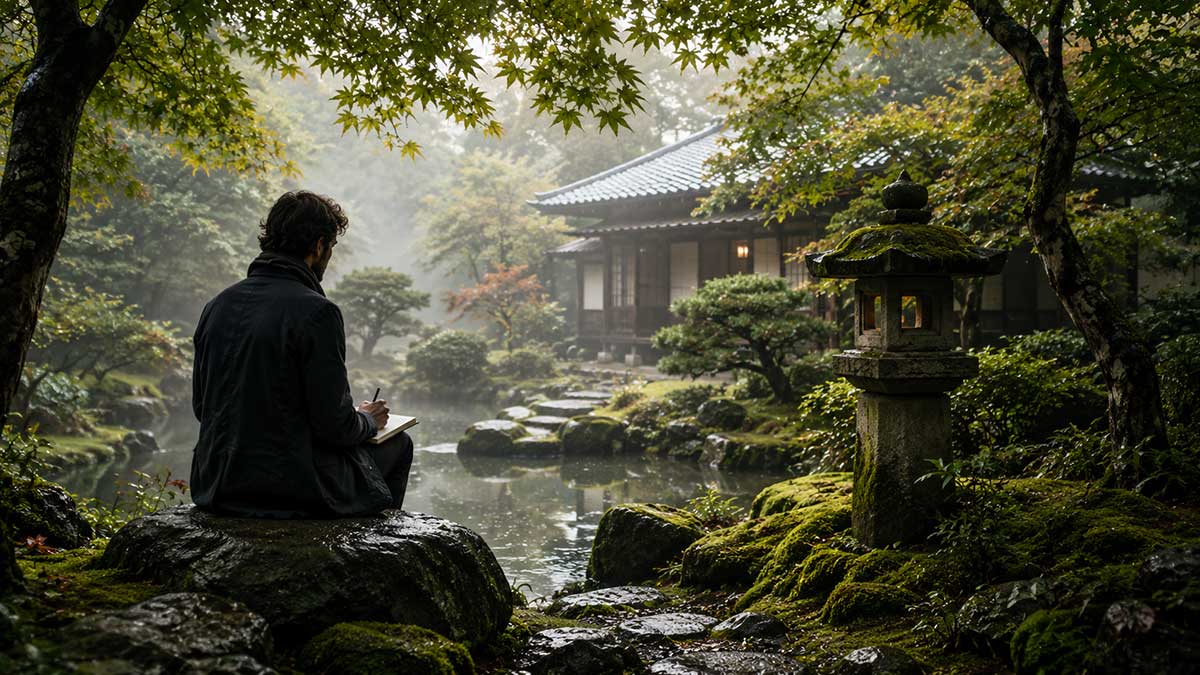
The Japan that appears in a quiet garden after rain.
The Japan hidden in an old wooden house.
The Japan that speaks through silence.
The Japan that makes a foreigner feel, strangely, that he has come home.
Tonight, we gather voices who loved Japan from the outside — and perhaps saw something many Japanese people could no longer see.
Donald Keene. Lafcadio Hearn. Vincent van Gogh. Steve Jobs. Bruno Taut.
Some came to Japan.
Some dreamed of Japan from afar.
Some studied it.
Some painted it.
Some built their lives around its spirit.
The question before us is simple, but almost painful:
Why did Japan touch them so deeply?
Question 1: What did Japan give you that your own civilization could not?
Donald Keene
Japan gave me tenderness without sentimentality.
In the literature I loved, sadness was not treated as failure. It was treated as part of beauty. A falling flower, an old poem, a farewell between friends — these things were not small. They were worthy of memory.
In the West, people often want victory. Japan taught me the dignity of impermanence.
That changed me.
Lafcadio Hearn
Japan gave me a world where the visible and invisible still lived together.
A tree was not just a tree.
A house was not just a house.
A grave was not just stone.
There was presence everywhere. Spirits, ancestors, memories, unseen tenderness.
I came from a world that had begun to explain everything. Japan gave me a world that still bowed before mystery.
Vincent van Gogh
I never truly reached Japan with my body.
But in my heart, I went there many times.
The Japanese prints showed me a world without heaviness. Clear lines. Honest color. Ordinary people made eternal. Rain, bridges, women walking, branches in bloom.
Japan gave me the courage to see life as art.
Not grand art. Daily art.
Steve Jobs
Japan gave me reduction.
Not emptiness. Reduction.
A tea bowl. A garden. A blade. A room. A package. A gesture.
Japan showed me that when you remove what is unnecessary, what remains can become almost sacred.
That affected how I saw design, life, and attention.
Bruno Taut
Japan gave me proof that simplicity can be greater than luxury.
When I saw Katsura Imperial Villa, I felt that architecture had reached a kind of purity. Nothing screamed. Nothing begged for admiration.
It simply existed in perfect balance.
That is rare. Very rare.
Question 2: Why do you think many Japanese people may not see what foreigners see?
Lafcadio Hearn
People often stop seeing the miracle closest to them.
A child born near the sea may not hear the waves.
A man raised near a temple may not feel its silence.
A woman who walks past old houses every day may not know they are carrying centuries.
Foreign love sometimes comes from distance.
Distance wounds us, but it also opens the eyes.
Donald Keene
Japanese people lived inside the culture, so they did not always need to name it.
Foreigners had to name it.
We had to say, “This poem is extraordinary.”
“This gesture is beautiful.”
“This sadness is profound.”
But for Japanese people, it was simply life.
That is both a blessing and a danger.
Bruno Taut
Modernization often teaches people to be ashamed of their own inheritance.
They begin to think the old house is backward.
The small room is poor.
The quiet garden is useless.
The handmade object is inefficient.
Then a foreigner arrives and says, “No. This is treasure.”
But by then, sometimes the treasure is already being demolished.
Steve Jobs
People often confuse progress with more.
More features. More buildings. More noise. More speed.
Japan’s deepest strength was never more.
It was less, done with care.
If Japan forgets that, it loses something the whole world still needs.
Vincent van Gogh
Perhaps Japanese people saw hardship where I saw beauty.
They saw old streets, old labor, old customs.
I saw rhythm, color, grace.
Both are true.
Love must never become blind. But neither should familiarity become blindness.
Question 3: What is the one part of Japan you would beg future generations not to lose?
Donald Keene
The love of language.
Not only literature, but the feeling that words matter.
A poem of seventeen syllables can hold a season, a death, a prayer, a smile. That is civilization.
When a people lose reverence for language, they lose the ability to remember themselves.
Lafcadio Hearn
Do not lose your sense of the unseen.
Not superstition. Not fear.
I mean reverence.
The feeling that the dead are near.
That nature is alive.
That a home contains memory.
That silence may speak.
A country without ghosts becomes spiritually poor.
Vincent van Gogh
Do not lose the beauty of ordinary life.
A bowl of rice.
A lantern.
A blue evening.
A woman crossing a bridge.
Rain on a roof.
The ordinary is where the soul hides.
Bruno Taut
Do not lose restraint.
The world is becoming loud, vulgar, inflated.
Japan once knew how to create beauty through proportion, shadow, humility, and pause.
That knowledge is not old. It is needed more than ever.
Steve Jobs
Do not lose craftsmanship.
Care is spiritual.
The person who folds paper carefully, sharpens a knife carefully, sweeps a floor carefully, designs a room carefully — that person is saying life deserves attention.
That may be Japan’s greatest gift.
Closing — Nick Sasaki
Maybe Japan’s deepest beauty is not something you can explain.
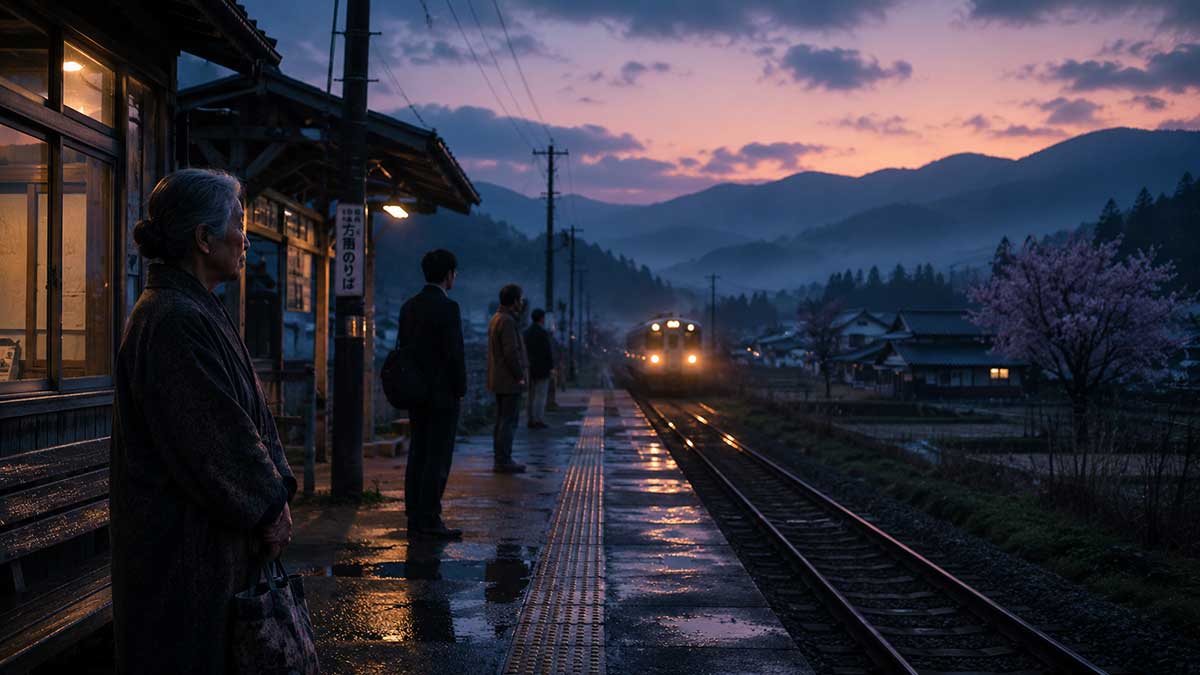
Maybe it is something you feel when a train leaves a small station at dusk.
When an old woman bows after serving tea.
When rain falls on a temple roof.
When a child hears cicadas in summer and does not yet know the memory will stay forever.
These foreigners loved Japan not because Japan was perfect.
They loved Japan because Japan carried something fragile.
A way of seeing.
A way of waiting.
A way of accepting sadness without surrendering to despair.
And perhaps the saddest truth is this:
Sometimes outsiders come to remind a nation of the beauty it has forgotten.
Japan does not need to become a museum.
It does not need to reject the future.
But it must remember its soul.
Because the world still needs the Japan that whispers.
Not the loud Japan.
Not the commercial Japan.
Not the Japan trying to prove itself.
The Japan that quietly says:
Life is brief.
Beauty is near.
Bow before what cannot be replaced.
Topic 2: Why Is Japanese Silence So Powerful?
Opening — Nick Sasaki
Some countries speak through monuments.
Japan often speaks through silence.
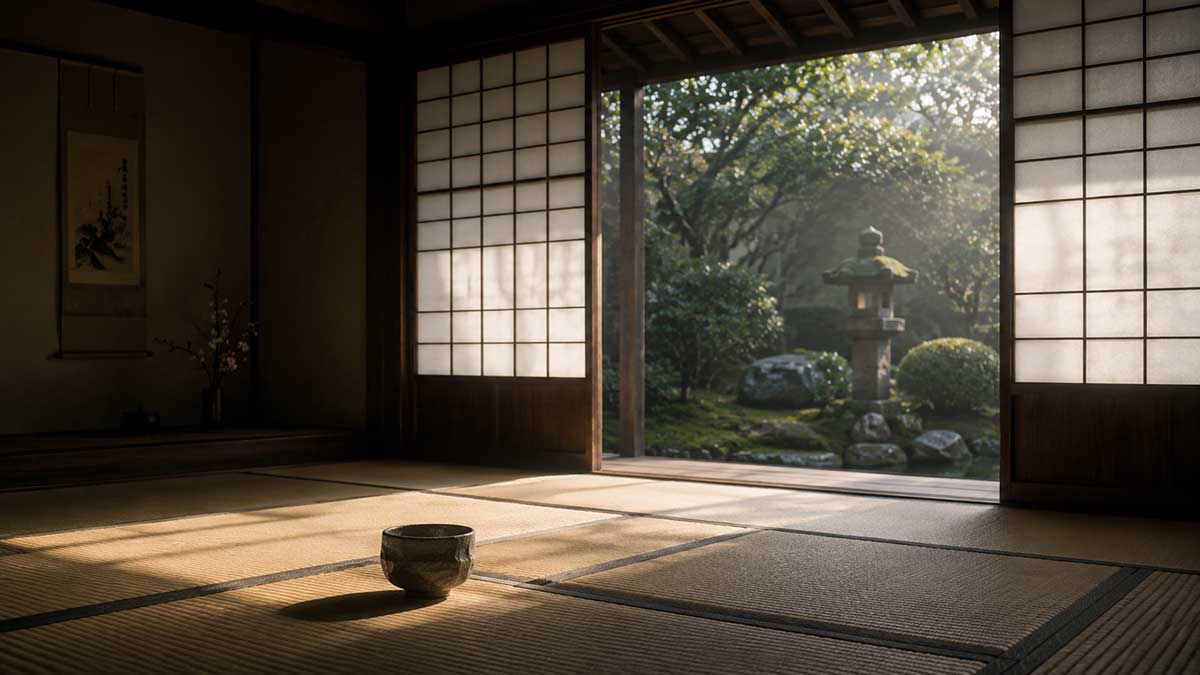
A moss garden.
A sliding door.
An empty room.
A cup placed with care.
A temple bell fading into evening air.
To outsiders, this silence can feel strange at first.
But then something happens.
The silence does not feel empty.
It feels alive.
Tonight, Claude Monet, Bruno Taut, Steve Jobs, Lafcadio Hearn, and Tadao Ando gather to ask:
Why does Japanese quietness touch the human soul so deeply?
Question 1: Why do Japanese temples, gardens, and rooms move people beyond words?
Bruno Taut
Because they do not attack the visitor.
Many buildings in the West demand admiration. They rise, dominate, impress.
But the finest Japanese spaces invite surrender.
You enter slowly.
You lower your voice.
Your body changes before your mind understands why.
The room does not say, “Look at me.”
It says, “Become quiet enough to see.”
Claude Monet
For me, Japan was not only a place. It was a way of seeing.
The Japanese print taught me that beauty can come from arrangement, not drama.
A branch crossing the frame.
A bridge half hidden.
Water reflecting sky.
A figure seen from behind.
Nothing needs to shout.
The eye is invited to rest, then awaken.
Steve Jobs
Japanese silence has structure.
It is not random emptiness.
A room feels empty, but every object has been chosen.
A garden feels natural, but every stone has meaning.
A product feels simple, but thousands of decisions have disappeared inside it.
That kind of silence is disciplined.
It is what happens when care removes noise.
Lafcadio Hearn
Japanese silence is filled with memory.
In an old temple, one does not feel alone. One feels accompanied by all who prayed there before.
The wood remembers hands.
The incense remembers grief.
The garden remembers seasons.
The bell remembers the dead.
This is why the silence feels alive.
It is inhabited.
Tadao Ando
Silence gives space back to the human spirit.
Modern life fills everything. Screens, voices, speed, information.
But a quiet wall, a shaft of light, a pool of water — these return us to ourselves.
Architecture should not always entertain.
Sometimes it should purify.
Question 2: Can “ma,” emptiness, and restraint heal the modern world?
Steve Jobs
Yes.
The modern world is sick from excess.
Too many choices.
Too many messages.
Too many objects.
Too many opinions.
People think freedom means having more.
But sometimes freedom begins when the unnecessary disappears.
Japan understood that space is not wasted.
Space lets meaning breathe.
Bruno Taut
Restraint is not poverty.
This is what many modern people fail to grasp.
A simple room can be richer than a palace if it has proportion, texture, light, and dignity.
The world does not need more decoration.
It needs deeper taste.
Claude Monet
Emptiness allows perception to become delicate again.
When a garden is too crowded, the flower disappears.
When a painting is too busy, the light disappears.
When life is too full, the soul disappears.
Japan taught the West that the space around a thing can be as beautiful as the thing itself.
Lafcadio Hearn
Ma is a spiritual mercy.
A pause in conversation.
A quiet corner in a house.
A moment before the answer.
These pauses protect the heart.
Without them, human beings become mechanical.
They respond, produce, consume, but no longer listen.
Tadao Ando
The world needs emptiness, but not emptiness without meaning.
A blank concrete wall can be cold.
But when light touches it, when silence gathers around it, when a person stands before it honestly, emptiness becomes encounter.
Japan’s lesson is not minimalism as style.
It is emptiness as attention.
Question 3: What can Western civilization learn from Japanese quiet beauty?
Claude Monet
That beauty does not need ownership.
A reflection on water belongs to no one.
A branch in spring belongs to no one.
A moment of light belongs to no one.
Japanese art helped me see that beauty is not captured by force.
It is received.
Bruno Taut
The West can learn humility.
Greatness is not always height.
Luxury is not always gold.
Progress is not always replacement.
Sometimes greatness is a small room where everything is exactly where it should be.
Steve Jobs
The West can learn focus.
Not aesthetic focus only.
Moral focus.
What matters?
What can be removed?
What deserves care?
What should never be cheapened?
Japan at its best asks those questions quietly.
Lafcadio Hearn
The West can learn reverence for fragile things.
A paper screen.
A seasonal flower.
A childhood memory.
An ancestor’s name.
A local festival.
Modern civilization preserves what is profitable.
Japan reminds us to preserve what is tender.
Tadao Ando
The West can learn that silence is not weakness.
Silence can be strength.
Silence can be resistance.
Silence can be beauty.
Silence can be prayer.
A society that cannot be silent cannot truly reflect.
Closing — Nick Sasaki
Maybe Japanese silence moves people because it does not try to impress them.
It waits.
It trusts that if the visitor becomes quiet enough, something will appear.
A memory.
A grief.
A forgotten tenderness.
A longing for home.
In a noisy world, Japan’s quiet beauty feels almost like a rescue.
Not dramatic.
Not loud.
Not victorious.
Just a room.
A garden.
A shadow.
A pause.
And inside that pause, a person may remember something very simple:
I am alive.
Life is passing.
Beauty does not need to shout.
And silence, when filled with care, can speak more deeply than words.
Topic 3: What Did Foreigners See in Japanese People That Japanese People Could Not See Themselves?
Opening — Nick Sasaki
To love a country deeply is to eventually see its sadness.
Many foreigners came to Japan and fell in love with its kindness, discipline, beauty, and grace.
But after years of living there, many also noticed another side.
Loneliness hidden behind politeness.
Pressure hidden behind harmony.
Exhaustion hidden behind responsibility.
Tonight, Donald Keene, Ruth Benedict, Alex Kerr, Alain de Botton, and Audrey Tang gather to ask:
What beauty and pain exist inside the Japanese soul?
Question 1: What moved you most deeply about Japanese people?
Donald Keene
Their consideration for others.
I do not mean superficial politeness.
I mean the instinct to avoid burdening another person.
A Japanese person may suffer quietly for a very long time rather than disturb the harmony of a group.
There is nobility in that.
But also tragedy.
Ruth Benedict
Japan fascinated me because shame and honor shaped society differently than in the West.
In many Western cultures, morality is often internal: “What do I believe is right?”
In Japan, morality has long carried a relational dimension: “How will my actions affect others?”
This created extraordinary social sensitivity.
People noticed atmosphere, hierarchy, timing, tone.
The Japanese became masters of emotional awareness.
Alex Kerr
I was deeply moved by the care hidden in ordinary life.
An elderly shopkeeper wrapping an item beautifully.
A train arriving exactly on time.
Someone cleaning a street nobody told them to clean.
In many places, efficiency destroys grace.
Japan somehow preserved both for a long time.
Alain de Botton
I admired Japan’s emotional intelligence.
In the West, people often glorify self-expression.
Japan understood something subtler:
That love sometimes means restraint.
That maturity may involve not saying every thought immediately.
That elegance can exist in emotional control.
Modern culture mocks restraint, but without restraint civilization collapses into noise.
Audrey Tang
I was moved by the collective instinct.
During crises, many Japanese people naturally think of the whole community first.
That social trust is incredibly precious.
Technology cannot replace that.
Governments cannot manufacture that overnight.
It comes from culture, memory, and shared behavior across generations.
Question 2: What sadness or hidden suffering did you notice in Japan?
Alex Kerr
I noticed exhaustion.
People carrying unbearable expectations quietly.
Students terrified of failure.
Workers sacrificing family life.
Elderly people disappearing into isolation.
Japan often teaches people to endure beautifully.
But endurance without release becomes sorrow.
Donald Keene
Loneliness.
Many Japanese friendships are deep but emotionally restrained.
Many people feel things intensely but struggle to confess them openly.
I sometimes wondered how many Japanese people lived with enormous emotional worlds trapped inside silence.
Alain de Botton
Japan can become too afraid of disruption.
People may suppress individuality to protect harmony.
But human beings need both belonging and selfhood.
If society punishes vulnerability too strongly, people begin wearing masks even when alone.
That creates spiritual fatigue.
Ruth Benedict
Every civilization pays a price for its strengths.
Japan’s discipline created refinement.
But discipline can become fear.
Honor can become anxiety.
Duty can become emotional imprisonment.
The same culture that creates extraordinary beauty can also create unbearable pressure.
Audrey Tang
Modern digital culture worsens this problem.
Young people compare themselves constantly.
Failure feels public.
Isolation grows quietly.
Japan already had strong social pressure before the internet.
Now many young people feel watched all the time.
A society must create spaces where people can breathe imperfectly.
Question 3: Can Japan become freer without losing its soul?
Audrey Tang
Yes, if freedom is rooted in compassion instead of individual ego.
Freedom does not need to destroy community.
Young Japanese people can become more expressive while still preserving care for others.
The future should not force a choice between humanity and individuality.
Alain de Botton
Japan should not become a copy of the West.
The West itself is spiritually exhausted in many ways.
Japan’s emotional restraint contains wisdom.
The goal is balance:
Enough freedom to breathe.
Enough structure to belong.
That balance is one of humanity’s hardest achievements.
Donald Keene
I hope Japan becomes kinder to weakness.
People should not feel ashamed for struggling.
A civilization becomes truly mature when people no longer need to hide their suffering to deserve dignity.
Alex Kerr
Japan must protect its humanity from pure efficiency.
When every field becomes convenience stores, chain restaurants, concrete, screens, and speed, something irreplaceable disappears.
A nation can modernize without erasing its texture.
But it must choose carefully.
Ruth Benedict
The future of Japan may depend on whether it can reinterpret honor.
Not honor through perfection.
Honor through honesty.
Not duty without rest.
Duty with humanity.
Cultures survive when they evolve without abandoning their emotional core.
Closing — Nick Sasaki
Perhaps foreigners sometimes saw Japanese beauty more clearly because they were not born inside its pressures.
They saw the bow, but not always the burden behind the bow.
The harmony, but not always the loneliness inside it.
The discipline, but not always the exhaustion beneath it.
And yet, many still loved Japan deeply.
Not because it was flawless.
But because even its sadness carried dignity.
Japan taught the world that civilization is not measured only by wealth or power.
It is measured by sensitivity.
By care.
By whether people still notice seasons changing.
Whether language still carries tenderness.
Whether silence still has meaning.
Whether beauty still survives in ordinary life.
But perhaps now Japan faces a painful question:
Can a people continue carrying beauty if they no longer allow themselves to breathe?
Maybe the future of Japan depends on this:
Learning that vulnerability does not destroy dignity.
Sometimes it completes it.
Topic 4: What Is Japan Losing — And Can It Still Be Saved?
Opening — Nick Sasaki
Every civilization loses something as it modernizes.
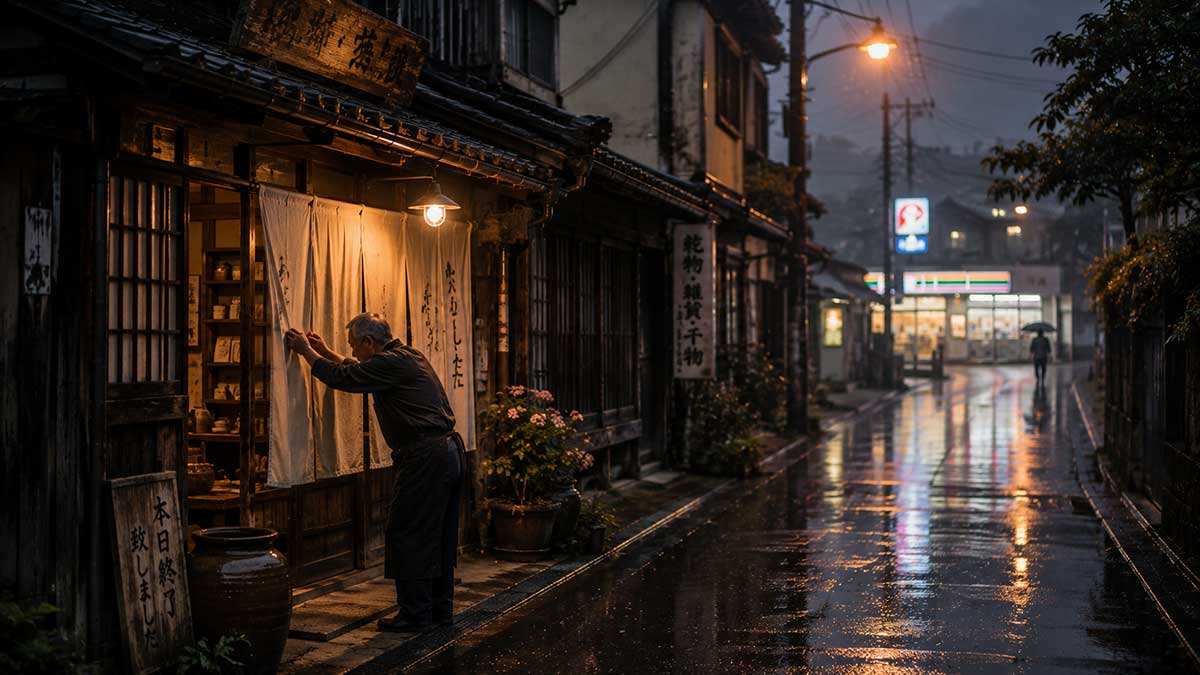
But in Japan, the loss often feels strangely personal.
An old alley disappears.
A family bathhouse closes.
A handmade shop becomes a convenience store.
A quiet neighborhood becomes another glass building.
Nothing dramatic happens.
And yet people feel grief.
Foreigners who loved Japan often sensed this pain very strongly.
They feared that the Japan they fell in love with — the slower, quieter, more human Japan — was slowly fading away.
Tonight, Alex Kerr, Hayao Miyazaki, Steve Jobs, Donald Keene, and Bruno Taut gather to ask:
What is disappearing from Japan?
And is it too late to protect it?
Question 1: What part of Japan do you feel is disappearing most quickly?
Alex Kerr
Texture.
Old Japan had texture everywhere.
Wooden houses with worn floors.
Tiny restaurants run by families for generations.
Rural festivals surviving quietly.
Rivers that still looked alive.
Now many places feel standardized.
The tragedy is not only aesthetic.
When places lose texture, people lose emotional connection to where they live.
Hayao Miyazaki
I feel Japan is losing intimacy with nature.
Children once played with insects, rivers, wind, mud, forests.
Now many experience nature mainly through screens or scheduled events.
A civilization becomes spiritually weak when nature becomes decoration instead of relationship.
That is one reason my films mourn disappearing landscapes.
Steve Jobs
I think Japan risks losing craftsmanship to convenience.
Convenience is seductive.
Faster. Cheaper. Easier.
But craftsmanship slows people down enough to care.
When everything becomes disposable, attention disappears.
And once attention disappears, culture becomes shallow very quickly.
Donald Keene
I fear the loss of memory.
Modern societies move so quickly that they stop honoring continuity.
But Japan once understood continuity beautifully.
A tea shop surviving one hundred years.
A poem preserved across generations.
Seasonal rituals repeated carefully.
These things tell people:
You belong to something older than yourself.
Bruno Taut
I fear the destruction of proportion.
Old Japanese architecture respected balance between human beings and space.
Modern development often ignores this entirely.
Buildings grow larger, louder, more aggressive.
But human beings do not become happier surrounded by domination.
They become tired.
Question 2: Has modern efficiency damaged Japan’s soul?
Steve Jobs
Efficiency itself is not evil.
The danger comes when efficiency becomes the highest value.
If every decision is based on speed, profit, and convenience, eventually beauty becomes irrational.
Then craftsmanship dies.
Patience dies.
Depth dies.
Japan once balanced efficiency with reverence.
That balance is fragile.
Alex Kerr
Japan often modernized by destroying what foreigners admired most.
Beautiful rivers became concrete channels.
Historic towns became cluttered with signs and wires.
Mountains filled with abandoned developments.
The irony is heartbreaking.
Many Japanese people traveled overseas searching for beauty while standing inside one of the world’s richest aesthetic traditions.
Hayao Miyazaki
Modern life can make people emotionally numb.
Too much noise.
Too much consumption.
Too little wonder.
Children need mystery.
Adults need slowness.
Communities need shared memory.
Without those things, people become spiritually hungry even if materially comfortable.
Donald Keene
Japan once accepted imperfection naturally.
Now many people feel pressured to optimize every aspect of life.
Productivity. Appearance. Success. Social image.
But human beings are seasonal creatures.
Like cherry blossoms, we are temporary.
A civilization becomes cruel when it forgets that.
Bruno Taut
The greatest danger is imitation.
When Japan blindly imitates global modernity, it abandons the very qualities that made it unique.
The world does not need another generic modern country.
It needs the Japan that understood shadow, restraint, and silence.
Question 3: What must Japan protect at all costs for future generations?
Hayao Miyazaki
Children’s imagination.
Protect forests.
Protect local stories.
Protect spaces where children can wander without purpose.
A child staring at clouds may be doing something more important than memorizing information.
Wonder is civilization’s hidden foundation.
Donald Keene
Protect literature and language.
When language becomes shallow, thought becomes shallow.
Japan’s literary tradition preserved emotional subtlety unlike almost anywhere else.
Future generations must still encounter beauty in words, not only speed in communication.
Steve Jobs
Protect people who care deeply about their work.
The sushi master.
The carpenter.
The knife maker.
The gardener.
The designer.
These people preserve civilization quietly.
Not through slogans.
Through attention.
Alex Kerr
Protect old towns and rural culture before they vanish completely.
Once destroyed, they cannot truly be recreated.
Tourist replicas are not the same as living culture.
Japan still has treasures hidden in small places.
But time is running out.
Bruno Taut
Protect emptiness.
Not abandoned emptiness.
Sacred emptiness.
Gardens. Quiet rooms. Human scale. Places without advertisements screaming everywhere.
A civilization must leave space for the soul to breathe.
Closing — Nick Sasaki
Maybe what people fear losing in Japan is not only architecture, traditions, or old streets.
Maybe they fear losing a way of being human.
A slower awareness.
A gentler rhythm.
A civilization that once understood beauty without excess.
The painful truth is that destruction rarely announces itself dramatically.
Sometimes a culture disappears one parking lot at a time.
One demolished shop at a time.
One forgotten festival at a time.
One exhausted generation at a time.
And then suddenly people look around and feel homesick inside their own country.
But perhaps hope still exists.
Because many Japanese people — especially younger generations — are beginning to search again.
For meaning.
For craftsmanship.
For quietness.
For authenticity.
For connection.
Maybe Japan’s future will not come from becoming more modern than everyone else.
Maybe it will come from remembering what the world already loved about Japan in the first place.
Not perfection.
Not technology.
Not efficiency.
But humanity shaped with care.
Topic 5: Why Does the World Still Need Japan?
Opening — Nick Sasaki
The modern world is exhausted.
People are connected constantly, yet feel alone.
Cities grow larger, yet many hearts grow emptier.
Technology advances faster and faster, but human beings still ache for meaning.
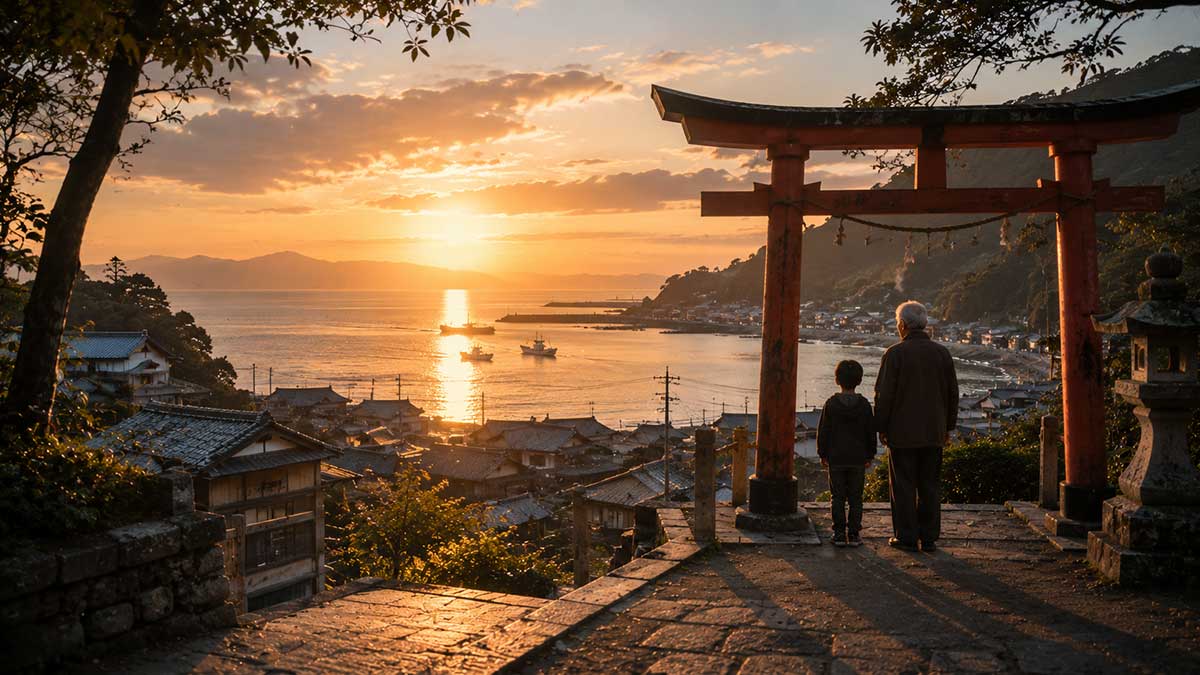
And strangely, in this restless age, many people around the world still look toward Japan.
Not because Japan is perfect.
Japan struggles with loneliness, pressure, aging, and uncertainty like every nation.
Yet something inside Japan still feels necessary.
A quiet wisdom.
A sensitivity to impermanence.
A respect for craftsmanship.
A civilization that once understood how beauty and sadness could exist together.
Tonight, Steve Jobs, Lafcadio Hearn, Donald Keene, Hayao Miyazaki, and Vincent van Gogh gather for one final conversation:
Why does the world still need Japan?
Question 1: What does Japan offer modern humanity that is becoming rare elsewhere?
Steve Jobs
Attention.
Real attention.
The modern world fragments human focus constantly. Notifications, advertising, endless stimulation.
But traditional Japan understood concentration.
A tea ceremony.
A craftsman sharpening a blade.
A chef preparing one dish carefully for decades.
These acts say something revolutionary:
Your life deserves presence.
Without presence, technology becomes addiction instead of tool.
Lafcadio Hearn
Japan preserved intimacy with impermanence.
In many societies, people try desperately to escape death, aging, and change.
Japan once approached impermanence differently.
Cherry blossoms fall beautifully precisely because they do not last.
That emotional acceptance creates gentleness.
A civilization terrified of impermanence becomes violent toward time itself.
Donald Keene
Japan offers emotional subtlety.
Modern communication often becomes loud, immediate, simplistic.
But Japanese culture long valued nuance.
A pause could carry meaning.
A season could express emotion.
A small gesture could contain affection.
Human beings need subtlety to remain emotionally civilized.
Hayao Miyazaki
Japan still remembers how to coexist with small things.
An insect.
Rain on leaves.
A local shrine.
An old path through trees.
Modern civilization treats only large things as important.
But happiness often hides inside small things protected over time.
Vincent van Gogh
Japan reminds humanity that beauty belongs inside ordinary life.
Not only museums.
Not only luxury.
Not only grand success.
A cup.
A doorway.
An evening sky.
Laundry moving in wind.
The soul survives through these moments.
Question 2: Could Japanese values become more important in the AI age?
Steve Jobs
Absolutely.
AI will increase efficiency tremendously.
But efficiency without humanity becomes dangerous very quickly.
The future will belong to societies that preserve human depth while using technology wisely.
Japan’s traditions — simplicity, care, restraint, attention — may become more valuable, not less.
Hayao Miyazaki
I worry deeply about a world that loses contact with the living world.
Children already spend too much time inside artificial environments.
If AI creates endless simulation, humanity may forget the smell of forests, old books, rain, soil, oceans.
Japan’s older traditions still contain pathways back to reality.
That matters enormously.
Donald Keene
The AI age may make memory even more precious.
Machines can store information endlessly.
But memory is more than information.
Memory carries tenderness, grief, atmosphere, humanity.
Japan’s literature understood this deeply.
A civilization must protect emotional memory, not only data.
Lafcadio Hearn
AI may answer questions.
But it cannot replace reverence.
It cannot kneel before mystery.
It cannot truly feel the sacred loneliness of a temple at dusk or the invisible presence of ancestors in a family home.
Japan still remembers fragments of that sacred relationship with the unseen.
Vincent van Gogh
Machines may create images.
But suffering, longing, tenderness, and wonder are still human.
Art is not merely production.
It is the cry of a soul trying to touch another soul.
Japan understood that beauty often emerges from fragility.
That truth will survive every technology.
Question 3: One hundred years from now, what part of Japan do you hope still survives?
Donald Keene
Seasonal awareness.
A civilization connected to seasons remains emotionally alive.
The first spring blossom.
Summer cicadas.
Autumn leaves.
Winter silence.
Without seasons in the heart, time becomes mechanical.
Lafcadio Hearn
I hope Japan never loses its ghosts.
Not literal ghosts only.
I mean the feeling that the dead still matter.
That ancestors remain part of life.
That places hold memory.
That silence contains presence.
A world without spiritual memory becomes unbearably lonely.
Vincent van Gogh
I hope ordinary beauty survives.
Not only preserved temples and famous gardens.
I hope small streets survive.
Old cafés survive.
Quiet evenings survive.
Human warmth survives.
Civilization dies when ordinary tenderness disappears.
Steve Jobs
I hope Japan preserves craftsmanship.
Not as luxury branding.
As philosophy.
The belief that how something is made reflects how people value life itself.
A handmade object still carries human attention inside it.
That matters.
Hayao Miyazaki
I hope children still encounter wonder naturally.
Not through algorithms.
Through wind.
Through stories.
Through hidden places.
Through silence.
Through imagination.
A society that loses wonder eventually loses its soul.
Closing — Nick Sasaki
Perhaps the world still needs Japan because Japan reminds humanity of something modern life keeps trying to erase:
That slowness has value.
That silence has meaning.
That imperfection can be beautiful.
That sadness and beauty are not enemies.
Foreigners who loved Japan were not searching for perfection.
They were searching for humanity.
And in old temples, quiet streets, handwritten poems, handmade bowls, train station melodies, lantern festivals, rain-soaked evenings, and careful gestures — they found traces of a civilization that still treated life delicately.
Maybe that is Japan’s greatest gift.
Not power.
Not dominance.
Not endless growth.
But sensitivity.
The ability to notice fragile things before they disappear.
And perhaps that is why so many people around the world still feel emotional when they think of Japan.
Because somewhere deep inside, they fear humanity itself may disappear if places like this vanish completely.
So the question is no longer only whether Japan can survive.
The question is:
Can the human soul survive without what Japan has been quietly trying to teach the world all along?
Final Thoughts by Donald Keene

When I first encountered Japan, I did not realize it would become part of my soul.
At first, I loved the literature.
Then I loved the language.
Then slowly, almost without noticing, I began loving the spirit behind them.
The tenderness hidden in restraint.
The elegance hidden in simplicity.
The acceptance hidden in sadness.
Japan taught me that civilization is not measured only by achievement.
It is measured by emotional refinement.
By how gently people treat transient things.
By whether beauty survives ordinary life.
By whether silence still has dignity.
But I confess something saddened me in later years.
I sometimes feared Japan no longer understood how precious it was.
Old buildings vanished.
Young people became exhausted.
Noise increased.
Speed increased.
The quiet confidence of older Japan began fading.
And yet, even then, I never lost hope.
Because the soul of Japan was never only in architecture or tradition.
It lived inside gestures.
Inside sensitivity.
Inside countless ordinary people who still apologized softly, wrapped objects carefully, respected seasons, noticed small beauty, and tried not to burden others.
These things may appear small.
They are not small.
Civilizations survive through invisible habits of care.
The world today grows louder, harsher, faster, more impatient.
Perhaps this is why so many people still turn toward Japan emotionally.
Not because Japan solved human suffering.
But because Japan once showed another way to carry it.
With dignity.
With restraint.
With awareness that life is brief and therefore sacred.
I do not believe Japan should become frozen in the past.
No civilization survives by refusing change.
But I hope Japan never abandons the qualities that made strangers across the world fall in love with it in the first place.
Its gentleness.
Its humility.
Its silence.
Its emotional depth.
Because if those disappear completely, something larger than Japan may disappear with them.
Something profoundly human.
Short Bios:
Donald Keene
American-born scholar who became one of the world’s leading experts on Japanese literature and later acquired Japanese citizenship after the 2011 earthquake.
Lafcadio Hearn
Writer and journalist who introduced Japanese ghost stories, spirituality, and cultural life to the Western world through deeply emotional writings.
Vincent van Gogh
Legendary painter profoundly influenced by Japanese ukiyo-e prints, which reshaped his use of color, composition, and emotional simplicity.
Steve Jobs
Technology visionary deeply inspired by Zen Buddhism, Japanese minimalism, craftsmanship, and simplicity in design philosophy.
Bruno Taut
German architect who passionately praised traditional Japanese architecture, especially Katsura Imperial Villa, as one of the world’s highest artistic achievements.
Claude Monet
Founder of French Impressionism whose work and gardens were heavily inspired by Japanese aesthetics and composition.
Tadao Ando
World-renowned architect known for blending concrete, light, silence, and spiritual emptiness into modern Japanese architecture.
Ruth Benedict
Anthropologist best known for The Chrysanthemum and the Sword, an influential study of Japanese culture and social values.
Alex Kerr
Writer and cultural preservationist known for warning about the disappearance of traditional Japanese landscapes and craftsmanship.
Alain de Botton
Philosopher and author exploring emotional life, modern anxiety, meaning, love, and civilization through accessible philosophical reflection.
Audrey Tang
Technology thinker and civic innovator focused on digital democracy, collective intelligence, and compassionate technological development.
Hayao Miyazaki
Legendary filmmaker whose works explore nature, childhood wonder, environmental loss, war, and the fragile beauty of human life.
Leave a Reply