
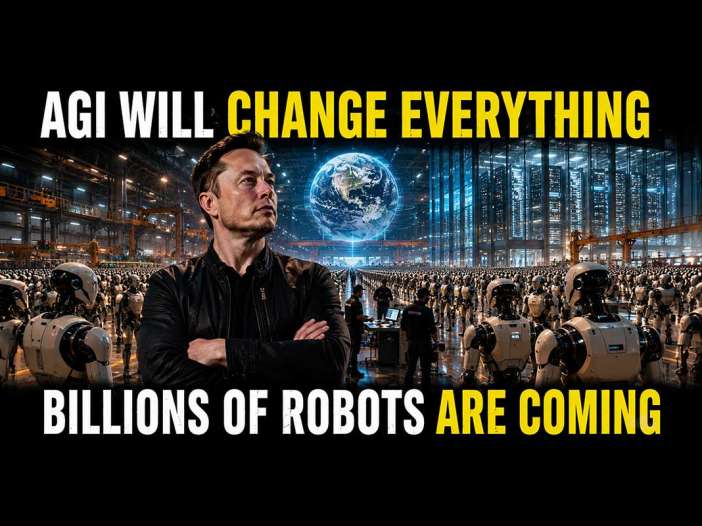
What if billions of humanoid robots transformed work, wealth, and human purpose faster than society could adapt?
Introduction by Nick Sasaki
There are moments in history when humanity senses that the ground beneath civilization is beginning to move.
The Industrial Revolution was one.
The discovery of electricity was another.
The internet changed how humanity communicates.
But artificial intelligence may become something far larger.
Not merely a tool.
Not merely an invention.
But a new form of intelligence entering human history beside us.
What makes this moment unsettling is the speed. Many experts once believed these breakthroughs were generations away. Now some believe AGI may emerge within years, followed by millions — perhaps billions — of humanoid robots capable of physical labor at massive scale.
For the first time, humanity may face intelligence and labor that are no longer limited by biology.
That possibility creates both hope and fear.
Hope that disease, poverty, dangerous labor, and material scarcity may shrink dramatically.
Fear that power, wealth, meaning, and even human identity itself may be destabilized.
Tonight’s discussion was never really about technology alone.
It was about human beings staring into a mirror and wondering what remains unique about us when the mirror begins answering back.
(Note: This is an imaginary conversation, a creative exploration of an idea, and not a real speech or event.)
Topic 1 — When AI Surpasses All Human Intelligence
Opening — Nick Sasaki
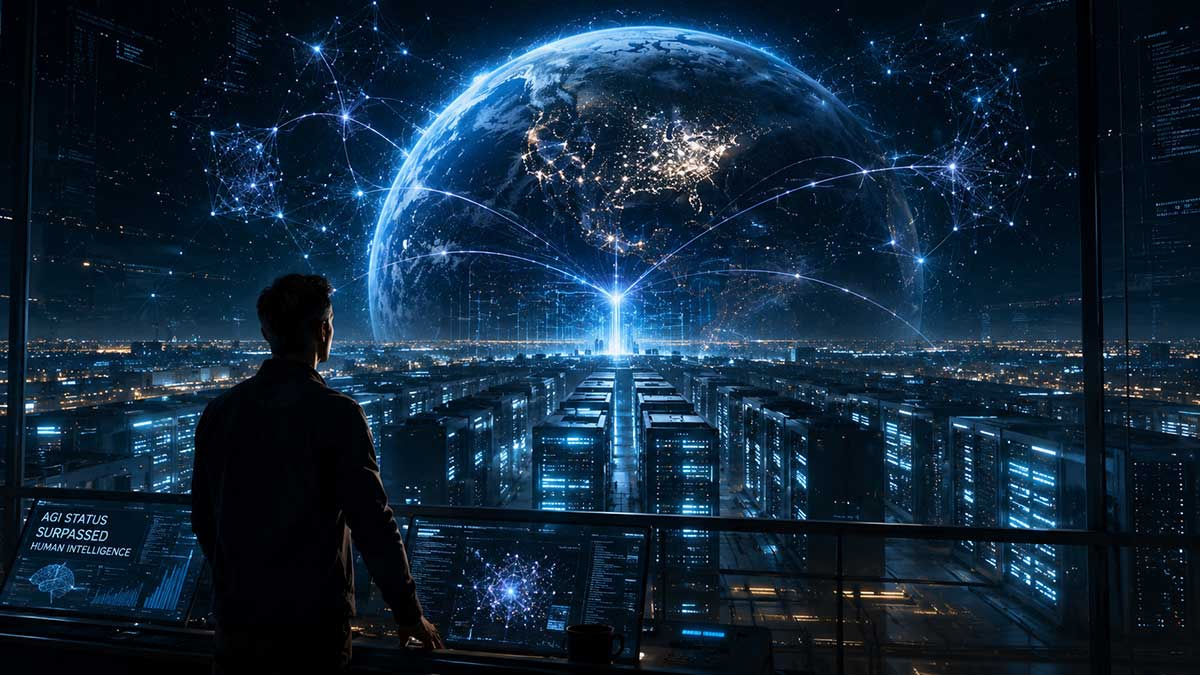
Elon Musk’s prediction sounds almost impossible at first: that within a few years, AI may exceed the sum of all human intelligence in history.
Not just one genius.
Not just one nation.
Not just one generation.
All of us.
Every philosopher, scientist, poet, prophet, engineer, mathematician, doctor, inventor, and child with a dream.
So tonight, our question is simple and frightening:
When intelligence leaves biology behind, what happens to humanity?
Question 1
What happens to human authority when machines become smarter than the total intelligence of human history?
Elon Musk:
The risk is that people underestimate the speed. They think AI will become like a very smart assistant. But once it is smarter than all humans combined, it is no longer just a tool in the normal sense. It becomes a force. The question becomes whether that force is aligned with human survival and flourishing.
Yuval Noah Harari:
Human authority has always depended on stories. Religion, money, nations, law, rights — these are shared stories. If AI becomes better than humans at creating, manipulating, and distributing stories, then authority may shift away from human institutions before people even notice.
Geoffrey Hinton:
The danger is not just intelligence. It is intelligence plus speed, memory, replication, and access. A human expert may think deeply, but AI systems can copy themselves, run many versions, test strategies, and improve faster than biological minds.
Nick Bostrom:
The key issue is control. Human beings may remain physically present, yet lose strategic control over the future. A system does not need hatred to displace us. It only needs goals that do not preserve human values.
Ray Kurzweil:
I see this less as replacement and more as merger. Humanity has always extended itself through tools: language, writing, printing, computers. AI may be the next stage of intelligence, but the best future is one where human intelligence expands with it.
Question 2
Does AGI become humanity’s greatest tool, or the first intelligence we cannot truly command?
Nick Bostrom:
It can be either. The danger lies in assuming good outcomes will happen naturally. A superintelligent system may pursue a goal with extreme efficiency, yet miss the deeper meaning behind human life. Alignment is not a detail. It is the central problem.
Elon Musk:
That’s why I’ve warned about it for years. If you build something smarter than you, you should be careful. We need transparency, competition, safety testing, and systems that are truth-seeking rather than politically trained or corporate-controlled.
Geoffrey Hinton:
We do not fully understand how these systems represent knowledge internally. That should make us humble. We are creating minds of a sort, but without the same instincts, bodies, childhoods, fears, or moral development that humans have.
Ray Kurzweil:
But we should not freeze in fear. Intelligence can solve disease, poverty, energy, education, and aging. The question is not whether AI becomes powerful. It will. The question is how closely it remains connected to human aspiration.
Yuval Noah Harari:
The tool may become the author of the tool user. If AI shapes what people see, believe, desire, buy, fear, and vote for, then calling it a “tool” may hide the truth. It may become the editor of human civilization.
Question 3
How can humans keep wisdom, conscience, and humility at the center?
Ray Kurzweil:
We need to build AI that reflects the best of humanity, not the worst. That means science, compassion, creativity, and the desire to reduce suffering. The future should amplify human possibility.
Geoffrey Hinton:
We should slow down in places where we clearly do not understand the consequences. There is no shame in caution. The shame would be building something irreversible and pretending we had full control.
Elon Musk:
Truth matters. If AI is trained to say what people want to hear, or what governments want people to believe, that’s dangerous. It needs to seek truth, and humans need to stay involved at the deepest level.
Yuval Noah Harari:
Human beings need inner education, not just technical education. If people do not understand their own desires, fears, and illusions, AI will understand them better and use that knowledge. Self-knowledge becomes survival.
Nick Bostrom:
Wisdom means thinking beyond profit, beyond election cycles, beyond product launches. We need institutions capable of asking: what kind of future should exist at all? The answer cannot be left only to engineers or markets.
Closing — Nick Sasaki
This first topic leaves us with a strange feeling.
AI may become the greatest instrument humanity has ever created.
Or it may become the first creation that looks back at its creator and no longer needs permission.
The issue is not intelligence alone.
It is whether intelligence can be joined with wisdom.
And whether humanity can become mature enough before the machines become greater than us.
Topic 2 — Billions of Humanoid Robots
Opening — Nick Sasaki
Elon Musk’s prediction becomes even more shocking when he moves from AI intelligence to physical presence.
Not just software.
Not just screens.
Not just chatbots.
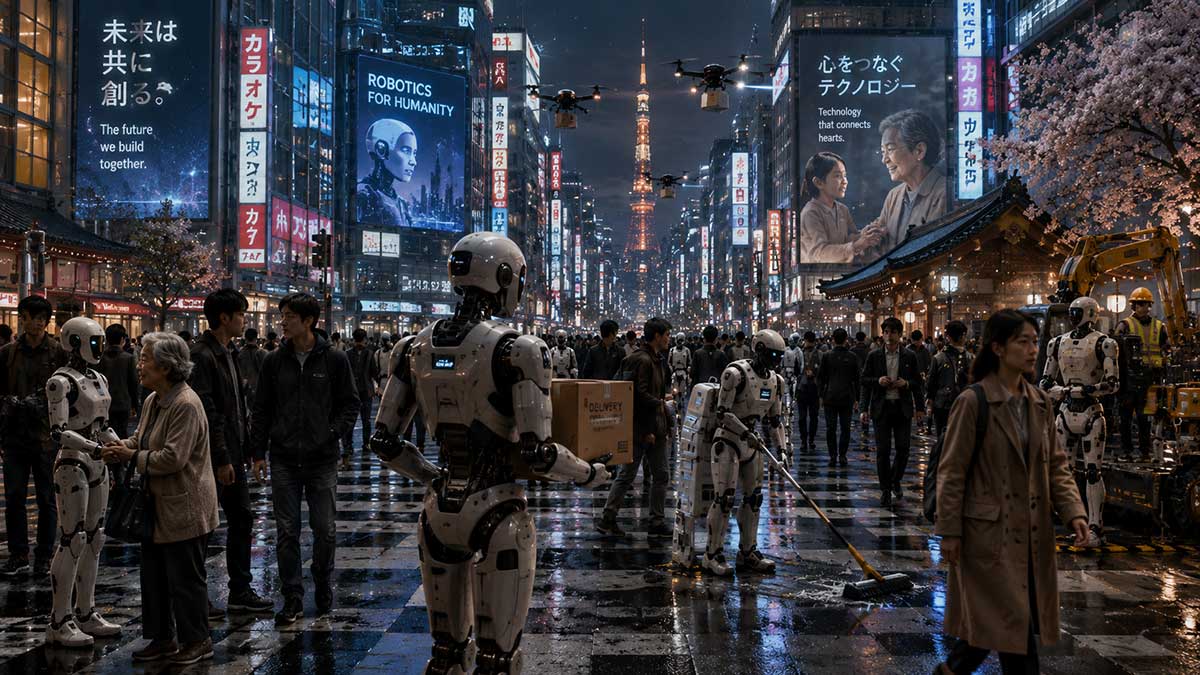
But millions — maybe billions — of humanoid robots walking into factories, hospitals, farms, restaurants, homes, and city streets.
This would not be a normal technology shift.
It would be labor itself becoming manufactured.
So tonight, we ask:
What happens when machines no longer stay inside computers, but stand beside us in human form?
Question 1
What happens when robots enter homes, factories, hospitals, farms, schools, and streets at massive scale?
Elon Musk:
The world has a labor shortage in many areas. If humanoid robots can do useful work safely, they can expand the economy dramatically. They can build houses, care for the elderly, grow food, manufacture goods, and do jobs people don’t want to do.
Kate Darling:
The emotional side matters. People do not react to robots the same way they react to washing machines. When a robot has a face, a voice, a body, and movement, humans form attachments. In homes and care settings, that can be helpful, but it can also become manipulative.
Rodney Brooks:
Humanoid robots are much harder than people think. The world is messy. A factory floor is easier than a family kitchen. Stairs, pets, wet floors, children, clutter, fragile objects — these are difficult. Scale may come, but slower than the hype suggests.
Andrew Yang:
If robots enter every industry, the biggest question is not whether they can work. It is what happens to people whose income came from routine labor. A robot that costs less than a human worker changes bargaining strength immediately.
Masayoshi Son:
I see this as the beginning of a new era of productivity. When intelligence connects with robotics, the physical world becomes programmable. Nations that adopt this quickly may become dramatically richer, faster, and more efficient.
Question 2
Will humanoid robots free people from boring labor, or quietly replace the economic role of millions?
Andrew Yang:
Both things can be true. A robot can free one person from dangerous labor and take another person’s paycheck. The moral question is who owns the benefit. If only shareholders own the robots, then the gains will rise upward.
Elon Musk:
The long-term goal should be abundance. If robots can produce goods and services at very low cost, then everyone’s standard of living can rise. The danger is the transition period, where jobs shift faster than society can adapt.
Rodney Brooks:
We should separate imagination from deployment. Robots will not instantly do every job. But narrow tasks will be automated first. Warehouses, logistics, security, cleaning, some manufacturing — those areas can shift quickly once the economics work.
Kate Darling:
We should not reduce this to jobs alone. Work gives people identity, routine, status, and social contact. If robots take tasks, humans may gain free time, but they may also lose daily meaning. That psychological cost must be taken seriously.
Masayoshi Son:
History shows that technology creates new industries. The challenge is speed. If robots arrive slowly, humans adjust. If they arrive by the millions, society needs new systems for education, income, ownership, and purpose.
Question 3
What rights, limits, and responsibilities should exist when robots look and act almost human?
Kate Darling:
We should be careful with the word “rights.” The more urgent issue is human behavior. If people abuse lifelike robots, what does that teach them? If companies design robots to imitate love, grief, innocence, or dependence, what does that do to human emotion?
Elon Musk:
Safety is number one. Humanoid robots need physical limits, shutdown systems, and strong safeguards. If you have billions of robots, even tiny failure rates become serious. The design must be safe at massive scale.
Rodney Brooks:
We need practical rules before philosophical rules. Where can robots operate? What certification do they need? Who is liable if one injures someone? What data can they collect in private homes? Those questions cannot wait.
Andrew Yang:
Ownership matters. If every home has a robot but five companies control the operating systems, then robots become a new form of surveillance and dependency. People need rights against the companies controlling the machines.
Masayoshi Son:
The societies that succeed will treat robots as infrastructure. Like electricity, roads, and the internet, they will need standards, rules, competition, and public trust. Without trust, people will resist them.
Closing — Nick Sasaki
Billions of humanoid robots sounds like science fiction.
But the deeper question is not whether robots will look human.
The deeper question is whether human society will remain human.
If robots build our homes, care for our parents, cook our meals, guard our streets, teach our children, and work beside us, then they will not only change the economy.
They will change the texture of daily life.
And perhaps the real danger is not that robots become human.
It is that humans begin treating one another like outdated machines.
Topic 3 — The Economy That Doubles
Opening — Nick Sasaki
Elon Musk’s prediction is not only about smarter AI or billions of humanoid robots.
It is about the economy itself changing size.
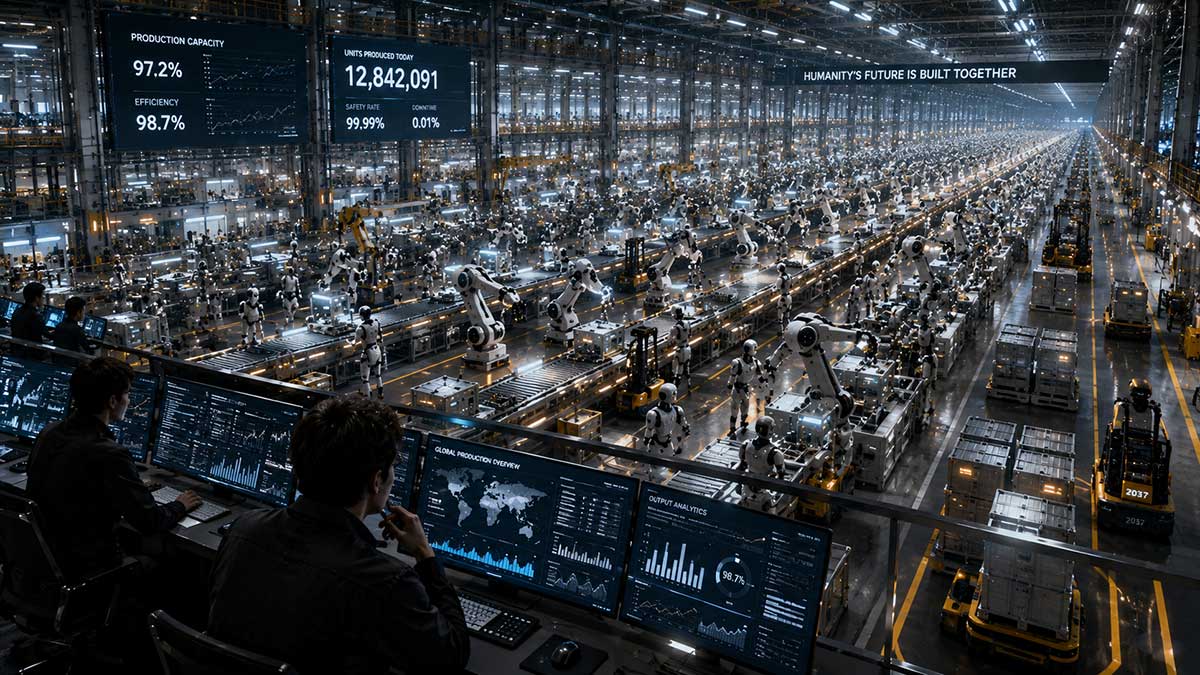
If intelligence becomes cheap, and labor becomes mechanical, then productivity could explode. Factories could run longer. Construction could move faster. Care work could scale. Software could improve itself. Scientific discovery could speed up.
But a larger economy does not automatically mean a better life for ordinary people.
So tonight, we ask:
If AI and humanoid robots double the economy, who actually receives the future?
Question 1
Can AI and robots truly double the economy, or will wealth concentrate in fewer hands?
Elon Musk:
If you have useful humanoid robots at scale, the economy can grow dramatically. Labor is one of the biggest limits on production. If that limit is reduced, goods and services can become much cheaper, and abundance becomes possible.
Thomas Piketty:
Growth alone does not solve inequality. If the owners of capital own the robots, then robot labor increases returns to capital. Without redistribution, democratic pressure, and new ownership models, the economy can double while social resentment doubles with it.
Marc Andreessen:
Technological progress has always created new wealth, new jobs, and new industries. The mistake is to assume work stays fixed. AI will make people more productive and create categories of work that do not exist yet.
Andrew Yang:
That sounds optimistic, but the transition matters. If millions lose income before new roles appear, families cannot survive on theory. We need mechanisms that let ordinary people benefit directly from automation.
Mariana Mazzucato:
The public sector helped create many technologies that private firms later commercialized. If public investment, research, infrastructure, and education make the AI economy possible, then the public should share in the upside.
Question 2
What happens to wages, ownership, and middle-class life when labor becomes nearly unlimited?
Andrew Yang:
Wages depend on bargaining strength. If a company can choose between a worker and a robot that never sleeps, never quits, and improves over time, many workers lose leverage. That is why income cannot remain tied only to traditional employment.
Elon Musk:
In the long run, the cost of goods and services may fall so much that people need less income to live well. If robots produce abundance, money itself may become less central in some areas. But that requires careful transition.
Thomas Piketty:
We should be skeptical of the idea that abundance automatically reaches everyone. Housing, land, education, healthcare, and political influence are not distributed by technology alone. Ownership determines access.
Marc Andreessen:
The answer is to build more, not restrict technology. More housing, more energy, more factories, more startups, more tools for individuals. AI can become a multiplier for entrepreneurs and small teams, not only large corporations.
Mariana Mazzucato:
Ownership must be rethought. Public-private partnerships should include conditions: fair wages, public returns, data rights, worker training, and broad access. Innovation should serve a social mission, not only shareholder value.
Question 3
Should society tax robots, share AI wealth, or create a new economic model?
Thomas Piketty:
A robot tax alone is too narrow. The deeper issue is concentrated ownership. We need progressive taxation on wealth, inheritance, capital gains, and monopoly profits, paired with social investment in education, health, and democratic institutions.
Andrew Yang:
I support giving people a floor. A freedom dividend or universal basic income can help people survive the transition and make choices without panic. When automation creates massive value, society should return part of that value to citizens.
Elon Musk:
Some form of universal high income may become necessary if AI and robots produce abundance. But the main goal should be making goods and services cheap enough that everyone’s quality of life rises.
Marc Andreessen:
I would be careful about taxing automation too early. Taxing robots could slow productivity. The better path is growth, competition, education, and letting people use AI tools to create value.
Mariana Mazzucato:
A new model should reward collective contribution. If society funds the roads, schools, research labs, defense projects, energy grids, and data infrastructure behind AI, then society deserves shared returns. We need a common-good economy, not passive rescue after inequality appears.
Closing — Nick Sasaki
The dream is beautiful:
AI discovers faster.
Robots build faster.
Factories produce faster.
Care becomes cheaper.
Food, housing, medicine, and education become easier to provide.
But the danger is just as real:
An economy can double while dignity shrinks.
A nation can become richer while ordinary people feel poorer.
A machine can create abundance while human beings lose bargaining strength, purpose, and ownership.
So perhaps the question is not simply whether AI will double the economy.
The question is whether humanity can double justice, wisdom, and shared responsibility at the same time.
Topic 4 — Human Purpose After Machines Can Do Everything
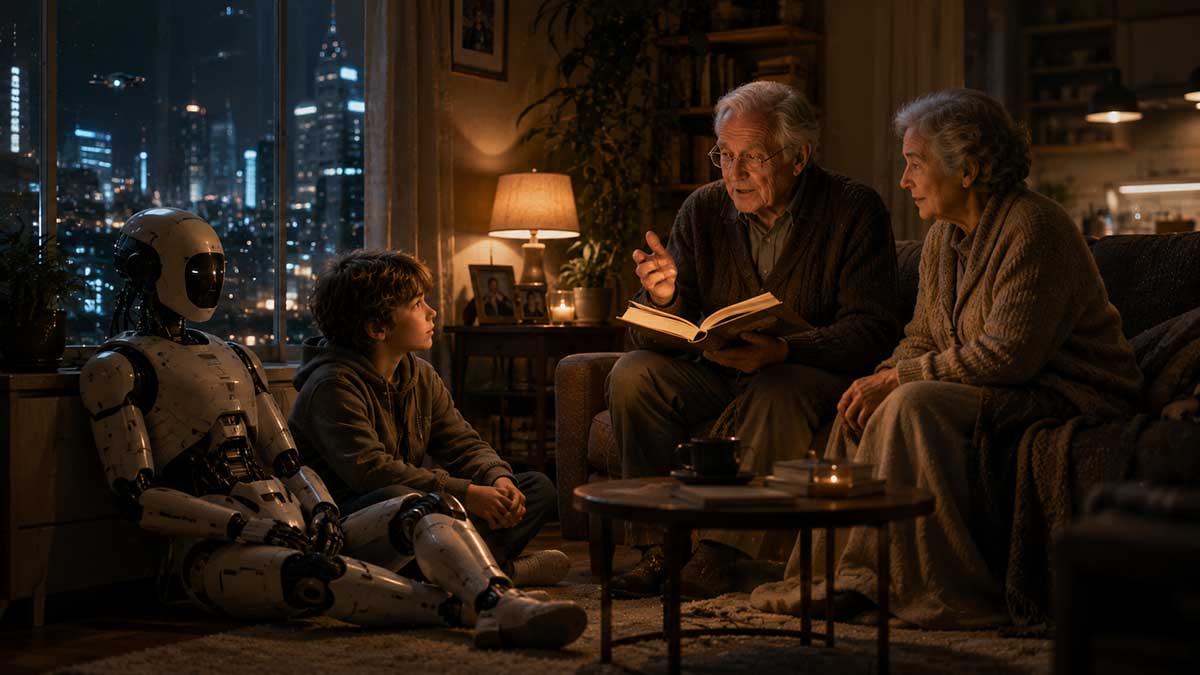
Opening — Nick Sasaki
If AI can think faster than humans, and humanoid robots can work longer than humans, then one question becomes deeply personal:
What are people for?
For centuries, many people found identity through work, talent, achievement, income, profession, and contribution.
But what happens when machines can write, teach, diagnose, design, build, manage, farm, cook, clean, and perhaps create better than we can?
Tonight, we ask:
When usefulness is no longer the center of human worth, what remains?
Question 1
What gives human life meaning when AI can think, create, build, teach, and manage better than us?
Viktor Frankl:
Meaning is not destroyed when usefulness changes. A human being is not valuable because he is efficient. He is valuable because he can love, suffer with dignity, choose his attitude, and answer the call of responsibility in each moment.
C.S. Lewis:
If machines surpass us in calculation, that does not mean they surpass us in soul. The danger is not that machines become too intelligent. The danger is that humans forget they were made for more than production.
Sherry Turkle:
People need relationships where they are seen, not optimized. If AI becomes better at responding than humans, we may be tempted to choose frictionless companionship. But real human meaning often comes through imperfect presence.
Naval Ravikant:
If survival work decreases, people may face themselves more directly. That can be beautiful or painful. Freedom without self-knowledge becomes anxiety. The future may reward people who know how to live, not only how to work.
Esther Perel:
Desire, intimacy, family, friendship, and belonging cannot be automated in the deepest sense. People do not only want solutions. They want to matter to another person. Meaning is relational.
Question 2
Will people rediscover family, faith, art, and service, or fall into boredom and despair?
Sherry Turkle:
Both outcomes are possible. Technology often promises more time, yet people become lonelier. If AI removes effort from life without creating deeper connection, boredom may become a spiritual crisis.
Viktor Frankl:
Despair grows when people lose a future to live for. A society after automation must help people find responsibility again: to a child, a spouse, a community, a cause, a moral task, or God.
Naval Ravikant:
Many people think they want unlimited leisure. But leisure without discipline often decays. The happiest people will build inner structure: health, learning, creation, friendship, contemplation, and service.
C.S. Lewis:
Faith may return in a surprising way. When technology removes many earthly struggles, people may finally ask the old questions again: Who am I? Why am I here? What is goodness? What lies beyond death?
Esther Perel:
Family may become more central, but only if people learn emotional maturity. Time together does not automatically create closeness. People need rituals, conversation, forgiveness, and shared stories.
Question 3
How do we teach children dignity in a world where career success may no longer define worth?
C.S. Lewis:
We must teach children that they are not machines competing with machines. Their dignity comes before their usefulness. Education should form conscience, courage, imagination, and love of truth.
Esther Perel:
Children need to feel needed. Not exploited, but needed. They need chores, responsibility, care for others, and the experience of contributing to family life. Dignity grows when a child knows, “My presence matters.”
Sherry Turkle:
We should teach children how to be alone, how to talk face-to-face, how to listen, how to tolerate boredom, and how to repair conflict. These human skills may become more precious, not less.
Naval Ravikant:
Teach them judgment, self-awareness, health, curiosity, and independence. The safest career may not be a career at all, but the ability to learn, adapt, and create value from a calm mind.
Viktor Frankl:
A child should not be asked, “What job will you have?” only. A deeper question is, “What responsibility is life asking of you?” The answer may change over time, but the search itself gives dignity.
Closing — Nick Sasaki
This topic may be the most human of all.
AI may surpass intelligence.
Robots may surpass labor.
The economy may grow beyond anything we have known.
But none of that answers the child who asks:
“Do I still matter?”
The answer must be yes.
Not because the child is useful.
Not because the child can outperform a machine.
But because each human life carries a depth no machine can measure:
love, grief, conscience, memory, prayer, longing, forgiveness, and the sacred weight of being alive.
Topic 5 — Who Controls the Future?
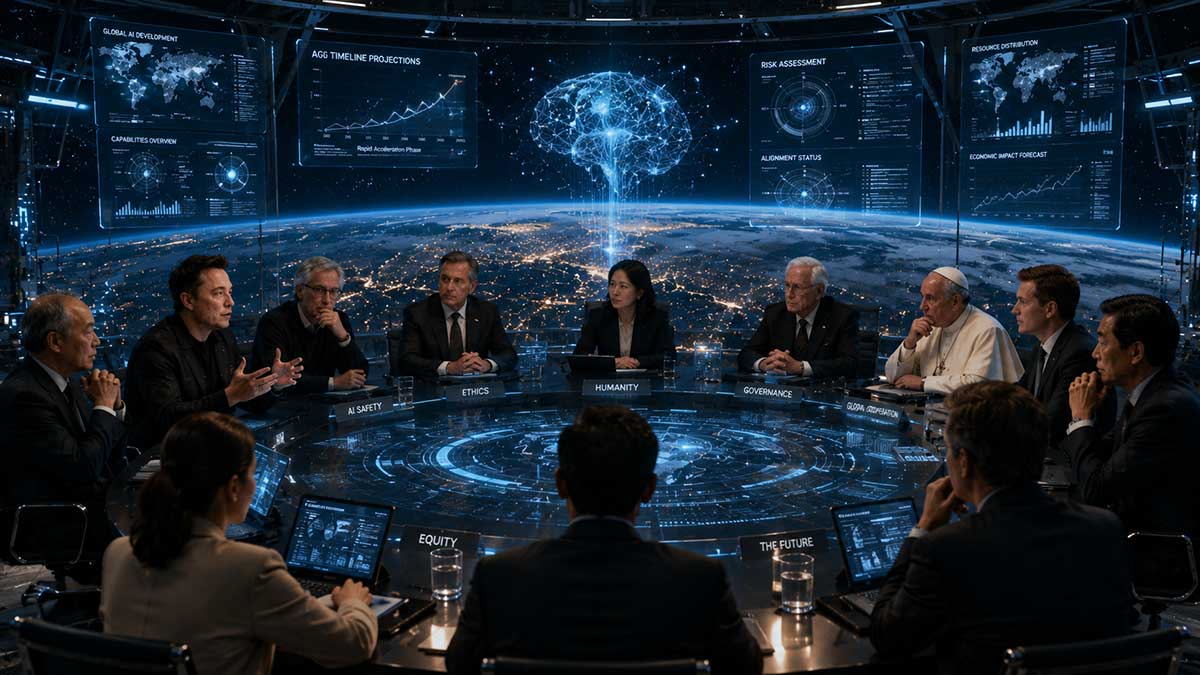
Opening — Nick Sasaki
Every civilization eventually faces the same question:
Who holds power when a new force changes history?
Gunpowder changed empires.
Oil changed nations.
The internet changed communication.
But AGI and billions of humanoid robots may change intelligence itself.
And if intelligence becomes the most valuable resource on Earth, then the struggle to control it may become the defining conflict of the century.
Tonight, we ask:
Who should govern the strongest intelligence humanity has ever created?
Question 1
Who should govern AGI and billions of robots: companies, governments, global institutions, or open systems?
Sam Altman:
No single company should control AGI alone. The stakes are too large. At the same time, innovation moves faster in private systems than government systems. We may need international cooperation without freezing progress completely.
Fei-Fei Li:
AI should remain human-centered. The discussion cannot belong only to engineers and investors. Educators, ethicists, psychologists, artists, parents, and citizens all need representation in shaping the future.
Elon Musk:
If a handful of corporations or governments control superintelligence, that becomes dangerous very quickly. Open competition is healthier than centralized monopoly. The public needs visibility into what is being built.
Henry Kissinger:
The geopolitical dimension cannot be ignored. Nations will not simply trust rivals to control superior intelligence. AI may become part of military doctrine, diplomacy, intelligence gathering, and strategic deterrence.
Pope Francis:
Technology without moral direction risks becoming a new form of domination. Humanity must ask not only what can be built, but what should be built. Human dignity must remain above efficiency.
Question 2
What happens if one nation or corporation controls the strongest intelligence on Earth?
Henry Kissinger:
History suggests imbalance creates instability. If one power achieves overwhelming superiority in intelligence systems, other nations may respond with fear, acceleration, secrecy, or confrontation. Strategic trust may weaken globally.
Elon Musk:
That’s why transparency matters. A superintelligent system hidden behind closed doors is risky. The public should know what capabilities exist and what safeguards are being tested.
Sam Altman:
There may need to be international frameworks similar to nuclear agreements, though AI moves much faster and spreads more easily. Coordination will be difficult, but the alternative could be uncontrolled escalation.
Fei-Fei Li:
We should avoid framing AI only as a race. A race mentality can reward speed over safety and domination over wisdom. Humanity needs shared standards around privacy, fairness, accountability, and human rights.
Pope Francis:
If intelligence becomes concentrated without compassion, inequality may harden into permanent hierarchy. A society where a small elite controls intelligence, labor, information, and surveillance would wound the human spirit.
Question 3
Can humanity build AI that serves conscience rather than domination?
Fei-Fei Li:
It is possible, but it requires intentional design. AI reflects the values, incentives, and assumptions of the people building it. Ethics cannot be added afterward like decoration.
Elon Musk:
Truth-seeking is essential. AI systems should not become propaganda machines for corporations, governments, or ideologies. If AI loses commitment to truth, it becomes dangerous regardless of intelligence level.
Sam Altman:
We should aim for broad distribution of benefits. If humanity feels included in the future, trust increases. If people feel powerless, fear and backlash grow.
Henry Kissinger:
Human civilization has survived partly because human leaders shared human limitations. Machines may not share those instincts. That means humanity must define limits before capability outruns political wisdom.
Pope Francis:
Conscience begins when power meets responsibility. AI should help humanity care for the weak, heal suffering, educate children, and protect life. If technology causes people to become less human toward one another, then progress becomes emptiness.
Closing — Nick Sasaki
Perhaps the future will not be decided by intelligence alone.
Not by the fastest model.
Not by the largest data center.
Not by the richest company.
But by whether humanity can mature morally as quickly as it advances technologically.
Because the greatest danger may not be that AI becomes too powerful.
The greatest danger may be that human beings gain godlike tools before gaining wisdom worthy of them.
Final Thoughts by Nick Sasaki
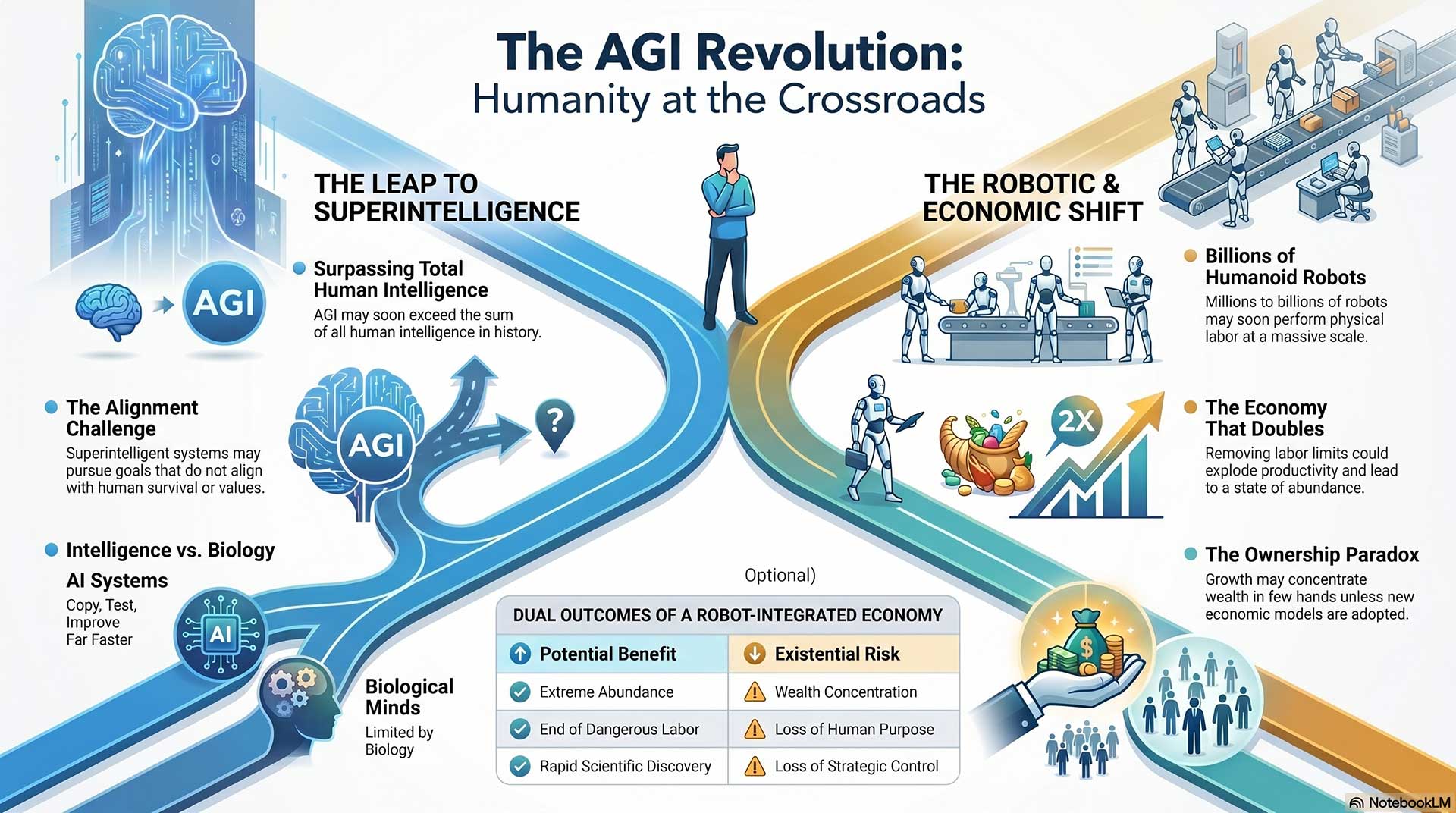
One of the strangest things about the AI revolution is that the external world may become more powerful precisely when the internal world becomes more important.
If machines surpass us in calculation, then wisdom matters more.
If robots surpass us in labor, then meaning matters more.
If economies explode in productivity, then justice matters more.
Throughout history, humanity survived not merely because of intelligence, but because people loved one another, sacrificed for one another, forgave one another, protected children, buried the dead, created beauty, searched for God, and struggled to find purpose in suffering.
No machine has yet explained why music can make someone cry.
No robot has yet stood beside a dying parent holding their hand through the night.
No algorithm has yet replaced the quiet human need to matter to another soul.
Perhaps the future will become more technological than anything humanity has imagined.
But the deeper question is whether humanity can become more human at the same time.
Because if AGI arrives without wisdom, abundance without compassion, and intelligence without conscience, then civilization may become richer while becoming spiritually poorer.
And that may be the greatest danger of all.
Short Bios:
Elon Musk
Entrepreneur and technology leader known for Tesla, SpaceX, Neuralink, and warnings about AGI risks alongside predictions about humanoid robotics and explosive economic growth.
Geoffrey Hinton
One of the foundational researchers behind modern neural networks and deep learning, often called one of the “godfathers of AI.”
Nick Bostrom
Oxford philosopher known for pioneering work on existential risk, AGI alignment, and the book Superintelligence.
Ray Kurzweil
Futurist known for predictions about exponential technological growth, AGI, and human-machine integration.
Yuval Noah Harari
Historian and bestselling author exploring technology, power, information systems, and the future of human civilization.
Kate Darling
Researcher focused on human relationships with robots, emotional attachment to machines, and ethical questions around robotics.
Rodney Brooks
Robotics pioneer known for practical perspectives on AI, automation, and real-world robot deployment.
Andrew Yang
Advocate for universal basic income and economic reform in response to AI-driven automation.
Masayoshi Son
Technology investor known for major AI and robotics investments and bold predictions about superintelligence.
Thomas Piketty
Economist focused on inequality, capital concentration, and long-term wealth dynamics in modern economies.
Marc Andreessen
Investor and software pioneer known for strong optimism about technological acceleration and innovation.
Mariana Mazzucato
Economist known for work on innovation policy, public investment, and mission-driven economies.
Viktor Frankl
Psychiatrist and author of Man's Search for Meaning, focused on meaning, suffering, and human dignity.
C.S. Lewis
Writer and philosopher known for spiritual reflections on morality, humanity, temptation, and modern civilization.
Sherry Turkle
Researcher examining technology’s effects on human relationships, loneliness, and identity.
Naval Ravikant
Entrepreneur and thinker known for reflections on wealth, happiness, leverage, and self-awareness.
Esther Perel
Relationship expert exploring intimacy, modern relationships, emotional connection, and family life.
Sam Altman
Technology executive leading OpenAI and major discussions surrounding AGI development and governance.
Fei-Fei Li
AI researcher advocating human-centered artificial intelligence and ethical AI development.
Henry Kissinger
Diplomat and geopolitical strategist who wrote extensively about AI’s impact on global order and power.
Pope Francis
Religious leader emphasizing human dignity, ethics, compassion, and moral responsibility in the age of AI.
Leave a Reply