

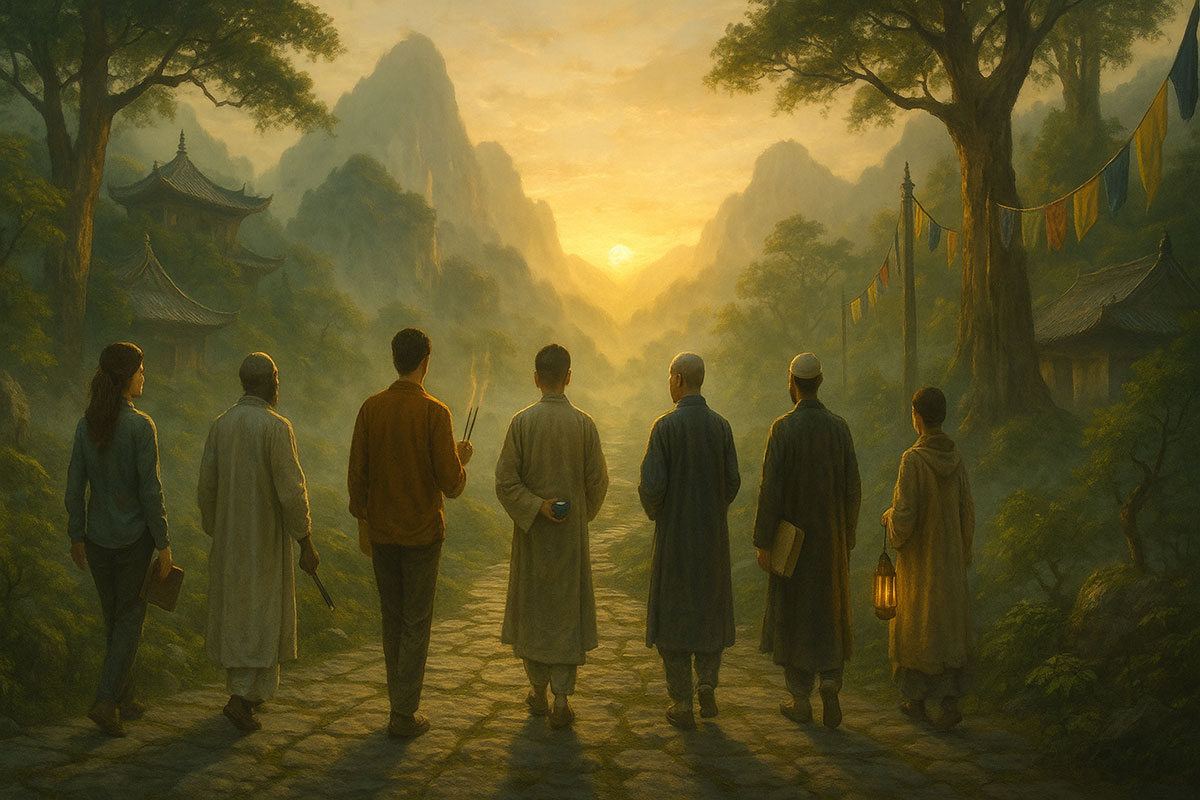
I didn’t come to China looking for religion.
I came searching for something deeper—something the modern world keeps trying to silence: stillness, story, memory, meaning. I didn’t want to just see the sacred sites of China. I wanted to feel them, to let them change me.
So I gathered a group of companions. Not scholars or gurus, but people with different eyes: a spiritual teacher, a comedian, a child star whose innocence still lingered, and faith representatives from Buddhism, Christianity, Judaism, and Islam. We weren’t here to debate truth. We were here to live it—side by side, in silence, in laughter, in tea, in wind, in shadow.
We journeyed from the misty temples of Wudang to the echoing sands of Dunhuang. We practiced calligraphy without knowing the characters. We climbed where the air thinned, and we sat in courtyards where the air held stories.
This wasn’t a pilgrimage. It was a return.
To something I forgot I was part of.
(Note: This is an imaginary conversation, a creative exploration of an idea, and not a real speech or event.)

Destination 1: Wudang Mountains – The Soul Remembers in Stillness
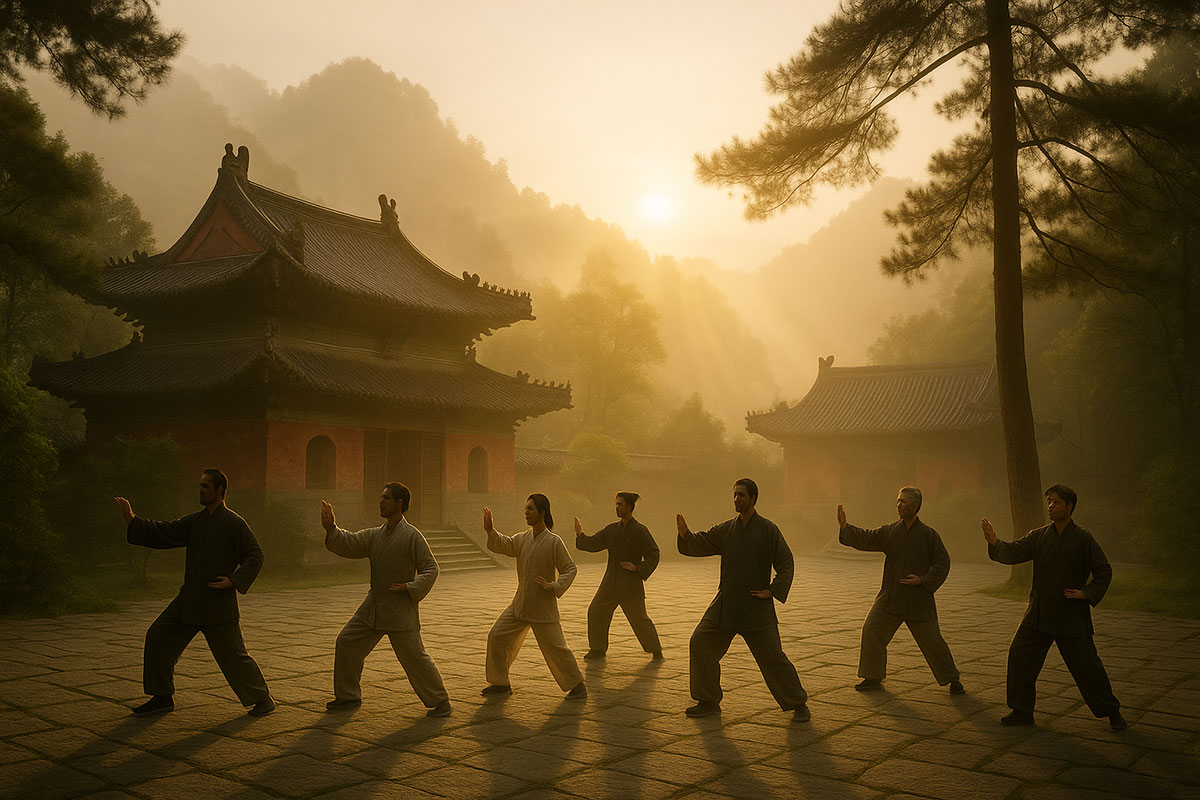
Location: Purple Cloud Temple & Hidden Forest Caves
Group: Nick Sasaki, Craig Hamilton, Jim Carrey, Daniel Radcliffe, Joel Osteen, Omid Safi
Scene 1: Breathing the Mountain
Early morning fog curls through pine branches like incense smoke. The stone steps are slick, and cold mist kisses their skin. A Taoist monk glides barefoot along the ridge, motioning for the group to follow.
They walk in silence—matching breath to steps. It’s called “Mountain Breath.”
Nick feels something loosen in his spine.
Jim Carrey breaks the silence with a whisper, “I think my kneecaps are achieving enlightenment.”
Craig chuckles softly, then turns inward again.
Joel hums a quiet gospel tune.
Omid mouths a Rumi poem: “There is a voice that doesn’t use words. Listen.”
Daniel, usually quick with a joke, is quiet. Later, he murmurs to Nick, “I didn’t think walking could feel like prayer.”
Scene 2: The Cave of No Sound
They reach a hidden cave—no signs, no tourists. Just a dark mouth carved by time. Inside: perfect stillness.
They sit on stone. No instructions. Just breath.
A candle flickers. A beetle crawls across Daniel’s shoe. He doesn't move.
Jim Carrey—always animated—is still. Eyes closed. A tear escapes.
When they emerge into the light an hour later, Nick asks, “What did you hear in the silence?”
Craig answers first: “I felt forgiven.”
Joel smiles: “God whispered, ‘You are enough.’ That was all I needed.”
Omid shares: “The Prophet said silence is wisdom. But this… this was love.”
Daniel just nods, “I heard my own voice… for the first time in years.”
Scene 3: Ink Without Words
Back at the temple courtyard, parchment and ink await them.
“Paint what the silence gave you,” says the monk. “But no words.”
Craig draws a blank circle.
Jim draws a child inside a spiral—then flips it and says, “Or it’s a cinnamon roll of enlightenment.”
Daniel paints a small boy under a tree, stars falling through branches.
Nick hesitates, then paints two hands reaching for each other through fog.
As they dry their work, they prepare for the climb up The Crane Path, a steep ancient trail above the clouds.
Joel, panting halfway, grins: “They should call this Stairway to Heaven… literally.”
Omid, helping Daniel over a boulder, says, “We climb not to escape life, but to see it clearly.”
Scene 4: Tea with the Past
At a small pavilion overlooking the valley, an elder monk brews wild chrysanthemum tea—bitter but fragrant. The group sits on bamboo mats, steam rising from their cups.
Nick asks, “Do you ever feel like someone is guiding you even when they’re gone?”
Joel nods. “My grandmother prayed me into this life. I still hear her voice every time I hesitate.”
Omid adds, “In Islam, we call it baraka—the grace passed down. It lives in your breath.”
Jim, suddenly serious, says, “My father used to dance like a fool to make me laugh. That joy… it shows up in my soul when I’m afraid.”
Daniel sips, then adds: “Maybe our ancestors don’t just walk with us. Maybe they laugh with us too.”
Craig smiles: “Laughter is how the soul exhales.”
Scene 5: Sunset on the Ridge
As the day ends, they hike to a stone ridge where the sun melts into the valley below.
No one speaks.
The light turns orange, then violet, then blue.
Daniel breaks the silence, quietly:
“I thought healing would feel dramatic. But it’s this. Just… not needing to rush.”
Jim throws his arms open and yells to the valley:
“I HAVE NO IDEA WHAT I’M DOING AND I’M TOTALLY OKAY WITH IT!”
They all laugh. Hard. Loud. Echoing across the cliffside.
Joel bows his head: “Prayer can look like this too, you know. Just being here.”
Craig adds: “When you stop racing, you realize you’re already home.”
Nick, eyes wet, looks around at his strange, beautiful group.
“I used to travel to find something. But now I think I travel to remember it was with me all along.”
Omid finishes with a quiet Rumi line:
“You wander from room to room hunting for the diamond necklace that is already around your neck.”
Destination 2: Mount Qingcheng – Listening to the Language of Nature
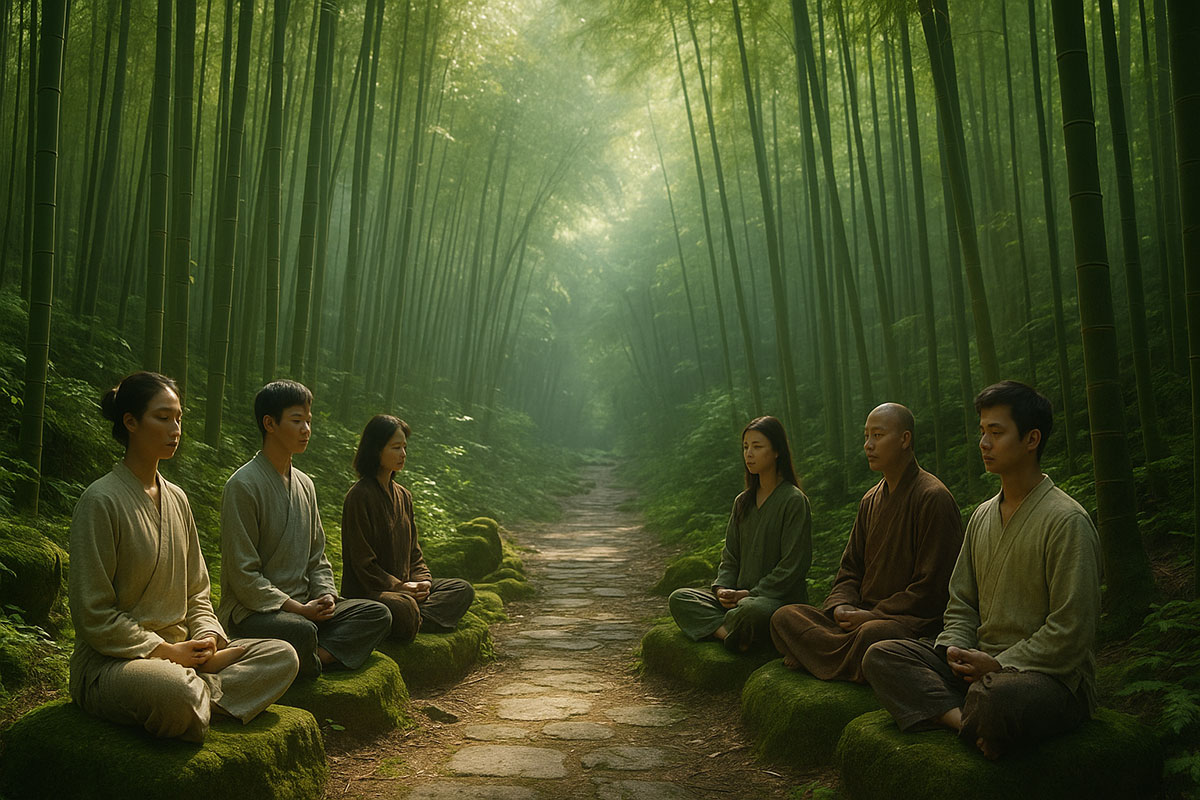
Location: Bamboo forests, waterfalls, and hidden Taoist sanctuaries
Group: Nick Sasaki, Eckhart Tolle, Kristen Wiig, Mara Wilson, Rabbi Sharon Brous, Thich Nhat Hanh (through his teachings)
Scene 1: Bamboo Awakening
The morning air hums softly as they step into the bamboo grove. Leaves rustle in a breeze so quiet it feels like a secret. Sunlight flickers through the green canopy like whispers.
Eckhart stops walking.
“Before words, before thought… there is just this.”
Nick closes his eyes and hears… nothing. Then something. A leaf falling. His own breath. A bird far off.
Mara Wilson says softly, “This reminds me of being a kid… before people asked me to be someone.”
Kristen Wiig tries to keep a straight face, then whispers dramatically, “I think I just heard a squirrel judge me.”
The group laughs. The forest doesn’t.
Scene 2: Waterfall Sutra
They reach a small waterfall, the water flowing steadily over moss-covered rocks.
A handwritten quote by Thich Nhat Hanh is pinned to a tree:
“Smile, breathe, and go slowly.”
Eckhart invites them to place a stone in the stream—symbolizing something they need to release.
Nick lets go of “proving” himself.
Mara drops a fear she’s never voiced out loud.
Kristen lets go of her self-censorship—with a wink: “There goes my internal editor.”
Rabbi Sharon Brous adds, “In Hebrew, the word for breath—neshama—is the same root as soul.”
Then gently: “When we let go, we return to soul.”
Scene 3: Whispering Stones
Midway up the path, they arrive at a circle of ancient stones. According to legend, each one “holds the memory of the mountain.”
The group is invited to sit in silence and listen—not just to the mountain, but to what within them echoes.
Nick feels a question rising: “Why do I always feel behind?”
Rabbi Sharon says, “Sometimes prayer isn’t talking to God. It’s letting God talk through everything else.”
Kristen leans against a stone and says, “This rock is sassier than me. I’m not okay with that.”
Mara runs her hand over the surface and says, “It’s like they’re keeping our secrets for us.”
Eckhart smiles, “That’s because they don’t need answers. They just are.”
Scene 4: Forest Meal & Inner Weather
They eat a foraged lunch in a forest clearing: mountain greens, mushrooms, wild ginger soup.
As the mist returns, Nick asks, “Do you think joy has seasons? That we don’t always have to be happy?”
Eckhart nods. “Joy isn’t a smile. It’s the space that holds every season.”
Rabbi Sharon adds: “There’s a Jewish teaching—Gam zeh ya’avor—‘This too shall pass.’ Joy, pain… it all flows.”
Mara looks up through the mist, “Then maybe stillness is the sunlight that helps it grow.”
Kristen fake-sobs into her mushroom soup: “Who let the child star be the wise one?!”
Scene 5: Moonlight Temple
That night, they hike to a hilltop Taoist temple bathed in moonlight.
Wind flutes through prayer flags. The stars are shy, hidden behind drifting clouds. Everyone sits, wrapped in blankets, on the cold stone floor.
Nick says, “I thought I came here to understand nature. But maybe… I came to let nature understand me.”
Kristen whispers, “This forest looked at me today. Not in judgment. Just… saw me.”
Eckhart adds: “Trees don’t analyze. They just stand. That’s a form of love.”
Rabbi Sharon looks up: “Sometimes being quiet doesn’t mean you’re lost. It means you’re returning.”
Mara nods, eyes reflecting the moon: “This is the first place I’ve ever been quiet... and felt more me because of it.”
Destination 3: Shaolin Temple – Discipline as a Doorway to Grace
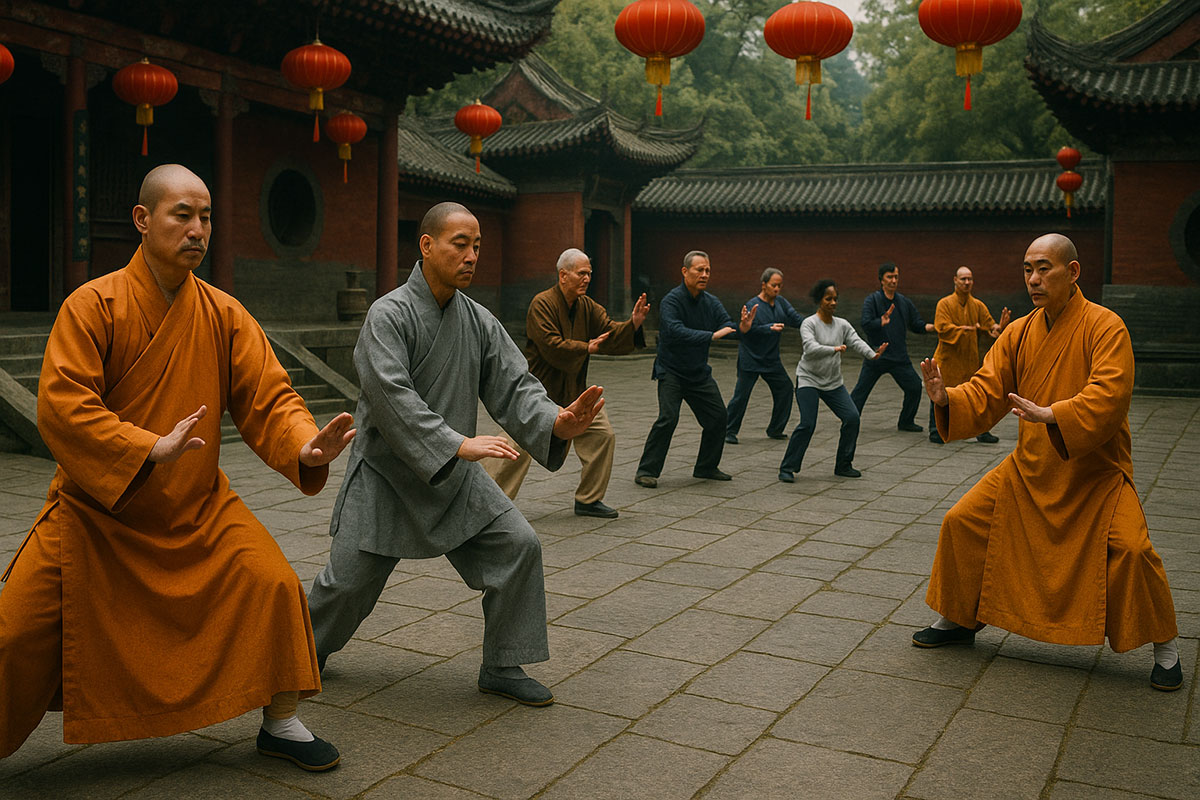
Location: Songshan Mountains, Henan Province
Group: Nick Sasaki, Mingyur Rinpoche, Stephen Colbert, Macaulay Culkin, Bishop T.D. Jakes, Jetsunma Tenzin Palmo
Scene 1: Entering the Gates
The temple walls rise like ancient giants, carved into stone and silence. Monks in ochre robes move with soft precision. The group stands beneath the engraved phrase:
“A thousand repetitions for one moment of stillness.”
Nick is awe-struck.
Mingyur Rinpoche bows and says, “Welcome to a place where movement becomes meditation.”
Stephen Colbert looks around and deadpans, “I feel like if I sneeze wrong, I’ll dishonor someone’s ancestors.”
Macaulay Culkin chuckles. “Relax. You were Home Alone. You’ve survived worse.”
Scene 2: First Lesson – Movement Meditation
A Shaolin monk begins teaching slow-motion kicks and open-hand strikes.
It’s not about power. It’s about presence.
Mingyur Rinpoche says, “Your mind follows your hand. If your hand is here, your awareness must be too.”
Nick notices how his attention drifts… until he focuses on his footwork.
Stephen breaks form and does a karate pose from an '80s movie.
“Am I centered now… sensei?”
Jetsunma Tenzin Palmo gently adjusts his posture. “Stillness is not freezing. It’s alignment.”
Macaulay, surprisingly graceful, whispers, “I used to have to ‘perform.’ This feels more like returning.”
Scene 3: Cleaning as Devotion
The group is handed mops and buckets.
Today, they will clean the monks’ quarters.
Stephen sighs. “From TV host to temple janitor. God works in mysterious ways.”
Jetsunma says softly, “Cleaning isn’t lesser work. It’s inner work.”
She tells a story about sweeping floors in a Himalayan nunnery for years—and how it taught her to see her own thoughts.
Mingyur adds, “In Buddhist training, we clean so we can see the dust we carry inside.”
Nick silently washes the floor. He’s reminded of his own tendency to rush. Here, he slows down.
Bishop T.D. Jakes wipes down the windows and smiles:
“Sometimes when we clear a surface, we see ourselves again.”
Scene 4: Temple Fire Ritual
As dusk falls, the group gathers for a fire ceremony inside the stone courtyard.
Each person is given a thin wooden stick. They’re asked to write one habit they wish to release or refine.
Nick writes: Hesitation.
Mingyur writes: Over-effort.
Stephen writes: Performing instead of being.
Macaulay writes: Old roles I no longer need.
Tenzin Palmo writes: Attachment to control.
Bishop Jakes writes: Pleasing others before God.
One by one, they drop the sticks into the flames.
Silence. Crackling. Smoke curling like thoughts dissolving.
Scene 5: Mountain Steps at Dawn
The next morning, they climb a steep trail behind the temple. The monks call it “The Staircase of Return.”
Nick slips on a loose rock and laughs. “Well… that’s today’s lesson.”
Stephen pauses, catching his breath. “I used to think peace was something soft. But it’s not. It’s earned.”
Macaulay offers him a hand. “It’s like muscle memory. But for the soul.”
Jetsunma adds, “Real strength bends. Like bamboo in wind.”
At the top, the sunrise cuts through mist like a blade. Golden and sharp.
Mingyur Rinpoche speaks gently:
“Discipline is not about control. It’s about freedom.”
Bishop Jakes closes his eyes, hands raised:
“Peace… is a practice. And today, I’m stronger.”
Destination 4: Hangzhou Courtyards – Stillness in the Sip, Meaning in the Mundane
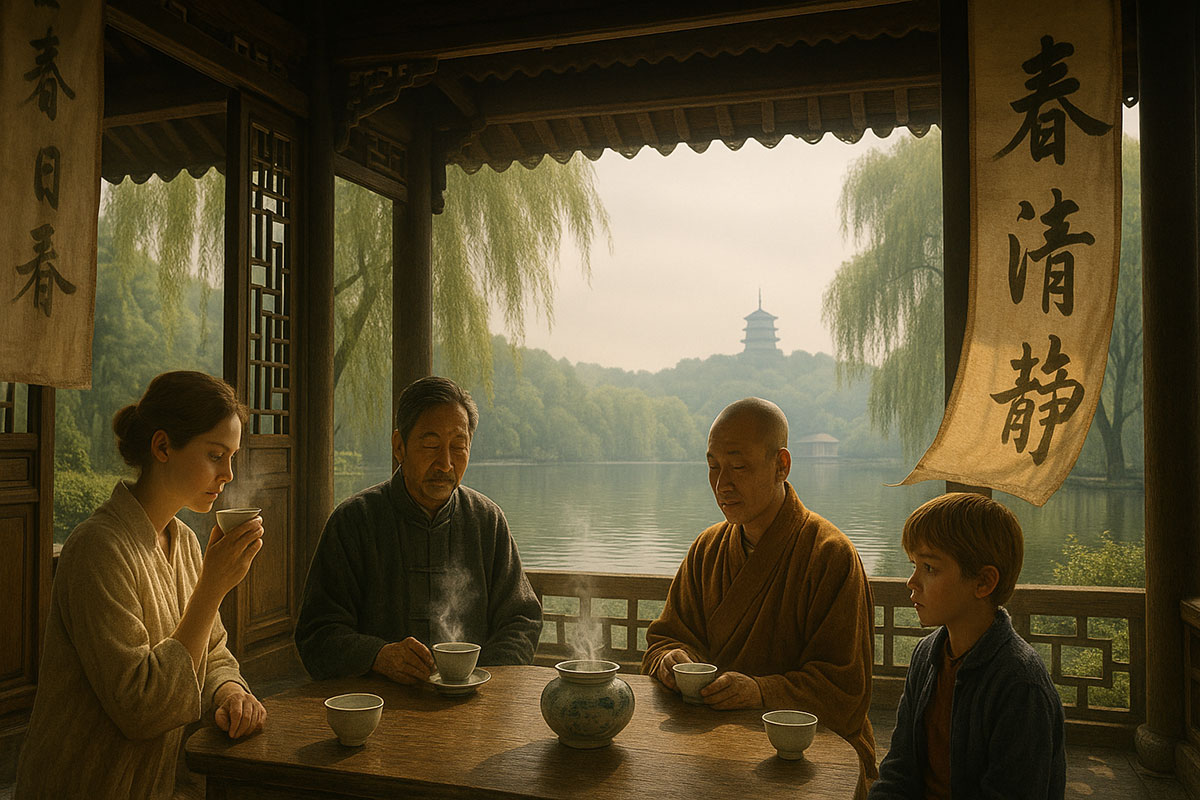
Location: West Lake tea gardens, Confucian garden courtyard
Group: Nick Sasaki, Deepak Chopra, Mindy Kaling, Noah Schnapp, Rabbi David Wolpe, Shems Friedlander (Sufi-inspired teacher)
Scene 1: Tea Leaves and Time
The group sits in a lakeside courtyard under wisteria vines. A tea master, barely speaking, brews Dragon Well green tea with deliberate grace.
Steam curls like calligraphy.
Deepak Chopra breaks the silence:
“Every leaf holds the memory of the sun. Every sip is a record of time.”
Nick inhales the aroma. It smells like spring after rain.
Mindy Kaling whispers, “I didn’t expect tea to make me feel seen.”
Rabbi Wolpe smiles, “In Judaism, we bless the mundane—because nothing is truly mundane.”
Noah Schnapp takes a sip and nods. “It tastes like my grandma’s garden. It just... feels good.”
Scene 2: Lantern-Making & Unspoken Longing
That afternoon, they craft paper lanterns with brush-ink wishes.
Noah hesitates before writing. “Can I just draw?”
Deepak nods, “The soul speaks in symbols long before words.”
Nick draws a mountain and a heart.
Mindy writes, “Please let me be seen without having to shout.”
Rabbi Wolpe quietly sketches the Hebrew letter Aleph—silent, but infinite.
Shems Friedlander creates a swirling design like the path of the Sufi dervish.
Noah draws a kite. When asked why, he shrugs: “It flies without talking.”
They light the lanterns and release them over West Lake.
Mindy watches hers float and says, “Sometimes I think love isn’t something you say. It’s what you don’t walk away from.”
Scene 3: The Compass Walk
In a Confucian courtyard, they walk a square labyrinth in silence.
Each corner holds a single word etched in stone: Virtue, Reflection, Harmony, Service.
Shems explains, “Confucianism teaches that purpose comes not through achievement, but cultivation.”
Nick walks slowly, feeling the stone underfoot. “Maybe purpose isn’t what we chase. Maybe it’s what we leave behind.”
Rabbi Wolpe adds, “We think of kindness as an action. But it’s a shape—it holds things. Holds people.”
Noah runs his fingers along the carvings. “Kindness is when someone remembers your favorite snack without asking.”
Mindy bursts out laughing. “Then my mom is a saint. And also psychic.”
Scene 4: Mirror Pool Reflections
They sit by a still koi pond under flowering plum trees. The water is so still it reflects the sky.
Nick asks quietly, “Do you ever feel like you’re someone’s miracle… and don’t know it?”
Deepak says, “The universe places us like notes in a melody. You may be the harmony in someone’s life and never hear the song.”
Noah reflects, “When I was acting, some kid wrote me that I helped him through depression. I didn’t know that scene would matter. I just… showed up.”
Shems adds, “Loving someone is seeing their soul when they forget it’s there. That includes yourself.”
Mindy stares into the water and says softly, “Then I’ve loved badly. But maybe that’s how we learn the shape of love.”
Scene 5: Rain on the Rooftiles
That night, light rain patters on the clay rooftiles as the group eats a quiet dinner in the courtyard.
The table is simple: rice, greens, tea. No ceremony—but everything intentional.
Deepak raises his bowl. “Ritual doesn’t need incense. Just attention.”
Rabbi Wolpe agrees. “To notice what you usually ignore—that’s the beginning of devotion.”
Nick slowly chews his food, watching the rain.
“Gratitude isn’t something you say. It’s when your heart bows a little and no one sees it.”
Noah finishes eating and says, “I used to think heaven was a place. But I think it might be… this. Like, when everything feels okay, just for a second.”
The group falls quiet, rain and breath falling into rhythm.
Mindy whispers, “Let’s never tell anyone how good this was.”
Destination 5: Southern Anhui Villages – The Ground Remembers for You
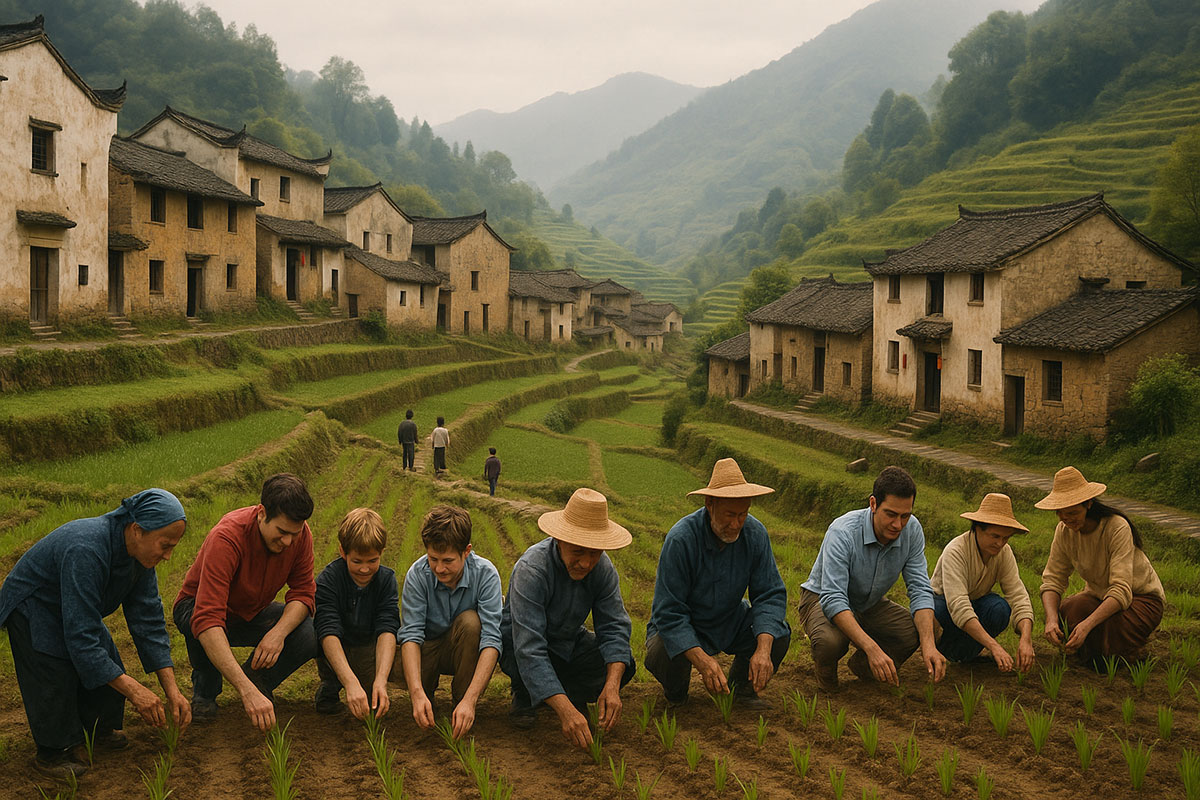
Location: Ancient Huizhou villages near Huangshan
Group: Nick Sasaki, Sadhguru, Ricky Gervais, Haley Joel Osment, Richard Rohr (Christian mystic), Pema Chödrön (Buddhist teacher)
Scene 1: Earth Between Fingers
The group kneels in a terraced field with elder villagers, planting garlic under a fog-heavy morning sky. No Wi-Fi. No rush.
Sadhguru says, “The soil remembers. It holds stories of every foot that’s walked it.”
Nick, hands in dirt, breathes deeply. It smells like something ancient.
Haley Joel Osment smiles, “It feels good to not be holding a phone.”
Ricky Gervais mutters, “Unless the earth gives me tweets, this is overrated.”
Then he grins: “Kidding. I think I just met my real therapist: garlic.”
Richard Rohr gently adds, “God made man from dust. Returning to it is remembering who you really are.”
Scene 2: Ancestor Shrine Ritual
In a family courtyard, the village matriarch lights incense before ancestral tablets. The group is invited to do the same—with no pressure, just respect.
Nick hesitates, then bows slowly.
Haley lights a stick. “I don’t know who I’m praying to. But I feel them.”
Pema Chödrön speaks softly: “Grief isn’t linear. It’s a tide that comes when you’re quiet enough.”
Richard Rohr adds, “We don’t pray to the ancestors. We become their voice, finishing what they began.”
Ricky watches the smoke rise and says, “My dad would’ve thought this was nuts. But weirdly… I feel him smirking right now.”
Scene 3: Communal Cooking, Unspoken Healing
The group helps prepare a shared village meal. Stirring thick rice porridge. Slicing radish. Listening to the elders argue lovingly.
Nick says, “I never thought I’d learn life lessons from peeling root vegetables.”
Sadhguru laughs, “You can learn more from a radish than a textbook—if you pay attention.”
Ricky chops too fast and nicks his finger. He winces.
Haley, helping wrap it, says: “My mom never said ‘I love you.’ But she’d always patch me up.”
Pema adds, “Love often appears dressed as repetition. Duty. Silence. But that doesn’t make it less love.”
Scene 4: Night Fire & Story Circle
Under lantern light, the village youth gather to hear folktales. The group is invited to share a personal story.
Nick tells of a childhood fear of not being enough.
Haley shares a moment when fame felt lonelier than failure.
Ricky surprises everyone with a quiet memory of holding his mother’s hand in hospice. “She just kept repeating: ‘You’re doing fine.’ I didn’t believe her. But maybe she did.”
Richard Rohr murmurs, “Sometimes healing happens when the story’s not yours—but it’s exactly what you needed to hear.”
Sadhguru smiles: “We’re not here to fix each other. Just to be open enough that something ancient can do the work.”
Scene 5: Morning Fog Walk
The next morning, they walk the mountain path behind the village. The fog is thick but not cold. It wraps them gently.
Nick breathes slowly, barefoot in dew.
“I think the land knows I’m trying.”
Pema Chödrön touches a mossy tree. “Ego says: ‘Learn faster.’
The soul says: ‘You already know.’”
Haley looks down the valley. “Why does it feel like I’ve been here before?”
Sadhguru grins: “Because you have. Maybe not in this body—but the earth remembers.”
Ricky, unusually quiet, says, “I thought I had to be funny to be loved. But here, I was just… me.”
Richard finishes: “You don’t always know your roots until something quiet tugs on them. That’s grace.”
Destination 6: Putuo Island – The Sea Doesn’t Rush, Yet It Heals Everything
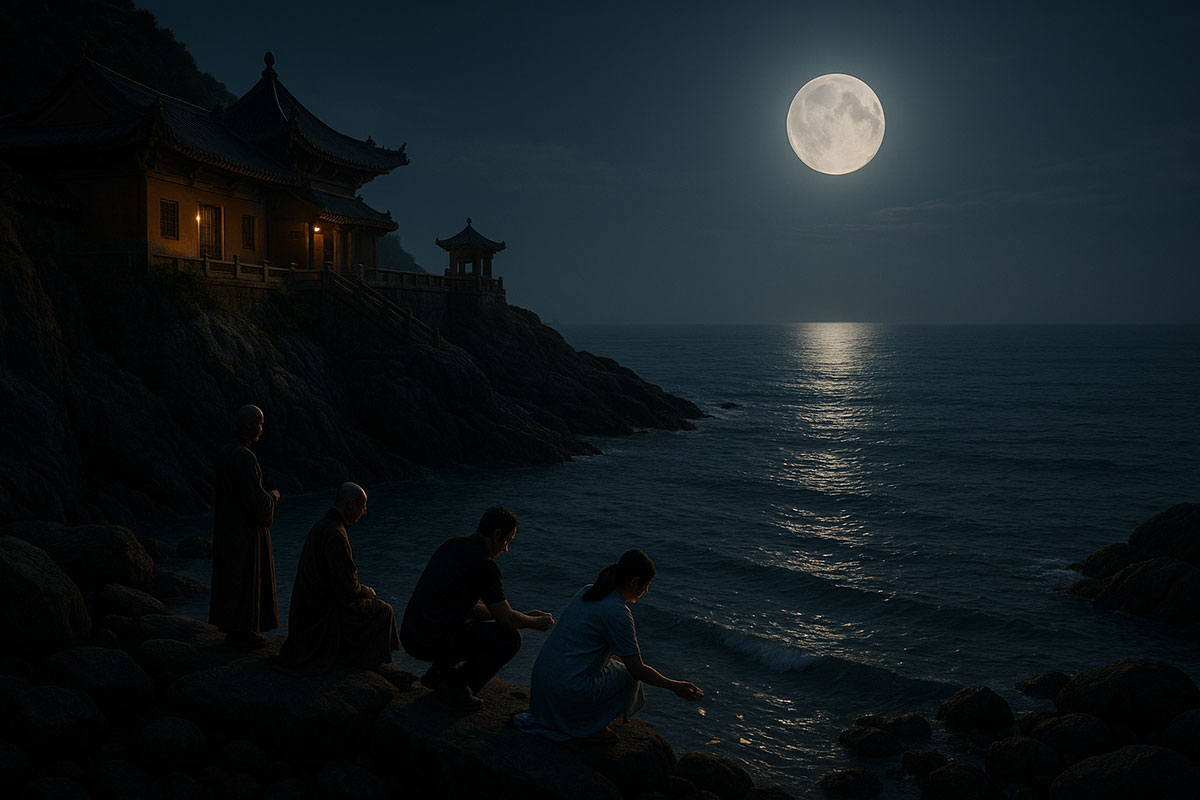
Location: Coastal temples, quiet beaches, and cliffside shrines
Group: Nick Sasaki, Byron Katie, Ali Wong, Millie Bobby Brown, Leila Aboulela (Muslim Sufi author), Anita Diamant (Jewish novelist/spiritual thinker)
Scene 1: The Tide Arrives Softly
The group watches sunrise from the beach temple steps. No tourists yet. Just waves brushing the shore like whispered prayers.
Nick exhales slowly. “I thought healing would feel more dramatic.”
Byron Katie smiles, “Healing is what’s left when you stop arguing with the waves.”
Ali Wong mutters, “I’m a woman. I’ve been told my softness is a liability since middle school.”
Then smirks. “But I’m still standing.”
Millie Bobby Brown, sitting barefoot in the wet sand, adds: “Gentle people don’t break. They bend. I’m learning that.”
Anita Diamant, arms around her knees, says, “In Jewish tradition, water is the first element God spoke over. It's feminine. It's power in patience.”
Scene 2: Cliffside Prayers & Silent Tears
They enter a shrine built into the cliffside, where Guanyin statues line the walls. No talking allowed. Just incense, wind, and stillness.
Each is given a white stone to hold. They’re invited to sit until they’re ready to release something.
Millie weeps quietly. Byron Katie places a hand gently on her back but says nothing.
Nick closes his eyes and feels tears, too—not for one thing, but everything.
Leila Aboulela whispers a verse from the Qur’an:
“Surely with hardship comes ease.”
Ali wipes her eyes and whispers, “I hate crying. But this one felt like… permission.”
Anita simply says, “We’ve all carried too much too quietly.”
Scene 3: Sea Garden Tea & Laughter
Later that day, they sit at an oceanside tea house run by elderly women monks. The tea is salty and smoky—unexpected, but comforting.
Ali Wong says, “Okay, confession: I thought spiritual retreats were supposed to be serious. But my heart feels lighter when I laugh.”
Byron Katie nods, “Laughter is clarity in disguise.”
Millie, more open now, shares a childhood story about pretending to be a sea queen.
Nick bursts out, “I had an imaginary dolphin friend named Gary.”
Anita laughs so hard she snorts. “God bless Gary!”
Leila sips her tea and says, “Even the Prophet laughed with his companions. Reverence doesn’t mean restriction.”
Scene 4: Shell Ritual & Words Left Unsaid
At twilight, each person chooses a seashell and whispers something into it—a regret, a goodbye, a thank-you never said.
Then, they walk alone to the tide and offer it back to the sea.
Nick holds his shell tightly before releasing it. “Goodbye to the person I thought I had to become.”
Millie whispers, “To the girl I used to protect... you’re safe now.”
Ali tosses her shell and jokes, “I forgive that guy in college who ghosted me. Sort of.”
Byron Katie murmurs, “The ocean never judges. It just receives.”
Leila adds, “In Sufism, we call that surrender. Not giving up—giving in to something bigger.”
Scene 5: Moonlit Blessing Walk
They walk along the cliff path under the full moon, candles in hand.
A nun sings an ancient Guanyin chant in the distance.
Nick walks beside Millie and says, “Why does this feel like returning to something I never had?”
Millie replies, “Because you did. You just forgot.”
Ali walks with Anita, asking, “Is it okay to need comfort? Not advice. Just… to be held?”
Anita places her hand on her shoulder. “Of course it is. That’s why the matriarchs weep and the world still turns.”
Byron Katie stops and lets the moonlight soak her face.
“Peace doesn’t have to announce itself. It arrives when you stop needing the storm.”
Leila closes with a whisper:
“Even the ocean kneels before the moon. That’s not weakness. That’s worship.”
Destination 7: Xishuangbanna – Where the Forest Remembers You
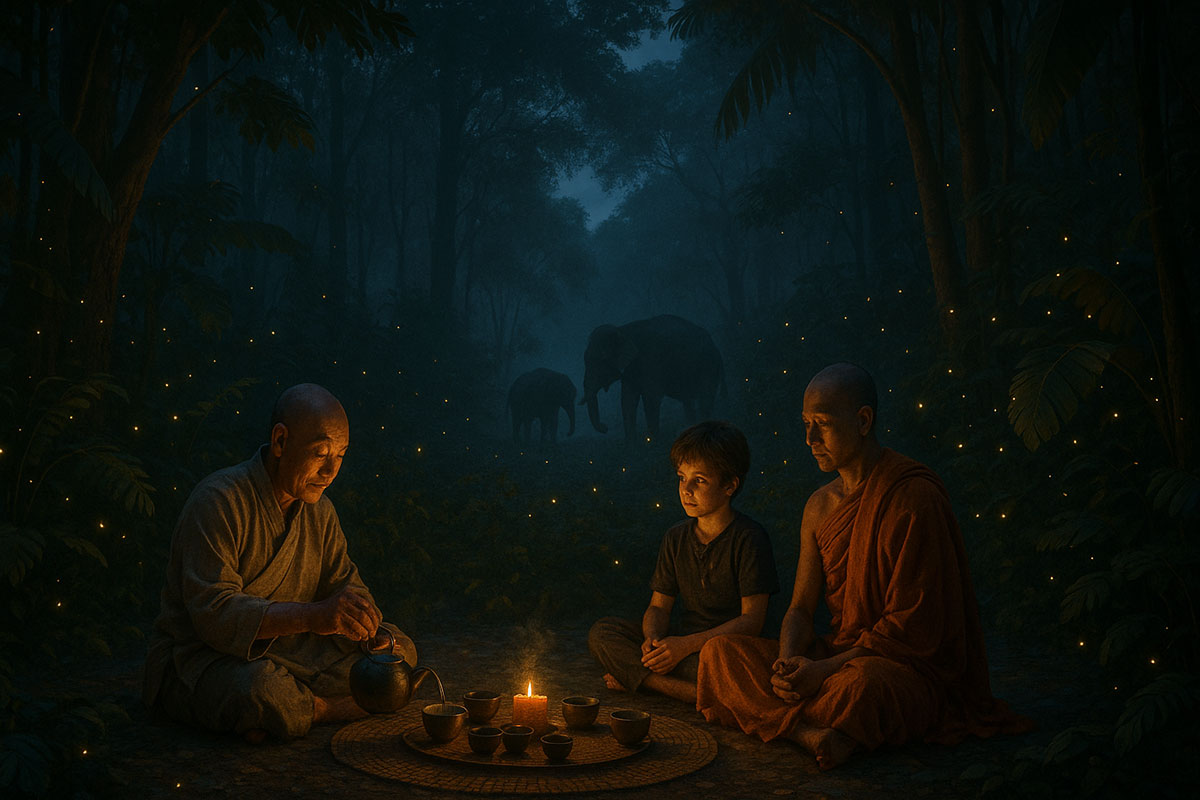
Location: Rainforests, Dai villages, sacred hot springs
Group: Nick Sasaki, Llewellyn Vaughan-Lee, Jack Black, Jacob Tremblay, Henri Nouwen (Christian mystic, posthumously via quotes), Yasmin Mogahed (Muslim teacher/author)
Scene 1: Elephant Trail Meditation
At sunrise, they follow a quiet path once used by wild elephants. Ferns brush their arms. The forest buzzes not with noise—but energy.
Llewellyn Vaughan-Lee guides them:
“Don’t look at the forest. Let it look at you.”
Nick places his hand on a tree trunk and closes his eyes. He feels something like… remembering.
Jacob Tremblay whispers, “It’s like the ground has a heartbeat.”
Jack Black gasps. “Did the bush just wink at me?”
Yasmin Mogahed smiles. “In Islam, even trees are said to glorify God in their own way.”
Scene 2: Herbalist Visit & Healing Tea
In a small Dai village, the group sits with an elder herbalist who prepares a tea made from lotus leaf, wild ginger, and memory root.
As they drink, he tells them in broken Mandarin: “This plant knows sadness. This one gives dreams back.”
Nick takes a sip. It tastes bitter, but then strangely calming.
Henri Nouwen’s quote is read aloud:
“You don’t think your way into a new life. You live your way into a new way of thinking.”
Jacob stares at his cup. “How do plants know what we need?”
Llewellyn answers, “Because they don’t doubt their purpose. Unlike us.”
Scene 3: Animal Encounters & Symbol Reading
As they walk a dense forest trail, a golden bird flies across their path, and a tiny monkey watches them from above.
They reach a clearing where they are asked to draw the animal they feel closest to—no explanations.
Nick draws a crane.
Jacob sketches a turtle.
Jack draws a goat… but it’s wearing sunglasses.
Yasmin draws a deer. “It always shows up in my dreams when I’m lost.”
Llewellyn smiles. “In old traditions, animals arrive when we’re ready to be guided without needing answers.”
Jack: “So the goat is my guru?”
Llewellyn: “Possibly.”
Scene 4: Rain Bath & Dream Telling
A soft tropical rain begins. The group is invited to walk slowly through it—no umbrellas. Just breath and cleansing.
Nick lets the rain soak his clothes. He closes his eyes and feels… light.
Later, inside a warm hut, they sip ginger broth and share dreams from the night before.
Jacob says, “I dreamed I was flying, but only when I wasn’t trying to.”
Yasmin nods: “Dreams speak in metaphor. God speaks to the heart, even while it sleeps.”
Henri Nouwen’s quote is shared:
“Solitude begins when noise no longer comforts you.”
Jack grins. “My dream was a karaoke battle with a panda. I won. I think that means something.”
Laughter echoes against the bamboo walls.
Scene 5: Fire Circle Blessing
That night, they gather around a fire under a thick canopy of stars and fireflies. An elder lights incense and waves it in a circle.
Llewellyn whispers, “We don’t need to become part of nature. We already are.”
Nick stares into the flames. “I always felt like I had to earn my place in the world. But here… I just am.”
Yasmin places a hand on his. “That’s what belonging feels like. No proving. Just being.”
Jacob hugs Jack’s arm and says, “This is my favorite place so far.”
Henri’s voice returns through a journal entry:
“You are not what you do. You are who you are when the world is quiet.”
Jack throws a stick into the fire and shouts, “To the forest! And to the goat who gets me!”
The flames rise, flicker, and fall.
Destination 8: Ganzi Plateau – You’re Not Small, You’re Just Close to the Sky
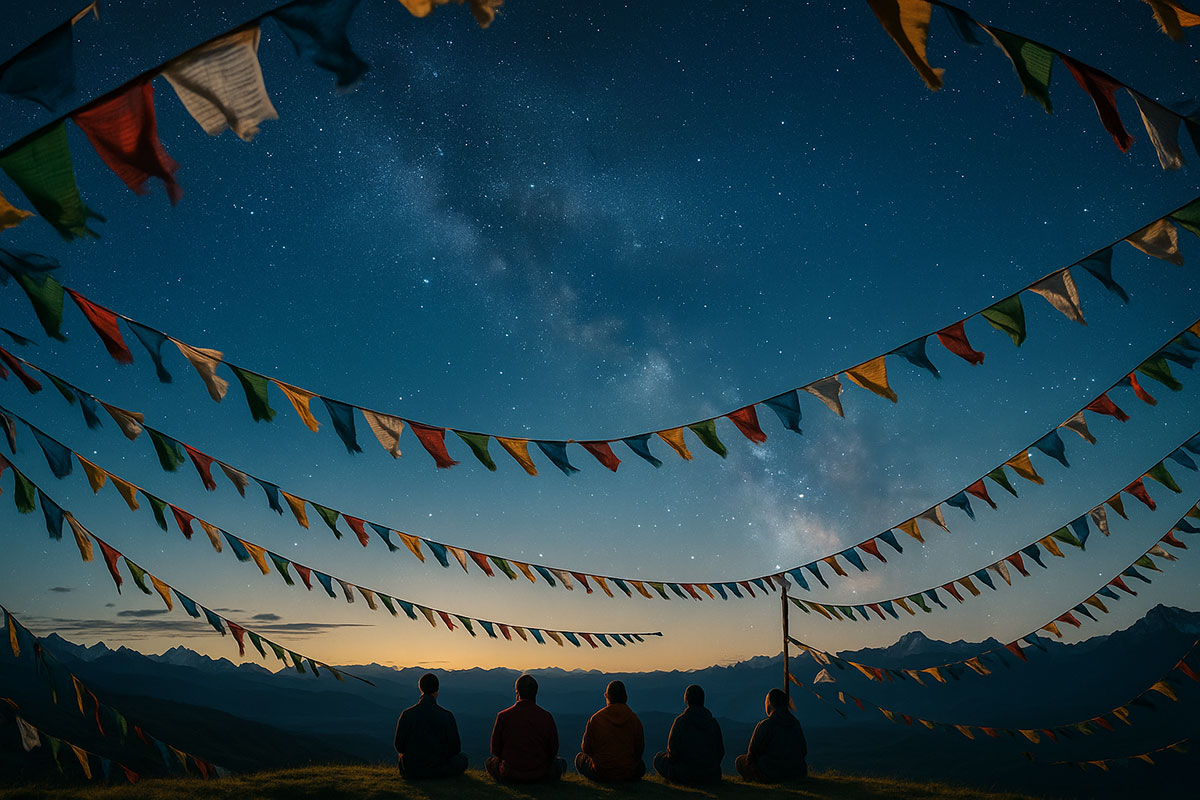
Location: Grasslands, sky temples, nomadic tents, and wind-swept ridges
Group: Nick Sasaki, Tenzin Wangyal Rinpoche, Hasan Minhaj, Emma Watson, Rabbi Jonathan Sacks (teachings remembered), Dzongsar Khyentse Rinpoche
Scene 1: The Sky Temple Arrival
They arrive at a whitewashed mountaintop temple with prayer flags rippling like music in the wind. The air is thin, clean, and almost holy.
Tenzin Wangyal Rinpoche greets them warmly:
“The higher you go, the less you carry.”
Nick, breathless from altitude, stares at the open sky and says, “It feels like space is watching me.”
Emma Watson stands with arms wide open, laughing, “I feel so tiny... and yet huge at the same time.”
Hasan Minhaj jokes, “This is the most peaceful place I’ve ever had an existential crisis.”
Dzongsar Rinpoche smiles faintly: “The soul doesn’t need to understand. It needs space.”
Scene 2: Sky Gazing Meditation
They lie on yak blankets in the grass, looking up into the cloud-swept sky.
Rinpoche guides them:
“Let your thoughts pass like clouds. You are the sky, not the weather.”
Nick sees memories rise and dissolve like mist. He breathes. He is the breath.
Emma whispers, “For once, I don’t need to be anything.”
Hasan adds, “I just realized… I’m usually thinking about what I’m thinking. And now I’m not. And that feels better than therapy.”
A quote from Rabbi Jonathan Sacks is shared:
“Faith is not certainty. It’s the courage to live with uncertainty.”
Scene 3: Nomadic Tent & Impermanence Tea
They visit a nomadic family’s yak-wool tent. Inside: tea, tsampa, and warm eyes.
As they drink salty butter tea, the hostess offers: “We do not fear change. We ride it, like wind.”
Dzongsar Rinpoche says, “The mountain does not keep the snow. Why should you keep what no longer warms you?”
Nick sips his tea and says, “I thought letting go would feel like loss. But it feels like breathing.”
Emma writes in her journal: This moment won’t come again. And that’s what makes it sacred.
Hasan: “Hot take… maybe impermanence is underrated.”
Laughter echoes off the cliffs.
Scene 4: Wind Song Ritual
On a ridge at sunset, they join in a Tibetan chanting ritual. Each is invited to sing—not with skill, but with sincerity.
Emma hesitates, then begins to hum. Nick follows with a low tone.
Hasan belts out a line from a Bollywood song halfway through, then blends it into a Tibetan syllable.
“This is how I make peace with my ancestors.”
Tenzin Rinpoche nods, “The voice is a doorway. Not for the audience. For the soul.”
Rabbi Sacks’s quote is remembered:
“To be heard is to exist. But to speak honestly is to live.”
Nick finally sings a single word: “Home.”
Scene 5: Star-Sitting and Ego Shedding
That night, they sit beneath a vault of stars so bright they look painted on the sky.
Tenzin leads one final reflection:
“Who are you without the roles you perform?”
Nick sits in stillness. For once, he has no answer. And that feels like grace.
Emma says, “I’m not Hermione. I’m not even ‘Emma’ right now. I’m just… here.”
Hasan, looking up, mutters, “I want to be this quiet on the inside.”
Dzongsar Rinpoche closes:
“Stillness isn’t quiet because nothing is happening. It’s loud because everything is allowed.”
The group watches a meteor streak across the sky.
Nick whispers: “I don’t need to know where I’m going. The sky is enough.”
Destination 9: Dunhuang – When the Desert Speaks, It Whispers Forever
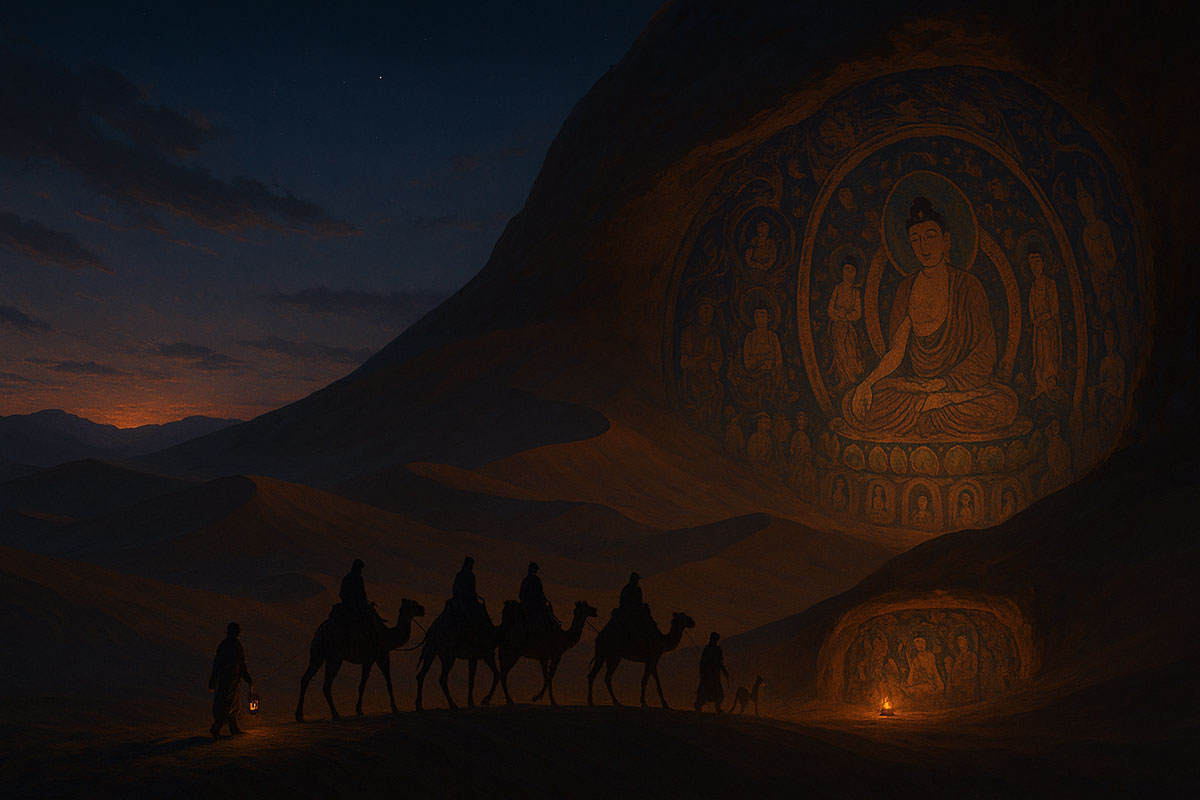
Location: Mogao Caves, Crescent Moon Lake, Singing Sand Dunes
Group: Nick Sasaki, Mooji, Bo Burnham, Freddie Highmore, Idries Shah (Sufi thinker, remembered), Barbara Brown Taylor (Christian mystic)
Scene 1: Entering the Cave of Ten Thousand Eyes
(Topic 1: “Time Doesn't Pass in Sacred Places—It Pours Back In”)
They step into the Mogao Caves, where Buddhist murals cover every inch—painted centuries ago by hands who prayed with color.
Nick feels the air shift. “It smells like old breath… but not dead. Remembering.”
Freddie Highmore stares at a painted Bodhisattva and murmurs, “She’s still looking at me.”
Mooji says, “Time is not a river—it’s a room. And in here, your soul has already sat down.”
Bo Burnham tilts his head and grins: “I think this mural just roasted me.”
Barbara Brown Taylor whispers: “Sometimes art doesn’t teach. It reminds.”
Scene 2: Silent Illumination & Shadow Play
(Topics 2 & 3: “The Dark Holds Things Worth Seeing” & “Sacredness Doesn't Announce Itself”)
They sit with a monk in a cave lit by one small butter lamp. The walls flicker with shadows of ancient gods.
The monk asks them to close their eyes and listen—not for sounds, but for what the dark holds.
Nick sees his childhood. Freddie sees a moment he never cried for. Mooji breathes and feels nothing—and everything.
Bo breaks the silence: “I was waiting for something dramatic. But I think the point is… nothing came. And that’s what I needed.”
Barbara nods. “God sometimes hides in shadows. Not to scare—but to slow us down.”
Scene 3: Camel Ride at Dusk
(Topics 4 & 5: “Movement is Sometimes the Only Prayer You Can Manage” & “You’re Allowed to Not Know”)
They mount camels and ride into the dunes as the sky bleeds orange and rose.
Mooji watches the sand shift. “Let the desert rearrange your questions.”
Nick says, “I don’t know what I believe right now. I just know… I’m here.”
Freddie nods, “Maybe presence is the best theology.”
Bo, bouncing on his camel, shouts, “I’m spiritually confused and physically chafed!”
Everyone laughs.
Idries Shah’s quote is read aloud:
“To seek truth is noble. To admit you don’t yet see it is holy.”
Barbara adds, “Faith is letting the mystery sit beside you, not forcing it to speak.”
Scene 4: Scroll Room & The Unwritten Word
(Topics 6 & 7: “What You Don’t Say Becomes the Sacred” & “Some Truths Aren’t Ready to Be Read”)
They visit a secret chamber filled with scrolls sealed for centuries.
Each person is handed a blank scroll and invited to write a truth they haven’t yet told anyone—or simply hold it, unwritten.
Nick doesn’t write. He just holds his.
Bo writes, folds it twice, then burns it gently in a clay bowl. “It wasn’t for keeping.”
Freddie quietly writes: I forgive you.
Barbara says, “Some truths are compost. They need time underground before they grow.”
Mooji adds, “Not all scripture is written with ink. Some are lived through silence.”
Scene 5: Stars Over the Dunes
(Topics 8–10: “Sacredness Can Outlive Its Purpose,” “You Are Not the Last Link in the Chain,” “Legacy Begins in Listening”)
That night, they lie on blankets under a galaxy of stars. Sand is still warm from the day. The silence is total.
Barbara says, “Some of the scrolls in those caves were buried because their readers weren’t born yet.”
Nick asks, “So… are we carrying someone else’s hope?”
Mooji replies, “You’re not the end. You’re a continuation.”
Freddie closes his eyes. “I want to be remembered as someone who listened.”
Bo stares at the stars and mutters, “I used to want to be known. Now I just want to be real.”
Idries Shah’s final quote is shared:
“He who knows how to listen can become the voice of those who are gone.”
The desert breathes around them like a sleeping animal.
Destination 10: Beijing Courtyards – You Came Looking for Answers. You Leave Listening to Silence.
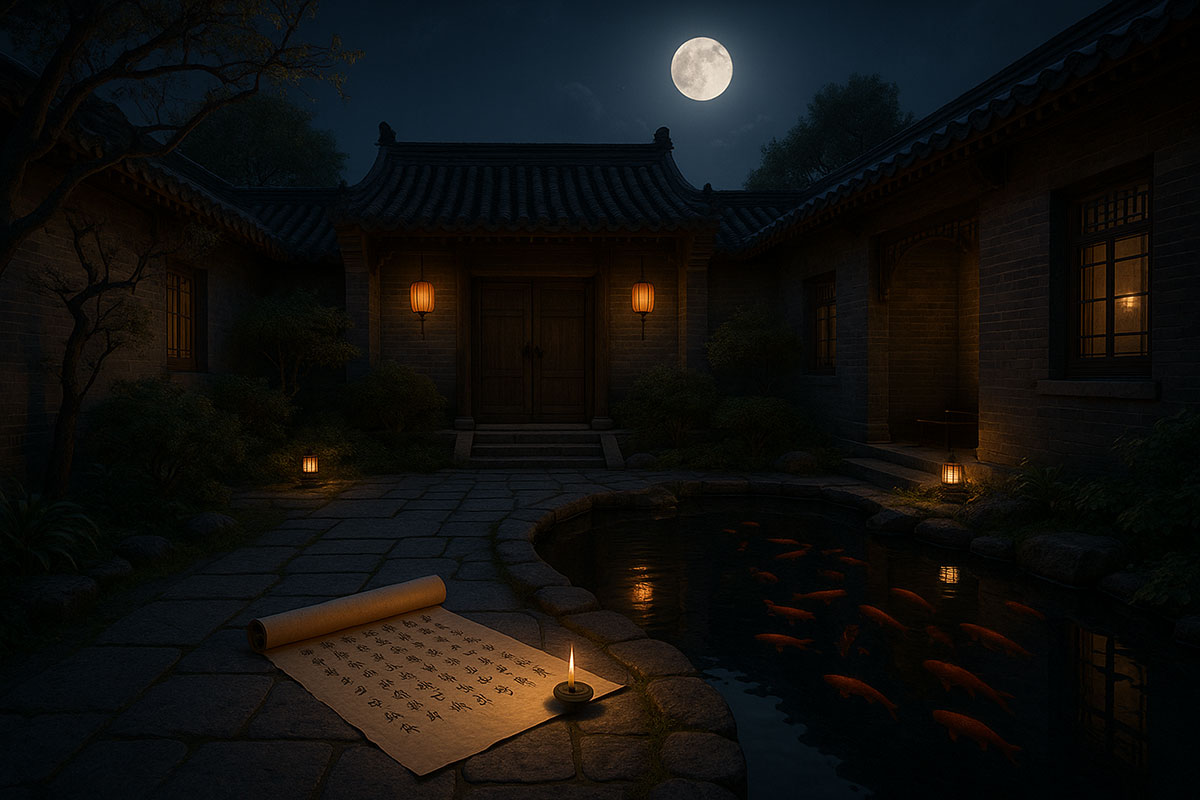
Location: Old Hutongs, private scholar's courtyard, moon garden
Group: Nick Sasaki, Alan Watts (through audio/quotes), Robin Williams (honored in spirit), Ke Huy Quan, Esther Perel (Jewish voice), Sharon Salzberg (Buddhist teacher)
Scene 1: A Scholar’s Study
They enter a secluded siheyuan (四合院), a traditional courtyard where scrolls, inkstones, and quiet await. Their host—a calligrapher in his 90s—doesn’t speak much. He pours tea. He nods. He smiles.
Nick looks around. “This house feels like it knows things.”
Alan Watts’ voice plays softly from an old speaker:
“The menu is not the meal. Don’t mistake understanding for living.”
Ke Huy Quan runs his fingers along a bookshelf and murmurs, “I spent so long trying to get back in front of people. I forgot how to be alone.”
Robin’s spirit feels close—like laughter waiting behind a door.
Scene 2: Ink & Emotion
Each person is handed a brush and rice paper. They’re invited to paint—not what they know, but what they feel.
Ke draws a boy in shadow holding a candle.
Nick draws a leaf being carried by wind.
Sharon Salzberg writes the character for “Stillness,” then flicks the brush downward, letting the ink drip freely.
“That’s for all the feelings that don’t stay where I put them.”
Esther Perel draws two chairs—facing, but not touching. “Sometimes love is closeness. Sometimes, it’s space.”
Robin’s remembered quote plays softly from a journal Nick found in the room:
“Crying doesn’t mean you’re weak. It means you’ve been strong for too long.”
Scene 3: Courtyard Dinner & Laughter
At dusk, lanterns are lit. A quiet dinner of steamed buns, tofu, and rice wine begins.
Robin’s spirit hovers warmly as Ke impersonates an old kung fu master trying to open a stubborn jar.
Everyone laughs—hard. It’s the kind of laughter that hurts your ribs. The kind that washes away ache.
Nick says, “I used to chase joy like it was a prize. But maybe it’s more like seasoning. It finds the right dish.”
Esther: “Humor helps truth land softly. Sometimes it’s not that we don’t want to see—it’s that we’re scared to look.”
Sharon adds, “Real reflection isn’t always serious. Sometimes it dances.”
Scene 4: Moon Garden Reflection
They walk into a private moon-viewing garden. The courtyard is quiet. Moonlight casts long shadows.
Nick sits by a koi pond, journal in hand. He doesn’t write.
Alan Watts:
“Muddy water is best cleared by leaving it alone.”
Sharon places a flower on the water and says, “Peace is what remains when you're done trying.”
Ke, eyes misty, says, “I thought this journey would tell me who I am. But it told me I didn’t need to know.”
Esther gently says, “Completion is not the end. It’s the soft landing after surrender.”
Scene 5: The Final Door
At the courtyard gate, the calligrapher gives Nick a final gift: a scroll. It says nothing. Just a single brush stroke… looping, open, unfinished.
Alan Watts, softly:
“You are an aperture through which the universe is looking at itself.”
Robin’s voice (archival):
“The world is open. Your turn.”
Sharon Salzberg bows and smiles, “May your stillness be filled with movement.”
Esther hugs Nick, “The answers weren’t in the places. They were in the noticing.”
Ke Huy Quan lingers, then says:
“The magic wasn’t out there. It was in the way we stayed present.”
Nick smiles quietly. He turns the handle on the final gate and steps out—not because the journey is over, but because now… it’s truly begun.
Final Thoughts by Nick Sasaki
By the time we reached the quiet courtyards of old Beijing, I realized something.
The real journey wasn’t across China’s sacred land.
It was across the chambers of my own soul.
Each destination whispered something different.
Each companion became a mirror.
Each tradition offered a piece I never knew was missing.
But the most surprising part?
Laughter healed us.
Stillness taught us.
Faith softened us.
And the land itself—patient, wise, and aching to be remembered—welcomed us like long-lost children.
I no longer believe I need to understand everything to belong.
I just need to be present enough to feel what’s already true.
Wherever you are in your journey—whether you’re lost, seeking, joyful, or just tired—I hope these stories walk with you, like the wind behind your shoulder.
Not to lead you.
But to remind you: you’re already home.
— Nick Sasaki
Short Bios:
Leave a Reply