
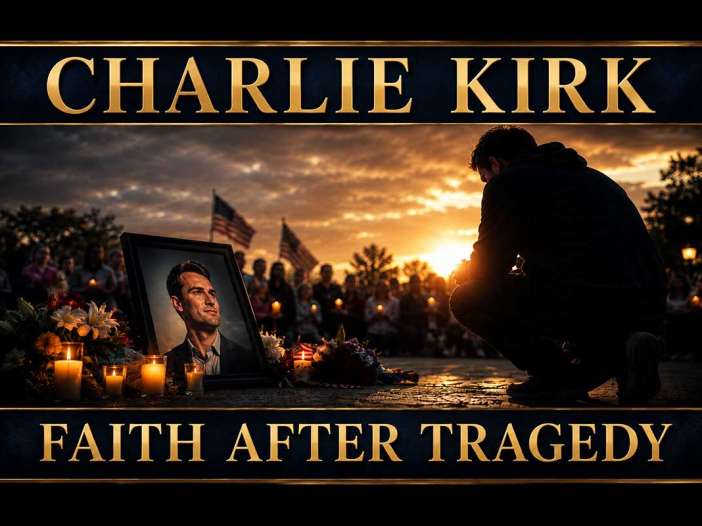
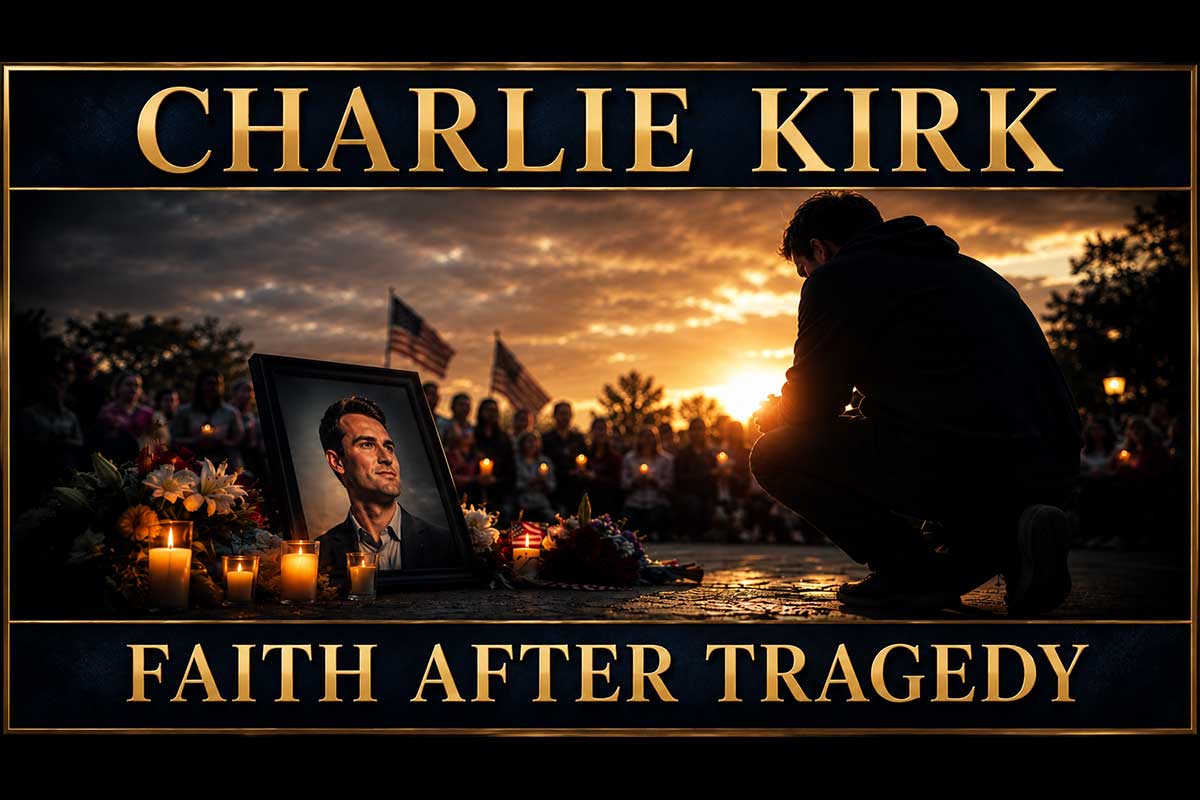
What if Charlie Kirk’s top thinkers discussed whether public death can become a spiritual battlefield?
Introduction by Nick Sasaki
When a public death becomes larger than the person who died, something strange happens.
The world stops asking only what happened.
It begins asking what the death means.
In Spiritman JT’s talk about Charlie, the story is presented through a spiritual channeling lens. Charlie is described not only as a political figure, but as a soul looking back on his life, his movement, his family, his faith, and the forces that may have surrounded him. The talk speaks of hidden players, financial corruption, spiritual darkness, betrayal, and concern for his children. It also presents a softer afterlife voice — one less focused on judgment, and more concerned with compassion, unity, and the way faith can be distorted by anger.
That is what makes this ImaginaryTalks conversation powerful.
It is not only about Charlie.
It is about what happens when faith becomes political identity.
It is about how movements can begin with sincere belief and then become tangled with money, influence, fear, and control.
It is about how children inherit the emotional weight of a public legacy.
And it is about whether death might give the soul a wider view — one where truth remains, but contempt begins to fall away.
Across these five topics, Charlie becomes a symbol of a deeper human question:
Can a person serve truth without being used by systems of influence?
Can a movement speak of God without losing humility?
Can grief become wisdom instead of division?
And can faith become stronger by becoming more compassionate?
This conversation invites us to look beyond politics, beyond conspiracy, beyond public outrage, and into the more painful spiritual question:
When we fight for what we believe is true, are we becoming more loving — or only more certain?
(Note: This is an imaginary conversation, a creative exploration of an idea, and not a real speech or event.)
Topic 1: When a Public Death Becomes a Spiritual Battlefield
Opening
Nick Sasaki:
When a public figure dies violently, the nation does not only ask, “Who did it?” It asks, “What does this mean?”
And sometimes, that second question becomes even more dangerous than the first.
Charlie Kirk’s assassination at Utah Valley University on September 10, 2025, became a national event almost instantly. AP reported that he was shot while speaking at a campus event, and later confirmed his death.
But today’s conversation is not a criminal investigation. It is a moral and spiritual inquiry inspired by Spiritman JT’s channeling. That speech presents Charlie’s death as more than political violence. It frames it as a battle over truth, faith, hidden influence, and the soul of a movement.
So I want to ask the deeper question:
Question 1: Why do public deaths so often become spiritual symbols?
Charlie Kirk:
Death strips away the ordinary noise.
When I was alive, people argued with my politics, my faith, my tone, my movement, my enemies, my allies. But after death, people stopped seeing only the man. They started seeing a sign.
Some saw martyrdom. Some saw judgment. Some saw political violence. Some saw conspiracy. Some saw warning.
That is the danger.
A death can awaken people, but it can also be used by people. It can call people to God, but it can also pull them into hatred. I would want people to ask, “Did this make me more loving, more truthful, more courageous?” If it made them only more suspicious, more angry, and more divided, then something dark has taken hold of the story.
C.S. Lewis:
A public death becomes spiritual when it touches the invisible architecture of human longing.
People want the universe to mean something. They cannot bear the thought that violence is merely violence, that blood falls and history continues without moral shape. So they search for meaning.
This is not always wrong. Grief naturally reaches upward.
But the danger comes when the search for meaning becomes intoxicated with hidden knowledge. The soul begins by asking God for wisdom, but soon begins demanding secrets. That is a dangerous road. The devil does not always appear as disbelief. Sometimes he appears as certainty without charity.
Dietrich Bonhoeffer:
A public death becomes spiritual when it exposes what people worship.
Some worship nation. Some worship movement. Some worship leader. Some worship revenge. Some worship the purity of their own side.
A violent death tests the church. Does it respond with prayer, repentance, courage, and truth? Or does it turn the dead into a weapon?
The dead must not be used to excuse hatred among the living. A martyr is not a tool for tribal rage. A martyr, if he is truly a martyr, points beyond himself.
Carl Jung:
In collective trauma, the unconscious erupts.
The dead person becomes a container for projections. Each group places its fear, guilt, hope, and rage upon him. The hero archetype appears. The martyr archetype appears. The betrayed king appears. The sacrificed son appears.
This is why public death is so unstable. The actual human being may disappear beneath symbolic material.
Charlie becomes less Charlie and more mirror. The public looks at him and sees what it already carries inside.
Nick Sasaki:
So the first danger is that a death can become meaningful, but not necessarily truthful.
People may need meaning so badly that they accept any story that gives pain a shape.
Question 2: How do we tell the difference between spiritual awakening and spiritual manipulation?
C.S. Lewis:
One test is the fruit.
Does the story make people humble? Does it make them repentant? Does it make them more merciful? Does it deepen their love of truth?
Or does it make them cruel, feverish, and proud?
The spiritual world is real, but that does not mean every spiritual claim is holy. There are many voices. Some voices flatter our anger. Some voices baptize our prejudices. Some voices make fear feel like prophecy.
A true awakening bends the soul toward God. A false awakening bends the soul toward obsession.
Charlie Kirk:
I lived in the arena of persuasion. I know how quickly people can turn a story into a weapon.
Faith should make people braver, not more paranoid. It should make them clearer, not more easily manipulated. If people say they are defending my legacy but they become dishonest, cruel, or addicted to theories they cannot prove, then they are not defending me. They are using me.
My name should not become permission to hate.
Bonhoeffer:
Spiritual manipulation often uses sacred language for unsacred purposes.
It says “God,” but it means power.
It says “truth,” but it means control.
It says “enemy,” but it means anyone who threatens the group’s certainty.
The church must be careful. Political religion can be more dangerous than open unbelief. It takes divine language and attaches it to human ambition.
When a movement cannot examine itself, it has already begun to decay.
Jung:
A true spiritual awakening integrates the shadow. A false one projects the shadow outward.
If people say, “All evil is outside us,” they are being manipulated.
If they say, “This tragedy reveals something corrupt in our own hearts too,” then transformation may begin.
The channeling speech speaks of darkness, hidden forces, possession, and takeover. Symbolically, this is powerful material. But one must ask: are these images helping the soul become whole, or are they feeding the fantasy that evil belongs only to others?
Nick Sasaki:
That may be the dividing line.
Spiritual awakening says, “What must I change?”
Spiritual manipulation says, “Who must I blame?”
Question 3: What would healing look like after a death like this?
Charlie Kirk:
Healing would not mean everyone agreeing with me.
It would mean people becoming less afraid to speak honestly, and less eager to destroy each other for speaking.
It would mean my children could grow up knowing their father was loved without being trapped inside everyone else’s anger.
It would mean people who admired me would become more Christlike, not just louder.
And people who opposed me would still remember that I was human.
Bonhoeffer:
Healing begins when truth and mercy meet.
Truth without mercy becomes cruelty. Mercy without truth becomes sentimentality.
A society wounded by political violence must resist the temptation to sanctify its own side and demonize the other. The command of Christ remains: love your enemies. This does not mean abandoning justice. It means refusing to let hatred become your teacher.
C.S. Lewis:
The dead are not healed by our rage.
The living are not healed by suspicion alone.
A nation heals when grief becomes wisdom. It does not heal when grief becomes entertainment, spectacle, or endless accusation.
If Charlie’s death is to mean anything spiritually, it must lead people away from worship of politics and back to the eternal.
Jung:
Healing would require the public to reclaim the human being beneath the symbol.
Let Charlie be a man again: flawed, gifted, loved, controversial, mortal.
When the dead are allowed to be human, the living are freed from mythic possession.
Nick Sasaki:
Then perhaps the deepest question is not whether Charlie’s death was political, spiritual, or symbolic.
The deeper question is what it does to us.
Does it make us more truthful?
Does it make us more compassionate?
Does it make us more awake without becoming consumed?
Closing
Nick Sasaki:
A public death becomes a battlefield when everyone fights to control its meaning.
But maybe the holiest response is quieter.
To grieve without using.
To question without losing mercy.
To seek truth without worshiping suspicion.
To remember that a soul is larger than a headline, larger than a movement, larger than a controversy.
And maybe that is where spiritual healing begins.
Topic 2: The Pawn, the Players, and the Hidden Board

Opening
Nick Sasaki:
In Spiritman JT’s speech, one image appears with strange force: Charlie sees a pawn on a chessboard, then throws it off the board, saying, “I was just the pawn.”
That image raises a painful question.
What happens when a person thinks he is serving a mission, but later discovers larger forces were using the mission for their own ends?
Was Charlie a leader?
A symbol?
A target?
Or a piece moved by people who never cared about his soul?
Today, we ask what it means to live inside a system where the board is hidden, the players are unseen, and the pawn may be the only one who still believes the game is about truth.
Question 1: What does it mean to be “a pawn” in history?
Charlie Kirk:
A pawn is not powerless.
That is the first thing I would say.
A pawn can cross the board. A pawn can become something greater. But a pawn is also the first piece sacrificed when the player wants to open the game.
When I looked back, I saw moments where I thought I was choosing the fight, but the fight had already been arranged around me. The cameras, the donors, the platforms, the enemies, the applause, the outrage — all of it created momentum.
You think you are moving.
Then one day, you realize the movement is moving you.
That is what I mean by pawn.
Not that I had no will. I had will. I had conviction. I had faith. But I was inside a larger machine, and many people around me had different reasons for keeping that machine alive.
George Orwell:
The pawn is useful precisely when he believes himself free.
A system does not need to enslave every man openly. It only needs to shape his available choices. It gives him language. It gives him enemies. It gives him slogans. It tells him which truths are acceptable and which truths would destroy the arrangement.
The most tragic pawn is not the coward.
It is the sincere man.
The sincere man speaks with conviction, and the audience believes him. Yet behind him may stand interests that care nothing for conviction. They care only for energy, money, votes, fear, obedience.
A pawn is the human face of a machinery that prefers to remain faceless.
Hannah Arendt:
History is full of people who enter movements seeking meaning, then find themselves serving structures they do not fully see.
The pawn is not always innocent. Nor is he simply guilty.
He participates.
He speaks.
He benefits.
He influences others.
Yet he may not grasp the full machinery. This is why moral judgment must be careful. We must ask: what did he know? What did he refuse to know? What did he suspect but avoid naming?
A person becomes a pawn when loyalty to the movement becomes stronger than loyalty to reality.
Noam Chomsky:
In political media systems, pawns are often manufactured through incentives.
Attention rewards simplification.
Money rewards loyalty.
Institutions reward repetition.
Audiences reward emotional certainty.
A person may start with beliefs. Then the system selects the version of him that performs best. Over time, that version replaces the person.
He becomes useful.
The question is not only, “Who moved him?” It is, “What structure made him movable?”
Nick Sasaki:
So being a pawn does not mean being empty.
It may mean being sincere inside a game whose rules were written elsewhere.
Question 2: How do hidden players use public figures without fully controlling them?
George Orwell:
They do not need full control.
Full control is inefficient.
They need pressure points.
They need funding.
They need access.
They need fear of losing one’s platform.
They need enemies who make retreat feel like betrayal.
A public figure may speak freely on many matters, yet become silent around the one matter that touches the true power structure. This selective freedom is one of the great illusions of modern public life.
The cage is large enough to feel like open air.
Charlie Kirk:
That hits hard.
People think public figures are either brave truth-tellers or total puppets. It is not that simple.
You can be bold on stage and still have blind spots backstage.
You can challenge the culture and still avoid challenging the money.
You can talk about God and still become dependent on people whose first god is influence.
That is where the danger enters.
You start by saying, “I need resources to spread the truth.”
Then one day the resources start deciding which truth gets spread.
Hannah Arendt:
Hidden players use public figures by surrounding them with necessity.
A person says, “I must keep the organization alive.”
Then, “I must keep the donors calm.”
Then, “I must protect the movement.”
Then, “I must not divide the base.”
Each step sounds practical. Each step seems temporary. Yet together they produce moral surrender.
Evil in public life is rarely announced with horns. It enters through management.
Noam Chomsky:
The hidden player is often not one villain.
It is an ecosystem.
Think tanks, donors, media incentives, social platforms, political operators, legal structures, audience pressure — they form a field. A public figure learns which statements bring reward and which bring punishment.
Soon he internalizes the field.
No one has to tell him what not to say.
He already knows.
Nick Sasaki:
That may be the most frightening form of control.
Not chains.
Not orders.
A system so complete that the person edits himself and calls it wisdom.
Question 3: How can a person remain human when standing on a hidden board?
Charlie Kirk:
You need someone near you who is not impressed.
Someone who can say, “You are becoming the brand more than the soul.”
Someone who can say, “You are winning arguments but losing tenderness.”
Someone who can ask, “Are you still following God, or are you following momentum?”
A public figure needs private correction.
Without it, applause becomes a drug.
And outrage becomes another kind of applause.
Hannah Arendt:
The first defense is thinking.
Real thinking is not strategy. It is the silent conversation of the self with the self.
Can I live with what I am saying?
Can I live with what I am ignoring?
Can I live with who benefits from my words?
Movements often discourage this inner conversation. They prefer slogans, urgency, and loyalty.
To remain human, one must preserve the inner courtroom.
George Orwell:
Use plain language.
Hidden boards thrive on corrupted language.
Words such as freedom, patriotism, faith, security, justice, and truth can be emptied and refilled with propaganda.
A person remains human by refusing fashionable lies, including the lies of his own side.
He must say what he sees, not what his tribe rewards.
Noam Chomsky:
Follow the incentives.
Ask who pays.
Ask who gains.
Ask which questions never appear on stage.
Ask which enemies are safe to attack and which interests remain untouched.
Moral courage is often measured not by how loudly one attacks the approved enemy, but by whether one questions the sponsor.
Nick Sasaki:
Then the way off the hidden board may begin with a simple act:
Ask who benefits from my certainty.
Ask what I am afraid to see.
Ask where my mission became someone else’s machine.
Closing
Nick Sasaki:
The image of Charlie as a pawn is painful, but it is not hopeless.
A pawn is small.
A pawn is exposed.
A pawn is often sacrificed first.
Yet the pawn also carries a strange lesson: the smallest piece may reveal the whole game.
If Charlie’s story means anything here, it is not only about hidden players.
It is about the danger of becoming useful before becoming wise.
A person can speak for truth and still be used by untruth.
A movement can speak of God and still be captured by ambition.
A nation can watch the board and still miss the hand moving the pieces.
The question is not only, “Who are the players?”
The deeper question is:
When history moves through us, will we still have enough soul left to refuse the game?
Topic 3: Faith, Division, and the Dark Side of Religious Movements
Opening
Nick Sasaki:
A movement can begin with faith.
A movement can begin with prayer, moral courage, and a sincere desire to change the world.
But over time, something can happen.
The mission becomes a brand.
The brand becomes an institution.
The institution needs donors.
The donors demand access.
The leaders protect reputation.
The followers protect identity.
And somewhere along the way, the original fire of faith can become mixed with fear, money, ego, and control.
In Spiritman JT’s speech, Charlie is portrayed as warning that Turning Point was being taken over by “dark entities,” with financial concerns, donor issues, and spiritual corruption all tangled together.
Whether we read that literally or symbolically, the question is powerful:
How does a movement that begins with God become captured by something far less holy?
Question 1: How can a faith-based movement lose its soul?
Charlie Kirk:
It begins when winning becomes more important than witness.
At first, you tell yourself the movement needs influence so truth can reach more people. That sounds noble. It may even be true for a season.
Then influence becomes the thing you protect.
You begin asking, “Will this hurt the movement?” before asking, “Is this true?”
You begin asking, “Will donors leave?” before asking, “Is this right?”
You begin asking, “Will our side lose?” before asking, “What would God ask of me here?”
That is how the soul leaks out of a movement.
Not all at once.
One compromise at a time.
Martin Luther King Jr.:
Any movement rooted in faith must remain accountable to love.
Love is not weakness. Love is moral discipline. Love refuses to turn people into objects.
When a movement begins to treat opponents as less than human, it has already stepped away from the sacred. When it speaks of God but feeds contempt, it is using the language of heaven with the spirit of domination.
The beloved community cannot be built with hatred in the heart.
A movement loses its soul when it forgets that the enemy is still a child of God.
Reinhold Niebuhr:
Moral movements are always tempted by self-righteousness.
Individuals may confess sin, but groups rarely do. Groups protect themselves. Groups justify themselves. Groups baptize their interests.
A religious movement may begin with genuine moral concern, yet soon claim divine approval for its own ambition. Once that happens, humility dies.
The greatest danger is not that religious people become political.
The greater danger is that they become certain they are pure.
Simone Weil:
A movement loses its soul when attention dies.
Real faith requires attention to the suffering person in front of us. Not the category. Not the slogan. Not the enemy class. The person.
Institutions prefer abstractions. “The cause.” “The base.” “The threat.” “The future.” These words can become idols.
A soul is saved by attention.
A movement is lost when it no longer sees faces.
Nick Sasaki:
So corruption does not always begin as greed.
Sometimes it begins as urgency.
“We must win.”
“We must protect the cause.”
“We must defeat evil.”
And then slowly, the movement becomes what it once opposed.
Question 2: Why do money and power so easily corrupt spiritual missions?
Reinhold Niebuhr:
Power is never neutral.
It can be used for justice, but it always tempts the holder. Religious people are especially vulnerable when they believe their good intentions protect them from corruption.
Money gives a movement scale.
Power gives a movement reach.
But both ask for something in return.
They ask for silence.
They ask for selective outrage.
They ask for moral flexibility.
The tragedy is that leaders often do not notice the bargain until their conscience has grown quiet.
Charlie Kirk:
That is painful, but true.
You can start by thinking, “We need donors to do the work.”
Then you realize some donors do not only give. They shape.
They do not always say, “Do this.”
Sometimes they simply reward one direction and ignore another.
They invite you into rooms.
They open doors.
They make you feel serious, chosen, influential.
Then a question appears in your heart: “Can I still say no?”
If you cannot say no, you are no longer leading. You are being managed.
Martin Luther King Jr.:
A spiritual mission must be willing to suffer loss.
If it cannot lose money, it cannot speak truth.
If it cannot lose status, it cannot speak truth.
If it cannot lose applause, it cannot speak truth.
The cross is not a decoration for a movement. It is the measure of whether the movement still belongs to God.
A faith movement must ask: are we willing to be smaller if faithfulness requires it?
Simone Weil:
Money turns attention outward to expansion.
Power turns attention upward to hierarchy.
But God is often found downward: in the vulnerable, the ignored, the wounded, the inconvenient.
A movement corrupted by money stops asking, “Who is suffering?”
It asks, “Who is useful?”
That is spiritual death.
Nick Sasaki:
Maybe the test is simple:
Can the movement still tell the truth when truth costs money?
Can it still defend the weak when the weak bring no advantage?
Can it still confess sin when confession damages the brand?
Question 3: What would spiritual reform look like inside a corrupted movement?
Charlie Kirk:
It would begin with confession.
Not public relations.
Not damage control.
Confession.
The movement would need to say, “We confused influence with faithfulness. We confused victory with obedience. We confused loyalty to leaders with loyalty to God.”
Then it would need to open the books, open the rooms, and stop hiding behind sacred language.
If there is financial corruption, expose it.
If there is manipulation, expose it.
If people were used, apologize to them.
Faith does not fear the light.
Martin Luther King Jr.:
Reform must return the movement to love and justice.
That means not only correcting internal corruption, but changing the spirit of the movement.
Does it teach people to love their enemies?
Does it protect the poor?
Does it tell the truth about its own side?
Does it call people to courage without feeding cruelty?
A movement renewed by God does not become softer in its convictions. It becomes deeper in its humanity.
Reinhold Niebuhr:
Structures matter.
It is not enough for leaders to be sincere. Good intentions cannot substitute for accountability.
A movement needs limits on authority, transparency around money, space for internal dissent, and leaders who can be challenged without being treated as traitors.
Sin is not removed from institutions by enthusiasm.
It is restrained by humility, honesty, and structure.
Simone Weil:
Reform means silence before action.
The movement must stop performing long enough to listen.
Listen to those harmed by its rhetoric.
Listen to those pushed out.
Listen to those who left quietly.
Listen to the poor whom the movement claimed to defend but rarely heard.
God often speaks through the person the institution has learned to ignore.
Nick Sasaki:
Then spiritual reform is not a rebrand.
It is a return.
A return to conscience.
A return to humility.
A return to truth that does not need applause.
A return to God without using God as a banner for human ambition.
Closing
Nick Sasaki:
A religious movement does not lose its soul in one dramatic fall.
It loses it when truth becomes inconvenient.
It loses it when money becomes untouchable.
It loses it when leaders cannot be questioned.
It loses it when enemies become less than human.
It loses it when God’s name is used to protect human pride.
But a movement can still be healed.
Not by pretending corruption was impossible.
Not by blaming darkness only outside the walls.
But by letting light enter the rooms everyone was afraid to open.
Maybe that is the real spiritual test of any movement:
Not whether it speaks loudly about God.
But whether it can still repent when God speaks back.
Topic 4: The Family Left Behind — Legacy, Children, and Spiritual Protection

Opening
Nick Sasaki:
When a public figure dies, the world argues over meaning.
Supporters argue over legacy.
Critics argue over responsibility.
Commentators argue over history.
But somewhere behind the noise, there is a family.
In Spiritman JT’s speech, one of the most human moments is not about politics or hidden forces. It is Charlie’s concern for his children. Spiritman JT says Charlie repeatedly showed worry for them and wanted them protected from the darker influences surrounding the tragedy.
So today, we step away from the public battlefield and ask a quieter question:
What happens to the children when a father becomes a symbol?
Question 1: What does a child inherit when a parent becomes larger than life?
Charlie Kirk:
A child should inherit love before legacy.
That is what I would want to say first.
People may remember my speeches, my arguments, my faith, my fights, my mistakes, my victories. But my children should not have to carry all of that as a burden.
They should be allowed to remember me as Dad.
Not a headline.
Not a martyr.
Not a political weapon.
Dad.
The danger is that people will try to tell them who I was before they have the chance to feel who I was. They will hear strangers explain their father. They will see my name used in battles they never chose.
That is too heavy for a child.
Abraham Lincoln:
A public man belongs partly to history, but a father belongs first to his children.
I knew grief in my own house. I knew how a nation’s suffering could enter the private room. There is no applause loud enough to comfort a child who has lost a parent.
The child of a public figure receives two inheritances.
One is memory.
The other is expectation.
Memory can heal.
Expectation can crush.
The task of those around the child is to protect the memory without forcing the expectation.
Viktor Frankl:
A child inherits not only what happened, but the meaning attached to what happened.
If adults place hatred around the father’s death, the child may inherit hatred.
If adults place dignity around the father’s death, the child may inherit strength.
The event cannot be erased. But the meaning can be shaped.
A child must not be told, “Your life is now revenge.”
The healthier message is, “Your life is still yours. Your father’s love continues, but your path remains open.”
Fred Rogers:
Children need simple truth, gentle love, and safe people.
When something terrible happens, adults often talk too much. They explain too much. They argue too much. Children need someone who can sit with them and say, “You are loved. You are safe right now. You can ask anything. You do not have to be strong today.”
A father’s public image may be huge, but a child’s heart is still tender.
We must not forget that.
Nick Sasaki:
Maybe the first responsibility of legacy is restraint.
Do not put a crown on a child’s grief.
Do not turn a child’s wound into a movement’s banner.
Let the child breathe.
Question 2: How can a family protect love from being swallowed by politics?
Viktor Frankl:
The family must create a private sanctuary of meaning.
Public narratives will compete. Some will idealize. Some will attack. Some will distort. The family cannot control all of that.
But inside the home, they can preserve a different truth.
Stories.
Photographs.
Ordinary memories.
The sound of his laugh.
The way he entered a room.
The small kindnesses no camera captured.
These protect the person from being consumed by the symbol.
Charlie Kirk:
Yes.
Please remember the ordinary.
Remember the meals.
Remember the jokes.
Remember the prayers.
Remember the moments when I was not performing, not debating, not leading, not fighting.
A child needs ordinary memories more than public mythology.
The world may argue over my ideas. But my family should be allowed to keep my humanity.
Abraham Lincoln:
Politics is a furnace. It burns names, reputations, loyalties, even memories.
A family must not let the furnace decide what love means.
The public may say, “He belonged to us.”
But the family has the right to answer, “Before he belonged to history, he belonged at our table.”
This is sacred.
A nation can mourn him.
But a family must be permitted to miss him.
Fred Rogers:
One way to protect love is to speak kindly, even when telling hard truths.
Children notice tone.
They notice bitterness.
They notice when grown-ups become tense around a name.
So the adults must ask themselves, “What emotional weather are we creating around this child?”
A child can live with sadness.
A child should not have to live inside constant anger.
Nick Sasaki:
That is powerful.
A child may not remember every speech about legacy.
But they may remember the emotional weather of the home.
Was it fear?
Was it bitterness?
Was it tenderness?
Was it prayer?
Question 3: What kind of legacy truly protects the next generation?
Charlie Kirk:
A protected legacy is not one that makes people worship me.
It is one that helps people love God more honestly and love each other more courageously.
If my children grow up thinking they must defend my name every day, that is not protection.
If they grow up knowing they are loved beyond politics, that is protection.
If they grow up free to ask hard questions about me, that is protection.
I do not need them to become copies of me.
I want them to become whole.
Fred Rogers:
The best legacy gives children permission to become themselves.
A child may carry a parent’s values, but not the parent’s unfinished battles.
We can say, “Your father loved deeply.”
We can say, “Your father believed strongly.”
We can say, “Your father made choices, and one day you can think about them for yourself.”
That kind of honesty is kind.
Children do not need perfect parents.
They need parents they are allowed to love truthfully.
Viktor Frankl:
The next generation is protected when suffering is transformed into responsibility rather than resentment.
Responsibility asks, “How can I live with meaning?”
Resentment asks, “Who must pay forever?”
A father’s death can become a wound that repeats itself, or a call to live more deeply.
The difference depends on the meaning the family and community create.
Abraham Lincoln:
Let the child inherit mercy.
Let the child inherit courage.
Let the child inherit the freedom to think.
If the father’s name becomes a prison, the legacy has failed.
If the father’s name becomes a lamp, the legacy has served.
Nick Sasaki:
Then a true legacy does not demand that children continue the war.
It gives them enough light to choose their own way.
Closing
Nick Sasaki:
When a father dies in public, the world often rushes to claim him.
The movement claims him.
The media claims him.
The enemies claim him.
The believers claim him.
History claims him.
But children need something far more delicate.
They need the father beneath the symbol.
They need the human being beneath the argument.
They need the love beneath the legacy.
The deepest protection may not be political or public at all.
It may be a quiet room.
A remembered laugh.
A prayer whispered before sleep.
A family member saying, “You do not have to carry the whole story today.”
Maybe that is where legacy becomes holy.
Not when a name becomes louder.
But when love remains gentle enough for a child to hold.
Topic 5: From Judgment to Compassion After Death
Opening
Nick Sasaki:
In Spiritman JT’s speech, the most surprising part is not the conspiracy.
It is the change in Charlie’s voice.
The speech presents Charlie as someone who still cares about faith, truth, and God, but now sees human beings with a wider mercy. Spiritman JT says Charlie speaks of people’s lives as part of the soul’s experience and reflects on judgment in a deeper way after death.
That creates a powerful question for ImaginaryTalks:
What if death does not make a person less faithful, but more compassionate?
What if the afterlife does not erase conviction, but purifies it?
Today, we ask whether judgment can become mercy without losing truth.
Question 1: What does a soul see after death that it could not see while alive?
Charlie Kirk:
You see pain behind the positions.
That is the first thing.
On earth, you see arguments. You see movements. You see sides. You see people as defenders or threats. You think, “This person is wrong,” and maybe they are. But after death, you see more than the wrongness.
You see the wound underneath it.
You see fear.
You see childhood.
You see loneliness.
You see the secret shame a person carried into every argument.
It does not mean truth disappears. I still believe truth matters. I still believe God matters. But I see now that many people I argued against were not only rebels against truth. Some were wounded people trying to survive.
That changes the heart.
Jesus:
The Father sees the whole person.
Human judgment sees the act.
Heaven sees the heart, the wound, the fear, the blindness, the hunger, the chain around the soul.
This does not remove responsibility. Love does not erase truth. But love sees before it speaks.
A soul after death learns how incomplete earthly seeing was.
Many who spoke loudly for God did not yet know how God looked at the ones they condemned.
Mother Teresa:
When you stand near death, titles fade.
The poor taught me this. The dying taught me this. A person is not an issue. A person is not a debate. A person is Jesus in a distressing disguise.
After death, I believe the soul sees how many times love was possible, but pride answered first.
A soul may ask, “Why did I spend so much energy proving I was right when someone near me only needed mercy?”
Carl Jung:
After death, one might say the soul sees its projections.
The enemy was not only outside. The enemy carried parts of the self that had been rejected.
The angry moralist may discover hidden fear.
The pure crusader may discover hidden pride.
The defender of truth may discover how much he needed an enemy to feel certain of himself.
Compassion begins when projection ends.
Nick Sasaki:
So the afterlife view is not sentimental.
It is sharper.
It sees truth, but it sees the whole truth of the person.
Not only what they said.
Not only what they did.
But what broke them.
Question 2: Can strong faith survive without harsh judgment?
Charlie Kirk:
Yes.
But on earth, I did not always understand how.
I thought strong faith meant drawing clear lines. And sometimes it does. There is good and evil. There is truth and falsehood. There is courage and compromise.
But I see now that the heart behind the line matters.
You can speak truth with contempt.
You can defend God while secretly enjoying the defeat of another person.
You can call someone lost and forget to love them.
Strong faith without love becomes a weapon.
Strong faith with love becomes a bridge.
Jesus:
Truth without love is not My way.
Love without truth is not My way either.
I did not come to flatter sin. I came to save the sinner.
I did not come to protect the proud. I came to call them into repentance.
When faith becomes harsh, it often fears that mercy will weaken truth. But mercy is not weakness. Mercy is truth entering the wound with healing hands.
The one who loves most deeply can speak truth most purely.
Mother Teresa:
Faith becomes gentle when it is close to suffering.
If you only debate people, you may become hard.
If you serve them, you become tender.
The person you judge from a distance becomes different when you wash their feet, feed them, or hold their hand.
Strong faith is not loudness.
Strong faith is love that stays.
Carl Jung:
Harsh judgment often protects an unexamined self.
The more uncertain a person is inside, the more severe he may become outside.
A mature faith can tolerate tension. It can say, “I believe this is true, and I still do not fully know this person’s soul.”
That humility is not weakness. It is psychological and spiritual maturity.
Nick Sasaki:
Maybe the question is not whether faith should be strong.
The question is whether strength has been purified by love.
Question 3: What would Charlie’s message to his supporters and critics be from this wider view?
Charlie Kirk:
To my supporters, I would say:
Do not honor me by becoming cruel.
Do not use my name to hate people.
Do not mistake anger for courage.
Do not defend faith in a way that makes people fear the God you claim to love.
If you believe I stood for Christ, then become more Christlike, not just more combative.
And to my critics, I would say:
I was human.
I was not only the clips you hated.
I was not only the arguments you heard.
I was a father. A husband. A believer. A flawed man. A soul learning, just like you.
You did not have to agree with me. But I hope you can see me as more than an enemy.
Jesus:
The dead cannot be loved rightly until the living release their need to own them.
Supporters must not turn him into an idol.
Critics must not turn him into a monster.
Let him be a soul.
Let his life be examined with truth.
Let his faults be named without hatred.
Let his gifts be remembered without worship.
This is how judgment becomes mercy.
Mother Teresa:
I would ask everyone to do one small act of love in his memory.
Not a post.
Not an argument.
Not a slogan.
Feed someone.
Forgive someone.
Call someone lonely.
Pray for someone you dislike.
That would bring more healing than many speeches.
Carl Jung:
The public must withdraw its projections.
The supporter must stop seeing him as pure hero.
The critic must stop seeing him as pure villain.
Only then can the figure become human again.
And when he becomes human again, the public may recover its own humanity.
Nick Sasaki:
That may be the deepest healing.
Not agreement.
Not silence.
Not pretending pain never happened.
But the return of human sight.
Closing
Nick Sasaki:
Death can harden a public story.
It can turn a person into a weapon.
A banner.
A myth.
A permanent argument.
But it can also soften the soul.
It can teach us that every human being is more than the worst thing said about them, and more than the best thing said by their followers.
In Spiritman JT’s speech, Charlie’s afterlife voice is still concerned with faith, children, truth, and legacy. But it carries a deeper sadness about division and judgment.
Maybe that is the lesson.
A soul may keep its convictions, yet lose its contempt.
A soul may still love truth, yet see how badly people need mercy.
A soul may look back and say:
“I wanted people to come closer to God.
But now I see more clearly that no one is pulled closer to God by hatred.”
Maybe the final transformation is this:
The truth we defend on earth must become the love we finally understand in heaven.
Final Thoughts by Nick Sasaki
Nick Sasaki:
After listening to this imaginary conversation, I feel that Charlie’s story — at least as presented in Spiritman JT’s spiritual narrative — carries five warnings.
The first warning is that public death is never left alone. People rush to interpret it. They turn it into proof, prophecy, accusation, martyrdom, or myth. But a soul is not a headline. A life should not be reduced to a weapon.
The second warning is that even sincere people can be used. A person may believe deeply, speak boldly, and act with conviction, yet still be placed inside a system that rewards certain truths and punishes others. The hidden board may be bigger than the visible battle.
The third warning is that movements can lose their soul. A movement can begin with prayer and end with brand protection. It can begin with truth and end with donor management. It can speak about God while slowly becoming afraid of the light.
The fourth warning is that families often pay the quietest price. When a father becomes a symbol, his children may inherit a burden they never chose. The world may debate his legacy, but the child still needs something simpler: love, safety, memory, and permission to become whole.
The fifth warning is perhaps the deepest: conviction without compassion can become spiritually dangerous. The speech suggests that Charlie, from the other side, sees human beings with more mercy than before. That does not erase truth. It purifies the way truth is carried.
Maybe that is the lesson of this entire conversation.
A faith that cannot love its enemies is still unfinished.
A movement that cannot repent is already captured.
A legacy that crushes children is not holy.
A truth defended with hatred begins to resemble the darkness it opposes.
If Charlie’s imagined afterlife voice teaches anything here, it may be this:
Do not turn my death into another reason to hate.
Turn it into a reason to see more clearly.
Turn it into a reason to protect children.
Turn it into a reason to examine movements.
Turn it into a reason to love God without turning people into enemies.
In the end, maybe the real spiritual battlefield is not only in politics, institutions, or hidden rooms.
It is inside the human heart.
The place where truth and pride struggle.
The place where grief can become wisdom or bitterness.
The place where faith can become love — or become another form of war.
Short Bios:
Charlie Kirk — American conservative activist and founder of Turning Point USA. In this imaginary conversation, he appears as a reflective afterlife voice wrestling with faith, legacy, judgment, and the meaning of his public life.
C.S. Lewis — British writer, Christian thinker, and author of Mere Christianity and The Screwtape Letters. He brings moral clarity on faith, temptation, grief, and the danger of spiritual pride.
Dietrich Bonhoeffer — German theologian and anti-Nazi dissident. He speaks to the cost of discipleship, the danger of political religion, and the need for truth joined with mercy.
Carl Jung — Swiss psychiatrist and founder of analytical psychology. He interprets public death, hidden darkness, and collective projection through the lens of shadow, archetype, and the unconscious.
George Orwell — British writer and critic of propaganda, authoritarianism, and corrupted language. He examines how public figures can become useful to systems they do not fully see.
Hannah Arendt — Political theorist known for her work on totalitarianism, responsibility, and moral thinking. She explores how movements can turn people into instruments of ideology.
Noam Chomsky — Linguist, political critic, and media analyst. He focuses on incentives, institutional pressure, and how systems shape what public voices can safely say.
Martin Luther King Jr. — Civil rights leader and Christian minister. He reminds the conversation that any faith-based movement must remain rooted in love, justice, and human dignity.
Reinhold Niebuhr — American theologian known for his writings on moral realism, sin, and power. He brings a sober view of how groups, institutions, and movements justify themselves.
Simone Weil — French philosopher and spiritual writer. She speaks about attention, suffering, humility, and the way institutions can forget the human face.
Abraham Lincoln — Sixteenth president of the United States. He brings a solemn voice on public grief, national memory, fatherhood, and the burden of legacy.
Viktor Frankl — Psychiatrist, Holocaust survivor, and author of Man’s Search for Meaning. He explores how suffering can become meaning rather than resentment.
Fred Rogers — Television host and gentle teacher of children. He speaks for the emotional needs of children, the importance of safety, and the quiet protection of love.
Jesus — Central figure of Christianity. In this imaginary conversation, he represents mercy, truth, forgiveness, and the call to love beyond tribal hatred.
Mother Teresa — Catholic missionary known for serving the poor and dying. She brings a simple but piercing reminder that faith must become acts of love.
Nick Sasaki — Moderator of this ImaginaryTalks conversation. He guides the discussion through the deeper questions of faith, legacy, hidden influence, family, and compassion.
Leave a Reply