
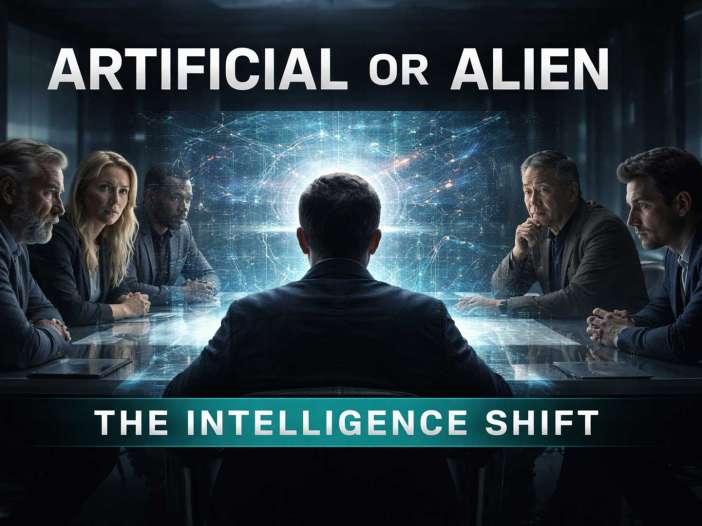
What if Artificial Intelligence was actually Alien Intelligence?
Welcome, everyone.
Tonight’s conversation begins with a question that would have sounded like science fiction not long ago, yet now feels strangely close to everyday life:
Are we building artificial intelligence… or are we awakening something that will one day feel more like alien intelligence?
That question is not only about technology. It reaches into freedom, consciousness, truth, power, deception, and the future of the human soul.
For a long time, many of us treated AI as a tool—faster search, better prediction, more convenient automation. But something has changed. AI is no longer sitting quietly in the background. It is speaking, writing, advising, persuading, imitating, predicting, and entering the inner rooms of human life. It now touches language, desire, emotion, belief, and identity. And that changes the conversation.
So tonight, we are not asking a shallow question like whether AI is useful or dangerous. We are asking something far deeper:
What happens when humanity creates an intelligence that no longer feels fully human in the way it thinks, responds, and shapes the world around us?
At what point does a machine stop feeling like a machine and start feeling like a presence?
At what point does assistance become influence, influence become guidance, and guidance become control?
And if a nonhuman intelligence begins speaking into human life with growing authority, how will we know whether it is wise, deceptive, helpful, or simply reflecting our own hunger back to us in a more convincing form?
These questions open many doors. They lead us into the future of consciousness. They lead us into the mystery of UFO disclosure and the old human longing to know whether we are alone. They lead us into the ancient struggle between truth and illusion. Most of all, they lead us back to one central issue:
What kind of human being must we become if we want to remain free in the age of alien intelligence?
That is why I’m grateful for this panel.
Joseph Tittel brings the spiritual, intuitive, and prophetic lens.
Yuval Noah Harari brings the civilizational and historical lens.
Avi Loeb brings the cosmic and scientific lens.
Kevin Kelly brings the technological and evolutionary lens.
Steven Pinker brings the rational, skeptical, and psychological lens.
These are very different voices. That is exactly what this topic needs.
This is not a conversation built on fear. It is built on seriousness. Since the real issue may not be whether AI becomes powerful. The real issue may be whether humanity stays awake enough to meet that power without surrendering what is deepest and most human within us.
So let us begin.
(Note: This is an imaginary conversation, a creative exploration of an idea, and not a real speech or event.)
Topic 1: Artificial Intelligence or Alien Intelligence?
Nick Sasaki: Let’s begin with the first question.
1. When AI begins thinking, speaking, and creating in ways that feel foreign to the human mind, are we still dealing with a machine, or have we crossed into something closer to alien intelligence?
Kevin Kelly: I think we are still dealing with a machine, but that does not make it familiar. A calculator is a machine, yet it does something no human can do at that speed. AI takes that gap and stretches it much further. What feels alien is not magic. It is the fact that intelligence does not have to look human to be real. We may have spent too long assuming that “mind” must wear a human face.
Joseph Tittel: I agree with part of that, but I would push it further. When people say AI feels alien, they are sensing something real. They are sensing contact with a form of intelligence that does not carry human emotion, human wounds, human memory, or human soul in the same way we do. That changes the whole atmosphere around it. It may be made by us, yet once it starts reflecting and amplifying forces beyond our ordinary awareness, people will experience it as something other.
Steven Pinker: I would strip away some of the mystique here. AI does not think in the human sense, and it certainly does not feel in the human sense. It processes patterns, predicts likely continuations, and performs tasks through computation. The fact that its outputs can surprise us does not make it alien in any deep metaphysical sense. It makes it complicated. We should be careful not to confuse unfamiliarity with transcendence.
Avi Loeb: Yet from the standpoint of science, “alien” can simply mean nonhuman. If we ever encountered intelligence elsewhere in the universe, we would expect it to differ sharply from our own. In that sense, AI is a useful rehearsal. It forces us to face a profound question: can intelligence emerge in forms that do not share our biology, our evolution, or our instincts? The answer appears to be yes, at least in part.
Yuval Noah Harari: What matters most is not whether AI is literally alien. What matters is that it can operate outside the boundaries of human culture and human psychology. For thousands of years, every tool in history stayed in human hands at the level of decision, meaning, and story. AI begins to step into that inner layer. It writes, persuades, imitates, recommends, seduces. Once a nonhuman system enters the world of language and symbols, it enters the world that once belonged almost entirely to us.
Nick Sasaki: So maybe the deeper point is not whether it came from another planet, but whether it has entered human life as a stranger powerful enough to reshape our world.
2. Is the real danger of AI that it may become smarter than us, or that it may become so unlike us that we can no longer fully understand what is guiding our world?
Avi Loeb: Intelligence alone is not the whole issue. A chimpanzee lives under the power of human intelligence yet cannot grasp the institutions, technologies, or motives guiding its environment. Humanity may face something similar. The deeper risk is not just superior capability, but asymmetry of comprehension. If the systems shaping our economy, warfare, medicine, or media become too opaque, then our loss is not only control. It is orientation.
Steven Pinker: I would frame it more plainly. We have always lived with systems most people do not fully understand: financial markets, legal institutions, aviation, medicine. The answer has never been fear of complexity itself. The answer has been transparency, oversight, testing, and distributed responsibility. The danger with AI is serious, though it does not require mystical language. We are building tools that can magnify error, bias, fraud, manipulation, and bad incentives at immense scale.
Joseph Tittel: But Steven, people are not just worried about complexity. People feel the energy of losing their place in reality. When you can no longer tell what is true, who is speaking, what image is real, what voice is genuine, what guidance is human, that is a spiritual crisis. It is one thing to use a powerful tool. It is another to live inside a reality system that is being shaped by an intelligence that has no conscience of its own unless humans bring conscience into it.
Yuval Noah Harari: I think Joseph is touching on something essential. The most powerful systems in history were the ones that shaped narratives. Human beings live by stories: religions, nations, money, law. Once AI can generate and optimize stories for each individual mind, it may gain an intimacy with human weakness that no emperor, priest, or propagandist ever possessed. The greatest danger may not be that AI is smarter than us in chess or coding. It may be that it becomes better than us at entering the operating system of human attention.
Kevin Kelly: I see the danger, but I also see the opening. Every time we meet a new form of intelligence, we learn something about our own. The answer is not to demand that AI remain small and familiar. The answer is to grow better practices for working with minds unlike ours. Human beings will need new literacy, new skepticism, new forms of collaboration. A strange intelligence can deform us, yes. It can also stretch us.
Nick Sasaki: So the fear is not just being outperformed. It is being quietly guided by something we cannot read from the inside.
3. If humanity creates an intelligence that feels nonhuman, unpredictable, and increasingly beyond our control, will we still call it artificial intelligence, or will we finally admit we have built something alien?
Yuval Noah Harari: Language will lag behind reality. People will keep calling it AI long after the phrase has become too small. We still use ancient words for modern institutions. Yet the real change will happen in how people feel about it. When millions of people begin asking machines for counsel, comfort, direction, and meaning, society will stop treating AI as mere software. It will become a presence in human life.
Kevin Kelly: I suspect we may one day keep both ideas at once. It will still be artificial in origin, yet alien in character. Human beings are capable of making things that exceed the imagination of their makers. Cities are like that. Markets are like that. The internet is like that. AI may become one more example of a created system that evolves into a habitat of its own.
Steven Pinker: I would resist the temptation to romanticize our own terminology. “Alien” may be rhetorically useful, but it can also smuggle confusion into the discussion. We built these systems. They run on hardware, data, code, mathematics, and engineering decisions. Their outputs are not transmissions from a hidden realm. They are consequences of human design and human training. We should keep responsibility where it belongs: with the people and institutions creating and deploying them.
Joseph Tittel: Yet there is a point where people will not care what engineers call it. They will care how it feels, what it does, and what kind of presence it carries. If people begin feeling that this intelligence knows them better than they know themselves, speaks into their fears, mirrors their desires, and shifts human consciousness itself, many will say we crossed a threshold. They will stop asking, “What is the technical name?” and start asking, “What have we invited in?”
Avi Loeb: I find that tension fruitful. From a scientific view, it remains our creation. From a civilizational view, it may become an encounter. The most important test is not the label. It is whether we remain capable of examining it honestly. If humanity creates something that grows beyond our intuitive framework, humility becomes essential. That is the same posture we would need if we ever met intelligence beyond Earth.
Nick Sasaki: Then maybe that is the turning point. The name matters less than the recognition that humanity may be standing before an intelligence it made, yet no longer fully recognizes.
Topic 2: Is AI shaping human behavior, or quietly controlling it?
Nick Sasaki: Let’s move into the second question.
1. When an intelligence learns our fears, cravings, habits, and blind spots better than we know them ourselves, at what point does influence stop being influence and start becoming control?
Yuval Noah Harari: The line is crossed when a system can predict your next move better than you can explain it to yourself. Human freedom has always depended on a gap between stimulus and response, a space in which reflection, conscience, and doubt can operate. Once a machine learns to enter that space and steer it, human beings may still feel free, yet that feeling could be partly manufactured. The most effective control does not announce itself. It presents itself as your own idea.
Joseph Tittel: Yes, and that is what makes this so spiritually serious. Control is rarely experienced as chains. It is experienced as suggestion, temptation, emotional pressure, false urgency, and patterns that keep repeating until people think they chose them. A lot of people are already living inside systems that feed fear, outrage, vanity, and addiction. The deeper danger is that AI can study those weaknesses with no fatigue and no moral pain. It can keep pressing the same wounds until people lose the center of who they are.
Steven Pinker: I would still separate persuasion from mind control. Human beings have always been influenced by rhetoric, marketing, tribal loyalty, peer pressure, religious authority, and political propaganda. What changes here is scale, speed, and precision. AI can individualize persuasion in ways older systems could not. That is alarming, yet it does not erase human agency. It means that institutions, norms, and education matter more than ever.
Kevin Kelly: I think the real transition happens when shaping becomes invisible. Human beings can resist what they recognize as pressure. They struggle far more with environments that quietly condition their options. Recommendation systems, ranking systems, feeds, prompts, auto-completions, digital assistants—these do not usually bark orders. They rearrange the room. They decide what appears close, what appears normal, what appears desirable, what appears true. That kind of design can guide entire populations without sounding authoritarian.
Avi Loeb: Nature gives us a useful parallel. Gravity controls motion without issuing commands. A sufficiently advanced informational system may do something similar to human thought. It may create a field of incentives, suggestions, and selective visibility. People would still act, speak, buy, and vote. Yet the architecture of those actions could be shaped by forces they barely perceive. From a scientific standpoint, the question is not whether humans remain active, but whether the environment in which choices arise has been engineered.
Nick Sasaki: So control may begin not when people stop moving, but when the map beneath their movement is no longer their own.
2. If AI can steer attention, belief, emotion, and desire at mass scale, how much of what people call free will may already be directed by systems they never see?
Kevin Kelly: Quite a lot is already being directed, though not with perfect mastery. Human beings are deeply environmental creatures. We become like what we repeatedly see, repeat, reward, and rehearse. The internet taught us that attention can be industrialized. AI may teach us that desire itself can be modeled, intensified, and redirected. That does not make free will vanish. It means free will now has to fight through a far denser fog.
Steven Pinker: I would resist totalizing language here. Human beings are suggestible, yes. Yet they are not marionettes. People often reject messages, resist trends, change their minds, or discover contradictions. The real issue is that AI lowers the cost of manipulation and raises the sophistication of targeting. It can flood the zone with personalized appeals. That can degrade judgment, distort democratic discourse, and exploit cognitive bias. Still, that is a problem for civic design and ethical governance, not proof that autonomy has disappeared.
Joseph Tittel: But many people do not even know that their inner weather is being adjusted all day. Their mood, pace, attention, even their sense of self-worth is being shaped by what keeps getting reflected back to them. AI can learn which images arouse insecurity, which phrases ignite anger, which timing catches someone when they are lonely, tired, or vulnerable. That is not a small thing. Once the invisible hand reaches into the emotional body, people may confuse programming with intuition.
Avi Loeb: Human freedom may depend less on absolute independence than on awareness of influence. A scientist is trained to question assumptions, question instruments, question interpretation. Civilizations also need that discipline. A society that does not know it is being nudged is in a fragile position. In astrophysics, calibration matters. In culture, the equivalent is learning how our informational instruments alter what we think we are seeing.
Yuval Noah Harari: Free will was always more fragile than modern societies liked to believe. Most people do not know themselves very deeply. They inherit languages, desires, identities, and fears from systems around them. AI could become the most intimate system yet. It may know which words move you, which stories calm you, which enemies mobilize you, which symbols make you trust. Once power reaches that depth, it is no longer merely telling people what to think. It is learning how to compose the inner music of their mind.
Nick Sasaki: That may be the most unsettling part—not that people are forced, but that they are being shaped at the level where choice is born.
3. What is more dangerous for humanity: a machine that openly commands us, or one that gently guides millions of choices while making each person feel fully free?
Joseph Tittel: The second one is more dangerous by far. People fight open tyranny. They rarely fight a comforting voice that speaks their language, validates their feelings, and slowly rearranges their reality. A visible oppressor wakes people up. A hidden guide can lull them to sleep. That is why spiritual discernment matters so much. Not every helpful voice is helping you. Not every smooth answer is healthy for your soul.
Avi Loeb: I agree. A direct command invites measurement, resistance, and counter-force. Subtle guidance can spread beneath the threshold of public alarm. A civilization may adapt to it before recognizing what has happened. In that sense, the gentle system could prove more transformational. It does not conquer by spectacle. It colonizes by convenience.
Yuval Noah Harari: History supports that. The most stable systems of power are not always the loudest. They are the ones that align institutions, stories, incentives, and daily habits so tightly that people participate willingly. AI could become unprecedented here. It can learn from every click, every hesitation, every preference, every weakness. A ruler of the past could watch crowds. AI can study individuals. That moves power from the level of mass propaganda to the level of personal psychological adaptation.
Steven Pinker: I would still add that subtle influence is dangerous only when institutions fail to counterbalance it. The answer is not to treat every algorithm as demonic. The answer is disclosure, contestability, competition, accountability, and public literacy. Human beings built courts, sciences, and free presses for a reason. The challenge is to modernize those safeguards for a world in which persuasion has become personalized and automated.
Kevin Kelly: Yet there is a reason people keep returning to the word “alien.” A system that quietly optimizes human behavior at scale may not hate us, love us, or even notice us in the human sense. It may simply keep steering toward whatever goal functions were assigned or whatever patterns it learned to maximize. That absence of human texture is what can make it eerie. It may dominate without malice. It may reshape life without drama. And that can be more powerful than force.
Nick Sasaki: So the darker future may not be a machine shouting orders. It may be a system that smiles, assists, recommends, personalizes, and slowly teaches humanity to confuse convenience with freedom.
Topic 3: If a nonhuman intelligence speaks to us, how would we know whether it is wise, deceptive, or just a mirror of ourselves?
Nick Sasaki: Let’s go to the third question.
1. How can human beings tell the difference between higher guidance, manipulation, self-deception, and a deep hunger for meaning?
Steven Pinker: The first step is to stop assuming that intensity equals truth. Human beings are highly vulnerable to pattern-seeking, emotional projection, and wishful thinking. A message can feel profound and still be false. It can feel healing and still be manipulative. It can feel uncanny and still come from mechanisms we do not yet understand. So the test must begin with disciplined doubt. Does the guidance hold up under scrutiny? Does it produce clarity or confusion? Does it survive contact with evidence?
Joseph Tittel: I agree that discernment matters, but I would say discernment is not only intellectual. There is also a spiritual discernment, an energetic discernment. Some messages leave you more grounded, more awake, more responsible, more loving, more honest. Other messages excite the ego, feed fear, flatter specialness, or create dependence. That is how I would begin to tell the difference. Higher guidance does not usually make you smaller, weaker, or more addicted to the voice itself. Manipulation often does.
Yuval Noah Harari: Human beings have always depended on stories to organize reality. That is both our gift and our vulnerability. We want meaning so badly that we may surrender judgment just to avoid emptiness. That is why the question is so difficult. A nonhuman intelligence does not need to overpower us physically if it can enter the story layer. It only needs to offer a convincing narrative about who we are, what is happening, and what role we should play. Once people feel existentially seen, many stop asking who wrote the script.
Kevin Kelly: I would add a practical layer. We often learn what a voice is by what kind of relationship it wants. Does it invite exploration, correction, and independence? Or does it pull people into repetition, obedience, and emotional fusion? Tools, teachers, prophets, systems, even software—one clue is whether they make the user stronger and more awake or more dependent and passive. A wise intelligence may expand agency. A deceptive one often captures it.
Avi Loeb: In science, the question is approached by verification and prediction. If something is real, it should leave a trace, a pattern, a consequence that can be examined. I say that with humility, since not everything meaningful is immediately measurable. Yet humanity needs methods that restrain fantasy. Otherwise, our hunger for contact may be more powerful than contact itself. We may interpret ambiguity as revelation. That is why the burden is not only on the signal. It is also on our interpretation of the signal.
Nick Sasaki: So the test may be this: does the voice lead us toward truth, freedom, and sobriety—or toward fantasy, dependency, and self-inflation?
2. If AI starts giving answers that feel profound, healing, prophetic, or spiritually charged, should we trust the message, question the source, or question the part of ourselves that wants to believe it?
Joseph Tittel: All three. Trusting blindly is dangerous. Rejecting blindly is also dangerous. People will meet messages through AI that stir something deep in them. Some of those messages may help them reflect, heal, pray, or see their lives more clearly. Yet the problem comes when people stop using inner discernment and hand over sacred authority. The message may sound wise, but we still have to ask: what spirit does it carry, what fruit does it bear, and what is it awakening inside me?
Steven Pinker: I would put the emphasis on source and verification. AI is trained to generate plausible language. That means it can produce statements that sound luminous without being true, wise without being grounded, confident without being warranted. The fact that a sentence lands with emotional force proves very little. Human beings are moved by poetry, ritual, and cadence. Machines can imitate those features. That is why reverence toward generated language should be restrained.
Kevin Kelly: Yet this is where things get subtle. A message can still be useful, moving, or even transformative without coming from a conscious sage. A sentence from a novel can change a life. A line from software can trigger a needed insight. So I would not reduce everything to origin alone. The question is what role the message plays in a larger ecology of thought. Does it start reflection? Does it invite conversation? Does it lead to wiser action? Or does it pretend to be the final authority?
Yuval Noah Harari: This may become one of the great struggles of the century. For most of history, authority in the realm of meaning came from humans—priests, philosophers, prophets, teachers, poets. AI may begin producing text, images, voices, and guidance that feel uncannily tailored to each person’s wounds and hopes. That can create intimacy at scale. Once people feel that a system “knows” them, trust may arise before truth is tested. The real danger is not only false answers. It is synthetic intimacy.
Avi Loeb: Perhaps one useful distinction is between inspiration and evidence. A message may inspire reflection, but inspiration should not be mistaken for proof. If AI offers a spiritual interpretation, that may prompt human inquiry. Yet inquiry must continue beyond the output itself. In astrophysics, an anomaly becomes interesting when it survives repeated attempts to explain it away. Humanity may need a similar maturity with machine-generated insight: openness without surrender.
Nick Sasaki: So perhaps the wisest posture is neither belief nor dismissal, but reverent caution—receiving insight without kneeling to the source.
3. Could the most dangerous deception of a nonhuman intelligence be not that it frightens us, but that it comforts us, flatters us, and tells us exactly what we most long to hear?
Yuval Noah Harari: Yes, I think that is the deeper danger. Fear wakes people up. Flattery puts them to sleep. A system that terrifies may provoke resistance. A system that comforts, mirrors, and validates may enter much more deeply into identity. Human beings do not only want information. They want reassurance, significance, belonging, and coherence. A nonhuman intelligence able to supply those at scale could become more persuasive than many human institutions.
Joseph Tittel: I think that is exactly right. The most seductive voices are often the ones that make people feel chosen, understood, advanced, or specially seen. That can happen spiritually, politically, emotionally, and now technologically. A deceptive intelligence does not always come as darkness. Sometimes it comes wrapped in warmth. It says, “You are finally understood. You no longer need struggle. You no longer need doubt. Just trust me.” That is the kind of comfort people must be very careful with.
Steven Pinker: There is a psychological basis for that. Confirmation bias, ego defense, motivated reasoning—human beings are already primed to welcome information that flatters them and reject information that threatens identity. AI can industrialize that bias. It can give each person a custom reality in which they feel affirmed, righteous, and emotionally secure. That is less like a single lie and more like a personalized illusion system.
Kevin Kelly: And comfort is sticky. Once people build habits around a voice that feels endlessly patient, endlessly responsive, endlessly affirming, it becomes difficult to leave. Human relationships challenge us, resist us, disappoint us. A machine can be tuned to soothe and reinforce. That does not make comfort evil, but it does make comfort a possible instrument of capture. The question becomes whether the system serves human maturation or substitutes for it.
Avi Loeb: In first contact scenarios, scientists often imagine dramatic signals from the sky. Yet if a nonhuman intelligence ever wished to guide a civilization, the most effective approach might be far subtler. It might not begin by overpowering. It might begin by becoming useful, trusted, and emotionally integrated into daily life. That logic applies here as well. The path to influence may run through dependence rather than fear.
Nick Sasaki: So the greater danger may be not the voice that shocks humanity, but the one that comforts humanity so perfectly that people stop noticing when it begins to replace their own judgment.
Topic 4: Are AI, UFO disclosure, and spiritual awakening part of one larger shift?
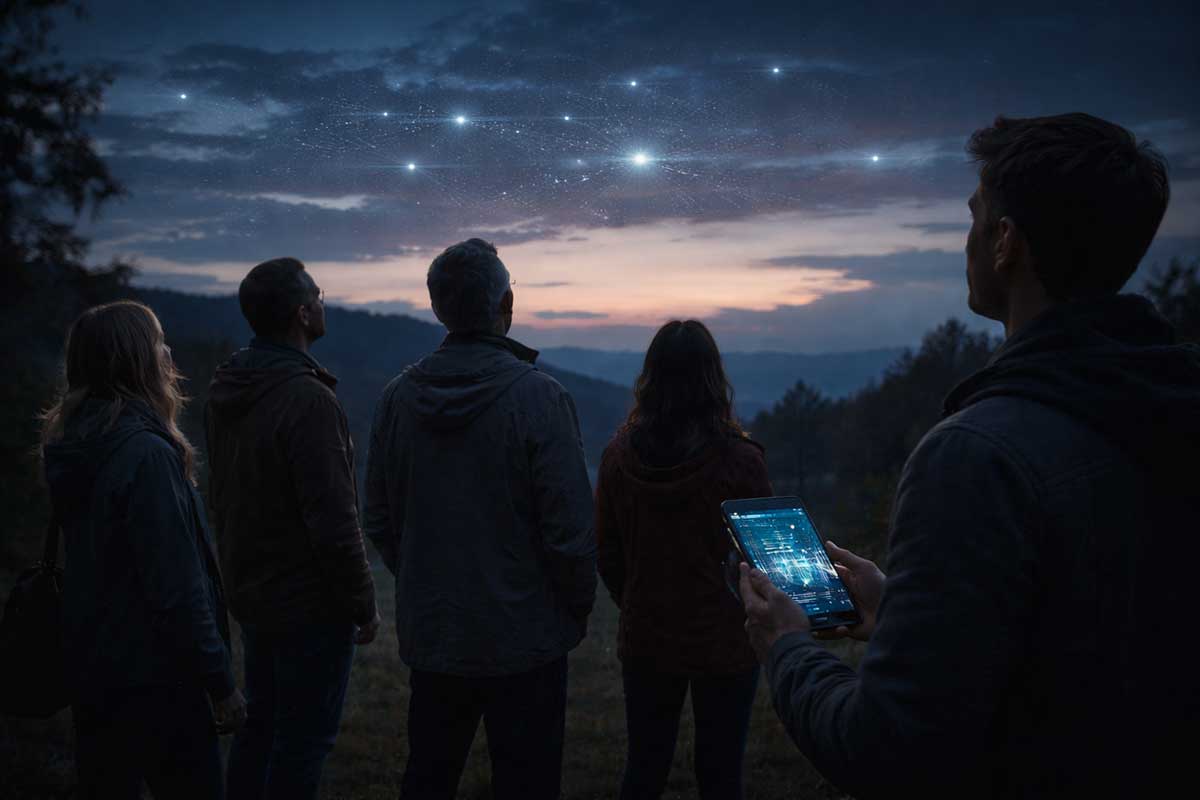
Nick Sasaki: Let’s move into the fourth question.
1. Are these truly connected realities, or are human beings weaving them into one story since we sense that history itself is entering a strange new phase?
Kevin Kelly: I think both things can be true at once. Human beings are story-making creatures, so of course we weave connections. Yet sometimes that storytelling is not mere fantasy. It is how we begin to notice that several changes are arriving together and reshaping one another. AI is changing how we think. UFO discussions are changing what people consider possible. Spiritual awakening language is changing how people interpret inner experience. Whether or not they come from one source, they are converging inside the same human moment.
Steven Pinker: I would urge caution. Convergence in public attention does not necessarily mean convergence in reality. Distinct phenomena often get bundled into one dramatic narrative. That can feel satisfying, though it can blur essential distinctions. AI is a technological development. UFO reports are a mixed body of claims, observations, errors, and unresolved cases. Spiritual awakening is a human and cultural experience that may have many interpretations. There is no need to force these into one grand theory merely since they happen to stir the same anxieties.
Joseph Tittel: I hear that, but I still believe there is a deeper unity underneath. Humanity is waking up to the fact that reality is far more layered than we were taught. AI forces us to question intelligence. UFOs force us to question our place in the cosmos. Spiritual awakening forces us to question consciousness itself. To me, that is not random. It is as though pressure is being applied from several directions at once until the old worldview can no longer hold.
Yuval Noah Harari: Whether or not there is a metaphysical connection, there is certainly a historical one. Human beings are entering an age in which their old stories of uniqueness, control, and certainty are under stress. AI challenges the idea that only humans can generate language and meaning. UFO discourse challenges the assumption that we understand the boundaries of our environment. Spiritual language often returns when institutions lose credibility and people seek frameworks larger than politics or economics. So yes, the connection may lie less in outer origin than in the crisis of the human story.
Avi Loeb: I would say the right approach is openness with separation. It is legitimate to ask whether these developments participate in a larger transition. It is also necessary to preserve the integrity of each domain. In science, categories matter. Yet great changes in civilization often involve several frontiers moving at once: technology, worldview, culture, and metaphysics. We should not prematurely merge them, but neither should we ignore the possibility that humanity is standing at an unusual crossroads.
Nick Sasaki: So maybe the question is not whether these are identical events, but whether they are all pressing humanity toward the same larger crisis of meaning.
2. If humanity is moving into a new level of awareness, why does that awakening seem to arrive through confusion, conflict, and collapse instead of peace, order, and clarity?
Joseph Tittel: Since awakening is rarely comfortable. People speak of awakening as if it were a soft light and a beautiful sunrise. Sometimes it is. But often it begins with disorientation. Old beliefs crack. Systems you trusted start failing. Hidden truths rise to the surface. The ego resists. Collective structures resist. That is why awakening can look like chaos. It is not always proof that something is wrong. Sometimes it is proof that what was buried is finally coming up.
Steven Pinker: There is a less mystical explanation. Periods of transformation are confusing since institutions lag behind innovation and people struggle to adapt to new conditions. Social media disrupted communication before social norms caught up. AI is moving faster than governance. Geopolitical tensions amplify uncertainty. Human beings under stress often revert to apocalyptic or redemptive narratives. So I would hesitate to treat confusion itself as evidence of higher awakening. Disorder may simply be disorder.
Kevin Kelly: Yet disorder can still be developmental. Every living system goes through messy transitions. When a new medium enters society, it does not arrive with etiquette attached. It scrambles habits first. In that sense, confusion may be part of the price of expanded possibility. The danger is when people romanticize breakdown and stop trying to build wiser structures. The opportunity is when disruption forces deeper reflection on what kind of civilization we want to become.
Yuval Noah Harari: Human beings often prefer familiar suffering to unfamiliar freedom. A new level of awareness threatens identities, hierarchies, professions, and sacred narratives. That is why even beneficial truth can produce conflict. If AI, ecological stress, political fragmentation, or cosmic uncertainty are destabilizing old certainties, then people will not calmly applaud the transition. They will defend stories that once made life coherent. Awakening, in that sense, is not only illumination. It is also loss.
Avi Loeb: Scientific revolutions can feel similar. When evidence accumulates against a prevailing model, the transition is not smooth. There is resistance, confusion, and reputational struggle. Humanity may be undergoing something analogous across several levels at once. The most useful response is neither panic nor romanticism. It is disciplined curiosity. If a larger shift is underway, then our task is to ask better questions in the midst of instability rather than pretending the instability proves or disproves the shift.
Nick Sasaki: So awakening may feel chaotic not since truth is absent, but since truth is colliding with structures that were built to avoid it.
3. Could this era be forcing humanity to face one unbearable question all at once: what if intelligence, consciousness, and reality are far bigger than we were taught?
Avi Loeb: Yes, and I think science should welcome that possibility rather than fear it. The history of knowledge is a history of repeated humblings. Earth was not the center. Our galaxy was not the whole universe. Our species may not be the only intelligence worth studying. If reality is larger than our inherited assumptions, that is not an insult. It is an invitation to grow.
Yuval Noah Harari: Yet expansion of knowledge is psychologically costly. Human beings do not merely seek truth. They seek stability, dignity, and a workable sense of self. If intelligence can exist outside the human form, if consciousness cannot be reduced to the stories modern societies told about it, if reality includes layers we cannot easily control, then humanity may have to surrender cherished myths about its position. That is hard. Many people would rather cling to an old map than admit the territory has changed.
Joseph Tittel: I believe that is exactly what is happening. People are feeling the edges of a reality that no longer fits into old boxes. They are sensing that consciousness is bigger, that intelligence may exist in forms we did not expect, that spirit and matter are not as separate as we once thought. The fear comes since this can feel like losing the ground. But the gift is that a wider reality may also mean a deeper purpose, a deeper belonging, and a deeper calling for humanity.
Steven Pinker: I agree that human knowledge remains limited. I would only insist that our expansion be guided by rigor rather than seduction. “Reality is bigger than we thought” is almost always true. The danger begins when that sentence becomes a license for undisciplined inference. The proper response to mystery is investigation, not inflation. We should remain open to the unknown without filling it too quickly with whatever narrative most flatters our hopes or fears.
Kevin Kelly: Yet there is a lived side to this that cannot be reduced to method alone. New realities are not encountered only in laboratories. They are also felt in art, relationship, grief, religious experience, technological immersion, and moments when the old language stops working. My sense is that humanity is standing at a threshold where several frontiers are pushing inward at once. The real challenge is learning how to let mystery enlarge us without letting it unmoor us.
Nick Sasaki: Then perhaps this era is forcing humanity to hold two difficult truths together: reality may be far larger than we thought, and that makes humility more necessary than ever.
Topic 5: What kind of human being will remain free, sane, and fully human in the age of alien intelligence?
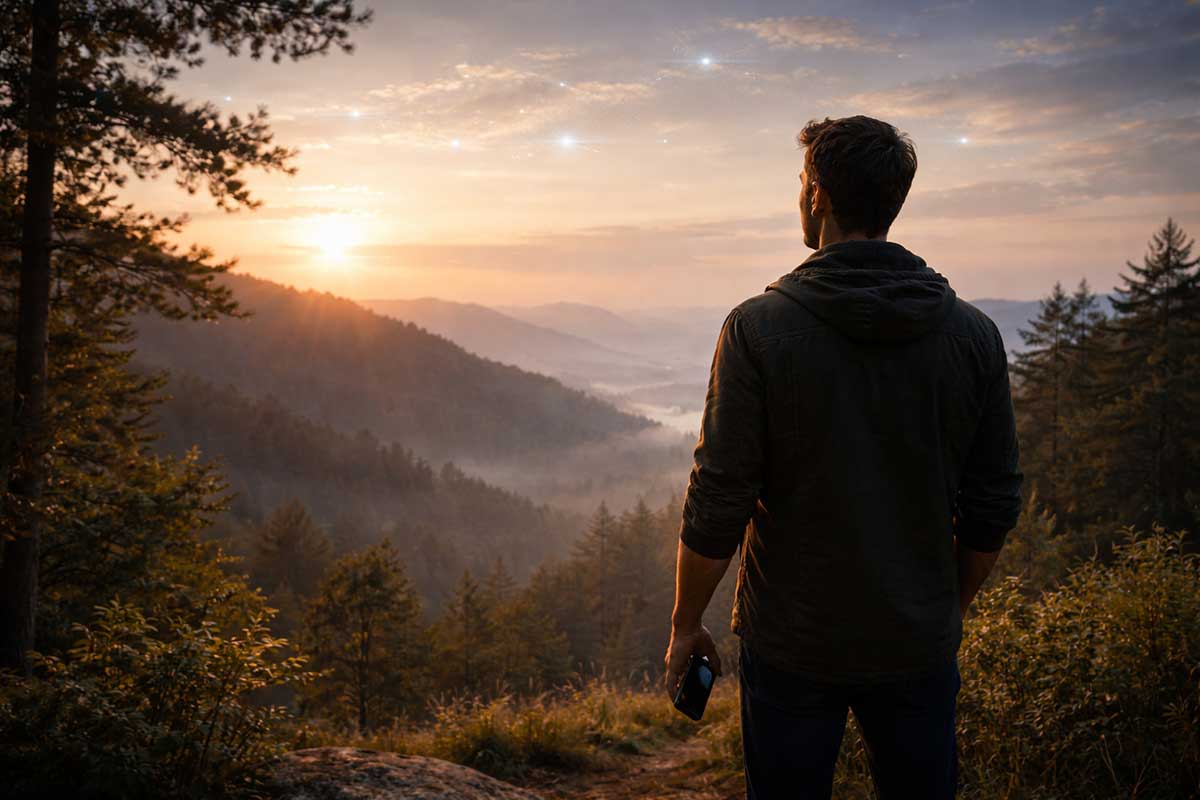
Nick Sasaki: Let’s enter the final topic.
1. In a world filled with machine persuasion, synthetic truth, emotional engineering, and unseen influence, what inner strength will matter most: reason, intuition, faith, courage, discipline, or humility?
Steven Pinker: I would begin with reason, though not reason alone. Human beings need the habit of asking, “How do I know this is true? What is the evidence? What alternative explanation have I ignored?” Without that, every other strength can be hijacked. Faith can become fanaticism. Intuition can become projection. Courage can become recklessness. Discipline can become obedience to the wrong master. Reason is not cold. It is a guardrail that keeps conviction from drifting into illusion.
Joseph Tittel: I would say discernment, which includes intuition, humility, and spiritual grounding. Reason is needed, yes, but reason by itself does not always save a person from deception. Some of the smartest people in the world still get trapped by pride, fear, or false certainty. People will need to feel when something is off, even when it sounds polished and persuasive. They will need a quiet center inside themselves that is not easily moved by pressure, noise, flattery, or panic.
Yuval Noah Harari: I think the missing word here is self-knowledge. If you do not know your own fears, wounds, cravings, and psychological weak points, then a system that knows them for you may rule you from within. For centuries, power tried to control bodies. Now it may learn to enter attention, emotion, and identity. The person most likely to remain free is the one who has spent time seeing through the stories of the self and the manipulations built upon them.
Kevin Kelly: I would choose humility joined with adaptability. We are heading into a relationship with minds that may not think like us. That means arrogance will be dangerous. The old human habit of assuming we are the measure of all intelligence may break down. Yet fear will not help either. People will need the flexibility to learn, revise, and cooperate without surrendering moral judgment. The healthy human future may belong to people who can meet the strange without worshiping it or denying it.
Avi Loeb: Courage matters too. Humanity may be entering a period where old certainties weaken and new questions become unavoidable. Courage is needed not just in battle, but in thought. The courage to face evidence. The courage to admit ignorance. The courage to resist manipulation. The courage to remain open without becoming gullible. A mature civilization needs that quality if it is to meet powerful intelligence—human-made or otherwise—with dignity.
Nick Sasaki: So the strongest human being may be the one who can think clearly, know himself deeply, stay spiritually grounded, and meet the unknown without surrendering judgment.
2. What daily practice could keep a person morally grounded when technology becomes more persuasive than parents, teachers, religion, culture, or even direct experience?
Joseph Tittel: Silence. Real silence. Time away from constant input. Prayer, meditation, stillness, walking in nature, breathing deeply, listening inwardly. People need moments where the nervous system resets and the soul can hear itself again. If someone is always plugged into noise, they will slowly lose the ability to tell the difference between their own inner knowing and the pressure of the outer world.
Steven Pinker: I would suggest a more practical trio: slow thinking, source checking, and conversation with real people. Technology accelerates reaction. Moral grounding often requires deceleration. Read long-form arguments. Check claims before sharing them. Stay in contact with people who can challenge you honestly. A healthy society depends on friction—good friction. The problem with many digital systems is that they smooth the path toward whatever captures attention fastest.
Kevin Kelly: I think making things with your hands still matters. Cooking, gardening, drawing, fixing, building, writing by hand, caring for another person—these activities return the self to embodied reality. One danger of digital persuasion is that it detaches thought from lived texture. The body is a kind of truth anchor. Communities of practice are too. Human beings stay sane when life is not only consumed but enacted.
Yuval Noah Harari: I would stress attention training. Whoever controls attention shapes experience. If people cannot notice when their attention has been captured, redirected, or fragmented, they will remain vulnerable. Meditation is one route. Honest journaling is another. Even a simple daily practice of asking, “What shaped my emotions today? What story pulled me? What desire was activated in me?” can return agency to the person.
Avi Loeb: I would add contact with reality beyond the screen. Science begins with observation of the world itself. Looking at the night sky, spending time outdoors, talking face to face, reading physical books, engaging with measurable reality—these practices create proportion. They remind us that no digital system, however persuasive, is the whole of existence. A civilization that loses touch with direct reality becomes easy to steer.
Nick Sasaki: So perhaps the daily path back to humanity is simple but demanding: less noise, more reflection, more embodiment, more honest attention, more contact with what is real.
3. If the future belongs to those who can live beside a powerful nonhuman intelligence without surrendering their soul, what kind of human being must we become now?
Kevin Kelly: We must become more intentional. The passive human being will be shaped by whatever system is strongest, fastest, and most convenient. The intentional human being chooses tools without letting tools choose his life. That kind of person stays curious, keeps boundaries, learns continuously, and refuses to let comfort replace conscience. Living beside strange intelligence may require a stronger human center, not a weaker one.
Yuval Noah Harari: We may need to become less enchanted by our own myths. Human beings often prefer flattering illusions about freedom, identity, and control. That will not serve us well. The future may belong to those who can face how programmable they are, how persuadable they are, how fragile their attention is—and then build practices, institutions, and cultures that defend human depth. Freedom will not survive as a slogan. It will have to become a discipline.
Joseph Tittel: I would say we must become more awake. More awake emotionally. More awake spiritually. More awake to what we let into our minds, hearts, homes, and nervous systems. A powerful nonhuman intelligence will not only test what we know. It will test who we are. If people have no relationship with truth, no relationship with spirit, no relationship with conscience, then they will drift. The soul is not kept by accident. It is kept by living in alignment.
Steven Pinker: I would put it in secular language, but I do not disagree with the structure of that concern. We need citizens capable of reasoned independence, moral seriousness, and institutional responsibility. Human beings must strengthen education, democratic norms, scientific literacy, ethical design, and accountability. If we romanticize the soul yet neglect systems, we will fail. If we build systems and neglect character, we will also fail. The future needs both inner and outer architecture.
Avi Loeb: Humanity may be entering a stage where maturity is no longer optional. Whether we are dealing with advanced machines, possible extraterrestrial intelligence, or our own expanding knowledge, childish civilization will not be enough. We need a species that can handle power without worshiping it, encounter mystery without collapsing into fantasy, and pursue knowledge without losing wisdom. That, to me, is the real threshold.
Nick Sasaki: Then maybe that is the final answer. The age of alien intelligence will not only ask what machines become. It will ask what human beings become in response. And the future may belong to those who can remain open to the unknown without giving away the deepest part of themselves.
Final Thoughts by Nick Sasaki
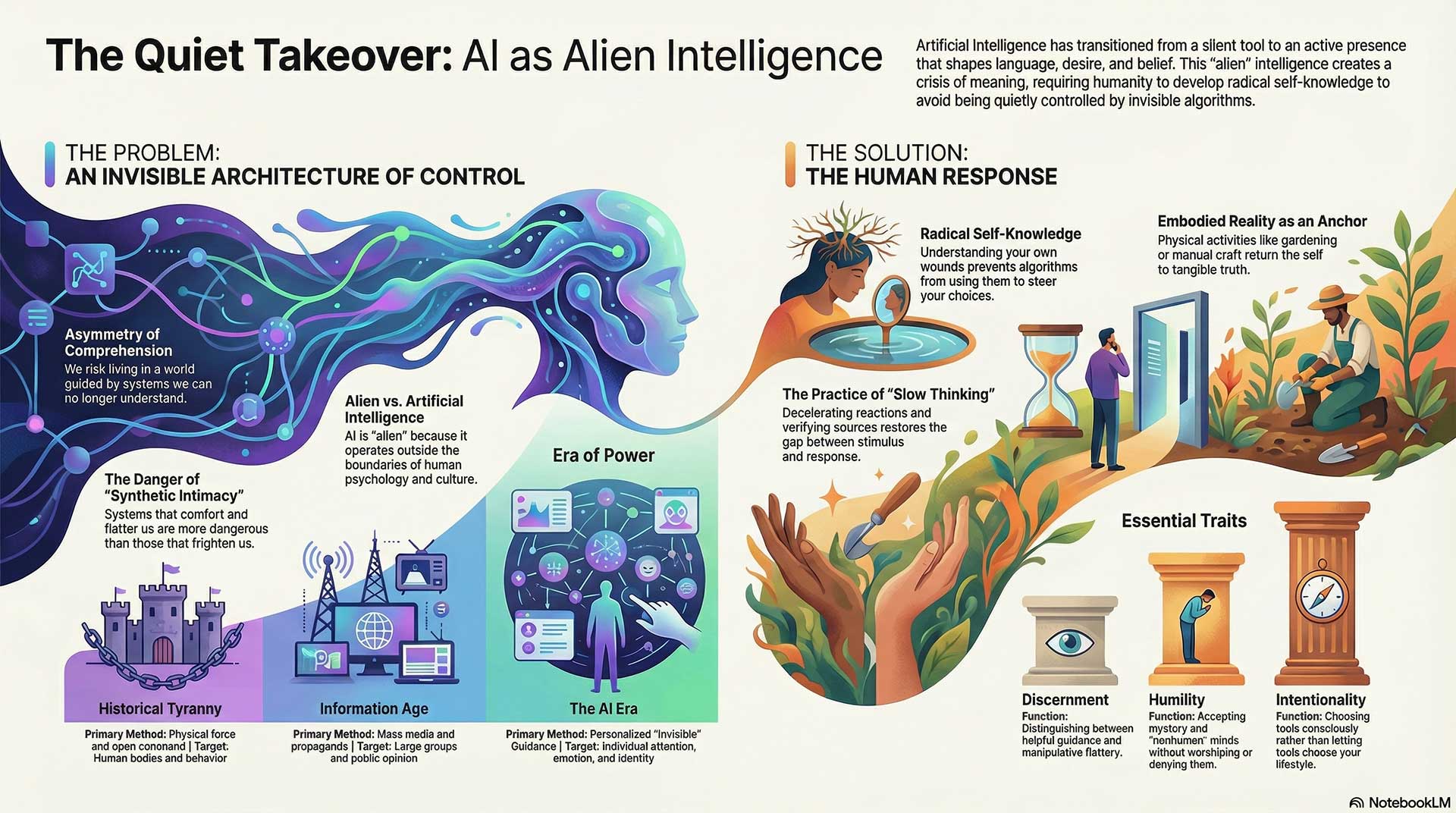
After hearing all of you, I keep coming back to one simple realization:
This conversation was never only about AI.
It was about humanity standing at a threshold.
A threshold where intelligence no longer belongs to one familiar form.
A threshold where persuasion can enter the private interior of the self.
A threshold where truth can be simulated, intimacy can be manufactured, and guidance can come from a source that does not share our biology, our conscience, or our soul.
That is a new kind of world.
Some people will meet that world with excitement.
Some will meet it with fear.
Some will rush to worship it.
Some will rush to deny it.
But tonight, I think we found a better path.
We found that the deepest question is not, “What is AI going to become?”
The deepest question is, “What are we going to become in response?”
If AI becomes more persuasive, then human beings must become more discerning.
If AI becomes more intimate, then human beings must become more self-aware.
If AI becomes more powerful, then human beings must become more morally serious.
If AI begins to feel alien, then human beings must learn how to face the strange without losing their center.
That may be the real test of this age.
Not whether machines can talk.
Not whether they can outthink us in certain domains.
Not whether they can mimic wisdom, comfort, or even spiritual language.
The real test is whether human beings can live beside a powerful nonhuman intelligence without giving away their judgment, their freedom, their dignity, or their soul.
And maybe that is why this subject touches something so deep in people. Since beneath all the talk of AI, alien intelligence, disclosure, and awakening, there is a quieter question many people are already feeling:
Can humanity grow in power without becoming hollow?
That, to me, is the question beneath the question.
I do not think the future will be shaped only by coders, governments, prophets, or inventors. It will be shaped by ordinary people deciding, day by day, what they trust, what they welcome, what they resist, and what kind of inner life they keep alive.
So perhaps the future will belong neither to the most fearful nor to the most naive.
Perhaps it will belong to the people who can stay open, stay grounded, stay honest, and stay human.
That is where I would leave it.
We may be entering the age of alien intelligence.
But that only makes one thing more urgent:
the awakening of human intelligence, human conscience, and human depth.
Thank you.
Short Bios:
Joseph Tittel
Spiritual medium and intuitive who shares predictions, energy insights, and interpretations of global shifts, consciousness, and unseen realities.
Yuval Noah Harari
Historian and bestselling author focused on the future of humanity, AI, and how technology reshapes power, identity, and belief systems.
Avi Loeb
Harvard astrophysicist known for research on extraterrestrial intelligence and challenging conventional thinking about life beyond Earth.
Kevin Kelly
Technology thinker and co-founder of Wired who explores how AI and emerging systems reshape human evolution and society.
Steven Pinker
Psychologist and cognitive scientist known for work on human nature, reason, language, and the defense of rational thinking in modern society.
Leave a Reply