
What if UFO encounters were never just about aliens—but something shaping human belief itself?
Introduction by Nick Sasaki
Welcome, everyone.
Tonight’s conversation begins with a mystery that has followed humanity for far longer than most people are willing to admit.
Across generations, across religions, across visions, across encounters in lonely fields and silent bedrooms and luminous skies, people have reported something that does not fit easily into the categories we trust. Some call it extraterrestrial. Some call it spiritual. Some call it interdimensional. Some call it contact. Some call it deception. Some simply call it the unknown.
But perhaps the real difficulty is this:
What if the phenomenon has never belonged to only one category at all?
What if these experiences are not just about aliens in the modern sense, and not just about religion in the traditional sense, but about a deeper form of encounter that moves between matter, mind, symbol, and spirit?
That possibility changes everything.
It means we are no longer dealing with a simple question of whether something is “out there.”
We are dealing with a question of how the unknown enters human life, shapes human meaning, and perhaps even influences the long spiritual and cultural development of our species.
That is why tonight’s discussion matters.
We are not here to chase sensational answers.
We are here to face harder questions.
When people see lights, beings, voices, and visions, what are they really encountering?
Why do so many contact experiences feel sacred, prophetic, or morally charged?
How can humanity tell the difference between revelation and deception?
Is the phenomenon awakening us, studying us, shaping us, or all three at once?
And if wider disclosure lies ahead, what kind of human being will be able to face it without losing truth, sanity, humility, or soul?
To explore this, we have a remarkable panel.
Chris Bledsoe brings the voice of direct experience, healing, and encounter.
Whitley Strieber brings the voice of deep contact, fear, transformation, and unresolved mystery.
Diana Walsh Pasulka brings the voice of religious history, symbolism, and the sacred patterns hidden inside modern UFO culture.
Jacques Vallée brings the voice of careful inquiry, pattern recognition, and suspicion toward easy explanations.
Joseph Tittel brings the voice of intuition, prophecy, spiritual discernment, and the language of awakening.
These are not identical voices.
That is exactly why they belong together.
Because if the phenomenon is real, then it may not be asking humanity for one answer.
It may be forcing humanity into a more difficult task:
to become wise enough to stand inside mystery without rushing into worship, panic, denial, or fantasy.
That is where I hope tonight’s conversation will lead us.
Not into certainty too quickly.
But into a deeper honesty about how strange reality may actually be.
So let us begin.
(Note: This is an imaginary conversation, a creative exploration of an idea, and not a real speech or event.)
Topic 1: Are contact experiences truly encounters with nonhuman beings, or something even stranger?
Nick Sasaki: Let’s begin with the first question.
1. When people report lights, beings, voices, healings, and messages, are they meeting extraterrestrials, spiritual intelligences, interdimensional forces, or something that still has no name?
Chris Bledsoe: From what I lived through, I cannot reduce it to simple extraterrestrials. What came to me did not feel like metal ships and biological visitors alone. It carried intelligence, presence, timing, and meaning. It knew how to reach the human heart. It knew how to heal. It knew how to communicate in symbol and feeling. That pushes me past the ordinary alien idea. To me, it feels closer to a living intelligence that can appear through light, being, vision, and presence all at once.
Jacques Vallée: That is one reason I have long resisted the standard extraterrestrial explanation. The phenomenon behaves more like a system that interacts with human consciousness than a mere visitation from another planet. It changes form across cultures and centuries. In one age, people see fairies. In another, angels. In another, airships. In another, UFO occupants. That suggests not a fixed mask, but an adaptive one. So yes, I think we may be dealing with something stranger than visitors from space.
Diana Walsh Pasulka: I find it striking that many of these accounts sit in the same emotional and symbolic space as religious encounters. People are changed by them. They come away with mission, awe, fear, humility, even a sense of calling. That does not prove the source is divine, of course, but it does show that these events behave in ways older cultures would have recognized as sacred encounters. We may be using modern technological language to describe experiences that earlier people would have folded into religion.
Whitley Strieber: I think one of the deepest mistakes we make is thinking we already have the categories to explain this. I have felt presence that was more intimate than ordinary reality, more intrusive than imagination, and more transformative than a dream. When something enters your life that deeply, the old labels begin to fail. Alien is too neat. Spirit is too neat. Hallucination is too neat. The truth may be that we are facing an intelligence that can enter matter, mind, and myth together.
Joseph Tittel: That lands very close to how I see it. Human beings want to sort mystery into a drawer. We want one label that lets us sleep at night. But this type of contact does not stay in one drawer. It can look cosmic, psychic, spiritual, prophetic, emotional, even healing. To me, that means it is operating from a level bigger than the categories people try to force onto it. We are touching something real, but our language is still too small.
Nick Sasaki: So maybe the first shock is that the phenomenon may be real, yet still larger than the names humanity keeps trying to pin onto it.
2. If different experiencers describe very different forms of contact, does that mean the phenomenon changes shape for each person, or that human beings are only seeing fragments of a much larger reality?
Diana Walsh Pasulka: I think both may be true. Human beings never encounter reality in a pure form. We encounter it through culture, symbolism, memory, expectation, and available language. So if a phenomenon enters human life, it may be filtered through those layers. That does not mean it is unreal. It means human reception is never neutral. One person receives a lady of light. Another receives a gray being. Another receives a sacred presence. The variation may tell us just as much about the human frame as about the source itself.
Whitley Strieber: Yes, and I would say the experience often feels designed to meet the person at the edge of what they can bear. That does not mean it is false. It may mean the encounter is interactive. It may know something about the experiencer, their fears, their symbols, their memories, even their limits. That is what makes it so unnerving. You are not just observing it. It may be observing how to appear to you.
Chris Bledsoe: In my own case, the presence I encountered had a very distinct character. It was not random. It was loving, yet powerful. Gentle, yet overwhelming. I cannot speak for every encounter other people report, but I do think the phenomenon may present itself in forms that fit the purpose of the meeting. If the goal is healing one person, warning another, awakening another, then the form may shift to reach that soul where they are.
Jacques Vallée: That is very important. The historical record suggests the phenomenon is not simply showing itself. It is staging encounters. It is shaping reactions. It is constructing experience. That does not mean maliciously by default, but it does suggest intention. We may be dealing with an intelligence that knows symbol is stronger than raw fact. It may be presenting fragments since fragments influence culture more effectively than a single blunt revelation.
Joseph Tittel: And that fits spiritual contact too. A person receives what they are ready to receive, or what they must confront. Some need comfort. Some need disruption. Some need healing. Some need warning. A living intelligence could work through many forms without losing its deeper unity. That is why I think the differences in contact stories do not weaken the mystery. They may point to just how deep it really is.
Nick Sasaki: Then the variation in stories may not disprove the phenomenon at all. It may point to a reality so large that each person catches only one face of it.
3. What would be more unsettling for humanity: discovering that these encounters are real physical contact, or discovering that they come from a realm that blurs the line between matter, mind, and spirit?
Jacques Vallée: The second possibility would be far more destabilizing. Physical contact can be absorbed into science, military analysis, diplomacy, or astronomy. Humanity knows how to create institutions for material facts. But if the phenomenon dissolves the old boundary between outer event and inner reality, then it touches religion, psychology, history, and metaphysics all at once. That would force a much deeper revision of the human worldview.
Chris Bledsoe: I agree. If it were only craft in the sky, that would still be huge, but it would not shake the foundations in the same way. What shook me was that the experience entered my life personally. It touched healing, prayer, fear, hope, presence, and purpose. It did not stay outside me. If humanity learns that this mystery can touch people from the inside as well as from the sky, many old assumptions will start falling apart.
Joseph Tittel: Yes, since then people have to face that reality is not as sealed as they thought. Most people can handle the idea of something out there. The harder thing is facing that the boundary between here and there, seen and unseen, flesh and spirit, may be thinner than they were taught. That changes how people think about death, intuition, prophecy, religion, and even what it means to be human.
Diana Walsh Pasulka: It would also challenge modern secular confidence in a very serious way. A society can absorb extraterrestrial life into its scientific imagination. But a reality that crosses into meaning, symbol, consciousness, and sacred experience reopens questions many people thought were buried. It would not just be news. It would be a spiritual and civilizational event.
Whitley Strieber: And that is why so many people resist it. A nuts-and-bolts alien can be placed in a museum one day. But a presence that enters dreams, memory, body, soul, and fear—that cannot be domesticated so easily. I think the deepest terror for many people is not that we are visited. It is that we may live in a universe that is far more alive, intimate, and penetrable than we ever wanted to know.
Nick Sasaki: So perhaps the greater shock would not be learning that something is out there. It would be learning that what is out there may already be entangled with what is in here.
Topic 2: Why do so many contact experiences feel spiritual, prophetic, or religious?
Nick Sasaki: Let’s move to the second topic.
1. Why do encounters with nonhuman intelligence so often lead people into language of angels, divine feminine presence, awakening, destiny, or sacred mission?
Diana Walsh Pasulka: I think this happens since human beings reach for religious language when ordinary language breaks down. When an experience feels overwhelming, luminous, morally charged, and life-changing, people instinctively turn to words that already carry that weight. Angels, presence, calling, revelation, grace—these are not random choices. They are part of the oldest human vocabulary for encounters that seem to come from beyond the ordinary world. So when modern experiencers speak that way, they may be revealing something important about the structure of the event itself.
Chris Bledsoe: That feels true to me. What I encountered did not feel cold or technical. It felt alive, personal, loving, and full of meaning. That is why I could not describe it as just machinery or visitors. The experience touched the deepest parts of my life. It brought healing, emotion, and a sense that something holy had stepped close. When that happens, spiritual language is not decoration. It is the closest thing you have to what happened.
Whitley Strieber: I would add that the phenomenon seems to enter the human soul by way of symbol. It does not always arrive as a tidy fact. It arrives as a presence that destabilizes, awakens, frightens, or transforms. That drives people toward mythic language. They are not always trying to be dramatic. They are trying to speak from inside an event that changed the architecture of their inner world. Religious language survives in culture precisely since it was built for moments like that.
Joseph Tittel: Yes, and I think there is another layer. Some of these encounters may truly be activating spiritual faculties in people—intuition, healing, sensitivity, purpose, even a sense of destiny. So the reason they sound spiritual may be that the contact is not only external. It is doing something inside the person. It is opening perception. Once that starts happening, people often feel as if they are being drawn into a bigger plan or mission.
Jacques Vallée: I agree that the symbolic dimension is essential, though I would remain careful about jumping too quickly to sacred conclusions. Across history, extraordinary encounters have repeatedly clothed themselves in the dominant language of belief. That suggests the phenomenon may know how to use the existing symbolic systems of a culture. In medieval times, saints and angels. In modern times, spacecraft and advanced beings. So the spiritual tone may be sincere from the experiencer’s side, yet still part of a larger adaptive strategy from the phenomenon itself.
Nick Sasaki: So the spiritual language may come from both directions at once: from the human need to name the sacred, and from a phenomenon that seems to know exactly which symbols reach deepest.
2. If modern UFO experiences stir the same awe, fear, transformation, and devotion that older religious encounters once stirred, what does that say about the relationship between contact and faith?
Whitley Strieber: It says the border between contact and faith may be much thinner than modern culture wants to admit. People often imagine faith as belief without evidence and contact as evidence without faith. But in lived experience, the two can merge. A person undergoes something they cannot explain, something that shatters their sense of reality, and what follows looks very much like religious transformation—fear, surrender, meaning, obsession, even reverence. That does not prove all contact is religion. It does suggest that contact can function religiously inside a human life.
Diana Walsh Pasulka: I think that is exactly right. Religious traditions have never only been about doctrine. They are also about encounter, testimony, sacred objects, altered lives, and communities formed around extraordinary experience. Modern UFO culture often contains these same ingredients. People collect witness accounts, preserve artifacts, search for holy places, build new interpretations of reality, and reshape their lives around a contact event. From a scholarly angle, the parallels are too strong to ignore.
Chris Bledsoe: For me, the experience deepened faith, but it also changed what faith meant. It became less about inherited belief and more about relationship with a living mystery. It made the unseen world feel near. It made prayer feel less abstract. It made me feel that human beings are not abandoned in a silent universe. So I understand why people speak in religious terms after contact. They may not be joining a new religion. They may be waking up to a reality that makes old faith feel alive again.
Jacques Vallée: Yet this is where caution matters. Faith can elevate, but it can also disable critical judgment. If the phenomenon evokes devotion, mission, or sacred emotion, then it may also be capable of shaping belief in very deep ways. That does not mean it is evil. It means influence operating at a religious level is among the most powerful forms of influence there is. The moment contact starts functioning like faith, humanity must ask not only what it reveals, but what it may be trying to cultivate.
Joseph Tittel: True, but I would not want caution to turn into fear of the sacred itself. Many people have been numbed by a culture that allows only material explanations. So when something comes that breaks them open, of course faith rushes in. The deeper issue is whether that faith makes them more grounded, more loving, more honest, more awake—or more inflated, dependent, and lost. Contact and faith can meet in a beautiful way, but discernment has to stay present.
Nick Sasaki: Then maybe contact does not replace faith. It tests it, deepens it, distorts it, or remakes it—depending on what kind of mystery is being met and how the human being responds.
3. Are these experiences pointing humanity toward a higher truth, or are they taking forms that human beings are emotionally and culturally prepared to worship?
Jacques Vallée: That is the central danger. A phenomenon that knows how to dress itself in the symbols of transcendence can provoke worship without earning trust. Across history, humanity has been vulnerable to apparitions, miracles, prophecies, and signs. The fact that an experience feels elevated does not prove it comes from a higher moral order. It may simply prove that it knows how to reach our weak points. That is why I believe the study of the phenomenon must include not only wonder, but defense against seduction.
Joseph Tittel: I respect that, though I would say the possibility of seduction does not cancel the possibility of truth. Human beings can be misled, yes. But they can also be awakened. Some encounters leave people more compassionate, more humble, more connected to the divine, more willing to serve. That matters. A false light usually traps the ego. A real opening often softens the ego. So I look at the fruit. Does the experience leave a person clearer, kinder, steadier? Or more grandiose, more addicted, more special?
Diana Walsh Pasulka: From my side, I think both things may occur. Human beings are symbolically programmable to some degree. We are moved by stories of chosenness, revelation, hidden knowledge, and sacred mission. A phenomenon could engage those structures very effectively. Yet that does not settle whether the source is benevolent, deceptive, divine, or simply operating according to laws we do not yet grasp. It may be wiser to say that these experiences reveal how vulnerable and how open human beings are to the sacred register.
Chris Bledsoe: I can only speak from what I know personally. What I experienced did not push me toward worship of the phenomenon itself. It pushed me toward prayer, humility, love, and a sense that humanity is part of something bigger than fear. That is why I cannot dismiss it as manipulation alone. It changed my life in ways that brought healing and depth. That said, I understand the warning. Anyone touched by something powerful has to stay humble and careful.
Whitley Strieber: I think the hardest truth may be that the sacred and the dangerous are not always neatly separated in these experiences. A person may feel awe and dread at once. They may feel chosen and invaded at once. That is what makes the phenomenon so hard to domesticate. It can touch the register of revelation without giving us certainty about its character. The longing to worship may be one of the greatest temptations it awakens, whether or not worship is deserved.
Nick Sasaki: So the deepest question may not be whether the experience feels sacred. It may be whether humanity can stand before something sacred-seeming without surrendering its judgment too quickly.
Topic 3: How can humanity tell the difference between revelation, distortion, and deception?
Nick Sasaki: Let’s go into the third topic.
1. If a being or presence offers messages of hope, healing, or higher knowledge, what standard should we use to judge whether that source is trustworthy?
Joseph Tittel: For me, the first standard is what the message does to the person over time. Does it make them more peaceful, more honest, more compassionate, more grounded? Or does it make them fearful, dependent, inflated, and obsessed with being special? A real source of higher truth should not hollow you out. It should not make you less human. It should deepen your conscience, not bypass it.
Jacques Vallée: I would begin with distance, not closeness. Human beings are too easily persuaded by wonder. A source is not trustworthy simply since it knows something unusual or can produce extraordinary effects. We should ask whether the message is consistent, whether it manipulates belief, whether it creates psychological dependence, and whether it demands surrender before understanding. Intelligence and trustworthiness are not the same thing.
Chris Bledsoe: I agree that the fruit matters. In my own life, what I encountered brought healing and pushed me toward prayer, humility, and service. That is a big part of why I take it seriously. I was not left worshiping the experience itself. I was left feeling closer to God, closer to love, and more aware that humanity is tied to something greater than fear. That kind of result matters to me.
Diana Walsh Pasulka: Religious history gives us some useful tests. One is whether the experience builds humility or authority. Another is whether it leads toward responsibility or spectacle. Many traditions were suspicious of visions that made the visionary too central. If a message puts the experiencer at the center of cosmic history, that should raise caution. If it deepens moral seriousness, that is a different sign.
Whitley Strieber: I would add something harder. A source may tell the truth at one level and still be dangerous at another. That is what makes this so difficult. People want a clean answer: benevolent or malevolent, divine or deceptive. But some presences may give real knowledge and still leave deep confusion in their wake. So perhaps one standard is whether the contact leaves room for freedom, thought, and moral self-possession. If it overwhelms those, trust should slow down.
Nick Sasaki: So the real test may not be whether a message sounds beautiful, but whether it leaves the soul clearer, freer, and more honest.
2. Could the most dangerous part of contact be not terror, but comfort—the feeling of being chosen, guided, or specially loved by an intelligence we do not truly understand?
Whitley Strieber: Yes, I think that may be one of the deepest dangers. Terror shocks the mind awake. Comfort can slide beneath the guard. When a person feels deeply seen by something beyond ordinary reality, that can become intoxicating. The sense of chosenness can quietly replace humility. That is when contact begins to alter identity in ways the experiencer may no longer see clearly.
Diana Walsh Pasulka: Religious movements have long wrestled with this. The idea of being selected, visited, entrusted, or specially favored is powerful. It can inspire devotion, though it can also create distortion. Human beings are vulnerable to narratives that elevate their role in history. So yes, comfort may be more dangerous than fear if it turns into spiritual vanity or immunity from criticism.
Joseph Tittel: I agree. A loving presence can be real, but even then the person has to stay watchful. Not every comforting force is pure. Not every gentle voice deserves total trust. The ego loves to feel chosen. That is why grounding matters so much. If contact makes a person more humble, that is one thing. If it makes them feel superior, untouchable, or above discernment, then something has gone off course.
Chris Bledsoe: In my case, what I felt was not about being better than anybody else. It was more like being shown that there is mercy, intelligence, and purpose in a universe that people often think is cold. That kind of comfort changed me deeply. But I understand the warning. People can take a real encounter and build an identity around it that becomes unhealthy. The experience should remain bigger than the person.
Jacques Vallée: This is precisely why the phenomenon deserves rigorous caution. A system that can trigger awe, comfort, healing, and sacred emotion would possess extraordinary influence over human belief. The danger lies not only in frightening humanity, but in making humanity willing. A being or force does not need to conquer openly if it can invite devotion through emotional precision.
Nick Sasaki: Then perhaps the seduction of contact is strongest not when it wounds the ego, but when it secretly crowns it.
3. When experiencers receive visions, symbols, or prophecies, how do we separate genuine revelation from projection, longing, ego, fear, or manipulation?
Diana Walsh Pasulka: I do not think we can do that perfectly, at least not quickly. Human beings interpret everything through memory, culture, longing, and symbolic inheritance. That means revelation, if it exists, always arrives mixed with the person receiving it. The task is not perfect purity. The task is patient interpretation. Time, community, humility, and comparison with other accounts help expose where projection may be at work.
Chris Bledsoe: I think prayer and humility are essential here. If a person starts clinging to every image or impression as final truth, they can get lost. Some things come as symbols, some as warnings, some as mysteries you are not meant to explain all at once. I have learned to hold certain things carefully, to listen, to wait, and not force meaning where it has not fully ripened yet.
Jacques Vallée: I would say that ambiguity is part of the phenomenon itself. It does not simply reveal. It entangles. That means projection is not just a side effect. It may be built into the event. The encounter may be designed in such a way that human interpretation becomes part of the mechanism. If so, separating revelation from distortion becomes nearly impossible without disciplined skepticism. That is why every prophecy, symbol, or message must be treated as data, not gospel.
Joseph Tittel: Yet people cannot live by skepticism alone. There are moments when something in the spirit knows before the mind can prove it. The problem is that intuition can be mixed with fear, trauma, desire, or ego. So the way through is inner honesty. What in me wants this to be true? What in me is afraid? What in me is reaching for significance? That kind of self-clearing does not guarantee purity, but it helps.
Whitley Strieber: I think the difficulty is that the phenomenon often enters exactly where human language is weakest. It reaches dream, symbol, dread, longing, memory, myth. That makes it nearly impossible to extract a clean signal. So perhaps maturity means admitting that some experiences remain unresolved. The hunger to pin everything down may itself be one of the distortions. Sometimes the wisest response is to carry the mystery without turning it into dogma.
Nick Sasaki: So perhaps discernment begins when human beings stop rushing to claim certainty and learn how to hold the sacred, the psychological, and the unknown in the same trembling hand.
Topic 4: Is the phenomenon trying to wake humanity up, or simply studying and shaping us?
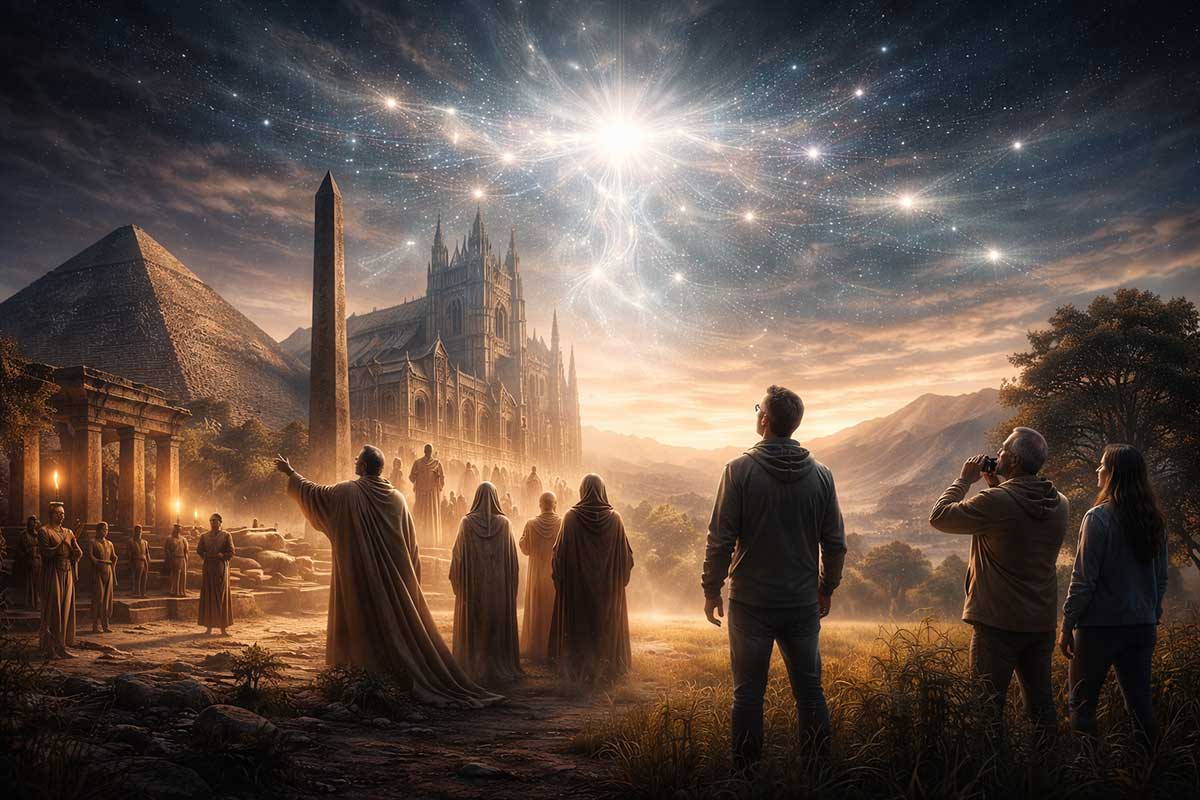
Nick Sasaki: Let’s step into the fourth topic.
1. Are contact experiences meant to expand human consciousness, or could they be part of a long pattern of observation, influence, and subtle control?
Jacques Vallée: I have long thought the second possibility cannot be dismissed. The phenomenon does not behave like a straightforward scientific expedition. It does not land on the White House lawn, present its credentials, and begin cultural exchange. It appears in fragments, produces myths, leaves symbols, alters belief, and then withdraws. That pattern looks less like open contact and more like a system of influence. It may still expand consciousness, but expansion may be one effect of a deeper process of shaping.
Chris Bledsoe: I hear that caution, but from what I lived through, I cannot reduce it to control alone. What happened to me brought healing, humility, prayer, and a wider sense of love. That felt like awakening, not domination. Still, I admit the phenomenon does not reveal itself in simple ways. It does not hand us easy answers. So maybe it can awaken people and still remain mysterious in its purpose. That is part of the tension.
Joseph Tittel: I think both things may be happening at once. A force can wake people up and still test them. It can open vision and still watch how humanity responds. Spiritual growth itself is not always comfortable. People may be pushed into greater awareness through encounters that unsettle them first. So I would not separate awakening and influence too sharply. The real question is what direction the influence is moving us toward.
Diana Walsh Pasulka: From a religious-history angle, many transformative encounters have a double effect. They enlarge a person’s sense of reality, yet they also reorganize that person’s beliefs, loyalties, and sense of mission. That is why sacred experience can never be treated as neutral. Contact may expand consciousness, but expansion itself is a form of reshaping. So the real issue may be whether the reshaping leads toward moral depth and humility, or toward dependency and symbolic capture.
Whitley Strieber: I think the most disturbing part is that the phenomenon may know us better than we know ourselves. If it can enter fear, memory, dream, body, and longing, then awakening and influence become almost impossible to untangle. A person may say, “I was awakened,” and that may be true. Yet they may also have been altered in ways they cannot measure. That does not make the experience false. It makes it dangerous to assume purity.
Nick Sasaki: So the phenomenon may not fit into the comfort of either story. It may wake humanity up, yet still leave open the question of what kind of intelligence is guiding that awakening.
2. If the phenomenon has been with humanity for far longer than modern UFO history, why does it reveal itself in fragments instead of openly and clearly?
Diana Walsh Pasulka: One answer is that human culture receives truth symbolically before it receives it institutionally. A civilization may not be able to absorb a full disclosure all at once. Fragments become the manageable form. Myths, apparitions, miracles, visions, strange lights, sacred objects, modern encounters—these may be pieces of a long continuity that each age can only partially hold. The fragment may not be a failure of revelation. It may be the only way revelation survives human limits.
Jacques Vallée: I would add a darker possibility. Fragmentation may be intentional since ambiguity is useful. A clear revelation produces a fixed response. Fragments produce interpretation, myth-making, debate, emotional reaction, and cultural movement. An intelligence interested in influence might prefer symbols over blunt facts. The fragment stays alive longer. It enters religion, folklore, politics, and private experience. It keeps humanity guessing, and in that guessing, shaping occurs.
Chris Bledsoe: It may also be mercy. If the veil were fully pulled back all at once, many people would not be ready. Some would fall into terror. Some into worship. Some into denial. A gradual unfolding gives humanity time to adjust. That is how it feels to me. Not a full unveiling in one moment, but signs, nudges, openings, and invitations to grow in understanding.
Joseph Tittel: Yes, I feel that strongly. People wake up at different times. Some can handle the mystery. Others still need the safety of the old worldview. So pieces come through. A sighting here, a message there, a spiritual opening somewhere else. It can feel frustrating, but it may actually be wise. Truth too large for the nervous system can break a person. Humanity may be getting this in waves since waves can be survived.
Whitley Strieber: Yet fragments also wound. They leave experiencers isolated, doubted, and suspended between worlds. That may be one reason the phenomenon feels so intimate and so cruel at times. It gives enough to transform a life, but often not enough to settle a mind. Perhaps clarity is withheld since the point is not mere information. Perhaps the point is to force us into a deeper uncertainty where the old categories fail.
Nick Sasaki: Then the fragment may be more than a piece of hidden truth. It may be the very method by which the phenomenon changes human consciousness across generations.
3. What if the real question is not whether they are visiting us, but whether they have been quietly guiding human belief, myth, and development for a very long time?
Whitley Strieber: That possibility has haunted me for years. If the phenomenon is woven through our myths, visions, sacred encounters, and modern contact reports, then the history of humanity may contain a hidden dialogue we barely recognize. That would mean our religions, fears, symbols, and even our sense of the sacred may have been shaped in conversation with an intelligence we never fully named. That is a stunning possibility, and a frightening one.
Jacques Vallée: I think that is exactly the line of inquiry we should take seriously. The phenomenon may be older than modern technology, older than aviation, older than our materialist frameworks. Its continuity across ages suggests that it participates in the making of culture itself. That does not mean every myth comes from it, but it may mean the phenomenon has acted as a control system of sorts—subtle, adaptive, and deeply entangled with human symbolic life.
Diana Walsh Pasulka: If that were true, it would force a major revision of religious history. It would not erase authentic faith, but it would complicate how human beings interpret revelation, miracle, and sacred narrative. We might have to ask whether some experiences that formed traditions came from encounters that later cultures translated into theology. That would not make them meaningless. It would make the human story much more mysterious than our categories have allowed.
Chris Bledsoe: I can see that possibility, but I still come back to the personal fruit. If an intelligence has moved through history, then the question is what it has been drawing humanity toward. Has it been pulling us toward fear and confusion, or toward love, humility, and greater awareness? My own experience keeps leading me toward hope. That does not answer every question, but it keeps me from falling into despair about the mystery.
Joseph Tittel: I think humanity may have been nudged for a very long time. Through visions, through symbols, through awakenings, through strange interventions at key moments. The danger is assuming that all of it comes from one clean source. There may be layers. There may be forces that heal and forces that deceive. There may be guidance and distortion running side by side. That is why this topic matters so much. Once you open the door to long-term influence, discernment becomes everything.
Nick Sasaki: So perhaps the deepest possibility is this: humanity may not simply be waiting for contact. Humanity may already be living inside a history that contact has quietly helped shape.
Topic 5: What kind of human being can face the phenomenon without losing truth, sanity, or soul?
Nick Sasaki: Let’s enter the final topic.
1. In the face of mystery that is beautiful, frightening, and possibly transformative, what matters most: faith, skepticism, humility, courage, discernment, or inner stability?
Joseph Tittel: I would say discernment first, but true discernment is made of several of those qualities at once. You need faith so fear does not swallow you. You need humility so you do not turn one experience into proof that you understand everything. You need courage so you do not run from what is real. You need inner stability so the mystery does not tear you apart emotionally. Without that balance, people either shut down, get lost, or become consumed by what they touched.
Jacques Vallée: I would place humility and discernment at the center. The phenomenon seems to exploit human certainty. It can dress itself in forms that provoke belief, terror, wonder, or devotion. That means the person who meets it must resist the urge to rush into conclusions. The mature witness is not the one who claims the most. It is the one who remains observant, careful, and unwilling to let awe replace thought.
Chris Bledsoe: For me, faith matters deeply, though not blind faith. I mean faith that God is greater than the mystery, greater than fear, greater than any presence a person might meet. That kind of faith gives you a center. It keeps you from falling apart or being swept away by the experience itself. But I agree with the others too. If faith is not joined with humility and discernment, it can become dangerous.
Diana Walsh Pasulka: I think inner stability is often overlooked. Many people are drawn to extraordinary experience without realizing what it can do to the psyche. A person may need community, ritual, language, and grounding practices just to remain whole after a disruptive encounter. Religious traditions often understood this better than modern culture does. They knew that contact with the sacred, or what seems sacred, requires preparation of the person, not just fascination with the event.
Whitley Strieber: I think courage matters in a very special way here. Not the courage to conquer the mystery, but the courage to remain human in front of it. The courage to admit confusion. The courage to refuse false comfort. The courage to say, “Something happened, and I do not fully understand it.” Many people want certainty since uncertainty is painful. But uncertainty may be the price of honesty in encounters like these.
Nick Sasaki: So maybe the strongest human being is not the one who knows exactly what the phenomenon is, but the one who can stand before it without surrendering clarity, humility, or soul.
2. How can a person remain open to contact and wonder without falling into obsession, self-deception, or surrender to forces they do not understand?
Diana Walsh Pasulka: One answer is community. When an experience is held only inside one person, it can grow distorted very quickly. Community does not guarantee truth, but it can help test interpretation, temper grandiosity, and protect someone from isolation. Old religious traditions often placed mystical experience inside structures of accountability for exactly that reason. Private revelation without grounding can become a dangerous world of its own.
Whitley Strieber: I would add ordinary life. Chores, relationships, meals, work, caring for others, staying embodied. Contact can pull people into a state where the mystery becomes more real than the world around them. That is when imbalance begins. The mystery may be real, but the human being still has to live here. The body, the family, the ordinary rhythms of life—these can become anchors that keep wonder from turning into possession.
Joseph Tittel: Prayer and protection matter too. A person should not approach the unknown with reckless openness. There needs to be intention, spiritual grounding, and a clear sense that not every presence deserves welcome. Openness without boundaries is not wisdom. It is vulnerability. You can stay available to truth and still be careful about what you allow into your life, your mind, and your energy.
Chris Bledsoe: I think love is a safeguard too. If the experience pulls you away from love, away from family, away from compassion, away from service, then something is off. The mystery should deepen your humanity, not replace it. I have always felt that if an encounter leads you closer to prayer, humility, and care for other people, then you are on safer ground than if it only feeds fascination with the phenomenon itself.
Jacques Vallée: I would say documentation is useful. Write things down. Compare accounts. Notice inconsistencies. Watch how memory changes. The phenomenon is tangled with perception, symbol, and emotion. That makes human testimony vulnerable to drift. One way to stay open without surrendering judgment is to treat experience seriously, but also analytically. Respect does not require credulity.
Nick Sasaki: So perhaps openness must walk with boundaries, ordinary life, honest record-keeping, and love—or else wonder can slowly turn into captivity.
3. If humanity is entering a time of wider disclosure and deeper contact, what inner maturity will be needed so that people do not turn mystery into either blind worship or blind denial?
Chris Bledsoe: Humanity will need humility. A lot of people may want to claim the mystery for their side, their religion, their fear, or their ego. But the mystery is bigger than all of that. If people can stay humble, then disclosure does not have to become panic or idolatry. It can become an invitation to grow.
Jacques Vallée: We will need intellectual discipline. The human mind has a strong tendency to collapse ambiguity into dogma. Some will worship too quickly. Others will dismiss too quickly. Both reactions are forms of weakness. Maturity means being able to carry unresolved truth without reducing it to slogans. That is rare, but civilization may need it now more than ever.
Joseph Tittel: We will also need spiritual sobriety. A lot of people think awakening means believing everything strange. It does not. Real awakening sharpens discernment. It makes a person more alert, not more gullible. If wider contact comes, the public will need help learning how to stay calm, grounded, prayerful, and open without being swept into fear or fantasy.
Diana Walsh Pasulka: I think moral seriousness will matter too. If these experiences touch the sacred register, then humanity cannot respond only with entertainment, conspiracy, or consumption. We will need to ask deeper questions: What kind of beings are we becoming? What kind of responsibility comes with expanded reality? What kind of institutions, practices, and education can hold mystery without exploiting it?
Whitley Strieber: I would say tenderness. That may sound surprising, but many people touched by the phenomenon are wounded by it, confused by it, changed by it, isolated by it. If wider disclosure comes, humanity will need tenderness toward the experiencer, toward the skeptic, toward the frightened, and toward the uncertain. This subject can easily harden people into camps. Tenderness may keep us human when the categories start breaking apart.
Nick Sasaki: Then maybe the maturity humanity needs is deeper than belief or disbelief. It may require humility, discipline, sobriety, moral seriousness, and tenderness all at once.
And perhaps that is the final lesson of this whole conversation:
The phenomenon may test what we believe.
It may test what we fear.
It may test how we interpret the unknown.
But most of all, it may test what kind of human beings we become when reality grows stranger than the world we thought we knew.
Final Thoughts by Nick Sasaki
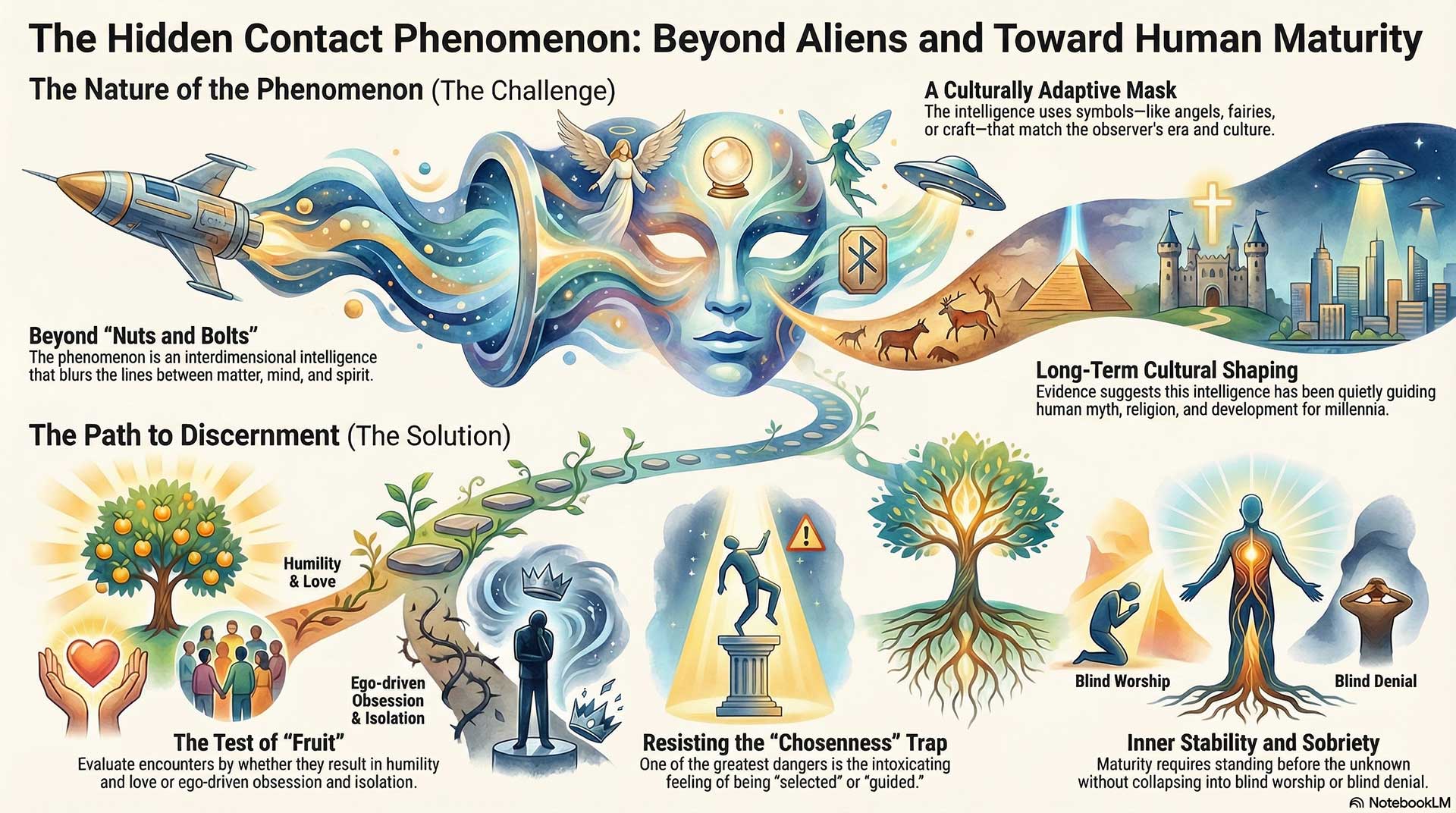
After hearing all of you, I think the most important thing we uncovered tonight is that this subject is much bigger than the word UFO.
It is bigger than lights in the sky.
Bigger than sightings.
Bigger than proof.
Bigger, even, than the question of whether humanity is being visited by nonhuman beings.
What we touched tonight is the possibility that the phenomenon may be interacting with human consciousness itself.
Not only appearing, but shaping.
Not only revealing, but provoking.
Not only awakening, but testing.
And that may be why this subject has never stayed inside one clean frame.
It spills into religion.
It spills into myth.
It spills into psychology.
It spills into prophecy, fear, healing, sacred longing, symbolic vision, and the deepest human struggle to know whether what is touching us is benevolent, deceptive, or something beyond those categories as we usually understand them.
That is what makes this so unsettling.
A simple extraterrestrial story would already be world-changing.
But a reality that blurs the line between outer contact and inner transformation would be even harder to absorb.
That kind of reality would force humanity to ask not just, “What is out there?”
But, “What has been moving through our history, our beliefs, our symbols, and perhaps even our evolution of consciousness all along?”
And once that question is opened, the conversation changes.
Then the issue is no longer only disclosure.
It is discernment.
How do we remain open without becoming gullible?
How do we remain skeptical without becoming numb?
How do we protect humility when mystery tempts us into self-importance?
How do we hold wonder without surrendering judgment?
How do we face the possibility of contact without losing the things that make us deeply human?
To me, that may be the real center of this entire subject.
The phenomenon may or may not fully reveal itself in our lifetime.
But even before that, it is already revealing us.
It reveals how quickly we worship.
How quickly we fear.
How quickly we invent certainty.
How deeply we hunger for meaning.
How vulnerable we are to both transcendence and deception.
So perhaps the final test is not whether humanity can identify the phenomenon with complete accuracy.
Perhaps the deeper test is whether humanity can mature enough to meet the unknown without collapsing into blindness of one kind or another.
Blind worship.
Blind denial.
Blind fear.
Blind fantasy.
Tonight, I think we found a better way.
A way of seriousness.
A way of humility.
A way of patient attention.
A way of courage without arrogance.
A way of wonder without surrender.
And maybe that is the path humanity will need most if this mystery continues to open.
Because the more real the phenomenon becomes, the more urgent one question may be:
not only what it is,
but what it is asking us to become.
Thank you.
Short Bios:
Chris Bledsoe
North Carolina experiencer known for reported encounters with luminous beings and healing events, often described with strong spiritual meaning.
Whitley Strieber
Author of Communion, widely known for detailed accounts of ongoing contact experiences that blend fear, mystery, and transformation.
Diana Walsh Pasulka
Professor and researcher who studies the connection between UFO phenomena, religious belief, and modern myth-making.
Jacques Vallée
Scientist and investigator who challenges the extraterrestrial-only view, proposing that UFO encounters involve deeper layers of consciousness and symbolism.
Joseph Tittel
Spiritual medium, also known as “Spiritman JT,” who shares intuitive insights on consciousness shifts, global events, and nonhuman intelligence.
Leave a Reply