


Introduction by Warren Buffett
When people ask me what keeps me up at night about markets, it isn’t just numbers or ratios — it’s human behavior. Greed, fear, overconfidence, and sometimes complacency drive markets more than balance sheets ever will. Today, we’re sitting at a point in history where valuations are higher than I’ve seen in nearly a century of watching business and markets. The Buffett Indicator, the Shiller CAPE, the cash hoards — all these things are signals, but they’re also lessons.
That’s why I wanted to have these conversations with some of the brightest minds I know. Not because any of us has a crystal ball, but because listening, challenging each other, and putting today’s excitement into the context of history may help us all make wiser decisions. Whether we’re debating bubbles, the value of cash, the promise of AI, the tug-of-war between fear and greed, or the future of global capitalism itself — these are not just financial questions. They are questions about human nature, resilience, and what kind of world we’re building for the next generation.
(Note: This is an imaginary conversation, a creative exploration of an idea, and not a real speech or event.)
Topic 1: Are We in the Biggest Bubble Ever?
Speakers for Topic 1:
- Warren Buffett
- Robert Shiller
- Cathie Wood
- Jeremy Grantham
- Ray Dalio
- Moderator: Nick Sasaki
Nick Sasaki (opening):
Today, we gather with some of the sharpest minds in finance to ask a pressing question: Are we living in the biggest market bubble in history? With valuations at record highs, warnings flashing, and technology reshaping everything, we need clarity. Warren Buffett, Robert Shiller, Cathie Wood, Jeremy Grantham, and Ray Dalio — thank you for joining me.
First Question: When you look at today’s Buffett Indicator at 218% and CAPE near 40, do you see undeniable signs of a bubble?
Jeremy Grantham:
Absolutely. These levels scream “bubble.” I’ve tracked market manias for decades, from Japan in the 1980s to the dot-com frenzy. Every time valuations hit extremes like this, the outcome is the same: pain. People think “this time is different,” but it rarely is. When greed and narrative overwhelm fundamentals, a reckoning follows.
Cathie Wood:
I don’t deny valuations are stretched by historical measures, but innovation rewrites history. AI, genomics, robotics — these are not fads. They’re paradigm shifts. Amazon looked “overvalued” in 2000, yet it changed the world. I believe we’re underestimating the productivity revolution ahead.
Warren Buffett:
Well, the math is simple: when market cap exceeds GDP by this much, you’re not playing with fire — you’re playing with dynamite. It doesn’t mean the market crashes tomorrow, but it means expectations are far ahead of reality. Investors buying at these levels should not expect generous returns.
Ray Dalio:
What I see is the long-term debt cycle intersecting with massive liquidity and technological optimism. The system is flooded with money, and investors are pushed further out on the risk curve. These forces can inflate bubbles beyond what anyone expects. But eventually, reality sets in.
Robert Shiller:
From a psychological perspective, we are in classic bubble territory. Stories about AI changing everything echo the internet hype of the late 1990s. The CAPE ratio doesn’t lie: whenever it gets this high, the following decade of returns is disappointing. Human narratives push markets to extremes, and we’re watching that unfold now.
Second Question: If we are in a bubble, what would trigger the burst — and how severe could it be?
Ray Dalio:
The most likely triggers are external shocks: geopolitical conflict, a monetary tightening misstep, or loss of faith in U.S. debt. The system is leveraged. A small spark can cause a big fire when everything is this stretched.
Warren Buffett:
Crashes often happen when nobody expects them. In 2008, the risks were obvious in hindsight but ignored at the time. My guess? Rising interest rates or inflation could puncture today’s optimism. When the tide goes out, you find out who’s been swimming naked.
Cathie Wood:
I would push back. Yes, shocks can happen, but innovation can absorb shocks too. The AI revolution will increase productivity, reduce costs, and perhaps cushion downturns. It’s possible we experience volatility, but not a catastrophic crash.
Robert Shiller:
Bubbles don’t need a trigger in the traditional sense. They collapse when faith falters. If the narrative around AI growth stumbles — a major AI company disappoints, or regulations choke progress — that could be enough to deflate confidence. It’s less about economics, more about psychology.
Jeremy Grantham:
Severity? I’d say we’re looking at a 50% drawdown in U.S. equities if history rhymes. People always say “not this time,” but the market always reverts to fundamentals eventually. The higher the climb, the harder the fall.
Third Question: What should investors do now — hold, hedge, or sell?
Robert Shiller:
Caution is wise. Diversification is critical. This doesn’t mean abandoning equities, but it does mean tempering expectations and considering assets that aren’t in bubble territory, like international markets.
Cathie Wood:
I believe in staying invested, especially in innovation. Trying to time crashes usually backfires. Long-term, disruptive technologies will reward those who hold steady through volatility. If you sell, you risk missing exponential growth.
Warren Buffett:
Patience is an investor’s greatest ally. I’ve built a record cash position for a reason. When opportunities come, you want dry powder. I’d advise ordinary investors not to chase what they don’t understand. Better to miss a little upside than risk devastating losses.
Jeremy Grantham:
Reduce exposure. If you’re young, fine, keep some skin in the game. But for most investors, capital preservation should be priority. There’s no shame in holding cash or safe bonds when the market looks like a tinderbox.
Ray Dalio:
Balance is key. Don’t go “all in” or “all out.” Use hedges. Hold some gold, some Treasuries, maybe even a slice of inflation-protected assets. A diversified, risk-parity approach can weather storms better than trying to predict timing.
Closing Thoughts
Nick Sasaki:
From today’s conversation, it seems we’re facing two competing narratives. On one side, history and valuation metrics scream “bubble.” On the other, technology believers see transformation that could justify today’s exuberance. But even among optimists, the word “volatility” hovers in the air.
The truth may be that bubbles and revolutions often coexist. Perhaps AI is real — but so is overvaluation. The wisdom here suggests patience, prudence, and balance.
Gentlemen and Cathie, thank you.
Topic 2: Cash is Trash or King?

Speakers for Topic 2:
- Warren Buffett
- Howard Marks
- Larry Fink
- Stanley Druckenmiller
- Janet Yellen
- Moderator: Nick Sasaki
Nick Sasaki (opening):
In today’s markets, cash has become a polarizing subject. With Berkshire Hathaway holding a record $300 billion in cash, some see it as wisdom, others as wasted opportunity. Should investors cling to cash or fear being left behind by inflation and rising assets? Warren Buffett, Howard Marks, Larry Fink, Stanley Druckenmiller, and Janet Yellen — let’s find out.
First Question: In today’s environment of high valuations, 4–5% Treasury yields, and uncertainty, is cash a smart position or a wasted asset?
Warren Buffett:
I’ve said it before — cash is like oxygen. You don’t notice it when you have plenty, but it’s the only thing you think about when you don’t. Right now, we’re sitting on cash because we can’t find attractive enough opportunities. That’s not a permanent stance, but it’s a patient one.
Larry Fink:
I respect Warren’s discipline, but from my vantage point, staying out of the market long-term is costly. Inflation erodes cash. History shows that those who keep their wealth compounding in equities over decades win, even through downturns. For many investors, “cash as king” is a dangerous illusion.
Howard Marks:
Both views hold truth. Cash is neither trash nor king; it’s context-dependent. Right now, with short-term Treasuries yielding north of 4%, cash equivalents are not the dead money they were for the past decade. It gives optionality, and optionality is valuable in uncertain times.
Stanley Druckenmiller:
I’ll add this: opportunity cost matters. If AI really is transformational, sitting on too much cash could mean missing one of the greatest bull runs in history. But the flip side is that valuations are stretched, and I’ve never seen bubbles end gracefully. Personally, I’d keep dry powder but not go all cash.
Janet Yellen:
From a policy perspective, cash holdings reflect uncertainty about fiscal and monetary conditions. The Treasury market right now offers safe returns that we haven’t seen in years. For cautious investors, that’s a reasonable choice. But over the long term, America’s strength has always been in productive investment, not hoarding liquidity.
Second Question: What do you believe could change the perception of cash — turning it from safe haven to liability, or vice versa?
Howard Marks:
If inflation surprises on the upside again, cash loses appeal quickly. Remember, a 4% yield doesn’t help if inflation is running at 6%. On the other hand, if we face a market correction, having cash becomes an enormous advantage because you can buy assets at discounted prices.
Larry Fink:
Exactly — inflation is the killer. If the Fed struggles to control it, cash holders get punished. Markets climb a wall of worry, but compounding through equities is the hedge against that erosion. Investors should always weigh inflation-adjusted returns, not just nominal yields.
Warren Buffett:
I’m less concerned about labels. Cash isn’t an investment, it’s a holding pen. You keep it until something better comes along. Whether it looks good or bad depends entirely on what opportunities are available. For me, it’s not about perception, it’s about patience.
Janet Yellen:
Perception can also shift through confidence in fiscal stability. If investors doubt the U.S. government’s ability to manage debt, even Treasury-backed cash could lose its safe-haven reputation. But if we maintain credibility, cash and Treasuries remain bedrock.
Stanley Druckenmiller:
Geopolitics could play a role too. If the dollar’s dominance were ever questioned, that would alter the calculus. Right now, the dollar is king, and cash in dollars has global demand. But if that changed — say through fragmentation of global finance — the meaning of cash would change dramatically.
Third Question: Given all this, how should the average investor approach cash right now? Hold it, deploy it, or balance it?
Janet Yellen:
For the average household, safety matters. Holding some cash for emergencies is critical. Beyond that, investing in diverse assets builds resilience. Overexposure to cash is rarely wise, but underexposure is risky too. Balance is the key.
Stanley Druckenmiller:
If I were advising individuals, I’d say: keep a reasonable cushion but avoid paralysis. Markets reward those who take calculated risks. Keep 10–20% cash if you’re cautious, but don’t let fear freeze you out of opportunities.
Warren Buffett:
Ordinary investors shouldn’t overcomplicate things. Hold enough cash to sleep well, and invest the rest in a simple, low-cost index fund. Timing the market with cash is almost always a losing game. For professionals, patience is fine. For individuals, consistency is better.
Howard Marks:
I’d frame it as: cash is a tactical tool, not a long-term strategy. For those with the discipline to wait, it can be powerful. But if you’re just holding cash because you’re afraid, that’s not investing — that’s hiding.
Larry Fink:
And I’d emphasize the power of staying invested. Every generation has its “cash is king” moment, and every generation has those who regret missing compounding. The best approach is to stay in the game, diversify, and keep a modest buffer rather than a fortress of idle dollars.
Closing Thoughts
Nick Sasaki:
What I’ve heard today is that cash sits in a paradox. To Warren, it’s patience. To Larry, it’s risk of stagnation. To Howard, it’s a tactical weapon. To Stan, it’s dry powder. To Janet, it’s security.
Maybe the lesson is that cash has no fixed identity. In times of uncertainty, it’s oxygen. In times of inflation, it’s erosion. For the prudent investor, the art lies not in choosing “trash” or “king,” but in balancing the two.
Thank you all for your wisdom.
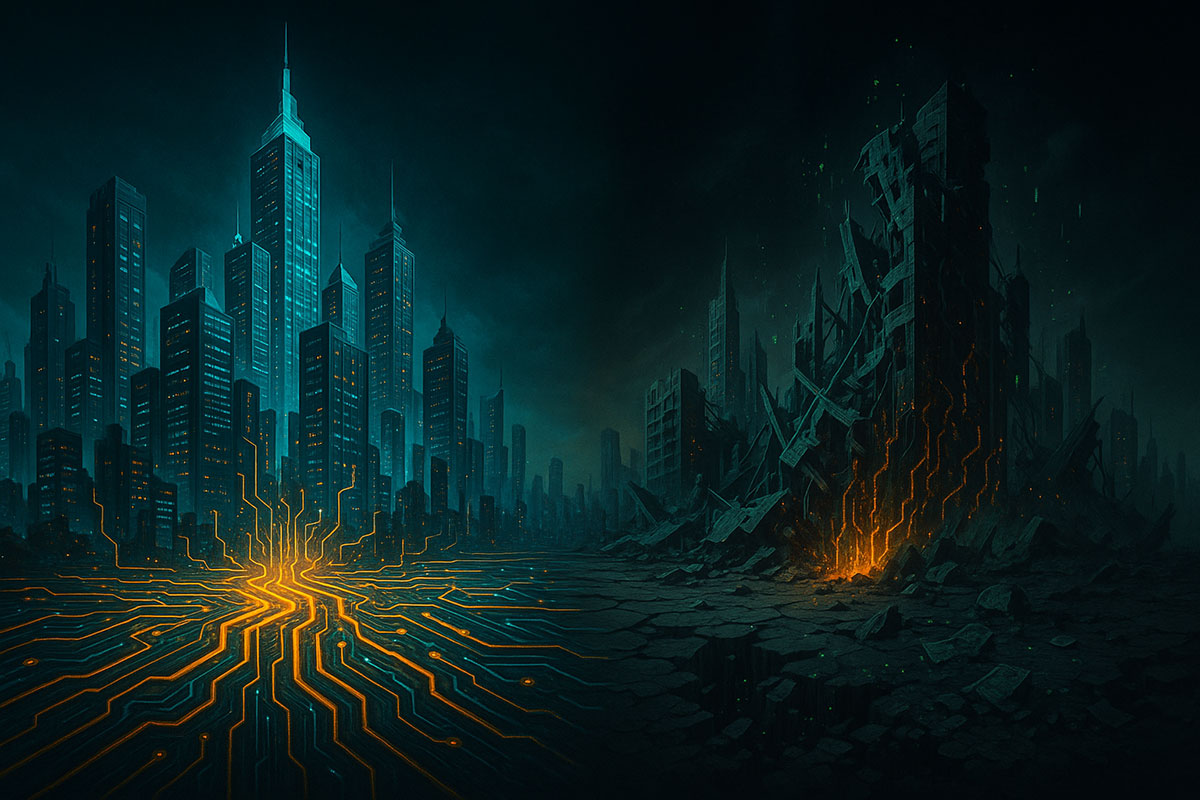
Topic 3: AI Boom: New Paradigm or New Bubble?
Speakers for Topic 3:
- Warren Buffett
- Elon Musk
- Marc Andreessen
- Aswath Damodaran
- Kai-Fu Lee
- Moderator: Nick Sasaki
Nick Sasaki (opening):
Artificial Intelligence dominates today’s headlines. Stock markets have surged on AI enthusiasm, with trillion-dollar valuations riding on the belief that machines will transform productivity, society, and even human destiny. But is AI truly a new paradigm — or just another speculative bubble waiting to burst? Warren Buffett, Elon Musk, Marc Andreessen, Aswath Damodaran, and Kai-Fu Lee, let’s explore.
First Question: Do you believe AI truly justifies today’s sky-high market valuations, or is this another dot-com style bubble?
Elon Musk:
AI is the most profound technology humanity has ever created. We’re essentially summoning a new form of intelligence. That will disrupt every industry — from healthcare to transportation to finance. Are valuations stretched? Sure. But if AI becomes as foundational as electricity or the internet, even trillion-dollar companies might be cheap today.
Warren Buffett:
I’ve been through many “revolutions” in my lifetime. They all sound inevitable at the start. Some live up to the hype, most don’t. I don’t buy businesses I don’t understand, and truthfully, I don’t understand AI’s economics well enough. If a company can’t show predictable earnings, then no story — however exciting — justifies paying sky-high multiples.
Marc Andreessen:
I see it differently. This isn’t hype; it’s the early innings of a new industrial revolution. The internet was undervalued in the ‘90s, not overvalued. Pets.com failed, but Amazon built an empire. AI is the next Amazon moment — and I’d argue even bigger. Investors calling it a bubble risk missing the defining growth story of our era.
Aswath Damodaran:
The numbers are important here. When I look at valuations, I see projections that assume exponential growth without sufficient margin for error. AI will create winners, but not everyone will win. Investors are paying as though every company adopting AI is guaranteed success. That’s where bubble-like thinking creeps in.
Kai-Fu Lee:
I believe AI is transformational, but the impact will be uneven. In China, I see enormous adoption potential across manufacturing, logistics, and fintech. But markets often overprice the short term and underprice the long term. Right now, valuations may be inflated, but the ultimate story of AI will prove larger than even the optimists predict.
Second Question: If AI is indeed transformative, what are the biggest risks that could derail its promise?
Warren Buffett:
The biggest risk is human behavior. Excitement creates bubbles, bubbles create collapses. It’s not the technology itself, but the way investors behave around it. When expectations get too far ahead of reality, disappointment follows.
Kai-Fu Lee:
In Asia, one concern is government regulation. If governments overreact to AI’s risks — from privacy to jobs displacement — they could slow adoption. Another risk is inequality. If AI’s benefits are concentrated in a few hands, social backlash could stall progress.
Marc Andreessen:
I worry less about regulation and more about fear-driven narratives. We’ve seen moral panics around every major innovation: printing press, electricity, the internet. If society succumbs to AI hysteria, it could choke innovation before its benefits are fully realized.
Elon Musk:
I see the risk as existential. We’re playing with fire. Without proper guardrails, AI could become smarter than us and act in ways we can’t control. That’s why I’ve called for oversight and why I launched xAI — to steer AI toward beneficial outcomes. If we get it wrong, valuations won’t matter because civilization itself will be at risk.
Aswath Damodaran:
From a valuation standpoint, the risk is simple: overinvestment. If trillions flow into AI chasing unrealistic growth, most companies will fail to generate the returns investors expect. That misallocation of capital could cause a painful reckoning, even if the underlying technology succeeds.
Third Question: Given both the potential and the risks, how should investors position themselves in the AI era?
Marc Andreessen:
Embrace it. Take bold bets on companies building core AI infrastructure — chips, cloud platforms, foundation models. These are the picks and shovels of the new gold rush. Missing out on AI is like sitting out the internet in 1995.
Warren Buffett:
I’d advise ordinary investors the same way I always do: stick to businesses you understand, diversify, and avoid chasing fads. If AI truly is transformative, it will show up in earnings over time. You don’t need to gamble to benefit.
Elon Musk:
Invest in the future you want to see. Back companies that are developing AI responsibly and transparently. The real value isn’t just in profits but in ensuring AI benefits humanity. For investors, that means looking beyond hype and focusing on mission-driven firms.
Aswath Damodaran:
The rational approach is selective exposure. Don’t buy “AI everything.” Instead, identify firms with real competitive advantages in AI — companies with data moats, proven demand, and sustainable margins. Spread risk, because many will fail.
Kai-Fu Lee:
Invest globally. The AI revolution is not just a U.S. story. China, India, Southeast Asia — all will create AI champions in different sectors. Diversifying geographically will protect investors from the risk of a single market or government policy shift derailing their exposure.
Closing Thoughts
Nick Sasaki:
From this conversation, it seems AI is both a revolution and a bubble, depending on the lens. Elon and Marc see it as destiny. Warren urges patience. Aswath cautions with numbers. Kai-Fu emphasizes global breadth.
Perhaps the answer is that AI’s long-term future is unstoppable, but the road there will be paved with both extraordinary gains and painful corrections. The winners will be those who balance vision with discipline.
Thank you all for a fascinating exchange.
Topic 4: The Psychology of Fear and Greed

Speakers for Topic 4:
- Warren Buffett
- Charlie Munger (archival wisdom voice)
- Nassim Nicholas Taleb
- Daniel Kahneman
- Jim Cramer
- Moderator: Nick Sasaki
Nick Sasaki (opening):
Markets rise and fall not only on earnings or policies, but on something deeper — human emotion. Fear and greed drive cycles, bubbles, and crashes as much as numbers do. With us today are Warren Buffett, Charlie Munger, Nassim Taleb, Daniel Kahneman, and Jim Cramer, each bringing unique wisdom about the psychology of markets.
First Question: Why do fear and greed remain so powerful in markets, even when investors know better?
Daniel Kahneman:
Because knowing is not the same as behaving. Behavioral biases are hardwired. Loss aversion makes people panic at downturns; overconfidence makes them chase rallies. Rational knowledge can’t overcome primal instincts without discipline and systems in place.
Jim Cramer:
Look, I live this every day on TV. People don’t want charts; they want stories that feed their emotions. Fear sells — “the crash is coming!” Greed sells — “this stock is going to the moon!” The market is theater, and emotions are the script.
Warren Buffett:
That’s why I always say: be fearful when others are greedy, and greedy when others are fearful. The crowd will almost always be wrong at extremes. But going against the crowd takes temperament, not intelligence.
Nassim Taleb:
I’d put it this way: people underestimate uncertainty. They want clean predictions, so they swing between euphoria and panic. Both are illusions. The truth is we live in a world of black swans. Fear and greed are simply symptoms of our refusal to accept randomness.
Charlie Munger:
Humans are not rational animals; we’re social animals with the capacity to be rational. Most people just mimic the crowd. If your neighbor is getting rich, greed pushes you to join. If your neighbor is losing everything, fear pushes you to flee. Very few can resist those pulls.
Second Question: How do you see fear and greed shaping markets right now?
Jim Cramer:
Right now, greed is running the AI show. Every call-in wants to know, “Should I buy Nvidia?” That’s a classic mania. But under the surface, you can feel fear too — fear of missing out. It’s greed wearing a mask of anxiety.
Charlie Munger:
I’d agree. It’s like the late ‘90s all over again. People see fortunes being made, and they can’t stand not being part of it. The tragedy is, when it all goes south, they’ll also be the first to panic.
Warren Buffett:
The indicators — CAPE ratio, market cap to GDP — they don’t lie. This is greed. But the fear side is also visible in the volatility index spiking on bad news. It’s a market on edge: exuberant but fragile.
Nassim Taleb:
I see more fragility than greed. Markets have become addicted to central bank intervention. That dependency is fear-driven. It’s like a gambler who keeps asking the casino for loans to keep playing. That’s not greed; that’s desperation.
Daniel Kahneman:
What I see is a loop of greed and fear feeding each other. Greed drives valuations higher, creating fragility. Fragility increases the probability of sudden loss, which stokes fear. Fear then turns into panic selling, which eventually births the next cycle of greed when assets look “cheap.”
Third Question: What can investors do to manage their own fear and greed?
Warren Buffett:
The simplest way: have a plan and stick to it. If you buy a stock because you think the company is great, don’t sell just because the market panics. Conversely, don’t buy because your neighbor made quick money. Temperament beats brilliance in investing.
Daniel Kahneman:
Systematize decisions. Rules, checklists, and diversification reduce the power of emotion. If you can automate discipline, you’re less likely to fall prey to biases in the heat of the moment.
Charlie Munger:
Avoid situations that tempt you. Don’t borrow money to invest, because leverage magnifies fear. Don’t chase lottery-ticket stocks, because they magnify greed. Stick to what you understand, and your emotions will stay manageable.
Jim Cramer:
I’ll be blunt: most people can’t control fear and greed. That’s why I tell viewers, use index funds. Let professionals handle the craziness. If you’re stock-picking without training, you’re bringing a knife to a gunfight.
Nassim Taleb:
The answer is antifragility. Build portfolios that benefit from volatility instead of being destroyed by it. Hold barbell strategies — a lot of safety and a small amount of highly speculative upside. That way, fear and greed of the crowd become your advantage, not your downfall.
Closing Thoughts
Nick Sasaki:
It seems we’ve heard five philosophies for taming fear and greed. Kahneman says systematize. Taleb says embrace volatility. Buffett and Munger say discipline and patience. Cramer says outsource it to professionals if you can’t manage it yourself.
Perhaps the unifying message is this: fear and greed never vanish. They are constants of human nature. The difference between success and failure is whether you let them control you — or design a strategy that turns them into allies instead of enemies.
Thank you all for your sharp insights.
Topic 5: The Future of Global Capitalism

Speakers for Topic 5:
- Warren Buffett
- Mohamed El-Erian
- Christine Lagarde
- Ruchir Sharma
- Yuval Noah Harari
- Moderator: Nick Sasaki
Nick Sasaki (opening):
Capitalism has lifted billions out of poverty, yet it faces profound challenges: inequality, debt crises, geopolitical fractures, and environmental stress. Is it resilient enough to survive, or must it evolve into something new? With us are Warren Buffett, Mohamed El-Erian, Christine Lagarde, Ruchir Sharma, and Yuval Noah Harari to tackle this urgent question.
First Question: Given rising inequality, mounting government debt, and U.S.-China tensions, can global capitalism survive in its current form?
Christine Lagarde:
Capitalism has proven remarkably adaptive, but we must admit the system is under strain. Debt levels are unsustainable, inequality breeds instability, and geopolitical fragmentation threatens global cooperation. For capitalism to endure, it must be reformed with fairness, sustainability, and multilateralism at its core.
Warren Buffett:
I’ve always believed capitalism, despite its flaws, is the best system for creating prosperity. But unchecked greed, speculative bubbles, and debt excesses put that prosperity at risk. The rules of the game may need adjusting, but the engine of capitalism — human ingenuity and competition — will survive.
Yuval Noah Harari:
Capitalism is not just an economic system, it’s a story. People believe in it because it promises growth. But if growth falters due to climate, technology, or politics, that story loses power. Then humanity will need a new narrative — perhaps one centered on sustainability rather than endless expansion.
Mohamed El-Erian:
We’re already in a phase of “fractured capitalism.” Globalization is retreating, supply chains are regionalizing, and markets are diverging. This doesn’t mean capitalism ends, but it becomes more fragmented, with multiple centers of gravity instead of one. Investors and policymakers must prepare for a multipolar economic world.
Ruchir Sharma:
I’d add that capitalism is cyclical. Every few decades, people declare it broken — the 1930s, the 1970s, 2008. Each time, reforms and resilience emerge. I believe it will bend, not break. But the next phase may be slower growth, with emerging markets playing a bigger role as engines of dynamism.
Second Question: What are the greatest risks that could fundamentally destabilize global capitalism in the next decade?
Yuval Noah Harari:
The risk I see is technological disruption outpacing society’s ability to adapt. AI could create immense wealth but also mass unemployment and concentration of power. If billions feel excluded from the system, capitalism could face a legitimacy crisis.
Mohamed El-Erian:
Debt is the elephant in the room. Sovereign debt loads in advanced economies are unprecedented. If investors lose confidence in governments’ ability to service debt, we could face crises that shake the very foundations of capitalism.
Christine Lagarde:
Climate change is another existential risk. If markets continue to treat the environment as an externality, the eventual costs could overwhelm economies. Sustainable capitalism is not optional — it is survival.
Warren Buffett:
The greatest risk is always fear-driven overreaction. Whether it’s panic in financial markets or populist backlash against inequality, sudden shifts can unravel decades of progress. Confidence is fragile, and capitalism rests on confidence.
Ruchir Sharma:
Another risk is demographic. Aging populations in the West mean fewer workers, slower growth, and heavier welfare burdens. Unless immigration or productivity leaps offset that, capitalism could struggle to deliver its traditional promise of rising living standards.
Third Question: What reforms or shifts are needed to ensure capitalism thrives for the next generation?
Ruchir Sharma:
We need to shift focus from debt-fueled growth to genuine productivity and entrepreneurship. Too much capital today flows into financial engineering rather than innovation. Capitalism must reward risk-taking in real industries again.
Christine Lagarde:
Stronger global governance is essential. Whether on tax fairness, digital regulation, or climate action, capitalism cannot remain a free-for-all. Cooperation is necessary to prevent a race to the bottom that undermines stability.
Warren Buffett:
I’d emphasize education. If people are equipped to participate in the modern economy, capitalism works for them. If they’re left behind, resentment builds. A system that doesn’t bring the majority along won’t endure.
Yuval Noah Harari:
We must redefine success. If capitalism measures itself solely by GDP growth, it will collapse under its own contradictions. A future system must measure well-being, sustainability, and human dignity alongside profit.
Mohamed El-Erian:
Flexibility is key. Capitalism must adapt to regional realities. In some places, it will need stronger safety nets. In others, more liberalization. The next phase won’t be one-size-fits-all capitalism, but a pluralistic model responsive to local needs.
Closing Thoughts
Nick Sasaki:
Today’s conversation paints capitalism as both fragile and resilient. Lagarde calls for global cooperation, Sharma for entrepreneurial renewal, Harari for a new story, El-Erian for flexible adaptation, and Buffett for education and confidence.
The common thread is that capitalism is not static. It is a living system, one that must evolve or risk collapse. Whether it emerges stronger or weaker depends on choices we make now — about fairness, sustainability, and human dignity.
Thank you all for your vision and candor.
Final Thoughts by Warren Buffett

After these discussions, I come back to something simple: markets will always swing, headlines will always excite or terrify, and experts — including me — will sometimes get it wrong. But principles endure. Patience, discipline, and rational optimism have always outperformed panic and speculation in the long run.
If you remember one thing, it’s this: you don’t need to predict the next crash or boom to succeed. You just need to avoid being swept away by the crowd. Keep enough cash to breathe, enough courage to invest when others are afraid, and enough humility to know that no story, no matter how shiny, guarantees success.
Capitalism, for all its flaws, has been the greatest engine of progress in human history. It will bend, it will stumble, but I believe it will endure — if we ground it in fairness, prudence, and a little bit of common sense.
Short Bios:
Warren Buffett – Chairman and CEO of Berkshire Hathaway, Buffett is one of the most successful investors of all time, known for his disciplined value investing philosophy and long-term approach to wealth creation.
Robert Shiller – Nobel Prize–winning economist and Yale professor, Shiller developed the Shiller CAPE ratio, a key valuation metric often used to gauge stock market bubbles.
Cathie Wood – Founder and CEO of ARK Invest, Wood is an advocate of disruptive innovation, with bold bets on emerging technologies like AI, genomics, and robotics.
Jeremy Grantham – Co-founder of GMO, Grantham is widely regarded as a “bubble historian,” having warned of overvalued markets ahead of major crashes.
Ray Dalio – Founder of Bridgewater Associates, Dalio is one of the world’s leading hedge fund managers, known for his “Principles” on investing, economics, and long-term debt cycles.
Howard Marks – Co-founder of Oaktree Capital Management, Marks is a leading authority on credit investing and the psychology of markets, with influential memos widely read on Wall Street.
Larry Fink – CEO of BlackRock, the world’s largest asset manager, Fink is a powerful voice in global finance, shaping debates on long-term investing, sustainability, and markets.
Stanley Druckenmiller – Legendary hedge fund manager, Druckenmiller made his fortune as George Soros’s chief strategist and is renowned for his macroeconomic calls and trading instincts.
Janet Yellen – Current U.S. Treasury Secretary and former Chair of the Federal Reserve, Yellen has shaped U.S. monetary and fiscal policy at the highest levels.
Elon Musk – CEO of Tesla, SpaceX, and xAI, Musk is a futurist entrepreneur and one of the most influential figures in the AI and technology revolution.
Marc Andreessen – Co-founder of Andreessen Horowitz, he is a Silicon Valley venture capitalist and early internet pioneer, championing bold investments in transformative tech.
Aswath Damodaran – NYU finance professor and “Dean of Valuation,” Damodaran is famous for teaching and writing on company valuation, risk, and investor psychology.
Kai-Fu Lee – AI expert, venture capitalist, and former Google China president, Lee is a leading voice on the rise of AI and China’s technological advancements.
Charlie Munger – Vice Chairman of Berkshire Hathaway and Buffett’s longtime partner, Munger is remembered for his wit, mental models, and focus on rational decision-making.
Nassim Nicholas Taleb – Scholar and former options trader, Taleb is the author of The Black Swan and Antifragile, exploring randomness, risk, and resilience.
Daniel Kahneman – Nobel Prize–winning psychologist and author of Thinking, Fast and Slow, Kahneman is a pioneer in behavioral economics.
Jim Cramer – Host of CNBC’s Mad Money, Cramer is known for his energetic style and focus on translating Wall Street to everyday investors.
Mohamed El-Erian – Chief Economic Advisor at Allianz and former PIMCO CEO, El-Erian is an influential economist specializing in global macro trends and financial crises.
Christine Lagarde – President of the European Central Bank and former head of the IMF, Lagarde is a key figure in shaping global monetary policy.
Ruchir Sharma – Global investor and author, Sharma is known for his work on emerging markets and the dynamics of global capitalism.
Yuval Noah Harari – Historian and bestselling author of Sapiens, Harari examines how technology, narratives, and human behavior shape economies and societies.
Leave a Reply