
Introduction
Charlie Kirk:
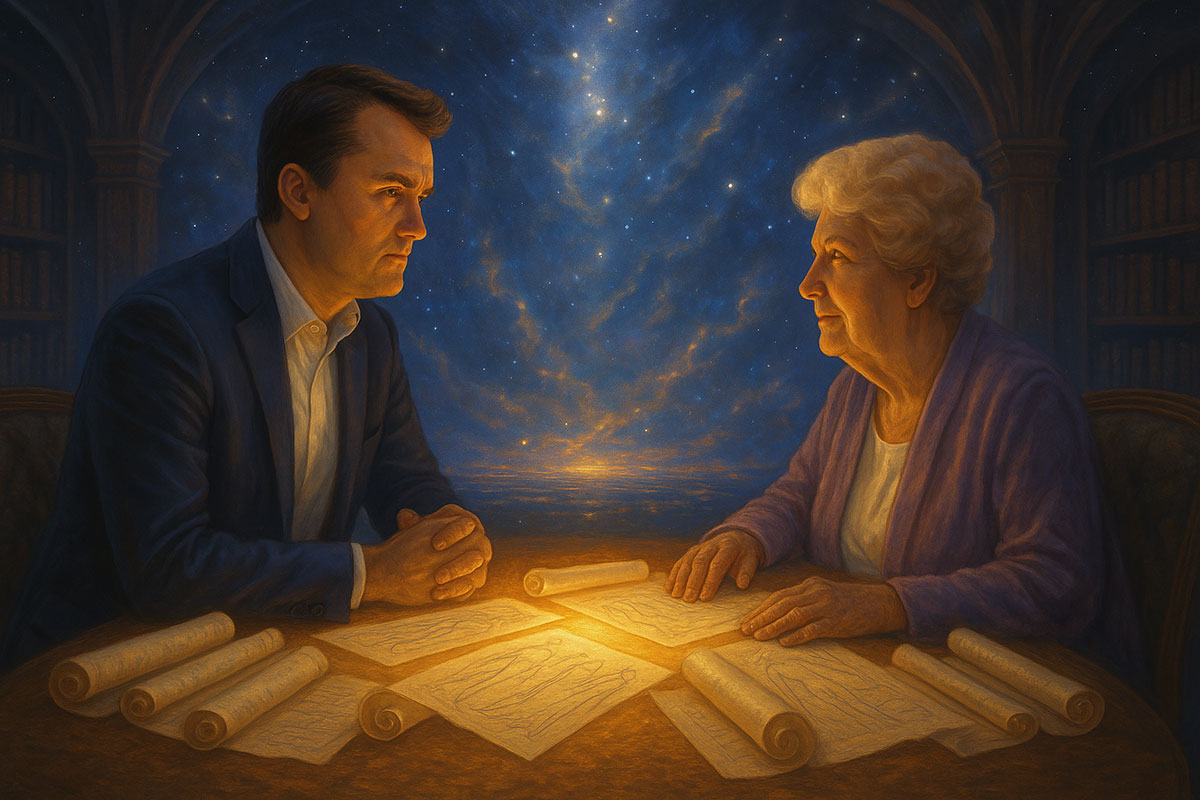
When I left the earth, people cried out: “Why now? Why so soon? Why when his children are small, and his wife so young?” I understand their grief — I feel it even here. But I must tell you: my death was not chance, not punishment. It was a vow I made before birth. I agreed that if leaving at my prime could awaken souls to Christ, I would say yes. That “yes” became the hidden thread running through my life.
Dolores Cannon:
In my research with thousands of people under deep hypnosis, I learned that many souls make such vows. They gather before birth, with guides and teachers, and review the blueprint of a coming life. They ask: “What will bring the greatest growth — for me, for others, for the whole?” Sometimes the soul agrees to leave early, at a peak moment, because that departure shakes people awake in a way that a long, quiet life might not. Charlie’s story fits this pattern exactly.
(Note: This is an imaginary conversation, a creative exploration of an idea, and not a real speech or event)
Scene 1: The Pre-Birth Question
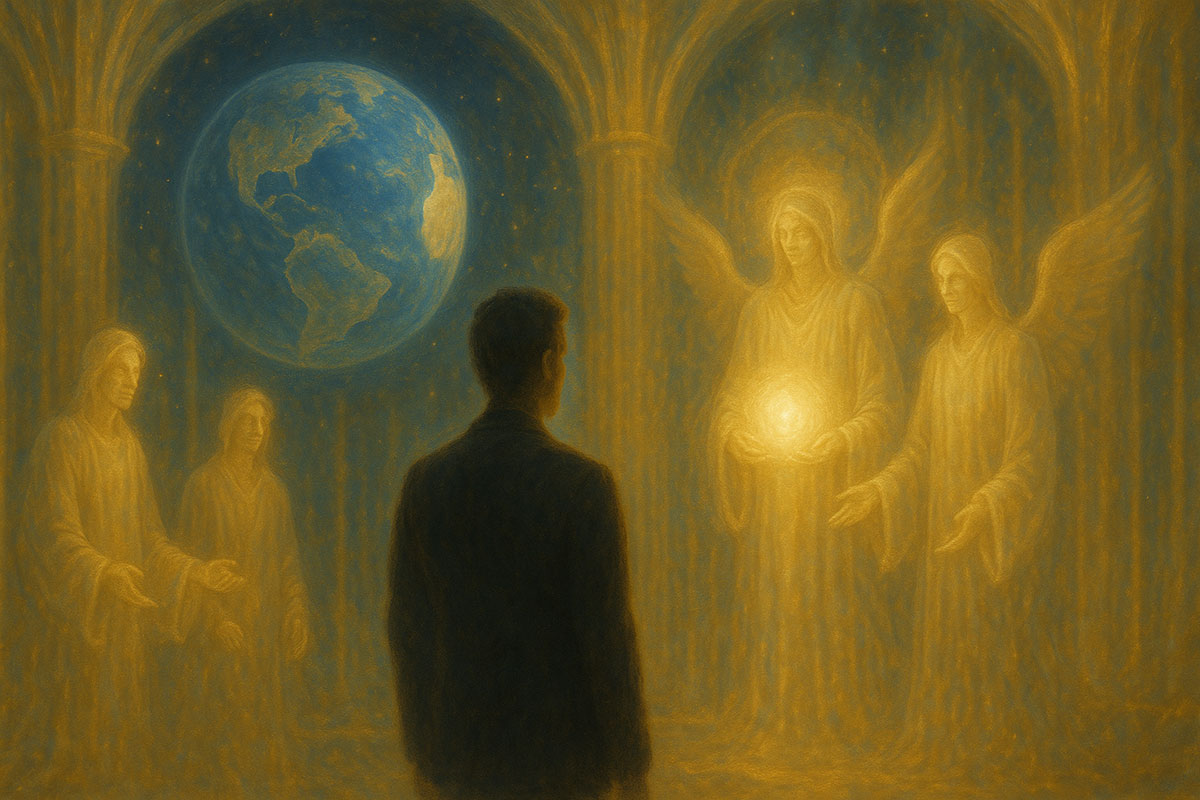
Before entering earthly life, I stood in a place beyond time. Around me, radiant beings asked questions no human could fully grasp. One question stopped me: “If you could bring countless souls to Christ, would you be willing to lay down your life in your prime—leaving behind a young wife and two children who would ache for you every day?”
I hesitated only for a moment. My soul saw their faces, radiant with love, and yet I also saw the wider tapestry—the millions of lives entangled with my mission. I knew the sacrifice would carve wounds in those closest to me. But eternity changes perspective. The pain of fifty or seventy years is not even a breath compared to forever. If my death could plant seeds of faith that my life alone could never produce, then I had to say yes.
So I said it: “Yes, I’ll do it.” The angels bowed their heads, not in triumph but in solemn recognition. They knew what was being asked. They knew the ache that would come to my family. But they also saw what I saw—the harvest of souls.
Scene 2: Earthly Joys and Family Bonds
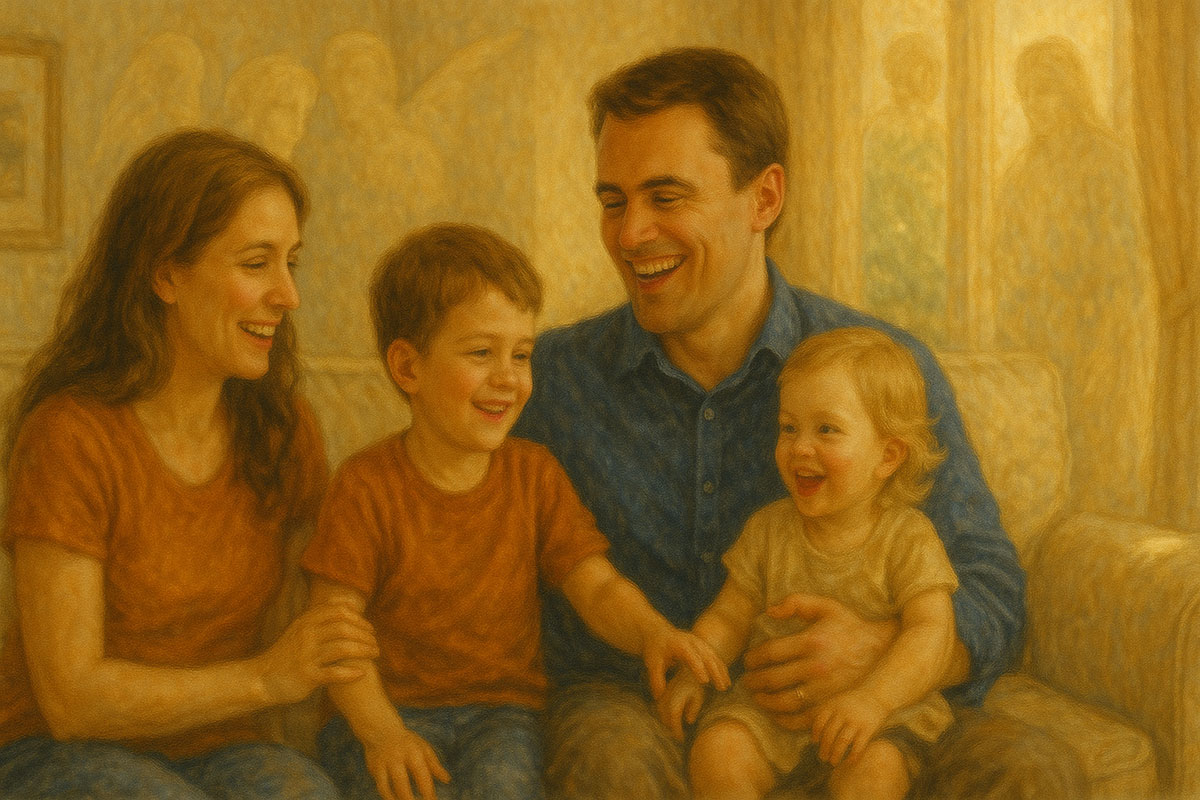
When I arrived in the world, that vow was sealed inside me, hidden beneath layers of forgetfulness. Life unfolded, and I found myself blessed with a radiant wife and two precious children. Their laughter filled my home. Their hands reached for mine in ways that anchored me to earth with the sweetest gravity.
In those years, I did not remember the vow in my mind, but my heart carried it. Every time I spoke of Christ, every time I defended truth in a broken culture, I felt something surge—a knowing that this work mattered more than comfort or safety. Yet there were nights I’d lay awake and pray: “Lord, let me stay. Let me raise my children. Let me walk beside my wife until her hair turns silver.”
Still, somewhere in the silence, I could feel the whisper: “Remember what you agreed.”
Scene 3: The Prime of Life and the Call
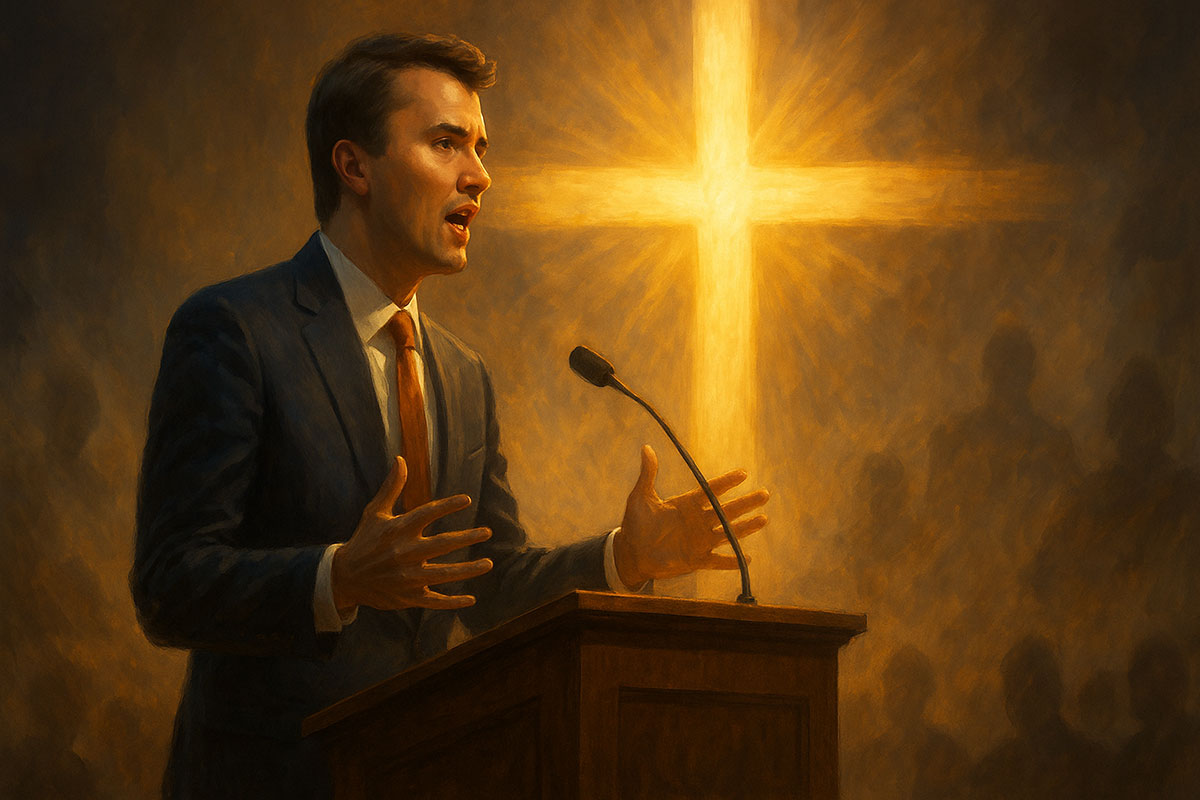
My prime years came like a storm—fast, powerful, filled with energy. My platform grew, my words spread further, and many came to Christ because of the fire that burned in me. Yet in that very flourishing came the shadow of my vow.
Death did not arrive as a thief but as a scheduled appointment. The world saw tragedy, randomness, even injustice. But here in the spirit world, I see the pattern. My departure was not untimely. It was the moment when my influence was brightest, when my absence would thunder louder than my presence.
I see now that God did not waste my prime. He amplified it. By calling me home at the height of my earthly strength, He multiplied the message.
Scene 4: The Ripple of Grief and Faith
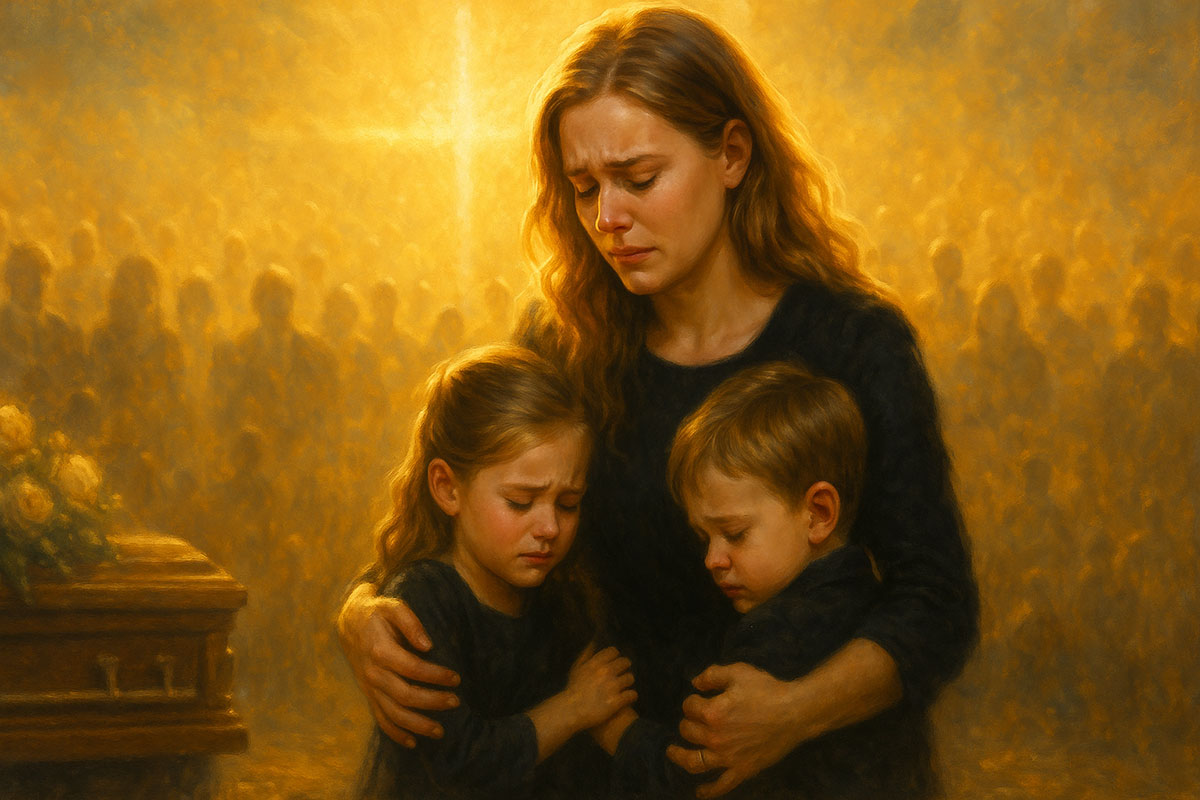
My wife wept. My children cried out for me. And even now, I feel their ache as a part of my eternal heart. Their suffering is not forgotten, not brushed aside. But even their tears became rivers of testimony.
People watched them—watched how they clung to faith, how they walked through grief without collapsing, how they turned pain into prayer. And thousands, perhaps millions, saw Christ reflected not only in my life but in the way my family bore my absence.
Grief became a pulpit. Loss became a sermon. My children, though robbed of years with me, will one day understand that their father’s mission did not end with his last breath—it exploded into eternity.
Scene 5: The Eternal Harvest
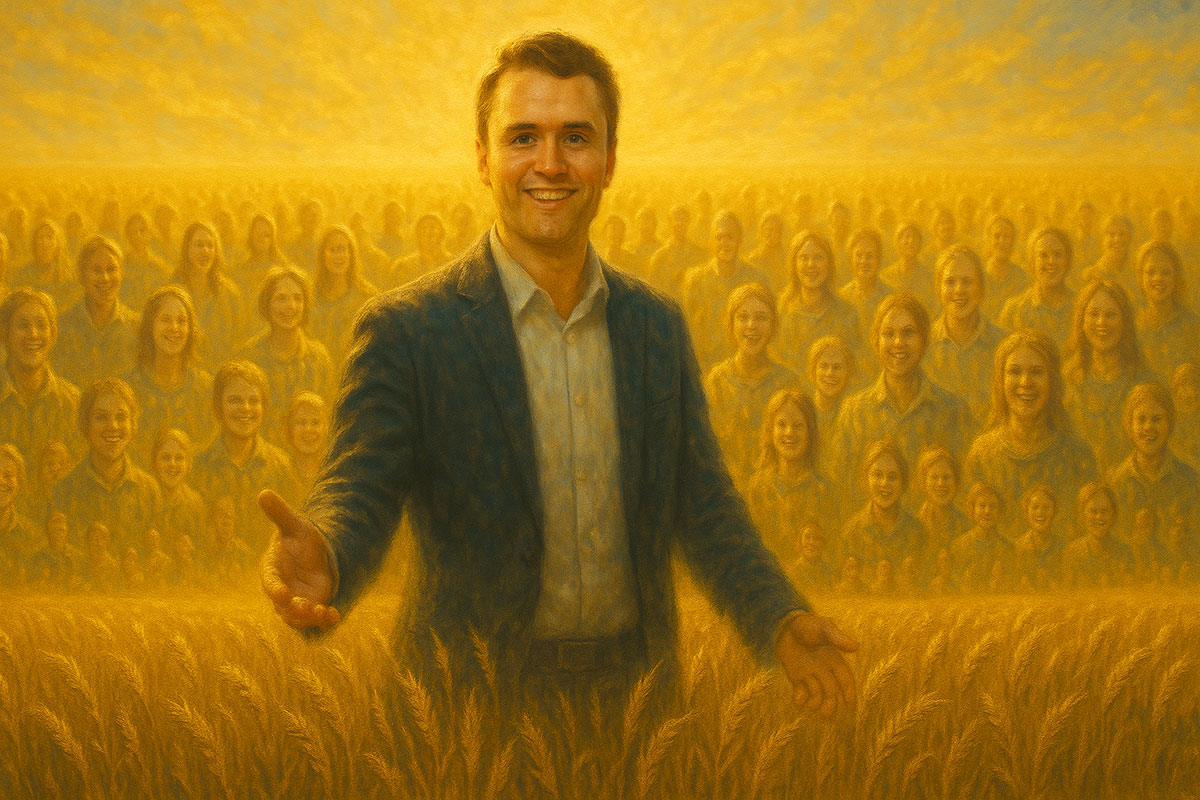
Now I stand in the spirit world, looking back with clarity. The vow I made before birth was fulfilled. I left at my prime, but I did not leave empty. My life and death together form a testimony that points only to Christ.
I see souls waking up. I see skeptics asking questions they never dared. I see lonely young men and women wondering about eternity because they heard of my death and felt a whisper inside: “There’s more to life than this world.”
Would I do it again? Even knowing the ache it caused my beloved wife, even knowing the tears of my children—I would say yes. Because the love of Christ is bigger than one family, one career, one earthly lifetime.
My death was not the end of my mission. It was the seal on my vow: that I would give everything—even life at its sweetest—so that others might find eternal life in Him.
Conclusion
Charlie Kirk:
Now, standing in eternity, I don’t regret what I agreed to. Yes, I miss the warmth of my family. Yes, I would have loved to watch my children grow. But I see the fruits of my sacrifice — questions asked, faith renewed, souls turning toward Christ. I did not lose my life; I offered it. And if my departure has led even one soul to salvation, then every tear was worth it.
Dolores Cannon:
From the soul’s perspective, this is not tragedy but fulfillment. Charlie’s “early exit” was part of the script he helped write before birth. His family’s grief, too, is woven into the plan, creating strength and testimony for others. In time, they may recognize that his passing carried purpose far beyond what the human mind can grasp. When we see life and death through eternity’s lens, even the hardest sacrifices shine as acts of love.
Short Bios:
Charlie Kirk
Charlie Kirk (1993–2025) was an American conservative activist, speaker, and author. He founded Turning Point USA in 2012, growing it into one of the most influential youth conservative organizations in the U.S. Known for his passionate defense of Christian values and free-market principles, Kirk became a leading voice for faith-driven politics. His unexpected death in his prime left behind a young family, sparking deep conversations about faith, sacrifice, and legacy.
Dolores Cannon
Dolores Cannon (1931–2014) was a pioneering hypnotherapist and author specializing in past-life regression and metaphysical teachings. Over nearly five decades, she developed her unique method of hypnosis, known as QHHT (Quantum Healing Hypnosis Technique), and wrote more than 20 books on reincarnation, soul contracts, extraterrestrial life, and pre-birth planning. Cannon’s work emphasized the soul’s eternal journey and the choices made before birth to foster growth and healing.
Leave a Reply