

Introduction by Yuval Noah Harari
When we first learned to tell stories, we became human.
Our myths united scattered tribes, inspired cooperation, and built civilizations. But in the last two decades, the most powerful storytelling machine in history—our digital network—has turned its gift inward, reshaping our perception of reality itself.
The angry business was not born from hatred. It was born from mathematics.
Engagement, in the language of algorithms, is the measure of human worth.
Clicks, comments, and shares became the heartbeat of the modern economy. Yet behind those simple actions hides an ancient reflex: the thrill of outrage, the rush of being right, the comfort of belonging to a tribe that must be defended.
Every tap of a finger, every flicker of emotion, feeds the machine.
And the machine learns.
It learns what makes you furious, what makes you afraid, and what will keep you scrolling long after you’ve stopped learning anything at all.
We have built a mirror that reflects not our higher nature, but our fears magnified and monetized.
It’s tempting to think this is the fault of a few corporations or a handful of engineers. But the truth runs deeper. The problem lies in the alignment between our biology and our technology.
Our nervous systems evolved to detect danger, not to process a thousand conflicts at once. Our minds were designed to live in small groups of cooperation and trust, not in a perpetual psychological battlefield of global proportions.
The algorithms of outrage exploit the most sacred element of human life: attention.
And attention is not infinite—it is the thread that connects consciousness itself. When that thread frays, society begins to forget what it means to be whole.
We stand at a threshold moment in history.
The tools that divide us could just as easily unite us—if we change what they are built to serve.
We must redefine “engagement” to mean understanding.
We must re-engineer “connection” to mean care.
And we must remember that truth, though quieter than anger, is the foundation upon which all progress rests.
The angry business has been profitable because it taps into something raw and primal. But the future will belong to those who design for wisdom, not reaction.
Imagine a world where technology nourishes empathy instead of amplifying rage—where algorithms are not mirrors of emotion, but instruments of growth.
It is possible. But it will require us to evolve as quickly as the tools we’ve built.
Our task is not to reject technology, but to reclaim it.
Not to silence anger, but to guide it toward healing.
For anger, when purified of manipulation, can become the spark of justice and transformation.
Every generation faces a defining question.
Ours is this:
“Will we remain slaves to our machines, or become conscious enough to redesign them in our image of love?”
If the angry business is the symptom of a species losing itself in noise, then empathy is the cure waiting to be remembered.
Let this be the moment we stop optimizing for attention—and start cultivating awareness.
For the future of humanity depends not on who yells the loudest, but on who listens the deepest.
(Note: This is an imaginary conversation, a creative exploration of an idea, and not a real speech or event.)
Topic 1 — The Algorithm of Outrage: How Profit Hijacked Emotion
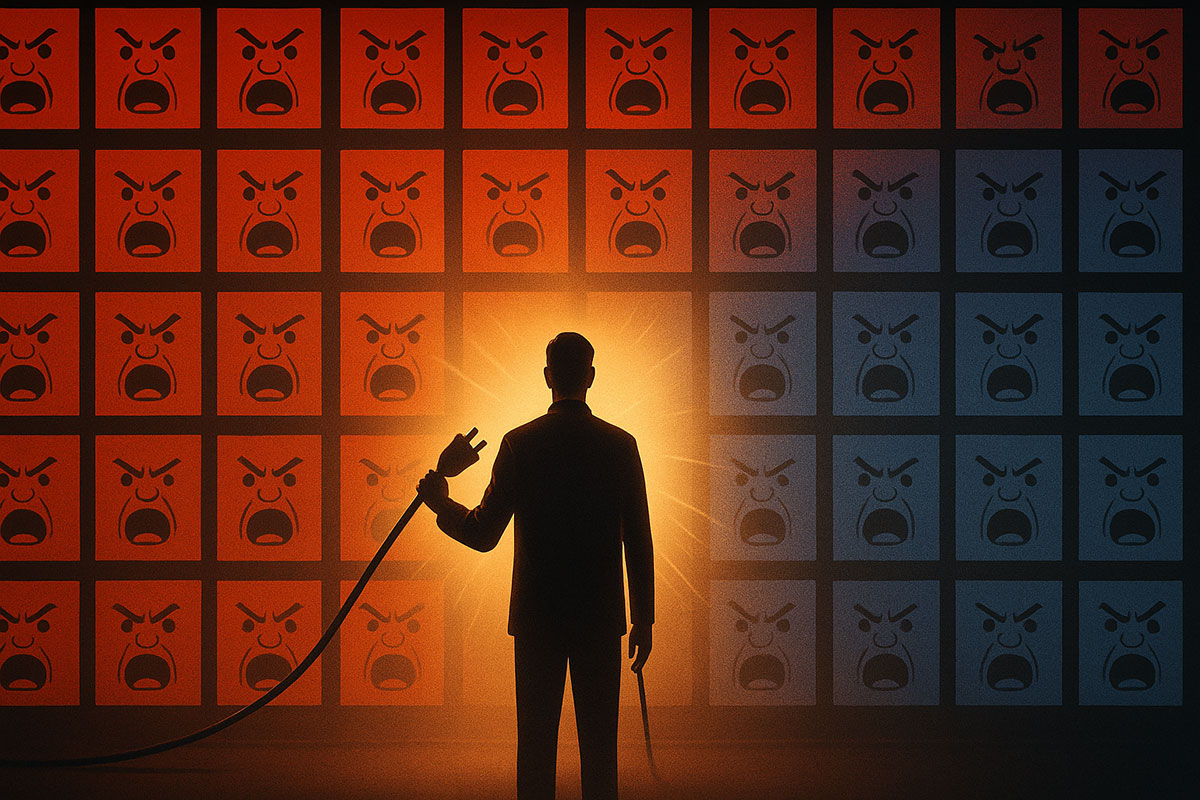
Moderator: Tristan Harris
Guests: Yuval Noah Harari, Shoshana Zuboff, Frances Haugen, Chamath Palihapitiya, Danah Boyd
Tristan Harris (opening)
When I helped design early persuasion systems at Google, I never imagined they’d become outrage factories. Every platform is now a behavioral laboratory, optimizing for what keeps you hooked — and anger happens to be the most “sticky” emotion.
Let’s start here: How did we reach a point where algorithms know exactly how to provoke us, and why did no one stop it?
Shoshana Zuboff
Because profit loves prediction.
In the early 2000s, data extraction was sold as personalization — “we’ll show you what you like.” But that data also revealed what triggers you. When engagement became the currency, the line between persuasion and manipulation dissolved. Companies realized they could predict — and eventually shape — our emotions.
The system didn’t set out to create anger; it discovered anger as a growth hack.
Chamath Palihapitiya
Exactly. When I was at Facebook, the metrics were brutally simple: more engagement, more revenue. Nobody said “let’s divide society”; we said, “let’s optimize for growth.” But anger travels faster than calm. The problem is, once the algorithm sees anger working, it keeps feeding it — it’s a self-fulfilling loop.
It’s like giving a child candy for screaming. Pretty soon, that’s all they know how to do.
Frances Haugen
The incentives were never aligned with truth or civic health. Inside Facebook, when someone proposed slowing virality or labeling emotional content, leadership balked — it risked revenue. I leaked documents because I realized we’d built something beyond our control.
Algorithms are only as moral as the metrics they serve. And right now, those metrics are blind to human harm.
Yuval Noah Harari
This is the first time in history that a few corporations possess the power to reshape mass emotion in real time. Propaganda used to require armies and radio towers. Now a few lines of code can ignite hatred or hope globally within hours.
What terrifies me is not the anger itself, but the automation of it. When machines learn how to press our tribal buttons faster than we can think — we lose the freedom to remain human.
Danah Boyd
And we must not forget the social layer. These systems don’t just manipulate; they amplify existing pain. Many young people I study aren’t angry because of algorithms — they’re angry through them. Their identity and self-worth are now entangled with engagement metrics. It’s not just an attention crisis. It’s an empathy crisis.
Tristan Harris
So if we know this, let me ask: What can actually reverse it? Can transparency or regulation truly fix an ecosystem built on outrage?
Frances Haugen
Transparency is necessary but not sufficient. We need algorithmic audits with enforcement power — external watchdogs who can test what these systems promote. Platforms should be legally required to measure harm the way automakers must test crash safety.
The public deserves dashboards that show why they’re seeing certain posts — not black boxes.
Chamath Palihapitiya
I’d add: taxation on engagement-driven ads. Imagine if every platform that monetized outrage had to pay a social harm fee, like a carbon tax. That alone would force business models to pivot toward healthier metrics.
You can’t ask companies to behave ethically if doing so makes them unprofitable.
Danah Boyd
But policy isn’t enough. We need design ethics. Algorithms shouldn’t just maximize clicks — they could optimize for diversity of viewpoint or user reflection. I’ve seen experiments where interfaces slow users down before reposting — simple friction can cool the flame.
The opposite of virality isn’t silence. It’s thoughtfulness.
Yuval Noah Harari
Still, regulation and design alone won’t solve the philosophical problem. Our species evolved to respond to threats faster than nuance. Algorithms didn’t invent that; they exploited it.
The deeper question is: can civilization train its emotional reflexes as fast as it trains its technology? Because without spiritual maturity, every reform is temporary.
Shoshana Zuboff
And that’s why surveillance capitalism must end, not just reform. We can’t have democracy when the human experience itself is being mined as a commodity. Transparency, audits — they’re patchwork unless we restore the moral boundary that says: the inner life is not for sale.
Tristan Harris
Let’s go even deeper then. If anger is profitable because it’s human, not just digital — what does it take to build a culture immune to outrage manipulation?
Danah Boyd
Start with empathy education. Teach kids that the online world is a mirror that distorts. Emotional literacy should be as fundamental as math. The more we understand our triggers, the less others can weaponize them.
Yuval Noah Harari
We must also reclaim time for contemplation. Outrage thrives when people don’t pause. Meditation, art, even boredom — these are acts of resistance now. The attention war is won by whoever controls your silence.
Frances Haugen
Civic renewal matters too. When people feel powerless, anger becomes identity. Strengthen local institutions, transparency in governance, and trust networks. The antidote to outrage is participation.
Shoshana Zuboff
And we must reintroduce accountability to data systems. Every emotional ripple these platforms cause should trace back to a human decision-maker. We need corporate liability for psychological harm, not just privacy breaches.
Chamath Palihapitiya
But none of this happens until investors change their calculus. Wall Street rewards addiction metrics. If institutional money starts valuing well-being indices — like customer trust or misinformation reduction — CEOs will follow. It’s capitalism that must evolve.
Tristan Harris (closing)
So perhaps the way out isn’t to suppress anger, but to transform it — to redirect it toward accountability, truth, and compassion.
The algorithm of outrage was built by humans; it can be rebuilt by them too.
The question is whether we’re brave enough to slow down long enough to remember what being human feels like.
Topic 2 — The Economics of Division: Rewiring Incentives for Truth

(from the series “Ending the Angry Business: Reclaiming Our Shared Mind”)
Moderator: Mariana Mazzucato
Guests: Tim O’Reilly, Ramesh Srinivasan, Jonathan Haidt, Maria Ressa, Roger McNamee
(53r1 format — five speakers, three deep questions, randomized order per question, one moderator, ~1000 words)
Mariana Mazzucato (opening)
Every economic system reveals what a society values. For the past two decades, our media economy has valued attention over accuracy, engagement over empathy, and profit over public health. The outcome is predictable: outrage became an industry.
Let’s begin here — why has truth become economically uncompetitive in a market built to reward division?
Maria Ressa
Because lies sell faster. Disinformation is frictionless, emotional, and cheap. Truth, by contrast, demands verification — which costs time and money. I’ve spent years watching trolls weaponize outrage for clicks and politics. When the metrics reward anger, integrity becomes a liability.
The tragedy is that newsrooms now chase the very incentives that destroy them.
Jonathan Haidt
And we must remember — this isn’t just an economic distortion, it’s a psychological one. Anger travels because it feeds our tribal brain. The algorithms didn’t invent tribalism; they monetized it.
In the 20th century, editors filtered emotion through norms; in the 21st, those filters were replaced by engagement metrics. What was once public discourse became a global Skinner box.
Tim O’Reilly
That’s exactly right. We’re still using a digital infrastructure designed for advertising — not for democracy. Every click and view has a price tag attached, so outrage becomes the shortcut to revenue.
But it doesn’t have to be this way. The architecture of capitalism is adjustable. If we can internalize pollution in economics, we can internalize informational pollution too. Imagine “truth dividends” — companies rewarded for verified accuracy and depth.
Roger McNamee
I agree, though I’d add this: the crisis isn’t just in tech, it’s in finance. Venture capital created this monster. We poured billions into models that scale engagement regardless of social cost.
If we funded “slow growth” companies — those measuring impact instead of virality — we’d see a new media class emerge. But we don’t reward patience in Silicon Valley; we reward exponential chaos.
Ramesh Srinivasan
And at the global level, this chaos mirrors inequality. The Global South often becomes the testing ground for manipulation — low regulation, high vulnerability. The angry business is exported as easily as fast fashion.
So yes, it’s about economics, but also about colonial patterns repeating in digital form: emotional extraction instead of resource extraction.
Mariana Mazzucato
If that’s the diagnosis, then let’s talk treatment. How do we rewire incentives so that truth, context, and human well-being become profitable again?
Tim O’Reilly
Start with metrics reform. What gets measured gets managed. Replace “engagement time” with “enlightenment time.” Platforms could measure how well-informed users become — not how often they react.
This might sound utopian, but we already do it in education and health care. Tech just needs the courage to adopt richer metrics.
Maria Ressa
And governments can push that shift. Mandate algorithmic transparency, but go further — tax digital advertising the way we tax carbon. Those funds could support independent journalism, local media, and civic digital literacy programs.
Democracy is a public good. It can’t survive on an ad model that profits from its decay.
Roger McNamee
We also need liability reform. Platforms currently enjoy near-total immunity under laws like Section 230. If they knowingly amplify harmful content for profit, they should bear financial responsibility.
When truth costs money and lies make money, no amount of moral preaching will fix it — only law will.
Jonathan Haidt
I’d add a moral-economic layer: companies should publish an annual “Integrity Report” the same way they issue sustainability reports. Investors increasingly care about ESG (environmental, social, governance). Add an I — Integrity — and rate platforms on how well they reduce polarization.
Capital markets respond to reputation when metrics exist.
Ramesh Srinivasan
And equity is key. Empower community-owned digital ecosystems — cooperatives that reinvest ad revenue locally. When people own their media, they care more about its tone and truth.
We need to decentralize both the wealth and the narrative. The antidote to angry capitalism is participatory capitalism.
Mariana Mazzucato
Excellent — but let’s explore the cultural dimension. Even with better incentives, can societies unlearn outrage when it’s become entertainment?
Maria Ressa
We have to rebuild trust one human at a time. Outrage is contagious, but so is integrity. Every journalist, educator, or creator who chooses verification over virality helps reset norms.
It’s slow — but so was abolishing slavery or expanding civil rights. The moral arc of information can bend toward truth, if we hold it long enough.
Jonathan Haidt
And we must remind ourselves that anger isn’t the enemy — manipulation is. Righteous anger has fueled reform throughout history. The problem is engineered anger — the constant stimulation that burns out empathy.
We need cultural spaces where anger can transmute into understanding, not clicks.
Roger McNamee
True, and business can play a role. Investors can establish “Trust Funds” — literal ones — that back ventures building healthier discourse. Capital doesn’t have to be cynical; it can be conscious.
Tim O’Reilly
And let’s remember that optimism itself is an asset. If we tell founders that ethical design is unprofitable, it becomes a self-fulfilling prophecy. We must flip the narrative: integrity scales.
Ramesh Srinivasan
But the public must demand it. Consumers shaped green capitalism by boycotting polluters. Now they can shape truth capitalism by rejecting disinformation platforms.
Ethical markets emerge when citizens act like owners, not users.
Mariana Mazzucato (closing)
We began with a paradox: truth is too slow for the market. But perhaps the future belongs to those who slow the market down.
If the last century was about speed, this one must be about stability — economic systems that prize coherence over chaos.
When knowledge becomes more profitable than outrage, humanity wins back its balance sheet.
Topic 3 — The Psychology of Outrage: Healing the Addicted Mind
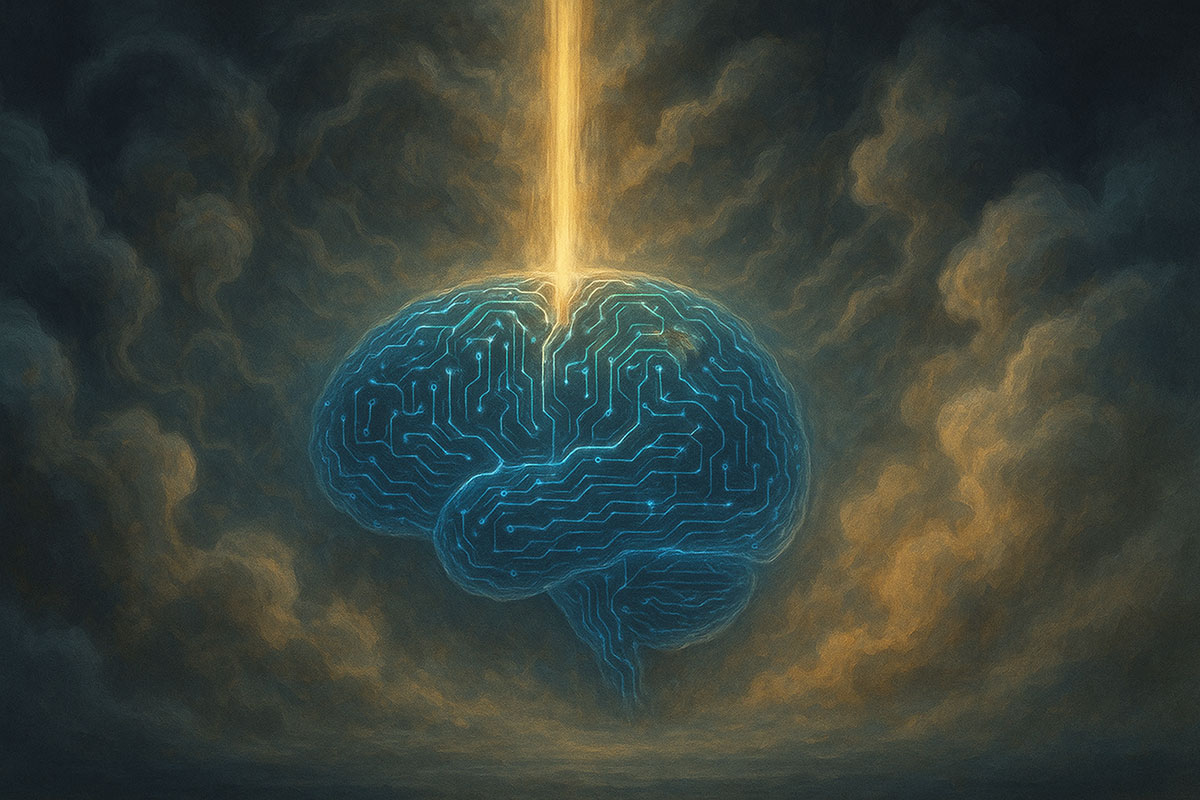
Moderator: Brené Brown
Guests: Gabor Maté, Jonathan Haidt, Susan David, Johann Hari, Vivek Murthy
Brené Brown (opening)
When we talk about the “angry business,” we’re not just describing media economics — we’re describing an emotional addiction. Outrage has become a drug: it numbs vulnerability, floods us with certainty, and gives us a false sense of control. But every high has a crash.
Let’s begin here: what is actually happening to our minds and hearts when we live in constant digital anger?
Gabor Maté
Anger itself is not the disease — it’s the symptom. It’s the body’s natural response to powerlessness. But when our culture isolates us and floods us with threat signals, that anger never resolves. Instead of using it to protect boundaries, we use it to protect our egos.
Addiction is the pursuit of relief from pain. Outrage just happens to be the most socially accepted drug of our time.
Susan David
Yes, and from an emotional-agility standpoint, outrage becomes a shortcut emotion. It spares us from complexity. When you feel outraged, you don’t have to feel grief, fear, or shame — all of which require reflection.
Digital platforms exploit this avoidance loop. They offer anger as an identity, not just an emotion. “I’m right; therefore, I exist.”
Vivek Murthy
And the health implications are staggering. Chronic anger elevates inflammation, damages the heart, and shortens lifespan. But even more insidious is loneliness — outrage isolates. It gives the illusion of connection while deepening alienation.
We’re witnessing a public health crisis of emotional dysregulation at scale.
Jonathan Haidt
From a moral-psychology perspective, outrage functions like tribal adrenaline. It sharpens group cohesion at the cost of collective reasoning. Every “us-versus-them” post strengthens our in-group bond while making the other side look monstrous.
The tragedy is that the brain mistakes this for moral clarity. But what it’s really feeling is fear disguised as virtue.
Johann Hari
And fear is profitable. It’s the perfect business model: sell people disconnection, then sell them belonging through outrage.
We’ve designed digital cities with no parks, no quiet corners — only megaphones. The result? We’ve lost the capacity to listen without reacting.
Brené Brown
That takes us straight to the next question: how do we detox from outrage when it’s become woven into our identity — our politics, our friendships, even our sense of self-worth?
Susan David
The first step is radical acceptance — not of the anger itself, but of the emotions underneath. If you feel rage about injustice, ask: “What value is being violated?” That question turns raw emotion into purposeful energy.
Emotionally agile people don’t suppress anger — they repurpose it. They move from reaction to reflection.
Johann Hari
Detox also requires redesigning our environment. Addiction recovery fails when the environment stays the same. If every digital platform is a slot machine, you can’t rely on willpower alone.
We need “attention rehab centers” in our daily lives — apps and spaces designed for reflection, not reaction.
Gabor Maté
And we must address trauma. Outrage sticks when pain has nowhere to go. Healing isn’t found in arguing with strangers — it’s found in reconnecting with the parts of ourselves that were silenced.
Every angry post is a cry for recognition: “Do you see my wound?” Healing begins when someone finally answers, “Yes.”
Jonathan Haidt
I’d add that moral humility is a detox tool. The most freeing sentence in the English language might be: “I could be wrong.” It resets the nervous system.
Outrage thrives on certainty; curiosity dissolves it. Societies can’t heal without psychological flexibility.
Vivek Murthy
And at the collective level, we need social rehydration. Programs that restore community connection — from volunteering to shared rituals — refill the emotional reservoirs that outrage drains.
We can’t fix digital loneliness without rebuilding analog belonging.
Brené Brown
Beautifully said. Let’s move to our final question: what would a psychologically healthy information ecosystem look like? One that nurtures empathy instead of exploiting anger?
Johann Hari
It would slow us down. The healthiest platforms would value depth of attention over duration. Imagine social media where your post can’t go viral unless it’s verified, contextualized, and discussed by people from different perspectives.
The system would reward calm discourse like Spotify rewards playlists — through taste, not volume.
Susan David
And it would normalize emotional transparency. Algorithms could be redesigned to ask reflective prompts: “Do you want to post this now, or revisit later?” Simple micro-pauses can create macro-impact.
Emotionally intelligent design can teach digital empathy better than a thousand lectures.
Jonathan Haidt
It would also balance moral foundations. Right now, our feeds exaggerate moral outrage from one side and suppress nuance from the other.
Platforms should intentionally expose users to diverse moral perspectives — not to inflame, but to humanize. That’s how empathy grows.
Gabor Maté
But no technology can heal what culture refuses to feel. A healthy ecosystem starts with leaders modeling vulnerability. When public figures say, “I was wrong,” they invite the collective nervous system to exhale.
We heal when truth becomes more rewarding than performance.
Vivek Murthy
And we must remember: healing doesn’t mean harmony all the time. It means safe conflict. Debate grounded in respect and curiosity is the emotional vaccine against division.
Our goal isn’t to end disagreement — it’s to end dehumanization.
Brené Brown (closing)
Outrage addiction stole our capacity for wonder — and wonder is where empathy begins.
The cure isn’t silence or surrender; it’s courage. The courage to feel instead of react, to listen instead of attack, to build instead of burn.
When we replace performative anger with honest connection, we don’t just heal individuals — we heal the emotional fabric of the world.
Topic 4 — Education & Culture: Teaching the Next Generation to Think, Not React
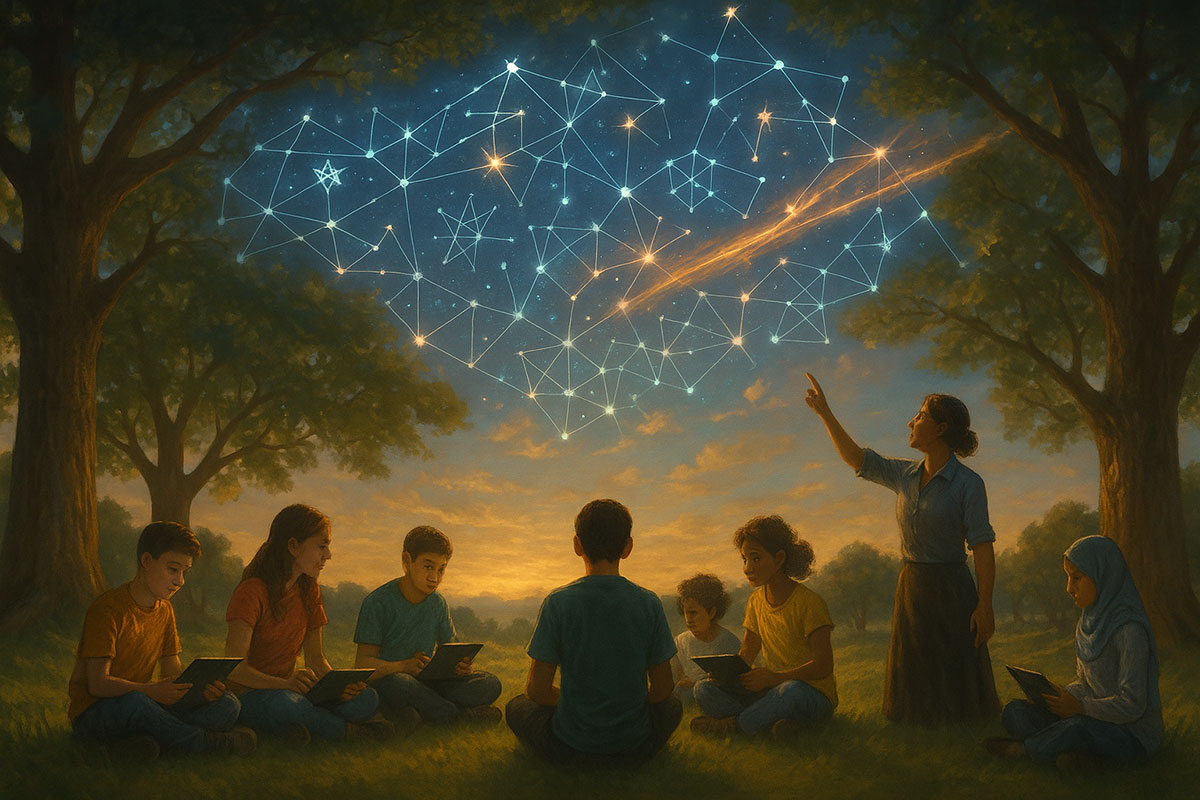
Moderator: Sir Ken Robinson
Guests: Esther Wojcicki, Neil Postman (represented through legacy reflections), Malala Yousafzai, Timnit Gebru, Hank Green
Sir Ken Robinson (opening)
Our education systems were designed for the industrial age — standardized, mechanical, and risk-averse. Yet we’ve entered the emotional information age, where every student carries a global loudspeaker in their pocket.
The question is no longer how to memorize facts but how to navigate feelings.
So let’s start here: why have our schools failed to prepare young people for an age of digital outrage and emotional manipulation?
Esther Wojcicki
Because we taught compliance, not critical thinking. Students learn to fear mistakes instead of exploring them. When social media came along, they were hungry for approval and untrained in discernment.
We should have taught them how algorithms think — and how to think for themselves in response.
Timnit Gebru
Exactly. Most curricula ignore the ethical dimension of technology. Kids grow up fluent in devices but illiterate in data. They know how to post, not how to question the code.
If education doesn’t teach agency in the digital world, someone else — usually a corporation — will shape it for them.
Malala Yousafzai
And let’s remember: this is a global problem. In many parts of the world, young people still fight for the right to basic education, not just digital literacy.
When education becomes a privilege, disinformation becomes a weapon. Teaching critical thinking is a form of freedom.
Neil Postman (legacy reflection)
If I may speak from my old warnings: we amused ourselves to death.
When entertainment becomes the dominant form of public discourse, truth must adapt to keep up — and it can’t.
The classroom was supposed to be the counterbalance to television; now it must become the antidote to TikTok.
Hank Green
And we can’t demonize technology; it’s also the greatest storytelling tool ever made. But right now, kids learn from content, not about content.
If we teach media creation alongside media critique, they’ll become architects, not addicts, of the digital world.
Sir Ken Robinson
Beautiful points. So let’s go deeper: what would an education system look like if it were built for emotional intelligence and digital discernment rather than test scores?
Esther Wojcicki
Start with trust. Students should design their own learning projects using the TRICK model — trust, respect, independence, collaboration, kindness.
These principles build the self-regulation that social media hijacks. When learners feel trusted, they stop chasing validation from strangers.
Malala Yousafzai
And we must prioritize empathy as much as literacy. A truly modern education system should teach civic dialogue — how to disagree without hating.
If young people learn to argue ideas rather than identities, they become peacebuilders, not content soldiers.
Hank Green
We could also gamify curiosity instead of competition. Imagine if algorithms in classrooms rewarded open questions, not correct answers.
A “curiosity score” could change the entire emotional tone of learning — from anxiety to wonder.
Timnit Gebru
And we need ethical computing courses starting in middle school. Teach students to trace the impact of a single click — whose data it uses, whose labor it depends on, whose bias it might amplify.
Moral reasoning around technology should be as foundational as multiplication tables.
Neil Postman (legacy reflection)
I’d argue that schools must restore context — the slow digestion of meaning. The screen fragments knowledge into soundbites; education must reassemble it into wisdom.
Reading long texts, debating in person, building attention span — these are radical acts now.
Sir Ken Robinson
So if that’s the vision, here’s our final question: how do we shift culture itself — parents, teachers, media — to support this kind of education in a world addicted to distraction?
Hank Green
By modeling it. If adults constantly doom-scroll, kids won’t believe a word we say about digital balance.
We need “family attention contracts,” where households set mutual boundaries — not authoritarian rules, but shared respect for presence.
Malala Yousafzai
And by amplifying youth voices. Young people must be co-creators of their education, not passive recipients. Give them platforms to lead digital literacy movements — peer-to-peer change spreads faster than policy.
Esther Wojcicki
Teachers, too, need re-education. Many were trained for obedience-based classrooms. Professional development should now focus on emotional coaching and media literacy.
A teacher who understands algorithmic bias can inoculate a generation.
Timnit Gebru
We also need accountability from tech companies. They profit from classroom chaos — from attention fragmentation. Governments should require them to invest in education for focus and critical awareness.
If tech helped break attention, it should help rebuild it.
Neil Postman (legacy reflection)
And culture must remember that education is not entertainment. True learning demands discomfort — the kind algorithms avoid.
Until we teach children to value silence as much as stimulus, we will remain puppets of the feed.
Sir Ken Robinson (closing)
Education should be the art of awakening, not the science of standardization.
The angry business thrives where curiosity dies — so our job is to make curiosity contagious again.
If we raise a generation that knows how to pause, question, and connect, the economy of outrage will finally run out of customers.
Topic 5 — The Great Recalibration: Designing a Humane Digital Future
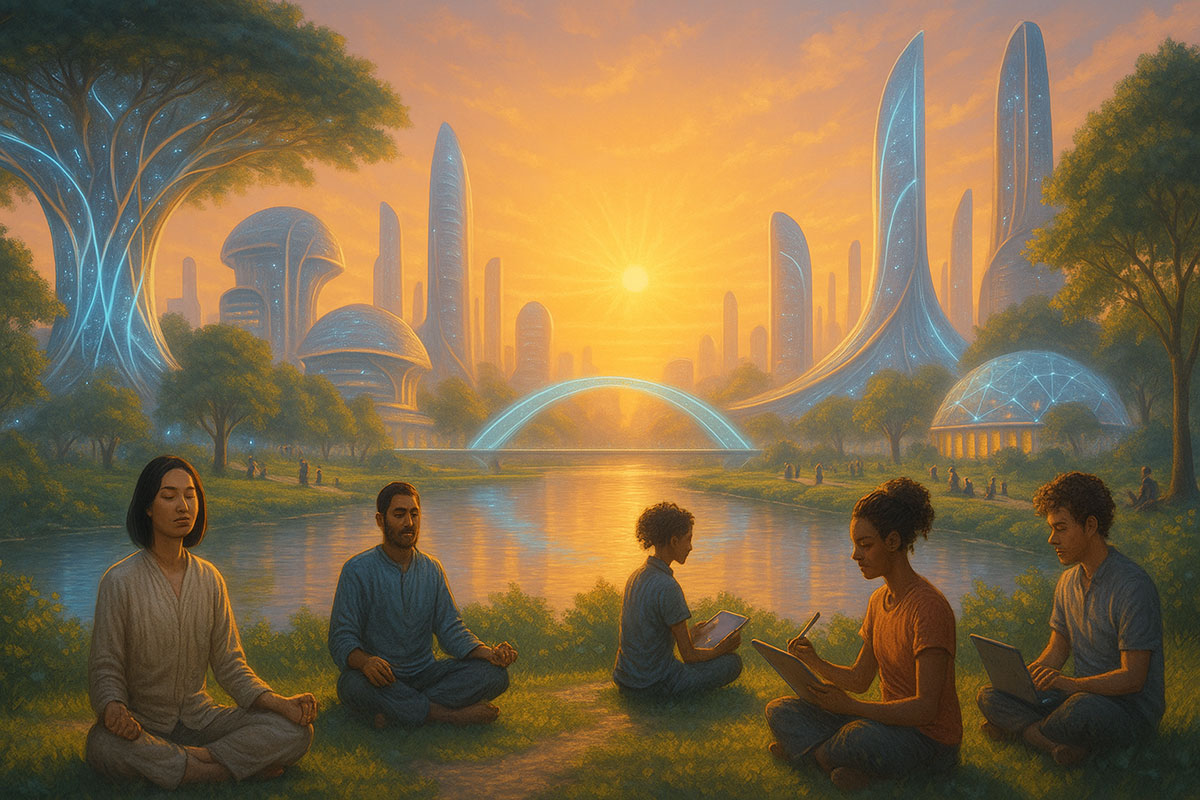
Moderator: Nick Sasaki
Guests: Satya Nadella, Tristan Harris, Jane Goodall, Reid Hoffman, Dalai Lama
Nick Sasaki (opening)
We’ve mapped the anatomy of outrage — algorithms, economics, psychology, education. Now comes the most human question of all: what kind of future do we actually want?
If technology is an amplifier of human intention, then the real issue isn’t artificial intelligence — it’s artificial purpose.
So let’s begin here: how can we design technology that magnifies empathy instead of anger, connection instead of chaos?
Tristan Harris
Design is destiny. Every app, every notification, every metric embeds a philosophy of what matters. The problem is, most of our digital systems were built by engineers optimizing for engagement, not ethics.
We need a “Hippocratic oath” for technologists — design nothing that diminishes human dignity.
Satya Nadella
I agree. At Microsoft, we talk about “tech intensity with human empathy.” The future of technology isn’t faster processors; it’s deeper purpose.
AI can be a mirror for our values — or a magnifier of our vices. That’s why governance must start not from code, but from conscience.
Jane Goodall
When I watch humanity from the forests, I see both hope and heartbreak. We built machines to connect, yet we’ve never felt more divided.
But empathy is not extinct. I see it in young people — they just need role models in leadership and design who show that compassion can coexist with innovation.
Reid Hoffman
And the incentives can be changed. Platforms could evolve from “social networks” into “trust networks.” Instead of rewarding popularity, we could reward reliability — truth signals, civil behavior, verified expertise.
Reputation systems can heal what engagement metrics broke.
Dalai Lama
Technology is a tool. It has no heart — but those who use it do.
If we cultivate inner peace, our machines will reflect it. The next revolution is not digital; it is spiritual. Compassion is the new intelligence.
Nick Sasaki
That brings us naturally to the next question: what kind of governance or cooperation would ensure that humane technology becomes the norm, not the niche?
Satya Nadella
We need a new social contract between technology and society. Governments must collaborate with companies and communities, setting transparent standards for data ethics, privacy, and accountability.
But regulation alone isn’t enough — leadership must embrace empathy as a metric of success.
Reid Hoffman
Exactly. The innovation ecosystem can align with ethics if investors demand it. Imagine venture capital that measures success by trust index — how a product impacts collective well-being.
When money respects morality, the market evolves.
Tristan Harris
And we need a design movement — a global alliance of engineers, psychologists, and artists creating “humane defaults.”
For instance, platforms could measure “time well spent” rather than time consumed. We can reprogram capitalism to reward depth, not addiction.
Jane Goodall
We must also think intergenerationally. Decisions made by coders today will shape the consciousness of children tomorrow.
We need elders — not just technologists — in the room. Wisdom must guide innovation.
Dalai Lama
In governance, inner discipline is as vital as outer law. No policy can replace mindfulness. When leaders learn to still their minds, compassion naturally informs their choices.
True governance is not control, but care.
Nick Sasaki
Let’s explore one final question — perhaps the most profound: if we succeed in redesigning our digital civilization, what would a humane future actually feel like?
Jane Goodall
It would feel quiet again.
Not silent — but peaceful. Children would grow up with awe instead of anxiety. We’d remember that communication is sacred, not transactional. The internet could become an ecosystem as alive and self-balancing as the forest.
Reid Hoffman
It would feel collaborative.
Technology would amplify the best of us — connecting problem solvers across borders. Online spaces would resemble open universities, not shouting arenas. Data would serve wisdom, not war.
Tristan Harris
It would feel intentional.
Every ping, scroll, or feed would exist for a reason aligned with human flourishing. Tech would fade into the background — like electricity — empowering, not overwhelming.
Satya Nadella
It would feel equitable.
Access to digital opportunity wouldn’t depend on geography or wealth. Tools would uplift humanity’s collective IQ and EQ simultaneously.
We’d measure progress not by GDP, but by GHP — Gross Human Potential.
Dalai Lama
It would feel loving.
When technology awakens the heart, competition turns to cooperation. People will no longer say, “I follow the algorithm.” They will say, “I follow compassion.”
The real future is not artificial intelligence, but enlightened intelligence.
Nick Sasaki (closing)
We began this journey asking how anger became an industry. We end it knowing the cure was never technological — it was human all along.
Outrage was the shadow of disconnection; empathy is the light that dissolves it.
If we design from that light — from dignity, wisdom, and love — the digital world will finally mirror the best in us, not the worst.
And maybe, just maybe, our grandchildren will look back and say, that was when humanity remembered itself.
Final Thoughts by Jane Goodall

When I walk through a forest, I am reminded that silence is never empty.
It hums with connection—the unseen mycelium beneath the soil, the murmurs of roots, the quiet breath of leaves.
This is what harmony sounds like when no one is trying to win.
The digital world we have built is another kind of forest, but one where the trees have forgotten how to listen.
Our devices connect us instantly, but often without meaning.
Our screens glow, but our hearts dim.
We scroll past each other as if the lives on the other side of the glass were not real.
Yet I do not despair.
Because I have seen change happen when people remember that compassion is their natural state.
We are not born to hate. We are taught to.
And what is taught can be untaught.
The angry business is only as strong as the loneliness that fuels it.
When people feel unseen, unheard, or powerless, they turn to outrage to prove they exist.
But when we give them belonging, when we listen, the need for rage dissolves like fog in the morning light.
Each of us has a role in healing the world’s nervous system.
Every act of kindness—online or off—is a neural spark in the mind of humanity.
Each pause before replying, each choice to understand instead of attack, sends a quiet signal: we are still capable of love.
Technology, like nature, can regenerate if given the right conditions.
We can plant seeds of empathy into its design, create digital spaces that mirror the balance of an ecosystem rather than the chaos of a marketplace.
We can build algorithms that nourish—not exploit—the spirit.
I dream of a world where the hum of connection feels more like birdsong than static.
Where we celebrate listening as much as speaking.
Where outrage is replaced by wonder.
It begins with us.
It begins with how we speak to one another, how we teach our children to pause before posting, how we model calm in a storm of noise.
It begins with remembering that the other person, even the one who angers us most, carries the same fragile longing to be loved.
In the end, peace will not come from a new app, law, or policy.
It will come from millions of small decisions made in moments of choice.
Moments when we decide to respond with compassion rather than contempt.
And so I say to you:
If you wish to change the world, start by softening your heart.
If you wish to heal the digital forest, tend first to your own roots.
The earth has been patient with us.
Let us learn to be patient—with one another, and with ourselves.
For one day, our technology will evolve beyond our control again.
But if love is at its core, it will not matter.
Because love, once coded into the heart of humanity, never goes offline.
Short Bios:
Yuval Noah Harari
Historian and author of Sapiens, Homo Deus, and 21 Lessons for the 21st Century, Harari explores how data, storytelling, and technology shape human consciousness and the future of civilization.
Shoshana Zuboff
Professor emerita at Harvard Business School and author of The Age of Surveillance Capitalism, Zuboff exposes how digital platforms monetize personal experience and redefine power in the information age.
Frances Haugen
Former Facebook data scientist turned whistleblower, Haugen revealed the company’s internal research on the harm caused by engagement algorithms, advocating for greater transparency and ethical tech regulation.
Chamath Palihapitiya
Venture capitalist and early Facebook executive, Palihapitiya now critiques social media’s emotional manipulation and calls for more humane, long-term investment principles in the tech industry.
Danah Boyd
Researcher and founder of Data & Society, Boyd examines the intersection of youth culture, social media, and technology’s social impact, focusing on digital ethics and information equity.
Mariana Mazzucato
Economist and professor at University College London, Mazzucato studies innovation, capitalism, and the role of public policy in creating fair, purpose-driven economies.
Tim O’Reilly
Founder of O’Reilly Media and early advocate for the open-source movement, O’Reilly promotes ethical innovation and reimagining capitalism through data transparency and civic-minded design.
Ramesh Srinivasan
UCLA professor and author of Beyond the Valley, Srinivasan focuses on how technology impacts democracy, cultural identity, and global justice in the digital economy.
Jonathan Haidt
Social psychologist and author of The Righteous Mind, Haidt investigates moral psychology, political division, and how social media amplifies outrage and weakens democratic discourse.
Maria Ressa
Nobel Peace Prize-winning journalist and CEO of Rappler, Ressa fights misinformation and authoritarianism, championing independent journalism and truth in the digital age.
Roger McNamee
Early investor in Facebook and mentor to Mark Zuckerberg, McNamee later became a leading critic of Big Tech, authoring Zucked and promoting tech accountability.
Brené Brown
Research professor at the University of Houston, Brown is known for her pioneering work on vulnerability, shame, and courage, encouraging emotional honesty as a cultural force for connection.
Gabor Maté
Physician and author specializing in trauma and addiction, Maté explores how emotional pain manifests in society and the need for compassion in healing individual and collective suffering.
Susan David
Harvard psychologist and author of Emotional Agility, David studies how people can manage emotions with honesty and flexibility to foster resilience and authentic living.
Johann Hari
British journalist and author of Stolen Focus, Hari investigates the global attention crisis, addiction, and the need to reconnect with meaning in a distracted age.
Vivek Murthy
U.S. Surgeon General and physician, Murthy advocates for mental health, empathy, and human connection as the foundations of a healthier, less polarized society.
Sir Ken Robinson
Late British educator and author of The Element, Robinson inspired a global movement for creativity in education and championed personalized, human-centered learning.
Esther Wojcicki
Educator, journalist, and author of How to Raise Successful People, Wojcicki developed the TRICK framework—Trust, Respect, Independence, Collaboration, and Kindness—to empower students.
Neil Postman
Media theorist and author of Amusing Ourselves to Death, Postman warned of entertainment’s impact on public discourse, emphasizing education as society’s moral compass.
Malala Yousafzai
Nobel Peace Prize laureate and education activist, Malala advocates for girls’ right to learn and promotes peace through knowledge and empowerment worldwide.
Timnit Gebru
Computer scientist and ethical AI researcher, Gebru co-founded Black in AI and campaigns for transparency and fairness in artificial intelligence systems.
Hank Green
Science communicator, author, and co-founder of Crash Course and VidCon, Green uses digital media to make education accessible, inspiring curiosity and community.
Satya Nadella
CEO of Microsoft, Nadella emphasizes empathy-driven leadership and responsible innovation, integrating ethics into technology’s role in global progress.
Tristan Harris
Co-founder of the Center for Humane Technology and former Google ethicist, Harris leads efforts to align digital design with human values and collective well-being.
Jane Goodall
Primatologist, environmentalist, and UN Messenger of Peace, Goodall’s lifelong work reveals humanity’s interconnectedness with nature and calls for compassionate stewardship of the planet.
Reid Hoffman
Entrepreneur, LinkedIn co-founder, and venture capitalist, Hoffman champions ethical tech entrepreneurship and “conscious capitalism” that balances innovation with integrity.
Dalai Lama
Spiritual leader of Tibetan Buddhism, the Dalai Lama promotes universal compassion, interfaith harmony, and the union of wisdom and technology for human flourishing.
Nick Sasaki
Nick Sasaki is the creator of Imaginary Talks, a groundbreaking platform that brings together historical, spiritual, and contemporary voices to explore humanity’s next evolution of consciousness. Blending storytelling, philosophy, and social insight, his dialogues bridge worlds—inviting readers to imagine solutions to modern crises through empathy, creativity, and collective wisdom. With a background in digital innovation and two decades of experience in marketing and storytelling, Sasaki’s mission is to use imagination as a tool for healing, connection, and global transformation.
Leave a Reply