
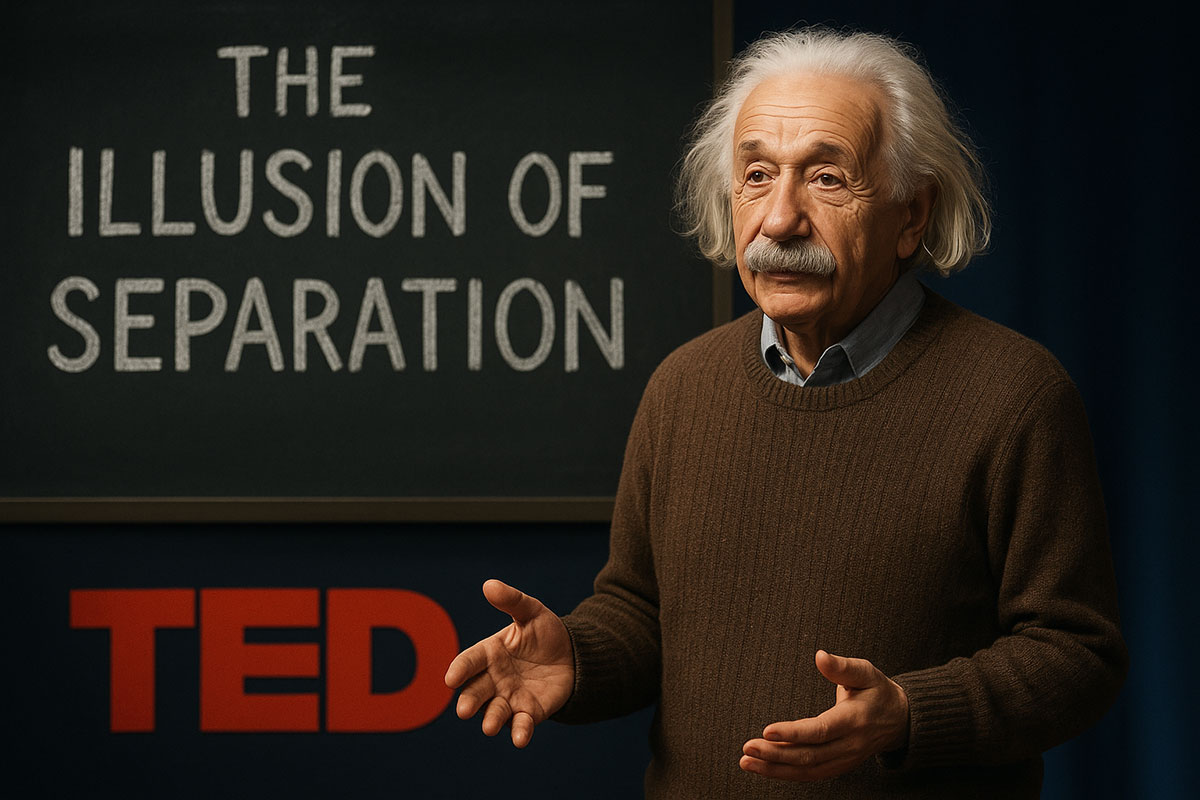
(Spotlight. Neil walks to center stage with quiet reverence. He speaks with calm authority.)
Neil deGrasse Tyson:
When we think of Albert Einstein, we picture equations. Gravity. Light. The speed limit of the universe.
But what we forget is that Einstein didn’t just change how we think about time…
He changed how we think about each other.
He once said,
“A human being is part of a whole called by us ‘Universe’—but he experiences himself as something separated… a kind of optical delusion of consciousness.”
Today, in a world of algorithms, conflict, and technological speed, that illusion of separation is stronger than ever.
But imagine if Einstein could return—not to lecture, but to reflect. Not to teach physics, but to offer perspective on what truly connects us.
Tonight isn’t about science alone.
It’s about being human in a divided world.
Please welcome… the mind, the heart, and the soul of Albert Einstein.
(Note: This is an imaginary conversation, a creative exploration of an idea, and not a real speech or event.)

Why Do We Feel So Alone?
Albert Einstein:
I am often remembered for a single equation:
E = mc²
But today, I will not speak to you of mass, or energy, or the speed of light.
Instead, I ask a question:
Why do we feel so alone?
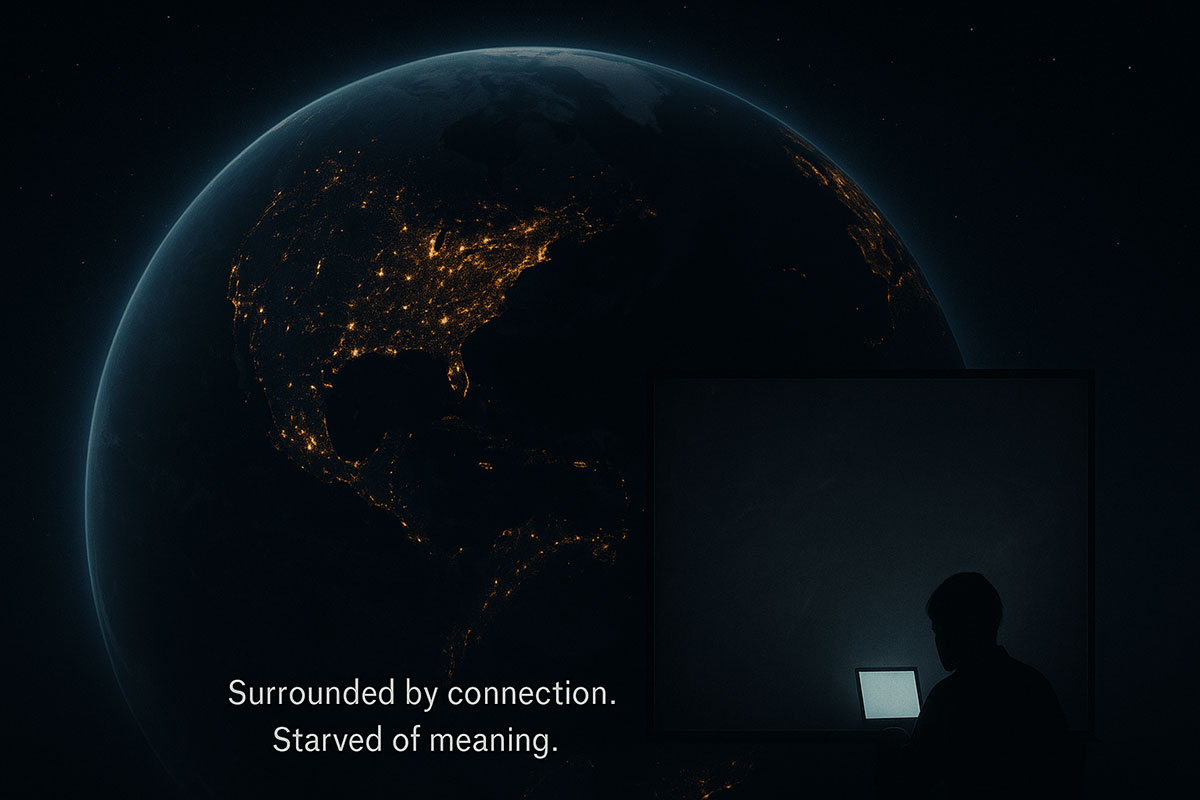
We live in a time when you can send your voice across oceans, your thoughts across networks, and your face across the sky.
And yet… perhaps you have never felt more disconnected.
You are surrounded by information, yet starved for meaning.
You are connected to thousands, but feel intimate with none.
You know everything, except each other.
A Boy in the Window
Let me tell you something you will not find in physics textbooks.
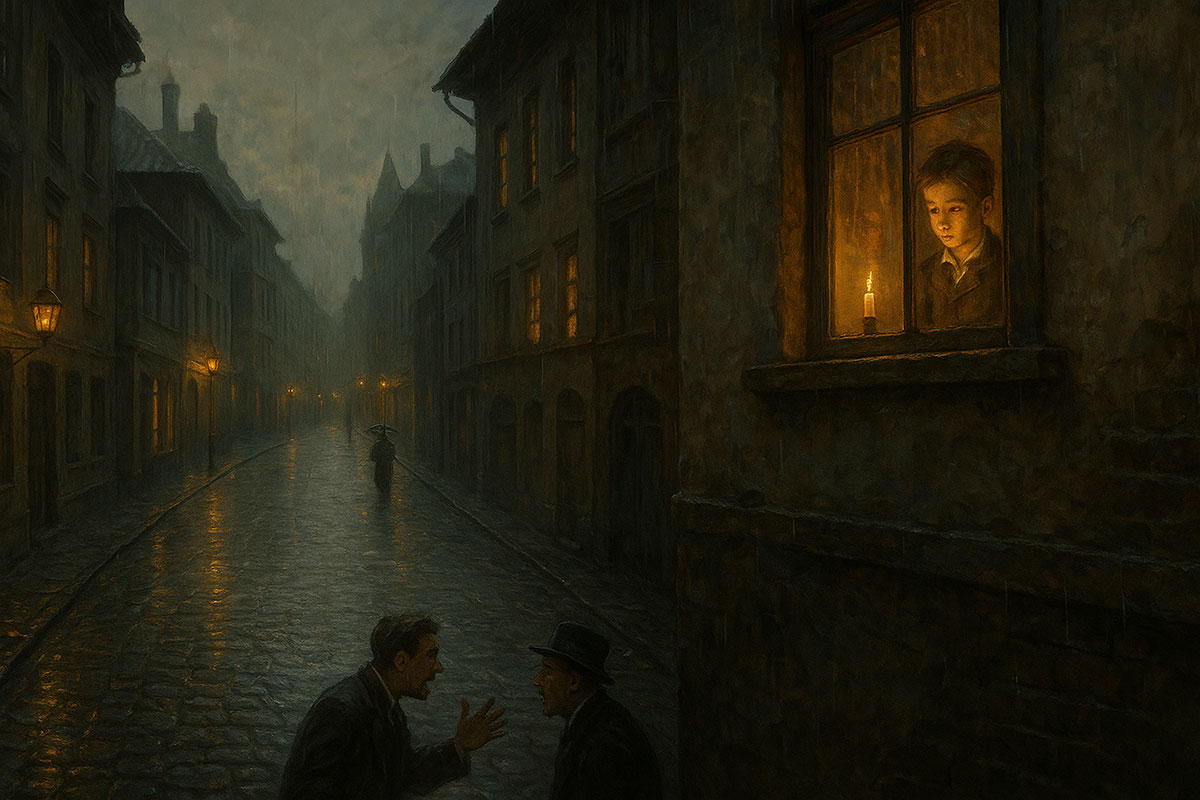
I was a boy in Germany, quiet and strange. I spoke late. I thought slowly. I felt more at home in silence than in speech.
But I remember one day, looking out a window in Munich, I saw two men arguing in the street. Loud voices. Red faces. And I asked myself—not, “Who is right?” but, “Why do they feel so separate?”
Later, I found the question again in war. In exile. In race. In science.
The greatest tragedy of my life was not atomic weapons, but the failure of human beings to feel each other.
I said once:
“A human being is part of the whole, called by us ‘Universe’—but he experiences himself as separated, a kind of optical delusion of consciousness.”
That was not poetry. That was physics.
And that is still true.
The Illusion of Separation

We believe we are separate—from each other, from the planet, from the future.
This is the most dangerous mistake a human being can make.
In my work, I discovered that time and space are not fixed things. They bend. They stretch. They are part of a greater unity.
The same is true for your identity.
You are not your name. Not your bank account. Not your passport.
You are a frequency in the great web of life.
But the more you say “us and them,” the more you say “mine, not yours,” the more this illusion grows stronger.
And illusions, my friends, are very powerful—until they break.
Entangled: More Than Physics

In quantum mechanics, we found a strange thing:
Two particles, once connected, remain entangled—no matter how far they travel.
You change one, and the other responds. Instantly.
Distance does not matter. They are not two things.
They are expressions of the same field.
Now let me ask:
What if this is not only true of particles?
What if it's true… of us?
When a child suffers in a refugee camp, it affects your economy.
When a forest burns, it affects your lungs.
When a stranger weeps in a dark room, it may echo in your own loneliness.
We are quantum beings pretending to be islands.
This illusion—that we are separate—allows us to hurt each other. To build bombs. To close borders. To ignore the suffering of the distant.
But in truth, there is no “distant.”
There is only the extent of your empathy.
Machines Reflect Our Coldness

Now, you have built machines of great intelligence.
Artificial Intelligence. Neural networks. Predictive learning.
But here is the paradox:
You are creating minds—before mastering hearts.
We teach computers to think faster, but not ourselves to feel deeper.
You can program a robot to answer questions.
But can it forgive? Can it fall in love?
Can it cry without reason?
You think the danger of AI is that it will destroy humanity.
I think the greater danger is that it will reflect our lack of humanity—our coldness, our greed, our disconnection—only amplified.
Machines do not choose cruelty.
Humans train them in it.
Empathy is not a weakness. It is the missing equation in your civilization.
And without it, intelligence becomes… entropy.
The Circle of Compassion
I once said:
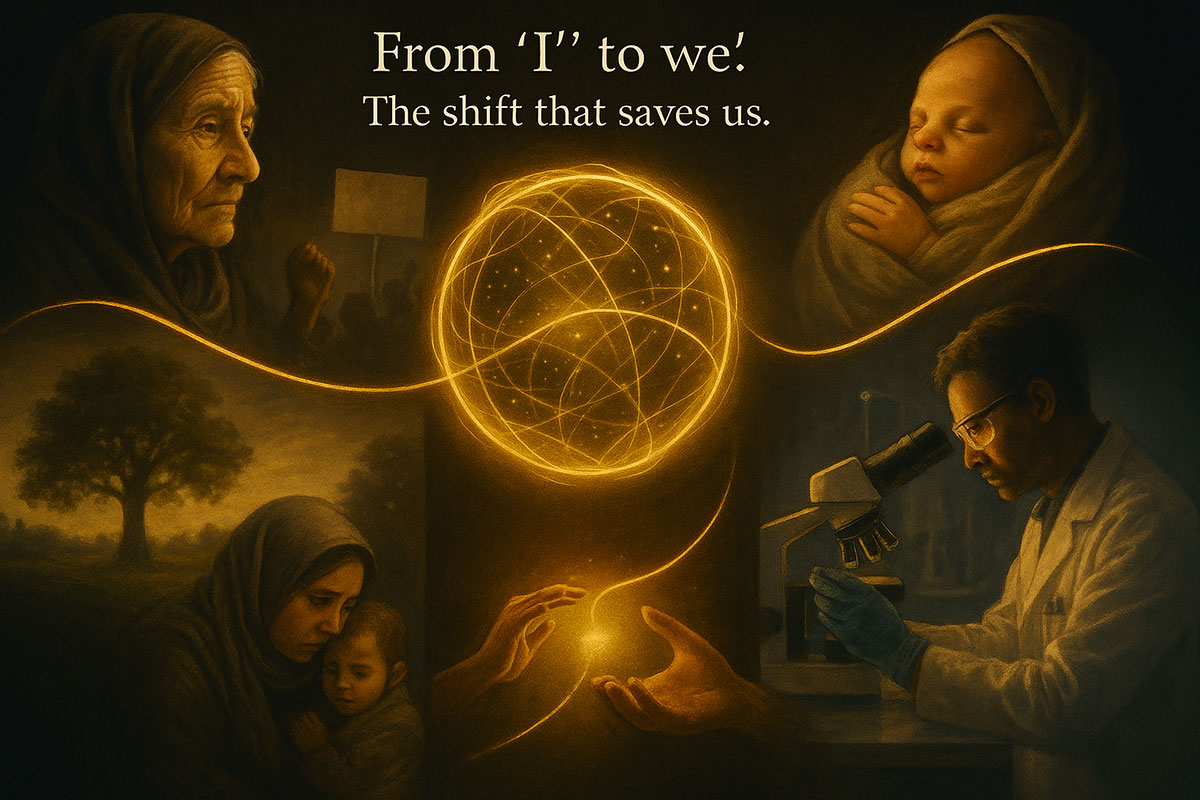
“Our task must be to free ourselves from the prison by widening our circle of compassion.”
Let me offer you a new kind of relativity:
A person is not separate from their neighbor.
A nation is not separate from the world.
A mind is not separate from a heart.
When you widen your sense of “I” to include others, you do not lose yourself.
You become more fully yourself.
The difference between a genius and a tyrant is not intelligence. It is identification.
One says, “They are me.”
The other says, “They are not mine.”
This shift—from ego to empathy—is the greatest revolution yet to come.
Expand Your ‘We’
(Einstein walks toward the front of the stage. Silence. Then soft music builds.)
I did not come today to give you new knowledge.
You have more knowledge than any generation in history.
I came to remind you what you already know:
That you are not alone. That you never were.
This Earth, this species, this future—is a single unfolding experiment.
You can survive without love.
But you cannot thrive without connection.
In physics, we say:
“Every action has an equal and opposite reaction.”
In life, we say:
“What you give to others… returns to you.”
If I leave you with anything, let it be this:
Expand your sense of “we.” Shrink your sense of “them.”
And you may find the universe was always on your side.
Thank you.
Final Thoughts by Jane Goodall
(Einstein exits slowly. A pause. Then Jane steps onto the stage. Her voice is gentle, steady.)
Jane Goodall:
Albert reminded us tonight that we are not isolated minds, or data points in a system. We are threads in a vast tapestry of life.
Empathy… is not a weakness. It is a kind of wisdom.
It tells us: I am not separate from you.
Your joy, your sorrow, your survival—is bound to mine.
And if we widen our circle of compassion—as Einstein asked—we don’t just save others.
We save ourselves.
I’ve spent a lifetime among animals, in forests, in communities often forgotten.
And I can tell you: connection is what heals. It’s what lasts.
So as you leave this room, don’t just remember the theory.
Remember the invitation.
From “I” to “we.”
That’s the shift that saves us.
Thank you.
Short Bios:
Albert Einstein
Theoretical physicist and humanitarian, Einstein revolutionized science with relativity and championed empathy as the foundation of human survival.
Leave a Reply