• Skip to main content
  • Skip to primary sidebar
  • Skip to footer
ImaginaryTalks.com
  • Spirituality and Esoterica
    • Afterlife Reflections
    • Ancient Civilizations
    • Angels
    • Astrology
    • Bible
    • Buddhism
    • Christianity
    • DP
    • Esoteric
    • Extraterrestrial
    • Fairies
    • God
    • Karma
    • Meditation
    • Metaphysics
    • Past Life Regression
    • Spirituality
    • The Law of Attraction
  • Personal Growth
    • Best Friend
    • Empathy
    • Forgiveness
    • Gratitude
    • Happiness
    • Healing
    • Health
    • Joy
    • Kindness
    • Love
    • Manifestation
    • Mindfulness
    • Self-Help
    • Sleep
  • Business and Global Issues
    • Business
    • Crypto
    • Digital Marketing
    • Economics
    • Financial
    • Investment
    • Wealth
    • Copywriting
    • Climate Change
    • Security
    • Technology
    • War
    • World Peace
  • Culture, Science, and A.I.
    • A.I.
    • Anime
    • Art
    • History & Philosophy
    • Humor
    • Imagination
    • Innovation
    • Literature
    • Lifestyle and Culture
    • Music
    • Science
    • Sports
    • Travel
Home » Beyond Productivity: Purpose at Work in the Agent Era

Beyond Productivity: Purpose at Work in the Agent Era

October 8, 2025 by Nick Sasaki Leave a Comment

Getting your Trinity Audio player ready...

Introduction by Adam Grant

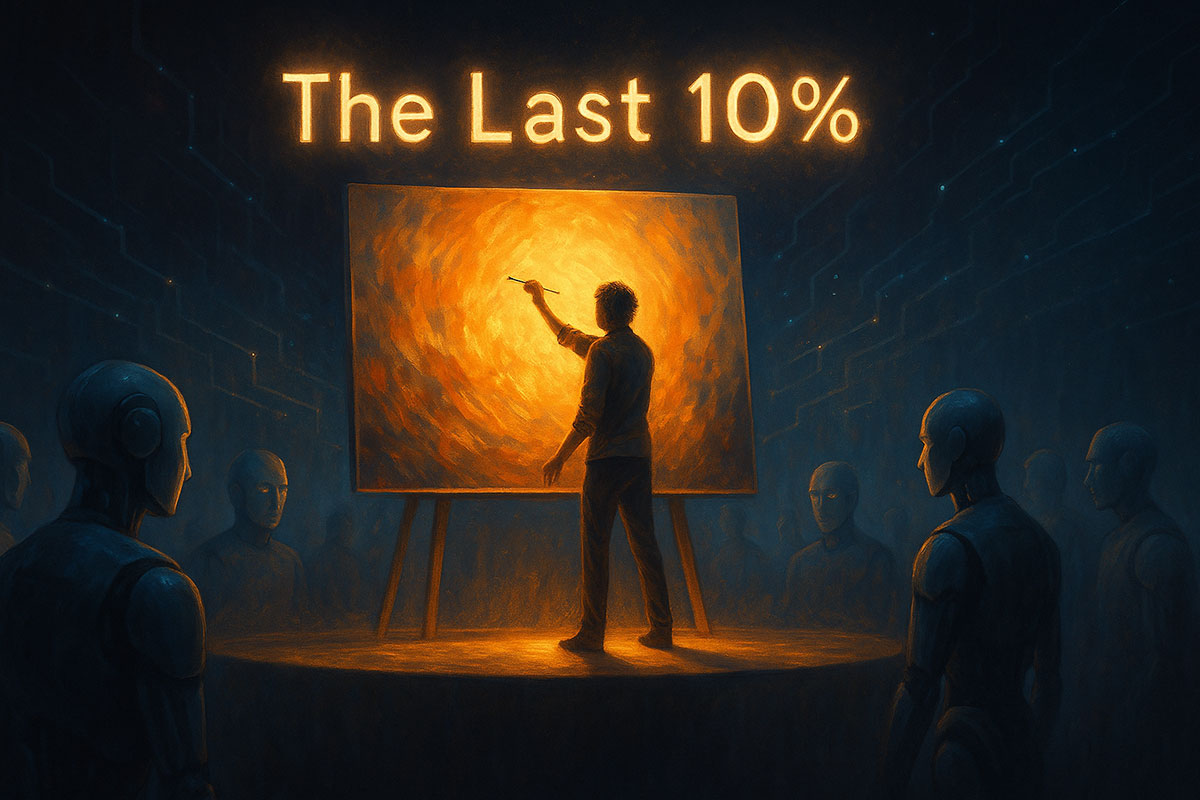
Work has always been about more than a paycheck. It’s where we find meaning, build relationships, and shape our identity. But in the agent era, where AI can outpace us in efficiency and automation grows by the day, we face an urgent question: what is left for us to do that matters?

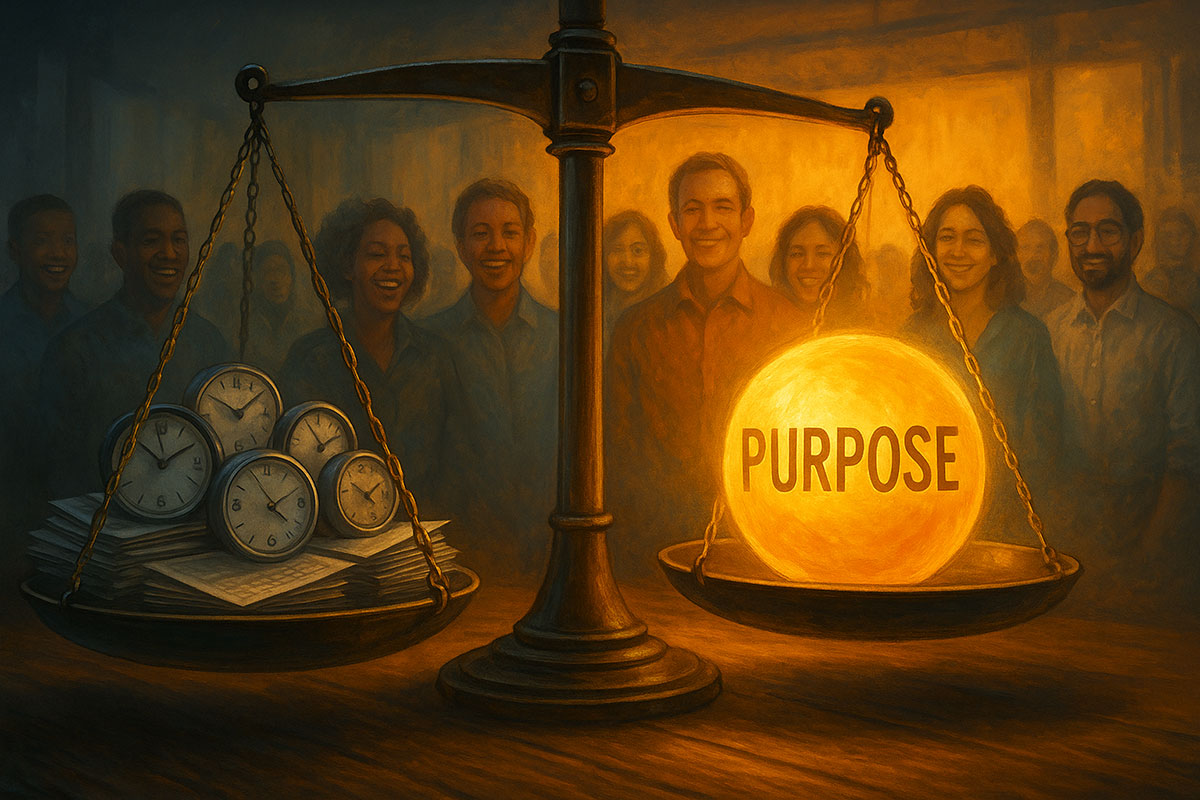
Research shows that purpose, not productivity, is what sustains us. Craft, not just scale, gives us pride. And dignity, not output, is the foundation of human worth. This series brings together thinkers from philosophy, psychology, business, and spirituality to explore the soul of work at a moment when its definition is shifting.

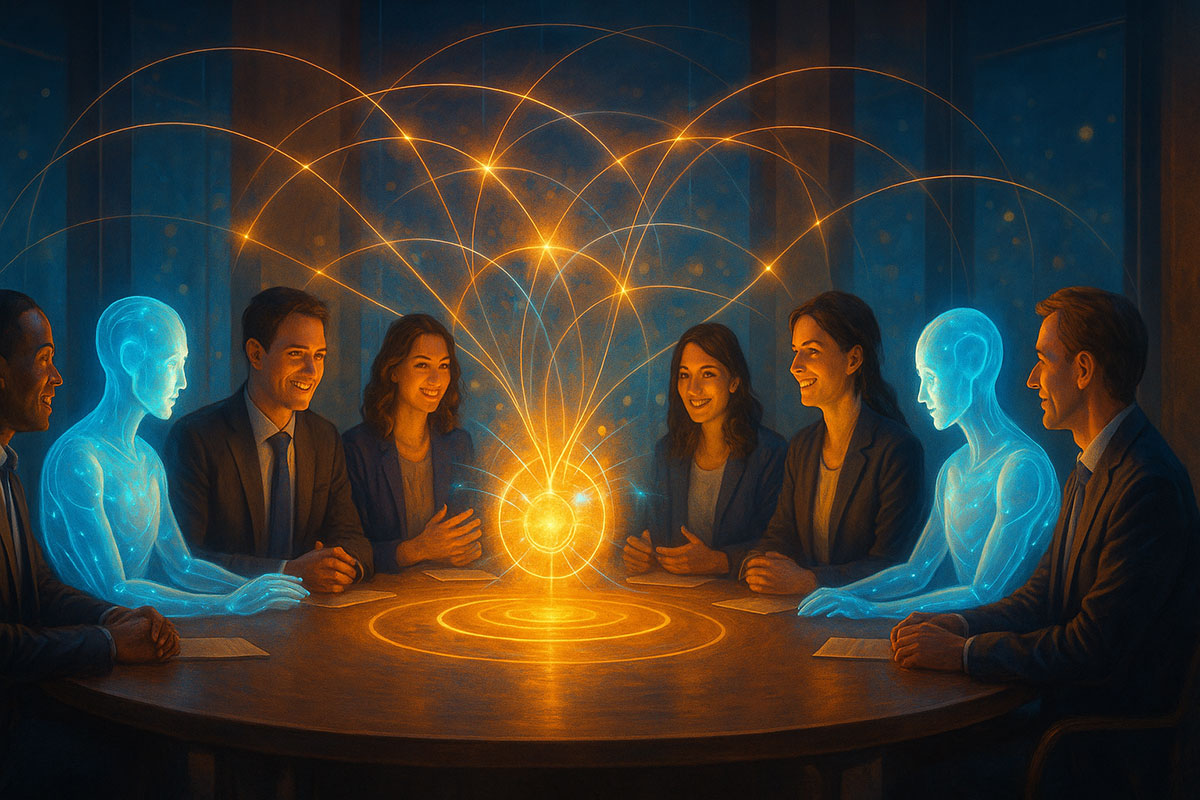
Our goal isn’t to resist the future, but to design it — to ask how humans and machines can work together in ways that preserve what makes us human: our creativity, our empathy, our relationships, and our values. If we succeed, the agent era won’t diminish work — it will deepen its meaning.

(Note: This is an imaginary conversation, a creative exploration of an idea, and not a real speech or event)


Table of Contents
Introduction by Adam Grant
Enter your text here...
Final Thoughts by Pope Francis

Enter your text here...

Enter your text here...

Enter your text here...

Enter your text here...

Enter your text here...
Enter your text here...
Enter your text here...

Enter your text here...

Enter your text here...

Enter your text here...

Final Thoughts by Pope Francis

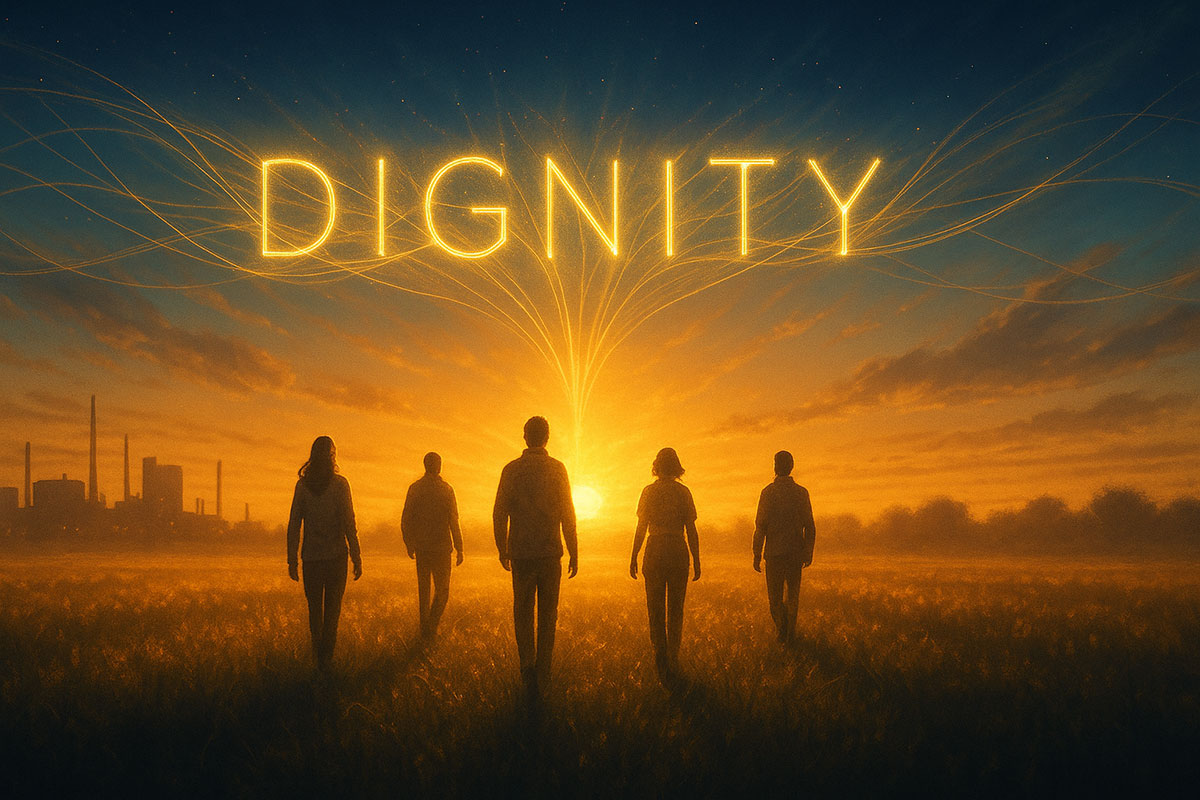
Work is not only what we do with our hands, but what we do with our hearts. It is a way of serving one another, of participating in the creation entrusted to us. Technology will change the forms of labor, but it must never strip away the dignity of the worker.

If machines take over tasks, then we are called to ensure that no one is discarded, and that every person is valued. True progress is measured not in profits or productivity, but in compassion and justice.

In the agent era, let us not ask only what machines can do, but what humans must never lose: love, service, and solidarity. The soul of work is not in efficiency, but in the dignity it confers upon each life. If we remember this, then even in an age of automation, we will not lose our humanity — we will find it renewed.

Short Bios:

Adam Grant — Organizational psychologist at Wharton, bestselling author of Think Again and Hidden Potential, expert on motivation and meaning at work.
Pope Francis — Head of the Catholic Church and moral voice on justice, compassion, and the dignity of labor.
Cal Newport — Computer scientist and author of Deep Work, focused on attention and meaningful productivity.
Esther Perel — Psychotherapist and bestselling author, exploring relationships, identity, and intimacy in work and life.
Marcus Buckingham — Leadership expert and author of Love + Work, known for strengths-based management.
Margaret Heffernan — Entrepreneur and author of Uncharted, writing on complexity, human judgment, and organizational resilience.
Matthew Crawford — Philosopher and author of Shop Class as Soulcraft, champion of craftsmanship and manual skill.
Alain de Botton — Philosopher and founder of The School of Life, on the philosophy of work and human fulfillment.
Marc Andreessen — Venture capitalist and tech optimist, co-founder of Andreessen Horowitz, proponent of large-scale innovation.
Arthur Brooks — Harvard professor and author of From Strength to Strength, focused on happiness, dignity, and purpose.
Dorie Clark — Author of The Long Game, expert on career reinvention and meaningful work.
Daniel Pink — Author of Drive and When, exploring motivation, autonomy, and meaning.
Arianna Huffington — Founder of Thrive Global, advocate for well-being, rest, and sustainable productivity.
Reid Hoffman — Co-founder of LinkedIn, investor, and thinker on scaling businesses with purpose.
Indra Nooyi — Former CEO of PepsiCo, champion of purpose-driven leadership.
Satya Nadella — CEO of Microsoft, advocate for human-centered AI and inclusive technology.
Fei-Fei Li — Stanford professor, AI pioneer, and advocate for human-centered artificial intelligence.
Erik Brynjolfsson — Economist, co-author of The Second Machine Age, studying productivity and AI’s impact on work.
Joi Ito — Technologist and former MIT Media Lab director, focusing on ethical and decentralized innovation.
Yuval Noah Harari — Historian and author of Sapiens and Homo Deus, analyzing the future of humanity and meaning of work.
Tim Ferriss — Entrepreneur and author of The 4-Hour Workweek, focused on lifestyle design and rethinking labor.

Related Posts:

  • The Fall of Man: Adam, Eve, and the Lost Garden
  • Charlie Kirk Meets the Divine Principle: A Thought…
  • Agentic AI & The Future of Work: From Chat to Action
  • Robert Kiyosaki Cashflow Quadrant and Networking Power
  • Adam Grant Think Again Explained: The Skill of Updating Fast
  • Designing the Best 100 Years: Humanity’s Path to a…

Filed Under: Innovation, Psychology, Technology Tagged With: agent era workplace, AI and human collaboration, AI impact on fulfillment, automation and human value, cooperative intelligence, craft vs automation, dignity and labor future, dignity of work automation, future of jobs and meaning, future of work dignity, human skills irreplaceable, humane AI design, meaningful careers in AI age, post-work society, productivity vs purpose, purpose at work agent era, redefining work purpose, soulful productivity, work identity and AI, work with meaning AI

Reader Interactions

Leave a Reply Cancel reply

Your email address will not be published. Required fields are marked *

Primary Sidebar

Claim Your Ticket Now!

RECENT POSTS

  • Trump Davos 2026 debateTrump Davos 2026 Debate: 5-Topic Imaginary Roundtable
  • We Who Wrestle with God Meaning: Sacrifice, Cain-Abel, Peace
  • jordan peterson we who wrestle with godWe Who Wrestle with God Summary: Peterson, Faith, Culture War
  • Woman in the Fifth Car BackWoman in the Fifth Car Back: Caroline Myss’s Prayer Story
  • bosch hell painting meaningHieronymus Bosch Spiritual Paintings: Monsters With Meaning
  • hilma af klint mediumshipHilma af Klint Spiritual Paintings: The Temple Code Explained
  • a rose for emily explainedFaulkner’s A Rose for Emily Explained: Plot, Themes & Ending
  • maupassant the necklace explainedThe Necklace by Maupassant Explained: Illusion Becomes Debt
  • Russia Will Nuke Germany & the UKRussia Will Nuke Germany and the UK? Bluff, Doctrine, or Plan?
  • Shakespeare Othello ExplainedShakespeare Othello Explained: How Iago Turns Love Into “Justice”
  • Coppélia Playscript: Love, Control, and the Doll
  • Daniel Gilbert’s Stumbling on Happiness Explained
  • Hamlet explainedHamlet Explained for Modern Readers: Truth That Destroys
  • Chagall Spiritual Paintings: 10 Works That Open Heaven
  • Romeo and Juliet Explained Who’s to Blame and Why It Matters
  • Camela Hurley 2026 Predictions: Five Signals of a Turbulent Year
  • Influence Explained: Robert Cialdini’s Persuasion Playbook
  • Post Japan Depression: Why You Miss Japan So Much
  • ryunosuke akutagawa in a groveIn a Grove Explained — Akutagawa and the Collapse of Truth
  • king lear madnessKing Lear Explained: Power, Madness, and Moral Collapse
  • The Tempest explainedThe Tempest Explained: Power, Forgiveness, and Control
  • W. H. Auden reading listW. H. Auden Reading List: Fate & the Individual Roundtable
  • Ken Honda 2026: Doraemon & Bashar on Riding the Fire Horse
  • Think-Again-ExplainedAdam Grant Think Again Explained: The Skill of Updating Fast
  • do-elections-still-decide-powerDo Elections Still Decide Who Holds Power in America?
  • the cask of amontillado explainedEdgar Allan Poe’s The Cask of Amontillado Explained
  • The Taming of the Shrew Explained for Modern Readers
  • robert greene the art of seductionThe Art of Seduction Explained: Power, Persona, Ethics
  • the mountain is you lessonsThe Mountain Is You Summary: Self-Sabotage to Self-Trust
  • Today’s Philosophers Confront Power, Identity, and Modern Life
  • Macbeth summaryMacbeth analysis of ambition that turns into terror
  • love toni morrison summaryLove Toni Morrison Summary: The Women in Cosey’s Wake
  • Jonathan Haidt The Righteous Mind: Why Good People Are Divided
  • Charlie Munger Mental Models: Poor Charlie’s Almanack
  • The Tempest analysis in the Afterlife Tribunal
  • Jensen Huang Startup Advice: How to Build a Company
  • thinking-fast-and-slow-summaryThinking Fast and Slow Summary: Daniel Kahneman System 1 & 2
  • A-Midsummer-Night’s-Dream-forest-meaningThe Psychology Behind A Midsummer Night’s Dream
  • A Midsummer Night’s Dream explainedA Midsummer Night’s Dream Explained
  • the-lady-with-the-dog-themesThe Lady with the Dog Explained: Love That Arrives Too Late

Footer

Recent Posts

  • Trump Davos 2026 Debate: 5-Topic Imaginary Roundtable January 22, 2026
  • We Who Wrestle with God Meaning: Sacrifice, Cain-Abel, Peace January 22, 2026
  • We Who Wrestle with God Summary: Peterson, Faith, Culture War January 20, 2026
  • Woman in the Fifth Car Back: Caroline Myss’s Prayer Story January 18, 2026
  • Hieronymus Bosch Spiritual Paintings: Monsters With Meaning January 18, 2026
  • Hilma af Klint Spiritual Paintings: The Temple Code Explained January 17, 2026

Pages

  • About Us
  • Contact Us
  • Disclaimer
  • Earnings Disclaimer
  • Privacy Policy
  • Terms and Conditions

Categories

Copyright © 2026 Imaginarytalks.com