

Craig Groeschel:
Let’s be real — most of us don’t wake up in the morning feeling like warriors. We feel distracted, overwhelmed, tired… and maybe a little spiritually out of sync. But what if I told you that every single day, you’re walking into a battle — whether you see it or not?
You don’t need to be afraid. You just need to be aware.
You are not fighting for victory. You’re fighting from victory. Jesus already won the war — now you’re called to stand firm, equipped and empowered.
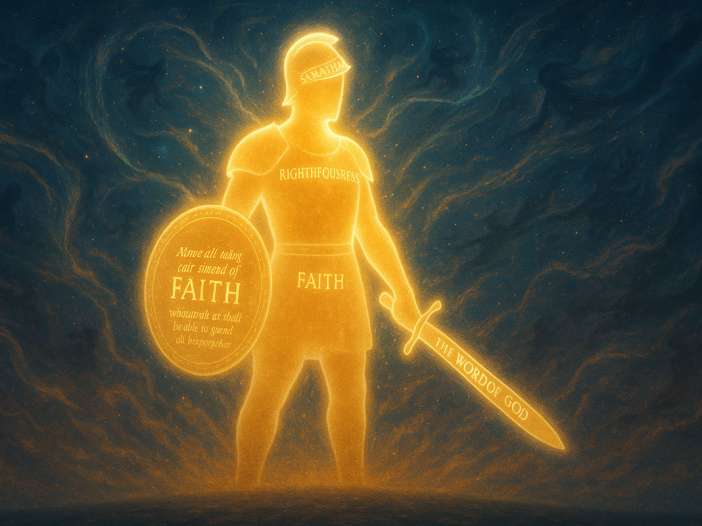
In this series, we’re going to talk about how to pray not just reactively, but strategically. You’ll learn how to acknowledge God’s power, confess and clean house, declare spiritual authority, wear the full armor of God, renounce the lies of the enemy, and walk under divine protection and blessing.
These aren’t abstract ideas. This is how we fight our battles — not with our fists, but with our prayers.
(Note: This is an imaginary conversation, a creative exploration of an idea, and not a real speech or event.)

Topic 1: Acknowledging God’s Power

Moderator: Dallas Willard
Speakers:
- King David
- Billy Graham
- A.W. Tozer
- Corrie ten Boom
- Henri Nouwen
Opening by Dallas Willard:
"There is a quiet but mighty truth in the soul that knows: God is not just near, He is overwhelmingly powerful — and deeply personal. Today, we reflect on what it means to acknowledge God's power, not merely as a doctrine, but as the very air we breathe in our spiritual lives."
❓ “When you first truly recognized God’s power in your life, what shifted in your soul?”
Corrie ten Boom:
“It was in a Nazi concentration camp. The walls were cold, the food barely enough to live. But I saw miracles in the darkness. One night, in our barracks, women who had nothing left found comfort in reading the Bible aloud. That power — not of escape, but of presence — changed everything. I saw God not as distant, but indwelling even the pit.”
A.W. Tozer:
“For me, it was less dramatic but no less total. When I encountered the holiness of God, I was undone. The weight of His majesty pierced me so deeply that everything else seemed like a shadow. Reverence, not fear — awe, not anxiety. That’s what shifted: God became ultimate.”
King David:
“When I was still a shepherd boy and the lion came, it was not I who struck it down — it was the Lord’s hand through mine. And when I faced Goliath, I knew it wasn’t courage alone. My soul knew even then: ‘The battle is the Lord’s.’ That truth never left me.”
Billy Graham:
“I felt it the first time I preached to thousands, and yet felt peace, not pride. I knew it wasn’t me. God's power is never about spotlight — it’s about surrender. I shifted from performance to dependence.”
Henri Nouwen:
“For me, it wasn’t loud. It was in the silence of an empty chapel. When I had nothing left to prove, God’s quiet strength filled my weakness. His power didn’t press me down — it lifted me up, gently.”
❓ “Why do we so easily forget God’s power in daily life, and how can we return to it?”
Billy Graham:
“Busyness and pride. Those are the two killers. We schedule God out of our calendars. But the solution is simple: return daily, even if just for five minutes, to Scripture and prayer. The power never leaves — we just stop plugging in.”
Henri Nouwen:
“We are addicted to control. Even in spiritual work, we seek results. But God’s power is revealed when we are poor in spirit. Returning to Him begins with laying down our illusions of self-sufficiency.”
Corrie ten Boom:
“I think we forget because comfort makes us sleepy. In hardship, we cling to Him. But in comfort, we drift. To return, we must choose gratitude — it wakes us up. Even thanking God for breath reconnects us.”
A.W. Tozer:
“Because the world offers noise and God offers stillness, and we are drawn to noise. We must cultivate reverence — not merely in church, but in the kitchen, in traffic, in sorrow. That’s where awe is reborn.”
King David:
“When I stopped going to battle and stayed on the rooftop — that’s when I forgot. We return by remembering our history with God. Sing the songs again. Recall the victories. Write the psalms of today.”
❓ “What does acknowledging God’s power look like in action — not just in belief, but in how we live?”
A.W. Tozer:
“It looks like bold humility. You walk into the room not with arrogance, but with authority rooted in God. You speak truth, but gently. You take risks, but without ego. It’s holy confidence.”
King David:
“You dance before the Lord — even when others mock you. You speak to kings with fear and trembling, yet also declare, ‘Thus says the Lord.’ You lead not from might, but from trust.”
Henri Nouwen:
“It’s in the embrace of a wounded friend, in the meal shared with someone who can’t repay you. Acknowledging God’s power is choosing the downward path, knowing His strength is made perfect in weakness.”
Corrie ten Boom:
“It means forgiving those who hurt you, even when everything in you resists. It means standing up for others when you’re afraid. God’s power in me looked like smiling at my enemies with a love I did not have.”
Billy Graham:
“It’s praying before decisions. It’s speaking the gospel even when it’s not popular. It’s trusting God’s Word more than polls, culture, or instincts. His power changes how we lead, love, and live.”
Final Reflection by Dallas Willard:
“Acknowledging God’s power is not about appearing strong — it’s about living unshaken. As we’ve heard today, His power often meets us in silence, in suffering, in surrender. Let this conversation not stay in words but move through us — into our prayers, our choices, and our daily lives. For it is in Him we live, and move, and have our being.”
Topic 2: Confessing and Cleansing

Moderator: Elisabeth Elliot
Speakers:
- St. Augustine
- Charles Spurgeon
- Beth Moore
- Joyce Meyer
- Henri Nouwen
Opening by Elisabeth Elliot:
“Confession is not groveling — it is grace in motion. When we confess our sins, we are not reminding God of our failures; we are agreeing with His desire to heal us. Today, we explore the mystery of cleansing — not as a one-time act, but as the rhythm of a soul learning to walk in the light.”
❓ “Why do you think confession is so essential to spiritual growth — not just for salvation, but for maturity?”
Charles Spurgeon:
“Because pride is a stubborn weed. Confession tills the soil of the heart. You cannot grow in grace while hiding rot beneath the surface. The holiest men I knew were the quickest to repent — not because they sinned more, but because they loved God more.”
Joyce Meyer:
“When I used to blame others for my misery, I stayed stuck. But confession put the power back in my hands. It’s not weakness — it’s spiritual alignment. Without it, you're wearing a mask God never gave you.”
Henri Nouwen:
“We live in a world of performance. Confession strips that costume off. It brings us home to ourselves and to God. It is the threshold of spiritual honesty — where healing begins.”
Beth Moore:
“You can’t battle what you won’t name. Confession exposes the lie and invites truth. I’ve seen people stuck in the same struggle for decades — not because God wasn’t willing, but because they wouldn’t face it head-on.”
St. Augustine:
“In my youth, I chased pleasure while my soul withered. When I confessed, I found not condemnation but freedom. ‘You pierced my heart with Your word, and I loved You.’ Confession was the wound’s opening — and God’s mercy was the balm.”
❓ “What keeps people from confessing — even to God, who already knows everything?”
Henri Nouwen:
“Fear of being unlovable. We think if we name our failure, we’ll lose love. But God’s love is not at stake — only our ability to receive it is. Silence builds walls; confession opens the windows.”
Beth Moore:
“Shame. And shame loves the dark. It tells us we’re the only ones struggling — that if people knew, they’d walk away. But the truth? Everyone has a battlefield. When we name it, the enemy loses his grip.”
Charles Spurgeon:
“Pride and spiritual laziness. We would rather clean the outside of the cup and leave the inside untouched. Confession requires effort and humility — but the rewards are eternal.”
St. Augustine:
“I once said, ‘Lord, make me pure… but not yet.’ We delay confession because we enjoy our sin or fear its absence. But what we don’t see is that the weight we carry keeps us from flying.”
Joyce Meyer:
“We think we have to fix it first — then confess. But confession isn’t the end of the journey; it’s the first step. God isn’t surprised — He’s waiting with a towel and a fresh start.”
❓ “What does a life of regular confession and cleansing look like in action?”
Beth Moore:
“It looks like journaling through tears, talking to God like a best friend, and not letting guilt build up. It’s spiritual housekeeping — not once a year, but daily. Clean heart, clear vision.”
St. Augustine:
“It is weeping in prayer and rejoicing in forgiveness. It is a heart that says, ‘Here I am, Lord — take all of me, even the stained parts.’ That is where intimacy is born.”
Joyce Meyer:
“I talk to God all day. If I snap at someone, I confess it within minutes. Not because I fear punishment, but because I love my peace too much to lose it. Confession keeps me in flow with the Holy Spirit.”
Henri Nouwen:
“It looks like gentleness. When you confess often, you are less harsh with others. You know your own brokenness, so you extend grace freely. The soul becomes light, not heavy.”
Charles Spurgeon:
“It is kneeling low so Christ may be lifted high. It is keeping a short account with God, so sin has no room to grow. And it is joy — for a cleansed heart is a singing heart.”
Final Thoughts by Elisabeth Elliot:
“Let us not fear confession. It is not the sound of failure — it is the sound of chains breaking. As we’ve heard today, God does not shame the confessor; He welcomes, cleanses, and strengthens. May we become a people unafraid to walk in the light — for there, our souls are most alive.”
Topic 3: Declaring Authority Over Evil

Moderator: Leonard Ravenhill
Speakers:
- Jesus Christ
- Smith Wigglesworth
- Derek Prince
- John Ramirez
- Jackie Pullinger
Opening by Leonard Ravenhill:
“The devil isn’t afraid of your voice — unless your voice echoes the authority of Jesus Christ. Authority over evil isn’t arrogance, it’s alignment. When the Church forgets her authority, she becomes polite but powerless. Today, we speak of reclaiming our place — not as victims, but as victors through the cross.”
❓ “What does true spiritual authority look like — and how does it differ from loudness or emotion?”
Jesus Christ:
“When I rebuked the storm, I didn’t scream. I spoke. Authority is not volume — it is rooted in the Father. I knew who I was, and the wind obeyed. True authority flows from identity, not intensity.”
John Ramirez:
“As someone who once worked for darkness, let me tell you: demons don’t flinch at hype — they tremble at holiness. Real authority comes when your life backs your words. When you walk in obedience, your whisper breaks chains.”
Derek Prince:
“It is written. That’s the foundation of authority. When Jesus was tempted, He didn’t argue — He quoted Scripture. Authority means you know the Word, and you believe the Word — even when you’re trembling.”
Jackie Pullinger:
“It looks like praying in tongues while sitting beside a heroin addict. It’s quiet but fearless. You speak the name of Jesus not like a magic word, but like a trusted friend who’s never failed you.”
Smith Wigglesworth:
“Authority is walking into a sick room and knowing God sent you. Not hoping. Knowing. I once said, ‘I’m not moved by what I see. I’m moved only by what I believe.’ That’s authority — faith in action.”
❓ “What hinders believers from walking in their God-given authority?”
Derek Prince:
“Ignorance. Many Christians don’t know they have authority. The devil loves a believer who’s unsure of their position. We must teach believers not just that they’re saved, but that they’re seated with Christ in heavenly places.”
Jesus Christ:
“Fear and doubt. Peter walked on water — until he looked at the waves. Authority fades when attention shifts from Me to the problem. Keep your eyes on Me, and the enemy cannot hold you.”
Jackie Pullinger:
“Shame. Many believers disqualify themselves before God does. They believe past sin disarms present power. But the blood of Jesus doesn’t just forgive — it authorizes. We must let grace write our qualifications.”
John Ramirez:
“Compromise. You can’t cast out what you sleep with. If you’re entertaining darkness privately, you can’t rebuke it publicly. The devil knows your patterns. But God gives power when you live clean.”
Smith Wigglesworth:
“Lack of intimacy. I prayed in the Spirit for hours daily. You can’t fake fire. If your heart is lukewarm, you won’t walk in fire. Authority comes when you’re saturated — with Word, with prayer, with holiness.”
❓ “How can we, in daily life, declare spiritual authority without becoming proud or performative?”
Jackie Pullinger:
“Start in secret. Authority isn’t built on a platform — it’s built on your knees. Love people with no spotlight. Speak truth with no applause. If Jesus is enough for you in private, He’ll be powerful through you in public.”
Jesus Christ:
“Wash feet. Heal lepers. Forgive enemies. That’s the posture of authority. It does not elevate the self — it frees the bound. My authority was not to control, but to serve.”
Smith Wigglesworth:
“You live like Jesus owns the place — because He does. That means boldness, but not bravado. You declare healing, cast out fear, and trust that it’s God who does the work. Your job is to obey.”
Derek Prince:
“Stay anchored in Scripture and humility. If it glorifies you, it’s pride. If it glorifies Christ, it’s power. Test every word you speak: does it align with God’s Word? That’s your compass.”
John Ramirez:
“Walk in authority by walking in surrender. Every morning I say, ‘God, I’m Yours. Use me, or hide me — whatever brings You glory.’ That’s authority without ego. You don’t need to prove power — when it’s real, it shows.”
Final Words by Leonard Ravenhill:
“Authority is not given for show. It’s given to set captives free. We’ve heard it clearly today — true authority begins where self ends and Christ reigns. May we become a Church that doesn’t beg darkness to leave, but commands it — not with pride, but with presence. For greater is He who is in us than he who is in the world.”
Topic 4: Putting on the Armor of God

Moderator: Priscilla Shirer
Speakers:
- Paul the Apostle
- Watchman Nee
- Francis Chan
- Tony Evans
- Beth Moore
Opening by Priscilla Shirer:
“Paul told us to put on the whole armor of God — not just admire it from a distance, but wear it daily. This isn’t religious poetry — it’s a survival plan. In a world full of lies, compromise, and spiritual assault, you and I need truth that girds us, faith that shields us, and a sword sharp enough to slice through deception. Let’s go deep today.”
❓ “Why do you believe Paul chose armor — not robes, not wings, but armor — as the metaphor for Christian life?”
Paul the Apostle:
“Because the Christian life is not a stroll through a garden — it’s a march through a battlefield. I was chained to Roman guards. I watched their discipline. The belt, the breastplate, the shield — every piece had purpose. I wanted believers to grasp that following Christ isn’t passive. It's warfare — holy and necessary.”
Beth Moore:
“Armor says two things: you’re in a battle, and you’re not defenseless. Paul’s image isn’t cozy, but it is comforting — because it reminds us we’ve been equipped. Every piece reflects identity: salvation, truth, righteousness. That’s what the enemy tries to steal, so that’s what God dresses us in.”
Tony Evans:
“Because armor implies resistance. You don’t wear armor to a tea party — you wear it because you're expecting contact. This is kingdom conflict. You’ve got to stand before you can fight. And without armor, you fall before the battle even starts.”
Watchman Nee:
“It speaks of standing firm. We must first sit with Christ, then walk in the Spirit — but in battle, we stand. Armor anchors us in divine truth. Every piece reflects Christ Himself: He is our righteousness, our salvation, our shield. The armor is not ours — it is His life upon us.”
Francis Chan:
“Because armor isn’t optional. We’re not in peacetime. When I read Paul's words, I see urgency. We can't just memorize Scripture — we’ve got to wear it, believe it, live it. Armor means we don’t coast — we commit.”
❓ “Which piece of the armor do you think believers neglect the most, and what are the consequences?”
Watchman Nee:
“The belt of truth. Without truth, the rest of the armor hangs loosely. Many believers try to live in righteousness or faith without grounding in truth — and so they drift. Truth stabilizes.”
Francis Chan:
“I think it’s the sword — the Word of God. Too many Christians are listening to sermons but not studying Scripture. If you don’t know the Word, you can’t fight the lies. You become easy prey.”
Beth Moore:
“The helmet of salvation. I see so many people who are saved, but live tormented — their minds unprotected. Condemnation, fear, insecurity... The enemy attacks the mind. That helmet isn’t just about eternity — it’s about identity today.”
Paul the Apostle:
“The shield of faith. When fiery darts come — accusation, fear, temptation — it is faith that extinguishes them. Many try to dodge the darts, but God gave you a shield to stand behind. Faith is not blind optimism — it is grounded trust in the unseen.”
Tony Evans:
“Shoes. The gospel of peace. Most believers don’t walk anywhere with it. They don’t carry it to work, to family, to culture. The armor is not just for defense — it’s for advancing the kingdom. Without shoes, we stay stuck.”
❓ “How can we practically ‘put on’ the armor each day — not just in theory, but in real life?”
Beth Moore:
“I speak it out loud. Every morning, I declare each piece. ‘Lord, I put on truth. I fasten righteousness. I take up my shield.’ It’s not magic — it’s alignment. My heart hears it, and my mind remembers who I am.”
Paul the Apostle:
“Through prayer. When I said ‘pray in the Spirit at all times,’ I meant that the armor is fastened through communion with God. You do not dress yourself for battle without talking to the Commander.”
Francis Chan:
“Get uncomfortable. Spend real time with God before you touch your phone. Fast. Confess. Serve someone anonymously. That’s armor — it’s discipline wrapped in love. It’s dying to comfort to be clothed in power.”
Watchman Nee:
“Sit first. Sit with Christ. Remember where you are spiritually seated — above powers, with Him. From there, your armor is not burden but birthright. Stillness before action protects you from spiritual performance.”
Tony Evans:
“Understand your position. Don’t put on the armor from fear — put it on from victory. Jesus already won. The armor isn’t for chasing demons — it’s for walking in dominion. Dress like a child of the King.”
Final Thoughts by Priscilla Shirer:
“We don’t wear the armor of God to impress people. We wear it to withstand the invisible war trying to tear us down. This isn’t poetic metaphor — this is a battle strategy. Truth stabilizes. Righteousness protects. Faith extinguishes. The Word strikes. Peace advances. Salvation shields. Prayer covers it all. So rise up, warrior of God — your armor is ready.”
Topic 5: Renouncing and Rebuking

Moderator: Carlos Annacondia
Speakers:
- Neil T. Anderson
- Heidi Baker
- Jack Hayford
- Leonard Ravenhill
- Joyce Meyer
Opening by Carlos Annacondia:
“When we declare, ‘In the name of Jesus,’ we’re not reciting a formula — we’re releasing a force. The spiritual realm is real. And many Christians remain oppressed not because they lack salvation, but because they haven’t renounced lies and rebuked the intruder. Today, we speak of cleaning house — and standing up to darkness.”
❓ “What does it really mean to renounce something spiritually, and why is it so powerful?”
Neil T. Anderson:
“To renounce is to cancel agreement. Many people unknowingly partner with lies — about themselves, about God, about identity. When you renounce, you say, ‘I break with this. I no longer agree.’ It removes the enemy’s legal ground to torment you.”
Joyce Meyer:
“I used to agree with shame. ‘I’m not good enough,’ I’d think. That’s a lie. When I renounced that thinking, God could finally speak truth. Renouncing isn’t about shouting — it’s about replacing garbage thinking with God’s Word.”
Heidi Baker:
“In Mozambique, I’ve seen people renounce hatred, fear, witchcraft — and get instantly free. But it must be in love, not fear. You’re not fighting people. You’re saying ‘yes’ to Jesus so loudly that everything else has to go.”
Leonard Ravenhill:
“To renounce is to divorce sin. Too many believers flirt with darkness, then wonder why they have no peace. You must hate what He hates. Renounce the world, the flesh, and the devil — or be ruled by them.”
Jack Hayford:
“It’s a spiritual eviction notice. When Jesus rebuked the fever, He didn’t reason with it — He spoke to it. Renouncing is a declaration of jurisdiction: ‘This soul belongs to Christ. The trespass ends now.’”
❓ “What keeps people from rebuking darkness — and how can we help them find that boldness?”
Joyce Meyer:
“People don’t know their authority. They think rebuking is for ‘super-Christians.’ But if you’ve got the Holy Spirit, you’ve got power. You don’t need to scream — just believe. The devil knows if you mean it.”
Jack Hayford:
“Fear and confusion. We’ve taught believers to be polite instead of powerful. But Jesus wasn’t polite to demons. He was clear. We need to teach spiritual clarity — who we are, what Jesus did, and how to walk in that.”
Leonard Ravenhill:
“Sin tolerated is authority forfeited. If your life lacks purity, your words lack power. We must restore holiness — not emotional hype. Rebuking the enemy requires clean hands and a burning heart.”
Neil T. Anderson:
“Many Christians don’t realize what they’ve allowed in. Through trauma, bitterness, occult exposure, even music or media — doors can open. But once you identify the foothold, rebuking darkness becomes as simple as saying, ‘You’re not welcome here anymore.’”
Heidi Baker:
“Love is the door to authority. When you love Jesus more than comfort, more than fear, you’ll stand and speak. I’ve rebuked demons with a whisper because the room was full of Jesus. Darkness flees when light walks in.”
❓ “What does it look like to live a lifestyle of renouncing and rebuking without becoming superstitious or harsh?”
Heidi Baker:
“It looks like loving people and hating the chains. I kiss babies and cast out demons on the same day. Renouncing isn’t cold — it’s compassionate. You love so deeply that you can’t tolerate anything that enslaves.”
Leonard Ravenhill:
“Live close to the cross. When you spend time with a dying Savior, you lose taste for the world. Then rebuking sin isn’t judgment — it’s rescue. You speak truth because it burns in your bones.”
Neil T. Anderson:
“Daily spiritual check-ins. When a lie creeps in — about your worth, your future, your past — call it out. Replace it. You don’t need drama. Just truth. That’s how strongholds crumble.”
Joyce Meyer:
“I talk to my thoughts all the time. I say, ‘Nope, not today, devil.’ You don’t need to live in fear. Just be alert. Rebuking is protection, not paranoia.”
Jack Hayford:
“Be Spirit-led. Not every problem is a demon, but many are more than natural. Discern, don’t assume. And never rebuke from pride — always from peace. Jesus was never frantic. Neither should we be.”
Final Words by Carlos Annacondia:
“Rebuke with authority. Renounce with courage. But above all — do it from love. The cross is not just forgiveness — it is power. And that power is yours, if you walk humbly, speak truth, and stand firm. Don’t negotiate with darkness. Evict it.”
Topic 6: Protection and Blessing

Moderator: Max Lucado
Speakers:
- St. Patrick
- Elijah (Prophet)
- Stormie Omartian
- Corrie ten Boom
- Elisabeth Elliot
Opening by Max Lucado:
“Some think spiritual warfare is all fire and thunder — but sometimes, the most profound act of war is a whispered prayer of trust. God doesn’t just want to save you — He wants to shield you. He doesn’t just remove curses — He releases blessings. Today, we speak of covering, shelter, and the quiet miracle of being kept.”
❓ “When have you most deeply experienced God’s protection — not in theory, but in real life?”
Corrie ten Boom:
“In Ravensbrück, we smuggled a Bible into our barracks. They never found it. The guards avoided our room because of fleas — yes, God used fleas to protect us. There was death all around, but in our little corner, the Word lived. God’s protection isn’t always escape — sometimes it’s endurance.”
Elisabeth Elliot:
“After Jim died, I returned to the tribe that killed him. I should have been afraid. But I walked into that jungle with peace so deep, I knew it wasn’t mine. That was His covering. Protection isn’t always about the body — sometimes it’s about the soul being unshaken.”
St. Patrick:
“As a missionary in Ireland, I faced constant danger. But the Breastplate Prayer was my shield. ‘Christ before me, Christ behind me…’ Those were not poetic lines — they were my armor. I walked into enemy territory with heaven at my side.”
Stormie Omartian:
“During my darkest years of marriage and emotional trauma, I prayed protection over myself and my children every day. I learned that the enemy doesn’t fear strong people — he fears praying people. I saw God's hedge even when I couldn't feel it.”
Elijah (Prophet):
“In the cave. After fire and wind passed, I heard the whisper. I had run from Jezebel, afraid for my life. But in that moment, His whisper covered me like a cloak. Protection was not in the earthquake — it was in His voice.”
❓ “How can believers practically pray God’s protection and blessing over their lives and families each day?”
Stormie Omartian:
“Be specific. Cover your mind, your spouse, your children. Say their names. Ask God to post angels at your doors. I prayed Psalm 91 daily. The more intentional your prayers, the more peace you’ll feel.”
Elisabeth Elliot:
“Simple prayers, repeated often. ‘Lord, keep me in Your will. Guard my heart from despair.’ You don’t need fancy words. You need a steady rhythm. God hears quiet prayers spoken in faith.”
Elijah (Prophet):
“Sometimes protection comes before the danger. Hear God early. Obey before it makes sense. The brook, the raven, the widow — all were part of His protective plan. But I had to listen, and move.”
St. Patrick:
“Use Scripture as shield. I recited the Word aloud — daily. 'The Lord is my light and salvation—whom shall I fear?' These words didn’t just comfort — they covered me. Let the Word dress you each morning.”
Corrie ten Boom:
“Pray from memory. When we had no Bibles, we recited verses we had memorized. Those verses became shelter in the storm. Even a single line — ‘Jesus is Victor’ — kept fear out and faith in.”
❓ “What does living under God’s blessing look like — not in material terms, but in the soul?”
St. Patrick:
“It looks like walking into the unknown with courage. The soul at peace, even when the road is wild. Blessing is presence — not prosperity. If Christ goes with me, I lack nothing.”
Corrie ten Boom:
“It’s forgiveness. I saw the guard who mocked my sister, and I forgave him. I could not have done that alone. The ability to love enemies — that is the blessing of a heart guarded by grace.”
Elijah (Prophet):
“It looks like bold prayers and hidden strength. On Mount Carmel, I called down fire. But before that, I listened in silence. A blessed soul is not loud — it’s aligned.”
Stormie Omartian:
“It’s peace when there should be panic. When the bills come, or the diagnosis hits, and yet… peace. That’s blessing. Not the absence of struggle, but the presence of Jesus in it.”
Elisabeth Elliot:
“Living under blessing is knowing your suffering is not wasted. My loss didn’t ruin me — it refined me. That’s a blessing this world can’t give and death can’t take.”
Final Words by Max Lucado:
“God’s protection isn’t a bubble — it’s a Person. His blessing isn’t a reward — it’s a relationship. As we’ve heard today, the safest place on earth is not behind locked doors but beneath His wings. You are not alone. You are not exposed. You are covered — now and forever.”
Final Thoughts by Craig Groeschel
Here’s what I want you to remember — you are not powerless.
The devil will try to distract you, discourage you, and deceive you… but he cannot defeat you, because greater is He who is in you than he who is in the world.
You don’t have to shout louder, pray longer, or live perfectly. You just need to stand in the truth, covered in God’s armor, grounded in His Word, and connected to His Spirit.
This isn’t theory. It’s reality.
When you pray, heaven hears. When you resist, the enemy flees. When you walk in truth, the darkness trembles.
So don’t leave your armor on the shelf. Don’t settle for survival when God called you to victory.
You are a warrior. You are protected. You are blessed.
Now go pray like it.
Short Bios:
King David – Israel’s shepherd-king and psalmist, known for his deep intimacy with God, poetic expression of faith, and victories rooted in divine strength.
Billy Graham – World-renowned evangelist who preached to over 200 million people, emphasizing salvation through Christ and the power of prayer.
A.W. Tozer – Christian mystic and pastor whose writings focused on God's holiness, reverence, and the pursuit of authentic spiritual experience.
Corrie ten Boom – Dutch Holocaust survivor who risked her life to protect Jews and later became a global voice of forgiveness, prayer, and trust in God’s protection.
Henri Nouwen – Catholic priest and contemplative writer who emphasized inner healing, spiritual vulnerability, and the gentle love of God.
St. Augustine – Church Father and theologian whose Confessions remains a timeless reflection on sin, grace, and God’s transforming mercy.
Charles Spurgeon – The “Prince of Preachers,” known for his powerful sermons on grace, repentance, and the centrality of Christ.
Beth Moore – Bible teacher and author who encourages women to study Scripture deeply and live with bold spiritual honesty.
Joyce Meyer – Speaker and author who teaches practical Christian living, overcoming emotional wounds, and walking in spiritual authority.
Jesus Christ – Son of God, Savior, and model of perfect authority and humility who demonstrated victory over evil through love and obedience.
Smith Wigglesworth – British evangelist known for miraculous healings and bold declarations of faith rooted in the power of the Holy Spirit.
Derek Prince – Bible teacher and pioneer in Christian deliverance ministry, known for his teachings on authority, identity, and spiritual warfare.
John Ramirez – Former satanic priest turned Christian evangelist who now exposes the tactics of the enemy and preaches Christ’s authority.
Jackie Pullinger – Missionary who ministered to gang members and addicts in Hong Kong, demonstrating spiritual power through love and prayer.
Paul the Apostle – Early Church leader and author of much of the New Testament, including Ephesians 6’s armor of God teaching.
Watchman Nee – Chinese Christian leader and author who wrote on spiritual discipline, authority, and victorious Christian living.
Francis Chan – Pastor and author who calls believers to radical faith, obedience, and deep intimacy with God.
Tony Evans – Pastor and Bible teacher known for kingdom-focused theology, spiritual identity, and practical biblical authority.
Neil T. Anderson – Author of The Bondage Breaker and founder of Freedom in Christ Ministries, focused on identity-based spiritual freedom.
Heidi Baker – Missionary and co-founder of Iris Global, known for radical love, signs and wonders, and deep compassion for the poor.
Jack Hayford – Pastor, worship leader, and theologian known for teaching on the power of the Holy Spirit, spiritual authority, and Christ-centered living.
Leonard Ravenhill – Revivalist preacher who called for holiness, repentance, and deep prayer with urgency and fire.
Stormie Omartian – Bestselling author of The Power of a Praying Wife and other books on prayer, protection, and family covering.
St. Patrick – Missionary to Ireland whose Breastplate Prayer reflects deep reliance on God’s presence and spiritual armor.
Elijah (Prophet) – Bold Old Testament prophet who called down fire from heaven, confronted kings, and heard God’s whisper in the wilderness.
Elisabeth Elliot – Missionary and author whose faith in God’s sovereignty endured through personal tragedy and inspired generations.
Max Lucado – Pastor and author of dozens of books, known for his warm, comforting voice and ability to bring biblical truth to everyday life.
Leave a Reply