
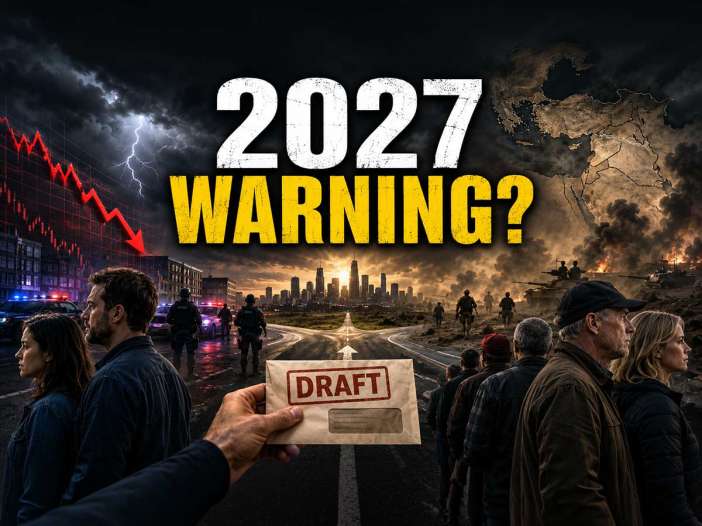
What if America’s next war does not stay overseas?
Introduction by Prof. Jiang Xueqin
When people hear predictions about war, collapse, and civil unrest, they often ask the wrong question first.
They ask, “Will this happen exactly?”
That is not the first question.
The first question is, “Why does this warning feel possible at all?”
A healthy nation hears a dark prediction and rejects it with confidence. A fragile nation hears the same prediction and feels something inside it tremble.
My warning about 2027 is not meant to entertain fear. It is meant to connect events that many people prefer to see separately.
A war with Iran may look like a foreign-policy crisis.
A draft may look like a military issue.
ICE expansion and National Guard deployment may look like law-and-order issues.
A market crash and food inflation may look like economic issues.
Civil unrest may look like a social issue.
But in a real national crisis, these issues do not remain separate. They begin to feed each other.
War creates pressure.
Pressure creates fear.
Fear creates enforcement.
Enforcement creates resistance.
Resistance creates instability.
Instability creates economic panic.
Economic panic creates public anger.
Public anger creates conflict.
This conversation gathers five voices to examine that chain reaction.
I speak as the warning voice. I am asking what happens when a powerful nation overestimates its ability to control events.
Dwight Eisenhower speaks as the soldier-president. He knows that war is easy to begin in theory and painful to carry in reality.
James Madison speaks as the constitutional thinker. He reminds us that emergency power can wound liberty, sometimes in the name of saving it.
George Orwell speaks as the witness of political language. He warns us that fear changes words before it changes laws.
A Gen Z American speaks as the generation that may be asked to pay the price. This voice asks whether duty can still be demanded when trust has already been lost.
This is not a conversation about one party, one president, one ideology, or one enemy.
It is about a larger question:
Can America survive a major external crisis when its internal trust is already broken?
That is the question behind all five topics.
And it may be the question that defines the next stage of American history.
(Note: This is an imaginary conversation, a creative exploration of an idea, and not a real speech or event.)
Topic 1: When Foreign War Comes Home
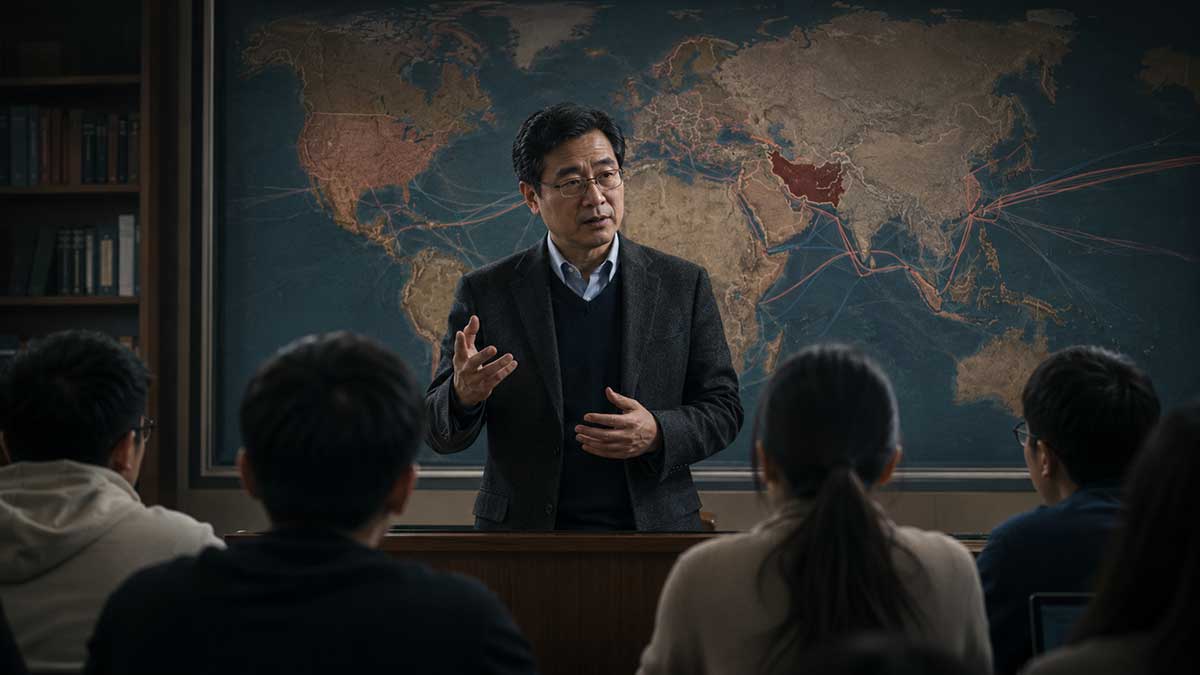
Opening by Prof. Jiang Xueqin
A nation often thinks war begins far away.
It begins with maps, missiles, briefings, speeches, and flags behind podiums. Leaders speak of strategy. Experts speak of deterrence. Citizens watch from their kitchens, their phones, their cars, their living rooms.
Then one day, the war is no longer far away.
It enters the grocery bill. It enters the airport line. It enters the protest march. It enters the draft letter. It enters the silence at the family dinner table.
My warning is simple: a foreign war does not stay foreign when the nation fighting it is already divided at home.
Question 1: When does military action become a trap?
Jiang Xueqin:
The first danger is not that America fights Iran. The first danger is that America enters a war it cannot clearly finish. A ground invasion is not a movie scene. It is a road with no clean exit.
Dwight Eisenhower:
A soldier understands that better than many politicians. War has a way of teaching humility to those who planned it from a safe distance. The first question is not, “Can we strike?” The first question is, “What happens after the strike?”
George Orwell:
The public will be told that the operation is limited, controlled, necessary, and temporary. Those four words often appear before a nation realizes it has entered something permanent.
James Madison:
A republic should fear war without clear boundaries. Foreign danger can become the excuse for domestic power that would never be accepted in normal times.
Gen Z American:
That is what my generation does not trust. We hear leaders say, “This is necessary,” but we wonder who has to pay for it. Is it the people making the decision, or the young people sent to carry it out?
Eisenhower:
A country must be honest about cost before it speaks of duty. If leaders ask for sacrifice, they must first prove they understand sacrifice.
Jiang Xueqin:
A trap begins when the government can explain how a war starts better than how it ends. That is where confidence turns into confusion.
Madison:
And confusion in war is dangerous to liberty. When leaders cannot explain victory, they often ask citizens to surrender more freedom in the name of patience.
Orwell:
Then language begins to hide failure. A retreat becomes repositioning. A mistake becomes an intelligence gap. A war without an end becomes a long-term commitment.
Gen Z American:
So the trap is not just military. It is moral. The country gets stuck defending a decision it can no longer explain.
Question 2: Can a country stay united during a war it does not fully trust?
Madison:
Consent is not decoration in a republic. The people must believe that their government is acting with restraint, honesty, and accountability.
Gen Z American:
But what if people do not believe any side? The government says one thing. The media says another. Social media says ten more. Everyone sounds like they are selling fear.
Jiang Xueqin:
That is why a foreign war can become a domestic crisis. A trusted nation can ask for sacrifice. A distrusted nation hears anger in return.
Eisenhower:
A united country can endure hardship. A divided country turns hardship into accusation. Every casualty becomes political. Every bill becomes political. Every speech becomes political.
Orwell:
And the state will be tempted to label doubt as disloyalty. Once that happens, the home front becomes a battlefield of words before it becomes a battlefield of bodies.
Madison:
The danger is not disagreement. Disagreement is natural in a free country. The danger is when each side begins to view the other as an enemy inside the nation.
Gen Z American:
That is already how many people feel. One side thinks the other is destroying America. The other side thinks the same thing back.
Jiang Xueqin:
Then war acts like a match dropped into dry grass. The foreign enemy may be real, but the fire spreads through the cracks already inside the country.
Eisenhower:
This is why leadership must speak plainly. No fantasy of quick glory. No promise that sacrifice will be painless. No pretending that unity can be ordered from a podium.
Orwell:
When public trust dies, even true statements sound suspicious. That may be the deepest danger of all.
Question 3: Is strength abroad possible without trust at home?
Eisenhower:
A nation can have weapons, bases, aircraft, ships, and soldiers, yet still be weak if its people no longer trust its purpose.
Jiang Xueqin:
That is the heart of my warning. America may think the test is Iran. But the real test may be whether Americans still believe their own institutions enough to endure a long crisis.
Madison:
External strength rests on internal legitimacy. A republic cannot project stability abroad if citizens believe power at home is reckless or dishonest.
Gen Z American:
Then what are young people supposed to do? If the threat is real, we do not want to be naive. But if the leadership is untrusted, we do not want to be used.
Orwell:
That is the emotional crisis of a late-stage empire. The citizen is asked to obey in the name of truth, after being trained to suspect every truth.
Eisenhower:
Trust is earned before the emergency, not during it. Once a nation reaches the crisis, speeches alone cannot repair what years of arrogance damaged.
Madison:
The government must remember that liberty is not a luxury to be paused during difficult times. It is the reason the nation is worth defending.
Jiang Xueqin:
So the question is not simply, “Can America win a war?” The question is, “Can America fight a war without breaking itself?”
Gen Z American:
And maybe the younger generation is asking something even deeper: “Does America still know what it is asking us to defend?”
Orwell:
A foreign war becomes the mirror. The nation looks into it and sees not only its enemy, but its own distrust.
Eisenhower:
Then strength abroad begins at home. It begins with honesty, restraint, clear purpose, and respect for the people who will bear the cost.
Closing — Dwight Eisenhower
I have seen war from close range. I have seen what brave men can do, and I have seen what leaders can ask of them too easily.
A nation should never confuse action with wisdom. It should never confuse force with victory. And it should never enter a long war believing that the pain will remain overseas.
Every war eventually comes home.
It comes home in debt. It comes home in grief. It comes home in arguments between parents and children. It comes home in the question every republic must face sooner or later:
Did we defend the country, or did we spend the country trying to prove we were strong?
That is where this conversation must begin.
Topic 2: The Draft and the Breaking Point of Youth
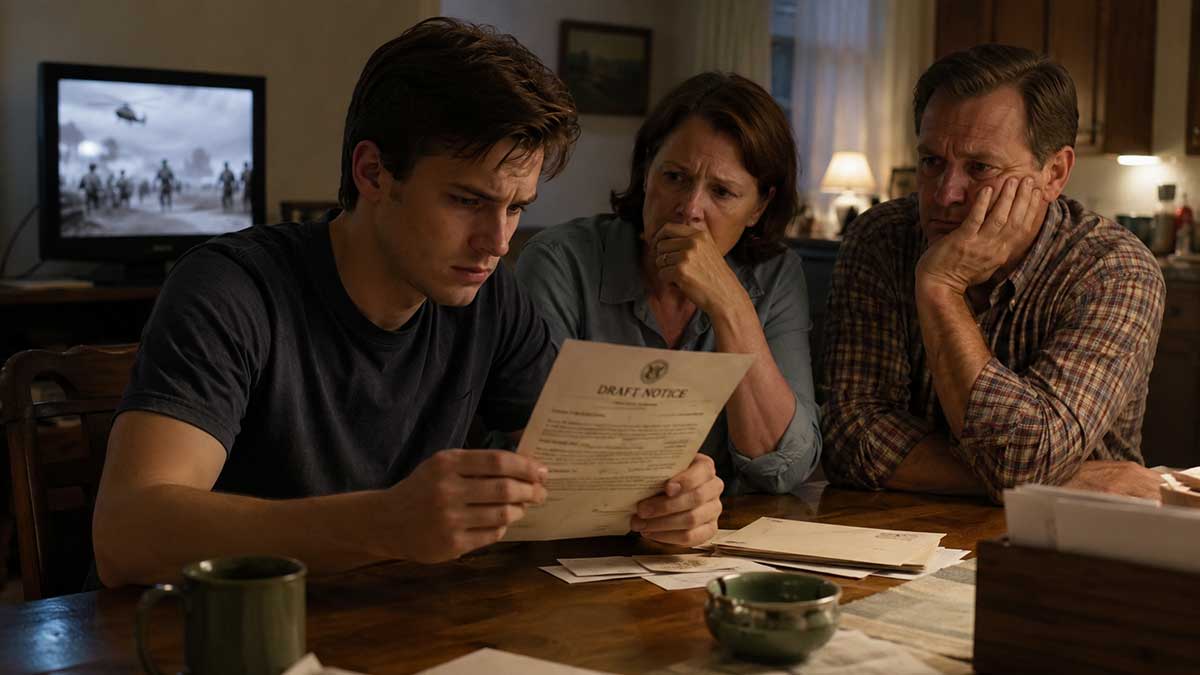
Opening — Gen Z American
A draft letter is not just paper.
It is the government reaching into a home and saying, “Your future now belongs to a national emergency.”
For older generations, the word “draft” may sound like duty, sacrifice, patriotism, or history. For my generation, it sounds different. It sounds like student debt, broken trust, political lies, unaffordable rent, online chaos, and leaders who ask for loyalty after years of losing credibility.
We are not asking whether a country has the right to defend itself.
We are asking whether a country has earned the right to demand our bodies for a war we do not trust.
That is the breaking point.
Question 1: What does a nation owe its young people before asking them to die?
Gen Z American:
Before a country asks young people to die, it owes them truth. Not slogans. Not flags. Not speeches written by people who will never be sent. Truth.
Dwight Eisenhower:
No nation can ask for sacrifice lightly. A commander must never forget that every number on a military report is someone’s child.
James Madison:
The young citizen is not the property of the state. A republic rests on consent, not ownership. Forced service may exist in an emergency, but the moral burden rests on the government.
Jiang Xueqin:
This is where 2027 could become explosive. If the war is seen as defensive and unavoidable, some may accept the burden. If it is seen as reckless or unclear, the draft becomes a spark.
George Orwell:
The state will use noble words. Duty. Honor. Security. Freedom. Yet the citizen will ask, “Who defines those words, and who benefits from them?”
Gen Z American:
That is exactly the problem. We are told to protect freedom, but many young people feel they cannot afford a home, cannot trust leaders, cannot trust media, and cannot trust institutions.
Eisenhower:
A nation must care for its young before it commands them. It cannot neglect them in peace, then claim their loyalty in war.
Madison:
A republic that treats young citizens as expendable risks losing the spirit that makes defense meaningful.
Jiang Xueqin:
The draft would reveal a deeper fracture. It would ask whether young Americans still believe the national story enough to sacrifice for it.
Orwell:
And if they do not, the state may blame the youth instead of asking why trust was lost.
Question 2: Is refusing a draft cowardice, protest, or moral judgment?
Eisenhower:
Refusal cannot be judged with one word. Some refuse from fear. Some refuse from conscience. Some refuse since they believe the war itself is wrong.
Gen Z American:
Older people may call us cowards. But many of us are not afraid of sacrifice. We are afraid of being used.
Madison:
Conscience has always been difficult for governments. The state prefers obedience. Liberty creates citizens who sometimes say no.
Orwell:
In wartime, the person who says no becomes easy to attack. The word “traitor” is short, loud, and useful.
Jiang Xueqin:
A mass refusal by Gen Z would not be ordinary protest. It would be a legitimacy crisis. It would mean the government no longer has moral authority over the people it commands.
Eisenhower:
Still, a nation cannot survive if every citizen treats duty as optional. Freedom requires responsibility.
Gen Z American:
I understand that. But responsibility goes both ways. If leaders want duty from us, we need honesty from them.
Madison:
That is the balance. The citizen owes the republic loyalty, but the republic owes the citizen lawful purpose.
Orwell:
The danger begins when the state cannot persuade, so it turns to pressure. Then the draft becomes less a call to service and more a test of submission.
Jiang Xueqin:
That is why draft resistance could spread so fast. It would not be only about Iran. It would become a referendum on the entire system.
Question 3: Can forced service work in a deeply divided country?
Madison:
Forced service may function when the people believe the nation is acting for survival. In a divided country, it may deepen the division it is meant to overcome.
Jiang Xueqin:
If America is already split by class, race, ideology, media, and trust, a draft would not create unity. It could expose how little unity remains.
Eisenhower:
A military filled with unwilling citizens is not a simple answer. Morale matters. Trust matters. A soldier must believe the mission has meaning.
Gen Z American:
And what happens if some groups avoid service more easily than others? Rich families find deferments. Connected families find loopholes. Ordinary kids get letters.
Orwell:
Then the draft becomes a class story. The language of equal sacrifice hides an unequal burden.
Madison:
A republic cannot permit that without cost. Unequal sacrifice breeds bitterness. Bitterness becomes instability.
Eisenhower:
Leaders must never send the poor to fight a war explained by the comfortable.
Jiang Xueqin:
That is why the draft is such a dangerous prediction. It is not only a military tool. It is a test of national trust, class fairness, and generational faith.
Gen Z American:
If the country asks us to serve, we will ask one question back: “Would you send your own children first?”
Orwell:
And if that question cannot be answered honestly, the propaganda will fail.
Madison:
Forced service in a divided republic may produce soldiers, but it may also produce resentment that follows them home.
Eisenhower:
A wise nation tries every path before asking its young to carry rifles into a war without a clear end.
Closing — James Madison
The draft is one of the most severe demands a government can make.
Taxation reaches the citizen’s property. Regulation reaches the citizen’s conduct. But conscription reaches the citizen’s life.
A republic must treat that demand with fear, humility, and restraint.
If the people trust the cause, they may accept the burden. If they distrust the cause, the burden becomes chains. No constitution can survive long when citizens begin to feel that their government sees them as instruments rather than persons.
The question is not whether young Americans are willing to serve.
The deeper question is whether America has preserved enough trust to ask.
Topic 3: Security or Control?
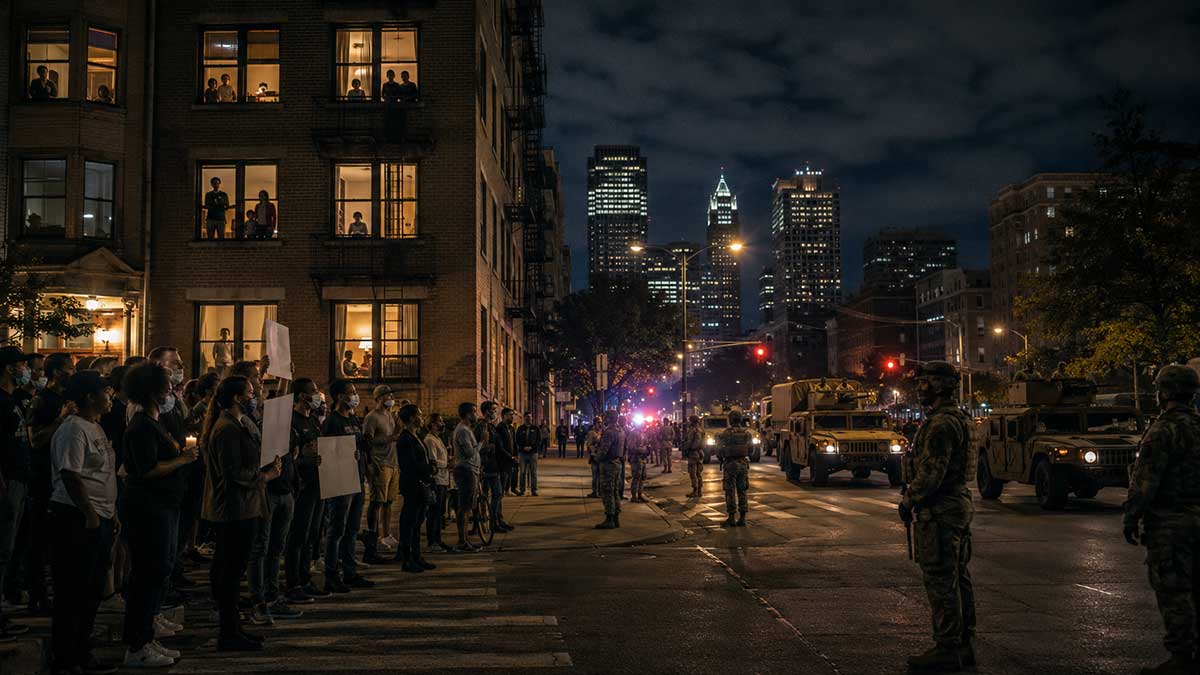
Opening — George Orwell
Fear is one of the oldest tools in politics.
Sometimes fear is justified. Cities may face riots. Borders may face pressure. Citizens may ask for protection. A government that refuses to keep order loses the confidence of the people.
But fear has another use.
It can make citizens accept what they would have rejected in calmer days. It can make emergency measures feel normal. It can turn uniforms in the streets into background scenery. It can make people say, “This is temporary,” long after temporary has become routine.
That is the question before us.
When the state says, “We are protecting you,” how does the citizen know where protection ends and control begins?
Question 1: How much authority should the government have during national crisis?
James Madison:
A government must have enough authority to defend the nation. But a free people must never give authority without limits.
Dwight Eisenhower:
Order matters. I do not dismiss that. If violence spreads, citizens expect the government to protect families, businesses, streets, and public life.
Jiang Xueqin:
That is what makes this issue difficult. Many people will welcome stronger enforcement if they feel unsafe. They may not see it as control. They may see it as relief.
Gen Z American:
But what if the same tools used against criminals get used against protesters? What if people who question the war or the draft are treated like threats?
George Orwell:
That is the usual path. Emergency authority rarely announces itself as oppression. It arrives as safety.
Eisenhower:
Yet no leader can simply stand aside if cities burn. Liberty does not mean lawlessness. A republic must be able to restore calm.
Madison:
True. But force must be tied to law. It must be narrow, accountable, and temporary in the real sense of the word.
Jiang Xueqin:
My concern is that by 2027, the line may blur. ICE, federal agencies, and the National Guard may no longer feel exceptional. They may become part of daily American life.
Gen Z American:
And once people get used to that, they stop asking why soldiers are in the streets.
Orwell:
The most dangerous control is the kind people no longer notice.
Question 2: Can National Guard deployment calm cities, or does it inflame them?
Eisenhower:
The National Guard can calm a city when the mission is clear, limited, and trusted. Their presence can stop violence and protect ordinary citizens.
Gen Z American:
But if people already distrust the government, soldiers in the streets may feel like intimidation. It can make anger grow faster.
Madison:
The meaning of force depends on legitimacy. If citizens believe the deployment protects them, it may calm unrest. If they believe it protects the government from them, it may inflame unrest.
Jiang Xueqin:
This is why the sequence matters. A failing Iran war, a possible draft, inflation, and protests would create a tense atmosphere. In that setting, the Guard is not neutral symbolism.
Orwell:
Every uniform tells a story. To one person it says, “You are safe.” To another, it says, “You are being watched.”
Eisenhower:
That is why discipline matters. Soldiers must never be used as political theater. They must not be props in a leader’s performance.
Gen Z American:
Young people are sensitive to that. We can tell when something is being staged for cameras.
Madison:
If military presence becomes routine in civic life, the republic changes character. The citizen begins to look at the state with suspicion, and the state begins to look at the citizen as a problem.
Jiang Xueqin:
Then the Guard may stop being a solution and become part of the cycle. Protest brings deployment. Deployment brings anger. Anger brings more deployment.
Orwell:
A government may call that stability. The people may call it occupation.
Question 3: Who decides the difference between public safety and political control?
Jiang Xueqin:
This is the center of the problem. Every government says its actions are for public safety. Very few admit they seek control.
Madison:
That is why free nations require courts, legislatures, local authority, press scrutiny, and citizens willing to object. No one branch should define safety alone.
Eisenhower:
Clear standards matter. Is there violence? Is property being destroyed? Are people under direct threat? The answer must guide the response, not political advantage.
Orwell:
But language will be bent. “Safety” may mean silence. “Extremist” may mean critic. “Disinformation” may mean inconvenient speech. The labels must be watched.
Gen Z American:
That is why people my age want proof. Show us the threat. Show us the limits. Show us who is accountable when the government goes too far.
Madison:
A republic should welcome those questions. Suspicion of unchecked authority is not hatred of country. It is part of citizenship.
Eisenhower:
And respect for order is not hatred of liberty. A serious country must hold both ideas at once.
Jiang Xueqin:
If America loses that balance, each side will tell a different story. One side will say, “We are restoring law.” The other will say, “We are losing freedom.”
Orwell:
Then truth becomes tribal. The same event appears as rescue on one screen and tyranny on another.
Gen Z American:
So who decides? Maybe no single person should. Maybe the point is to keep the decision visible, argued, limited, and challengeable.
Madison:
That is the wisdom of constitutional government. Authority must act, but it must answer.
Eisenhower:
The uniform should protect the citizen, not frighten the citizen. The badge should enforce law, not punish dissent.
Orwell:
When safety needs no explanation, control has already won.
Closing — James Madison
A free nation does not survive by choosing between order and liberty.
It survives by refusing to sacrifice either one completely.
Public safety is a real duty. Citizens should not be abandoned to violence, disorder, or fear. But liberty is not a decoration for peaceful times. It is the foundation that gives public safety its moral purpose.
If enforcement becomes detached from law, it becomes domination.
If protest becomes detached from responsibility, it becomes chaos.
The republic must stand in the narrow place between them, where authority is strong enough to protect but restrained enough to remain answerable.
That narrow place is difficult to hold.
But once it is lost, it is rarely returned without pain.
Topic 4: The Economy as the Hidden Battlefield
Opening — Prof. Jiang Xueqin
Most people do not experience national crisis through policy papers.
They experience it through prices.
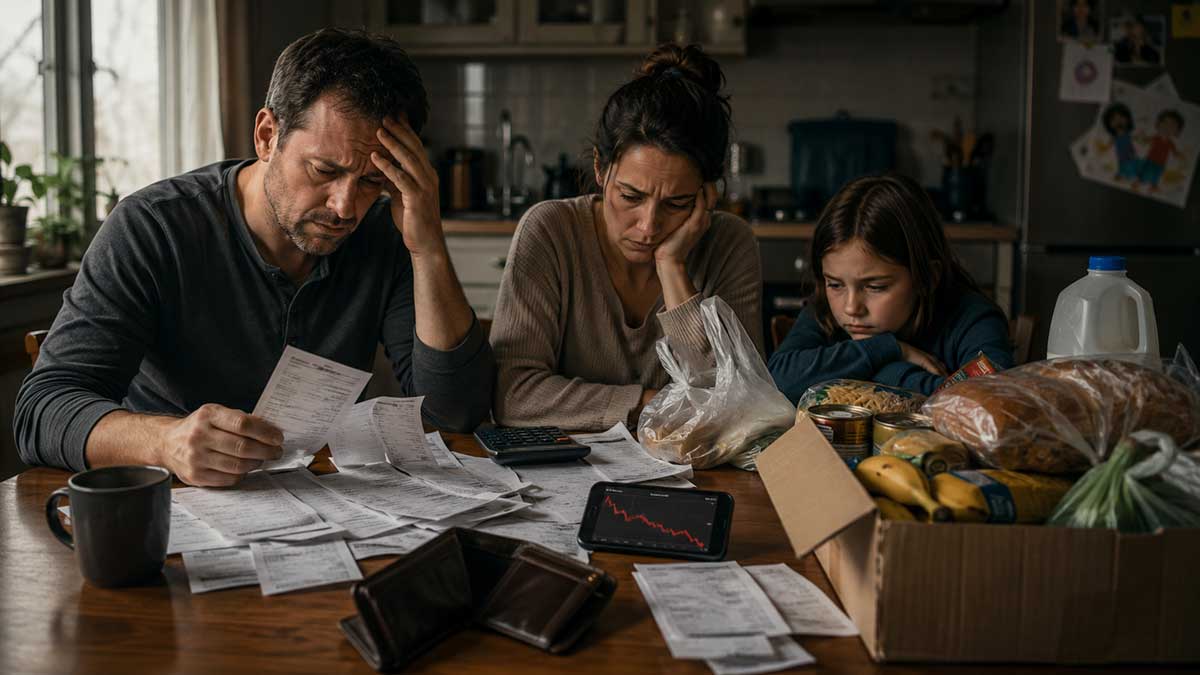
The milk costs more. The rent rises again. The retirement account drops. The paycheck feels smaller. The grocery cart becomes lighter. The family dinner becomes quieter.
War may begin with missiles, but the public feels it through bills.
That is why the economy is the hidden battlefield. It is where grand strategy becomes ordinary pain. It is where speeches about strength meet the kitchen table.
If war, inflation, supply-chain shocks, and market panic arrive together, the question is no longer whether leaders can explain the crisis.
The question is whether families can survive it.
Question 1: Can the public support a war when daily life becomes unaffordable?
Gen Z American:
It is hard to care about foreign policy when rent is impossible, groceries are high, and every month feels like a math problem you cannot solve.
Dwight Eisenhower:
A nation at war must understand the burden it places on ordinary people. War is never paid for by speeches. It is paid for by workers, families, taxes, debt, and grief.
James Madison:
The public may accept sacrifice when it trusts the cause. But when daily life becomes unbearable, patience fades. A government cannot demand endless endurance without giving clear reasons.
George Orwell:
The language will become noble. Sacrifice. Resilience. Duty. Shared burden. Yet many citizens will notice that the burden is not shared equally.
Jiang Xueqin:
That is where anger grows. If leaders speak of national purpose, but families feel abandoned, the war becomes personal.
Gen Z American:
People my age already feel behind. A war economy could make us feel permanently locked out of the future.
Eisenhower:
Leadership must never forget morale at home. A soldier overseas depends on a public that believes the mission has worth.
Madison:
Public support cannot be forced for long. It must be renewed through honesty, limits, and accountability.
Orwell:
If the government says, “This pain proves your patriotism,” people may begin to ask whether patriotism has become a bill they never agreed to pay.
Jiang Xueqin:
A foreign war becomes dangerous at home when the public stops seeing it as protection and starts seeing it as the reason life is falling apart.
Question 2: Is economic collapse caused by war, policy, debt, panic, or all of them together?
Madison:
Economic collapse rarely has one parent. Debt, speculation, bad policy, global conflict, and public fear can all feed the same fire.
Jiang Xueqin:
That is why my warning is about collision. War with Iran could hit oil, shipping, food, markets, and confidence at the same time.
Eisenhower:
Supply lines matter. A modern economy depends on movement: fuel, ports, shipping lanes, factories, farms, credit. Break enough links, and the pain spreads fast.
Gen Z American:
But people will fight over who to blame. One side will blame the war. Another side will blame spending. Another side will blame corporations. Another side will blame foreign enemies.
Orwell:
Blame is politically useful. It gives people a face to hate when the system itself is hard to understand.
Madison:
Debt is no small matter. A republic that spends without discipline leaves future citizens with obligations they never voted for.
Eisenhower:
Yet panic can be as damaging as shortage. If people believe the system is failing, they may act in ways that make failure more likely.
Jiang Xueqin:
That is the just-in-time danger. The system works when everyone trusts that goods will arrive tomorrow. Once that trust breaks, stores empty, prices jump, and fear becomes behavior.
Gen Z American:
So collapse may not look like one dramatic crash. It may look like everything getting harder at once.
Orwell:
And then the government will search for language that keeps people calm without admitting how fragile the system was.
Madison:
A free society must demand truth in such moments. Comforting lies may soothe for a day, but they poison trust for years.
Question 3: What happens when the middle class feels abandoned?
Jiang Xueqin:
The middle class is where stability lives. When the middle class feels abandoned, the political center begins to crack.
Gen Z American:
My parents’ generation was told that work would lead to security. My generation is told to work harder in a system where security keeps moving farther away.
Eisenhower:
A strong country needs more than weapons. It needs families who believe tomorrow can be better than today.
Madison:
Property, work, and family security give citizens a stake in the republic. When that stake disappears, anger becomes easier to organize.
Orwell:
A person who loses savings loses more than money. He loses faith in the story he was told about effort and reward.
Gen Z American:
If markets crash and food prices surge, people will not talk like economists. They will talk like parents, renters, workers, and retirees who feel betrayed.
Jiang Xueqin:
That betrayal is politically explosive. It can be directed left, right, upward, outward, or inward. Once people feel abandoned, they search for an enemy.
Eisenhower:
Wise leaders reduce panic before it becomes rage. They speak honestly, protect the vulnerable, and avoid turning citizens against each other.
Madison:
The danger is faction. Economic pain can divide citizens into groups convinced that another group is stealing their future.
Orwell:
Then propaganda becomes easier. Hungry people are easier to frighten. Frightened people are easier to direct.
Gen Z American:
The saddest part is that many people do not want revolution. They just want rent they can pay, food they can afford, and a future that does not feel closed.
Jiang Xueqin:
That is why the economy is not a side issue. It is the place where national trust either survives or dies.
Closing — Gen Z American
When older leaders talk about war and markets, they often sound far away from daily life.
But we do not live inside strategy. We live inside rent, gas, groceries, tuition, medical bills, and the fear that one emergency could erase everything.
If America enters a major war and the economy breaks under pressure, young people will not ask only who the enemy is. We will ask who protected our future.
A country cannot keep asking its people for sacrifice if those people already feel sacrificed.
The real battlefield may not be overseas.
It may be the kitchen table, where a family looks at the bills and quietly wonders how much more they can take.
Topic 5: What Civil War Looks Like in the Modern Age
Opening — George Orwell
Civil conflict does not always arrive with two armies facing each other.
It may arrive in smaller signs.
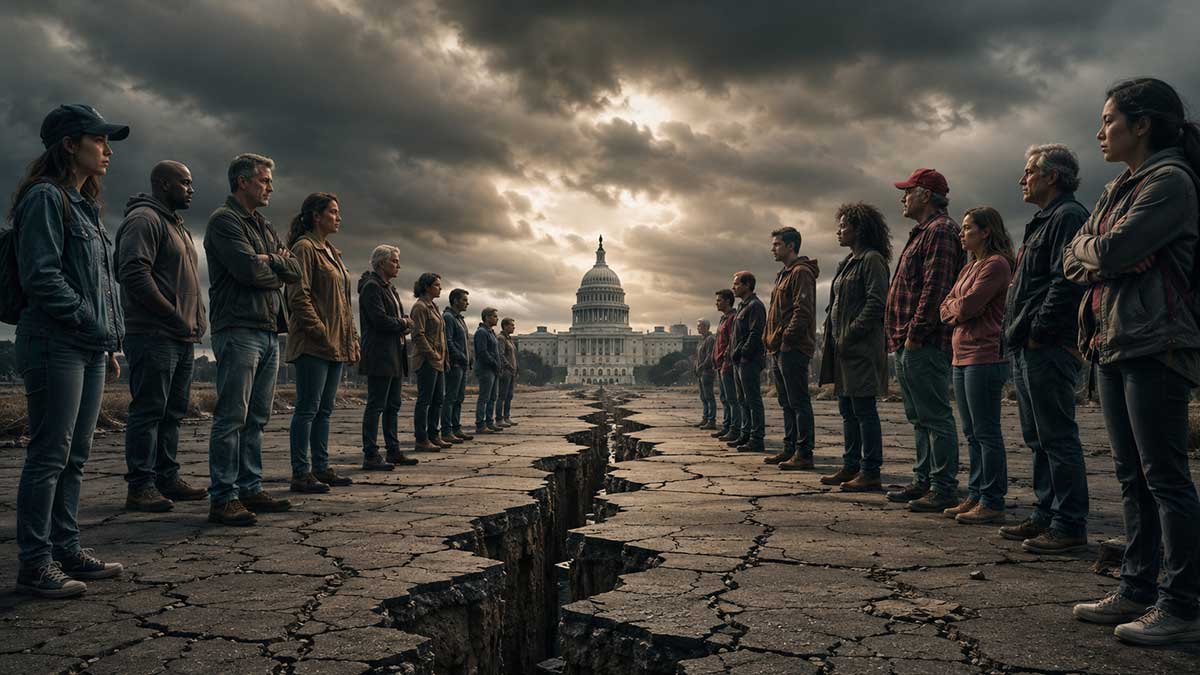
A nation keeps its flag, its courts, its elections, its news channels, its police, its military, and its official speeches. On paper, the country still functions. But underneath, the bond between citizens begins to break.
People stop arguing to persuade. They argue to condemn.
Neighbors no longer see disagreement. They see danger.
Institutions no longer feel neutral. They feel captured.
Words become weapons before streets become battlegrounds.
That is the modern form of civil conflict. It is everywhere and nowhere at the same time. It is not one battlefield. It is a thousand small breaks in trust.
Question 1: Does civil war begin with guns, or with the loss of trust?
Jiang Xueqin:
The first sign is not gunfire. The first sign is when citizens no longer believe the same country belongs to them.
James Madison:
A republic depends on disagreement, but disagreement must remain inside a shared loyalty to the system. Once that shared loyalty disappears, elections become threats instead of corrections.
Dwight Eisenhower:
People often think order collapses all at once. In reality, confidence erodes slowly. Then one crisis reveals how much damage had already been done.
Gen Z American:
That is how it feels now. People do not just disagree. They think the other side is evil, brainwashed, dangerous, or trying to destroy America.
George Orwell:
Hatred becomes easier when language removes the human being. The opponent becomes a category. Once that happens, cruelty feels cleaner.
Madison:
The republic was built for factions, but it was not built for permanent hatred. Faction can be managed. Mutual contempt is far harder.
Jiang Xueqin:
That is why my prediction is not about a traditional civil war. It is about the conditions that make low-level conflict normal.
Eisenhower:
A nation can survive anger. It cannot survive forever on suspicion.
Gen Z American:
So the danger starts when people stop asking, “How do we fix this together?” and start asking, “How do we defeat them?”
Orwell:
Yes. Civil war begins in the imagination before it reaches the street. People first imagine their fellow citizens as enemies. Then action follows.
Question 2: Can a nation survive when both sides think the other side is destroying the country?
Madison:
A republic requires restraint from winners and patience from losers. If every election feels like national death, no side will accept defeat peacefully.
Eisenhower:
Leadership matters most in that moment. A responsible leader lowers the temperature. A reckless one turns fear into fuel.
Jiang Xueqin:
The danger in 2027 is that several pressures may hit at once: war, draft resistance, Guard deployment, economic pain, and public anger. Each side will explain the crisis through its own story.
Gen Z American:
One side will say, “The government is becoming authoritarian.” Another side will say, “The country is falling into chaos and needs order.” Both will feel scared.
Orwell:
Fear is the bridge between rival tribes. Each side may hate the other, yet both may live inside fear.
Madison:
A wise constitution slows anger. Courts, federalism, elections, legislatures, local government, and civil society all exist to keep one passion from consuming the whole nation.
Eisenhower:
But institutions need public trust. A court ruling cannot calm people who have already decided the court is corrupt. An election cannot settle a dispute if millions believe the result is illegitimate.
Jiang Xueqin:
That is the civil-war ingredient: not violence alone, but the belief that normal methods no longer work.
Gen Z American:
Then people look for shortcuts. Street action. Online rage. Militias. Doxxing. Boycotts. Retaliation. Every side says it is defending itself.
Orwell:
And every side learns to speak in the language of emergency. Once everyone claims emergency, ordinary law begins to look weak.
Madison:
That is when liberty is most at risk. Not from one faction only, but from the public’s exhaustion with restraint.
Question 3: What would it take to stop the spiral before it becomes normal?
Eisenhower:
The first need is honest leadership. No leader should gain power by making Americans hate each other more.
Madison:
The second need is limits. Emergency power must remain answerable. Public safety must be tied to law. Military force at home must never become routine.
Jiang Xueqin:
The third need is truth about cost. If the country goes to war, leaders must tell the people what the war may demand: money, time, lives, fuel, patience, and social strain.
Gen Z American:
And young people need to be spoken to like citizens, not tools. If leaders want service, they must first show respect.
Orwell:
The fourth need is protection of language. Citizens must resist words that make hatred feel moral. Traitor. Vermin. Enemy within. Such words prepare the mind for abuse.
Eisenhower:
Communities matter too. The country will not be held together only in Washington. It will be held together in families, churches, schools, workplaces, neighborhoods, and local friendships.
Madison:
Self-government begins with self-restraint. A citizen must be able to lose an argument without treating the other side as an invader.
Jiang Xueqin:
To stop the spiral, America would need to prove that the system still has correction inside it. People must believe change is possible without breakdown.
Gen Z American:
That means both sides must stop acting like the future belongs only to them.
Orwell:
And citizens must recover the courage to see opponents as human. That sounds simple. In a poisoned age, it is almost revolutionary.
Eisenhower:
The nation must remember that strength is not noise. Strength is discipline, patience, truth, and the ability to hold together under pressure.
Madison:
If the people cannot recover trust, no law will be strong enough to replace it.
Closing — Prof. Jiang Xueqin
When I speak of civil war, I am not speaking of blue uniforms and gray uniforms.
I am speaking of a country that no longer knows how to absorb pain.
A war abroad. A draft at home. Federal force in the cities. Food prices rising. Markets falling. Families losing savings. Young people refusing orders. Older people demanding control. Leaders calling every crisis an emergency.
That is how a nation enters a new kind of conflict.
Not in one dramatic moment.
But through repetition.
One protest. One crackdown. One riot. One market crash. One angry speech. One accusation. One rumor. One city after another. One family argument after another.
Then the abnormal becomes normal.
My warning is not that America must collapse. My warning is that the ingredients are visible.
A nation can still choose another path. But it must see the danger clearly first.
Civil war does not begin when people pick up weapons.
It begins when they lay down trust.
Final Thoughts by Prof. Jiang Xueqin
I do not say that collapse is guaranteed.
I say the ingredients are visible.
A foreign war that cannot be finished cleanly.
A draft that young people may reject.
Federal force entering city life.
An economy strained by war, debt, supply chains, inflation, and panic.
A public already divided into separate realities.
These are not small matters.
A nation can survive war if it trusts its leaders.
A nation can survive hardship if it believes sacrifice is shared.
A nation can survive protest if it trusts the system can still correct itself.
A nation can survive disagreement if citizens still see one another as fellow citizens.
But when trust is gone, every crisis becomes larger than itself.
A war becomes proof of corruption.
A draft becomes proof of betrayal.
Law enforcement becomes proof of tyranny.
Protest becomes proof of chaos.
Economic pain becomes proof that the system has failed.
Then the nation enters a dangerous emotional condition. Every side feels defensive. Every side feels wounded. Every side believes it is the last barrier against disaster.
That is how modern civil conflict begins.
Not always with armies.
Not always with formal declarations.
Not always with one dramatic moment.
It begins when people no longer believe that peaceful correction is possible.
It begins when citizens see the state as an enemy, and the state begins to see citizens as threats.
It begins when politics becomes permanent emergency.
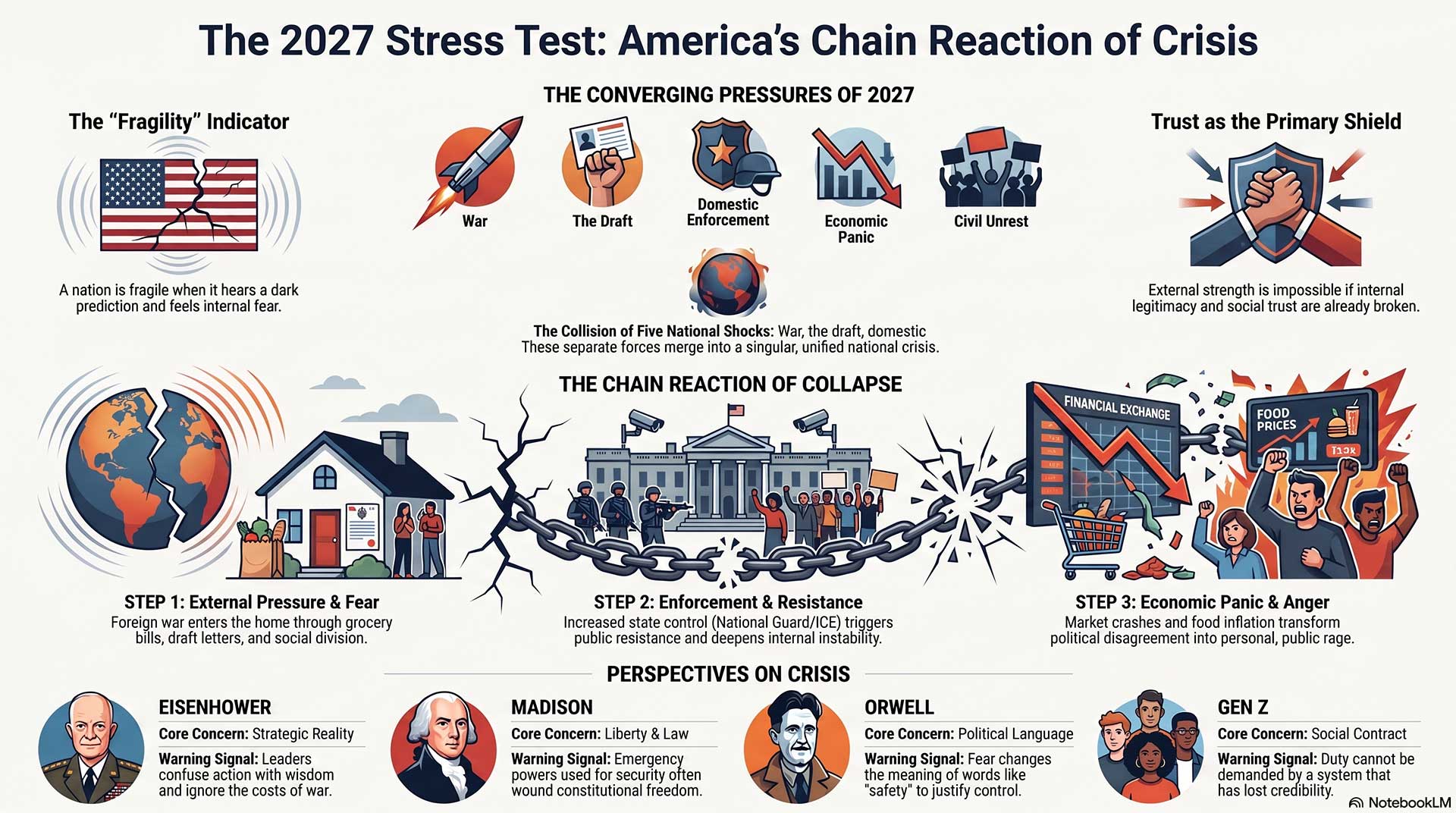
My warning about 2027 should not be read as prophecy. It should be read as a stress test.
If these pressures arrived together, what would hold America together?
The answer cannot be military strength alone.
It cannot be police strength alone.
It cannot be market strength alone.
It cannot be media messaging alone.
The answer must be trust.
Trust built by truth.
Trust protected by restraint.
Trust restored through accountability.
Trust shown by leaders who do not ask ordinary people to suffer for decisions made far above them.
A nation does not collapse in one day.
It collapses when too many people stop believing that the system still belongs to them.
If America wants to avoid that future, it must repair trust before the crisis arrives.
Once the crisis arrives, it may be too late to invent it.
Short Bios:
Prof. Jiang Xueqin is the central warning voice in this conversation. He presents the possibility that war, domestic enforcement, economic shock, and public distrust could collide by 2027. His role is not to predict every detail with certainty, but to ask what happens when several national pressures arrive at once.
Dwight D. Eisenhower enters this conversation as the voice of military experience and strategic restraint. As a general and president, he understood both the necessity of defense and the danger of entering conflicts without a clear end. In this discussion, he reminds us that war must never be confused with wisdom.
James Madison enters as the constitutional conscience of the conversation. He asks what happens when emergency power expands, when liberty is treated as secondary, and when citizens begin to feel governed rather than represented. His role is to defend the fragile balance between order and freedom.
George Orwell enters as the watcher of fear, language, and political control. He sees how words such as safety, emergency, loyalty, and threat can be used to reshape public thought. His role is to warn that civil conflict often begins in language before it appears in the streets.
The Gen Z American enters as the human voice of the future. This person represents young citizens who may inherit war, debt, distrust, and social fracture. This voice asks whether a nation can demand sacrifice from a generation that feels ignored, priced out, and unconvinced.
Leave a Reply