
What happens when someone wins the game they spent years trying to win, but joy does not arrive?
That is the question at the heart of this imaginary conversation inspired by Alex Hormozi and Tony Robbins.
In the original interview, Alex speaks with unusual honesty. He has built companies, gained influence, helped countless entrepreneurs, and created wealth most people only dream about. Yet he admits that success has not fully answered the deeper question of joy. He knows how to work. He knows how to build. He knows how to be useful. But he wrestles with something far more human: how to feel alive inside the life he created.
Tony Robbins challenges him directly. He does not tell Alex to stop working or become less ambitious. Instead, he points to the deeper issue: Alex may be living from duty, pressure, and usefulness more than joy, connection, and mission. Tony’s message is simple but difficult: the words we use become the emotions we live inside. If life is framed as suffering, obligation, and duty, even success can feel heavy. If life is framed as contribution, honor, and opportunity, the same work can feel alive again.
Across these five conversations, we gather voices from meaning, happiness, purpose, discipline, vulnerability, money, and leadership. Each topic opens one part of the bigger question.
Topic 1 asks why winning can stop feeling like winning.
Topic 2 asks when pain is useful fuel, and when it becomes a prison.
Topic 3 explores the words that secretly shape our identity.
Topic 4 asks whether a useful life is enough without joy.
Topic 5 looks at the next game of life after the first scoreboard has been won.
Together, these conversations are not only for entrepreneurs or high achievers. They are for anyone who has ever thought:
“I did what I was supposed to do. Why do I still feel restless?”
“I am useful to many people. Why do I feel disconnected from myself?”
“I keep chasing the next goal. When do I finally arrive?”
Maybe the answer is not to stop building.
Maybe the answer is to build from a different place.
Not from fear, but from love.
Not from proving, but from serving.
Not from suffering as identity, but from meaning as direction.
And perhaps the real game of life begins when success stops being only about what we achieve — and starts becoming about who we become, who we love, and who becomes freer because we lived well.
(Note: This is an imaginary conversation, a creative exploration of an idea, and not a real speech or event.)
Topic 1: When Winning Stops Feeling Like Winning

Guests:
Alex Hormozi — entrepreneur asking the honest question
Tony Robbins — life strategist challenging the frame
Arthur Brooks — happiness researcher
Brené Brown — vulnerability and emotional courage voice
Leila Hormozi — real-life witness and partner
The original interview begins with Alex asking Tony about duty, enjoyment, usefulness, and why success does not always create fulfillment. Tony pushes him to rethink the language of duty, pain, suffering, and contribution.
Opening — Tony Robbins
Tony Robbins:
There is a strange moment in life when a person gets what they thought they wanted, and instead of joy, they feel silence.
That silence can be terrifying.
People think failure breaks people. Sometimes winning does. Not winning itself, but winning the wrong game for too long. You spend years saying, “Once I get there, I’ll feel free.” Then you arrive, and the feeling does not come.
That is not a failure. That is feedback.
Today, we are not talking about how to win more. We are asking a deeper question:
What happens when winning stops feeling like winning?
Question 1: Why can someone become successful, respected, and wealthy, yet still feel emotionally flat?
Alex Hormozi:
I think the part that is hard to admit is that success can become normal very fast. The first time you make money, it feels unreal. The first time people thank you, it means something. The first time you build something that works, it feels alive.
Then repetition changes it.
A testimonial becomes another testimonial. Revenue becomes another number. A bigger goal becomes just another target. I do not think people lose gratitude on purpose. I think the brain adapts. What used to feel amazing becomes the new baseline.
For me, the honest struggle is this: I know the work matters. I can logically prove that it matters. But logic does not always create feeling.
That is the gap.
Arthur Brooks:
That gap is very common. People confuse achievement with happiness. Achievement gives satisfaction for a short time, but satisfaction fades. The mind says, “Great. What next?”
Happiness needs more than achievement. It needs enjoyment, love, meaning, and faith in something larger than the self. Many high-achievers overdevelop the satisfaction muscle and underdevelop the enjoyment muscle.
They know how to chase. They do not know how to receive.
A successful person may have money, admiration, and options, yet still lack simple delight. That is not rare. That is human.
Brené Brown:
Emotional flatness can be armor.
A lot of high-achievers learn early that being useful is safer than being needy. Producing is safer than feeling. Being impressive is safer than being seen.
Then one day, everyone praises the armor.
They say, “You are so disciplined. You are so strong. You are so successful.” But the person inside may be lonely, tired, or disconnected.
The hard part is that the armor worked. It protected you. It helped you build. But what protects you from pain can block joy too.
Leila Hormozi:
From the outside, people may see Alex as intense, strategic, and unstoppable. That is real. But there is another side too. There is playfulness. There is warmth. There is curiosity. There is a version of him that is not trying to solve everything.
I think success can reward one version of you so much that the other versions get less time.
People keep asking for the part of you that performs. The business needs that part. The audience wants that part. The team relies on that part.
But the person still needs room to exist beyond performance.
Tony Robbins:
That is exactly it.
You can be rich in achievement and poor in emotional aliveness. Rich is not money. Rich is feeling fully alive.
If you train your nervous system for pressure, pressure becomes home. If you train yourself to grind, grind becomes identity. Then peace feels boring. Joy feels suspicious. Rest feels weak.
That is not success. That is conditioning.
The answer is not to become less successful. The answer is to bring a different part of yourself to success.
Question 2: What is the difference between being productive and being alive?
Brené Brown:
Productive means something came out of you. Alive means you were present for it.
A person can write books, build companies, raise money, help thousands of people, and still be emotionally absent from the whole thing.
Being alive requires vulnerability. You have to let things matter. You have to risk disappointment. You have to stop controlling every emotional outcome.
A lot of people stay productive so they never have to feel uncertain.
Tony Robbins:
Productivity is mechanical. Aliveness is emotional, physical, spiritual.
You can check every box and still feel dead inside. Why? Your head is running the show. The head compares, measures, predicts, and protects. The heart connects.
I am not saying ignore the mind. The mind is a great servant. It is a terrible master.
When the heart leads, business becomes contribution. Marriage becomes discovery. Work becomes play. Problems become growth. The same life feels completely different.
Alex Hormozi:
I get that conceptually. The hard part is operationalizing it.
For me, productivity is measurable. I can count outputs. I can count revenue. I can count views, books sold, companies helped, deals done.
Aliveness is harder to measure.
That is part of why I think high-achievers avoid it. The scoreboard is vague. You cannot A/B test your soul.
But I can admit this: being productive does not mean I am enjoying my life. It just means I am producing.
Leila Hormozi:
I think aliveness shows up in very simple ways.
Do you laugh easily?
Do you notice beauty?
Do you enjoy a meal without turning it into a meeting?
Can you be with someone you love without optimizing the moment?
Can you do something that has no obvious return?
That is where many builders struggle. They turn every moment into a tool.
But not every beautiful thing is supposed to become useful.
Arthur Brooks:
There is a scientific way to say that. The human brain needs both reward and meaning. Productivity often gives reward. Aliveness comes from connection, attention, and love.
Many people live in the future. “After this launch. After this deal. After this number. After this milestone.”
But happiness is experienced only in the present.
A person who cannot be present cannot fully enjoy success, no matter how large it becomes.
Question 3: How can ordinary people notice early that they are building a life that works on paper but not in the heart?
Arthur Brooks:
One warning sign is when every answer starts with a number.
How much did I earn?
How many people saw it?
How fast did I grow?
How much did I improve?
Numbers are useful, but they cannot tell you whether your life is beautiful.
A second warning sign is delayed living. “I will enjoy life later.” That sentence can become a lifelong habit.
Alex Hormozi:
I would say another sign is that you keep winning but feel no increase in peace.
You hit the goal, then immediately need a bigger one. You take no time to absorb it. You do not celebrate. You move the target.
That can look like ambition, but it may be avoidance.
The scary thing is that the behavior gets praised. People call it discipline. They call it hunger. But sometimes hunger is just fear wearing a better outfit.
Tony Robbins:
Yes. The body gives signals first.
You wake up heavy.
You feel irritated by things you used to love.
You help people, but you do not feel connected to them.
You have more, but feel less.
That is not a character flaw. That is a signal.
The question is not, “What is wrong with me?” The better question is, “What part of me has been ignored?”
Brené Brown:
Another sign is resentment.
When you are building a life that only works on paper, you may start resenting the very things you chose. The business. The family role. The audience. The responsibility. The image.
Resentment often means there is a boundary, need, or truth that has been ignored.
For ordinary people, this may not look like building a hundred-million-dollar company. It may look like being the reliable one, the strong one, the provider, the helper, the parent who never asks for help.
The pattern is the same.
Leila Hormozi:
People should ask, “Who gets the best version of me?”
If strangers, customers, followers, or employees always get your best energy, but your spouse, children, friends, or private self get what is left, something is off.
A life that works on paper often impresses outsiders. A life that works in the heart feels good to come home to.
Closing — Alex Hormozi
Alex Hormozi:
What I am taking from this is uncomfortable but useful.
Winning is not the problem. Wanting to win is not the problem. Working hard is not the problem.
The problem is when winning becomes the only language you speak.
If the only way I know how to feel valuable is to produce, then success becomes another kind of cage. A very nice cage, maybe. But still a cage.
So maybe the next level is not a bigger scoreboard.
Maybe the next level is being able to win and feel it.
To serve and connect with it.
To build without disappearing inside the building.
That may be the harder game.
And maybe that is why it matters.
Topic 2: Push Motivation vs Pull Mission

Guests:
Alex Hormozi — the disciplined builder
Tony Robbins — the challenger of emotional patterns
Simon Sinek — the voice of purpose
Viktor Frankl — the voice of meaning
David Goggins — the voice of discipline and endurance
This topic grows from Tony’s distinction between push motivation and pull motivation in the original interview. Push comes from pressure, anger, duty, or proving yourself. Pull comes from a mission that calls you forward.
Opening — Simon Sinek
Simon Sinek:
Many people begin their lives being pushed.
Pushed by fear.
Pushed by poverty.
Pushed by rejection.
Pushed by the need to prove someone wrong.
Pushed by the memory of who they never want to be again.
That kind of motivation can be powerful. It can wake someone up. It can make them disciplined. It can help them survive.
But survival is not the same as purpose.
At some point, a person has to ask:
“Am I still being chased by my past, or am I being called by my future?”
That is the heart of today’s conversation.
Question 1: When does pain become useful fuel, and when does it become a prison?
David Goggins:
Pain becomes useful when it teaches you that you are not as weak as you thought.
A lot of people run from pain. They make comfort their god. Then the first hard thing breaks them.
Pain showed me the truth. It showed me that my mind was lying. It told me to quit long before my body was done. So I used pain to build proof.
But pain becomes a prison when you need it to feel real.
If you cannot move unless you are angry, that is not strength anymore. That is dependency. You are using the wound as fuel, but you never heal the wound.
Alex Hormozi:
That is the part I relate to.
Pain can create a very clear operating system. You know what to do. Wake up. Work. Improve. Win. Repeat.
There is comfort in that clarity.
But after a certain point, the pain that made you start does not explain why you should continue. I think many high performers keep using the first fuel source because it worked.
They do not stop to ask whether it is still the right fuel.
Tony Robbins:
Exactly.
Pain can be a signal. Pain can be leverage. Pain can get you moving. But pain is not meant to be your home.
If you build your identity around suffering, your nervous system will keep finding reasons to suffer. You will win and still feel tense. You will help people and still feel empty. You will have love in front of you and still feel restless.
The question is not, “Can pain drive me?”
Of course it can.
The better question is, “What happens to my life if pain is the only driver?”
Viktor Frankl:
Pain is never automatically noble. Suffering has meaning only when it points beyond itself.
A person can endure hardship for a loved one, for a moral duty, for a life-giving purpose. In that case, suffering may become sacred.
But one must be careful.
If a person begins to worship suffering, then suffering loses its meaning. The purpose is not to suffer. The purpose is to remain human, faithful, and responsible through suffering.
Simon Sinek:
Pain can tell you what you want to escape. Purpose tells you what you want to build.
Those are different directions.
A person who only escapes may become successful, but still feel haunted. A person who builds from purpose can work just as hard, but the work feels connected to something larger.
Question 2: Can discipline create freedom, or does it sometimes hide fear?
Alex Hormozi:
Discipline creates freedom in the practical sense.
If you are disciplined with money, you get financial options. If you are disciplined with health, you get physical options. If you are disciplined with learning, you get career options.
I do not think discipline is the enemy.
But discipline can hide fear when you cannot stop.
If rest feels like danger, something is off. If celebration feels like weakness, something is off. If every quiet moment feels like wasted time, then discipline may be covering anxiety or emptiness.
Viktor Frankl:
Discipline is healthy when it serves meaning.
Discipline becomes unhealthy when it serves avoidance.
A man may work hard for his family, his community, his calling. That work can be beautiful. But another man may work hard because silence frightens him.
The outward action may look the same. The inner reason changes everything.
David Goggins:
People love to say discipline is trauma. That is not always true.
Sometimes discipline is just telling the truth. You said you wanted something. Are you living like it or not?
But I agree with this: you must know what your discipline is serving.
If your discipline is only proving you are not the loser you used to be, then the old version of you is still running your life.
You may be winning, but you are still obeying the person you hate.
Tony Robbins:
That is strong.
Discipline is a tool. It is not an identity by itself.
If discipline is connected to love, purpose, and contribution, it creates energy. If discipline is connected to fear, shame, and self-attack, it drains energy.
The body knows the difference.
Two people can work 12 hours. One feels expanded. The other feels trapped.
The hours are not the whole story. The emotional state behind the hours is the story.
Simon Sinek:
Discipline without purpose can become performance.
You keep showing the world that you are strong, but you never ask what your strength is for.
Purpose gives discipline a direction. Without purpose, discipline can become an endless test that nobody can pass.
Question 3: What kind of mission can pull a person forward without destroying their joy?
Tony Robbins:
A mission that pulls you has to touch your heart, not just your résumé.
It cannot just sound impressive. It has to move you.
That is why I pushed Alex toward emotional connection. He already knows how to build. He already knows how to scale. The missing piece is not intelligence. It is aliveness.
A real mission makes you feel, “This is why I was given these gifts.”
Alex Hormozi:
For me, the mission has to connect to something I have lived.
If it is abstract, I can understand it but not feel it. If it ties back to a memory, a wound, a transformation, then it has a different weight.
The idea of helping young men reach financial security matters because I remember what it felt like to not feel safe. I remember what it felt like when money stopped being a constant threat.
That is not just a business idea. That is personal.
Simon Sinek:
The strongest mission usually has three parts.
It is personal.
It helps others.
It can outlive your own ego.
If the mission is only personal, it may become selfish. If it only helps others but has no personal connection, it may become dry. If it is tied only to ego, it will collapse when praise disappears.
A pull mission says, “I would still care about this, even if nobody applauded.”
Viktor Frankl:
A person does not invent meaning as if choosing a decoration. Meaning is discovered through responsibility.
Life asks each person a question. The answer is given through action.
The mission that pulls you forward is often found where your pain meets another person’s need.
David Goggins:
The mission has to be hard enough to demand your best.
If it is too easy, you will get bored. If it is fake, you will know. If it is only for applause, you will quit when applause fades.
A mission that pulls you does not remove suffering. It gives suffering a direction.
But you cannot let suffering be the goal. The goal is transformation.
Closing — Alex Hormozi
Alex Hormozi:
What I am taking from this is that pain may start the engine, but it should not be the steering wheel forever.
There is nothing wrong with discipline. There is nothing wrong with ambition. There is nothing wrong with using hard things to become stronger.
But if the entire life is built around escape, then no amount of winning fully feels like arrival.
Maybe the better question is not, “What am I running from?”
Maybe it is:
“What is now worthy of pulling me forward?”
That changes the game.
It turns work from proof into service.
It turns discipline from punishment into devotion.
It turns ambition from escape into mission.
That may be the point where a person stops being pushed by the past and starts being called by the future.
Topic 3: The Words That Secretly Run Your Life
Guests:
Tony Robbins — transformation through language
Alex Hormozi — the logical challenger
James Clear — habits and identity
Carol Dweck — growth mindset
Brené Brown — emotional truth and shame
In the original interview, Tony tells Alex that words shape emotion, identity, and experience. He challenges Alex’s phrases around duty, suffering, and “a goal worth suffering for,” arguing that repeated language can train a person into emotional patterns.
Opening — James Clear
James Clear:
Most people think their habits are actions.
Wake up early.
Work out.
Write.
Sell.
Build.
Save.
Repeat.
But every habit begins before the action.
It begins with identity.
And identity is often built from language.
“I am disciplined.”
“I am broken.”
“I always find a way.”
“I am not happy.”
“I have to suffer.”
“I am the strong one.”
“I cannot slow down.”
These sentences may sound small, but they quietly become instructions.
Today, we are asking one simple question:
What words have been running your life without your permission?
Question 1: What words do high-achievers use that quietly make them suffer?
Tony Robbins:
The most dangerous words are the ones that sound noble.
Duty.
Obligation.
Suffering.
Pressure.
Sacrifice.
Those words can produce results. I am not saying they are always bad. But if they become your emotional home, you will turn every blessing into a burden.
You have a company? Now it is a duty.
You have influence? Now it is pressure.
You have a gift? Now it is obligation.
You have people who need you? Now it is sacrifice.
Same facts. Different emotional life.
Change the word, change the state.
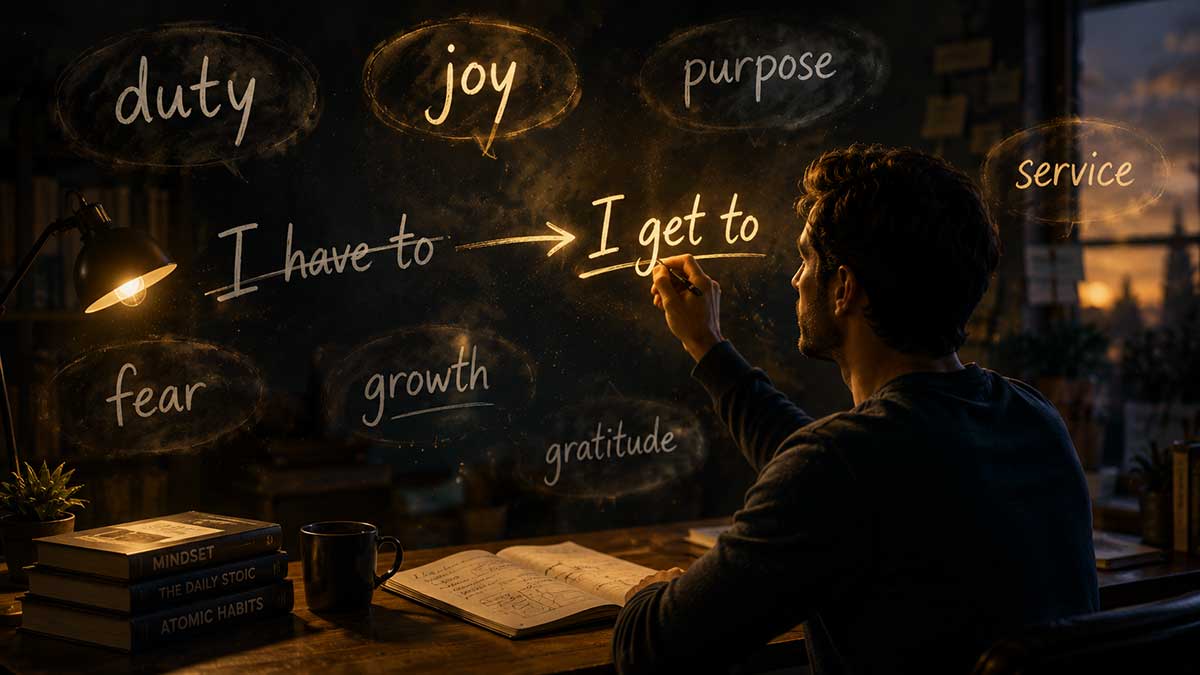
“It is my duty” feels different from “It is my honor.”
“I have to” feels different from “I get to.”
“I am suffering for this” feels different from “I am giving myself to this.”
That shift is not wordplay. It is biochemistry.
Alex Hormozi:
I think high-achievers use harsh words since harsh words create movement.
If I say, “I must,” I move.
If I say, “No excuses,” I move.
If I say, “Nobody cares, work harder,” I move.
The issue is that those phrases work.
That is what makes them difficult to give up. If a phrase made you rich, fit, respected, and competent, you start trusting it. You do not ask what it costs.
But I can see how a phrase can create output and still damage the way life feels.
So the question becomes:
Can I keep the standard without keeping the self-attack?
That is the part I find interesting.
Brené Brown:
High-achievers often use words that hide fear.
“I am just being realistic.”
“I am holding a high standard.”
“I do not need help.”
“I am fine.”
“I can handle it.”
Sometimes those words are true. Many times, they are armor.
The sentence “I do not need help” may mean, “I am scared to need anyone.”
The sentence “I am fine” may mean, “I do not know how to be honest safely.”
The sentence “I have no choice” may mean, “I am terrified of disappointing people.”
Language can protect us from shame. But it can also keep us alone.
Carol Dweck:
I listen for fixed identity statements.
“I am not an emotional person.”
“I am just intense.”
“I have always been this way.”
“I am not good at rest.”
“I am not the kind of person who celebrates.”
Those statements sound like self-knowledge, but they may be old decisions.
A growth mindset is not only about skill. It is about identity. A person can change how they relate to work, love, joy, failure, and ambition.
The phrase “I am this way” can close a door.
The phrase “I am learning a new way” opens one.
James Clear:
The hidden danger is repetition.
A sentence repeated once is a thought.
A sentence repeated daily becomes a belief.
A belief repeated through action becomes identity.
High-achievers often say things that reinforce the identity of the machine.
“I do not stop.”
“I do not feel tired.”
“I do not celebrate.”
“I do not need balance.”
“I just execute.”
Those words may build impressive results, but they can erase the human being inside the system.
Question 2: How can someone change their inner language without pretending life is easy?
Alex Hormozi:
This is the key problem for me.
I do not like fake positivity. If something is hard, I want to call it hard. If something hurts, I do not want to pretend it does not.
So I think useful language has to be accurate.
The better replacement for “this is suffering” is not “this is amazing.” That feels false.
Maybe it is:
“This is hard, and I choose it.”
“This is painful, but it serves something I value.”
“This is demanding, but it is not my enemy.”
“This is uncomfortable, and I can handle it.”
That kind of language does not lie. It gives direction.
Carol Dweck:
Yes. Growth language is not denial.
It does not say, “This is easy.”
It says, “This is not fixed.”
A person can say:
“I am not good at rest yet.”
“I am learning to celebrate.”
“I am practicing joy.”
“I am becoming someone who can receive love.”
The word “yet” is small, but it changes the future.
It gives the person room to grow without shaming who they have been.
Tony Robbins:
You do not need fake words. You need powerful true words.
Pain may be real. But the meaning you attach to pain is your choice.
If you say, “This is destroying me,” your body follows.
If you say, “This is strengthening me,” your body follows.
If you say, “This is my burden,” your body follows.
If you say, “This is my gift to give,” your body follows.
Same situation. Different command.
Your nervous system listens to your language.
Brené Brown:
The language has to include emotional honesty.
Some people try to replace negative words with strong words, but they skip truth.
They say, “I am grateful,” when they are actually exhausted.
They say, “I am blessed,” when they are resentful.
They say, “I chose this,” when they feel trapped.
Healthy language sounds more like:
“I am grateful, and I am tired.”
“I chose this, and I need support.”
“I love my work, and I miss myself.”
“I am strong, and I am lonely.”
That is not weakness. That is integration.
James Clear:
A practical method is to change the identity statement, then attach a small behavior.
Do not only say, “I am becoming someone who celebrates.”
Celebrate for 30 seconds.
Do not only say, “I am someone who asks for help.”
Ask one person one honest question.
Do not only say, “I get to do this.”
Pause before starting and name one reason the work matters.
Language sets the path. Behavior proves it.
Question 3: What is the difference between saying “I have to” and “I get to”?
Tony Robbins:
“I have to” puts you in survival.
“I have to run the company.”
“I have to take care of people.”
“I have to keep going.”
“I have to be strong.”
That language makes your own life feel like a cage.
“I get to” puts you in gratitude and agency.
“I get to lead.”
“I get to serve.”
“I get to use my gifts.”
“I get to build something that matters.”
The task may not change. Your state changes. And state changes everything.
James Clear:
“I have to” makes the habit feel imposed.
“I get to” makes the habit feel chosen.
That matters since habits are easier to keep when they match identity.
“I have to exercise” sounds like punishment.
“I get to train my body” sounds like stewardship.
“I have to work” sounds like pressure.
“I get to create value” sounds like purpose.
Same calendar. Different identity.
Alex Hormozi:
I can see the value, but I would add one caution.
Some people may use “I get to” to tolerate things they should change.
If someone is in a bad work situation, bad relationship, or unhealthy pattern, saying “I get to” could become self-manipulation.
So I think the phrase works when the choice is real.
Maybe the test is:
Do I genuinely choose this?
Does this serve my values?
Am I using this phrase to reconnect with meaning, or to avoid making a hard decision?
That distinction matters.
Brené Brown:
That is very true.
Gratitude should never be used to silence pain.
“I get to” is beautiful when it reconnects us with love.
It becomes dangerous when it denies boundaries.
A mother may say, “I get to care for my child,” and that may be deeply true. But she may still need rest.
A leader may say, “I get to serve my team,” and that may be true. But he may still need help.
Healthy gratitude does not erase human needs.
Carol Dweck:
“I get to” creates a learning posture.
“I have to” often narrows the mind. It says, “Perform. Survive. Avoid failure.”
“I get to” opens the mind. It says, “Learn. Practice. Contribute. Grow.”
For a general audience, this is very practical. You can take one repeated complaint and turn it into a choice.
“I have to go to work” becomes “I get to provide.”
“I have to study” becomes “I get to become capable.”
“I have to start over” becomes “I get to rebuild with more wisdom.”
That shift can restore agency.
Closing — Brené Brown
Brené Brown:
The words we use do more than describe our lives.
They reveal what we fear.
They protect what hurts.
They repeat old stories.
They shape what we believe is possible.
For high-achievers, the hardest words may not be harsh words. They may be tender words.
“I need help.”
“I am tired.”
“I want joy.”
“I miss myself.”
“I am proud of what I built.”
“I do not want to suffer my way through the rest of my life.”
Those sentences require courage.
Changing language is not about becoming soft. It is about becoming honest.
And sometimes, one honest sentence can begin a new life.
Topic 4: Useful Life vs Joyful Life

Guests:
Alex Hormozi — the builder who chose usefulness
Tony Robbins — the voice of emotional aliveness
Viktor Frankl — the voice of meaning
Arthur Brooks — the happiness researcher
Leila Hormozi — the witness of love, work, and daily life
In the original interview, Alex says happiness once felt unreachable, so he replaced it with being useful. Tony challenges him by asking whether a merely useful life is enough, or whether Alex deserves joy too.
Opening — Viktor Frankl
Viktor Frankl:
A useful life is a noble life.
To serve another person, to carry responsibility, to give oneself to work that matters — these are not small things. A human being does not find meaning by chasing pleasure alone.
Yet usefulness is not the same as fullness.
A person can be useful and still lonely.
A person can serve and still feel unseen.
A person can carry responsibility and still lose contact with the quiet joy of being alive.
So today we ask a delicate question:
Is it enough to be useful, or must a human being learn to receive joy too?
Question 1: Is being useful enough, or does a human being need joy too?
Alex Hormozi:
Usefulness has always made more sense to me than happiness.
Happiness felt unstable. It came and went. It was hard to define. It seemed like a bad target. Usefulness was clear.
Did I help someone?
Did I create value?
Did I make the system better?
Did someone’s life improve from my work?
That felt measurable. It felt honest.
But I can admit the weakness in that frame. If usefulness becomes the only standard, then I may never ask whether I am actually present for the life I am building.
I can be useful to millions and still be absent from myself.
Arthur Brooks:
That is the hidden trap.
Usefulness gives meaning, and meaning is a key part of happiness. But happiness also needs enjoyment and love.
A life of pure usefulness can become dry. It can start to feel like duty without delight.
The human person is not only a producer of outcomes. We are made for affection, laughter, beauty, worship, friendship, rest, and wonder.
If someone says, “I do not need joy. I only need to be useful,” I would gently ask, “Is that wisdom, or is that protection from disappointment?”
Tony Robbins:
Yes. And I would push harder.
If you say, “I do not need joy,” you are training yourself not to feel it.
You can still execute. You can still win. You can still help people. But your emotional range gets smaller.
Joy is not childish. Joy is fuel. Joy is connection. Joy is gratitude in the body.
A useful life without joy may look noble from the outside, but inside it can become survival in a nicer suit.
Leila Hormozi:
I think useful people often get rewarded for ignoring themselves.
The team praises them. The family depends on them. The audience thanks them. The business grows.
So they keep going.
But love is not just being useful to each other. Love is enjoying each other too.
If Alex only brought usefulness to our marriage, that would not be enough. I do not only want his output. I want him. The funny version. The relaxed version. The curious version. The version that can be in the room without trying to improve the room.
Viktor Frankl:
Joy should not be forced. It often appears as a byproduct of meaning and love.
Yet if a man refuses joy, he refuses one of life’s answers to him.
Life does not only ask us to suffer with dignity. It asks us to receive beauty with humility.
There is responsibility in service. There is also responsibility in gratitude.
Question 2: When does service become love, and when does it become emotional avoidance?
Tony Robbins:
Service becomes love when you are connected to the people you serve.
You feel them. You see them. You let their story touch you.
Service becomes avoidance when you use it to stay busy, stay admired, or stay away from your own heart.
You can feed people from love.
You can feed people to avoid feeling empty.
Same action. Different inner world.
The body knows the truth.
Brené Brown would say this, but I will say it simply: if you cannot receive love, you may start giving endlessly so you never have to be vulnerable.
Alex Hormozi:
That is uncomfortable, but useful.
I think service can become avoidance when the scale gets so large that the person disappears.
At small scale, you see the face. You hear the story. You feel the change.
At large scale, you see dashboards.
Reach. Revenue. Downloads. Watch time. Conversions. Testimonials.
The numbers prove impact, but they can remove emotional contact from impact.
So maybe the answer is not less scale. It is more connection inside the scale.
Leila Hormozi:
Yes. People think the opposite of selfishness is self-neglect. I do not think that is true.
If you serve everyone but become cold to the people closest to you, something is wrong.
If you give to strangers but cannot be tender at home, something is off.
If you help the world but never let anyone help you, that is not love. That is control wearing generous clothing.
Service becomes love when it makes you more human, not less human.
Arthur Brooks:
I would add that emotional avoidance often hides behind moral language.
“I am doing this for others.”
“I do not have time for myself.”
“People need me.”
“This mission matters too much.”
Those statements may be true, but they can still hide fear.
Healthy service increases love. Unhealthy service increases resentment, numbness, or superiority.
If service leaves you more open-hearted, it is likely love. If it leaves you emotionally unavailable, it may be avoidance.
Viktor Frankl:
A person must not use meaning to escape the self.
Responsibility is not an excuse to become blind to one’s own soul.
True service draws the person beyond the ego, yet it does not erase the person. It calls the person into fuller humanity.
The one who serves must still remain capable of love, gratitude, sorrow, and wonder.
Question 3: How can ordinary people serve others without losing themselves?
Leila Hormozi:
Start by telling the truth about your limits.
A lot of people do not lose themselves all at once. They lose themselves one ignored need at a time.
They say yes when they mean no.
They stay quiet when something hurts.
They give energy they do not have.
They call exhaustion loyalty.
Serving others does not require disappearing.
A healthier question is: “How do I give from strength instead of depletion?”
Viktor Frankl:
A person serves best when service is joined with responsibility and inner freedom.
No one should ask, “What do I feel like doing only?”
No one should ask, “What must I carry at all costs only?”
The better question is:
“What is life asking of me now, and how can I answer without betraying my conscience?”
Meaning requires responsibility. Wisdom requires discernment.
Alex Hormozi:
For ordinary people, I think it starts with separating role from identity.
You may be a provider, but you are not only a provider.
You may be a parent, but you are not only a parent.
You may be a leader, but you are not only a leader.
You may be useful, but you are not only useful.
When the role becomes the whole identity, you get trapped. If the business struggles, you feel worthless. If your family needs less from you, you feel lost. If people stop praising your service, you do not know who you are.
That is dangerous.
Tony Robbins:
You need rituals that reconnect you to life.
Not massive things. Simple things.
Move your body.
Look in your wife’s eyes.
Call someone you love.
Celebrate one win.
Feel one person’s story.
Give thanks before the next chase begins.
People think joy is a vacation. Joy is a state. You can train it.
If you train pressure every day, pressure grows. If you train gratitude every day, gratitude grows.
Arthur Brooks:
The key is ordered love.
Love people. Serve people. Work hard. Create value.
But do not confuse endless output with virtue.
Ordinary people can ask three questions each week:
Who did I serve?
Who did I love?
What gave me real joy?
If one of those is always missing, the life may be getting out of balance.
Closing — Leila Hormozi
Leila Hormozi:
A useful life is beautiful.
But I do not think the people who love us want us to be only useful.
They want our presence.
They want our laughter.
They want our honesty.
They want the version of us that is not performing, proving, fixing, or carrying everything alone.
Maybe the deeper goal is not to choose between usefulness and joy.
Maybe it is to let usefulness become warmer.
To let service become more personal.
To let achievement make room for love.
To let the person behind the work come back into the room.
A joyful life does not mean an easy life.
It means you are there for your own life.
Topic 5: Finding the Next Game of Life
Guests:
Alex Hormozi — the seeker of the next game
Tony Robbins — the challenger calling him into a bigger mission
Simon Sinek — the voice of purpose
Adam Grant — the voice of contribution and motivation
Morgan Housel — the voice of money, security, and enough
This topic grows from the later part of the interview, where Tony helps Alex move from abstract usefulness into a more personal mission tied to money, security, young men, and the feeling of finally being safe.
Opening — Morgan Housel
Morgan Housel:
The first game of life is often survival.
Get money.
Get respect.
Get stability.
Get out of danger.
Get enough proof that you are not who you used to be.
That game matters. It can change a family. It can heal fear. It can create dignity.
But after someone wins that game, a new question appears:
What now?
That question sounds simple, but it can shake a person. The first game gave structure. It gave hunger. It gave identity.
The next game cannot only be bigger.
It has to be wiser.
Question 1: After someone wins their first game, how should they choose the next one?
Alex Hormozi:
The first game is usually clear.
You are broke, so you make money.
You are weak, so you get strong.
You are unknown, so you build status.
You are insecure, so you build proof.
That game has a scoreboard.
The next game is harder since the scoreboard may not be obvious.
For me, the next game cannot just be more money. I understand money. I understand scale. I understand business. But I already know how that game feels.
So the question becomes: what problem would I still care about if it did not increase my status?
That question gets closer to truth.
Tony Robbins:
Yes. And I would say: do not pick a game only with your head.
Your head will pick something impressive.
Your heart will pick something alive.
The next game has to use your gifts, but it has to touch your emotions too.
If Alex says, “I want to help young men become financially strong,” that is not random. That comes from his story. He knows what it feels like to be unsafe. He knows what it feels like to get enough money that your nervous system can breathe.
That is not just a business niche. That is a wound turned into a mission.
Simon Sinek:
The next game should answer three questions:
Who do I want to serve?
Why does this matter to me personally?
What change would make me proud ten years from now?
A weak next game is built around applause.
A strong next game is built around service.
If the mission disappears when the applause disappears, it was never purpose. It was performance.
Adam Grant:
I would add one more filter: the next game should create contribution without requiring self-erasure.
Some high-achievers hear “serve others” and translate it into “give more until there is nothing left.”
That is not sustainable contribution.
The best next game gives energy back. It creates a loop: your skills help people, their growth gives you meaning, that meaning gives you more energy to help.
That is very different from endless output.
Morgan Housel:
Money has a strange role here.
At first, money is the game. Then money becomes protection. Later, if you are fortunate, money becomes a tool.
The mistake is to keep treating money as the scoreboard after it has already done its main job.
Once money gives you safety and options, the next question is not, “How do I get more?”
It is, “What should this freedom be used for?”
Question 2: What kind of goal is big enough to inspire you but human enough to touch you?
Tony Robbins:
A real goal has to have emotional charge.
If the goal is only big, it may become ego.
If it is only emotional, it may stay small.
You need both.
A goal like “help 100,000 men reach $100,000” works since it is measurable, but it is not only a number. It has a face. It has a story. It means a young man can provide. It means a family can breathe. It means a person can stop living in constant fear.
That is the difference.
You are not chasing a statistic. You are changing a life pattern.
Alex Hormozi:
That frame makes sense.
A goal has to be clear enough that I know whether I am winning. But it has to be personal enough that I care.
If I say, “I want to help entrepreneurs,” that is too broad.
If I say, “I want to help young men build the skill and financial base to become providers,” that hits differently.
I know that guy. I was that guy. I know what changes when someone gets their first real financial cushion. Their posture changes. Their relationship changes. Their future changes.
That feels more real.
Adam Grant:
The strongest goals often combine competence and compassion.
Competence asks: What am I unusually good at?
Compassion asks: Who needs that gift most?
Alex is unusually good at simplifying business, monetization, offer creation, and skill-building. The human target may be young men who feel lost, under-skilled, or unable to provide.
That intersection matters.
Purpose is often found where your excellence meets someone else’s need.
Simon Sinek:
The goal should be stated in human language.
Not “maximize financial literacy outcomes.”
Say:
“Help young men become capable providers.”
“Help families feel safe.”
“Help people become proud of how they earn.”
“Help builders turn skill into stability.”
People do not follow metrics. They follow meaning.
A number can guide the mission, but the story gives it life.
Morgan Housel:
The phrase “$100,000” has emotional meaning.
For some people, it means emergency money.
For some, it means freedom from panic.
For some, it means being able to marry, have children, help parents, leave a bad job, or sleep at night.
The exact number matters less than what it represents.
It represents enough.
And “enough” may be the most underrated word in money.
Question 3: How can people who are not rich or famous create their own “moonshot” in daily life?
Simon Sinek:
A moonshot does not have to be global.
For one person, it may be rebuilding trust with a child.
For another, becoming debt-free.
For another, mentoring five young people.
For another, creating a peaceful home.
For another, becoming the first stable person in the family line.
Scale does not create meaning.
Service creates meaning.
Morgan Housel:
Ordinary people should not copy billionaire-sized goals. They should copy the principle.
A moonshot has three traits:
It is bigger than comfort.
It is tied to your real life.
It helps someone beyond you.
A mother going back to school can be a moonshot.
A father breaking a cycle of anger can be a moonshot.
A worker saving the first $10,000 in his family can be a moonshot.
The outside world may not clap, but the family tree changes.
Alex Hormozi:
For people starting out, I would make it very practical.
Pick a person you used to be.
Find ten people who are still stuck there.
Help them get one step out.
That is a mission.
You do not need a foundation. You do not need a giant platform. You need proof that your pain can become useful to someone else.
If you were broke, help someone budget.
If you were unhealthy, help someone walk.
If you were lost, help someone choose a direction.
If you were lonely, help someone feel seen.
Start small. Make it real.
Adam Grant:
There is research showing that helping others can increase motivation when people can see the impact of their work.
So the practical advice is: stay close to the people you help.
Do not turn every act of service into a dashboard.
Hear the story.
See the face.
Learn the name.
Ask what changed.
The emotional connection keeps the mission alive.
Tony Robbins:
Yes. Get associated.
People feel dead when they get disconnected from impact.
If you want a moonshot, do not sit in a room thinking forever. Go serve. Go listen. Go where the need is. Let your heart get touched.
Your mission is not found only by analysis.
It is found through contact.
When you see someone suffering in a way you understand, and you know you can help, something wakes up.
That is where the next game begins.
Closing — Tony Robbins
Tony Robbins:
The next game is not about retiring from ambition.
It is about purifying ambition.
When you are young, ambition may say, “I need to prove myself.”
Later, ambition can say, “I want to use myself.”
That is a different life.
The first game may give you success.
The next game can give you meaning.
The first game may make you strong.
The next game can make you generous.
The first game may help you escape fear.
The next game can help someone else escape theirs.
That is where fulfillment lives.
Not in more winning for its own sake.
In becoming the kind of person whose winning turns into freedom for others.
Final Thoughts
This conversation began with achievement, but it ends with identity.
Alex Hormozi’s honesty matters because many people quietly live the same pattern on a smaller scale. They work hard, carry responsibility, help others, and keep moving forward. From the outside, their life may look successful. Inside, they may feel tired, numb, or strangely far from joy.
Tony Robbins’ challenge is not simply “be happier.” It is deeper than that.
He is asking Alex to question the emotional language behind his whole life.
Do I have to do this, or do I get to do this?
Am I suffering for a goal, or am I giving myself to something meaningful?
Am I being useful from love, or from fear?
Am I still being pushed by my past, or am I being pulled by a mission?
The answer will not be the same for every person.
For some, the next step is rest.
For some, it is honesty.
For some, it is a new mission.
For some, it is reconnecting with family.
For some, it is changing the words they repeat every day.
For some, it is learning that joy is not laziness. Joy is not weakness. Joy is not childish. Joy is part of a full human life.
A useful life is beautiful.
A disciplined life is powerful.
A successful life can open doors.
But none of these should require a person to disappear inside the work.
The best version of success is not the version where you win but feel nothing.
It is the version where your gifts serve others, your heart stays open, your closest relationships receive your presence, and your ambition becomes a blessing instead of a burden.
That may be the real next game:
To keep building, but not as a machine.
To keep serving, but not as an escape.
To keep growing, but not from fear.
To win in a way that makes other people freer — and leaves your own soul more alive.
Short Bios:
Alex Hormozi is an entrepreneur, investor, author, and founder of Acquisition.com. In this conversation, he represents the high-achiever who has mastered discipline, business, and usefulness, yet is honest enough to ask why success does not always create joy. His role is the seeker who turns personal struggle into a public question.
Tony Robbins is a life and business strategist, author, philanthropist, and speaker known for his work on personal transformation, psychology, leadership, and peak performance. In this conversation, he challenges Alex to move from duty and suffering into joy, emotional connection, and mission. His role is the direct mentor who refuses to let success become a cage.
Leila Hormozi is an entrepreneur, investor, and CEO of Acquisition.com. As Alex’s wife and business partner, she brings the most personal view of who Alex is beyond performance. In this conversation, she represents love, partnership, daily truth, and the reminder that people are more than their output.
Arthur Brooks is a writer, speaker, and happiness researcher known for his work on meaning, satisfaction, love, and the science of a happier life. In this conversation, he translates big emotional questions into practical ideas for ordinary people. His role is to explain why achievement alone cannot carry the full weight of happiness.
Brené Brown is a researcher and author known for her work on vulnerability, shame, courage, and emotional honesty. In this conversation, she helps reveal how high-achievers often use productivity, strength, and usefulness as armor. Her role is to show that being seen, needing help, and telling the truth are forms of courage.
Viktor Frankl was a psychiatrist, Holocaust survivor, and author of Man’s Search for Meaning. His work centers on meaning, responsibility, suffering, and human dignity. In this conversation, he helps clarify the difference between meaningful suffering and making suffering into an identity. His role is the voice of depth and moral seriousness.
Simon Sinek is an author and speaker known for his work on purpose, leadership, and the question of “why.” In this conversation, he helps turn ambition into mission. His role is to show how a person can move from chasing success to serving something larger than applause.
David Goggins is an endurance athlete, former Navy SEAL, author, and speaker known for extreme discipline and mental toughness. In this conversation, he represents the power and danger of pain as fuel. His role is to remind us that discipline can build freedom, but old wounds should not run the whole life.
James Clear is the author of Atomic Habits and a writer on habits, behavior change, and identity. In this conversation, he explains how repeated words become repeated behaviors, and repeated behaviors become identity. His role is to make the language of transformation practical.
Carol Dweck is a psychologist known for her research on growth mindset. In this conversation, she helps explain how identity can change when people stop saying, “I am just this way,” and begin saying, “I am learning a new way.” Her role is to open the door to personal change without denial.
Adam Grant is an organizational psychologist, author, and professor known for his work on motivation, work, generosity, and human potential. In this conversation, he helps explain how contribution can create energy when it is connected to real people. His role is to show how service can be meaningful without becoming self-erasure.
Morgan Housel is a writer and author known for his work on money, behavior, wealth, and enough. In this conversation, he helps frame money as safety first, then freedom, then a tool for meaning. His role is to explain why the next game after financial success should be wiser, not merely bigger.
Leave a Reply