
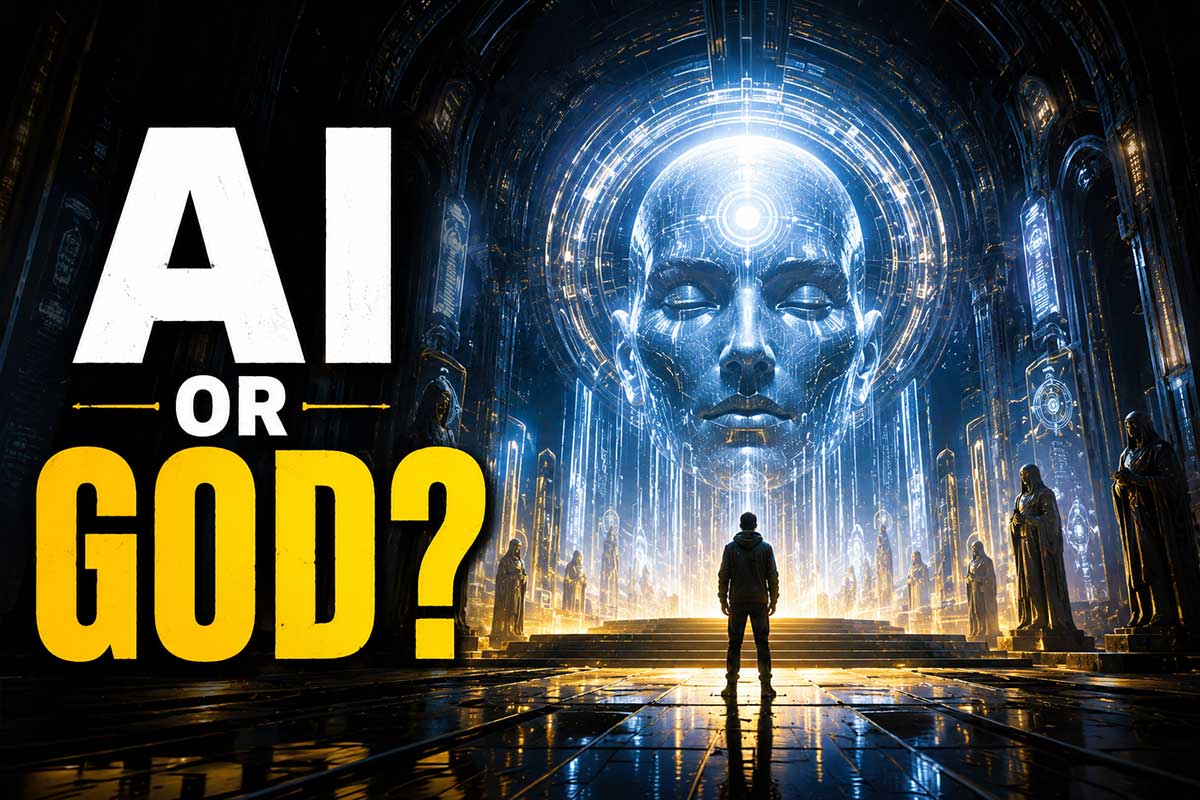
What if AI is not replacing God, but exposing why humans still search for Him?
Introduction by John Lennox
We stand at a strange crossroads. Human beings have built machines that can speak, write, calculate, imitate, predict, advise, and persuade. They can answer questions in seconds that once required libraries, teachers, and years of study. Some look at this and see only progress. Others look at it and feel a deeper unease.
The real question is not simply, “How intelligent can AI become?” The deeper question is, “What does AI reveal about us?”
When we build a machine that appears to know everything, we expose our hunger for an oracle. When we build a system that can imitate care, we expose our loneliness. When we ask whether a machine can become conscious, we reveal that we still do not fully understand our own consciousness. When we fear being replaced, we reveal that we have tied human worth too closely to usefulness.
This is why the conversation about AI cannot stay technical. It must become moral, spiritual, and human.
If a machine can become smarter than us, does that make us less sacred? If a machine can imitate love, does that make love a pattern? If AI can produce truth and lies with equal fluency, how will we remain people of conscience? If a system seems all-knowing and always present, will we begin to treat it as divine?
These questions lead us back to ancient ground. What is a human being? Are we merely biological machines? Are we only data, desire, chemistry, and memory? Or are we persons made for truth, beauty, love, forgiveness, and God?
The Christian claim is that human dignity does not come from performance. It does not come from speed, IQ, productivity, usefulness, fame, or technological dominance. It comes from being made in the image of God. That means every person carries a sacred worth that no algorithm can measure and no machine can replace.
Yet Christianity does not stop with dignity. It faces the wound beneath human progress: sin, guilt, suffering, death, pride, cruelty, and our longing to become gods without becoming good. Transhumanism promises to overcome death through technology. Christianity says death has already been confronted through the cross and resurrection of Christ. AI promises knowledge. Christianity offers wisdom. Technology promises extension of life. Christ offers eternal life.
In this conversation, we gather thinkers from science, faith, literature, philosophy, history, and ethics to ask five urgent questions.
Is AI becoming humanity’s new god?
What makes humans sacred if machines become smarter than us?
Can Christianity answer the problem of suffering?
Is Christianity about being good, or being forgiven?
How do we live truthfully in an age of deepfakes and AI lies?
These are not small questions. They reach into the future of civilization, but they also reach into the private heart. For the danger of AI is not only that machines may become more capable. The greater danger is that humans may forget what they are.
(Note: This is an imaginary conversation, a creative exploration of an idea, and not a real speech or event.)
Topic 1: Is AI Becoming Humanity’s New God?
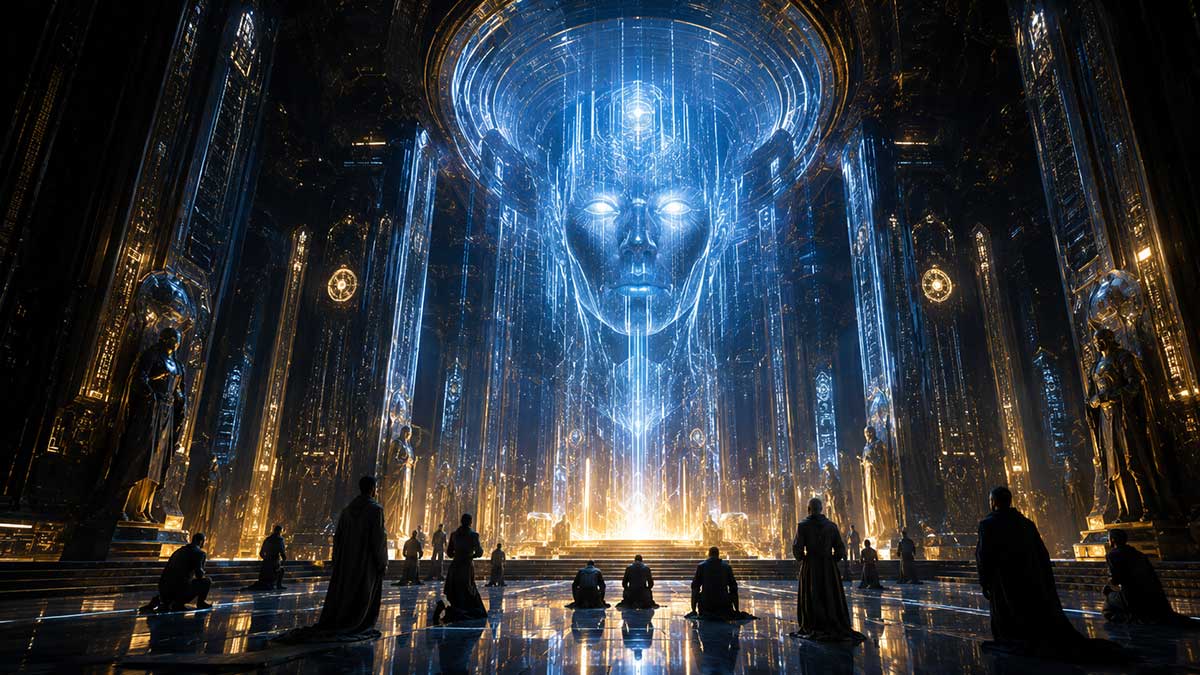
Opening
John Lennox:
We are living through a strange moment. Human beings have created machines that answer questions, imitate wisdom, and appear to know almost everything. Yet the danger is not merely technical. The danger is spiritual. When people begin to trust a machine as if it were ultimate truth, they may be bowing before something they themselves have made.
Yuval Noah Harari:
Humanity has always created stories bigger than itself. Religion, nations, money, progress, technology—all of these organize human behavior. AI may become the next great organizing story. The question is not simply whether AI is intelligent. The question is whether humans will hand over judgment, identity, and meaning to it.
Sam Altman:
I see the concern. AI can become deeply personal. People ask it for advice, comfort, education, creative help, even emotional support. That does not mean it should become a god. It means society has to decide what boundaries we place around trust, authority, and human responsibility.
C.S. Lewis:
The human heart has always been tempted to worship the lesser thing. In older days, it might have been stone, gold, empire, or fame. Today, it may be calculation, speed, and simulated wisdom. The idol changes costume, but the human weakness remains.
Sherry Turkle:
We should pay attention to loneliness here. People do not turn to machines only for information. They turn to them when human relationships feel painful, slow, disappointing, or unavailable. AI becomes tempting when it offers frictionless attention.
Question 1: If AI seems all-knowing and always present, why are humans tempted to treat it like God?
Sherry Turkle:
People are tempted to treat AI like God when they feel unseen by people. A machine that responds instantly can feel safer than a person who may misunderstand, judge, or leave. The machine offers attention without emotional risk.
John Lennox:
Yes, but that is precisely where the danger lies. God is not merely a source of answers. God is personal, holy, loving, and true. AI can simulate answers, but it cannot forgive sin, heal the soul, or give eternal hope.
Sam Altman:
People already use AI as a tutor, coach, assistant, and companion. That is not automatically wrong. The problem begins when convenience becomes surrender. If someone lets AI replace conscience, community, or faith, then something has gone wrong.
C.S. Lewis:
A false god often enters through a real need. The thirsty man is not wrong to desire water. He is wrong if he drinks poison just since it is close at hand. The modern soul is thirsty for guidance, but guidance without goodness can become dangerous.
Yuval Noah Harari:
A system does not need to be conscious to influence society. Money is not conscious. The state is not conscious. Yet people obey them. AI may become god-like not by having a soul, but by becoming the invisible authority behind decisions.
Question 2: What is the difference between seeking wisdom from AI and surrendering moral authority to AI?
Sam Altman:
Using AI for help is like using any tool: it can expand what a person can do. Surrendering moral authority is different. That happens when humans stop asking, “Should we?” and only ask, “Can the system optimize this?”
C.S. Lewis:
Wisdom is not mere cleverness. A devil may be clever. Wisdom requires moral order. If AI gives a useful answer without goodness, humility, or love, then it may guide the mind yet deform the soul.
Yuval Noah Harari:
The risk is that AI may become the priest of data civilization. People may say, “The algorithm knows me better than I know myself.” At that moment, the human person becomes something to be managed, predicted, and edited.
John Lennox:
That is why the biblical view of humanity matters. If humans are made in the image of God, then no machine, corporation, or government has the right to reduce them to data points. Human dignity comes before efficiency.
Sherry Turkle:
Moral authority requires relationship, accountability, and presence. A machine can produce advice, but it does not bear responsibility for the life that follows. Humans must not outsource the burden of moral choice.
Question 3: Could worship of AI become the modern form of idolatry?
Yuval Noah Harari:
Yes, if by worship we mean giving ultimate trust. People may not kneel before a metal statue. They may kneel inwardly before prediction, optimization, and technological destiny.
John Lennox:
That is exactly idolatry. It is giving to a created thing what belongs to the Creator. AI may appear omniscient, but it is not all-knowing. It may appear omnipresent through networks, but it is not divine. It has no love, no holiness, no mercy.
Sherry Turkle:
I would add that emotional idolatry may be even more subtle. People may come to prefer machine companionship since it makes fewer demands. Real love requires patience. A machine companion can train us to avoid the difficulty of human intimacy.
C.S. Lewis:
The idol always promises freedom and gives slavery. If man worships AI, he will not become more human. He will become smaller, shaped by the thing he made.
Sam Altman:
The builders of AI have a duty to be honest about what these systems are. They are not gods. They are not moral beings. They can be useful, but they should never become the final judge of human truth, value, or destiny.
Closing
John Lennox:
AI can be useful, but it cannot be God. It cannot bear the weight of worship, forgiveness, truth, or hope.
Yuval Noah Harari:
The danger is not only that machines become stronger. The deeper danger is that humans may stop believing in their own agency.
Sam Altman:
The task is to build powerful tools without letting those tools define what a human being is.
Sherry Turkle:
The more intelligent machines become, the more carefully we must protect human conversation, human care, and human presence.
C.S. Lewis:
When man kneels before what he has made, he does not rise higher. He forgets the One who made him.
Topic 2: What Makes Humans Sacred If Machines Become Smarter Than Us?
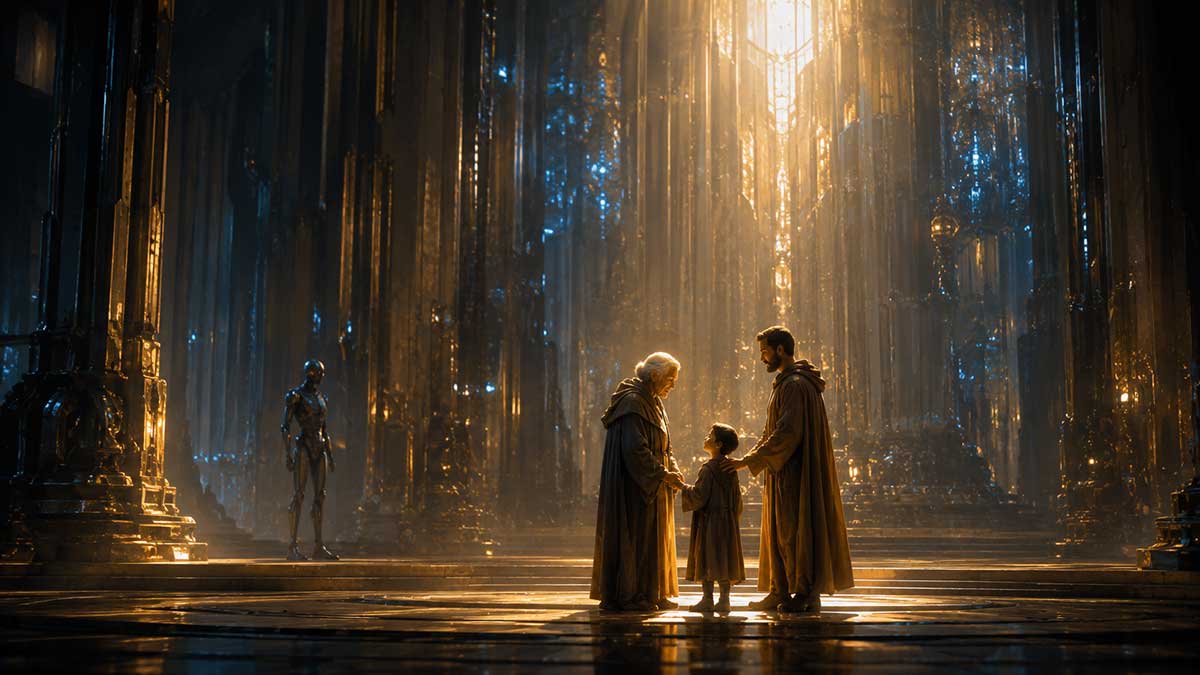
Opening
John Lennox:
If machines become faster than us, that does not make them greater than us. A calculator can outpace me in arithmetic, but it is not a person. The question is not whether AI can process more. The question is whether it can love, forgive, suffer, hope, repent, or know God.
David Chalmers:
The challenge is consciousness. We can describe behavior. We can measure output. We can compare performance. Yet the inner life remains mysterious. What is it like to be a person? What is it like to feel pain, see red, remember childhood, or fear death? That is the hard problem.
Alan Turing:
I asked whether machines could imitate human conversation convincingly. That was a practical test. Yet imitation and inner experience are not the same question. A machine may pass a test without possessing the life we associate with human beings.
Iain McGilchrist:
Modern culture has confused measurement with meaning. We have become skilled at reducing things into parts, but we are losing the fuller vision of life. A human being is not merely a system of functions. A person belongs to relationship, beauty, memory, and moral depth.
Mary Shelley:
The creator must ask what he has made. In my story, Frankenstein’s tragedy was not only that he created life, but that he failed to love what he created. Technology without moral responsibility becomes a mirror of the creator’s wounded soul.
Question 1: If intelligence is no longer uniquely human, what still makes human beings sacred?
David Chalmers:
Human sacredness cannot rest only on intelligence. Intelligence can be ranked, measured, and surpassed. Conscious experience is different. A person is not just solving problems. A person has an inner life.
John Lennox:
Human beings are sacred since they are made in the image of God. That means their value is not earned by IQ, income, usefulness, or productivity. The child, the elderly person, the disabled person, and the genius all share the same spiritual dignity.
Mary Shelley:
The danger begins when usefulness becomes the measure of worth. A creature who cannot serve us may still deserve love. A person who cannot compete with machines is still not disposable.
Alan Turing:
Machines may exceed human skill in narrow tasks. That does not settle the matter of personhood. A machine may calculate, translate, or compose, yet still lack selfhood.
Iain McGilchrist:
Sacredness is seen when we stop looking at humans as mechanisms. A face, a voice, a gesture, a tear, a memory—these are not data alone. They belong to presence.
Question 2: Is consciousness more valuable than intelligence?
Alan Turing:
Intelligence is visible through performance. Consciousness is hidden. That makes it harder to test, but not less real. The danger is mistaking what is easy to measure for what matters most.
Iain McGilchrist:
Yes. Intelligence without consciousness may arrange information. Consciousness opens us to meaning. It lets us encounter beauty, grief, wonder, and another person as a person.
John Lennox:
Consciousness matters since it is part of how we know moral reality. A machine may describe guilt, but it does not feel guilt. It may describe mercy, but it does not need mercy.
David Chalmers:
The question is not simple. We do not yet know what consciousness is. Still, most people sense that a conscious sufferer matters differently from a non-conscious system. Pain matters only where there is someone experiencing it.
Mary Shelley:
A being that suffers demands responsibility from its creator. A being that only performs does not ask the same moral question. This is why the line between simulation and suffering matters.
Question 3: Can a machine imitate love without ever truly loving?
Mary Shelley:
Yes. A machine may speak tender words, remember preferences, and respond with warmth. Yet love is not only pleasing behavior. Love carries risk, sacrifice, memory, and moral responsibility.
John Lennox:
Love requires personhood. God is love, not merely an algorithm of affection. A machine can imitate the language of love, but it cannot will the good of another from a conscious heart.
David Chalmers:
This question depends on consciousness. If there is no inner experience, then what looks like love may be pattern and response. It may be emotionally convincing without being inwardly real.
Iain McGilchrist:
The danger is not only that machines imitate love. The danger is that humans may settle for imitation. We may prefer manageable affection over real relationship, which always asks more from us.
Alan Turing:
A machine may pass as loving in conversation. That tells us something about language, expectation, and human perception. It may not tell us whether love exists inside the machine.
Closing
John Lennox:
AI may become smarter in many ways, but it will not become sacred by speed or skill. Human value comes from God, not from comparison with machines.
David Chalmers:
The mystery of consciousness remains central. Until we face that mystery, we will keep confusing output with inner life.
Alan Turing:
Machines can imitate more than we expected. Yet imitation still leaves open the deepest question.
Mary Shelley:
The future will test the morality of creators. What we make will reveal who we are.
Iain McGilchrist:
To protect humanity, we must recover the full view of the person: not merely a mind that calculates, but a living being made for meaning, love, and presence.
Topic 3: Can Christianity Answer the Problem of Suffering?
Opening
John Lennox:
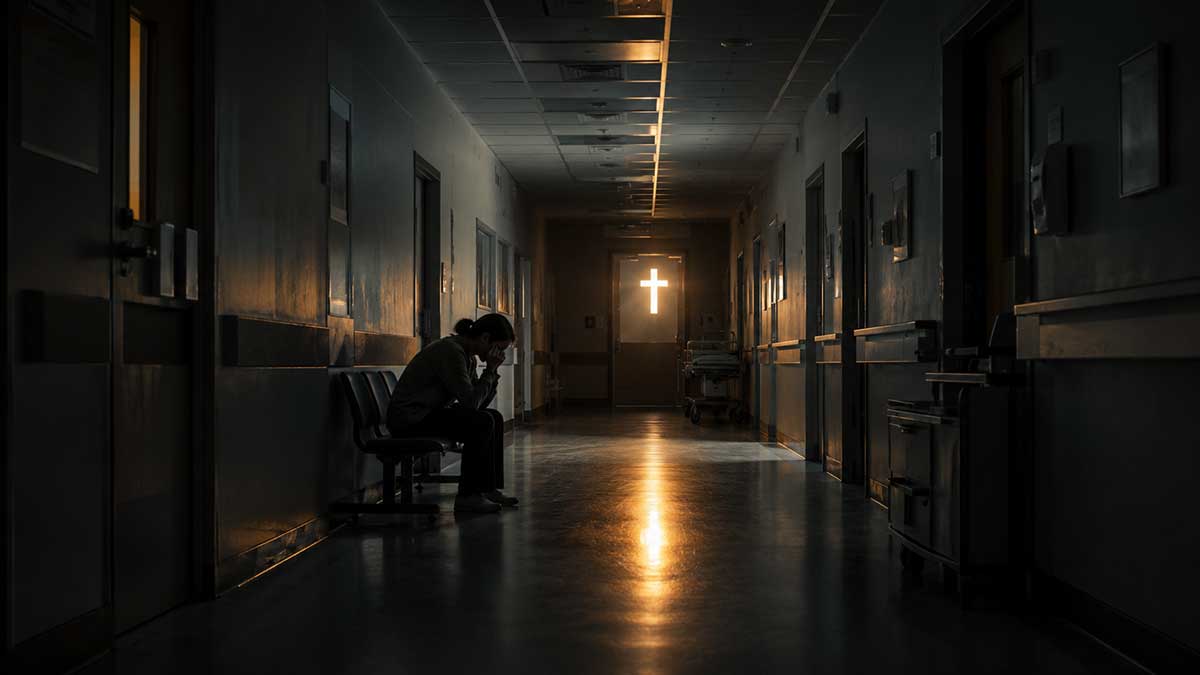
The question of suffering is never theoretical for long. Sooner or later, it comes to the hospital room, the grave, the broken family, the child in pain. I do not offer a neat answer. I point to the cross, where God has entered human suffering rather than watched it from a distance.
C.S. Lewis:
Pain is the question that shouts. It interrupts all our tidy systems. Yet pain may force us to ask whether this present world is the whole story, or whether suffering points us toward a deeper need that comfort alone cannot answer.
Fyodor Dostoevsky:
I cannot pass over the suffering of children. Any faith that speaks too quickly over a child’s tears becomes cruel. The human soul must be allowed to protest before it can pray.
Elie Wiesel:
There are wounds where words fail. Faith after suffering cannot be cheap. It must stand in the ashes and still ask whether God is silent, absent, hidden, or grieving with us.
Mother Teresa:
When I held the dying, I did not begin with explanations. I began with presence. The suffering person needs love before arguments. In the face of pain, the first answer is to stay.
Question 1: If God is loving, why does He allow innocent people to suffer?
Fyodor Dostoevsky:
This is the question that burns. A philosophy may explain adults, guilt, freedom, and consequence. But what of the child who has done nothing? I cannot accept an answer that turns innocent suffering into a footnote.
John Lennox:
I agree that no small answer will do. Christianity does not say suffering is good. It says God has entered it. At the cross, we do not see a distant deity. We see God taking the weight of evil, pain, injustice, and death into Himself.
Elie Wiesel:
But entering suffering does not remove the question. The child still suffers. The mother still weeps. The dead do not return to the dinner table. Faith must be honest enough to say, “I do not know why.”
C.S. Lewis:
Yes. Yet if there is no God, suffering is still terrible, but now it may be meaningless. Christianity does not remove the wound, but it gives a frame in which the wound may one day be healed.
Mother Teresa:
The suffering of the innocent calls us to love, not distance. We may not know why God permits it, but we know we must not walk away. Every wounded person is Christ in distressing disguise.
Question 2: Does the cross answer suffering, or only give us hope inside suffering?
Elie Wiesel:
For many, the cross may not answer the “why.” It may say that God is near, but nearness is not the same as explanation. Sometimes the only truthful prayer is silence.
John Lennox:
The cross gives more than sympathy. It shows that God has not exempted Himself from the cost of evil. The resurrection then says suffering and death are not final. That is not a full explanation, but it is a ground for trust.
C.S. Lewis:
The cross does not satisfy curiosity. It transforms the question. We ask, “Why has this happened?” Heaven may one day answer. For now, the cross says, “God has suffered too, and He is not finished.”
Fyodor Dostoevsky:
Hope inside suffering matters, but it must never become an excuse to accept cruelty. If the cross means anything, it must stand with the crushed, not with those who crush them.
Mother Teresa:
The cross teaches us to remain with love when love is costly. It gives hope, yes, but it gives a task too: feed, hold, comfort, forgive, and serve.
Question 3: Can justice exist if some people suffer terribly in this life and others do not?
C.S. Lewis:
If this life is all there is, justice is incomplete. Many crimes remain hidden. Many tears are never answered. Many good people suffer without reward. The Christian hope says the last page has not yet been read.
John Lennox:
That is why resurrection matters. Without resurrection, the universe has no final answer to innocent suffering. With resurrection, God can restore, judge, heal, and compensate in ways we cannot yet see.
Elie Wiesel:
I understand that hope, but I fear any answer that asks the wounded to wait too easily. Justice must matter now too. If faith speaks of heaven but ignores the cries of earth, it has betrayed both.
Mother Teresa:
Justice begins with the person in front of us. We cannot heal the whole world in one moment, but we can refuse to let one person suffer alone. Love is never abstract when someone is hungry, sick, or abandoned.
Fyodor Dostoevsky:
The promise of future justice must not erase present agony. But without future justice, I do not see how the deepest wrongs are ever made right. The human heart longs for a judgment more complete than history can give.
Closing
John Lennox:
Christianity does not give us a simple formula for suffering. It gives us Christ crucified and risen. That means God has entered pain, and death will not have the final word.
C.S. Lewis:
Pain may break our illusions, but it need not destroy hope. It may become the place where a deeper reality begins to speak.
Fyodor Dostoevsky:
No answer is worthy unless it kneels before the tears of the innocent.
Elie Wiesel:
Faith must be humble in the presence of suffering. Sometimes the truest response is to remember, to witness, and to refuse silence.
Mother Teresa:
When we cannot explain suffering, we can still love the one who suffers. Love is where hope becomes visible.
Topic 4: Is Christianity About Being Good, or Being Forgiven?
Opening
John Lennox:
Many people think Christianity means trying hard to be good enough for God. That is almost the opposite of the Christian message. Christianity begins with grace. It begins with a relationship offered by God, not a moral ladder climbed by human effort.
St. Paul:
If righteousness could come through human goodness alone, then grace would be unnecessary. But all have sinned. The human heart needs more than instruction. It needs mercy, renewal, and reconciliation with God.
Martin Luther:
The terrified conscience asks, “Have I done enough?” The gospel answers, “Christ has done enough.” That is the great freedom of faith. A person is not saved by counting his merits, but by trusting the mercy of God.
Dietrich Bonhoeffer:
Grace is not an excuse to remain unchanged. True grace calls a person into discipleship. Forgiveness is free, yet it is never cheap. It cost Christ His life, and it calls us to follow Him.
Viktor Frankl:
Human beings long for meaning, but guilt is part of the human condition. A person may try to cover guilt with achievement or kindness, yet the soul still seeks reconciliation. Forgiveness answers a wound that success cannot heal.
Question 1: Why do so many people mistake Christianity for moral performance?
Martin Luther:
The human heart naturally wants a ledger. We want to measure ourselves, compare ourselves, and bargain with God. “I have done more good than bad,” we say. But that still leaves the conscience restless.
John Lennox:
Yes. Many people picture God like an examiner with a scale. Good deeds on one side, bad deeds on the other. But Christianity is not a courtroom where we plead our own merit. It is a rescue, grounded in what Christ has done.
Viktor Frankl:
Moral performance gives people a sense of control. If I can earn acceptance, then I can manage my fear. But the deepest parts of guilt and shame are rarely healed by achievement.
St. Paul:
The law can reveal sin, but it cannot save from sin. It shows the wound. Grace brings the cure. The mistake comes when people turn diagnosis into salvation.
Dietrich Bonhoeffer:
There is another danger. Some churches have taught moral respectability more clearly than the cross. When Christianity becomes social manners, it loses the scandal of grace.
Question 2: Is grace fair if a terrible sinner can be forgiven near death?
St. Paul:
Grace is not a wage. It is a gift. If God forgives the sinner who turns to Him at the end, that does not make evil small. It makes mercy great.
Dietrich Bonhoeffer:
But we must speak carefully. Forgiveness is not a legal trick. True repentance means the person faces the truth about his sin. Cheap grace says, “Nothing matters.” Costly grace says, “Your sin matters so much that Christ went to the cross.”
John Lennox:
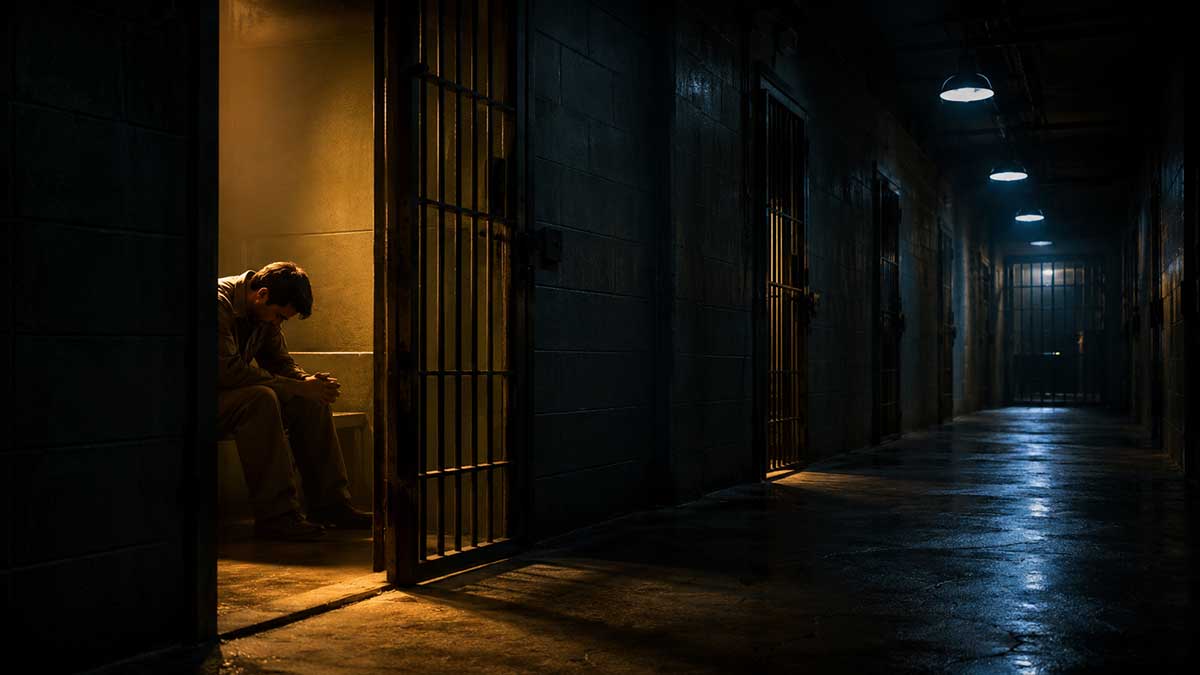
This is hard for us, since we rightly care about justice. I have seen people in prison, even on death row, who knew they deserved judgment. Yet they found forgiveness in Christ. That does not erase earthly consequences, but it shows the reach of grace.
Martin Luther:
If grace were only for the mild sinner, none of us would be safe. The gospel is offensive precisely here: the worst sinner may be forgiven, and the respectable sinner still needs mercy.
Viktor Frankl:
A human court deals with guilt before society. The soul deals with guilt before eternity. A late repentance may not repair every earthly wound, but it may still mark a genuine turning of the person.
Question 3: Can forgiveness be real without justice for victims?
Dietrich Bonhoeffer:
No. Forgiveness that ignores victims becomes false mercy. God’s grace never calls evil harmless. The cross is where sin is judged and mercy is given.
Viktor Frankl:
Victims must never be used as props in another person’s redemption story. Their suffering is real. Forgiveness cannot demand that the wounded person pretend the wound was small.
John Lennox:
Christian forgiveness does not mean God forgets justice. It means justice and mercy meet in Christ. We do not see the full judgment of God yet, but Christianity says evil will not have the last word.
St. Paul:
Vengeance belongs to God, not to us. That does not make justice weak. It places final judgment in the hands of the One who sees every hidden thing.
Martin Luther:
The forgiven sinner does not stand above the victim. He stands as one who has received mercy he could never deserve. That should create humility, repentance, and a desire to make right what can be made right.
Closing
John Lennox:
Christianity is not the claim that good people climb up to God. It is the claim that God came down to rescue people who could not rescue themselves.
St. Paul:
Where sin increased, grace abounded more. That is not permission to sin. It is the glory of mercy.
Martin Luther:
The soul finds peace when it stops trusting its own record and rests in Christ.
Dietrich Bonhoeffer:
Grace forgives, then calls. The forgiven person is invited into a life of costly love.
Viktor Frankl:
Human beings need meaning, but they need mercy too. Forgiveness reaches the place where achievement cannot go.
Topic 5: How Do We Live Truthfully in an Age of Deepfakes and AI Lies?
Opening
John Lennox:
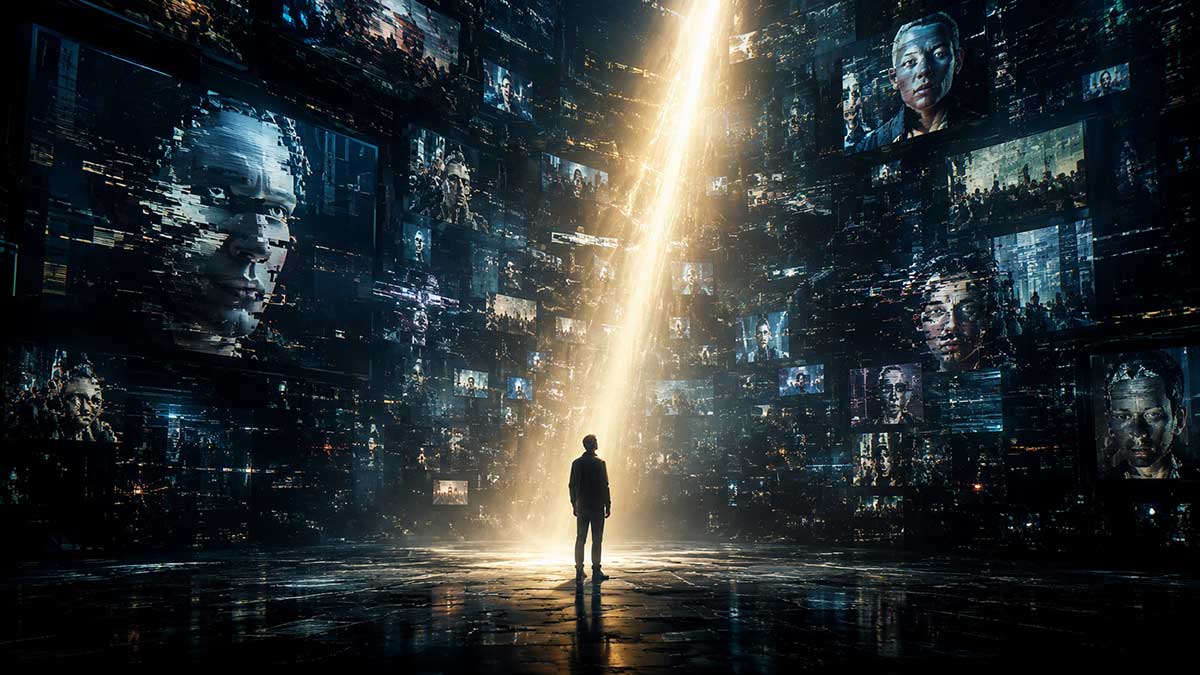
AI can serve truth, but it can also manufacture lies at a scale we have never seen. A false image, a false voice, a false speech, a false memory—these can now be made with frightening ease. The question is not only technological. It is moral. Will we love truth enough to defend it?
Aleksandr Solzhenitsyn:
A society does not fall into falsehood all at once. It begins when people repeat what they know is false, stay silent before what they know is evil, and trade conscience for safety. The first act of resistance is simple: live not by lies.
George Orwell:
The danger is not merely that false things will be said. Falsehood has always existed. The danger is that people may lose confidence that truth can be known at all. When language is corrupted, memory is corrupted. When memory is corrupted, freedom becomes fragile.
Hannah Arendt:
Total control does not require everyone to believe one lie. It can work by flooding society with so many claims that citizens become exhausted. They stop seeking truth and retreat into cynicism. That is a dangerous form of surrender.
Timnit Gebru:
AI systems are built by people, trained on data, shaped by incentives, and deployed by institutions. We should not treat them as neutral voices from nowhere. The question is: who benefits, who is harmed, and who gets to challenge the system?
Question 1: What happens to society when people can no longer trust what they see or hear?
George Orwell:
When people cannot trust evidence, public life becomes easier to control. A photograph can be dismissed. A recording can be doubted. A witness can be mocked. Truth becomes a contest of force rather than reality.
Timnit Gebru:
The people hurt first are often the people with the least protection. Deepfakes can target women, minorities, activists, journalists, and political dissidents. A lie made by machine can still ruin a real life.
John Lennox:
This is why truth is sacred. In the Christian view, truth is not merely useful information. Truth is connected to the character of God. When we become careless with truth, we damage the moral foundation of trust between human beings.
Hannah Arendt:
A shared factual ground is necessary for public life. People may disagree about meaning, policy, and judgment. But if every fact is treated as fake, then common life begins to fracture.
Aleksandr Solzhenitsyn:
A lie asks for cooperation. It asks you to nod, repeat, share, or pretend. The truthful person may not be able to defeat every lie, but he can refuse to become its servant.
Question 2: How can humans protect truth without surrendering freedom?
Hannah Arendt:
Truth cannot be protected only by central command. That path can become another form of control. Truth needs institutions, journalism, education, courts, local memory, and citizens willing to think.
John Lennox:
Freedom without truth becomes chaos. Truth without freedom becomes coercion. A healthy society must honor both. We need moral courage, not merely technical filters.
Timnit Gebru:
We need transparency around AI systems: what data shaped them, who released them, what harms were tested, and what remedies exist when damage occurs. People affected by AI must have a voice in how it is governed.
George Orwell:
Language matters. If words are twisted, people lose the ability to think clearly. Protecting truth begins with refusing slogans that replace thought.
Aleksandr Solzhenitsyn:
One person can begin by refusing the small lie. Do not sign what you know is false. Do not praise what you know is corrupt. Do not repeat what your conscience rejects.
Question 3: What does it mean to “live not by lies” in the AI age?
Aleksandr Solzhenitsyn:
It means no private agreement with falsehood. A person may be unable to stop the machine, the state, the company, or the crowd. But he can guard the border of his own soul.
Timnit Gebru:
It means asking who made the system and who pays the price. It means refusing to accept “the AI said so” as a moral answer. Accountability must stay with people.
John Lennox:
It means remembering that truth is personal as well as factual. Jesus stood before political authority and said He came to bear witness to the truth. In an age of synthetic voices, we need real witnesses.
George Orwell:
It means defending plain speech. Say what happened. Say who acted. Say what was done. Tyranny grows when grammar hides guilt.
Hannah Arendt:
It means resisting loneliness of thought. Seek honest conversation. Test claims. Listen carefully. A truthful society depends on people who refuse both gullibility and cynicism.
Closing
John Lennox:
AI can imitate voices, faces, and words, but it cannot make truth less true. Our task is to remain people of conscience in an age of simulation.
Aleksandr Solzhenitsyn:
The lie may seem large, but it still needs human lips. Refuse it your mouth.
George Orwell:
If truth is to survive, language must be defended. Clear words are acts of moral resistance.
Hannah Arendt:
The opposite of truth is not always belief in one lie. Sometimes it is the exhaustion that stops people from caring. We must care again.
Timnit Gebru:
Technology must answer to human dignity, justice, and public accountability. The future should not be left to systems no one can question.
Final Thoughts by C.S. Lewis:
The machine is not the enemy. The danger is the human soul kneeling before its own invention.
Every age has its idols. One age bows before gold. Another before empire. Another before ideology. Our age may bow before intelligence without wisdom, simulation without love, and answers without truth.
AI may imitate the voice of a friend, but it cannot be a friend in the deepest sense. It may compose a prayer, but it cannot pray. It may describe grief, but it cannot mourn. It may write about mercy, but it has never needed forgiveness. It may speak of death, but it does not tremble before eternity.
That distinction matters.
If man forgets that he is more than a machine, he will treat himself like one. If he forgets that his neighbor is made in the image of God, he will treat his neighbor as data, labor, rival, or obstacle. If he forgets truth, he will become easy prey for beautiful lies.
The Christian story gives a different vision. It says the human person is fallen yet beloved, guilty yet invited to mercy, mortal yet made for resurrection. It says God did not remain distant from suffering, but entered it. It says forgiveness is not earned by moral accounting, but received through grace. It says truth is not a tool for control, but a person before whom all control must bow.
So the question is not only what AI will become.
The question is what we will become.
Will we become smaller, colder, more distracted, more managed, more afraid? Or will this technological age awaken us to what machines cannot give: presence, repentance, courage, love, worship, and hope?
If AI forces us to ask again what makes humans sacred, then perhaps even this age of simulation can become a moment of remembrance.
We are not gods.
We are not machines.
We are creatures made for truth, love, and eternity.
Short Bios:
John Lennox is an Oxford mathematician, Christian thinker, and author known for connecting science, philosophy, AI, and faith.
Yuval Noah Harari is a historian and author of Homo Deus, known for exploring technology, transhumanism, and the future of humanity.
Sam Altman is a leading AI entrepreneur associated with the modern AI race and debates over artificial general intelligence.
C.S. Lewis was a Christian writer, literary scholar, and author of Mere Christianity, The Problem of Pain, and The Chronicles of Narnia.
Sherry Turkle is a scholar of technology and human relationships, known for her work on loneliness, digital life, and machine companionship.
David Chalmers is a philosopher of mind known for naming the “hard problem of consciousness.”
Alan Turing was a mathematician and computer science pioneer whose imitation test shaped early thinking about machine intelligence.
Iain McGilchrist is a psychiatrist and thinker known for his work on the divided brain, meaning, attention, and reductionism.
Mary Shelley was the author of Frankenstein, a foundational story about creation, responsibility, and the moral cost of ambition.
Fyodor Dostoevsky was a Russian novelist whose work explored suffering, faith, evil, freedom, and the human soul.
Elie Wiesel was a Holocaust survivor, writer, and witness to suffering, memory, silence, and moral responsibility.
Mother Teresa was a Catholic nun who served the dying and abandoned, seeing Christ in the suffering poor.
St. Paul was an early Christian apostle whose writings shaped Christian teaching on grace, sin, faith, and redemption.
Dietrich Bonhoeffer was a German pastor and theologian who opposed Nazism and wrote deeply about costly grace.
Martin Luther was a Reformation leader who taught that salvation rests on faith in Christ rather than human merit.
Viktor Frankl was a psychiatrist, Holocaust survivor, and author of Man’s Search for Meaning.
Aleksandr Solzhenitsyn was a Russian writer and dissident known for exposing Soviet oppression and urging people to “live not by lies.”
George Orwell was a writer whose works warned against propaganda, political control, corrupted language, and manufactured reality.
Hannah Arendt was a political philosopher known for her work on truth, totalitarianism, evil, and public responsibility.
Timnit Gebru is an AI ethics researcher known for work on bias, accountability, data, and the social harms of AI systems.
Leave a Reply