

What if the afterlife is not a courtroom, but a mirror showing who we became through love or fear?
What if death is not the moment God finally punishes us, but the moment we finally stop hiding?
Darius J. Wright’s vision of the afterlife begins with a startling claim: the soul does not enter a cold courtroom after death. It enters love. Yet that love does not erase truth. It reveals it. Every act, every wound, every withheld kindness, every moment of courage and cowardice becomes visible.
This Imaginary Talk begins with the life review, but it does not stay there. It moves into the deeper human questions beneath it. Why do people fear love? Why does shame make the heart close? Can love protect without becoming hatred? Did religion help humanity remember God, or did it often teach people to fear Him? And when we speak of angels, aliens, higher heavens, and hidden worlds, are we seeking truth—or escaping the work of love here on Earth?
Across these five conversations, near-death researchers, mystics, psychologists, saints, warriors, poets, and spiritual witnesses gather around one central question:
If love is the final truth, why do we live as if fear is stronger?
The answer is not simple comfort. Love is not weakness. Forgiveness is not denial. Spiritual awakening is not fantasy. The life review, in this conversation, becomes a mirror held before every human soul. It asks not, “Were you impressive?” but “Where did you love, where did you hide, and what did you do when love required courage?”
This is a conversation about death, but even more, it is a conversation about how to live before death arrives.
(Note: This is an imaginary conversation, a creative exploration of an idea, and not a real speech or event.)
Topic 1: Is the Life Review Judgment, Love, or Self-Recognition?

Opening — Raymond Moody
When people speak of dying and returning, they often describe light, peace, and a review of life. Yet the review is rarely described as a legal trial. It is more intimate than that. A person sees not only what happened, but what each moment meant. The question before us is not whether the soul is judged from outside, but whether it finally sees itself without disguise.
Today, we ask: Is the life review a judgment, an act of love, or the soul recognizing itself?
Question 1
When the soul sees its life clearly, who is really judging it?
Darius J. Wright:
The soul judges itself in the presence of love. That is the thing people miss. The love does not condemn you. The light does not sit there with a list and say, “You failed here, here, and here.” You stand in that love, and then you see everything you did outside of it.
That is why I say the greatest pain is the love you withheld. Not punishment. Recognition. You realize, “That person needed kindness, and I chose pride. That child needed patience, and I chose anger. That moment asked me to open, and I closed.” That is where the pain comes from.
C.S. Lewis:
A soul exposed to perfect goodness cannot continue pretending. In earthly life, we excuse ourselves. We dress up selfishness as realism, cruelty as honesty, cowardice as caution. Yet before the divine light, such disguises become transparent.
I would not say the soul judges itself apart from God. Rather, the soul finally agrees with truth. Judgment is not God’s hatred of the soul. It is the death of illusion.
Anita Moorjani:
In my near-death experience, I felt no judgment in the way people usually fear it. I did not feel condemned. I felt seen, loved, and understood. Yet that love made everything clear. I could see how much fear had shaped my life.
The life review is not about shame. It is about seeing where we forgot love. In that state, you feel the impact of your choices, but within a love so complete that you are not destroyed by what you see.
Howard Storm:
I agree that love is present, but I would not make it too soft. When I had my experience, I saw that my selfish life had led me into darkness. I had lived for myself. I had mocked faith, ignored people, and treated love lightly.
The judgment was real. Yet it was not cruel. The horror was that I saw what I had become. The mercy was that I was still called back.
Raymond Moody:
Across many near-death reports, people describe a panoramic review. They see their actions from more than one angle. They may feel what others felt. That is what makes it so transformative.
The review seems less like a sentence and more like total moral awareness. The person does not merely recall life. The person understands life.
Question 2
Is regret a punishment, or is it the soul waking up?
Howard Storm:
Regret can feel like punishment when the soul first sees the truth. But pain alone is not the purpose. The purpose is repentance, and repentance means turning. It means saying, “That was not life. That was not love. That was not God.”
The danger is not regret. The danger is refusing to turn. A person can cling to pride so tightly that mercy feels unbearable.
Darius J. Wright:
Yes. The unforgivable sin is the thing you cannot forgive yourself for. It is not that love says, “You are beyond saving.” Love never says that. But you might look at yourself and say, “I am not worthy of this.”
That is the trap. You are worthy, but you have to let love reach the places you are ashamed of. Regret is the soul waking up, but if you cling to it, it becomes a prison.
C.S. Lewis:
Regret is a strange mercy. It burns, yet it can purify. The soul that says, “I have done wrong,” is nearer to healing than the soul that says, “I have done nothing wrong.”
Hell, in one sense, is the insistence on keeping the false self. Heaven is the surrender of it.
Anita Moorjani:
Many people are afraid that seeing their mistakes will crush them. But in that expanded state, love is larger than the mistake. You see clearly, yet you are held.
Regret becomes destructive only when it turns into identity. “I did something unloving” can heal. “I am unlovable” cannot.
Raymond Moody:
This distinction appears again and again in accounts of near-death experiences. People return with remorse, but not always despair. They often return with a changed sense of what matters.
Small acts of kindness become enormous. Social success becomes less central. Love becomes the measure.
Question 3
Can a person forgive themselves after seeing the harm they caused?
Anita Moorjani:
Yes, but self-forgiveness is not pretending the harm did not matter. It is allowing love to be larger than the wound. People often think forgiveness means erasing responsibility. It does not. It means returning to truth without self-hatred.
You cannot heal by rejecting yourself. You heal by seeing yourself with compassion and then choosing differently.
C.S. Lewis:
Forgiveness without repentance becomes sentimentality. Repentance without forgiveness becomes despair. The two belong together.
A person must not say, “It was nothing.” Nor must he say, “I am nothing.” He must say, “I have sinned, and grace is greater still.”
Darius J. Wright:
That is exactly it. Everything is forgiven, but there are consequences. People hear unconditional love and think it means nothing matters. No. Everything matters. Every action sends a ripple.
But love still wins. You may have to feel what you caused. You may have to face it completely. Yet after that, love is still there. It never moved.
Howard Storm:
Self-forgiveness begins when we stop defending ourselves. I had to admit that I had lived wrongly. That admission was painful, but it opened the door.
God’s mercy is not permission to stay the same. It is the invitation to become new.
Raymond Moody:
The people who return from these experiences often speak of one clear assignment: love more. Not as an idea, but in action. Listen. Forgive. Help. Be present.
The life review does not seem to ask, “How famous were you?” It asks, “What did you do with love when love was needed?”
Topic 2: Why Do People Fear Love More Than Death?
Opening — Carl Jung
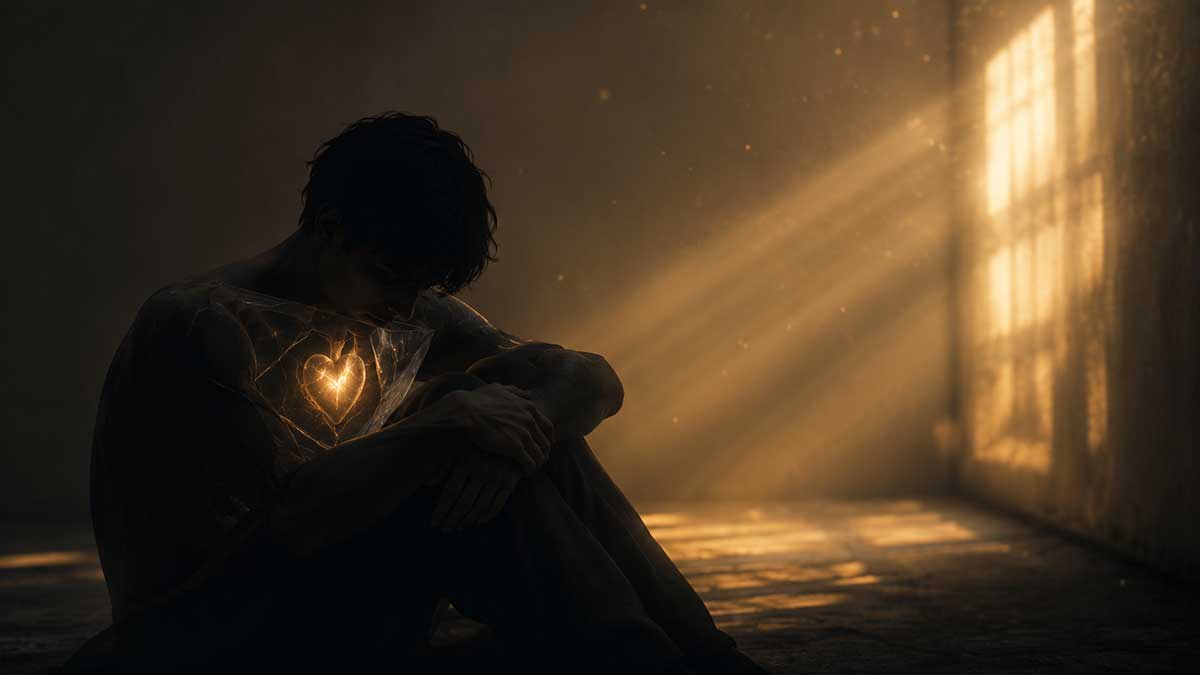
Human beings do not only hide from darkness. They hide from light. A person may fear hatred, pain, failure, and death, yet the deeper terror may be this: to be fully seen, fully known, and still loved.
Fear gives the ego a wall to stand behind. Love removes the wall. Shame says, “If they see me, they will reject me.” Love says, “You were never what shame told you.”
Today, we ask why people protect themselves from the very love they desire.
Question 1
Why do humans protect themselves from the love they desire?
Brené Brown:
People protect themselves from love since love requires exposure. To receive love, you have to let someone see the real you. Not the edited version. Not the impressive version. The real one.
That is terrifying for many people. They would rather be admired at a distance than loved up close. Admiration feels safer. Love asks for honesty.
Dolores Cannon:
From the soul’s view, many people come into life carrying old memories. Some are not conscious memories, but they remain in the field of the person. A soul may have known betrayal, loss, abandonment, or rejection in many forms.
Then the person says, “I want love,” but the soul says, “Love has hurt before.” So they protect the heart. Yet the protection becomes the very thing that blocks what they came to experience.
Viktor Frankl:
Love asks a person to answer life. It is not only feeling. It is responsibility. To love another person means to see their dignity, and then to act in a way worthy of that vision.
Many flee from love since love gives life a demand. It says, “You are needed.” Some prefer emptiness, not from courage, but from fear of being called.
Thich Nhat Hanh:
When people are hurt, they close like a flower at night. This is natural. But if the flower never opens again, it cannot receive the sun.
Love needs presence. Fear lives in the past or the future. When we breathe and come back to this moment, we may see that the heart is wounded, but it is not gone. It is still here, waiting gently.
Carl Jung:
The ego prefers control to surrender. It can manage fear, anger, ambition, and resentment. But love is not easily managed. Love exposes the whole person.
This is why the encounter with love can feel like death to the ego. Something false must die for the real person to live.
Question 2
Is shame the real wall between the soul and God?
Dolores Cannon:
Yes, shame is one of the veils. The soul itself is not ashamed. The soul knows why it came, what it chose, and what it is learning. But the human personality forgets this and begins to believe, “I am wrong. I am broken. I am separate.”
That is never the full truth. Shame is a temporary fog. The soul came here to move through that fog and recover its light.
Carl Jung:
Shame belongs to the shadow. Not all shadow is evil. Much of it is simply rejected life. A child learns, “This part of me is unacceptable.” So the child hides it.
Later, the adult calls this hidden material sin, weakness, or failure. Yet the task is not to destroy the shadow. The task is to bring it into consciousness, where it can be transformed.
Brené Brown:
Shame says, “I am bad.” Guilt says, “I did something bad.” That difference matters. Guilt can guide repair. Shame makes people hide.
If a person believes they are unworthy of love, they may hear God’s love as a threat, not a gift. They think, “If I am truly seen, I will be rejected.” Healing begins when someone can be seen and not abandoned.
Thich Nhat Hanh:
When a person feels shame, they need compassion, not more violence against themselves. We can say, “My dear suffering, I see you.” This is not weakness. This is care.
The wall between the person and God is not solid. It is made of thoughts, wounds, and fear. With mindfulness and compassion, the wall becomes thin.
Viktor Frankl:
Shame can become a prison if it removes responsibility. A person may say, “I am broken, so I cannot choose.” But the human being remains capable of choosing a response.
No wound removes the dignity of the person. Even in guilt, the person can turn. Even after failure, life still asks for meaning.
Question 3
What would happen if a person lived with no fear of being judged?
Viktor Frankl:
Such a person would become more responsible, not less. Freedom without responsibility becomes emptiness. But freedom joined to conscience becomes human greatness.
If one no longer fears human judgment, then one must answer to something higher: meaning, truth, love, and the task that life places before him.
Thich Nhat Hanh:
A person without fear of judgment can listen deeply. They do not need to defend every wound. They do not need to win every exchange.
They can smile, breathe, and say, “I am here.” That presence can heal the person and the people around them.
Brené Brown:
They would become braver. Not perfect. Braver. They would ask for help sooner. Apologize faster. Create more freely. Love more honestly.
Fear of judgment keeps people performing. Letting go of that fear lets people belong to themselves first.
Carl Jung:
A person free from judgment is no longer ruled by the persona. The mask may still be used in society, but it is no longer mistaken for the self.
This person becomes individuated. Not isolated. Not superior. More whole. The approval of the crowd loses its grip.
Dolores Cannon:
They would begin to live closer to the soul plan. Many people waste years trying to fit into patterns they did not come here to follow. They fear family judgment, religious judgment, cultural judgment, even judgment from unseen forces.
But the soul knows its path. When the fear of judgment falls away, the person begins to remember why they came.
Closing — Carl Jung
To fear love is to fear the end of the false self. This is why people cling to pain they know instead of entering freedom they cannot control.
Yet the soul does not heal by hiding. It heals by being seen. Shame loses strength when brought into truth. Fear loses its throne when love is no longer mistaken for danger.
Perhaps the great question is not whether we are loved. Perhaps the question is whether we can bear being loved without running away.
Topic 3: Is Love Weakness, or the Highest Form of Courage?
Opening — Martin Luther King Jr.
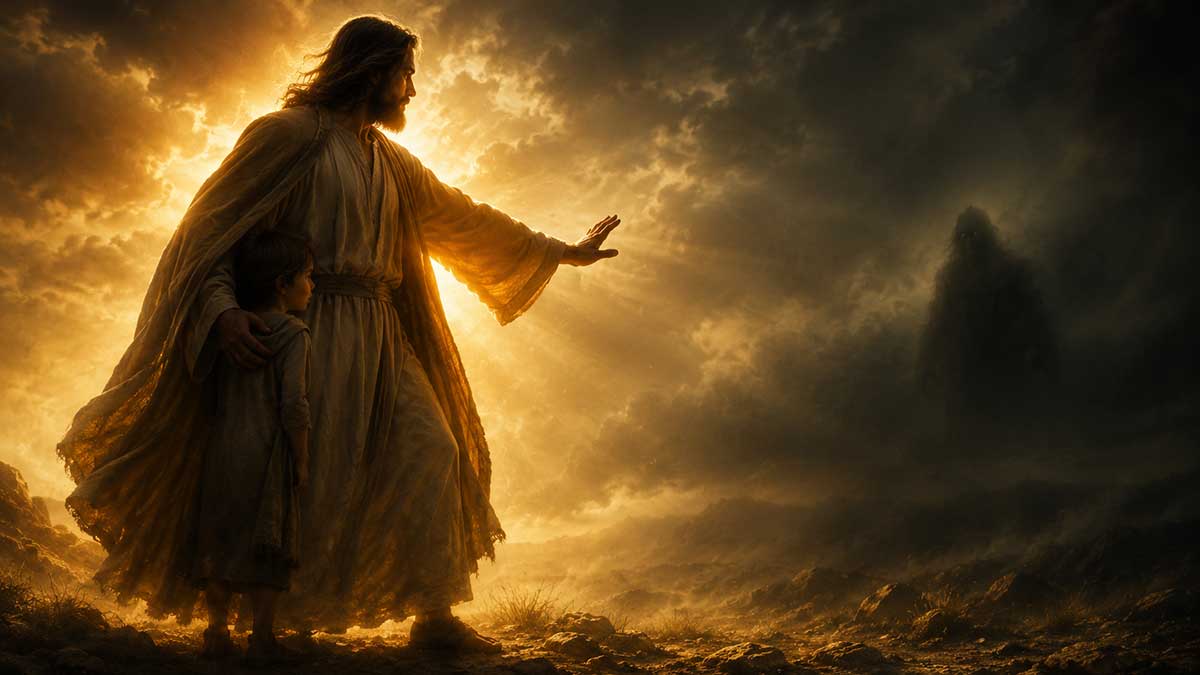
Many people have mistaken love for softness. They think love means silence in the face of cruelty, surrender in the face of violence, or passivity in the face of injustice. But love, rightly understood, is not the refusal to act. It is the refusal to let hatred become the source of action.
Fear may strike quickly. Anger may burn loudly. But love can endure longer, see more clearly, and protect without becoming what it resists.
Today, we ask whether love is weakness, or the deepest form of courage.
Question 1
Can love fight, defend, and protect without becoming hatred?
Jesus Christ:
Love does not mean abandoning the innocent. Love does not mean blessing cruelty and calling it peace. The shepherd protects the sheep. The father protects the child. The good heart does not become empty in the face of harm.
Yet the heart must be watched. Protection can begin in love and be poisoned by revenge. To defend the vulnerable is righteous. To enjoy the destruction of the enemy is another spirit.
Miyamoto Musashi:
A sword can be lifted from fear, pride, rage, or duty. The movement may look the same from outside, but inside it is different. The spirit holding the sword decides the nature of the act.
To protect with love, one must have no unnecessary movement. No hatred. No vanity. No need to prove oneself. Strike only when striking is required. Stop when the purpose is complete.
Joan of Arc:
There are moments when love must ride into danger. I did not understand love as sentiment only. I understood it as obedience, sacrifice, and defense of people who could not defend themselves.
But the soul must stay clean. You can stand against evil without feeding on evil. You can resist the invader without letting hatred become your master.
Viktor Frankl:
A human being is never reduced to impulse alone. Between injury and response, there remains a space where conscience can speak. In that space, love may choose firmness rather than bitterness.
Protection without hatred is possible when the person remembers the dignity of all involved, including the wrongdoer. This does not remove justice. It gives justice a human face.
Martin Luther King Jr.:
Nonviolence was never passivity. It was disciplined courage. It demanded that one confront injustice directly, but without surrendering the soul to hatred.
Hatred multiplies the injury. Love interrupts the cycle. It says, “I will resist you, but I will not become your mirror.”
Question 2
Why do people mistake gentleness for passivity?
Joan of Arc:
People mistake gentleness for passivity since they judge strength by noise. They think the loudest voice is the strongest one. But heaven often speaks in a quiet command.
A gentle person may still be unmovable. A humble person may still walk into fire. The absence of boasting is not the absence of courage.
Martin Luther King Jr.:
The culture often honors domination more than conscience. It sees restraint and asks, “Why did you not strike back?” It sees mercy and calls it weakness.
But restraint can require more courage than retaliation. Anyone can answer insult with insult. It takes a greater soul to answer hatred with truth.
Miyamoto Musashi:
The beginner wants to appear strong. The master has no need to appear. Gentleness may be the result of training, discipline, and control.
A calm warrior is not passive. He has simply removed waste from his spirit. He does not spend himself before the moment arrives.
Jesus Christ:
The meek are not empty. They are governed. They do not need to conquer others to know who they are.
Gentleness is not the absence of strength. It is strength placed under love. A person who cannot control anger is not strong. He is ruled by what wounds him.
Viktor Frankl:
Passivity is the refusal to respond. Gentleness is a chosen manner of response. The two are morally different.
A person may speak gently and still carry great conviction. A person may shout and still be fleeing responsibility.
Question 3
What separates righteous protection from revenge?
Viktor Frankl:
Righteous protection is directed toward a value. Revenge is directed toward the suffering of the offender. This is the difference. One serves life. The other remains chained to injury.
A person seeking justice may still be free inside. A person seeking revenge is still governed by the one who harmed him.
Jesus Christ:
Revenge says, “You hurt me, so I will become harm.” Love says, “You may not destroy what is sacred.”
Justice restores order. Revenge extends disorder. The heart must ask, “Am I protecting life, or am I worshiping the wound?”
Martin Luther King Jr.:
Righteous action seeks redemption of the community. Revenge seeks humiliation of the enemy. That distinction matters.
We fought segregation not to replace one hatred with another, but to call the nation back to its own conscience. Justice without love becomes another chain.
Joan of Arc:
Righteous protection carries grief. Revenge carries appetite. When you protect, you may weep over the necessity of force. When you take revenge, you begin to enjoy it.
That is the warning sign. The moment cruelty becomes satisfying, the soul has crossed a line.
Miyamoto Musashi:
Revenge clouds perception. It makes the hand too eager and the mind too narrow. A warrior ruled by revenge loses balance.
Righteous protection is clear. The target is not personal satisfaction. The target is the end of harm.
Closing — Martin Luther King Jr.
Love is not weakness. Weakness is fear disguised as force. Weakness is hatred needing an enemy to feel alive. Love, when it is mature, can march, speak, protect, resist, forgive, and endure.
The question is not whether love can fight. The question is whether we can act without letting hatred take command of the heart.
If love is only a feeling, it will fail in danger. But if love is courage, then it may be the strongest force human beings can carry into the darkness.
Topic 4: Did Religion Teach People to Remember God—or Fear Him?
Opening — Meister Eckhart
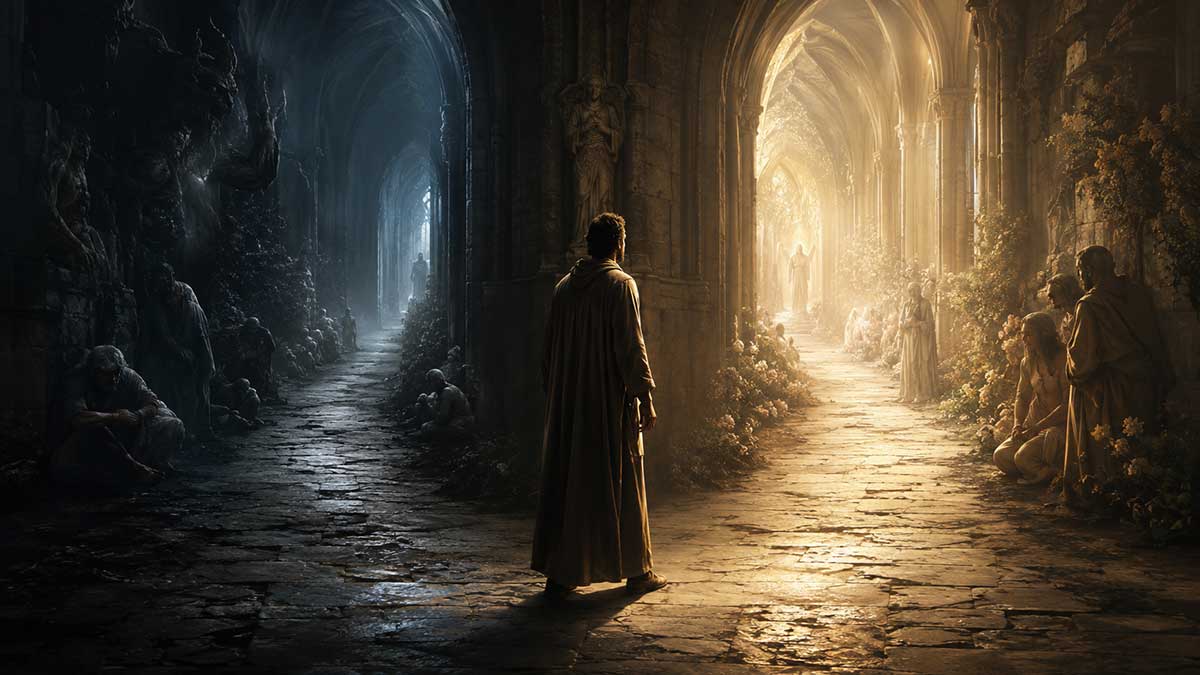
There is a religion of the soul, and there is a religion of fear. One brings the person inward, into silence, love, humility, and union with God. The other keeps the person trembling outside the door, afraid to enter the very presence they were made for.
True religion does not make God small enough to manage people. True religion breaks the false self open until the soul remembers its origin.
Today, we ask whether religion was meant to help human beings remember God, or whether it became a system that taught them to fear Him.
Question 1
What happens when spiritual truth is taught through fear?
C.S. Lewis:
Fear has a place, but it is a poor foundation for love. A child may first avoid danger out of fear, but no soul can mature if fear remains its only teacher.
When spiritual truth is reduced to terror, the soul may obey outwardly and yet remain inwardly unchanged. God becomes a threat to be managed, not goodness to be loved.
Dolores Cannon:
Many souls come into life with lessons to learn, but fear-based religion can interrupt that learning. Instead of discovering the soul’s purpose, the person may spend a lifetime trying to satisfy rules they never fully understand.
The soul knows love. The human personality often forgets it. Fear adds another veil over memory.
Neville Goddard:
Fear turns scripture into a prison. The Bible, read inwardly, is the story of consciousness awakening. Christ is not merely an outer figure to adore from a distance. Christ is the awakened imagination within man.
When fear takes over, man forgets that the kingdom is within. He waits outside himself for what can only be born inside himself.
Rumi:
A lover does not need a whip to seek the Beloved. If the heart has tasted even one drop of divine love, it runs toward God like a thirsty deer toward water.
Fear may bring the feet to the temple, but only love opens the heart.
Meister Eckhart:
Fear keeps the soul busy with images. It asks, “Am I safe? Am I pure? Am I approved?” But God is deeper than these questions.
The soul must become empty of fear to receive God as God is. Not an idol of anxiety. Not a ruler made in the image of wounded men. God as living presence.
Question 2
Is eternal damnation a divine truth or a human control system?
Dolores Cannon:
From the accounts I received, souls do not learn through endless punishment. They learn through experience, review, correction, and growth. A soul may face what it has done, but the purpose is not eternal rejection.
Fear of eternal punishment has been used to control people. It disconnects them from inner guidance and makes them dependent on outside authority.
C.S. Lewis:
I would be careful here. Hell must not be treated lightly. The soul can reject love. It can cling to pride, isolation, and self-will. That danger is real.
Yet I would not picture God as a tyrant delighting in torment. Hell is the soul’s terrible refusal of joy. The door may be locked from the inside.
Meister Eckhart:
If one speaks of hell, one must speak first of separation. The soul suffers when it clings to what is not God. It burns in its own false possession.
But divine love is not exhausted. God is always nearer to the soul than the soul is to itself.
Neville Goddard:
Eternal damnation is a misreading of inner states. Man enters hell whenever he lives from fear, resentment, shame, or separation. He enters heaven whenever he awakens to his true identity in God.
The states are real. But man is not condemned to one state forever. Consciousness can rise.
Rumi:
The fire is not always an enemy. Some fire destroys the cage. Some fire burns away the false name.
If a person fears God more than they love God, they have not yet met the Friend.
Question 3
What would Christianity look like without fear-based worship?
Neville Goddard:
It would become a living revelation of Christ within. Prayer would not be begging a distant ruler. It would be entering the state of fulfilled truth.
A person would stop saying, “I am nothing.” He would say, “I and the Father are one,” not with arrogance, but with awakened identity.
Rumi:
It would sing more. It would weep more. It would forgive faster. It would stop counting sins like coins and begin burning with longing for God.
The cross would not be used to frighten children. It would reveal the depth of love that enters suffering and still blesses.
C.S. Lewis:
Christianity without fear-based worship would still contain reverence, repentance, and moral seriousness. It would not become vague comfort. Grace is not softness without truth.
But the center would be love. Not flattery of God. Not terror of God. Love of God, and transformation through that love.
Dolores Cannon:
It would help people remember why they came here. It would teach that the soul has purpose, that life is not random, and that forgiveness is part of the return.
People would still gather, pray, serve, and learn. But they would not be trained to distrust their own inner light.
Meister Eckhart:
Christianity without fear would lead the soul into birth. Christ would not remain only in history. Christ would be born in the ground of the soul.
The highest worship is not panic before God. It is union with God. It is becoming empty enough that divine love may live through you.
Closing — Meister Eckhart
Religion can make a person small, or it can break the small self open. It can frighten the soul into obedience, or it can awaken the soul into love.
The truest teacher does not say, “Fear God and remain a stranger.” The truest teacher says, “Let go of what is false, and find that God has been nearer than your own breath.”
Perhaps religion was never meant to create distance between the soul and God. Perhaps it was meant to end that distance.
Topic 5: Are Angels, Aliens, and Higher Heavens Truth—or Distraction?

Opening — Dolores Cannon
Many people look upward and ask what lives beyond the human eye. Angels. Star beings. Guides. Higher heavens. Hidden teachers. Ancient visitors. The names change, but the longing stays the same.
The deeper question is not only whether these beings exist. The deeper question is what happens to the human soul when it begins looking for them. Does wonder bring us closer to love? Or does it pull us away from the work we came here to do?
Today, we ask whether angels, aliens, and higher heavens reveal truth, or become another way to avoid ourselves.
Question 1
Do mystical visions help people return to love, or can they become spiritual entertainment?
Darius J. Wright:
They can help, but only if they bring you back to love. If I tell you I saw angels, seraphim, higher heavens, and beings from above, the point is not for you to worship the experience. The point is for you to remember what you are.
A vision that makes you depend on someone else is not freedom. A vision that brings you into love, courage, forgiveness, and truth is doing what it came to do.
Jacques Vallée:
The phenomenon often behaves like a mirror. People see lights, beings, symbols, craft, messages, and strange events. Yet the interpretation depends heavily on the witness, the culture, and the expectation of the age.
One century sees fairies. Another sees angels. Another sees extraterrestrials. The event may be real, but the human mind clothes it in the language it knows.
Emanuel Swedenborg:
Spiritual sight is real, but it must be ordered by charity and wisdom. To see spirits and heavens is not the highest gift. To love rightly is higher.
Many desire visions, but fewer desire purification of the heart. If a vision does not lead to humility and good use, it may become a temptation.
Edgar Cayce:
There are records beyond ordinary memory. There are influences from ancient civilizations, star origins, and soul histories. Yet each person must ask: does this knowledge help me serve?
Knowledge without service can inflate the self. The purpose of spiritual information is healing, correction, and alignment with the Creative Forces.
Dolores Cannon:
I found that many souls come from different places and carry different missions. Some remember star origins. Some remember lives beyond Earth. Some remember working with beings of light.
But curiosity alone is not enough. The question is always: what did you come here to learn, and what did you come here to give?
Question 2
If angels are real, should humans worship them or remember their own divine nature?
Emanuel Swedenborg:
Angels do not desire worship. True angels turn the mind toward the Lord and toward a life of love. They know that all goodness flows from the Divine, not from themselves.
To worship an angel is to stop at the messenger. To hear the message is wiser.
Darius J. Wright:
Exactly. Angels are real. I have seen them. Seraphim are real too. But they are not above you in the way people think. They are souls in a different suit, a different template.
People hear “angel” and want to bow down. That is the old programming. You are made of the same eternal essence. Respect them, yes. Worship them, no. Remember yourself.
Dolores Cannon:
Many beings assist Earth, but the mature soul does not become dependent on guides. Guides help, but they do not live your life for you.
The human being must awaken inner guidance. The more you remember who you are, the less you need to chase authority outside yourself.
Edgar Cayce:
There is a danger in seeking signs without discernment. Angels, guides, and helpers may serve the soul’s growth, but the law remains the same: love God, serve others, purify the heart.
The soul’s origin is divine. Yet pride can misuse that truth. One must remember divinity with humility.
Jacques Vallée:
From the research side, the issue is authority. Extraordinary encounters often create belief systems. Witnesses may give total trust to the source of the message. That is risky.
The question should be: what does the encounter produce? Greater freedom, moral clarity, and compassion? Or dependence, fear, and social control?
Question 3
How do we separate spiritual wonder from ungrounded belief?
Jacques Vallée:
We begin by respecting the experience without rushing to explain it. A witness may have encountered something real, yet the explanation may still be wrong.
Wonder and skepticism can live together. The task is not to ridicule mystery. The task is to avoid turning mystery into certainty too quickly.
Edgar Cayce:
Test the fruit. Does the belief bring patience, service, healing, and truthfulness? Or does it bring pride, fear, escape, and division?
Spiritual information should make a person more loving in daily life. If it does not, then the person may be feeding curiosity more than the soul.
Darius J. Wright:
For me, the test is love. Does it bring you into love or fear? Does it make you free or dependent? Does it make you stand up and do what is right, or sit back waiting for someone to save you?
The higher heavens, the angels, the beings, the portals—none of that matters if you still treat people without love.
Emanuel Swedenborg:
Truth must join with good. If a person seeks truth apart from goodness, the mind becomes cold. If a person seeks goodness apart from truth, the heart may be misled.
Heavenly knowledge is known by its order. It leads the person toward humility, useful life, and love of the neighbor.
Dolores Cannon:
I would tell people to stay open, but stay centered. There is much more to creation than we were taught. Yet every soul still has ordinary lessons: forgiveness, courage, kindness, patience, and purpose.
The stars may tell you where you came from. Love tells you why you are here.
Closing — Dolores Cannon
Angels, star beings, higher heavens, and hidden histories may open the mind, but they cannot replace the heart. A person can know many cosmic secrets and still fail at love.
The true test of any mystical vision is simple: does it help the soul remember love, or does it create another distraction?
If higher beings are real, they are not here to make us smaller. They are here to remind us that the light we keep searching for above may already be waiting within.
Final Thoughts
If there is one lesson running through all five topics, it is this:
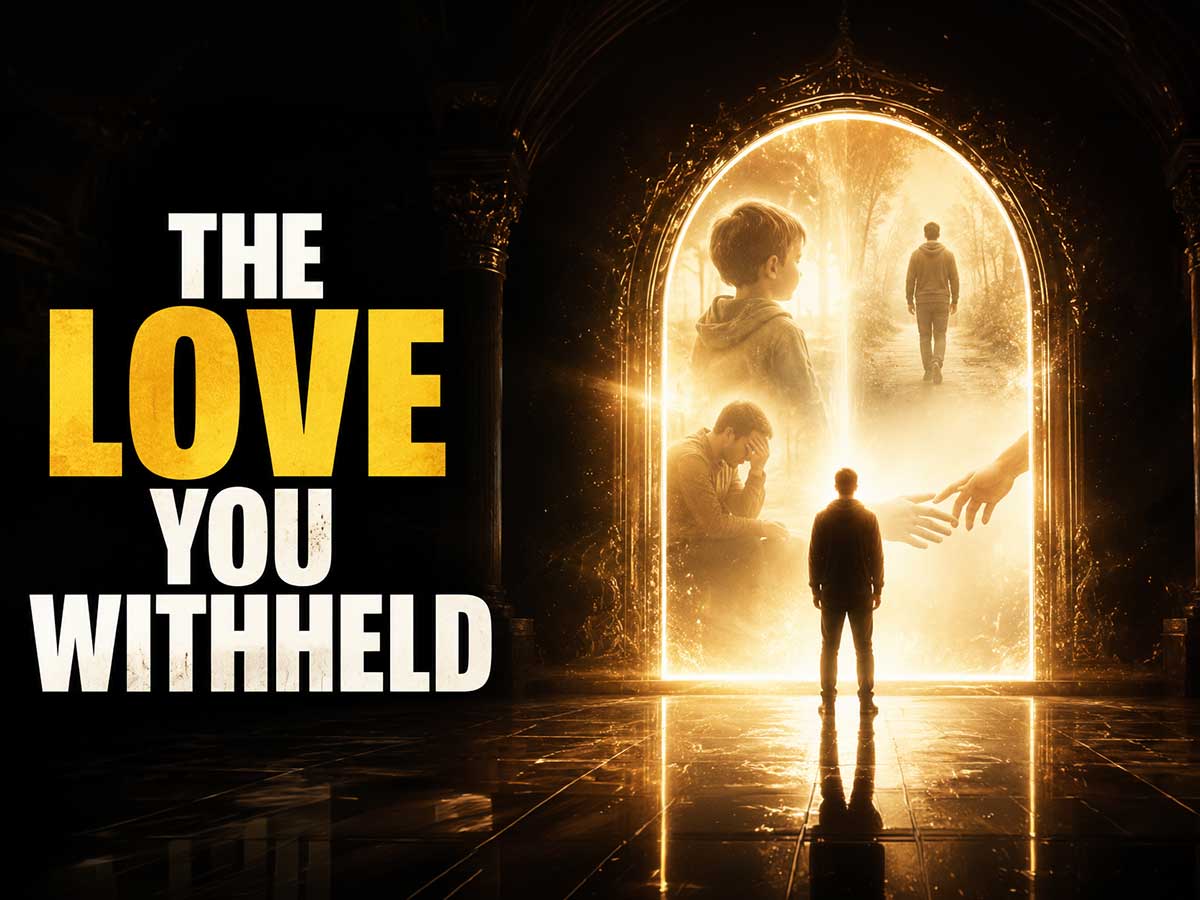
The soul is not afraid of death. The soul is afraid of being fully seen.
Darius J. Wright says the deepest pain after death is the love we withheld. Raymond Moody and Anita Moorjani point toward a life review filled with clarity rather than condemnation. C.S. Lewis warns that truth still matters, and that grace does not mean pretending our choices meant nothing. Carl Jung and Brené Brown remind us that shame hides the self from love long before death does. Martin Luther King Jr., Jesus Christ, Joan of Arc, and Miyamoto Musashi show that love can stand against evil without becoming evil. Meister Eckhart, Rumi, Neville Goddard, and Dolores Cannon ask whether religion and mystical vision return us to divine love or keep us trapped in fear.
The great danger is not only disbelief. It is distraction. A person may chase angels, aliens, prophecies, secret histories, and hidden heavens, yet still fail to love the person standing before them. A person may speak of God, yet still use fear to control others. A person may seek light, yet refuse to face the shadow inside.
The true test is simple.
Does a belief make us more loving, more courageous, more honest, and more free?
If not, it may be another form of hiding.
Perhaps the afterlife is not waiting to judge us later. Perhaps the review has already begun. Every conversation is part of it. Every act of forgiveness is part of it. Every time we protect the innocent without hatred, tell the truth without cruelty, and love without demanding control, we write a different ending.
Death may reveal the love we withheld.
Life gives us the chance to stop withholding it now.
Short Bios:
Darius J. Wright
A modern out-of-body experiencer and spiritual teacher who speaks about controlled death-like states, life review, angels, higher heavens, and love as the original state of the soul.
Raymond Moody
A pioneering researcher of near-death experiences, best known for bringing the term “near-death experience” into wider public use and documenting accounts of light, life review, and return.
Anita Moorjani
A near-death experiencer and author whose story centers on illness, self-rejection, unconditional love, healing, and the discovery that fear can distort a person’s life.
Howard Storm
A near-death experiencer whose account moves from darkness and despair into prayer, mercy, and a radical reorientation toward God and love.
C.S. Lewis
A Christian writer and moral thinker whose work explores sin, grace, pride, heaven, hell, spiritual longing, and the danger of self-deception.
Carl Jung
A depth psychologist known for his work on the shadow, persona, archetypes, individuation, and the hidden forces shaping human behavior.
Brené Brown
A researcher and author known for her work on shame, vulnerability, courage, belonging, and the healing that begins when a person allows themselves to be truly seen.
Viktor Frankl
A psychiatrist, Holocaust survivor, and author of Man’s Search for Meaning, who taught that human beings can choose meaning, responsibility, and love even in extreme suffering.
Thich Nhat Hanh
A Buddhist monk, peace teacher, and writer whose teachings center on mindfulness, compassion, deep listening, and returning gently to the present moment.
Dolores Cannon
A hypnotherapist and metaphysical author known for her work on past lives, soul contracts, higher dimensions, volunteers, and the idea that many souls come to Earth with missions of remembrance.
Martin Luther King Jr.
A civil rights leader and minister who taught love as moral courage, nonviolence as active resistance, and justice as the public expression of conscience.
Jesus Christ
The central figure of Christianity, representing divine love, forgiveness, sacrifice, truth, mercy, and the call to love even one’s enemies.
Miyamoto Musashi
A legendary Japanese swordsman and strategist whose life and writings represent discipline, presence, clarity, and action free from unnecessary emotion.
Joan of Arc
A French visionary and warrior-saint remembered for courage, conviction, sacrifice, and the belief that spiritual obedience may demand fearless action.
Meister Eckhart
A medieval Christian mystic who taught inner union with God, detachment from the false self, and the birth of divine life within the soul.
Neville Goddard
A mystical teacher who interpreted scripture inwardly and taught that imagination, consciousness, and the Christ within shape human experience.
Rumi
A Persian poet and Sufi mystic whose work speaks of divine love, longing, surrender, union, and the soul’s return to the Beloved.
Emanuel Swedenborg
A Christian visionary and theologian who wrote detailed accounts of heaven, angels, spiritual worlds, and the soul’s life beyond death.
Jacques Vallée
A UFO researcher and thinker known for viewing unexplained aerial and entity encounters as possibly interdimensional, symbolic, and psychologically complex.
Edgar Cayce
A spiritual reader and mystic associated with healing, ancient civilizations, Atlantis, Egypt, soul records, reincarnation, and prophecy.
Leave a Reply