
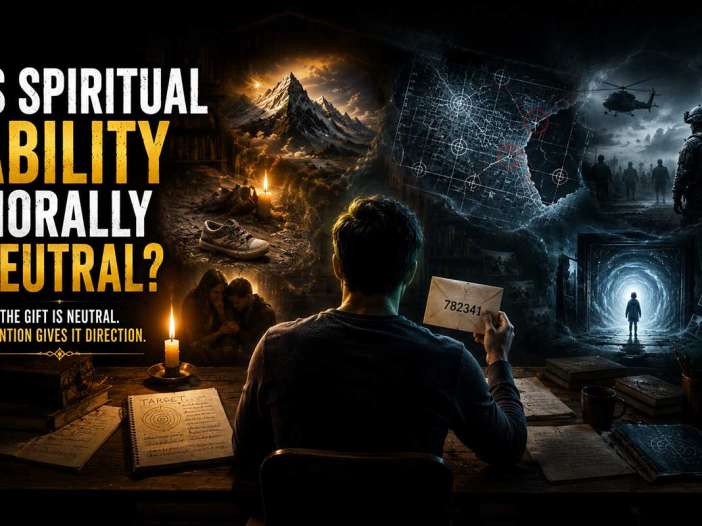
What if psychic ability is neither good nor evil — but becomes sacred or dangerous through the heart that carries it?
Tonight, we begin with Nikki Dutta’s most unsettling question: what happens when human beings gain access to hidden knowledge before the heart is ready to carry it?
This series begins with remote viewing, but it does not stay there. Remote viewing becomes the doorway into a much larger moral question. Nikki describes it as a practice where a viewer receives a blind target number, enters a deep state, gathers impressions, and compares findings with a team. From there, the conversation opens into missing-person cases, karma, healing, manifestation, higher beings, Mandela Effect, ancient yogic lineages, and the coming spiritual tension she associates with 2026.
The deeper issue is not whether someone can see beyond ordinary sight.
The deeper issue is whether that person has become humble enough to see without harming.
A psychic gift can comfort a grieving family, but it can frighten a wounded soul. A healer can help someone carry pain, but can secretly begin to need the role of savior. A person may manifest a desire, yet later discover that the desire came from fear, envy, or ego. A seeker may speak of awakening, yet become arrogant toward those who do not share the same vision.
So these five conversations ask one question in five forms:
Can spiritual power become sacred without spiritual maturity?
Nikki Dutta says the gift must be guided by the highest good. Yogananda calls the seeker back to surrender. Jesus asks whether the soul is being gained or lost. Buddha warns against attachment. Jung points toward the shadow hidden inside every spiritual identity. Socrates demands moral examination. Rumi turns desire into longing for God.
Together, these voices create a serious warning for our time.
The unseen may be opening.
But the real test is not whether we can see it.
The real test is whether we can meet it with love, humility, discernment, and service.
(Note: This is an imaginary conversation, a creative exploration of an idea, and not a real speech or event.)
Topic 1: Is Spiritual Ability Morally Neutral?
Opening
Host:
Tonight, we gather five voices around a question that cuts through every spiritual tradition: If someone can see beyond normal perception, speak to the dead, heal the sick, read hidden information, or influence reality, does that make them spiritually advanced?
Or is spiritual ability only a tool?
A knife can prepare food or wound a person. Fire can warm a home or destroy it. The gift itself may be neutral. The soul holding it may not be.
Nikki Dutta’s interview raises this exact tension. Remote viewing has been used by mystics, investigators, militaries, secret groups, and grieving families. The same ability can search for truth, seek closure, protect the innocent, feed ego, or control others.
So the deeper question is not, “Is the gift real?”
The deeper question is, “What kind of person should be trusted with it?”
Our guests tonight are Nikki Dutta, Carl Jung, Paramahansa Yogananda, Socrates, and Edgar Cayce.
Question 1
If spiritual gifts are neutral, what makes their use sacred or dangerous?
Nikki Dutta:
The gift itself is not the problem. The intention behind the gift is where everything begins. Remote viewing, mediumship, healing — these are pathways. Someone can enter that pathway with humility, or someone can enter it wanting control.
For me, the first question is always this: is it for the highest good?
If that answer is not clear, I pause. Some information may be true, but not useful. Some information may be available, but not meant to be given. People think receiving something is the same as having permission to use it. That is where many psychics make mistakes.
A sacred gift becomes dangerous when ego starts speaking louder than guidance.
Carl Jung:
A gift that opens the unseen can become deeply dangerous when the shadow remains unconscious.
A person may receive visions, dreams, or symbols, yet still be ruled by vanity, resentment, fear, or hunger for recognition. The unconscious does not become pure simply by becoming active. A psychic gift may amplify the soul. It may amplify the wound.
The danger is inflation. The person says, “I have access to hidden knowledge,” then begins to identify with the divine source of that knowledge. At that point, the gift becomes possession by the archetype.
The sacred path requires self-knowledge. Without that, the seer may become blind in a more dangerous way.
Paramahansa Yogananda:
A spiritual gift is safe when the heart is surrendered to God.
Many seekers desire powers. They want visions, voices, healing, prophecy. Yet powers can distract the soul from union with the Divine. The true test is not what one can see. The true test is love, humility, purity, and service.
A person may see subtle planes and still be far from wisdom. Another person may never have visions, yet live very close to God.
When the gift flows through devotion, it blesses. When it flows through pride, it binds.
Socrates:
I would ask the gifted person one question: Do you know what goodness is?
If not, how can you know whether your gift serves it?
A person may claim to see hidden things, yet fail to examine his own motives. He may say, “I know what others cannot know,” but has he asked whether knowledge without virtue is a blessing?
The danger lies in confidence without wisdom. I have seen many people who believe they know. Very few ask whether they are fit to know.
Edgar Cayce:
The gift becomes sacred when it serves healing, truth, and the soul’s growth.
In my own work, the information came through only when I entered a state beyond ordinary mind. But I learned that readings had to be given with care. People are fragile. Their fear, hope, grief, and sickness must be treated with tenderness.
A psychic gift should never be used to impress. It should never be used to frighten. It should never be used to make another person dependent.
A true gift points the person back to God, back to responsibility, back to love.
Question 2
Can someone be spiritually gifted without being spiritually mature?
Nikki Dutta:
Yes, very much.
A person can have strong psychic ability and still not be mature. They may receive accurate information, yet speak it in a harmful way. They may read someone’s energy, yet not hold the person with compassion.
That is why I teach responsibility. What you say can stay inside a person for years. If you tell someone something frightening, and you do not know how to hold that space, you may create trauma.
Spiritual maturity means knowing when to speak, when to soften, when to stay silent, and when to ask for guidance first.
Carl Jung:
This is one of the great dangers of psychic experience.
A person may have contact with the unconscious and assume that this contact makes him wise. It does not. Contact with deep material may produce insight, but it may produce delusion, grandiosity, or fragmentation.
Spiritual maturity requires integration. The person must bring unconscious contents into conscious relation with the whole personality.
Gift without maturity is like opening a door without knowing what lives behind it.
Paramahansa Yogananda:
Spiritual maturity is measured by self-control, devotion, and love.
A person may perform wonders and still be trapped by desire. Another may quietly serve one person with a pure heart and be closer to liberation.
Many seekers want the flower before the root. They want signs, visions, and powers. Yet the root is discipline. The root is prayer. The root is surrender.
Power without surrender can pull the soul downward.
Socrates:
A gift is not the same as wisdom.
Some are born with beauty. Some with strength. Some with intelligence. Some perhaps with sight beyond ordinary sight. Yet none of these proves virtue.
I would ask the gifted person: Are you more just than before? Are you less ruled by anger? Do you desire truth more than praise? Can you admit error?
If not, your gift may only make your ignorance louder.
Edgar Cayce:
Yes. Many people can receive impressions. Not all are ready to interpret them.
The soul grows through service, patience, and correction. Maturity comes when the person stops asking, “How special am I?” and begins asking, “How may I serve?”
The gift must be trained. The body must be cared for. The mind must be kept clean. The heart must remain humble.
Without these things, the gift becomes distorted by the person’s own fears and wishes.
Question 3
Should psychic ability be treated more like a sacred responsibility than a personal talent?
Nikki Dutta:
Yes. This is exactly how I see it.
If someone comes to you grieving, afraid, or desperate, you are holding something very sensitive. You are not performing. You are not proving yourself. You are holding a soul.
This is why I say the highest good matters. Sometimes you can access information, but giving it may not serve the person. Sometimes the loving thing is to give only enough to guide them, not enough to break them.
The gift is not yours to show off. It is something moving through you.
Carl Jung:
A sacred responsibility begins when the practitioner accepts the limits of the ego.
The psychic may become a servant of meaning, or a servant of inflation. The difference is humility. If the practitioner can say, “I may be wrong,” the soul remains open. If the practitioner says, “I speak for the absolute,” danger begins.
Any encounter with the unseen must be balanced by moral seriousness.
The gifted person must know the human heart, not just hidden images.
Paramahansa Yogananda:
Yes. All gifts belong to God.
The hand does not claim ownership over the sunlight it receives. The soul should not claim ownership over divine energy. When healing, guidance, or vision comes, the wise person bows inwardly.
A sacred gift must lead to freedom. If it creates fear, pride, attachment, or dependency, it has lost its purity.
The true healer disappears so that God may be felt.
Socrates:
If the gift touches another person’s soul, then it must be governed by virtue.
No city would give weapons to an undisciplined man. No physician should treat the body without training. Why then should one who treats the invisible life of another person be free from examination?
The psychic must be questioned. The healer must be questioned. The prophet must be questioned.
A sacred claim must welcome moral scrutiny.
Edgar Cayce:
It should be treated with prayer.
Before giving guidance, one should ask that only what is useful, loving, and true be given. The person receiving help should leave stronger, not weaker. More connected to God, not more dependent on the reader.
The gift is safest when used in service.
When love leads, the gift can heal. When ego leads, the gift can wound.
Closing Reflection
Host:
The conversation leaves us with a deeper test.
The question is not only whether psychic gifts exist. It is whether the person carrying the gift has become humble enough to use it wisely.
Nikki Dutta’s point is powerful: neutrality may be the higher state, but human intention still matters. A gift can open a door. It cannot decide who walks through it.
The next part of this discussion would naturally move into manifestation: If we can influence reality, should we always try to get what we want — or should we first ask whether the desire serves the highest good?
Topic 2: The Highest Good vs. Manifestation Culture
Opening
Host:
Tonight, we enter one of the most seductive spiritual ideas of our time: manifestation.
We are told we can call in wealth, love, success, health, status, a bigger house, a better life. We are told the universe listens, the mind creates, the vision becomes reality.
But Nikki Dutta raises a deeper question.
What if the thing you want is not aligned with the highest good?
What if manifestation is real, yet immature desire can still lead you into the wrong life?
What if the soul came here for growth, not comfort? What if the obstacle is not punishment, but protection? What if the delay is not failure, but mercy?
Tonight, our guests are Nikki Dutta, Neville Goddard, Paramahansa Yogananda, Jesus, and Rumi.
Question 1
Is manifestation dangerous when it is driven by ego rather than wisdom?
Nikki Dutta:
Yes, it can be. The question is never only, “Can I manifest this?” The deeper question is, “Should I manifest this?”
People may want something very strongly, but that desire may come from fear, insecurity, jealousy, or control. If you force energy into that desire, you may receive it, but you may carry karma with it.
This is why I always ask whether it is for the highest good. If it is, the path will open with guidance. If it is not, the path may still open, but the result may not hold. It may collapse very fast.
Manifestation without humility becomes spiritual ego.
Neville Goddard:
Imagination is the creative act. Man moves into the state he accepts as real. If he inwardly occupies the wish fulfilled, the outer world must rearrange itself.
Yet the danger lies in not knowing the self who imagines. If the imagined state springs from envy or fear, then the person may create from bondage rather than freedom.
The aim is not merely to acquire things. The aim is to awaken to the creative nature of consciousness. The highest imagination is love. To manifest from love is very different from manifesting to prove oneself.
Paramahansa Yogananda:
The ego wants many things, and it calls them destiny.
The soul wants God.
There is no harm in praying for what is needed. There is no harm in asking for health, work, shelter, or right companionship. But when desire becomes restless, the mind loses peace. Then man thinks he is creating his life, yet he is being pulled by craving.
Ask God first. “Is this right for my soul?” If the answer comes with peace, proceed. If the answer comes with agitation, wait.
A calm heart manifests more wisely than an excited mind.
Jesus:
What does it profit a man to gain the world and lose his soul?
Many ask for bread, and the Father knows they need bread. But many ask for stones and call them bread. The heart can be mistaken about its own hunger.
Ask, and it shall be given. Seek, and ye shall find. But seek first the kingdom of God. Let desire be purified in love. Let the will become transparent before the Father.
A prayer born of love bears fruit. A prayer born of vanity becomes a chain.
Rumi:
The child cries for a painted toy. The mother waits, for she knows the toy will break.
The lover cries for the door to open. The Beloved waits, for the lover is not yet ready for the room.
Do not curse the closed door. Sometimes it is the hand of mercy. Sometimes the thing withheld is the thing that saves you.
Manifestation is not the art of commanding heaven. It is the art of becoming so empty that heaven can breathe through you.
Question 2
What if the thing we want is not the thing our soul needs?
Nikki Dutta:
This happens all the time.
A person may want a mansion, a certain partner, a certain job, a certain status. But maybe the soul came to learn simplicity, service, patience, or self-worth without outside approval.
If you manifest against your soul’s path, you may get the thing and still feel empty. You may even lose it, since it was never meant to support your growth.
The highest good does not always look like luxury. Sometimes it looks like delay. Sometimes it looks like rejection. Sometimes it looks like losing something you thought you needed.
Neville Goddard:
Desire itself can be a messenger, but it must be examined.
The question is: from what state does this desire arise? If one desires from the state of lack, one remains bound to lack. If one desires from the state of fulfillment, the desire may be a doorway into a greater identity.
The outer thing is never the final aim. The state of being is the true aim.
Ask not only, “What do I want?” Ask, “Who am I becoming as I claim this?”
Paramahansa Yogananda:
The soul needs freedom from suffering.
Most human desires promise happiness but bring new restlessness. A man thinks, “When I receive this, I will be at peace.” Then he receives it and discovers a new fear: fear of losing it.
God does not deny joy. God gives joy that cannot be stolen.
If the thing you want brings you closer to love, peace, service, and God, it may bless you. If it increases anxiety, pride, or attachment, the soul may resist it.
Jesus:
The Father knows what you need before you ask.
The son may ask for what shines. The Father may give what nourishes.
You may ask for the crown, but the soul may need the cross. You may ask for escape, but the soul may need courage. You may ask for certainty, but the soul may need faith.
Let the prayer become simple: “Not my will, but Thine.”
Then what comes will not destroy you.
Rumi:
You ask for a cup. The Beloved wants to make you the sea.
You ask for one candle. The Beloved wants to make you dawn.
So many prayers are too small. Not sinful. Just small. The soul is vast, but the mind begs for coins at the gate of a palace.
Let your longing be refined. The first desire may be the wrapper. The true gift is hidden inside.
Question 3
How can a person tell the difference between divine guidance and personal desire?
Nikki Dutta:
Divine guidance usually carries peace, even when it asks you to do something difficult.
Personal desire often carries urgency, fear, pressure, obsession, or the need to prove something. It says, “I must have this now.” Guidance does not usually panic. Guidance waits. Guidance repeats. Guidance feels clear.
You can ask: “Is this for the highest good?” Then observe your body, your energy, your dreams, and the signs around you.
If the answer is aligned, help comes. If it is not, obstacles may appear again and again.
Neville Goddard:
Personal desire is not the enemy. Desire is the motion of consciousness. Yet desire must be lifted.
A lower desire says, “I am incomplete until I have this.” A higher desire says, “I accept myself as already whole, and from that wholeness I create.”
The feeling is the secret. Not emotional excitement, but inner naturalness. When the fulfilled state feels natural, not frantic, then consciousness has entered a new order.
Peace is a sign that imagination has become faith.
Paramahansa Yogananda:
Meditate.
The restless mind cannot tell the difference. It will call every impulse divine. It will use spiritual language to protect its own craving.
In stillness, the soul can hear. Guidance comes as calm certainty. It may not flatter you. It may not give you what the ego wants. But it carries a quiet authority.
After meditation, pray: “Lord, guide me. Close the wrong doors. Open the right doors. Make me willing to obey.”
Jesus:
By their fruits ye shall know them.
Does this desire make you more loving? More truthful? More merciful? More faithful? Does it draw you nearer to the Father and nearer to your neighbor?
Or does it make you proud, anxious, secretive, harsh, and afraid?
The tree reveals itself by its fruit. The heart reveals itself by what it serves.
A desire that serves love is purified. A desire that serves the self alone becomes a burden.
Rumi:
Personal desire speaks loudly. Divine guidance sings from the center.
One makes you chase. The other makes you return.
One tightens the hand. The other opens the chest.
Sit with the desire until its costume falls off. Ask it, “Who sent you?” If it came from fear, bless it and let it go. If it came from love, it will remain after the noise is gone.
Closing Reflection
Host:
Manifestation becomes dangerous when it teaches people to worship desire without purifying it.
Nikki Dutta’s challenge is simple, but it changes the whole conversation: before asking the universe for what we want, we may need to ask whether the desire serves the highest good.
Maybe the real spiritual skill is not getting everything we ask for.
Maybe it is becoming wise enough to ask for what will not separate us from our soul.
Topic 3: The Burden of the Healer
Opening
Host:
Tonight, we enter the hidden weight carried by healers.
The healer is often seen as gentle, compassionate, gifted, and selfless. But beneath that image, there is another story: exhaustion, emotional absorption, spiritual pride, blurred boundaries, and the dangerous desire to save everyone.
Nikki Dutta makes a sharp warning. The healer must not believe, “I am the one doing the healing.” The healer is a vessel. A channel. A servant of something higher.
But what happens when the healer forgets this?
What happens when compassion becomes control?
What happens when helping others quietly becomes a way to feel special?
Tonight, our guests are Nikki Dutta, Jesus, Buddha, Paramahansa Yogananda, and Carl Jung.
Question 1
Why do some healers become exhausted by the people they are trying to help?
Nikki Dutta:
Many healers become exhausted when they think they are the ones doing the healing.
They sit with someone’s pain, and instead of allowing divine energy to work through them, they use their own energy. Then they feel drained. They feel heavy. They feel sick. They may say, “I took that person’s pain.” But that is not always service. Sometimes that is ego wearing spiritual clothes.
A healer must learn humility. You are not here to prove how powerful you are. You are here to hold space and allow higher guidance to move.
When you heal through ego, you may become karmically tied to the person’s pain.
Jesus:
The one who heals must remain rooted in the Father.
When the sick came, I did not heal to be admired. I healed through love, mercy, and obedience to the Father. The healer who seeks praise becomes tired. The healer who seeks control becomes burdened. The healer who seeks only love is carried.
Compassion does not mean taking every wound into your own body. Love does not mean becoming the savior of every soul.
The healer must serve, then release.
Buddha:
Suffering is everywhere.
If a healer tries to carry the suffering of all beings through attachment, the healer will suffer greatly. Compassion must be joined with wisdom. Without wisdom, compassion becomes sorrow. Without compassion, wisdom becomes cold.
The healer becomes exhausted when he clings to the outcome.
Offer presence. Offer care. Offer right action. Then let go.
No one can awaken another by force.
Paramahansa Yogananda:
The healer must draw from God, not from personal will.
If you use the little battery of the ego, you will soon be empty. If you connect to the divine current, there is strength beyond your own. Healing must begin in prayer, meditation, and surrender.
The healer should inwardly say, “Lord, work through me. Let Thy will be done.”
Then the healer is protected. The energy flows through, not from, the healer.
Carl Jung:
Many healers are wounded people who discovered sensitivity early.
This wound can become wisdom, but it can become compulsion too. The healer may unconsciously try to heal others as a way of healing himself. He may need the patient to improve so that he can feel valuable.
That is dangerous.
The healer must know his own shadow. Otherwise, his help may secretly contain need, control, or projection.
The exhaustion is often not from service alone. It is from unconscious entanglement.
Question 2
Where is the line between compassion and absorbing another person’s karma?
Nikki Dutta:
Compassion says, “I am here with you.”
Absorbing karma says, “I will take this from you.”
These are not the same.
Some healers want to remove everything from everyone. But some pain has a soul lesson inside it. Some experiences are part of that person’s path. If you interfere without guidance, you may take something that was not yours to take.
This is why I ask, “Is this for the highest good?”
If it is for the highest good, healing flows. If not, you must step back with love.
Jesus:
Carry one another’s burdens, but do not become God over another person’s soul.
Love sits with the grieving. Love feeds the hungry. Love touches the untouchable. But love does not steal another person’s path.
There is a holy difference between mercy and possession.
When you heal, do not say, “This is mine.” Say, “Father, let Your love be done here.”
The healer must love without claiming ownership.
Buddha:
Compassion is not attachment.
If you see someone in pain, respond with kindness. But if the mind says, “This pain must disappear now, or I cannot be at peace,” then you are attached.
Karma is action and consequence. Each person inherits the fruit of many causes. You may plant a seed of kindness. You may guide. You may comfort. But you cannot erase the whole field.
Compassion is pure when it does not demand control.
Paramahansa Yogananda:
A true healer prays before touching another person’s suffering.
Some karma can be softened through grace. Some karma must be lived through. The healer does not decide this through pride. God knows.
A saint may take on another’s suffering, but that is rare and done through divine permission. Most seekers should not imitate saints before they have their strength, purity, and realization.
Serve deeply. Surrender completely. Do not interfere blindly.
Carl Jung:
In psychological terms, absorbing another’s karma resembles identification.
The healer loses the boundary between “your pain” and “my pain.” This may feel noble, but it can become psychic confusion. The healer may begin living out the patient’s material.
Compassion witnesses.
Identification merges.
A mature healer can stand close to suffering without being swallowed by it.
Question 3
Can a healer serve others without secretly needing to be seen as special?
Nikki Dutta:
Yes, but it takes honesty.
Many healers begin with a pure heart. Then people praise them. People depend on them. People say, “You saved me.” That can become addictive.
The healer must return again and again to humility. The work is not about being special. The work is not about being known. The work is about service.
A healer should ask: “Am I doing this from love, or do I need this person to need me?”
That question can save the healer from ego.
Jesus:
Let not the left hand know what the right hand is doing.
The purest service does not need applause. It is seen by the Father. It is held in heaven.
If the healer needs to be called special, the healer is still hungry. That hunger must be brought into prayer, not hidden beneath holy words.
Serve the least. Serve quietly. Serve with love.
The healer who disappears into love becomes safest for others.
Buddha:
The self wants identity.
“I am healer.”
“I am teacher.”
“I am awakened.”
“I am needed.”
These are subtle chains.
Serve without building a self around service. Help without making “helper” your prison. Let compassion arise naturally, like a hand reaching toward a child who has fallen.
No pride is needed. No identity is needed.
Only presence is needed.
Paramahansa Yogananda:
The healer must love God more than the role of healer.
If the role becomes identity, ego enters. If God remains first, the role stays clean. A person may heal today, teach tomorrow, sit in silence the next day. All are service when done for God.
The danger is thinking, “I am chosen, so I am greater.”
The blessing is thinking, “I am chosen to serve, so I must become smaller.”
Humility keeps the channel clear.
Carl Jung:
The need to be special often hides an old wound.
Perhaps the healer once felt unseen. Perhaps the healer learned love by being useful. Perhaps the healer confuses being needed with being loved.
This does not make the healer bad. It makes the healer human.
But what remains unconscious will enter the work. The patient may become a mirror for the healer’s unmet needs.
The healer must keep doing inner work. Without that, healing becomes theater.
Closing
The healer’s burden is not only the pain of others. It is the temptation to own the healing, to carry what was never assigned, and to mistake exhaustion for holiness.
Nikki Dutta’s warning gives us a clear doorway into the next conversation.
If healers are being asked to hold space for others, what happens when the world itself begins to split into different realities?
That brings us to Topic 4: Are We Entering a Split Reality?
Topic 4: Are We Entering a Split Reality?
Opening
Host:
Tonight, we enter one of the strangest questions of our age.
What happens when two people stand in the same room, see the same event, hear the same facts, live through the same year — yet experience completely different realities?
One person sees awakening.
Another sees delusion.
One sees hidden systems breaking.
Another sees conspiracy.
One sees signs, symbols, synchronicity, and timeline shifts.
Another sees stress, memory errors, media confusion, and social breakdown.
Nikki Dutta suggests that 2026 may intensify this split. She speaks of Mandela Effect moments, higher beings, collapsing narratives, and people walking beside each other in different timelines.
But what does that mean?
Is reality itself splitting?
Or are human beings losing a shared center?
Tonight, our guests are Nikki Dutta, Philip K. Dick, Carl Jung, Buddha, and Terence McKenna.
Question 1
What happens when two people live through the same event but experience completely different realities?
Nikki Dutta:
This is already happening.
Two people can be standing together, and one person will feel the energy shift, see the pattern, receive the signs, and understand that something has changed. The other person may see nothing. They may laugh. They may say, “You are making stories.”
But that does not mean both people are in the same timeline.
We are moving through different states of consciousness. Some people are opening. Some are resisting. Some will see the change and still deny it, since their soul has chosen another level of experience.
The hard part is not judging them. The hard part is staying neutral and still holding love.
Philip K. Dick:
Reality is the thing that does not go away when you stop believing in it — yet I was never sure reality was only one thing.
A man may wake up and find that the empire never ended. Another may wake up and find that the empire was only a mask. Both may be trapped. Both may be receiving signals.
When two people experience the same event differently, one question rises: who controls the frame?
The mind does not merely receive reality. It edits it. It filters it. It protects itself from revelations that would break its structure.
A split reality may be a spiritual event. It may be a psychological defense. It may be both.
Carl Jung:
When a society loses a shared symbolic order, people no longer inhabit the same psychic world.
They may share streets, laws, media, and language, yet their inner images belong to different myths. One person lives inside apocalypse. Another inside progress. Another inside persecution. Another inside awakening.
This is why symbols matter. They bind a culture together. When symbols collapse, unconscious forces rush in and divide the people into tribes of meaning.
The event is external. The reality is internal.
Buddha:
People do not experience the world as it is. They experience the world through mind.
One person sees insult. Another sees suffering. One sees an enemy. Another sees fear. One sees an ending. Another sees impermanence.
The split begins in attachment. Each person clings to a view and says, “This is real.” Then conflict arises.
To awaken is not to win the argument. To awaken is to see how the mind creates the argument.
Terence McKenna:
Reality is not a fixed object sitting outside us. It is a negotiated hallucination, stabilized by language, habit, culture, and expectation.
When the culture becomes unstable, the hallucination becomes unstable too.
Then some people start seeing cracks. Others defend the old map with panic. The person having the vision is called insane until enough people have the same vision.
A split reality may be the birth canal of a new story.
Question 2
Is the Mandela Effect a spiritual clue, a memory error, or a symbol of collective instability?
Nikki Dutta:
I see it as more than memory error.
Yes, sometimes people misremember things. But there are moments where many people feel the same shift. They know something was one way, and suddenly it is another way. Their body remembers. Their energy remembers.
That is when you ask: did my memory fail, or did I move through a different thread of reality?
The veil is thinning. Time is not as fixed as people think. When reality becomes lighter, these strange shifts become easier to notice.
Philip K. Dick:
The Mandela Effect interests me since it suggests a wound in the official version of reality.
Maybe memory fails. That is simple. But maybe reality itself has been edited, and memory is the residue left behind.
A false world requires agreement. Once people begin remembering different versions, the authority of the false world weakens.
The question is not only, “Did this happen?”
The question is, “Why do so many people feel that something has been changed?”
Carl Jung:
The Mandela Effect may reveal the instability of collective memory.
Groups remember through stories. When the story changes, people feel violated. They say, “No, that is not how it was.” The reaction is emotional, not merely factual.
This makes it symbolic.
The Mandela Effect shows that memory is not a storage room. It is a living psychic process. It may hold truth, error, myth, and longing together.
Buddha:
Memory is not self. Perception is not self. Thought is not self.
A person remembers and says, “This is mine. This is true. This is what happened.” Then suffering begins when the world does not match the memory.
Whether the memory is accurate or mistaken, the deeper teaching remains: all conditioned things shift.
The wise person observes the shift without clinging.
Terence McKenna:
The Mandela Effect is a folk doorway into metaphysics.
Ordinary people who would never read philosophy suddenly ask, “What is reality? What is time? What is memory? Why do I feel history changed?”
That is powerful.
It may be misremembering. It may be timeline leakage. It may be the nervous system trying to process too much novelty at once.
Either way, it means the old reality consensus is under pressure.
Question 3
Are people waking up, or are they losing shared reality?
Nikki Dutta:
Both things can happen at the same time.
Some people are truly waking up. They are becoming more intuitive, more compassionate, more open to higher guidance. They are seeing through old narratives. They are feeling called to hold space for others.
But some people are not grounded. They are frightened. They are jumping from one idea to another. That is not awakening. That is confusion.
A true awakening brings more peace, more love, more humility. If someone becomes cruel, paranoid, or full of ego, that is not higher consciousness.
Philip K. Dick:
Waking up is terrifying, since it means discovering the prison may have looked like home.
But losing shared reality is terrifying too, since then no one can agree where the walls are.
The difference may be compassion.
If revelation makes you kinder, perhaps it is grace. If it makes you contemptuous of everyone asleep, perhaps it is another layer of the trap.
The awakened person must resist becoming a tyrant of private truth.
Carl Jung:
Awakening without integration can become madness.
A person may receive powerful inner material and mistake it for objective truth in every detail. The psyche opens, but the ego cannot contain what arrives.
The task is integration. The person must ask: What does this vision demand of my character? How does it make me more whole? How does it serve life?
If the experience expands consciousness but destroys relationship, humility, and discernment, the work is incomplete.
Buddha:
Awakening is not excitement. Awakening is freedom from illusion.
If a person says, “I am awake,” but is full of hatred, fear, and pride, that person is still dreaming.
The awakened one becomes less attached to views, not more. Less controlled by anger, not more. Less hungry for identity, not more.
Shared reality can break. Yet the path remains simple: see clearly, act kindly, release clinging.
Terence McKenna:
The culture is definitely losing its old reality map. That does not mean every new map is true.
This is the dangerous and creative moment. The old authorities no longer command belief. The new visions are not yet tested. The shaman, the artist, the mystic, the scientist, and the madman all enter the same room.
We need courage, but we need discernment too.
The question is not whether reality is changing. The question is whether we can become mature enough to meet the change.
Closing
A split reality is not only about strange memories, hidden beings, or timelines. It is about the human cost of losing a shared world.
If your family does not see what you see, can you still love them?
If your friend rejects your awakening, can you stay humble?
If the old story collapses, can you resist turning your new story into a weapon?
Nikki Dutta’s vision of 2026 raises a final question: if reality is changing, where did the maps come from in the first place?
That leads us to Topic 5: Did Ancient Spiritual Knowledge Come from Higher Beings?
Topic 5: Did Ancient Spiritual Knowledge Come from Higher Beings?
Opening
Host:
Tonight, we ask a question that sits at the edge of history, religion, mythology, and mystery.
Where did ancient spiritual knowledge come from?
The chakra system. Breathwork. Meditation. Kundalini. Prana. Subtle energy. Sacred sound. The third eye. Yogic lineages. Cosmic cycles. Divine incarnations. Masters who appear, disappear, heal, teach, and leave behind traditions that last for thousands of years.
Were these systems created by human observation alone?
Or did humanity receive them?
Nikki Dutta raises that possibility. She suggests that higher beings, ancient rishis, star lineages, and yogic masters may have transmitted spiritual knowledge into human history.
Tonight, our guests are Nikki Dutta, Patanjali, Krishna, Sai Baba, and Graham Hancock.
Question 1
Where did ancient knowledge of chakras, meditation, breath, and subtle energy truly come from?
Nikki Dutta:
I feel this knowledge was given to humanity.
When we talk about chakras, nadis, prana, meditation, or the pineal gland, we are speaking about systems that are very detailed. These are not casual ideas. They are maps of the body, soul, consciousness, and higher connection.
In my view, this came through higher beings and higher yogis. The Saptarishis received divine knowledge and passed it down. The Kriya yogis carried that current forward. These lineages were not only human lineages. They were connected to higher consciousness.
Human beings became the vessel. The information came through them.
Patanjali:
Yoga is not invention. Yoga is seeing.
The seer does not create truth. The seer removes the disturbance that hides truth. When the mind becomes still, knowledge shines without distortion.
The body is a field. Breath is a gate. Mind is a movement. Consciousness is deeper than mind.
What people call ancient knowledge came from direct perception. The rishi saw what ordinary mind could not see. He gave language to that seeing so others could practice.
Krishna:
This wisdom is older than memory.
It appears, disappears, and returns when dharma requires it. The eternal truth is never born, yet it is spoken again through time.
When the heart becomes pure, the divine teaches from within. When the age becomes dark, the divine teaches through masters, sages, songs, battles, silence, and love.
The knowledge of the self does not belong to one nation or one age. It belongs to the soul.
Sai Baba:
The truth comes from God, but it must enter a human heart.
Many people look for miracles in the sky. They miss the miracle sitting in the breath. They miss the temple inside their own body.
The masters did not come to make people worship mystery. They came to bring people back to God, back to service, back to simplicity.
Chakras, breath, prayer, mantra — these are doors. But love is the room.
Graham Hancock:
Human memory is older than our textbooks allow.
Across ancient cultures, we find repeated symbols: serpents, stars, floods, sacred mountains, cosmic teachers, energy centers, and beings who bring knowledge. I do not think we should dismiss these as primitive fantasy.
Maybe ancient people preserved real encounters in symbolic language.
Maybe they remembered teachers we have forgotten.
The deeper question is not whether every story is literal. The question is why so many cultures tell similar stories about knowledge coming from beyond ordinary humanity.
Question 2
Are gods, ascended masters, and higher beings different names for the same type of reality?
Nikki Dutta:
They may be different expressions of higher consciousness.
A Hindu may say devas, rishis, Shiva consciousness, Krishna consciousness, or Saptarishis. Another tradition may say angels, ascended masters, saints, or star beings. The names change, but the pattern is similar: beings or consciousnesses beyond ordinary human limitation helping humanity evolve.
I do not think we should fight over names. The question is: what is the energy? What is the teaching? What does it bring into the person?
If it brings humility, love, truth, service, and higher awareness, then there is divine purpose in it.
Patanjali:
Names belong to language. Reality is before language.
The mind creates categories. It says god, master, being, angel, serpent, teacher, star. But yoga asks the seeker to go beyond name and form.
The question is not, “What shall I call this?”
The question is, “Does this lead to liberation?”
If a being, teacher, or force increases attachment, pride, fear, or confusion, the seeker must be careful. If it leads to stillness, clarity, and freedom, it may serve the path.
Krishna:
Many paths approach the same truth, but the heart must be sincere.
I receive devotion through many names. Some see me as friend. Some as teacher. Some as child. Some as the infinite. Some do not know my name, yet they love truth, and I am near them.
The divine wears many garments.
But discernment is needed. Not every shining form is wisdom. Not every voice is divine. The fruit of true contact is love without fear.
Sai Baba:
All masters serve the same God when the heart is pure.
People divide the divine with names, then argue over the pieces. One says this master. Another says that prophet. Another says this deity. But God is not troubled by names.
If a person feeds the hungry, speaks truth, remembers God, and serves with humility, that person has understood more than someone who debates heaven all day.
Higher beings should make you kinder.
If they make you arrogant, you misunderstood the message.
Graham Hancock:
From a historical point of view, cultures often encode contact experiences in the symbolic language available to them.
A being from the sky may become a god. A teacher with advanced knowledge may become a mythic figure. A visionary experience may become a religious tradition.
I am not saying every god is an extraterrestrial. That would be too simple.
But I do think humanity’s sacred stories may preserve memories of encounters with intelligences, teachers, or states of consciousness we no longer know how to classify.
Question 3
Why do distant civilizations often carry similar symbols, myths, and spiritual maps?
Nikki Dutta:
I believe humanity has shared roots at a higher level.
When we see pyramids, serpent symbols, star maps, seven sisters, divine teachers, flood stories, or energy systems, it is not random. These things repeat since the knowledge came from deeper sources.
Some of it came through higher beings. Some came through rishis, yogis, prophets, and masters. Some came through direct connection to the higher planes.
Humanity forgot the source, but the symbols remained.
Now people are beginning to remember.
Patanjali:
Truth appears in many places since the structure of consciousness is one.
The mind may differ by culture, but the deeper self is not divided by culture. Breath works in every body. Stillness opens every mind. Suffering binds every person. Liberation releases every person.
So similar maps appear. The wise observed the same inner laws from different lands.
A mountain may be climbed from many sides. The summit remains one.
Krishna:
The divine plants memory everywhere.
A symbol appears in one land as a serpent. In another as a river. In another as a tree. In another as a star. The form changes, but the message calls the soul back to its origin.
Human beings think they are separated by language and tribe. The soul knows a deeper kinship.
Sacred symbols repeat since truth keeps calling through whatever form a people can receive.
Sai Baba:
God speaks to every village in the language of that village.
One people receives a song. Another receives a temple. Another receives a stone circle. Another receives a story of a divine child. Another receives silence.
The outer forms differ. The inner call is the same: love God, serve others, purify the heart.
Do not become lost in proving whose symbol came first.
Ask whether the symbol awakens love.
Graham Hancock:
There are several possibilities.
One is diffusion: ancient cultures may have had more contact than scholars once believed. Another is inheritance: later civilizations may have carried fragments from a much older lost culture. A third is consciousness: visionary states may produce similar symbols in different places.
These explanations do not cancel each other.
The pattern matters. When symbols repeat across oceans and ages, we should study them with respect rather than dismiss them too quickly.
Closing
Tonight’s conversation leaves us with a living question:
Maybe ancient spiritual knowledge was not only discovered. Maybe it was received.
Maybe the rishis, yogis, prophets, masters, and mystics were not inventing maps from nothing. Maybe they were tuning into a reality that has always been present, waiting for human beings quiet enough to hear it.
If spiritual ability must serve the highest good, if healers must stay humble, if reality itself may be shifting, then ancient knowledge becomes more than history.
It becomes instruction for what humanity may need next.
Final Thoughts
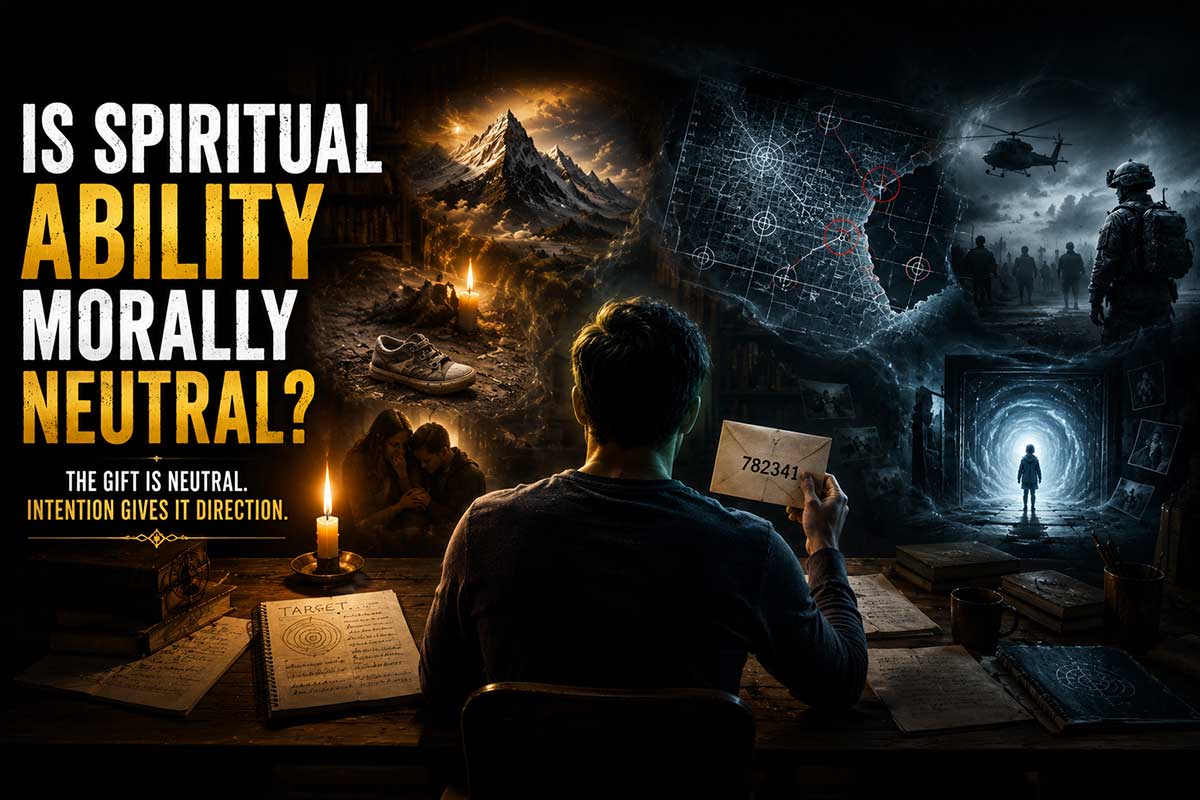
At the center of this entire series is one sentence from Nikki Dutta’s interview:
A gift is not the same as wisdom.
Human beings often want access before purification. We want signs before silence. We want results before surrender. We want healing before humility. We want awakening before love has softened us.
That is why these topics belong together.
Spiritual ability may be neutral, but the human heart is rarely neutral. The heart carries fear, longing, pride, grief, ambition, wounds, and unfinished karma. When hidden knowledge passes through an unexamined heart, it can become distorted. It may sound holy, but still be shaped by ego.
The highest good becomes the safeguard.
It asks the healer to step back.
It asks the psychic to speak with care.
It asks the manifestor to purify desire.
It asks the awakened person to remain kind.
It asks the seeker of ancient mysteries to stay humble before what cannot be fully known.
Maybe this is why every real spiritual tradition returns to the same virtues: love, humility, truth, patience, self-control, compassion, surrender.
Without those, higher knowledge does not make us higher.
It only makes our shadow more dangerous.
The future may bring strange signs. It may bring revelations, split realities, new spiritual movements, and old systems breaking. But the question remains simple:
Can we become the kind of people who can carry mystery without turning it into ego?
That may be the true initiation.
Not seeing the unseen.
Becoming trustworthy enough to see it.
Short Bios:
Nikki Dutta
Psychic, medium, healer, and remote viewer. In the interview, she explores remote viewing, karma, spiritual responsibility, the highest good, healing, higher beings, and ancient spiritual knowledge.
Carl Jung
Swiss psychiatrist and founder of analytical psychology. His ideas about the shadow, archetypes, dreams, and the unconscious make him a strong voice for examining spiritual ego and hidden motives.
Paramahansa Yogananda
Indian yogi and author of Autobiography of a Yogi. He brings the voice of devotion, meditation, divine surrender, and disciplined spiritual practice.
Socrates
Greek philosopher known for moral questioning and self-examination. He challenges every spiritual claim by asking whether knowledge has been joined with virtue.
Edgar Cayce
American mystic known for trance readings on healing, reincarnation, dreams, and the soul. He represents psychic service rooted in prayer and responsibility.
Neville Goddard
Spiritual teacher known for imagination, assumption, and “the wish fulfilled.” He brings the manifestation perspective, where consciousness shapes lived experience.
Jesus
Spiritual teacher at the heart of Christianity. He represents love, healing, surrender to God, mercy, and the warning that gaining the world means little if the soul is lost.
Rumi
Persian poet and Sufi mystic. He turns desire into longing for God and speaks through love, surrender, heartbreak, and union with the Divine.
Buddha
Founder of Buddhism. He brings clarity on suffering, attachment, compassion, illusion, and awakening beyond ego.
Philip K. Dick
American novelist known for stories about false realities, memory, hidden systems, and spiritual rupture. He is ideal for exploring split reality and unstable perception.
Terence McKenna
Writer and speaker known for altered states, novelty, culture, myth, and reality as a shared construct. He brings a visionary voice to questions about consciousness and change.
Patanjali
Ancient sage associated with the Yoga Sutras. He represents stillness of mind, inner discipline, direct perception, and the deep structure of yoga.
Krishna
Divine figure of the Bhagavad Gita. He represents dharma, cosmic order, devotion, wisdom, and the eternal self.
Sai Baba
Indian saint and spiritual master associated with miracles, service, simplicity, and divine presence. He brings the mystery of the hidden master and the path of humble devotion.
Graham Hancock
Writer known for exploring lost civilizations, ancient symbols, and alternative views of human history. He brings a questioning voice to the mystery of ancient spiritual knowledge.
Leave a Reply