

What if J.D. Vance’s Communion is not only a story of personal faith, but a test of what sincere faith asks from the Vice President of the United States?
Today we enter a conversation about faith, family, Catholic conversion, ambition, and public responsibility through J.D. Vance’s Communion.
This conversation does not begin by questioning whether Vance’s faith is sincere.
It begins with a more generous and more serious possibility:
What if the faith is real?
From there, the question becomes deeper.
What does sincere faith ask of a person who enters public life?
Faith is tested in belief, but it is tested in many other places too.
It is tested in marriage.
It is tested in fatherhood.
It is tested in ambition.
It is tested in speech.
It is tested in success.
It is tested in loyalty.
It is tested in how we treat enemies.
For some conservatives, Vance’s story may speak to a real longing for faith, family stability, moral order, tradition, and rootedness in a fractured age.
For some liberals, the same story may raise serious questions about mercy, public conduct, the vulnerable, and the moral responsibility of leaders.
A fair conversation should hold these together.
It should honor the seriousness of conversion.
It should take family and fatherhood seriously.
It should see ambition as something that can become service when guided by faith.
It should still ask what fruit public faith must bear.
In this Imaginary Talk, J.D. Vance is joined by saints, writers, theologians, moral witnesses, political thinkers, and family voices.
Together, they explore five themes:
The faith you inherit, question, and receive again.
Catholic conversion and the search for home.
Faith, ambition, and public responsibility.
Family, fatherhood, and spiritual hunger.
The test of faith by its fruits.
The central question is simple, but demanding:
When faith becomes public, what should it produce?
Does it make ambition more disciplined?
Does it make family life more tender?
Does it make public speech more truthful?
Does it make enemies harder to hate?
Does it make success easier to hold lightly?
Does it make repentance more possible?
J.D. Vance’s Communion gives us a story of return.
But every return to faith raises a second question:
Return for what?
(Note: This is an imaginary conversation, a creative exploration of an idea, and not a real speech or event.)
Topic 1: The Faith You Inherit, Question, and Receive Again
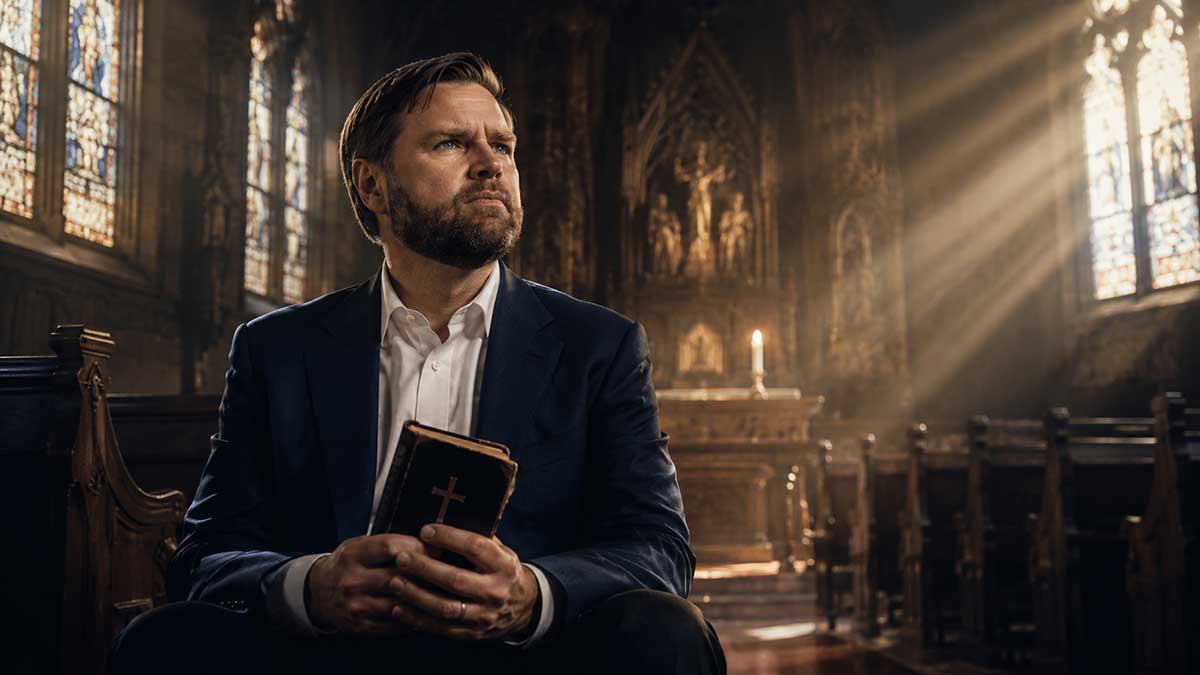
Guests:
J.D. Vance
St. Augustine
C.S. Lewis
Thomas Merton
Tara Isabella Burton
Opening
Not inherited faith as something shallow.
Not childhood faith as something to outgrow.
Not family religion as something less real than adult conversion.
Faith often begins as a gift.
A child receives prayers before he can explain prayer. He hears church language before he has doctrine sorted out. He watches grandparents, parents, pastors, neighbors, and small communities carry belief through ordinary life.
That early faith may be imperfect.
But imperfect does not mean false.
J.D. Vance’s Communion gives us a chance to ask a generous and serious question:
What happens when the faith first planted in childhood is questioned, tested, and received again as an adult?
A return to faith does not need to insult the people who first gave us faith.
It may deepen gratitude for them.
It may reveal that childhood belief was not the final form of faith, but the first seed.
Today, we ask how inherited faith can become adult conviction, how doubt can teach without becoming pride, and how a rediscovered faith can honor the family and traditions that first carried it.
Question 1: When someone returns to faith, how can inherited belief become adult conviction?
J.D. Vance:
Inherited faith matters.
For many people, faith begins in ordinary places: a grandmother’s prayer, a church service, a family rule, a memory of someone who believed when life was hard.
At the time, you may not know how deep those things are. You receive them as part of the air you breathe.
Adult conviction begins when you stop treating faith as background.
You ask:
What do I believe now?
What am I willing to obey?
What kind of husband should faith make me?
What kind of father should faith make me?
What kind of man should faith make me in public?
That does not mean childhood faith was fake.
It means the seed has to become fruit.
Tara Isabella Burton:
Inherited faith gives a person a language of meaning before the self becomes its own project.
That is valuable.
Modern culture often tells people to create themselves from nothing. But no one truly starts from nothing. We inherit stories, practices, wounds, hopes, rituals, and moral vocabularies.
The adult question is not, “Can I escape inheritance?”
The question is, “Can I receive it truthfully?”
Adult conviction begins when inherited faith becomes chosen without becoming invented. A person says, “This was given to me. Now I must decide how to live it with honesty.”
That is very different from treating faith as mere identity.
C.S. Lewis:
A child may receive faith as one receives a home.
He does not inspect the foundation. He simply lives there.
Later, when storms come, he may begin to ask whether the house stands. That question is not betrayal. It may be the beginning of real gratitude.
Adult conviction does not destroy inherited belief. It tests it, repairs it, and discovers that many things once taken for granted were stronger than they appeared.
A man may first say, “This is what my people believed.”
Later, by grace, he may say, “This is true, and I must answer to it.”
That is a great change.
St. Augustine:
Faith received in youth is a mercy.
Faith received later is a mercy too.
No person should despise the first gift because the second gift came with tears.
The child receives. The adult must consent. The heart must be reordered. The loves must be healed.
Inherited belief becomes adult conviction when the soul no longer loves God merely through the habit of others, but begins to love God with its own awakened hunger.
Yet even that hunger is grace.
We do not create the road home.
We are called back upon it.
Thomas Merton:
The inherited faith may be quiet inside a person for many years.
It may seem buried. It may seem forgotten. Yet silence does not mean death.
A man may leave church language behind and still carry a hidden memory of prayer. He may reject certain forms and still be haunted by the reality those forms pointed to.
Adult conviction begins in honesty.
Not performance.
Not nostalgia.
Not public image.
Honesty.
A person must stand before God without borrowing the voice of childhood and without pretending to be self-made.
Then inheritance becomes living faith.
Question 2: What can seasons of doubt teach without treating doubt as superior to lifelong faithfulness?
C.S. Lewis:
Doubt is not automatically wisdom.
Some doubt is honest. Some doubt is vanity wearing spectacles.
Honest doubt says, “I do not yet see.”
Proud doubt says, “I refuse to kneel.”
A season of doubt may clear away childish pictures of God. It may expose sentimental religion. It may force a person to ask hard questions.
But it should not be treated as nobler than simple faithfulness.
There is great beauty in the person who believes, prays, serves, and remains faithful through ordinary years.
The prodigal’s return is moving.
But the faithfulness of the one who stayed should not be forgotten.
St. Augustine:
My wandering taught me much, but my wandering was not holiness.
Sin is not wisdom. Distance from God is not depth.
Yet God is merciful. He can use even our wandering to teach humility.
Doubt may teach a person how weak he is. It may teach him that intelligence cannot save the soul. It may teach him that the heart can be restless beneath every success.
But no one should praise doubt above fidelity.
The soul that remained near God has received a great gift.
The soul that returned after wandering has received a great gift.
Both are held by mercy.
J.D. Vance:
Doubt can teach humility if you let it.
It can teach you that inherited faith cannot remain only inherited. It has to become real in adult life.
But I agree that doubt should not be romanticized.
Sometimes people treat doubt like proof of seriousness. That can become pride.
There are people who never made a dramatic exit from faith. They kept going to church. They prayed. They raised children. They cared for neighbors. They lived with duty.
That matters.
A person who returns to faith should be grateful for the people who kept the lights on.
Thomas Merton:
Doubt can strip away illusion.
But it can build new illusion too.
A man may doubt religion and then worship his own intelligence. He may doubt church and then worship politics. He may doubt God and then worship the self.
The desert is dangerous.
It may make a person humble, or it may make him harder.
The value of doubt depends on whether it leads to truth, silence, repentance, and love.
If doubt makes a person proud, it has become another prison.
If doubt makes him poor before God, grace may enter.
Tara Isabella Burton:
Our age often treats deconstruction as a badge of maturity.
That is too simple.
Some people question faith through pain, scandal, or intellectual conflict. That deserves respect.
But lifelong faithfulness deserves respect too.
A person who stays faithful is not necessarily naive. He may have carried grief, uncertainty, boredom, unanswered prayer, and disappointment without leaving.
That kind of faith may be less dramatic, but very deep.
The fair question is not, “Who has the better story?”
It is, “Who has been formed in love, truth, humility, and mercy?”
Question 3: How can rediscovered faith honor the family, churches, and traditions that first planted it?
Thomas Merton:
Rediscovered faith should begin with gratitude.
Not every memory will be pure. Family faith may carry wounds. Church life may carry failures. Traditions may be mixed with fear, habit, or pride.
Yet gratitude can still be real.
A person can say, “I received something imperfect through imperfect people, and still it was a gift.”
That is a mature form of memory.
The convert, or the returning believer, must resist contempt.
Contempt poisons return.
A grateful heart can see that God often plants seeds through very ordinary hands.
J.D. Vance:
For me, honoring inherited faith means taking seriously the people who first gave it to you.
Maybe they did not have perfect theology. Maybe they had their own struggles. But they gave you something.
They gave you a sense that life has meaning.
They gave you a language for sin and grace.
They gave you a picture of family duty.
They gave you memory.
When adult faith returns, it should not make a person look down on where he came from.
It should make him more grateful.
The question becomes: how do I carry this forward better, not how do I erase it?
St. Augustine:
Honor begins with humility.
The soul that has returned should not say, “Now I see, and those before me saw nothing.”
God works through mothers, grandmothers, pastors, poor churches, simple prayers, and small acts of love.
The learned man may owe his soul to someone who could not explain doctrine with elegance, yet knew how to kneel.
We must not despise the vessels through which grace first came.
God uses the humble to shame the proud.
Tara Isabella Burton:
Rediscovered faith can honor tradition by refusing to turn it into aesthetic branding.
In modern life, people often return to older forms: liturgy, ritual, icons, Latin, candles, religious language, family values, moral order.
Those things can be beautiful.
But honoring tradition means more than adopting its style.
It means entering its obligations.
If someone returns to faith, the question is not only whether he loves the beauty of tradition.
The question is whether he accepts the discipline of love, mercy, confession, service, and restraint that tradition demands.
C.S. Lewis:
To honor the faith first planted in us, we must avoid two errors.
The first is contempt for the past.
The second is mere nostalgia.
Contempt says, “Those people were simple, and I am advanced.”
Nostalgia says, “Those days were pure, and everything now is decay.”
Christian gratitude is wiser than both.
It says, “God was at work there. God is at work here. I must receive what was good, repent of what was evil, and become faithful in my own day.”
The past is not a museum.
It is an inheritance to be lived.
Closing
Today’s conversation began with inherited faith.
That matters.
Faith does not always begin as a dramatic adult decision. Often it begins as a gift placed quietly in the hands of a child.
A prayer.
A Bible.
A church memory.
A grandmother’s voice.
A family rule.
A Sunday habit.
A sense that life is more than survival.
That gift may later be questioned. It may be tested by pain, education, ambition, success, politics, family wounds, and adult responsibility.
But questioning the gift does not erase the gift.
For J.D. Vance, Communion invites a conversation about faith received, faith tested, and faith received again.
The fairest question is not whether childhood faith was shallow.
The better question is:
How can what was first planted become fully lived?
Adult faith does not need to mock inherited faith.
It can honor it.
It can deepen it.
It can purify it.
It can carry it forward with new responsibility.
The return to faith is not only a return to belief.
It is a return to gratitude.
And perhaps the faith we receive again as adults becomes strongest when it teaches us to honor those who first taught us to pray.
Topic 2: Catholic Conversion and the Search for Home
Guests:
J.D. Vance
Bishop Robert Barron
G.K. Chesterton
Flannery O’Connor
Ross Douthat
Opening
For some people, conversion sounds like rejection: a rejection of childhood, family, old churches, old prayers, old communities, old ways of seeing God.
But conversion does not always mean contempt for what came before.
Sometimes conversion is a search for fullness.
A person may honor the faith that first formed him and still feel drawn to another branch of Christian life. He may carry gratitude for Protestant memory, family prayer, Scripture, and church culture, yet find himself drawn to Catholicism through sacraments, history, confession, liturgy, saints, moral teaching, and a sense of continuity across centuries.
J.D. Vance’s Communion raises this question with unusual force:
Why would someone living in a skeptical, self-directed age enter a church that asks for obedience, confession, and belonging?
For some, Catholicism offers a home large enough to hold intellect and mystery, family and suffering, sin and grace, beauty and discipline.
Today, we ask why Catholic conversion attracts people searching for rootedness, what conversion really involves, and what converts may see in the Church that lifelong members sometimes take for granted.
Question 1: Why does Catholicism attract people searching for rootedness in a fractured age?
Bishop Robert Barron:
Catholicism attracts the rootless because it does not ask them to invent meaning from nothing.
It gives them a story already given.
Creation.
Fall.
Israel.
Christ.
Cross.
Resurrection.
Church.
Sacraments.
Saints.
Judgment.
Mercy.
The modern person is often told, “Create yourself.” That sounds freeing at first. Then it becomes exhausting.
Catholicism says, “You are not self-created. You are received. You are called. You belong to a drama larger than your own preferences.”
That can feel like home.
The Church offers truth for the mind, beauty for the imagination, ritual for the body, mercy for the sinner, and communion for the lonely soul.
J.D. Vance:
Catholicism gave me a sense of seriousness.
It was not just a feeling. It was not just personal inspiration. It had history, structure, discipline, and a way of connecting family life to eternity.
When you come from instability, you can feel a hunger for something that does not change every few years.
A culture can shift.
Politics can shift.
Status can shift.
Public opinion can shift.
But the Church speaks in a voice older than the moment.
That mattered to me.
I do not think Catholic conversion has to mean rejecting everything before it. For many people, earlier Christian faith plants the first seed. Catholicism may become the place where that seed grows into a larger understanding of grace, sacrifice, duty, and communion.
G.K. Chesterton:
The homeless man does not always need a map.
Sometimes he needs a house.
Catholicism is an old house, and that is part of its charm. It has strange rooms, odd relatives, old furniture, feast days, fast days, bells, candles, saints, arguments, and mysteries.
A man raised in an age of personal choice may find this shocking.
He has been told he is free because he may choose anything. Then he discovers that endless choice can become another form of homelessness.
The Catholic Church says, “Here is a home you did not build, yet you may enter.”
That is very good news for a man tired of inventing himself.
Ross Douthat:
Catholicism attracts people searching for rootedness because it offers thickness.
A lot of American life is thin: thin institutions, thin communities, thin rituals, thin ideas of freedom, thin forms of belonging.
Catholicism is thick.
It has doctrine, hierarchy, liturgy, saints, moral teaching, sacramental life, intellectual tradition, and a global community. It makes claims about birth, death, sex, money, family, suffering, forgiveness, and eternity.
That can be both attractive and difficult.
For converts, Catholicism may feel like entering a tradition that can outlast personal mood. That is a powerful thing in an age where identity often feels unstable.
Flannery O’Connor:
People may come to Catholicism looking for comfort, but they may find something sharper.
They may find reality.
The Church does not say, “You are fine.” It says, “You are loved, and you need grace.”
That is not softness. That is mercy with teeth.
Catholicism attracts some people because it refuses to flatter them. It gives them confession, Eucharist, discipline, and a Cross at the center of the room.
A fractured age tells people to follow desire.
The Church says desire must be healed.
That is hard.
It is home, yes, but not a sentimental home. It is a home where grace may rearrange the furniture of the soul.
Question 2: Is conversion mainly intellectual, emotional, sacramental, communal, or all of these together?
Ross Douthat:
Conversion is rarely one thing.
Some people are argued into faith. Some are drawn by beauty. Some are wounded into prayer. Some are loved into belief. Some enter because marriage, children, grief, or failure opens questions they can no longer ignore.
Catholic conversion has an intellectual part. The claims have to be faced.
It has an emotional part. The heart is never absent.
It has a communal part. A person enters a visible Church, not a private theory.
But the sacramental part is central. Catholicism is not just a set of ideas. It is a way of receiving grace through visible signs.
A convert must learn that faith is personal, but not private.
Flannery O’Connor:
I distrust conversions that are too tidy.
A person may think himself into the Church and still be proud. He may feel moved by beauty and still be selfish. He may receive sacraments and still be mean. He may love doctrine and dislike actual people.
Conversion is not a clean little story.
Grace works through the whole person, and the whole person is usually a mess.
That is why the sacraments matter. They do not depend on our moods being impressive.
The Eucharist is not a prize for the spiritually polished.
Confession is not therapy for the well-behaved.
Grace comes to sinners, which is fortunate because sinners are the only kind of people available.
Bishop Robert Barron:
Catholic conversion involves the mind, heart, body, and community.
The mind seeks truth. Catholicism has a long intellectual tradition, so reason is not pushed aside.
The heart seeks beauty and love. Catholicism gives music, art, liturgy, saints, and prayer.
The body kneels, fasts, receives, confesses, and enters ritual.
The community receives the person into a living body.
Then there are the sacraments, which are not mere symbols. They are encounters with Christ through material signs.
Conversion is not simply, “I now agree with Catholic ideas.”
It is, “I am being drawn into the life of Christ and His Church.”
G.K. Chesterton:
Conversion is intellectual, emotional, sacramental, communal, and probably inconvenient.
That is how one knows it is real.
A man may be pulled by a syllogism, a stained-glass window, a grandmother’s rosary, a funeral Mass, a line from Aquinas, a joke from a priest, or a sudden suspicion that the universe is too strange to be meaningless.
The point is that Catholicism does not reduce man to a brain.
A man has a body. He kneels. He eats. He drinks. He confesses. He is blessed with water. He is fed with bread that is more than bread.
The whole man must come home.
Not just the clever part.
J.D. Vance:
For me, conversion could not remain an idea.
I had to think. I had to ask whether Catholic claims were true. But intellectual agreement alone was not enough.
Faith had to enter life.
Marriage.
Fatherhood.
Confession.
Mass.
Prayer.
Duty.
Those things make faith concrete.
A man can read books about Christianity and still avoid conversion. He can admire the Church and still avoid obedience.
The real question is whether faith begins to form habits.
Does it change how I speak?
How I confess wrong?
How I treat my family?
How I understand success?
How I carry responsibility?
That is where conversion becomes life.
Question 3: What does a convert sometimes notice in the Church that lifelong members may take for granted?
Flannery O’Connor:
A convert may notice that the Church is strange.
That is a blessing.
People raised in religion can become numb to the shock of it. They hear “Body of Christ” and think of routine. They hear “resurrection” and think of a season. They hear “sin” and think of other people.
The convert may hear those words as if they are dangerous.
Good.
They are.
The Eucharist is not decoration. Confession is not politeness. Grace is not niceness. The Cross is not jewelry.
A convert can remind the Church that faith is not tame.
J.D. Vance:
A convert may notice the gift of tradition.
If you grew up around religion, you may not realize how valuable it is to have prayers, rituals, teachings, and a moral structure already waiting for you.
For someone who has felt fragmentation, that can be profound.
The Church gives a way to live, not just things to believe.
But converts need humility too.
We can become intense. We can think our hunger gives us clearer sight than everyone else. We can become impatient with people who have carried the faith quietly for years.
So the convert should bring gratitude, not superiority.
He should say, “I have been given something precious. Now I must learn how to live it.”
Ross Douthat:
Converts often see the scale of Catholicism.
They see that it is not merely a parish, a denomination, or a personal preference. It is a civilizational inheritance, a sacramental system, an intellectual tradition, a moral community, and a global body.
That can be thrilling.
But lifelong Catholics often know something converts need to learn: the Church is lived in ordinary repetition.
Mass after Mass.
Confession after confession.
Lent after Lent.
Funeral after funeral.
Prayer after distraction.
Mercy after failure.
The convert sees the architecture.
The lifelong Catholic may know the weather inside the house.
Both have something to teach.
G.K. Chesterton:
The convert sees that Catholicism is astonishing.
The cradle Catholic may say, “Of course there are candles. Of course there are saints. Of course there is confession. Of course the priest lifts the Host.”
But there is no “of course” about any of this.
It is outrageous.
It is magnificent.
It is the most ordinary impossible thing in the world.
The convert may be useful because he has not yet learned to be bored by miracles.
Still, he must be careful.
Wonder should produce humility, not arrogance.
The man who enters the house late should not sneer at the people who kept it warm.
Bishop Robert Barron:
A convert may see beauty with fresh eyes.
The liturgy, the saints, the intellectual tradition, the Eucharist, the moral seriousness of the Church — these can strike the convert with great force.
That freshness is a gift to the Church.
But the convert must learn patience with the actual Church.
The Church is holy, yet filled with sinners. It contains saints, tired parents, distracted children, weak priests, bad music, bureaucracy, scandal, charity, boredom, and hidden holiness.
To love the Church is not only to love the ideal.
It is to love Christ present in His wounded body.
A convert begins by being drawn.
Then he must learn to stay.
Closing
Today’s conversation began with Catholic conversion as a search for home.
Not a rejection of every earlier prayer.
Not contempt for Protestant roots.
Not escape into religious aesthetics.
Not identity alone.
At its best, conversion is a response to grace.
A person may come carrying fragments: childhood faith, doubt, family memory, intellectual questions, moral hunger, suffering, and longing for order.
Catholicism offers a home with history, sacraments, confession, saints, beauty, discipline, and communion.
But entering the Church is not the end of conversion.
It is the beginning of being converted again and again.
The convert must learn gratitude.
The convert must learn humility.
The convert must learn patience.
The convert must learn mercy.
The convert must learn to love the actual Church, not just the idea of the Church.
For J.D. Vance, Communion raises a question that reaches beyond one person’s story:
What does it mean to come home to faith in an age of fragmentation?
The answer is not merely to belong.
It is to be changed.
The Church may give a home to the restless soul.
But once inside, the soul must learn how to live there.
Topic 3: Faith, Ambition, and Public Responsibility
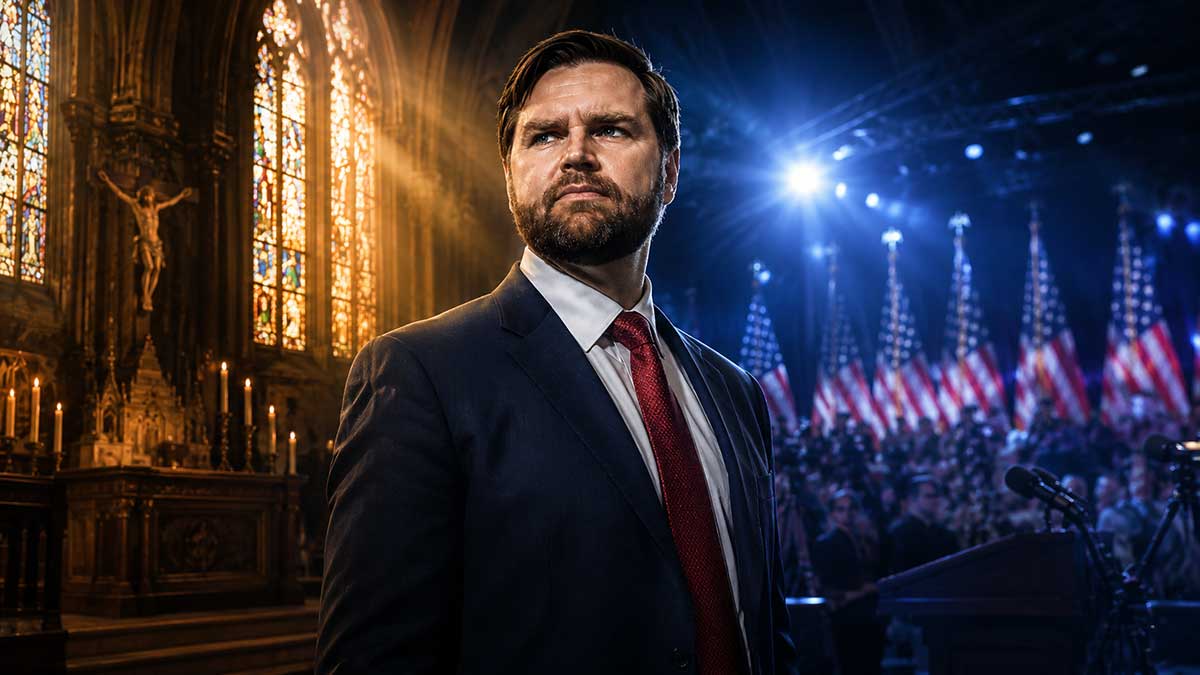
Guests:
J.D. Vance
Reinhold Niebuhr
Dorothy Day
Abraham Lincoln
David Brooks
Opening
Ambition is often treated as a spiritual danger, and sometimes it is. It can become vanity, hunger for applause, fear of losing, or a desire to control the story of one’s own life.
But ambition is not always selfish.
A person may be ambitious because he wants to serve.
He may want to protect families.
He may want to rebuild broken communities.
He may want to give voice to people who feel ignored.
He may want to carry responsibility instead of avoiding it.
So the fair question is not:
Is ambition bad?
The better question is:
Can faith guide ambition so that it becomes service rather than self-worship?
J.D. Vance’s Communion gives us a way to explore that question. A return to faith does not require a person to leave public life. It may ask him to enter public life with deeper humility, clearer moral limits, and a greater sense of accountability before God.
Today, we ask whether ambition can become service, how faith can shape politics without being swallowed by politics, and how public success can form or deform the soul.
Question 1: Can ambition become a form of service when guided by faith?
David Brooks:
Ambition becomes service when it is ordered toward something higher than the self.
There is a shallow ambition that asks, “How can I be seen?”
There is a deeper ambition that asks, “What responsibility has been given to me?”
A person with gifts should not bury them. Leadership, writing, organizing, persuading, governing, building institutions — these can be acts of service when they are governed by humility.
The danger begins when achievement becomes identity.
A person may start by wanting to help families, towns, workers, or children. Then applause arrives. Enemies arrive. Status arrives. Soon the original mission can be replaced by self-protection.
Faith should remind the ambitious person that his work matters, but his soul matters more.
J.D. Vance:
I think ambition can be service.
If you come from a place where families are struggling, where addiction hurts communities, where people feel abandoned by institutions, then wanting to act is not wrong.
A person can feel called to do something.
But faith has to discipline that calling.
It has to ask:
Am I serving people, or using people as symbols?
Am I telling the truth, or saying what helps my side?
Am I still capable of gratitude?
Can I lose without becoming bitter?
Can I apologize when I am wrong?
Ambition guided by faith should make a man more responsible, not more self-important.
Dorothy Day:
Ambition must stay close to the poor.
If ambition takes you farther away from the hungry, the lonely, the prisoner, the worker, the child, and the person nobody wants to notice, then ambition has begun to betray service.
But if ambition means greater responsibility for love, then it can be purified.
A person may seek office, lead a movement, write books, speak publicly, or build institutions. But he must ask whether the suffering person is still real to him.
The poor cannot become campaign language.
They cannot become moral decoration.
They must remain neighbors.
Faith-guided ambition bends down before it rises up.
Abraham Lincoln:
Ambition is not foreign to public life.
A man may desire honor. He may wish to be useful. He may hope his name is joined to some good work. These desires are not always wicked.
But ambition must be chastened by sorrow, responsibility, and reverence.
The higher the office, the less a man should think of himself as master of events.
He is a steward under judgment.
If ambition makes him cruel, it has corrupted him.
If ambition makes him patient, it may be serving him.
If ambition makes him deaf to conscience, it is dangerous.
If ambition makes him willing to bear burdens for others, it may become noble.
A public man must learn that he belongs to something larger than his own advancement.
Reinhold Niebuhr:
Ambition can serve justice, but it is never pure.
That is why faith is necessary.
The person who enters public life saying, “My motives are clean,” is already in danger. Human beings are mixed creatures. We seek good and self at the same time.
Faith does not remove this mixture. It exposes it.
A serious Christian in public life should be brave enough to act and humble enough to distrust his own innocence.
Ambition may become service when it is restrained by confession, guided by justice, and judged by love.
Without those restraints, service language can hide self-love.
Question 2: How can faith shape politics without becoming a tool of politics?
Abraham Lincoln:
Faith shapes politics rightly when it makes a leader humble before Providence.
Many are eager to claim that God stands with them. Fewer are willing to ask whether they stand under God’s judgment.
That difference is great.
A nation, a party, or a leader may speak religious words and still act proudly. Faith becomes a tool when Heaven is treated as an endorsement.
Faith becomes a guide when it teaches reverence, restraint, and mercy.
The public servant must not ask God to bless every desire of his faction.
He must ask for the courage to do justice and the humility to repent when justice has been clouded by self-interest.
Dorothy Day:
Faith becomes a tool of politics when it forgets the person in front of us.
Christ did not ask us to love an abstract voting bloc.
He asked us to feed the hungry, clothe the naked, visit the prisoner, welcome the stranger, forgive enemies, and care for the least among us.
Politics matters. Laws matter. Wages matter. War and peace matter. Housing matters.
But faith must never become a flag waved over our own side.
If our politics makes us less merciful, less tender, less willing to sacrifice, then our faith has been captured.
Faith must remain free enough to trouble every party.
J.D. Vance:
Faith should shape public life.
It should shape how we think about families, children, addiction, work, war, poverty, and community.
But it becomes dangerous when it only confirms what we already wanted politically.
That is the test.
Does faith ever correct me?
Does it ever make me uncomfortable?
Does it ever ask me to speak differently?
Does it ever make me more merciful to people outside my coalition?
Does it ever make me admit that my side can be wrong?
If faith never interrupts politics, then politics is probably using faith.
A public Christian has to let faith judge him first.
Reinhold Niebuhr:
Political groups are tempted by collective pride.
This is true of every side.
A group may begin with legitimate grievances. It may defend real goods. It may seek justice. Yet it can still become self-righteous, resentful, and blind to its own sins.
Faith shapes politics when it offers moral vision and self-criticism.
It becomes a political tool when it provides moral certainty without repentance.
The Christian must act in history. Withdrawal is not always faithfulness. But action must be joined to humility.
A politics touched by faith should know both courage and contrition.
David Brooks:
Faith becomes healthy in politics when it forms character before it forms talking points.
The great danger in modern public life is performative belief.
People learn how to signal virtue to their side. They learn which phrases win applause. They learn which enemies increase loyalty. They learn how outrage can build identity.
Faith should do something deeper.
It should form patience, restraint, courage, gratitude, truthfulness, and a sense of limits.
If religion becomes mainly a badge of team membership, it has lost much of its moral force.
Faith should make a person harder to manipulate by his own side.
Question 3: How can a public figure tell whether success is forming or deforming the soul?
Reinhold Niebuhr:
Success deforms the soul when it teaches a person to believe his own myth.
The successful person is praised. Then he begins to feel necessary. His followers excuse him. His opponents anger him. His victories seem like proof of virtue.
This is dangerous.
Success forms the soul only when it increases humility.
A public figure should ask:
What sins are easier for me now?
What truths do I avoid?
Who can still correct me?
Do I confuse victory with righteousness?
Do I see opponents as human beings?
The successful person needs confession more, not less.
David Brooks:
One sign is the quality of one’s friendships.
Success often surrounds people with admirers, strategists, and loyal defenders. That can be useful professionally, but dangerous spiritually.
A person needs friends who can say, “You are becoming less kind,” or “You are lying to yourself,” or “You owe someone an apology.”
Success forms the soul when it deepens gratitude, service, and responsibility.
It deforms the soul when it increases defensiveness, isolation, contempt, and the need to win every exchange.
A simple test is this:
Are the people closest to you more at peace around you, or more careful?
J.D. Vance:
I would begin at home.
Public success can fool you. Media attention can fool you. Supporters can fool you. Critics can fool you too, since anger at them can make you feel righteous.
Family is harder to fool.
If success makes me more impatient with my wife, more absent from my children, more defensive, more dismissive, then something is wrong.
Faith has to be tested in private life.
Can I apologize?
Can I listen?
Can I be interrupted?
Can I be ordinary?
Can I be corrected?
If success makes ordinary love harder, it is deforming the soul.
Abraham Lincoln:
A man should ask whether success has made him gentler with weakness.
Office and honor can make a person severe. He may grow used to command. He may hear praise and become irritated by contradiction.
That is no small danger.
Public life brings burdens, but burdens should not make a man cruel.
If success teaches patience, gratitude, and reverence, it may have formed him.
If it teaches suspicion, vanity, and hardness, it has injured him.
There is no height in public life where conscience no longer speaks.
A wise man listens before it grows faint.
Dorothy Day:
Success is tested by nearness to need.
Do you still see the poor?
Do you still make time for the lonely?
Do you still serve people who cannot help your career?
Do you still touch suffering, or do you only speak about it?
Success can move a person into cleaner rooms, higher tables, and safer conversations.
The soul may shrink there.
A public Christian must remain close to works of mercy.
Not as a symbol.
Not as a photo.
As a discipline.
Go where your name is not useful.
That is where success is tested.
Closing
Today’s conversation began with a fairer view of ambition.
Ambition is not always corruption.
It can be a desire to serve.
It can be a willingness to carry burdens.
It can be a refusal to abandon wounded communities.
It can be a call to build, defend, repair, and lead.
But ambition must be guided.
Without faith, humility, friendship, confession, family accountability, and nearness to those in need, ambition can turn inward. It can begin as service and become self-protection.
For J.D. Vance, Communion raises this question in a public way:
What does sincere faith ask of ambition?
It may not ask a person to leave public life.
It may ask him to enter it differently.
With more humility.
With more responsibility.
With more restraint.
With more gratitude.
With more mercy.
With more willingness to be corrected.
Faith does not make ambition safe by blessing it.
Faith makes ambition safer by judging it.
The public Christian does not need to pretend he has no ambition.
He needs to ask whether ambition is being converted.
Is it becoming service?
Is it protecting the soul from pride?
Is it making room for mercy?
Is it still answerable to God?
That is the burden of public responsibility.
And perhaps that is the gift too.
Topic 4: Family, Fatherhood, and Spiritual Hunger
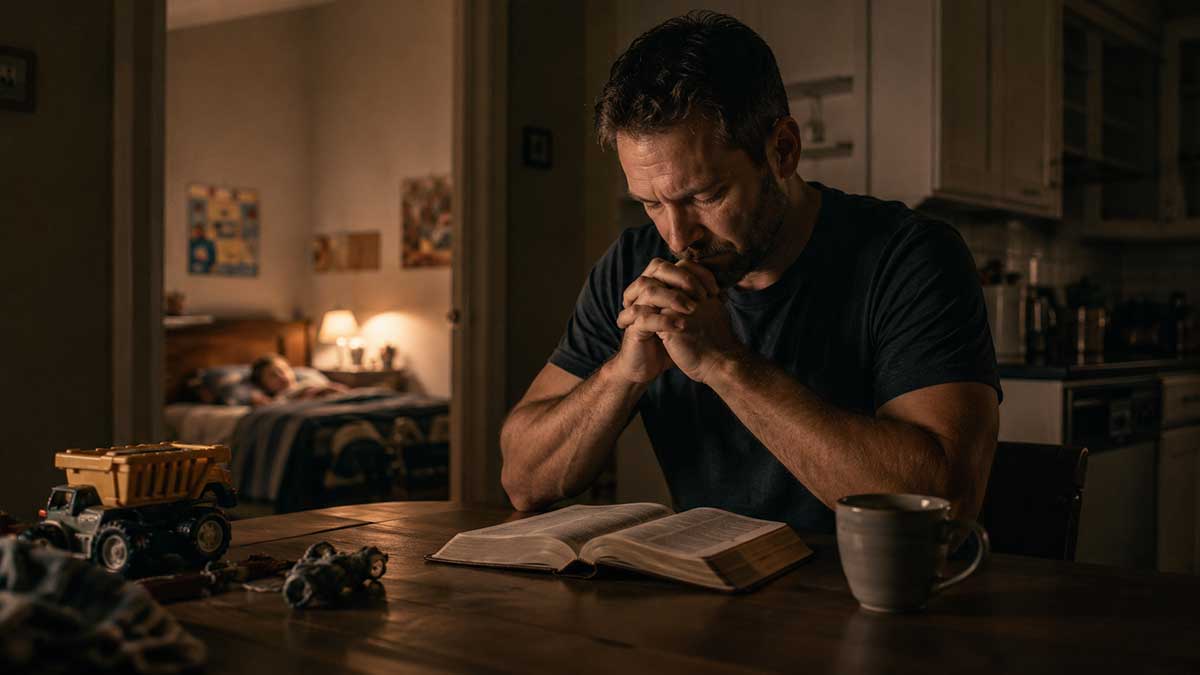
Guests:
J.D. Vance
Usha Vance
James Dobson
Jonathan Haidt
bell hooks
Opening
Before faith becomes doctrine, it is often first felt at home.
A child may sense God through a mother’s prayer, a father’s steadiness, a grandmother’s courage, a family meal, a church habit, or the quiet security of adults who keep their promises.
A child may sense spiritual hunger through the absence of those things too.
Family can give faith a language.
Family can give faith a wound.
J.D. Vance’s Communion invites us to think about faith not merely as public identity, but as home life: childhood memory, marriage, fatherhood, stability, duty, love, and the desire to give children something steadier than what one may have received.
A fair conversation should take that longing seriously.
Many people, conservative and liberal, know the pain of family instability. Many know the ache for a home where children feel safe, parents stay present, love has discipline, and forgiveness is real.
So today, we ask how childhood pain and longing for order shape faith, whether fatherhood can awaken a man’s need for God, and what kind of home faith creates when it becomes daily practice.
Question 1: How do childhood pain, family instability, and longing for order shape faith?
J.D. Vance:
Childhood instability can make a person hungry for something solid.
When adults are unpredictable, a child learns to watch the room. He learns moods. He learns danger. He learns how quickly love can feel unsafe.
Later in life, that child may not first think in theological terms. He may simply want order.
Not control.
Order.
A home where promises mean something.
A home where children do not fear adult anger.
A home where discipline is joined to love.
A home where forgiveness does not erase responsibility.
A home where faith is lived, not just claimed.
For me, faith connects to that longing. It says the world is not chaos. Love has shape. Duty matters. Family matters. Grace matters.
That can be deeply healing.
bell hooks:
A longing for order can be holy, but it must be joined to love.
Many wounded people seek order after chaos. That is natural. Yet order without tenderness can become another wound.
A child does not need a home where everyone is silent from fear.
A child needs a home where truth can be spoken, where mistakes can be repaired, where tenderness is not mocked, where authority protects rather than dominates.
Faith should help us practice love more fully.
If faith gives language to control, shame, or silence, then faith has been misused.
A healing home must teach that love is care, responsibility, respect, trust, and commitment.
That is spiritual work.
Jonathan Haidt:
Family life forms moral intuition before children can explain what they are learning.
A child absorbs patterns.
How conflict is handled.
How apologies happen.
How adults respond to stress.
How truth is treated.
How rules are explained.
How affection is given.
How faith enters ordinary routines.
Instability leaves the nervous system on alert. It can make trust harder. It can make authority feel threatening, or it can make strict order feel unusually attractive.
Faith can help integrate those experiences if it matures the person.
The test is whether faith reduces reactivity, increases gratitude, deepens responsibility, and helps a person love without fear.
Usha Vance:
Family pain does not disappear simply through belief.
A person may have faith and still carry patterns from childhood.
Marriage and parenting reveal those patterns.
How do you handle stress?
How do you speak when tired?
How do you respond when a child interrupts you?
How do you disagree with your spouse?
How quickly can you repair harm?
Those small moments matter.
Faith can shape the home when it gives people the courage to be honest. Not dramatic honesty. Daily honesty.
The kind that says, “I was wrong.”
The kind that says, “I need to listen.”
The kind that says, “This family deserves peace, and I must help create it.”
James Dobson:
Children need love and limits.
A home without love wounds the heart. A home without limits leaves the child without guidance.
Faith at home should help parents give both.
The child needs affection, attention, discipline, encouragement, and moral clarity. He needs to know that he is loved, and he needs to know that his choices matter.
Family instability often leaves a child unsure of where he stands.
A faithful home should communicate steadiness.
You are loved.
You are accountable.
You are safe.
You are being guided.
You belong.
Those messages shape the soul.
Question 2: Can fatherhood awaken a man’s need for God?
Usha Vance:
Fatherhood can reveal a man’s limits.
A child does not ask whether a father is successful in public. A child asks whether he is present.
The child asks with needs.
Hold me.
Listen to me.
Notice me.
Stay with me.
Teach me.
Be patient with me.
That can humble a man.
It can show him that love is not an idea. It is time, attention, sacrifice, and steady care.
Fatherhood can awaken the need for God when a man realizes he cannot give his children what he has not received or practiced.
He needs grace to become patient.
He needs wisdom to lead gently.
He needs humility to apologize.
He needs strength to stay present.
James Dobson:
Fatherhood often makes a man serious in a new way.
He begins to see that his private habits are no longer private.
His anger teaches.
His absence teaches.
His faith teaches.
His priorities teach.
His speech teaches.
His self-control teaches.
Children watch far more than they listen.
A father may turn to God when he senses the weight of that influence. He begins to pray for wisdom, patience, courage, and protection over his family.
Fatherhood is a calling.
When a man receives it that way, it can become one of the deepest roads into spiritual maturity.
J.D. Vance:
Fatherhood made faith concrete for me.
Before children, a man can keep faith in his head. He can argue about it, admire it, read about it, even defend it.
Children bring it into the room.
They see whether you live what you say. They see whether you forgive. They see whether you pray. They see whether you tell the truth. They see whether work, politics, ambition, or anger get the best of you.
That is sobering.
If I want my children to know faith, I have to become the kind of father whose life makes faith believable.
That does not mean perfection.
It means repentance, steadiness, and love.
bell hooks:
Fatherhood can awaken a man’s need for God if it leads him deeper into love.
But fatherhood alone does not make someone loving.
Men must learn tenderness. They must learn emotional honesty. They must learn that authority is not domination and strength is not hardness.
A child needs a father who can be strong enough to be gentle.
Faith should help a father become more present, more accountable, more willing to listen, and more able to repair harm.
A father who cannot apologize teaches fear.
A father who can repent teaches grace.
That may be one of the holiest lessons a child can receive.
Jonathan Haidt:
Fatherhood can shift a man’s moral frame.
Before children, many values remain abstract. After children, they become urgent.
A father may begin to care more about school, safety, community, faith, friendships, technology, moral habits, and the future.
That can push him into religious seriousness.
He may see that children need more than comfort. They need a moral ecology: rituals, boundaries, examples, stories, responsibilities, and belonging.
Religion can provide those structures in a way individual preference rarely can.
Fatherhood awakens faith when it makes a man ask, “What kind of world am I helping my child enter, and what kind of person am I becoming for that child?”
Question 3: What kind of home does faith create when it becomes practice, not just language?
bell hooks:
When faith becomes practice, home becomes a place where love is active.
Love is not simply affection. Love is care, respect, responsibility, trust, and commitment.
A faithful home is not a home without conflict.
It is a home where conflict does not destroy dignity.
Children are allowed to tell the truth.
Parents are willing to apologize.
Tenderness is honored.
Fear is not confused with respect.
Discipline is joined to care.
Prayer is joined to practice.
Religious words cannot replace love.
Children ask one question with their whole lives:
Is love real here?
A faithful home must answer yes through action.
J.D. Vance:
A home where faith is practiced should feel steadier.
Not perfect. Not always peaceful. Not free from stress.
But steadier.
Children should see that forgiveness is possible. They should see adults admit wrong. They should see that worship on Sunday connects to behavior during the week.
Faith as language says, “We believe.”
Faith as practice says:
We keep promises.
We tell the truth.
We pray when afraid.
We care for the weak.
We apologize after anger.
We do not let resentment rule the house.
That is the kind of faith children can feel.
Jonathan Haidt:
Practiced faith creates repeated patterns that form character.
Children need rituals.
A weekly worship rhythm.
Prayer before meals.
Family meals.
Service to others.
Clear rules about speech.
Forgiveness after conflict.
Shared stories about what matters.
These practices help children internalize gratitude, responsibility, humility, and compassion.
The goal is not to control the child’s every thought.
The goal is to create an environment where goodness becomes familiar and meaning has structure.
A home becomes spiritually powerful when its routines quietly teach what the family loves.
James Dobson:
A faithful home gives both warmth and guidance.
Children need to feel cherished. They need encouragement, affection, attention, and laughter.
They need guidance too. They need correction, boundaries, and moral direction.
The danger is separating the two.
Warmth without guidance can leave a child adrift.
Guidance without warmth can leave a child wounded.
Faith should bring these together.
Parents teach through the atmosphere they create. A child will notice whether faith makes the home gentler, safer, more truthful, and more loving.
The home is often the first sermon a child understands.
Usha Vance:
Faith becomes practice in small moments.
It is in whether parents listen when they are tired.
It is in whether spouses speak with respect during disagreement.
It is in whether children feel known.
It is in whether work always wins.
It is in whether the home has room for rest.
It is in whether apology comes quickly enough.
A faithful home is built through repetition.
The same prayer.
The same meal.
The same effort to repair.
The same willingness to begin again.
Children may forget many words parents say about faith.
They will remember how those words felt in the home.
Closing
Today’s conversation began with family.
Family is where many first learn trust.
It is where many first learn fear too.
A child may learn that love is steady, or that love disappears.
A child may learn that authority protects, or that authority wounds.
A child may learn that faith gives life, or that faith hides pain.
That is why family and faith cannot be separated easily.
For J.D. Vance, Communion raises a deeply human question:
Can faith help a person build a home more stable, loving, and truthful than the brokenness he has known?
That question deserves a fair hearing.
A return to faith is not tested only in public statements. It is tested in private rooms.
At the kitchen table.
In marriage.
In fatherhood.
In apology.
In patience.
In how children feel when a parent walks through the door.
Faith becomes real when the people closest to us can feel its fruit.
The home is not a small subject.
It is where the soul first learns what love means.
And for many people, it is where faith finally becomes visible.
Topic 5: By Their Fruits — Faith in Public Life
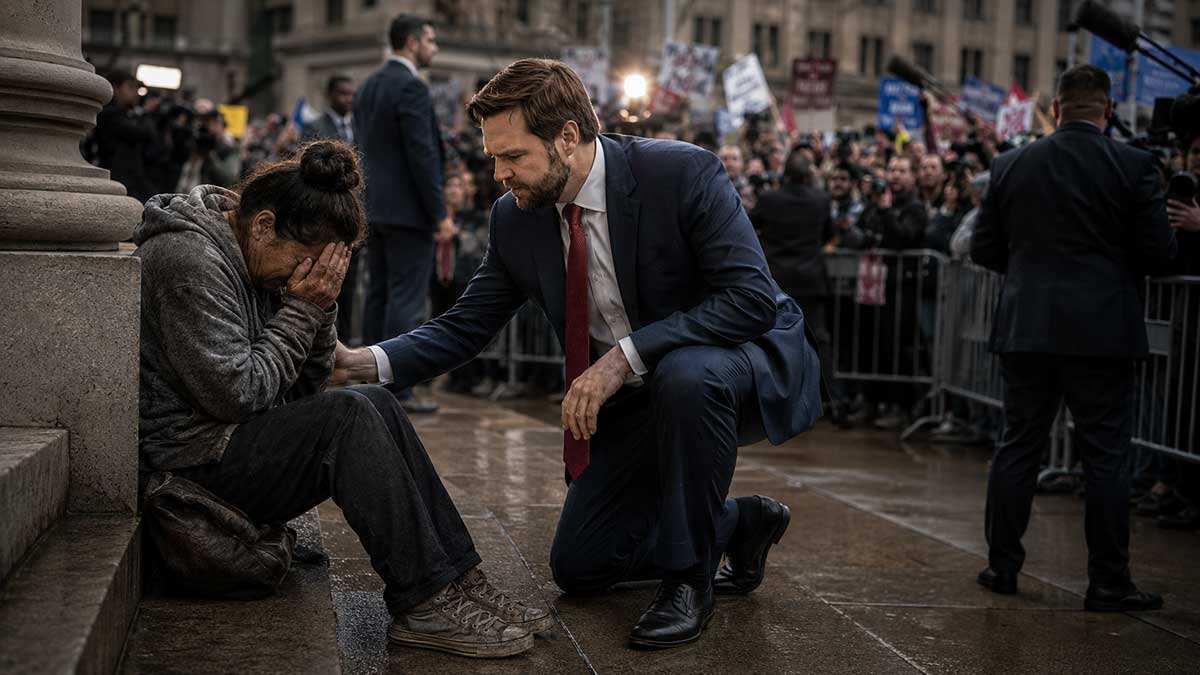
Guests:
J.D. Vance
Martin Luther King Jr.
Cornel West
Yuval Levin
Pope Leo XIV
Opening
Welcome to Imaginary Talks.
Today we turn to the ancient test of fruit.
Faith can be private, but it never stays private.
It shows itself in speech.
It shows itself in family.
It shows itself in courage.
It shows itself in restraint.
It shows itself in mercy.
It shows itself in how we treat people who cannot help us.
It shows itself in how we speak about enemies.
For J.D. Vance, Communion raises a question that applies far beyond one man, one party, or one election:
When faith enters public life, what should it produce?
A fair conversation should not assume bad faith.
It should begin with the possibility that faith is sincere.
Then it should ask the harder question:
What does sincere faith ask of a public person?
Republicans, Democrats, conservatives, liberals, activists, pastors, presidents, voters, and writers all face this test.
Faith can inspire public service.
Faith can protect the weak.
Faith can deepen courage.
Faith can defend family and community.
Faith can call society back to moral seriousness.
Faith can be misused too.
It can become a badge.
It can become a weapon.
It can become a shield for pride.
It can become a way to bless our own side without examining ourselves.
So today, we ask what fruit public faith should bear, whether Christian charity can survive public conflict, and what happens when loyalty to a movement collides with mercy.
Question 1: If faith is judged by its fruits, what evidence should matter most: words, policies, habits, or treatment of enemies?
Martin Luther King Jr.:
The fruit of faith must be love in action.
Words matter. A person’s speech can heal or wound. It can call people to justice, or it can train them in contempt.
Policies matter too. Love must care about housing, wages, schools, voting rights, prisons, war, poverty, children, and human dignity.
Habits matter because public virtue without private discipline becomes fragile.
Yet the treatment of enemies may reveal the deepest truth.
It is easy to love those who praise us. It is easy to defend those inside our group.
Christ asks for more.
Love of enemy does not mean surrendering truth. It means refusing hatred as a way of life.
Faith that wins arguments but loses love has failed its own test.
Yuval Levin:
I would look at formation.
Public life rewards performance. Faith is meant to form character beneath performance.
So the question is not simply whether a leader says religious things or supports policies religious people admire.
The question is what kind of person faith is forming.
Is he becoming more responsible?
More truthful?
More restrained?
More capable of self-criticism?
More protective of the weak?
More careful with authority?
Treatment of enemies matters because politics is structured around conflict.
If faith makes conflict more humane, it is doing moral work.
If faith merely intensifies contempt, it has been absorbed by politics.
J.D. Vance:
For a public person, all of those tests matter.
Words matter because leaders help shape what people think is acceptable.
Policies matter because laws touch real families, workers, children, addicts, veterans, immigrants, prisoners, and communities.
Habits matter because a person can say the right things and still be governed by ego.
Treatment of enemies matters because politics tempts us to flatten people into symbols.
Faith should have public consequences. It should shape how we think about family, work, life, addiction, poverty, war, and community.
But faith must judge the believer first.
If my faith gives me language to criticize others but never language to repent, then something has gone wrong.
Pope Leo XIV:
The fruit of Christian faith is communion with God and neighbor.
Words, policies, habits, and treatment of enemies cannot be separated.
Words reveal the heart.
Policies reveal priorities.
Habits reveal formation.
Enemies reveal charity.
A Christian in public life must ask whether his conduct protects human dignity, seeks truth, serves the common good, and leaves room for mercy.
Christian faith can be firm.
It need not be sentimental.
But firmness without charity becomes hardness of heart.
The fruit of faith is never cruelty.
Cornel West:
The fruit of faith is love, justice, truth-telling, and courage.
Not cheap love.
Not polite silence.
Not love that refuses to confront domination.
Real love has backbone.
A person’s faith must be tested by how he treats the poor, the worker, the prisoner, the migrant, the child, the stranger, and the despised.
Public faith that ignores suffering is empty.
Public faith that hates enemies is sick.
The prophetic tradition says: tell the truth, stand with the crushed, resist cruelty, and never let your soul become a copy of what you oppose.
Question 2: Can Christian charity survive public conflict without becoming weak or naive?
J.D. Vance:
It has to survive public conflict, or it is too thin.
Politics involves real stakes. Families, schools, borders, jobs, drugs, crime, war, children, and community all matter. People can be hurt by bad decisions.
So Christian charity cannot mean avoiding conflict.
It means entering conflict without letting conflict own your soul.
Can I speak firmly without enjoying humiliation?
Can I fight for what I believe without treating opponents as monsters?
Can I admit when my side is wrong?
Can I remember that my enemies have families, fears, wounds, and duties too?
Charity is not weakness.
It is discipline under pressure.
Cornel West:
Christian charity is not niceness.
It is not avoiding hard truths.
Love marched. Love confronted. Love went to jail. Love cried out against injustice. Love named lies.
But love refused to become hatred.
That is the difference.
The public square needs truth with tenderness and courage with compassion.
A person can be fierce without being cruel.
A person can resist injustice without losing his soul.
If your politics requires you to hate in order to belong, then your politics is asking for too much.
Pope Leo XIV:
Christian charity can survive any place where Christ is obeyed.
Charity does not mean silence before injustice. It does not mean confusion about truth. It does not mean weakness.
Charity means the other person remains a person.
The opponent remains a neighbor.
The critic remains a soul.
The enemy remains loved by God.
Public conflict becomes spiritually dangerous when people begin to feel righteous through contempt.
The Christian must witness to another way.
Truth and charity must walk together, or both are wounded.
Martin Luther King Jr.:
Charity must survive conflict because love is most needed when conflict is real.
Love is not passive.
Love confronts unjust laws.
Love faces hatred.
Love bears suffering.
Love speaks truth to power.
Love refuses revenge.
The Christian does not seek peace by ignoring injustice.
The Christian seeks reconciliation rooted in justice.
Public conflict becomes poisonous when victory replaces redemption.
The goal is not to crush the enemy.
The goal is to awaken conscience.
Yuval Levin:
Christian charity can survive public conflict when institutions and habits support it.
People do not become charitable by admiring charity from a distance.
They need practices.
Listening before responding.
Speaking with limits.
Submitting to correction.
Keeping friendships across disagreement.
Serving people outside one’s camp.
Praying for enemies.
Modern politics trains us in contempt. It rewards the sharpest insult, the fastest accusation, the cleanest tribal signal.
Christian charity must be trained more deeply than partisanship.
That requires discipline, not sentiment.
Question 3: How should any public Christian respond when party loyalty, movement loyalty, or personal loyalty conflicts with mercy?
Yuval Levin:
Every public Christian needs moral distance from his own side.
Movements are useful. Parties are necessary in democratic politics. Coalitions help people act together.
But no movement should own the conscience.
A person needs enough distance to ask: Is my side asking me to defend something I know is wrong? Is loyalty becoming more important than truth? Is mercy being treated as embarrassment?
That is a warning sign.
The Christian should remain loyal to people, institutions, and causes when possible.
But loyalty must be judged by a higher loyalty.
Faith must keep the conscience free.
Pope Leo XIV:
The Christian belongs first to Christ.
This does not erase prudence. It does not remove the need for public order, law, responsibility, or wise judgment.
But mercy is not an optional decoration of faith.
Mercy reveals the heart of God.
When any party, movement, or leader asks a Christian to close his heart, the Christian must refuse.
A public Christian may support a movement.
He may work within a party.
He may seek practical solutions.
But he must never surrender the dignity of the human person.
J.D. Vance:
Political loyalty has value. You cannot govern alone. You need coalitions, allies, strategy, and persistence.
But loyalty cannot become worship.
I think the difficult part is that mercy is not always simple in policy. People can disagree honestly about what mercy requires in immigration, crime, poverty, addiction, war, or family policy.
Still, there are signs that something has gone wrong.
When cruelty becomes entertainment.
When humiliation becomes strategy.
When weakness becomes a joke.
When repentance becomes impossible.
When suffering people become props.
At that point, faith has to interrupt loyalty.
Cornel West:
Choose mercy.
Not soft mercy. Not shallow mercy. Not mercy without justice.
Mercy with truth.
A movement can do good. A party can serve real needs. A leader can carry real responsibility.
But none of them is God.
If a movement demands cruelty as the price of belonging, then the soul is being recruited into idolatry.
The prophetic witness must be free enough to disappoint friends.
Moral courage is not just standing against enemies.
Sometimes it is standing against your own side.
Martin Luther King Jr.:
When loyalty and mercy collide, the Christian must look to the Cross.
Jesus did not ask whether mercy was useful to a movement.
He touched lepers.
He welcomed sinners.
He forgave enemies.
He stood with the despised.
He confronted religious and political authority with truth.
A party may ask for loyalty.
God asks for faithfulness.
Those are not always the same.
The public Christian must be willing to say no to his own side when his own side betrays love.
Closing
Today’s conversation began with the test of fruit.
That test is fair because it applies to everyone.
It applies to conservatives and liberals.
It applies to Republicans and Democrats.
It applies to pastors and politicians.
It applies to activists and voters.
It applies to writers and readers.
It applies to anyone who speaks of faith in public.
For J.D. Vance, Communion invites a serious question:
What should sincere faith produce when it enters public life?
The answer cannot be words alone.
Faith must bear fruit in character.
Faith must bear fruit in family.
Faith must bear fruit in speech.
Faith must bear fruit in mercy.
Faith must bear fruit in courage.
Faith must bear fruit in how power is used.
Faith must bear fruit in how enemies are treated.
Public faith is not judged by whether it helps our side win.
It is judged by whether it makes us more faithful to God.
Does it make us more truthful?
More humble?
More merciful?
More willing to repent?
More careful with power?
More protective of the weak?
More capable of loving enemies?
By their fruits.
That test does not belong to one party.
It belongs to every soul that claims the name of faith.
Final Thoughts by Nick Sasaki

What I find most meaningful about this conversation is that it treats faith as more than a statement.
Faith is a gift.
Faith is a burden.
Faith is a test.
J.D. Vance’s Communion gives us a story of a man returning to faith and entering Catholic life. That deserves to be taken seriously.
At the same time, return is never the end of the matter.
A person may return to church, but faith still asks to shape the home.
A person may accept doctrine, but faith still asks to shape ambition.
A person may speak publicly about God, but faith still asks to shape how enemies are treated.
That is why the word communion matters.
Communion is not simply identity.
It is union.
It is belonging.
It is responsibility.
It is the self no longer standing alone.
It is faith becoming visible in love.
A fair reading of Vance should avoid two mistakes.
One mistake is to dismiss his faith as politics.
The other mistake is to treat faith as if public claims are enough.
The better path is to say:
Let sincere faith be taken seriously.
Then let sincere faith be tested seriously.
That test belongs to every side.
It belongs to Republicans and Democrats.
It belongs to conservatives and liberals.
It belongs to pastors and politicians.
It belongs to activists and voters.
It belongs to writers and readers.
It belongs to anyone who speaks of God in public.
The ancient test remains:
By their fruits.
Not by party.
Not by image.
Not by speeches.
Not by enemies defeated.
Not by identity claimed.
By fruit.
Does faith make us more truthful?
More humble?
More merciful?
More faithful at home?
More willing to repent?
More careful with authority?
That is the question Communion leaves with us.
And perhaps that is the question every public believer must carry.
Short Bios:
J.D. Vance
J.D. Vance is the Vice President of the United States, an author, husband, and father. In Communion, his return to faith and Catholic conversion become the starting point for questions about family, public responsibility, ambition, and moral formation.
St. Augustine
St. Augustine was a Christian theologian and bishop whose Confessions remains one of the most lasting works on sin, longing, memory, conversion, and grace. His voice speaks to faith received, questioned, lost, and received again.
C.S. Lewis
C.S. Lewis was a British writer, scholar, and Christian thinker known for works such as Mere Christianity and The Chronicles of Narnia. His voice brings clarity to belief, doubt, imagination, and the daily demands of faith.
Thomas Merton
Thomas Merton was a Trappist monk, writer, and contemplative. His work explored prayer, silence, the false self, peace, and union with God. His voice helps distinguish religious identity from true surrender.
Tara Isabella Burton
Tara Isabella Burton is a writer and scholar of religion, culture, identity, and modern meaning. Her voice helps examine how faith can become belonging, self-expression, or real transformation.
Bishop Robert Barron
Bishop Robert Barron is a Catholic bishop, theologian, author, and founder of Word on Fire. His voice brings Catholic thought, beauty, reason, evangelization, and sacramental imagination into the conversation.
G.K. Chesterton
G.K. Chesterton was a British writer, Catholic convert, and Christian apologist known for wit, paradox, and works such as Orthodoxy and The Everlasting Man. His voice brings joy and surprise to Catholic conversion.
Flannery O’Connor
Flannery O’Connor was an American Catholic writer whose fiction explored grace, sin, pride, suffering, and spiritual awakening. Her voice reminds us that grace can be unsettling before it heals.
Ross Douthat
Ross Douthat is a writer and commentator known for work on religion, Catholicism, politics, and American public life. His voice connects personal conversion with culture, institutions, and public responsibility.
Reinhold Niebuhr
Reinhold Niebuhr was an American theologian and public thinker known for Christian realism. His voice warns against moral pride, political innocence, and the temptation to confuse our cause with God’s will.
Dorothy Day
Dorothy Day was a Catholic activist, journalist, and co-founder of the Catholic Worker Movement. Her life joined faith, poverty, hospitality, peace, and care for the vulnerable.
Abraham Lincoln
Abraham Lincoln was the 16th president of the United States. His leadership during national crisis, his grief, and his language of Providence make him a fitting voice for public responsibility under moral weight.
David Brooks
David Brooks is an American writer and commentator whose work often focuses on character, moral formation, humility, institutions, and the inner life behind public action.
Usha Vance
Usha Vance is an attorney, wife of J.D. Vance, and mother. In this imagined conversation, her voice brings faith down from public language into marriage, family life, daily responsibility, and private conduct.
James Dobson
James Dobson is a psychologist, author, and Christian family counselor known for his work on parenting, discipline, marriage, and child development. His voice brings a family-centered view of faith formation.
Jonathan Haidt
Jonathan Haidt is a social psychologist and author known for work on moral psychology, childhood, social trust, technology, and cultural division. His voice helps explain how homes and habits shape moral life.
bell hooks
bell hooks was an author, teacher, and cultural critic whose writing explored love, family, justice, education, and healing. Her voice presses the conversation to ask whether faith produces real love rather than control.
Martin Luther King Jr.
Martin Luther King Jr. was a Baptist minister and civil rights leader whose faith shaped his commitment to justice, nonviolence, love of enemies, and the beloved community.
Cornel West
Cornel West is a philosopher, public intellectual, and Christian thinker known for prophetic speech on love, justice, truth, democracy, race, and moral courage.
Yuval Levin
Yuval Levin is a political thinker and writer focused on institutions, character, civic life, and moral formation. His voice helps test whether public faith forms responsible people or merely fuels conflict.
Pope Leo XIV
Pope Leo XIV serves here as a Catholic pastoral voice for mercy, communion, human dignity, and public responsibility. His imagined role is to ask whether faith builds charity and protects the dignity of the human person.
Leave a Reply