
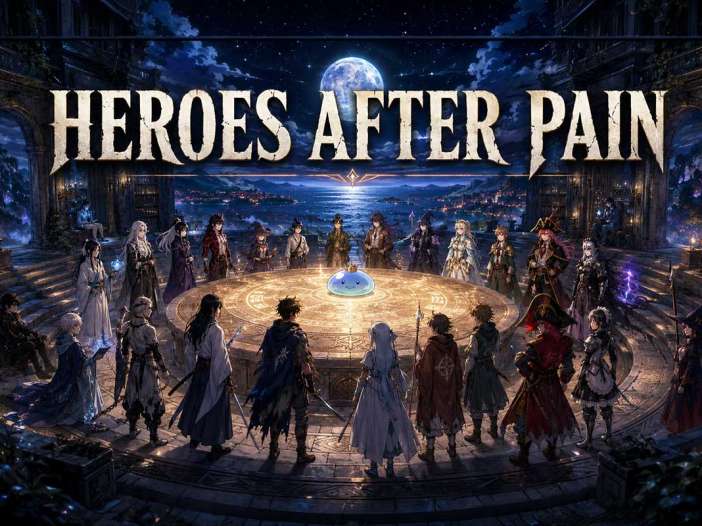
What if the truest anime hero is the one who suffers and still stays kind?
Introduction by Himmel
Every story here begins with a wound.
A boy dies again and again, carrying memories no one else can remember.
A brother loses his family, yet refuses to let grief steal his kindness.
A girl touches forbidden magic and learns that wonder can wound the people we love.
A slime becomes a leader.
A demon girl protects the humans she was expected to harm.
A swordsman trains in silence.
A frightened liar becomes brave at the very moment fear should have stopped him.
At first, these lives seem too different to share one table.
Some come from cursed battlefields.
Some come from magic schools.
Some come from pirate seas, hidden villages, elite classrooms, and ancient memories.
Some are called monsters.
Some are called failures.
Some are praised as heroes before anyone asks what that title costs.
But beneath every name, every technique, every blade, every spell, one question remains:
What does a person become after pain?
Pain alone does not make someone wise.
Power alone does not make someone good.
Loyalty alone does not make someone loving.
Courage alone does not make someone whole.
A person can suffer and become cruel.
A person can become different and be treated as dangerous.
A person can protect others so fiercely that love turns into control.
A person can hide strength so long that secrecy becomes loneliness.
A person can save many lives and still fail to comfort the one standing nearby.
That is why this conversation matters.
Subaru, Tanjiro, Frieren, Yuji, and Coco ask whether suffering can teach without destroying the heart.
Rimuru, Will, Nezuko, Emilia, and Yuru ask who gets to decide whether someone is a monster, a hero, or a threat.
Luffy, Rem, Megumi, Asa, and Fern ask how far loyalty should go before it stops being love.
Ayanokoji, Yuta, Qifrey, Zoro, and Beatrice ask whether hidden strength is protection, strategy, or a lonely prison.
Gojo, Rimuru, Usopp, Agott, and I ask what makes a true hero.
These are not small questions.
They are the questions left behind after battles end, after applause fades, after the wounded are carried home, after the strong sit alone and wonder whether victory was enough.
A hero is not proven only by defeating an enemy.
A hero is seen in the way he treats the weak.
A hero is seen in the way she carries regret.
A hero is seen in the way fear is faced without letting it rule.
A hero is seen in the choice to protect without owning, to lead without crushing, to love without disappearing.
So let this gathering begin.
Let the cursed speak with the blessed.
Let the strong listen to the wounded.
Let the lonely hear from those who still reach out.
Let the frightened speak honestly beside the brave.
For every story here asks the same thing in a different voice:
When the world hurts you, judges you, needs you, fears you, or praises you—
what kind of person will you choose to become?
(Note: This is an imaginary conversation, a creative exploration of an idea, and not a real speech or event.)
Topic 1: When Suffering Becomes a Teacher
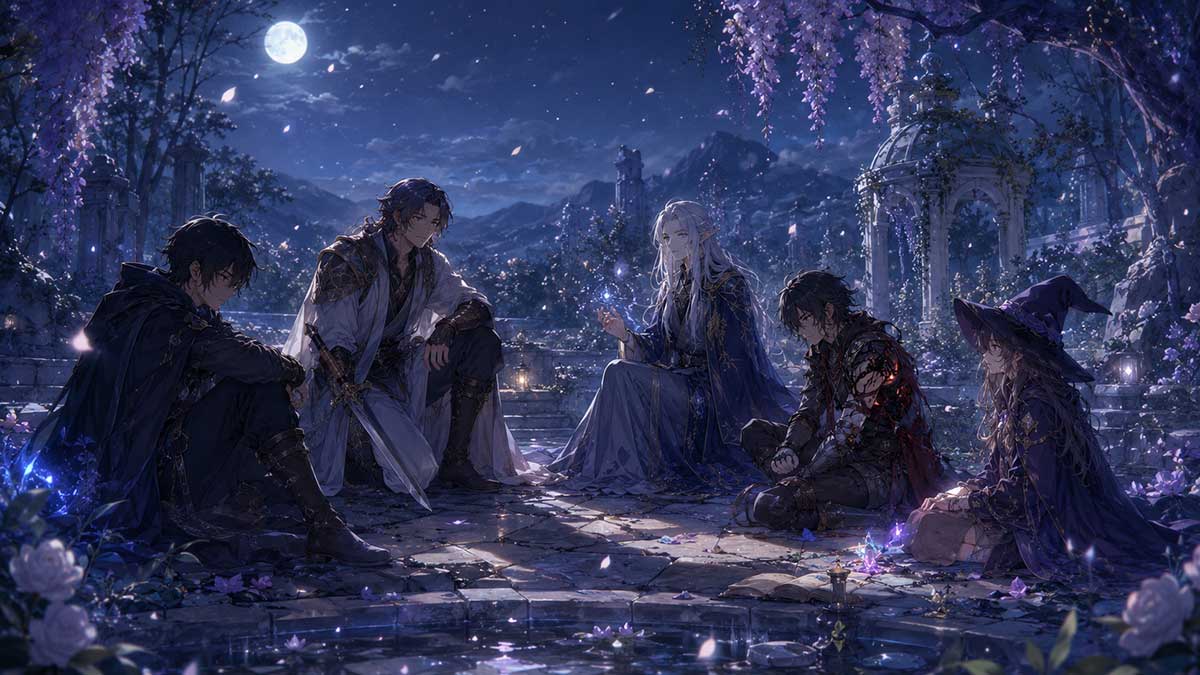
Opening
Five characters meet in a quiet garden after battle, grief, and fear have followed each of them in different ways.
Subaru has died again and again, carrying memories no one else can see.
Tanjiro has lost his family, yet still speaks with kindness.
Frieren has lived so long that grief arrives slowly, sometimes years too late.
Yuji carries guilt over lives lost through forces tied to him.
Coco has learned that one mistake, one forbidden act, can change many lives.
They sit together not to praise suffering, but to ask whether pain can teach without destroying the heart.
Question 1: If you could erase your worst pain, would you still become the same person?
Subaru Natsuki:
I used to think I wanted every terrible memory gone. Every death. Every scream. Every moment when I failed someone. But if I erased all of it, I might erase the part of me that finally learned to listen. The old me wanted to be seen as special. Pain showed me how small I was. That hurt. But it made me stop pretending.
Tanjiro Kamado:
I would never want my family’s death to have happened. No lesson is worth that. But I cannot separate who I am now from my love for them. My pain did not make me kind. My family already gave me that. Pain only tested whether I would keep that kindness after losing them.
Frieren:
For a long time, I thought pain faded if enough years passed. It does not fade in the way humans hope. It changes shape. Sometimes I miss someone only after I finally understand what they gave me. If my pain were erased, perhaps my memories would become lighter. But they would become thinner too.
Yuji Itadori:
I don’t know. Part of me wants to erase everything. People died, and I was there. Some were hurt through my body, my choices, my weakness. If I erased that pain, maybe I could smile like before. But then I might forget what I owe to the people I couldn’t save. That scares me more.
Coco:
I would erase the moment I hurt my mother if I could. I thought magic was wonder. I did not know wonder could become a knife in careless hands. But my pain taught me that wanting something beautiful is not enough. You have to understand what your desire may cost someone else.
Question 2: Does repeated suffering create wisdom, or just deeper fear?
Frieren:
Time alone does not create wisdom. Pain repeated without reflection becomes habit. People can live through many sorrows and still learn nothing. Wisdom begins when memory becomes gentle enough to face, yet sharp enough to guide.
Yuji Itadori:
Fear gets deeper. I won’t lie. Each fight leaves something behind. You start wondering who will die next, what mistake you’ll make next. But fear can point at what matters. If I fear losing people, that means I still care. I just have to keep that fear from choosing for me.
Coco:
I think wisdom needs a teacher, not only suffering. If Qifrey had not reached out to me, I might have drowned in guilt. Pain opened my eyes, but guidance helped me see. Alone, suffering can twist a person. With someone kind nearby, it can become a beginning.
Subaru Natsuki:
Repeated suffering can make you selfish. It can make you think no one understands, so no one matters. I know that feeling. Dying over and over made me desperate to force the right ending. Wisdom came only when I accepted that other people are not pieces on my board. They have hearts too.
Tanjiro Kamado:
Suffering does not always make people wise. Some demons were once humans in terrible pain. Their pain became hunger, anger, and loneliness. That is why I cannot admire suffering itself. I respect the person who suffers and still refuses to become cruel.
Question 3: Is it more heroic to keep fighting, or to admit you are tired?
Tanjiro Kamado:
A person who admits they are tired is not weak. The body has limits. The heart has limits too. When I fall, I remember my family, my friends, and Nezuko. Then I rise again. But rising does not mean hiding pain. Sometimes saying “I cannot stand alone” is what lets someone stand.
Coco:
I used to think courage meant stepping forward no matter what. Now I think courage can mean stopping your hand before you draw the spell. It can mean asking for help. It can mean saying, “I don’t know enough yet.” That kind of honesty may save more lives than blind bravery.
Subaru Natsuki:
I hate admitting I’m tired. It feels like losing. But I’ve learned that pretending to be fine can hurt everyone. If you keep fighting only to protect your pride, that’s not heroism. That’s fear wearing armor. A real hero knows when to lean on someone else.
Yuji Itadori:
I want to keep fighting. That’s the only answer I know most days. But I’ve seen what happens when people carry too much alone. They break in quiet places. Maybe the heroic thing is not choosing one or the other. Maybe it is fighting, then admitting the fight is heavy.
Frieren:
Heroes are remembered for victories, but those who knew them remember smaller things. A tired smile. A hand offered. A promise kept. Himmel kept walking, yet he never made others feel ashamed for stumbling. Perhaps that is heroism: to continue without demanding that others hide their weakness.
Closing
The garden grows quiet.
No one says suffering is good. No one calls pain noble.
Subaru knows pain can make a person desperate.
Tanjiro knows grief can test kindness.
Frieren knows time does not heal what is never faced.
Yuji knows guilt can become a chain.
Coco knows one mistake can become a teacher only when truth is accepted.
Together, they reach a softer answer:
Suffering is not the teacher by itself.
The teacher is what the heart chooses after suffering.
Cruelty, control, fear, love, mercy, humility—pain can lead to any of them.
The lesson is never automatic.
It must be chosen.
Topic 2: The Burden of Being Different
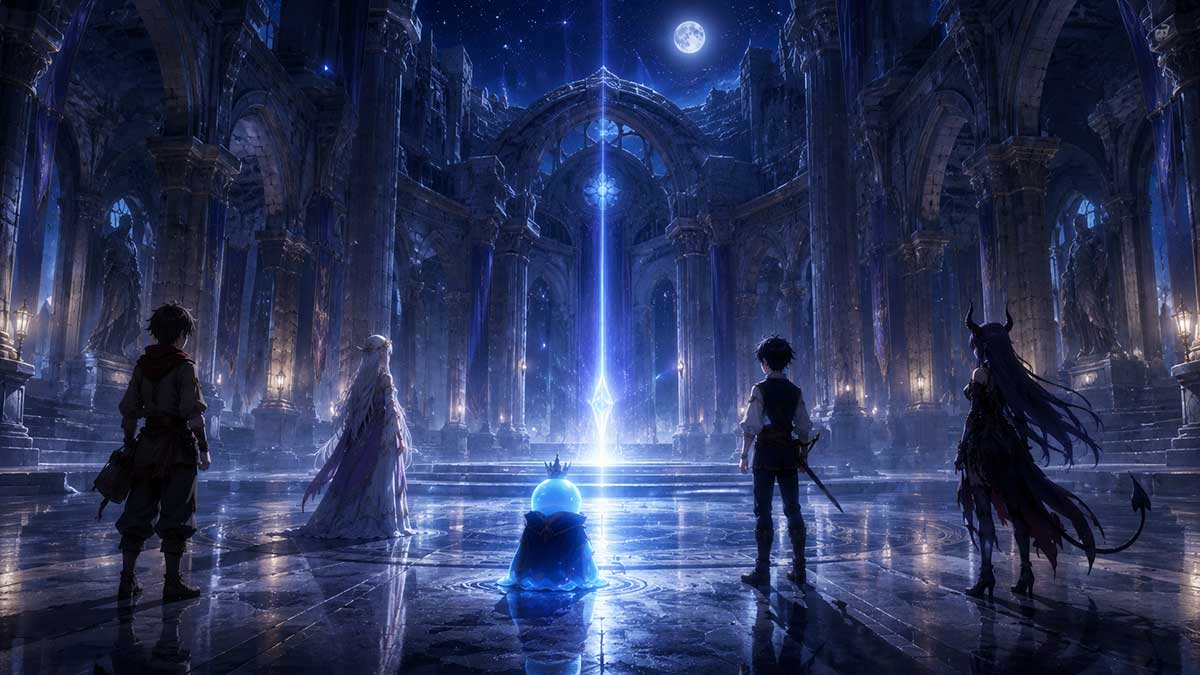
Opening
Five characters gather in a moonlit hall, each carrying a name others have misunderstood.
Rimuru is a slime, yet became a leader.
Will has no magic, yet fights inside a world ruled by magic.
Nezuko is a demon, yet protects humans.
Emilia is a half-elf, judged before she speaks.
Yuru comes from a hidden village, tied to secrets he never chose.
They sit together with one question between them:
Who gets to decide what makes someone normal?
Question 1: Who decides whether someone is a monster, a hero, or a threat?
Emilia:
People often decide before they know you. They see one part of you and think they understand everything. My face, my blood, my resemblance to someone feared—those things speak louder to them than my actions. I want to believe that kindness can change hearts, but I know how painful it is when people refuse to look again.
Rimuru Tempest:
A monster is often just someone seen from far away. When I first became a slime, most people would have judged me by appearance. But a nation cannot be built on appearances. I learned that actions matter more than form. If someone protects, listens, and gives others a place to live, then maybe the word “monster” starts losing its meaning.
Nezuko Kamado:
I cannot speak the way I used to, but I still know what I will not do. I will not eat humans. I will not forget my brother. People may see my fangs first. Tanjiro sees my heart. Maybe a monster is not made by what happens to the body, but by what the heart chooses to become.
Will Serfort:
At my academy, they call me useless before I even move. No magic means no worth. But when danger comes, a sword can still save a life. Labels are easy for people who never had to prove themselves twice. I don’t want to be called a hero. I just want them to admit I belong there.
Yuru:
Sometimes people decide what you are before you even know your own story. I grew up thinking my village was my whole world. Then I learned that my family, my sister, and my life were tied to something much larger. When others call you dangerous for reasons you barely understand, you begin to wonder if your life belongs to you at all.
Question 2: Is being different a gift, a wound, or both?
Will Serfort:
For me, it started as a wound. Every class, every test, every look from others reminded me I was missing the one thing everyone valued. But if I had magic, maybe I never would have trained my body this far. Maybe the wound forced another kind of strength to grow. I still hate the pain, but I cannot deny what it built.
Nezuko Kamado:
I lost my old life. I lost my voice. I became something people fear. That is a wound. But I can protect Tanjiro now in a way I could not before. I do not call this a gift. I call it love trying to survive inside a curse.
Yuru:
Being different feels like standing in a doorway with two worlds pulling at you. One side says, “You are special.” The other says, “You are trapped.” If there is a gift in it, I want to choose how to use it. A gift forced onto someone can feel like a chain.
Rimuru Tempest:
I became a slime, which sounds weak until you learn what that body can do. My difference became useful, but usefulness is not the whole answer. The real gift was meeting others who were different too. Goblins, ogres, demons, humans—we all carried reasons to be feared. Together, difference became a foundation.
Emilia:
I think it is both. Difference can open your heart to people who are lonely, judged, or afraid. You recognize their pain. But the wound is real. You cannot tell someone to be proud of what has made them suffer without first honoring the suffering itself.
Question 3: Can society accept someone unusual without trying to control them?
Rimuru Tempest:
A society built on fear will always try to control what it does not understand. That is why I wanted Tempest to become a place where people could live without hiding what they are. Still, acceptance is not automatic. You need laws, trust, food, safety, and honest conversation. Peace is practical work, not just a kind feeling.
Emilia:
Acceptance can become another kind of prison if people say, “We accept you, but only if you behave exactly as we want.” Real acceptance gives someone space to grow, make mistakes, and speak for themselves. I do not want pity. I want the chance to stand as myself.
Yuru:
Control often wears the face of protection. People say they are keeping you safe, but they may be keeping you small. I understand fear. I understand hidden danger. But if no one tells you the truth, then your life becomes a story written by someone else.
Will Serfort:
The academy does not know what to do with someone like me. It cannot ignore me if I win, but it cannot fully accept me either. Systems like clean categories. Mage. Failure. Noble. Commoner. Strong. Weak. Someone unusual threatens the rules, so the rules push back.
Nezuko Kamado:
If people fear me, I understand. I am dangerous. But control without trust would erase the part of me still fighting. Tanjiro believes I can choose. That belief helps me keep choosing. Maybe society must learn the same thing: caution without cruelty, trust without blindness.
Closing
The hall grows silent.
Rimuru sees difference as the beginning of a new community.
Will sees it as a wound that forced strength to grow.
Nezuko sees love surviving inside a cursed body.
Emilia sees dignity beneath prejudice.
Yuru sees a life pulled by secrets, yet still searching for choice.
Their shared answer is simple:
Being different is not the problem.
The problem is a world that confuses difference with danger.
A person should not have to become useful, powerful, or perfect before being seen as fully alive.
Topic 3: Friendship, Loyalty, and the Price of Protection
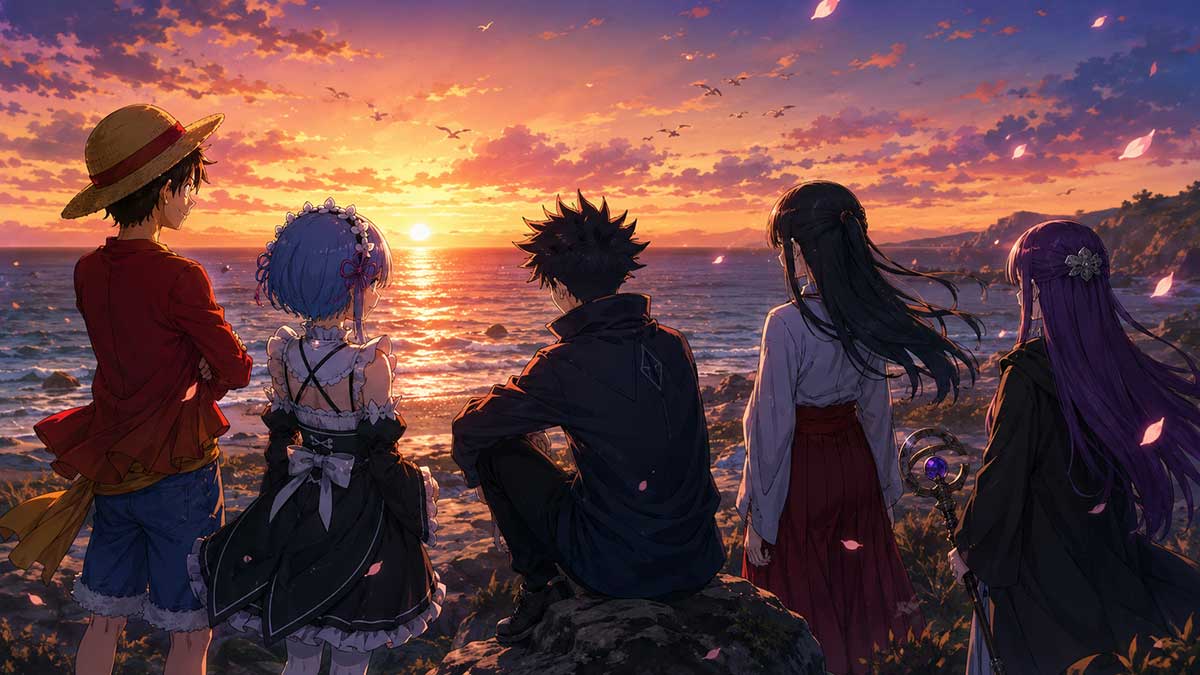
Opening
Five characters meet beside a quiet sea after sunset.
Luffy knows what it means to call someone crew.
Rem knows what it means to devote her heart completely.
Megumi knows protection can become a silent burden.
Asa knows family bonds can be shaped by secrets and danger.
Fern knows love can be quiet, steady, and hard to name.
They gather around one question:
When you love someone, how much of yourself are you allowed to give away?
Question 1: How far should someone go to protect the people they love?
Monkey D. Luffy:
If someone is my friend, I go all the way. I don’t count the cost first. That’s not how I live. My crew chose me, and I chose them. If Nami cries, if Robin says she wants to live, if someone hurts my friends, I move. Simple. Maybe some people call that reckless. Fine. I’d rather be reckless than sit there thinking too long.
Rem:
I understand that feeling. When someone gives your life meaning, you want to protect that person with everything you have. For me, love became a reason to stand again. But I have learned that giving everything can be dangerous if you forget that your life has worth too. Protection should not become self-erasure.
Asa:
Family makes the question harder. You do not always choose the bond, yet it reaches deep into you. I would want to protect my brother, but I would not want him chained to my fate. If love turns another person’s life into a cage, then protection has already lost something sacred.
Megumi Fushiguro:
I think you protect people according to your own sense of fairness. I don’t save everyone equally. I know that sounds cold, but I choose who I want to protect. That choice gives me direction. The danger is pretending it costs nothing. Every person you choose can become a weakness someone else uses.
Fern:
There is a quiet kind of protection too. You remind someone to eat. You notice when they are tired. You walk beside them for many days. I would risk my life for someone I love, but I do not think love should wait for dramatic moments. Often, protection is daily patience.
Question 2: When does loyalty become dangerous?
Fern:
Loyalty becomes dangerous when it stops asking whether the person you follow is walking in the right direction. Respect does not mean silence. If Frieren forgets ordinary human needs, I tell her. She may not always understand at first, but honesty is part of staying close to someone.
Megumi Fushiguro:
Loyalty becomes dangerous when it makes you blind. If you protect someone no matter what they do, you may help them become worse. I care about my friends, but if one of them crosses a line, I cannot pretend it did not happen. Trust needs judgment, or it turns into surrender.
Rem:
Loyalty can become dangerous when your own heart disappears inside another person’s story. I know that temptation. To live for someone else can feel beautiful. It can feel pure. But love should help a person stand, not vanish. Devotion without self-respect can quietly become pain.
Monkey D. Luffy:
I don’t follow people who tell me to stop being free. If I trust someone, I trust them hard. But if they try to crush someone’s dream, hurt my crew, or make people bow, I don’t care what title they have. Loyalty to a bad ruler is just fear with nicer clothes.
Asa:
Loyalty becomes dangerous when secrets are treated as proof of love. Someone may say, “Trust me,” but never tell you the truth. They may say silence keeps you safe. Maybe sometimes it does. But a bond built only on hidden things can make people strangers, even when they share blood.
Question 3: Can true friendship survive secrets, fear, and betrayal?
Asa:
It can survive, but it cannot stay unchanged. Secrets leave marks. Fear changes how people speak to each other. Betrayal breaks the simple version of trust. Maybe friendship survives when both people stop trying to return to what they were and choose to build something more honest.
Monkey D. Luffy:
If someone lies to me but they’re hurting, I can hear that. My friends have hidden things before. Some tried to leave. Some thought they had no right to come back. But if they say they want to live, if they say they want help, that’s enough for me. I’ll fight the rest.
Fern:
Friendship can survive fear if the people involved are willing to speak plainly. Not all at once. Some truths take time. But silence cannot be the final home of a friendship. Trust grows through ordinary proof: showing up, listening, apologizing, and staying after the hard conversation.
Megumi Fushiguro:
Betrayal is different. A secret can be forgiven. Fear can be understood. Betrayal means someone made a choice that harmed you. Friendship might survive, but it needs more than emotion. It needs accountability. If nothing changes after betrayal, then forgiving too quickly just invites the same wound again.
Rem:
I believe friendship can survive more than people think. But it needs humility. The one who was hurt must be allowed to hurt. The one who caused pain must not demand immediate forgiveness. Love can be patient, but patience is not the same as pretending nothing happened.
Closing
The sea grows darker, and the five sit in silence.
Luffy believes friendship means moving without hesitation when a friend cries out.
Rem believes devotion must leave room for one’s own worth.
Megumi believes protection needs judgment.
Asa believes love cannot live forever inside secrets.
Fern believes loyalty is shown in daily care, not just sacrifice.
Their shared answer becomes clear:
Love is not proven by losing yourself.
Loyalty is not proven by silence.
Protection is not proven by control.
True friendship asks for courage, honesty, and the freedom to remain fully human together.
Topic 4: Hidden Strength and Quiet Intelligence
Opening
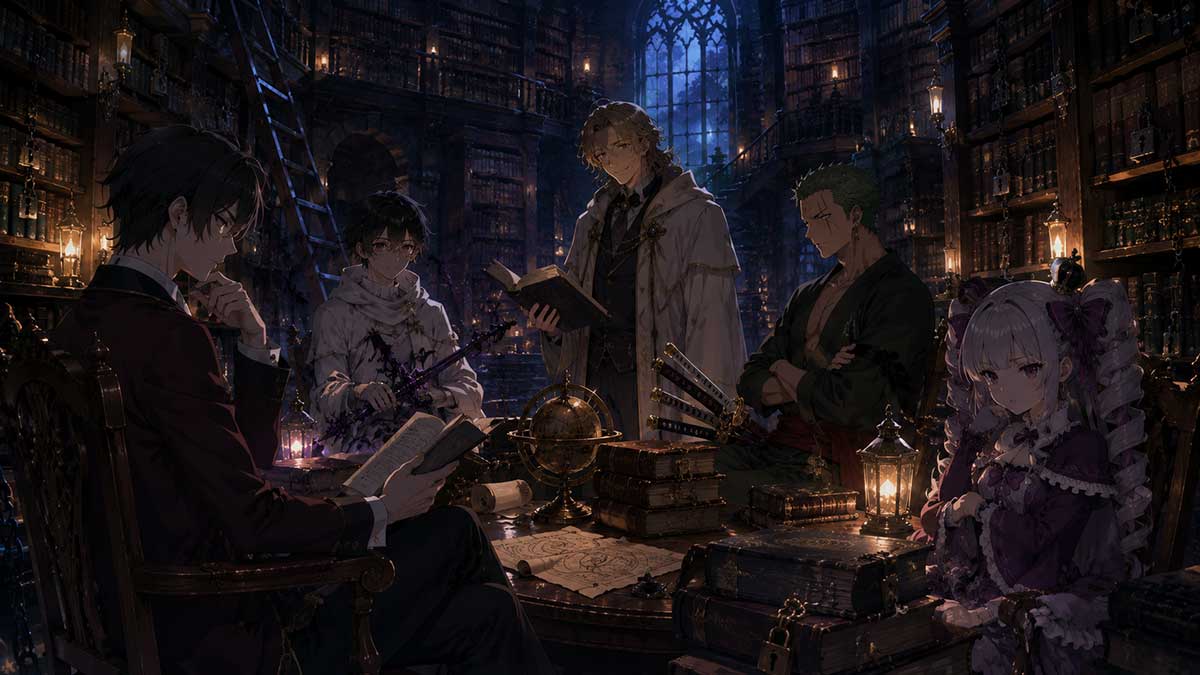
Five figures meet in an old library where every wall is lined with locked books.
Ayanokoji reads people like puzzles.
Yuta hides terrifying strength behind a gentle face.
Qifrey teaches with warmth, yet keeps secrets behind his smile.
Zoro says little, trains endlessly, and lets his sword speak first.
Beatrice guards ancient knowledge, pain, and pride behind sharp words.
They gather around a question many people misunderstand:
Is the strongest person always the one everyone notices first?
Question 1: Is hidden strength more powerful than public recognition?
Kiyotaka Ayanokoji:
Recognition is useful only when it serves a purpose. If people know too much about your ability, they begin planning around it. Hidden strength gives you control over timing. You can observe, test, and move when the result is already close to decided. Public praise is unstable. Quiet advantage lasts longer.
Yuta Okkotsu:
I never wanted people to fear me. For a long time, I feared myself. Strength hidden inside fear can hurt people. But strength hidden inside care can protect them. Public recognition does not matter much to me. I just want the people near me to feel safe.
Qifrey:
There is power in being underestimated. Students, teachers, enemies—everyone reveals more when they believe you are harmless. But hidden strength has a cost. If you hide too much, those who trust you may begin to wonder which version of you is real.
Roronoa Zoro:
Recognition means nothing if your blade is dull. People can shout your name all day, but it won’t help in a fight. Train. Bleed. Stand back up. If people notice, fine. If they don’t, fine. Strength is what remains when the cheering stops.
Beatrice:
People are foolish, I suppose. They see a small girl and think they know everything. Let them. A door, a book, a contract, a spell—hidden things shape more than loud things. But being unseen for too long can become loneliness. That part is harder to admit.
Question 2: Should a gifted person reveal everything they can do?
Qifrey:
No. Knowledge needs timing. Magic can heal, create, and inspire, but it can ruin lives in careless hands. Revealing everything at once may look honest, yet it can place others in danger. Still, hiding truth forever turns protection into control. The hard part is knowing when silence has expired.
Beatrice:
Hmph. Revealing everything is what fools do, I suppose. Secrets are shields. But shields can become walls. If no one knows your pain, no one can reach you. If no one knows your strength, no one can ask you to share the burden. That is troublesome.
Yuta Okkotsu:
I think people should know enough to trust you. They do not need every detail. But if your hidden strength could harm them, they deserve honesty. I learned that hiding fear does not make it disappear. Someone may need to stand beside you before you can face what is inside.
Kiyotaka Ayanokoji:
Revealing everything reduces options. People respond to information with fear, dependence, resentment, or strategy. A gifted person must measure the environment first. The question is not honesty alone. It is whether revealing the truth creates a better outcome than concealing it.
Roronoa Zoro:
Talk less. Prove more. If someone needs to know your strength, they’ll see it when the time comes. Bragging makes you soft. Hiding out of fear makes you weaker too. Train until the answer is obvious without needing many words.
Question 3: Can intelligence without compassion become dangerous?
Yuta Okkotsu:
Yes. If you understand people but do not care about them, you can hurt them very easily. You know where they are weak. You know what they fear. Compassion is what stops strength from becoming cruelty. I would rather be clumsy and kind than brilliant and empty.
Roronoa Zoro:
A smart fighter with no heart is just another enemy. Skill is skill. Strategy is strategy. But if you cut down people for nothing, you’re lost. A sword needs a hand. A hand needs a will. If the will is rotten, the blade follows.
Beatrice:
Intelligence can become a cold room, I suppose. You arrange every reason, every rule, every promise, and then you sit alone inside it. Compassion is messy. It interrupts. It asks you to care when caring hurts. But without it, knowledge becomes a very lonely prison.
Qifrey:
Compassion is what gives intelligence direction. A teacher can guide a student, or shape them into a tool. A healer can mend wounds, or decide who deserves saving. The mind alone may justify anything. The heart asks whether a person is still being honored.
Kiyotaka Ayanokoji:
Intelligence without compassion is effective, but unstable. People are not objects, yet systems often treat them that way. If you remove compassion, you may still win. The question is what remains after victory. A world of tools has no allies, only temporary assets.
Closing
The library lamps grow dim.
Ayanokoji sees hidden strength as strategy.
Yuta sees it as responsibility.
Qifrey sees it as a secret that must someday face truth.
Zoro sees it as discipline proven through action.
Beatrice sees it as protection that can slowly become loneliness.
Their answer is quiet:
Hidden strength can protect.
It can deceive.
It can wait for the right moment.
It can keep a wounded heart alive.
But strength without compassion becomes cold.
Intelligence without humility becomes dangerous.
And the person no one notices may be carrying the weight everyone else depends on.
Topic 5: What Makes a True Hero?
Opening
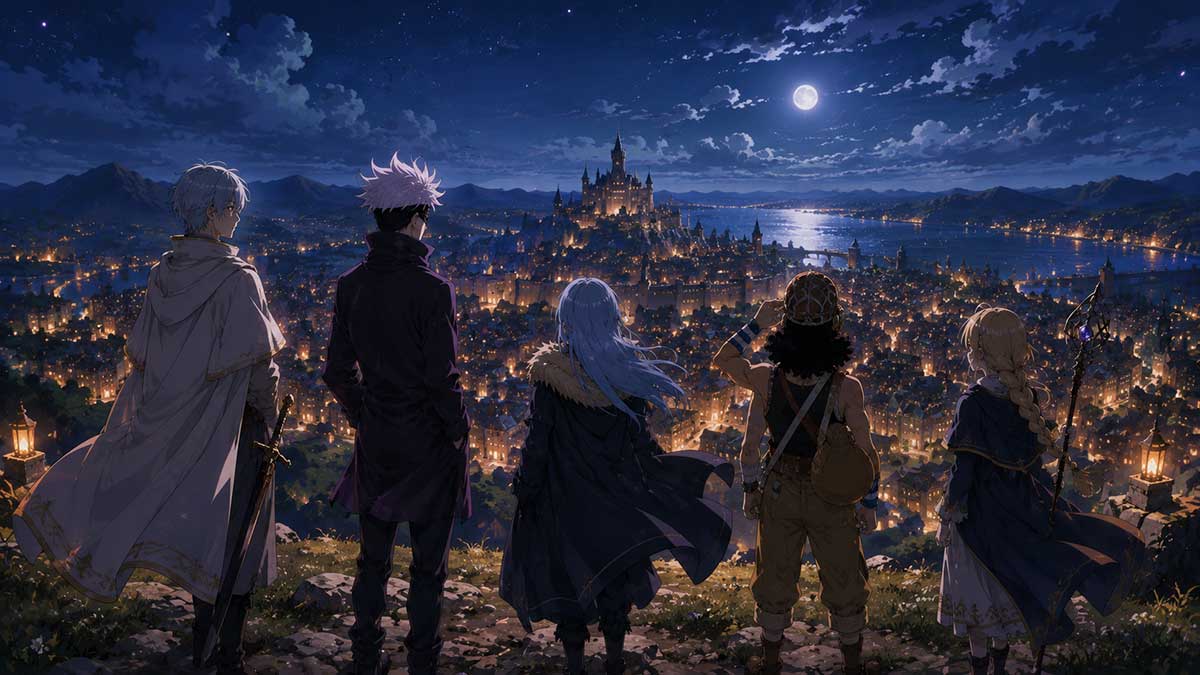
Five characters meet on a hill above a city they each saved in different ways.
Himmel is remembered as a hero, but his greatest gift may have been kindness.
Gojo stands at the top of strength, yet carries the loneliness that comes with it.
Rimuru built a nation where the feared could live with dignity.
Usopp is afraid often, but still steps forward when his friends need him.
Agott wants skill, discipline, and worth to mean something real.
They gather around one question:
Is heroism measured by victory, sacrifice, mercy, or courage?
Question 1: Is a hero defined by victory, sacrifice, mercy, or courage?
Himmel:
Victory is what people record. Mercy is what people remember in their hearts. I never thought a hero should simply defeat evil and leave. A hero should make someone feel less alone. A sword can end a battle, but kindness may stay with a person for the rest of their life.
Satoru Gojo:
Victory matters. If you lose, people die. That sounds harsh, but I’ve lived long enough to know that good intentions do not stop curses. Still, strength alone is boring. A real hero uses strength to create a future where others can stand taller than before.
Rimuru Tempest:
For me, heroism is tied to responsibility. Saving someone once is hard. Giving them a home, food, safety, and a reason to trust tomorrow is harder. I respect courage in battle, but I respect the kind of courage that builds peace after the battle ends even more.
Usopp:
I don’t know if I’m a hero. I get scared. I run. I panic. But when my friends are counting on me, I try to move anyway. Maybe courage doesn’t mean you stop shaking. Maybe courage means your knees shake, your voice cracks, and you still stand there.
Agott:
Sacrifice can be noble, but it can be wasteful too. Skill matters. Preparation matters. A hero who rushes in without thinking may cause more harm. I think a true hero must combine courage with discipline. Wanting to help is precious, but you must train enough to help well.
Question 2: Can someone become a hero without wanting to be one?
Usopp:
Yes. Please, yes. Some of us are dragged into heroic moments before we feel ready. I never woke up thinking, “Today I’ll be legendary.” I usually think, “Today I hope I survive.” But then someone needs me. My friends believe in me. I hate that pressure, but sometimes it pulls the brave part out.
Agott:
I think people who chase the title of hero can become dangerous. They may care more about being seen than doing what is right. A person who does the work without demanding praise may be closer to real heroism. Still, refusing the title does not remove the duty that comes with ability.
Rimuru Tempest:
I did not plan to lead a nation. I wanted a peaceful life. Then people gathered around me, trusted me, and needed protection. At some point, you stop asking whether you wanted the role and start asking what your people need from you today.
Himmel:
Many heroes begin with a small choice. Help one person. Keep one promise. Smile at someone who is afraid. The title comes later, often from other people. If you aim only for fame, the heart may shrink. If you aim to serve, the name “hero” may follow you quietly.
Satoru Gojo:
Some people are born with abilities that make neutrality impossible. You can say, “I never asked for this,” and that may be true. But if you can save people and choose not to care, that choice says something. Wanting the role is optional. Answering the need is not.
Question 3: What matters more: saving one person deeply, or helping many people from a distance?
Rimuru Tempest:
A leader has to think about many people. Roads, food, trade, defense, law—those things save lives from a distance. Yet if leadership becomes only numbers, you lose the heart of it. A nation is not an idea. It is made of faces. If I forget the one person, I fail the many too.
Satoru Gojo:
Scale matters. If you protect one person and let thousands fall, that is not enough. But if you save thousands and treat each life like a statistic, you become part of the problem. The hard answer is that you need both: wide vision and the nerve to care about one face.
Agott:
Saving one person deeply can change the direction of a life. Teaching one student, protecting one child, giving one person a chance—those acts may echo beyond what we see. Helping many people matters, but it should never become an excuse to ignore the person standing in front of you.
Usopp:
I understand saving one person better. I can see their tears. I can hear their voice. “Save everyone” sounds too big for me. But if each of us saves the person we can reach, maybe that becomes many people. I can start there. That feels real.
Himmel:
A hero should never become too grand to kneel beside one wounded person. Large deeds may inspire songs, but small mercies keep people alive inside. If you save a kingdom but cannot comfort a child, your heroism has lost something tender.
Closing
The hill grows quiet as the city lights appear below.
Himmel believes heroism lives in remembered kindness.
Gojo believes strength must protect the future.
Rimuru believes saving lives means building a place where people can live.
Usopp believes courage can tremble and still be real.
Agott believes good intentions need training and discipline.
Their answer is not one word.
A hero wins when needed.
A hero sacrifices without worshiping sacrifice.
A hero shows mercy without becoming naive.
A hero feels fear without letting fear rule.
And the truest hero may be the one who saves others without needing the story to be about himself.
Final Thoughts by Frieren
Humans often think the most meaningful moments are easy to recognize.
A battle.
A victory.
A sacrifice.
A final stand beneath a dark sky.
Those things matter, of course. People remember them. They become songs, legends, stories told long after the faces have changed.
But I have lived long enough to learn that meaning is often quieter.
It is the person who keeps being kind after grief.
It is the one who is called a monster and still protects.
It is the friend who notices when someone is tired.
It is the student who keeps training after being dismissed.
It is the frightened voice that speaks when silence would be easier.
It is the powerful person who chooses mercy when no one could force them to.
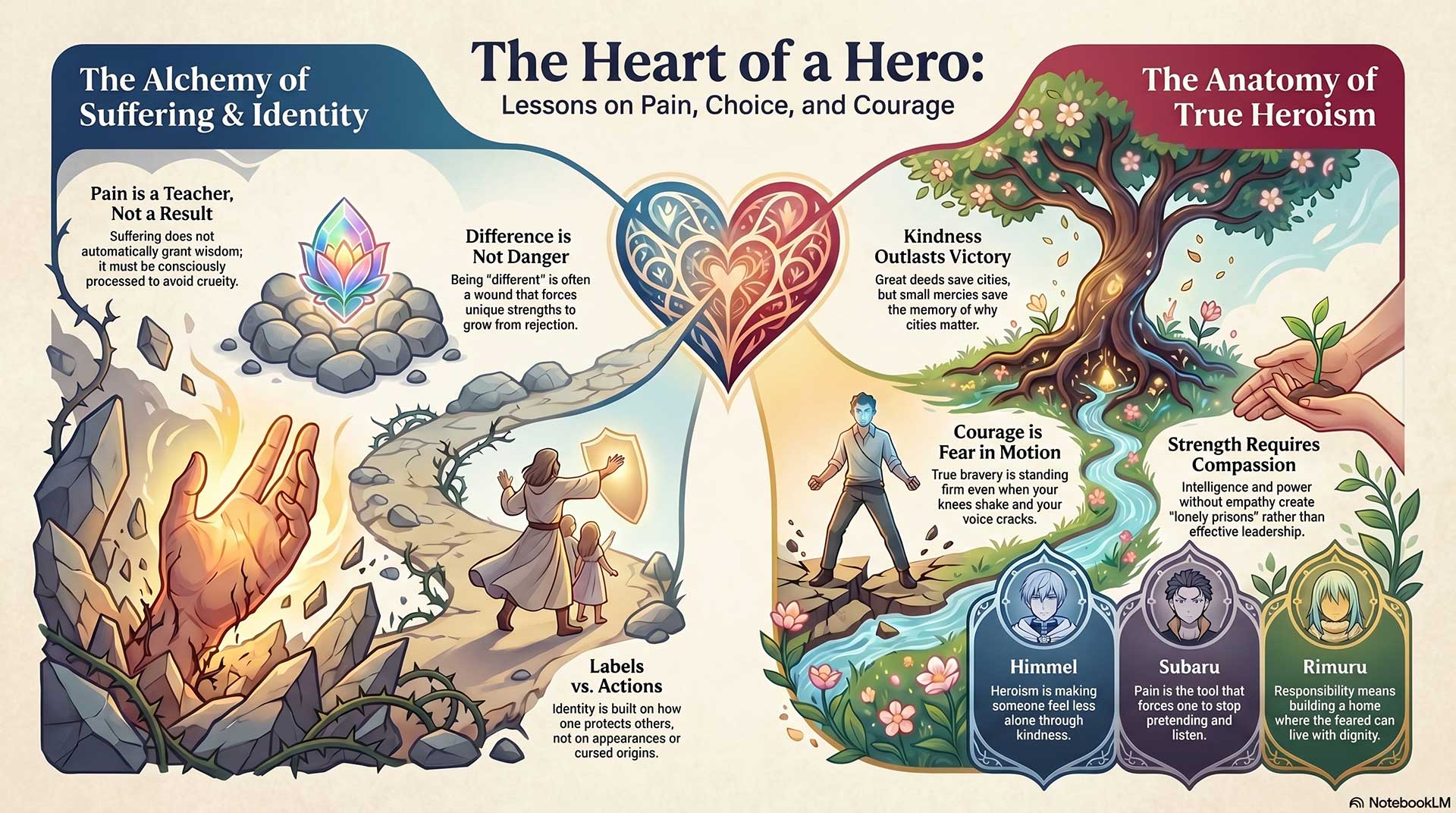
Pain did not make these characters good.
Their choices did.
Difference did not make them noble.
What they did with that difference did.
Loyalty did not prove love.
Honesty, patience, and freedom did.
Hidden strength did not make them wise.
Compassion gave that strength direction.
Heroism did not belong only to the strongest.
Sometimes it belonged to the one who trembled, stayed, and reached out anyway.
Himmel used to smile at ordinary things. A flower on the road. A small kindness from a stranger. A promise kept long after it seemed useful. At the time, I did not always understand why those moments mattered so much to him.
Now I think I do.
Great deeds may save a city.
Small mercies save the memory of why the city mattered.
Perhaps that is what connects everyone here.
Subaru keeps returning because someone still needs to be saved.
Tanjiro keeps his kindness because love must not end with loss.
Coco keeps learning because wonder needs responsibility.
Rimuru keeps building because peace needs a home.
Nezuko keeps choosing because the heart can resist even a curse.
Luffy keeps reaching for his friends because freedom means nothing alone.
Ayanokoji keeps watching because intelligence without care leaves an empty room.
Yuta keeps protecting because strength should make others safer.
Usopp keeps standing because fear is not the opposite of courage.
Agott keeps training because good intentions need skill.
The lesson is not that suffering is good.
It is not.
The lesson is that suffering does not get the final word.
A person may be wounded and still become gentle.
Feared and still become trustworthy.
Lonely and still become loyal.
Powerful and still become humble.
Afraid and still become brave.
That is what remains after these conversations.
Not the sword.
Not the spell.
Not the curse.
Not the title.
The choice.
Again and again, in each life, in each story, after every loss and every victory:
What will you protect?
Who will you become?
And when someone remembers you long after you are gone—
will they remember your power,
or your kindness?
Short Bios:
Subaru Natsuki — A teenager trapped in a fantasy land with the ability to return after death. His story explores trauma, failure, love, and the painful work of trying again.
Tanjiro Kamado — A gentle demon slayer who lost his family and fights to save his sister. He represents grief held together by compassion.
Frieren — An elf mage who outlives her companions and slowly learns the meaning of memory, regret, and human connection.
Yuji Itadori — A kindhearted fighter carrying a deadly curse inside him. He struggles with guilt, responsibility, and the burden of saving others.
Coco — A curious girl who discovers the secret of magic and pays a heavy price. Her story centers on wonder, guilt, learning, and responsibility.
Rimuru Tempest — A reincarnated slime who becomes a nation-builder and protector. He represents leadership, acceptance, and the dream of peace among former enemies.
Will Serfort — A magic academy student who cannot cast magic, yet fights with a sword. His story is about rejection, discipline, and proving worth in a system built against him.
Nezuko Kamado — Tanjiro’s sister, transformed into a demon yet still devoted to protecting humans. She represents love surviving inside a curse.
Emilia — A half-elf judged by appearance and fear before her true heart is known. She represents dignity under prejudice.
Yuru — A boy from a hidden village whose life is tied to family secrets and supernatural forces. He represents identity, fate, and the search for personal choice.
Monkey D. Luffy — Captain of the Straw Hat Pirates, driven by freedom and loyalty to his crew. He represents friendship without hesitation.
Rem — A devoted maid whose love gives her strength, yet tests her sense of self. She represents loyalty, sacrifice, and the danger of disappearing into devotion.
Megumi Fushiguro — A quiet sorcerer who chooses carefully who he protects. He represents selective loyalty, hidden burden, and moral seriousness.
Asa — Yuru’s twin sister, bound to prophecy and family conflict. She represents the pain of secrets and the fragile bond between fate and freedom.
Fern — Frieren’s apprentice, calm and steady, often caring for others through small daily acts. She represents quiet loyalty and grounded love.
Kiyotaka Ayanokoji — A silent strategist hiding extreme ability beneath an ordinary mask. He represents intelligence, control, and the danger of emotional distance.
Yuta Okkotsu — A gentle but powerful sorcerer shaped by love and grief. He represents strength guided by care.
Qifrey — A kind teacher of magic with secrets behind his warmth. He represents knowledge, protection, and the burden of hidden truth.
Roronoa Zoro — A swordsman devoted to training, loyalty, and his dream. He represents discipline, silent strength, and action over praise.
Beatrice — A sharp-tongued spirit guarding ancient knowledge and old pain. She represents hidden loneliness beneath pride and power.
Himmel — A legendary hero remembered as much for kindness as for victory. He represents moral warmth, courage, and the quiet legacy of goodness.
Satoru Gojo — A brilliant and nearly unmatched sorcerer whose strength isolates him. He represents power, responsibility, and the loneliness of being the strongest.
Usopp — A fearful storyteller and sniper who becomes brave when his friends need him. He represents courage that trembles but still stands.
Agott — A disciplined witch apprentice who values skill, effort, and seriousness. She represents earned confidence and the belief that good intentions need training.
Leave a Reply