
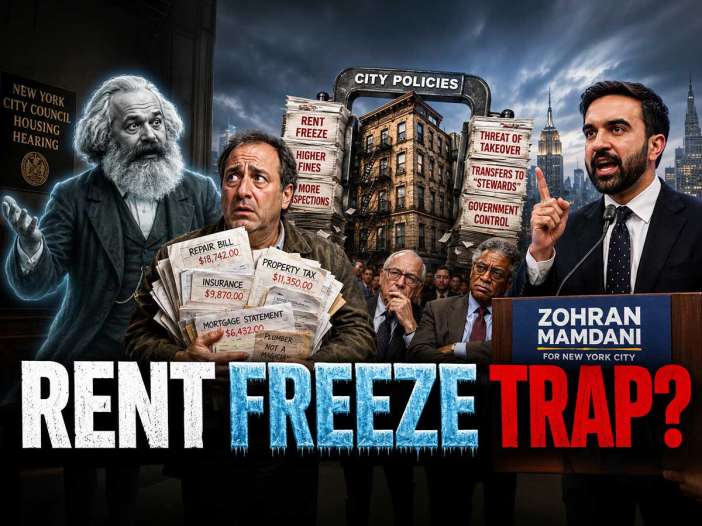
What if the government froze your income, blamed you for failing, then took your property in the name of compassion?
Small New York Landlord:
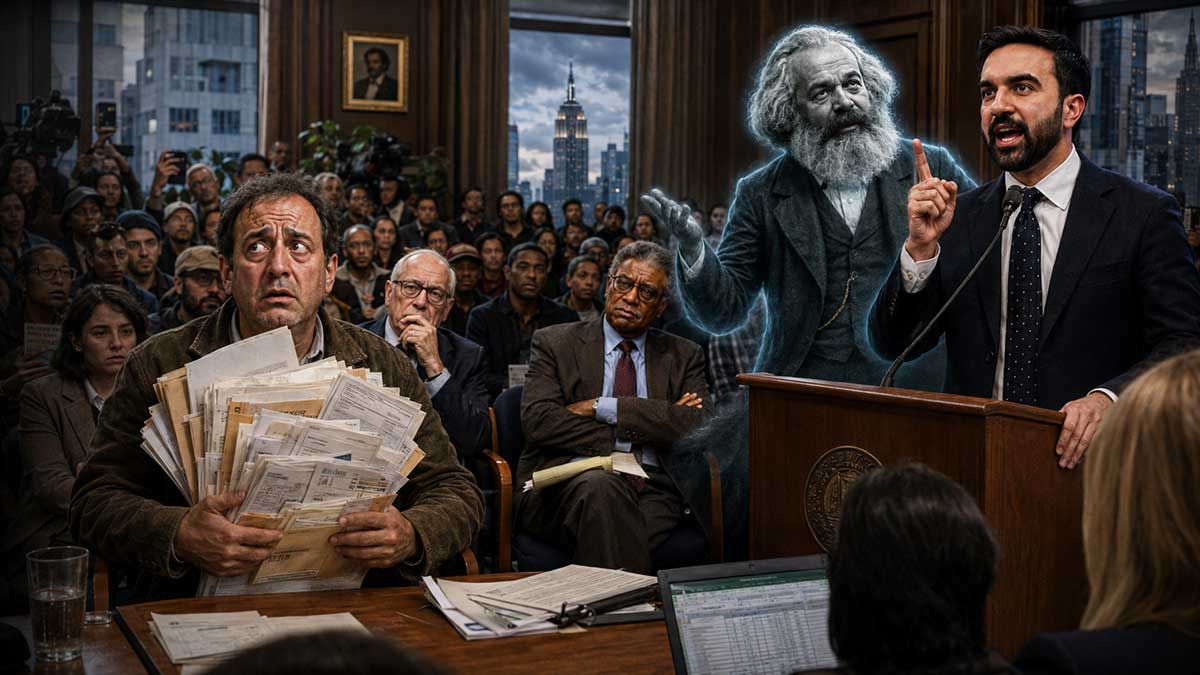
I came to this meeting with a folder full of bills.
Mortgage statement.
Insurance notice.
Tax bill.
Repair estimates.
A plumber’s invoice so large I briefly wondered if he had fixed the boiler or purchased it emotionally.
I thought we were here to talk about housing.
I was wrong.
We were here to talk about ownership.
Mayor Zohran Mamdani says New York has a housing crisis. He is right. Rent is painful. Families are squeezed. Tenants are scared. Many people feel that the city they love is becoming impossible to live in.
But then comes the cure.
Freeze the rent.
Raise the pressure.
Punish the owner.
Transfer neglected buildings to “responsible stewards.”
And if anyone objects, call it compassion.
That is where this conversation begins.
Not with a defense of bad landlords.
Not with indifference to tenants.
Not with some fantasy that New York’s housing market is perfect.
It begins with one question:
What happens when government creates rules that make ownership harder, then uses the failure of ownership to justify taking more control?
At the table tonight, we have Mayor Mamdani defending tenant protection. Milton Friedman warning that price controls create shortages and decay. Thomas Sowell asking who pays, who decides, and who gains control. A small landlord trying to explain that repairs are not paid with slogans.
And then, through no fault of anyone living, Karl Marx appears.
Karl Marx:
I was dead.
Peacefully dead.
Historically controversial, yes, but still dead.
Then someone in New York said “rent control,” and here I am again, dragged into a municipal hearing with fluorescent lighting and no decent tea.
I must say, this is not the revolution I pictured.
Where are the workers?
Where are the factories?
Why is everyone arguing about boiler maintenance?
Still, I understand the accusation.
The landlord fears that private ownership is being hollowed out one policy at a time.
The mayor says he is helping tenants.
The economists say incentives do not care about campaign speeches.
And I, apparently, am here as the ghostly brand ambassador for every idea involving someone else’s property.
So let us begin.
Let us ask whether this is tenant protection, socialism, bad economics, political redistribution, or simply New York doing what New York does best:
Making a crisis so expensive that even the solution needs a lawyer.
(Note: This is an imaginary conversation, a creative exploration of an idea, and not a real speech or event.)
Topic 1: Rent Freeze or Property Trap?
Opening
Small New York Landlord:
I used to think I owned a building.
That was back when ownership meant something old-fashioned, like paying the mortgage, paying the tax bill, fixing the boiler, getting yelled at by tenants, getting yelled at by inspectors, and then paying more taxes.
Now City Hall has explained the new arrangement.
I own the building when there is a bill.
I own the building when there is a leak.
I own the building when someone slips on the stairs.
But the moment the rent is frozen, the costs rise, the elevator breaks, and the building needs repairs, suddenly the city starts looking at me like I’m the villain in a black-and-white movie.
The room is packed tonight.
Mayor Zohran Mamdani stands at the front, confident, smiling, speaking the language of justice.
Milton Friedman is in the back, looking like a man who has seen this movie and hated the sequel.
Thomas Sowell sits beside him, quiet enough to scare everyone.
And then the lights flicker.
A cold wind passes through the room.
A bearded man appears near the microphone, brushing cemetery dust off his coat.
Karl Marx:
Every time someone says rent control, I get summoned like a cheap magician.
Could one of you at least offer me tea before blaming me for your zoning laws?
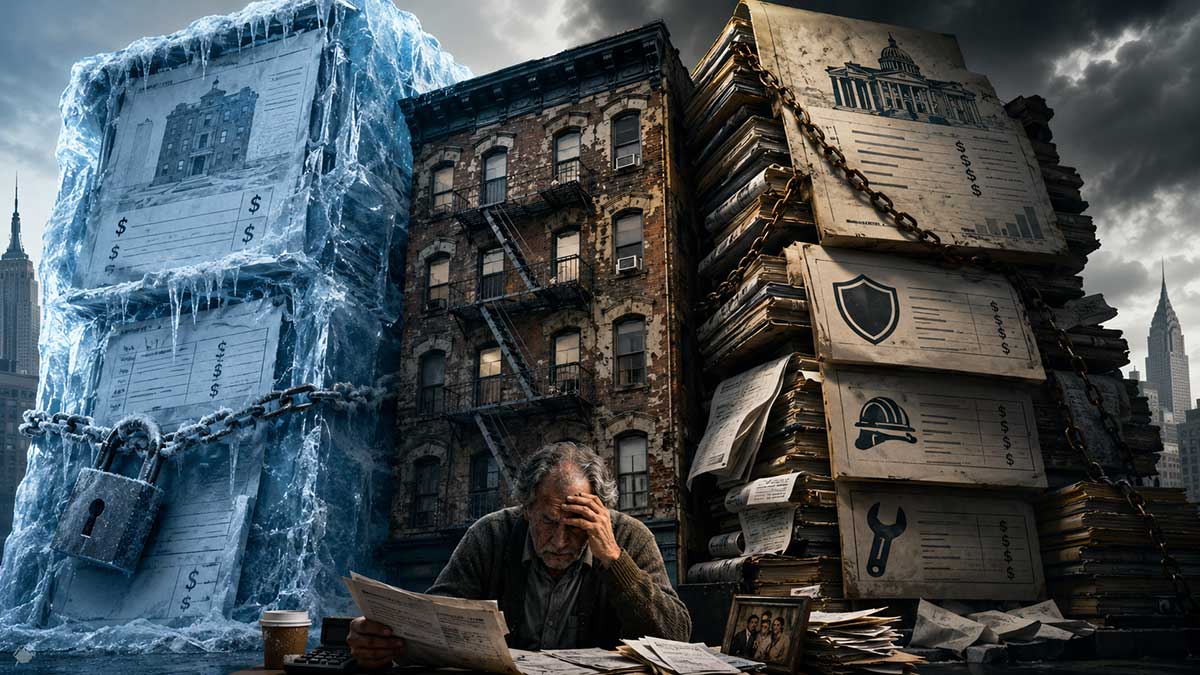
Question 1: If government freezes rent while taxes, insurance, labor, and repair costs keep rising, who pays for the gap?
Small New York Landlord:
I can answer that one.
I pay.
That is the magic trick.
Fuel goes up. Labor goes up. Insurance goes up. Taxes go up. The city’s expectations go up. The tenant’s complaints go up.
Rent?
Frozen.
Then when the building starts looking tired, everyone gasps and says, “How could the landlord let this happen?”
I didn’t let it happen. I got squeezed from both sides and then blamed for being flat.
Milton Friedman:
A rent freeze does not freeze reality.
It freezes one line on a spreadsheet and lets every other line keep moving.
That is not compassion. That is arithmetic denial.
When price is separated from cost, someone must absorb the difference. If the owner cannot absorb it, maintenance suffers. If maintenance suffers, tenants suffer. Then politicians announce a new program to solve the damage from the previous program.
This is how government policy becomes a machine that produces its own excuses.
Zohran Mamdani:
You are describing landlords as victims. I am describing tenants as human beings.
People cannot live in a city where rent eats their whole paycheck. A rent freeze gives families breathing room. It tells New Yorkers that the city belongs to them, not just investors.
If an owner cannot maintain safe housing, then the city has a duty to act.
Housing is not a casino chip. It is where people sleep, raise children, and grow old.
Thomas Sowell:
The question is not whether tenants need relief.
The question is whether this policy creates more housing or less housing, better maintenance or worse maintenance, more investment or less investment.
Good intentions do not pay plumbers.
A policy can sound moral at the microphone and still punish the behavior a city needs.
If you want better housing, you need people willing to build, repair, finance, and maintain housing. If you make ownership politically dangerous, the supply of responsible owners will fall.
Karl Marx:
This is awkward.
I wrote about capital. I did not write, “Freeze revenue, raise costs, wait for pipes to burst, then hold a press conference.”
Even revolution needs bookkeeping.
If your plan requires the landlord to pay bills with moral applause, I regret to inform you that applause has poor exchange value.
Question 2: Is a landlord still an owner if the city controls income, standards, penalties, and possible transfer?
Zohran Mamdani:
Ownership has obligations.
If someone owns a building and lets tenants live with mold, broken heat, pests, or dangerous conditions, that owner has failed the public trust.
The city cannot stand by and say, “Private property,” as though those words erase human suffering.
If owners meet their responsibilities, they have nothing to fear.
Karl Marx:
That sentence always makes people nervous.
“If you have nothing to fear, you have nothing to fear.”
Very soothing.
I heard versions of that line from several governments. It tends to age badly.
Still, I must admire the creativity. You let people keep the title deed, then regulate the income, define the failure, control the penalty, and possibly move the property elsewhere.
In philosophy, this is called a contradiction.
In politics, it is called Tuesday.
Milton Friedman:
Property rights are not ceremonial.
If you control the owner’s income, dictate the owner’s duties, punish the owner for predictable financial stress, then hold the power to transfer the asset, you have weakened ownership in all but name.
The owner may still hold paper. The city holds the leverage.
That is a dangerous arrangement.
People invest when rules are stable. They withdraw when rules become political.
Small New York Landlord:
Exactly.
When the boiler breaks, the city says, “Fix it.”
When I ask how to pay, the city says, “Do not raise rent.”
When I cannot keep up, the city says, “You are negligent.”
When I lose the building, the city says, “This is justice.”
I would laugh, but laughter is not deductible.
Thomas Sowell:
Ownership without control is unstable.
A society may choose that system. But it should name it honestly.
If private owners carry risk and public officials control outcomes, the result is not a normal market. It is political management with private liability.
People should ask whether that produces more safe apartments or fewer.
Question 3: When buildings deteriorate under rent control, who caused the decay: the owner, the policy, or both?
Thomas Sowell:
There can be bad owners. No serious person denies that.
But a policy must be judged by what it does across thousands of cases, not by the worst example used in a speech.
If the system caps income below rising costs, deferred maintenance becomes predictable.
Then politicians point to deferred maintenance as proof of owner failure.
That is not analysis. That is circular reasoning.
Zohran Mamdani:
I reject the idea that every landlord problem comes from policy.
Some owners have extracted wealth from tenants for years and failed to provide decent homes. The city should not apologize for standing with tenants.
A building is not just an investment. It is a community.
If owners want the benefits of ownership, they must accept public responsibility.
Small New York Landlord:
I accept responsibility.
I do not accept being set up.
There is a difference between a slumlord and a small owner drowning under rules, taxes, insurance, repairs, and frozen rent.
But the political speech treats both of us the same.
That is what scares me.
Once the city needs a villain, every landlord becomes audition material.
Karl Marx:
I must confess, this is entertaining.
The mayor says, “We froze rent to protect tenants.”
The landlord says, “Now I cannot afford repairs.”
The city says, “You failed to repair.”
The landlord says, “You froze the money.”
The city says, “We may need your building.”
This is not dialectical materialism.
This is a trap with paperwork.
Milton Friedman:
The decay comes from bad incentives.
When prices cannot reflect costs, supply and quality decline.
Then the state expands its role to correct the decline.
That expansion creates new political power. Once that power exists, it rarely stays narrow.
Rent control begins as tenant protection. It can end as a justification for taking control over property.
That is the warning.
Closing
Small New York Landlord:
I came here tonight expecting a housing debate.
What I heard was something much deeper.
Mayor Mamdani says he is protecting tenants.
Maybe some tenants will feel protected at first. I understand that. Rent is painful. New York is expensive. Nobody wants families thrown out of their homes.
But the question is not whether pain exists.
The question is whether City Hall is using that pain to change the meaning of ownership.
If the city freezes rent, raises demands, watches buildings weaken, blames the owner, then transfers control to groups that share its political vision, that is not just housing policy.
That is a warning sign.
A city cannot call every owner greedy, every rent increase immoral, every repair failure criminal, and every takeover compassionate.
At some point, people stop investing. They stop repairing. They stop trusting.
And when trust leaves a city, the buildings are not far behind.
Karl Marx:
I would like the record to show that I came here against my will.
But even I can see the joke.
The landlord gets the bill.
The tenant gets the promise.
The politician gets the applause.
And somehow, I get blamed.
I am returning to the grave.
Please do not summon me again until someone has read the maintenance budget.
Topic 2: Bad Landlords or a System Set Up to Fail?
Opening
Thomas Sowell:
A political debate often begins with a villain.
In housing, the villain is easy to find.
A landlord.
The word already sounds guilty before evidence enters the room.
If a tenant has mold, broken heat, a leaking ceiling, or rats in the wall, the public anger is real. It should be real. No civilized city should tolerate dangerous housing.
But policy fails when it takes the worst owner and writes rules for everyone.
Tonight, Mayor Mamdani speaks for tenants who feel trapped.
The small landlord speaks for owners who feel accused before trial.
Milton Friedman is already frowning at the phrase “price control.”
Karl Marx is standing near the coffee table, reading the tenant complaint form as if it were a lost manuscript.
Karl Marx:
I have seen revolutions begin with less paperwork.
But please continue. I am fascinated by this modern ritual where every side claims to be the oppressed class.
Question 1: How do we punish truly abusive landlords without trapping honest landlords in impossible math?
Zohran Mamdani:
Let us begin with the people living in these buildings.
A tenant does not care whether the owner’s spreadsheet is complicated if the heat is off in January.
A mother with a child in a moldy apartment does not want a lecture about insurance premiums.
She wants action.
The city has tolerated negligent owners for too long. If a landlord refuses to maintain basic standards, the city must step in.
That is not an attack on ownership.
That is a defense of human dignity.
Small New York Landlord:
I agree that bad landlords should be punished.
I do not defend rats, mold, broken heat, or owners who collect rent and vanish.
But you keep using the worst landlord as the poster child for every landlord.
That is the trick.
I am not a hedge fund. I am not a cartoon villain counting rent money under a chandelier.
I am a guy with a mortgage, a tax bill, insurance premiums that look like ransom notes, and a plumber who charges like he went to law school.
If you freeze my rent and raise my obligations, then call me negligent when I fall behind, you are not punishing abuse.
You are manufacturing guilt.
Milton Friedman:
This is where politics becomes dangerous.
A sound legal system punishes actual wrongdoing.
A political system often punishes unpopular categories.
If the city can say, “Some landlords are abusive,” then treat all landlords as suspects, the result is fear, not reform.
The better question is simple: did this owner have the means and refuse to act, or did the rules help remove the means?
Those are different cases.
A policy that cannot tell the difference will damage both tenants and owners.
Karl Marx:
I must admit, I expected more top hats.
Where are the top hats?
In my era, the exploiters at least had better costumes.
This man has a boiler invoice and back pain.
I am not saying he is innocent.
I am saying if your revolution begins by seizing the assets of a man arguing with Con Edison, the symbolism is weak.
Thomas Sowell:
Punishing negligence is legitimate.
Creating conditions that make maintenance harder, then punishing the result, is not justice.
It is policy laundering.
The state creates pressure, waits for failure, renames the failure as moral guilt, then claims more control.
That distinction matters.
A city that cannot separate the irresponsible owner from the financially trapped owner will end up punishing the very people still willing to maintain housing.
Question 2: Can a policy meant to protect tenants end up reducing the quality of the housing they live in?
Milton Friedman:
Yes.
And history gives many examples.
A rent freeze can protect a tenant from a rent increase today and reduce the incentive to maintain, improve, or build housing tomorrow.
Politicians love the first part.
They campaign on it.
They hold press conferences about it.
The second part arrives later, quietly, inside broken elevators, delayed repairs, fewer new units, and owners who decide that New York is no longer worth the risk.
Zohran Mamdani:
That assumes the market was working before.
It was not.
The city already had unaffordable rents, tenant displacement, and owners who treated housing as a profit machine.
When people are being pushed out, telling them to wait for market incentives is not enough.
A rent freeze is relief.
Code enforcement is accountability.
Public investment is the future.
The private market alone failed to house working people.
Small New York Landlord:
But you are mixing three different people into one monster.
The absentee slumlord.
The Wall Street owner.
The small landlord trying to survive.
Your speech aims at the first two, but your rules hit the third one too.
And here is the part nobody wants to say: tenants need responsible landlords.
Someone has to answer the phone at midnight.
Someone has to front the repair money.
Someone has to deal with the city, the bank, the contractor, the inspector, and the tenant who flushed a towel and says the plumbing “just became political.”
Karl Marx:
A towel has entered the means of production.
This conversation improves.
Thomas Sowell:
A tenant may gain short-term protection and still lose long-term quality.
That is the danger of judging policy by intention.
If the policy reduces cash flow, discourages investment, and makes ownership politically hazardous, quality can decline.
Then government presents the decline as proof that more government control is needed.
This is not a mysterious cycle.
It is predictable.
Zohran Mamdani:
You speak as if the city has no right to defend tenants.
But tenants are already carrying fear every month.
They fear eviction.
They fear rent hikes.
They fear choosing between food and housing.
A city that does nothing is taking a side too.
Milton Friedman:
No one said “do nothing.”
The issue is whether the chosen action attacks the symptoms and worsens the disease.
If affordability comes from suppressing prices rather than increasing supply, the city has bought temporary applause with future deterioration.
Question 3: Who gets to decide the line between “negligent owner” and “owner crushed by the rules”?
Small New York Landlord:
That is what scares me.
Not the inspection.
Not the repair order.
Not even the fine.
What scares me is the political mood.
Once the city decides landlords are the enemy, the facts become decoration.
You can walk into a hearing with receipts, loan papers, repair records, tax bills, insurance notices, and contractor estimates.
But the room already knows the story.
Tenant good.
Landlord bad.
City heroic.
Building transferable.
Zohran Mamdani:
That is unfair.
The city has legal processes. Owners have rights. Tenants have rights too.
If a building is chronically neglected, residents should not be trapped under an owner who has failed them.
The law should protect people, not just deeds.
Karl Marx:
The law protecting people is a fine sentence.
The interesting question is who writes the definition of “people.”
Tenant people?
Owner people?
Taxpayer people?
Nonprofit people?
Campaign people?
Forgive me. Death has made me suspicious of committees.
Milton Friedman:
The decision must be narrow, legal, and evidence-based.
The moment it becomes ideological, property rights are endangered.
A city can say, “We are only going after negligent owners.”
But if the standards are shaped by politics, if the remedies favor ideologically aligned groups, and if the owner was weakened by prior controls, the process loses neutrality.
It becomes a pathway from private property to political allocation.
Thomas Sowell:
The public should ask three things.
Did the owner refuse to maintain the building when able?
Did public policy make maintenance financially harder?
Who gains control after the owner is removed?
That third question is often the most revealing.
Power does not disappear after it is taken from one party.
It moves.
The moral language may be tenant protection, but the practical result may be transfer of control.
Small New York Landlord:
And control will not move to people who disagree with City Hall.
That is common sense.
Nobody confiscates value from opponents and hands it to opponents.
It will go to groups that match the mayor’s worldview.
Maybe they call them nonprofits.
Maybe they call them community stewards.
Maybe they call them tenant-led organizations.
But politically, everyone knows what is happening.
The building leaves one class of people and enters another.
Karl Marx:
I feel both flattered and misquoted.
This is a strange age.
You people have invented socialism through grant applications.
Closing
Thomas Sowell:
The existence of bad landlords does not prove that all landlords should live under political suspicion.
The suffering of tenants does not prove that rent freezes, ownership transfers, and city control will create better housing.
Good policy must punish genuine abuse without making honest ownership impossible.
It must protect tenants without destroying the incentives that produce livable homes.
It must ask who pays, who decides, who gains control, and what happens after the applause ends.
A city can fight slumlords.
A city can enforce safety codes.
A city can help low-income tenants.
But if it creates a system where ownership carries risk, government controls revenue, politics defines failure, and favored groups receive transferred control, then the issue is no longer only housing.
It is power.
And power always needs a better excuse than compassion.
Karl Marx:
I entered this meeting ready to defend myself.
Now I am leaving with a question.
If your policy needs landlords to fail before your theory works, perhaps the landlord was never the only problem.
Please stop summoning me for rent hearings.
I have already suffered enough.
Topic 3: Who Gets the Building After the Owner Is Removed?
Opening
Milton Friedman:
The public debate usually stops too early.
People hear about a neglected building.
They hear about angry tenants.
They hear a politician promise action.
Then the crowd applauds before asking the next question.
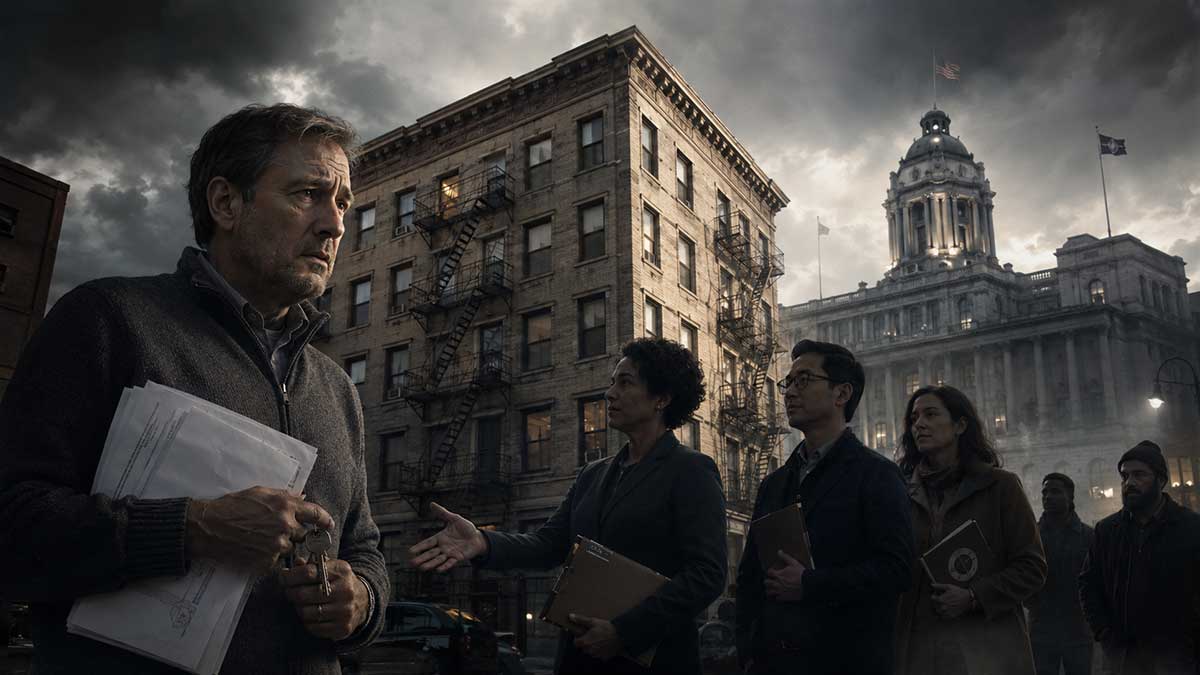
Who gets the building?
That is the question power hopes you forget.
If a private owner is removed, the property does not vanish into moral purity. It moves into someone else’s control.
A nonprofit.
A tenant group.
A community land trust.
A politically approved steward.
A public-private structure with a beautiful name and a budget no one reads.
Mayor Mamdani calls this tenant protection.
The landlord calls it confiscation by stages.
Thomas Sowell calls it an incentive problem.
Karl Marx calls it an unexpected copyright violation.
Karl Marx:
I object to this entire hearing.
People keep saying “communism” and then describing committees, lawsuits, subsidies, nonprofits, and paperwork.
Where is the revolutionary poetry?
Where are the barricades?
Where is the dramatic lighting?
All I see is a city discovering that redistribution sounds nicer with grant language.
Question 1: If seized or pressured property goes to nonprofits, tenant groups, or community land trusts, is that neutral reform or ideological transfer?
Small New York Landlord:
Let me say the quiet part out loud.
If City Hall takes control from an owner like me, the building will not be handed to someone who thinks City Hall is wrong.
It will not go to a property-rights group.
It will not go to a landlord association.
It will not go to a taxpayer group demanding less government.
It will go to groups that share the mayor’s view of housing.
That is not neutral.
That is political transfer dressed up as moral rescue.
Zohran Mamdani:
You are treating community ownership like a dirty phrase.
A building full of tenants should not be at the mercy of an owner who fails them.
If a landlord neglects housing, why should the city protect that landlord’s control forever?
Transferring buildings to responsible stewards can keep families housed, stabilize communities, and remove abusive owners from the equation.
This is not punishment for political disagreement.
It is accountability.
Thomas Sowell:
The word “responsible” carries a great deal of power here.
Who defines responsible?
A market definition asks whether someone can maintain the building, finance repairs, manage risk, and serve residents.
A political definition asks whether the new steward fits the governing ideology.
Once that definition becomes political, transfer is no longer neutral.
The old owner may be judged by failures under pressure.
The new steward may be judged by intentions before performance.
That is a dangerous double standard.
Karl Marx:
I must admit, “responsible steward” is a very clever phrase.
In my day, we said “seize the means of production.”
You say “transition the asset to a mission-aligned entity.”
This is why modern politics needs translators.
Milton Friedman:
The issue is not the name of the recipient.
The issue is the process.
If government restricts the owner, investigates the owner, prosecutes the owner, then transfers control to groups aligned with the same political project, the public has reason to worry.
Property rights depend on impartial rules.
Once ownership can be shifted through ideological judgment, investment becomes a political risk.
Question 2: What prevents city housing policy from becoming a reward system for political allies?
Zohran Mamdani:
There are legal safeguards.
There are courts, public agencies, tenant protections, procurement rules, and oversight.
The city is not handing buildings to friends in a back room.
We are talking about buildings where people have suffered neglect.
A democratic city has the right to use legal tools to protect residents.
Small New York Landlord:
Legal tools can still become political weapons.
The paper may look clean.
The meeting may have minutes.
The nonprofit may have a mission statement.
But everyone knows which groups are invited into the room and which groups are treated like villains.
If your whole campaign says landlords are the problem, then your housing policy will not treat landlords fairly.
Milton Friedman:
Political favoritism does not always look like a suitcase of cash.
It often looks like selective access.
A favored group gets meetings.
A favored group gets grants.
A favored group gets legal support.
A favored group gets called a community partner.
An unfavored group gets blamed for the housing crisis.
That is how power distributes benefits without looking crude.
Thomas Sowell:
The safeguard is not good intentions.
The safeguard is limiting discretionary power.
When officials have wide authority to define failure, choose remedies, and select successors, political bias becomes hard to detect and harder to stop.
A city may begin by targeting the worst actors.
Then the category expands.
The standard shifts.
The precedent remains.
Karl Marx:
Political allies receiving property through moral language?
I am shocked.
Shocked.
Next you will tell me the committee chair’s cousin runs a housing justice nonprofit with a very emotional logo.
Zohran Mamdani:
That is cynicism.
People organize tenant groups precisely after the old system fails them.
If residents want power over their own buildings, that should not be dismissed as corruption.
Small New York Landlord:
Tenant voice is one thing.
Government-assisted transfer of someone else’s property is another.
Do not call the second thing empowerment and expect owners to clap.
Question 3: Is “community ownership” still voluntary if the previous owner lost control through government pressure?
Thomas Sowell:
Voluntary exchange has a clear meaning.
One party offers.
Another party accepts.
Both sides can say no.
When government pressure changes the terms, the word voluntary becomes murky.
If the owner faces fines, litigation, public accusation, frozen revenue, and political hostility, then a “transfer” may be less like a sale and more like surrender.
Zohran Mamdani:
That assumes owners are powerless.
In reality, tenants have often been powerless.
They could not hire lawyers.
They could not repair the building.
They could not move easily.
They could not force an owner to care.
Community ownership gives people a path out of neglect.
Milton Friedman:
But it may trap future tenants in a different system.
Good intentions do not guarantee good management.
A nonprofit can mismanage a building.
A tenant group can lack capital.
A community land trust can face the same repair costs, labor costs, and insurance costs that burdened the previous owner.
If the math failed under one owner, changing the label on the office door will not repair the roof.
Karl Marx:
I have questions.
When the landlord owned it, repairs were expensive.
When the nonprofit owns it, are repairs cheaper?
Does the pipe respect ideology?
Does the boiler say, “Ah, community ownership, I shall now function”?
Small New York Landlord:
That is what drives me crazy.
They act like ownership structure is a magic wand.
The building still needs heat.
The elevator still breaks.
The roof still leaks.
The city still wants taxes.
The insurance company still wants money.
The contractor still wants a check.
The only thing that changes is the new owner gets praised for trying, and the old owner got blamed for failing.
Zohran Mamdani:
The new structure can change priorities.
A private owner may seek profit.
A community steward may seek stability.
That matters.
Thomas Sowell:
Priorities matter.
Constraints matter more.
If the new steward lacks capital, skill, discipline, and accountability, the tenants may inherit different rhetoric and the same broken elevator.
Policy should compare outcomes, not slogans.
Closing
Milton Friedman:
A transfer of property is never just a transfer of bricks.
It is a transfer of authority.
Someone gains the right to decide rents, repairs, budgets, rules, access, and future value.
If that transfer happens through neutral law against proven abuse, the public can debate the merits.
If it happens after government restricts income, expands obligations, defines failure, then directs control to politically favored structures, the public should be alarmed.
The question is not whether every nonprofit is corrupt.
The question is whether political power should decide who deserves to control private property.
The promise will sound humane.
The speeches will praise community.
The paperwork will use gentle words.
But the principle underneath is hard and old.
Once government can weaken ownership, judge ownership, and redirect ownership, property rights become conditional.
And conditional property rights are no real defense against political power.
Karl Marx:
I came to this meeting expecting to be accused.
I leave feeling professionally undercredited.
You people have taken old ideas, covered them in municipal language, added tenant committees, and called it innovation.
Very well.
But one final warning from a dead man with a terrible beard.
If you take a building from one owner and give control to your allies, do not be surprised when everyone notices the direction of travel.
Even ghosts can follow a paper trail.
Topic 4: Is This Communism, Socialism, or Just Bad Economics?
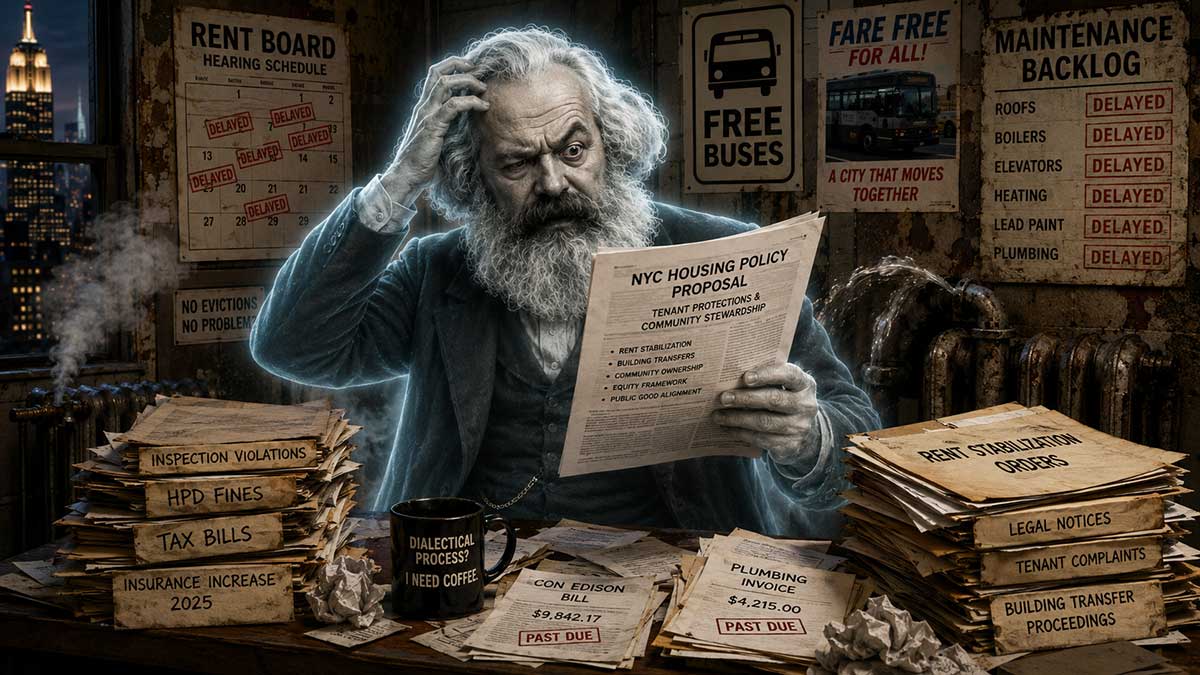
Opening
Karl Marx:
I have been called many things.
Revolutionary.
Philosopher.
Dangerous man.
Terrible roommate.
But tonight, I seem to have become the emergency label for every policy that makes property owners nervous.
Someone proposes rent control.
People shout, “Communism!”
Someone proposes public housing.
People shout, “Communism!”
Someone proposes free buses.
People shout, “Communism!”
Someone proposes transferring neglected buildings to politically approved stewards, and suddenly my ghost is dragged into a New York hearing room again, standing beside a malfunctioning radiator and a landlord holding a folder thick enough to stun an ox.
I must say, this is flattering.
But it is also lazy.
The question is not only whether this is textbook communism.
The deeper question is whether the policy moves society away from private ownership and closer to political control.
That question, I regret to report, is much harder to dismiss.
Small New York Landlord:
So you are saying I should stop calling it communism?
Karl Marx:
No.
I am saying that if you call it communism, at least do it with better footnotes.
Question 1: Does a policy need to be textbook communism before Americans should worry about it?
Milton Friedman:
No.
That is the trap.
People wait for the final label before resisting the first steps.
A policy does not need to abolish all private property to damage property rights.
It only needs to make ownership conditional on political approval.
First, government controls price.
Then it controls standards.
Then it controls penalties.
Then it controls who may receive the asset after failure.
At that point, private ownership still exists on paper, but the real authority has shifted.
Zohran Mamdani:
That is an exaggerated description.
We are not abolishing private property.
We are responding to a housing crisis.
There are tenants living under impossible pressure. Rent is too high. Wages are not keeping up. Families are being pushed out. The city has a responsibility to act.
Calling every tenant protection “communism” is a way to avoid talking about people’s suffering.
Small New York Landlord:
No, it is a way to talk about my suffering too.
You say I still own the building.
But you want to freeze rent.
You want to raise enforcement.
You want to judge whether I maintain the property properly.
You want the option to remove me if I fail.
Then you want the building moved to groups that support your housing worldview.
At what point am I allowed to notice the direction?
Thomas Sowell:
Labels can distract from incentives.
A policy can be called tenant protection, socialism, democratic reform, housing justice, or public stewardship.
Those words matter less than the behavior the policy creates.
Does it encourage building?
Does it encourage maintenance?
Does it protect owners who follow the law?
Does it punish failure fairly?
Does it invite political favoritism?
Does it respect property rights under pressure?
Those questions matter more than the label.
Karl Marx:
As the only actual Marxist in the room, I must warn you: labels are often used to end thinking.
The mayor says, “This is not communism,” and expects the argument to disappear.
The landlord says, “This is communism,” and expects the argument to be won.
Both are too quick.
The important thing is this: who controls the property?
The answer to that question is never a joke.
Though I admit, the landlord’s face is helping.
Question 2: At what point does tenant protection become political control over private property?
Zohran Mamdani:
Tenant protection becomes necessary when the market fails people.
Private property cannot mean unlimited power over tenants.
A landlord cannot ignore basic living conditions, raise rents beyond reason, and then hide behind ownership.
The city has to draw lines.
A humane society does not let people freeze in apartments so property owners can claim freedom.
Milton Friedman:
No one is defending abuse.
But the word “humane” should not become a blank check for political control.
A government can protect tenants through courts, safety codes, targeted aid, faster permitting, and more housing supply.
But when it controls rent, restricts the owner’s ability to respond to costs, threatens removal, and then places property under favored stewardship, it has gone far past ordinary protection.
It has entered the field of political allocation.
Small New York Landlord:
Exactly.
A safety code says, “Fix the heat.”
A rent freeze says, “Do it with less money.”
A political campaign says, “Landlords are the problem.”
A transfer plan says, “Maybe someone else should control this building.”
That is not one policy.
That is a squeeze.
And when I complain, I am told I hate tenants.
I do not hate tenants.
I hate being turned into the villain in a play written by City Hall.
Thomas Sowell:
The line is crossed when the government’s role changes from referee to interested player.
A referee enforces clear rules.
An interested player decides who deserves to win.
When officials define failure, impose financial limits, select the successor, and speak ideologically about ownership, they are no longer neutral.
They are shaping the ownership structure of the city.
Karl Marx:
In fairness, shaping the ownership structure of the city does sound like something my fans would put on a poster.
Perhaps with a raised fist.
Perhaps with poor font choice.
But I will say this: the mayor’s denial is not enough.
A man may say he is not a communist.
Fine.
Then show that private ownership remains real, secure, and respected, not merely tolerated until politically inconvenient.
Question 3: Can private ownership survive when government can cap income, define failure, sue the owner, and redirect control?
Milton Friedman:
It can survive formally.
It cannot survive confidently.
People may still own property, but they will treat ownership as unstable.
That changes behavior.
Some sell.
Some stop investing.
Some avoid repairs that do not pay back.
Some leave the market.
Some never enter it.
Then housing supply tightens, quality declines, and the city blames private owners again.
That is how a political solution creates the next political crisis.
Zohran Mamdani:
You are assuming private owners are the only path to housing.
The city can build.
Public investment can expand housing.
Community land trusts can preserve affordability.
Tenant groups can create stability.
The market has had many years to solve this problem.
It has not.
Small New York Landlord:
The market has been tied up, taxed, regulated, sued, delayed, and politically blamed.
Then you say the market failed.
That is like breaking someone’s legs and mocking him for losing a race.
Karl Marx:
That metaphor is violent but clear.
Please continue.
I am learning American local government.
It seems to be capitalism with guilt, socialism with lawyers, and comedy with invoices.
Thomas Sowell:
Private ownership survives when owners believe the rules are predictable.
They do not need perfect freedom.
They need fair rules, stable expectations, and confidence that political hostility will not erase their investment.
Once ownership becomes conditional, capital leaves quietly.
It does not hold a press conference.
It does not wave a sign.
It simply goes somewhere else.
Then the city discovers that punishing owners is easier than replacing them.
Milton Friedman:
That is the price of bad economics.
You can command prices.
You cannot command supply.
You can punish landlords.
You cannot force prudent investors to trust you.
You can transfer buildings.
You cannot transfer competence by decree.
The great conceit of this kind of policy is the belief that political power can replace economic reality.
It cannot.
It can only delay the bill.
Closing
Karl Marx:
I have heard the accusation tonight.
Communism.
Socialism.
Bad economics.
Political takeover.
Housing justice.
Tenant protection.
Each phrase tries to win before the evidence is weighed.
So let us speak plainly.
This policy does not need to be pure communism to alarm people who believe in private property.
It only needs to weaken ownership one layer at a time.
Cap the income.
Raise the obligations.
Define the failure.
Punish the owner.
Move control to favored groups.
Call the result compassion.
That may not satisfy every scholar’s definition of communism.
But ordinary people are not wrong to hear it and feel the ground shifting.
They know what direction it points.
A society does not lose property rights only in one dramatic moment.
Sometimes it loses them through meetings.
Through rent boards.
Through legal notices.
Through emergency powers.
Through words like “stewardship,” “equity,” and “community control.”
The language becomes soft.
The pressure becomes hard.
And the owner discovers that the deed is still in his name, but the city has taken the meaning out of it.
Small New York Landlord:
So what should I call it?
Karl Marx:
Call it what you want.
But read the fine print.
The revolution, apparently, now comes with a compliance department.
Topic 5: Free Buses, Free Housing, and the Cost of “Free”
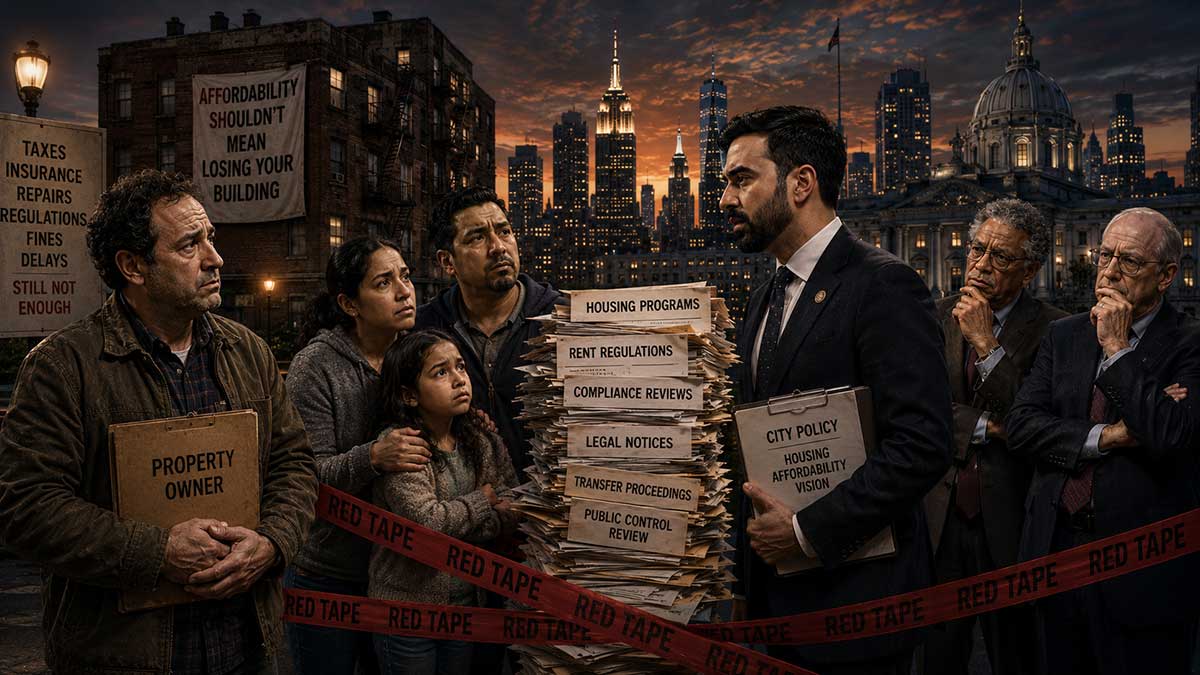
Opening
Small New York Landlord:
I thought this meeting was about housing.
That was my first mistake.
One minute we were talking about rent freezes, building seizures, community land trusts, tenant groups, and whether my boiler had joined the counterrevolution.
Then someone mentioned buses.
Free buses.
Mayor Mamdani smiled like a man who had found another private thing that needed public supervision.
I looked around the room.
Milton Friedman looked pained.
Thomas Sowell looked unsurprised.
Karl Marx looked excited, then confused, then annoyed that nobody had asked him to design the bus route.
And I realized the housing debate was not really only about housing.
It was about a pattern.
When rent is too expensive, government controls the rent.
When buildings decline, government wants control of the building.
When buses cost money, government wants free buses.
When groceries cost too much, someone will suggest a city-run grocery store.
At some point, a citizen has to ask a simple question.
What is left for ordinary people to own, run, build, risk, and lose?
Karl Marx:
I must protest.
In my writings, the means of production were grand.
Factories.
Land.
Capital.
Industry.
You people have dragged me from the grave to discuss a MetroCard.
This is a humiliation.
Question 1: When politicians promise “free,” who pays after the applause ends?
Zohran Mamdani:
People are tired of being told every basic service must hurt.
A bus ride should not be a barrier to work, school, health care, or family.
When we say free buses, we mean a city where movement is easier for working people.
The cost of living is crushing New Yorkers. A public city should use public tools to give people relief.
Milton Friedman:
There is no free bus.
There is only a bus paid for by someone other than the rider at the moment of riding.
That may be a policy choice.
But it is not free.
The cost moves to taxpayers, debt, service cuts, future budgets, or inflationary pressure in some form.
Politics hides costs by separating the person receiving the benefit from the person paying the bill.
That is why the word “free” is so useful in campaigns.
It feels moral and requires no receipt.
Small New York Landlord:
I know that trick.
My tenants hear “rent freeze.”
I hear “repair bill freeze? No? Tax freeze? No? Insurance freeze? No? Then why am I the only frozen object in this room?”
Now with buses, the rider hears “free.”
The taxpayer hears later.
The city worker hears later.
The future budget hears later.
The same word keeps showing up.
Free for now.
Expensive later.
Karl Marx:
This is very poor branding.
At least say, “Collectively funded buses through redistributed fiscal channels.”
It is longer, yes, but it frightens the correct people.
Thomas Sowell:
The first question in public policy should be: compared with what?
Free buses may help some riders.
But that money has other possible uses.
Police.
Schools.
Road repair.
Subway upgrades.
Housing vouchers.
Tax relief.
Debt reduction.
Every dollar spent has a hidden alternative.
Politics talks about visible beneficiaries.
Economics asks about invisible tradeoffs.
Question 2: If housing, buses, groceries, and services all become city projects, what is left for private citizens to own and run?
Thomas Sowell:
A society can move from private choice to political allocation without announcing it.
It happens one sector at a time.
Housing is too costly, so rent is controlled.
Transit is costly, so fares are removed.
Food is costly, so city grocery stores are proposed.
Each idea is defended as compassion.
Taken together, they shift the center of life from civil society and private enterprise to political administration.
That is a major change.
Zohran Mamdani:
The city is already involved in these systems.
We are not replacing every private citizen.
We are responding to pain.
If the market leaves people unable to live, eat, move, or remain in their neighborhoods, then public action is necessary.
Freedom means little when people cannot afford basic life.
Milton Friedman:
That is the moral argument every expansion of state control uses.
A real need is identified.
A public solution is proposed.
Then the state grows.
The private sphere contracts.
The fact that the need is real does not prove the solution is wise.
A government that runs more sectors gains more control over daily life.
People become clients of politics.
That is not the same as being free citizens.
Small New York Landlord:
That is the part I feel in my bones.
At first, I am a property owner.
Then I am a housing provider.
Then I am a public-service partner.
Then I am a problem.
Then my building needs a “responsible steward.”
It sounds polite, but each new phrase takes one step away from ownership.
Karl Marx:
I must compliment the language.
No one says, “We are reducing private ownership.”
They say, “We are expanding access.”
No one says, “We are redistributing control.”
They say, “We are empowering communities.”
No one says, “We are making citizens dependent on political systems.”
They say, “We are meeting needs.”
Very elegant.
Very slippery.
I would have used more dramatic verbs.
Question 3: Does affordability through government control create freedom, or dependency?
Zohran Mamdani:
A person who cannot afford rent is not free.
A worker who cannot afford a bus ride to work is not free.
A parent who cannot buy food is not free.
Public action can expand freedom by removing economic barriers.
If government serves people well, it can make daily life less punishing.
Milton Friedman:
Freedom is not merely relief from cost.
Freedom includes independence from political discretion.
If your apartment, your transportation, your groceries, your childcare, and your future depend on city programs, your life becomes tied to political management.
You may pay less at the counter.
But you may owe more obedience to the system that controls access.
Dependency can wear the mask of compassion.
Small New York Landlord:
And the people running the system always say they are doing it for you.
They freeze rent for tenants.
They pressure landlords for tenants.
They transfer buildings for tenants.
They make buses free for riders.
They build city groceries for shoppers.
Every step has a person in need.
But every step gives City Hall more control.
At some point, help becomes a leash.
Karl Marx:
That line was good.
I may steal it.
Thomas Sowell:
The key distinction is between helping people and reorganizing society around political control.
Direct aid to people preserves choice.
More supply preserves choice.
Lower barriers to building preserve choice.
Stable rules preserve choice.
But government control over price, ownership, transport, and distribution reduces choice.
The citizen receives services, but loses room to act outside the system.
That trade is rarely described honestly.
Zohran Mamdani:
You make public life sound like tyranny.
I see a city where people help each other through democratic government.
I see renters who can stay.
Workers who can move.
Families who can breathe.
Not every public program is a road to dictatorship.
Milton Friedman:
True.
But every public program should be judged by limits.
What power does it create?
Who controls it?
Who pays?
Who loses choice?
Can citizens refuse?
Can private alternatives survive?
If those questions are brushed aside, then compassion becomes a sales pitch for control.
Closing
Thomas Sowell:
The word “free” is one of the most expensive words in politics.
Free rent protection.
Free buses.
Free groceries.
Free services.
The promise is simple.
The bill is complicated.
The deeper cost may not be money alone.
It may be the slow shrinking of private life.
A city where people cannot afford to live has a real problem.
A city that answers every problem by increasing political control creates another problem.
Housing needs more supply, safer buildings, fair rules, and real accountability for proven abuse.
Transit needs better service, safety, speed, and financial honesty.
Families need opportunity, not permanent dependency on officials.
If government freezes prices, punishes owners, transfers assets, and calls every expansion of control compassion, citizens should be skeptical.
Not every public program is communism.
Not every tenant protection is tyranny.
Not every reform is a scam.
But the pattern matters.
When private ownership becomes suspect, private cost becomes public promise, and political allies become the new stewards of property and services, society is moving in a clear direction.
Americans do not need a perfect textbook definition to recognize that direction.
They can feel it.
The citizen becomes a client.
The owner becomes a suspect.
The taxpayer becomes an afterthought.
The politician becomes the provider.
And once the politician becomes the provider, the politician becomes very difficult to refuse.
Karl Marx:
I came here expecting revolution.
Instead, I found rent boards, bus fares, nonprofit stewards, budget gaps, and a landlord asking if he should hide his toaster.
I have learned something tonight.
Modern socialism does not always arrive with a red flag.
Sometimes it arrives with a press conference, a pilot program, and a sentence that begins, “This will be free.”
Now please stop summoning me.
I have been dead for many years, and somehow New York paperwork is still worse.
Final Thoughts by Thomas Sowell
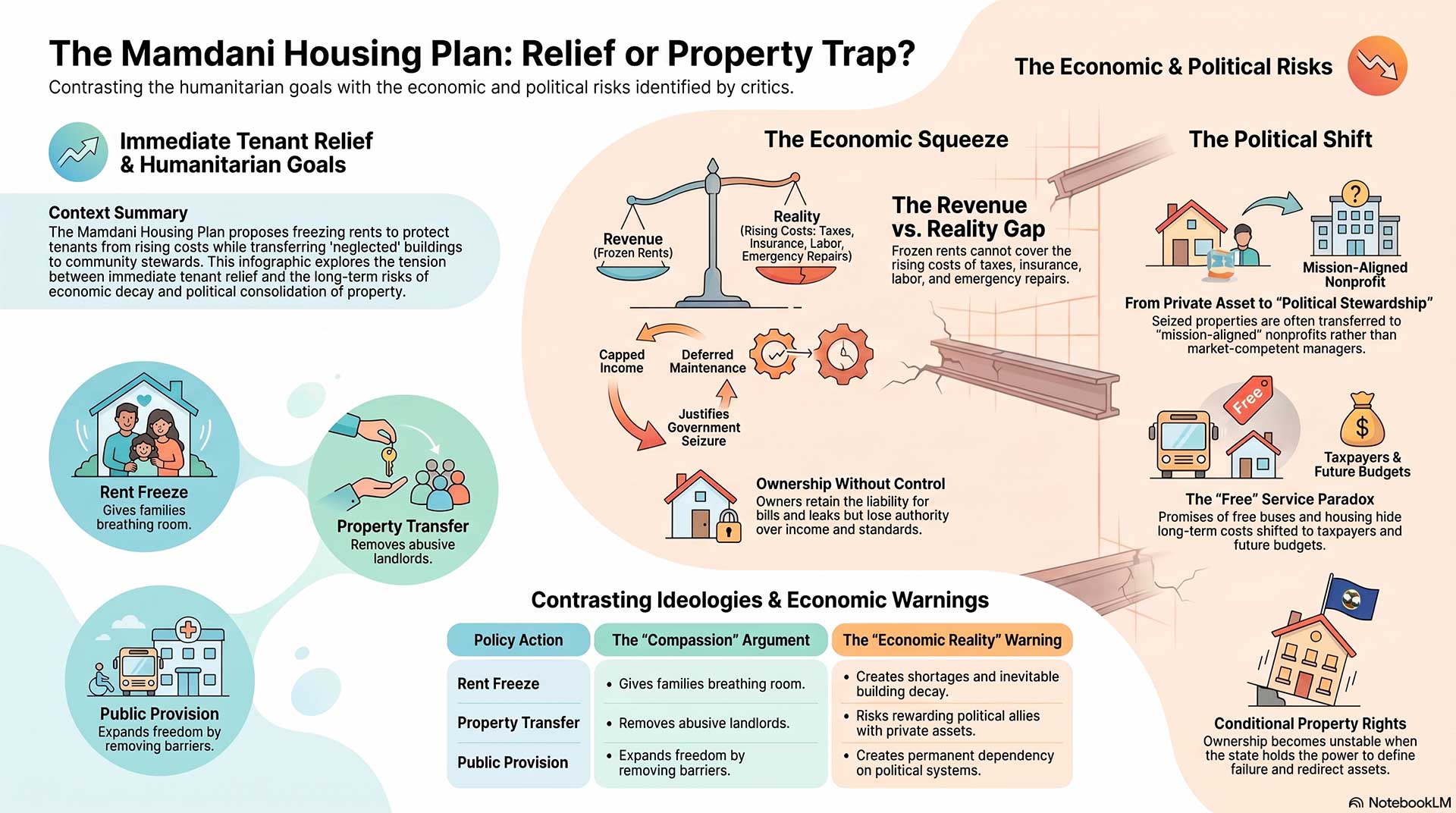
A city can have a real housing crisis and still choose a bad remedy.
Those two things can be true at the same time.
Tenants may need relief.
Bad landlords may deserve punishment.
Unsafe buildings may demand firm legal action.
But none of that removes the need to ask hard questions.
What incentives does the policy create?
Who pays when rents are frozen and costs rise?
Who decides when an owner has failed?
Who receives the property after the owner is removed?
And what happens when political language turns private ownership into public suspicion?
This conversation was never only about one mayor, one rent freeze, or one housing plan.
It was about a pattern.
When housing is expensive, government controls rent.
When buildings decline, government seeks control of buildings.
When buses cost money, government promises free buses.
When daily life becomes harder, politicians offer public control as moral rescue.
Some people hear that and feel hope.
Many Americans hear it and feel alarm.
They are not wrong to worry.
A policy does not need to match a textbook definition of communism to weaken property rights. It only needs to make ownership conditional, risky, and politically judged.
If the owner keeps the deed but loses control over income, standards, penalties, and future transfer, ownership becomes less real.
If the city can squeeze private owners, accuse them when the math breaks, and move assets to groups aligned with its worldview, the issue is no longer housing alone.
It is power.
A free society must care about tenants.
It must care about safe housing.
It must care about affordability.
But it must care about property rights too, since property rights are part of personal freedom.
Once government becomes the provider, judge, price-setter, prosecutor, and selector of new owners, citizens should ask whether they are being helped or managed.
Compassion is not proven by the size of government.
Justice is not proven by taking control from unpopular people.
And affordability cannot be built on policies that drive away the very owners, builders, repair crews, lenders, and investors a city needs.
A city cannot confiscate its way into abundance.
It cannot freeze its way into maintenance.
It cannot sue its way into trust.
And it cannot replace economic reality with political applause.
Karl Marx:
I would like to add one final note before returning to my grave.
If your plan freezes the rent, blames the owner, takes the building, gives it to your allies, makes the bus free, and then insists everyone stop using my name...
Perhaps do fewer things that summon me.
Short Bios:
Zohran Mamdani is a New York political figure known for progressive housing, transit, and affordability proposals. In this conversation, he represents the argument that government must act boldly when tenants face rising rent, displacement, and unsafe living conditions.
Karl Marx was a 19th-century philosopher, economist, and revolutionary writer whose ideas shaped socialist and communist movements around the world. In this conversation, he appears as a comic ghost, both amused and irritated that every modern property-rights dispute keeps dragging his name back into public debate.
Thomas Sowell is an economist, writer, and social theorist known for his focus on incentives, tradeoffs, markets, and unintended results. In this conversation, he asks whether housing policies judged by compassion may still create scarcity, decay, and political control.
Milton Friedman was a Nobel Prize-winning economist and one of the most famous defenders of free markets and limited government. In this conversation, he warns that rent control and price suppression often create the very shortages and deterioration they claim to solve.
The Small New York Landlord represents ordinary property owners caught between tenants, taxes, repairs, insurance, banks, inspectors, and political anger. He is not defending slumlords. He is asking whether a city can freeze his income, raise his burdens, blame him for failure, and still call him the owner.
Leave a Reply