
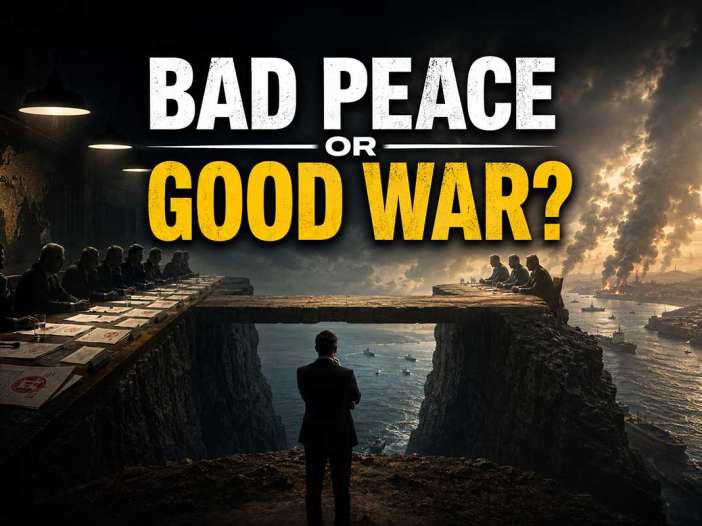
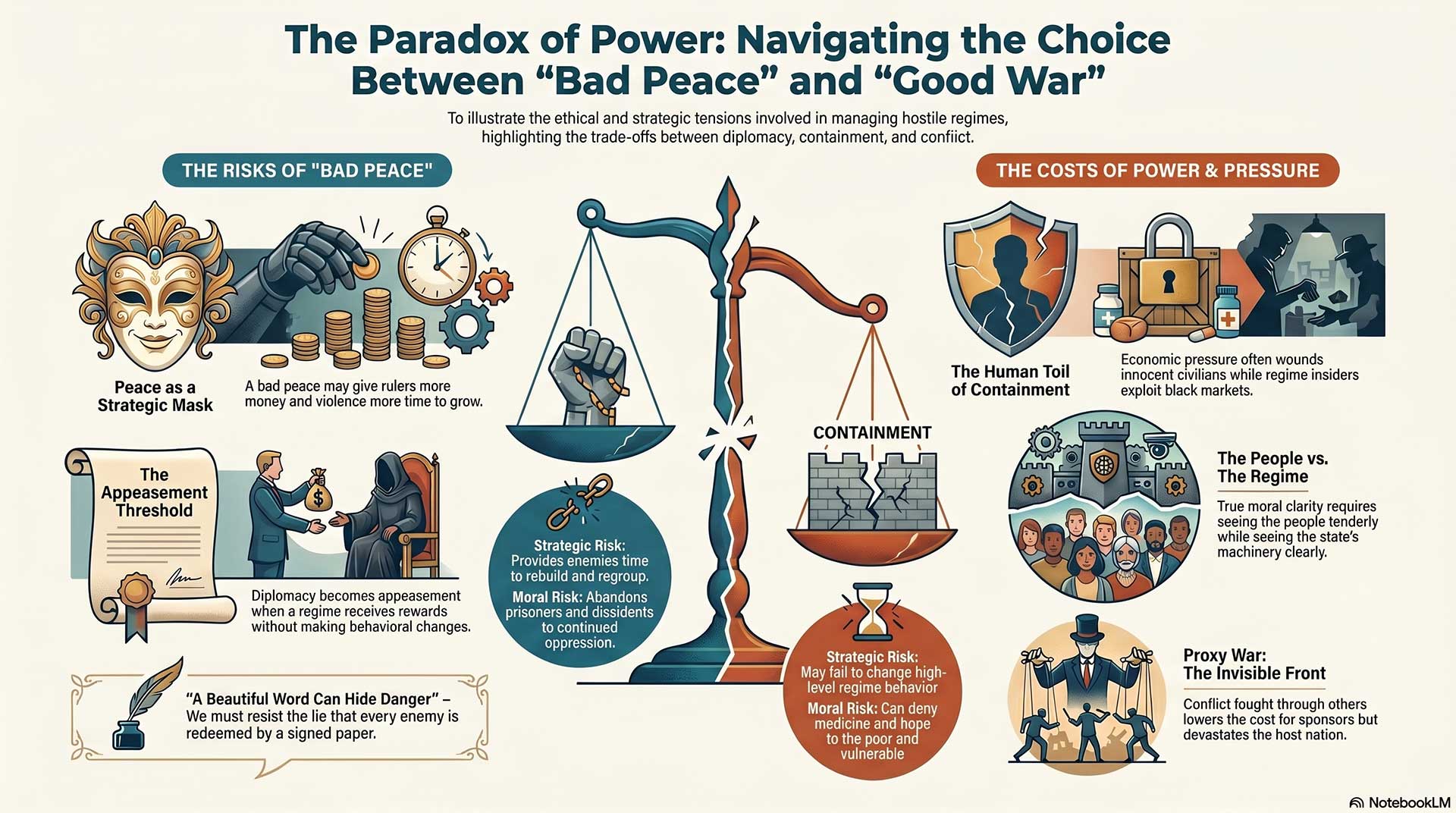
What if a bad peace can be more dangerous than a war people are afraid to name?
Introduction by Václav Havel
The first duty of a free person is to refuse the lie.
Every age has its official language. It says oppression is security. It says silence is unity. It says surrender is wisdom. It says force is justice. It says fear is loyalty.
This is why the question before us is so difficult:
Is a bad peace better than a good war?
Peace is a beautiful word. War is a terrible word. But a beautiful word can hide danger, and a terrible word can sometimes name a terrible necessity.
If peace gives prisoners more fear, rulers more money, and violence more time, then it may not be peace. It may be danger wearing a mask.
Yet if war destroys the homes of those it claims to defend, if it begins with certainty and ends in graves, then war too becomes a lie.
A free society must resist both lies.
It must resist the lie that every enemy can be changed by a signed paper.
It must resist the lie that every enemy can be redeemed by bombs.
The Iranian question is not only about borders, oil, missiles, or sanctions. It is about truth. Who speaks for Iran? The ruler? The prisoner? The exile? The mother? The student in the street?
A regime may seize the state, but it cannot own the soul of a people unless the world agrees to forget the people.
So this conversation begins with one act of resistance:
To see the regime clearly.
To see the people tenderly.
To see our own nation honestly.
And to refuse to live by lies.
(Note: This is an imaginary conversation, a creative exploration of an idea, and not a real speech or event.)
Topic 1: Is a Bad Peace Better Than a Good War?
Opening
Moderator:
Tonight we ask a question that no civilized nation can answer lightly:
Is a bad peace better than a good war?
A bad peace may save lives today, but leave danger growing tomorrow. A good war may defeat a threat, but cost innocent people their homes, sons, daughters, and futures.
This conversation is not about cheering for war. It is not about pretending every deal is wise. It is about the painful space between fear and restraint, justice and survival, peace and surrender.
Our guests are James Baker, John Bolton, Rand Paul, Shirin Ebadi, and George Kennan.
Question 1: When does diplomacy become appeasement?
James Baker:
Diplomacy becomes appeasement when one side gets reward without change. A deal must test conduct, not speeches. If a government stops firing today but keeps arming militias tomorrow, that is not peace. That is a pause.
John Bolton:
Appeasement begins the moment we confuse signatures with surrender. Hostile regimes use time as a weapon. They sign, regroup, rebuild, and return stronger. A bad agreement can be more dangerous than no agreement at all.
Shirin Ebadi:
I would ask another question first: appeasement of whom? If diplomacy gives breathing room to citizens, prisoners, students, women, and dissidents, it may have moral value. If it strengthens the ruling class and silences the people, it becomes betrayal.
Rand Paul:
War hawks call every negotiation appeasement. That is dangerous. A free republic should not rush into war every time an enemy lies. The real test is whether the deal protects America without draining our country, our soldiers, and our treasury.
George Kennan:
Appeasement is not talking to an enemy. Appeasement is failing to see the enemy clearly. A serious nation can negotiate and resist at the same time. The question is not whether we speak, but whether we keep our strategic memory.
Question 2: When does military strength become recklessness?
Rand Paul:
It becomes recklessness when leaders spend other people’s blood too easily. Every war begins with confident language. Then the wounded come home, the debt grows, and the mission expands. Strength without constitutional restraint is not strength. It is danger.
George Kennan:
Military force becomes reckless when it is used without political end. War must serve a clear aim. If the aim is vague, the victory will be vague too. A great power must know what result it seeks before it fires.
John Bolton:
Weakness creates more war than strength does. Recklessness is not firmness. Recklessness is allowing enemies to grow until the cost of stopping them becomes unbearable. The failure to act early can be the most reckless act of all.
James Baker:
Force must be linked to diplomacy. A strike may create leverage, but leverage must be converted into terms. Military strength without an exit plan can trap a nation. Diplomacy without strength can invite contempt. The balance is hard, but necessary.
Shirin Ebadi:
War becomes reckless when the people who suffer most have no voice in the decision. Citizens inside Iran, Israel, Lebanon, Yemen, and America are not chess pieces. Real security must count the widow, the prisoner, the child, and the refugee.
Question 3: Can peace be moral if it leaves oppressed people trapped under dictatorship?
Shirin Ebadi:
Peace that forgets prisoners is incomplete. Peace that forgets women is incomplete. Peace that forgets the young people beaten for freedom is incomplete. But war may bury those same people under rubble. The moral path must weaken tyranny without crushing society.
James Baker:
Foreign policy cannot solve every moral wound at once. A deal can reduce immediate danger, then create space for pressure, inspection, human rights demands, and alliances. We should not pretend one agreement can redeem a whole region.
Rand Paul:
America cannot liberate every nation by force. That does not mean we ignore suffering. It means we use trade, speech, refuge, sanctions on officials, and moral clarity. Our first duty is to avoid turning another country’s tragedy into an endless American war.
John Bolton:
Dictatorships rarely reform from polite requests. If a regime survives, it will keep jailing, funding, threatening, and expanding. A peace that preserves the machinery of terror may feel merciful today, but it can condemn millions tomorrow.
George Kennan:
A moral peace must be patient, disciplined, and unsentimental. It must deny the dictatorship expansion, deny it prestige, deny it easy money, and keep faith with the people under it. The aim is not emotional satisfaction. The aim is steady pressure until the system weakens.
Closing
Moderator:
So we are left with no easy answer.
A bad peace can become surrender by another name.
A good war can become tragedy under a noble flag.
Diplomacy can save lives.
Diplomacy can buy time for evil.
Strength can prevent war.
Strength can become war.
Perhaps the deepest question is not whether peace is always good or war is always wrong. The deeper question is this:
Can a free nation remain both morally awake and strategically wise?
Can it resist tyranny without becoming addicted to conflict?
Can it seek peace without handing victory to those who only use peace as a hiding place?
That is where the real argument begins.
Topic 2: Who Pays the Price of Containment?
Opening
Moderator:
Tonight we ask a harder question than whether an enemy should be resisted.
We ask who pays the price.
Containment can sound clean from a distance. Sanctions. Blockades. Frozen accounts. Restricted trade. Pressure on a regime.
But pressure rarely falls in a neat line. It reaches soldiers and rulers. It reaches merchants and workers. It reaches mothers buying medicine, students trying to leave, prisoners hoping the outside world still remembers them.
So the question before us is not simple.
Can a dictatorship be weakened without breaking the people trapped beneath it?
Our guests are Milton Friedman, Thomas Sowell, Narges Mohammadi, Henry Kissinger, and Dorothy Day.
Question 1: Can economic pressure defeat tyranny without crushing civilians?
Milton Friedman:
Economic pressure can weaken a regime, but it must be aimed with care. Trade can give ordinary people contact with the outside world. Cutting every channel may strengthen the state by making citizens dependent on it. A ruler with control over scarcity gains another instrument of obedience.
Thomas Sowell:
Every policy has tradeoffs. Sanctions are not magic. They may weaken a government, or they may create black markets, privilege insiders, and hurt those with no political protection. The question is not whether the goal sounds noble. The question is what actually happens.
Narges Mohammadi:
The people of Iran should not be punished for the crimes of those who imprison them. Pressure should target the officials, the guards, the commanders, the money networks, and the institutions of repression. But ordinary people need medicine, communication, education, and hope.
Henry Kissinger:
Containment is not an act of emotion. It is a system of limits. The aim is to deny an adversary the ability to expand, finance clients, and threaten neighbors. Yet a strategy that creates misery without political result is not strategy. It is drift.
Dorothy Day:
I cannot look at a hungry child and call it policy. We must resist violence, but we must never become numb to suffering. If the poor are made to pay for the sins of rulers, then our moral language has failed.
Question 2: Is comfort at home worth more than freedom abroad?
Dorothy Day:
Comfort can become a quiet idol. We say we care about freedom, but we may change our minds when gasoline, groceries, and heat become expensive. Love of neighbor is tested when mercy costs us something.
Henry Kissinger:
A nation cannot base foreign policy on comfort alone. Energy prices, trade, and public patience matter. Yet national interest sometimes requires citizens to accept burdens. The test is whether the burden is linked to a realistic end.
Thomas Sowell:
People speak freely about sacrifice when they are not the ones paying. Leaders must be honest about costs. If citizens are asked to endure higher prices, they deserve a clear reason, a clear limit, and evidence that the policy is working.
Narges Mohammadi:
People living under dictatorship often wonder whether the free world remembers them only when oil, elections, or war are involved. Freedom abroad should not be a slogan used for convenience. It should mean standing with people, not using them as symbols.
Milton Friedman:
Freedom is connected across borders through markets, speech, and civil society. But forced sacrifice without consent is dangerous. A free people must be persuaded, not manipulated. If citizens do not trust the policy, the policy will not last.
Question 3: What sacrifices should citizens accept when their country faces a long-term enemy?
Thomas Sowell:
Citizens should accept sacrifices that are necessary, limited, and honest. They should reject open-ended promises. A long-term enemy does not give leaders a blank check. The more serious the threat, the more discipline the policy requires.
Narges Mohammadi:
The free world should sacrifice attention, comfort, and money to keep dissidents alive. Fund secure communication. Support prisoners’ families. Give refuge to those in danger. Tell the truth about torture and executions. These sacrifices matter.
Milton Friedman:
Sacrifice should not mean surrendering liberty at home. A nation can oppose an enemy and still protect free markets, free speech, and constitutional limits. If we become less free in the name of freedom, we have already lost part of the argument.
Dorothy Day:
I would ask citizens to sacrifice hatred first. Resist evil, yes. Defend the innocent, yes. But do not let fear make whole peoples into enemies. The person across the sea is still made in the image of God.
Henry Kissinger:
A society facing a long contest must accept patience. Quick victory may not come. The sacrifice may be higher prices, military readiness, diplomatic focus, and public unity. But sacrifice without strategy becomes exhaustion. Strategy gives sacrifice meaning.
Closing
Moderator:
Tonight’s conversation leaves us with no easy comfort.
Sanctions may weaken tyranny.
Sanctions may wound the innocent.
Trade may open a society.
Trade may finance repression.
Sacrifice may show moral seriousness.
Sacrifice may be exploited by leaders who have no clear end in sight.
Perhaps the question is not whether containment is merciful or cruel. It can be either.
The real question is whether free nations can aim pressure at the machinery of oppression without forgetting the faces of the oppressed.
Can they deny money to rulers without denying medicine to children?
Can they resist an enemy without losing compassion?
Can they ask their own citizens to sacrifice without hiding the cost?
That is where the argument continues.
Topic 3: Is Iran the Regime, the People, or Both?
Opening
Moderator:
Tonight we ask a question that every serious conversation about Iran must face:
Is Iran the regime, the people, or both?
A government can speak in the name of a nation. A flag can be raised by rulers. A revolution can claim to represent history, faith, justice, and destiny.
But a country is never only its government.
Iran is ancient memory. Iran is poetry, family, faith, grief, protest, exile, fear, prison, courage, and silence. It is mothers searching for sons. It is students risking their lives. It is believers who support the Islamic Republic. It is citizens who hate the Islamic Republic. It is a civilization older than many of the states now judging it.
So tonight, we separate what is too often mixed together.
We ask whether a people can be loved when their rulers are feared.
Our guests are Reza Pahlavi, Shirin Ebadi, Ruhollah Khomeini, Cyrus the Great, and Natan Sharansky.
Question 1: Can a nation be loved when its government is feared?
Reza Pahlavi:
Yes. In fact, that distinction is necessary. Iran is not the Islamic Republic. The Iranian people are not the Revolutionary Guard. The culture, history, and dignity of Iran existed long before this regime and will exist after it. To love Iran is to refuse to let the regime own Iran’s name.
Shirin Ebadi:
A nation must be loved through its people, not through its rulers. I think of women jailed for removing a headscarf, lawyers punished for defending prisoners, families threatened for mourning their children. If we confuse them with the state, we abandon them twice.
Ruhollah Khomeini:
A nation is not separate from its revolution. A people has the right to reject foreign domination, corruption, monarchy, and Western control. The Islamic Republic was born from sacrifice. Those who fear it should ask why the people rose in the first place.
Cyrus the Great:
A ruler may hold a throne, but a nation lives in its memory and its treatment of the weak. Persia was not greatness by command alone. It was greatness when many peoples could live under protection. The honor of a nation is measured by justice.
Natan Sharansky:
Yes, a nation can be loved and its government opposed. I lived under a regime that claimed to speak for the people. It lied. Dictatorships survive by pretending there is no difference between the state and the citizen. Free people must never accept that lie.
Question 2: What is the difference between patriotism and loyalty to a regime?
Shirin Ebadi:
Patriotism means telling the truth when your country is wounded. Loyalty to a regime means repeating slogans when people are bleeding. The patriot protects the people. The loyal servant protects the ruler.
Natan Sharansky:
In a free society, patriotism allows criticism. In a dictatorship, criticism is called treason. That is the sign. A regime demands obedience. A nation deserves love. Those are not the same thing.
Reza Pahlavi:
Patriotism is loyalty to Iran’s future, not to the men who hold power today. A patriotic Iranian can oppose sanctions that hurt families, oppose war that destroys cities, and oppose the regime that imprisons citizens. That is not contradiction. That is love.
Ruhollah Khomeini:
A nation without loyalty becomes weak. Revolution requires discipline. Enemies use dissent to break unity. Those who claim to love Iran but serve foreign interests weaken the country from within. Patriotism must defend independence.
Cyrus the Great:
A ruler who cannot hear pain mistakes fear for unity. Loyalty is noble when it is given freely. It becomes corruption when it is demanded by force. A true nation does not need every citizen to speak the same sentence.
Question 3: Who has the right to speak for a trapped people?
Natan Sharansky:
The dissident in prison has a voice, even when the state cuts off the microphone. The exile has a voice, but must remain humble. Foreign leaders have a duty to listen, not pretend they own the struggle. The people inside the fear carry the deepest claim.
Ruhollah Khomeini:
The people spoke through revolution. They rejected monarchy and foreign humiliation. No exile, no foreign capital, no hostile broadcaster can erase that. Those who claim the people are trapped may be refusing to accept the people’s religious will.
Cyrus the Great:
No ruler should claim a people so completely that no other voice may rise. The farmer, the mother, the prisoner, the soldier, the believer, the exile, the poet — all carry pieces of the nation. No single mouth contains the whole country.
Shirin Ebadi:
Those who pay the price for speech have earned the right to be heard. Women inside Iran, families of executed protesters, jailed lawyers, labor organizers, religious minorities, and students all speak for parts of Iran. The tragedy is that the regime fears their voices.
Reza Pahlavi:
No one person speaks for all Iranians, including me. The people must choose their own future through free decision, free parties, free press, and free elections. The first task is not to replace one imposed voice with another. It is to return the voice to the people.
Closing
Moderator:
Tonight’s conversation leaves us with a necessary separation.
Iran is not only its rulers.
Iran is not only its dissidents.
Iran is not only its exiles.
Iran is not only its revolution.
Iran is not only its ancient glory.
Iran is a country where many truths are fighting for the same name.
To hate a regime is not to hate a people.
To love a people is not to excuse a regime.
To respect a civilization is not to ignore its prisoners.
To oppose war is not to deny danger.
To oppose danger is not to call every Iranian an enemy.
Perhaps the deepest mistake is to let dictators define a country for us.
The deeper work is harder:
To see the regime clearly.
To see the people tenderly.
To see the civilization honestly.
To see the prisoners first.
And to ask whether freedom means anything if we stop listening to those who cannot speak without fear.
That is where the real conversation continues.
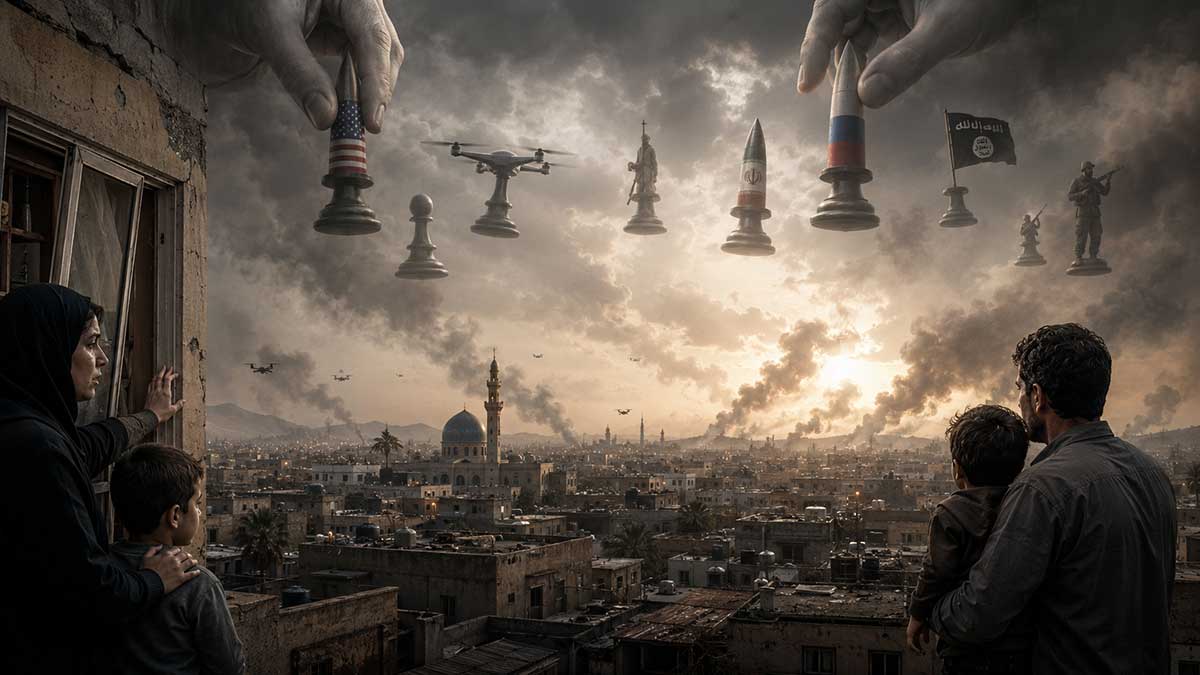
Topic 4: Proxy War: Defense, Empire, or Survival?
Opening
Moderator:
Tonight we ask a question that haunts the Middle East:
When a small country becomes the battlefield of larger powers, who is defending whom?
Lebanon says it wants sovereignty. Israel says it wants security. Iran says it supports resistance. America says it wants stability. Militias say they protect the weak. Civilians say they want to live.
But when rockets fly, borders blur.
One side calls it defense.
Another side calls it empire.
Another side calls it survival.
So tonight, we ask what happens when war is fought through others.
Our guests are Condoleezza Rice, Noam Chomsky, Bernard Lewis, Golda Meir, and Rafiq Hariri.
Question 1: When does “resistance” become occupation by another name?
Condoleezza Rice:
Resistance becomes occupation when an armed group answers more to a foreign patron than to its own citizens. No country can be sovereign when a militia can start a war that the elected government cannot stop.
Noam Chomsky:
We should be careful with the word resistance. Occupied people do resist. Weak people do resist. But outside powers often use the language of freedom to hide control. That includes Iran, America, Israel, and every state that treats another people’s land as a chessboard.
Bernard Lewis:
In the history of empires, the language changes, but the pattern remains. Patronage, religious loyalty, arms, money, and ideology can turn local struggle into imperial reach. A militia may begin with grievance and end as an instrument of another capital.
Golda Meir:
A mother in northern Israel does not care what a militia calls itself when her child sleeps under rockets. Resistance that targets civilians loses moral protection. A state has the right to defend its people.
Rafiq Hariri:
Lebanon cannot survive if every outside conflict is imported into our streets. Resistance becomes occupation when Lebanese citizens no longer decide Lebanon’s fate. No flag, no slogan, no rifle should be greater than the country itself.
Question 2: Can small nations remain free when larger powers use them as battlegrounds?
Rafiq Hariri:
Small nations survive through institutions, economy, diplomacy, and civic trust. But when foreign money buys parties, weapons, media, and fear, the nation becomes a hostage. Lebanon’s tragedy is that too many people love Lebanon after they love another project first.
Golda Meir:
Small nations remain free when they are willing to defend themselves. Survival is not granted by the kindness of neighbors. If a people waits for permission to live safely, it may wait forever.
Noam Chomsky:
Small nations rarely enjoy full freedom under great-power rivalry. Their sovereignty is praised in speeches and violated in practice. The answer is not to romanticize militias or states. The answer is to reduce domination from every direction.
Condoleezza Rice:
Small nations need partners, but partners must strengthen the state, not replace it. Training an army, supporting courts, protecting elections, and limiting armed factions can help. Funding militias destroys sovereignty from within.
Bernard Lewis:
The smaller the nation, the more precious the legitimacy of its institutions. Once private armies become stronger than the state, foreign influence has already entered the bloodstream. The state may still stand, but it no longer commands the full body.
Question 3: Is proxy war less immoral than direct war, or just easier to deny?
Noam Chomsky:
Proxy war is often direct war with a mask. The victims know who armed whom. They know whose money built the rocket, whose intelligence selected the target, whose silence allowed the killing. Distance does not erase responsibility.
Bernard Lewis:
Proxy war allows powers to test limits without formal declaration. It is old practice. Empires have long used tribes, factions, sects, and clients to extend influence. Its moral danger is that accountability becomes scattered.
Condoleezza Rice:
Proxy war is dangerous because it lowers the cost of escalation for the sponsor. A state can deny, delay, and blame local actors. That makes deterrence harder. A serious policy must raise the cost for the patron, not only the gunman.
Rafiq Hariri:
For the country caught in the middle, proxy war is not indirect. It is direct. The funeral is direct. The ruined shop is direct. The empty school is direct. The family leaving home is direct.
Golda Meir:
If someone arms your enemy, trains your enemy, and praises your enemy after your people are attacked, that is not innocence. A proxy does not make the sponsor clean. It only gives the sponsor a place to hide.
Closing
Moderator:
Tonight’s conversation shows how easily moral language can be captured by power.
Security can become domination.
Resistance can become foreign control.
Sovereignty can become a word spoken by people who do not respect it.
Peace can become a pause between two attacks.
And civilians, again and again, are asked to pay for decisions made far above them.
Perhaps the hardest truth is this:
A country cannot be free when its war is chosen elsewhere.
A people cannot be safe when their homes become another nation’s message.
And a region cannot heal if every wound becomes a weapon.
So the question is not only who fired the rocket, who launched the drone, or who crossed the border.
The deeper question is who benefits when small nations lose control of their own fate.
That is where the real conversation continues.
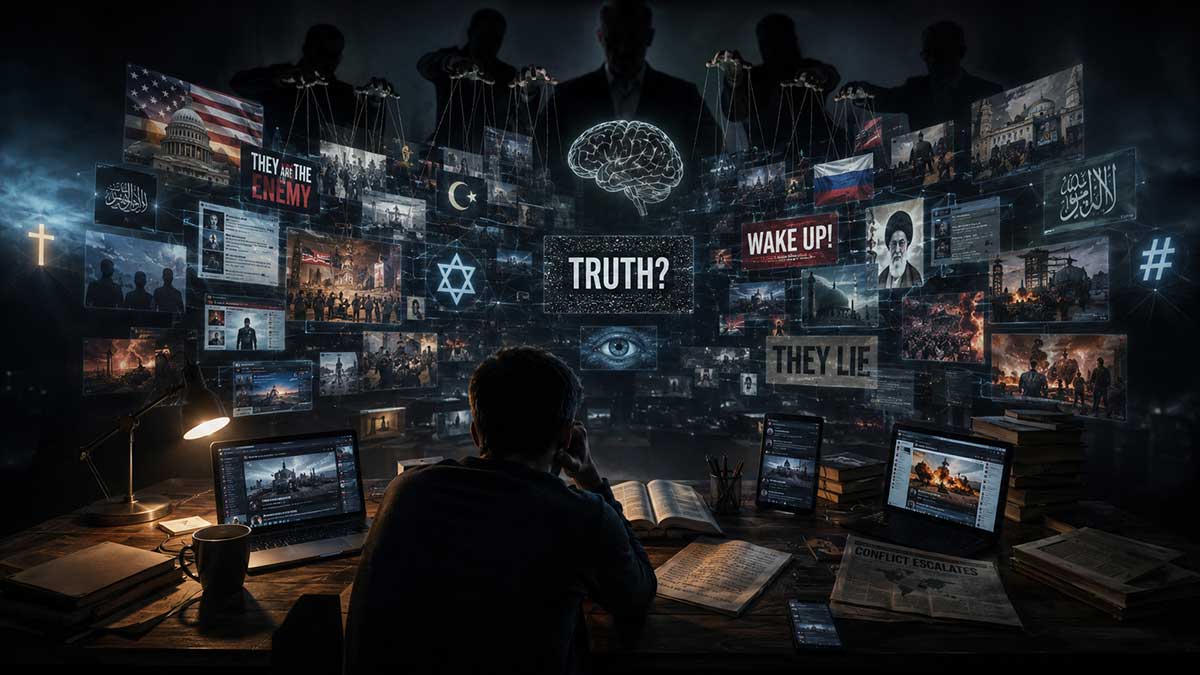
Topic 5: The War for the Mind: Propaganda, Faith, and Loyalty
Opening
Moderator:
Tonight we ask what may be the quietest question of war:
What happens when the battlefield moves into the mind?
A missile announces itself. A lie does not.
A tank crosses a border. A story crosses a screen.
A prison locks the body. Propaganda tries to lock the imagination.
The danger is not only that foreign enemies may deceive us. The danger is that free people may become unable to tell the difference between truth, doubt, mercy, cowardice, patriotism, and manipulation.
So tonight, we ask how a free society can stay open without becoming defenseless.
Our guests are George Orwell, Aleksandr Solzhenitsyn, Malcolm X, Reinhold Niebuhr, and Hannah Arendt.
Question 1: How does a society know when compassion is being used against it?
George Orwell:
Compassion is being used against a society when language is bent until cruelty sounds merciful and surrender sounds wise. The first sign is verbal fog. People stop asking what happened and begin asking which words they are allowed to use.
Malcolm X:
You know compassion is being used against you when your pain is selected for you. Some victims are shown to you every day. Others are hidden. Some suffering is named injustice. Other suffering is treated like background noise. That is not compassion. That is control.
Hannah Arendt:
Compassion becomes dangerous when it replaces judgment. Feeling for the suffering is human. But politics cannot live on feeling alone. The question must remain: who acts, who benefits, who is silenced, and what reality is being denied?
Reinhold Niebuhr:
Love without wisdom can become vanity. A nation may congratulate itself for mercy, then ignore the victims of its softness. Yet severity without love becomes pride. The moral task is to resist evil without enjoying hatred.
Aleksandr Solzhenitsyn:
The lie often enters dressed as kindness. It says, “Do not judge.” Then it says, “Do not speak.” Then it says, “Do not remember.” True compassion protects the person who suffers under tyranny, not the system that creates the suffering.
Question 2: Can free speech survive enemies who use freedom to weaken freedom?
Malcolm X:
Free speech cannot mean childish trust. You have to study who owns the message, who repeats it, who profits from it, and who disappears when the message wins. Freedom needs alert minds, not sleeping minds.
Reinhold Niebuhr:
A free society must accept risk. If it crushes speech in the name of security, it wounds its own soul. But freedom is not passivity. Citizens must answer lies with truth, discipline, memory, and moral courage.
Aleksandr Solzhenitsyn:
In the Soviet system, falsehood was not only printed. It was performed. People learned to say what they did not believe. A free society dies when its citizens know the truth but choose comfort over speech.
George Orwell:
Free speech survives when plain speech survives. If every fact becomes a tribal signal, if every question becomes proof of treason, if every lie is defended as opinion, then speech remains legally free but morally dead.
Hannah Arendt:
The goal of propaganda is not always to make people believe one lie. Often it is to make them believe that truth itself is impossible. When that happens, citizens retreat from public life, and organized falsehood walks in.
Question 3: What is the difference between questioning your country and being taught to hate it?
Hannah Arendt:
Questioning your country is an act of responsibility. Hatred is an escape from responsibility. The critic says, “This belongs to us, so we must answer for it.” The hater says, “This is rotten beyond repair.”
Aleksandr Solzhenitsyn:
A person who loves his country may grieve over its sins. He may rebuke it. He may suffer for telling the truth. But he does not rejoice when enemies break it. He seeks repentance, not destruction.
George Orwell:
Patriotism is attachment to a place and a way of life. Nationalism is hunger for domination. Self-hatred is another sickness. The honest citizen can oppose his government without becoming a servant of another one.
Malcolm X:
You can question your country from love, anger, pain, or betrayal. Sometimes the person called hateful is the one brave enough to name the wound. But if someone teaches you to despise your own people while excusing every enemy, ask who trained your eyes.
Reinhold Niebuhr:
A mature patriot knows his nation is neither innocent nor damned. Nations are human things. They carry justice and sin together. The danger lies in innocence myths on one side and total contempt on the other.
Closing
Moderator:
Tonight’s conversation leaves us with a warning.
A free society can survive criticism.
It cannot survive the death of truth.
It can survive protest.
It cannot survive citizens trained to despise one another.
It can survive doubt.
It cannot survive the loss of judgment.
The mind becomes a battlefield when every grief is weaponized, every fact is tribal, every enemy calls itself a victim, and every citizen is asked to choose between blindness and hatred.
Perhaps the task is not to silence every false voice.
Perhaps the task is to become harder to manipulate.
To keep compassion without surrendering judgment.
To keep patriotism without worshiping the state.
To keep criticism without becoming useful to tyranny.
To keep faith without turning religion into propaganda.
And to keep truth alive in a time when lies travel faster than memory.
That is where the real conversation continues.
Final Thoughts by Shirin Ebadi
When we speak about Iran, we must begin with the people.
Begin with the woman told her hair is a crime.
Begin with the student who knows one sentence can destroy his future.
Begin with the mother waiting outside a prison.
Begin with the lawyer who defends a dissident and then becomes a prisoner herself.
If we do not begin there, every policy becomes too clean.
War becomes strategy.
Sanctions become numbers.
Deals become headlines.
But the people are not pieces.
The Islamic Republic is not Iran. It is a government with courts, prisons, guards, slogans, money networks, foreign clients, and weapons. It has force. But Iran is older and deeper than that system.
Iran is poetry, family, faith, memory, fear, courage, exile, and hope.
When the world confuses the regime with the people, it helps the regime. The rulers want ordinary Iranians to feel abandoned. They want the people to believe there is no outside friendship, only threat.
Do not give them that gift.
Oppose repression.
Oppose hostage-taking.
Oppose armed groups that bring suffering to other countries.
Oppose prison, censorship, and executions.
But do not oppose the Iranian people.
A bad peace may leave the prisons full.
A good war may fill the graves.
A careless sanction may punish the poor.
A careless deal may reward the powerful.
So the final question is not only whether a bad peace is better than a good war.
The final question is whether our politics can still remember the human being:
The prisoner.
The mother.
The child in Lebanon.
The family in Israel.
The American citizen afraid of another war.
The Iranian girl who wants a future.
When all of them are seen together, slogans become harder.
But truth becomes possible.
And truth is where freedom begins.
Short Bios:
James Baker was a U.S. secretary of state known for pragmatic diplomacy, coalition-building, and realist foreign policy.
John Bolton is a former U.S. national security adviser and ambassador to the United Nations, known for a hardline view of hostile regimes.
Rand Paul is a U.S. senator known for constitutional restraint, skepticism of foreign intervention, and concern over endless war.
Shirin Ebadi is an Iranian lawyer, human rights advocate, and Nobel Peace Prize winner who has defended women, dissidents, and prisoners of conscience.
George Kennan was an American diplomat and strategist best known for shaping the idea of containment during the Cold War.
Milton Friedman was an economist and Nobel laureate known for defending free markets, individual liberty, and limited government.
Thomas Sowell is an economist and social thinker known for analyzing tradeoffs, incentives, culture, and unintended policy consequences.
Narges Mohammadi is an Iranian human rights activist and Nobel Peace Prize winner known for her opposition to repression and her defense of women’s rights.
Henry Kissinger was a U.S. secretary of state and national security adviser known for realism, diplomacy, and great-power strategy.
Dorothy Day was a Catholic social activist and co-founder of the Catholic Worker Movement, known for pacifism, poverty work, and moral witness.
Reza Pahlavi is the exiled son of Iran’s last shah and a public advocate for secular democracy in Iran.
Ruhollah Khomeini was the leader of Iran’s 1979 Islamic Revolution and the founding figure of the Islamic Republic.
Cyrus the Great was the ancient Persian ruler associated with empire-building, religious tolerance, and Persian identity.
Natan Sharansky is a former Soviet dissident, human rights advocate, and Israeli political figure known for writing about freedom and tyranny.
Condoleezza Rice is a former U.S. secretary of state and national security adviser with deep experience in diplomacy and security policy.
Noam Chomsky is a linguist, political writer, and critic of U.S. foreign policy, media systems, and state violence.
Bernard Lewis was a historian of the Middle East and Islam whose work shaped many Western debates on the region.
Golda Meir was a prime minister of Israel known for her role during a period of war, national survival, and regional conflict.
Rafiq Hariri was a Lebanese prime minister and businessman associated with rebuilding Lebanon and defending Lebanese sovereignty.
George Orwell was a novelist and essayist known for his warnings about propaganda, political language, censorship, and totalitarianism.
Aleksandr Solzhenitsyn was a Russian writer and dissident who exposed Soviet prison camps and wrote about truth under tyranny.
Malcolm X was an American civil rights leader known for his sharp critique of media, power, racial injustice, and moral awakening.
Reinhold Niebuhr was a theologian known for Christian realism, moral humility, and the tension between justice and human sin.
Hannah Arendt was a political thinker known for her work on totalitarianism, propaganda, responsibility, and the nature of evil.
Leave a Reply