
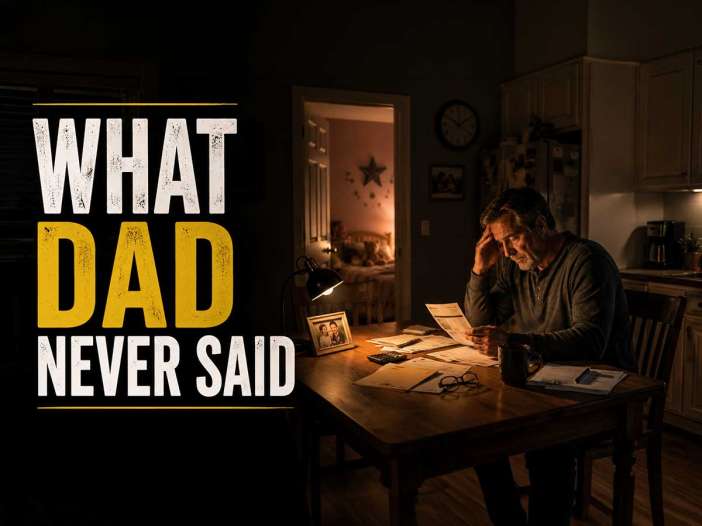
What if the man you thought was emotionally absent was carrying more love than he knew how to express?
A father’s love is often hard to recognize when we are young.
We notice what he does not say. We notice the tired face, the short answers, the rules, the silence at dinner, the times he seemed far away even when he was sitting in the same room.
But many fathers carry love in hidden forms.
They work when they are exhausted.
They worry without explaining the worry.
They give their children chances they never had.
They hide fear so the house can feel safe.
They blame themselves when life hurts the child they wanted to protect.
This does not mean every father loved perfectly. Some fathers were too silent. Some were too strict. Some let pride block tenderness. Some gave money, advice, or protection, but failed to give the words their children needed most.
Still, many children reach adulthood and begin to see their fathers with new eyes.
The tired man at the table was carrying more than they knew.
The quiet ride home was not always coldness.
The long hours at work were not always absence.
The strict warning may have been fear wearing a hard mask.
The silence may have held love that did not know how to speak.
In this Imaginary Talk, five voices gather to explore the hidden life of fathers.
Atticus Finch brings moral clarity and quiet wisdom.
Tevye brings humor, pain, tradition, and the aching heart of a father watching children grow away from him.
George Bailey brings the burden of sacrifice and the pain of giving up dreams for family.
King Lear brings the tragedy of pride, regret, and love understood too late.
A Modern Working Father brings the everyday voice of men who carry bills, stress, fear, fatigue, and devotion in silence.
Together, they ask five questions every family may need to face.
Why do fathers hide their pain?
Why do children mistake silence for distance?
What does the burden of providing do to a man?
Why do we often thank fathers too late?
And how can fathers and children heal before time makes the conversation harder?
This is not a perfect defense of fathers.
It is an invitation to look again.
To see the sacrifice behind the silence.
To hear the love beneath the awkward words.
To thank the father who tried.
To speak before regret becomes permanent.
To remember that the man who spent his life protecting others may still need to feel seen.
(Note: This is an imaginary conversation, a creative exploration of an idea, and not a real speech or event.)
Topic 1: Why Fathers Hide Their Pain
Opening
Atticus Finch:
A father often learns to carry pain in private.
He may not call it courage. He may not call it love. He may not name it at all. He may simply rise each morning, put on his shirt, step into his duties, and make sure the people he loves do not see the fear behind his eyes.
Children often see the outer man first. They see the rules. The tired face. The silence at dinner. The short answers. The absence of warm words. But behind that quietness, there may be a man trying to keep the roof from leaking, the bills from breaking the family, the future from collapsing, and his own heart from showing too much weakness.
Tonight, we ask why fathers hide their pain, and what that silence costs both the father and the child.
Deep Question 1
When a father hides his fear, is he protecting his child—or teaching the child that love must suffer alone?
George Bailey:
I know that room.
The room where everyone else is asleep, and the father is awake at the table. Bills spread out. A pencil in his hand. Coffee gone cold. He is not trying to be noble. He is just trying to make one more month work.
A child may never see that moment. That is the strange part. The child wakes up and breakfast is there. The lights still turn on. School still happens. Shoes still appear somehow. The father has already fought a battle before the child opens his eyes.
Tevye:
Ah, George, you speak of bills. I speak of daughters! Bills are heavy, yes. But daughters—daughters can make a man argue with God before sunrise.
A father hides his fear since he thinks fear will frighten the child. He says, “Everything is fine.” But inside he is thinking, “How will I keep them safe? How will I give them more than I had? How will I survive their growing up?”
And then the child says, “Papa, why are you so quiet?”
Quiet? The man is holding a whole storm in his chest!
King Lear:
A storm hidden becomes a throne of loneliness.
I mistook authority for love. I believed a father must appear large, certain, unshaken. I demanded words from my children, yet I had not learned to speak truth myself. A father who hides every wound may believe he protects his child, but he may create a palace where no one knows how to comfort anyone.
The child learns the shape of love by watching the father. If the father’s love is always silent suffering, the child may grow to repeat the same silence.
Modern Working Father:
That hits hard.
Most days, I do not think, “I am teaching silence.” I think, “Do not let the kids worry.” If I look scared, they feel scared. If I say money is tight, they stop asking for things. If I tell them I am exhausted, they may feel guilty for needing me.
So I swallow it.
But maybe I swallow too much. Maybe my kids grow up thinking I did not feel much. That is not true. I feel everything. I just do not know where to put it.
Atticus Finch:
A father has to be careful. Children should not be asked to carry adult burdens. That is not their task. Yet children can handle more truth than many fathers believe, when the truth is given gently.
There is a difference between placing fear on a child and letting a child know their father is human.
A father may say, “I am tired today, but I am here.”
He may say, “I am worried, but you are safe.”
He may say, “I do not have every answer, but I will not walk away.”
That kind of honesty does not weaken the child. It teaches the child that love can be steady without pretending to be made of stone.
George Bailey:
I wish someone had told me that.
I spent so much of my life trying to be useful. Useful at the office. Useful at home. Useful to everyone who knocked on the door. You start to think your feelings are extra baggage.
But a child needs more than your usefulness. A child needs your face. Your voice. Your truth. Not all of it, maybe. But enough to know there is a heart inside the man doing all the providing.
Tevye:
So the father must not dump the whole cow cart of troubles on the child. Good. But he must not pretend the cow cart does not exist either.
A child can hear, “Papa is tired.”
A child can hear, “Papa is trying.”
A child can hear, “Papa loves you, even when he is quiet.”
Such words are small. But small words can keep love from getting lost in the house.
Deep Question 2
Why do many fathers feel more comfortable being needed than being comforted?
Modern Working Father:
Being needed gives me a job. Being comforted makes me feel exposed.
If my child says, “Dad, can you fix this?” I know what to do. I get the tool. I make the call. I drive across town. I pay the bill if I can. I solve something.
But if my child says, “Dad, are you okay?” I freeze.
I do not want to lie. I do not know how much truth to say. I feel strange receiving care from someone I am supposed to care for.
King Lear:
Pride disguises itself as duty.
A father may say, “I need nothing.” But often he means, “I do not know how to receive love without feeling small.” I learned too late that a father who cannot receive love may demand it in distorted forms. Praise. Obedience. Loyalty. Recognition.
Yet comfort is purer than flattery. Comfort says, “I see you.” That is terrifying to a man who has survived by not being seen.
Atticus Finch:
Many men are trained to answer pain with labor.
If the heart hurts, work harder.
If the future feels uncertain, stay later.
If the marriage is strained, say less.
If the child is growing distant, pay for something useful.
Work becomes a language. A noble one, at times. But no language can carry the whole soul.
A father may need to learn that being comforted does not take away his dignity.
George Bailey:
The hard part is that people praise the father for disappearing into service.
“George, you are such a good man.”
“George, everyone depends on you.”
“George, we do not know what we would do without you.”
Those words sound kind, but they can become a trap. You start to think the only acceptable version of yourself is the one who never needs help.
And when you do need help, you feel like you have betrayed the role.
Tevye:
Yes! A father becomes like a roof. Everyone expects the roof to stay above them. Nobody asks the roof if it is tired of rain.
But the roof knows! The roof creaks. The roof leaks. The roof prays.
A father may laugh, joke, complain about small things, but never say the true thing: “I am afraid I am not enough.”
Modern Working Father:
That sentence is the one.
“I am afraid I am not enough.”
I do not say it. Most fathers I know do not say it. We say, “I’m fine.” We say, “Don’t worry about it.” We say, “Go study.” We say, “Ask your mother.” We say anything except the thing sitting in the chest.
But if my child said, “Dad, I know you tried hard for us,” I think I would remember it for the rest of my life.
Atticus Finch:
A child does not need to become the father’s therapist. But a child can become witness.
There is a grace in simple recognition.
“Thank you for working so hard.”
“I know you carried more than I saw.”
“I may not have understood you then, but I am trying to understand you now.”
Those words can reach places that years of duty never touched.
King Lear:
To be needed is to remain useful. To be comforted is to be known.
The tragedy is that many fathers choose usefulness, then die unknown.
George Bailey:
And some are still alive, sitting in the next room, hoping no one notices how lonely they are.
Deep Question 3
What does a child miss when they only see a father’s strength, but never his exhaustion?
Tevye:
The child misses the comedy, for one thing!
A tired father is sometimes a very funny creature. He falls asleep in a chair, denies he was sleeping, then asks what happened in the story. He says he is not hungry, then eats half the bread. He complains about noise, then misses the noise when the children leave.
But beneath that, the child misses the tenderness hidden under the tiredness.
George Bailey:
They miss the cost.
A child sees the house. They may not see the dream the father gave up to keep it. They see the birthday gift. They may not see the extra shift. They see the ride home. They may not see the father’s own exhaustion behind the steering wheel.
Years later, the child may say, “He never told me.”
And that is true. He did not.
But it may also be true that he was saying it every day in a language too quiet for a young heart to hear.
Modern Working Father:
I think children may miss the fear.
Not fear of danger only. Fear of failing them.
A father can look strict when he is scared. He can sound angry when he is panicking. He can seem distant when he is overwhelmed. That does not excuse every harsh word. But it may explain some of the hardness.
I have snapped at my kids over small things when the real problem was money, work, health, or shame. Then I hated myself for it later.
Atticus Finch:
That is where responsibility enters.
A father’s pain may explain his silence, but it cannot be used as a shield against apology. Children need to know the father’s burden, yes. Fathers need to know the child’s wound too.
Strength without tenderness can be misunderstood.
Exhaustion without explanation can become distance.
Love without expression can turn into a memory the child spends years trying to decode.
King Lear:
And if the child never sees the father’s exhaustion, the child may imagine the father needed nothing.
That is a dangerous illusion. A father who needs nothing becomes less than human in the eyes of his children. They may respect him, fear him, obey him, even admire him. But they may not approach him.
A father who never reveals his weariness may lose the chance to be loved with mercy.
Tevye:
Mercy! Yes. Children have mercy too, if we let them use it.
A father says, “I must be strong.” Fine. Be strong. But let the child bring you tea once in a while. Let the child see that your hands hurt. Let the child hear that your heart is full.
If the child never sees your tears, do not be shocked if they think you never cried.
George Bailey:
The saddest thing is that both sides may be waiting.
The father waits for the child to understand.
The child waits for the father to speak.
Years pass.
Then one day, the child becomes a parent or carries a hard burden, and suddenly old memories change shape.
The father sleeping on the couch was not lazy. He was exhausted.
The father who said little at dinner was not empty. He was worried.
The father who kept working was not choosing work over family. He was trying to keep the family standing.
Modern Working Father:
That is what I hope my kids understand someday.
But I do not want “someday” to be the first time they hear it.
Maybe I need to say more now. Not a big speech. Just small honest things.
“I was quiet today, but it was not your fault.”
“I am tired, but I am glad to see you.”
“I do not always know how to say it, but I love being your dad.”
Those words feel simple. For some fathers, they feel like climbing a mountain.
Atticus Finch:
Then perhaps that is where courage begins.
Not in hiding every wound. Not in displaying every fear. But in letting love become clear enough that a child does not have to spend a lifetime guessing.
A father’s silence may come from sacrifice. But silence should not be the only inheritance he leaves.
Closing
Atticus Finch:
A father hides pain for many reasons. Duty. Pride. Fear. Habit. Love. Sometimes he hides it wisely. Sometimes he hides it too well.
The child may never know how many nights he stayed awake, how many dreams he folded away, how many worries he carried without complaint. Yet a family cannot live on hidden love alone. Love must become visible in some form. A word. A hand on the shoulder. An apology. A quiet confession. A thank you.
Perhaps the first lesson is simple: a father is not less loving when he is tired. He is not less strong when he admits fear. And he is not less worthy when he needs comfort.
The next question is harder.
If fathers often show love in silence, why do so many children mistake that silence for distance?
Topic 2: Why Children Mistake Silence for Distance
Opening
Tevye:
A father can love with his whole heart and still look like a locked door.
This is a very inconvenient truth. A man may work, worry, protect, plan, pay, pray, and carry the family on his back. Then his child looks at him and thinks, “He does not care.”
Nu? What a tragedy.
But children are not foolish for thinking this. Children do not read bills. Children do not read the weight behind a tired man’s eyes. Children read faces. They hear tones. They notice who asks about their day, who hugs them, who says, “I am proud of you.”
If a father gives everything except words, the child may grow up hungry in a house full of sacrifice.
Tonight, we ask why children mistake silence for distance, and why love must sometimes learn to speak before it is too late.
Question 1
If a father shows love through action, but the child needs words, who is truly failing to communicate?
George Bailey:
That question hurts.
I spent years doing things for people. I thought that was enough. If someone needed money, I found it. If a family needed a house, I helped build it. If my children needed stability, I gave them every piece of myself I could spare.
But love through action can still leave a child wondering.
A child may not say, “Father, please translate your sacrifice into emotional language.” A child says, “Why didn’t he hug me?” Or “Why did he never say he was proud?”
Atticus Finch:
A child should not have to become a detective to find a father’s love.
A father may think his actions are clear. The child may still feel uncertain. This does not mean the father loved poorly, nor does it mean the child was ungrateful. It means their languages were different.
One spoke through duty.
One listened for tenderness.
There is pain on both sides.
Modern Working Father:
I relate to that. I grew up hearing, “A man proves love by providing.” So when I became a dad, I worked hard. I drove them to school. I paid for lessons. I fixed things. I kept showing up.
But then one of my kids once said, “You never really talk to me.”
At first, I felt insulted. I wanted to say, “Do you know what I do for you?”
Then I realized that was my answer, not their need.
King Lear:
A father may give his kingdom and still fail to give his heart.
I know this error. I believed love could be weighed, announced, rewarded, measured. Yet I missed the quieter truth: love must reach the person in the form they can receive.
A father may say, “I fed you.”
The child may answer, “But did you see me?”
A father may say, “I protected you.”
The child may answer, “But did you know me?”
Neither voice is entirely wrong. That is what makes the wound so deep.
Tevye:
Yes, yes. The father says, “I worked all day!” The child says, “You never listened!”
Both are standing there with proof. The father has tired hands. The child has a lonely heart.
So who failed?
Maybe both. Maybe neither. Maybe love itself got stuck between the two of them, like a goat in a fence.
George Bailey:
I think fathers sometimes expect children to count what they cannot see.
How would a child know the father turned down a dream job to stay near the family? How would they know he wore the same coat for years so they could have new shoes? How would they know he sat in the car before coming inside, trying to calm himself so he would not bring work stress into the house?
The father may think, “Someday they’ll know.”
But someday is risky. A child may spend twenty years calling it distance.
Atticus Finch:
A father can honor his actions without hiding behind them.
He can say, “I know I have not always said enough.”
He can say, “I show love by doing, but I want to learn how to say it too.”
He can say, “I was proud of you long before I knew how to tell you.”
Those words do not erase every hurt. But they give the child a map.
Modern Working Father:
That map matters.
I used to think saying “I love you” too much made it weaker. Now I think silence made my love harder to find.
A child should not have to wait until adulthood to realize, “Oh, Dad did love me. He just never knew how to say it.”
King Lear:
Words delayed become grief.
A father may believe his love is obvious. But the child lives inside the silence, not inside the father’s secret intention.
Question 2
How many children grow up thinking their father was distant, only to discover later that he was deeply afraid and deeply devoted?
Tevye:
Too many.
A child sees a father sitting quietly after dinner. The child thinks, “He does not want to talk to me.”
But maybe the father is thinking about rent. Or an illness. Or his own father, who never told him how to love. Or the future, that big hungry animal.
Children see the face. They do not always see the fear behind it.
George Bailey:
The adult child sees it later.
They have a mortgage, a sick parent, a child of their own, a job that drains them. Then one day they remember their father’s face at the kitchen table and think, “That was not coldness. That was pressure.”
That realization can be gentle, but it can hurt. You start revisiting old memories with new eyes.
Modern Working Father:
I have had that happen with my own dad.
When I was young, I thought he was emotionally absent. He came home tired. He did not ask many questions. He rarely praised me.
Years later, I learned how much he was carrying. Debt. Job fear. Family stress. His own shame. He was not sitting there empty. He was drowning quietly.
That did not magically fix how I felt as a kid. But it changed the picture.
Atticus Finch:
A child’s pain remains real, even after the father’s burden becomes visible.
This is vital. We should not say, “Your father suffered, so your loneliness does not count.” The loneliness counts. The father’s sacrifice counts too.
Maturity often means holding both truths without forcing one to destroy the other.
King Lear:
Regret begins when both truths arrive too late.
The child says, “I wish I had known.”
The father says, “I wish I had spoken.”
Between those two sentences lies a lifetime.
I had daughters who heard my command more than my love. I wanted devotion, yet I did not know how to offer humility. A father who fears losing his children may try to control them, then call it care.
Fear makes poor language.
Tevye:
Fear makes a father say ridiculous things!
A daughter says, “I love someone.”
The father hears, “I am leaving you forever.”
A son says, “I want my own path.”
The father hears, “Your life taught me nothing.”
A child wants freedom. The father hears rejection.
So he becomes strict. He becomes quiet. He becomes offended. Underneath it all, he is scared.
George Bailey:
And the child does not know that.
The child thinks, “Dad is angry.”
Maybe Dad is scared.
The child thinks, “Dad does not care.”
Maybe Dad cares so much he cannot breathe.
The child thinks, “Dad only cares about money.”
Maybe Dad thinks money is the only shield he knows how to hold.
Modern Working Father:
That line is real. Money as a shield.
I do not talk easily about feelings, but I know how to buy groceries. I know how to fill the gas tank. I know how to make sure there is heat in the house. So I do those things and hope they say what I cannot.
But kids do not always hear it that way.
Atticus Finch:
Children need interpretation.
Not excuses. Not lectures. Interpretation.
A father might say, “When I pushed you hard, part of me was afraid life would be cruel to you.”
He might say, “When I was quiet, I was often worried, not uninterested.”
He might say, “I should have asked more about your heart.”
Such sentences can reopen locked rooms.
King Lear:
And the child, if ready, may answer, “I needed more from you, but I see now that you were carrying more than I knew.”
That is not surrender. It is mercy.
Tevye:
Mercy is good. Very good. A house without mercy becomes a courtroom.
Everyone brings evidence.
The father brings sacrifice.
The child brings loneliness.
The past sits there like a judge.
But family cannot live forever in trial. At some point, someone must stop arguing and say, “Tell me what I did not see.”
Question 3
Can love be real if it is not expressed in the form the child most needs?
George Bailey:
Yes, love can be real.
But real love can still fail to arrive.
That is the painful part. A father may love deeply and still leave his child emotionally hungry. His love may be genuine, yet poorly delivered.
A letter locked in a drawer may contain beautiful words. But the person it was meant for never receives them.
Modern Working Father:
That scares me.
I do not want my kids to have to decode me after I am gone. I do not want them saying, “He probably loved us.” Probably is not enough.
But it is hard to change. Some fathers feel awkward saying tender things. It can feel false at first, like wearing clothes that do not fit.
Atticus Finch:
Then start with plain truth.
Not poetry. Not grand speeches. Plain truth.
“I am proud of you.”
“I was wrong to sound so harsh.”
“I enjoy spending time with you.”
“I love you, and I should say it more.”
Simple words can carry great weight when they are honest.
Tevye:
Yes! A father does not need to become a poet. Thank God. Some fathers should never attempt poetry.
He can say, “Come eat.”
Then he can add, “I am glad you are here.”
He can say, “Drive safely.”
Then he can add, “I worry since I love you.”
He can say, “You did well.”
Then he can add, “I am proud to be your father.”
A few more words! Is this so impossible? Maybe. But worth trying.
King Lear:
A father who refuses to learn the child’s language may preserve his pride and lose closeness.
Love is not proven by intensity alone. A man may feel oceans of love inside him. Yet if the child receives only stone, the child will remember stone.
I speak as one who learned this in ruin.
George Bailey:
The child has a part too, once grown.
Adult children can ask different questions. Instead of only “Why weren’t you there for me?” they might ask, “What were you carrying back then?” That does not erase pain, but it opens a door.
Some fathers will answer badly. Some will joke. Some will change the subject. Some may sit quietly for a long time, then say one sentence that explains thirty years.
Modern Working Father:
A lot of fathers need an opening.
Not pressure. Not accusation at first. An opening.
“Dad, I’ve been thinking about how hard you worked.”
“Dad, I didn’t always see what you were carrying.”
“Dad, I wish we talked more.”
That might be enough to start.
Atticus Finch:
And fathers should not wait for their children to become brave first.
The elder has responsibility. The parent has responsibility. If a father senses distance, he can move first. He can say, “I may not have shown it well, but I have always loved you.”
That sentence may not repair every wound. But it can begin a different kind of conversation.
Tevye:
A father moving first! This is good. Painful, yes. Humbling, yes. But good.
A father waits for respect.
A child waits for warmth.
Both wait and wait. Then the years run away.
Better one awkward sentence now than a perfect speech at a funeral.
King Lear:
Too late is a terrible teacher.
George Bailey:
And early is not as impossible as people think.
Maybe tonight a father can send a message. Maybe a son can call. Maybe a daughter can say, “I know you loved us in your way, but I want to know you more.”
Small words can change the air in a family.
Modern Working Father:
I think a lot of dads are waiting for permission to be softer.
They may never say that. But they are.
A child’s appreciation can loosen something. A father’s apology can loosen something. One honest sentence can do what years of silent sacrifice could not.
Atticus Finch:
Then we return to the heart of the matter.
A father’s silence may be filled with love. Yet children cannot live on hidden love forever. They need signs. They need words. They need presence that feels like presence.
The child, too, may learn to see beyond the surface. The tired face may not mean rejection. The quiet ride home may not mean emptiness. The strict warning may have been fear wearing a hard mask.
But love grows clearer when it stops hiding.
Closing
Tevye:
A child may mistake silence for distance since silence leaves too much room for guessing.
A father thinks, “They know.”
The child thinks, “He does not care.”
The father works harder.
The child feels lonelier.
The years pass like a cart with a broken wheel, bumping along until everyone is bruised.
But it does not have to stay that way.
A father can speak a little more. A child can ask a little deeper. The past can be seen with kinder eyes, without pretending it did not hurt.
Maybe the father was not distant. Maybe he was afraid. Maybe he was tired. Maybe he was carrying a love so heavy he forgot that love still needs a voice.
And this leads us to the next burden fathers often carry in silence: the burden of providing.
Topic 3: The Burden of Providing

Opening
George Bailey:
A father can lose himself by giving too much of himself.
At first, providing seems simple. Food on the table. A safe home. Clothes for school. Tuition if possible. A car that still runs. A little money saved for emergencies. A birthday gift wrapped with more hope than money.
But the burden grows quietly.
A father begins to measure his worth by what he can give. If the lights stay on, he feels useful. If the rent is paid, he feels worthy. If the child has more than he had, he tells himself the sacrifice is worth it.
But what happens to the man behind the giving?
What happens when the father’s dreams become smaller each year, not from lack of love, but from love stretched into duty?
Tonight, we ask what providing gives a family, what it costs a father, and why a man should never be loved only for what he carries.
Question 1
When a father gives his child what he never had, is he healing his past—or losing himself in the process?
Modern Working Father:
For me, it feels like both.
I want my kids to have what I missed. Better clothes. Better education. Better choices. Less fear. I want them to walk into rooms I was afraid to enter.
So I push. I work extra. I say no to myself. I tell myself, “This is what fathers do.”
But there are days when I wonder where I went.
Not as a father. As a man.
Tevye:
Ah, yes. The man disappears into the father. It happens quietly.
One day he has dreams. The next day he has bills. Then weddings. Then children with opinions. Then more bills. Then shoes, food, medicine, lessons, repairs, worries, and a horse that refuses to move.
A father says, “Later I will think about myself.”
But later is a clever thief.
Atticus Finch:
Providing can be noble. It becomes dangerous when the father believes his humanity depends on his usefulness.
A father may give his child what he never had to heal an old wound. That can be beautiful. But if the wound remains unnamed, the father may turn the child’s life into proof that his own pain had meaning.
That is a heavy thing to place on a child.
King Lear:
Yes. A father may disguise hunger as generosity.
I gave, but I expected return. I gave power, land, position, and title. Yet beneath my giving was a demand: “Show me that I mattered.”
A father who sacrifices without self-knowledge may one day ask his children to repay him with devotion, obedience, or admiration. Then giving becomes a chain.
George Bailey:
That is hard to hear.
I gave up my dreams so many times that I almost forgot they were dreams. College. Travel. Building things. Seeing places. I told myself, “Someone has to stay. Someone has to take care of this town. Someone has to keep the business alive.”
And yes, there was love in that.
But there was resentment too. I did not always admit it. A good father feels ashamed of resentment. He thinks, “If I truly love them, I should never feel tired of giving.”
But he does.
Modern Working Father:
That shame is real.
If I say, “I am exhausted,” I feel ungrateful. If I say, “I miss who I used to be,” I feel selfish. If I say, “I need a break,” I feel weak.
So I keep giving. Then I get short-tempered. Then I feel guilty. Then I give more to make up for it.
It becomes a circle.
Tevye:
A father needs a Sabbath from being useful!
Not forever. Do not abandon the children. Do not run away with the milk cart. But a father must have one small place where he is not a wallet, driver, fixer, judge, guard, and roof.
Maybe he sits with tea. Maybe he reads. Maybe he takes a walk. Maybe someone asks, “Papa, what did you want before we were born?”
Such a question may make him cry into his soup.
Atticus Finch:
A child can benefit from knowing that the father had dreams before fatherhood.
It helps the child see him as a full person. Not simply provider. Not simply authority. Not simply the man who said yes or no.
A father can say, “I had hopes. Some changed. Some I still carry. You are not the reason I lost myself. But being your father asked much of me.”
That kind of honesty can protect love from hidden bitterness.
King Lear:
A father must not turn sacrifice into silent debt.
If he gives, let him give with love. If he suffers, let him name the suffering before it poisons the gift. If he has lost himself, let him seek himself without making the child his debtor.
George Bailey:
Maybe healing the past means giving your child more than you had, but not asking them to carry the proof.
A father can say, “I wanted better for you,” without saying, “Now you owe me your life.”
That difference matters.
Question 2
Why do so many fathers feel loved only when they are useful?
Modern Working Father:
Usefulness is clear.
When I fix the sink, everyone is relieved. When I pay the bill, the problem goes away. When I drive through snow to pick someone up, nobody has to wonder if I care.
Usefulness gives evidence.
But if I sit on the couch tired and say nothing, what am I then?
That is the question many fathers fear.
George Bailey:
I understand that too well.
People came to me when they needed help. Money, advice, a loan, a signature, a way out. I became valuable in moments of emergency.
But when the emergency ended, I was left with myself. And myself felt thin.
A man can spend his whole life being necessary and still wonder if he is loved.
Tevye:
Necessary! Yes! The cow is necessary too. But nobody asks the cow about its feelings.
A father wants to be more than necessary. He wants to be enjoyed. Invited. Remembered. Laughed with. Asked about his day, not only asked for money.
But he may never say this. So he grumbles about the chair being moved instead.
Atticus Finch:
Many fathers were raised in homes where affection was tied to performance.
If they did well, they were praised. If they worked hard, they were respected. If they stayed quiet, they were approved. Tenderness may have been rare.
So later, when they become fathers, they repeat what they know. They offer service and call it love. They receive requests and call it connection.
They may not realize they are lonely.
King Lear:
A father who feels loved only when useful can become dangerous in old age.
When usefulness fades, fear rises. The body weakens. Work ends. Children leave. Decisions move to others. The father who never learned to be loved apart from function may feel erased.
Then he may demand attention. Or withdraw. Or rage. Or pretend not to need anyone.
I know the terror of losing the role and discovering I had not built a relationship beneath it.
Modern Working Father:
That is one of my fears.
What happens when the kids do not need rides anymore? When they earn their own money? When they move out? If my whole relationship with them is built on doing things, what remains?
I want them to call me when they do not need anything.
Just to talk.
George Bailey:
That is the dream, isn’t it?
Not “Dad, can you send money?”
Not “Dad, can you fix this?”
Not “Dad, what should I do?”
But “Dad, I wanted to hear your voice.”
A father may act tough, but that sentence can keep him alive inside.
Tevye:
Children, listen carefully: call your father for no reason. This is a great reason.
Ask him what he ate. Ask him what he remembers from childhood. Ask him whether he ever wanted to run away and become a fisherman. Maybe he did! Who knows?
A father who is asked for stories may discover he is more than a provider.
Atticus Finch:
And fathers must learn to accept love that is not tied to usefulness.
When a child says, “Come sit with me,” the father does not need to fix anything.
When a child says, “Tell me about your day,” the father does not need a lesson prepared.
When a child says, “I appreciate you,” the father should not deflect it with a joke every time.
Receiving love is a skill. Many fathers were never taught it.
King Lear:
The crown, the paycheck, the house, the title, the duty—all can disappear.
What remains is relationship.
A father should build that before age takes his tools away.
Question 3
What happens to a man when his family depends on him, but no one asks what he needs?
George Bailey:
He starts to disappear.
Not all at once. A little each year.
He stops mentioning what he wants. He stops buying things for himself. He stops saying he is tired. He makes jokes about it. He becomes the dependable one, the steady one, the one who will manage.
Then one day, he feels invisible in the very home he helped protect.
Modern Working Father:
That is painfully true.
There are days when everyone needs something from me. Work needs me. Kids need me. My spouse needs me. My parents need me. The house needs repair. The car needs attention. The future needs planning.
I keep answering.
But if no one asks what I need, I start to believe my needs are interruptions.
Atticus Finch:
That belief can harden a man.
A father whose needs are ignored may become distant, irritable, or emotionally numb. Sometimes his silence is not peace. It is resignation.
Yet he must take care not to punish the family for needs he never expressed.
There is responsibility on both sides. Families should ask. Fathers should answer truthfully enough to be known.
Tevye:
Truthfully enough! A very good phrase.
A father does not have to say every worry. If he says every worry, the children will hide under the bed.
But he can say something.
“I need quiet for a little while.”
“I need help today.”
“I need you to know I am tired.”
“I need us to speak kindly in this house.”
This is not weakness. This is maintenance. Even a wagon wheel needs attention.
King Lear:
If no one asks what the father needs, he may begin to demand love in distorted ways.
He may demand respect when he longs for tenderness.
He may demand obedience when he longs for reassurance.
He may demand praise when he longs to be seen.
Unspoken need often wears a harsh mask.
George Bailey:
That mask can scare children away.
Then the father feels more alone, and the children feel more distant. Everybody loses.
I think a family has to learn the habit of seeing the provider as a person. Ask what he gave up. Ask what he still hopes for. Ask what makes him afraid. Ask what makes him proud, not just of you, but of himself.
Modern Working Father:
That last part is rare.
People ask fathers if they are proud of their kids. They almost never ask fathers what they are proud of in themselves.
Some fathers would not know how to answer.
Maybe that is part of the wound.
Atticus Finch:
A father’s inner life matters.
His memories matter. His disappointments matter. His private victories matter. His fatigue matters. His need for affection matters.
A family becomes healthier when the father is not reduced to an income, a rule, a ride, or a repairman.
Tevye:
Yes! Let the father be a man again.
Let him tell the same story twice. Let him laugh badly at his own jokes. Let him say he is worried without everyone panicking. Let him be thanked before he is gone.
A father should not need to vanish before the family notices how much space he held.
King Lear:
Ingratitude cuts deeply, but unseen sacrifice cuts deeper.
The father may not need applause. Yet he needs recognition. Without it, sacrifice can turn bitter.
George Bailey:
Recognition saved me.
Not money. Not status. Not success the way people usually count it. What saved me was seeing that my life had touched others. That the pieces I gave away had mattered.
A father may live for years on one sentence: “Dad, I see what you carried.”
Modern Working Father:
I think that sentence would break me open.
In a good way.
Not “Thanks for the money.”
Not “Thanks for the ride.”
But “I see what you carried.”
That is what many fathers want, even if they never ask.
Atticus Finch:
Then perhaps the burden of providing should not be carried in silence forever.
Let fathers provide, yes. Let them work, protect, and give. But let them speak too. Let them rest. Let them receive. Let them be known apart from what they produce.
A father who is loved only for his usefulness will fear the day he is no longer useful.
A father who is loved as a person can grow old without feeling discarded.
Closing
George Bailey:
Providing is one of the quiet languages of fatherhood.
Many fathers say “I love you” through work boots, long hours, repaired doors, paid bills, and tired drives home. They give their children what they never had. They try to build a safer life from the pieces of their own struggle.
But a father is more than what he provides.
If no one sees the man beneath the duty, sacrifice can become loneliness. If the father never speaks of his needs, love can become a silent contract no one remembers signing.
Maybe every family needs to ask the provider a different kind of question.
Not only “Can you help me?”
But “How are you carrying all this?”
Not only “What did you do for us?”
But “What did it cost you?”
Not only “Are you proud of me?”
But “Dad, do you know we are grateful for you?”
A father may smile, wave it away, make a joke, or change the subject.
But somewhere inside, the words may finally reach the place where the burden has been sitting for years.
And once we understand the burden of providing, we are ready to face an even more painful truth: many children thank their fathers only after time has made the words harder to say.
Topic 4: The Regret of Thanking Him Too Late
Opening
King Lear:
Few pains are heavier than gratitude that arrives after the moment has passed.
A child may spend years seeing the father’s flaws first. His temper. His silence. His absence from certain memories. His awkward words. His inability to say the tender thing at the tender time.
Then life changes the child.
The child becomes a parent. Or faces debt. Or watches age bend the father’s back. Or stands beside a hospital bed. Or hears a story from the past and finally understands what the father carried.
Then the old memories change.
The father sitting quietly at the table was not empty.
The father working late was not always choosing work over family.
The father who gave little advice may have been afraid of saying the wrong thing.
The father who never asked for thanks may have needed it most.
Tonight, we speak of regret. Not to drown in it, but to learn from it before silence becomes permanent.
Question 1
Why do children often understand a father’s sacrifice only after they begin carrying burdens of their own?
George Bailey:
You understand sacrifice differently once you have people depending on you.
When you are young, you see what you did not receive. You see the missed game. The short answer. The tired mood. The birthday where the gift was smaller than you hoped.
Later, you learn what it takes to keep life standing.
You learn that a father may have been fighting battles he did not name. Money. Work. fear. marriage stress. his own parents. his own failures. A hundred hidden things can sit behind one tired face.
Modern Working Father:
That is true.
As a kid, I thought my dad was just quiet. Maybe cold. Maybe not very interested.
Then I had my own kids.
I came home exhausted and one of them wanted my full attention. I loved them, but I had almost nothing left in me. I heard myself give the kind of short answer I once hated. Then I thought, “Oh. So this is what he may have felt.”
It did not excuse everything. But it changed my anger.
Atticus Finch:
Maturity gives a child new evidence.
Childhood memory is honest, but it is partial. A child records how love felt. An adult can begin to ask what love cost.
Both matter.
A father’s sacrifice does not erase the child’s loneliness. A child’s loneliness does not erase the father’s sacrifice. Wisdom begins when a person can hold both without making one side disappear.
Tevye:
A child grows up and finally receives the father’s bill from life.
Not money only. A different bill.
The cost of waking up tired and still showing up.
The cost of being afraid and still saying, “We will manage.”
The cost of wanting to rest and still fixing the broken thing.
The cost of being blamed for not giving enough, after giving almost everything.
Then the child says, “Maybe Papa was not as simple as I thought.”
King Lear:
A father may be misunderstood for years, partly through his own failure to speak.
Let us not make him innocent of all things. Some fathers hide too much. Some demand too much. Some confuse fear with authority. Some love their children but wound them through pride.
Yet children may fail in another way. They may freeze the father in one version.
The angry father.
The quiet father.
The working father.
The strict father.
They may never ask who he was beneath the role.
George Bailey:
That frozen version is powerful.
A child can carry one scene for years. One harsh word. One absence. One disappointment.
But a life is bigger than one scene.
Maybe the father failed that day. Maybe he regrets it too. Maybe he went to bed that night hating himself for not being gentler.
The child may never know.
Modern Working Father:
I have had those nights.
I say something too sharp. I see the child’s face change. Then later I sit alone and think, “Why did I do that? Why couldn’t I just be patient?”
But I do not always go back and repair it. That is my failure.
Maybe many fathers are carrying apologies they never learned how to say.
Atticus Finch:
Then the lesson is clear.
Fathers should not wait for age to soften them. Children should not wait for loss to make them curious.
Ask earlier.
Speak earlier.
Thank earlier.
Apologize earlier.
A living relationship can still be changed. A memory can only be revisited.
Tevye:
Yes. Better to ask Papa now, before he becomes a framed photograph on the wall.
Ask him what he feared. Ask him what he gave up. Ask him what he never told you. Ask him what kind of father he wanted to be.
He may answer poorly at first. Fathers are famous for this. He may cough, joke, look away, say, “Why are you asking?”
Ask gently again.
King Lear:
Regret often begins with a question that should have been asked sooner.
Question 2
Is regret a form of love arriving late, or a sign that love was present but unspoken?
Modern Working Father:
I think regret means love was there, but it did not know how to move.
When I regret something with my kids, it is rarely empty guilt. It is love looking backward and saying, “I should have done better.”
The trouble is, regret can become a room you never leave.
George Bailey:
Yes. Regret can wake you up, or it can trap you.
A person may say, “I should have thanked him.” That can lead to a phone call. A letter. A visit. A prayer. A changed life.
Or the person may keep repeating, “I should have,” until the regret becomes another silence.
If the father is still alive, regret should become action.
Atticus Finch:
Regret is morally useful when it moves a person toward repair.
If the father is alive, thank him plainly. No need for perfect words.
“Dad, I did not see everything you carried, but I see more now.”
“Dad, I know you worked hard for us.”
“Dad, I wish we had talked more. I would like to start now.”
Such words may not solve every old hurt. They may still matter deeply.
Tevye:
And if the father is no longer alive?
Then speak anyway.
Speak at the grave. Speak in a letter. Speak to your children about him with honesty. Cook what he liked. Tell the story he told too many times. Forgive what can be forgiven. Admit what still hurts.
The dead cannot answer, but the heart can still loosen.
King Lear:
Grief often becomes the place where truth gathers.
I learned love too late. Too late to undo my pride. Too late to restore what my foolishness broke. Regret came like a storm after the house had fallen.
Yet let us be careful. Regret can honor love, but it cannot replace it.
The words left unsaid do not become less painful simply for being understood later.
Modern Working Father:
That is why fathers need to speak too.
A child should not be stuck carrying the whole regret. If I want my kids to know I love them, I need to say it before they are sorting through my old tools and papers.
I need to make sure they hear it in my voice, not just infer it from my sacrifices.
George Bailey:
There is something powerful about hearing it directly.
A child may know. But hearing “I love you” from the father reaches a different place.
The same with “thank you.”
A father may know his children appreciate him. But hearing “Dad, thank you” can reach a wound he never named.
Atticus Finch:
Many families are starving for simple sentences.
Not speeches. Not dramatic confessions. Simple sentences.
“I was wrong.”
“I missed you.”
“I appreciate you.”
“I was proud, but I did not say it.”
“I know you tried.”
Simple sentences can turn regret into a bridge.
Tevye:
A bridge is good. Better than two people standing on opposite sides of a river, waving old complaints.
A father may not cross the bridge with grace. He may stumble. He may say, “What brought this on?” He may act embarrassed.
Do not be fooled. The words may still enter him.
King Lear:
Regret is love looking for a door back into time.
Time will not open. But the present may.
If the father lives, enter the present. If he is gone, let regret teach tenderness to those still near you.
Modern Working Father:
That matters.
Maybe one way to honor a father is to stop repeating the silence.
If I regret not thanking my dad, I can thank people now. If I regret not hearing his stories, I can tell my children mine. If I regret that love stayed hidden, I can make love more visible in my own house.
George Bailey:
Then regret becomes more than pain.
It becomes inheritance changed by mercy.
Question 3
What would change if we thanked our fathers before age, illness, or death made the conversation harder?
Atticus Finch:
The relationship would have more room to breathe.
A father who is thanked before he is weak may receive gratitude without feeling pitied. A child who speaks before crisis may offer love without panic. The conversation can happen in ordinary time, which is often the best time.
Not every meaningful word needs a hospital room.
Tevye:
Yes! Thank him while he is still complaining about the thermostat. Thank him while he is still telling you the same story. Thank him while he still insists he knows the best road, even when the road no longer exists.
Do not wait until he becomes silent forever, then suddenly find poetry.
Use plain words now.
George Bailey:
It might change the father’s final years.
A lot of fathers grow older wondering if they mattered. Their children are busy. The house is quieter. Their bodies are slower. Their old usefulness fades.
Then a child says, “Dad, I know what you did for us.”
That can give a man peace.
Modern Working Father:
I think it would change the child too.
Thanking your father does not mean pretending he was perfect. That is the part people fear.
They think gratitude means betrayal of their own wounds. But it does not have to.
You can say, “Some things hurt me, and I still see what you carried.”
You can say, “We had distance, but I know you tried.”
You can say, “I wish some things were different, but I am grateful for what you gave.”
That kind of truth feels honest.
King Lear:
Gratitude without honesty becomes flattery. Honesty without gratitude can become cruelty.
A mature child may bring both.
The father may have failed in tenderness. He may have loved clumsily. He may have hidden behind duty. Yet the child can still name the sacrifice.
This is not the clearing of all charges. It is the recognition of a full human being.
Atticus Finch:
And a father may respond in unexpected ways.
Some fathers soften. Some apologize. Some deny the emotion but act warmer later. Some say little, then hold the words privately.
A child should not measure the value of gratitude only by the father’s immediate reaction.
Tevye:
Yes. Some fathers receive tenderness like a cat receives a bath.
They resist. They look offended. They want to escape.
But later, they sit alone and think, “My child saw me.”
This is no small thing.
George Bailey:
Being seen can save a person.
Not always in a grand way. Sometimes it just helps him sleep better that night. Sometimes it gives him courage to say something back. Sometimes it heals one small place that had been sore for decades.
A father may remember a child’s gratitude longer than the child realizes.
Modern Working Father:
I would.
If my kids said, “Dad, I know you tried hard,” I might act casual. I might say, “Of course.” I might make a joke.
But inside, I would carry it.
A lot of fathers carry criticism for years. They would carry gratitude too, if someone gave it to them.
King Lear:
Then speak before the final door closes.
Age makes hearing weaker. Illness makes words harder. Death makes response impossible.
The wise do not wait for tragedy to grant them permission to love.
Atticus Finch:
There is still time in many homes.
A phone call.
A short visit.
A message.
A meal.
A question.
A quiet thank you.
Do not make the moment too grand, or you may never begin.
Tevye:
Exactly. If you wait for the perfect moment, the perfect moment will grow a beard and disappear.
Start badly if you must. Start awkwardly. Start with, “Dad, this may sound strange, but I want to thank you.”
Awkward gratitude is better than silent regret.
George Bailey:
And fathers can help by making the door easier to open.
Say something first. Tell your children a story. Admit one fear. Thank them for calling. Tell them you are proud.
Do not make them climb a mountain just to reach your heart.
Modern Working Father:
I need to hear that.
I do not want my kids to someday stand over my old things and guess who I was. I want them to know me while I am here. I want to know them too.
Maybe it starts with one sentence tonight.
King Lear:
Then let that be the mercy we carry from this conversation.
Let no father wait forever to speak.
Let no child wait forever to thank.
Let no family mistake time for an endless possession.
Love delayed is not always love lost. But love spoken now has a tenderness regret can never fully recover.
Closing
King Lear:
The tragedy of thanking a father too late is not only that the father may never hear it. It is that the child may finally understand love at the very moment love can no longer answer.
Yet all is not lost for those still living.
A father can still speak. A child can still ask. A family can still revise the meaning of old memories. Gratitude can arrive before the hospital bed, before the funeral, before the silence that cannot be crossed.
Perhaps the words are simple.
“Dad, I see more now.”
“Dad, thank you.”
“Dad, I wish I had understood sooner.”
“Dad, I would like to know you better.”
Such words may tremble. They may sound imperfect. They may come after years of distance. Still, they can soften the air between two people who have waited too long.
Regret teaches us that time is not guaranteed. Gratitude teaches us that love still has work to do.
And this brings us to the final question: how can fathers and children begin to heal before it is too late?
Topic 5: How Fathers and Children Can Heal Before It’s Too Late

Opening
Modern Working Father:
Healing between a father and child rarely begins with a perfect speech.
Most of the time, it begins awkwardly.
A phone call that feels too serious.
A quiet meal where both people avoid the real subject.
A message typed, deleted, typed again.
A father clearing his throat before saying something softer than usual.
A child trying to say thank you without sounding like goodbye.
Many families wait for the right moment. They wait until the father becomes gentler. They wait until the child becomes less angry. They wait until the past feels easier to discuss.
But healing often begins before anyone feels ready.
A father may need to say, “I did not know how to show love better.”
A child may need to say, “I was hurt, but I am trying to see you more fully.”
Both may need to admit that love was present, yet hidden behind silence, fear, pride, duty, and old wounds.
Tonight, we ask how fathers and children can begin again before time steals the chance.
Question 1
Can a father and child heal without fully understanding each other’s pain?
Atticus Finch:
Yes. Full clarity is rare. Mercy does not require a complete record of every wound.
A child may never know every pressure the father carried. A father may never fully feel the loneliness the child endured. But each can begin with humility.
A father can say, “I see that my silence hurt you.”
A child can say, “I see that you carried more than I knew.”
Neither sentence cancels the other.
Tevye:
Ah, this is the hard part. Everyone wants the other person to understand first.
The father says, “When they understand what I sacrificed, then I will speak.”
The child says, “When he understands how lonely I felt, then I will soften.”
So they sit, two stubborn people with the same nose, waiting across the table.
Someone must begin.
George Bailey:
That first step feels unfair sometimes.
The child may think, “Why should I move first? He was the father.”
The father may think, “Why should I apologize? I did my best.”
Both may be telling part of the truth.
But healing often starts when one person chooses relationship over winning the case.
King Lear:
Winning the case can destroy the family.
I know the hunger to be proven right. I wanted declarations, loyalty, certainty. I wanted love to appear in the form that satisfied my pride.
But a father who only wants to be vindicated may lose the chance to be known.
A child who only wants the father condemned may lose the chance to see the human being behind the failure.
Justice matters. Truth matters. Yet the heart sometimes needs more than a verdict.
Modern Working Father:
I think many fathers fear the conversation since they expect a trial.
They hear, “We need to talk,” and their body tightens. They get defensive before the child finishes the first sentence.
Part of healing may be changing the opening.
Instead of, “You never cared,” maybe:
“Dad, there were times I felt alone, and I want to talk about it.”
That gives the father a door, not a wall.
Atticus Finch:
The father has responsibility here too.
He should not demand that the child present pain in perfect language before he listens. Wounded people may speak with anger. A father must hear the wound beneath the tone.
He can answer, “I am listening.”
He can answer, “I did not realize it felt that way.”
He can answer, “I may need time to respond well, but I do not want to run from this.”
Such words can calm years of fear.
Tevye:
And the child can give the father time to stumble.
Some fathers are emotional beginners. They are like men learning to dance with two left feet and a heavy coat.
They may say the wrong thing first. They may joke. They may cough. They may say, “I don’t remember it that way.”
Do not give up too soon. Sometimes the first answer is armor. The second answer is closer to the heart.
George Bailey:
I like that.
The first answer is armor.
A father may protect himself with denial, humor, irritation, or silence. Not always from lack of love. Sometimes from shame.
If the child can say, “I’m not trying to attack you. I want to know you better,” that may lower the guard.
King Lear:
Shame is a proud man’s hidden prison.
A father may know he failed. Yet admitting it may feel like losing the throne of parenthood. He does not realize that confession may restore what pride has damaged.
A father who says, “I was wrong,” does not become smaller.
He becomes reachable.
Modern Working Father:
Reachable. That is the word.
I do not want my children to see me only as provider, rule-maker, driver, or tired man. I want them to feel they can reach me.
Maybe I need to stop waiting for them to ask perfectly.
Maybe I can say, “I know I was quiet when you were younger. I wish I had talked more. I want to do better now.”
That sentence scares me. But it may be worth saying.
Atticus Finch:
Healing can begin before complete understanding arrives.
It begins with enough honesty to open the door.
Question 2
What is the first sentence a child can say to make a silent father feel seen?
George Bailey:
“Dad, I see what you carried.”
That sentence would reach many fathers.
It does not accuse. It does not flatter. It simply recognizes weight.
A father may have carried bills, worry, work, shame, old dreams, family pressure, health fears, and the need to look steady when he was not steady inside.
To be seen there is no small thing.
Tevye:
Yes, yes. But say it in your own voice. Do not sound like you swallowed a greeting card.
Maybe:
“Dad, I didn’t realize how hard you worked for us.”
“Dad, I know I didn’t say thank you enough.”
“Dad, I’m starting to understand more now.”
“Dad, I want to hear more about your life.”
A father may pretend this means nothing. Do not believe him.
Modern Working Father:
If my child said, “I want to hear more about your life,” I might not know what to do.
Fathers are asked for advice. Money. Help. Rides. Repairs. Opinions. Warnings.
But stories?
That is different. Stories make a father a person again.
Atticus Finch:
Questions can be acts of love.
“Dad, what were you like before you had children?”
“What did you worry about most when we were young?”
“What did you give up that I never knew?”
“What are you proud of?”
“What do you wish you had said more often?”
These questions must be asked gently. They invite, rather than corner.
King Lear:
A father who is unused to tenderness may distrust it.
He may answer shortly. He may mock the question. He may say, “Where is this coming from?” Such responses may wound the child again.
The child must decide what is safe. Not every father is ready. Not every conversation can be forced.
Yet where there is some opening, patience may draw out what command cannot.
George Bailey:
The child can start with gratitude before pain, if that feels right.
“Dad, I want to thank you for what you did give. Then maybe someday I’d like to talk about what was hard too.”
That balance matters.
Some conversations fail since the first sentence makes the other person feel erased.
Modern Working Father:
I think fathers need to hear gratitude and truth together.
If my child only says, “You hurt me,” I may freeze from shame.
If they only say, “You were great,” I may know we are avoiding the truth.
But if they say, “I know you tried, and there were places I still felt alone,” that gives me something honest to hold.
Tevye:
Honest and kind. A rare combination! Like a good bargain and fresh bread on the same day.
The child does not have to excuse everything. The father does not have to defend everything.
Maybe they can begin with one shared fact: “We both wanted love, and we did not always know how to give it.”
Atticus Finch:
That sentence may serve many families.
“We both wanted love, and we did not always know how to give it.”
It creates room for both stories.
The father’s story: duty, worry, sacrifice, fear.
The child’s story: loneliness, confusion, unmet need, longing.
Both can be true at the same table.
King Lear:
A child may ask, “Did you know I wanted more from you?”
A father may answer with pain. “No.” Or “I thought I was giving enough.” Or “I did not know how.”
Such answers may not satisfy the child. Yet they may reveal the tragedy: love was there, but untrained.
Modern Working Father:
Love was there, but untrained.
That feels right for many dads.
We were trained to work. Trained to endure. Trained to fix. Trained to stay quiet.
We were not trained to say, “I was scared.”
We were not trained to say, “I am proud of you.”
We were not trained to say, “I need you too.”
George Bailey:
Then the first sentence from the child may give permission.
“Dad, you don’t have to say it perfectly. I just want to know what was in your heart.”
That could change everything.
Tevye:
And the father, if he has any sense, should not waste the invitation.
He should not say, “What nonsense.”
He should not say, “I paid for everything, didn’t I?”
He should not say, “The past is the past.”
He should take off the armor, at least a little.
Atticus Finch:
A father can answer simply.
“I loved you more than I knew how to show.”
“I was afraid most of the time.”
“I thought working hard was enough.”
“I am sorry I made you guess.”
“I am grateful you asked.”
Plain words. Honest words. Words that arrive in time.
Question 3
What must fathers learn so their love does not remain hidden until it becomes regret?
Modern Working Father:
We need to learn that love is not clear just since we feel it.
I can love my children deeply and still fail to show it in the way they need. That is hard to admit. A father wants effort to count. And it does.
But effort does not always equal connection.
George Bailey:
A father must learn to translate.
Work is love, yes. Providing is love. Showing up is love. Repairing the broken thing is love.
But a child may still need words.
“I love you.”
“I am proud of you.”
“I like who you are becoming.”
“I am glad you are my child.”
“I am sorry.”
Those are not decorations. They are bridges.
Tevye:
A father must learn that tenderness will not ruin his authority.
Some men fear that if they become soft, the family will collapse. Nonsense.
A father can be firm and warm. He can set rules and say sorry. He can guide the child and still admit fear. He can be respected without being impossible to approach.
A house does not fall apart when the father hugs his child.
Atticus Finch:
A father must learn repair.
Every parent fails. The question is whether the father returns to the moment.
“I spoke harshly.”
“I should have listened.”
“I missed what you needed.”
“I want to try again.”
Children do not need flawless fathers. They need fathers willing to repair.
King Lear:
Repair requires humility, and humility comes hard to fathers who built their identity on command.
A father may believe apology weakens him. In truth, apology may be the first strong act his child has ever seen from him.
The father who cannot apologize leaves the child alone with the wound.
The father who apologizes sits beside the child inside it.
That changes the memory.
Modern Working Father:
I need to remember that.
Sometimes I avoid apology since I do not want to reopen the issue. But the issue stays open inside the child anyway.
Silence does not close the wound. It just leaves the child to care for it alone.
George Bailey:
Fathers must learn presence apart from provision.
Sit with the child when nothing needs to be fixed.
Ask questions without turning every answer into advice.
Listen without preparing a lecture.
Share stories that reveal the man behind the role.
A father can spend years in the same house and still remain unknown. Presence takes more than proximity.
Tevye:
Yes! A father cannot simply sit in the chair like furniture and call it relationship.
Talk. Ask. Laugh. Bless. Admit. Remember. Listen.
If words feel difficult, start small. A small lamp still breaks darkness.
Atticus Finch:
Fathers must learn to bless their children.
Not in a formal sense only. A father’s blessing can be simple.
“I believe in you.”
“You have what you need inside you.”
“I am proud to watch your life.”
“You do not have to become me to have my love.”
“My love is not withdrawn when you choose your path.”
Many grown children wait years for such words.
King Lear:
“You do not have to become me to have my love.”
That sentence could have spared many houses from grief.
A father’s love must not become a cage. The child must be free to grow beyond the father without being treated as a traitor.
Modern Working Father:
That may be one of the hardest lessons.
When a child chooses differently, it can feel personal. Different career, different values, different lifestyle, different place to live.
A father may feel rejected.
But maybe the child is not rejecting him. Maybe the child is becoming fully alive.
George Bailey:
A father’s job is not to make a copy of himself.
It is to help someone become brave enough to live.
That means the father must let go in stages. First the hand. Then the plan. Then the need to be obeyed. And, maybe hardest, the need to be understood exactly.
Tevye:
Letting go! Every father hates this lesson.
First they let go of the child’s hand. Then the child’s opinion. Then the child’s house keys. Then the child moves away and feeds the grandchildren strange food.
But love must stretch or it breaks.
Atticus Finch:
A father must learn to leave his child with fewer mysteries.
Say the love. Tell the stories. Name the regrets. Offer the blessing. Ask for forgiveness where needed. Give thanks for the child’s presence in your life.
Do not leave everything for the child to discover in silence.
Modern Working Father:
That is the legacy I want.
Not just paid bills. Not just hard work. Not just old photos where everyone guesses what I felt.
I want my children to know:
I loved them.
I was scared sometimes.
I tried.
I failed in places.
I was proud of them.
I was grateful to be their father.
If they know that before I am gone, maybe regret will not have the final word.
Closing
Modern Working Father:
Healing before it is too late does not require a perfect family.
It requires one honest move.
A father can move first by saying, “I loved you more than I knew how to show.”
A child can move first by saying, “Dad, I see more of what you carried now.”
Both can stop waiting for the other person to say the flawless sentence.
Some wounds need time. Some conversations need more than one attempt. Some fathers will struggle to answer. Some children will need space before they can receive what the father offers.
But silence does not have to inherit the whole family.
A father can learn to speak.
A child can learn to ask.
Gratitude can arrive before the final goodbye.
Apology can arrive before the memory hardens.
Love can become visible before it turns into regret.
Maybe the first sentence is small.
“Dad, can we talk?”
“I want to know more about your life.”
“I am sorry I made you guess.”
“I know you tried.”
“I love you, and I want to say it better.”
These are not magic words. They are open doors.
And for many fathers and children, an open door is where healing begins.
Final Thoughts by Modern Working Father
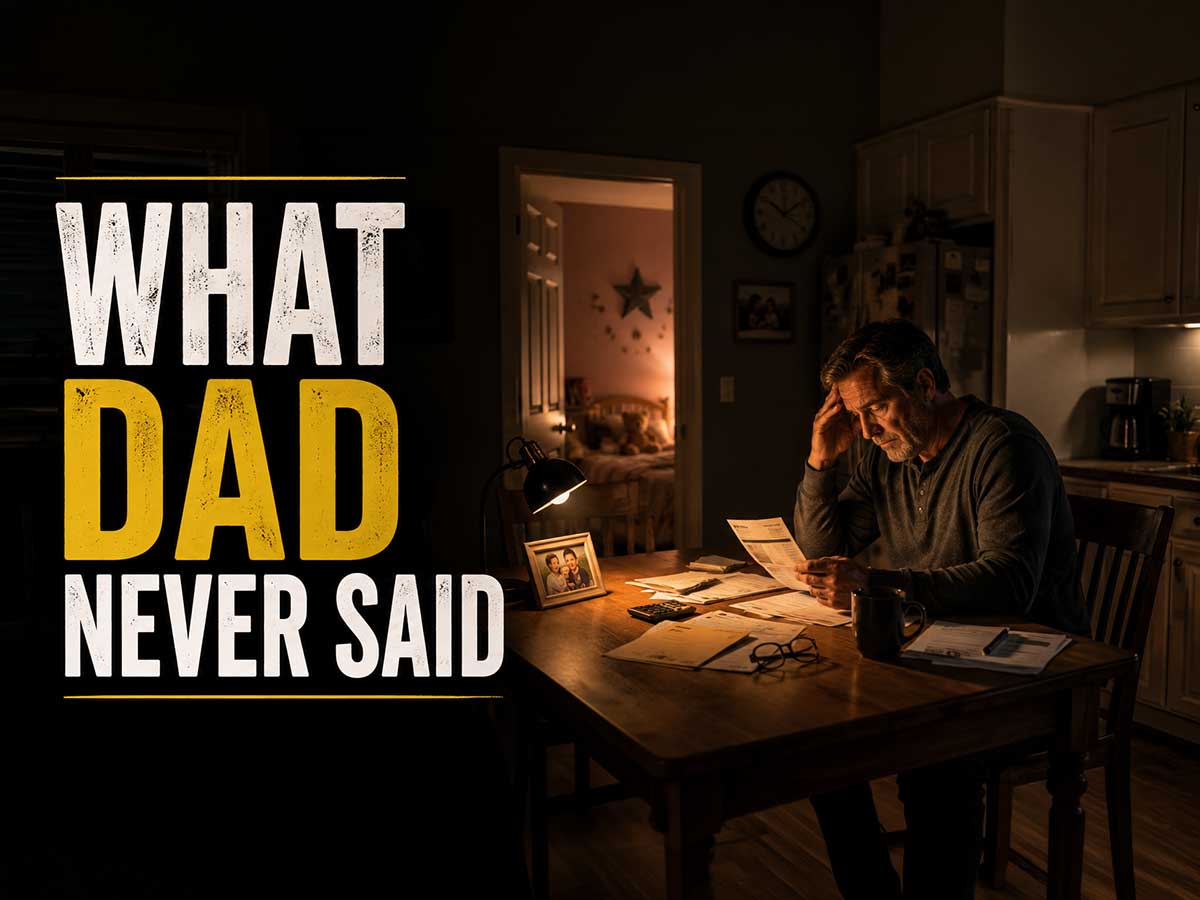
A father can spend his whole life trying to be strong, then quietly wonder if anyone noticed what it cost him.
He may not ask for praise.
He may not ask for comfort.
He may not know how to explain the weight he carried.
So he keeps going.
He works. He fixes. He drives. He pays. He worries. He stays awake. He gives advice too sharply, apologizes too rarely, and loves more deeply than his words can carry.
But children need more than hidden love.
They need to hear it.
They need to feel it.
They need to know that the silence was not rejection, that the rules were not hatred, that the tiredness was not lack of care.
And fathers need something too.
They need to know they were more than useful.
They need to know their children saw the burden.
They need to know their sacrifices did not vanish into ordinary life unnoticed.
A father may act casual when you thank him. He may joke. He may change the subject. He may wave his hand and say, “It was nothing.”
But it was not nothing.
It was his time.
His body.
His dreams.
His sleep.
His youth.
His quiet prayers.
His private fears.
His hope that you would have a better life than he did.
No father is perfect. Some wounds still need honest words. Some relationships may need space, time, and careful repair. Gratitude does not erase pain. Pain does not erase sacrifice.
Both can be true.
A child can say, “Dad, some things hurt me, and I still see what you carried.”
A father can say, “I loved you, and I wish I had shown it better.”
A family can begin again, not by pretending the past was easy, but by refusing to let silence have the last word.
The best time to speak is before the final goodbye.
Call him.
Thank him.
Ask about his life.
Tell him what you finally understand.
Let him tell his stories, even the ones you have heard before.
Let him be more than the man who provided.
Let him be known.
And if you are the father, do not make your children guess forever.
Say the love.
Offer the apology.
Give the blessing.
Tell them you are proud.
Tell them you were scared too.
Tell them they made your life heavier in some ways, but more meaningful than they may ever know.
A father’s silence may have begun as sacrifice.
But love becomes a greater gift when it finally finds a voice.
Short Bios:
Atticus Finch is the quiet moral father from To Kill a Mockingbird. He represents patience, dignity, justice, and the kind of fatherhood that teaches through example more than force. In this conversation, he helps separate true strength from emotional silence.
Tevye is the loving, humorous, worried father from Fiddler on the Roof. He carries tradition, faith, fear, and deep affection for his daughters. His voice brings warmth and humanity to the struggle of fathers who love deeply but do not always know how to let go.
George Bailey is the self-sacrificing man from It’s a Wonderful Life. He gives up personal dreams again and again for family and community. In this conversation, he speaks for fathers who become useful to everyone, then quietly wonder whether their own lives still matter.
King Lear is the tragic father from Shakespeare’s King Lear. He represents pride, regret, emotional blindness, and love understood too late. His presence reminds us that fathers can lose closeness when they demand honor but fail to offer humility.
The Modern Working Father represents everyday dads who carry bills, pressure, long hours, family needs, and private fear. He is not famous or legendary. He is the ordinary man who may hide stress so his children feel safe, yet still hopes one day they will see what he carried.
Leave a Reply