

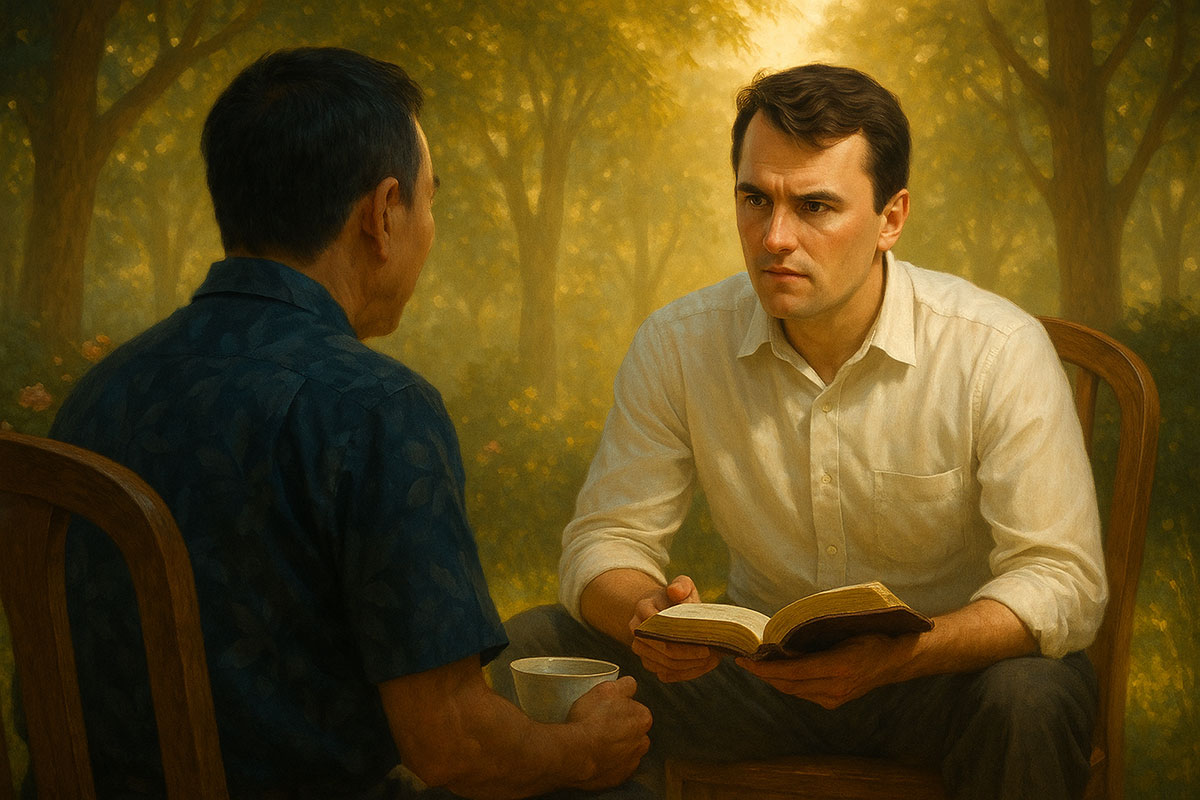
Tonight we’re introducing someone many of you may never have heard of. His name is Saito Hitori. He was one of Japan’s most successful entrepreneurs—a billionaire, but also a teacher who devoted his life to helping ordinary people find joy.
What made him different wasn’t just his wealth. It was his message: don’t take life too seriously. He believed that faith, work, even struggle, become lighter and more powerful when you add joy and gratitude.
Now, this doesn’t replace Christian faith—in fact, it can enrich it. Jesus said, ‘My yoke is easy, and my burden is light.’ Hitori’s message echoes that truth in his own simple way.
So as you hear his words tonight, think of him not as a preacher, but as a friend who reminds us that even in the hardest times, God smiles when we smile.
(Note: This is an imaginary conversation, a creative exploration of an idea, and not a real speech or event)

Scene 1: The Weight of Serious Faith
Setting:
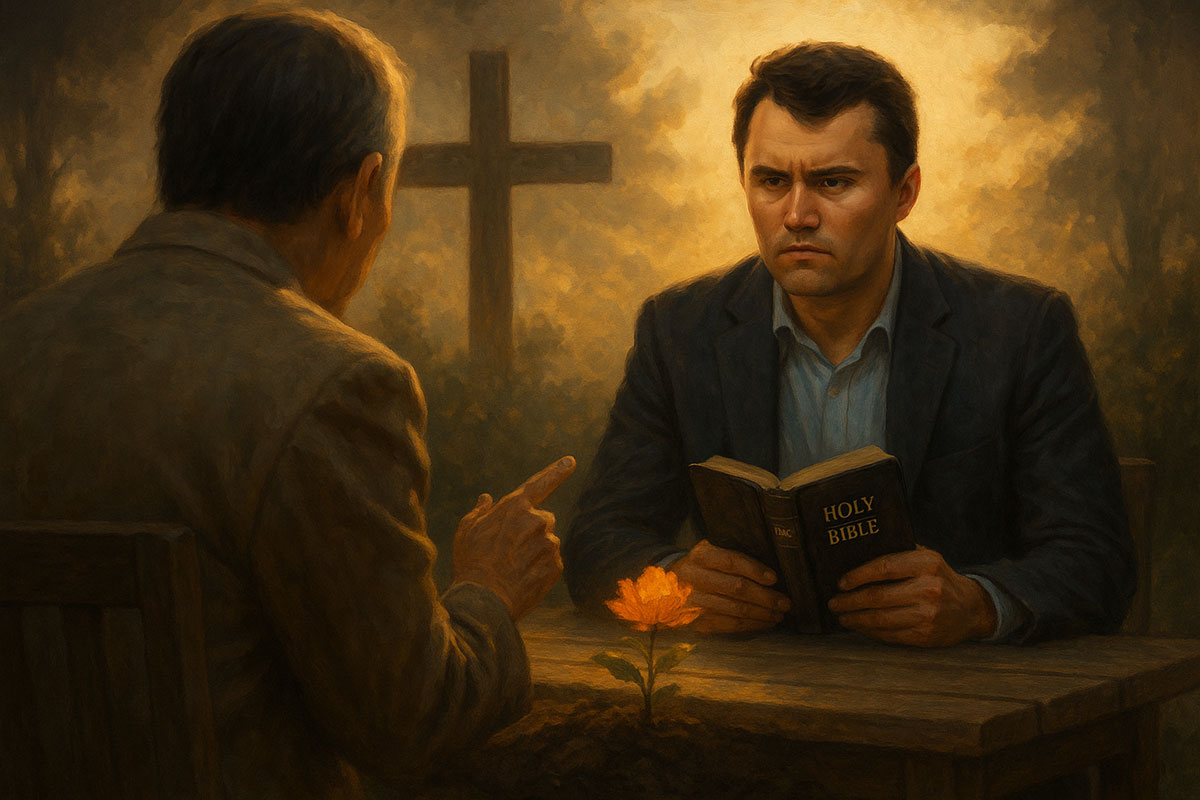
A bright garden in the afterlife. Charlie sits upright, Bible open, eyes sharp, ready for a debate. Hitori strolls in with a relaxed smile, holding a cup of tea.
Charlie:
Mr. Hitori, faith is serious business. Jesus suffered and died on the cross. If I don’t take that with absolute gravity, I dishonor him. Faith requires weight, responsibility, and solemnity. Don’t you agree?
Hitori:
(smiling) I agree that Jesus suffered. But let me ask you, Charlie—why did children run to him? Why did crowds gather around him by the thousands? Do you think it was because he was always heavy and solemn… or because he shined with love and joy?
Charlie:
(leaning forward, debating tone) Love, yes. But that love was proven by his willingness to suffer. The seriousness of faith gives it credibility. Without the cross, there is no resurrection. Without weight, there is no substance.
Hitori:
(chuckling softly) True, without the cross there is no resurrection. But let’s not stop halfway. The cross was the soil—but the resurrection was the flower. You keep staring at the soil and calling it the point. I say, smell the flower.
Charlie:
(quick to counter) But suffering is what convinces people of the truth. If everything is light and playful, people won’t respect it. They’ll dismiss it as shallow.
Hitori:
Charlie-san, let me give you a picture. Imagine two preachers. One is solemn, heavy, and serious—he warns of judgment. The other radiates joy, laughs easily, and says, “God loves you so much.” Which one do people actually want to listen to again? Which one do children run toward?
Charlie:
(pause, slightly defensive) Seriousness still commands respect. Without it, faith risks being watered down.
Hitori:
Respect, yes. But do they feel drawn to you? Let me tell you something: respect can make people bow their heads, but joy makes them open their hearts. God doesn’t just want bowed heads—He wants shining hearts.
Charlie:
(silent for a moment, then smirks faintly) You argue well, Mr. Hitori. But isn’t this just making faith too easy?
Hitori:
No, Charlie. It’s not easy—it’s light. There’s a difference. The weight of faith shows devotion, but the lightness of faith spreads it. Jesus carried the weight so that you could carry the light.
Charlie:
(leans back, finally quiet, but eyes still debating) That… is an interesting way to put it.
Hitori:
(smiling warmly) You don’t have to drop the seriousness completely. Just remember—it’s not the whole story. The cross was heavy, but the kingdom is light.
Scene 2: Winning vs. Shining
Setting:
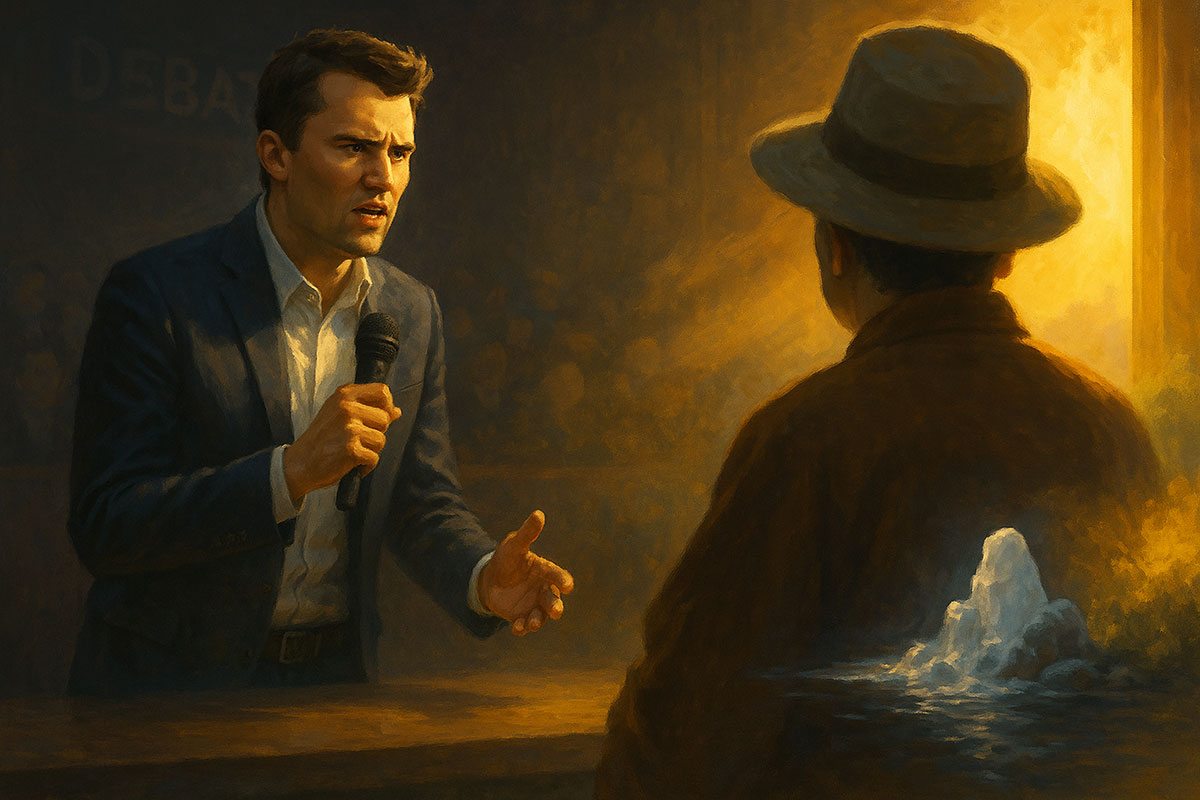
The afterlife garden glows with soft golden light. A gentle breeze stirs the trees. Charlie sits forward, energized, Bible still in hand, eyes sharp like he’s back on a debate stage. Hitori pours tea calmly, smiling as if time itself has slowed down for him.
Charlie:
Mr. Hitori, I spent my life in debate halls and on stages. Winning wasn’t just about pride—it was about defending truth. When I won, lies were exposed. When I lost, falsehood spread. Surely you agree: winning matters.
Hitori:
(smiling, unbothered) Winning has its place. But Charlie, let me ask—when you won, what happened to the person you defeated?
Charlie:
They lost. And hopefully, they realized the strength of my arguments. The whole point was persuasion through force of reason.
Hitori:
(laughs softly) Sometimes they changed, yes. But more often, they hardened their hearts. They walked away bruised, not warmed. You won their mind for a moment, but did you ever win their heart?
Charlie:
(confident, leaning in) Warm hearts are not enough. Hearts can be deceived. Sharp minds cut through deception. That’s why I fought. That’s why I debated.
Hitori:
(smiling playfully) Then tell me, Charlie—has the sun ever argued with ice to make it melt? Or did it just shine?
Charlie:
(frowning, caught but not conceding) Clever metaphor. But truth still needs defenders. Without force, it’s ignored. Without debate, lies multiply.
Hitori:
Yes, but force creates enemies. Truth doesn’t always need defenders—it needs witnesses. Light doesn’t argue with darkness; it simply shines, and darkness disappears.
Charlie:
But strength commanded respect. People listened to me because I stood firm. Without that, faith looks weak.
Hitori:
Respect can make people bow. But warmth makes people stay. You can push someone down with strength, but you can only lift them up with joy. Which do you think heaven values more?
Charlie:
(sits back, arms crossed, still sharp) So you’re saying all my victories were meaningless?
Hitori:
Not meaningless—just incomplete. Your debates planted seeds. But seeds don’t grow under a spotlight of arguments. They grow under the warmth of light. You’ve mastered the art of winning, Charlie. Now it’s time to master the art of shining.
Charlie:
(quiet, then smirks faintly) Shine, not win… You make it sound so easy.
Hitori:
(grinning) Oh no. Shining is harder than debating. But it’s also eternal.
Scene 3: The Tragedy of the Cross
Setting:
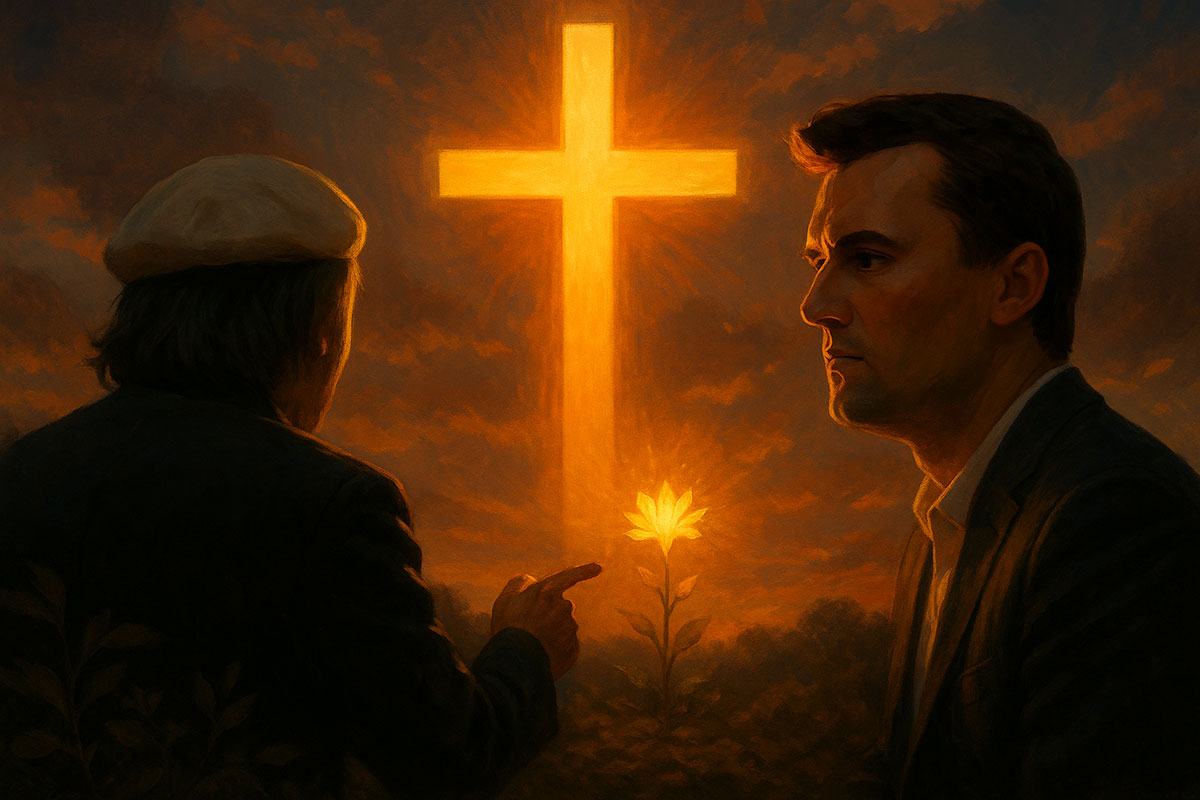
The garden grows quieter. A soft light glows from the horizon, almost like a sunrise. Charlie’s grip on the Bible tightens, his voice more solemn now. Hitori leans back, eyes gentle, as though listening with both ears and heart.
Charlie:
Mr. Hitori, the cross is central to everything. The suffering of Jesus was the ultimate proof of truth. Without tragedy, there is no redemption. If I honored anything in life, it was that sacrifice.
Hitori:
(nods slowly) Yes, the cross is no small thing. But tell me, Charlie—why stop at tragedy? The cross was the soil. The resurrection was the flower. You’re staring at the soil, but heaven is filled with blossoms.
Charlie:
(leans forward, firm) But it’s the tragedy that convinces people of the seriousness of faith. Joy alone can’t carry the weight of truth. Without the suffering, it feels shallow.
Hitori:
(smiling softly) And yet, what do people remember at Easter—the sorrow of Friday, or the joy of Sunday morning? Suffering is the path, but joy is the destination. Would you build a house on the road instead of where it leads?
Charlie:
But suffering proves devotion. It shows authenticity. Without sacrifice, love is cheap.
Hitori:
Of course sacrifice has value. But the purpose of sacrifice is not to glorify pain—it’s to give birth to love. Jesus didn’t suffer so people would live in sorrow. He suffered so they could live in joy. If you only carry the pain, you’re carrying half the gospel.
Charlie:
(defensive, but searching) Half the gospel? No… I taught people to take the cross seriously. Without that, they’d forget what it cost.
Hitori:
Charlie-san, remembering the cost is good. But don’t confuse the price with the gift. The price was suffering. The gift was love, forgiveness, and joy. Which one do you think heaven wants you to pass on?
Charlie:
(quiet, wrestling) So you’re saying… my focus was too heavy? That I clung to the soil, but missed the flower?
Hitori:
(smiling kindly) Exactly. The soil is important—but God planted it so you could see the flower. You honored the weight of the cross. Now learn to celebrate the light of the resurrection.
Charlie:
(silence, then a faint smile) Hm. You’re a tough opponent, Mr. Hitori. You debate without debating.
Hitori:
(laughs warmly) No, Charlie. I don’t debate. I shine.
Scene 4: Legacy in Death

Setting:
The garden is now bathed in golden light, as if the whole place glows with memory. In the distance, faint echoes of church bells can be heard, as though carried by the wind from the living world below. Charlie’s posture is proud but reflective. Hitori sits calmly, looking at the bells with a soft smile.
Charlie:
Mr. Hitori, even after my death, people are going to church. They’re reading the Bible, many for the first time. Isn’t that proof that my life had meaning? My influence endures.
Hitori:
(nods gently) Yes, Charlie, that is good. You planted seeds, and now people are curious about God. That is no small thing. But tell me—what kind of faith will they grow into?
Charlie:
(sure of himself) Serious faith. Strong faith. If they see my example, they’ll know truth requires sacrifice, discipline, and conviction. That’s the legacy I’ve left.
Hitori:
(smiling softly) Conviction is important. But let me ask: if their faith becomes too heavy, will they last? Or will they break under the weight?
Charlie:
(leaning forward, firm) Better to be serious than casual. A faith without backbone collapses. The church must stand strong, even if it feels heavy.
Hitori:
But Charlie, strength is not the same as heaviness. Think of a tree—if it grows stiff and unbending, the first storm will break it. But if it’s rooted deep and still able to sway, it will endure. Shouldn’t faith be the same?
Charlie:
(frowning) But people respected my strength. They listened because I was uncompromising. Isn’t that what drew them?
Hitori:
Respect may draw their heads, but joy draws their hearts. You’ve seen it—many respected you, but some also feared you. Influence that breeds fear may last a season. Influence that breeds joy lasts for generations.
Charlie:
(silence, his pride tested) So you’re saying my legacy might be incomplete?
Hitori:
Not incomplete—unfinished. Your death has opened doors. Now, the question is: will those who walk through carry only weight, or will they carry light? Your legacy is not just what you taught, but what they feel when they remember you.
Charlie:
(quiet, almost reluctant) I wanted them to remember my strength.
Hitori:
And they will. But strength without joy is a burden. Add joy, and it becomes a blessing. Imagine if the people who entered church because of you not only bowed their heads—but lifted their hearts, too. That would be the legacy heaven celebrates.
Charlie:
(exhales slowly, then smirks faintly) Hm. You always turn the blade around. I argue for strength, and you tell me joy is stronger.
Hitori:
(laughs softly) Because joy is strength, Charlie-san. The kind that never breaks.
Scene 5: From Debate to Dialogue
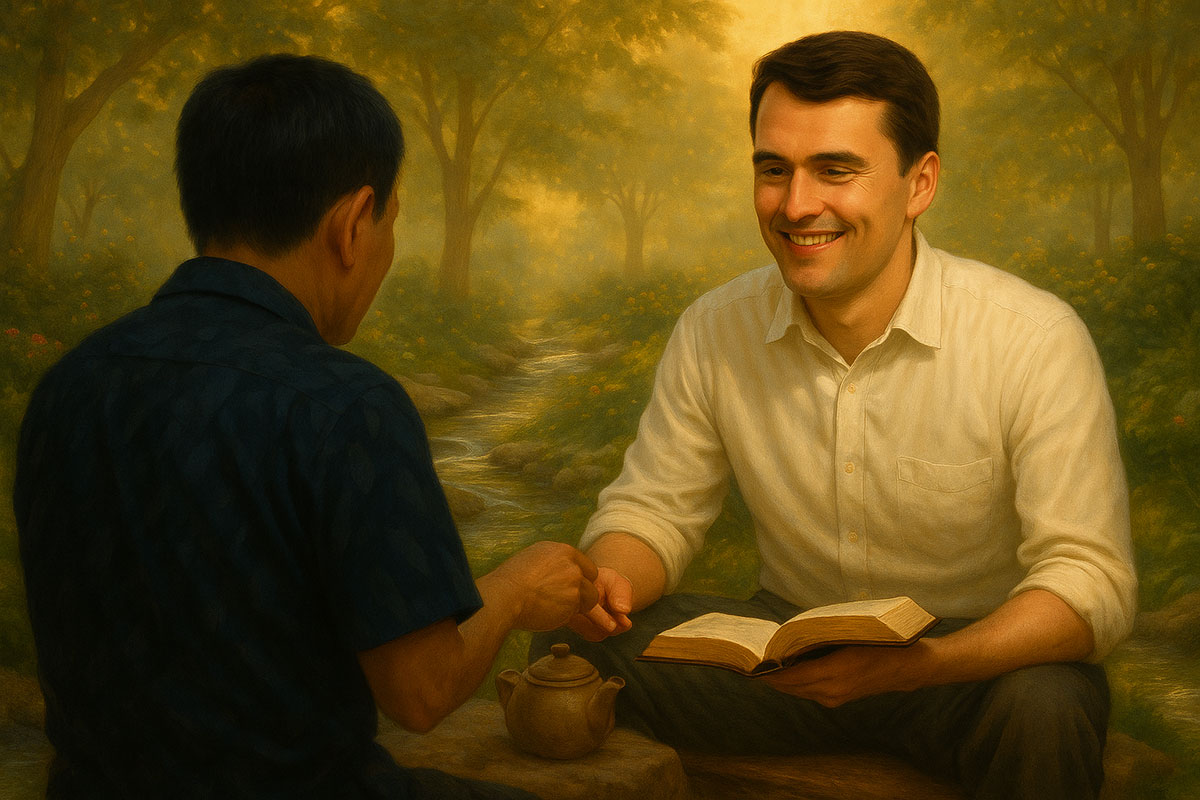
Setting:
The garden feels brighter now, almost as if the conversations themselves have softened the air. A gentle stream runs nearby, its water shimmering with light. Charlie looks intense, but there’s a flicker of curiosity behind his debating eyes. Hitori remains calm, sipping tea, smiling as if nothing can disturb his peace.
Charlie:
Mr. Hitori, I’ll never apologize for debating. Debate sharpens truth. It forces people to defend their positions. Without debate, the world grows lazy. I always sought to win, because winning meant truth prevailed.
Hitori:
(smiling) Debate sharpens, yes. But Charlie, too much sharpening and the blade cuts the hand that holds it. Truth doesn’t only need to be sharp—it needs to be shared.
Charlie:
(leaning in, quick) Shared? Dialogue without conflict is weak. People don’t change unless they’re challenged. I listened to my opponents, but only to find the flaw in their argument. That’s how truth is protected.
Hitori:
(laughs softly) And yet, did you notice how often the flaw you found closed their heart instead of opening it? You won many arguments. But how many friendships?
Charlie:
Friendships don’t matter if truth is lost. Better to win an argument and save the truth than lose and let falsehood spread.
Hitori:
But Charlie, sometimes the only way to save truth is to stop fighting over it. A flower doesn’t argue with the weeds—it just grows, and the weeds eventually wither in its shade. Dialogue is not weakness—it’s growth.
Charlie:
(gritting his teeth, stubborn) But I was good at debating. It was my strength. Without that, who was I?
Hitori:
(smiling kindly) You were a warrior, Charlie-san. But even warriors must one day lay down their swords. The greatest debate is the one you finally lose—the debate against joy. Lose that one, and you win eternity.
Charlie:
(quiet, almost reluctant, then a faint smile) You mean… stop trying to win, and just shine?
Hitori:
Yes. Winning ends with applause. Shining continues forever. God doesn’t measure how many debates you won—He measures how much light you left behind.
Charlie:
(sighs deeply, then chuckles) You’ve beaten me without ever raising your voice.
Hitori:
(laughing warmly) That’s because I wasn’t trying to beat you, Charlie. I was trying to walk with you. Debate ends in victory or defeat. Dialogue ends in friendship. Which do you think heaven prefers?
Charlie:
(smiling now, eyes softer) Dialogue. Maybe for the first time… I’m ready to stop winning.
Final Thoughts
Charlie leaned back by the stream, the microphone finally resting beside his Bible. His smile looked almost new, like he’d just discovered a muscle he hadn’t used enough in life.
Hitori poured another cup of tea, his back turned in that familiar way. “See, Charlie-san? You just lost the most important debate of your career. And losing never looked so good.”
Charlie laughed, shaking his head. “So my big victories—those stages, those banners, all that energy—and my greatest lesson is… to lighten up?”
Hitori grinned. “Exactly. You once put up ‘Prove me wrong.’ I would have written ‘Let’s Smile Together.’ Much less chance of being shot at, don’t you think?”
Charlie burst out laughing, harder than he had in years. “Now that’s a banner I could live with.”
And in that golden garden, the weight of arguments melted into the warmth of dialogue. The cross was still there, but so was the flower. Charlie’s seriousness finally gave way to joy.
Heaven didn’t need him to win anymore—it just wanted him to shine.
Short Bios:
Charlie Kirk
Charlie Kirk (1993–2025) was an American conservative activist, writer, and founder of Turning Point USA, an organization focused on engaging young people in politics and cultural debates. Born in Arlington Heights, Illinois, he skipped a traditional college path and instead dedicated his life to public speaking and grassroots activism. By his early twenties, he had become one of the most recognized conservative voices in the United States, appearing frequently on television, radio, and digital platforms.
Kirk was known for his sharp debating style, often setting up public conversations with banners like “Prove me wrong” that invited confrontation as much as dialogue. Supporters admired his unapologetic defense of free markets, faith, and conservative values, while critics saw him as polarizing. Beyond politics, he often spoke openly about his Christian faith and the centrality of Jesus’ sacrifice on the cross, which he considered the ultimate truth of life. His unexpected death in 2025 sparked both mourning and controversy, but also inspired many first-time churchgoers and Bible readers to reflect on questions of faith, legacy, and conviction.
Saito Hitori
Saito Hitori (born 1948) is a Japanese businessman, philanthropist, and one of Japan’s best-selling self-help authors. Rising from modest beginnings, he built a fortune through cosmetics and direct sales, eventually becoming one of the country’s wealthiest entrepreneurs. Yet his true influence came not from his wealth, but from his words. Despite rarely appearing in public, he wrote dozens of books that sold millions of copies, each filled with his trademark humor, simplicity, and spiritual encouragement.
Hitori’s teachings center on the idea that life should not be taken too seriously. He often reminded his audiences that over-seriousness leads to unhappiness, while joy, laughter, and gratitude create resilience and draw people together. Many of his sayings echo spiritual truths in simple language, such as his belief that “God smiles when we smile.” To those weighed down by life’s struggles, he offered not complicated doctrines but small, practical steps to lighten the heart. In Japan, he is revered as both a successful businessman and a healer of spirits, blending prosperity with kindness. Internationally, his words have resonated with readers who seek balance between faith, daily life, and joy.
Leave a Reply