
Dr. Elias Moretti, Historian of Early Christianity
Before you enter this sacred monologue, understand:
These 14 steps — and the one that followed — were never meant to be just religious ritual.
They were memory carved into movement.
In the centuries after Jesus of Nazareth was crucified under Roman rule, early believers in Jerusalem retraced His path not to glorify suffering, but to remember how far love would go.
Over time, the route known as the Via Dolorosa — the Way of Pain — evolved into what we now call the Stations of the Cross.
Each station became a window.
Not just into history — but into the soul of a man who was both divine and deeply human.
What you’re about to hear is not theology.
It’s heartache.
It’s a man’s whispered cry under the weight of a world that did not know what it was doing — and still, he loved it.
If you’ve ever felt abandoned, misunderstood, crushed under pressure, or stripped of dignity —
let His voice speak into your own pain.
Not with judgment,
but with deep, unshakable solidarity.
This is not just Jesus’ journey.
This, somehow, is ours too.
(Note: This is an imaginary conversation, a creative exploration of an idea, and not a real speech or event.)

Station 1. I Am Condemned to Death
They called for my blood as if it were sport.
Just days ago they waved palms in joy, shouting “Hosanna!”
Now they scream “Crucify him!”
My heart didn’t break because I feared death.
It broke because I came to bring love, and they chose hatred instead.
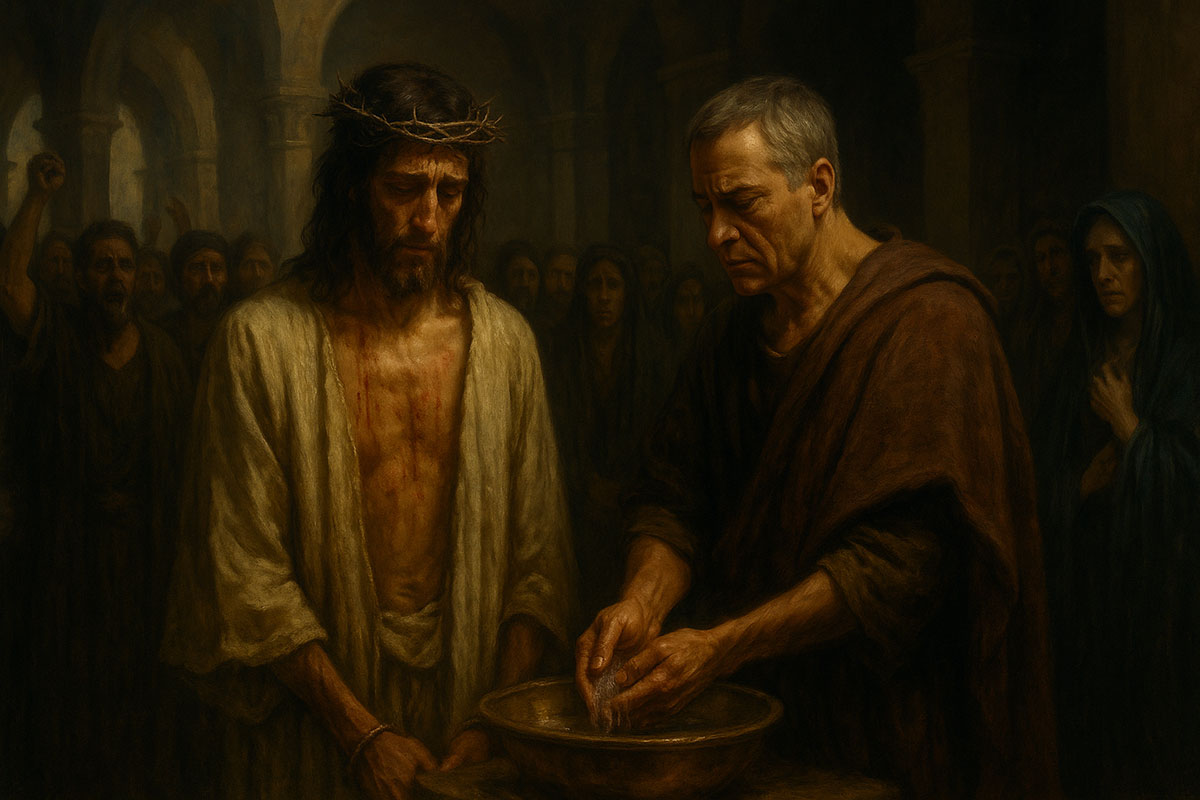
Pilate looked me in the eyes — and he saw something he couldn’t explain.
He saw innocence. Maybe even truth.
But power meant more to him than justice.
And so, with a shallow wash of his hands, he sent me to die.
Not as a man, not as a king, not as a teacher — but as a criminal.
I looked at the crowd — not in anger, but in grief.
And I whispered in my heart:
“Even now… I forgive you.”
Station 2. I Take Up My Cross

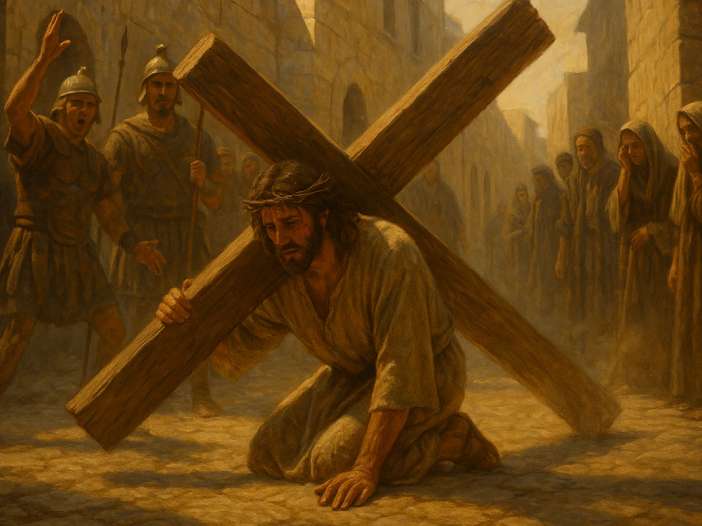
They placed the wood upon my shoulders like it belonged to me.
And in a way, it did.
Not because I deserved it, but because I chose it.
Every splinter pierced through torn skin.
My back was already scourged — bleeding, shredded.
The weight wasn’t just physical — it was the burden of every human ache, every betrayal, every forgotten prayer.
This wasn’t just a Roman execution.
This was the pain of centuries.
Of every mother who ever lost a child.
Of every soul who ever felt alone.
And I carried it — with trembling legs and a willing heart.
Station 3. I Fall the First Time
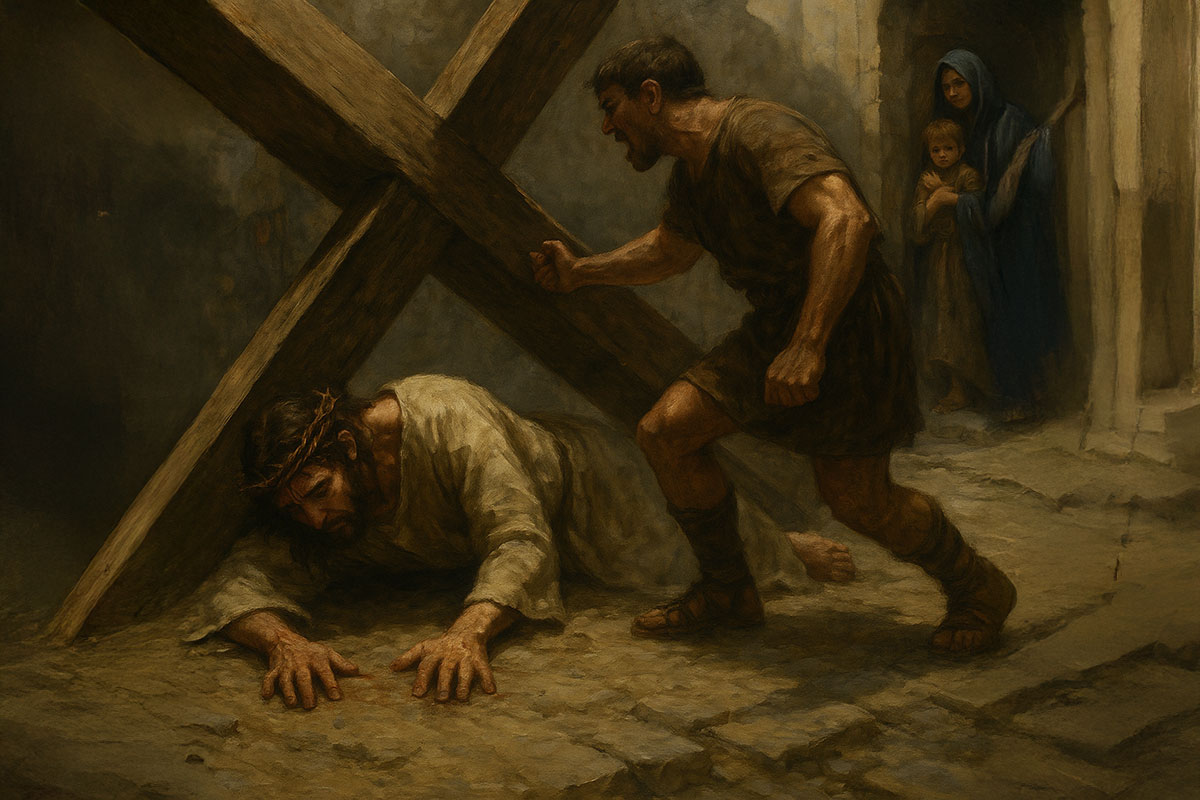
The earth came up fast — hard and dirty.
I collapsed beneath the cross like a slave.
My arms scraped stone, and my face slammed into dust.
I heard laughter. I heard disgust.
Some cheered at my failure.
But deeper than the bruises was the ache in my soul:
“Must I carry this alone?”
I could feel the darkness pressing in,
the same darkness you feel when you wonder if God has forgotten you.
But I rose, gasping.
Not because I was strong —
but because love lifted Me again.
Station 4. I Meet My Mother
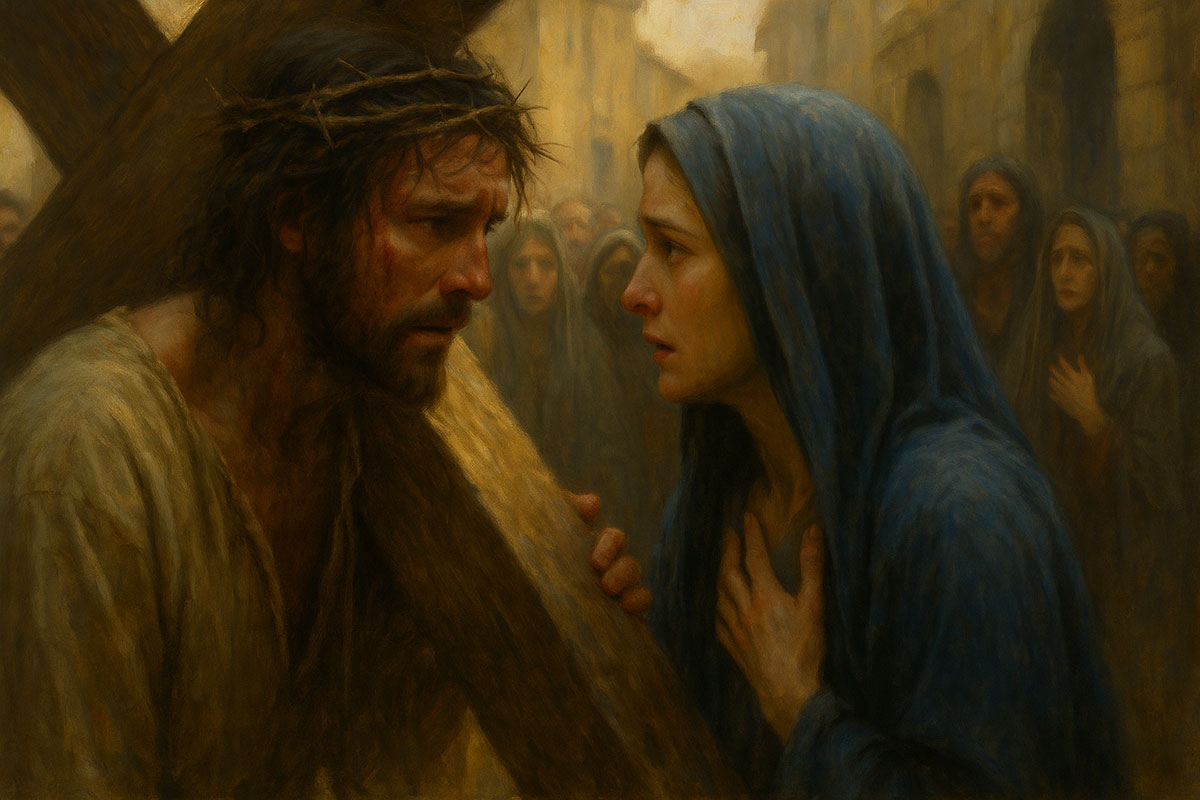
I looked up.
And there she was.
My mother.
She didn’t cry out.
She didn’t faint.
She just looked at me — and in that gaze, the entire weight of a mother’s heart poured over me.
She had held me in Bethlehem.
Now she watched me stagger toward death.
She couldn’t stop it.
She knew I had to do this.
But God… how it broke us both.
I wanted to run to her and collapse in her arms.
But I couldn't.
All I could do was lock eyes with her and say, without words:
“I love you. I’m still your son.”
Station 5. Simon Helps Me Carry the Cross

I heard a voice bark: “You! Help him!”
Simon was pulled from the crowd — unwilling, unsure.
He looked at me as if I were already dead.
But he shouldered the cross.
He felt its weight.
He felt my blood on his skin.
And in that shared burden, something sacred passed between us.
He didn’t know he was carrying the sins of the world.
But I did.
And I was grateful.
Not for the relief — but for the fact that, in my weakest hour, I wasn’t completely alone.
Station 6. Veronica Wipes My Face
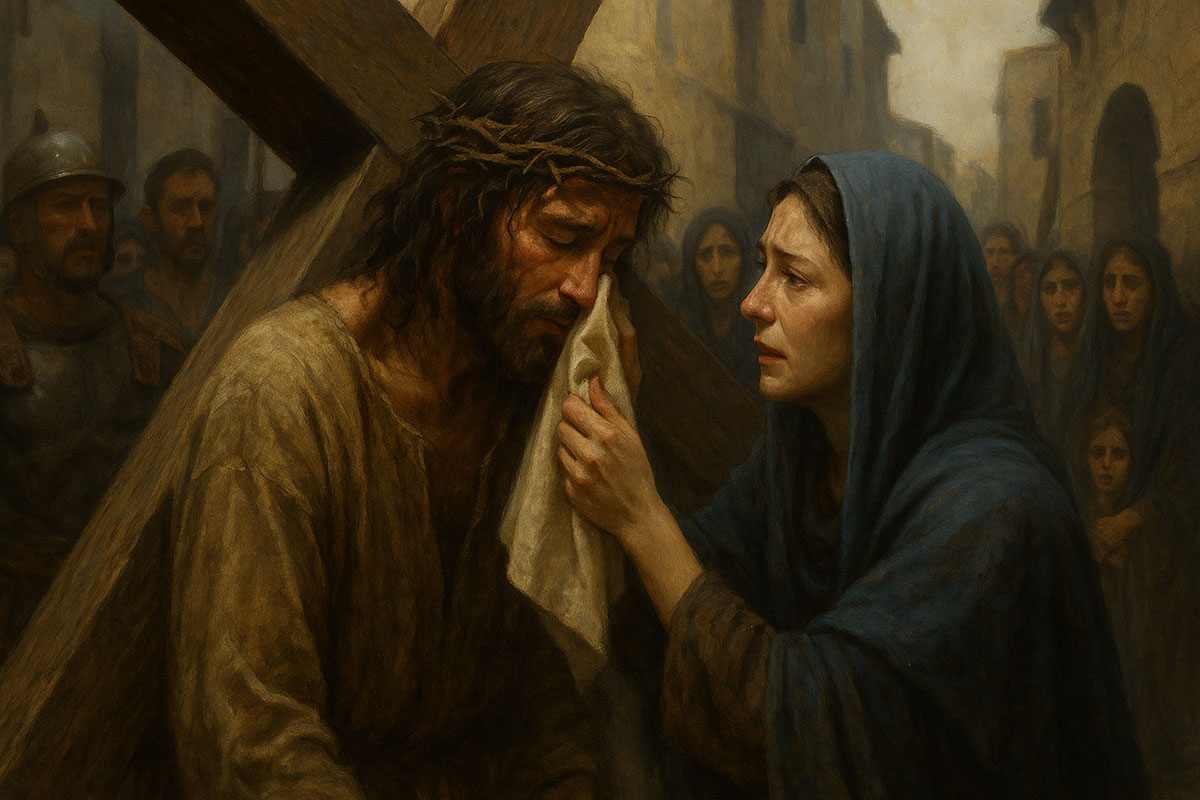
Out of the crowd came a woman — no fear, only compassion.
She stepped through soldiers, through spit, through hate.
And with a simple cloth, she wiped my face.
Blood. Sweat. Tears.
A gesture so small… but to me, it was everything.
Her kindness was like water in a desert.
In a world that mocked me, she touched me as if I were still human.
Her cloth, now stained with my sorrow, became a holy relic.
Because in that moment, she saw my soul — not just my suffering.
Station 7. I Fall the Second Time
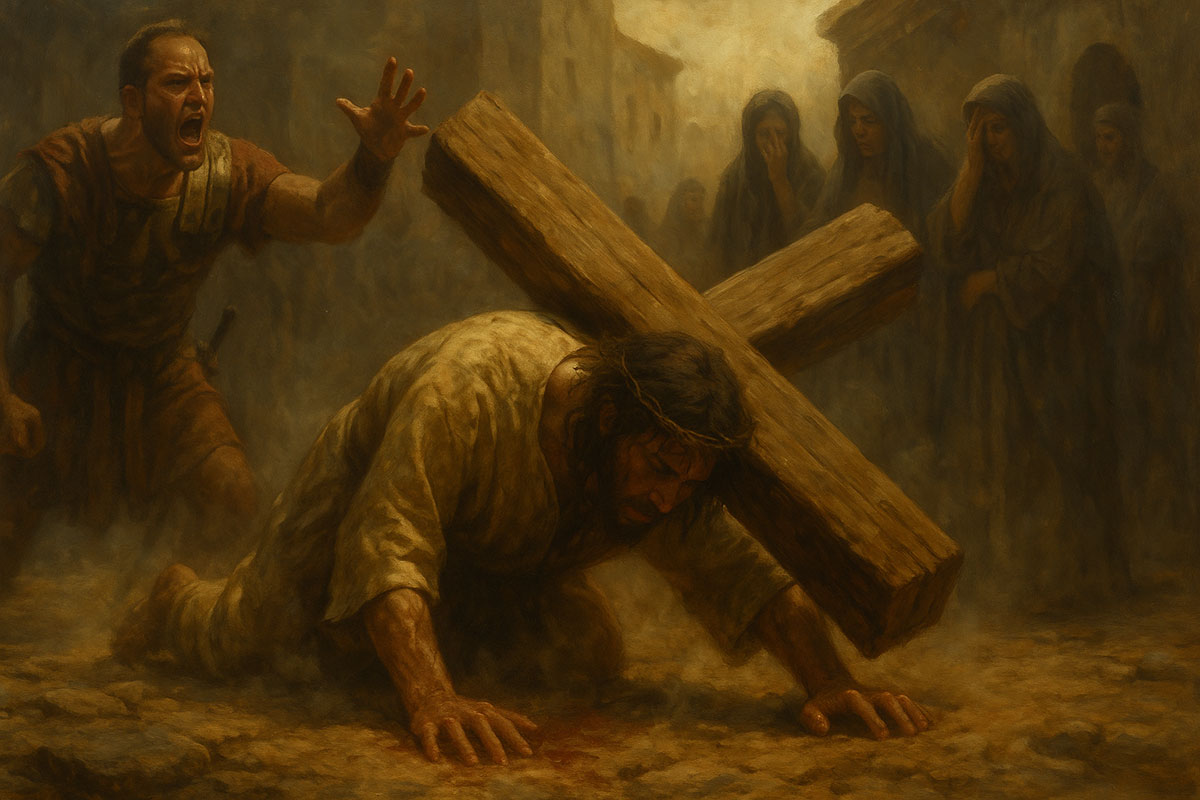
My knees shattered beneath me again.
I could hear the bones groan, the skin tear open.
The cross slammed onto my back as if to say, “You don’t rise again.”
But I did.
Because every time someone you love turns away from you — I carry that fall.
Every time you feel you’re too weak to go on — I carry that fall.
I didn’t get up because I had the strength.
I got up because you need to know that you can, too.
Station 8. I Speak to the Women of Jerusalem
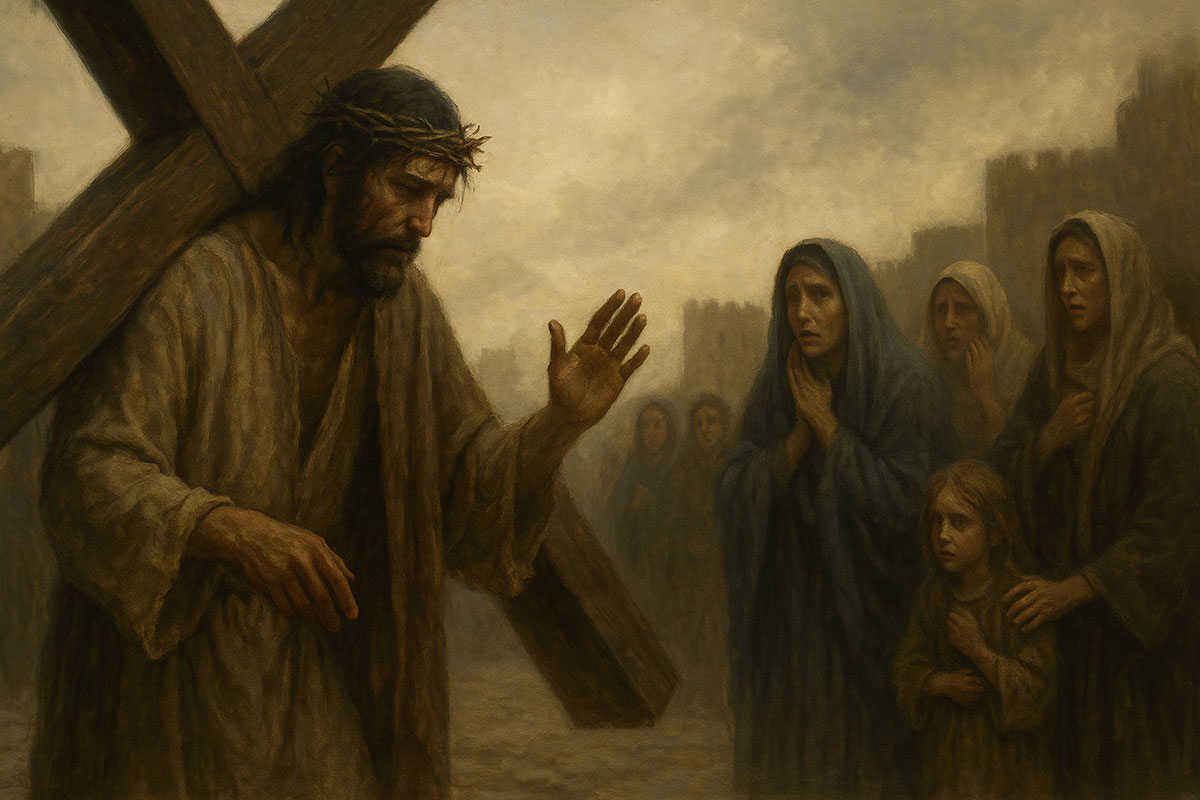
Their wailing reached me before their eyes did.
They wept for me — as if I were the only one suffering.
But I looked into their tear-streaked faces and saw generations ahead.
Wars. Division. Children lost.
“Don’t weep for me,” I said.
“Weep for what’s to come if hearts remain hard.”
Even in agony, I wasn’t thinking only of myself.
I thought of your children.
Your grandchildren.
I wanted them to know:
Love is still possible — even when the world is burning.
Station 9. I Fall the Third Time
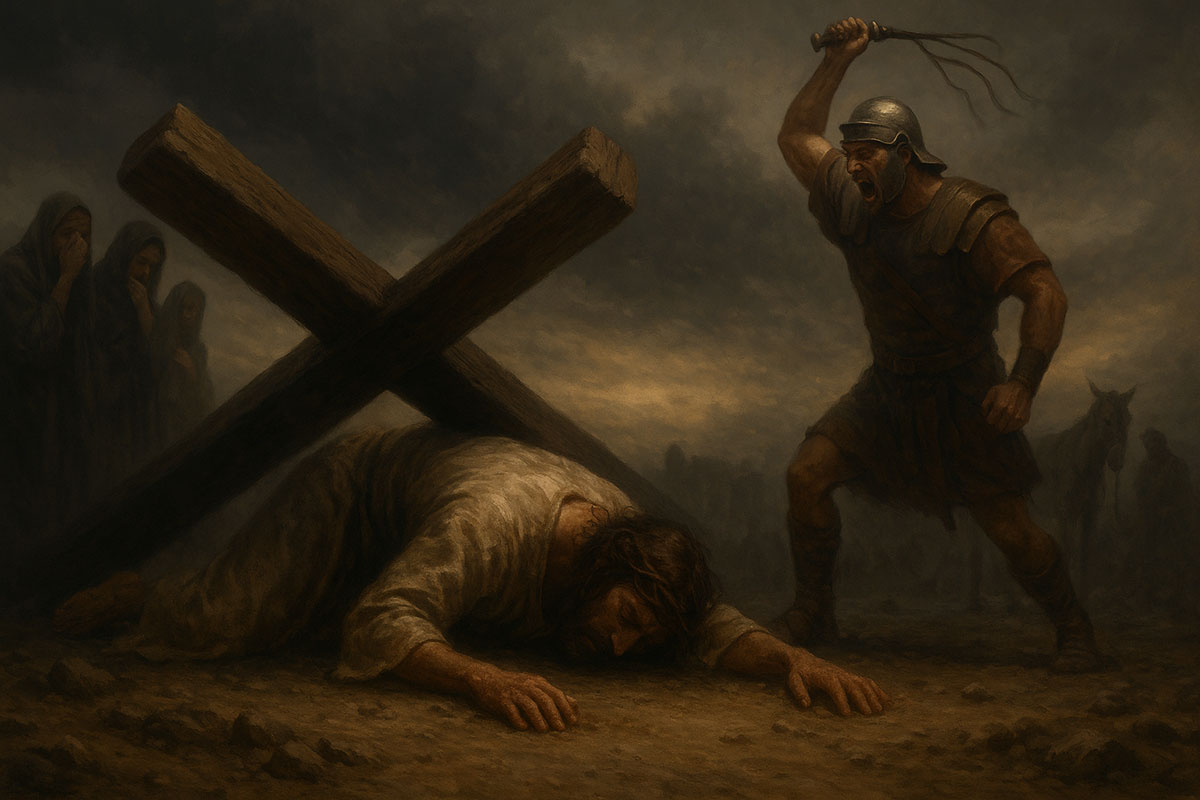
This fall wasn’t just physical — it was spiritual.
I felt the full weight of despair.
The kind you feel when every prayer seems unanswered.
When every friend has left.
When even God seems far away.
I lay there, crushed beneath pain and silence.
And I wept.
I really wept.
Because I knew some of you would feel this hopelessness one day.
And I wanted you to know — I’ve been there.
And I got up.
So you could, too.
Station 10. I Am Stripped of My Garments
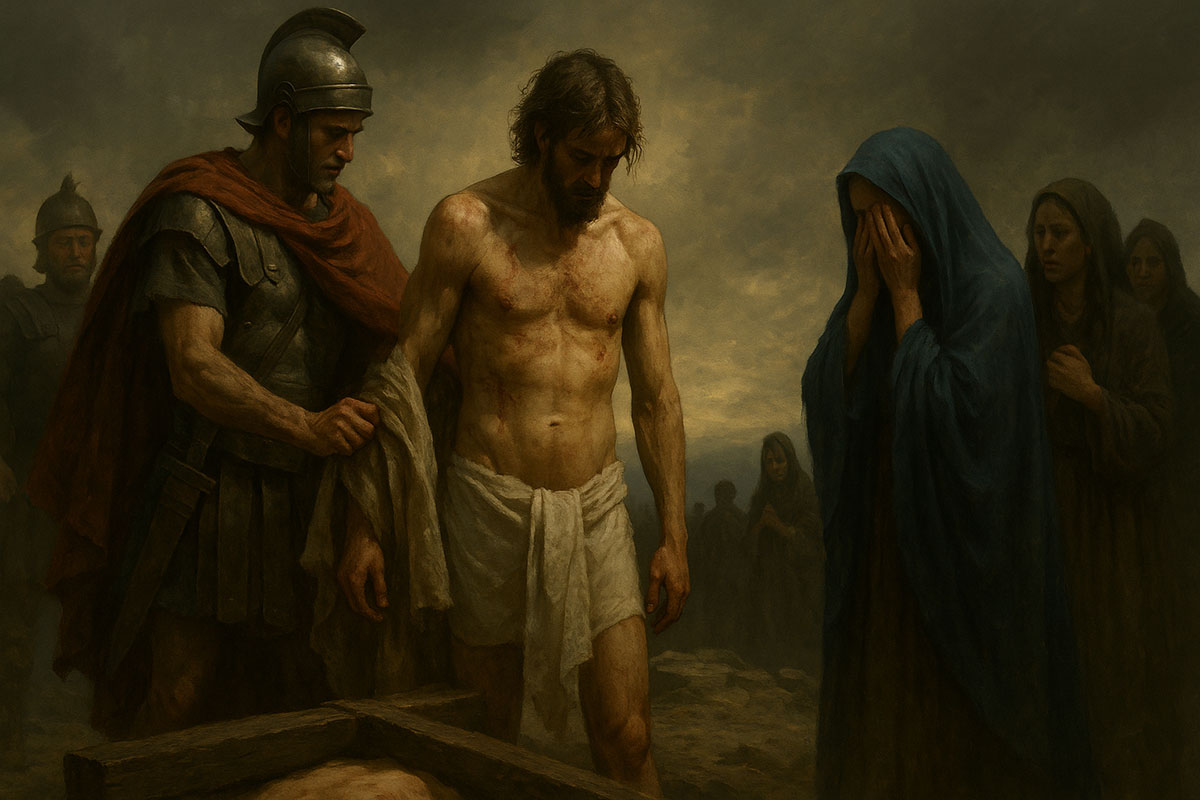
They tore away my clothes, laughing as they did it.
Not just to humiliate me, but to dehumanize me.
The King of Heaven — naked, exposed.
I felt every eye like a blade on my skin.
But deeper still was the wound of shame.
Have you ever been so vulnerable, you wanted to disappear?
So did I.
But I stood there, stripped of dignity,
because I had to show you:
There is no shame I won’t stand in with you.
Even when you feel unworthy — I am still with you.
Station 11. I Am Nailed to the Cross
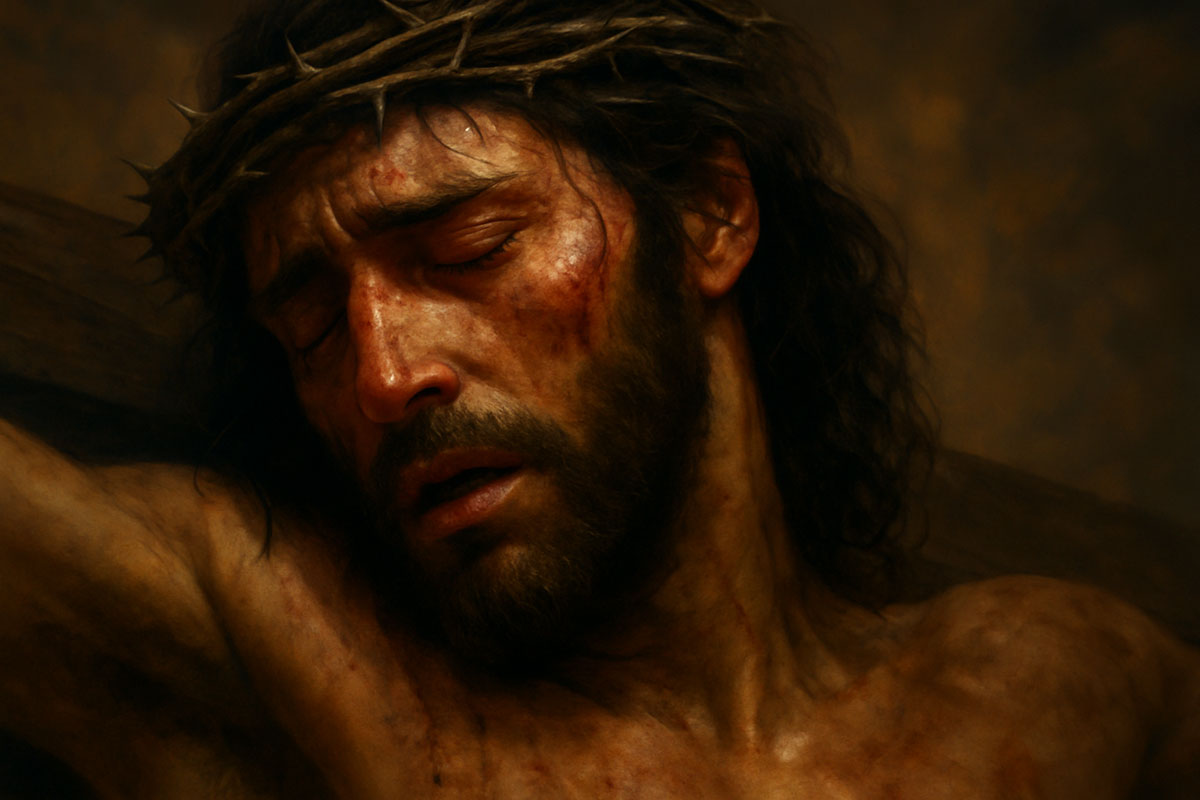
The first nail pierced my wrist,
and the pain shattered like lightning up my arm.
Then the second.
Then my feet.
It was more than pain.
It was invasion — my body being turned against me.
I could barely scream.
All I could do was breathe and bleed.
And yet — I looked down…
and I said the words that love demanded:
“Father, forgive them.”
Yes — even them.
Even now.
Station 12. I Die on the Cross
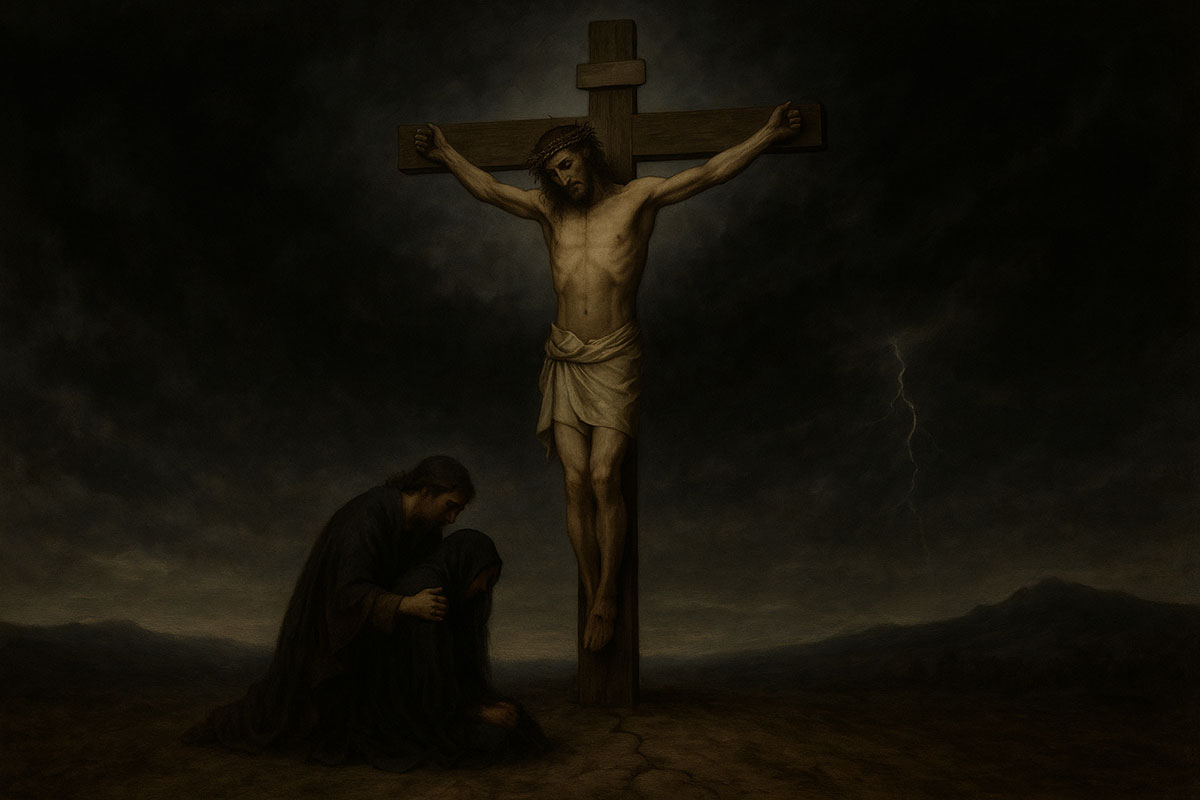
My lungs burned.
Each breath came slower, smaller.
The sky went dark.
The earth trembled.
And I cried out:
“Why have You forsaken Me?”
I wasn’t pretending.
I felt abandoned.
Completely.
Like so many of you do.
And in my final breath,
I said it —
“It is finished.”
Not a cry of defeat.
But of victory.
The war was over.
Love had won.
Station 13. I Am Taken Down from the Cross
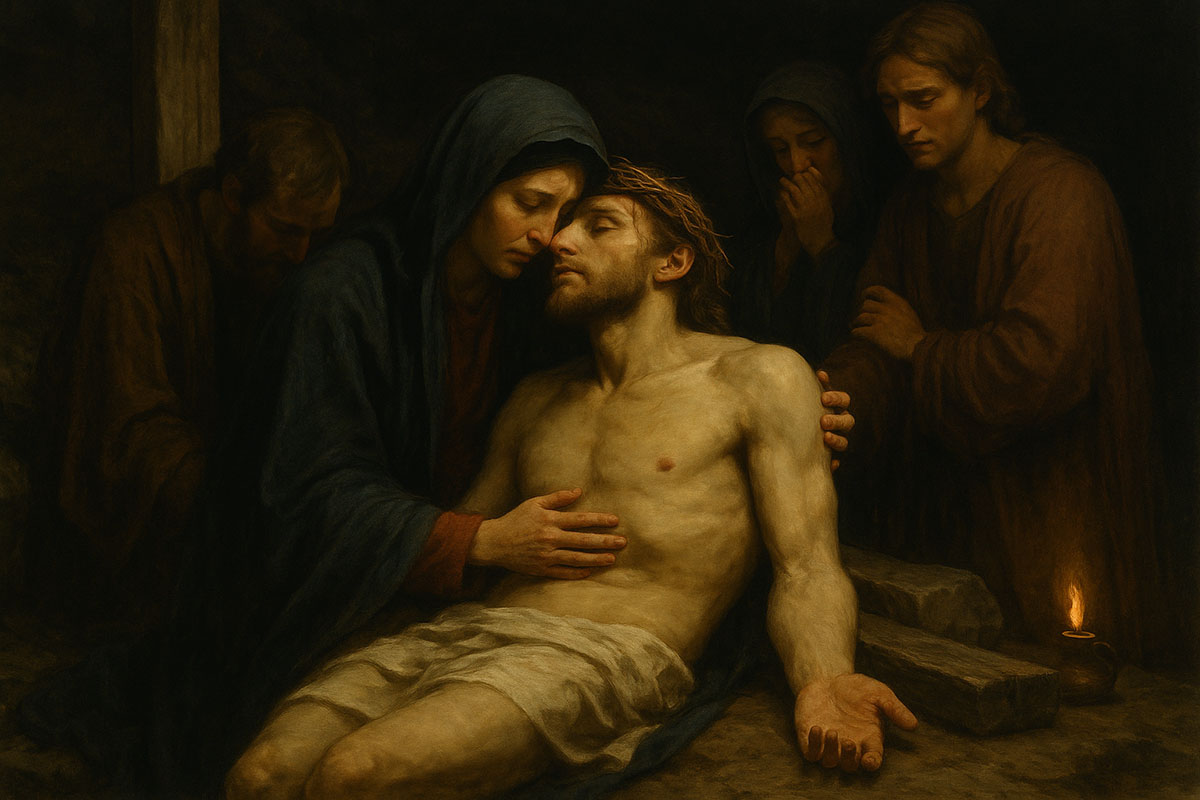
My body — so still, so cold — was lowered into trembling arms.
Mary held Me again.
Only this time, not as a newborn…
but as a broken man.
My hands, once outstretched to heal,
now limp.
My eyes, once full of light, now shut.
There was no movement.
No sound.
Just the sob of a mother.
And the silence of sacrifice.
Station 14. I Am Laid in the Tomb

The stone rolled shut.
Darkness wrapped around Me like a burial shroud.
It was over… or so they thought.
I had entered death itself.
Not to sleep,
but to unlock every door your soul might ever be trapped behind.
To whisper into the caverns of hell:
“You are still loved.”
Even in your darkest night,
I am there.
Final Thoughts – by Dr. Elias Moretti
You’ve just walked the bloodstained road through the eyes of the one who bore it.
And if you felt your heart ache,
if your throat tightened in any of those stations —
then you have not only seen Jesus…
You have seen yourself.The power of the Stations of the Cross is not in the ancient stones of Jerusalem,
but in the aching stones of our own hearts.
Because this journey didn’t end in a sealed tomb.
It ends in a breath —
a sunrise —
a whisper of resurrection.We carry crosses still.
Some heavy. Some invisible.
But this monologue leaves us with one truth:
No matter how far we fall,
no matter how dark the cave becomes —
love walks with us.
And one day,
that stone will roll away.
Short Bios:
Jesus of Nazareth
A Jewish teacher, healer, and spiritual leader from Galilee, Jesus is believed by Christians to be the Son of God and Messiah. His life of compassion, truth, and self-sacrifice culminated in His public execution by crucifixion around 30–33 CE. His journey to the cross, marked by silence, endurance, and forgiveness, remains central to Christian faith and devotion.
Mary, Mother of Jesus
A figure of quiet strength and deep faith, Mary endured the pain of witnessing her son's suffering. Revered for her purity and maternal devotion, she symbolizes the sorrow of all who grieve and the unwavering love of a mother who never turned away from her child’s agony.
Simon of Cyrene
A man from North Africa who was compelled by Roman soldiers to help Jesus carry the cross. Though initially reluctant, his act of support became a timeless symbol of shared suffering and unexpected grace.
Veronica
A woman from Jerusalem who, moved by compassion, stepped forward to wipe the sweat and blood from Jesus' face. Though not named in the Bible, her act of mercy became a beloved legend, representing courage, kindness, and the personal cost of compassion.
Pontius Pilate
The Roman governor of Judea who presided over Jesus’ trial. Though he declared Jesus innocent, he ultimately authorized the crucifixion under pressure from the crowd. His washing of hands became a lasting image of moral evasion and political compromise.
Roman Soldiers
Representatives of imperial power, the soldiers were responsible for carrying out Jesus’ scourging and execution. They appear as symbols of cruelty, obedience to authority, and in some moments, cold detachment — though one would later declare, “Truly, this was the Son of God.”
Mary Magdalene
A devoted follower of Jesus who stood by Him at the crucifixion and was present at His burial. Once healed by Him, she became one of His most faithful supporters and was the first to witness His resurrection. She embodies loyalty, redemption, and spiritual insight.
John the Apostle
The youngest of the twelve disciples, John remained with Jesus until the end. At the crucifixion, Jesus entrusted Mary to his care. His presence reflects love without fear, and his later writings helped shape early Christian theology.
The Weeping Women of Jerusalem
A group of local women who cried out in grief as Jesus passed them on the way to the cross. He paused to speak to them, acknowledging their sorrow and warning of harder times to come. They represent communal empathy and prophetic mourning.
Joseph of Arimathea
A wealthy member of the Sanhedrin who secretly followed Jesus. After the crucifixion, he bravely asked Pilate for Jesus’ body and laid Him in a new tomb. His actions reflect quiet courage and reverence for sacred loss.
Nicodemus
A Pharisee and scholar who visited Jesus by night to seek understanding. He later joined Joseph of Arimathea in preparing Jesus’ body for burial, bringing spices and linens. His presence suggests transformation from secrecy to devotion.
Leave a Reply