

What if the world’s greatest conflicts are not caused by hatred—but by misunderstanding love?
What if the greatest crisis facing humanity is not a lack of love, but a misunderstanding of it?
Every day we hear that the world needs more love. Politicians promise it. Religious leaders preach it. Parents teach it. Songs celebrate it.
Yet our world grows more divided.
Families split over politics.
Nations distrust one another.
Communities become isolated.
People who sincerely believe they are doing good often become convinced that those who disagree are dangerous.
How can this happen if nearly everyone believes they are acting out of love?
Perhaps the question has never been whether we love.
Perhaps the real question is:
Who is included in our love?
Love naturally begins with ourselves and those closest to us. We protect our children before strangers. We care about our communities before distant nations. There is wisdom in that order.
Yet history suggests that civilization advances whenever human beings learn to widen their circle without abandoning those closest to them.
This conversation brings together twenty-five remarkable thinkers from different centuries, cultures, religions, and professions. They do not always agree.
Some speak through philosophy.
Some through faith.
Some through psychology.
Some through politics.
Some through practical experience.
Together they explore one central possibility:
Could many of the world's greatest conflicts begin when love stops expanding?
Across five conversations, they examine why sincere people become political enemies, what everyday life in Japan may teach about mutual consideration, whether civilization depends on expanding our moral circle, and what a society built on mature love might actually look like.
Their goal is not to persuade you to join one political party, one religion, or one ideology.
Their invitation is much simpler.
To ask whether the circle of people you care about is still growing.
(Note: This is an imaginary conversation, a creative exploration of an idea, and not a real speech or event.)
Topic 1: Is Love Becoming Smaller?

Opening
Martin Luther King Jr.:
We often speak of love as if it were naturally expansive, yet human history tells another story. People love their families, their communities, their faiths, and their nations. Still, the same people may remain unmoved by the suffering of anyone outside those boundaries.
The question is not whether human beings love. Most people do.
The question is whether love has become trapped inside smaller circles.
A person may feel compassion for a neighbor but suspicion toward a stranger. A citizen may grieve for one child while ignoring another child across a border. A political movement may speak passionately about justice while treating its opponents as morally unworthy.
Perhaps hatred does not always begin with the absence of love.
Perhaps it begins when love stops too soon.
Question 1: Can Love Become Dangerous When It Is Limited to “Our Own”?
C. S. Lewis:
Love becomes dangerous when it claims the authority of a god. A person may love family, country, or community so deeply that any action taken in their defense begins to feel righteous.
Family affection is good. Patriotism can be good. Friendship is good. Yet every natural love can become distorted when it declares, “Anything I do for the people I love must be morally acceptable.”
A father may lie for his child. A nation may harm another nation in the name of protection. A political group may justify cruelty toward opponents because it believes its own people are under threat.
The problem is not love itself. The problem is love without judgment.
Hannah Arendt:
I would go further. Private love can become hostile to the public world.
Love often says, “This person matters to me more than everyone else.” Public responsibility asks something different: “How must we live with people we did not choose?”
Politics cannot be built only on affection. Citizens must share a world with strangers, rivals, and people whose values they dislike.
When political communities are organized around emotional loyalty alone, disagreement begins to look like betrayal. The opponent is no longer mistaken. The opponent becomes an enemy of everything sacred.
Confucius:
Yet love cannot begin everywhere at once.
A child first learns care within the family. Respect for parents, concern for siblings, and responsibility within the household form the beginning of moral life.
A person who claims to love all humanity but neglects the people beside him may possess beautiful language without real virtue.
The danger is not that love begins close to home. The danger is that it never moves beyond home.
Erich Fromm:
That movement requires practice.
Many people think love is a feeling directed at a chosen object. They say, “I love this person,” as if love were something awakened only by the right individual.
I see love as an orientation of character.
A person who truly possesses the capacity to love does not reserve care for one selected group. He may express love differently toward a child, a spouse, a neighbor, or a stranger, but the underlying attitude remains respect for life and concern for growth.
When someone says, “I love my family, but I feel nothing for anyone else,” that may be attachment rather than mature love.
Martin Luther King Jr.:
Love that ends at the border of the tribe is not yet complete.
There is nothing wrong with loving one’s own people. The question is whether that love teaches us to recognize the humanity of others or gives us permission to deny it.
A community can protect itself without humiliating another community.
A nation can defend its people without teaching them to despise foreigners.
A movement can resist injustice without becoming addicted to contempt.
The test of love appears when we face people who are not ours.
Question 2: Why Do People Who Believe They Are Loving Become Cruel?
Erich Fromm:
Many people confuse possession with love.
They do not say it openly, yet their actions reveal the belief: “You belong to me. Your purpose is to confirm my identity, my security, and my view of the world.”
This can happen between parents and children, spouses, political leaders and followers, or nations and citizens.
Possessive love fears freedom. Mature love respects the other person as a separate being.
Cruelty can arise when the loved person refuses to obey the image imposed upon them.
Confucius:
Love without discipline can become indulgence.
A ruler may claim to love the people yet refuse correction. A parent may claim to love a child yet fail to teach responsibility. A citizen may claim to love a nation yet excuse every wrongdoing committed in its name.
True care includes moral restraint.
To love someone is not to approve of everything that person does. It is to seek what is good for that person and for the relationships surrounding them.
C. S. Lewis:
There is another temptation. People often love an abstraction more than actual human beings.
They love “humanity,” “justice,” “the nation,” “the people,” or “the future.” Those words can inspire sacrifice, but they can hide enormous cruelty.
It is much easier to love humanity in theory than to tolerate the irritating person next door.
A person may speak of universal compassion and still treat a waiter, employee, family member, or political opponent with contempt.
Grand love can become an escape from ordinary love.
Hannah Arendt:
Cruelty often becomes possible when people stop thinking.
I do not mean intelligence. A highly educated person can still surrender judgment to a movement.
Thinking requires an inner dialogue. It asks, “Can I live with myself after doing this? Can I accept the rule I am creating for others?”
When people abandon that inner examination, they may carry out harmful acts without feeling personally responsible. They say, “My group required it. History required it. The cause required it.”
Love of a cause can become a method of avoiding responsibility.
Martin Luther King Jr.:
This is why love must never be separated from truth.
Sentimental love avoids conflict. Mature love confronts wrongdoing while refusing to destroy the wrongdoer’s humanity.
We often assume that anger proves seriousness and gentleness proves weakness. Yet hatred narrows vision. It makes every action of the opponent appear evil and every action of our own side appear justified.
Love does not ask us to become blind.
It asks us to see more clearly.
Question 3: How Can Love Expand Without Losing Loyalty to Family, Community, or Country?
Hannah Arendt:
We should not expect politics to operate like family life.
A family is intimate. A political community contains strangers.
The public world depends less on affection than on promises, laws, institutions, accountability, and respect for plural perspectives.
We do not need to feel emotionally close to every citizen. We need structures that allow people to appear, speak, disagree, and remain members of the same shared world.
A mature society does not demand emotional unity. It creates room for difference without turning difference into civil war.
Martin Luther King Jr.:
Yet institutions alone cannot heal contempt.
Law can restrain behavior, but it cannot fully transform the heart.
We need a form of love that does not depend on liking. Agape is not affection. It is the decision to seek the good, even when the other person opposes us.
This does not mean surrendering conviction. It means refusing to let conviction become dehumanization.
I can oppose your policy without denying your dignity.
I can challenge your actions without wishing for your destruction.
Confucius:
Expansion should begin through conduct.
Do not wait until you feel universal compassion. Practice consideration in ordinary moments.
Return what is lost.
Keep a promise.
Speak carefully.
Do not create unnecessary trouble for others.
Show respect to those who cannot reward you.
A society becomes humane through repeated habits, not through declarations alone.
Erich Fromm:
I agree. Love requires knowledge, effort, concentration, and courage.
People often seek the feeling of being loved, yet fewer ask whether they have developed the capacity to love.
To expand love, one must overcome narcissism. Narcissism sees the world only through the question, “How does this affect me?”
Mature love asks, “What is real for the other person?”
That question does not erase loyalty. It purifies loyalty.
I may love my family deeply and still recognize that another family’s suffering matters. I may love my country and still admit when it acts unjustly.
C. S. Lewis:
The order of love matters.
We are finite beings. We cannot give identical attention to everyone. A parent has duties toward a child that he does not have toward every child on Earth.
Yet special responsibility must not become moral exclusion.
I may owe more direct care to those near me, but I must not conclude that those far away possess less human worth.
Perhaps the task is not to love everyone in exactly the same manner.
It is to refuse to treat anyone as if they were outside the reach of moral concern.
Martin Luther King Jr.:
That may be the bridge between local loyalty and universal love.
Love begins somewhere, but it must not end there.
We learn tenderness through family.
We learn responsibility through community.
We learn sacrifice through nation.
Then we must carry those lessons outward.
The mature question is not, “Must I choose between my people and humanity?”
It is, “Can my love for my people teach me why every people longs for safety, dignity, and belonging?”
Closing
Martin Luther King Jr.:
Human beings may not suffer from too little love alone.
We may suffer from love that is guarded, tribal, fearful, and incomplete.
We love those who resemble us.
We defend those who agree with us.
We grieve for those whose stories feel familiar.
Then we wonder why division continues.
The expansion of love does not require abandoning family, faith, tradition, or country. It asks us to see those loyalties as schools of compassion rather than walls of separation.
The deepest proof of love is not how warmly we treat those already inside our circle.
It is whether our circle remains capable of growing.
Topic 2: Why Good People Become Political Enemies

Opening
Abraham Lincoln:
A nation is rarely divided only by bad people and good people.
More often, it is divided by people who believe they are defending different goods.
One side fears disorder. Another fears injustice.
One side wants to preserve what has held society together. Another wants to change what has caused pain.
Each may believe the other side is threatening the country, the family, or the future.
The danger begins when disagreement becomes a judgment about character.
A political opponent is no longer seen as mistaken. He is seen as heartless, corrupt, ignorant, or evil.
Once that happens, persuasion becomes almost impossible.
The question before us is not merely why people disagree.
It is why sincere people, each believing they are protecting something valuable, come to see one another as enemies.
Question 1: Can Opposing Political Sides Both Be Acting From Love?
Jonathan Haidt:
Yes, but they may be protecting different moral concerns.
People often assume that everyone begins with the same moral priorities and reaches different conclusions through logic. That is not how moral judgment usually works.
Human beings respond quickly and emotionally to different kinds of threats.
Some are highly sensitive to suffering and inequality.
Others are strongly concerned with loyalty, authority, social order, or the protection of institutions.
One person may say, “Love requires welcoming the vulnerable.”
Another may say, “Love requires protecting the community from instability.”
Each hears the other and thinks, “How can you not see the harm you are causing?”
They are not always divided by the presence or absence of care. They may be divided by which danger feels most urgent.
Simone Weil:
Political parties intensify this problem by demanding a complete transfer of judgment.
A person joins a group because it represents one concern he values. Soon he is expected to accept every position of that group and reject every position of its rivals.
Truth becomes secondary to membership.
People begin asking, “What must someone on my side believe?”
They stop asking, “What is true?”
Love for justice can then become obedience to a political identity.
The individual conscience grows weaker, and the group becomes the source of moral permission.
Nelson Mandela:
When people suffer, their moral vision can narrow.
A threatened community may become unable to see the fear of another community.
During political struggle, each side tells stories about its own wounds. Those stories may be true. Yet when people hear only their own pain, they begin to believe that the other side has no pain at all.
Reconciliation does not require pretending that every action is equal.
It requires recognizing that a lasting future cannot be built by humiliating those who must live in that future with you.
George Orwell:
Political language makes this narrowing easier.
People rarely say, “We want control.”
They say, “We want safety.”
They do not say, “We wish to silence our opponents.”
They say, “We are defending truth.”
Every side develops words that make its own motives sound noble and the motives of its enemies sound corrupt.
Language becomes a shield against self-examination.
A person can support cruelty without feeling cruel, provided the cruelty is described as necessary, compassionate, patriotic, or progressive.
Abraham Lincoln:
I would hesitate to say that all political motives are equal.
Some causes are more just than others. Some laws protect human dignity, and others violate it.
Yet a just cause can still be harmed by hatred.
A person may stand on the right side of an issue and still speak in a manner that destroys the possibility of national repair.
Political judgment must distinguish between opposing an injustice and despising every person connected to it.
A republic cannot survive if every disagreement becomes a contest between saints and monsters.
Question 2: Why Does Political Identity Become More Important Than Truth?
George Orwell:
Political identity offers relief from uncertainty.
It tells a person whom to trust, whom to blame, which facts matter, and which facts can be ignored.
The group provides a complete vocabulary.
Once a person accepts that vocabulary, contradictory evidence becomes difficult to recognize.
He may believe he is examining facts, when he is really sorting facts according to loyalty.
This is why intelligent people can defend obvious contradictions. Their reasoning is serving belonging.
Abraham Lincoln:
There is great comfort in believing that all virtue belongs to one side.
It removes the need for humility.
A person no longer has to ask whether his own party has failed, whether his leaders have misled him, or whether his opponents possess any wisdom.
Yet democracy depends upon the possibility that no faction contains the whole truth.
A political party can be necessary, but it is never sacred.
The moment a party becomes sacred, criticism feels like betrayal.
Jonathan Haidt:
Group identity is not an accidental weakness. It is part of human social nature.
People are capable of independent thought, but they are deeply shaped by teams.
Once politics becomes part of identity, a disagreement no longer feels like a challenge to an idea. It feels like a challenge to the self.
This explains why facts alone often fail.
When evidence threatens belonging, many people protect belonging.
A more effective conversation begins by recognizing the moral concern beneath a person’s position.
You cannot reach someone by showing contempt for the value he believes he is defending.
Nelson Mandela:
There is another reason.
People fear that admitting one error will weaken their whole cause.
A movement may believe that unity requires silence about its own mistakes.
Yet a movement that cannot correct itself becomes dangerous.
Moral strength is not proven by refusing criticism. It is proven by facing criticism without abandoning the deeper purpose.
A leader must be able to say, “Our cause is just, but this action was wrong.”
Without that sentence, every struggle risks becoming what it once opposed.
Simone Weil:
Political belonging can become a substitute for thought, but it can become a substitute for compassion too.
The suffering of one’s own side is made vivid.
The suffering caused by one’s own side is made abstract.
This selective attention is one of the most serious moral failures in political life.
A truthful person must be willing to look at suffering without first asking which party caused it.
Pain does not become less real when it belongs to the enemy.
Question 3: How Can Political Opponents Disagree Without Treating Each Other as Enemies?
Nelson Mandela:
The first step is to separate justice from revenge.
A society may need trials, reform, accountability, and public truth.
Yet revenge seeks something different. It seeks emotional payment through the suffering of the defeated.
That may satisfy anger for a moment, but it leaves the next conflict waiting beneath the surface.
Reconciliation is not forgetting.
It is deciding that the future will not be governed forever by the wounds of the past.
Simone Weil:
People must recover the ability to attend.
Attention is more than listening politely.
It is the disciplined act of allowing another person’s reality to enter the mind without immediately forcing it into one’s own political categories.
A person may still reject the other’s conclusion.
Yet before rejecting it, one should ask, “What suffering, fear, or duty is this person trying to name?”
Without attention, dialogue becomes two speeches delivered in the same room.
Abraham Lincoln:
Political opponents need a shared country larger than any party.
When people believe that victory by the other side means the end of the nation, every election becomes a war.
Citizens must retain some loyalty to constitutional process, lawful succession, and the continued membership of those who lose.
The purpose of democracy is not to remove conflict.
It is to prevent conflict from becoming destruction.
Jonathan Haidt:
People should learn to translate political arguments into the moral language of the other side.
A progressive speaking about immigration may focus on compassion. A conservative may hear a lack of concern for order.
A conservative speaking about border control may focus on responsibility. A progressive may hear indifference to suffering.
A productive argument must address both concerns.
This does not mean splitting every difference.
It means showing that you can see the moral world your opponent inhabits.
Respect begins when people feel accurately seen.
George Orwell:
Clear language matters.
Citizens should distrust slogans that remove human beings from view.
Whenever a policy is described only through abstractions, ask who bears the cost.
Whenever a political group claims pure motives, ask what it refuses to admit.
Whenever people describe opponents with one degrading label, ask what facts that label is hiding.
The defense against political hatred begins with the refusal to lie, especially when the lie benefits one’s own side.
Nelson Mandela:
No nation can remain whole if its people remember only the crimes of others and only the virtues of themselves.
Political peace requires a harder form of memory.
Each side must remember what it suffered.
Each side must remember what it caused.
Only then can people speak honestly about justice without turning history into a permanent weapon.
Closing
Abraham Lincoln:
Political division becomes most dangerous when citizens lose the ability to believe that an opponent may be mistaken without being evil.
A nation cannot ask people to abandon conviction.
It can ask them to hold conviction without hatred.
It can ask them to defend what they love without denying that others may love the country in another way.
The task is not to make every disagreement disappear.
The task is to prevent disagreement from destroying the shared life that makes argument possible.
Good people can become political enemies when loyalty replaces conscience, when pain becomes selective, and when love is reserved only for those who stand on the same side.
A divided society begins to heal when citizens ask a harder question:
Not merely, “What am I trying to protect?”
But, “What does the other side believe it is trying to protect, and what might I fail to see?”
Topic 3: What Japan Can Teach the World About Everyday Love
Opening
Nitobe Inazō:
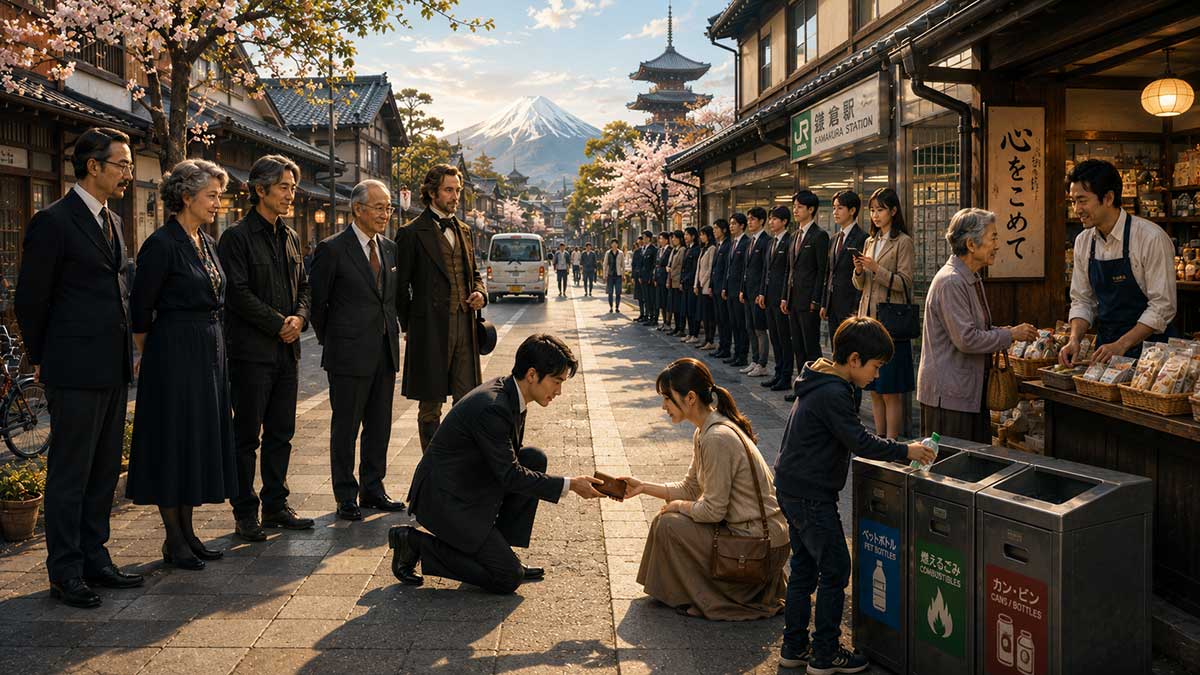
Love is often described through sacrifice, devotion, or great moral courage. Yet societies are shaped just as deeply by smaller acts.
A person waits his turn.
A passenger lowers his voice on a train.
A shopkeeper returns money that was overpaid.
A stranger carries a lost item to a police box rather than keeping it.
A neighborhood cleans a shared street without asking who receives the credit.
These actions may appear ordinary, but they reveal a moral habit: the willingness to consider how one’s behavior affects people one may never meet again.
Japan is often praised for public order, safety, cleanliness, and the return of lost property. Visitors sometimes describe these traits as politeness. That word may be too weak.
Perhaps they are forms of everyday love.
Yet no culture should be admired without examination. Consideration can become pressure. Harmony can silence disagreement. Concern about others can grow into fear of judgment.
The question is not whether Japan has found a perfect social model.
It is whether its daily customs reveal something that other societies have forgotten about living with strangers.
Question 1: Is Consideration for Strangers a Form of Love?
Kazuo Inamori:
I believe love becomes real through action.
A person may speak beautifully about compassion, yet the meaning of those words is tested in business, transportation, family life, and public conduct.
When someone thinks, “Will my action create unnecessary trouble for another person?” that question contains moral value.
It asks the individual to move beyond immediate desire.
This does not require dramatic self-denial. It may mean arriving on time, fulfilling an agreement, keeping a shared place clean, or refusing to take advantage of another person’s mistake.
A society is held together through countless decisions that no camera records.
Alexis de Tocqueville:
That is true, yet I would ask whether such conduct arises from love, habit, social pressure, or fear of disapproval.
The outward act may be the same.
A person may return a wallet from concern for its owner. Another may return it because society expects him to do so. A third may fear disgrace if he keeps it.
Political thinkers should care about motive, but societies cannot depend on noble motive alone.
Custom can train behavior before character is fully formed.
The more important question may be whether good customs gradually create better citizens.
Ruth Benedict:
Japanese social behavior has often been described through obligation, reputation, indebtedness, and awareness of one’s place within relationships.
Yet outsiders can misunderstand this.
They may see only restraint and assume that individual feeling is absent.
A person who avoids inconveniencing others may not use the language of love, but the behavior still protects social life.
Cultures do not all express care in the same emotional vocabulary.
In one society, love may be spoken openly.
In another, it may appear through reliability, restraint, service, and anticipation of another person’s needs.
Shigeru Ban:
In disaster zones, this distinction becomes less abstract.
After an earthquake, flood, or displacement, people need shelter quickly. They need privacy, dignity, sanitation, and a sense that they have not been forgotten.
Care must become structure.
A wall between families in an evacuation center can be an act of respect. A temporary home built from inexpensive materials can restore dignity.
Love that remains a feeling does not protect people from rain.
Daily consideration matters because it teaches us to notice needs before suffering becomes severe.
Nitobe Inazō:
Courtesy at its best is not performance.
It is the visible form of respect.
The bow, the careful phrase, the returned object, and the clean public space express a belief that one’s conduct belongs partly to others.
Freedom without consideration can become domination by the loudest, strongest, or most selfish.
The disciplined person asks not merely, “Am I permitted to do this?”
He asks, “What kind of atmosphere will my action create for everyone around me?”
Question 2: Why Do Many Visitors Feel Something Different in Japan?
Alexis de Tocqueville:
Visitors may be responding to trust.
Trust changes the emotional experience of public life.
When people expect strangers to follow rules, return property, and respect shared spaces, they move through society with less suspicion.
In a low-trust society, individuals must remain guarded.
They protect belongings constantly. They expect deception. They assume that public space belongs to no one and will be neglected.
The difference is not limited to manners.
It shapes freedom itself.
A person feels freer when ordinary life does not require constant defense.
Ruth Benedict:
Foreign visitors may be struck by what is missing.
There may be less public confrontation, less visible litter, less casual disruption, and less fear that an unattended possession will disappear.
Absence can be culturally powerful.
People notice peace most clearly when they come from places where vigilance has become normal.
Yet visitors can romanticize what they see.
They experience trains, restaurants, temples, stores, and hotels. They may not experience workplace hierarchy, school pressure, family obligation, social isolation, or the fear of standing apart.
Admiration becomes more honest when it includes both comfort and cost.
Kazuo Inamori:
That warning is fair.
Japan’s strengths can become weaknesses when the original moral purpose is forgotten.
Consideration is good.
Fearful conformity is not.
Discipline is good.
Suppressing truth is not.
Harmony is good.
Avoiding necessary disagreement is not.
A custom remains healthy only when it serves human dignity rather than forcing people to hide pain.
Shigeru Ban:
Visitors may be sensing the result of design and habit working together.
A clean station is easier to respect than a neglected one.
A clear system makes cooperation easier.
Public order is never created by moral teaching alone. The physical environment can invite care or invite disregard.
When a place communicates that people matter, many people respond by treating the place and one another with greater care.
This is why architecture, signage, transportation, and public services carry moral meaning.
Nitobe Inazō:
There may be another reason.
Modern life often praises self-expression but gives less attention to self-restraint.
Visitors to Japan encounter a society where restraint remains visible.
A person may feel refreshed by being around people who do not insist that every personal desire must enter the public space.
Quietness can feel like generosity.
Order can feel like relief.
The visitor may not consciously say, “I have encountered a different interpretation of love.”
Yet he may feel that strangers have made room for him.
Question 3: What Can Other Countries Learn Without Trying to Copy Japan?
Shigeru Ban:
They can begin with practical design.
Make it easier to act well.
Provide clear recycling systems.
Create public spaces that communicate care.
Build disaster shelters that protect privacy.
Design transportation that respects the elderly, parents, children, and people with disabilities.
Moral behavior grows more easily when institutions do not punish people for trying to cooperate.
Kazuo Inamori:
Education matters too.
Children should learn that character is revealed in actions no one rewards.
Return what is not yours.
Clean what you use.
Keep your promise.
Think about the next person.
These lessons may sound small, but they prepare people for larger responsibilities.
A nation cannot demand ethical leadership from adults after teaching children that success matters more than character.
Ruth Benedict:
Countries should learn principles rather than imitate customs.
A bow cannot be exported as a cure for selfishness.
Nor can a phrase such as “do not cause trouble” simply be inserted into another culture.
Each society must ask how respect can be expressed within its own history.
In one culture, it may appear through neighborhood service.
In another, through civic associations.
In another, through religious responsibility, local volunteer work, or strong public institutions.
The form will differ.
The moral insight remains: strangers are part of our daily ethical life.
Alexis de Tocqueville:
I would add that voluntary participation is vital.
Social responsibility becomes stronger when citizens practice it together rather than receive it only as instruction from above.
Neighborhood groups, schools, churches, local associations, and civic organizations teach cooperation.
They help people see public life as something they share.
A state can punish theft and disorder, but it cannot manufacture trust by decree.
Trust grows when citizens repeatedly experience one another as reliable.
Nitobe Inazō:
Other nations should not ask, “How can we become Japanese?”
They should ask, “How can we make consideration honorable again?”
A culture changes when admired behavior changes.
When selfishness is treated as clever, selfishness spreads.
When public rudeness is rewarded with attention, rudeness grows.
When honesty, restraint, and service are respected, people receive a different model of strength.
The deepest lesson is not silence, obedience, or uniformity.
It is the recognition that personal conduct always reaches beyond the self.
Closing
Nitobe Inazō:
Japan does not possess a complete answer to human conflict.
No nation does.
Its social order carries tensions between harmony and individuality, responsibility and pressure, belonging and exclusion.
Yet its everyday customs offer a valuable question to the wider world.
What happens when people are taught to think about the unseen person affected by their actions?
The owner of the lost wallet.
The passenger entering the train after them.
The worker who must clean the table.
The neighbor trying to sleep.
The child watching how adults behave.
Love may appear in grand declarations, but civilization depends on quieter forms.
It lives in the decision not to take what one could easily steal.
It lives in leaving a place ready for the next person.
It lives in returning what was lost.
It lives in the habit of asking, before acting:
“How will this affect someone else?”
Perhaps this is one reason so many people are drawn to Japan.
They may come for food, scenery, technology, history, or entertainment.
Yet beneath those attractions, some may be searching for something less visible:
the experience of living, for a brief time, in a place where strangers still seem to take responsibility for one another.
Topic 4: Can Civilization Survive Without Expanding Our Circle of Love?

Opening
Rabindranath Tagore:
Every human being begins life inside a small circle.
A child knows a mother’s face, a father’s voice, a family table, a familiar home. From there, the circle grows. It may include neighbors, a village, a religion, a language, or a nation.
There is nothing shameful in beginning with what is near.
The danger appears when closeness becomes a border of moral concern.
A person may love his country and remain indifferent to the suffering caused beyond it. A family may protect its own future through choices that weaken another family’s future. A generation may pursue comfort and leave its descendants to bear the cost.
Civilization depends upon loyalty, yet it cannot survive through loyalty alone.
The deeper question is whether human beings can remain rooted in family, culture, and nation while learning to care for those they may never see.
Question 1: Does Expanding Love Weaken Our Loyalty to Those Closest to Us?
Marcus Aurelius:
Human beings are made for relationship.
We belong to households and cities, but we are members of a larger human community too. These loyalties need not destroy one another.
A hand serves the body without ceasing to be a hand.
In the same way, a person may serve family faithfully while recognizing that every stranger shares the same capacity for pain, fear, reason, and hope.
The error is not special affection.
The error is believing that affection grants permission to act unjustly toward anyone outside it.
Peter Singer:
Our moral concern often follows emotional distance.
A child suffering nearby feels urgent. A child suffering far away may become a number.
Yet distance does not reduce the child’s suffering.
Modern communication, travel, and economics have connected human lives more closely than our instincts recognize. A decision made in one country may affect workers, animals, climates, or future generations elsewhere.
The challenge is not to care for everyone with equal emotion.
It is to take equal interests seriously when the stakes are comparable.
Jesus:
Love of neighbor does not cancel love of family.
It reveals what family love was meant to teach.
A person who knows the hunger of his own child should become more sensitive to the hunger of another child. A person who longs for mercy should become more willing to show mercy.
People often ask, “Who is my neighbor?” because they wish to know where responsibility ends.
The better question is, “Can I become a neighbor to the person before me?”
Love grows when it crosses the line people use to divide the worthy from the unworthy.
Viktor Frankl:
Love becomes most meaningful when it is joined to responsibility.
A person does not serve humanity by neglecting those entrusted to him.
Universal concern can become empty when it avoids concrete duty.
Yet private duty can become selfish when it refuses to see the wider human consequence.
Meaning often appears where the personal and universal meet.
I care for this one person fully, and through that care I learn something about the value of every person.
Rabindranath Tagore:
National identity can work in the same way.
Culture gives language, memory, beauty, and belonging. It teaches people how to recognize one another.
Yet a nation becomes dangerous when it treats itself as the highest moral reality.
Love of homeland should deepen one’s respect for the longing others feel for their homelands.
A rooted tree does not hate the forest.
Question 2: Why Does Love So Often Stop at the Border of Tribe or Nation?
Peter Singer:
Human psychology developed in small groups.
People survived by cooperating with those nearby and distrusting outsiders who might threaten scarce resources.
That inheritance still shapes moral judgment.
We respond more strongly to a single identifiable person than to thousands represented in statistics. We care more about visible suffering than distant suffering.
Technology has widened the reach of our actions faster than it has widened our instincts.
Civilization now requires moral habits that natural sympathy alone may not supply.
Marcus Aurelius:
Fear narrows concern.
When people believe their safety, identity, or dignity is threatened, they cling more tightly to the familiar.
They begin to think that another person’s gain must become their loss.
Yet much of this suffering begins in judgment.
We tell ourselves that the stranger is less disciplined, less deserving, less civilized, or less human.
Once that story is accepted, harshness begins to appear reasonable.
A person should examine every thought that turns another human being into a category.
Jesus:
People find it easy to love those who love them.
Reciprocal love feels safe.
It brings gratitude, loyalty, and belonging.
Love for an enemy asks for something deeper. It asks a person to refuse the identity offered by hatred.
This does not mean calling evil good.
It means refusing to let another person’s wrongdoing decide the condition of your heart.
If hatred controls your response, the enemy has entered your inner life and begun to govern it.
Viktor Frankl:
Suffering can enlarge a person or imprison him.
One person says, “I have suffered, so I recognize the suffering of others.”
Another says, “I have suffered, so no one else’s pain matters.”
Both reactions are possible.
Pain does not automatically make people wise.
It creates a moral choice.
Will the wound become a bridge or a wall?
Rabindranath Tagore:
Political leaders often strengthen the wall by turning fear into identity.
They tell people that purity requires separation, that greatness requires dominance, or that security requires permanent suspicion.
The nation becomes a wounded ego seeking confirmation.
True cultural confidence does not need to humiliate another culture.
It can welcome exchange without dissolving itself.
A civilization becomes spiritually poor when it can admire only its own reflection.
Question 3: What Would It Take for Humanity to Expand Its Circle of Love?
Viktor Frankl:
People need meaning larger than appetite.
A society centered only on comfort will struggle to make sacrifices for strangers or future generations.
Responsibility asks each person to answer for the life placed before him.
What does this moment ask of me?
Who depends on my decision?
What suffering can I reduce?
Meaning begins when life is treated as a task rather than a possession.
Peter Singer:
Moral expansion needs practical choices.
It is easy to praise humanity in the abstract.
The harder work is to examine where money goes, how goods are produced, which policies are supported, and which suffering is ignored.
People should ask how much harm they can prevent without giving up something of comparable moral value.
The circle grows through repeated decisions, not emotional declarations.
Marcus Aurelius:
Practice begins with perception.
Each morning, a person can expect to meet selfishness, anger, dishonesty, and confusion.
Yet he can remember that those people are still related to him through human nature.
He does not have to approve of their conduct.
He does have to guard against becoming unjust in response.
The discipline is simple to state and difficult to live:
Do not let another person’s failure make you abandon your own character.
Jesus:
Love must move from feeling to action.
Feed the hungry.
Visit the lonely.
Forgive where forgiveness is possible.
Speak truth without contempt.
Protect the vulnerable without becoming cruel to those you oppose.
Care for the person society has taught you to overlook.
A larger circle is not created by claiming to love everyone.
It is created by crossing one boundary at a time.
Rabindranath Tagore:
Education must take part too.
Children should learn their own history without being taught that only their people possess dignity.
They should encounter literature, music, faith, and memory from outside their inheritance.
To know another culture deeply is to discover that strangers grieve, hope, celebrate, and fear in ways that resemble us.
The goal is not to erase difference.
It is to make difference less available as an excuse for indifference.
Peter Singer:
Future generations belong in this circle too.
They cannot vote, protest, or ask us to restrain ourselves.
Yet our choices shape the conditions of their lives.
A morality limited to those presently visible is no longer enough.
Civilization must learn to represent people who are absent, distant, powerless, or unborn.
Viktor Frankl:
That may be one of the clearest measures of maturity.
Can we accept responsibility for someone who cannot repay us?
Can we act for a future we may never enter?
Love reaches its widest form when it gives meaningfully without needing recognition.
Closing
Rabindranath Tagore:
Civilization cannot survive if every circle becomes a fortress.
Family without concern for other families becomes exclusion.
Patriotism without respect for other nations becomes domination.
Faith without humility becomes condemnation.
Progress without responsibility for future generations becomes theft from the unborn.
Human beings do not need to abandon the places where love begins.
They need to let those places become teachers.
The love of one child can reveal the value of every child.
The love of one homeland can reveal why all people need belonging.
The memory of one people’s suffering can awaken concern for the suffering of others.
The question is not whether humanity can feel equal affection for everyone.
It cannot.
The question is whether moral concern can reach beyond affection.
Civilization may depend upon this distinction.
We may never know every person.
We may never understand every culture.
We may never agree with every nation, religion, or political movement.
Yet we can refuse to place any human being outside the boundaries of dignity.
Love begins in a circle.
Its future depends on whether that circle can grow.
Topic 5: What Would a Society Built on Mature Love Look Like?
Opening
Jane Addams:
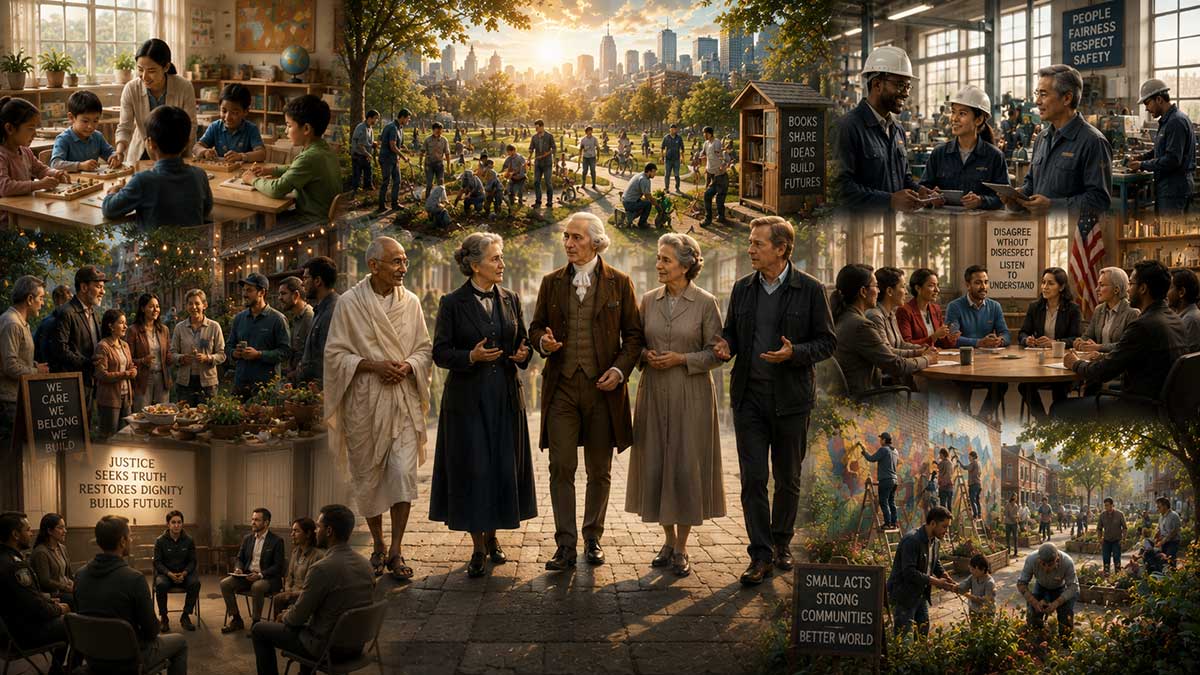
A society reveals its idea of love through what it makes ordinary.
Who is protected?
Who is heard?
Who receives care only after reaching a crisis?
Who is expected to carry burdens alone?
People often speak of love as a private virtue, something practiced within families, friendships, and places of worship. Yet public life is filled with moral choices too.
A school can communicate dignity or humiliation.
A workplace can treat people as human beings or as replaceable tools.
A neighborhood can welcome strangers or teach suspicion.
A government can protect the vulnerable without denying responsibility, and it can defend order without treating compassion as weakness.
A society built on mature love would not be free of conflict, failure, or selfishness.
It would be a society that asks a different question before making decisions:
Not only, “What can we gain?”
But, “What kind of human beings will this decision help us become?”
Question 1: Can Love Guide Society Without Becoming Sentimental or Unrealistic?
Adam Smith:
A functioning society cannot depend on affection alone.
Most people will never know one another personally. They will trade, work, borrow, hire, sell, and cooperate with strangers.
Markets can coordinate much of this activity, but markets do not create every virtue they depend upon.
Trust, honesty, restraint, sympathy, and respect for agreements must exist beneath exchange.
Self-interest is part of human behavior, yet human beings are not creatures of self-interest alone. We care how others see us. We feel concern when we witness suffering. We seek approval from an inner moral judge.
A society becomes unstable when it celebrates gain but treats conscience as a weakness.
Mahatma Gandhi:
Love without truth becomes softness.
Truth without love becomes cruelty.
A mature society needs both.
Love does not mean refusing to resist injustice. It means resisting injustice without surrendering one’s humanity.
The method matters.
A political movement may seek a worthy goal and still damage the society it hopes to repair if it trains people in humiliation, hatred, and revenge.
Means are not separate from ends.
The road shapes the destination.
Václav Havel:
Public life becomes corrupt when people are trained to repeat words they do not believe.
A society may claim to value peace, equality, freedom, or compassion while rewarding dishonesty and fear.
Mature love begins with living in truth.
It refuses false language.
It refuses the convenience of pretending that a failing institution is healthy.
It refuses to call obedience unity when people are afraid to speak.
Care for society sometimes requires saying what no one wishes to hear.
Maria Montessori:
This work begins much earlier than politics.
Children learn what love means through the way adults treat them.
If a child is controlled through fear, he learns that authority means domination.
If he is praised for dependence, he may never trust his own judgment.
If he is given freedom without responsibility, he may confuse desire with liberty.
A mature education respects the child’s dignity while guiding the child into discipline, cooperation, and care for the shared environment.
The peaceful society must be prepared in childhood.
Jane Addams:
Love becomes realistic when it enters institutions.
It creates clinics, schools, safe housing, fair workplaces, parks, libraries, and places where neighbors can meet.
It asks what people need before judging why they have failed.
This does not remove standards.
It places standards inside human reality.
A mother working long hours, a child growing up without stability, a newcomer who does not know the language, and an elderly person living alone may all need different forms of support.
Mature love does not treat every person identically.
It takes each person’s condition seriously.
Question 2: What Would Mature Love Look Like in Politics, Business, and Education?
Václav Havel:
In politics, it would begin with limits.
Leaders would admit that no party possesses complete wisdom.
Citizens would stop treating elections as permission to erase the losing side.
Public officials would speak honestly about tradeoffs instead of presenting every policy as morally pure.
A loving political culture would still contain fierce disagreement.
Its difference would appear in what it refuses to do.
It would refuse to destroy a person’s dignity for strategic gain.
It would refuse to make lying normal.
It would refuse to treat fear as the easiest path to loyalty.
Adam Smith:
In business, mature love would not require abandoning competition or profit.
It would require remembering that economic systems exist for human life, not the reverse.
A business owner must consider customers, workers, partners, and the community affected by the enterprise.
The pursuit of gain can produce useful goods and innovation, but gain without moral restraint can encourage exploitation.
A healthy commercial society depends on reputation, fairness, trust, and long-term relationships.
The cleverest transaction is not always the wisest one.
Jane Addams:
Business decisions shape neighborhoods.
When wages are too low, housing becomes unstable.
When schedules change without warning, families lose time together.
When a factory pollutes a community, the cost does not disappear. It is transferred to people with less influence.
Mature love asks who carries the hidden cost of success.
That question belongs in boardrooms, city councils, schools, and homes.
Maria Montessori:
In education, children would learn more than how to compete.
They would learn how to care for shared materials, resolve conflict, work independently, and contribute to a community.
The classroom would not train them to wait passively for authority.
It would help them develop self-command.
Freedom becomes meaningful when a person can govern himself.
A child who learns to care for the room, the work, the younger student, and the larger group is preparing for citizenship.
Mahatma Gandhi:
Education should train the hand, the mind, and the conscience.
A person may possess knowledge and still use it destructively.
A nation may produce brilliant engineers, lawyers, and leaders while neglecting character.
The question is not only, “What can this student accomplish?”
It is, “Whom will this student serve?”
Skill without moral direction can make selfishness more efficient.
Question 3: How Could a Society Practice Mature Love Without Forcing Everyone to Think the Same Way?
Adam Smith:
Plural societies need rules that allow cooperation between people with different beliefs.
Citizens do not need to share one religion, philosophy, or vision of the good life.
They need enough trust to exchange, disagree, and live under laws that apply fairly.
Mature love does not demand emotional agreement.
It requires restraint, reciprocity, and recognition that other people have interests as real as one’s own.
Maria Montessori:
Uniformity is not peace.
A quiet room filled with frightened children is not peaceful.
A society where no one speaks honestly is not united.
Real harmony permits difference within order.
Children show us this when they are given purposeful freedom. Each works differently, yet the room can remain calm.
The goal is not sameness.
It is the ability to live freely without destroying the freedom of others.
Václav Havel:
A society that forces love soon produces hypocrisy.
People will repeat the approved language and conceal what they truly think.
Mature love must leave room for conscience.
It must allow people to disagree, question leaders, criticize institutions, and reject fashionable beliefs.
Truth cannot survive where everyone is required to sound compassionate in the same approved way.
The test is not whether people use identical words.
The test is whether they remain responsible for the human effect of their choices.
Mahatma Gandhi:
Love cannot be imposed, but conduct can be disciplined.
A person may hold strong beliefs, yet he must not use those beliefs as permission to degrade another person.
Nonviolence does not erase conflict.
It gives conflict a moral boundary.
It says, “I will oppose what you do, but I will not deny what you are.”
This is difficult when anger feels justified.
That is precisely when discipline matters most.
Jane Addams:
Shared work can help where shared ideology fails.
People who disagree politically can still clean a neighborhood, care for children, help after a disaster, support an elderly neighbor, or improve a local school.
Cooperation allows people to encounter one another as human beings before encountering one another as symbols.
A society built on mature love would create more places where citizens solve problems together.
Many divisions grow deeper when people know the other side only through headlines.
Question 4: How Would Mature Love Respond to Crime, Failure, and Harm?
Mahatma Gandhi:
Love does not mean the absence of consequence.
A person who harms others must be stopped.
Yet punishment should not become an excuse for vengeance.
The purpose of justice should include protection, truth, accountability, and the possibility of moral restoration.
A society reveals itself through the way it treats those who have failed.
It must not protect wrongdoing.
It must not become cruel in the name of opposing cruelty.
Václav Havel:
Systems often prefer simple categories.
Innocent or guilty.
Loyal or disloyal.
Useful or disposable.
Human beings are more difficult.
A person may be responsible for serious harm and still remain human.
To recognize that does not weaken justice.
It prevents justice from becoming another form of dehumanization.
Jane Addams:
Many forms of harm grow from conditions society chooses not to see.
Poverty does not excuse violence.
Trauma does not erase responsibility.
Yet prevention requires more than punishment after damage occurs.
A society built on mature love would ask why certain neighborhoods repeatedly receive fewer schools, fewer clinics, fewer opportunities, and greater exposure to danger.
It would care about the victim and still ask how fewer victims might be created in the future.
Adam Smith:
Justice is one of the foundations of social life.
Without it, trust collapses.
People must believe that theft, fraud, violence, and abuse will meet real consequences.
Yet justice should be guided by proportion.
Public anger often seeks spectacle.
Wise judgment seeks order.
A society that punishes unpredictably or excessively weakens the very trust it claims to defend.
Maria Montessori:
When children make mistakes, adults can either teach fear or responsibility.
Humiliation may produce obedience for a moment, but it rarely develops conscience.
The child must see the effect of the action, repair what can be repaired, and rejoin the community with greater awareness.
This principle does not solve every adult crime.
It reveals something about moral growth.
People learn responsibility most deeply when they are required to face reality, not when they are reduced forever to their worst act.
Question 5: What Is the First Step Toward a Society Built on Mature Love?
Maria Montessori:
Begin with the child.
Create homes and schools where dignity and responsibility grow together.
Teach children to care for their surroundings, complete meaningful work, resolve conflict, and respect the needs of others.
Peace is not prepared through speeches alone.
It is prepared through habits formed each day.
Adam Smith:
Begin with honesty in ordinary exchange.
Keep agreements.
Pay fairly.
Do not exploit confusion.
Treat the stranger as someone whose trust has value.
A society cannot speak convincingly about universal love while normalizing deception in daily life.
Václav Havel:
Begin by refusing the lie.
Do not repeat what you know is false merely to belong.
Do not pretend that your side is innocent of every failure.
Do not use compassionate language to hide selfish motives.
Truth creates the space where responsibility becomes possible.
Mahatma Gandhi:
Begin with yourself, but do not end with yourself.
Examine whether your methods reflect the future you claim to desire.
Practice restraint before demanding it from enemies.
Serve before seeking authority.
Do one act that reduces fear between people.
Jane Addams:
Begin locally.
Find the person, family, school, street, or institution close enough for you to affect.
Large ideals become believable when they take physical form.
A meal.
A safe room.
A fair wage.
A repaired playground.
A conversation between neighbors who had stopped seeing one another.
Mature love becomes social when private concern turns into shared responsibility.
Closing
Jane Addams:
A society built on mature love would not look soft.
It would ask much of its people.
It would ask parents to teach responsibility without humiliation.
It would ask teachers to form character, not only measure performance.
It would ask businesses to consider human costs hidden behind profit.
It would ask political leaders to tell the truth when truth is inconvenient.
It would ask citizens to defend their beliefs without treating opponents as enemies beyond redemption.
Such a society would still need laws, courts, markets, borders, schools, and institutions.
Love would not replace these structures.
It would shape their purpose.
The measure of society would not be whether everyone agreed.
It would be whether disagreement could exist without contempt, whether strength could exist without cruelty, and whether accountability could exist without abandoning human dignity.
Mature love does not ask us to feel warmly about everyone.
It asks us to take responsibility for the effect our lives have on people we may never know.
A civilization begins to change when its people stop asking only:
“What do I deserve?”
and begin asking:
“What do we owe one another?”
Final Thoughts
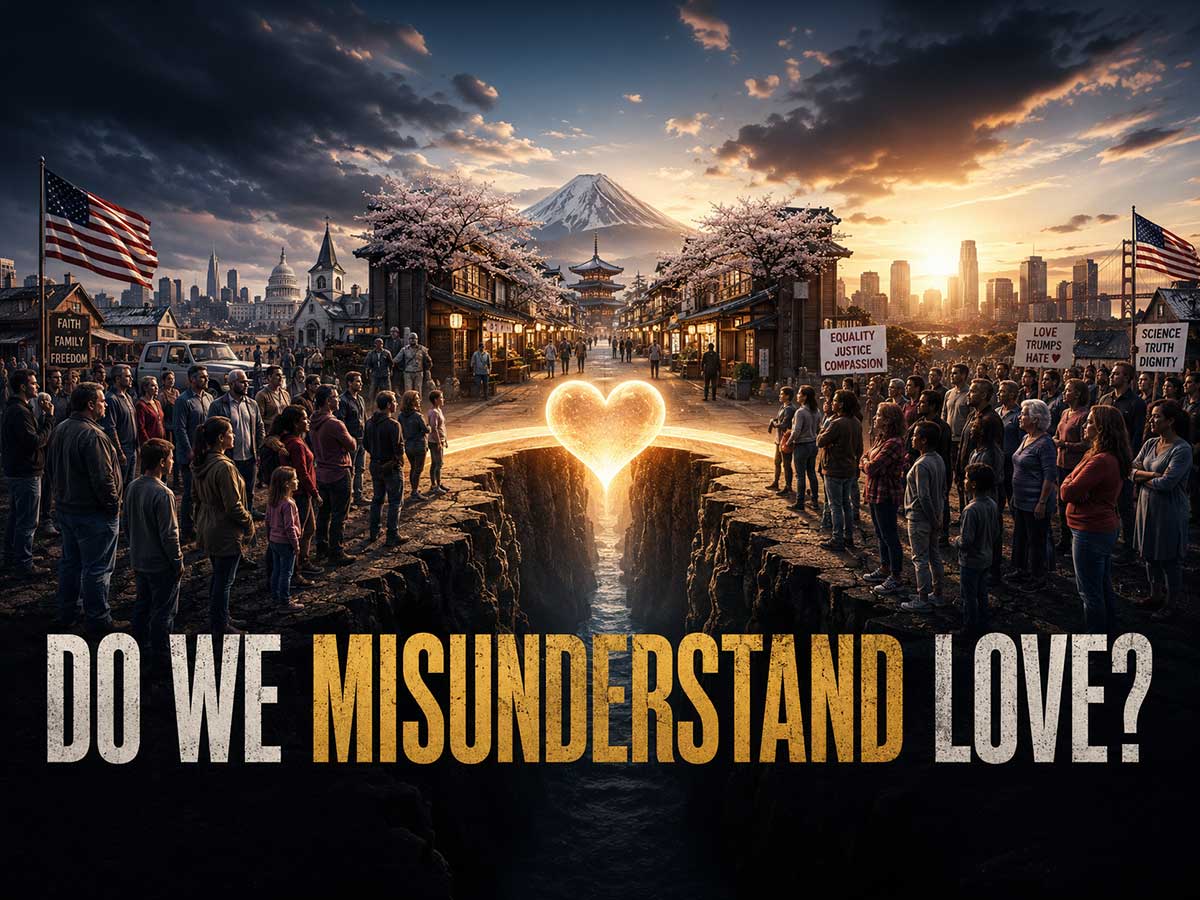
Love is one of humanity's oldest words.
Yet it may also be one of its least examined.
Nearly every movement in history has claimed to act for love.
Love of family.
Love of freedom.
Love of justice.
Love of country.
Love of God.
Love of humanity.
The tragedy is that these loves sometimes collide, not because love itself is flawed, but because people begin treating one form of love as permission to ignore another.
Throughout these conversations, our guests reached an unexpected point of agreement.
No one suggested that we should love our family less.
No one argued that culture, nation, or tradition should disappear.
Instead, each proposed that these loyalties should become schools that teach us how to recognize the dignity of others.
Family teaches us devotion.
Community teaches responsibility.
Nation teaches sacrifice.
Humanity asks us to carry those lessons farther than our instincts naturally would.
Perhaps mature love is not measured by how deeply we care for people who resemble us.
Perhaps it is measured by whether our concern continues when the person before us votes differently, worships differently, speaks another language, or was born on the other side of a border.
The future may never belong to societies that eliminate disagreement.
It may belong to societies that learn how to disagree without denying one another's humanity.
If there is one question these conversations leave behind, it is this:
Where does your own circle of love end?
And if you can see its edge...
What would it take for it to grow just a little farther?
Short Bios:
Martin Luther King Jr.
American Baptist minister and civil rights leader whose philosophy of nonviolent resistance and agape love transformed the struggle for racial equality.
C. S. Lewis
British scholar and author who explored the nature of affection, friendship, romantic love, and self-giving charity in both literature and Christian thought.
Erich Fromm
German social psychologist and philosopher, author of The Art of Loving, who viewed love as a disciplined human capacity rather than merely an emotion.
Confucius
Ancient Chinese philosopher whose teachings on virtue, family responsibility, and harmonious society have shaped East Asian civilization for more than two thousand years.
Hannah Arendt
German-American political philosopher whose work examined totalitarianism, responsibility, judgment, and the conditions necessary for healthy public life.
Jonathan Haidt
American social psychologist known for Moral Foundations Theory and his research into why sincere people develop sharply different political values.
Abraham Lincoln
Sixteenth President of the United States, remembered for preserving the Union and leading the nation through its greatest constitutional crisis.
George Orwell
English novelist and essayist whose writings exposed propaganda, ideological extremism, and the corruption of political language.
Simone Weil
French philosopher and mystic whose reflections on attention, justice, suffering, and political power remain deeply influential.
Nelson Mandela
South African statesman whose leadership demonstrated that reconciliation and accountability can coexist after profound national conflict.
Nitobe Inazō
Japanese educator, diplomat, and author of Bushido: The Soul of Japan, introducing Japanese ethics and culture to readers around the world.
Ruth Benedict
American cultural anthropologist whose studies of Japanese society encouraged cross-cultural understanding after World War II.
Shigeru Ban
Japanese architect recognized for humanitarian work, designing practical shelters that restore dignity to people affected by disasters.
Kazuo Inamori
Japanese entrepreneur and founder of Kyocera, respected for integrating ethical leadership, humility, and service into business.
Alexis de Tocqueville
French political thinker whose observations on democracy, civic participation, and freedom remain foundational to modern political thought.
Jesus
First-century Jewish teacher whose teachings on love of neighbor, forgiveness, mercy, and care for the marginalized have shaped billions of lives across history.
Peter Singer
Australian moral philosopher known for his work on expanding the moral circle, practical ethics, and global responsibility.
Rabindranath Tagore
Indian poet, philosopher, and Nobel laureate who celebrated cultural identity while advocating universal human fellowship.
Viktor Frankl
Austrian psychiatrist and Holocaust survivor whose Logotherapy emphasizes meaning, responsibility, and human dignity.
Marcus Aurelius
Roman emperor and Stoic philosopher whose Meditations continue to guide readers in self-discipline, duty, and compassion.
Mahatma Gandhi
Leader of India's independence movement whose philosophy of nonviolent resistance joined truth with moral discipline.
Jane Addams
American social reformer and Nobel Peace Prize recipient whose work demonstrated that compassion becomes meaningful through practical community service.
Adam Smith
Scottish moral philosopher and economist whose writings explored sympathy, justice, markets, and the ethical foundations of commercial society.
Maria Montessori
Italian physician and educator whose educational philosophy emphasized dignity, independence, responsibility, and respect for the developing child.
Václav Havel
Czech playwright, dissident, and president whose defense of truth, conscience, and civic responsibility inspired democratic movements around the world.
Leave a Reply