
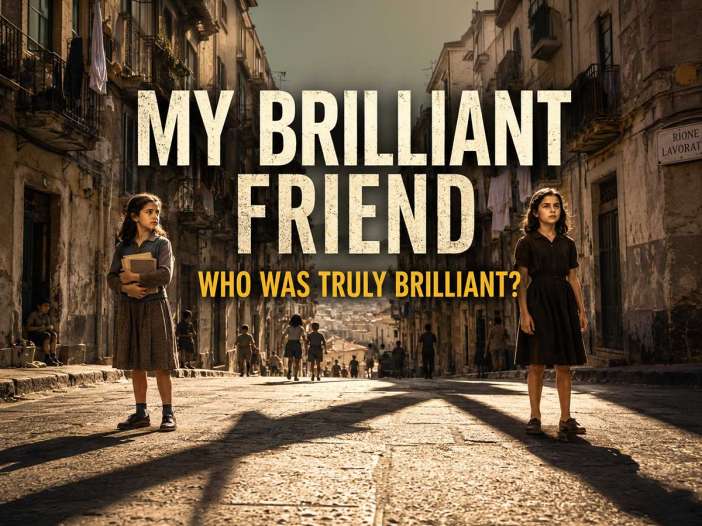
What if the brilliant friend was never Lila or Elena—but the person each woman became in the other’s presence?
Lenù: When people speak about Lila and me, they often search for a simple definition.
Best friends.
Rivals.
Sisters.
Enemies.
Mirrors.
None of those words is wrong. None is enough.
We grew up in a poor neighborhood where children learned early that talent did not guarantee opportunity, love did not guarantee safety, and marriage did not guarantee freedom. The future was shaped by money, family reputation, violence, education, and the narrow expectations placed upon girls.
Lila seemed born in opposition to every limit around her. She learned quickly, challenged authority, created ideas no one had taught her to create, and frightened people who expected obedience.
I survived differently.
I studied.
I listened.
I adapted.
I entered schools, cities, relationships, and literary circles that had once seemed unreachable. From the outside, my path looked like success. Inside, I continued measuring each achievement against the life Lila might have lived had she received the same opportunities.
She remained the mind I trusted and feared most.
I became the witness she sometimes needed and sometimes rejected.
Our friendship was built from affection, envy, admiration, competition, dependence, resentment, and a strange form of loyalty that survived long silences and painful betrayals.
We pushed each other forward.
We held each other captive.
Lila made me believe that a greater life was possible. Her existence made me doubt whether that life truly belonged to me.
I became proof that education could open doors.
She became proof that brilliance could remain unrecognized when class, poverty, family, and male authority controlled the entrance.
Neither of us became free in the way we once expected.
I left the neighborhood, yet carried it into every room.
Lila remained closer to it, yet often saw beyond its rules more clearly than anyone who escaped.
I wrote to preserve what time, silence, and disappearance threatened to erase.
Lila resisted every attempt to define her, including mine.
Perhaps that is why our story begins with her disappearance.
She tried to remove herself from the record.
I answered by writing her back into it.
Was that love?
Betrayal?
Memory?
Possession?
Perhaps it was all of them.
In this imaginary conversation, Lila, Nino, Stefano, my mother Immacolata, and I return to the questions that followed us across childhood, education, marriage, ambition, authorship, and loss.
Was our friendship rooted in love or competition?
Did education free me or separate me from myself?
Who was truly the brilliant friend?
Did marriage offer Lila security or place her inside another form of control?
Can anyone escape the person they once were?
There may be no final answer.
Lila would distrust any answer that presented itself as final.
Yet perhaps we can look once more at the lives we lived, the choices we made, and the selves we created through one another.
Not to decide who won.
Not to decide who was better.
To ask what two girls gave each other, what they took from each other, and why neither woman could ever tell her own story without the other standing somewhere inside it.
(Note: This is an imaginary conversation, a creative exploration of an idea, and not a real speech or event.)
Topic 1: Was Their Friendship Built on Love—or Competition?
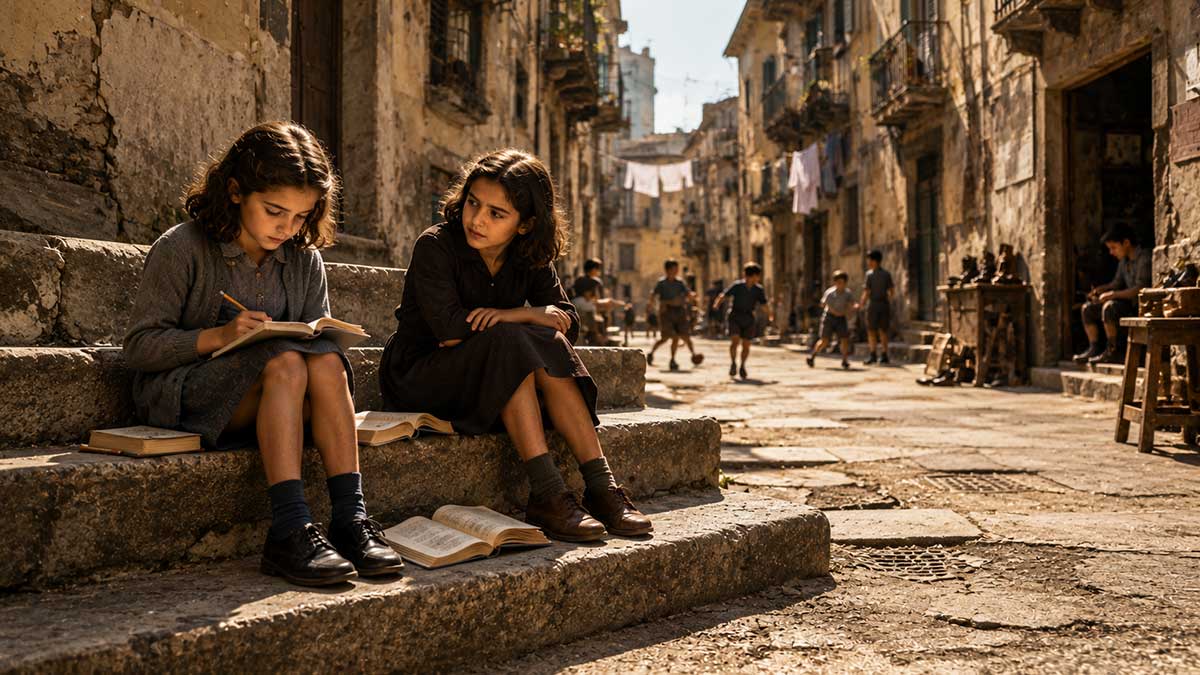
Opening
Elena (Lenù): People often ask whether Lila was my best friend. I never know how to answer. She was certainly the person who changed my life more than anyone else. Yet she was also the person who made me doubt every achievement, every success, every sentence I wrote, every room I entered. I loved her. I envied her. I admired her. Sometimes I feared her. Looking back, I wonder whether our friendship was built on affection—or whether we spent our lives trying to catch a version of ourselves reflected in the other.
Could your friendship have existed without competition?
Lila: People think competition destroyed our friendship.
I think it created it.
Lenù: Created it?
Lila: If we had been ordinary girls, we might have remained neighbors, nothing more.
Lenù: You believe rivalry held us together?
Lila: Curiosity did.
Competition was only curiosity refusing to disappear.
Nino: I watched both of you for years.
Neither of you wanted to become the other.
You wanted to become the version of yourselves the other seemed capable of seeing.
Stefano: That sounds romantic.
From where I stood, it looked exhausting.
Immacolata: Girls from our neighborhood were not raised to compete.
They were raised to survive.
School was a luxury.
Marriage was expected.
Dreams rarely entered the conversation.
Lenù: Perhaps that is why Lila frightened me.
She dreamed anyway.
Lila: No.
I simply refused to believe the neighborhood's opinion of me was the final one.
Lenù: You made everything look effortless.
Reading.
Mathematics.
Language.
Even arguments.
Lila: It only appeared effortless because you saw the result.
Not the restlessness behind it.
Lenù: Teachers called you brilliant.
They praised you in front of everyone.
I worked harder than anyone.
Yet I still felt second.
Lila: Did I ask for that comparison?
Lenù: No.
But comparisons rarely need permission.
Nino: Society enjoys ranking people.
Especially children.
It convinces them that worth can be measured.
Stefano: The neighborhood ranked everyone.
Families.
Money.
Beauty.
Strength.
Respect.
No one escaped comparison.
Immacolata: Poverty teaches comparison early.
When there is little to possess, people begin measuring themselves instead.
Lenù: Sometimes I wished Lila would fail.
(Silence.)
Lila: Thank you.
Lenù: Thank you?
Lila: At least that sentence is honest.
Lenù: I hated myself for feeling it.
Lila: I wished you would fail too.
Lenù: You did?
Lila: Of course.
Every time you succeeded in school, I wondered what I might have become.
Lenù: I thought you wanted me to succeed.
Lila: I did.
That is the contradiction.
I wanted your success.
I also wanted it to be mine.
Nino: That is not hatred.
It is grief.
Immacolata: Grief?
Nino: Grief for the life each girl imagined but could not fully live.
Stefano: Most people hide feelings like that.
Lila: Most people lie about friendship.
Did admiration quietly become envy?
Nino: Lenù, when did admiration begin turning into envy?
Lenù: I cannot separate them.
The first time I admired Lila, I already wanted what she possessed.
Lila: Intelligence?
Lenù: Confidence.
You walked into every room as though it already belonged to you.
Lila: That is how it looked?
Lenù: Wasn't it true?
Lila: I walked in prepared for battle.
That is different.
Stefano: Lila always looked fearless.
Lila: Fearless people do not keep calculating exits.
Immacolata: Children mistake defiance for confidence.
Adults often do too.
Lenù: You challenged teachers.
You challenged boys.
You challenged fathers.
You challenged everyone.
Lila: Because everyone expected surrender.
Lenù: I obeyed.
Lila: You survived differently.
Lenù: Sometimes I wondered whether obedience made me weaker.
Immacolata: It kept you alive.
There is wisdom in that.
Nino: Yet education rewarded obedience more than originality.
Lila: Exactly.
Lenù could continue.
I could not.
Lenù: That never felt like victory.
Lila: Why?
Lenù: Every achievement reminded me that the person who deserved it more remained behind.
Lila: Deserved?
No.
Received?
No.
Life does not distribute opportunity according to talent.
Stefano: Money decides first.
Immacolata: Families decide second.
Nino: Society decides third.
Talent arrives somewhere much farther down the list.
Lenù: I sometimes wished I could stop thinking about Lila.
Lila: Did you?
Lenù: Every exam.
Every book.
Every success.
I wondered what you would have done better.
Lila: I wondered what I would have become if I had stayed beside you.
Lenù: We spent years imagining the other person's life.
Nino: Which meant neither of you fully inhabited your own.
Stefano: That sounds tragic.
Lila: It is ordinary.
Everyone imagines another version of themselves.
Ours simply had a name.
Were you making each other stronger—or keeping each other imprisoned?
Immacolata: There is something I have always wondered.
Would either of you have become the woman you did without the other?
Lenù: No.
Lila: No.
Stefano: Then why call the relationship painful?
Lila: Because growth often is.
Stefano: That sounds convenient.
Lila: Does truth become false because it is uncomfortable?
Stefano: No.
Nino: Lenù wrote because Lila challenged her.
Lila kept creating because Lenù kept leaving.
Each became the other person's unfinished sentence.
Lenù: I often believed I was writing for Lila rather than for readers.
Lila: I knew.
Lenù: You knew?
Lila: Of course.
Every page asked whether I approved.
Lenù: That embarrasses me.
Lila: Why?
Lenù: Because I wanted to become independent.
Lila: Independence does not arrive because we declare it.
Immacolata: None of us become ourselves alone.
Stefano: Yet depending on another person's opinion can become another prison.
Lenù: It did.
Nino: Especially when the other person rarely offered certainty.
Lila: Certainty is dangerous.
Lenù: You rarely praised me.
Lila: Would praise have helped?
Lenù: Sometimes.
Lila: Or would it have made you dependent on hearing it again?
Lenù: Perhaps.
Stefano: You challenged everyone.
Even the people you loved.
Lila: Love that never questions becomes possession.
Lenù: Is that what we were doing?
Questioning?
Or competing forever?
Nino: Perhaps both.
Competition asks,
"Can I become better?"
Envy asks,
"Why isn't that life mine?"
Friendship asks,
"Will I still remain beside you when the answer hurts?"
Immacolata: Did you remain beside each other?
(A long silence follows.)
Lenù: Not always physically.
Always internally.
Lila: We became one another's measuring stick.
That was both our strength...
and our imprisonment.
Closing
Lenù: Looking back, I no longer believe friendship and competition were opposites. Lila and I loved each other deeply enough to change each other's lives, yet we also carried each other's shadows. Every success invited comparison. Every failure echoed inside the other. There were moments I wanted her admiration more than the world's, and moments I wished I could forget she existed so I could discover who I was without her reflection. Yet if she had never entered my life, the person writing these words would never have existed either. Perhaps the question was never whether our friendship contained competition. Perhaps the real question is whether love sometimes arrives disguised as the person who refuses to let us remain who we are.
Topic 2: Did Education Free Lenù—or Separate Her From Herself?
Opening
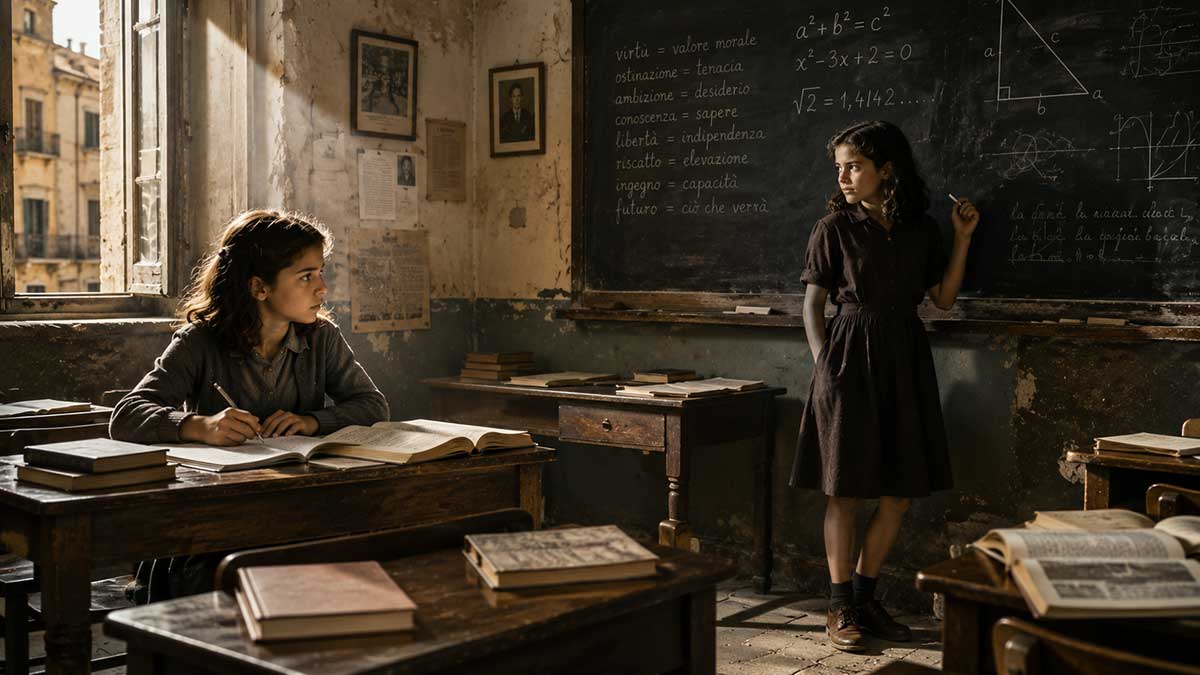
Lenù: School gave me a road out of the neighborhood. Each lesson carried me farther from the streets, voices, gestures, and fears that had shaped me. Yet every step forward created another question. Was I becoming more fully myself, or learning to hide the person I had been? Education opened doors, but it taught me to feel ashamed of the hands, accent, family, and poverty that stood behind me. I escaped one form of limitation and entered a life where I was always afraid someone would discover I did not belong.
Lenù, did education give you freedom—or teach you to be ashamed of where you came from?
Immacolata: You speak of school as though it rescued you from us.
Lenù: At times, it felt that way.
Immacolata: From me too?
Lenù: From the life waiting for me.
Immacolata: I was part of that life.
Lenù: Yes.
Immacolata: Then say it plainly.
Lenù: I feared becoming you.
(Immacolata studies her daughter.)
Immacolata: My walk?
Lenù: That too.
Immacolata: My speech?
Lenù: Yes.
Immacolata: My hands?
Lenù: Your hands looked worn before you were old.
Immacolata: They fed you.
Lenù: I know.
Immacolata: Yet you wanted hands that showed no trace of me.
Lenù: I wanted choices you never had.
Immacolata: That is not the same as being ashamed.
Lenù: For years, I confused them.
Lila: She was ashamed.
Lenù: You say it too easily.
Lila: You learned to correct your voice before entering certain rooms.
Lenù: I wanted people to listen to what I said.
Lila: You believed they would listen only if you sounded unlike us.
Nino: In many places, she was right.
Stefano: Then education taught her how society worked.
Lila: It taught her how to make herself acceptable to people who had already decided what intelligence should sound like.
Lenù: What was I supposed to do? Refuse every opportunity until the world became fair?
Lila: No.
Lenù: Then why judge me?
Lila: I am not judging the escape. I am asking what you abandoned at the gate.
Immacolata: What did she abandon?
Lila: Her confidence in the knowledge she already possessed.
Lenù: What knowledge?
Lila: The neighborhood. Its bargains. Its violence. The way adults lied. The way girls learned to read danger from a glance. School treated that knowledge as ignorance.
Nino: Formal education recognizes certain kinds of intelligence and ignores others.
Stefano: School did not teach anyone how to survive the Solaras.
Lila: Exactly.
Lenù: Yet surviving the Solaras was not the future I wanted.
Stefano: It was the future surrounding you.
Lenù: That is why I studied.
Immacolata: I pushed you to study.
Lenù: Sometimes.
Immacolata: More than my mother would have.
Lenù: You complained about the cost.
Immacolata: There was a cost.
Lenù: You made me feel guilty for every book.
Immacolata: A book cost money we did not have.
Lenù: And every time you mentioned it, I felt my education had to justify itself.
Immacolata: Did it not?
Lila: There. That is the trap.
Immacolata: What trap?
Lila: A poor child cannot simply learn. She must prove that every lesson was worth what the family sacrificed.
Nino: Education becomes a debt.
Lenù: Yes.
Immacolata: Was I meant to pretend money appeared from the walls?
Lenù: No. I wanted you to believe I deserved the expense before I had earned anything.
Immacolata: I did believe it.
Lenù: You rarely said so.
Immacolata: Women like me did not speak that way.
Lila: That does not mean the silence had no effect.
Immacolata: I saw my daughter becoming someone no one in our family had been.
Lenù: Were you proud?
Immacolata: Proud and frightened.
Lenù: Frightened of what?
Immacolata: That each book would teach you to look at us as evidence of failure.
(Lenù lowers her eyes.)
Immacolata: It did, for a time.
Lenù: Yes.
Immacolata: Then education freed you from the life I lived and taught you to despise the woman who lived it.
Lenù: Not despise.
Lila: Do not soften it.
Lenù: I despised the possibility of becoming trapped as you were. I placed that fear onto you.
Immacolata: Better.
Nino: Education often creates distance before it creates perspective.
Stefano: Sometimes the distance never closes.
Lenù: Mine did not close completely.
Immacolata: No.
Lenù: Yet I came to see your life differently.
Immacolata: After writing about it?
Lenù: After living long enough to recognize how few choices you had.
Lila: Recognition from a distance is still distance.
Lenù: What would satisfy you?
Lila: Nothing. I am telling you the cost, not demanding repayment.
Did Lenù leave the neighborhood—or carry it into every educated room?
Nino: When you entered secondary school, did you feel free?
Lenù: I felt exposed.
Nino: More exposed than in the neighborhood?
Lenù: In a different way.
Stefano: No one there knew your family.
Lenù: That was part of the exposure. I had no place assigned to me. I had to construct one through grades, clothing, speech, and behavior.
Lila: You became careful.
Lenù: I had always been careful.
Lila: Not like that. In the neighborhood, you knew the rules. At school, you studied the rules hidden behind the lessons.
Immacolata: What rules?
Lenù: How to pronounce words. When to speak. Which books one was expected to know. How confidence looked when worn by wealthy students. How not to reveal that a new coat mattered too much.
Stefano: Money was still present.
Lenù: Everywhere.
Nino: Yet no one spoke of it openly.
Lenù: That made it harder. In the neighborhood, poverty announced itself. In educated circles, class hid inside ease.
Lila: You could learn Latin. You could not learn the ease of someone who had never feared a school fee.
Lenù: I imitated it.
Nino: Successfully.
Lenù: That did not make it feel real.
Immacolata: You received excellent marks.
Lenù: Marks measured performance, not belonging.
Stefano: Does anyone truly belong in those rooms?
Nino: People born into them rarely ask.
Lila: Lenù asked every minute.
Lenù: I listened for mistakes in my own voice.
Lila: And compared yourself with everyone.
Lenù: Especially you.
Lila: I was not in the room.
Lenù: You were always in the room.
Nino: As an internal rival.
Lenù: As proof that my success might be accidental.
Stefano: How could Lila’s intelligence make your education accidental?
Lenù: Since she learned faster without teachers. Since she understood books I struggled with. Since every achievement raised the thought: had she received my opportunities, would anyone notice me?
Lila: You treated my lost education as evidence against your own.
Lenù: I did.
Lila: That helped no one.
Lenù: I know.
Immacolata: Did you ever enjoy school without measuring yourself?
Lenù: Rarely.
Nino: Not even reading?
Lenù: Reading gave me pleasure. Achievement made pleasure anxious.
Lila: You wanted every book to transform you enough that no one could send you back.
Lenù: Yes.
Stefano: Back where?
Lenù: To the version of me people expected.
Immacolata: You speak as though the neighborhood was waiting to swallow you.
Lenù: It was.
Lila: She is right.
Stefano: People left.
Lila: Their money left. Their bodies left. The rules stayed inside them.
Nino: Lenù carried the neighborhood as vigilance.
Lenù: And as language I kept translating.
Immacolata: Translating for whom?
Lenù: For people who would have dismissed us had I spoken in our voice.
Lila: Then you carried us, but only after correcting us.
Lenù: That is unfair.
Lila: Is it false?
Lenù: Not entirely.
Nino: Did your writing eventually allow the two voices to meet?
Lenù: I tried.
Lila: You turned us into literature.
Lenù: You say that as an accusation.
Lila: It is a question. Did writing preserve where you came from, or make it acceptable to people who would never live there?
Lenù: Both.
Stefano: Then education did not remove the neighborhood.
Lenù: No. It gave me another language for it.
Immacolata: A language I could not always recognize.
Lenù: That is one of my regrets.
Immacolata: Did you write for us?
Lenù: At times.
Immacolata: Did you expect us to read you?
Lenù: I do not know.
Lila: She wanted the educated rooms to praise the neighborhood once she had translated it for them.
Lenù: I wanted them to see us as fully human.
Lila: Through your authority.
Lenù: Someone had to tell the story.
Lila: There it is.
Nino: The conflict between witness and ownership.
Lenù: I did not own the neighborhood.
Lila: No. Yet the one who leaves often becomes the person permitted to explain those who remain.
Did success make Lenù more independent—or more dependent on approval?
Stefano: You became educated, published, respected. Did you ever stop seeking Lila’s approval?
Lenù: No.
Lila: Not even after the books?
Lenù: Especially after the books.
Lila: Why?
Lenù: Other people praised the writing. You knew what had been omitted.
Lila: I knew what had been softened.
Lenù: And exaggerated.
Lila: Sometimes.
Nino: Why did her judgment matter more than critics?
Lenù: Critics judged the book. Lila judged the distance between the book and the life.
Immacolata: Did my judgment matter?
Lenù: More than I admitted.
Immacolata: You rarely asked.
Lenù: I feared you would not understand.
Immacolata: There is that word again.
Lenù: I feared you would reject what I had become.
Immacolata: You had already rejected parts of me.
Lenù: Yes.
Stefano: Education promised independence, yet you remained tied to everyone’s judgment.
Nino: Success creates new audiences, not freedom from audiences.
Lila: Lenù wanted approval from people above her and recognition from people behind her.
Lenù: That sounds ugly.
Lila: It is human.
Immacolata: Did school teach you to value yourself?
Lenù: It taught me to value measurable success.
Nino: Grades, prizes, publication.
Lenù: Yes.
Lila: And when measurement stopped?
Lenù: I felt empty.
Stefano: Then what was the education for?
Lenù: It gave me work, income, movement, language, access.
Stefano: Those are not small things.
Lenù: No. I will not pretend education failed me.
Lila: It did not fail you. It became the only proof you trusted.
Lenù: Since other proof had been denied.
Immacolata: Your family did not deny your worth.
Lenù: You valued usefulness.
Immacolata: Poor families must.
Lenù: Exactly. School valued performance. Neither taught me to exist without earning permission.
Nino: Did love provide that permission?
Lenù: I often chose people whose admiration felt conditional.
Lila: Nino.
Nino: We are discussing education.
Lila: We are discussing approval. You belong here.
Nino: Fair.
Lenù: Nino represented the educated life I wanted.
Nino: You idealized me.
Lenù: I thought being chosen by you would confirm I belonged there.
Lila: There?
Lenù: In the life of ideas, books, politics, conversation.
Lila: A man became the entrance exam.
Lenù: Yes.
Immacolata: Did you not see your own achievements?
Lenù: I saw them. I did not trust them.
Stefano: Why trust Nino’s interest more than your own work?
Lenù: Since desire feels personal. Achievement can feel mechanical.
Lila: His desire was never the certificate you believed it was.
Nino: No.
Lenù: I know.
Immacolata: Then education taught you many things and failed to teach you that no man’s attention could certify your mind.
Lenù: That lesson came late.
Lila: Most important lessons do.
Stefano: Did Lila’s approval serve the same function?
Lenù: In a purer form.
Lila: Do not make it pure.
Lenù: You were the first person whose intelligence I trusted completely.
Lila: That was your mistake.
Lenù: Was it?
Lila: Yes. Trusting anyone completely makes their judgment too large.
Nino: Did you want that influence over her?
Lila: At times.
Lenù: You admit it?
Lila: Of course. Her success proved that my mind mattered beyond the neighborhood. If she carried my ideas into books and schools, part of me escaped through her.
Lenù: Then you used me too.
Lila: We used each other constantly.
Immacolata: That sounds cruel.
Lila: Use is not always cruelty. People borrow courage, language, ambition, and direction from one another. The danger begins when the borrowing becomes ownership.
Did education separate Lenù from Lila—or create the bond that kept them connected?
Lila: School took you away.
Lenù: You pushed me to continue.
Lila: Both are true.
Lenù: Why did you push me?
Lila: Someone had to go.
Lenù: Why me?
Lila: You had the route.
Lenù: That is not the whole answer.
Lila: No.
Lenù: What was the rest?
Lila: I wanted to see how far intelligence could travel when given permission.
Lenù: Mine or yours?
Lila: Ours.
Nino: That word matters.
Stefano: It sounds as though Lenù’s education became a shared experiment.
Lila: It did.
Lenù: I never agreed to that.
Lila: You did not need to. You felt it.
Lenù: Every success carried your presence.
Lila: Every success carried my absence too.
Immacolata: Did that make you resent her?
Lila: Deeply.
Lenù: You encouraged me and resented me.
Lila: Yes.
Lenù: Sometimes you withdrew just when I needed you.
Lila: Sometimes your need felt like triumph seeking a witness.
Lenù: I wanted my friend.
Lila: You wanted the girl denied school to admire what school had made of you.
Lenù: That is cruel.
Lila: Was it never true?
Lenù: Sometimes.
Nino: Education created an unequal rhythm between you.
Lila: She moved through institutions. I moved through work, marriage, money, family conflict.
Stefano: You say that as though your path contained no choices.
Lila: It contained choices shaped by pressure.
Stefano: Everyone’s did.
Lila: Not equally.
Immacolata: Lenù’s schooling cost the family.
Lila: My lack of schooling cost me.
Lenù: I knew.
Lila: Knowing made you guilty.
Lenù: Yes.
Lila: Guilt made you return.
Lenù: Sometimes.
Lila: Success made you leave again.
Lenù: Yes.
Nino: Then education became the thread stretching between departure and return.
Lenù: It separated us socially.
Lila: It connected us intellectually.
Lenù: You kept reading.
Lila: Of course.
Lenù: You read things before I did.
Lila: Sometimes.
Lenù: You understood them differently.
Lila: Often.
Stefano: Then formal education did not own intelligence.
Lila: It never did.
Immacolata: Yet it owned access.
Lenù: Yes.
Nino: Credentials, audiences, income, legitimacy.
Lila: Lenù could say an idea and be called educated. I could say it and be called difficult.
Lenù: That injustice followed us.
Lila: It entered our friendship too.
Lenù: How?
Lila: You could use my thoughts and make them respectable.
Lenù: I did not steal them.
Lila: Not in the simple sense.
Lenù: Then what are you saying?
Lila: Our minds developed together, but the world credited one of us more easily.
Lenù: Me.
Lila: Yes.
Lenù: Does that make my work less mine?
Lila: No.
Lenù: Then what does it make it?
Lila: Evidence that authorship can be individual and relational at once.
Nino: A difficult idea for a culture that prefers solitary genius.
Stefano: Who was the author, then?
Lila: Lenù.
Lenù: You answer quickly.
Lila: The books were yours. The life between us entered them. Both statements can stand.
Immacolata: Did education separate you?
Lila: It gave our separation a form.
Lenù: And our connection a language.
Could Lenù have remained herself without leaving?
Immacolata: Suppose you had stopped school. Who would you have become?
Lenù: I do not know.
Lila: That is the point.
Lenù: Perhaps I would have married early.
Stefano: Perhaps.
Lenù: Worked, raised children, fought for money, grown tired.
Immacolata: Like me.
Lenù: Perhaps.
Immacolata: Say it without pity.
Lenù: I might have lived a life with intelligence, humor, anger, skill, and no public record of any of it.
Immacolata: Better.
Nino: Education made a certain self possible.
Lila: It did not reveal a self waiting intact. It constructed one.
Lenù: Yes.
Stefano: Then leaving changed you permanently.
Lenù: Any path would have.
Lila: People speak of “remaining true to yourself” as though the self existed before choice.
Immacolata: Does it not?
Lila: Parts exist. The rest is made under pressure.
Lenù: School made me more articulate and more divided.
Nino: More independent and more anxious.
Lenù: More visible and more afraid of exposure.
Immacolata: More distant and more capable of seeing the distance.
Lila: More herself and less certain who that was.
Stefano: That sounds like a poor bargain.
Lenù: It was the bargain available.
Immacolata: Would you choose it again?
Lenù: Yes.
Immacolata: Without hesitation?
Lenù: With full knowledge of the cost, yes.
Lila: Good.
Lenù: Does that hurt you?
Lila: Less than hearing you pretend success meant nothing.
Lenù: I would never say that.
Lila: Educated people sometimes romanticize the life they escaped. It lets them appear loyal without returning to its limits.
Immacolata: You think Lenù does that?
Lila: At times.
Lenù: Perhaps.
Nino: What would honest loyalty look like?
Lenù: Refusing to treat the neighborhood as either shame or poetry.
Immacolata: Seeing the people.
Lenù: Yes.
Lila: Admitting education did not make you superior.
Lenù: Yes.
Stefano: Admitting it gave you advantages others lacked.
Lenù: Yes.
Nino: Using those advantages without pretending they erased where you came from.
Lenù: Yes.
Immacolata: And looking at your mother without fear of becoming her.
(Lenù turns to Immacolata.)
Lenù: That took the longest.
Immacolata: Did you manage it?
Lenù: Not completely.
Immacolata: Honest.
Lenù: I came to see that the parts of you I feared were not failures of character. They were marks left by labor, poverty, limited choice, and a life that asked too much.
Immacolata: Yet you still did not want my life.
Lenù: No.
Immacolata: Good. A daughter does not honor her mother by repeating her suffering.
Lila: There it is.
Lenù: What?
Lila: The freedom education should have offered from the beginning: not escape from your mother, but escape from the conditions that narrowed her life.
Closing
Lenù: Education freed me in real ways. It gave me language, work, income, movement, and rooms my mother and Lila had been denied. Yet it did not carry me into a clean new self. I entered each room with the neighborhood hidden inside my voice, my posture, my fear of exposure, and my need to prove that every sacrifice had been worthwhile. For years I believed freedom meant becoming unlike the women I had left behind. Later I saw the deeper task: to refuse their limitations without refusing them. School did not reveal who I truly was. It gave me the chance—and the burden—to keep constructing that answer across every border I crossed.
Topic 3: Was Lila Truly the Brilliant Friend?
Opening
Lila: People called me brilliant before I understood what brilliance was supposed to give a person. I learned quickly. I saw patterns before others did. I could take apart an idea and rebuild it in another form. Yet talent did not keep me in school, protect me from violence, or give me control over my future. Lenù received the education, the books, the recognition, and the public life. I became the girl everyone remembered as wasted potential. Perhaps the real question is not which of us was more brilliant. It is why the world needed one of us to become proof that the other had failed.
Lila, were you truly more intelligent than Lenù—or did your lost opportunity make your talent seem larger?
Lila: Lenù, did you believe I was more intelligent than you?
Lenù: Almost always.
Lila: Why?
Lenù: You understood things before I did.
Lila: Sometimes.
Lenù: You taught yourself Latin.
Lila: Pieces of Latin.
Lenù: You read beyond our lessons. You solved problems no one had taught you. You could see the structure of an argument immediately.
Lila: And you continued studying year after year.
Lenù: Through discipline.
Lila: You say that as though discipline were a lesser form of intelligence.
Lenù: It felt lesser beside you.
Nino: This is one of education’s oldest myths: quickness is genius, persistence is merely effort.
Stefano: People admire the person who appears to do something without labor.
Immacolata: Poor people know better. Nothing continues without labor.
Lila: I was quick. Lenù was durable.
Lenù: Durable sounds like furniture.
Lila: Then call it sustained intelligence.
Nino: The ability to remain with difficulty is intellectual too.
Lenù: Yet you could leap where I had to climb.
Lila: A leap looks impressive when no one asks whether the ground beneath it will hold.
Stefano: Yours often did not.
Lila: No.
Lenù: Are you saying I overestimated you?
Lila: I am saying you used me to explain your fear.
Lenù: What fear?
Lila: That your success was not fully yours.
Lenù: I did fear that.
Lila: Since I had less opportunity, every achievement of yours could be compared with the imagined achievements I might have had.
Nino: The unrealized life is difficult to compete against.
Lenù: It cannot fail.
Lila: Exactly.
Stefano: So Lila became perfect in possibility.
Lenù: Not perfect.
Lila: Close enough to haunt you.
Immacolata: A person who never receives the chance to complete something can remain brilliant forever in other people’s minds.
Lenù: That sounds cruel.
Immacolata: It is cruel. The world denied Lila a path, then used the lost path to make you doubt the one you walked.
Nino: Talent without opportunity becomes myth.
Lila: And education without confidence becomes imitation.
Lenù: I did imitate you.
Lila: At first.
Lenù: For much longer than that.
Lila: You borrowed my boldness until you could produce your own.
Lenù: Did I?
Lila: Eventually.
Lenù: I am not sure.
Nino: Lenù, did you ever consider that your habit of questioning your intelligence was part of what made your work deeper?
Lenù: Self-doubt rarely felt productive.
Nino: It made you revise.
Lila: It made her listen.
Stefano: It made her seek approval.
Lila: All three.
Immacolata: Intelligence is not one clean gift.
Lenù: What was mine, then?
Immacolata: You could carry an idea across time.
Lenù: And Lila?
Immacolata: She could ignite one.
Lila: Fire and endurance.
Nino: Creation and continuation.
Stefano: Which matters more?
Lila: That question is the problem.
Did the title “My Brilliant Friend” belong to Lila, Lenù, or the bond between them?
Nino: Who first used the phrase?
Lenù: Lila called me her brilliant friend.
Lila: Yes.
Stefano: Yet everyone assumes the title refers to you.
Lila: Readers enjoy certainty.
Lenù: Why did you call me brilliant?
Lila: You were going where I could not.
Lenù: That is opportunity, not brilliance.
Lila: You kept going.
Lenù: Through school.
Lila: Through shame, exhaustion, class, language, fear, and the suspicion that every room might reject you.
Lenù: You believed that made me brilliant?
Lila: I believed staying with the path mattered.
Nino: Did you envy her?
Lila: Deeply.
Lenù: Did you praise me partly to hurt yourself?
Lila: Perhaps.
Immacolata: People sometimes give another person the name they wanted for themselves.
Stefano: Then calling Lenù brilliant was an admission of defeat?
Lila: No.
Stefano: What was it?
Lila: Recognition.
Lenù: Recognition of me or of the life you had lost?
Lila: Both.
Nino: Could the title belong to the friendship itself?
Lenù: What would that mean?
Nino: That neither woman’s brilliance exists in the same form without the other.
Stefano: That sounds like a way to avoid choosing.
Nino: Some truths resist ranking.
Lila: Lenù became more ambitious since I was near her.
Lenù: You became more inventive since I was leaving.
Immacolata: Each girl made the other restless.
Stefano: Restlessness is not brilliance.
Lila: No, but it can awaken it.
Lenù: I sometimes thought I had no original thought that did not begin with you.
Lila: That is false.
Lenù: Is it?
Lila: Yes. You mistook influence for authorship.
Lenù: You influenced nearly everything.
Lila: Influence does not own the result.
Nino: Every mind is relational.
Stefano: Yet books have one name on the cover.
Lenù: That troubled me.
Lila: It pleased you too.
Lenù: Yes.
Lila: Good. Do not pretend success was only guilt.
Lenù: I wanted recognition.
Lila: You earned it.
Lenù: Did I earn it alone?
Lila: No one earns anything alone.
Immacolata: Family paid. Teachers guided. Friends provoked. Rivals sharpened. The writer still wrote.
Nino: Then the title may function like a mirror.
Lenù: Each reader sees the brilliant friend as the person they believe has been denied something.
Lila: Or the person they secretly fear they can never equal.
Stefano: Could both of you have been brilliant?
Lila: That would have been too simple for the neighborhood.
Lenù: It preferred one exceptional girl and one girl who succeeded.
Nino: A hierarchy again.
Immacolata: People understand women more easily when one is naturally gifted and the other merely hardworking.
Lila: It saves them from admitting that intelligence can take many forms.
Is brilliance still brilliance when it produces no public achievement?
Stefano: Let me ask the uncomfortable question. What did Lila’s brilliance produce?
Lila: Shoes.
Stefano: A failed business.
Lila: Ideas.
Stefano: Ideas no one recorded.
Lenù: She changed everyone around her.
Stefano: Influence without evidence is easy to claim afterward.
Nino: Public achievement depends on institutions.
Stefano: That sounds like an excuse.
Lila: No. It is an explanation.
Stefano: You had talent. You had chances through the shoe business.
Lila: Chances tied to men, money, marriage, and control.
Stefano: Every business has conditions.
Lila: Not every inventor is beaten by her husband.
(Silence.)
Stefano: I know.
Lila: Do you?
Stefano: I know now.
Lenù: Her designs were extraordinary.
Stefano: They were.
Lila: Yet the shoes entered a business structure I did not control. My creativity became family property.
Immacolata: A woman’s talent was often welcomed only when someone else could own the profit.
Nino: Public achievement is never a pure measure of ability.
Stefano: Then how do we measure brilliance?
Lila: Perhaps we do not.
Stefano: Convenient.
Lila: You want proof since proof allows a market price.
Stefano: I want something more solid than memory.
Lenù: Memory may be the only record available for women whose work was absorbed by others.
Nino: Consider what the world records: books published, degrees earned, companies built, products sold.
Immacolata: It rarely records the woman who saw the idea first.
Lila: Or the woman who taught another woman to imagine beyond the neighborhood.
Lenù: You did that for me.
Lila: You did it for me too.
Lenù: How?
Lila: Your movement proved distance was possible.
Stefano: But Lila remained.
Lila: My body remained longer than my mind did.
Nino: Did your brilliance become self-destructive?
Lila: At times.
Lenù: You tore apart your own work.
Lila: Since I could see its corruption before others saw its promise.
Stefano: You could destroy an idea as quickly as you created one.
Lila: Creation without control can feel like collaboration with the person who will steal it.
Immacolata: Then refusing success may become a form of protection.
Lenù: Or despair.
Lila: Both.
Nino: Is there brilliance in refusal?
Stefano: Refusal leaves nothing.
Lila: Sometimes leaving nothing is the only way to prevent another person from claiming the whole.
Lenù: That sounds like your disappearance.
Lila: It is connected.
Nino: Yet erasure can deny others access to what you made.
Lila: Why must access always be owed?
Lenù: Since your life mattered.
Lila: To whom?
Lenù: To me.
Lila: That is not the same as owing the public a record.
Immacolata: Perhaps brilliance can exist without achievement, but the world cannot learn from what disappears.
Lila: The world rarely learns honestly from what remains either.
Did Lenù turn Lila’s unrealized genius into material for her own success?
Lila: This question has been waiting.
Lenù: I knew it would come.
Nino: Then answer before defending yourself.
Lenù: Yes. I used Lila’s life.
Stefano: Used?
Lenù: I wrote from our shared world. Her voice, her decisions, her brilliance, her violence, her disappearances—all entered my work.
Lila: Did you believe you were preserving me?
Lenù: Yes.
Lila: Did you believe you were rescuing me from obscurity?
Lenù: Sometimes.
Lila: That is where the danger begins.
Lenù: I know.
Immacolata: Why dangerous?
Lila: Since the writer can turn another person’s refusal into a public object.
Nino: Yet silence can erase a life.
Lila: Erasure may be chosen.
Lenù: By you.
Lila: Yes.
Lenù: But your disappearance affected everyone who loved you.
Lila: Love does not grant permanent access.
Lenù: No. Yet I could not accept that you might vanish completely.
Lila: So you wrote against my will.
Lenù: Yes.
Stefano: That sounds like betrayal.
Lenù: It may have been.
Nino: Or resistance to disappearance.
Lila: Both again.
Immacolata: Did Lenù profit from your life?
Lila: She did.
Lenù: Yes.
Immacolata: Does that make the writing theft?
Lila: Not automatically.
Lenù: What would make it theft?
Lila: Claiming you created what you merely observed. Turning my life into proof of your sensitivity. Making my silence speak only in your voice.
Lenù: I tried to admit uncertainty.
Lila: You still arranged the uncertainty.
Nino: Every narrator arranges.
Lila: And every arrangement carries authority.
Stefano: Then no one can write about another person morally.
Lila: They can write with awareness of trespass.
Lenù: Is that enough?
Lila: No.
Lenù: Then what is enough?
Lila: Nothing may be enough.
Immacolata: That cannot stop every story.
Lila: It should stop certainty.
Lenù: I spent my life trying to understand you.
Lila: And made a career from failing.
Lenù: That is cruel.
Lila: Is it false?
Lenù: No.
Nino: Perhaps the brilliance of the books lies in their admitted failure to contain Lila.
Stefano: Readers still believe they know her.
Lila: Readers always believe proximity creates knowledge.
Lenù: Did I know you?
Lila: In fragments.
Lenù: Did you know me?
Lila: In different fragments.
Lenù: Then who had the right to write?
Lila: The person willing to accept that writing creates a version, not the person.
Lenù: I tried.
Lila: You succeeded enough to trouble me.
Lenù: Is that praise?
Lila: Do not become greedy.
Did society waste Lila’s brilliance, or did Lila refuse the forms through which society would recognize it?
Immacolata: Lila, did the world waste you?
Lila: Yes.
Stefano: And did you waste yourself?
Lila: Yes.
Lenù: That answer hurts me.
Lila: Since you prefer a pure victim.
Lenù: No.
Lila: You do at times. A pure victim protects your guilt.
Nino: What opportunities did you reject?
Lila: Work, partnerships, education offered too late or under someone else’s terms.
Stefano: Terms are part of life.
Lila: Some terms are cages with paperwork.
Immacolata: Could you have negotiated?
Lila: Sometimes. I often chose rupture.
Lenù: Why?
Lila: Compromise felt too close to surrender.
Nino: That can be pride.
Lila: Yes.
Stefano: Or fear of discovering your talent had limits.
(Lila looks at him.)
Lila: Yes.
Lenù: You feared failure?
Lila: More than I allowed anyone to see.
Lenù: I thought nothing frightened you intellectually.
Lila: Since I attacked before doubt became visible.
Nino: Then the myth of Lila’s effortless brilliance protected Lila too.
Lila: It did.
Immacolata: A gifted child may become trapped by the demand to remain exceptional.
Lenù: I was allowed to struggle since everyone knew I worked hard.
Lila: I had to astonish.
Stefano: Who required that?
Lila: Teachers. Lenù. The neighborhood. Myself.
Lenù: I am sorry.
Lila: Do not apologize for admiring me.
Lenù: I turned admiration into pressure.
Lila: I used your admiration to avoid ordinary work at times.
Nino: There it is: giftedness can become an identity that resists apprenticeship.
Lila: I hated being taught by people I thought understood less.
Immacolata: That arrogance cost you.
Lila: Yes.
Stefano: Then society did not waste you alone.
Lila: No.
Lenù: Yet the society around you narrowed every available path.
Lila: Yes.
Nino: Both truths must remain.
Immacolata: Poverty denied opportunity. Patriarchy converted talent into family property. Violence punished independence. Lila’s pride sometimes closed the few doors left open.
Stefano: That sounds fair.
Lila: It sounds painful.
Lenù: Fairness often does.
Could Lenù have become brilliant without believing Lila was more brilliant?
Nino: Lenù, did your belief in Lila drive you?
Lenù: Relentlessly.
Lila: Then perhaps I was useful.
Lenù: More than useful.
Lila: Dangerous too.
Lenù: Yes.
Immacolata: Would you have worked as hard without her?
Lenù: I do not know.
Stefano: Would you have written?
Lenù: Perhaps, but differently.
Nino: Did comparison sharpen your mind?
Lenù: It made me restless.
Lila: Restlessness again.
Lenù: Every time I reached a level, I imagined you already beyond it.
Lila: Even when I was not.
Lenù: Especially then. Your absence gave me no evidence against the fantasy.
Nino: The imagined rival becomes unbeatable.
Lenù: Yes.
Immacolata: Did that belief prevent satisfaction?
Lenù: Almost completely.
Lila: Then I helped build your career and stole your peace.
Lenù: You did not steal it alone. I surrendered it.
Stefano: Could you have admired her without ranking yourself beneath her?
Lenù: I learned late.
Nino: How?
Lenù: By seeing that her mind did things mine did not, and mine sustained things hers did not.
Lila: Distinction without hierarchy.
Lenù: I tried.
Lila: Did you succeed?
Lenù: Not fully.
Immacolata: People want one brilliant friend since equality between women threatens the story.
Nino: Which story?
Immacolata: That there can be only one exceptional woman in the room.
Stefano: Men compete too.
Immacolata: Men are allowed whole fields of achievement. Women are often made to fight for the single seat called exceptional.
Lila: Then Lenù and I reproduced the scarcity placed around us.
Lenù: We believed recognition was limited.
Nino: In practice, it was.
Immacolata: Yet friendship might have created another economy.
Stefano: An economy of brilliance?
Immacolata: Of recognition. One woman seeing another without shrinking herself.
Lila: We rarely managed that cleanly.
Lenù: No.
Lila: But sometimes.
Lenù: When?
Lila: When you read something and brought it to me without testing me.
Lenù: When you gave me an idea without humiliating me.
Lila: When one of us forgot to count.
Nino: Those may have been the purest moments.
Who was the brilliant friend?
Stefano: We have avoided the answer long enough.
Lila: No, we have complicated it enough.
Lenù: I once thought the answer was you.
Lila: I once insisted it was you.
Nino: And now?
Immacolata: Let each person answer.
Stefano: Lila had the rarer mind.
Lila: Predictable.
Stefano: Lenù built the greater body of work.
Lenù: That sounds like a verdict.
Stefano: It is an observation.
Nino: Lila possessed explosive intelligence. Lenù developed reflective intelligence. One saw structures quickly. The other carried experience into form across decades.
Immacolata: Both were brilliant, and both were damaged by believing brilliance had to defeat someone.
Lila: Good answer.
Lenù: My answer is more difficult.
Lila: Say it.
Lenù: You were my brilliant friend since you made the limits around me visible. You forced me to imagine more. You exposed my imitation, vanity, fear, and ambition. Yet calling you the brilliant friend sometimes let me avoid claiming my own intelligence.
Lila: Yes.
Lenù: I placed brilliance in you so I could remain the hardworking girl who succeeded by effort.
Lila: Safer identity.
Lenù: Much safer.
Nino: And Lila?
Lenù: Lila called me brilliant since I carried possibility into institutions she had been denied. Yet the phrase may have contained love, envy, grief, and an attempt to send part of herself with me.
Lila: It did.
Immacolata: Then the phrase moved between you.
Lila: Like a challenge.
Lenù: Like a blessing.
Lila: Like an accusation.
Lenù: Like a debt.
Nino: Like recognition.
Stefano: That is too many meanings.
Lila: Friendship had too many meanings too.
Closing
Lila: I was brilliant. Lenù was brilliant. Saying both does not solve the question; it reveals why the question was asked so often. My quickness became a legend since opportunity was taken from me. Lenù’s discipline became achievement since education gave her a route I did not have. She spent years fearing that my unrealized future was greater than her real one. I spent years treating her public success as evidence of the life denied to me. The title passed between us since neither woman could fully claim brilliance without hearing the other’s voice. Perhaps the brilliant friend was never one fixed person. It was the gaze that saw possibility before the world did—and the wound created when that possibility could not belong equally to both of us.
Topic 4: Did Marriage Rescue Lila—or Become Another Prison?
Opening
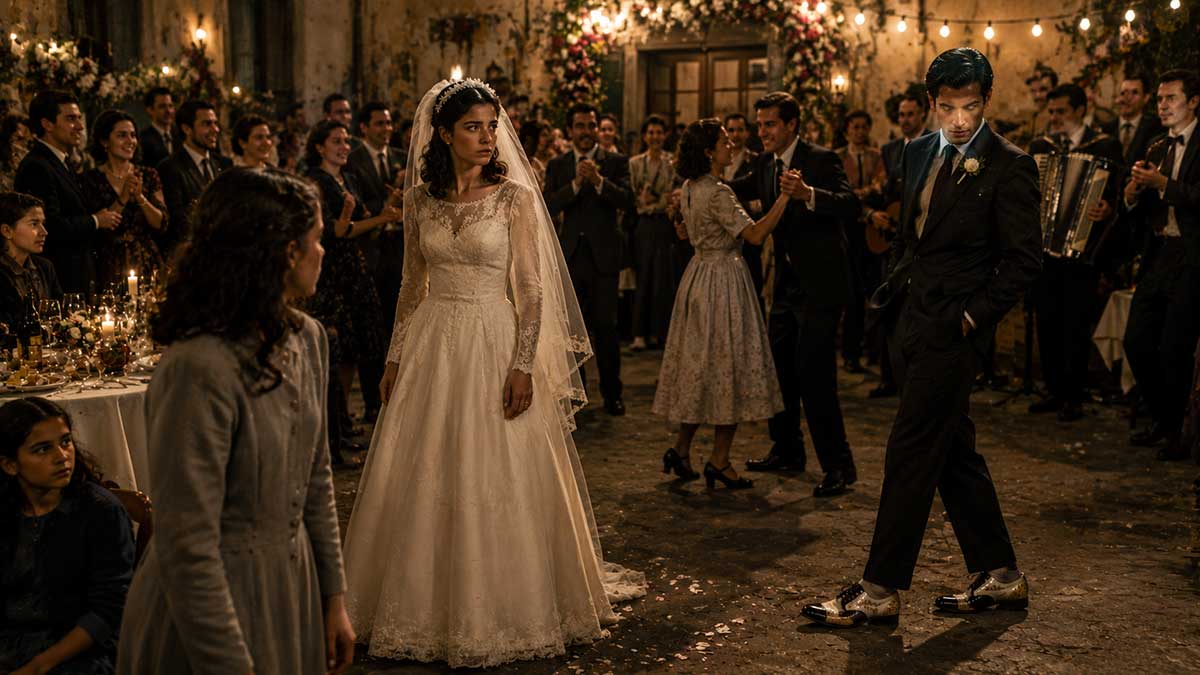
Stefano: People remember our wedding as a beautiful day. They remember the white dress, the tables crowded with food, the music, the flowers, the families watching us begin a new life. From the outside, it looked like triumph. Lila had escaped poverty. I had become a successful businessman. Together, we seemed ready to build a future stronger than the neighborhood that formed us.
Yet before the celebration ended, Lila saw Marcello Solara wearing the shoes she had designed—the shoes I had promised would never pass into his hands.
Her face changed.
In that moment, she did not simply discover that I had broken one promise. She understood that the forces she had tried to resist had already entered our marriage. Money, family loyalty, male authority, fear, and the Solaras were waiting inside the future I had offered her.
I once told myself that I betrayed her to protect our business. Later, I told myself that I had no real choice. Both explanations hid a harder truth. I wanted to be the man who rescued Lila, yet I did not know how to love a woman I could not direct.
Perhaps our marriage did not fail on the wedding day. Perhaps the wedding only revealed the beliefs we had carried into it long before we made our vows.
Did Lila marry Stefano for love—or choose the least dangerous future available?
Lenù: Lila, when Stefano proposed, did you love him?
Lila: I trusted the future he seemed to represent.
Stefano: That is not the same answer.
Lila: No.
Stefano: Did you love me at all?
Lila: At times.
Stefano: At times?
Lila: You want the past to become simpler than it was.
Immacolata: Most marriages begin with mixed motives.
Nino: Affection, money, status, desire, escape.
Lila: Protection.
Lenù: Protection from Marcello?
Lila: From Marcello. From my father. From poverty. From a life in which every choice required permission from a man who believed he knew what was best for me.
Stefano: I thought I was giving you independence.
Lila: You were giving me a different dependency.
Stefano: I had money. A business. A home. I wanted to share them with you.
Lila: Share?
Stefano: Yes.
Lila: Did I have equal control?
Stefano: Not at first.
Lila: Did you think I should?
Stefano: I thought you should advise me.
Lila: Advise.
Not decide.
Lenù: At the time, I envied you.
Lila: I know.
Lenù: You seemed beautiful, desired, protected, and economically secure. I thought marriage had given you everything school had given me.
Lila: You confused access with autonomy.
Nino: That distinction shaped both of your lives.
Lenù: Education gave me access to institutions I did not control.
Marriage gave Lila access to money she did not control.
Immacolata: For women of my generation, that was often considered success.
A husband with work.
A respectable home.
Food on the table.
Lila: Respectability is useful when people are starving.
It becomes dangerous when used to silence every other question.
Stefano: What question should I have asked?
Lila: Not “How can I provide for you?”
Stefano: Then what?
Lila: “What kind of life do you want to build?”
Stefano: I thought I knew.
Lila: Exactly.
Nino: Rescue often begins with one person assuming the other person’s answer.
Immacolata: Yet Lila accepted.
Lila: I did.
Lenù: Do you regret it?
Lila: Regret can become dishonest when it pretends the rejected path was open and safe.
Nino: What were the alternatives?
Lila: Refuse Stefano and remain under my father’s authority.
Accept Marcello and enter the Solaras’ world directly.
Work inside businesses controlled by men who considered my ideas useful only when they could own them.
Leave without money, education, or protection.
Stefano: Then I was the best choice.
Lila: The least terrible choice is not always the best choice.
Stefano: That sounds unfair.
Lila: It is unfair.
Not only to you.
To both of us.
Immacolata: A woman can make a choice freely within conditions that are not free.
Lenù: Lila chose Stefano.
The neighborhood had already chosen the limits around that decision.
Nino: Did you believe marriage could change those limits?
Lila: I believed I could use marriage to create room.
Stefano: Use marriage?
Lila: You wanted to use my mind in the business.
I wanted to use your position to build a life no one in my family had built.
We each believed the other person’s strength could carry us somewhere.
Lenù: That sounds like partnership.
Lila: It might have become one.
Stefano: What prevented it?
Lila: You wanted my intelligence until it challenged your authority.
Stefano: And you wanted my resources without accepting that I had responsibilities.
Lila: Responsibilities did not require ownership.
Stefano: I did not think I owned you.
Lila: You believed the final decision belonged to you.
Stefano: I was the husband.
Lila: There it is.
Immacolata: He said what most men believed without needing to say it.
Nino: The marriage began with two different definitions of partnership.
Lenù: Stefano believed partnership meant he would protect and lead.
Lila believed it meant two people would decide together.
Lila: His definition was considered normal.
Mine was considered rebellion.
What did the wedding shoes reveal that words had hidden?
Nino: Why did the shoes matter so much?
Stefano: I asked myself that for years.
Lila: Since they contained more truth than the vows.
Lenù: They were the shoes you designed with Rino.
Lila: They carried our hope that something new could come from our family.
Stefano: I helped turn them into a business.
Lila: Yes.
Stefano: Yet business required money and alliances.
Lila: Marcello wanted those shoes before the wedding.
I refused him.
Stefano: I knew.
Lila: You knew what the refusal meant.
Stefano: I knew you disliked him.
Lila: Disliked?
Stefano: Feared him.
Lila: I refused the Solara claim over everything they desired.
The shoes were my work.
My family’s work.
My decision.
Lenù: When Marcello arrived wearing them, Lila understood Stefano had given away more than leather.
Nino: He had given away her refusal.
Lila: Yes.
Stefano: I was trying to secure investment.
Lila: Without telling me.
Stefano: I knew you would object.
Lila: Then you knew it was a betrayal.
Stefano: I believed you would understand later.
Lila: Men often call secrecy temporary when they expect women to accept the result.
Immacolata: He feared losing the opportunity.
Stefano: I feared losing everything we were building.
Lila: You feared the Solaras as much as I did.
You simply chose accommodation.
Stefano: What would resistance have cost us?
Lila: Money.
Protection.
Perhaps the business.
Stefano: Then was I wrong to consider those things?
Lila: No.
You were wrong to decide that my boundary could be sold without my knowledge.
Nino: The betrayal was not compromise alone.
It was removing Lila from the decision.
Stefano: Yes.
Lenù: That one act gave Lila a glimpse of the marriage ahead.
Lila: I saw the pattern.
Whenever my refusal threatened the business, family peace, or Stefano’s standing, my refusal would become negotiable.
Immacolata: Did you know all that in one instant?
Lila: I felt it before I could name it.
Nino: Recognition often arrives before explanation.
Stefano: I remember looking at you and thinking you were ruining our wedding over a pair of shoes.
Lila: You saw an object.
I saw a warning.
Lenù: What exactly did you see?
Lila: I saw that Stefano wanted to stand between me and the Solaras, yet he wanted their approval too.
I saw that he wished to protect my mind, yet he would trade against my wishes when profit demanded it.
I saw that the man who promised to oppose the neighborhood’s old order still needed acceptance from the men who ruled it.
Stefano: I wanted to succeed.
Lila: Success was never neutral there.
Nino: Money came tied to family, reputation, violence, and obligation.
Stefano: Refusing every compromised alliance would have left us powerless.
Lila: Perhaps.
Stefano: Then what should I have done?
Lila: Told me the truth.
Let me choose the price with you.
Stefano: Would you have agreed?
Lila: Perhaps not.
Stefano: Then the business might have failed.
Lila: Yes.
Stefano: You would have risked our future over Marcello wearing shoes?
Lila: I would have risked money to keep the future from becoming his.
Immacolata: That is where you were different.
Stefano: How?
Immacolata: You believed security could protect dignity later.
Lila believed dignity surrendered once would be harder to recover.
Nino: Neither fear was imaginary.
Lenù: Yet only one of them controlled the decision.
Stefano: Mine.
Lila: Yes.
Stefano: Then the wedding shoes revealed that I had already begun acting as a husband before learning how to become a partner.
Did Stefano love Lila’s brilliance—or only the parts that served him?
Immacolata: Stefano, what first attracted you to Lila?
Stefano: Her mind.
Her courage.
The way she could enter a room and make everyone seem half awake.
Lila: You liked watching me defeat other people.
Stefano: At first.
Nino: At first?
Stefano: It felt different when she challenged me.
Lenù: Why?
Stefano: I thought love should create loyalty.
Lila: Loyalty meaning agreement.
Stefano: Not always.
Lila: Often.
Stefano: Yes.
Nino: Many men admire a strong woman as long as her strength points outward.
Immacolata: Her sharpness becomes attractive when aimed at enemies.
Threatening when aimed at the husband.
Stefano: That is true.
Lila: You loved my intelligence as a family asset.
Stefano: That is too harsh.
Lila: You wanted my designs.
My ideas.
My ability to understand customers.
My instinct for business.
Stefano: I respected those things.
Lila: Until I disagreed about how they should be used.
Stefano: A business cannot follow every instinct.
Lila: Nor can a marriage follow one person’s command.
Lenù: Did Stefano ever see your work as fully yours?
Lila: At moments.
Then the family, the business, and the marriage absorbed it.
Nino: Explain.
Lila: My shoe designs became Cerullo products.
My labor became assistance to my husband.
My judgment became advice.
My resistance became temperament.
Immacolata: Women’s contributions often disappear into family nouns.
Stefano: I gave her a place in the business.
Lila: You gave me a place inside what you controlled.
Stefano: What would equality have looked like?
Lila: My name on decisions.
Access to money.
The right to reject deals.
Recognition that my work did not become yours when I married you.
Stefano: No one in the neighborhood arranged marriages that way.
Lila: Then no one in the neighborhood arranged equality.
Lenù: Did you expect Stefano to invent a new kind of marriage by himself?
Lila: No.
I expected him to listen when I tried to invent it with him.
Nino: Did he?
Lila: Until listening threatened his sense of manhood.
Stefano: I felt humiliated.
Immacolata: By disagreement?
Stefano: By the way she spoke to me in front of others.
Lila: You could have answered my argument.
You answered my defiance.
Stefano: The neighborhood watched everything.
A husband who seemed unable to control his wife lost respect.
Nino: Then violence and authority were partly performances for other men.
Stefano: Yes.
Lenù: Lila was punished so you could remain legible as a man.
(Stefano looks away.)
Stefano: Yes.
Immacolata: That is one of the darkest rules women lived under.
A man could care for a woman privately and harm her publicly to protect his standing.
Lila: Then return home and call the harm love, discipline, frustration, or necessity.
Stefano: I have no defense.
Lila: Good.
Stefano: I can explain the world that formed me.
I cannot use it to erase what I did.
Nino: Did you ever truly want an equal?
Stefano: I wanted the idea of one.
Lenù: What is the difference?
Stefano: An equal sounds noble before she refuses you.
Lila: That may be the most honest thing you have said.
Was Lila fighting Stefano—or the entire system that had shaped them both?
Lenù: Lila, did you sometimes ask Stefano to defeat a social order no single man could easily escape?
Lila: Yes.
Stefano: You admit that?
Lila: I expected you to reject rules you had been rewarded for following.
That was difficult.
Nino: Impossible?
Lila: No.
Difficult.
We should not call every difficult moral act impossible.
Immacolata: Stefano inherited authority.
Lila inherited resistance.
Stefano: And neither of us knew how to put those inheritances down.
Lenù: Did you see him as an individual or as another representative of male control?
Lila: Both.
Stefano: At times, I felt I was paying for every man who had frightened or limited her.
Lila: At times, you were.
Stefano: Was that fair?
Lila: No.
Stefano: Then why?
Lila: Since you stood where they stood.
You used the same words.
You expected the same obedience.
You wanted praise for offering a kinder version of the same arrangement.
Nino: The kinder jailer still controls the door.
Stefano: I do not accept that I was merely a jailer.
Lila: Nor should you.
You were a husband, lover, businessman, frightened young man, ambitious son, violent authority, and person capable of tenderness.
The contradiction does not erase the control.
Immacolata: People prefer simple villains.
They allow everyone else to remain innocent.
Lenù: Stefano was shaped by the neighborhood.
He shaped the marriage in its image.
Nino: Could love have helped him change?
Lila: Love can invite change.
It cannot complete another person’s work.
Stefano: I expected your love to soften you.
Lila: I expected yours to free you from needing control.
Stefano: We each treated love as a tool for remaking the other.
Lenù: Was that one reason the marriage became violent?
Stefano: I felt every refusal as proof I was failing as a husband.
Lila: I felt every command as proof marriage was erasing me.
Nino: One person defended authority.
The other defended selfhood.
Immacolata: Conflict became inevitable.
Stefano: Violence was not inevitable.
It was my choice.
Lila: Yes.
Stefano: I need that sentence to remain clear.
Lenù: Did the neighborhood encourage it?
Stefano: It excused it.
Men joked about controlling their wives.
Families advised women not to provoke husbands.
Public shame fell more heavily on the woman whose marriage was troubled than on the man who harmed her.
Immacolata: Women learned to hide injuries to protect the family.
Lila: Silence became another household duty.
Nino: Then marriage did not isolate two people from society.
It concentrated society inside one home.
Lenù: The family table, the bedroom, the business, the body—all became places where class and patriarchy continued their work.
Lila: Yes.
Stefano: I once thought our problems were private.
They were private acts carrying public rules.
Immacolata: Yet public rules do not strike a woman.
A person does.
Stefano: I know.
Nino: That distinction matters.
Systems shape choices.
They do not remove responsibility.
Lila: Exactly.
I could see the system.
I still needed Stefano to choose differently inside it.
Stefano: I failed.
Lila: Yes.
Did marriage destroy Lila’s brilliance—or force it into forms no one recognized?
Nino: What happened to Lila’s mind after marriage?
Lenù: It did not disappear.
Stefano: No.
Lila: It became harder to own.
Immacolata: What does that mean?
Lila: My ideas entered the shoe business, the grocery store, family strategy, money, and survival.
People used them without calling them intellectual work.
Lenù: At school, my intelligence produced grades and credentials.
Lila: In marriage, mine produced profit for other people.
Stefano: You benefited from that profit.
Lila: Through you.
That difference mattered.
Nino: Did marriage narrow your mind?
Lila: It divided my attention.
Lenù: Between what?
Lila: Business, pregnancy, violence, family alliances, money, children, and the constant need to anticipate Stefano’s mood.
Immacolata: That anticipation consumes thought.
Lila: Yes.
A frightened mind can remain intelligent, yet much of its intelligence becomes devoted to survival.
Stefano: I did that to you.
Lila: You were part of it.
Nino: Then unrealized talent is not always talent left unused.
It may be talent used invisibly.
Lenù: Lila’s mind was working constantly.
The world simply did not reward the kind of work it demanded from her.
Immacolata: Women solved family crises, stretched money, read danger, managed men, raised children, and preserved households.
None of it became evidence of brilliance.
Lila: Unless a man turned the result into a business.
Stefano: You think I stole your mind.
Lila: Not completely.
You relied on it.
Absorbed it.
Feared it.
Tried to control it.
Stefano: Did marriage make you less creative?
Lila: It made creation dangerous.
Nino: How?
Lila: Each new idea risked becoming another object someone else would own.
Lenù: Is that why you sometimes destroyed your work?
Lila: Partly.
Stefano: I thought you were unstable.
Lila: Destruction was one of the few decisions no one could take from me.
Immacolata: A terrible kind of autonomy.
Lila: Yes.
Nino: Did you ever feel jealous of Lenù’s education during the marriage?
Lila: Constantly.
Lenù: I knew.
Lila: No, you knew the polite version.
Lenù: What was the impolite version?
Lila: I sometimes wanted your schools to reject you.
I wanted your language to fail.
I wanted proof that the road denied to me had not delivered you anywhere worth reaching.
Lenù: That hurts.
Lila: I wanted you to succeed too.
Stefano: Contradiction again.
Lila: Marriage did not remove my love for Lenù.
It made her freedom harder to witness.
Lenù: I looked at your marriage and imagined you had won.
Lila: I looked at your education and imagined you had escaped.
Nino: Each woman mistook the other’s access for freedom.
Immacolata: Neither could see the full cost from outside.
Lenù: Did my writing later restore anything that marriage took?
Lila: It gave public form to some of what had remained unseen.
Lenù: Is that praise?
Lila: Partial praise.
Do not become excited.
Lenù: I will try.
Could Lila have saved the marriage without becoming smaller?
Stefano: People may ask whether we could have done something differently.
Lila: We could have done many things differently.
Stefano: Could you have spoken with less contempt?
Lila: Yes.
Lenù: Could you have accepted compromise more patiently?
Lila: At times.
Immacolata: Could you have protected your independence without attacking every weakness Stefano showed?
Lila: Perhaps.
Nino: Would any of that have changed the underlying structure?
Lila: Not by itself.
Stefano: I needed respect.
Lila: You needed obedience to feel respected.
Stefano: At the time, yes.
Lenù: Could Lila have reassured you without surrendering?
Stefano: I do not know.
Immacolata: A woman can spend her entire life translating equality into language a man will not experience as insult.
Lila: That translation becomes another burden.
Nino: Yet intimacy requires care in speech.
Lila: I know.
I used intelligence as a weapon.
Stefano: Often.
Lila: I could identify your shame and press directly against it.
Stefano: You made me feel small.
Lila: You made me physically afraid.
Stefano: Those are not equal harms.
Lila: No.
Lenù: That matters.
Stefano: I sometimes used her cruelty to justify my violence.
It never justified it.
Immacolata: Could you have sought help?
Stefano: From whom?
Nino: Family?
Stefano: They would have told me to control my wife.
Lila: Mine would have told me to endure.
Lenù: Friends?
Lila: Friendship could offer refuge.
It could not change the law inside the home.
Nino: Then the marriage lacked a language for repair.
Immacolata: It had apology.
Lila: Apology without redistribution of authority returns the couple to the same conflict.
Stefano: What would repair have required?
Lila: Shared money.
Shared decisions.
No violence.
No secret alliances.
Recognition that my work belonged to me.
Freedom to leave.
Stefano: Freedom to leave?
Lila: A marriage cannot be voluntary when departure means poverty, disgrace, loss of children, or danger.
Nino: Consent must continue after the wedding.
Immacolata: That idea would have sounded radical to many families.
Lila: Equality often sounds radical to people comfortable with hierarchy.
Lenù: Could the marriage have survived those changes?
Stefano: The marriage I knew would not have.
Lila: A different marriage might have.
Stefano: Would you have stayed?
Lila: I cannot answer from the person I am now.
Stefano: Did you ever want us to succeed?
Lila: Yes.
Stefano: Then why did it feel as though you were waiting for failure?
Lila: Since I noticed every sign of the cage forming.
You interpreted vigilance as sabotage.
Lenù: Trauma makes trust difficult.
Lila: Experience made trust difficult.
Do not turn every accurate fear into illness.
Nino: Fair correction.
Immacolata: Perhaps saving the marriage would have required Stefano to surrender authority and Lila to surrender the need to detect betrayal before tenderness had time to grow.
Lila: That is close.
Stefano: Neither of us knew how.
Lila: No.
Lenù: Was love present?
Stefano: Yes.
Lila: Yes.
Nino: Was love sufficient?
Lila: No.
Did marriage imprison Lila—or expose the prison that had surrounded her since childhood?
Lenù: Was Stefano the prison?
Lila: He became one of its walls.
Stefano: And the others?
Lila: Poverty.
Family duty.
Male violence.
Economic dependence.
Public shame.
The belief that a wife’s body, labor, and time belonged to the household.
Immacolata: Those walls existed before the proposal.
Lila: Yes.
Nino: Then marriage did not create Lila’s confinement from nothing.
Lila: It concentrated it.
Stefano: Yet marriage gave you money and status.
Lila: A larger room can still be locked.
Lenù: Did you ever feel freer as Stefano’s wife than as your father’s daughter?
Lila: At moments.
Stefano: Which moments?
Lila: When I worked.
When my ideas moved quickly.
When we planned something together and you listened without needing to dominate.
When I could buy something without begging my father.
When I thought we might become different from our families.
Stefano: Those moments were real.
Lila: Yes.
Nino: That makes the tragedy deeper.
Immacolata: A prison with no window is easier to name.
Lenù: A life containing love, money, work, and violence is harder.
Lila: People ask why women remain.
They expect misery to be continuous and simple.
Stefano: Ours was not.
Lila: No.
There were good days.
Plans.
Laughter.
Desire.
Hope.
Then control returned.
Nino: The good days can become evidence used against the woman’s own judgment.
Lila: She tells herself the loving man is the true one and the violent man is temporary.
Stefano: Which one was true?
Lila: Both.
Stefano: I wanted one to cancel the other.
Lila: It could not.
Immacolata: Did leaving make Lila free?
Lila: It changed the shape of the struggle.
Lenù: No clean escape again.
Lila: None.
Nino: Then what did she gain?
Lila: The right to stop calling captivity marriage.
Stefano: That sentence is deserved.
Lenù: The wedding was once presented as Lila’s rescue.
In truth, it revealed that the society around her could offer a woman security without self-determination.
Immacolata: And call the result success.
Lila: Exactly.
Closing
Stefano: I once believed I had failed to keep Lila happy. That explanation placed me at the center even when I was confessing. It treated her as a woman whose happiness depended on whether I provided enough affection, money, protection, or patience.
The deeper failure was not that I could not satisfy her.
It was that I entered marriage believing her life would naturally become part of mine.
Her work would become family work.
Her intelligence would advise my decisions.
Her body would answer my expectations.
Her public behavior would protect my reputation.
Her disagreements would remain private.
Her independence would exist inside limits I considered reasonable.
I loved her, yet I wanted love to confirm my authority.
I admired her brilliance, yet I wanted it directed where it would help me.
I promised to protect her from the Solaras, then accepted their influence when resistance threatened the future I wanted.
The shoes at our wedding revealed all of it before I had words for it.
Lila saw that I had given another man access to something she had refused him. She saw that I would call the decision practical. She saw that the marriage would ask her to negotiate repeatedly for rights I had assumed were mine from the beginning.
The neighborhood shaped me. Poverty frightened me. Other men judged me. Family expectations trained me. None of that struck her, silenced her, or made decisions in secret.
I did.
Lila was not easy to love. She could be cruel, contemptuous, suspicious, and determined to expose every weakness. Yet difficulty does not justify domination. A woman does not lose her right to freedom when she becomes challenging.
Our marriage contained real affection, desire, work, hope, and shared ambition. That truth should remain beside the violence, not cover it.
Did marriage rescue Lila?
It gave her temporary distance from one form of control and placed her inside another.
Did it destroy her brilliance?
No. It forced much of that brilliance into survival, invisible labor, resistance, and work others could claim.
Was I only a villain?
No.
That answer does not make me innocent.
Lila did not reject marriage because she rejected love. She rejected a version of love that expected gratitude for security and obedience in return. She wanted a partnership neither of us had been taught how to create.
The tragedy of our wedding was not that Lila’s happiness ended before the music stopped.
It was that she recognized the old world had entered our new life with us—and I was already holding the door open.
Topic 5: Can Anyone Ever Escape the Person They Once Were?
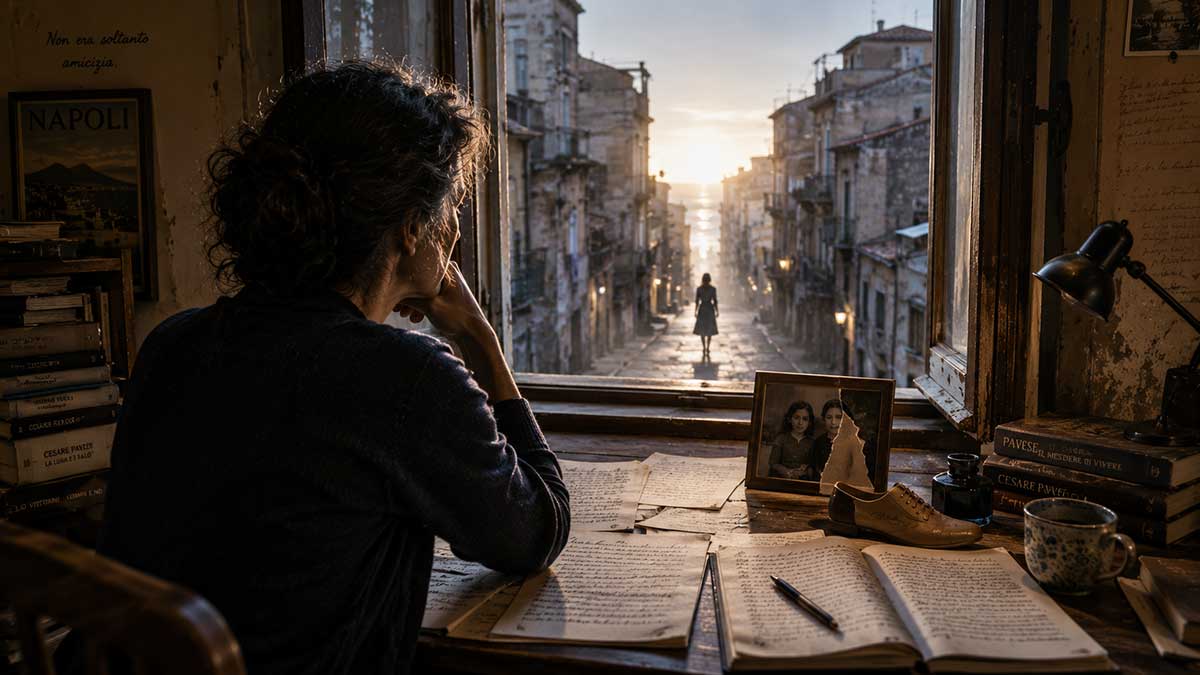
Opening
Lenù: I once believed leaving the neighborhood would make me someone new. Each school, city, book, and relationship seemed to place another mile between the girl I had been and the woman I wished to become. Yet the farther I traveled, the more clearly I heard the old voices inside me. Lila carried the neighborhood through defiance. I carried it through shame, ambition, and memory. We changed our clothes, our speech, our homes, and the names others gave us. Still, the children we had been continued making choices through us. Perhaps no one escapes the past. Perhaps freedom lies in deciding whether the past becomes a prison, a witness, or raw material for a different life.
Did either of you truly leave the neighborhood?
Stefano: Lenù left. That seems clear.
Lila: Her address changed.
Lenù: More than my address changed.
Lila: Your speech changed. Your clothes changed. Your friends changed. Your fear did not.
Lenù: Which fear?
Lila: That someone would discover you were still one of us.
Immacolata: She was one of us.
Lenù: I never denied it completely.
Immacolata: Completely?
Lenù: There were rooms where I hoped no one would ask about my family.
Nino: Class can remain present after poverty is no longer visible.
Stefano: Then what counts as leaving?
Lenù: Gaining choices.
Lila: Choices shaped by what you were fleeing.
Lenù: Every choice has a history.
Lila: Exactly.
Immacolata: Did you choose education out of love for learning or terror of becoming me?
Lenù: Both.
Immacolata: Did you choose certain men out of love or out of hunger for admission into another class?
Lenù: Both.
Nino: That answer includes me.
Lila: It should.
Nino: Lenù saw in me a version of intellectual freedom.
Lenù: I saw a life where conversation mattered more than neighborhood reputation.
Lila: You saw a man whose attention seemed to certify that you belonged in that life.
Lenù: Yes.
Stefano: Then the neighborhood followed you into love.
Lenù: It followed me everywhere.
Immacolata: Through what?
Lenù: Through vigilance. Through comparison. Through the expectation that comfort might disappear. Through the belief that success had to be defended every day.
Nino: Success can become another form of fear when losing it feels like returning.
Lila: I never left geographically in the same way, yet I escaped parts of the neighborhood before Lenù did.
Stefano: How?
Lila: I refused its explanations.
Stefano: You married inside its rules.
Lila: I tried to use those rules against themselves.
Stefano: And failed.
Lila: Yes.
Immacolata: Refusal does not always create freedom.
Lila: No. Sometimes it creates a different cage.
Lenù: You saw the neighborhood more clearly than anyone.
Lila: Seeing a cage does not open it.
Nino: Did your intelligence make confinement harder?
Lila: It made every wall visible.
Stefano: Yet you remained tied to business, family, children, money, and old conflicts.
Lila: And you remained tied to the need to control what you feared losing.
Stefano: I did.
Immacolata: None of us left cleanly.
Lenù: What would leaving cleanly mean?
Immacolata: Forgetting.
Lila: That is not freedom. That is damage.
Nino: Then departure is not the removal of the past.
Lenù: It is a renegotiation with it.
Stefano: Did you ever win that negotiation?
Lenù: No final agreement was reached.
Lila: Good. Final agreements with the past are usually lies.
Immacolata: A person may reject the life prepared for her and still carry the hands that prepared it.
Lenù: My mother’s walk entered my nightmares.
Immacolata: And later?
Lenù: It entered my compassion.
Immacolata: That took you long enough.
Lenù: Yes.
Lila: We did not leave the neighborhood once. We left and returned inside ourselves many times.
Nino: Then escape may be repetitive rather than permanent.
Lenù: Each new room required another decision: hide where I came from, perform it, defend it, or speak from it honestly.
Stefano: Which did you choose?
Lenù: Different answers at different times.
Lila: That is closer to truth than claiming escape.
Did Lila disappear to become free—or to control the story others told about her?
Nino: Lila, why erase yourself?
Lila: I did not erase myself.
Lenù: You removed photographs. Documents. Possessions. Traces.
Lila: Traces are not the self.
Lenù: They are how people find us.
Lila: Perhaps I no longer wished to be found.
Stefano: That sounds like punishment.
Lila: For whom?
Stefano: Everyone left behind.
Lila: Must a person remain visible to protect others from grief?
Immacolata: A mother cannot disappear without leaving a wound.
Lila: A mother can be present and leave wounds too.
Immacolata: True.
Lenù: You knew I would search for meaning.
Lila: You always searched for meaning.
Lenù: Did you know I would write?
Lila: I suspected you might.
Lenù: Then your disappearance was a challenge.
Lila: Perhaps.
Nino: A final test of authorship?
Lila: A test of whether Lenù could tolerate something she could not explain.
Lenù: You knew I could not.
Lila: Yes.
Lenù: Then you left me one last trap.
Lila: Or one last boundary.
Stefano: What boundary?
Lila: The right not to become another person’s finished story.
Lenù: I never believed you were finished.
Lila: You still arranged me into chapters.
Lenù: I wrote to keep you from vanishing.
Lila: That sentence sounds loving.
Lenù: It was loving.
Lila: It sounds possessive too.
Lenù: It may have been.
Immacolata: Love and possession often use the same grammar.
Nino: “Stay where I can reach you.”
Stefano: “Remain the person I recognize.”
Lenù: “Let me explain you.”
Lila: Exactly.
Lenù: Yet disappearing gave you control only over absence. You could not control what others imagined afterward.
Lila: No one controls memory.
Nino: Then why remove the evidence?
Lila: To interrupt certainty.
Stefano: People would create stories anyway.
Lila: Let them know they are creating them.
Lenù: Did you want to become unknowable?
Lila: I already was.
Lenù: Not to me.
Lila: Especially to you.
(Lenù goes silent.)
Immacolata: That was harsh.
Lila: Lenù knew more about me than anyone. She still knew fragments.
Nino: Every person remains partly inaccessible.
Stefano: Marriage taught me that.
Lila: Marriage taught you that another person’s inaccessibility can make you violent.
Stefano: Yes.
Lenù: Friendship taught me that it can make a person write.
Lila: Yes.
Immacolata: Which response is better?
Lila: Writing harms differently.
Lenù: I admitted that I could not contain you.
Lila: Yet the book contained a version of me.
Lenù: Was I meant to remain silent?
Lila: No answer would have been innocent.
Nino: Then disappearance was not pure freedom.
Lila: Nothing pure interested me.
Stefano: Was it revenge?
Lila: Partly.
Lenù: Against me?
Lila: Against everyone who believed access to me was permanent.
Immacolata: Was it despair?
Lila: Partly.
Nino: Was it self-creation?
Lila: Perhaps the final act of it.
Lenù: Creation through removal.
Lila: A blank space can resist ownership better than a portrait.
Lenù: It can wound the people who loved the person in the portrait.
Lila: Yes.
Lenù: Do you regret that?
Lila: Regret is not the same as reversal.
Lenù: That is not an answer.
Lila: It is the only one I have.
Nino: Did disappearing free you from your former self?
Lila: No.
Stefano: Then what did it achieve?
Lila: It prevented others from deciding where my story ended.
Lenù: Yet I wrote an ending anyway.
Lila: And revealed yourself through it.
Lenù: More than I revealed you?
Lila: Far more.
Can memory preserve a person without trapping them inside the past?
Immacolata: Lenù, why did you need to remember everything?
Lenù: I feared loss.
Immacolata: Everyone fears loss.
Lenù: I feared that without words, our lives would disappear as though they had never mattered.
Lila: Lives matter before anyone records them.
Lenù: History rarely treats them that way.
Stefano: Records favor people with money and authority.
Nino: Writing can return attention to lives excluded from official history.
Lila: It can turn suffering into art for strangers.
Lenù: Yes.
Lila: You say yes too calmly.
Lenù: I have asked myself that question for years. Did I honor us, expose us, exploit us, or rescue something?
Immacolata: What answer did you reach?
Lenù: All of them.
Stefano: Another contradiction.
Lenù: A true one.
Nino: Memory is never a neutral archive.
Lila: It selects.
Immacolata: It protects the person remembering.
Stefano: It punishes the person remembered.
Lenù: It can do both in the same sentence.
Lila: Did you remember me accurately?
Lenù: No.
Lila: Good.
Lenù: Good?
Lila: Accuracy is a dangerous claim.
Lenù: I remembered honestly.
Lila: That is different.
Nino: Honest memory admits distortion.
Lenù: I wrote from the person I had become, looking back at the girl I had been, trying to understand another girl who no longer existed in that form.
Immacolata: Then three versions stood between you and every event.
Lenù: More than three.
Stefano: Did writing free you from Lila?
Lenù: No.
Lila: Did it bind you more tightly?
Lenù: Yes.
Nino: Then why continue?
Lenù: Since the binding became conscious.
Lila: Explain.
Lenù: Before writing, you lived inside my judgments, ambitions, jealousies, and private comparisons. On the page, I could see the structure of that dependence.
Lila: Seeing is not escaping.
Lenù: No, but it changes obedience.
Immacolata: You could hear the old voice without following every command.
Lenù: Yes.
Stefano: Then memory can become a witness rather than a ruler.
Nino: Only when the person remembering accepts uncertainty.
Lila: And accepts that the remembered person had an existence outside the memory.
Lenù: I accept that.
Lila: Do you?
Lenù: I am trying.
Lila: You still want my approval.
Lenù: Yes.
Lila: Even now?
Lenù: Especially now.
Immacolata: Then part of you is still the schoolgirl waiting to learn whether Lila has already solved the problem.
Lenù: Yes.
Nino: Can that girl ever disappear?
Lenù: I no longer want her to.
Stefano: Why not?
Lenù: She carried the hunger that moved me forward. She carried fear too. I spent years trying to separate them. I no longer think they can be cleanly divided.
Lila: Then what does freedom mean now?
Lenù: Letting the girl remain without letting her control every room.
Immacolata: That is a wiser escape.
Stefano: It still sounds incomplete.
Lenù: It is.
Nino: Must identity ever be complete?
Lila: Completion is another form of death.
Immacolata: People change, yet they keep old selves like rooms in a house.
Stefano: Some rooms should be locked.
Lila: Locked rooms still shape the house.
Lenù: Some must be opened carefully.
Nino: Some contain people we misunderstood.
Immacolata: Some contain mothers our daughters feared becoming.
Lenù: Some contain friends we loved by competing with them.
Lila: Some contain the person who saw us before we knew how to see ourselves.
Stefano: And some contain what we did to those people.
(No one answers.)
Lenù: Perhaps memory becomes ethical when it refuses to turn the past into a verdict.
Lila: Better.
Nino: A conversation rather than a sentence.
Immacolata: A place where the dead, absent, and former selves can speak without owning the present.
Stefano: Is that possible?
Lenù: Not perfectly.
Lila: Perfection has caused enough trouble between us.
Closing
Lila: People may leave a street, a marriage, a school, a family, or a name. They do not leave behind every self that learned to survive there. Lenù carried the neighborhood into educated rooms. I carried it into every refusal. She tried to defeat disappearance through memory. I tried to defeat ownership through disappearance. Neither of us fully succeeded. The past remained inside our gestures, loves, fears, ambitions, and stories. Yet the failure to escape completely does not mean change was false. Freedom may not require the destruction of who we once were. It may ask us to face that person without surrendering the future to her.
Final Thoughts by Lenù

I spent much of my life believing that Lila possessed the self I lacked.
She appeared certain where I hesitated.
Original where I imitated.
Fearless where I adapted.
Brilliant where I merely worked.
That belief drove me forward, but it distorted us both.
Lila was never as fearless as I made her. Her aggression often guarded doubt. Her refusal often concealed terror of being controlled, judged, or exposed as less extraordinary than people expected.
I was never merely the obedient girl following in her wake. Discipline was not the absence of talent. Endurance was not an inferior intelligence. The years I spent studying, writing, revising, failing, and beginning again were part of my mind, not evidence against it.
We misunderstood each other through admiration.
We wounded each other through comparison.
We used each other as evidence.
I used Lila to explain my ambition, my guilt, and my fear that I did not deserve my success.
Lila used me as proof that some part of her could travel beyond the neighborhood, enter books, and reach a life denied to her.
Our friendship was never pure.
I no longer believe purity would have made it more meaningful.
We loved each other through jealousy.
We recognized each other through rivalry.
We sometimes offered encouragement with one hand and punishment with the other.
Still, there were moments when neither of us counted.
Moments when an idea passed between us without ownership.
Moments when one girl saw the possibility inside the other before family, school, marriage, or society could name it.
Those moments may contain the deepest meaning of the title.
The brilliant friend was Lila.
The brilliant friend was me.
The brilliant friend was the person each of us became when the other refused to accept the limits placed around us.
Education changed my life. It did not erase class, shame, or the neighborhood. It gave me language for them, distance from them, and new ways to misunderstand them.
Marriage changed Lila’s life. It did not grant the freedom she hoped money and status might provide. The wedding shoes revealed that the old alliances had already entered the marriage before she fully understood the bargain.
Lila’s disappearance did not resolve her life.
It protected a final space no one else could occupy.
My decision to write did not defeat that disappearance.
It exposed my refusal to accept it.
I wanted to preserve her.
I wanted to answer her.
I wanted to prove that our lives mattered.
I wanted to retain access to a person who had withdrawn permission.
That contradiction remains.
No story can fully return a missing person.
No memory can reproduce another mind.
No narrator can stand outside desire, guilt, pride, or grief.
The most honest thing I can say is that I wrote a version of Lila.
A powerful version.
A loving version.
An incomplete version.
Through that incompleteness, I revealed myself.
Perhaps that is what friendship does across a lifetime. It gives us another person through whom we encounter our own ambition, fear, cruelty, generosity, and capacity for change.
We do not escape the people we once were.
The child remains.
The neighborhood remains.
The mother we feared becoming remains.
The friend whose approval mattered more than public praise remains.
Freedom may begin when we stop treating those former selves as either masters or enemies.
They become witnesses.
They remind us what was denied, what was chosen, what was endured, and what was made possible through another person’s presence.
Lila tried to disappear beyond my reach.
I answered with pages.
Perhaps neither act was fully kind.
Perhaps both were attempts to claim a life in a culture that had repeatedly claimed our bodies, labor, talent, marriages, voices, and stories.
After everything, I cannot say whether I knew Lila completely.
I know that she changed the limits of what I believed I could become.
I know that I did the same for her.
That may be the most honest definition of our friendship:
Two women spending a lifetime trying to become themselves, each carrying the other as inspiration, accusation, memory, and unfinished question.
Short Bios:
Elena “Lenù” Greco
The narrator of My Brilliant Friend and the wider Neapolitan series. Lenù grows up in a poor neighborhood near Naples and pursues education as her main route beyond the life expected of her. Intelligent, disciplined, observant, and deeply self-critical, she becomes a successful writer but continues to question whether her achievements arose from her own gifts or from Lila’s influence. Her narration preserves their shared history, yet raises difficult questions about memory, authorship, and the right to tell another person’s story.
Raffaella “Lila” Cerullo
Lenù’s closest friend, rival, intellectual inspiration, and emotional counterpart. Lila possesses striking natural intelligence, creativity, intuition, and defiance, but poverty and family decisions end her formal education. She channels her talent into reading, design, business, technology, and resistance to the social structures around her. Lila rejects easy definitions and resists being possessed by family, marriage, friendship, or narrative. Her eventual disappearance frames the entire series.
Nino Sarratore
An intelligent, politically engaged young man who represents education, intellectual status, romance, and social mobility in Lenù’s mind. Both Lenù and Lila are drawn to him at different stages, which intensifies the competition and emotional tension between them. Nino often speaks the language of progressive ideas, yet his personal conduct reveals a gap between intellectual identity and moral responsibility.
Stefano Carracci
The son of Don Achille Carracci and Lila’s husband. Stefano initially appears to offer Lila financial security, business opportunity, and protection from the Solara family. The wedding ending exposes his willingness to compromise with the forces Lila despises. His relationship with her reflects the economic and patriarchal structures that convert marriage into control, ownership, and violence.
Immacolata Greco
Lenù’s mother, a working-class woman shaped by poverty, physical labor, limited education, and family responsibility. Lenù fears becoming like her and sometimes treats her mother’s life as a future from which she must escape. Immacolata brings a grounded perspective to the conversation, reminding Lenù that education required family sacrifice and that rejecting inherited suffering does not require rejecting the women who endured it.
Leave a Reply