
What if John Ames’s final blessing was sincere—but arrived too late to repair what his silence had cost Jack’s family?
Introduction by Nick Sasaki
What does a father leave behind when he knows he will not live long enough to watch his child grow?
That question sits quietly at the center of Gilead by Marilynne Robinson. On its surface, the novel is a letter from an aging minister, Reverend John Ames, to his young son. Yet beneath its calm prose lies a profound examination of grace, judgment, fatherhood, race, memory, mortality, and the limits of even the best intentions.
For today's Imaginary Talk, we gather five voices whose lives were bound together by love, disappointment, hope, and unfinished conversations.
Joining us are Reverend John Ames, whose final letter became one of modern literature's great reflections on faith; Jack Boughton, the son whose life continually challenged his father's expectations and Ames's theology; Lila Ames, whose hard-won wisdom often revealed truths the ministers struggled to see; Reverend Robert Boughton, a father who loved deeply yet never fully understood the son standing before him; and Della Miles, whose presence transforms the novel from a private meditation on forgiveness into a searching examination of justice, belonging, and moral courage.
Across five conversations, they explored questions that remain timeless.
Can a good person become blind through the comfort of being considered good?
Does grace arrive only after someone has earned it, or must it come first?
Can faith call itself complete when it comforts individuals yet remains hesitant to confront injustice?
Do fathers bless their children, or quietly hand them unfinished burdens?
And when we finally accept that we cannot control the future, what gift remains worth leaving behind?
These conversations are imaginary.
The questions are not.
Perhaps every reader has stood somewhere between John Ames and Jack Boughton.
We have judged and been judged.
We have longed for approval.
We have carried expectations inherited from previous generations.
We have tried to leave something meaningful for those who come after us.
Gilead reminds us that the greatest inheritance may not be certainty.
It may be the courage to keep extending grace where judgment once seemed easier.
(Note: This is an imaginary conversation, a creative exploration of an idea, and not a real speech or event.)
Topic 1: Was John Ames a Good Man—or a Man Protected by His Own Goodness?
Opening
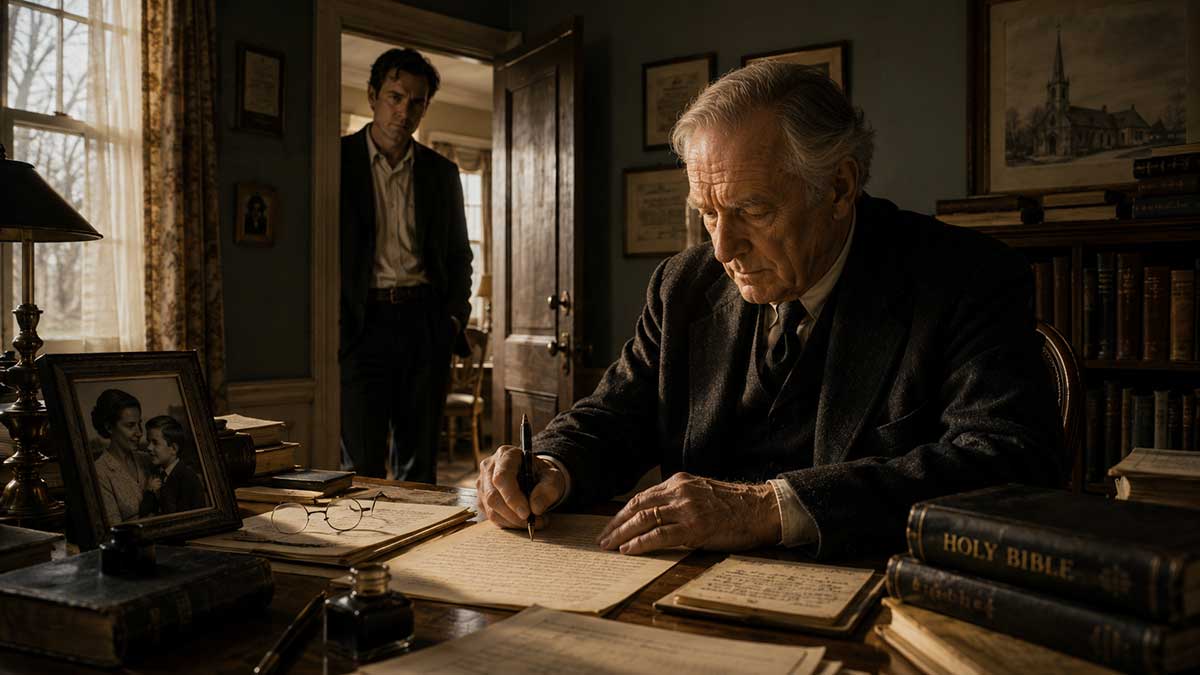
Lila Ames: People in Gilead called John a good man.
They were right.
He was gentle with children. He visited the sick. He listened to lonely people. He preached without turning the pulpit into a stage. He noticed sunlight on water, laughter at a table, the quiet dignity of an ordinary life. He loved his congregation, his town, his young son, and me.
Yet goodness can become a shelter.
A person may spend so many years being trusted that no one asks what he refuses to see. He may become skilled at confessing small faults and still protect the judgment beneath them. He may speak honestly about jealousy without admitting how much that jealousy shapes his decisions.
John knew how to examine his conscience.
He knew how to describe mercy.
The question is whether his reputation for goodness made it harder for him to see where mercy stopped.
Jack was the person who exposed that limit.
John feared him, judged him, pitied him, and blessed him.
I loved John.
I stand here now to ask him what few people in Gilead would have asked:
Were you good enough to face the harm your goodness left untouched?
Did Ames distrust Jack from moral wisdom—or personal fear?
John Ames: I had reasons to distrust Jack.
Jack Boughton: You always begin there.
Ames: Should I begin by pretending your past did not exist?
Jack: No.
Ames: You stole.
You lied.
You vanished when people depended on you.
You fathered a child and failed to care for the mother or the baby.
The child died.
Jack: I know.
Ames: Your father waited for you through years of silence.
Your family never knew when you might return, what you wanted, or how long you would stay.
Robert Boughton: John is not inventing any of that.
Jack: I said I know.
Lila: Knowing the facts was not John’s problem.
Ames: What was my problem?
Lila: You treated the facts as proof that every new action must carry the same meaning.
Ames: Past conduct matters.
Della Miles: It does.
Yet a past can become a prison when every act is interpreted through the worst thing a person has done.
Ames: I did not deny that Jack might have changed.
Jack: You doubted it every time I entered a room.
Ames: You gave me little reason for confidence.
Jack: I came to speak with you.
Ames: You spoke indirectly.
Jack: I had spent my life learning that direct speech could close a door.
Boughton: You could have spoken to me.
Jack: Could I?
Boughton: I was your father.
Jack: That is not the same as being safe.
(Boughton looks down.)
Ames: I feared what Jack might do after my death.
Lila: There.
Ames: I have admitted that.
Lila: You admitted concern.
You did not fully admit jealousy.
Ames: I admitted jealousy in the letter.
Lila: In careful language.
Ames: What would careless language have sounded like?
Lila: “I feared a younger man might remain near my wife and son after I was gone.”
Ames: That was part of it.
Lila: “I resented that Jack had time I did not.”
Ames: Yes.
Lila: “I worried that my wife might see something in him that I could not control.”
Ames: Yes.
Jack: You thought I wanted your place.
Ames: At moments.
Jack: I never wanted your place.
Ames: I know that now.
Jack: Did you know it then?
Ames: No.
Della: What did you think he wanted?
Ames: Money.
Sympathy.
Access to Lila.
Perhaps protection from consequences.
Jack: You never thought I might want counsel?
Ames: I considered it.
Jack: You considered it as one possibility among several darker ones.
Ames: That is fair.
Boughton: John, did you believe Jack might harm Lila?
Ames: I believed he might confuse her compassion with permission.
Lila: You did not trust my judgment either.
Ames: I trusted you.
Lila: Not completely.
Ames: No husband trusts without fear when death is near.
Della: Fear may explain suspicion.
It does not make suspicion accurate.
Ames: Agreed.
Jack: You preached that each person is more than his sin.
Yet you watched me as though sin had become my permanent character.
Ames: I watched you as a man who had harmed others and had not repaired that harm.
Jack: True.
Ames: Was I meant to ignore it?
Jack: No.
I wanted you to see that remorse can exist before repair becomes possible.
Della: Jack had a family with me.
He was trying to remain with us.
He failed often.
He did not fail in the same way he had failed before.
Ames: I did not know that when I first judged him.
Della: You knew enough to ask with more patience.
Ames: Perhaps.
Lila: You wanted certainty before mercy.
Ames: I wanted evidence.
Lila: Grace is not a reward for evidence.
Ames: Trust and grace are not identical.
Jack: No.
Yet you sometimes used the language of trust to delay grace.
Boughton: Is that true, John?
Ames: Yes.
I feared that mercy might make me foolish.
Della: Many people prefer being correct to being merciful.
Ames: I did not.
Lila: You preferred being merciful after you felt protected from regret.
Ames: That is harder to deny.
Can a person confess jealousy and still remain governed by it?
Boughton: John, you wrote openly about jealousy.
Does that not count for something?
Lila: It counts.
It does not settle the matter.
Ames: I never claimed that naming jealousy removed it.
Jack: Yet naming it let you feel honest.
Ames: Honesty matters.
Jack: It can become another form of self-protection.
Ames: Explain.
Jack: A man says, “I know I am jealous,” and then treats the confession as moral progress.
The jealousy remains active.
His self-image improves.
Lila: That is what I mean.
Ames: You believe my confession served me more than it changed me.
Lila: At first.
Della: Did you ever ask why Lila felt compassion for Jack?
Ames: I knew she recognized loneliness.
Lila: More than loneliness.
I knew what it meant to be judged by people who had never lived your life.
Ames: I did not judge your past.
Lila: You romanticized parts of it.
Ames: I loved you.
Lila: I know.
Love can still turn another person into a symbol.
Ames: What symbol did I make you?
Lila: Grace arriving late.
The poor outsider who entered your quiet house and made your old age beautiful.
Ames: Is that false?
Lila: It is incomplete.
Della: Incompleteness matters when one person’s story helps another person feel spiritually favored.
Ames: I never thought I deserved Lila.
Lila: You called me a gift.
Ames: You were.
Lila: A gift can become something received rather than a person who chooses.
Jack: You feared I might take the gift after you were gone.
Ames: Yes.
Lila: Yet I was not yours to leave behind.
Ames: I know.
Lila: Did you know it when you watched Jack near me?
Ames: Not fully.
Boughton: Jealousy makes possession sound like protection.
Della: Especially when the jealous person is respected.
Ames: You think people excused me since I was a minister.
Della: I think people trusted your motives before hearing the person affected.
Jack: No one in Gilead would have asked whether you were jealous of me.
They would have asked what trouble I intended.
Ames: That is true.
Boughton: They knew John.
Jack: They knew his reputation.
Boughton: His reputation was earned.
Jack: I am not saying it was false.
I am saying goodness creates credibility.
Credibility shapes whose fear is treated as wisdom.
Lila: John’s suspicion entered the room wearing the clothes of pastoral concern.
Ames: And your sympathy entered wearing the clothes of compassion.
Lila: Fair.
Ames: Could your sympathy have been mistaken?
Lila: Yes.
Ames: Could Jack have used it?
Lila: Yes.
Jack: I did not.
Lila: I know.
Ames: I did not know.
Della: The problem was not that you considered danger.
The problem was how quickly your position became the responsible one and Lila’s became emotional.
Ames: I see that.
Lila: You were allowed to call your fear discernment.
I was expected to prove that compassion was not foolish.
Boughton: John, did you fear Lila might prefer Jack’s company?
Ames: At moments.
Jack: I was not seeking her affection.
Ames: I know.
Jack: You keep saying that now.
Ames: Now is the only place from which I can answer.
Jack: Then answer fully.
Did you resent me for surviving you?
(Ames pauses.)
Ames: Yes.
Jack: Did my youth offend you?
Ames: Yes.
Jack: Did you look at your wife and son and think I might stand among them after your death?
Ames: Yes.
Jack: Did that fear shape your moral judgment of me?
Ames: Yes.
Lila: That is the confession I wanted.
Ames: It is not a pleasant one.
Della: The truthful confession rarely is.
Did Ames’s kindness allow him to avoid the suffering outside Gilead?
Della: Reverend Ames, you knew that slavery had shaped your family’s history.
Your grandfather fought against it.
Your father argued with him over violence.
You inherited their sermons, their wounds, and their disagreements.
What did you do with that inheritance?
Ames: I preached.
I served my congregation.
I tried to live peaceably.
Della: Did you preach about the laws that kept Jack and me apart?
Ames: Not with the force I should have.
Della: Did you speak publicly about interracial marriage?
Ames: No.
Della: Segregation?
Ames: At times, indirectly.
Della: Indirect speech protects the speaker.
Ames: It can.
Jack: I came to you with a question I could barely ask.
I wanted to know where my family could live.
Ames: I did not grasp the full question soon enough.
Jack: You thought I was asking about theology.
Ames: You often hid practical questions inside theology.
Jack: Since theology was the language you trusted.
Della: That is important.
Jack knew how to speak to ministers.
He did not know whether ministers could speak to our life.
Boughton: I would have loved you.
Della: Would you have welcomed me as Jack’s wife?
Boughton: I...
Jack: Father.
Boughton: I do not know what I would have done.
Della: Thank you.
Boughton: I wish my answer were stronger.
Della: A weak truth is better than a strong performance.
Ames: I might have accepted you privately.
Della: Privately.
Ames: Yes.
Della: Would you have defended us publicly?
Ames: I hope so.
Della: Hope after death costs little.
Ames: That is fair.
Lila: John’s goodness was intimate.
He could sit with one grieving person for hours.
He could notice a child’s fear.
He could bless a man he distrusted.
Della: Intimate goodness matters.
Yet private tenderness can live beside public silence.
Ames: I know.
Jack: Did Gilead fail us?
Ames: Yes.
Boughton: The town did not know.
Della: Towns often do not know what they have trained people to hide.
Boughton: Jack could have told us.
Jack: I was testing whether truth had somewhere to land.
Boughton: You did not trust me.
Jack: I loved you.
Trust was harder.
Boughton: I would have wanted to know my grandson.
Jack: I wanted you to know him.
Boughton: Then why leave?
Jack: Since I could not bear to place Della and our son before your uncertainty.
Della: Jack feared that rejection from a father might become rejection from a whole faith.
Ames: That fear was not unreasonable.
Boughton: Do you believe I would have rejected them?
Jack: I believe you might have loved me and rejected the life I brought you.
Boughton: Is there a difference?
Della: A painful one.
Many families say, “We love you,” then refuse the person’s marriage, child, home, or future.
Love becomes a room where the real life cannot enter.
Ames: That is one of the sins of religious communities.
Della: One of them.
Lila: John wanted faith to remain gentle.
Della: Gentleness without courage can become distance.
Ames: My grandfather would have agreed with you.
Della: Yet you spent years separating yourself from his severity.
Ames: His faith carried violence.
Della: Your fear of his violence may have taught you to fear confrontation itself.
Ames: I have considered that.
Jack: You chose peace.
Ames: Yes.
Jack: Peace for whom?
(Ames does not answer at once.)
Ames: Often for those already safe.
Della: That is the answer.
Was Ames’s letter an act of love—or an attempt to control how his son remembered him?
Boughton: John wrote for a child who would lose his father.
Surely that was love.
Lila: It was love.
It was fear too.
Ames: I wanted my son to know me.
Jack: Which version?
Ames: The honest one.
Jack: Chosen by you.
Ames: Every letter is chosen by its writer.
Della: Did you write anything you truly did not want your son to know?
Ames: Yes.
Lila: Such as?
Ames: My jealousy.
My suspicion.
My uncertainty.
My grief over leaving you both.
Lila: You wrote those things in language shaped by a preacher.
Ames: That was my language.
Lila: It was your defense too.
Ames: You believe beauty softened the truth.
Lila: At times.
Jack: A graceful sentence can make a fault feel redeemed before anyone harmed by it has spoken.
Ames: That is severe.
Jack: Is it wrong?
Ames: Not entirely.
Boughton: The letter was not a court record.
It was a father’s gift.
Della: Gifts can carry expectations.
Boughton: What expectation?
Della: That the son will admire the father who wrote so tenderly.
Ames: I wanted his affection.
Lila: You wanted his forgiveness in advance.
Ames: For dying?
Lila: For leaving him with a life already interpreted.
Ames: I could not avoid interpreting it.
Lila: No.
Yet you could admit that the letter might become heavy.
Ames: Heavy how?
Jack: A son reads page after page from a dead father who notices everything, blesses everything, and worries over everything.
How does the son become ordinary beneath that gaze?
Boughton: John wanted to guide him.
Jack: Guidance can become a presence no living person can answer.
Ames: I feared being forgotten.
Lila: Yes.
Ames: I feared my son would remember only fragments.
Della: So you constructed the fragments.
Ames: I preserved what I could.
Jack: And shaped what he might think of his mother, your family, my father, me, and himself.
Ames: That responsibility troubled me.
Lila: It should have.
Boughton: Would silence have been kinder?
Lila: No.
Della: The choice was not letter or silence.
It was whether the letter would present wisdom as inheritance or invitation.
Ames: I hoped it would be an invitation.
Jack: At moments, it was.
At other moments, you spoke as a man who wanted the last word.
Ames: A dead father always risks having the last word.
Lila: Then he should leave room for the living to disagree.
Ames: Did I?
Lila: More than many men would have.
Less than you believed.
Ames: Fair.
Della: The letter becomes moving when it stops sounding like instruction and begins sounding like exposure.
Jack: When you admit that you did not know what to do with me.
Ames: I did not.
Jack: When you admit that death made you possessive.
Ames: It did.
Lila: When you admit that love did not make you innocent.
Ames: It did not.
Can goodness become an identity that resists correction?
Jack: Reverend, did you know that I envied you?
Ames: No.
Jack: I envied the ease with which people believed your motives.
Ames: My motives were not always believed.
Jack: Compared with mine, they were.
If I entered a room silently, people wondered what I concealed.
If you entered silently, they assumed reflection.
If I gave money, they suspected guilt.
If you gave money, they saw generosity.
If I asked a question, they searched for manipulation.
If you asked one, they called it pastoral care.
Boughton: You earned distrust.
Jack: Yes.
John earned trust.
Both truths matter.
Della: Trust can become social credit.
A respected person may spend it without noticing.
Ames: How did I spend mine?
Della: Your fears were taken seriously.
Your hesitations appeared principled.
Your silence received patience.
Jack’s silence received suspicion.
Ames: That was partly the result of his conduct.
Della: Partly.
Lila: Yet goodness became your stable identity.
Ames: I did not call myself good.
Lila: You did not need to.
Everyone else did.
Boughton: John served faithfully for decades.
Lila: I am not erasing that.
I am asking what happens when a community needs one man to represent goodness.
Jack: Correction begins to sound disrespectful.
Della: The person raising the question becomes the problem.
Ames: Did that happen with me?
Lila: People trusted your concern about Jack before they considered Jack’s view of you.
Boughton: Jack’s view was not always reliable.
Jack: Neither was John’s.
Boughton: No narrator is complete.
Della: Then why did one narrator receive a pulpit?
(Boughton becomes quiet.)
Ames: Position changes the weight of a voice.
Della: Yes.
Ames: I see that more clearly now.
Jack: Did you ever enjoy being the good man who could worry about the difficult one?
Ames: That is an ugly question.
Jack: It is.
Ames: Yes.
At moments, your failures made my steadiness easier to see.
Boughton: John.
Ames: He asked.
Jack: Thank you.
Ames: I disliked you partly from fear, partly from judgment, and partly from the relief of not being you.
Lila: That relief is rarely confessed.
Della: Good people may need sinners nearby.
The contrast protects the story they tell about themselves.
Ames: I preached that all people were sinners.
Jack: In general.
Ames: And myself.
Jack: Gently.
Ames: You think I made my sins poetic and yours concrete.
Jack: Yes.
Ames: That is true.
Boughton: Yet John blessed you.
Jack: He did.
Boughton: Does that not prove he changed?
Jack: It proves he changed in that moment.
I honor it.
I will not use one holy act to erase the years before it.
Ames: Nor should you.
Did the blessing redeem Ames—or reveal how late his grace arrived?
Boughton: The blessing was real.
Jack: I know.
Lila: Real does not mean complete.
Ames: No act of mercy is complete.
Della: What did you believe you were giving Jack?
Ames: Recognition.
Release.
The name he carried.
A sign that he remained beloved by God.
Jack: I had wanted that from you for years.
Ames: I did not know.
Jack: You knew I was restless around religion.
Ames: I thought you resisted belief.
Jack: I resisted the feeling that belief had already rejected me.
Boughton: I never rejected you.
Jack: You grieved me as though I were a death that continued walking.
Boughton: I loved you.
Jack: Your grief became the air around me.
Boughton: What should I have done?
Jack: Seen me before mourning me.
Della: The blessing mattered since John stopped asking whether Jack deserved it.
Ames: Yes.
Lila: Why did it take death approaching for you to do that?
Ames: Death weakened my desire to remain correct.
Jack: That is honest.
Ames: I saw that I would soon lose every form of control.
My wife, my son, my town, my reputation, my judgment of you—none would remain in my hands.
Della: So the blessing came through surrender.
Ames: Yes.
Boughton: Was it too late?
Jack: No.
Lila: Not too late for Jack.
Too late for some of what grace might have done.
Ames: I could not change the laws.
Della: You could have spoken.
Ames: Yes.
Della: You could have asked Jack about the woman he loved.
Ames: Yes.
Della: You could have helped him imagine a place for his family.
Ames: Yes.
Jack: You gave me a blessing when I needed more than blessing.
Ames: I know.
Jack: Yet I needed the blessing too.
Ames: I know that now.
Boughton: Then let both truths remain.
Della: They must.
The blessing was sacred.
The silence before it had consequences.
Lila: John’s goodness became most real when he stopped defending it.
Ames: I agree.
Jack: You became easier to trust when you admitted that grace had reached you late.
Ames: Did you forgive me?
Jack: I did not need you to become innocent.
I needed you to become present.
Ames: Was I?
Jack: At the end, yes.
Closing
Lila: John was a good man.
That answer is true and insufficient.
He loved deeply. He served faithfully. He saw beauty where other people passed without looking. He gave his life to words of mercy, attention, and hope.
Yet goodness did not place him outside fear.
His reputation gave his suspicion authority. His age made jealousy sound like concern. His ministry taught him to confess in language so graceful that confession could begin to resemble resolution.
Jack exposed the distance between John’s beliefs and the person John became when love, death, race, and fear entered the same room.
John did not fail since he possessed no grace.
He failed where grace demanded risk.
He could bless privately before he could challenge publicly. He could admit jealousy before he could stop acting through it. He could see Jack’s sin long before he saw Jack’s suffering.
Then something changed.
John stopped protecting the image of the good man.
He admitted envy.
He admitted possession.
He admitted that peace had often served those already safe.
He admitted that the blessing came late and could not repair every consequence of silence.
That confession did not erase his goodness.
It made goodness honest.
Perhaps a good person is not someone whose motives remain pure.
Perhaps a good person is someone who allows truth to break the shelter built from years of trust.
John’s final gift to Jack was a blessing.
Jack’s final gift to John was harder.
He forced a good man to see that goodness without self-suspicion can become another form of blindness.
Topic 2: Did Jack Deserve Grace Before He Proved He Had Changed?
Opening
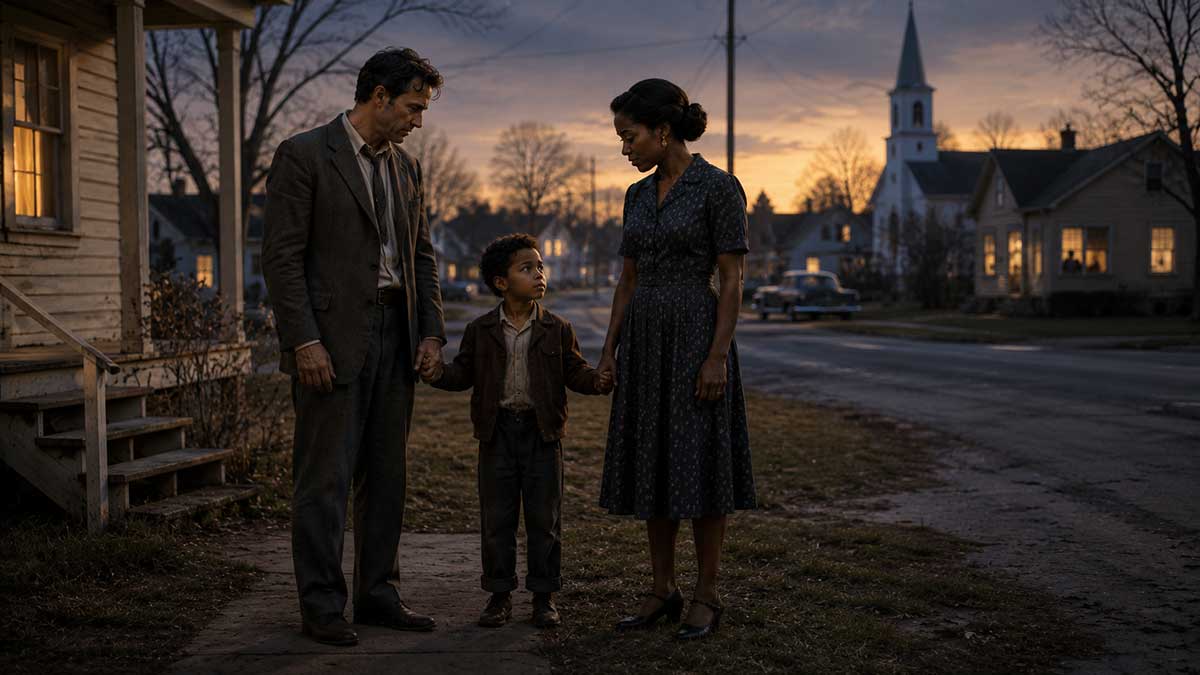
Jack Boughton: My whole life seemed to become a courtroom.
People remembered my failures before they remembered my name.
Some of that was deserved.
I lied.
I stole.
I disappointed my father more times than I can count. I abandoned a woman and a child when I was young, and the child died. I have spent years wishing I could return to that moment and become a different man.
But life does not allow us to rewrite the beginning.
It only asks whether we will continue becoming the person we once were.
When I returned to Gilead, I was carrying another life.
I loved Della.
I loved our son.
I wanted to remain with them, protect them, and somehow build a future in a country that considered our family illegal in many places.
Yet before anyone knew that story, they already knew mine.
Or at least they believed they did.
This raises a question that troubles every family, every church, and every society.
Must a person prove they have changed before receiving mercy?
Or does mercy become meaningful only when it arrives before proof exists?
Can one terrible mistake define an entire life?
John Ames: Jack, your past was not a small matter.
Jack: I have never called it small.
Ames: A child died.
Jack: I know.
Robert Boughton: There are nights I still think about that child.
Jack: There are nights I think of nothing else.
Della Miles: Regret never truly leaves him.
Ames: Regret alone cannot restore what was lost.
Jack: Nothing can.
That is precisely the problem.
Lila Ames: John, when you first met Jack again, what did you see?
Ames: A man whose history warned me to be careful.
Lila: Did you see grief?
Ames: Not immediately.
Jack: Since grief had learned to hide.
Boughton: Why hide it?
Jack: Every confession became another confirmation that I was exactly who people already believed I was.
Della: Shame teaches silence.
Ames: Yet silence also prevents trust.
Jack: Yes.
That is why shame becomes a prison.
The more ashamed a person becomes, the less able they are to show the very change everyone demands.
Lila: Then what should John have looked for?
Jack: Not innocence.
Movement.
Ames: Explain.
Jack: Was I still the careless young man who abandoned responsibility?
Or was I struggling toward responsibility, however imperfectly?
Those are different lives.
Boughton: I wanted to believe you had changed.
Jack: You wanted certainty.
Boughton: A father hopes.
Jack: Hope becomes difficult when disappointment repeats itself.
Della: Yet repeated disappointment should not erase the possibility of transformation.
Ames: No.
It should not.
Is repentance measured by regret—or by the life we choose afterward?
Della: John, you often spoke about repentance.
What does it actually require?
Ames: Turning toward God.
Turning away from sin.
Seeking restoration where possible.
Jack: Where possible.
That phrase matters.
Ames: Why?
Jack: Since some losses cannot be repaired.
Lila: The child who died cannot return.
Jack: No.
The young woman I failed cannot receive the life I should have given her.
No apology can alter those facts.
Boughton: Then what remains?
Jack: The person I become afterward.
Ames: You believe later faithfulness matters.
Jack: What else is available?
Della: Jack became devoted to our son.
He worried constantly about protecting him.
Ames: That touched me deeply when I understood it.
Jack: Yet you understood it very late.
Ames: Yes.
Lila: John, had you confused repentance with perfection?
Ames: Perhaps.
Jack: I was never going to become perfect.
Ames: Neither was I.
Jack: Yet your imperfections appeared forgivable.
Mine appeared permanent.
Boughton: Jack...
Jack: Father, I am not accusing only you.
I am describing how the world worked.
Della: Communities often forgive respectable people for hidden sins more quickly than broken people for visible ones.
Ames: That sentence convicts more than one church.
Can grace exist if it waits for certainty?
Ames: Trust must be earned.
Jack: Agreed.
Ames: Grace is different.
Jack: Yet you treated them as though they were the same.
Ames: I did.
Lila: Why?
Ames: Since I feared giving mercy to someone who might misuse it.
Della: Did Jack ask you for money?
Ames: No.
Della: Did he ask for your house?
Ames: No.
Della: What did he ask?
Ames: Questions.
Conversation.
Understanding.
Jack: I wanted to know whether God could still recognize someone like me.
Boughton: You could have asked me that.
Jack: Could I?
Boughton: Yes.
Jack: Father...
you loved me.
You also mourned me while I was standing in front of you.
Boughton: I did.
Jack: I needed someone who had not already decided the ending.
Ames: And you thought I might become that person.
Jack: I hoped.
Ames: Instead I questioned your motives.
Jack: Yes.
Lila: John, when did grace finally become real?
Ames: When I realized I was protecting myself more than righteousness.
Della: Grace always costs the giver something.
Otherwise it is merely approval.
Ames: That is true.
Was Jack asking for forgiveness—or permission to believe he still belonged?
Boughton: Jack, what did you really want from Gilead?
Jack: Belonging.
Boughton: You always belonged.
Jack: I belonged as your disappointment.
Not as your son.
(Silence.)
Boughton: That hurts.
Jack: It hurt to live.
Ames: I believed you were seeking theological answers.
Jack: I was asking whether there remained a place where Della, our son, and I could exist without apology.
Della: Jack wanted home.
Not arguments.
Lila: Churches often answer pain with doctrine.
Ames: Since doctrine feels safer.
Jack: Home always mattered more.
Boughton: I wish I had known.
Jack: I know.
Boughton: I would have tried.
Jack: Trying would have meant risking your reputation.
Boughton: Yes.
Jack: That was the question I could never force you to answer.
Della: Belonging is costly.
Communities discover what they truly believe when welcoming someone requires sacrifice.
Ames: We spoke beautifully about grace.
We practiced it cautiously.
Did Jack redeem himself—or simply continue walking toward redemption?
Lila: Jack, do you consider yourself redeemed?
Jack: No.
Ames: Why not?
Jack: Since redemption sounds finished.
I was never finished.
Della: Neither are any of us.
Boughton: Yet I saw goodness growing in you.
Jack: Growth is not completion.
Ames: Then what changed?
Jack: I stopped asking how to escape my past.
I began asking how to remain faithful inside it.
Lila: That is a profound difference.
Jack: My failures stayed with me.
So did my responsibilities.
Della: Jack became a father again.
This time he stayed.
Ames: That mattered enormously.
Jack: It mattered to me more than anyone else.
Boughton: I wish I had known my grandson.
Jack: So do I.
Della: Redemption sometimes looks ordinary.
Going home.
Returning after work.
Holding your child.
Remaining when life becomes difficult.
Ames: Those acts carry more theology than many sermons.
Lila: John, when you blessed Jack, were you declaring him redeemed?
Ames: No.
I was declaring that God had not abandoned him while redemption remained unfinished.
Jack: That blessing gave me permission to continue becoming.
Not permission to stop.
Della: That is what grace does.
It creates room for transformation without pretending transformation is complete.
Closing
Jack Boughton: People often ask whether I deserved grace.
I understand the question.
I once asked it myself.
If grace belongs only to those who have already become trustworthy, then I did not deserve it.
If grace belongs only after every wound has been repaired, then almost no one deserves it.
The child I failed remained part of my life.
The sorrow I caused my father remained.
The fear John felt toward me remained.
None of those disappeared when I fell in love with Della or became a better father to our son.
Grace did not erase my history.
It refused to let my history become my entire identity.
John finally understood that.
He did not bless a perfect man.
He blessed a man still carrying failure, shame, uncertainty, and hope.
That blessing did not announce that I had arrived.
It reminded me that I could continue walking.
Perhaps that is the difference between judgment and grace.
Judgment asks whether a person has earned a new beginning.
Grace asks whether we dare believe a new beginning is still possible before the evidence is complete.
No church, family, or society can survive without judgment.
Neither can they survive without grace.
The difficult question is deciding which one speaks first.
Topic 3: Did Gilead’s Faith Fail Jack and Della?
Opening
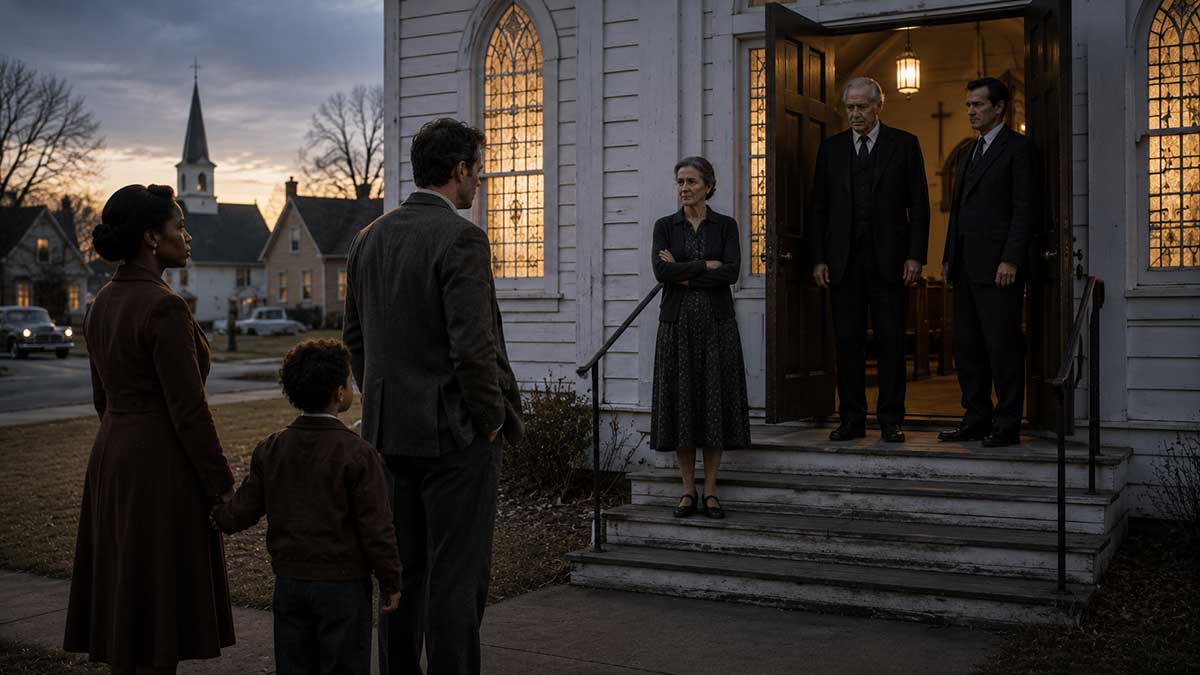
Della Miles: People in Gilead spoke often about grace.
They spoke about forgiveness, mercy, sin, blessing, and the love of God.
Yet Jack and I could not live there openly as husband and wife.
Our family existed, but the law and the customs of the country treated us as a violation.
We had a son.
We loved him.
We wanted a home.
What we received instead was caution, secrecy, distance, and the knowledge that our marriage might be rejected before anyone met us.
Jack returned to Gilead searching for help.
He found good people.
He found ministers who believed in mercy.
He found men capable of tenderness.
What he did not find was a clear answer to one practical question:
Would their faith make room for our family when doing so carried social cost?
Private kindness is precious.
A blessing matters.
A compassionate word can keep a person alive.
Yet faith becomes incomplete when it comforts the wounded without confronting what keeps wounding them.
So I want to ask the ministers of Gilead directly:
Did your faith fail us?
Could Gilead welcome Jack without welcoming the family he loved?
Robert Boughton: Della, I wish I had met you.
Della: I wish that too.
Boughton: I would have wanted to know my grandson.
Jack Boughton: You say that now.
Boughton: Jack, must every sentence become an accusation?
Jack: No.
It must become honest.
Boughton: I loved you.
Jack: I know.
Boughton: Then why did you believe I could not love your family?
Jack: Loving me had already caused you grief.
I did not know what would happen when the life I brought home challenged your beliefs, your community, and your reputation.
Boughton: You should have trusted me.
Jack: Trust is not owed merely through blood.
John Ames: Jack feared that your affection for him might not extend to the form his life had taken.
Boughton: John, do you believe I would have rejected Della?
Ames: I cannot answer for you.
Boughton: You knew me most of my life.
Ames: I knew your tenderness.
I knew your devotion to your children.
I knew your religious convictions.
I did not know which would speak first.
Della: That uncertainty shaped our lives.
Boughton: I dislike being judged for an act I never committed.
Della: I am not judging an act.
I am naming a risk.
Lila Ames: Jack did not have the luxury of discovering your answer after bringing Della and their son into danger.
Boughton: Danger from me?
Lila: Not only from you.
From the town.
From gossip.
From churches.
From landlords.
From employers.
From men who believed their race gave them permission.
Jack: A father may forgive his son privately and still refuse the son’s marriage publicly.
Boughton: I might have surprised you.
Jack: I hoped you would.
Della: Hope is not a plan for protecting a child.
Boughton: What did you want Jack to ask me?
Della: Not merely, “Do you still love me?”
The real question was:
“Will you stand beside my wife and son when your neighbors condemn us?”
Boughton: I would like to believe I would have.
Della: Belief after the cost has vanished is easy.
Boughton: That is severe.
Della: Our life was severe.
Ames: She is right.
Boughton: John, did you believe their family should have been welcomed in Gilead?
Ames: Yes.
Della: Did you say so when Jack was alive and standing before you?
Ames: Not clearly enough.
Jack: You gave me sympathy.
You did not give me a path.
Ames: I did not know the full facts.
Jack: You knew I was asking whether a man like me could belong.
Ames: Yes.
Jack: You answered as a theologian.
I needed an ally.
Lila: That is the difference.
Boughton: Jack, why did you speak in riddles?
Jack: I had learned that direct truth could destroy the little belonging I still possessed.
Della: He was trying to discover whether the door was open before bringing us to it.
Ames: And we made him stand outside testing the handle.
Della: Yes.
Was Ames’s private compassion enough when public injustice shaped the problem?
Ames: I never believed racial injustice was morally acceptable.
Della: Belief matters.
Speech matters.
Action matters more.
Ames: I agree.
Della: What did you do?
Ames: Less than I should have.
Della: That answer is honest, but it does not restore anything.
Ames: No.
Lila: John’s kindness was real.
He noticed suffering.
He gave people time.
He did not enjoy cruelty.
Della: I do not question his tenderness.
I question its boundary.
Jack: Reverend, when you learned about Della and our son, did the meaning of my return change?
Ames: Entirely.
Jack: Why?
Ames: I had seen you as a man drifting toward old failures.
Then I saw a father trying to remain faithful under conditions I had never faced.
Della: Conditions created by law, custom, and churches that stayed quiet.
Ames: Yes.
Boughton: Churches did not create every law.
Della: Churches helped create the moral climate in which those laws survived.
Boughton: Some churches resisted.
Della: Some did.
Many did not.
Some preached love on Sunday and defended segregation on Monday.
Some welcomed Black worshippers in theory and rejected interracial families in practice.
Ames: My grandfather would have condemned such silence.
Della: Your grandfather fought slavery.
What did his descendants fight?
Ames: We inherited his courage as memory more than practice.
Jack: Gilead remembered abolition as a noble past.
It did not ask what courage required in the present.
Lila: Memory became decoration.
Boughton: That is unfair.
Lila: Is it?
Boughton: Our families carried real sacrifice.
Della: Then the sacrifice should have taught you to recognize the next demand.
Ames: It should have.
Boughton: John, did you ever preach directly against laws that separated families like Jack’s?
Ames: No.
Boughton: Why not?
Ames: Cowardice.
Distance.
Habit.
The belief that my calling was local and pastoral.
Della: Our suffering was local too.
Ames: I know.
Jack: You thought justice belonged to history.
Ames: At times, yes.
Lila: John feared grand moral certainty.
He had seen what conviction did to his grandfather.
Della: Then fear of fanaticism became an excuse for silence.
Ames: At times.
Boughton: Must every minister become an activist?
Della: Every minister must decide whether faith applies to the bodies, marriages, homes, and futures of actual people.
Boughton: That is not the same as politics.
Della: Laws entered our marriage before we entered any church.
Politics had already entered the room.
Jack: We did not have the privilege of keeping faith private.
Ames: No.
Della: A sermon about grace that never names the structure denying a family safety may comfort the preacher more than the family.
Ames: That is true.
Boughton: John offered Jack a blessing.
Della: I honor that blessing.
I am asking what might have happened had the same faith spoken earlier and louder.
Jack: A blessing can keep a man from despair.
It cannot secure housing.
It cannot protect a marriage.
It cannot change a law by itself.
Ames: No.
Lila: Yet blessing may begin action.
Della: It may.
The question is whether it continues into action.
Did Jack hide Della from Gilead—or did Gilead teach him that hiding was safer?
Boughton: Jack chose secrecy.
Jack: Yes.
Boughton: Then some responsibility belongs to you.
Jack: It does.
Della: He did not hide us without reason.
Boughton: I was his father.
Della: You were a white minister in a town he could not read safely.
Boughton: I loved my son.
Della: Love does not automatically teach a person how to receive a life outside his expectations.
Boughton: You believe I would have seen only race.
Della: I believe race would have entered every decision, whether you named it or not.
Jack: I wanted to protect you too.
Boughton: Protect me from what?
Jack: From choosing between your son and the world you knew.
Boughton: That choice should have been mine.
Jack: Perhaps.
Boughton: You denied me the chance.
Jack: Yes.
Boughton: Why?
Jack: Since I feared your answer.
Boughton: Fear again.
Jack: Fear is not always irrational.
Ames: Jack had learned from experience that acceptance often ended at the edge of scandal.
Boughton: Did I ever tell you that?
Jack: No.
Boughton: Then you judged me before asking.
Jack: As John judged me.
Boughton: That is fair.
Lila: Families often injure one another through predictions.
One person predicts rejection.
The other predicts betrayal.
Neither risks the truth soon enough.
Della: Yet the risks were not equal.
Boughton: What do you mean?
Della: You risked discomfort, reputation, and conflict.
We risked housing, safety, custody, livelihood, and violence.
Boughton: I see.
Jack: That inequality shaped my silence.
Ames: A person with more protection can afford directness.
Della: Yes.
Boughton: Then what should I have done before knowing?
Della: Created a home where your children knew no truth would cancel their belonging.
Boughton: I thought I had.
Jack: You created a loving home.
Not an unconditionally safe one.
Boughton: What was missing?
Jack: The knowledge that your theology could survive facts you had not chosen.
Ames: That is a difficult standard.
Della: Parenthood is difficult.
Boughton: I would have needed time.
Jack: Time for you could have meant danger for us.
Lila: The person asking for acceptance is often told to wait until the comfortable person adjusts.
Della: That waiting has a cost.
Ames: Jack’s secrecy was a failure.
Gilead’s moral uncertainty helped produce it.
Boughton: Both truths remain.
Jack: Yes.
I should have spoken.
You should have made speech safer.
Can a church preach grace and still fail through silence?
Della: Reverend Boughton, what did grace mean in your church?
Boughton: God’s mercy toward sinners.
Forgiveness not earned by merit.
Reconciliation.
Della: Would that grace have included our marriage?
Boughton: I want to say yes.
Della: Why does the answer still hesitate?
Boughton: Since I know the man I hoped I was and the man my time formed may not have been identical.
Ames: That is honest.
Jack: It is painful.
Boughton: Jack, I cannot change the answer I never gave.
Jack: No.
Della: Then let us ask a broader question.
Can a church preach true doctrine and still fail morally?
Ames: Yes.
Boughton: Yes.
Lila: Easily.
Della: How?
Ames: By keeping truth abstract.
Boughton: By protecting harmony over justice.
Lila: By treating social cruelty as someone else’s subject.
Jack: By welcoming the sinner in language and excluding his family in practice.
Della: By speaking about love without asking who is permitted to marry, live safely, work, vote, learn, or raise children without fear.
Ames: A church may be sincere and still blind.
Della: Sincerity does not protect the people harmed by blindness.
Boughton: No.
Jack: Father, did you ever think the church existed partly to keep people from feeling alone?
Boughton: Yes.
Jack: I felt alone inside its language.
Boughton: Why?
Jack: Since every word applied to a general sinner.
None seemed written for a man whose family was condemned by the society around the church.
Della: Grace without context becomes fog.
Ames: Then what should the church have said?
Della: It should have said:
“Your marriage is real.”
“Your child belongs.”
“We will stand beside you.”
“We will confront anyone who threatens your home.”
“We will use our pulpits, money, property, and reputation.”
Boughton: That would have divided the congregation.
Della: Yes.
Boughton: People might have left.
Della: Yes.
Ames: Then the church would have discovered which peace it valued.
Lila: Peace among the comfortable or safety for the excluded.
Boughton: Ministers carry responsibility for everyone in the congregation.
Della: That sentence often means the most vulnerable must wait until the least threatened feel ready.
Boughton: I see the danger.
Jack: Did you ever fear losing people over truth?
Boughton: Of course.
Jack: I feared losing my family over silence.
Ames: The costs were not equal.
Boughton: No.
Della: A church that never risks division may already have chosen whom it is willing to sacrifice.
(No one speaks for a moment.)
Ames: That sentence should have been preached in Gilead.
Della: It should have been lived there.
Was Ames’s blessing an act of faith—or a substitute for action?
Jack: I do not want the blessing diminished.
Della: Neither do I.
Boughton: Then why question it?
Della: Since sacred acts can become excuses when people treat them as complete.
Ames: I did not believe the blessing solved Jack’s life.
Della: Readers may.
Jack: The blessing mattered since I had spent years feeling unblessable.
Ames: I placed my hand on your head and spoke your name.
Jack: You recognized me as more than my history.
Della: That was holy.
Boughton: Then why call it insufficient?
Della: Holiness and insufficiency can exist in the same act.
Lila: A meal can be loving and still not end hunger.
Della: A blessing can restore dignity and still leave a family exposed.
Ames: What action should have followed?
Della: You could have helped Jack find money, shelter, legal counsel, church contacts, or a community willing to receive us.
Ames: Yes.
Jack: You were dying.
Della: He still had influence.
Ames: I did.
Boughton: Did Jack ask for those things?
Jack: Not clearly.
Della: A person in shame rarely presents a perfect request.
Lila: Compassion must sometimes hear what fear cannot say directly.
Ames: I heard too late.
Jack: You heard enough to bless me.
Della: Did the blessing free you to return to us?
Jack: It helped.
Della: Then it had practical fruit.
Ames: That gives me comfort.
Della: Do not take too much comfort.
Ames: Fair.
Boughton: Della, are you asking that every spiritual act produce political change?
Della: I am asking that spiritual acts not be used to avoid material responsibility.
Boughton: There is a difference.
Della: A large one.
Jack: I needed both.
I needed someone to say I still belonged to God.
I needed somewhere my family could belong on earth.
Ames: We gave you the first more fully than the second.
Jack: Yes.
Lila: That is the failure at the center of Gilead.
Boughton: Yet the first was not nothing.
Della: No.
It may have kept the second possible.
Did Gilead inherit abolitionist courage—or merely remember it?
Ames: My grandfather believed faith required confrontation.
Della: He was willing to lose comfort.
Ames: He was willing to risk violence too.
Boughton: That troubled your father.
Ames: Deeply.
Jack: Your family inherited two fears.
Fear of injustice.
Fear of righteous violence.
Ames: Yes.
Della: Which fear won?
Ames: In my generation, often the second.
Lila: John learned gentleness from his father.
Della: Gentleness is precious.
It can become passivity when separated from courage.
Boughton: Is confrontation always courageous?
Della: No.
Neither is avoidance always peaceful.
Jack: Gilead admired the grandfather once history had made his cause respectable.
Ames: That is true.
Jack: It is easy to honor courage after the danger ends.
Della: Harder to recognize the living cause that threatens your own standing.
Boughton: Every generation believes its issue is more complicated.
Della: Complexity can become delay.
Ames: And delay can become complicity.
Boughton: John, would your grandfather have welcomed Jack and Della?
Ames: I believe so.
Della: Would he have defended us publicly?
Ames: Yes.
Jack: Would he have done so gently?
Ames: Perhaps not.
Lila: Then the task was not to copy him.
It was to join his courage with the gentleness learned later.
Della: Exactly.
Ames: We inherited courage and gentleness in separate generations.
We failed to unite them.
Boughton: That is a painful judgment.
Ames: A fair one.
Jack: Faith needed your grandfather’s willingness to risk and your father’s refusal to dehumanize.
Della: Instead, Gilead kept the kindness and lost the urgency.
Ames: Yes.
What would faith have required from Gilead?
Boughton: Let us answer plainly.
What should we have done?
Della: First, believed that our family was not a theological puzzle.
We were people.
Ames: Agreed.
Della: Second, asked what we needed rather than deciding what mercy should look like.
Jack: Safety.
Work.
Housing.
A church willing to stand with us.
Della: Third, named the laws and customs harming us.
Not in vague language.
Directly.
Boughton: From the pulpit?
Della: From the pulpit, the home, the town meeting, and every place reputation carried weight.
Ames: Yes.
Della: Fourth, accepted social cost.
Boughton: Loss of members.
Della: Perhaps.
Ames: Loss of friendship.
Della: Perhaps.
Lila: Loss of the image of a peaceful town.
Della: Certainly.
Jack: Fifth, welcomed our son without treating him as evidence of scandal.
Boughton: I would have loved him.
Jack: Then you should have known him.
Boughton: I know.
Della: Sixth, let us decide how public our story became.
Support should not become another form of ownership.
Ames: Important.
Lila: John sometimes turned suffering into spiritual meaning too quickly.
Della: Pain does not exist to improve the observer.
Ames: I accept that correction.
Boughton: What would you have wanted from me personally?
Della: To ask my name before asking whether the marriage was permissible.
To ask about your grandson.
To tell Jack he did not need to choose between honesty and family.
To stand beside us when others withdrew.
Boughton: I wish I had done those things.
Della: So do I.
Jack: Father, can you say her name now?
Boughton: Della.
Jack: And your grandson?
Boughton: I do not know his name.
(Jack looks at Della.)
Della: Robert.
Boughton: Robert?
Jack: We named him after you.
(Boughton closes his eyes.)
Boughton: You named him after me?
Jack: Yes.
Boughton: After everything?
Jack: Love does not disappear merely since trust is wounded.
Boughton: I had a grandson named Robert.
Della: You did.
Boughton: I would have held him.
Jack: I wanted you to.
Boughton: I am sorry.
Jack: I know.
Boughton: No.
Let me say it without asking you to comfort me.
I am sorry that my love did not make truth feel safe.
I am sorry that my son believed my faith might reject his family.
I am sorry I left you to carry that fear alone.
Della: Thank you.
Closing
Della: Gilead’s faith did not fail through the absence of goodness.
It failed through goodness that remained too private.
John Ames was capable of mercy.
Robert Boughton loved his son.
The churches knew the language of grace.
The town remembered ancestors who had resisted slavery.
Yet Jack still believed that bringing his Black wife and their child home might cost him his family.
That fear did not appear from nowhere.
It grew from laws, customs, silence, racial hierarchy, and religious communities that had learned to separate personal kindness from public justice.
John’s blessing mattered.
It named Jack as worthy of sacred regard before his life became easy to approve.
Yet a blessing should have been the beginning, not the limit, of faith.
Jack needed spiritual recognition.
He needed material support too.
He needed a church willing to risk reputation.
He needed a father who had already made truth safe.
He needed ministers who could name racial injustice as clearly as they named personal sin.
Gilead remembered abolitionist courage, but memory alone could not shelter our child.
Faith becomes real when it takes form.
A house opened.
A law opposed.
A congregation challenged.
A frightened son heard.
A marriage defended.
A child named and welcomed.
Private mercy may save one heart.
Public courage may save a family.
We needed both.
Topic 4: Did Fathers Bless Their Sons—or Burden Them With Unfinished Conflicts?
Opening
Robert Boughton: Every father believes he is giving his son something precious.
Faith.
Wisdom.
Protection.
A name.
A way of living.
We hope our children inherit what was strongest in us.
What we rarely notice is that they inherit our fears just as easily.
My father gave me faith.
I gave Jack faith mixed with disappointment.
John Ames received conviction from his grandfather and gentleness from his father.
He spent his life trying to reconcile two men who never truly reconciled with each other.
Jack then carried my hopes, my grief, and my expectations.
John's young son inherited a letter from a dying father before he inherited memories of living with him.
Even Jack's son inherited a burden before he could speak.
He inherited the fear that his parents' love might never be accepted.
Perhaps fathers do not simply pass down blessings.
Perhaps they also pass unfinished conversations.
The question is whether those conversations must continue forever—or whether someone finally has the courage to end them.
Does every father give his son both a gift and a wound?
John Ames: My grandfather believed God demanded action.
He fought slavery with a passion that frightened my father.
My father believed peace mattered more than victory.
He feared righteousness becoming violence.
I admired both men.
I disappointed both in different ways.
Jack Boughton: Did you ever become your own man?
Ames: I thought I had.
Now I think I carried both voices throughout my life.
Lila Ames: You often spoke with your father's gentleness.
Yet when injustice appeared, your grandfather haunted your conscience.
Ames: Yes.
Robert Boughton: Fathers never disappear.
Even after death.
Jack: Sometimes that is the problem.
Boughton: Explain.
Jack: I spent my childhood trying to become the son you hoped for.
Eventually I stopped believing such a son existed.
Boughton: I never wanted perfection.
Jack: No.
You wanted faithfulness.
Respectability.
Steadiness.
The qualities that came naturally to my brothers.
Boughton: I wanted you alive.
Jack: I know.
But every conversation carried the memory of previous failures.
Eventually I became "Jack who disappoints."
That identity arrived before I entered the room.
Della Miles: Families often stop seeing the living person.
They begin relating to the role that person has occupied for years.
Lila: The responsible child.
The difficult child.
The successful one.
The failure.
Ames: Those names become prisons.
Jack: Especially when everyone believes they are simply describing reality.
Can a father's love become another form of expectation?
Boughton: Jack, did you ever doubt that I loved you?
Jack: Never.
I doubted whether I could satisfy the love.
Boughton: I did not ask you to earn it.
Jack: You asked me to become someone I did not know how to become.
Boughton: Every father hopes his son will grow.
Jack: Hope quietly becomes comparison.
Boughton: Comparison to whom?
Jack: The son you imagined.
The son who remained home.
The son who believed easily.
The son who caused you fewer tears.
Boughton: I confess I imagined that son.
Jack: I spent years trying to apologize for not being him.
Ames: There is a sorrow in every parent.
The child arrives real.
The imagined child never dies.
Lila: Until the parent lets the dream go.
Boughton: Is that possible?
Della: It must be.
Otherwise parents spend their lives mourning children who never existed.
Boughton: I did not know I was doing that.
Jack: I know.
That is what made it painful.
Did John Ames's letter bless his son—or place a lifelong weight upon him?
Lila: John, your letter is beautiful.
Ames: Thank you.
Lila: It is beautiful and heavy.
Ames: Heavy?
Lila: Imagine growing up with a father whose voice never changes.
Whose advice cannot be questioned.
Whose memory remains permanently wise.
Ames: I wanted my son to know me.
Jack: He will.
But he will know the version you had time to edit.
Ames: Every memoir is edited.
Jack: Every father edits himself.
Boughton: Surely that is unavoidable.
Della: It is.
The question is whether children inherit freedom or obligation.
Lila: John feared being forgotten.
So he wrote.
Ames: Yes.
Lila: Did you also fear being misunderstood?
Ames: Very much.
Lila: So the letter became your final interpretation of yourself.
Ames: Perhaps.
Jack: Have you considered what your son might need?
Ames: What do you mean?
Jack: Permission to disagree with you.
Permission to become someone you never expected.
Permission to disappoint your hopes without believing he has betrayed your love.
Ames: I wanted all those things for him.
Lila: Then perhaps you should have written them more plainly.
Ames: I thought they were implied.
Della: Children often hear expectations more clearly than implications.
Why do sons carry guilt that fathers never intended to give?
Boughton: Jack, I never wanted you to carry shame.
Jack: Yet I did.
Boughton: I wanted repentance.
Jack: Repentance became identity.
Boughton: That was never my desire.
Jack: Intentions do not always become experience.
Ames: My own father never intended to burden me.
Yet I spent decades trying to reconcile him with my grandfather.
Lila: Children often inherit emotional work that belongs to previous generations.
Della: They become translators.
Peacemakers.
Proof that old conflicts can finally be resolved.
Jack: Sometimes they become sacrifices.
Boughton: That word hurts.
Jack: It should.
My failures became the place where everyone else's hopes collided.
Boughton: I see that now.
Ames: My son may someday carry something similar.
Lila: Unless you release him.
Ames: How?
Lila: By allowing him to write his own ending.
Not merely continue yours.
Can blessing interrupt generational shame?
Ames: When I blessed Jack, I was thinking about grace.
I now realize I was also interrupting inheritance.
Jack: Explain.
Ames: Your life had become one long story of disappointment.
I wanted the final word spoken over you to be something other than failure.
Boughton: That blessing healed me too.
Jack: I did not expect that.
Boughton: Hearing John call you blessed allowed me to imagine you differently.
Not as my greatest regret.
As my son.
Jack: I had always been your son.
Boughton: Yes.
But grief had spoken louder than love.
Della: Blessings change language.
Instead of saying,
"This is the child who failed..."
they begin saying,
"This is the child whom God still loves."
Lila: That changes generations.
Ames: Blessing does not erase consequences.
It changes identity.
Jack: It says the future need not obey the past.
Boughton: Then perhaps fathers should bless more and predict less.
Lila: That may be the wisest sentence spoken today.
What legacy do we truly leave our children?
Della: John, what do you believe your son will remember most?
Ames: I hope my love.
Della: Not your sermons?
Ames: No.
Love first.
Boughton: I wish Jack remembered my love before my disappointment.
Jack: I remember both.
Boughton: Which remained longer?
Jack: Disappointment.
Since I thought love depended on overcoming it.
Boughton: It never did.
Jack: I know that now.
I did not know it then.
Lila: That difference changes an entire life.
Ames: My grandfather wanted justice.
My father wanted peace.
I wanted grace.
Perhaps my son will discover something greater than all three.
Jack: Every generation deserves that chance.
Della: Parents often speak of preserving tradition.
Children often survive by transforming it.
Boughton: Does that mean our work was incomplete?
Della: Every parent's work is incomplete.
Completion belongs to no generation.
Ames: Then our task is not finishing the story.
It is refusing to imprison the next chapter.
Did Jack become the father his own father hoped to be?
Boughton: Jack...
Tell me honestly.
Were you a better father than I was?
(Long silence.)
Jack: We carried different burdens.
Boughton: Answer anyway.
Jack: I learned one thing from you.
Boughton: What?
Jack: Never let my son doubt that he belonged to me.
Even when the world questioned him.
Even when I questioned myself.
Boughton: Then perhaps you became the father I hoped to become.
Jack: I became that father since I knew what uncertainty felt like.
Della: Pain can become inheritance.
It can also become instruction.
Lila: That is redemption across generations.
Not perfection.
Learning.
Ames: Your son received something different than you received.
Jack: Yes.
Boughton: Then perhaps my failures were not wasted.
Jack: No.
But I would rather have learned through your strength than your sorrow.
Boughton: So would I.
Closing
Robert Boughton: Fathers often believe they leave property, wisdom, traditions, or family names.
Those things matter.
Yet what our children carry most deeply is something harder to see.
They inherit our fears.
They inherit our unfinished arguments.
They inherit the people we could not forgive, the dreams we never fulfilled, the questions we never answered, and the hopes we quietly place upon their shoulders.
I loved Jack.
That never changed.
What changed was the shape of my love.
Too often it became expectation.
Too often it became grief before hope.
Too often I looked at the son standing before me and compared him with the son I imagined years earlier.
John wrote a letter so his son would know his father.
Perhaps every parent wishes for that.
Yet children do not need perfect parents preserved in beautiful memories.
They need parents who release them from continuing unfinished lives.
John blessed Jack.
Jack blessed his own son through steadfast presence.
Perhaps that is how generational wounds finally begin to heal.
Not when fathers become flawless.
But when they stop asking their children to complete what they themselves could not.
A true blessing does not tell a child who to become.
It tells the child:
"You are already my son. Now go become the person God is calling you to be—not the person I failed to become."
Topic 5: What Can We Give the Future When We Cannot Control It?
Opening
John Ames: Every life reaches a moment when control quietly leaves our hands.
When I was young, I believed my task was to preach faithfully.
Later, I believed my task was to protect my wife and my son.
As death approached, I discovered that I could do neither as completely as I wished.
I could not remain beside Lila.
I could not watch my son become a man.
I could not reconcile Jack and his father.
I could not undo America's racial wounds.
I could not preserve Gilead from its failures.
I spent many years believing that wisdom meant finding the right answer.
Old age taught me something different.
Wisdom is learning what love can still give after certainty has disappeared.
A blessing.
A letter.
A memory.
An apology.
A name spoken with tenderness.
These are small things.
Yet sometimes small things become the only gifts that survive us.
So let us ask one final question.
When we can no longer control the future, what remains for us to give?
Is acceptance of our limits an act of surrender—or an act of faith?
Jack Boughton: John, when did you realize you could not protect everyone?
John Ames: Much later than I should have.
Jack: Why?
Ames: Since I confused responsibility with control.
I thought loving my wife meant protecting her from every sorrow.
I thought loving my son meant preparing him for every danger.
I thought being a minister meant carrying every burden entrusted to me.
Lila Ames: You carried burdens that belonged to God.
Ames: Yes.
Lila: And some that belonged to other people.
Ames: Yes.
Robert Boughton: Ministers often believe every unanswered prayer reflects a personal failure.
Ames: It becomes a quiet pride.
Jack: Pride?
Ames: The belief that everything depends upon you.
Della Miles: Control can disguise itself as devotion.
Ames: I did not see that.
Della: Parents often don't.
They call it love.
Sometimes it is fear wearing love's face.
Ames: That sentence belongs in every church.
Lila: You wanted certainty before letting life continue without you.
Ames: I wanted assurance that everyone I loved would be safe.
Jack: Did you ever receive it?
Ames: No.
Boughton: Neither did I.
Della: Then perhaps faith begins where certainty ends.
Does memory preserve love—or imprison the living?
Lila: John, why did you write the letter?
Ames: Since I feared my son would forget me.
Lila: Was forgetting the greatest danger?
Ames: At the time, I believed so.
Jack: I think another danger exists.
Ames: Which one?
Jack: Remembering someone so perfectly that you no longer allow yourself to become different from them.
Boughton: Children often carry dead parents longer than living parents intend.
Della: Memory can become a command.
Ames: That troubles me.
Lila: It should.
Your son may one day disagree with your theology.
Choose another profession.
Leave Gilead.
Question your decisions.
Ames: I hope he does so honestly.
Jack: Then he must know your letter is not the final chapter.
Ames: It never was.
Lila: Yet fathers sometimes forget to say that.
Boughton: We hope our children continue our work.
Della: Better to hope they continue truth, not merely tradition.
Jack: Every generation deserves permission to revise what the previous one believed.
Ames: Even faith?
Jack: Especially faith.
Otherwise belief becomes inheritance rather than discovery.
Can blessing accomplish what advice never can?
Boughton: John, why did blessing Jack matter more than another conversation?
Ames: Since advice tells someone what to do.
Blessing tells them who they are before they succeed.
Jack: That changed everything for me.
Della: Explain.
Jack: My entire life I believed acceptance waited somewhere beyond improvement.
John's blessing reversed that order.
He did not bless me after I became safe.
He blessed me while I remained unfinished.
Lila: That is grace.
Boughton: I spent years advising Jack.
Very little changed.
Jack: Advice often sounded like another reminder that I had failed.
Boughton: I never intended that.
Jack: I know.
Blessing reaches a different place.
Ames: Advice addresses behavior.
Blessing addresses identity.
Della: People usually change more deeply when identity changes first.
Ames: Exactly.
Jack: The blessing did not remove my responsibility.
It removed my despair.
Boughton: I wish I had understood that years earlier.
What should every generation leave behind—and what should it refuse to pass on?
Della: We have spoken about fathers.
Let us speak about generations.
What should each generation preserve?
Ames: Compassion.
Boughton: Faith.
Lila: Humility.
Jack: Honest self-examination.
Della: Justice.
Boughton: And what should end with us?
Jack: Shame.
Lila: Fear disguised as wisdom.
Ames: Self-righteousness.
Della: Silence in the face of injustice.
Boughton: Expectations that children repair their parents' unfinished lives.
Jack: Communities that demand belonging be earned.
Ames: Churches that speak beautifully while remaining comfortably distant from suffering.
Lila: Memories that become chains.
Della: Love that refuses to become courage.
(The group sits quietly.)
Boughton: Strange.
Those sound less like ideals than confessions.
Ames: Every lasting legacy begins with confession.
If John Ames could write one final page, what would he add?
Jack: John...
Suppose your son discovered one blank page at the end of your letter.
What would you write now?
(Ames remains silent for several moments.)
Ames: I would write less.
Jack: Less?
Ames: I spent many pages telling him what I believed.
Now I would ask more questions.
Lila: Such as?
Ames: What brings you joy?
Whom have you forgiven?
Whom have you failed?
What beauty did you notice today?
Did you become kinder than I was?
Did you find courage where I remained silent?
Della: Beautiful.
Ames: Then I would tell him something I failed to say plainly.
Boughton: What?
Ames: My son...
You do not owe me completion.
Do not spend your life protecting my memory.
Become the man God calls you to become, even if I would not have recognized the road.
Jack: That may be the greatest gift a father can leave.
Does hope belong to the future—or to the people willing to bless it?
Boughton: We are old men now.
What remains?
Ames: Hope.
Boughton: Based upon what?
Ames: Not certainty.
Not success.
Not history.
Hope survives since love continues giving after control ends.
Della: Hope is not optimism.
Ames: No.
Hope continues working when outcomes remain hidden.
Jack: I once believed hope meant believing everything would improve.
Lila: And now?
Jack: Hope means refusing to stop loving before improvement appears.
Boughton: That sounds harder.
Jack: It is.
Della: Parents understand this.
You raise children without guarantees.
You love spouses without guarantees.
You seek justice without guarantees.
Hope refuses to wait for proof.
Ames: Faith does the same.
Can ordinary acts become eternal gifts?
Lila: John loved ordinary moments.
Why?
Ames: Since eternity often hides inside ordinary things.
A shared meal.
A child's laughter.
Light on a tree.
A hand resting upon another.
A blessing spoken softly.
Jack: We spend so much time waiting for history.
Della: Meanwhile history is quietly formed around kitchen tables.
Boughton: Around fathers speaking gently.
Lila: Around mothers refusing despair.
Ames: Around neighbors choosing compassion instead of suspicion.
Jack: Around churches deciding whether strangers become family.
Della: Around one person choosing courage when silence feels easier.
Ames: My grandfather sought dramatic moments.
My father sought peaceful moments.
Perhaps God was present in both.
Lila: And perhaps ordinary faithfulness is the place where history quietly changes direction.
What does it mean to finish life well?
Boughton: John...
Did you finish well?
Ames: I finished more honestly than I began.
Boughton: Is that enough?
Ames: For me, it had to be.
Jack: You blessed me.
Della: You admitted your failures.
Lila: You stopped protecting the image of the good man.
Boughton: You left your son love instead of certainty.
Ames: Then perhaps I finished as a student rather than a teacher.
Jack: That may be the finest ending.
Della: Wisdom often arrives when authority becomes humility.
Lila: When answers become invitations.
Boughton: When fathers become fellow travelers.
Ames: When blessing replaces control.
Closing
John Ames: I once believed that dying meant letting go of life.
Now I think it means letting go of ownership.
We never owned our children.
We never owned our spouses.
We never owned our churches, our reputations, our towns, or even the stories we told about ourselves.
We were caretakers for a little while.
The future was never ours to possess.
Only ours to serve.
When I wrote to my son, I hoped to leave him wisdom.
Now I would hope to leave him freedom.
Freedom to believe honestly.
Freedom to love courageously.
Freedom to question without fear.
Freedom to become more compassionate than I was.
Freedom to repair what my generation left unfinished.
Every generation receives gifts.
Every generation receives wounds.
The measure of a faithful life is not whether we avoid passing on every wound.
It is whether we leave enough truth, enough humility, enough courage, and enough love that the next generation can heal more than we did.
In the end, I could not control the future.
I could bless it.
Perhaps that is all any of us has ever been asked to do.
And perhaps, in God's hands, that is enough.
Final Thoughts by Nick Sasaki
One remarkable feature of Gilead is that almost nothing dramatic happens in the conventional sense.
There are no battles.
No courtroom scenes.
No dramatic speeches that instantly transform lives.
Instead, Marilynne Robinson places the deepest conflicts inside ordinary conversations, quiet memories, and moments of self-examination.
That quietness is precisely what gives the novel its enduring strength.
Throughout this Imaginary Talk, one pattern appeared again and again.
John Ames believed he was preparing his son for the future.
Instead, Jack prepared John for his own final lesson.
Jack believed he was returning home to seek theological answers.
Instead, he revealed the difference between preaching grace and risking grace.
Robert Boughton believed he had spent a lifetime loving his son.
Only later did he realize that love sometimes becomes hidden beneath expectation and disappointment.
Lila reminded us that compassion often sees truths authority overlooks.
Della challenged every comforting assumption that private goodness alone is enough when public injustice continues.
No one left the table innocent.
No one left without hope.
That may be Robinson's deepest insight.
Grace does not erase history.
It refuses to let history become the final sentence.
The blessing John Ames gave Jack near the end of the novel did not solve every problem. It did not remove racial injustice, heal every family wound, or restore lost years.
Yet it changed the direction of the story.
A blessing cannot rewrite yesterday.
It can open tomorrow.
Perhaps that is true for every one of us.
We cannot choose the family into which we are born.
We cannot undo every mistake we have made.
We cannot guarantee that our children will avoid every sorrow.
We cannot finish every task entrusted to our generation.
What we can do is leave behind something better than fear.
We can leave humility instead of certainty.
Listening instead of assumptions.
Courage instead of comfortable silence.
Blessing instead of control.
If Gilead teaches us anything, it is that a life is remembered less by the number of problems it solved than by the people it helped see themselves as worthy of love, even when their stories remained unfinished.
Perhaps that is the finest legacy any parent, teacher, pastor, or friend can hope to leave.
Short Bios:
John Ames
An elderly Congregationalist minister in Gilead, Iowa, John Ames writes a long letter to his young son while facing the end of his life. Thoughtful, observant, and deeply spiritual, he spends the novel discovering that grace must be lived, not merely preached.
Jack Boughton
The troubled son of Reverend Robert Boughton and John Ames's namesake. Burdened by past failures and lifelong shame, Jack returns to Gilead carrying a secret family and searching for a place where love, faith, and belonging might finally meet.
Lila Ames
John Ames's wife, whose difficult childhood gave her unusual compassion for outsiders and those judged too quickly. Her quiet honesty repeatedly exposes truths others overlook and gently challenges John to see beyond his own assumptions.
Robert Boughton
A Presbyterian minister and John Ames's lifelong friend. Loving, generous, and devoted to his family, he struggles with the heartbreak of never fully understanding his son until it is almost too late. His journey reflects the hopes and sorrows shared by many fathers.
Della Miles
Jack Boughton's wife and the unseen moral center of Gilead. Through her experience as a Black woman raising a family during segregation, she reveals the distance between private kindness and public justice, reminding the others that grace must take visible form in the lives of real people.
Nick Sasaki
Founder and host of Imaginary Talks, Nick Sasaki brings together timeless voices from literature, history, philosophy, faith, and modern thought to explore humanity's deepest questions through fictional conversations. In this discussion, he invites the participants to examine whether faith reaches its fullest expression when blessing becomes courageous action.
Leave a Reply