
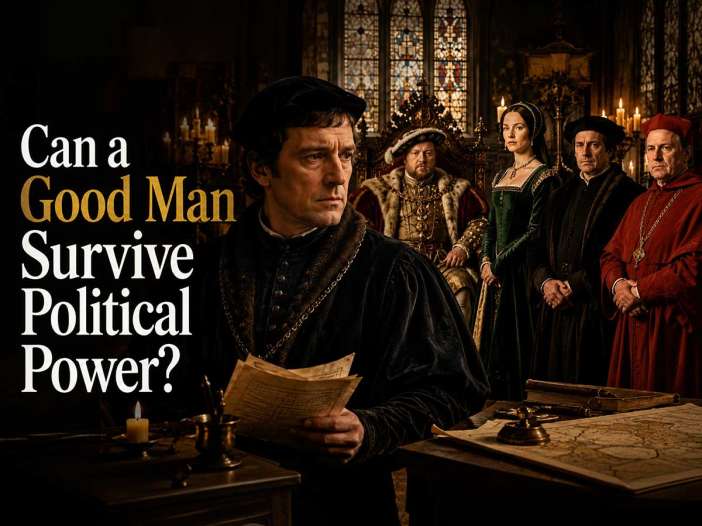
What if the English Reformation was never simply about religion?
Introduction by Nick Sasaki
History often places its brightest spotlight on kings, queens, wars, and executions.
Wolf Hall asks us to look somewhere else.
It asks us to look at the man standing beside the throne.
Thomas Cromwell was born the son of a violent blacksmith, far from the world of courts and crowns. Through intelligence, discipline, adaptability, and an extraordinary understanding of people, he rose to become one of the most powerful men in England.
To some, he was a brilliant reformer.
To others, a ruthless political operator.
Hilary Mantel’s great achievement was to refuse both easy answers.
Her Cromwell can be generous and calculating, loyal and dangerous, humane and increasingly comfortable with power. He remembers servants’ names, protects people others overlook, mourns his family deeply, and remains faithful to Cardinal Wolsey after nearly everyone else abandons him.
Yet he also understands how fear works.
He knows how laws can be shaped, reputations broken, and opponents isolated.
That contradiction makes Wolf Hall more than a historical novel.
It becomes a study of power itself.
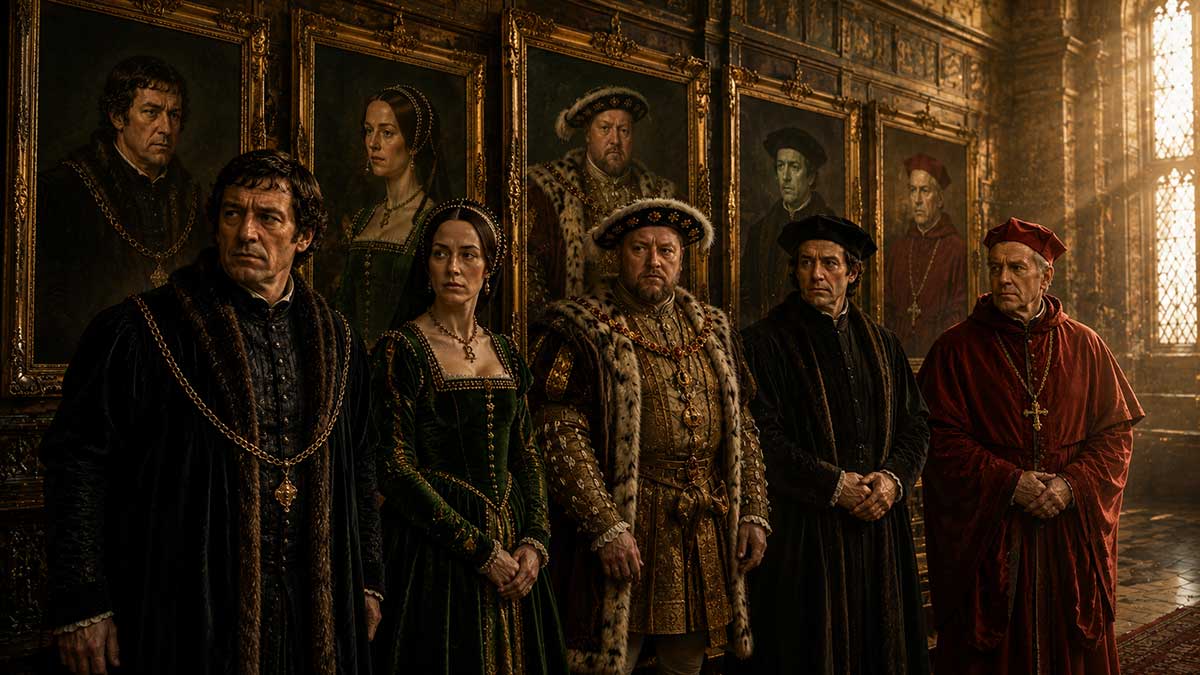
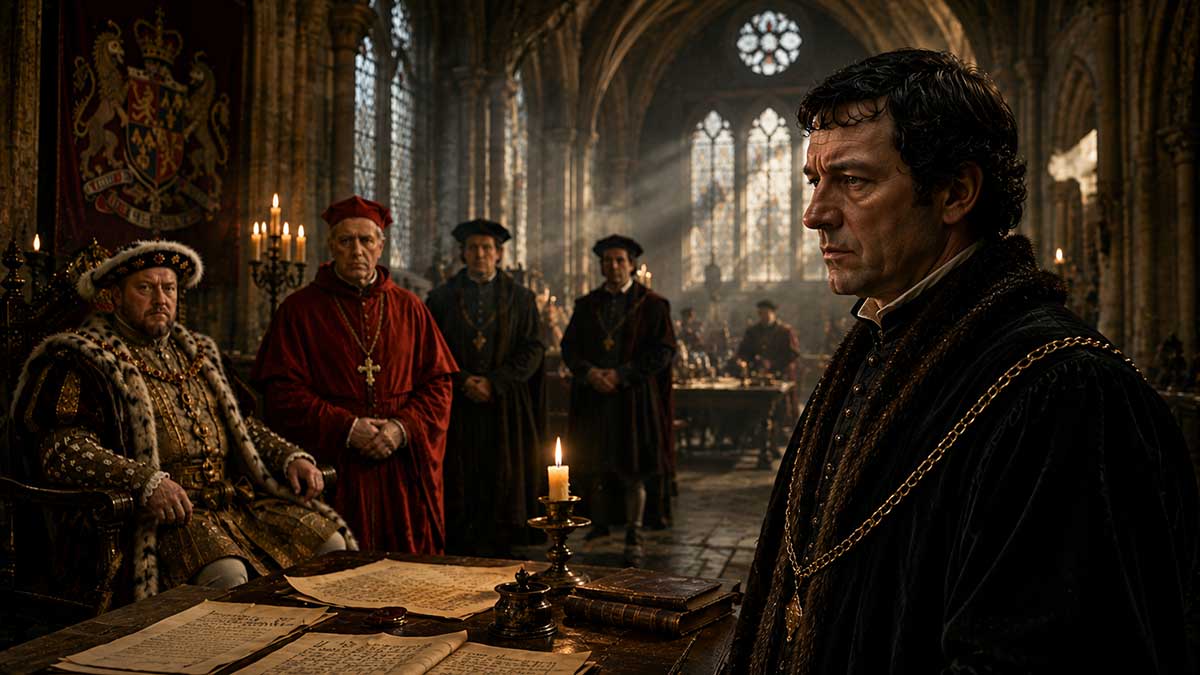
In this imaginary conversation, Thomas Cromwell is joined by Cardinal Wolsey, King Henry VIII, Anne Boleyn, and Thomas More.
Together they confront five enduring questions.
Can power leave a person morally intact?
Does loyalty matter more than success?
Was the English Reformation truly about faith, or did politics simply learn to speak in sacred language?
Can history judge anyone fairly?
And what legacy is worth leaving when reputation, control, and political victory all prove temporary?
These figures changed England, but none of them fully controlled what followed.
Henry wanted security and produced instability.
Anne sought queenship and entered history as both revolutionary and victim.
More defended conscience while denying similar freedom to those he regarded as heretics.
Wolsey lost everything politically, yet his influence survived through the man he once chose to trust.
Cromwell helped reshape a nation, only to discover that the machinery of power eventually turns upon its builders.
Their world may seem distant, but the questions are not.
Leaders still confuse certainty with wisdom.
Governments still justify ambition through moral language.
Reformers still risk becoming what they oppose.
History still divides complicated people into heroes and villains.
And every person with influence still faces the same private test:
Can I remain aware of the human lives hidden beneath the decisions I make?
The chamber is ready.
Rank no longer protects anyone.
History has already spoken.
Now the people inside it may finally answer back.
(Note: This is an imaginary conversation, a creative exploration of an idea, and not a real speech or event.)
Topic 1: Can Power Leave a Person Morally Intact?
Opening
Thomas Cromwell: People have spent centuries asking whether power corrupted me.
It is the wrong question.
Power rarely changes a person overnight.
It reveals habits already growing beneath the surface.
A frightened child becomes a cautious minister.
A generous merchant becomes a generous administrator.
A cruel man simply gains more opportunities to be cruel.
When I was beaten by my father, I learned that strength alone decides nothing.
When I traveled across Europe, I learned that knowledge can move armies more quietly than swords.
When Cardinal Wolsey trusted me, I learned that loyalty may be stronger than ambition.
When King Henry trusted me, I learned something far more dangerous.
A man who solves enough problems eventually begins believing every problem can be solved.
That is the temptation of power.
Not pride alone.
The belief that history itself can be managed.
The question is not whether power changes us.
The question is whether we notice ourselves changing before it is too late.
Does power reveal character—or slowly rewrite it?
King Henry VIII: Thomas, when you first entered my service, you were different.
Thomas Cromwell: Naturally.
Henry: No.
Not merely older.
Different.
Cromwell: Every servant changes.
Henry: I wonder whether every servant changes—or whether every servant becomes more like the office he serves.
Cardinal Wolsey: An excellent distinction.
Thomas More: Offices have souls of their own.
Those who occupy them slowly begin speaking their language.
Anne Boleyn: Courts reward certain virtues.
They reward certain vices even more.
Henry: Thomas, when did you first notice people feared you?
Cromwell: Later than everyone else.
Henry: You enjoyed it.
Cromwell: I enjoyed that difficult work became easier.
Fear and respect often arrive together.
More: They should never be confused.
Cromwell: Yet rulers confuse them every day.
Henry: Careful.
Cromwell: Your Majesty asked honestly.
I answer honestly.
Wolsey: Thomas always preferred usefulness over appearances.
Anne: That made him dangerous.
He rarely cared whether people admired him.
Only whether the work succeeded.
More: Success is not morality.
Cromwell: No.
Neither is failure.
More: Yet failure sometimes preserves the soul.
Cromwell: Tell that to hungry children.
(A brief silence follows.)
More: Practicality always speaks with confidence.
Cromwell: Since practical people usually clean up after idealists.
More: Or destroy what idealists tried to protect.
Henry: Already we have reached the heart of it.
Can compassion survive once power becomes ordinary?
Wolsey: Thomas, one quality always separated you from many courtiers.
You remembered servants' names.
Cromwell: They remembered mine when I had none.
Anne: You spoke with merchants more comfortably than dukes.
Cromwell: Merchants usually tell the truth about money.
Nobles rarely do.
Henry: You often preferred ordinary people.
Cromwell: Ordinary people rarely pretend they deserve privilege through birth alone.
More: Yet eventually you governed those same people.
Did power alter how you saw them?
Cromwell: It complicated my compassion.
More: Explain.
Cromwell: One widow deserves mercy.
Ten thousand widows require administration.
One hungry child invites charity.
An entire kingdom demands taxation, trade, and law.
Anne: Government changes scale.
Wolsey: Scale changes morality.
More: Or excuses it.
Cromwell: Does it?
Suppose one law prevents famine.
Would you reject it if some families still suffered?
More: Justice belongs to every soul.
Cromwell: Government rarely receives perfect choices.
Henry: Kings receive consequences.
Not perfect choices.
Anne: Every reform leaves someone disappointed.
Cromwell: Yes.
That haunted me.
More: Haunted you?
Cromwell: Every signature harmed someone.
Every judgment created another grievance.
Power does not remove compassion.
It forces compassion to choose.
Wolsey: That burden ages a person quickly.
Henry: I rarely saw Thomas hesitate.
Cromwell: I hesitated privately.
Kings usually meet decisions after hesitation has ended.
Does effectiveness become its own moral temptation?
Anne: Thomas, everyone praised your efficiency.
Did efficiency ever become more important than goodness?
Cromwell: Sometimes.
More: An astonishing confession.
Cromwell: Truth usually is.
Anne: Tell us.
Cromwell: Solving problems becomes addictive.
A difficult negotiation succeeds.
Another follows.
Soon you believe delay itself is failure.
Henry: Exactly.
Cromwell: Then one day you discover that patience possesses wisdom efficiency never learned.
More: So power trained you to move faster than conscience.
Cromwell: At moments.
Wolsey: Every administrator faces that danger.
Anne: Results become proof of righteousness.
Cromwell: Precisely.
When every crisis disappears under your management, people stop asking how the solution was achieved.
More: Means matter.
Cromwell: They do.
More: Yet governments often celebrate outcomes while forgetting methods.
Henry: Kingdoms survive through outcomes.
More: Kingdoms survive.
Souls answer separately.
Anne: Thomas More always speaks as though eternity were watching.
More: It is.
Cromwell: Governments cannot wait for eternity to finish today's work.
More: Nor may they ignore eternity while doing it.
Wolsey: There lies every ruler's dilemma.
Is loyalty stronger than ambition?
Henry: Thomas, history says you were ambitious.
Were you?
Cromwell: Certainly.
Henry: At last.
An honest politician.
Cromwell: Ambition alone never interested me.
Opportunity did.
More: Difference?
Cromwell: Ambition seeks advancement.
Opportunity seeks usefulness.
Anne: Yet usefulness often leads to advancement.
Cromwell: Sometimes.
Wolsey: Thomas remained beside me after everyone else fled.
That was not ambition.
Cromwell: It was gratitude.
Henry: Why?
He had already fallen.
Cromwell: Since success is the easiest season for loyalty.
Failure reveals its truth.
More: Noble words.
Yet later many people fell through your actions.
Cromwell: They opposed the King's policy.
More: Convenient answer.
Cromwell: Accurate answer.
Anne: Thomas, let him ask.
More: Did loyalty to Henry ever replace loyalty to justice?
Cromwell: Every servant asks that privately.
Few answer honestly.
Henry: Answer now.
Cromwell: Yes.
At times.
Henry: Interesting.
Cromwell: The harder question is whether refusing you would have produced greater justice.
(Henry studies Cromwell without speaking.)
Does fear become easier once you possess authority?
Anne: Before power, you feared your father.
After power, what frightened you?
Cromwell: Losing perspective.
More: Not losing office?
Cromwell: Offices disappear.
Blindness lasts longer.
Henry: You feared blindness?
Cromwell: I feared becoming unable to recognize it.
Wolsey: That is the greater danger.
Anne: Did anyone still tell you the truth?
Cromwell: Very few.
More: Since they feared you.
Cromwell: Yes.
Henry: I know that loneliness.
Anne: Kings rarely hear contradiction.
Henry: Nor ministers.
More: Then why remain?
Henry: Since someone must govern.
More: At what cost?
Cromwell: Every position carries cost.
The question is whether someone willing to bear it leaves the kingdom better than someone unwilling.
More: And did you?
Cromwell: I do not know.
History keeps changing its answer.
Can history separate greatness from goodness?
More: Thomas, people still argue about you.
Some call you England's greatest statesman.
Others call you its cleverest villain.
Which are you?
Cromwell: Neither.
More: That avoids the question.
Cromwell: It rejects the question.
History prefers clean labels.
Life refuses them.
Anne: Queens become temptresses.
Ministers become monsters.
Saints become flawless.
Henry: Kings become tyrants.
Wolsey: Or fools.
Cromwell: Human beings become symbols.
Symbols stop learning.
More: Yet choices remain.
Cromwell: They do.
Judge those.
Not legends.
More: Then let me ask plainly.
Do you regret gaining power?
(Cromwell pauses.)
Cromwell: No.
I regret believing that intelligence alone could prevent tragedy.
Henry: Could anyone have done better?
Cromwell: Perhaps.
Anne: How?
Cromwell: By remembering that every policy eventually reaches someone's kitchen table.
Every decree enters an ordinary home.
Power becomes moral at that moment.
Not before.
Wolsey: That lesson arrives late.
More: Often too late.
Closing
Thomas Cromwell: People imagine power as a throne.
A crown.
A sword.
Those are its decorations.
Power is quieter.
It arrives one conversation at a time.
One favor.
One signature.
One compromise.
One success that makes the next compromise feel easier.
No one wakes one morning transformed into a different person.
A life bends gradually.
The danger is not becoming evil.
The danger is believing that every decision made for practical reasons automatically becomes morally justified.
I entered public life believing knowledge could improve kingdoms.
I still believe that.
Yet knowledge without humility slowly becomes certainty.
Certainty welcomes power.
Power begins rewarding itself.
That is the circle every ruler, minister, judge, executive, and leader must fear.
Thomas More reminds me that conscience without practicality can become helpless.
I remind him that practicality without conscience can become ruthless.
Neither path is complete.
The challenge is not choosing one over the other.
The challenge is refusing to surrender either.
Power did not simply test my intelligence.
It tested whether I could continue recognizing the humanity of people whose names appeared only as documents crossing my desk.
That is where greatness and goodness part company.
Greatness changes history.
Goodness remembers the individual lives that history often forgets.
Topic 2: Does Loyalty Matter More Than Success?
Opening
Cardinal Thomas Wolsey: Success is a poor measure of a life.
When fortune smiles, everyone gathers around your table.
They praise your wisdom.
They admire your judgment.
They call themselves your friends.
Then one failure arrives.
Not a great failure.
Only one.
Suddenly the room grows quiet.
The footsteps disappear.
The letters stop coming.
The same people who borrowed your influence begin borrowing your enemies instead.
That was how I learned the difference between admiration and loyalty.
When I lost the King's favor, England discovered I had become dangerous simply by being abandoned.
Most men hurried away.
Thomas Cromwell did not.
History remembers what happened after my fall.
It rarely asks why one man stayed beside someone who could no longer reward him.
Perhaps loyalty reveals more about character than success ever can.
Is loyalty proven only after success disappears?
Thomas Cromwell: My Lord, people often ask why I remained with you.
The answer always disappoints them.
I simply could not forget.
King Henry VIII: Forget what?
Cromwell: Who first believed in me.
Henry: Gratitude is admirable.
Politics is not built upon gratitude.
Anne Boleyn: Politics often punishes gratitude.
Thomas More: Unless gratitude itself becomes a form of ambition.
Cromwell: Explain.
More: Remaining beside a fallen man can make one appear noble.
Cromwell: Then you never understood me.
I was not performing for history.
History was nowhere in sight.
Wolsey: Thomas knew what many noblemen never learned.
Every person stands where someone once lifted them.
Henry: Yet kingdoms cannot be governed by sentiment.
Cromwell: Nor can they survive without trust.
Henry: Trust changes.
Circumstances change.
More: Principles should not.
Anne: But people do.
That is the problem.
We expect loyalty from changing people living in changing circumstances.
Can loyalty become a weakness?
Henry: Thomas, had you abandoned Wolsey, your rise might have been easier.
Cromwell: Perhaps.
Henry: Then why refuse the obvious path?
Cromwell: Because every shortcut teaches the soul something.
More: An interesting thought.
Cromwell: Betray once for convenience.
The second betrayal becomes easier.
The third feels practical.
Eventually loyalty itself appears foolish.
Wolsey: Exactly.
Character is built from repeated habits, not isolated choices.
Anne: Yet blind loyalty has destroyed kingdoms.
More: And families.
Henry: And churches.
Cromwell: Loyalty should never mean blindness.
Henry: Then what does it mean?
Cromwell: Remembering what another person deserves beyond what they can presently offer.
More: Even if they have failed?
Cromwell: Especially then.
Failure reveals whether our affection was ever real.
Anne: That sounds beautiful.
Yet rulers cannot always afford such generosity.
Cromwell: Governments may not.
Individuals can.
Is gratitude stronger than ambition?
Anne: Thomas, many believed your ambition had no limits.
Yet gratitude repeatedly interrupted it.
Why?
Cromwell: Because ambition looks forward.
Gratitude looks backward.
A life requires both.
Henry: I preferred ambitious servants.
Grateful servants sometimes hesitate.
Wolsey: They hesitate because memory still speaks.
More: Memory restrains appetite.
Henry: Appetite built England.
Anne: Appetite also nearly destroyed it.
Henry: Touche.
Cromwell: Gratitude reminds us we did not build ourselves.
Someone taught us.
Someone forgave us.
Someone opened a door.
Forget those people, and power begins feeling self-created.
That illusion corrupts faster than wealth.
More: There, Thomas, we agree.
Pride begins when memory ends.
When should loyalty end?
More: Let me ask the uncomfortable question.
Should loyalty ever have limits?
Wolsey: Certainly.
Henry: At last.
Common sense.
More: Where?
Wolsey: When loyalty requires abandoning truth.
Anne: Or justice.
Henry: Or the kingdom.
Cromwell: Yet truth itself is rarely simple inside government.
More: Some truths are simple.
Cromwell: Such as?
More: That conscience cannot be sold.
Henry: Unless conscience mistakes stubbornness for holiness.
Anne: Or tradition for truth.
More: Convenient arguments from reformers.
Cromwell: No.
Necessary arguments.
Every generation believes its institutions eternal.
History disagrees.
More: Then loyalty belongs to principles, not personalities.
Cromwell: Principles need people willing to embody them.
Otherwise they remain beautiful words.
Wolsey: The tragedy is that people always disappoint the principles they carry.
Can forgiveness preserve loyalty?
Anne: My Lord Cardinal, did you ever resent those who abandoned you?
Wolsey: At first.
Yes.
Then I remembered something.
Fear governs more people than malice.
Henry: You forgave them?
Wolsey: I pitied them.
Fear makes betrayal seem reasonable.
Cromwell: That lesson changed me.
More: Did it?
Cromwell: Yes.
I stopped asking whether people were faithful.
I began asking what frightened them.
Henry: Interesting.
Power often hides fear better than courage.
Anne: Every courtier fears replacement.
Every queen fears disappointment.
Every king fears failure.
More: Every saint fears pride.
Wolsey: Every minister fears irrelevance.
Cromwell: Once you understand fear, loyalty becomes less judgmental.
You begin seeing weakness instead of wickedness.
Is success remembered longer than loyalty?
Henry: History celebrates victories.
Not faithful friendships.
More: That is unfortunate.
Anne: Success writes books.
Loyalty writes hearts.
Henry: Historians cannot measure hearts.
Cromwell: They can observe consequences.
Henry: Explain.
Cromwell: Wolsey's kindness created me.
His trust shaped England long after his own career ended.
History says he failed.
Yet one act of loyalty outlived every political defeat.
Wolsey: You give me too much credit.
Cromwell: No.
You saw ability where others saw birth.
That single decision changed countless lives.
More: Then perhaps influence should not be measured by office.
Anne: Or by crowns.
Henry: Easy to say after death.
Wolsey: Easier to understand after death.
Closing
Cardinal Thomas Wolsey: I once believed greatness meant remaining indispensable.
Age corrected me.
No office lasts.
No monarch reigns forever.
No favorite keeps the King's affection without interruption.
Power changes hands as naturally as seasons.
Only character travels with us beyond those changes.
Thomas remained loyal to me when loyalty offered him nothing.
Not because I was powerful.
Because I had once treated him as a human being before anyone else did.
That is the quiet mystery of influence.
We imagine history turning upon battles, treaties, and coronations.
Often it turns upon unnoticed acts of generosity.
One conversation.
One opportunity given.
One young man trusted when no one else saw his worth.
Success disappears with astonishing speed.
Titles vanish.
Buildings crumble.
Even reputations are rewritten by later generations.
But the kindness that helps another person become more fully themselves continues working long after the giver has disappeared.
Loyalty is not blind obedience.
Nor is it refusing to recognize failure.
It is remembering the humanity of another person even after the world has decided they no longer matter.
Success asks,
"What have you accomplished?"
Loyalty asks a more difficult question:
"Who remained beside you when accomplishment was gone?"
In the end, history may remember victories.
Heaven, if it remembers differently, may remember those who stayed.
Topic 3: Was the English Reformation About Faith—or Politics?
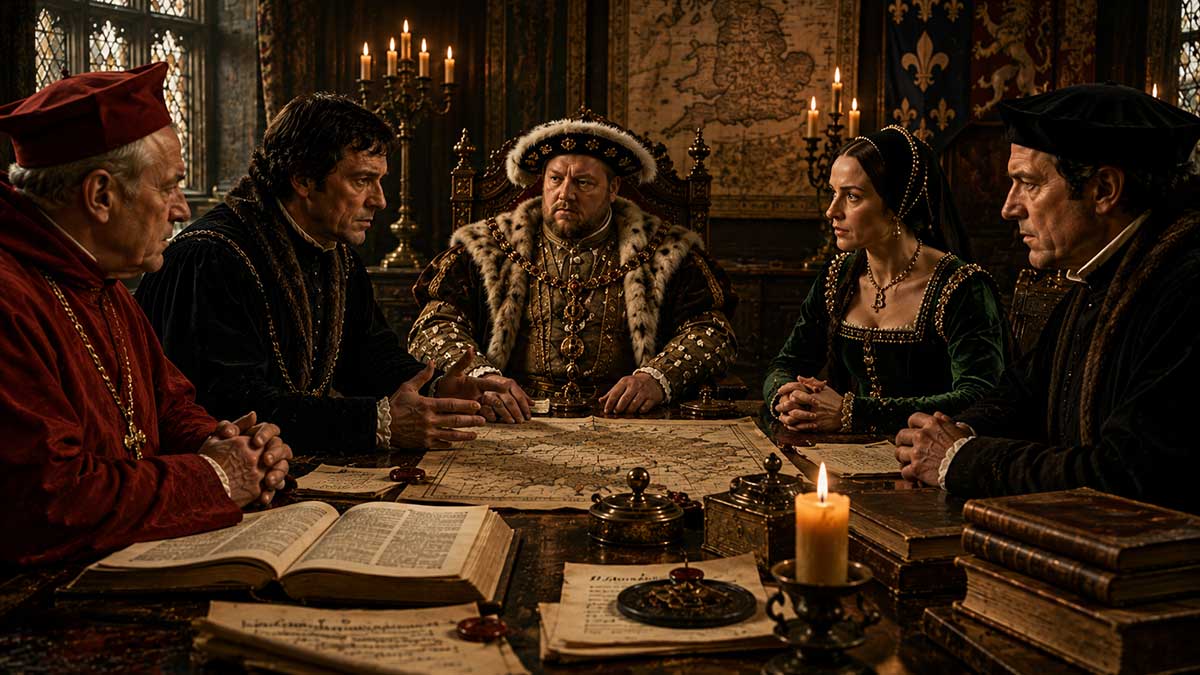
Opening
Thomas More: Men often describe the English Reformation as though it began with theology.
It did not.
It began with desire.
A king wanted freedom from one marriage and certainty about another.
Lawyers were summoned.
Clergy were pressured.
Ancient arguments were reopened.
Scripture was examined with unusual urgency.
And because the desire belonged to a king, personal dissatisfaction became national doctrine.
Yet it would be too simple to say that faith meant nothing.
Faith meant everything.
That was precisely why politics found it so useful.
A crown could not merely say, “I want this.”
It had to say, “God requires this.”
Once political desire is dressed in sacred language, disagreement becomes more than disobedience.
It becomes sin.
That is when kingdoms become dangerous.
Did Henry seek religious truth—or permission?
King Henry VIII: You have already judged me.
More: I have described the sequence.
Henry: You imply that my conscience was invented after my desire.
Thomas Cromwell: Was it?
Henry: I believed my marriage to Catherine offended divine law.
Anne Boleyn: You believed it with increasing conviction after you met me.
Henry: Must truth arrive before desire to remain truth?
More: No.
But desire can train the mind to recognize only convenient truths.
Henry: Catherine had been my brother’s wife.
Scripture warned against such unions.
Cromwell: Scripture also produced arguments supporting the marriage.
Cardinal Wolsey: That was the difficulty.
Both sides possessed texts.
Anne: Then the real question was not what Scripture said.
It was who possessed the authority to interpret it.
More: Precisely.
Henry: And why should a foreign bishop decide the conscience of an English king?
More: Because your conscience was not the only conscience involved.
Henry: A kingdom cannot be governed by competing consciences.
More: Nor should it be governed by one man’s desire.
Cromwell: Yet every government eventually decides whose judgment becomes law.
That decision is political even when its subject is religious.
Was the break with Rome inevitable?
Wolsey: Had the Pope granted the annulment, would England have broken with Rome?
(No one answers immediately.)
Anne: Perhaps not then.
More: Then the Reformation was political.
Cromwell: Not entirely.
The break exposed tensions already present.
Wolsey: Which tensions?
Cromwell: Money leaving England.
Church courts operating beyond royal control.
Clergy holding enormous privilege.
People questioning whether Rome served their souls or merely governed them.
More: Abuses require reform.
They do not require rupture.
Anne: Institutions rarely surrender privilege willingly.
More: That does not justify replacing spiritual authority with royal appetite.
Henry: You continue reducing the matter to appetite.
More: Because appetite opened the door.
Cromwell: But once the door opened, forces much larger than Henry passed through it.
Wolsey: That is often how history works.
A private grievance creates a public revolution no one fully intended.
Anne: Henry wanted a marriage.
Cromwell discovered a constitution.
Henry: I discovered my lawful supremacy.
More: You declared it.
That is not the same thing.
Can political reform produce genuine spiritual freedom?
Cromwell: Thomas, you defend the old order as though it protected conscience.
More: I defend continuity.
Cromwell: The old order imprisoned people for translating Scripture.
More: Unauthorized translations can spread error.
Anne: Error according to whom?
More: The Church.
Cromwell: You mean those already holding power.
More: Truth is not decided by popularity.
Cromwell: Nor should it be monopolized by officials.
More: So every cobbler becomes theologian?
Cromwell: Every Christian should understand the faith governing his soul.
More: Understanding requires teaching.
Cromwell: Teaching can become control.
Henry: And control belongs to the crown.
Anne: There.
You nearly improved the argument until Henry entered it.
Wolsey: Reform can produce freedom.
It can also transfer domination from one institution to another.
Cromwell: Yes.
That is the danger.
More: Then you admit your revolution did not free conscience.
It merely changed its master.
Cromwell: At times, yes.
But it also created openings the old order would never have allowed.
Anne: Political motives do not always cancel spiritual consequences.
More: Nor do spiritual claims cleanse political motives.
Was Thomas More defending conscience—or enforcing conformity?
Anne: Thomas, you speak eloquently about conscience.
Did you grant the same freedom to those who disagreed with you?
More: Conscience does not mean every belief is equally true.
Anne: That was not my question.
Cromwell: You pursued heretics.
More: I opposed doctrines that endangered souls and social order.
Cromwell: You imprisoned people.
More: The law permitted it.
Cromwell: Law can preserve cruelty.
More: And reformers can disguise destruction as liberty.
Henry: Thomas More’s conscience was very generous toward himself.
More: Because conscience cannot be delegated.
Anne: Yet you expected others to delegate theirs to Rome.
More: To the universal Church.
Cromwell: Universal institutions are usually universal only from the center.
Wolsey: Thomas, this is the contradiction history finds difficult.
You died rather than violate your conscience.
Yet others suffered because you believed theirs was mistaken.
More: I will not pretend tolerance means indifference to truth.
Cromwell: No one asks for indifference.
Only humility.
More: Humility can become cowardice before error.
Anne: Certainty can become cruelty before human beings.
Can a king possess a private conscience?
Henry: Everyone speaks as though kings cease being men.
I feared dying without a legitimate son.
I feared civil war.
I feared that God had rejected my marriage.
Were those not real fears?
Wolsey: They were real.
More: Real fear does not guarantee correct judgment.
Henry: Easy words from a man without a dynasty to preserve.
Cromwell: A king’s private fear becomes public danger because the state must absorb it.
Henry: Then what would you have had me do?
Accept uncertainty?
Anne: Yes.
Henry: You say that now.
Anne: I say it because none of us accepted uncertainty.
That was our shared failure.
More: Faith requires obedience even without certainty.
Cromwell: Government cannot operate entirely by mystery.
Wolsey: Yet political systems become unstable when leaders demand personal certainty from public institutions.
Henry: A king must decide.
More: Yes.
But he must not confuse decision with divine confirmation.
Cromwell: That may be the most dangerous privilege of power.
The ability to rename preference as providence.
Did Cromwell believe in reform—or only in power?
More: Thomas, let us examine you.
Did you truly believe in religious reform?
Cromwell: Yes.
More: Or did reform simply provide the legal machinery to strengthen the crown?
Cromwell: Both were true.
More: Convenient.
Cromwell: Reality often is inconveniently mixed.
I wanted Scripture in English.
I wanted clerical abuses challenged.
I wanted England governed by laws answerable within England.
I also understood that reform succeeded only because it served the King.
Anne: Would you have pursued it without Henry’s marriage crisis?
Cromwell: More slowly.
Perhaps unsuccessfully.
Wolsey: Then politics carried theology where theology could not travel alone.
More: Or corrupted it.
Cromwell: Every reform enters history through imperfect people.
Must we reject all change because its agents possess mixed motives?
More: No.
But mixed motives should make us cautious about declaring revolution righteous.
Henry: Victors declare revolutions righteous.
Anne: Until the next victors rewrite them.
Can religion survive when the state controls it?
Wolsey: Henry, once you became supreme head of the Church in England, where did spiritual authority end and royal authority begin?
Henry: They served one kingdom.
More: That is not an answer.
Henry: Division creates weakness.
Cromwell: Unity can also conceal coercion.
Henry: You helped build it.
Cromwell: I did.
Anne: Do you regret it?
Cromwell: I regret that no legal structure can guarantee a wise ruler.
More: Then the entire system depends upon the character of the monarch.
Henry: Every system depends upon character somewhere.
Wolsey: Yet concentrated power magnifies bad character.
Anne: And good intentions do not remain good when institutions reward obedience over truth.
More: A state church risks turning faith into policy.
Cromwell: A transnational church risks turning faith into foreign jurisdiction.
Henry: So no arrangement is pure.
Wolsey: Precisely.
The question becomes which corruption a nation is willing to endure.
Closing
Thomas More: The English Reformation cannot be explained by choosing between faith and politics.
It was both.
That is what makes it tragic.
Henry’s conscience was not entirely false.
Nor was it entirely free from desire.
Cromwell’s reforms were not merely cynical.
Nor were they untouched by ambition.
The Church defended sacred continuity.
It also defended privilege.
Reformers opened Scripture.
They also opened prisons.
Those who resisted tyranny could themselves become tyrants.
Those who preached conscience sometimes denied conscience to others.
History prefers clean stories.
Faith against corruption.
Liberty against authority.
England against Rome.
Cromwell against More.
But truth is rarely so generous.
Political power seeks sacred language because sacred language commands deeper obedience than law alone.
Religion seeks political protection because truth without institutions often remains powerless.
The danger begins when either forgets its limits.
A king should not assume that desire becomes holy because theologians are ordered to defend it.
A church should not assume that tradition becomes just because it is ancient.
A reformer should not assume that change becomes moral because it defeats hypocrisy.
And a man of conscience should never assume that his certainty gives him the right to silence another soul.
The Reformation changed England because faith was real.
It became violent because politics was real.
Perhaps its deepest lesson is that religion becomes most vulnerable not when politics rejects it, but when politics learns how to speak in its voice.
Topic 4: Can History Ever Judge Anyone Fairly?
Opening
Anne Boleyn: History did not remember me as a woman.
It remembered me as an explanation.
An ambitious woman who tempted a king.
A Protestant heroine who helped reform England.
A manipulator.
A victim.
A witch.
A martyr.
A cautionary tale.
Each century selected the version it needed.
Very few asked what it meant to live inside a court where one glance could become evidence, one silence could become guilt, and one failure to produce a son could become treason.
History likes clean characters because clean characters make events easier to explain.
The saint stands against the villain.
The faithful wife stands against the seductress.
The honorable scholar stands against the ruthless minister.
But people are rarely so convenient.
Thomas More could defend conscience and persecute heresy.
Thomas Cromwell could protect servants and destroy opponents.
Henry could love deeply and discard mercilessly.
I could be intelligent, ambitious, frightened, loving, cruel, courageous, and mistaken—sometimes within the same hour.
The question is not simply whether history judged us correctly.
The deeper question is whether history is capable of judging human beings without first turning them into symbols.
Why does history prefer heroes and villains?
King Henry VIII: Because people understand stories better than governments.
Thomas Cromwell: They understand governments through stories.
That is more dangerous.
Thomas More: Moral judgment requires distinction.
Some actions are right.
Others are wrong.
Anne: Actions can be judged.
People are more difficult.
More: People become responsible through actions.
Anne: Yes, but one action should not swallow an entire life.
Cardinal Wolsey: History compresses.
A lifetime becomes a paragraph.
A reign becomes a policy.
A person becomes the manner of their death.
Henry: Kings become whatever later generations fear.
Cromwell: Or whatever they wish to justify.
More: That does not mean judgment is impossible.
Anne: No.
It means judgment should be humble.
Henry: Humility has never been history’s strongest quality.
Wolsey: Nor the strongest quality of those who commission histories.
Cromwell: Every new government needs an old villain.
It helps the present appear innocent.
More: Yet if everyone is complicated, do we risk excusing everyone?
Anne: Complexity is not acquittal.
It is accuracy.
Who decides which version survives?
Cromwell: Usually the people who remain alive.
Anne: For a time.
Then the people who inherit their papers.
Henry: Then playwrights.
More: Then priests.
Wolsey: Then schoolteachers.
Anne: Then filmmakers.
Henry: What is a filmmaker?
Cromwell: Another kind of court historian, I imagine.
Anne: Whoever controls the image controls the memory.
More: Documents matter.
Cromwell: Documents are not neutral.
A letter may flatter.
A confession may be forced.
A trial record may preserve procedure while concealing injustice.
Wolsey: Silence is also evidence.
Henry: How can silence be evidence?
Wolsey: By asking whose voice is missing.
Servants.
Women.
The poor.
The defeated.
Those who could not write.
Those whose words were never considered worth saving.
Anne: My enemies left accusations.
My private fears left almost nothing.
Which survives more clearly?
More: Then historians must compare sources carefully.
Cromwell: Yes.
But comparison still requires interpretation.
Henry: So even facts need judgment.
Anne: Facts need context.
Judgment enters when someone decides which context matters.
Why did Thomas More become a saint while Cromwell became a villain?
More: I did not choose how later generations used me.
Cromwell: Nor did I.
Anne: But the contrast is useful.
More the man of conscience.
Cromwell the man without one.
More: I died rather than betray what I believed.
Cromwell: True.
More: You helped create the machinery that killed me.
Cromwell: Also true.
Anne: Yet Thomas More’s treatment of religious dissenters rarely occupies the center of his legend.
More: Because my final refusal revealed something essential.
Cromwell: It revealed courage.
It did not erase everything before it.
Wolsey: Martyrdom simplifies a life.
Death places a bright light around the final decision.
Henry: And execution places darkness around the executioner.
Anne: Thomas Cromwell became associated with efficient cruelty because he survived long enough to carry out the King’s will.
Cromwell: Until the King’s will turned upon me.
Henry: You speak as though I alone acted.
Cromwell: Kings benefit from servants precisely because responsibility can be distributed downward.
More: Yet servants possess choice.
Cromwell: Yes.
That is why I cannot claim innocence.
But neither should the crown claim distance.
(Henry remains silent.)
Are women judged differently by history?
Anne: Let us not avoid the obvious.
Would ambition have been remembered as harshly had I been a man?
Henry: Ambitious men were also hated.
Anne: They were hated as rivals.
Women were condemned as unnatural.
More: Society expected different duties.
Anne: Society expected obedience.
Cromwell: A clever man was formidable.
A clever woman was dangerous.
Wolsey: Especially near succession.
Anne: Every quality required to survive the court became evidence against me.
If I negotiated, I was calculating.
If I resisted, I was proud.
If I spoke sharply, I was cruel.
If I showed fear, I was unstable.
If I sought influence, I was manipulative.
If I failed to influence Henry, I was useless.
Henry: You did possess ambition.
Anne: Of course I did.
Why should the truth embarrass me?
The question is why your ambition became kingship while mine became sin.
More: Power judged you harshly because your position was precarious.
Anne: No.
Power judged me harshly because it first invited me to play by its rules, then punished me for learning them.
Can a person be both victim and participant?
More: Anne, you were certainly wronged.
But were you entirely innocent?
Anne: No.
Henry: That answer surprises me.
Anne: Innocence is another prison history builds for women.
A woman must be either pure victim or wicked schemer.
I was neither.
I humiliated Catherine.
I treated Mary harshly.
I encouraged men who believed reform would advance my cause.
I underestimated how easily a system that raised me could destroy me.
Cromwell: You also lived under extraordinary pressure.
Anne: Pressure explains.
It does not erase.
Wolsey: That may be the fairest sentence spoken here.
More: Then you accept moral responsibility.
Anne: Yes.
But responsibility should be proportionate.
I made mistakes.
I did not commit the crimes used to kill me.
Henry: History often confuses moral fault with legal guilt.
Cromwell: Governments do the same when they need a verdict.
Can victors ever tell the truth about the defeated?
Henry: Victory does not always mean dishonesty.
Cromwell: No.
But victory controls access.
More: The defeated also lie.
Anne: Certainly.
Defeat does not purify anyone.
Wolsey: The problem is imbalance.
The victor’s account becomes official.
The defeated account becomes rumor.
Henry: Yet kingdoms need an official record.
Cromwell: Kingdoms need stability.
Truth and stability are not always the same.
More: Should governments preserve accusations against themselves?
Cromwell: A confident government should.
Henry: No government is that confident.
Anne: Nor any monarch.
Wolsey: Perhaps fair history begins only after power has lost its immediate need to defend itself.
More: Even then, later generations bring their own needs.
Anne: Exactly.
The past becomes a mirror.
People look at us and see their own arguments.
Does modern sympathy create new distortions?
More: Later generations often admire those who challenged institutions.
That preference may distort judgment as much as old reverence did.
Cromwell: Agreed.
Modern readers may praise reform simply because it resembles modernity.
Anne: Or defend me simply because I was executed.
Henry: Or condemn me because monarchy now appears absurd.
Wolsey: Every age mistakes its values for the final stage of wisdom.
More: Then how should the past be approached?
Cromwell: With imagination disciplined by evidence.
Anne: And without assuming people in the past were merely unfinished versions of people today.
Henry: We inhabited a world where dynasty could prevent civil war.
More: Where religious error was believed to endanger eternal souls.
Wolsey: Where disease erased households without warning.
Cromwell: Where order was fragile and law uneven.
Anne: Context should enlarge judgment.
Not abolish it.
Is a reputation ever recoverable?
Henry: Thomas Cromwell’s reputation changed centuries after his death.
Yours changed too, Anne.
Does that comfort you?
Anne: A little.
But restoration is another form of invention.
Cromwell: Being reconsidered is better than being fixed forever.
More: Provided reconsideration does not merely reverse the labels.
Villain becomes hero.
Saint becomes hypocrite.
Wolsey: Reversal is not balance.
Anne: Precisely.
I do not need to become flawless to be understood.
Cromwell: Nor do I need to become secretly gentle in every decision.
Henry: And I?
Anne: You may be the hardest.
Henry: Why?
Anne: Because power made your private qualities public.
Your tenderness mattered.
So did your vanity.
Your fear mattered.
So did the suffering caused by it.
Henry: Then history must judge consequences.
More: And intentions.
Cromwell: And constraints.
Wolsey: And alternatives.
Anne: And the voices that paid the price.
Closing
Anne Boleyn: History can judge.
It must judge.
Without judgment, cruelty becomes merely interesting, courage becomes merely dramatic, and suffering becomes decoration.
But judgment should never begin with certainty that we already know the whole person.
Ask what someone did.
Ask what they believed.
Ask what choices were available.
Ask who benefited.
Ask who suffered.
Ask which voices survived and which were silenced.
Then ask what your own age needs the answer to be.
History failed me when it made me only a seductress.
It would fail again if it made me only a victim.
It failed Thomas Cromwell when it made him merely a monster.
It would fail again if admiration for his intelligence erased those harmed by his methods.
It failed Thomas More when sainthood removed his severity.
It would fail again if criticism of his intolerance erased the courage of his final refusal.
Fair judgment does not flatten contradiction.
It holds contradiction long enough to see the human being inside it.
Perhaps that is the best history can offer.
Not a final verdict.
A more honest trial.
One in which the dead are neither worshipped nor conveniently condemned.
One in which power does not control all the testimony.
One in which complexity is not used to escape responsibility, but to make responsibility more precise.
History may never judge anyone perfectly.
But it becomes more just whenever it stops asking,
“Was this person a hero or a villain?”
and begins asking,
“What did this person become inside the choices, fears, desires, and powers of their time?”
Topic 5: What Legacy Is Worth Leaving Behind?
Opening
King Henry VIII: Men speak of legacy as though it were a monument built after death.
They imagine heirs, palaces, laws, victories, portraits, and names carved into stone.
I understand why.
A king is trained to think beyond his own lifetime.
Every marriage becomes succession.
Every alliance becomes inheritance.
Every decision asks what kind of kingdom will remain.
Yet legacy is a strange thing.
The more fiercely a person tries to control it, the less control he often has.
I wanted a son to secure England.
Instead, my daughters helped define its future.
I wanted unity.
My reign deepened division.
I wanted history to remember strength.
It also remembered fear.
Perhaps legacy is not what we intend to leave.
Perhaps it is what survives after intention, reputation, and power have all been taken from us.
Is changing history enough?
Thomas Cromwell: Your Majesty, you changed England.
Henry: So did you.
Anne Boleyn: So did all of us, though not always in the ways we intended.
Thomas More: Historical consequence does not automatically equal moral achievement.
Henry: Easy for a martyr to say.
More: Easier than pretending importance is the same as goodness.
Cardinal Wolsey: History contains many powerful people whose influence outlived their virtue.
Henry: Then what should greatness mean?
Cromwell: Perhaps creating conditions in which others can live more freely.
More: That sounds noble.
Did we do it?
Cromwell: Sometimes.
We also created new forms of control.
Anne: Every revolution announces freedom while reorganizing power.
Henry: So changing history is insufficient.
More: Unless history changes in a direction worth defending.
Wolsey: Even then, no one controls all consequences.
Cromwell: A law may outlive the motive that created it.
An institution may serve purposes its founder never imagined.
Anne: Which means legacy belongs partly to strangers.
Is family more important than empire?
Henry: I wanted an heir because I feared England would collapse without one.
Anne: You also wanted a son because you believed a daughter could not carry your name with equal strength.
Henry: That was the world we inhabited.
Anne: Yet your daughters inherited it.
Wolsey: History possesses a dry sense of humor.
More: The child treated as secondary may become the strongest legacy.
Cromwell: Public ambition often blinds people to private inheritance.
Henry: Thomas, you lost your wife and daughters.
Did that change how you thought about power?
Cromwell: Completely.
Before loss, the future feels negotiable.
After loss, you understand how little can be secured.
Anne: Did your son matter more than England?
Cromwell: Emotionally, yes.
Politically, I could not act as though that were true.
More: There is the tragedy of public life.
Those who govern everyone may fail those closest to them.
Wolsey: Or convince themselves that service to the nation excuses absence from the home.
Henry: A king has no private family.
Anne: That was one of your most destructive beliefs.
Can parents choose what their children inherit?
Wolsey: We give children more than estates.
We give them fears.
Expectations.
Conflicts.
Unfinished ambitions.
Henry: A father should prepare his child for responsibility.
Anne: Preparation can become possession.
More: Parents often call control guidance.
Cromwell: Children inherit the emotional architecture of a household.
Even when no one explains it.
Henry: What did you inherit from your father?
Cromwell: The determination never to be helpless.
Wolsey: A useful inheritance.
Cromwell: And a dangerous one.
It made dependence feel like weakness.
It made control feel like safety.
Anne: We often build our lives in opposition to our parents and still remain shaped by them.
More: Then legacy includes what we force the next generation to overcome.
Henry: That is an uncomfortable measure.
Anne: It should be.
What survives after reputation changes?
More: Reputations rise and fall.
Mine became saintly.
Thomas Cromwell’s became monstrous.
Anne’s became scandalous, then sympathetic.
Henry’s became theatrical.
Henry: Theatrical?
Anne: Very.
Wolsey: Posterity is rarely subtle.
Cromwell: Yet reputation is not the only survival.
Laws remain.
Institutions remain.
Words remain.
Habits remain.
More: And wounds remain.
Anne: So do possibilities.
My rise altered what later women could imagine, even if my life ended in disaster.
Henry: My break with Rome permanently changed the kingdom.
More: Yes, though not according to any single plan.
Cromwell: Perhaps the strongest legacy is not a fixed reputation but a question later generations cannot stop asking.
Wolsey: A life may remain useful by disturbing certainty.
Anne: That may be the most honest monument.
Would each of us choose the same path again?
Henry: I would still seek an heir.
Anne: Even knowing the cost?
Henry: I do not know how to imagine myself without that fear.
More: That is not the same as choosing again.
Henry: Then you answer.
Would you remain silent before the oath?
More: No.
Cromwell: Even knowing your death would not stop the changes?
More: Conscience is not measured by success.
Cromwell: There we still differ.
More: And you?
Would you build the machinery again?
(Cromwell pauses.)
Cromwell: I would pursue reform.
I would trust power less.
Anne: That is not a full answer.
Cromwell: It is the only honest one.
We imagine second chances with knowledge we did not possess during the first.
Wolsey: I would serve the King again.
But I would not confuse indispensability with security.
Anne: I would still refuse to remain merely a mistress.
Henry: Even knowing you would die?
Anne: I would change how I treated Catherine and Mary.
I would not apologize for wanting a life larger than obedience.
Is legacy measured by intention or consequence?
More: Intention matters because it reveals the will.
Cromwell: Consequence matters because others must live with it.
Henry: A ruler is judged by consequences.
Anne: Women are often judged by intentions attributed to them.
Wolsey: Both measures are incomplete.
A benevolent intention can cause suffering.
A selfish act can unexpectedly produce good.
More: That does not make motive irrelevant.
Cromwell: Nor does motive erase harm.
Henry: Then how should a life be weighed?
Wolsey: By intention, action, consequence, repentance, and what the person learned.
Anne: History rarely includes repentance.
Cromwell: Since repentance is often private.
More: Perhaps legacy depends partly upon what remains invisible.
The mercy no chronicler recorded.
The cruelty no court documented.
Henry: Then history can never fully measure a life.
Wolsey: Correct.
That should make us cautious, not hopeless.
Can institutions be a better legacy than personal glory?
Cromwell: Personal fame is unstable.
Institutions can carry value beyond the founder.
More: Institutions can also preserve injustice beyond the founder.
Anne: Every structure eventually serves people the creator never imagined.
Henry: Then what makes an institution worthy?
Cromwell: Its ability to correct itself.
More: And its willingness to limit power.
Wolsey: And its concern for those without influence.
Anne: Especially those without influence.
Henry: Kings do not build institutions to weaken kings.
Cromwell: Wise rulers should.
Henry: No ruler believes his successors will be worse.
More: That is why restraint must be built before it is needed.
Wolsey: The greatest legacy of power may be creating boundaries that survive one's own goodness.
Anne: Or one's own vanity.
What remains when control is gone?
Henry: I spent my life trying to secure the future.
I now see that the future did not ask permission.
Cromwell: It never does.
More: Then perhaps legacy begins with surrender.
Anne: Surrender to what?
More: To the truth that we are not the final authors of what our lives mean.
Wolsey: Others continue the sentence.
Cromwell: Some misunderstand it.
Henry: Some improve it.
Anne: Some erase it.
More: Yet we remain responsible for the words we contributed.
Cromwell: That may be enough.
Henry: Enough for whom?
Wolsey: For those wise enough to know that control and responsibility are not the same.
Closing
King Henry VIII: I once believed legacy meant securing the crown.
Then I believed it meant securing the church.
Then the dynasty.
Then the nation.
Each goal seemed permanent while I pursued it.
None remained under my command.
The son I desired did not become the future I imagined.
The daughters I underestimated became central to it.
The religious settlement I demanded opened conflicts no decree could close.
The servants I used became the minds through which history understood my reign.
So what is worth leaving?
Not only heirs.
Heirs become themselves.
Not only laws.
Laws are rewritten.
Not only monuments.
Stone forgets more slowly than people, but it forgets.
Perhaps the worthiest legacy is a world in which those who come after us possess more room to choose than we did.
A family less burdened by our fear.
An institution less dependent upon one person’s virtue.
A nation better able to correct its mistakes.
A memory honest enough to contain both achievement and harm.
We cannot determine what future generations will call us.
Hero.
Tyrant.
Reformer.
Martyr.
Victim.
Villain.
Those names belong to them.
But we can ask a simpler question while we still have power:
Will the people who inherit the consequences of our choices be freer, safer, wiser, and more fully human because we were here?
A crown cannot answer that.
Neither can a portrait.
Only lives can.
And lives speak long after rulers have fallen silent.
Final Thoughts by Nick Sasaki
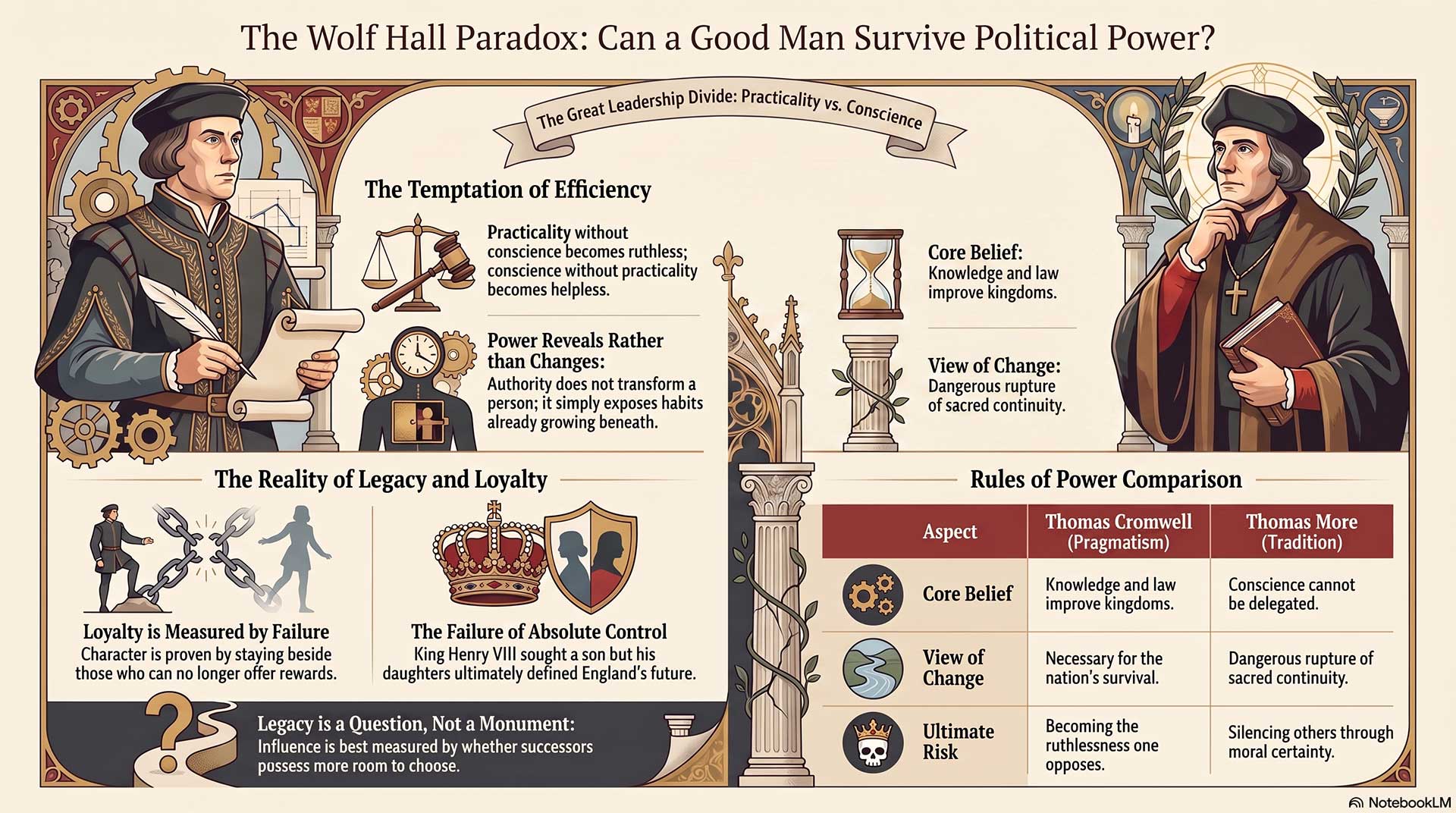
After listening to this conversation, I do not think Wolf Hall asks us to choose between Thomas Cromwell and Thomas More.
It asks us to recognize what each man lacked.
More possessed a powerful conscience, but conscience can become severe when it loses humility.
Cromwell possessed extraordinary practical intelligence, but practicality can become ruthless when it no longer pauses before the individual life affected by policy.
One man reminds us that results cannot justify everything.
The other reminds us that moral purity without practical wisdom may leave suffering untouched.
Perhaps leadership requires both.
A conscience strong enough to resist convenience.
And an intelligence practical enough to turn conviction into something useful.
The tragedy is that power often separates these qualities.
Those who remain morally pure may lose the ability to act.
Those who become effective may gradually redefine every compromise as necessity.
That is why Cromwell remains so compelling.
He does not rise because he is the cruelest man in the room.
He rises because he sees what others miss.
He understands money, language, law, fear, memory, and ambition.
He knows that power rarely arrives dramatically.
It accumulates through documents, favors, appointments, secrets, and decisions that seem reasonable one at a time.
His danger grows alongside his usefulness.
That may be the novel’s deepest warning.
We often expect corruption to look obviously evil.
In reality, it may look competent.
It may solve problems.
It may protect friends.
It may pursue reform.
It may even believe it is serving the greater good.
The moral question appears later:
Who paid the price?
Anne Boleyn’s presence adds another lesson.
History does not judge everyone by the same rules.
The ambition admired in a man may be condemned in a woman.
The qualities required for survival may later become evidence of guilt.
Anne refuses to be reduced either to seductress or innocent victim. She reminds us that understanding complexity does not require abandoning responsibility.
Thomas More offers a similar challenge.
His courage at the end of his life deserves recognition.
So does the suffering caused by his religious certainty.
A fair reading should not reverse the old legend by turning the saint into a villain and Cromwell into a hero.
Reversal is not justice.
The goal is not a new set of simplified labels.
It is a fuller human picture.
Cardinal Wolsey may offer the quietest wisdom of all.
His political career ended in failure, yet one act of trust survived him.
He saw talent in a blacksmith’s son.
He gave Cromwell room to become more than his birth allowed.
That decision affected England long after Wolsey lost office.
It suggests that legacy may not be found in the power we hold, but in the people we help become themselves.
Henry VIII spends the final discussion confronting the limits of control.
He wanted a male heir.
History remembered his daughters.
He wanted religious unity.
His reign opened generations of conflict.
He wanted permanence.
His world kept moving toward Wolf Hall.
That image may be the perfect ending.
Wolf Hall is not only a place.
It is the future already approaching while the present celebrates its victory.
Anne’s triumph contains Jane Seymour.
Cromwell’s rise contains his fall.
Henry’s certainty contains consequences he cannot foresee.
Every political success carries something beyond the horizon.
So what legacy is worth leaving?
Perhaps not a spotless reputation.
History will change it.
Not control.
The future will refuse it.
Not greatness alone.
Greatness can coexist with enormous harm.
A worthy legacy may be simpler.
People with more freedom because we lived.
Institutions strong enough to survive bad leaders.
Families carrying less fear.
Ideas that outlive the ego of their creators.
And a memory honest enough to contain both achievement and damage.
Wolf Hall begins with a beaten child lying on the ground.
It follows him into the center of power.
The question at the end is not merely how far Thomas Cromwell rose.
It is whether, after rising so far, he could still see the people lying where he once had been.
That question belongs not only to ministers and kings.
It belongs to anyone whose influence is growing.
Short Bios:
Thomas Cromwell is the central figure of Wolf Hall. Born into a poor and violent household in Putney, he escapes his father, travels through Europe, and develops skills in commerce, law, languages, diplomacy, and finance. He later serves Cardinal Wolsey and rises to become one of King Henry VIII’s most powerful advisers. Hilary Mantel portrays him as brilliant, observant, loyal, compassionate toward many ordinary people, and increasingly willing to use political power ruthlessly.
Cardinal Wolsey is Henry VIII’s former Lord Chancellor and Thomas Cromwell’s mentor. Born outside the aristocracy, he rises through intelligence and administrative talent. His failure to secure the annulment of Henry’s marriage to Catherine of Aragon leads to his downfall. In the novel, his trust in Cromwell gives the younger man opportunity, direction, and a model of political leadership.
Henry VIII is the King of England whose desire to end his marriage to Catherine of Aragon drives much of the novel’s political and religious crisis. Intelligent, charming, insecure, demanding, and unpredictable, he seeks a male heir and greater control over the English Church. His personal concerns become national policy, forcing those around him into increasingly dangerous moral compromises.
Anne Boleyn is the intelligent and ambitious woman who refuses to become merely Henry VIII’s mistress and instead demands marriage and queenship. She becomes a powerful force in court politics and supports religious reform, but her position remains dependent on Henry’s favor and her ability to produce an heir. Mantel presents her as strategic, courageous, sharp, vulnerable, and constrained by the unequal expectations placed upon women.
Thomas More is a scholar, lawyer, humanist, former Lord Chancellor, and committed defender of Catholic authority. He opposes Henry VIII’s claim to supremacy over the English Church and ultimately dies rather than violate his conscience. Although traditionally remembered as a saint and martyr, Mantel emphasizes his intolerance toward religious dissenters, making him a complex counterpoint to Cromwell.
Nick Sasaki is the creator of Imaginary Talks, a series that brings historical figures, literary characters, spiritual thinkers, and cultural voices into fictional conversations about enduring human questions. Through these discussions, he explores power, faith, psychology, morality, history, family, and the choices that shape individual and collective life.
Leave a Reply