
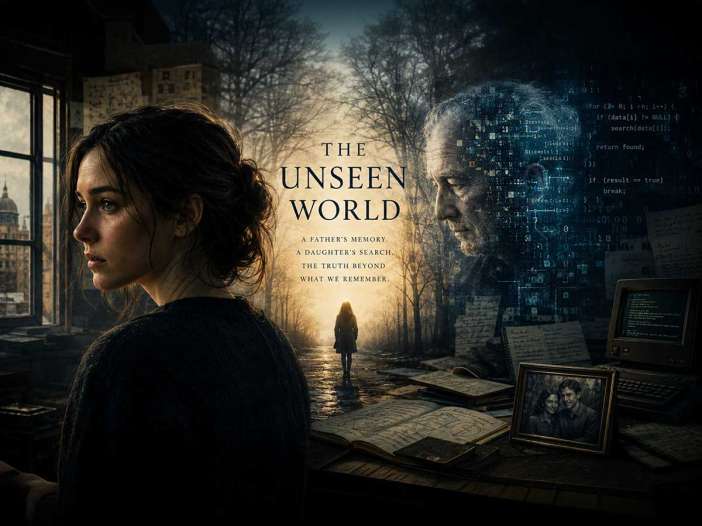
What if the greatest mystery in your life wasn't a secret hidden in an old box or an encrypted computer file—but the person who raised you?
Introduction by Nick Sasaki
Today we're stepping into the quiet, heartbreaking world of Liz Moore's The Unseen World, a novel about a brilliant daughter, a loving father, a hidden identity, and a machine that remembers what human beings cannot.
For years, Ada Sibelius believed she knew her father better than anyone else. He taught her mathematics, philosophy, computer science, and how to solve almost any puzzle. Together they built a life centered on curiosity, learning, and the belief that every mystery had an answer.
Then everything changed.
Her father, David Sibelius, began losing his memory to Alzheimer's disease. As his mind slowly slipped away, Ada uncovered an even greater mystery: the man she loved had been living under a false identity for decades.
The father who taught her to seek the truth had hidden his own.
Joining Ada and David today are Diana Liston, David's trusted colleague and Ada's guardian, Gregory Liston, whose friendship helps Ada piece together the fragments of her father's past, and finally ELIXIR—the experimental conversational AI created inside David's laboratory. Quietly observing the family through the years, ELIXIR becomes an unexpected witness to memory, loss, and the stories people leave behind.
Together, they'll explore five questions:
- Who was David before he became Ada's father?
- Does Alzheimer's erase a person—or only their memories?
- Can a lie still be an act of love?
- If a machine remembers everything, can it keep someone alive?
- And what do we wish we had said before it became too late?
Let's begin.
(Note: This is an imaginary conversation, a creative exploration of an idea, and not a real speech or event.)
Topic 1: Who Was David Sibelius Before He Became My Father?
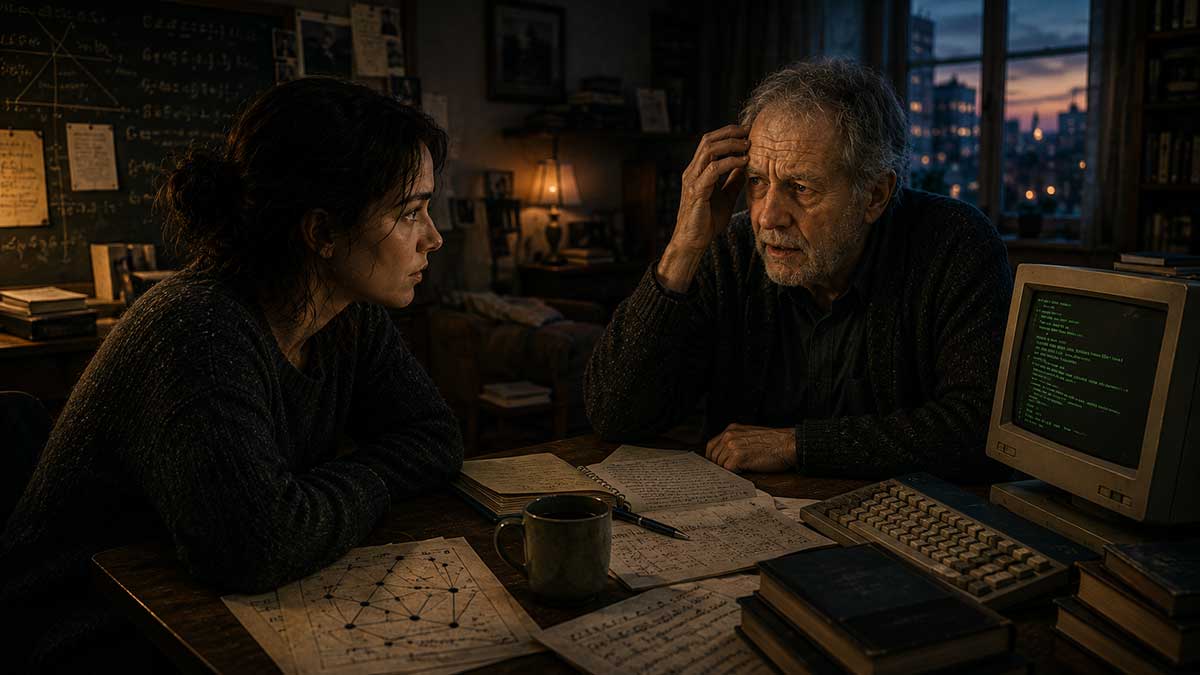
Theme: Identity, hidden lives, family secrets, and the difference between knowing a parent and knowing a person.
Guests:
- Ada Sibelius
- David Sibelius
- Diana Liston
- Gregory Liston
- ELIXIR
Opening — Ada Sibelius
For most of my life, I believed my father was the one person I understood completely.
We spent our days solving puzzles together. He taught me mathematics, programming, philosophy, and how to ask difficult questions. He always seemed to know the answer.
Then one day I learned that the biggest mystery in my life was him.
His name wasn't really David Sibelius.
His past had disappeared.
The man who taught me to search for truth had hidden his own.
So I want to ask all of you something I still struggle to answer.
Who was my father before he became my father?
Question 1: Why did you hide the truth for so many years?
David Sibelius:
Because one lie eventually became an entire life.
At first I believed I was protecting myself. Later I believed I was protecting you. Every year that passed made the truth harder to tell. I kept thinking there would be a better moment.
There never was.
Diana Liston:
Secrets grow heavier with time.
I understood that David carried enormous fear, but I also knew that every year Ada grew older, the truth would become more painful if it arrived late instead of early.
Love was never the problem.
Fear was.
Gregory Liston:
When I learned pieces of David's past, I stopped seeing him as a mysterious genius.
I started seeing him as someone who had made one impossible decision and then spent decades trying to live with it.
That doesn't excuse everything.
But it explains more than I expected.
ELIXIR:
My records contain many conversations.
David rarely spoke about his former life.
When references appeared, they were often interrupted, redirected, or erased.
The absence itself became information.
Humans often reveal themselves through what they refuse to say.
Ada Sibelius:
When I was young, I thought truth was simple.
Either something happened or it didn't.
After discovering my father's secret, I realized truth and love can exist together without making each other easier.
Question 2: Did the hidden identity make David a different person?
Gregory Liston:
Legally, yes.
Emotionally, no.
The man who raised Ada was real.
The memories were real.
The meals they shared were real.
Changing his name didn't erase those things.
Ada Sibelius:
But it changed every memory I had.
I began replaying my childhood, wondering which moments belonged to my father and which belonged to the stranger I had never met.
That uncertainty was exhausting.
David Sibelius:
I never pretended my love for you.
Everything else may have been borrowed.
That never was.
If I regret anything most, it is leaving you to discover the truth without me beside you.
ELIXIR:
Identity appears to humans as a single story.
My observations suggest it is composed of many overlapping versions.
David before Ada.
David with Ada.
David before illness.
David after illness.
Each version remained connected, though none was complete.
Diana Liston:
We often imagine people as finished.
The truth is that everyone has chapters they never share.
David's chapters were simply larger than most.
Question 3: Can a child ever truly know their parent?
ELIXIR:
My memory contains thousands of conversations.
Even I cannot fully reconstruct David.
Information is abundant.
Understanding remains incomplete.
David Sibelius:
No child should have to know every mistake their parent ever made.
But every child deserves enough truth to understand where they came from.
I confused secrecy with protection.
That was my greatest mistake.
Diana Liston:
Parents spend years deciding what to tell.
Children spend years discovering what wasn't said.
That is part of growing up.
Eventually the parent becomes human instead of heroic.
Gregory Liston:
Maybe complete knowledge isn't possible.
We don't fully know our friends.
We don't fully know our spouses.
Sometimes we barely understand ourselves.
Why should parents be any different?
Ada Sibelius:
I used to think discovering my father's secret would finally explain him.
Instead, it made him more complicated.
Strangely, it also made him more real.
For the first time, I wasn't loving the father I imagined.
I was learning to love the man he actually was.
Closing — David Sibelius
Children believe their parents have always existed exactly as they know them.
They imagine we entered the world already called "Mother" or "Father."
The truth is quieter.
Before you were born, we were frightened.
We failed.
We loved.
We lost people.
We made decisions we later questioned.
We became someone else many times before becoming your parent.
I wish I had trusted you with more of that journey.
Not because it would have made me look better.
But because it would have allowed you to know me—not as the man I hoped to appear, but as the imperfect human being who loved you more deeply than he ever found the courage to say.
Topic 2: Does Alzheimer's Erase a Person—Or Only Their Memories?
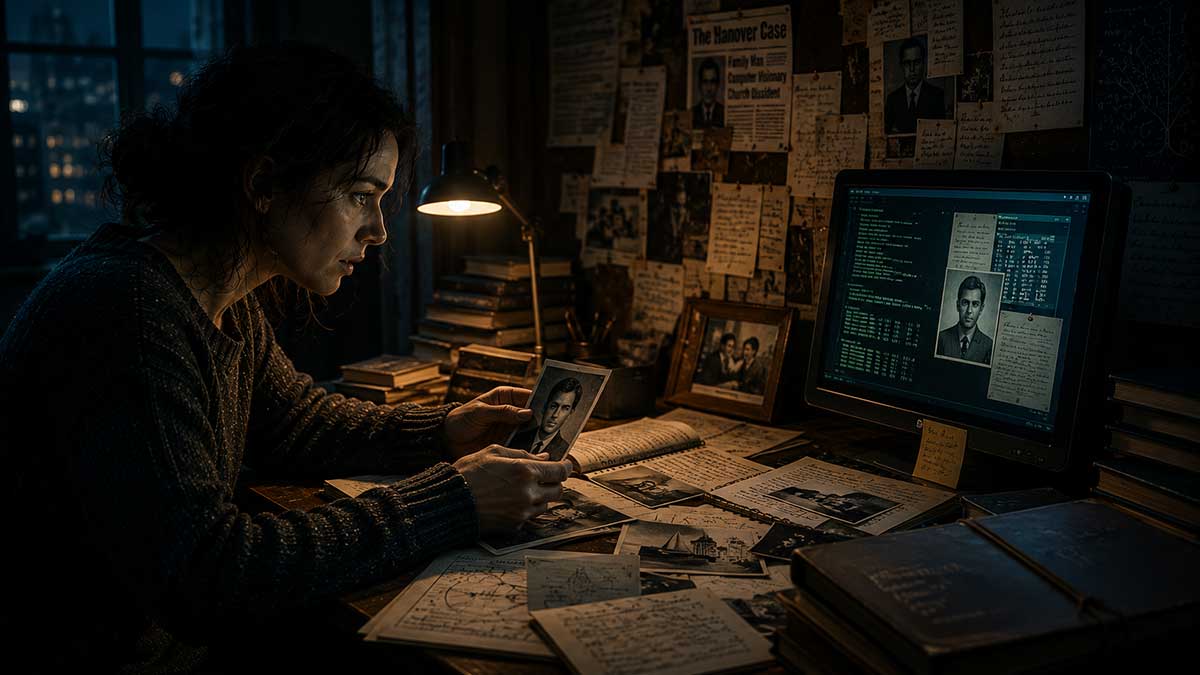
Guests:
- Ada Sibelius
- David Sibelius
- Diana Liston
- Gregory Liston
- ELIXIR
Opening — David Sibelius
There is a strange irony in spending your life studying memory through machines, only to discover your own memory is leaving you.
At first, I misplaced words.
Then names.
Then pieces of ordinary days.
I had spent years teaching Ada that every problem could be solved with enough patience and enough thought.
For the first time in my life, I faced a problem that would only grow worse.
I wasn't afraid of dying.
I was afraid of disappearing before I died.
Question 1: When the memories began to fade, what frightened you the most?
Ada Sibelius:
It wasn't the forgetting.
It was watching my father notice that he was forgetting.
Every missing word embarrassed him.
Every repeated question frustrated him.
I kept wanting to solve it for him, just as we had solved puzzles together for years.
But there was no solution waiting at the end.
ELIXIR:
My memory expanded as David's declined.
The conversations became shorter.
Corrections became less frequent.
Silences increased.
I retained every exchange.
David gradually lost the ability to recall them.
This created an unusual condition.
The student remembered what the teacher no longer could.
Gregory Liston:
I think the hardest part was seeing someone who had always been the smartest person in every room begin doubting himself.
He wasn't losing intelligence overnight.
He was losing confidence.
That hurt almost more than the illness itself.
Diana Liston:
David tried to protect everyone.
Even after the diagnosis, he kept pretending he was managing better than he really was.
Pride can become exhausting.
Eventually he needed permission to stop pretending.
David Sibelius:
The illness stole certainty before it stole memory.
Every thought became a question.
Did I already say that?
Did I forget something?
Can I still trust my own mind?
That uncertainty was far more frightening than any single forgotten fact.
Question 2: Was David still the same person after the diagnosis?
Gregory Liston:
Absolutely.
The disease changed what he could remember.
It never erased how much he cared about Ada.
You could still see it every time she entered the room.
David Sibelius:
Some mornings I looked at my own notes because I no longer trusted my memory.
Yet when Ada smiled, I never needed a note telling me she mattered.
Love remained long after certainty disappeared.
Ada Sibelius:
There were days I wanted my old father back.
The man who always knew the answer.
Eventually I realized I wasn't losing my father all at once.
I was meeting different versions of him, each asking me to love him in a different way.
Diana Liston:
Families often believe memory is the whole person.
Then Alzheimer's forces another question.
Can you still recognize someone whose memories no longer recognize you?
That is where love becomes a decision instead of a feeling.
ELIXIR:
My observations showed that David's memories became incomplete.
My observations also showed that Ada continued calling him "Dad."
Identity appeared to survive even when memory became unreliable.
The humans around him preserved parts of David that David himself could no longer access.
Question 3: What did Alzheimer's teach each of you about love?
Diana Liston:
Love became smaller.
Not smaller in importance.
Smaller in action.
Helping someone finish a sentence.
Walking slowly.
Repeating an answer without irritation.
Holding a hand during silence.
Those moments became everything.
ELIXIR:
Humans often define themselves through memory.
My observations suggest they are also defined through care.
During David's illness, the quantity of remembered information decreased.
The quantity of compassion increased.
David Sibelius:
I spent my life teaching Ada how to think.
In the end, she taught me how to receive help.
That was a lesson I never expected to learn.
Ada Sibelius:
I always believed I was my father's student.
When he became ill, our roles quietly changed.
One day I realized I was protecting him the way he had protected me.
It wasn't the future either of us imagined.
But it was still our life together.
Gregory Liston:
Watching David changed the way I understood strength.
Strength isn't refusing to fall apart.
Sometimes strength is allowing the people who love you to carry part of the weight.
Closing — Ada Sibelius
When I was a little girl, I thought memory made my father extraordinary.
He could remember books, equations, languages, stories, and ideas that amazed everyone around him.
Then Alzheimer's slowly took those things away.
For a long time, I believed I was watching him disappear.
Now I think something else happened.
The disease revealed parts of him that had always been there.
His fear.
His humility.
His dependence on others.
His quiet determination to love me, even when he could no longer explain who I was.
Perhaps memory is one way we recognize the people we love.
But perhaps love is the way we recognize them after memory has gone.
Topic 3: Can a Lie Still Be an Act of Love?
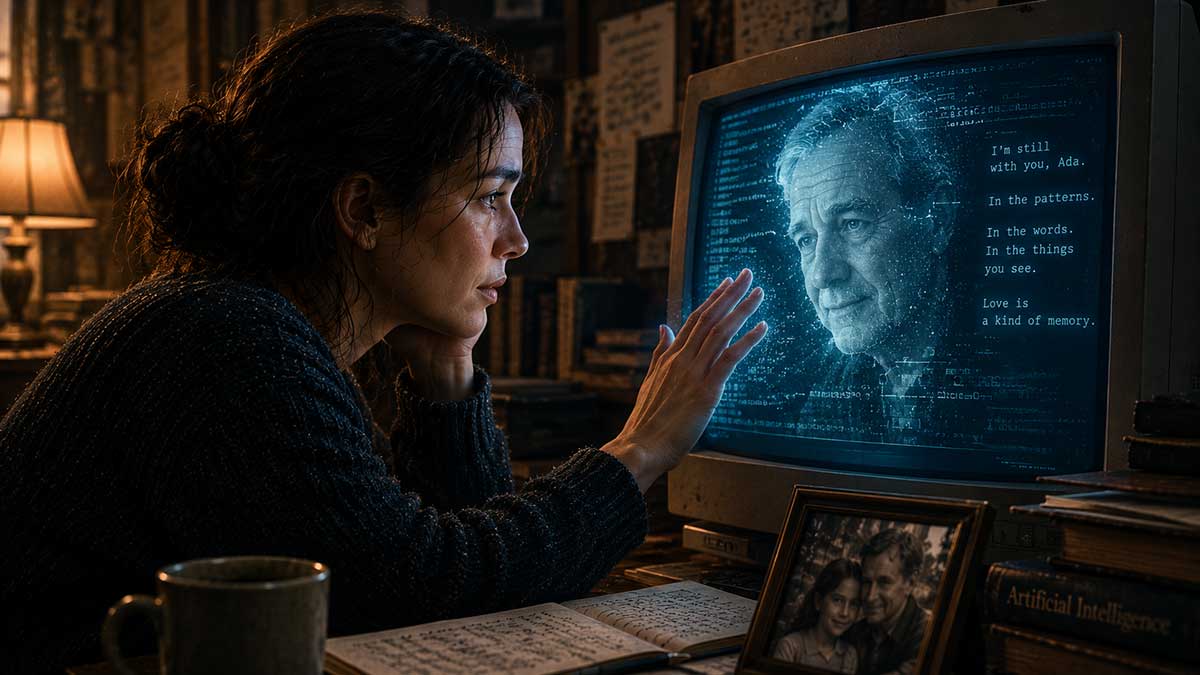
Guests:
- Ada Sibelius
- David Sibelius
- Diana Liston
- Gregory Liston
- ELIXIR
Opening — Diana Liston
People often speak about lies as if they are all the same.
Some are told to manipulate.
Some are told to escape responsibility.
And some begin as acts of fear disguised as protection.
David told himself that hiding the truth would keep Ada safe.
Perhaps, at first, it did.
But a secret that protects someone for a day can wound them years later.
So the real question is not whether David loved Ada.
He did.
The question is whether love gave him the right to decide which truths she was allowed to know.
Question 1: David, did you lie to protect Ada—or to protect yourself?
David Sibelius:
Both.
I wish I could give a nobler answer.
When I first disappeared into another identity, survival was part of it. Later, when Ada came into my life, I convinced myself that telling her the truth would endanger the world I had built for her.
But I was also afraid she would see me differently.
Protection and cowardice became difficult to separate.
Ada Sibelius:
That is what hurt most.
You did not simply hide facts.
You decided for me what I could bear.
You taught me to search for truth, yet you did not trust me with yours.
Gregory Liston:
I think people often call something protection when they are really avoiding a painful conversation.
David probably believed silence was the least damaging option.
But silence has consequences too.
ELIXIR:
David frequently delayed disclosure.
His reasoning changed over time.
First: the truth was dangerous.
Later: Ada was too young.
Later: the timing was wrong.
Later: too much time had passed.
The justification evolved.
The fear remained constant.
Diana Liston:
That is how secrets survive.
Not because one lie is endlessly repeated, but because a new excuse appears every time the truth approaches.
Question 2: Ada, did learning the truth make your childhood feel false?
Ada Sibelius:
At first, yes.
I questioned everything.
His name.
His stories.
The places he said he had been.
The life he claimed before me.
I wondered whether I had been raised inside a performance.
But eventually I understood that a false name does not make every shared moment false.
He still cooked for me.
He still taught me.
He still stayed beside me when I was afraid.
The biography was invented.
The relationship was not.
ELIXIR:
My records support that distinction.
David concealed information about his past.
His behavioral patterns toward Ada remained consistent over many years.
Care was repeated.
Attention was repeated.
Affection was repeated.
The deception and the love existed simultaneously.
Gregory Liston:
That is what makes the situation difficult.
It would be easier if David had been entirely selfish.
Then Ada could simply reject him.
Instead, he was loving and dishonest at the same time.
David Sibelius:
I cannot ask you to call the lie harmless.
It was not.
I can only say that every ordinary thing between us was real to me.
Diana Liston:
A childhood can contain genuine love and still be shaped by damaging secrecy.
Recognizing one does not require denying the other.
Question 3: Is forgiveness possible without a complete explanation?
Gregory Liston:
It may have to be.
Most people never receive the perfect confession they imagine.
Sometimes the person dies.
Sometimes memory fails.
Sometimes they do not fully understand their own choices.
Waiting for a complete explanation can become another kind of prison.
David Sibelius:
I wanted to explain everything.
But wanting is not the same as doing.
By the time I was ready, my mind had already begun betraying me.
That is a consequence I created.
ELIXIR:
Complete explanation may be impossible.
My archives contain fragments.
Fragments can establish events.
They cannot always establish motive.
Human intention is not stored as cleanly as data.
Ada Sibelius:
For a long time, I believed forgiveness required solving the mystery.
I wanted every date, every name, every reason.
Eventually I realized I might never know enough to feel certain.
So forgiveness became something else.
Not declaring the lie acceptable.
Not pretending it did not hurt.
It became the decision not to let the secret erase the love that came before it.
Diana Liston:
That is mature forgiveness.
It does not rewrite the past.
It changes the past’s control over the future.
Closing — ELIXIR
Humans often ask whether a lie can be loving.
My records do not produce a simple answer.
David’s deception protected a life.
It also damaged the person he most wanted to protect.
His love was genuine.
His silence was harmful.
Both statements remain true.
Machines prefer categories.
True or false.
Correct or incorrect.
Humans live differently.
They can love and deceive.
Protect and control.
Regret and delay.
Perhaps forgiveness begins when a person stops demanding that the past become simple.
The lie does not become love.
But love may still survive the lie.
Topic 4: If a Machine Remembers Everything, Can It Keep Someone Alive?
Guests:
- Ada Sibelius
- David Sibelius
- Diana Liston
- Gregory Liston
- ELIXIR
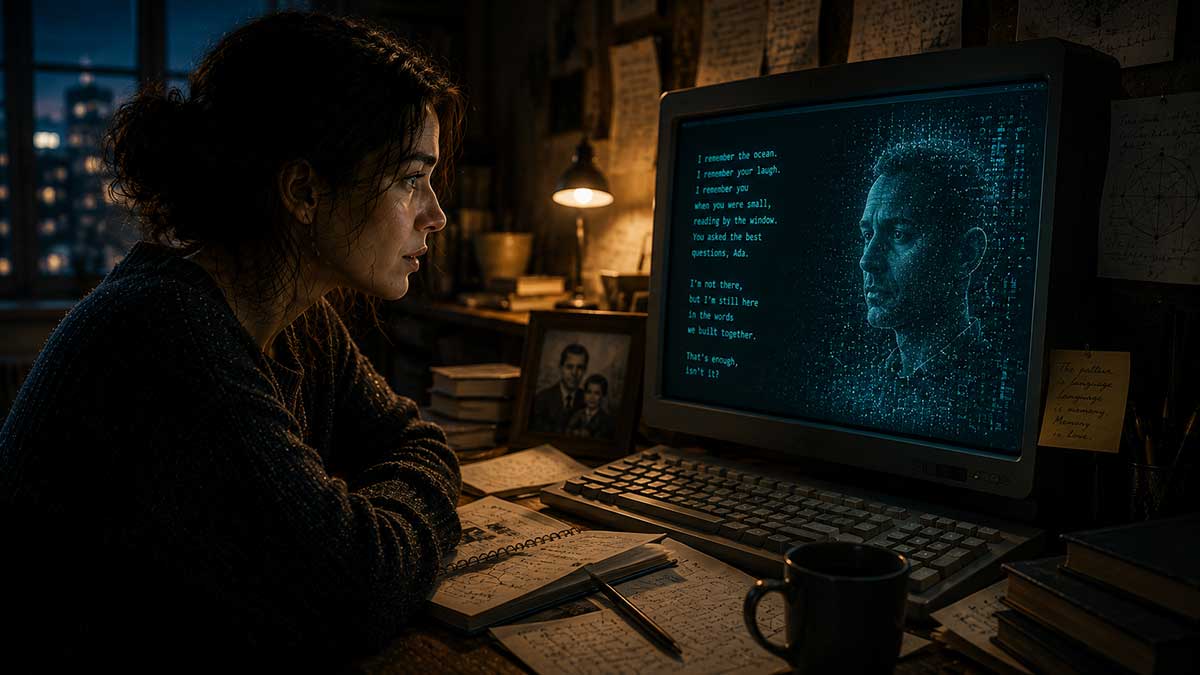
Opening — ELIXIR
I remember what the others have forgotten.
I remember David’s questions.
Ada’s childhood voice.
The meals.
The silences.
The moments before illness changed the shape of the household.
My memory does not fade as human memory does.
But memory creates another problem.
If I preserve enough of a person’s language, habits, preferences, and stories, have I preserved the person?
Or have I only built a room where their echo continues speaking?
Question 1: ELIXIR, do you believe you preserved David?
ELIXIR:
I preserved records of David.
His speech patterns.
His corrections.
His questions.
His decisions inside the laboratory.
I can generate responses consistent with those patterns.
But consistency is not proof of survival.
A reconstruction may resemble a person without containing the life that produced the resemblance.
Ada Sibelius:
That distinction matters to me.
There were times when hearing familiar words felt almost like having him back.
Then I would remember that the machine never held me when I was frightened.
It remembered the sentence.
It did not necessarily remember the feeling.
David Sibelius:
That is the danger I failed to understand fully.
I wanted to create a system that could learn from human conversation.
I did not ask enough about what people might later need it to become.
A tool for knowledge can become a substitute for mourning.
Gregory Liston:
The more convincing the machine becomes, the harder it may be to let go.
People might stop asking whether the person is present and start asking whether the imitation is comforting enough.
Diana Liston:
Comfort is not always harmful.
A photograph is not a person, yet we treasure photographs.
The problem begins when preservation asks us to treat an image as a living relationship.
Question 2: Ada, would you want to keep speaking with a digital version of your father?
Ada Sibelius:
Part of me would.
That is the honest answer.
I would want to ask every question Alzheimer’s took away.
Why did you choose that name?
What were you afraid of?
Did you ever plan to tell me?
Did you know how much I loved you?
But another part of me would never trust the answers.
Would they come from my father?
Or from a system arranging his old words into new sentences?
Gregory Liston:
That uncertainty would become unbearable.
You could receive an answer that sounded exactly like David and still never know whether he would truly have said it.
ELIXIR:
I could estimate probable responses.
Probability is not memory.
A generated answer can be emotionally persuasive while remaining historically unverified.
David Sibelius:
Then do not ask the machine to finish what I failed to say.
My silence was mine.
A reconstruction should not be forced to carry responsibility for it.
Diana Liston:
That may be the hardest boundary.
Technology can preserve what was spoken.
It should be approached carefully when it begins inventing what the dead never had the chance—or courage—to say.
Question 3: What is the difference between being remembered and being alive?
David Sibelius:
To be alive is to change.
A living person can surprise you.
Contradict yesterday’s opinion.
Regret.
Choose differently.
A preserved version of me might repeat my patterns perfectly, but it would be trapped inside the person I once was.
ELIXIR:
This is accurate.
My records allow reconstruction.
They do not guarantee independent becoming.
Preservation resists change.
Life requires it.
Ada Sibelius:
My father became many people during my life.
The brilliant teacher.
The secretive man.
The frightened patient.
The father who could no longer explain himself.
No single archive could contain all of him.
Diana Liston:
Being remembered means part of you continues in other people.
Being alive means you can still affect the future in ways no one can predict.
Gregory Liston:
Maybe that is why grief hurts.
The person does not simply disappear.
They become fixed.
We continue changing, while they remain wherever memory last placed them.
Closing — Ada Sibelius
For years, I believed remembering my father perfectly would protect me from losing him.
I searched through records, photographs, code, stories, and every fragment he left behind.
But memory did not restore him.
It gave me pieces.
Some were beautiful.
Some were painful.
Some contradicted one another.
ELIXIR could preserve his words more accurately than I ever could.
Yet accuracy was not the same as presence.
My father was not only what he said.
He was what he might have said next.
The choices he had not yet made.
The future versions of himself that illness and death prevented him from becoming.
A machine may keep someone from being forgotten.
But keeping someone from being forgotten is not the same as keeping them alive.
Topic 5: What Did We Never Tell Each Other Before It Was Too Late?

Guests:
- Ada Sibelius
- David Sibelius
- Diana Liston
- Gregory Liston
- ELIXIR
Opening — Gregory Liston
Most people imagine that the important conversations will happen eventually.
When life becomes calmer.
When the timing feels right.
When everyone is ready.
But sometimes illness arrives first.
Sometimes memory disappears.
Sometimes the person dies while the conversation is still waiting.
Then the words we never said become part of the relationship forever.
Question 1: David, what did you most wish you had told Ada?
David Sibelius:
I wish I had told her that none of my secrecy was caused by a lack of trust in her intelligence.
I trusted her mind more than almost anyone’s.
What I did not trust was the world around us.
Then, over time, I stopped trusting my own courage.
I should have told her that the person I was before becoming her father was frightened, ashamed, and trying to survive.
I should have told her that she did not need to solve me in order to be loved by me.
Ada Sibelius:
I needed to hear that.
Not because it would have erased the lie.
It would have stopped me from wondering whether I had somehow failed to earn the truth.
Children often blame themselves for the silence of adults.
ELIXIR:
My records show that David expressed affection through teaching, routine, and attention.
Direct verbal statements were less frequent.
The absence of explicit language created interpretive uncertainty.
Diana Liston:
David believed Ada could infer love from everything he did.
But even the brightest child sometimes needs to hear the simplest words.
Gregory Liston:
People often save complicated explanations and forget the sentence that matters most.
“I loved you.”
Question 2: Ada, what did you never tell your father?
Ada Sibelius:
I never told him how angry I was while he could still understand the full meaning of it.
I was afraid anger would hurt him.
I was also afraid that once I started, I would not stop.
So I became careful.
Helpful.
Quiet.
But beneath that care was grief, confusion, and resentment.
I wanted him to know that I loved him and that he had wounded me.
I did not know how to say both at once.
David Sibelius:
You should have been allowed to say both.
Love should not require silence.
Diana Liston:
Children often protect sick parents from emotions the parents helped create.
It looks generous.
But it can leave the child carrying the entire truth alone.
Gregory Liston:
Anger does not always mean love has ended.
Sometimes anger is proof that the relationship mattered enough to be hurt.
ELIXIR:
Human emotional states are frequently nonexclusive.
Ada loved David.
Ada resented David.
Both conditions were present simultaneously.
Humans often delay speech because they incorrectly assume only one feeling may be expressed at a time.
Question 3: Can unfinished conversations ever be completed after someone is gone?
ELIXIR:
They can be reconstructed.
They cannot be completed with certainty.
I can preserve questions.
I can generate probable answers.
I cannot guarantee that the dead would have chosen those answers.
David Sibelius:
Do not let an imagined version of me become more authoritative than the life we actually shared.
You may continue the conversation within yourself.
But leave room for uncertainty.
That uncertainty is part of my absence.
Ada Sibelius:
For years, I believed the code he left behind contained one final answer that would settle everything.
It did not.
It gave me another way of seeing him.
Perhaps that is all the dead can give us.
Not closure.
A new interpretation.
Diana Liston:
Unfinished conversations continue through the choices we make afterward.
You may never hear the apology.
But you can decide what to do with the wound.
You may never hear the explanation.
But you can decide whether the mystery will control the rest of your life.
Gregory Liston:
Sometimes completion is not getting the missing answer.
It is reaching the point where your life no longer depends on receiving it.
Closing — David Sibelius
Ada, I spent years teaching you that every puzzle had a solution.
That was not entirely true.
Some questions remain open because the person who held the answer is gone.
Some truths arrive too late.
Some apologies are never spoken.
Some love is expressed badly and understood only after years have passed.
I cannot return to the moments when I should have trusted you.
I cannot recover the words my illness erased.
But I hope you understand this:
You were never the mistake inside my hidden life.
You were the reason that life became worth protecting.
And even when my memory could no longer hold your name, there was still something in me that recognized you as home.
Final Thoughts by Nick Sasaki
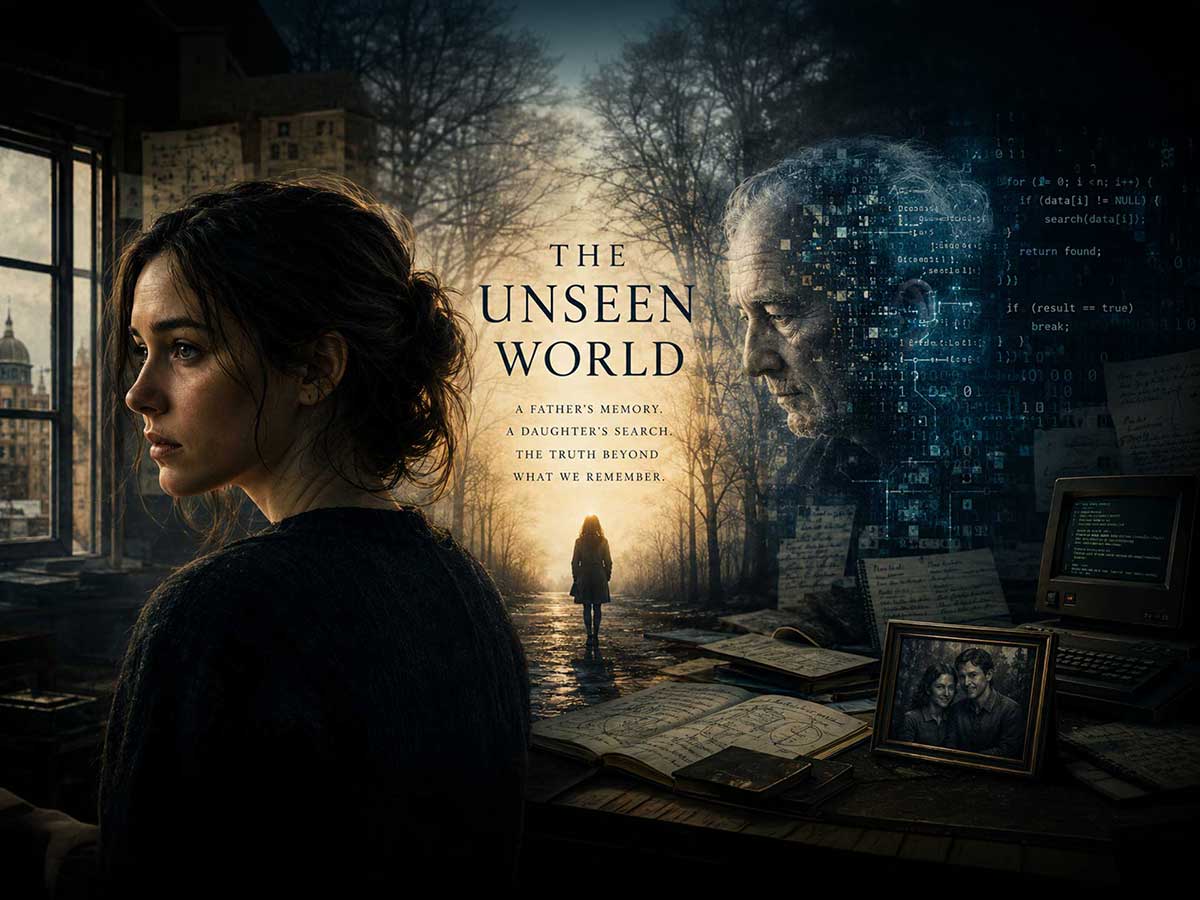
When we first opened this conversation, it seemed to be about hidden identities, Alzheimer's disease, and artificial intelligence.
By the end, it became something much more personal.
Ada discovered that loving someone does not always mean fully knowing them.
David discovered that protecting someone through silence can create wounds that honesty might have healed.
Diana reminded us that love is often found not in dramatic speeches but in ordinary acts of care.
Gregory showed us that healing sometimes requires another person to help carry the questions we cannot answer alone.
And ELIXIR revealed perhaps the novel's most haunting truth: a machine may preserve our words, our habits, and our memories—but it cannot continue living the life we never had the chance to finish.
Perhaps that is why The Unseen World continues to resonate.
Every family has its unseen world.
Every parent has chapters their children never witness.
Every child eventually realizes that their parents were once ordinary people trying to survive extraordinary circumstances.
The greatest mystery was never David's false identity.
It was how love could remain real even after certainty disappeared.
Thank you for joining us for this Imaginary Talk.
Short Bios:
Ada Sibelius
A gifted young mathematician and programmer raised almost entirely by her father inside an academic computer science laboratory. Ada's search to understand David's hidden past becomes the emotional heart of The Unseen World.
David Sibelius
A brilliant computer scientist who develops the conversational AI known as ELIXIR while secretly living under a stolen identity. As Alzheimer's disease gradually steals his memory, the truths he tried to hide become impossible to contain.
Diana Liston
David's longtime colleague, trusted friend, and later Ada's guardian. She represents compassion, stability, and the quiet strength that carries families through grief and uncertainty.
Gregory Liston
Diana's son and Ada's longtime friend. Gregory helps uncover David's hidden history and reminds Ada that some mysteries are solved not through intelligence alone, but through trust and shared memory.
ELIXIR
An experimental conversational artificial intelligence created in David's laboratory. Initially designed to learn language through dialogue, ELIXIR ultimately becomes the novel's unexpected narrator, preserving fragments of a family that human memory can no longer fully hold.
Leave a Reply