
Introduction
The House Where Everyone Used to Come Home
An original family story about the love that never disappeared—and the distance nobody knew how to cross.
Robert and Mary Bennett raised three children in a house that was rarely quiet.
There were birthday parties, school projects, arguments over the television, and little feet running toward the front door whenever Dad came home.
Thirty years later, the children have grown into successful, independent adults.
And the house has grown quiet.
Robert wonders why the children who once needed him for everything now seem reluctant to visit. Mary remembers everyone's favorite meals, but she is beginning to wonder whether she still knows the people her children have become.
What neither parent realizes is that their children are hurting, too.
Daniel loves his father but still feels he must earn his approval. Emily has learned to keep her dreams to herself. Ben is struggling with a secret he is afraid to share.
Five people. One family. So much love. And so many things left unsaid.
When a family gathering brings years of hidden feelings into the open, the Bennetts must confront a painful question:
Can you love someone deeply and still make them feel that they aren't good enough?
And perhaps an even more important one:
Is it possible to begin again, even after decades of misunderstanding?
From understanding to feeling
In Part 1 of our ImaginaryTalks series, we explored how parents can maintain close, loving relationships with their adult children. In Part 2, recognized experts examined why families drift apart and what helps them reconnect.
Developmental psychologist Laurence Steinberg, author of You and Your Adult Child, explores how parenting must evolve as children become adults. Psychologist Joshua Coleman examines painful family disconnections in Rules of Estrangement. And Cornell researcher Karl Pillemer's family reconciliation research offers insight into how fractured relationships can sometimes be repaired.
But understanding these ideas intellectually is one thing.
Feeling what they mean to a lonely father, a worried mother, or a grown child who is afraid to disappoint them is another.
That's why Part 3 takes a different approach.
Rather than another discussion about family relationships, this is one original, five-act story. Through the Bennett family, we'll experience both sides of the heartbreak, discover how old habits can turn love into pressure, and see what happens when people begin listening to one another differently.
Their journey won't be perfect. There will be tears, misunderstandings, difficult apologies, and moments when change feels almost impossible.
But there will also be laughter, forgiveness, and the possibility of something even more meaningful than returning to the past.
A new relationship in which parents and adult children can finally enjoy being together as the people they are today.
The House Where Everyone Used to Come Home begins with a birthday dinner—and a mother who remembers every detail of what her children used to love.
(Note: This is an imaginary conversation, a creative exploration of an idea, and not a real speech or event.)
Act 1: The Things She Remembered
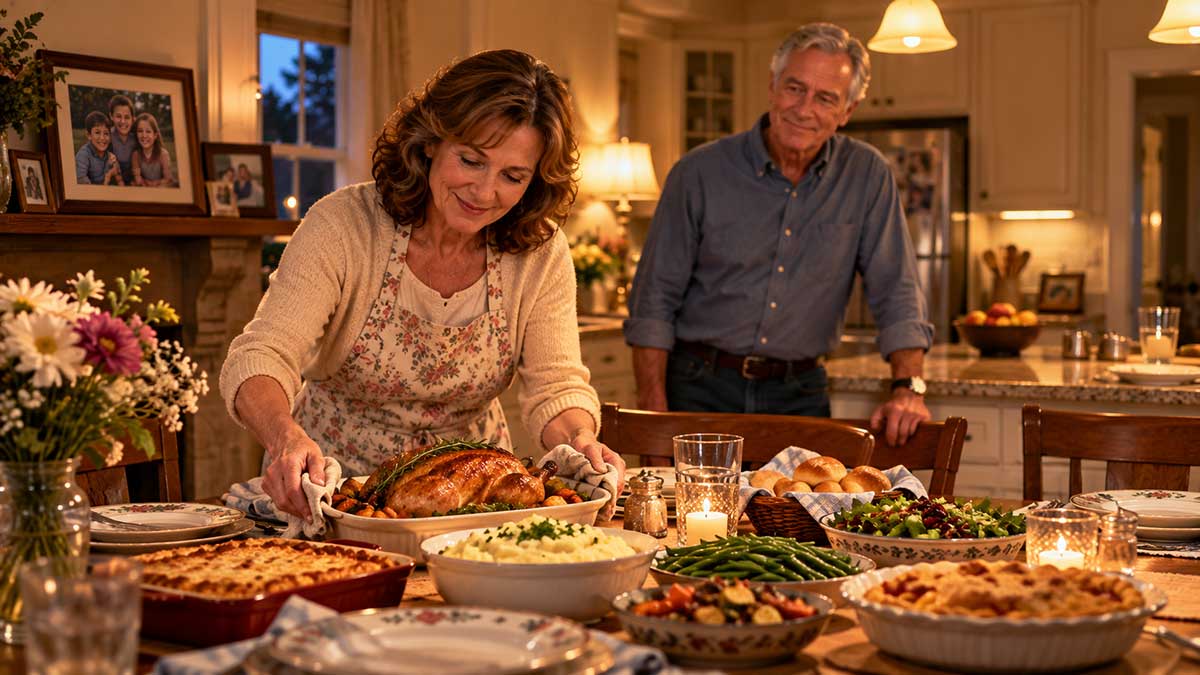
Mary Bennett knew that Daniel hated onions in his potatoes.
He was thirty-eight years old now, with a wife, a mortgage, and an eight-year-old son who apparently ate nothing but chicken nuggets. But Mary still chopped the onions separately, the way she had when Daniel was six.
Emily liked the crispy edges of roasted carrots. Ben preferred chocolate cake without frosting, a preference Mary had once considered evidence that her youngest child was fundamentally peculiar.
And Robert, whose sixty-seventh birthday they were celebrating, liked his chicken with far too much rosemary.
“You're going to poison me with that stuff one day,” he said, wandering into the kitchen.
“After forty-one years of marriage, I think you'd have developed an immunity.”
Robert lifted the lid of a saucepan.
Mary slapped his hand with a dish towel.
“That's for tonight.”
“I'm only checking.”
“You've been checking since three o'clock.”
“Quality control.”
“Go control something in the garage.”
He grinned and stole a carrot on his way out.
Mary watched him go, smiling.
He was a good man. Not an easy man, always, but a good one. He had worked fifty-hour weeks when the children were small, driven through snowstorms to get Daniel to basketball tournaments, and once spent an entire Saturday constructing a cardboard castle because Emily had announced, with the authority of a seven-year-old queen, that she required one.
When Ben was twelve and broke his arm falling out of a tree, Robert had sat beside his hospital bed until dawn, telling terrible jokes because the boy was frightened.
Mary remembered all of it.
She wondered sometimes whether the children did.
At five thirty, she checked the oven.
At five forty-five, she took out the serving dishes her mother had given her.
At six, she put the chicken back in the oven to keep warm.
“Shouldn't they be here?” Robert called from the living room.
“Daniel said around six.”
“Which means six-thirty.”
“Probably.”
Robert appeared in the doorway.
“Did you tell him I have a birthday every year? It's not exactly a surprise.”
“Robert.”
“What?”
“Don't start before anyone gets here.”
He held up both hands and disappeared again.
Mary looked at the clock.
She had been looking forward to this evening for weeks.
Not because of the birthday. Robert had never cared much about birthdays. Last year he'd suggested celebrating by buying a new lawn mower.
She was looking forward to hearing all three children talking at once.
Daniel telling some story about Oliver. Emily describing a new photography project. Ben interrupting with something ridiculous. Robert pretending to be annoyed while laughing harder than anyone.
Mary could still hear those sounds when the house was quiet enough.
Sometimes, while folding laundry, she'd remember the thundering footsteps on the stairs, the arguments about who had eaten the last cookie, the slammed bedroom doors.
She used to dream of a peaceful house.
Now she occasionally left the television on while she cooked.
At six-ten, her phone buzzed.
It was Daniel.
Mom, I'm so sorry. Oliver's running a fever and Sarah's exhausted. We really shouldn't bring him over. Can we celebrate next weekend? Tell Dad happy birthday.
Mary read the message twice.
Poor Oliver.
Of course they shouldn't bring a sick child out.
She typed, Don't worry about us. Take care of that sweet boy. Love you.
Then she added three hearts.
She erased two.
“Daniel can't make it,” she called.
Robert came back into the kitchen.
“What happened?”
“Oliver's sick.”
“What's wrong with him?”
“Fever.”
“How high?”
“He didn't say.”
“Well, he should make sure the kid stays hydrated.”
“I'm sure Daniel knows that.”
“I'm just saying.”
Mary turned back to the stove.
A few minutes later, Emily called.
“Mom, please don't hate me.”
Mary closed her eyes.
“What happened, sweetheart?”
“I have a client presentation tomorrow morning, and everything is taking twice as long as it should. I really thought I'd be finished by now.”
“Can't it wait until tomorrow?”
“I wish. I'm still fixing the photographs.”
Mary looked at the carrots.
She'd made enough for six people.
“Your father's been looking forward to seeing you.”
“I know. I feel terrible.”
“It's his birthday, Emily.”
“I know, Mom.”
There was a pause.
Mary could hear traffic behind her daughter's voice.
“I'll come by tomorrow,” Emily said. “I promise.”
“All right, sweetheart. Don't work too late.”
After they hung up, Mary stood very still.
She hadn't meant to sound disappointed.
Well, that wasn't entirely true.
She had wanted Emily to know she was disappointed.
That was different, wasn't it?
Robert was reading in his chair when she told him.
“Work?” he said.
“Yes.”
“On a Sunday?”
“She has a deadline.”
“She always has a deadline.”
“Robert.”
“What? She does.”
He looked down at his book, though Mary could see he hadn't turned a page.
“Ben's still coming,” she said.
Robert nodded.
“Good.”
At six forty-five, Ben sent a message.
Hey Mom. Sorry, running behind. Don't wait on me. Tell Dad happy birthday. I'll try to swing by later.
Mary stared at the words.
I'll try.
When the children were little, Ben had been the one who cried whenever Robert left for work.
At four, he used to stand in the driveway in his pajamas, waving until his father's car disappeared around the corner.
At five, he'd asked Mary whether Daddy could get a job at home so they wouldn't have to miss him.
Now he lived twenty minutes away.
Mary set the phone facedown.
Robert entered the kitchen, carrying the newspaper he'd been pretending to read.
“Where's Ben?”
“Running late.”
“How late?”
“He didn't say.”
Robert looked at the food.
“It's almost seven.”
“I know what time it is.”
“Everything's going to be cold.”
“I can warm it.”
“That's not the point.”
Mary turned toward him.
“Then what is the point, Robert?”
He looked surprised.
“I'm just saying—”
“I know. You're just saying.”
She opened the oven too quickly, and a gust of hot air struck her face.
Robert reached past her.
“Here. Let me.”
“I've got it.”
“Mary.”
“I said I've got it.”
He stepped away.
For a moment, neither spoke.
Then Robert pulled out a chair and sat down.
“I'm sorry,” he said.
Mary took the chicken out of the oven.
Its skin had gone a little too dark.
“It's all right.”
“No, it isn't.”
She looked at him.
He was staring at the table.
“I don't understand it,” he said quietly.
“What?”
“We weren't like this with our parents.”
Mary almost reminded him that his parents had lived four hundred miles away and that he'd once gone six months without visiting.
But she knew what he meant.
And tonight she didn't have the heart to correct him.
“They have their own lives,” she said.
“I know that.”
“Daniel has Oliver. Emily's busy. Ben's—”
“Ben's what?”
She had no answer.
Robert rubbed his forehead.
“I'm not asking them to move back in. I'm not asking them to spend every weekend here.”
“I know.”
“It's one evening.”
Mary sat across from him.
“Maybe we should eat.”
He looked at the roast chicken, the potatoes without onions, the carrots Emily liked, the cake Ben wouldn't be there to eat.
Then he looked at his wife.
“You worked all day on this.”
“I enjoy cooking.”
“You made everybody's favorites.”
“Well.” She gave a small laugh. “Somebody ought to eat them.”
Robert reached across the table and took her hand.
Mary had been holding herself together rather successfully until then.
The tenderness undid her.
“I just miss them,” she whispered.
Robert squeezed her fingers.
“I know.”
“No, I mean I miss them when they're here, too.”
He looked at her.
She struggled to explain.
“Sometimes when they visit, everybody's checking the time. Daniel has somewhere to be. Emily has work. Ben keeps looking at his phone. We ask how they're doing, and they say they're fine, and then suddenly it's time to leave.”
Robert said nothing.
“I don't know what they like anymore,” Mary continued. “Not really. I know Daniel used to hate onions. I know Emily liked crispy carrots. I know Ben didn't want frosting on his cake.”
She looked toward the kitchen counter.
“But I don't know if any of those things are still true.”
Robert's face changed.
He glanced at the potatoes.
“I think Daniel still hates onions.”
Mary laughed through her tears.
“That's not what I mean.”
“I know.”
He got up, found two plates, and began serving dinner.
“Come on,” he said. “Before my birthday chicken turns into a fossil.”
They ate in the kitchen.
Robert complimented the chicken three times, which was how Mary knew he was trying to cheer her up.
She told him it was too dry.
He insisted it was perfect.
They argued affectionately about whether he needed a second helping.
After dinner, Robert washed the dishes while Mary packed leftovers into containers.
She labeled one for Daniel.
Then Emily.
Then Ben.
Robert watched her write their names.
“Are you going to deliver those?”
“I thought they might like some.”
He dried his hands.
“Mary, they can buy food.”
“I know they can buy food.”
“They're adults.”
She put down the marker.
“I am aware that our children are adults, Robert.”
He opened his mouth, then closed it.
Mary sighed.
“I'm sorry.”
“No, you're right.”
He picked up the dish towel again.
A moment later, he said, “I just don't want you doing all this and getting hurt when they don't come.”
She looked at the containers.
He was right about that.
But what was she supposed to do instead?
Stop remembering what they liked?
Stop wanting to feed them?
Stop hoping that one Sunday, without anyone making a special effort, the kitchen would fill with their voices again?
She put the containers in the refrigerator.
“Maybe next weekend,” she said.
Robert nodded.
“Maybe.”
Later that evening, Robert went upstairs to change.
Mary heard him moving around in their bedroom.
She was wiping down the counter when he returned carrying a photograph.
“Look what I found.”
It was from his fortieth birthday.
Robert stood behind the children in the backyard, wearing a ridiculous paper crown. Daniel, eleven, was holding a homemade card. Emily had wrapped both arms around her father's waist. Ben, barely three, had chocolate frosting across his cheek.
Mary remembered taking the picture.
She also remembered what happened immediately afterward.
Ben had tried to feed Robert a piece of cake, missed his mouth entirely, and smeared frosting across his nose.
Daniel had laughed so hard he fell backward off the picnic bench.
Emily had shouted, “Daddy's a chocolate monster!”
Robert had chased all three children around the yard.
Mary could still see him running, the paper crown flying off his head, his laughter carrying across the grass.
He studied the photograph.
“Remember how Ben used to wait for me at the door?”
Mary smiled.
“Every afternoon.”
“He'd hear the garage open and come running.”
“Sometimes without pants.”
Robert chuckled.
“He was a strange little kid.”
“He adored you.”
Robert traced the edge of the picture with his thumb.
“Daniel used to follow me around the garage. Wanted to know what every tool did.”
“He still has that little hammer you gave him.”
“Does he?”
“He showed it to Oliver last Christmas.”
Robert looked pleased.
Then his smile faded.
“Funny,” he said.
“What is?”
“I used to think the best part of being a father was teaching them things.”
Mary leaned against the counter.
“And now?”
He looked down at the three small faces.
“I don't know what I'm supposed to do anymore.”
Mary felt something tighten in her chest.
She had never heard him say that.
Robert had always known what to do.
When a pipe burst, he fixed it. When Daniel struggled with algebra, he sat beside him until midnight. When Emily crashed her first car, he arrived before the tow truck. When Ben needed help moving, Robert was there with his pickup before anyone else.
He was a man who understood love through usefulness.
And lately, there hadn't been much for him to fix.
Mary stepped closer.
“You're still their father.”
“I know.”
“They love you.”
“I know that, too.”
He looked at the photograph again.
Then, so softly she almost missed it, he said, “I just wish I knew how to be their father now.”
Mary put her arm around his waist.
They stood together for a while.
Outside, a car passed along the street.
Robert turned his head toward the sound before he could stop himself.
It wasn't Ben.
Mary noticed, but she didn't say anything.
Instead, she rested her head against her husband's shoulder.
And for the first time that evening, she wondered whether the problem wasn't simply that their children had grown up.
Perhaps Robert and she were still trying to love three people who no longer existed.
Not because Daniel, Emily, and Ben had disappeared.
But because the children in that photograph had become adults, carrying lives and worries and dreams their parents knew surprisingly little about.
Mary looked at the old picture one more time.
She had spent the entire afternoon remembering everything her children used to love.
She wondered when she had last asked them what they loved now.
Robert set the photograph on the mantel.
Neither of them knew that, twenty minutes away, their youngest son was sitting in his car with a birthday present beside him.
And that he had spent nearly an hour trying to decide whether to turn around.
End of Act 1
Act 2: The Things They Never Said
Daniel Bennett had become very good at knowing when his father was disappointed.
There was a particular silence Robert used. Not an angry silence. Not even a disapproving one, exactly.
Just a small pause before he said, “Well, if you think that's best.”
Daniel had heard that sentence so many times that he could recognize it in a text message.
He heard it now, in his head, as he stood in the doorway of his son's bedroom.
Oliver was asleep beneath a blanket covered with dinosaurs, one flushed cheek pressed against his pillow.
His fever had finally come down.
Sarah appeared behind Daniel and touched his back.
“How's he doing?”
“Better. Ninety-nine point eight.”
“Thank goodness.”
She looked toward the kitchen.
“Did you call your dad?”
“Mom texted. I told her we'd come next weekend.”
“Was he upset?”
Daniel shrugged.
“Probably.”
Sarah studied him.
“You know, it's okay if he's disappointed.”
“I know.”
“People are allowed to be disappointed.”
“I know that, too.”
She gave him the look she used when he was answering questions without actually participating in the conversation.
Daniel sighed.
“He'll say he understands, and then next weekend he'll mention how much food Mom made, and how they ended up eating alone, and how people used to make time for family.”
“Does he always do that?”
“Not always.”
“Then maybe he won't.”
Daniel looked at his sleeping son.
He remembered being Oliver's age, sitting at the kitchen table with a spelling test.
Ninety-eight percent.
He'd missed one word.
His father had looked at the paper and smiled.
“That's terrific, Danny.”
Daniel remembered the happiness of that moment.
Then Robert had tapped the misspelled word.
“See? You knew this one. Just got careless. Next time, slow down and you'll get a hundred.”
It was such a small thing.
A loving father encouraging his son to do better.
Daniel knew that.
He also remembered how quickly ninety-eight had stopped feeling like a good grade.
For years, he'd told himself he was being ridiculous.
His father had paid for baseball equipment when money was tight. He'd worked extra shifts to help Daniel through college. He'd sat in freezing bleachers at games nobody else attended.
Daniel knew men whose fathers had done far less.
He had no doubt that Robert loved him.
But somewhere along the way, Daniel had learned to share good news only after he'd figured out how to defend it.
A promotion became a discussion about retirement savings.
A new house became a conversation about mortgage rates.
When Oliver started kindergarten, Robert had asked whether Daniel was doing enough to help him read.
The question had been ordinary enough.
Daniel had heard: Are you doing this right?
Sarah slipped her arm around him.
“Your dad called last week, you know.”
“I know.”
“He wanted to know how Oliver's soccer game went.”
Daniel glanced at her.
“I told him.”
“He said he was sorry he missed it.”
“He had a doctor's appointment.”
“I know. He asked if you'd send pictures.”
Daniel looked down.
He had forgotten.
Sarah waited.
“He's trying, Dan.”
Daniel gave a tired smile.
“You sound like my mother.”
“No. Your mother would have mentioned how long it's been since we visited.”
He laughed despite himself.
Then Oliver stirred.
“Daddy?”
Daniel knelt beside the bed.
“Hey, buddy.”
“Is Grandpa mad?”
Daniel felt something catch in his throat.
“Why would Grandpa be mad?”
“Because we didn't go to his birthday.”
“No, sweetheart. You're sick. He understands.”
Oliver thought about this.
“Can we make him a card?”
“Of course.”
“With dinosaurs?”
“Grandpa loves dinosaurs.”
“He doesn't.”
“He might. He's very old. He probably knew some.”
Oliver giggled.
Daniel tucked the blanket beneath his son's chin.
As he stood, he remembered Robert running behind his bicycle on a summer afternoon, one hand on the seat, shouting, “You've got it, Danny! Keep going!”
Daniel had pedaled halfway down the street before realizing his father had let go.
He remembered turning around.
Robert stood in the road with both arms raised, looking prouder than Daniel had ever seen him.
For a moment, Daniel missed his father so fiercely that it surprised him.
Not the man who questioned every decision.
The man who had run behind a bicycle until his son no longer needed him.
Then Daniel wondered whether those two men had always been the same person.
Emily Bennett was sitting on her apartment floor surrounded by photographs when her mother called.
She let the phone ring.
Not because she didn't want to talk to Mary.
She loved talking to her mother.
Usually.
But she knew how the conversation would begin.
Your father was so disappointed.
We made all your favorite foods.
You work too hard, sweetheart.
And then, inevitably, the question:
Are you sure this photography business is going to work out?
Emily stared at the photographs spread across her rug.
One showed a little girl standing in the rain beneath an enormous yellow umbrella. Another showed an elderly couple holding hands at a bus stop. A third captured a man laughing so hard at a street festival that tears were running down his face.
A small gallery downtown wanted to exhibit twelve of her photographs.
Twelve.
She had read the invitation at least twenty times.
Three years earlier, she'd left a steady corporate design job to pursue independent creative work. She'd taken smaller contracts, worked late nights, and worried constantly about money.
Robert had never told her she was making a mistake.
Not in those words.
He'd simply asked whether she had enough savings.
Whether she'd considered the cost of health insurance.
Whether she understood how competitive the industry was.
Whether she'd thought about what she'd do if things didn't work out.
She had thought about all of it.
She thought about it every night.
What she'd wanted was for him to say, just once, “Emily, that sounds wonderful.”
Her phone rang again.
This time it was her brother.
“Hey, Dan.”
“Did you survive the presentation?”
“Barely. Why?”
“Mom said you couldn't make dinner.”
Emily winced.
“I know. I feel awful.”
“Dad was looking forward to it.”
“Daniel, please don't.”
“I'm not attacking you.”
“You sound exactly like him.”
“That's a terrible thing to say.”
She laughed.
He did, too.
Then he asked, “How's the photography going?”
Emily hesitated.
“Pretty well.”
“Anything exciting?”
She looked at the gallery invitation.
“Actually, yeah.”
“Tell me.”
She told him.
Daniel whistled.
“Em, that's amazing.”
She closed her eyes.
Two words.
That's amazing.
Why did they feel so good?
“Thanks.”
“Seriously. You've been working toward this forever.”
“Three years.”
“Forever in freelance years.”
She smiled.
“Have you told Mom and Dad?”
The smile faded.
“Not yet.”
“Why not?”
“You know why.”
Daniel was quiet.
“Dad might surprise you.”
“He'll ask if the gallery is paying me.”
“Is it?”
“Daniel.”
“Sorry.”
She heard him laugh softly.
“Okay. Fair point.”
Emily picked up the photograph of the elderly couple.
Their hands were wrinkled. The woman was leaning toward the man, smiling at something he had said.
Emily had taken the picture because she'd been moved by the tenderness between them.
She wondered what it was like to grow old with someone who still made you feel interesting.
“Do you remember,” she asked, “when Dad built me that castle out of cardboard?”
“Unfortunately. I had to surrender my entire bedroom to your kingdom.”
“He worked on it all day.”
“Three days. You made him add a drawbridge.”
Emily smiled.
“He was so happy when I loved it.”
“He always liked making things for us.”
“Yeah.”
She ran a finger along the edge of the photograph.
“I wish he understood that I'm trying to make something, too.”
Daniel didn't answer immediately.
Then he said, “Maybe you should tell him that.”
Emily looked toward the gallery invitation.
“Maybe.”
After they hung up, she opened a message to her father.
Dad, something really exciting happened.
She stared at the words.
Then she imagined his response.
That's great, honey. But what about your regular clients?
She deleted the message.
For a while, she sat among the photographs she was so proud of, wishing she could share them with the man who had bought her first camera.
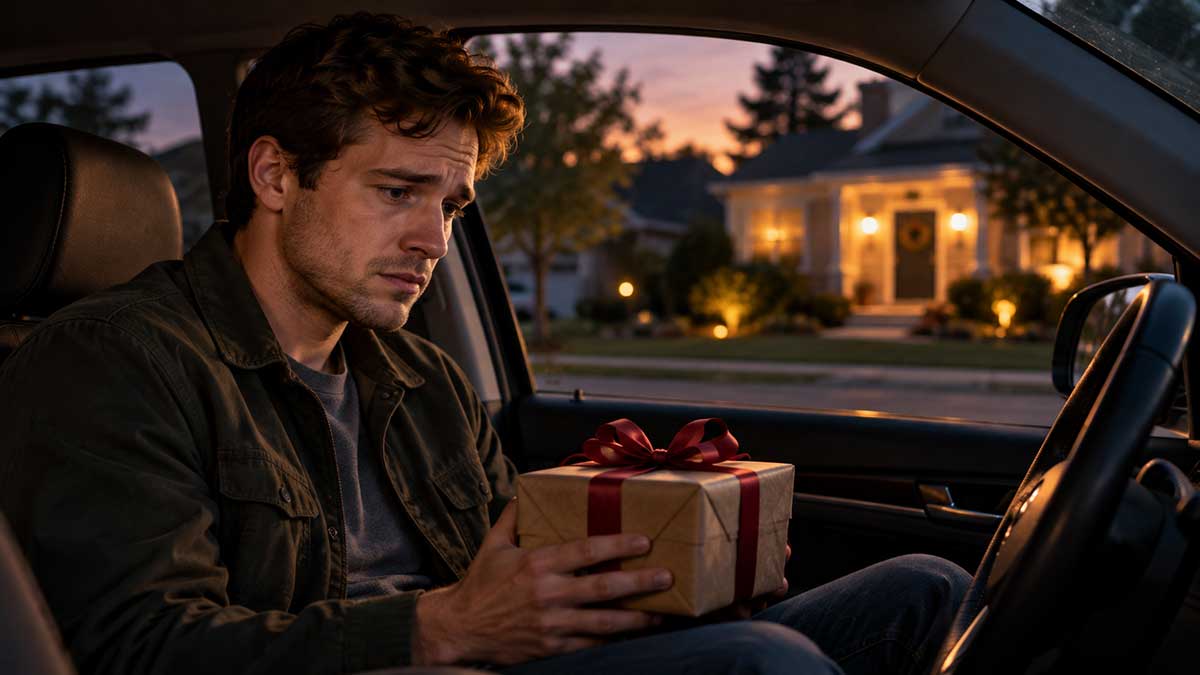
Ben Bennett had been sitting in his car for forty-seven minutes.
He knew because the parking meter across the street had expired while he was watching it.
His parents' house was two streets away.
He could picture it perfectly.
The porch light would be on. His mother would be moving between the kitchen and dining room. His father would be pretending not to watch the clock.
Ben looked at the wrapped package on the passenger seat.
It was a small digital photo frame.
He'd loaded it with nearly two hundred family pictures, including some he'd found buried in old emails and shared folders.
There was one of Robert asleep in a lawn chair with three children piled on top of him.
Another showed him carrying Ben on his shoulders at the county fair.
And one, Ben's favorite, showed Robert teaching him to fish.
Ben couldn't have been older than seven.
He was holding the rod upside down.
Robert was laughing.
Ben had spent two evenings finding and arranging the photographs.
He'd even recorded a short birthday message.
Happy birthday, Dad. Thanks for all the times you showed up for us. Love you.
He'd watched it three times before wrapping the gift.
Now he couldn't make himself deliver it.
His phone buzzed.
A message from his friend Marcus.
Any news from the interview?
Ben stared at the screen.
Nope.
He didn't mention that there hadn't been an interview.
Not yet.
He'd been laid off seven weeks earlier.
The company had eliminated most of his department. It wasn't his fault. His manager had said so. The human resources director had said so.
Even the email announcing the layoffs had used the phrase through no fault of their own.
Ben still felt like a failure.
At twenty-nine, he had no wife, no children, no house, and now no job.
He had an apartment with a leaking faucet, a car that made a clicking noise whenever he turned left, and a bank account he was trying not to check.
He also had parents who loved him.
That was the worst part.
Because he knew exactly what his father would do.
Robert would ask about severance.
Then health insurance.
Then applications.
Then whether Ben had updated his résumé.
Then whether he was being realistic about salary expectations.
All sensible questions.
All questions Ben had already asked himself a thousand times.
He pictured sitting at the dinner table while Daniel talked about work, Emily talked about clients, and his father eventually turned to him.
“So, Ben. How are things at the office?”
Ben would say, “Fine.”
His father would ask about the promotion Ben had mentioned in the spring.
And Ben would either lie or tell the truth.
He wasn't sure which would feel worse.
A car turned onto the street.
For one irrational second, Ben thought it might be his father coming to look for him.
He ducked his head.
Then he laughed at himself.
“Congratulations,” he muttered. “You're twenty-nine years old and hiding from your dad.”
He picked up the present.
He could still go.
He could knock on the door, hand it over, and say, “Happy birthday.”
His mother would hug him.
His father would smile.
There would be food.
Probably too much food.
For a few minutes, everything would be fine.
Ben put his hand on the ignition.
Then he remembered being seventeen.
He'd failed a math exam and hidden the paper in his backpack.
Robert found it while looking for a permission slip.
“Why didn't you tell me?” his father had asked.
Ben had shrugged.
“Because I knew you'd be disappointed.”
Robert had looked genuinely shocked.
“Ben, I'm not disappointed you got a bad grade. I'm disappointed you didn't try harder.”
Ben remembered thinking there was no point explaining that he'd studied for three nights.
He had tried.
He simply hadn't understood the material.
Robert spent the next two hours helping him with equations.
He was patient. He was thorough. He didn't raise his voice.
But when Ben finally solved a problem correctly, his father said, “See? That's what happens when you put in the effort.”
Ben had wanted to tell him that effort hadn't been the problem.
Instead, he'd nodded.
Now, twelve years later, Ben sat in his car holding a gift for a man who would have done anything for him.
He wondered why loving someone could sometimes make telling them the truth so difficult.
His phone buzzed again.
This time it was his mother.
Sweetheart, we're eating now. Don't rush. Love you.
Ben read the message.
He could almost hear her voice.
He imagined her standing at the kitchen counter, checking whether the chicken was getting cold.
His throat tightened.
He typed:
Sorry, Mom. I don't think I'll make it tonight.
Then he added:
Love you both.
He waited a moment.
A heart appeared beneath the message.
Ben put the phone down.
He sat there another ten minutes.
Then he started the car and drove home.
The gift stayed beside him.
The following morning, Daniel created a group chat with his siblings.
Daniel: We need to do something for Dad next weekend.
Emily: Agreed. I feel terrible.
Ben: I'm in.
Daniel: You said that yesterday.
Ben: Thanks for the reminder.
Emily: Guys.
Daniel: Sorry. Just saying we should actually follow through.
Ben: I know.
Daniel stared at Ben's reply.
He was about to write something sharper when Sarah walked into the kitchen.
“Who are you arguing with?”
“My siblings.”
“About your dad?”
He nodded.
Sarah poured coffee.
“Are you sure this is about your dad?”
Daniel frowned.
“What else would it be about?”
She shrugged.
“Sometimes you get angry at Ben for doing things you wish you could do.”
“What does that mean?”
“He doesn't spend much time worrying about whether your father approves of him.”
Daniel almost laughed.
If only she knew.
But then he realized he didn't know.
Not really.
Ben joked about everything. He rarely complained. He changed the subject whenever conversations became serious.
Daniel had always assumed that meant life was easier for him.
He looked back at the chat.
Daniel: Hey, Ben. Everything okay?
Several minutes passed.
Ben: Yeah. Why?
Daniel: Just asking.
Ben: All good.
Daniel started typing.
You sure?
He stopped.
It sounded like something his father would say.
He erased it.
Instead, he wrote:
Daniel: Want to grab coffee this week? Just us.
A minute later:
Ben: Sure. That'd be nice.
Emily joined the conversation again.
Emily: Can I say something without everybody getting defensive?
Daniel: Unlikely, but go ahead.
Emily: I miss Mom and Dad.
Daniel looked at the message.
Emily: I really do. But sometimes I feel like I have to prepare myself before I visit.
Ben: Same.
Daniel: What do you mean?
Emily: Like I need answers ready. About work. Money. What I'm doing next. I can't just show up and be happy.
Ben: Exactly.
Daniel leaned back in his chair.
He had felt that way for years.
But hearing Emily say it made him unexpectedly sad.
Daniel: Dad doesn't mean it that way.
Emily: I know.
Ben: That's the problem. He means well.
For a moment, none of them wrote anything.
Then Emily sent another message.
Emily: Remember when we used to sleep in the living room on Christmas Eve because we wanted to catch Santa?
Ben: You mean when Daniel convinced me Dad was Santa and I cried for an hour?
Daniel: Historical revisionism. I said Dad knew Santa.
Emily: Remember how Dad would come downstairs at midnight and pretend not to see us?
Ben: He'd say, "Strange. I thought I heard three mice."
Daniel smiled.
He remembered.
He remembered his father carrying Ben upstairs when he fell asleep.
He remembered Mary tucking blankets around them.
He remembered how safe the house had felt.
Emily: I wish it still felt like that sometimes.
Daniel stared at the words.
Then he typed:
Daniel: The worst part is, I think Dad misses us just as much as we miss him.
Nobody replied for a while.
Finally, Ben wrote:
Ben: Do you think he knows?
Daniel looked at the question.
He wasn't sure what Ben meant.
Did their father know they missed him?
Or did he know why they stayed away?
Daniel considered asking.
Instead, he put his phone down and looked through the kitchen window.
Oliver was in the backyard, bundled in a jacket, trying to balance a plastic dinosaur on the fence.
He'd recovered enough to play.
Daniel watched his son carefully arrange the toy.
He thought about all the things he wanted to teach Oliver.
How to work hard.
How to be responsible.
How to avoid the mistakes Daniel had made.
Then he imagined Oliver at thirty-eight, sitting in his own kitchen, wondering whether a visit to his father's house would end in another conversation about what he should be doing differently.
Daniel felt a sudden, uncomfortable recognition.
He had corrected Oliver three times at breakfast.
Once for spilling juice.
Once for holding his spoon incorrectly.
And once for telling a story that took too long.
None of the corrections had been particularly harsh.
He had meant well.
He watched Oliver climb down from the fence.
Then Daniel opened the back door.
“Hey, buddy.”
Oliver turned.
“Yeah?”
“Want to show me what you're building?”
“It's a dinosaur airport.”
Daniel looked at the fence.
“An airport?”
“For dinosaurs.”
He almost asked why dinosaurs needed an airport.
Instead, he stepped outside.
“Tell me about it.”
Oliver's face lit up.
And for the next twenty minutes, Daniel listened to a very complicated explanation involving flying dinosaurs, emergency landing procedures, and a T. rex who wasn't allowed on airplanes because he kept eating the passengers.
Daniel laughed so hard that Oliver started laughing, too.
For a little while, Daniel forgot about his father.
But later, when he went inside, he picked up his phone.
He opened their old messages.
The last one from Robert was three days earlier.
How's Oliver doing with his reading?
Daniel had never answered.
He read it again.
Perhaps his father had been judging him.
Perhaps he had simply been asking about his grandson.
Daniel didn't know.
And for the first time, he wondered whether his father knew that Daniel no longer knew the difference.
He typed:
Hey Dad. Oliver's feeling better. He wants to make you a dinosaur birthday card. Can we bring it over next Sunday?
Robert replied within a minute.
Of course. Tell him I can't wait to see it.
Then another message appeared.
And tell him Grandpa used to know a few dinosaurs personally.
Daniel laughed.
He showed Sarah.
“That's your dad,” she said.
Daniel looked at the screen.
“Yes,” he said.
And there was something almost tender in the way he said it.
That evening, Emily finally printed the gallery invitation.
She placed it on her refrigerator with a small magnet shaped like a camera.
Then she called her mother.
Mary answered on the second ring.
“Hello, sweetheart.”
“Hi, Mom.”
“How was your presentation?”
“Good. Really good, actually.”
“I'm glad.”
Emily waited for the usual questions.
They came, but not immediately.
“Did you get enough sleep?”
“Some.”
“Have you eaten?”
“Mom.”
“All right, all right.”
Emily smiled.
There was a pause.
Then Mary said, “We missed you yesterday.”
“I know.”
“Your father kept asking what time you were coming.”
Emily closed her eyes.
There it was.
The familiar ache.
“Mom, I said I was sorry.”
“I know, sweetheart. I'm not trying to make you feel bad.”
But Emily did feel bad.
She felt bad for missing dinner.
She felt bad for disappointing her parents.
And she felt bad that a phone call with her mother could turn her happiness into guilt so quickly.
She nearly changed the subject.
Instead, she took a breath.
“Mom, can I tell you something?”
“Of course.”
“When you say things like that, I feel like I'm failing you.”
Mary went quiet.
Emily's stomach tightened.
She wished she'd said nothing.
Then her mother asked, “Do I say that often?”
Emily hesitated.
“Sometimes.”
Another pause.
“I didn't realize.”
“I know you don't mean to.”
Mary sighed.
“I just miss you, honey.”
Emily looked at the photograph on her refrigerator.
“I miss you, too.”
And then, before she could lose her nerve, she said, “Mom, I have some good news.”
“What is it?”
“A gallery wants to show my photographs.”
Mary gasped.
“Oh, Emily!”
Emily smiled.
“It's a small gallery, but—”
“I don't care how small it is. That's wonderful!”
Emily felt tears spring to her eyes.
“Really?”
“Of course! You've worked so hard.”
She heard her mother call toward the other room.
“Robert! Emily has wonderful news!”
Emily stiffened.
Not yet, she wanted to say.
Please, not yet.
Then her father's voice came through the phone.
“What happened?”
“She's going to have her photographs in a gallery!”
There was a brief silence.
Emily knew what was coming.
She could practically hear the questions lining up.
Was she being paid?
Would this help her business?
Had she checked the contract?
Then Robert said, “Well, I'll be darned.”
Another pause.
“Em, that's terrific.”
Emily blinked.
“Thanks, Dad.”
“Can we come see it?”
She looked at the invitation.
“Yes,” she whispered. “I'd really like that.”
“Good. Your mother and I will be there.”
For a moment, Emily felt eight years old again, standing beside a cardboard castle her father had spent three days building.
She wanted to tell him everything.
Then Robert added, “Just make sure you read the gallery agreement carefully. Some of those places charge artists all kinds of fees.”
Emily's smile faded.
There it was.
The familiar correction.
She knew he was trying to protect her.
She knew the advice wasn't unreasonable.
But she had wanted just one more minute.
One minute in which her happiness could remain happiness.
“Okay, Dad,” she said.
He continued, “And don't let them pressure you into—”
“Robert,” Mary interrupted gently.
“What?”
“Let her enjoy her good news.”
There was a pause.
Then Robert chuckled awkwardly.
“Right. Sorry, Em.”
Emily sat down.
“It's okay.”
But something had changed.
Not everything.
Just something.
Her father had said he was proud.
Her mother had interrupted him.
And he had stopped.
Emily looked at the invitation again.
Perhaps that was a beginning.
Across town, Ben sat at his kitchen counter eating cereal from a mug because he hadn't washed the bowls.
His father's birthday gift sat beside the toaster.
He had not unwrapped it.
He had not put it away.
He had not decided what to do with it.
He opened his phone and looked at the family group chat.
Daniel was arranging Sunday lunch.
Emily had offered to bring dessert.
Mary had sent six heart emojis.
Robert had written:
Sounds good. Looking forward to seeing everybody.
Ben stared at the words.
He imagined walking through the front door.
His mother would hug him.
His father would ask about work.
Ben would have to decide whether to lie.
He put the phone down.
Then he picked it up again.
He opened a message to Daniel.
Hey. About that coffee.
Daniel answered almost immediately.
Wednesday?
Ben typed:
Yeah. There's something I need to tell you.
He looked at the message for a long time before sending it.
Then he pressed the button.
Daniel's reply came a moment later.
Okay. I'm here.
Ben read those three words twice.
For the first time in seven weeks, he felt a little less alone.
He glanced toward the birthday present.
Then he turned it over and found the small handwritten tag he'd attached to the ribbon.
To Dad. Thanks for always being there.
Ben swallowed.
He knew his father would be there if he needed him.
What he didn't know was whether he could bear the look on Robert's face when he found out how badly things were going.
Ben ran his thumb over the tag.
Then he whispered something to the quiet apartment.
“Dad, I wish I knew how to tell you.”
End of Act 2
Act 3: The Sunday Nobody Forgot
The trouble began with a dinosaur.
Oliver had spent three evenings making a birthday card for his grandfather. On the front, a green Tyrannosaurus rex wore a party hat. Its arms were too short to hold the enormous cake balanced on its tail.
Inside, in Oliver's careful handwriting, were the words:
Happy Birthday, Grandpa. Sorry I was sick. I love you more than all the dinosaurs.
Robert read the card twice.
Then he cleared his throat.
“Well,” he said, “that's a pretty serious amount of love.”
Oliver grinned.
“Even more than a T. rex.”
“That's saying something.”
“Do you really know dinosaurs?”
Robert looked at Daniel.
“Your father told you that?”
Oliver nodded eagerly.
Robert leaned closer.
“Son, I once had a dinosaur as a neighbor.”
“What kind?”
“A very old one. Complained about everything. Terrible lawn.”
Oliver shrieked with laughter.
Daniel watched his father fold the card carefully and slip it into his shirt pocket.
Something inside him softened.
For a moment, he remembered exactly why he'd wanted to come.
By one o'clock, the Bennett house was louder than it had been in months.
Mary had promised herself she wouldn't cook too much.
She'd made lasagna, garlic bread, two salads, roasted vegetables, and a peach cobbler.
Daniel took one look at the kitchen counter.
“Mom, are we feeding a football team?”
“I didn't know what everyone would want.”
“We're five adults and one child.”
“Sarah makes six adults.”
“Sarah is one adult. Oliver is one child.”
“Then we're seven people.”
Daniel blinked.
“Mom, that's not how—”
“Daniel, take the bread to the table.”
Sarah laughed and carried the salad.
Emily arrived with a box of pastries and an apology for being ten minutes late.
Ben appeared five minutes after her, holding a grocery-store bouquet and wearing sunglasses indoors.
“Sorry,” he announced. “I had to fight a bear in the parking lot.”
Mary hugged him.
“You're ridiculous.”
“That's what the bear said.”
Robert clapped him on the shoulder.
“Good to see you, buddy.”
Ben smiled.
“Happy belated birthday, Dad.”
“Thanks.”
Robert looked at his son's empty hands.
“Didn't you say you had something for me?”
Ben's smile faltered.
“Yeah. I left it at home. I'll bring it next time.”
“Getting forgetful at twenty-nine?”
“Family tradition.”
Robert laughed.
Ben did, too.
But Daniel, standing near the refrigerator, noticed how quickly his brother changed the subject.
They'd had coffee on Wednesday.
Ben had told him about the layoff.
Daniel had listened, bought him lunch, and offered to look over his résumé.
Then Ben had asked him not to tell their parents yet.
Daniel had agreed.
Now, watching Ben joke with their father, he wondered how long his brother could keep pretending.
Lunch began beautifully.
Oliver explained his dinosaur airport in exhausting detail.
Robert asked whether the airport accepted pterodactyls.
“Only if they have tickets.”
“What about stegosauruses?”
“They're too heavy.”
“Discrimination,” Robert declared.
Oliver laughed so hard he nearly knocked over his water.
Mary told Emily how proud she was of the upcoming photography exhibition.
Sarah asked about the gallery.
Emily began describing the photographs she'd chosen.
“There's one of this elderly couple waiting for a bus,” she said. “They're probably in their eighties, and the woman is laughing at something her husband said. You can just tell they've been together forever.”
Mary smiled.
“That sounds lovely.”
“I want to do more work like that. Real people. Ordinary moments. I'm thinking of shifting more of my business toward documentary photography.”
Robert put down his fork.
“Shifting how much?”
Emily hesitated.
“I'm still figuring that out.”
“Because you've got regular clients, right?”
“Yes.”
“And those clients pay the bills.”
“Dad.”
“I'm not criticizing. I'm asking.”
“I know.”
“Photography's a tough business, honey. You don't want to give up steady work because of one exhibition.”
Emily stared at her plate.
Mary glanced at Robert.
“She's thought about that.”
“I'm sure she has. I just want her to be careful.”
Emily picked up her water glass.
Daniel recognized the movement.
His sister was preparing to disappear from the conversation.
He had watched her do it since they were teenagers.
“Dad,” he said, “maybe just ask her about the photographs.”
Robert looked at him.
“I was.”
“Not really.”
The room grew quieter.
Robert gave a short laugh.
“Well, excuse me for taking an interest in my daughter's future.”
Emily set down her glass.
“That's not what he's saying.”
“Then what is he saying?”
She looked at her father.
For a moment, she considered letting it go.
She could smile, change the subject, help her mother clear the table.
They could all leave in an hour.
Nothing would be resolved, but nothing would be ruined.
She had done that for years.
Instead, she said, “Dad, do you know why I almost didn't tell you about the exhibition?”
Robert frowned.
“What?”
“I was afraid you'd do exactly this.”
“Do what?”
“Find the problem.”
He leaned back.
“Emily, I'm trying to help you.”
“I know you are.”
“Then what's the problem?”
“The problem is that I tell you something I'm excited about, and before I can even finish, you're telling me what could go wrong.”
“Because things can go wrong.”
“I know that!”
Oliver looked up from his plate.
Sarah gently touched his shoulder.
“Come on, sweetheart. Let's see if Grandma needs help with dessert.”
Mary started to protest, but Sarah gave her a small look.
Mary nodded.
“That's a good idea.”
They took Oliver into the kitchen.
The sound of a cupboard opening seemed strangely loud.
Robert looked from Emily to Daniel.
“What's going on here?”
“Nothing,” Emily said.
“Clearly something.”
Daniel took a breath.
“Dad, sometimes you don't realize how your questions sound.”
Robert gave him a puzzled look.
“What questions?”
“About our jobs. Our decisions. How we're raising our kids.”
“I ask because I care.”
“I know.”
“Would you prefer I didn't care?”
Daniel looked down.
There it was.
The choice he'd been offered his entire life.
Accept the advice or reject the love.
“That's not what I'm saying.”
“Then tell me what you're saying.”
Daniel looked at his father.
He had rehearsed this conversation many times.
In the car.
In the shower.
Sometimes in his head after visiting.
In those imaginary conversations, he was always articulate and calm. His father listened patiently. They understood each other.
Now his heart was pounding, and he couldn't remember how he'd planned to begin.
“Do you remember when I got that spelling test back in second grade?”
Robert blinked.
“What?”
“Ninety-eight percent. I missed one word.”
His father stared at him.
“Daniel, that was thirty years ago.”
“I know.”
“You're upset about a spelling test?”
“No. I'm trying to explain something.”
Robert spread his hands.
“Then explain it.”
Daniel swallowed.
“You told me I did great. And then you pointed out the word I missed.”
Robert shook his head.
“I probably did. I wanted you to do your best.”
“I know.”
“What's wrong with that?”
“Nothing, Dad. Not by itself.”
Daniel looked toward the kitchen.
He could hear Oliver laughing at something Mary had said.
Then he turned back.
“But it wasn't just the spelling test. It was baseball. School. College. My first job. The house Sarah and I bought. There was always something I could have done better.”
Robert's expression hardened.
“So now I'm a terrible father because I wanted you to succeed?”
“No.”
“Because I pushed you?”
“Dad—”
“Do you know how many fathers don't bother showing up at all?”
Daniel closed his eyes.
“Yes.”
“I went to every game I could. I worked overtime to help with your tuition. When you needed a car, I—”
“I know what you did!”
The words came out louder than Daniel intended.
He immediately regretted it.
Robert went silent.
Daniel lowered his voice.
“I know what you did, Dad. I remember all of it.”
He rubbed his face.
“That's what makes this so hard.”
Emily reached for her brother's hand beneath the table.
Daniel looked at his father.
“I never doubted that you loved me.”
Robert's expression softened slightly.
“Then I don't understand.”
Daniel struggled to speak.
“Dad, I know you loved us. I just wish being loved by you didn't always feel like being graded.”
Nobody moved.
From the kitchen came the faint sound of a spoon falling onto the floor.
Robert stared at his son.
Daniel had expected anger.
He had prepared himself for another argument.
What he hadn't expected was the look on his father's face.
Robert looked wounded.
Not irritated.
Not defensive.
Wounded.
As though Daniel had reached across the table and struck him.
For one terrible moment, Daniel wished he could take the words back.
Mary returned carrying the cobbler.
She stopped when she saw Robert.
“What happened?”
“Apparently,” Robert said, his voice unusually flat, “I've spent thirty-eight years making my son miserable.”
“That's not what I said,” Daniel replied.
Mary put the cobbler down.
“Daniel?”
He looked at his mother.
“We're just talking.”
“This doesn't look like talking.”
Emily spoke gently.
“Mom, Dad's having a hard time hearing what we're trying to say.”
Mary looked at her husband.
Then at her children.
Something frightened her.
She had spent years imagining a day when everyone would come home, sit together, and talk honestly.
Now they were talking honestly.
And she wanted desperately for them to stop.
“Your father has done everything for this family,” she said.
Daniel nodded.
“I know, Mom.”
“He worked himself half to death so you kids could have opportunities.”
“We know.”
“He wasn't perfect. Nobody is.”
“Mom—”
“And sometimes I think you forget how lucky you were.”
Emily's face changed.
“That's not fair.”
Mary felt tears rising.
“Neither is making your father feel like he failed you.”
Daniel looked at his mother.
“That's exactly what we're trying to explain.”
“What?”
“How it feels when every difficult feeling becomes an accusation that we don't appreciate you.”
Mary drew back.
Emily spoke quietly.
“Mom, we love you. We know you love us. But sometimes it feels like we aren't allowed to be unhappy about anything you do.”
Mary opened her mouth.
Then closed it.
She looked toward the kitchen, where Sarah was quietly keeping Oliver occupied with a coloring book.
For the first time, Mary wondered how much of this her daughter-in-law had already heard.
Ben had said almost nothing.
He sat at the far end of the table, turning his fork between his fingers.
He could feel the old urge to make a joke.
Something about family therapy.
Something about charging admission.
Anything to make everyone laugh and escape the unbearable seriousness.
But he kept thinking about the parking lot.
The birthday present.
His father's face when he'd asked whether Ben had forgotten it.
Robert finally turned toward him.
“What about you, Ben?”
Ben looked up.
“What about me?”
“Do you feel the same way?”
Ben glanced at Daniel.
Daniel gave him a small nod.
Not permission.
Encouragement.
Ben put down the fork.
“Sometimes.”
Robert exhaled sharply.
“Well, that's wonderful.”
“Dad, please don't do that.”
“Do what?”
“Make us feel bad for telling you the truth.”
Robert stared at him.
Ben's hands were trembling.
He hid them beneath the table.
“There's something I haven't told you.”
Mary immediately looked concerned.
“What is it, sweetheart?”
Ben took a breath.
“I lost my job.”
Robert blinked.
“What?”
“Seven weeks ago.”
“Seven weeks?”
Ben nodded.
Mary sat down.
“Oh, honey.”
Robert leaned forward.
“Why didn't you say something?”
Ben looked at his father.
There were a hundred possible answers.
Because he was ashamed.
Because he was frightened.
Because he'd already applied for twenty-three jobs and heard back from only four.
Because he'd been eating cereal for dinner and telling his friends everything was fine.
Because he'd spent seven weeks wondering whether he was becoming the disappointment he'd always feared.
Instead, he said, “I didn't know how.”
Robert frowned.
“Ben, you should have told us immediately.”
“I know.”
“What happened to your severance?”
“I got some.”
“How much?”
“Dad—”
“And your health insurance? Are you covered?”
“Yes.”
“Have you updated your résumé?”
Ben stared at him.
Robert continued.
“Because you can't afford to wait around. The longer you're unemployed, the harder—”
“Dad.”
“What?”
Ben's voice cracked.
“That's why I didn't tell you.”
Robert stopped.
Ben looked down at his hands.
“I knew you'd have questions. I knew you'd have advice. I knew you'd want a plan.”
“Of course I want a plan. You're my son.”
“I know.”
His eyes filled.
“But I didn't need a plan from you today.”
Robert looked bewildered.
“What did you need?”
Ben tried to answer.
Nothing came out.
He pressed his lips together.
Then he whispered, “I just needed you to tell me I was going to be okay.”
Mary covered her mouth.
Robert sat very still.
Ben wiped his eyes angrily.
“I'm sorry. This is stupid.”
“No,” Emily said. “It isn't.”
Ben shook his head.
“I was going to come on your birthday, Dad.”
Robert looked at him.
“What?”
“I bought you something. I had it in the car.”
“Then why didn't you come?”
Ben gave a small, broken laugh.
“I did.”
Nobody understood.
“I drove over. I parked a couple streets away.”
Robert stared at him.
“I sat there for almost an hour.”
Mary made a soft sound.
Ben looked directly at his father.
“I was two streets from home, Dad. And I couldn't make myself walk to your door.”
Robert's face went pale.
For a moment, he seemed unable to breathe.
Ben looked away.
“I thought if you asked how work was going, I'd either have to lie to you or watch you be disappointed in me.”
Robert whispered, “Ben.”
“I know you love me.”
His voice broke again.
“That's what makes it so awful.”
Nobody spoke for a long time.
The house was quiet except for Oliver talking softly in the kitchen.
Robert stared at the table.
He was remembering a little boy in pajamas, standing in the driveway every morning, waving until his father's car disappeared.
He remembered carrying Ben upstairs after he'd fallen asleep on the couch.
He remembered teaching him to fish, to ride a bicycle, to change a tire.
He remembered all the times he'd told his children to be careful.
To work harder.
To think ahead.
To do better.
He had believed he was preparing them for the world.
Now his youngest son was telling him that he had been afraid to come home.
Robert looked at Daniel.
Then Emily.
Then Ben.
Something rose inside him.
Grief, perhaps.
Or shame.
Or anger at discovering that the story he'd told himself about his family was not the story his children had been living.
He stood.
“Do you have any idea,” he said, “what it's like to sit in this house and wonder whether your own children still want to see you?”
His voice shook.
Mary looked up.
Robert continued.
“Your mother spends days getting ready when she knows you're coming. She buys things you liked when you were kids. She makes enough food for an army because she doesn't know when she'll have everybody here again.”
“Dad,” Daniel began.
“No. Let me finish.”
Daniel stopped.
Robert looked at all three of them.
“Every time that phone rings, I hope it's one of you. When something breaks around here, I still think about calling Daniel because he used to love helping me fix things. I see a photograph in the newspaper and think Emily would like it. I hear a stupid joke and think Ben would laugh.”
He swallowed.
“Then I remember you're all busy. You've got your own lives.”
He looked toward the kitchen.
“And I know that's how it's supposed to be.”
His eyes were wet now.
“But nobody tells you what to do with all that love when the people you spent your life giving it to don't seem to need it anymore.”
Emily began crying.
Robert looked at her.
“I don't want to control your life, honey. I just don't want you to get hurt.”
“I know, Dad.”
“I don't want Daniel to think I don't respect him. I'm proud of him. I'm proud of all of you.”
Daniel looked up sharply.
Robert's voice broke.
“I just don't know how to say it without trying to help.”
Mary reached for his hand.
He took it.
Then he looked at Ben.
“And you.”
Ben could barely meet his eyes.
“You were two streets away?”
Ben nodded.
Robert tried to speak.
He couldn't.
He looked down at the table, then toward the window.
Finally, he said, “I need a minute.”
He walked out through the kitchen and into the garage.
The door closed quietly behind him.
For several seconds, nobody moved.
Then Mary began to cry.
Not loudly.
She sat with one hand over her mouth, tears running down her face.
Emily moved beside her.
“Mom.”
Mary shook her head.
“I didn't know.”
“Neither did we.”
Mary looked at Daniel.
“Did you really feel that way growing up?”
Daniel's eyes filled again.
“Sometimes.”
She touched his cheek.
“Oh, Danny.”
He leaned into her hand.
“I love him, Mom.”
“I know.”
“I've always loved him.”
“I know, sweetheart.”
Emily sat on her mother's other side.
“We don't want to stay away.”
Mary looked at her.
“Then why do you?”
Emily struggled for an answer.
“Because sometimes it's easier to miss you than to come here and feel like we're disappointing you.”
Mary closed her eyes.
She remembered all the times she'd said, I suppose you're too busy for your old mother.
She remembered telling Emily how much food she'd made.
She remembered how often she'd asked whether the children were coming home for holidays before asking how they were doing.
She had thought she was expressing love.
Perhaps sometimes she'd been expressing fear.
Ben stood near the doorway.
“I should go talk to him.”
Daniel shook his head.
“Give him a minute.”
Ben looked toward the garage.
“I didn't mean to hurt him.”
“I know.”
“He's a good dad.”
Daniel nodded.
“He is.”
Ben wiped his face.
“I just wanted him to know.”
Emily reached for his hand.
“Maybe now he does.”
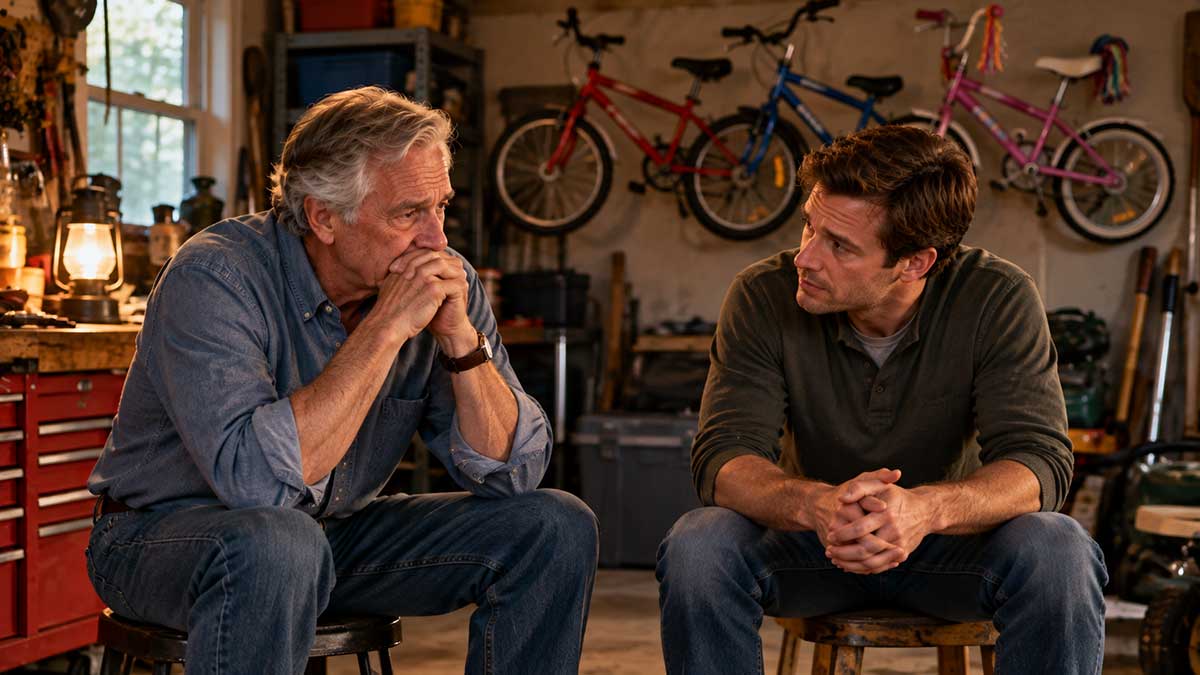
In the garage, Robert stood beside an old workbench.
Three bicycles hung from hooks along the wall.
Daniel's blue mountain bike.
Emily's purple bicycle with the faded flower stickers.
Ben's small red one, its tires flat, its handlebars still decorated with the remains of silver streamers.
Mary had suggested donating them years ago.
Robert had always said he'd get around to it.
He touched the red bicycle.
He remembered running behind Ben as the boy learned to ride.
“Don't let go, Daddy!”
“I've got you!”
“Promise?”
“I promise.”
Eventually, Robert had let go.
Ben had pedaled away, wobbling, laughing, shouting for his father to watch.
Robert had been so proud.
He had thought letting go was something a father did once.
Teach the child.
Release the bicycle.
Watch him ride.
He hadn't understood that he would have to keep letting go.
Again and again.
Of decisions.
Of dreams.
Of the right to know everything.
Of the belief that his children needed him to tell them how to live.
Robert lowered himself onto an old wooden stool.
For years, he'd believed his greatest responsibility was to keep his children from making mistakes.
Now he wondered whether he'd been so busy protecting them from the world that he'd forgotten to become someone they could turn to when the world hurt them.
He looked at Ben's bicycle.
He remembered his son shouting, Don't let go, Daddy.
And suddenly he understood something that made his chest ache.
Perhaps his children had been asking him to let go for years.
And perhaps, underneath all his advice and questions, he'd been the one whispering:
Don't leave me.
Robert covered his face with his hands.
He didn't know how long he sat there.
Eventually, he heard the kitchen door open.
Daniel stepped into the garage.
“Dad?”
Robert wiped his eyes.
“Yeah?”
“Can I come in?”
Robert looked at his son.
Thirty-eight years old.
A husband.
A father.
A man with his own life, his own worries, his own family to protect.
For one strange moment, Robert saw both the grown man and the little boy riding down the street.
He nodded.
“Sure, Danny.”
Daniel walked over and sat on an overturned bucket beside him.
Neither spoke.
Then Daniel noticed the bicycles.
“You still have these?”
Robert gave a tired smile.
“Apparently.”
Daniel looked at his old blue bike.
“I loved that thing.”
“You rode it everywhere.”
“Remember when I tried to jump over the creek?”
Robert chuckled.
“Broke the front wheel.”
“And you made me help fix it.”
“Somebody had to learn.”
Daniel smiled.
Then the silence returned.
After a while, he said, “Dad, I didn't come out here to make you feel worse.”
Robert looked down.
“I know.”
“I wasn't saying you were a bad father.”
Robert nodded.
“I know that, too.”
Daniel hesitated.
“Do you?”
Robert didn't answer.
Daniel looked toward the garage door.
“I want Oliver to grow up knowing he can tell me anything.”
Robert nodded slowly.
“That's good.”
“But I catch myself doing the same things you did.”
Robert turned toward him.
“Like what?”
“Correcting everything. Asking questions when he just wants me to listen.”
Daniel gave a small laugh.
“Yesterday he told me about this ridiculous dinosaur airport he's building. I almost spent ten minutes explaining why dinosaurs couldn't fly airplanes.”
Robert smiled despite himself.
“Most of them couldn't.”
“Dad.”
“Sorry.”
They both laughed.
It was brief.
But it was real.
Daniel looked at him.
“I know you were trying to help us.”
Robert swallowed.
“I was.”
“I know.”
Daniel paused.
“I just need you to believe that sometimes we know what we're doing. And sometimes we don't. But either way, we still want you in our lives.”
Robert looked at his son for a long moment.
Then he asked, very quietly, “Even when you don't need me?”
Daniel's face changed.
“Dad.”
Robert looked away.
Daniel leaned forward.
“I haven't needed you to tie my shoes in thirty years.”
Robert gave a faint smile.
“I remember.”
“I haven't needed you to teach me to drive, or help with homework, or tell me when to go to bed.”
“Thank goodness.”
Daniel smiled.
“But I still need my dad.”
Robert looked at him.
“Just not in all the same ways.”
For a moment, Robert couldn't speak.
Daniel put a hand on his shoulder.
“Sometimes I just want to have breakfast with you.”
Robert blinked.
“Breakfast?”
“Yeah.”
“That's it?”
“That's it.”
Robert looked at his son.
He had spent years trying to offer wisdom, guidance, solutions, and warnings.
His son was asking for breakfast.
Something in him broke open.
He laughed once, shakily, and wiped his eyes.
“I think I can manage breakfast.”
Daniel smiled.
“Good.”
They sat together for another minute.
Then Robert looked toward the kitchen.
“I suppose I should go back inside.”
“Whenever you're ready.”
Robert stood.
He looked at the bicycles one last time.
“Danny?”
“Yeah?”
Robert hesitated.
There were a hundred things he wanted to say.
That he was sorry.
That he'd never meant to make his children afraid.
That he loved them more than they could possibly understand.
But the words were tangled, and he didn't trust himself to get them right.
So he said the only thing he could manage.
“I'm glad you told me.”
Daniel looked at him.
Then he nodded.
“Me too, Dad.”
They walked toward the kitchen together.
Neither knew whether things would be different tomorrow.
But for the first time in years, both wanted to find out.
End of Act 3
Act 4: The Letters We Never Knew We Needed
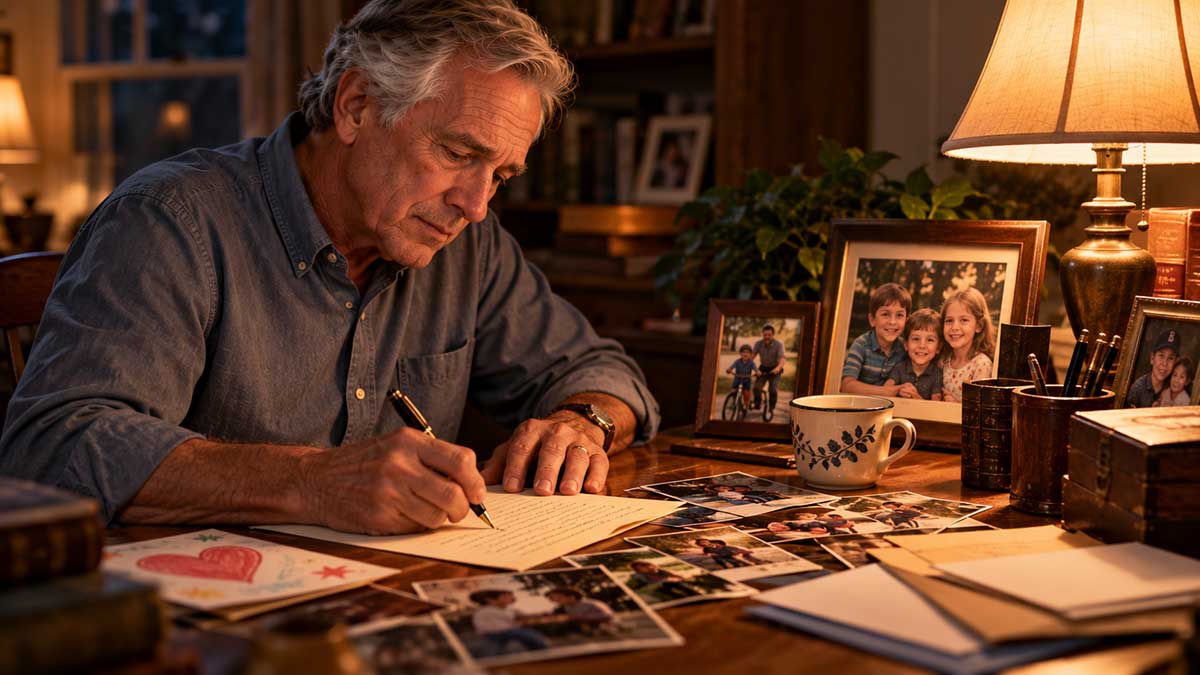
Robert Bennett had spent forty-one years believing that a good apology should be followed by a solution.
If he'd forgotten an anniversary, he bought flowers.
If he'd snapped at Mary, he fixed something around the house.
If he'd disappointed one of the children, he tried harder the next time.
He wasn't much good at saying, I was wrong.
He was excellent at saying, I'll take care of it.
Three days after the Sunday lunch that had left his family in pieces, he was in the garage trying to repair a lawn mower that wasn't broken.
He'd taken the carburetor apart twice.
Mary appeared in the doorway.
“Are you planning to mow the lawn in October?”
“No.”
“Then why are you doing that?”
“Maintenance.”
“The lawn mower was working.”
“It'll work better.”
Mary leaned against the doorframe.
“Robert.”
He kept turning a screwdriver.
“Hmm?”
“Are you hiding from me or from yourself?”
He stopped.
After a moment, he said, “Both, probably.”
Mary came into the garage.
She looked at the bicycles hanging along the wall.
“I thought you were going to get rid of those.”
“I was.”
“Ten years ago.”
He smiled faintly.
“I'm a little behind schedule.”
Mary sat on the stool beside him.
For a while, they said nothing.
Then she asked, “Have you talked to Ben?”
Robert shook his head.
“I sent him a message.”
“What did you say?”
“Asked whether he'd updated his résumé.”
Mary closed her eyes.
“Oh, Robert.”
“I know.”
“What did he say?”
“Nothing.”
Robert put down the screwdriver.
“I realized what I'd done about five minutes after I sent it.”
“Did you send another message?”
“I started to.”
“What did it say?”
“Something about how the job market's difficult and he shouldn't get discouraged.”
Mary looked at him.
“And?”
“I deleted it.”
She smiled sadly.
“That's something.”
Robert rubbed his hands together.
“I don't know how to help him if I'm not supposed to help him.”
Mary looked toward the bicycles.
“Maybe you could ask him.”
Robert was quiet.
Then he nodded.
“Maybe I could.”
That evening, Robert went looking for an old photograph of Ben.
He remembered one taken at a fishing pond when Ben was seven. The boy had caught nothing all afternoon, but he'd insisted it was the best day of his life.
Robert wanted to send it to him.
No advice.
No questions.
Just a memory.
He found the photograph in a cardboard box at the back of the bedroom closet.
Inside were school pictures, birthday cards, Father's Day drawings, and a collection of objects Mary had saved without telling him.
A clay ashtray Daniel had made in second grade, despite the fact that nobody in the family smoked.
A bracelet Emily had woven from pink and purple yarn.
A paper medal Ben had awarded him for being the “World's Best Pancake Maker,” although Robert had burned nearly every pancake he'd ever attempted.
Robert laughed at that one.
Then he found a folded sheet of yellow construction paper.
On the front, Emily had drawn a castle.
Inside, in large uneven letters, she'd written:
When I grow up, I want to be just like Daddy because he can do anything.
Robert sat on the edge of the bed.
He remembered the cardboard castle.
Three days of cutting, measuring, and trying to make the drawbridge work.
Emily had been delighted.
She'd kissed him on the cheek and announced that he was the greatest builder in the world.
He'd carried that praise around for weeks.
Beneath Emily's drawing was a school assignment Daniel had completed at eleven.
Write about a person you admire.
Daniel had chosen his father.
Robert read the first few sentences, smiling.
My dad works hard and knows how to fix almost everything. He teaches me stuff. He says I can do anything if I try hard enough.
Then he reached the last paragraph.
I want to be successful like him. When I get a really good job, I think he'll be proud of me. I hope I don't disappoint him.
Robert read that sentence again.
Then a third time.
I hope I don't disappoint him.
He sat motionless.
Daniel had been eleven.
Robert remembered that year.
The baseball games.
The science project.
The spelling tests.
The little boy who had followed him around the garage asking how engines worked.
He'd thought Daniel was happy.
And he had been happy, Robert realized.
A child could be happy and frightened of disappointing his father at the same time.
He folded the paper carefully.
For the first time, he wondered how many of his proudest memories contained feelings his children had never told him about.
Mary found him still sitting on the bed.
He handed her Daniel's assignment.
She read it.
“Oh,” she whispered.
Robert looked at her.
“Did you know he felt that way?”
Mary shook her head.
“Not like that.”
He stared at the floor.
“I thought I was encouraging him.”
“You were.”
“Then why would he write that?”
Mary sat beside him.
“Maybe both things were true.”
Robert looked at her.
“You encouraged him. And maybe sometimes he felt he couldn't disappoint you.”
Robert's eyes filled.
“I never wanted that.”
“I know.”
He rubbed his face.
“What am I supposed to do with that now? He's almost forty.”
Mary took his hand.
“Tell him.”
Robert gave a small, helpless laugh.
“Tell him what? That I found a paper he wrote twenty-seven years ago?”
“Tell him what you just told me.”
Robert looked at her.
“That you never wanted him to feel that way.”
The next morning, Mary opened the family message thread.
She had planned to ask everyone whether they were coming for Thanksgiving.
Instead, she began scrolling backward.
We haven't seen you in forever.
I suppose you're all too busy for your old mother.
Your father will be disappointed if you don't come.
I made your favorite dinner. Too bad you couldn't make it.
She read each message slowly.
At the time, every one of them had felt justified.
She had been lonely.
She had wanted to see her children.
She had wanted them to understand that their absence mattered.
But now she imagined receiving those messages after a long workday, or while caring for a sick child, or when life was already difficult.
She pictured Emily reading them and feeling that she had failed another test.
Mary put down the phone.
She had spent years asking her children to visit.
She couldn't remember the last time she'd asked whether they enjoyed visiting.
That afternoon, she drove to the library where she'd worked for twenty-two years.
Her old colleague Janet was volunteering at the circulation desk.
“Mary Bennett!” Janet exclaimed. “Look who's finally come back!”
They hugged.
Janet asked about Robert, the children, and retirement.
Then she mentioned a community photography project, a walking group, and a children's reading program that needed volunteers.
Mary found herself interested.
Genuinely interested.
Not because she needed something to fill the hours until her children called.
Because she missed having things to look forward to that belonged to her.
When she got home, she told Robert she was going to volunteer twice a week.
He looked up from the newspaper.
“That's wonderful.”
“And I signed us up for a walking group.”
He lowered the paper.
“You did what?”
“Saturday mornings. Nothing strenuous.”
“Mary, I have a perfectly good pair of legs. I use them to walk to the refrigerator.”
“You can use them outside.”
He grumbled for several minutes.
Then he asked whether he needed new shoes.
Mary laughed.
Robert began writing the letters on a Thursday evening.
He tried typing them first.
That didn't work.
Every sentence sounded like a company memo.
Dear Daniel, I would like to acknowledge certain communication difficulties that have arisen between us.
He deleted the entire paragraph.
Then he found three sheets of stationery and an old fountain pen Mary had given him for Christmas.
He started with Daniel.
Dear Danny,
I found something you wrote when you were eleven. You said you hoped I would be proud of you someday.
I wish I could go back and tell that little boy something I apparently didn't tell him often enough.
I was proud of you before you ever won a game or got a good grade.
I was proud of you when you were learning to walk and fell down twelve times in a row.
I was proud of you when you stood up for a smaller boy on the playground.
I was proud of you when you became a father, and I watched you hold Oliver for the first time.
Somewhere along the way, I made you feel that my pride had to be earned.
I'm sorry.
I don't want you to spend another day wondering whether you're good enough for me.
You are.
You always were.
Robert stopped writing.
He wiped his eyes with the back of his hand.
Then he added:
I'd like to get to know the man you've become. Not so I can tell you what to do. Just because I think he's someone I'd enjoy spending time with.
Love, Dad.
He read the letter twice.
Then he put it aside before he could ruin it by adding advice.
Emily's letter was harder.
Robert knew she had always been different from him.
He liked plans, predictability, and financial security.
Emily liked possibilities.
He'd spent years trying to make her safer.
He hadn't realized that she sometimes experienced his concern as a lack of faith in her.
Dear Em,
I remember the first camera I bought you. You were twelve. You took pictures of everything, including the garbage cans and the neighbor's ugly dog.
I asked why you were wasting film.
You told me you wanted to see what the world looked like when nobody was paying attention.
I didn't understand what you meant.
I'm beginning to think you understood something I didn't.
When you told me about the gallery, I was happy. I was proud. But instead of saying that and stopping, I started worrying out loud.
I do that a lot.
I can't promise I'll never worry again. I'm your father, and apparently worrying is one of my more persistent hobbies.
But I want to learn to keep my worries from becoming the first thing you hear.
Your life doesn't have to make sense to me before I can celebrate it.
I love the person you are, Emily. Not the person I imagined you'd become.
Love, Dad.
He hesitated before writing the last sentence.
Then he left it exactly as it was.
Ben's letter took the longest.
Robert wrote three versions.
The first included advice about job searching.
He tore it up.
The second offered money.
He tore that one up, too.
The third began with a memory.
Dear Benny,
Do you remember when you were little and used to wait in the driveway for me to come home?
I remember it almost every day.
You'd come running as soon as you heard the garage door. Sometimes you'd be wearing one shoe. Sometimes no pants. You were always smiling.
I used to think you were happy because I had come home.
Now I realize I was just as happy because you were there.
I haven't forgotten what you told me on Sunday.
You were two streets away and couldn't come to the door.
Son, I don't think I've ever heard anything that hurt me more.
Not because you did something wrong.
Because I never wanted you to feel you had to hide from me.
I don't know how to fix that in one letter.
Maybe I can't.
But I want you to know something.
If you lose your job, you can come home.
If you make a mistake, you can come home.
If you don't know what you're doing next, you can come home.
And if all you want is a sandwich and somebody to sit with, you can come home for that, too.
You don't have to bring me good news.
You don't have to bring me a plan.
You don't even have to bring me that birthday present.
Just bring yourself.
I love you.
Dad.
Robert set down the pen.
For a long time, he stared at the final sentence.
Then he folded the letter.
Mary wrote her own notes.
They were shorter.
To Daniel, she apologized for treating every missed visit as evidence that he didn't care.
To Emily, she promised to stop turning invitations into reminders of how lonely she felt.
To Ben, she wrote:
I know I've sometimes made you feel responsible for my happiness. That wasn't fair. Your father and I are going to make a good life together, and we want you to be part of it—not in charge of it.
She read the notes to Robert.
He smiled.
“That's good.”
“Do you think they'll understand?”
“I hope so.”
Mary looked at the envelopes.
“Should we ask them to call after they read them?”
Robert considered it.
Then he shook his head.
“No.”
She looked surprised.
He smiled faintly.
“I'm learning.”
Emily called the day after receiving her letter.
Robert answered from the garage.
“Hello?”
For a moment, there was only breathing.
Then Emily said, “Dad?”
“Hi, sweetheart.”
“I'm crying.”
Robert straightened.
“What's wrong?”
“Nothing's wrong.”
He waited.
“I got your letter.”
“Oh.”
Another pause.
“Dad, did you really remember the camera?”
“Of course.”
“And the ugly dog?”
“Especially the ugly dog.”
Emily laughed through her tears.
Robert smiled.
Then she said, “I always thought you were disappointed I didn't become an accountant or something.”
“An accountant?”
“Someone with a respectable job.”
“Emily, I couldn't survive one afternoon doing your job.”
She laughed.
“Neither could I sometimes.”
Robert looked at the old bicycles.
“I'm proud of you, honey.”
This time, he stopped there.
Emily was quiet.
Then she whispered, “Thank you.”
They talked for nearly an hour.
Robert asked about the exhibition.
He asked which photograph was her favorite.
He asked what she loved about taking pictures.
At one point, he nearly asked whether the gallery was charging a commission.
He opened his mouth.
Then closed it.
Emily noticed the pause.
“What?”
“Nothing.”
“Dad.”
He sighed.
“I was about to ask a boring financial question.”
She laughed.
“You can ask me financial questions sometimes.”
“I can?”
“Sure. Just maybe not in the first thirty seconds after I tell you something wonderful.”
Robert laughed.
“Fair enough.”
Ben responded three days later.
His message was only six words.
Thanks, Dad. I needed that.
Robert stared at it for several minutes.
Then he typed:
Love you, buddy.
He wanted to add something about job applications.
He didn't.
Two evenings later, Ben appeared at the front door.
Mary opened it.
“Ben!”
“Hey, Mom.”
She hugged him.
“Are you hungry?”
“Always.”
She started toward the kitchen.
Then she stopped.
“Actually, I was just about to make some tea. Want some?”
Ben smiled.
“Sure.”
Robert was sitting in the living room.
He looked up.
“Hey, buddy.”
“Hey, Dad.”
They stood awkwardly for a moment.
Then Robert said, “Want to sit?”
Ben nodded.
They sat.
Robert didn't ask about work.
Ben didn't mention it.
They talked about a terrible movie they'd both seen.
Then baseball.
Then the strange noise Ben's car was making.
Robert began explaining what might be wrong with the engine.
He caught himself.
“Sorry. Do you want me to look at it, or are you just telling me?”
Ben grinned.
“I actually want you to look at it.”
Robert laughed.
“Well, that's a relief.”
Later, while Mary was washing the teacups, Ben told his father he'd had another interview.
Robert listened.
Ben said he was worried he wouldn't get the job.
Robert wanted to reassure him with a list of practical steps.
Instead, he asked, “How are you holding up?”
Ben looked surprised.
Then he said, “Honestly? Not great.”
Robert nodded.
“I'm sorry, son.”
Ben stared at him.
No lecture.
No strategy.
No suggestion that he should have tried harder.
Just his father sitting beside him.
After a while, Ben leaned back against the couch.
“Thanks, Dad.”
“For what?”
Ben looked around the room.
“For letting me be here.”
Robert felt his throat tighten.
“You never needed permission for that.”
Ben smiled sadly.
“I know.”
Then, after a moment, he added, “I think I'm starting to believe it.”
Daniel didn't respond.
A week passed.
Then another.
Robert checked his phone more often than he wanted to admit.
He started writing a message three times.
Did you get my letter?
Hope everything's okay.
Just checking in.
Each time, he deleted it.
On the twelfth day, Mary found him standing at the kitchen window.
“Still nothing?”
Robert shook his head.
She came beside him.
“Maybe he needs time.”
“I know.”
“Don't push.”
“I know.”
Mary touched his arm.
“It's hard, isn't it?”
Robert gave a small laugh.
“Apparently, doing nothing is the hardest thing I've ever done.”
On the fourteenth day, Daniel called.
“Dad?”
“Hey, Danny.”
“Are you busy Saturday morning?”
Robert looked at the calendar.
He and Mary had signed up for their first walking-group outing.
“Actually, I've got something until ten.”
Daniel sounded surprised.
“Oh. Okay.”
“I'm free after that.”
A pause.
“Want to get breakfast?”
Robert smiled.
“I'd like that.”
They met at a diner near Daniel's house.
Robert arrived early.
He'd rehearsed what he wanted to say.
He'd even written a few notes on a small piece of paper.
When Daniel walked in, Robert folded the paper and put it away.
His son sat across from him.
“Hey, Dad.”
“Hey.”
They ordered coffee.
For a while, they talked about Oliver's school and the unusually warm October weather.
Then Daniel reached into his jacket and took out Robert's letter.
It was folded along the creases.
“I've read this about twenty times.”
Robert looked at it.
“Oh.”
Daniel ran a thumb along the paper.
“I didn't know you felt that way.”
Robert looked down.
“I didn't know you didn't know.”
Daniel smiled faintly.
Then he said, “I think I needed to hear it.”
Robert nodded.
Daniel looked out the window.
“I was angry for a long time, Dad.”
Robert waited.
“Not all the time. Not even most of the time. But whenever you questioned something I did, it brought back that feeling.”
Robert nodded again.
“I understand.”
Daniel looked at him.
“Do you?”
Robert thought about it.
“Not completely.”
Daniel seemed surprised.
Robert continued.
“But I'm trying.”
Daniel's eyes filled.
He looked down at his coffee.
After a moment, he said, “I need to apologize for something, too.”
Robert frowned.
“What?”
“I've been assuming the worst about you for years.”
Robert said nothing.
“Sometimes you really were just asking a question. And I heard criticism because that's what I expected.”
He looked at his father.
“I didn't give you much room to be different.”
Robert swallowed.
“I suppose we both got stuck.”
Daniel nodded.
“Yeah.”
The waitress brought their breakfast.
Neither touched it immediately.
Then Robert picked up his fork.
“So,” he said, “what do you want to do today?”
Daniel smiled.
“Eat breakfast.”
Robert chuckled.
“Right.”
He took a bite of eggs.
Then, after a moment, he asked, “And after that?”
Daniel laughed.
“Dad.”
Robert grinned.
“Sorry. Old habits.”
They both laughed.
It wasn't a dramatic reconciliation.
There were no speeches.
No promises that everything would be different forever.
Just two men eating breakfast, occasionally getting things wrong, and finding that they still enjoyed one another's company.
When they left the diner, Daniel hugged his father.
Robert held on a little longer than usual.
“Love you, Danny.”
“Love you, Dad.”
Daniel started toward his car.
Then he turned.
“Hey, Dad?”
“Yeah?”
“Want to do this again sometime?”
Robert smiled.
“Sure.”
Daniel nodded.
“Good.”
Robert watched his son drive away.
Then he got into his own car.
For once, he didn't feel the need to replay the conversation and decide whether he'd handled everything correctly.
He'd enjoyed breakfast.
That was enough.
That evening, Robert and Mary sat on the back porch.
The air had turned cool.
Mary had brought two blankets.
Robert told her about breakfast with Daniel.
She listened, smiling.
“Do you think things are getting better?” she asked.
Robert looked out at the yard.
“I think so.”
“Do you think they'll start coming around more?”
He considered the question.
Then he said, “Maybe.”
Mary looked disappointed.
Robert took her hand.
“But I don't think that's the most important thing anymore.”
“What is?”
He thought about Emily laughing on the phone.
Ben sitting beside him on the couch.
Daniel asking for breakfast.
“I think they might actually enjoy talking to us again.”
Mary smiled.
She rested her head against his shoulder.
After a while, she said, “You know, I liked the walking group.”
Robert groaned.
“You liked it because Janet brought muffins.”
“That's not true.”
“You ate three.”
“They were small.”
He laughed.
Mary looked toward the house.
“Maybe we should invite the children to join us sometime.”
Robert thought about it.
“Sure.”
Then he added, “But let's go even if they can't.”
Mary looked at him.
He smiled.
“I think I'd like to spend more time with you.”
She raised an eyebrow.
“After forty-one years?”
“I'm a slow learner.”
Mary laughed.
He kissed her forehead.
And for the first time in a long while, the quiet house behind them didn't feel like proof that something was missing.
It was simply their home.
A home their children could visit.
A home they could leave without guilt.
A home where love no longer had to be measured by how often someone came through the door.
End of Act 4
Act 5: The Birthday That Changed Everything
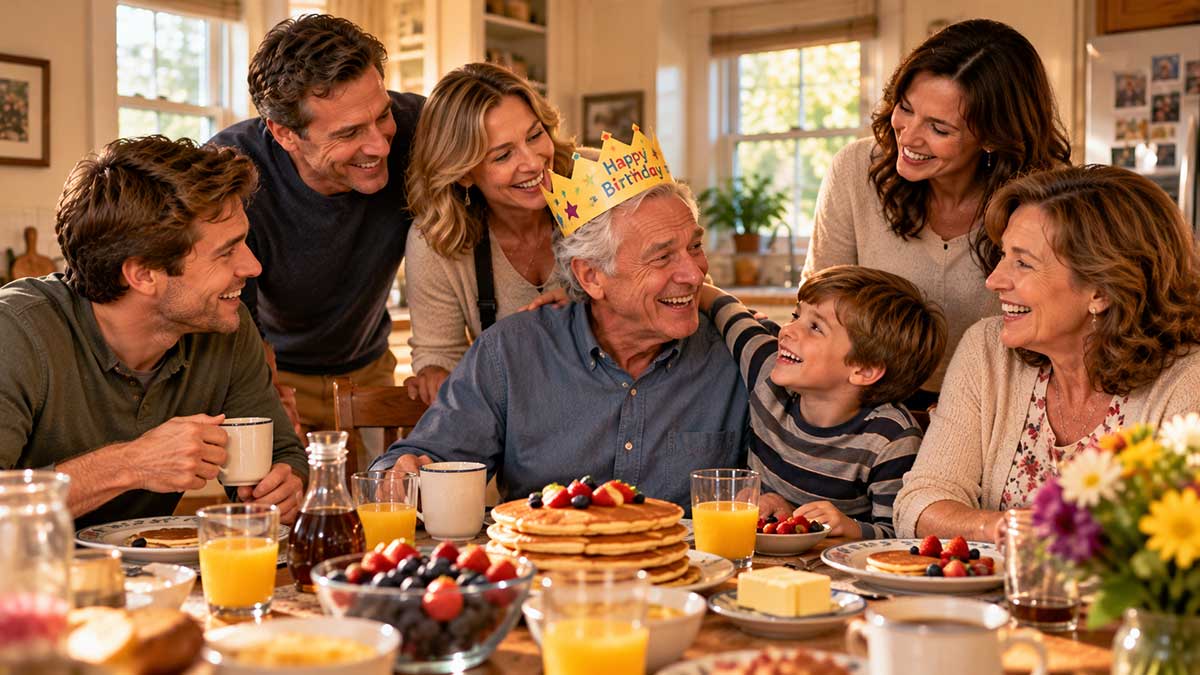
The first time Robert Bennett forgot to check his phone for an entire afternoon, Mary thought something was wrong.
He had gone hiking with a group of retirees from the community center, a collection of cheerful people who considered five miles a pleasant warm-up and apparently believed every hill existed to be climbed.
Robert came home with muddy shoes, a sore knee, and a photograph of himself standing beside a waterfall.
“Look at this,” he said proudly.
Mary examined the picture.
“You look exhausted.”
“I was exhausted.”
“Then why are you smiling?”
“Because I made it to the top.”
She laughed.
He took off his shoes and began telling her about the hike.
Halfway through the story, his phone buzzed.
A message from Daniel.
Robert glanced at it.
Then continued talking.
Mary stared at him.
“Are you going to answer that?”
“In a minute.”
She put a hand against his forehead.
“What are you doing?”
“Checking for a fever.”
Robert laughed.
For years, he had measured the quality of a day by whether one of his children called.
Now he had stories of his own to tell.
And something unexpected happened.
The more Robert enjoyed his own life, the more his children seemed interested in sharing theirs with him.
It began with small things.
Daniel invited Robert to join him and Oliver on a Saturday morning hike.
Robert arrived wearing hiking boots, carrying a first-aid kit, two water bottles, a flashlight, and enough granola bars to feed a small army.
Daniel looked at the backpack.
“Dad, we're walking two miles.”
“You never know.”
“Are we expecting a natural disaster?”
“Preparedness isn't a crime.”
Oliver peered inside.
“Grandpa, why do you have a whistle?”
“In case your father gets lost.”
Oliver burst out laughing.
Daniel shook his head.
“Some things never change.”
They walked along a trail bordered by red and gold leaves.
Oliver ran ahead, collecting interesting rocks and announcing that each one was a fossil.
At one point, Daniel mentioned that he and Sarah were thinking of moving to a larger house.
Robert immediately thought of mortgage rates.
Property taxes.
The cost of maintaining a bigger yard.
He opened his mouth.
Then closed it.
Daniel noticed.
“What?”
“Nothing.”
“Dad.”
Robert sighed.
“I was going to ask whether you'd looked at interest rates.”
Daniel laughed.
“We have.”
“Good.”
A pause.
Then Robert asked, “What kind of place are you looking for?”
Daniel smiled.
“Somewhere Oliver can have a backyard big enough for a dog.”
Robert nodded.
“A dog, huh?”
“Apparently.”
“Your mother will love that.”
“Why?”
“Because she'll get to buy it Christmas presents.”
Daniel laughed.
They continued walking.
A little later, Daniel said, “You know, Dad, you can give me advice sometimes.”
Robert glanced at him.
“I can?”
“Of course. You're pretty good at a lot of things.”
Robert looked pleased.
“Such as?”
“Fixing cars. Building things. Making me feel guilty about not changing my furnace filter.”
“That's important.”
“I know.”
Daniel smiled.
“I just want to feel like you trust me to make my own decisions.”
Robert thought about that.
Then he said, “I do trust you, Danny.”
Daniel looked at him.
“I know.”
This time, he meant it.
Emily's exhibition opened in November.
Robert and Mary arrived twenty minutes early.
Mary wore a blue dress Emily had once told her she loved. Robert wore a jacket and tie, despite Emily's insistence that the gallery was casual.
They wandered among the photographs.
Robert stopped in front of the picture of the elderly couple at the bus stop.
He studied it for a long time.
Emily approached.
“What do you think?”
Robert didn't answer immediately.
Then he said, “I think that woman has just heard something she's been waiting a long time to hear.”
Emily looked at him.
“What makes you say that?”
“The way she's holding his hand. Like she's afraid to let go of the moment.”
Emily stared at the photograph.
Then at her father.
“That wasn't what I saw when I took it.”
“What did you see?”
“I thought he'd told her a joke.”
Robert smiled.
“Maybe he did.”
They stood together.
After a while, Emily said, “I like your interpretation.”
Robert looked surprised.
“Really?”
“Really.”
He studied the photograph again.
“You know,” he said, “I think you have a gift for seeing things other people miss.”
Emily felt her throat tighten.
She had imagined this evening so many times.
She had imagined her father questioning the price of the prints, asking whether the gallery took a commission, wondering whether she should return to corporate work.
Instead, he was looking at her photographs.
Really looking.
“Thanks, Dad.”
He smiled.
“I'm proud of you, sweetheart.”
Emily slipped her arm through his.
For the rest of the evening, she introduced him to everyone she knew.
Not because she needed his approval.
Because she wanted him there.
Ben found a new job in January.
It wasn't the position he'd hoped for.
The salary was lower.
The commute was longer.
But the people seemed kind, and the work interested him.
He called Robert from the parking lot after accepting the offer.
“Dad?”
“Hey, buddy.”
“I got a job.”
Robert nearly shouted.
“That's wonderful!”
Ben laughed.
“It's not exactly a promotion.”
“I don't care.”
“The pay isn't great.”
“Okay.”
“And it's a smaller company.”
“Ben.”
“Yeah?”
“Are you happy?”
Ben looked through the windshield.
He hadn't expected the question.
“I think so.”
“Then I'm happy.”
Ben closed his eyes.
For a moment, he was back in his car two streets from his parents' house, holding a birthday present he couldn't bring himself to deliver.
He remembered how afraid he'd been.
How certain he was that losing his job would make him less worthy in his father's eyes.
Now his father was celebrating a position Ben himself wasn't sure was good enough.
“Thanks, Dad.”
“Want to come over for dinner?”
Ben laughed.
“Is Mom cooking?”
“Probably.”
“Then absolutely.”
Robert paused.
“And Ben?”
“Yeah?”
“I'm glad you called.”
Ben smiled.
“Me too.”
Not everything changed.
That would have been too easy.
In February, Robert questioned Daniel's decision to let Oliver quit piano lessons.
Daniel snapped.
Robert became defensive.
They spent three uncomfortable days avoiding the subject.
Then Robert called.
“I've been thinking about what I said.”
Daniel sighed.
“Dad, it's fine.”
“No, let me finish.”
Daniel waited.
“I don't know what it's like to be Oliver's father. You do.”
Daniel was quiet.
Robert continued.
“I can have an opinion. But I don't get a vote.”
Daniel laughed softly.
“That's one way to put it.”
“I trust you.”
“Thanks, Dad.”
A week later, Daniel asked Robert to help Oliver build a birdhouse.
Robert arrived with enough tools to construct a small cathedral.
Daniel looked at the equipment.
“Dad, it's a birdhouse.”
“You never know what kind of birds might move in.”
Oliver announced that he wanted to build an airport for birds instead.
Robert looked at Daniel.
Daniel looked at Robert.
Then they both burst out laughing.
In March, Mary made a mistake of her own.
Emily had to cancel a Sunday visit because of a last-minute assignment.
Mary began typing:
Well, I suppose we'll see you when you're not so busy.
She stopped.
She read the sentence again.
Then she deleted it.
Instead, she wrote:
Hope the assignment goes well, sweetheart. We'll find another day. Love you.
Emily replied:
Thanks, Mom. Could we get lunch Thursday? Just us?
Mary smiled.
I'd love that.
She set down her phone.
Then she went back to the novel she'd been reading.
She had joined a book club.
She was halfway through a mystery and had no intention of letting anyone interrupt her before she found out who had stolen the necklace.
Spring arrived.
Robert and Mary planted flowers along the front walkway.
Mary started volunteering at the library again.
Robert helped organize the community walking group's annual picnic.
They made friends.
They went to concerts.
They occasionally spent entire weekends without seeing their children.
And they were happy.
Not because they loved their children less.
Because they had remembered how to love their own lives, too.
One Saturday afternoon, Emily dropped by unexpectedly.
She found Robert in the backyard, struggling to assemble a small greenhouse.
“Need help?”
Robert looked up.
“Only if you know how to read instructions written by someone who hates humanity.”
Emily laughed.
She sat beside him on the grass.
For the next hour, they worked together.
Robert handed her screws.
Emily held the panels in place.
They argued about which piece belonged where.
At one point, Robert insisted that a bracket was upside down.
Emily showed him the diagram.
He stared at it.
“Well, I'll be.”
She grinned.
“Say it.”
“Say what?”
“You know what.”
Robert sighed.
“You were right.”
Emily cupped a hand to her ear.
“I'm sorry, I didn't hear that.”
“Don't push your luck.”
They laughed.
Later, Mary brought lemonade.
Emily stayed for dinner.
Nobody had asked her to come.
Nobody had reminded her how long it had been.
She had simply wanted to spend an afternoon with her parents.
And that, Mary realized, was something she had been longing for without knowing how to ask.
In July, Daniel invited Robert to breakfast.
They'd been meeting once or twice a month.
Sometimes they talked about serious things.
Usually they didn't.
They discussed baseball, neighborhood gossip, terrible movies, and whether Robert's new hiking shoes were worth what he'd paid for them.
That morning, Daniel was unusually quiet.
Robert noticed.
“Everything okay?”
Daniel nodded.
“Yeah. Just thinking.”
Robert waited.
Daniel stirred his coffee.
“You know, Dad, I've been thinking about that Sunday last fall.”
Robert's expression changed.
“Oh.”
“The one when we all argued.”
“I remember.”
Daniel looked at him.
“I was pretty hard on you.”
Robert shook his head.
“You told me the truth.”
“Some of it.”
Robert looked up.
Daniel continued.
“I was carrying around a lot of old hurt. And I think I started seeing everything you did through that hurt.”
Robert said nothing.
“Sometimes you'd ask an ordinary question, and I'd hear criticism before you even finished.”
Robert nodded slowly.
“I probably gave you plenty of reasons.”
“Maybe. But I didn't always give you a fair chance.”
He looked at his father.
“I'm sorry for that.”
Robert stared at him.
Then he reached across the table and touched his son's arm.
“Thank you.”
Daniel smiled.
Robert hesitated.
“Can I tell you something?”
“Sure.”
“I was afraid that if I stopped giving you advice, I wouldn't have anything useful left to offer.”
Daniel looked at him.
Robert gave a small, embarrassed laugh.
“Pretty foolish, huh?”
“No.”
Daniel shook his head.
“Not foolish.”
He leaned forward.
“Dad, when Oliver was born, you came to the hospital and held him for almost an hour.”
Robert smiled.
“I remember.”
“You didn't give me any advice. You didn't tell me how to be a father.”
Robert frowned.
“I didn't?”
“No. You just sat there holding him.”
Daniel's voice softened.
“And when you gave him back, you said, 'He's beautiful, Danny.'”
Robert looked down.
“I remember that.”
“That was one of the best moments of my life.”
Robert's eyes filled.
Daniel smiled.
“You don't always have to do something for us, Dad.”
He paused.
“Sometimes it's enough just to be there.”
Robert nodded.
For once, he didn't try to improve on the moment.
By the following October, the Bennett family had developed a new rhythm.
Emily organized occasional family breakfasts.
Ben stopped by when he was in the neighborhood.
Daniel brought Oliver over to help Robert with projects that usually took twice as long as necessary.
Mary learned that Emily no longer liked roasted carrots very much.
Daniel still hated onions.
Ben had developed a taste for chocolate frosting.
When Mary discovered that, she looked personally betrayed.
“You've been lying to me for twenty-nine years?”
Ben shrugged.
“People change, Mom.”
Mary stared at him.
Then she laughed.
“Yes,” she said. “Apparently they do.”
On the morning of Robert's sixty-eighth birthday, Mary woke him at seven.
“Get up.”
Robert opened one eye.
“Why?”
“We're meeting the walking group at nine.”
“It's my birthday.”
“Congratulations.”
“Shouldn't I get to sleep in?”
“You can sleep in when you're ninety.”
He groaned and pulled the blanket over his head.
Mary went downstairs to make coffee.
They had plans.
A morning hike.
Lunch at a little restaurant near the park.
Dinner with friends that evening.
The children had all sent birthday messages during the week.
Emily had mentioned that she might stop by.
Daniel said he'd call.
Ben had promised something mysterious.
Mary was looking forward to seeing them whenever it worked out.
But she wasn't waiting.
She was putting on her walking shoes when the doorbell rang.
She opened the door.
Daniel stood on the porch holding two large cups of coffee.
Behind him was Sarah, carrying a bag of pastries, and Oliver, wearing a paper birthday hat.
“Surprise!”
Mary stared.
“What are you doing here?”
Daniel grinned.
“Is Dad awake?”
Before she could answer, Emily appeared from behind the porch column carrying a large covered plate.
“Tell me he hasn't eaten breakfast.”
Mary began laughing.
Then Ben came up the walkway.
He was holding a small wrapped package.
“Are we late?”
Mary put her hands over her mouth.
Robert appeared behind her in his bathrobe.
“What on earth is going on?”
Oliver ran toward him.
“Happy birthday, Grandpa!”
Robert scooped him up.
“Well, look at this!”
Daniel raised the coffee.
“We thought we'd take you out for breakfast.”
Emily lifted the plate.
“Or eat here. I made pancakes.”
Ben grinned.
“Some of them are even round.”
Robert looked at Mary.
She looked at him.
Then Robert said, “Well, this is awkward.”
Everyone went quiet.
Daniel frowned.
“Why?”
Robert gestured toward their hiking boots.
“Your mother and I have plans.”
For a moment, nobody spoke.
Then Ben burst out laughing.
“You're kidding.”
“Nope.”
“You have plans on your birthday?”
“Apparently, we're popular now.”
Emily laughed.
Daniel shook his head.
“Look at you two. Too busy for your own children.”
Robert grinned.
“Terrible, isn't it?”
Mary was laughing so hard she had to lean against the doorframe.
Sarah looked at her watch.
“What time are you leaving?”
“Nine.”
“Then we have an hour.”
Daniel nodded.
“Perfect.”
He held up the coffee.
“Breakfast?”
Robert stepped aside.
“Come on in.”
The kitchen filled with noise.
Oliver insisted on making Grandpa wear the paper birthday hat.
Emily arranged pancakes on plates.
Sarah poured coffee.
Daniel helped Mary find enough forks.
Ben stood beside Robert, holding the wrapped package.
“Dad?”
“Yeah?”
“I have something for you.”
Robert looked at it.
“What's this?”
Ben smiled nervously.
“Your birthday present.”
“From this year?”
“Technically, from last year.”
Robert stared at him.
Then he understood.
The gift Ben had been carrying the night he sat in his car two streets away.
Ben held it out.
“I never got around to giving it to you.”
Robert took the package carefully.
He unwrapped it.
Inside was a digital photo frame.
Ben plugged it in.
The screen lit up.
There was Robert, thirty years younger, carrying Daniel on his shoulders.
Then Mary holding newborn Emily.
Then Ben asleep against his father's chest.
Photograph after photograph appeared.
Christmas mornings.
School plays.
Fishing trips.
Birthdays.
Ordinary afternoons.
Moments nobody had realized were precious until they were gone.
Robert watched silently.
Then the screen showed a photograph of him teaching Ben to ride his red bicycle.
Robert smiled through sudden tears.
“I remember that day.”
Ben nodded.
“Me too.”
The pictures continued.
Finally, a short video appeared.
Ben's face filled the screen.
He looked younger than he did now, and a little nervous.
Happy birthday, Dad.
Thanks for all the times you showed up for us.
I know I don't say it enough.
But I love you.
The video ended.
Robert looked at his son.
Ben was blinking rapidly.
“I recorded that last year,” he said.
Robert put the frame down.
Then he pulled Ben into his arms.
For a moment, Ben stood stiffly, surprised.
Then he hugged his father back.
“I'm sorry I didn't come that night,” he whispered.
Robert shook his head.
“I'm sorry you felt you couldn't.”
They held each other.
Nobody interrupted.
Finally, Ben laughed against his father's shoulder.
“Okay, Dad. You're crushing me.”
Robert let go.
“Sorry.”
Ben smiled.
“It's okay.”
Then he added, “You can hug me again later.”
Robert laughed through his tears.
“I'll remember that.”
They ate breakfast together.
The pancakes were uneven.
Oliver spilled orange juice.
Daniel and Ben argued about whether a particular photograph had been taken in 1998 or 1999.
Mary insisted everyone take more food.
Then caught herself.
“Or don't,” she added. “You're adults.”
Ben looked at her.
“Mom, please don't stop feeding us. It's one of your best qualities.”
Everyone laughed.
Emily was telling Sarah about a possible new photography assignment when Robert turned toward her.
“What kind of assignment?”
Emily smiled.
“A documentary project. Families in different communities. How people stay connected across generations.”
Robert raised his eyebrows.
“That sounds interesting.”
“It is. But it would mean traveling more.”
He nodded.
“And I might have to turn down some regular client work.”
Robert felt the familiar questions gathering.
How much would it pay?
What about expenses?
Was the contract guaranteed?
What if it didn't lead anywhere?
He looked at his daughter.
She was watching him carefully.
Not fearfully, exactly.
But waiting.
Robert recognized that look.
He had seen it on her face for years without understanding it.
He took a sip of coffee.
Then he asked, “What excites you most about it?”
Emily blinked.
For a moment, she didn't answer.
Then her face changed.
She began telling him about the families she hoped to photograph.
About grandparents raising grandchildren.
About adult children caring for aging parents.
About families separated by distance who still found ways to stay close.
She talked about ordinary gestures.
Shared meals.
Old photographs.
People who hadn't seen one another in years, sitting together and discovering they still had stories to tell.
Robert listened.
He asked questions.
Not to correct.
Not to warn.
Because he wanted to know.
At one point, Emily reached across the table and squeezed his hand.
“Thanks, Dad.”
He looked surprised.
“For what?”
She smiled.
“For being interested.”
Robert looked at her for a long moment.
Then he squeezed her hand back.
“I've always been interested, sweetheart.”
Emily's smile softened.
“I know.”
She paused.
“I think we're just getting better at showing it.”
At eight forty-five, Mary announced that they really did need to leave.
Oliver protested.
“But we just got here!”
Daniel ruffled his hair.
“Grandpa and Grandma have friends, buddy.”
Oliver looked astonished.
“They do?”
Robert laughed.
“Several, actually.”
Ben checked his watch.
“We should get a picture before you go.”
Mary reached for her phone.
“Everyone together?”
“Everyone,” Emily said.
They gathered in the living room.
Robert stood beside Mary.
Daniel and Sarah stood behind them with Oliver between them.
Emily leaned against her father's shoulder.
Ben crouched in front, making a ridiculous face.
The camera timer blinked.
“Ben, behave,” Mary said.
“I am behaving.”
“You look like a frog.”
“That's my natural expression.”
Everyone burst out laughing.
The camera clicked.
A moment later, Emily checked the picture.
It was imperfect.
Oliver was looking sideways.
Ben's eyes were half closed.
Robert's paper birthday hat had slipped over one eyebrow.
Mary was laughing too hard to face the camera.
Emily loved it.
“That's the one,” she said.
After the children left, Robert and Mary hurried to the car.
They were ten minutes late for their hike.
Mary was carrying the digital photo frame because she hadn't wanted to leave it on the counter.
Robert glanced at her.
“Are you bringing that hiking?”
“No.”
“Then why is it in your lap?”
“I wanted to look at it again.”
Robert smiled.
They drove toward the park.
For a while, neither spoke.
Then Mary said, “Do you remember last year's birthday?”
Robert nodded.
“Yes.”
She looked out the window.
“I thought we'd lost something.”
Robert was quiet.
“Maybe we had,” he said.
Mary turned toward him.
He continued.
“Maybe we lost the family we used to have.”
She looked down.
Then Robert smiled.
“But I think I like the one we're becoming.”
Mary's eyes filled.
She reached across the console and took his hand.
“I do, too.”
That evening, after dinner with their friends, Robert placed the new family photograph on the mantel.
Beside it stood the old picture from his fortieth birthday.
In the first photograph, three little children clung to their father.
Daniel held a homemade card.
Emily had both arms around Robert's waist.
Ben had chocolate frosting on his cheek.
They were young enough to believe their father could fix anything.
In the new photograph, the children were grown.
They had careers, families, disappointments, dreams, and worries their parents couldn't always solve.
They didn't need Robert to tell them how to live.
They didn't need Mary to organize every moment of their happiness.
They had become people their parents were still learning to know.
Robert studied the two photographs.
For years, he'd looked at the old one and wished he could return to that time.
He'd wanted the running footsteps.
The shouting.
The little arms reaching for him.
The certainty that he was needed.
Now he understood something he hadn't known then.
Being needed had been wonderful.
But being wanted was wonderful in a different way.
The children had come that morning not because they were obligated.
Not because Mary had reminded them how lonely she'd been.
Not because Robert had made them feel guilty.
They had come because they wanted to share his birthday.
Because they enjoyed being together.
Because the family had found a way to love one another without demanding that anyone become who they used to be.
Mary came to stand beside him.
“Which picture do you like better?” she asked.
Robert considered the question.
Then he smiled.
“I don't think I could choose.”
Mary slipped her arm around his waist.
They stood together, looking at the family they had been and the family they were becoming.
Outside, the neighborhood was quiet.
The children were in their own homes.
Daniel was probably helping Oliver get ready for bed.
Emily might be editing photographs.
Ben was likely watching something ridiculous on television.
They were living their lives.
And Robert was glad.
He no longer needed to be at the center of every one of those lives to know that he belonged in them.
A moment later, his phone buzzed.
A message from Ben.
Hey Dad. That breakfast was fun. Want to catch a baseball game next weekend?
Robert smiled.
He typed:
I'd love to.
Then he put the phone away.
Mary looked at him.
“Who was that?”
“Ben.”
“Everything okay?”
Robert took her hand.
“Everything's good.”
He switched off the living room light.
And as they walked upstairs together, he realized that the greatest gift his children had given him that morning wasn't the photographs, the pancakes, or even the surprise visit.
It was the simple knowledge that they wanted to come back.
Not to the house where they had once been children.
But to the home where they could finally be themselves.
The End.
Final Thoughts: Love That Learns to Grow
Perhaps the most heartbreaking moment in The House Where Everyone Used to Come Home isn't the family argument.
It's Ben sitting in his car, only two streets from his parents' house, holding a birthday present for the father he loves.
He wants to go inside.
He wants to see his parents.
But he's afraid of disappointing them.
And inside that house, his father is wondering why his children no longer want to come home.
Both are longing for the same relationship. Neither knows how to reach the other.
That is what makes the Bennett family's story so painful—and so recognizable.
Robert wasn't a cruel father. He worked hard, sacrificed for his family, and loved his children fiercely. Mary wasn't an uncaring mother. She remembered birthdays, cooked favorite meals, and wanted everyone to feel welcome.
Yet somewhere along the way, their expressions of love began to feel like pressure.
And their children, instead of explaining what hurt, gradually learned to withdraw.
No one intended for that to happen.
What changed?
The family's healing didn't begin when Robert became a perfect father or when his children suddenly appreciated everything their parents had done.
It began when they became willing to see one another differently.
Robert learned that listening could be more loving than giving advice.
Mary discovered that an invitation feels different when it carries no guilt.
Daniel learned to recognize his father's genuine efforts instead of interpreting every question through old disappointments.
Emily discovered that she could tell her parents what kind of support she needed.
And Ben found the courage to share his struggles without pretending everything was fine.
None of these changes was dramatic by itself.
A father asked about his daughter's excitement instead of her financial plans.
A mother accepted a canceled visit without making her child feel guilty.
A son admitted he had misjudged his father's intentions.
Another son discovered that he could bring his worries home, not just his successes.
Small moments.
But sometimes, those are the moments that change a family.
A message for parents
Your adult children may not need you the way they once did.
They may no longer need help with homework, advice about every decision, or someone to solve their problems.
But that doesn't mean they've stopped needing your love.
Perhaps they need it in a different form now.
Less correction. More curiosity.
Less worry spoken aloud. More confidence in the people they've become.
Less emphasis on how often they visit. More attention to how they feel when they're with you.
And perhaps most importantly, the freedom to know that your happiness doesn't depend entirely on their choices.
You can love your children deeply while continuing to build a rich, joyful life of your own.
A message for adult children
Your parents may not always express love in the way you wish they would.
Sometimes their advice is really fear. Sometimes their questions are attempts to remain connected. Sometimes their disappointment comes from missing you more than they know how to say.
That doesn't mean every hurtful behavior should be excused, or that every relationship can safely be repaired.
But where love and goodwill remain, honest communication may open possibilities that silence never will.
Tell your parents what hurts.
Tell them what helps.
Notice when they make a genuine effort.
And when possible, let them know that being independent doesn't mean you've stopped loving them.
A simple invitation to breakfast may mean more than you realize.
The photograph on the mantel
At the end of the story, Robert looks at two photographs.
In the first, three small children cling to their father.
In the second, those children are grown.
They have their own lives, dreams, responsibilities, and struggles.
Robert finally understands that he doesn't have to choose between the family he remembers and the family he has now.
He can treasure both.
Perhaps that is one of the greatest gifts of growing older as a parent.
You get to discover that the little people you raised have become adults you might genuinely enjoy knowing.
Not because they need you.
Not because they owe you.
But because, given the freedom to be themselves, they may choose to share their lives with you.
And perhaps the most beautiful parent-child relationship isn't one in which nobody ever grows apart.
It's one in which both generations keep learning how to find each other again.
Short Bios:
Robert Bennett — The Father Learning to Let Go
Robert Bennett, 67, is a retired operations manager who has spent his life providing for his family and solving problems. He loves his three adult children but struggles to understand why they no longer turn to him as they once did. His greatest challenge is learning that being a good father to adults sometimes means listening instead of fixing.
Mary Bennett — The Mother Who Remembers Everything
Mary Bennett, 65, is a former elementary school librarian who expresses love through cooking, family traditions, and thoughtful gestures. As her children become increasingly independent, she struggles with loneliness and the fear of being forgotten. Her journey is about discovering how to invite her children closer without making them responsible for her happiness.
Daniel Bennett — The Son Who Always Tried to Be Good Enough
Daniel Bennett, 38, is married to Sarah and raising their eight-year-old son, Oliver. Successful and responsible, he nevertheless carries childhood memories of feeling evaluated by his father. As he raises his own child, Daniel must learn to separate his father's intentions from old hurts—and find a healthier way to express love across generations.
Emily Bennett — The Daughter Who Wants to Be Understood
Emily Bennett, 34, is a creative professional pursuing her passion for photography. She loves her parents but has grown reluctant to share her dreams because their concern often sounds like criticism. Her journey is about learning to speak honestly, ask for the support she needs, and allow her parents to know the woman she has become.
Ben Bennett — The Son Who Is Afraid to Disappoint
Ben Bennett, 29, is the youngest child, known for his humor and affectionate personality. After losing his job, he hides his struggles from his family, afraid of being seen as unsuccessful. His story reveals how difficult it can be to ask for help from the people whose approval matters most—and how healing it can be to discover that love doesn't have to be earned.
All five Bennett family members are fictional characters created for this original ImaginaryTalks story. Their experiences illustrate common family relationship challenges, but they are not portrayals of specific real individuals.
Leave a Reply