
Introduction
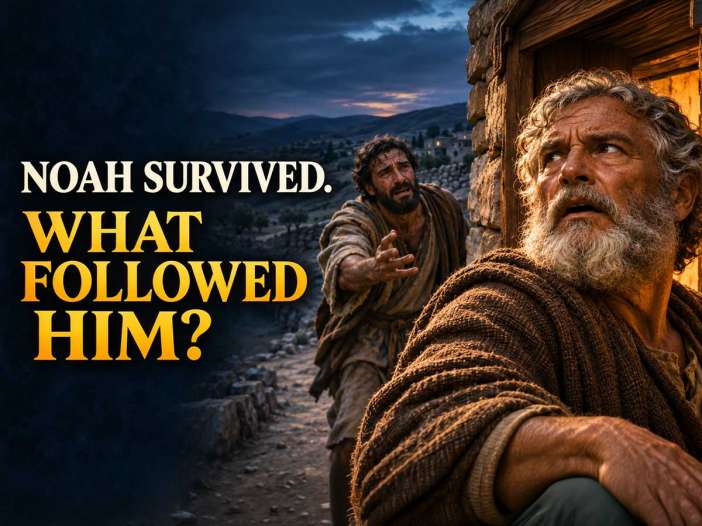
The waters were gone. Noah’s sons had built lives of their own and become fathers. Then they came back to tell him that their children were dying. The danger they described came from a world Noah had thought was behind him.
Our imaginary interview with Enoch ended with a message for a frightened father: The child is yours. His name is Noah. In this conversation, that child is old enough to have grandchildren. The story that brings his sons to his door comes from the Book of Jubilees, an ancient Jewish retelling of Genesis and the opening chapters of Exodus.
The book frames its account as a revelation to Moses on Mount Sinai. The Angel of the Presence tells him about creation, the patriarchs, and the origins of laws and festivals. The biblical scholar James C. VanderKam describes Jubilees as a second-century BCE Hebrew work. Within that long history, the angel pauses over one household after the Flood.
When Noah’s sons describe what is happening, Noah identifies the Watchers as the fathers of the spirits troubling his family. He prays for those spirits to be shut away. The angel’s account then tells of another request, made by a figure named Mastema. Noah’s family is still waiting for help when the two requests are answered. Jubilees, chapter 10
That is the part of Noah’s life I wanted to ask him about. I knew the story of the man who built the ark. I wanted to meet the father whose sons could stand in front of him and tell him something about being a parent that he had never had to bear.
We meet beside his doorway in the late afternoon. From where he sets my stool, I can see the path his sons took. I ask what they needed him to hear first.
This is a fictional interview inspired by the Book of Jubilees. Noah’s family warning, his prayer, and the written record he gives Shem come from the ancient text. The meeting, dialogue, and private recollections are fictional.
Topic 1: The Day Noah’s Sons Came Back
Opening
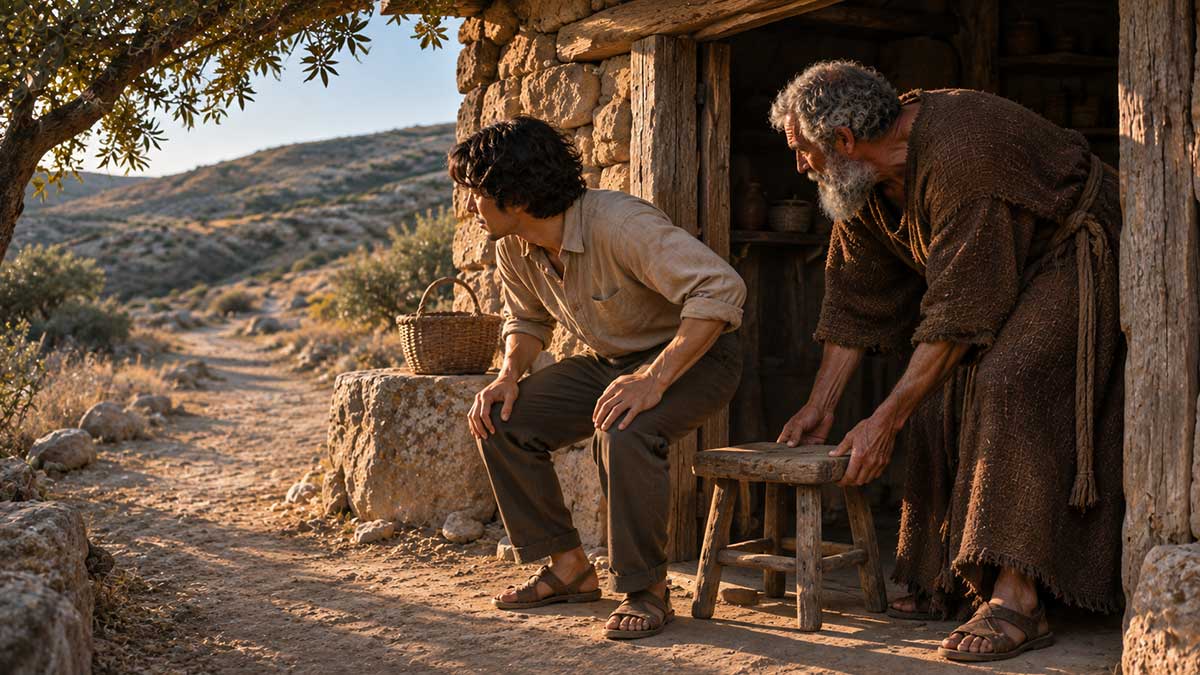
Late afternoon light reached across the doorway. Noah drew a low stool into the shade beside him. From the path came the scrape of a basket being set down on stone, then a woman calling someone in to help her.
Nick Sasaki Is that the way your sons came?
Noah Yes. I saw them from here. One was a little ahead of the others. He started speaking before he reached me, and I had to ask him to say it again.
Nick Sasaki Could you tell from their faces that something had happened?
Noah I could tell they’d talked about it on the way. When the first one stopped, another took up what he was saying. I thought he was helping his brother finish. Then I realized he was telling me what had happened in his own house.
Question 1
Nick Sasaki When your sons came to tell you about their children, what did they need you to hear first?
Noah That children had died. They told me some had lost their sight. Others had been led astray. My sons believed unclean spirits were doing it. I asked who was still ill and who was with them. Then I asked the question I should have asked at the beginning. How long has this been happening?
Nick Sasaki Why that question?
Noah One of them started his account with something that had happened several days before. He’d had all that time to look at his child and wonder whether to come to me. By the time he did, he knew of other houses where there was trouble. I wished I could go back to the first day and have him knock on my door.
Nick Sasaki Did you ask why he hadn’t?
Noah I nearly did. Then he would have had to stand there and tell me why he had waited. I wanted him to finish telling me about the child.
Nick Sasaki When your sons started to tell you what they believed was doing this, did it sound like anything you remembered from before the Flood?
Noah I remembered the Watchers and what their children had done. The giants had died. I had hoped my sons would be able to tell their children about them as something that happened long ago. Now my sons were standing in front of me, and I had to reckon with what could remain after the bodies were gone.
Nick Sasaki What had you thought life would be like for your sons once they had children of their own?
Noah Ordinary, if you want to know. When we first came out, I could call any of my sons and he’d answer. It took me a long time to take that for granted again. I wanted them to have years in which they could call their own children and be annoyed when they had to call twice. For a time they did. There were days when I could sit with one of them and hear nothing worse than what a boy had done to a gate.
Nick Sasaki What struck you as you listened to them that day?
Noah I had spent so long thinking of those three as the sons I’d brought through the waters. I could still see them that way when one of them was old enough to stand in my doorway and tell me something about being a father that I had never had to bear.
Question 2
Nick Sasaki They came together that day. Was that something you were used to seeing by then?
Noah There were times when one would come to the house and ask whether his brother was here before he asked how I was.
Nick Sasaki Is that what you had in mind when you warned your grandchildren about envy and bloodshed?
Noah I could hear how they spoke about one another. Each knew what somebody else had been given. If two men came to me over a quarrel, I could sometimes ask what had happened that morning and get an answer that began years before either of them could remember. They’d been told what one branch of the family had done to another. They could tell it again, down to words spoken before they were born.
Nick Sasaki What did you tell them?
Noah I told them that injustice and bloodshed had helped bring the Flood upon the earth. I told them to honor their parents and love their neighbors. I had seen people begin by counting what they were owed and go on until they had taken a life. I wanted the younger ones to hear something from me before they learned to count that way.
Nick Sasaki Did they listen?
Noah They listened that day. A grandfather can get people to sit still a little longer than they want to. Then they go home and hear what their fathers say over the evening meal.
Nick Sasaki Some of them would have heard what you’d said about Canaan at one of those meals.
Noah looked at Nick.
Noah Yes. I expect they would. When I woke that day, I learned that Shem and Japheth had gone in backward with a garment to cover me. I was grateful to them. I was ashamed they’d had to do it. I could hardly see Ham past what I felt when I heard he’d gone out and told them.
Question 3
Nick Sasaki Ham was the one who saw you uncovered. Why did you curse Canaan?
Noah You ask it as if I had sat down to decide who deserved what. I had just woken from a drunken sleep and learned that my sons had been talking about me outside the tent. I spoke in anger.
Nick Sasaki I can believe you were angry. I still want to know why Ham’s son had to hear his own name in it.
Noah I wanted Ham to feel what I felt. I knew what it would do to him to hear me speak about his son.
Nick Sasaki And what would it do to Canaan?
Noah I gave less thought to that. I can tell you Canaan was Ham’s son. A moment ago I was telling you how it felt to have my sons come to me about their children. You’ve asked me to think about one of those children hearing my curse for what his father had done.
From inside came the sound of a vessel being put down harder than its weight required. Neither man turned.
Nick Sasaki When you told your grandchildren to live in peace with one another, did you think about what Canaan had heard?
Noah I could stand before the younger ones and tell them what I’d seen men do before the Flood. I knew those things well enough to speak without stopping. Your question makes me wonder how I would have answered if Canaan had stood up that day and asked me to speak about him.
Nick Sasaki What would you have said?
Noah I’d like to give you an answer I’d be glad for him to hear. I can tell you the words I said that morning. I’ve had longer to live with them than you have.
Nick Sasaki I raised it thinking you might give me a reason I hadn’t heard.
Noah I had my reasons ready when you began. Then you asked me about the boy.
Closing
The shade had reached the path.
Nick Sasaki When your sons came that other day, could you do anything for them right away?
Noah I could hear them out. I could ask who was with the children. They had come hoping I knew what else to do. I could see one of them waiting for me to get up, as if there were someone I could go and fetch.
Nick Sasaki Did you tell them you were going to pray?
Noah I remember one of them asking if I wanted him to stay. I told him he could go back to his child. I knew where to find him.
Nick Sasaki After you heard them out, what did you ask God to do?
Topic 2: The Prayer and the Tenth
Opening
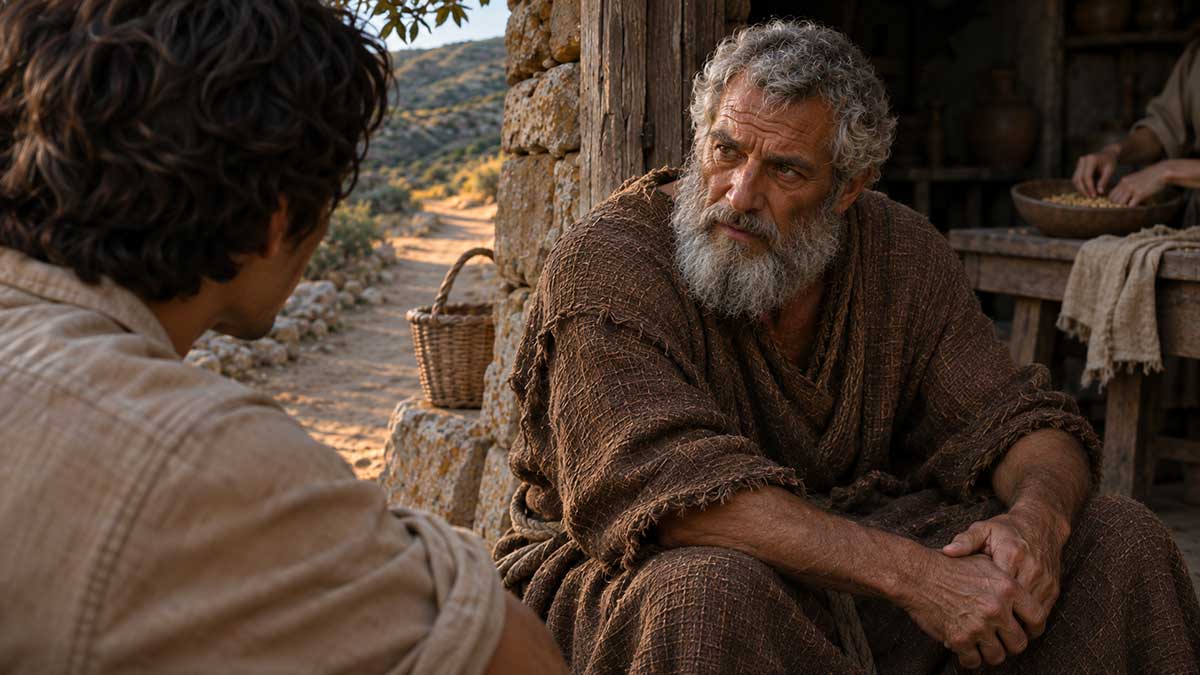
The threshold was in shade. Inside, someone was sorting grain, tipping a handful at a time into a bowl. Noah could still see the path his sons had taken home.
Noah I asked God to shut the spirits away. Hold them where they could do no more harm. I asked him to remember how he had shown mercy to me and my sons when the waters came, and to show that mercy to their children.
Nick Sasaki Did you ask him to shut them all away?
Noah Every one. I had listened to my sons tell me which children had died and which were still alive. I knew what I wanted to ask.
Question 1
Nick Sasaki You began by remembering how God saved you and your sons. Why did you start there?
Noah My sons had been standing right where you are. One of them stopped halfway through and asked his brother whether he’d left anything out. I remember thinking how glad I had been, when we came out of the ark, that I could still hear that voice.
Nick Sasaki Had you prayed for them that way on the ark?
Noah There were nights when all I wanted was to hear one of them answer me. I’d call to ask whether something had been put away or whether we had enough of something for the morning. They had work to do. If one of them asked why I needed to know just then, I could usually find a reason. Sometimes I just wanted him to answer.
Nick Sasaki And now those same men were asking you for their children.
Noah Yes. I said to God, you showed me mercy. You brought my sons through with me. Let that mercy reach them now. For years, when I thanked God for bringing us through, I could name everyone who had come out of the ark. That afternoon I had names to say that belonged to children born long after the waters went down. Some of those children were already dead. I had to pray for the living with their names still in my head.
Nick Sasaki Did it feel strange to thank him on a day when someone in your family was burying a child?
Noah I could do it where I was. If I had gone back to my son’s house and told him how grateful he ought to be that we survived the waters, I’d have deserved whatever he said to me. He had told me about his child. I took that with me when I went to pray.
Nick Sasaki Did you tell God which spirits you meant?
Noah I spoke of the Watchers, their fathers, and what they had done in my day. I asked him to keep the spirits from ruling over the living. There were children still in danger. I wanted God to hold them where they couldn’t get to another one.
Question 2
Nick Sasaki You asked for the spirits to be bound. What help did you receive for the family that was still waiting?
In the Book of Jubilees, the Angel of the Presence tells Moses what followed Noah’s prayer. God ordered the spirits bound. Mastema asked to keep some under his command so he could continue to lead people astray. He pointed to the wickedness of human beings in making his case. God permitted a tenth to remain under Mastema and ordered the other nine tenths confined.
Noah An angel was sent to teach me. I was shown how the plants of the earth could be used against the afflictions the spirits brought. There was more to learn than I had expected. I had to listen closely. I would hear a few words and already be thinking of which house I should go to first.
Nick Sasaki I find myself wanting to go back to that tenth. You asked for every one of them to be put away. If it were my child, I’d have a hard time hearing that any of them had been allowed to stay.
Noah I can hear how hard a time you’re having with it now.
Nick Sasaki I am. Mastema points to the wickedness of human beings. Your sons came to you about their children. I don’t see what his argument gives a father sitting beside a sick child.
Noah If you’d been standing with me when my sons arrived, I think you’d have asked me which house we should go to. I couldn’t tell you then. I had to ask my sons who was waiting and what they had seen. When the angel began to teach me, I had something to listen for. Could I take what I was being told and help somebody before the day was over?
Nick Sasaki Did the instruction feel like an answer to the prayer you had made?
Noah It gave me something to do for the people I’d prayed for. I was glad of that. You can ask me again what I wanted when I went to pray, and I’ll give you the same answer I gave you a moment ago. I wanted every one of those spirits shut away.
Nick Sasaki When I tell you what the angel said to Moses, that God let Mastema keep a tenth, what do you make of it?
Noah If one of my sons had come back to ask me why God let any remain, I would have had to tell him I didn’t know. I could say that to my son and still kneel down that night and ask God to keep his child safe. I don’t know what else a father could do with a question like that, except bring it with him when he prays.
Question 3
Nick Sasaki When you were given something you could do, whom did you think of first?
Noah The son who asked whether he should stay with me. I’d told him to go back to his child. I knew he’d have to walk into the house and tell whoever was waiting what I’d said. I’d given him very little to tell them. He could say that I’d heard him and that I was going to pray. Then they’d have to go on waiting with him.
Nick Sasaki What would you have wanted someone to say to you if you’d been the one waiting?
Noah Tell me what you know. Tell me if there’s anything I can do. And if you say you’re coming back, come back. There’s a point when a person hears footsteps outside and gets up every time.
Nick Sasaki You said you had to listen closely to what the angel taught you. Was it hard to give it that much attention when you wanted to get back to your son?
Noah I remember thinking I had heard enough to go. I could repeat the last thing I’d been told. Then I tried to recall what came just before it, and I couldn’t. I had been thinking about the walk to my son’s house. I had to stay and hear it again.
Nick Sasaki Did it bother you to have to ask?
Noah It bothered me that I’d been ready to leave. My sons would have taken me at my word. If I came into the house and said I knew what to do, they’d have made room for me. I wanted to be able to stand there and know what I was saying.
Nick Sasaki Did you think then about what would happen the next time they needed help?
Noah I thought about what one of them would be able to remember after hearing it from me once. I’d just found out how much I could miss when I was frightened. I could hear one of my sons asking me to tell him again, and I could see him trying to do two other things at the same time.
Closing
Nick Sasaki How were you going to keep all of it straight once the angel was gone?
Noah I began putting it in writing. At first I wanted to have it where I could go back and check what I’d heard.
Nick Sasaki Did you keep it here?
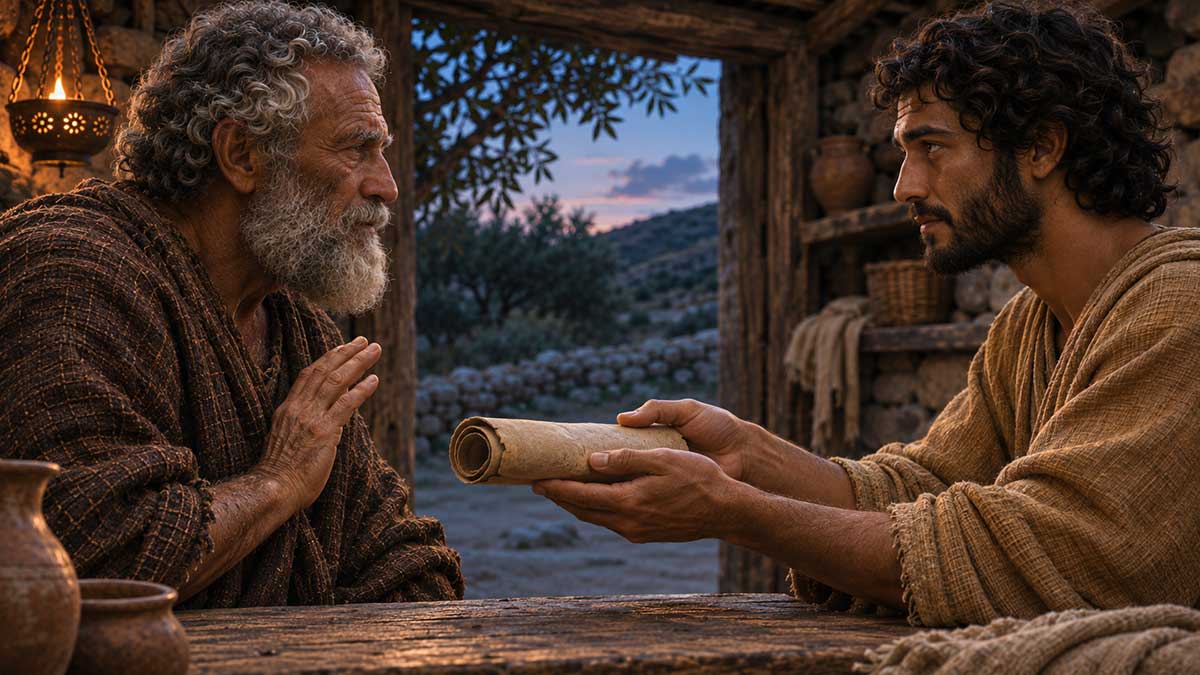
Noah For a time. Then I called Shem. I wanted him to see what I had written.
Topic 3: The Book Noah Gave Shem
Opening
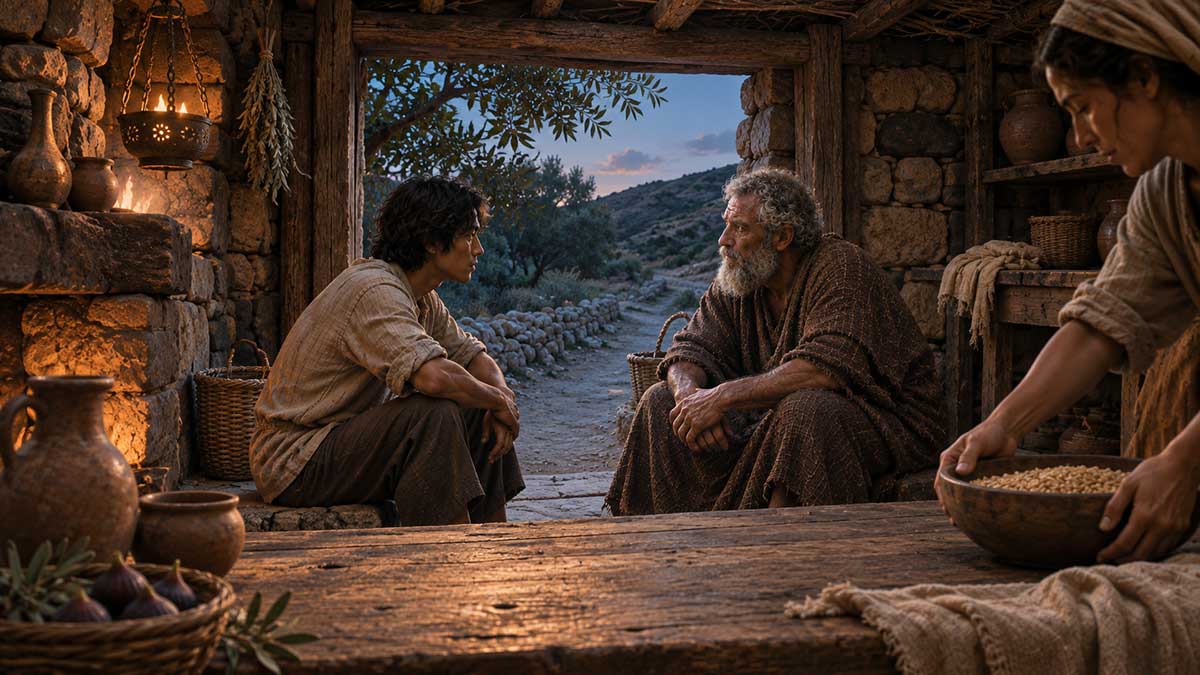
The light inside the doorway had nearly gone. Noah could still see the workbench. Beyond it, someone moved a bowl out of the way to make room for the evening meal.
Nick Sasaki What did Shem say when you showed him the book?
Noah He asked if I wanted him to read it there. I’d called him inside to look at what I’d written. I hadn’t yet told him I meant him to take it home.
Nick Sasaki Had he seen you working on it?
Noah He knew I was writing. My sons would come by and ask how far I’d got. One of them would have a question, and I’d look for the place where I thought I’d written down the answer. Sometimes I found that I had left it clear enough for myself and very little clearer for anybody else.
Question 1
Nick Sasaki What made you decide to write down what you’d been taught?
Noah I’d asked the angel to go over something a second time. All I could think about was getting back to my son’s house, and I’d missed part of what I was being told. I knew how eager my sons would be when I came to tell them what I’d learned. I thought of one of them trying to listen with a child crying in the next room. He might hear me as badly as I’d heard the angel.
Nick Sasaki How did you tell when you’d written enough?
Noah One day I went back to something I’d set down earlier. I remembered how certain I had been of it when I wrote it. Now I could read the words and see two ways to take them. I had to sit there and think which one I had meant. That was an unpleasant discovery. If I had to do that much work to read my own words, what would my sons do with them?
Nick Sasaki Come and ask you.
Noah They would. And I’d be glad to see them. For a time I thought that was answer enough.
Nick Sasaki What changed?
Noah I began to see how much depended on whether I was there to be asked. A man can call on his father in the morning and find him out until dark. I wanted to leave my sons something they could go back to in the time it took me to come home.
Nick Sasaki You’d already told them what you thought they ought to do with their lives. Was it different to write something they had asked you for?
Noah Very different. When I warned the younger ones about bloodshed, I could see some of them hoping I’d say I had finished. With this, one of my sons would come by and ask whether I’d written down the thing he’d asked about yesterday. That was a fair question. I couldn’t tell him the matter was settled just to have some peace.
Nick Sasaki So you had readers before you had a book.
Noah I had sons who could tell me where I’d left them guessing. A father ought to be grateful for that. I was grateful on some days sooner than on others.
Question 2
Nick Sasaki Why did you give the record to Shem?
Noah I loved him most. You’ve been waiting to ask me that since I told you I called him in.
Nick Sasaki I have. Did loving him most make him the right person to give it to?
Noah It made him the first person I wanted beside me when it was ready. I think I knew what his face would look like when he began to read. There’s some comfort in knowing how a man will take a thing from you.
Nick Sasaki I can see why you’d choose him if it were something just between the two of you. His brothers had come to you about their children too.
Noah I know who came to me.
Nick Sasaki Then put me in one of their places. My child has been ill. I came to you with Shem. Now I hear that Shem has the book. What would you want me to make of that?
Noah looked out through the doorway. A little light still lay across the path.
Noah I’d want you to know you could go to him. And I can hear your next question. Did I ever tell the others that in so many words? I remember what I said to Shem. I couldn’t give you a sentence I said to each of his brothers.
Nick Sasaki What did you say to Shem?
Noah I asked him to think of the day they’d all come to me. He remembered one of his brothers trying to make me hear the last part of what he was saying. I remembered that too. I had wanted the man to speak more slowly. Shem had been close enough to see why he couldn’t.
Nick Sasaki Did you tell Shem you were giving him the book for his brothers’ sake?
Noah I told him to keep that day in mind when somebody came asking for it. I could say that to him. I couldn’t decide what his brothers would feel when they saw him carrying it home.
Question 3
Nick Sasaki When Shem took it, what did you hope he would be able to do without you?
Noah I hoped he could sit down with someone who was frightened and tell him what he knew. And if there was a place in the writing that puzzled him, I hoped he’d read it again and take his time. I’d had to ask for the same words twice. There was no shame in it. The person who came to the door deserved that much care.
Nick Sasaki What if the person at the door was Ham?
Noah Then Ham would have come for help. I’d want Shem to hear what he came to say before he thought of what any of us had said to one another years before.
Nick Sasaki Could you have done that yourself?
Noah When my sons came about their children, I had to. You heard me tell you about the one who waited days before coming. I nearly asked him why he’d taken so long. I can still hear how that question would have sounded to him. I’d have made him stand there explaining himself when he’d come to tell me his child was in trouble.
Nick Sasaki That day you let him finish.
Noah That day I did.
Nick Sasaki Did Shem know you were going to let him take it away that evening?
Noah He thought I had shown it to him so he could read it here. When he came to the end of the part I’d asked him to read, he held it out to me. I reached for it. I’d spent so long going over those words that my hand went out before I thought what I was doing.
Closing
Nick could still make out the doorway. The path beyond it had gone dark.
Nick Sasaki Thank you for telling me what happened after your sons came to you. I’d heard the story of how you saved them. I hadn’t thought about what it would be like to have them come back as fathers.
Noah One of them asked if I wanted him to stay. I sent him home to his child. I thought about him again when Shem was standing there, waiting for me to take the book.
Nick Sasaki What did you do?
Noah I drew my hand back. I said, “Take it with you, Shem.”
Final Thoughts
The moment I keep returning to comes before Noah prays. One of his sons has taken days to bring him the news. Noah nearly asks why he waited. He lets him finish instead. I’ve asked questions like the one Noah holds back, thinking I was getting to the bottom of something. Sometimes all I’ve done is give a person one more thing to explain before they can tell me why they came.
I had a harder time listening when Noah spoke about Canaan. He wanted me to know how ashamed he’d felt when he woke and learned what had happened in the tent. I still wanted to know what that had to do with Canaan. Ham saw him uncovered, and the curse fell on Ham’s son. Later, Noah warns his grandchildren about the way they treat one another. Hearing those two moments together made me wonder which of a grandfather’s words the children would remember longest. Jubilees, chapter 7
I wanted an explanation for the tenth that remained under Mastema. The book gives Mastema’s argument and God’s decision. In our conversation, Noah says he’d have to tell his son he didn’t know why God let any remain. He could tell him that and still pray for his child that night. I had been asking what Noah made of God’s decision. His answer made me think about what it would be like to go on praying with a question you might never be able to answer for your own son. Jubilees, chapter 10
There’s another piece of writing in Jubilees that Noah never gets to discuss with us. Kainam finds the Watchers’ teachings about omens carved into a rock. He copies the inscription and keeps the discovery from Noah out of fear. I keep seeing that scene beside the one at the doorway. Kainam leaves with something he is afraid to tell Noah about. Shem leaves with something his father has asked him to remember the next time someone comes for help. Jubilees, chapter 8
When Shem holds the record out to him, the Noah of our interview reaches for it out of habit. I like that he reaches. He’s spent all that time getting the words clear, and now somebody else will have to read them, make sense of them, and decide what to do. It takes him a moment to draw his hand back.
Have you ever asked someone why they waited to tell you, when what they needed was time to finish? Is there something your family still depends on you to remember? What would you want them to be able to do with it the next time you’re away?
The reflections arise from a fictional encounter. Jubilees records Noah giving his written remedies to Shem. Noah’s hesitation at the handoff and the words exchanged there belong to the interview.
Short Bios:
Noah is the father of Shem, Ham, and Japheth. In Genesis, he builds the ark and survives the Flood with his family. In Jubilees, he appears later as a grandfather who prays for his descendants, records the remedies an angel teaches him, and entrusts the record to Shem. Genesis 6 · Jubilees, chapter 10
Nick Sasaki is the creator of ImaginaryTalks, where he writes fictional conversations with historical, literary, and religious figures. In this companion to his Enoch interview, he meets Noah after the Flood to ask what a grandfather can give his family when danger returns. ImaginaryTalks
Leave a Reply