
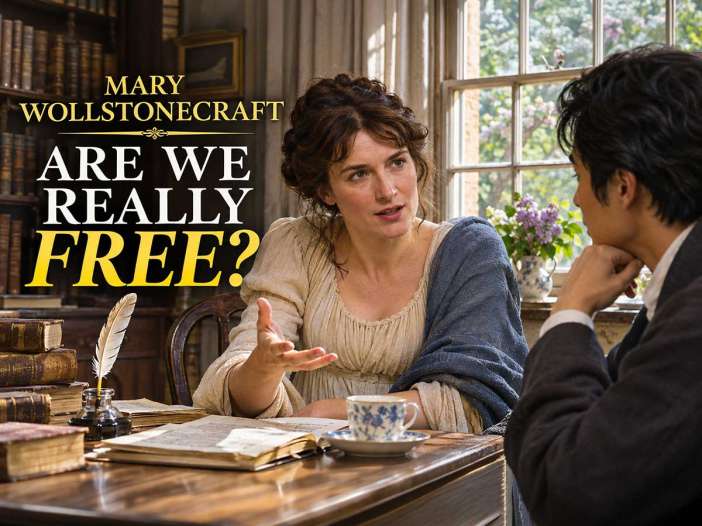
Introduction
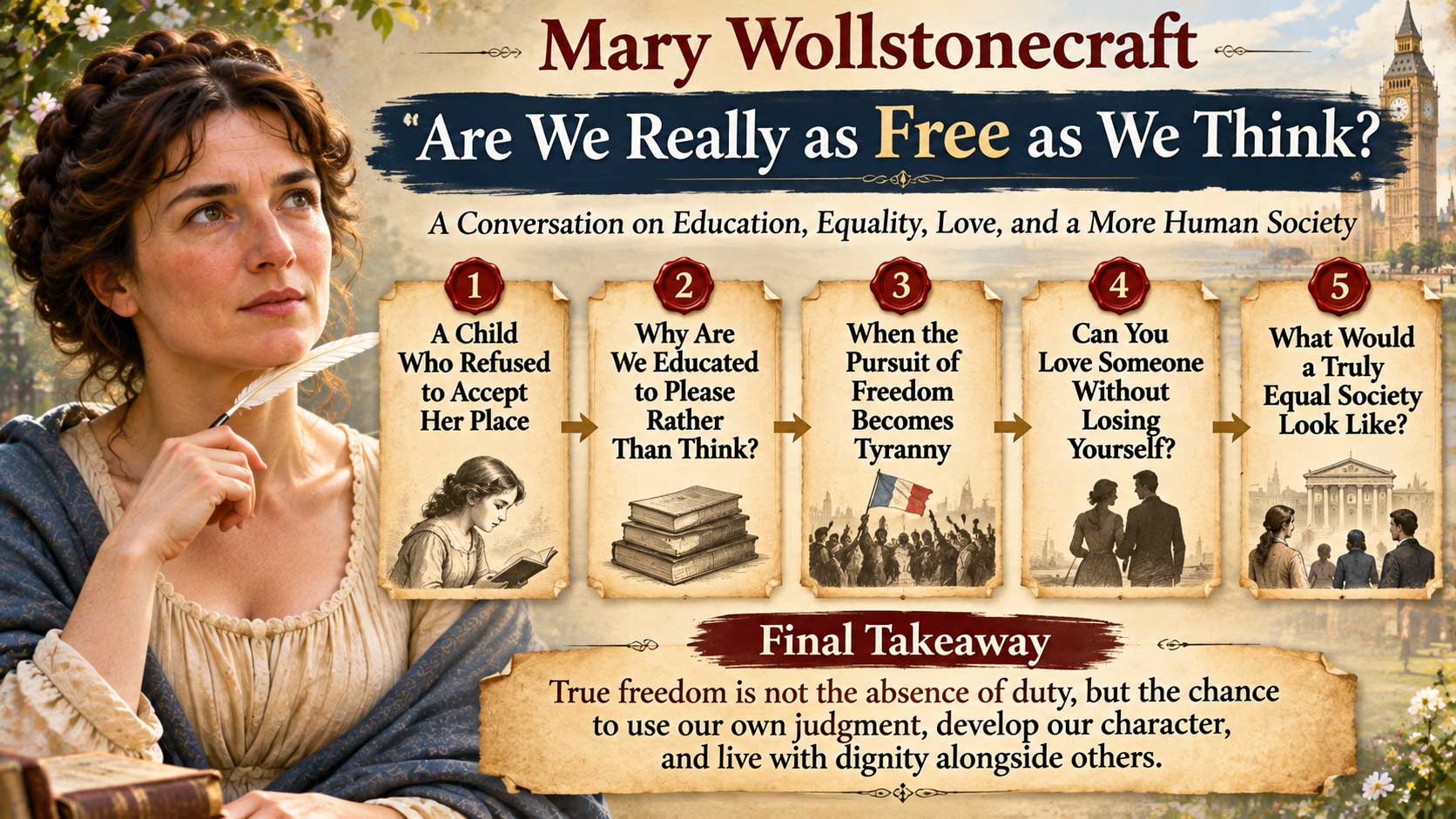
What does it mean to be truly free? Is freedom the ability to make our own decisions, earn our own living, express unpopular opinions, or love another person without surrendering our identity? More than two centuries ago, Mary Wollstonecraft devoted much of her life to examining these questions, often at considerable personal cost.
Born in England in 1759, Wollstonecraft grew up in a household marked by financial instability, domestic violence, and unequal opportunities. Her experiences led her to question social arrangements that demanded obedience from women without granting them the education or economic independence necessary to direct their own lives.
In 1792, she published A Vindication of the Rights of Woman, one of the most influential works in the history of women's rights. Her argument extended beyond access to education. She believed that reason, moral judgment, and virtue belonged to humanity rather than exclusively to one sex. A society that discouraged women from thinking independently was depriving itself of their potential.
Yet Wollstonecraft was far more than an advocate for women's education. As explored in the Stanford Encyclopedia of Philosophy, her writings addressed political justice, inherited privilege, religious morality, human affection, and the relationship between individual liberty and social responsibility. Her experiences in revolutionary France exposed her to the difficult questions that arise when people attempt to transform unjust institutions.
Her personal life presented equally demanding challenges. Her relationship with Gilbert Imlay, the birth of her daughter Fanny, and her subsequent emotional suffering tested principles she had defended with intellectual conviction. Her travels through Scandinavia, recorded in her Letters Written During a Short Residence in Sweden, Norway, and Denmark, revealed a writer deeply interested in nature, commerce, human happiness, and the character of society.
Our imaginary conversation takes place in London in May 1797. Mary is thirty-eight years old, recently married to the philosopher William Godwin, raising her young daughter, and expecting another child. Her writing continues, and she possesses numerous ambitions for her family's future. Over the course of one spring afternoon, we explore her childhood, educational philosophy, political convictions, emotional experiences, and hopes for a more just society.
What makes Mary Wollstonecraft particularly compelling is that she never lived outside the difficulties she examined. She experienced the tension between independence and affection, conviction and vulnerability, personal ambition and family responsibility. Her questions remain remarkably relevant to anyone attempting to live with dignity without diminishing the dignity of others.
Fictional Conversation Disclaimer: This is a fictional interview inspired by Mary Wollstonecraft's documented life, published writings, and philosophical ideas. The dialogue, domestic scenes, gestures, and personal reflections have been imaginatively reconstructed and should not be interpreted as authentic historical quotations or recorded events.
Topic 1: The Girl Who Refused to Accept Her Place
Opening
Somers Town, London, May 1797.
It was half past one when I arrived at No. 29, The Polygon. Spring had brought a welcome softness to the London air, and several windows along the residential buildings stood open.
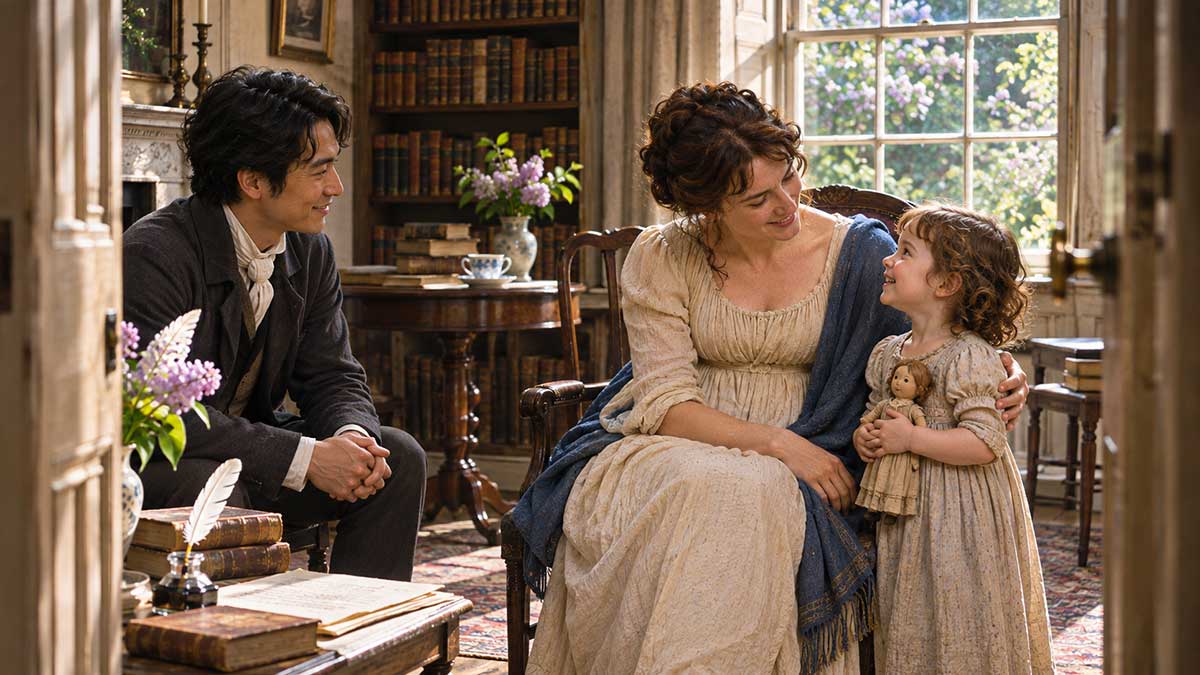
Mary Wollstonecraft received me in a modest sitting room. At thirty-eight, she possessed an attentive expression that suggested she was accustomed to examining people almost as carefully as she examined their arguments.
Books occupied several surfaces, and a collection of handwritten pages rested upon a small writing table.
Mary Wollstonecraft
You must forgive the disorder. I find that arranging my papers frequently occupies time that might be better spent adding to them.
Nick Sasaki
I would probably be more surprised if the home of a writer contained no unfinished work.
Mary Wollstonecraft
Then we are already acquainted with one another's prejudices.
Before I could respond, a little girl appeared at the doorway, carrying a wooden doll. Mary extended her hand, and the child approached her.
Mary Wollstonecraft
Have you come to inspect our visitor, Fanny?
The little girl regarded me with considerable suspicion before retreating behind her mother's chair.
Nick Sasaki
I suppose I haven't passed the inspection yet.
Mary Wollstonecraft
You must earn her confidence. She is under no obligation to grant it merely upon my recommendation.
Mary spoke gently to her daughter before the child returned to the adjoining room.
Nick Sasaki
Fanny is a beautiful name.
Mary Wollstonecraft
It belonged to someone very dear to me.
Her expression softened.
But that is a rather long history.
Nick Sasaki
We have the afternoon.
Question 1: How did the circumstances of your childhood shape your earliest ideas about freedom and dependence?
Mary Wollstonecraft
My father possessed sufficient means at one period to provide his family with considerable comfort. Unfortunately, he possessed considerably less judgment in the employment of those means.
We moved frequently. His agricultural ventures disappointed him, and disappointment did little to improve his temper.
My mother endured much that no woman ought to endure.
Nick Sasaki
Were you able to protect her?
Mary Wollstonecraft
A child possesses very limited means of protecting an adult.
There were occasions when I attempted it. But what could I alter? The laws, the property, the authority of the household, and the expectations of society were all arranged in my father's favour.
My mother was expected to exercise patience. My father was permitted to exercise anger.
I found the distribution of these duties exceedingly unjust.
Nick Sasaki
Did those experiences make you distrust authority itself?
Mary Wollstonecraft
Not every authority. I distrust authority that considers itself exempt from examination.
A parent may possess knowledge that a child has yet to acquire. A teacher may possess experience that a pupil requires. Neither circumstance establishes that the parent or teacher is incapable of error.
Nick Sasaki
Yet children sometimes need protection from decisions they aren't mature enough to make.
A loving parent might restrict a child's freedom for perfectly good reasons.
Mary Wollstonecraft
Certainly. I would not permit Fanny to approach a fire merely to demonstrate my respect for her independence.
But what is the object of that restriction? Surely it is to preserve her until she acquires sufficient judgment to preserve herself.
If, at twenty-five, she still requires my permission to approach a fireplace, I must have been a remarkably unsuccessful mother.
She smiled, then continued.
The difficulty arises when temporary guidance becomes a permanent claim upon another person's judgment.
Nick Sasaki
And you saw that happening to women?
Mary Wollstonecraft
Continually.
A girl passes from the authority of her father into that of her husband. Society congratulates her upon the transition, yet scarcely enquires whether she has acquired the ability to direct her own conduct.
I observed that my elder brother possessed advantages unavailable to his sisters. Nobody appeared particularly troubled by the arrangement.
But I was troubled by it.
Nick Sasaki
Did you resent your brother?
Mary Wollstonecraft
The arrangement offended me more than the individual who benefited from it.
It would have been foolish to wish him less educated merely to establish equality between us.
I wished to possess opportunities myself.
Nick Sasaki
What kind of future did you want when you were young?
Mary Wollstonecraft
At first, I could scarcely have described it.
I knew more clearly what I wished to escape than what I wished to accomplish.
But I wanted some occupation through which I might maintain myself. I wanted books, conversation, and the liberty to form attachments according to my own inclination.
These appeared very ordinary desires to me.
Society appeared to regard them as rather extraordinary ambitions for a young woman without a fortune.
Question 2: What did your friendship with Fanny Blood teach you about the kind of life you wanted to lead?
Mary glanced briefly toward the adjoining room.
Mary Wollstonecraft
Frances Blood was among the earliest people whose society made me feel that my circumstances need not determine the entire course of my existence.
She possessed accomplishments that I admired. Her drawing was excellent, and I found considerable pleasure in her conversation.
I was conscious of deficiencies in my own education. Her friendship encouraged me to remedy some of them.
Nick Sasaki
Was she someone with whom you could discuss your ambitions openly?
Mary Wollstonecraft
Yes. And there is a peculiar happiness in discovering that another person takes seriously the things that occupy one's thoughts.
You need not continually explain why they matter.
We entertained hopes of establishing ourselves through our own exertions. We had very little money, but an abundance of plans.
Unfortunately, plans are considerably less expensive than their execution.
Nick Sasaki
You eventually established a school together.
Mary Wollstonecraft
At Newington Green, with my sisters.
I believed that education might provide us with a respectable means of maintaining ourselves. I discovered that managing a school required abilities quite distinct from instructing its pupils.
There were expenses, parents to satisfy, and numerous domestic arrangements.
One might spend the morning considering the improvement of a child's character and the afternoon wondering how to pay for her dinner.
Nick Sasaki
It sounds like a difficult undertaking.
Mary Wollstonecraft
It was. Yet I would not willingly surrender what I gained there.
At Newington Green, I became acquainted with Dr. Richard Price. His conversation and the intellectual society around him introduced me to questions of religion, liberty, and political justice.
My circumstances were narrow, but my intellectual interests were becoming considerably wider.
Nick Sasaki
Then Fanny went to Portugal.
Mary Wollstonecraft
She married and settled in Lisbon. Her health was poor, and when I learned of her circumstances during pregnancy, I went to her.
Mary rested her hands upon her lap.
She died there.
Nick Sasaki
I'm sorry.
Mary Wollstonecraft
So was I.
For several moments, neither of us spoke. From the adjoining room came the faint sound of her daughter playing.
Nick Sasaki
Did you ever regret leaving the school to go to Portugal?
Mary Wollstonecraft
The school suffered during my absence. Financially, it was an unfortunate decision.
But I cannot calculate the value of having been with my friend according to the accounts of a school.
Had I remained in England, knowing she was ill and wishing to see me, I should have found little consolation in a satisfactory balance of expenses.
Nick Sasaki
And now your daughter carries her name.
Mary Wollstonecraft
Yes.
I am pleased to hear it spoken in my household again.
She looked toward the doorway, then reached for her tea.
Tell me, Mr. Sasaki, do women in your century have greater opportunities to establish independent occupations with their friends?
Nick Sasaki
They do. Women can establish businesses, attend universities, own property, and pursue professions that were largely closed to women in your time.
Mary Wollstonecraft
Then I hope they sometimes make good use of those opportunities together.
There is much pleasure in accomplishing something with a person whose happiness matters to you.
Question 3: What gave you the courage to attempt something so unusual for a woman of your time: earning your living through writing?
Nick Sasaki
After the school failed, you became a governess in Ireland. What made you eventually decide that you wanted a literary career?
Mary Wollstonecraft
I had discovered that employment did not necessarily provide the independence I sought.
As a governess, I received payment for my services. Yet my position required considerable accommodation to the preferences of those who employed me.
I was entrusted with the education of children without possessing complete liberty to determine how they ought to be educated.
You may appreciate the difficulty.
Nick Sasaki
Especially if you disagreed with their parents.
Mary Wollstonecraft
And I was not always sufficiently discreet in concealing such disagreements.
She laughed.
I found that a woman employed to cultivate the judgment of children was sometimes expected to exercise remarkably little judgment herself.
When I returned to London, Mr. Joseph Johnson encouraged my literary efforts. I undertook translations, reviews, and original compositions.
The work was demanding. But I could regard the improvement of my abilities as something directly connected with my future prospects.
That was a considerable satisfaction.
Nick Sasaki
Were you confident that your writing would support you?
Mary Wollstonecraft
Good heavens, no.
Confidence would have been a pleasant addition to my circumstances, but I could not afford to wait for it.
I had to begin with the abilities I possessed and improve them through employment.
Reviewing books required me to read subjects I might otherwise have neglected. Translation required patience and precision. Writing compelled me to examine opinions that conversation alone might have allowed me to leave imperfectly formed.
I received an education through the occupation by which I maintained myself.
Nick Sasaki
Did you feel that you were doing something revolutionary?
Mary Wollstonecraft
I wished to pay my expenses and employ my faculties.
Other people may attach grander descriptions to the undertaking.
Yet there was something deeply agreeable in receiving payment for an argument I had formed myself.
I was no longer obliged to regard my intellectual interests as indulgences permitted by someone upon whom I depended.
Nick Sasaki
What about women who possessed similar abilities but never encountered someone like Joseph Johnson?
Mary Wollstonecraft
That is precisely the difficulty.
We celebrate the occasional woman who succeeds under discouraging circumstances and then congratulate society upon permitting her success.
What of the hundreds whose abilities never received comparable encouragement?
Their absence from literary society establishes nothing concerning their natural capacities.
I was fortunate in meeting Mr. Johnson. I would prefer a society in which such opportunities did not depend so greatly upon fortune.
Closing
Mary rose and approached her writing table. From several books, she selected a volume and brought it back to her chair.
Mary Wollstonecraft
The longer I worked, the more dissatisfied I became with the explanations offered for the condition of women.
Gentlemen of considerable learning assured their readers that women possessed certain natural weaknesses. Yet these same gentlemen appeared remarkably determined to preserve the educational practices most likely to produce them.
Nick Sasaki
You began questioning the education women received rather than accepting the conclusions society drew about them.
Mary Wollstonecraft
I began questioning the gentlemen who drew those conclusions.
There is a distinction.
She opened the volume upon her lap. It was her 1792 work, A Vindication of the Rights of Woman.
Mary Wollstonecraft
Have you read Rousseau, Mr. Sasaki?
Nick Sasaki
Yes. I find some of his ideas about education quite fascinating.
Mary Wollstonecraft
As do I.
Which makes his treatment of women considerably more disappointing.
She turned several pages, found the passage she wanted, and moved her chair nearer the writing table.
Mary Wollstonecraft
Let us examine what happens when a philosopher recommends liberty to one half of humanity and prepares the other half to please it.
Topic 2: Why Are We Educated to Please Rather Than Think?
Opening
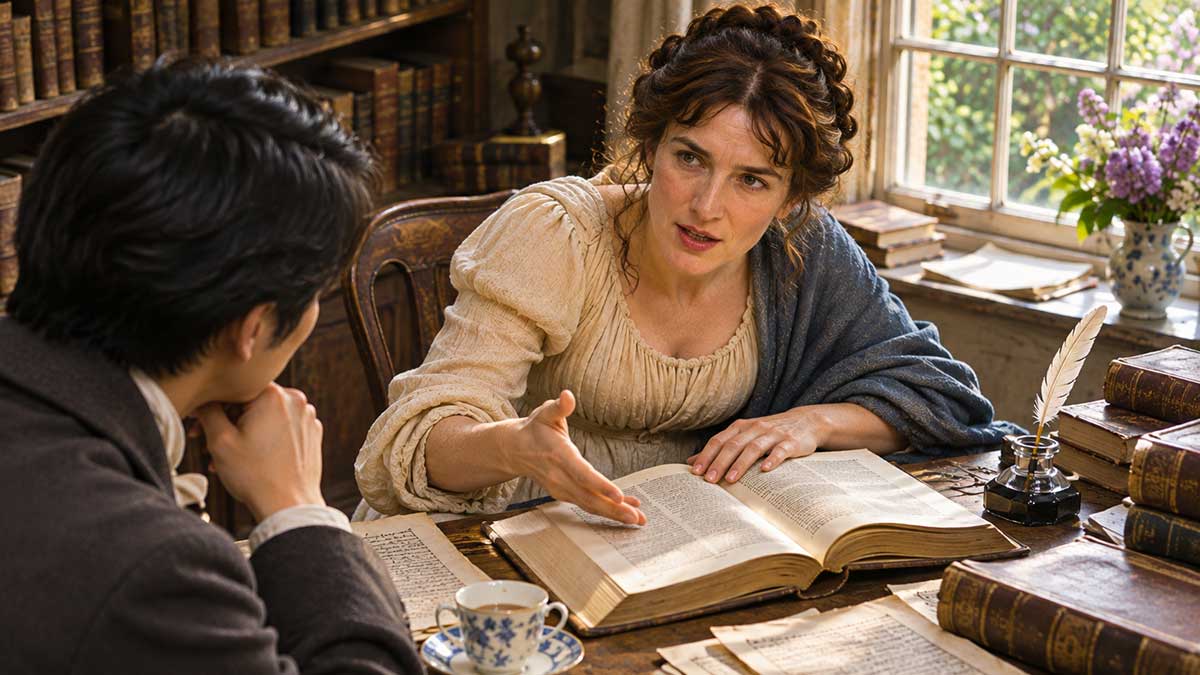
Mary placed her book upon the writing table and pulled another chair beside it. The afternoon sunlight illuminated several handwritten pages, an inkstand, and a collection of well-used volumes.
Mary Wollstonecraft
Rousseau possessed an extraordinary ability to persuade his readers that they were discovering truths which society had concealed from them.
I experienced something of that pleasure myself when reading him.
Nick Sasaki
Which makes your disagreement with him particularly interesting. You weren't dismissing a philosopher you had never admired.
Mary Wollstonecraft
Certainly not. I would scarcely have devoted so much attention to his arguments had I considered him a fool.
The difficulty with a persuasive writer is that one must exercise considerably more care in reading him.
She turned a page.
Have you considered the education he recommends for Sophie, the young woman intended to become Émile's wife?
Nick Sasaki
He seems to prepare her for a very different kind of existence.
Mary Wollstonecraft
Indeed. Émile is to discover the world. Sophie is to discover how best to accommodate herself to Émile.
Question 1: Why did you believe that the apparent intellectual weakness of women reflected their education rather than their natural abilities?
Nick Sasaki
Rousseau believed that men and women possessed different natural characteristics. Would you reject that argument entirely?
Mary Wollstonecraft
I have never maintained that there are no physical distinctions between the sexes.
But I find it exceedingly difficult to discover how a gentleman proceeds from observing the superior muscular strength of a man to establishing his superior moral judgment.
There appears to be a considerable distance between the two propositions.
Nick Sasaki
He might argue that differences in physical constitution lead naturally to different social responsibilities.
Mary Wollstonecraft
Then let us examine those responsibilities individually.
Does a mother require less judgment than a father when attending to a sick child? Does she require less intelligence when managing the affairs of a household?
If her conduct influences the character of her children, would ignorance make her better qualified for that responsibility?
Nick Sasaki
Probably not.
Mary Wollstonecraft
Yet we are repeatedly assured that intellectual cultivation may render a woman unsuitable for the very duties that require it.
I confess that I find the argument rather inconvenient to follow.
She leaned forward, resting one hand upon the open book.
Consider two children. Permit one to run, climb, investigate unfamiliar objects, and acquire confidence through experience. Require the other to remain indoors, preserve her appearance, and consult an adult before undertaking the smallest adventure.
Observe them ten years later.
You will undoubtedly discover differences between them.
But what have you established concerning their original capacities?
Nick Sasaki
Very little. You've changed the conditions under which they developed.
Mary Wollstonecraft
Precisely.
Yet society conducts this experiment continually and then publishes its conclusions concerning the nature of women.
Nick Sasaki
What would you say to someone who argues that women themselves often prefer the education you've criticized?
Mary Wollstonecraft
I would ask at what age they began to acquire those preferences.
A child discovers very early which accomplishments receive praise. If a little girl is admired for her appearance and discouraged from expressing an inconvenient opinion, she soon learns where her advantages lie.
We ought not to be astonished when she becomes proficient in the occupation for which she has received the greatest encouragement.
Nick Sasaki
So you don't blame women for developing those habits?
Mary Wollstonecraft
I hold women capable of moral responsibility, which necessarily means that I cannot excuse every fault in their conduct.
But I object to a society that cultivates particular weaknesses and then reproaches women for possessing them.
If gentlemen desire more intelligent companions, they might begin by making intelligence less inconvenient to the women who possess it.
She smiled and closed the book halfway.
I suspect some gentlemen would discover that they preferred the admiration of an ignorant woman to the conversation of an intelligent one.
Question 2: What happens to a person's character when they are taught that their greatest achievement is securing the approval of others?
Nick Sasaki
There's something about life in my century that I think you would find fascinating.
We have created systems through which people can display pictures of themselves, express opinions, and receive immediate reactions from thousands of strangers.
Mary Wollstonecraft
For what purpose?
Nick Sasaki
Many purposes. People share knowledge, maintain friendships, promote their work, or entertain others.
But some become deeply concerned with how many people approve of their appearance or opinions.
A young woman might spend an hour preparing a photograph of herself, then repeatedly examine how many strangers have expressed admiration for it.
Mary Wollstonecraft
And these strangers possess no particular acquaintance with her character?
Nick Sasaki
Usually very little.
Mary Wollstonecraft
What a remarkably industrious method of becoming acquainted with everything except oneself.
She looked genuinely amused.
Nick Sasaki
There are people who earn their living through these activities. Public recognition can create opportunities that would otherwise be unavailable to them.
Wouldn't you regard that as a form of independence?
Mary Wollstonecraft
It might be.
I earn money through writing, and I am naturally pleased when my books find readers. I would be dishonest if I pretended that public opinion were entirely indifferent to me.
But I must distinguish between wishing my work to be appreciated and permitting its reception to determine whether I consider the work valuable.
Suppose I publish an argument that displeases a considerable number of readers.
Am I obliged to alter my opinion?
Nick Sasaki
Not unless their objections persuade you.
Mary Wollstonecraft
Exactly.
The judgment of another person may instruct me. His approval, taken by itself, instructs me very little.
Nick Sasaki
Yet praise can encourage people. A child who receives recognition for an accomplishment may develop the confidence to attempt something more difficult.
Mary Wollstonecraft
Certainly. I would not deprive children of the pleasure of encouragement.
But I would take care concerning the object of my praise.
Suppose a child spends an afternoon attempting to draw a flower. Her first efforts disappoint her, but she continues observing its form and correcting her drawing.
I would direct her attention to what she has discovered through her efforts.
If I merely tell her that she has produced something prettier than another child's drawing, I may encourage a very different ambition.
Nick Sasaki
The desire to be better than someone else.
Mary Wollstonecraft
Or the desire to be thought better.
Those are by no means identical.
She picked up a small sheet of paper from the table and examined an unfinished sentence.
There is another difficulty with excessive admiration. It encourages people to conceal their imperfections.
How can I correct an error in my character if my principal occupation consists of persuading others that I possess none?
Nick Sasaki
That problem affects men in my century just as much as women.
Mary Wollstonecraft
I am scarcely surprised.
A gentleman who spends his existence displaying his wealth, accomplishments, or importance may be as dependent upon admiration as any fashionable lady.
Vanity does not become a virtue through the accident of belonging to a man.
Nick Sasaki
Is there a way to enjoy recognition without becoming dependent upon it?
Mary Wollstonecraft
Acquire occupations that provide satisfaction apart from the opinions they excite.
Read a book whose contents interest you. Learn something difficult. Cultivate a friendship in which you need not continually appear agreeable.
Perform an act of kindness that nobody is likely to discover.
Such activities may teach us to appreciate pleasures that do not require an audience.
Question 3: If you could establish a school for both boys and girls, what would you teach them that ordinary schools neglect?
Nick Sasaki
You've written about national education. What would your ideal school actually look like?
Mary Wollstonecraft
I would begin by bringing boys and girls together during their early education.
Let them acquire knowledge in one another's company rather than grow accustomed to regarding each other as inhabitants of separate societies.
I would provide opportunities for physical exercise, practical instruction, and the study of subjects that awaken curiosity.
Children should encounter objects and circumstances that require them to employ their faculties.
Merely committing sentences to memory is a very imperfect preparation for life.
Nick Sasaki
What about moral education?
Mary Wollstonecraft
It should occupy a considerable portion of their attention.
But I would hesitate to call a child virtuous merely on account of his obedience.
Suppose a boy returns something he has stolen. He does so solely from fear of punishment.
Has he acquired a sense of justice, or has he acquired a fear of his schoolmaster?
Nick Sasaki
Perhaps fear is a necessary beginning. Young children don't always comprehend the consequences of their actions.
Mary Wollstonecraft
It may restrain conduct until judgment develops. But we must not mistake the restraint for the development.
I would wish the boy to consider the injury he has occasioned another person.
As his reason matures, he should discover grounds for honesty that remain persuasive when his schoolmaster is absent.
Our duties to God and to our fellow creatures deserve something more substantial than the fear of a reprimand.
Nick Sasaki
May I challenge you on another point?
Mary Wollstonecraft
I should be disappointed if you did not.
Nick Sasaki
Suppose a woman receives an excellent education. She has opportunities to pursue medicine, literature, or commerce.
Yet she decides that her greatest happiness would come from raising children and caring for her household.
Would you regard that as a failure of your educational ideals?
Mary Wollstonecraft
Why should I?
The education of children is an occupation of considerable consequence. I have devoted much of my attention to it.
My objection is to the notion that a woman must be rendered ignorant in preparation for becoming a mother.
Nick Sasaki
But there are people in my century who sometimes regard domestic life as less admirable than professional achievement.
Mary Wollstonecraft
Then they appear to have substituted one prejudice for another.
I would not determine the worth of an occupation merely by the distinction it confers upon the person engaged in it.
An intelligent mother may contribute more to the happiness of society than a very celebrated author.
And I speak as someone who hopes to succeed in both occupations.
She laughed.
Nick Sasaki
Then equality doesn't require everyone to pursue the same kind of life.
Mary Wollstonecraft
What a dreary result that would produce.
I would wish a woman to possess sufficient education to examine her circumstances and determine how she might employ her abilities usefully.
Her inclinations, talents, and responsibilities will naturally influence her decision.
But there is little merit in praising a woman for choosing domestic life when every other respectable means of maintaining herself has been denied to her.
Closing
Mary returned the book to her writing table and glanced through the window.
Mary Wollstonecraft
We concern ourselves greatly with the conduct of individuals, Mr. Sasaki, and rather less with the institutions that encourage such conduct.
A society that rewards servility should scarcely complain of finding servile citizens.
Nick Sasaki
That raises a question beyond education.
What happens when an entire society begins questioning the institutions that have governed it for generations?
Mary reached for her shawl.
Mary Wollstonecraft
France has provided us with some rather extraordinary material for that enquiry.
Would you care to continue our conversation outdoors?
The afternoon is too pleasant to spend entirely in the company of books.
Nick Sasaki
I'd enjoy that.
We left the writing table and made our way outside. A light breeze moved through the neighborhood, and the distant sound of carriage wheels accompanied us along the road.
Nick Sasaki
There is something I've wanted to ask you about Edmund Burke.
Looking back upon what happened in France, do you think some of his warnings deserved more attention than you originally gave them?
Mary adjusted her shawl and looked at me with renewed interest.
Mary Wollstonecraft
That, Mr. Sasaki, depends very considerably upon which of his warnings you intend to defend.
Topic 3: When the Pursuit of Freedom Becomes Tyranny
Opening
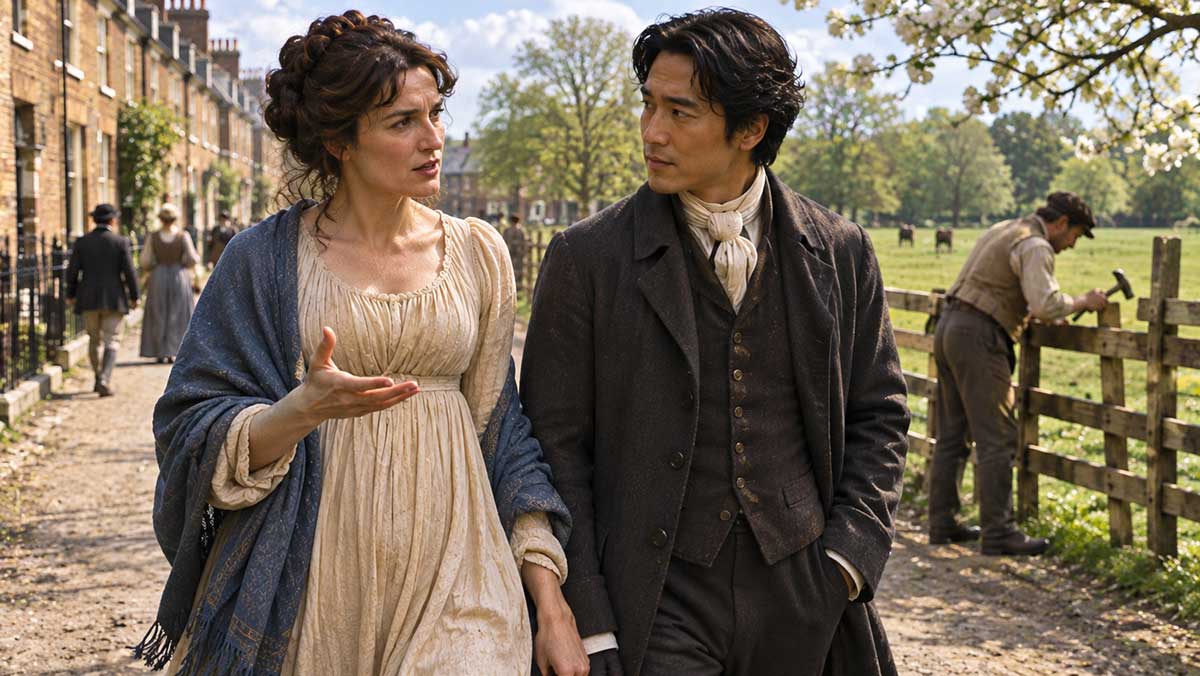
We continued along the road beyond The Polygon. The houses gradually gave way to stretches of open ground, where the spring grass moved gently in the afternoon breeze.
Mary walked at an unhurried pace, occasionally acknowledging a passing acquaintance.
Nick Sasaki
You published your response to Edmund Burke in 1790. At that time, the French Revolution still represented considerable hope for people who believed society could be organized more justly.
Seven years have passed. Much has happened that neither of you could have anticipated in its entirety.
Mary Wollstonecraft
Indeed. Though I suspect Mr. Burke would claim a greater degree of foresight than he was entitled to possess.
Nick Sasaki
You don't think he deserves some credit?
Mary Wollstonecraft
For recognizing that human beings are capable of violence? Certainly. Though the history of Europe had furnished us with abundant evidence of that proposition long before the French Revolution.
She glanced at me with a slightly mischievous expression.
But I suspect you intend to defend something more substantial.
Question 1: What disturbed you most about Edmund Burke's defense of inherited institutions and social privilege?
Mary Wollstonecraft
His sentiments were frequently admirable. It was their distribution that offended me.
He could describe the humiliation of a queen with such eloquence that his readers were almost persuaded they had personally witnessed her suffering.
Yet what of the woman who had spent her existence performing exhausting labour to maintain children she could scarcely feed?
Her misfortunes rarely received comparable literary attention.
Nick Sasaki
Perhaps Burke believed that the humiliation of the monarchy represented something larger than the suffering of one individual. He saw the destruction of an institution that had given society continuity.
Mary Wollstonecraft
Then he ought to have defended the institution upon its merits.
The beauty of a queen establishes remarkably little concerning the justice of a government.
I have no objection to compassion for Marie Antoinette. I object to a moral sensibility that becomes considerably more delicate upon entering a palace.
Nick Sasaki
Do you believe inherited institutions possess no value?
Mary Wollstonecraft
I would examine what they accomplish.
A custom may contain the accumulated wisdom of several generations. It may equally contain the accumulated prejudices of those generations.
Its age does not inform me which of these I have encountered.
Nick Sasaki
But isn't there some danger in requiring every generation to justify everything it has inherited? Society might become permanently unstable.
Mary Wollstonecraft
I do not propose that a man dismantle his house each morning to establish whether the architecture remains satisfactory.
But if the roof admits rain and his children are continually ill, I would consider it foolish to preserve the defect out of reverence for his grandfather.
She smiled.
We may respect what our ancestors accomplished without undertaking to preserve everything they failed to accomplish.
Nick Sasaki
What troubled you most about inherited privilege itself?
Mary Wollstonecraft
The injury it occasions to the character of those who possess it.
Consider a young gentleman who has been assured from infancy that his birth entitles him to the deference of other people.
What inducement has he to become worthy of their respect?
He may acquire excellent manners, considerable learning, and generous sentiments. But society has already granted him distinctions that ought to have depended upon his conduct.
The poor man must continually demonstrate his usefulness. The rich man may sometimes regard his usefulness as a matter of personal inclination.
Such arrangements are injurious to both.
Question 2: After witnessing revolutionary France, did you discover weaknesses in the political ideals you had previously defended?
We passed a man repairing a wooden fence. Mary waited until we were beyond the sound of his hammer before answering.
Mary Wollstonecraft
I arrived in France near the close of 1792. The circumstances were already considerably different from those that had inspired my earlier writing.
I had hoped to observe the establishment of institutions more consistent with justice.
Instead, I encountered a society increasingly afflicted by suspicion, political hostility, and fear.
People who had once spoken of liberty found themselves obliged to exercise great caution in their conversation.
Nick Sasaki
Then perhaps Burke recognized something the revolutionaries underestimated.
An imperfect institution may preserve valuable forms of social cooperation. Destroying it without knowing what will replace it can expose ordinary people to greater suffering.
Mary Wollstonecraft
And preserving an unjust institution may condemn ordinary people to suffering indefinitely.
Nick Sasaki
I agree. But that doesn't resolve the objection.
Suppose people overthrow a government that treats them unjustly. The government that replaces it becomes more oppressive. Families suffer, innocent people are imprisoned, and public disagreement becomes dangerous.
Can the people who encouraged the revolution simply say that their intentions were admirable?
Mary Wollstonecraft
No.
Nick Sasaki
Then what responsibility do they bear?
Mary slowed her pace. For a moment, she appeared more interested in the question than in defending her previous position.
Mary Wollstonecraft
We must distinguish several things.
There are those who recognize the injustice of existing institutions. There are those who undertake to alter them. And there are those who commit particular acts of cruelty in the course of that alteration.
These responsibilities are connected, but they are not identical.
Nick Sasaki
Yet someone advocating radical change should consider the possible consequences of that change.
Mary Wollstonecraft
Certainly.
I would reproach a physician who administered a dangerous remedy without examining its probable effects.
But I would equally reproach him for permitting a disease to progress merely from apprehension concerning the remedy.
Nick Sasaki
What if the physician doesn't possess a satisfactory remedy?
Mary Wollstonecraft
Then he finds himself in circumstances considerably less agreeable than those described in political pamphlets.
She gave a brief, rueful smile.
You are asking me whether the desire for justice can excuse insufficient judgment in the means employed to obtain it.
It cannot.
Nick Sasaki
That's precisely my concern.
Mary Wollstonecraft
Yet I cannot accept Mr. Burke's account of the matter in its entirety.
The French people did not acquire their grievances in 1789. Their ignorance, resentment, poverty, and habits of submission had been cultivated through generations of government.
One cannot examine the violence of a revolution without examining the society from which it arose.
Nick Sasaki
But explaining the origins of violence isn't the same as justifying it.
Mary Wollstonecraft
Nor do I intend it to be.
A man who has suffered injustice may himself become unjust. His previous suffering does not render his subsequent cruelty virtuous.
I would apply that judgment to a revolutionary with precisely the same severity that I would apply it to a monarch.
We reached a quieter stretch of the road. Mary stopped and looked across the open ground.
Mary Wollstonecraft
I confess that the difficulty of establishing just institutions has occupied my thoughts considerably more since my residence in France.
It is comparatively easy to demonstrate that a particular arrangement is unreasonable.
It is a far greater undertaking to establish another arrangement among people whose habits have been formed under the former one.
Nick Sasaki
Would you have written your response to Burke differently if you had known what would happen?
Mary Wollstonecraft
In certain respects, I suspect I would.
I might have devoted greater attention to the difficulties of political transformation.
But I would not have abandoned my objections to hereditary privilege.
The misconduct of those who oppose an injustice does not establish the justice of what they oppose.
Question 3: How can people resist unjust institutions without becoming unjust themselves?
Nick Sasaki
Political division remains a serious problem in my century.
People sometimes defend conduct from their own political supporters that they would immediately condemn in their opponents.
They seem to possess two different moral standards.
Mary Wollstonecraft
Only two? Your century may have accomplished some improvement.
She laughed, and we resumed walking.
Nick Sasaki
What makes that behavior so difficult to overcome?
Mary Wollstonecraft
There is considerable comfort in belonging to a party.
A man receives the approval of his companions, discovers ready explanations for public events, and is relieved of the inconvenience of examining every question independently.
But he may gradually become more concerned with the success of his party than with the principles for which he originally joined it.
Nick Sasaki
Political movements need solidarity, though. If everyone continually questions every decision, collective action becomes difficult.
Mary Wollstonecraft
Certainly. But agreement upon an object does not require agreement upon every means proposed for obtaining it.
Suppose several people undertake to relieve the suffering of a particular community.
One of them discovers that their arrangements are injuring the very people they intended to assist.
Would you regard his objection as an act of disloyalty?
Nick Sasaki
I would hope the others would listen to him.
Mary Wollstonecraft
Then their attachment to their original purpose must exceed their attachment to their own decisions.
That is a distinction political societies frequently neglect.
Nick Sasaki
How would you recognize a movement that had begun abandoning its original principles?
Mary Wollstonecraft
Observe its treatment of those who disagree with it.
Does it attempt to persuade them? Does it examine their objections? Or does it concern itself chiefly with discovering reasons why their objections need not be heard?
I would become particularly apprehensive when people begin to regard compassion for an opponent as evidence of deficient loyalty.
Nick Sasaki
Some would argue that compassion for an opponent weakens resistance to injustice.
Mary Wollstonecraft
I see no necessity for it to do so.
I may condemn a man's conduct without wishing misery upon his children. I may oppose his opinions without denying that he possesses affections, fears, and responsibilities resembling my own.
Indeed, I would consider my judgment considerably less trustworthy if I could preserve it only by refusing to acknowledge his humanity.
Nick Sasaki
Then what should people seeking political reform examine within themselves?
Mary Wollstonecraft
Whether they would willingly submit to the same principles they recommend for the government of others.
A man who desires liberty of expression for himself ought to consider what liberty he would grant a person whose opinions offend him.
A man who objects to arbitrary authority ought to examine his conduct when circumstances place others under his direction.
And those who demand justice from their opponents must take particular care that their own companions do not receive exemption from it.
Nick Sasaki
That's a difficult standard.
Mary Wollstonecraft
Justice would be a very convenient virtue if its practice were required exclusively of other people.
Closing
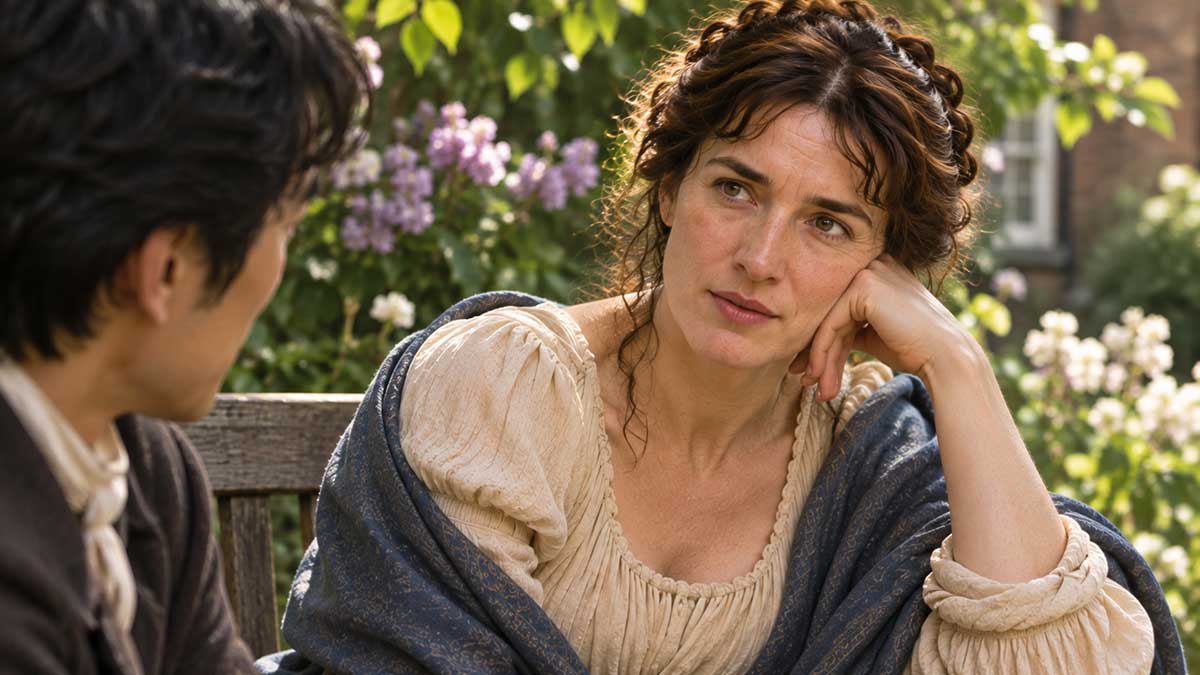
We had been walking for some time when Mary suggested that we rest. Near the residence was a quiet garden where a wooden seat stood beneath the fresh leaves of a tree.
She settled upon the bench and adjusted her shawl.
Nick Sasaki
We've spent much of the afternoon discussing authority within families, schools, and governments.
Yet I wonder whether there is another form of dependence that can be considerably more difficult to recognize.
Mary Wollstonecraft
Which is that?
Nick Sasaki
The dependence we sometimes accept willingly when we love another person.
We might recognize injustice in a political institution and oppose it without hesitation. But when our happiness becomes closely connected with someone else's affection, our judgment can become much less certain.
Mary looked across the garden. A bird descended briefly onto the grass before disappearing into the branches.
Mary Wollstonecraft
You have selected a subject upon which my qualifications are somewhat different from those I possess as a political writer.
Nick Sasaki
Would you mind discussing it?
Mary Wollstonecraft
No.
Though I suspect you will find that experience has furnished me with rather more questions than answers.
Topic 4: Can You Love Someone Without Losing Yourself?
Opening
It was approaching half past three. The garden offered a welcome retreat from the road, and the branches above us moved gently in the spring breeze.
Mary removed her shawl and folded it beside her on the wooden bench.
Our discussion of political liberty had been spirited, but the question before us now required a different kind of conversation.
Nick Sasaki
You've written extensively about independence. Yet there was a period in your life when your happiness became deeply connected with another person's affection.
I wonder whether that experience changed your conception of independence.
Mary Wollstonecraft
You are referring to Mr. Imlay.
Nick Sasaki
Yes. But I wouldn't wish to intrude upon anything you would prefer to keep private.
Mary Wollstonecraft
I appreciate your consideration.
I have made sufficient mistakes in my life to furnish material for several books. I see little advantage in pretending otherwise.
She smiled faintly.
Though I would prefer that we examine what may be learned from them rather than merely satisfy the curiosity of strangers.
Question 1: Did your relationship with Gilbert Imlay reveal anything about human affection that your earlier philosophical writings had not prepared you for?
Mary Wollstonecraft
When I became acquainted with Mr. Imlay in France, I had spent much of my adult existence attempting to establish myself through my own exertions.
There was something exceedingly agreeable in discovering a person with whom I believed I might share the ordinary pleasures of life.
Conversation, affection, domestic happiness. These were things I desired quite sincerely.
I had no wish to spend my entire existence disputing with gentlemen through the medium of printed pamphlets.
Nick Sasaki
Did you find it difficult to reconcile those desires with your commitment to independence?
Mary Wollstonecraft
Not initially.
I saw no necessary contradiction between affection and independence. Indeed, I believed that affection freely given possessed greater value than affection demanded through legal or social obligation.
The difficulty arose when our expectations of the relationship proved increasingly different.
Nick Sasaki
You had a daughter together.
Mary Wollstonecraft
Yes. And whatever judgment I may entertain concerning other circumstances of that period, I cannot regard Fanny's existence as a misfortune.
Her answer came without hesitation.
She has brought me pleasures for which I am exceedingly grateful.
Nick Sasaki
What was most difficult when the relationship began to deteriorate?
Mary Wollstonecraft
Uncertainty.
There is considerable suffering in discovering that a person no longer returns one's affection. But there is another kind of suffering in continually receiving sufficient encouragement to prevent oneself from accepting that discovery.
A letter arrives. A promise is made. An explanation is offered.
One begins arranging one's happiness around possibilities that may never be realized.
Nick Sasaki
Did you recognize what was happening at the time?
Mary Wollstonecraft
At intervals.
And at other intervals, I preferred an agreeable expectation to a disagreeable conclusion.
I cannot claim that my education rendered me incapable of such folly.
Nick Sasaki
I wonder whether you were particularly hard on yourself. You had become known for defending women's independence, yet you were experiencing the same emotional difficulties that many other people experience.
Mary Wollstonecraft
There was certainly something humiliating in discovering how little assistance my own arguments occasionally afforded me.
But I would object to the conclusion that my suffering demonstrated the absurdity of those arguments.
A physician may become ill without establishing the uselessness of medicine.
Nick Sasaki
Knowing what is happening doesn't necessarily give us the emotional ability to respond immediately.
Mary Wollstonecraft
No. And I have become somewhat less impatient with people whose conduct fails to correspond with their convictions.
I would still wish them to examine their conduct.
But I know something of the distance that may exist between recognizing what ought to be done and possessing sufficient resolution to do it.
She looked down at her hands.
There were periods when my distress became exceedingly serious. I will not pretend that I conducted myself wisely throughout them.
Yet I would rather not make those circumstances the principal subject of my history.
Nick Sasaki
Of course.
Mary Wollstonecraft
A woman may suffer disappointment in affection and still possess other faculties worthy of examination.
I should be exceedingly sorry if everything I have written were someday read merely as a commentary upon the conduct of one gentleman.
Question 2: Is complete emotional independence desirable if loving another person necessarily makes us vulnerable?
Nick Sasaki
There's something about independence that troubles me.
If someone I love suffers, I suffer too. Their absence may cause me considerable pain, and their decisions can change the circumstances of my life.
I'm not certain that complete emotional independence is compatible with love.
Mary Wollstonecraft
Nor am I certain that I would desire such independence.
Nick Sasaki
Then perhaps dependence itself isn't necessarily the problem.
Mary Wollstonecraft
We must take care concerning what we mean by dependence.
I may depend upon a friend's assistance during an illness without surrendering my judgment to that friend.
I may derive considerable happiness from another person's society without granting that person authority over my conscience.
Nick Sasaki
But emotional attachment is more difficult than that.
Suppose two people have shared twenty years together. One decides to leave. The other may lose an enormous part of the happiness they previously experienced.
No amount of independent judgment can prevent that loss.
Mary Wollstonecraft
I would scarcely recommend indifference as a remedy.
Nick Sasaki
Then the more deeply we love someone, the more vulnerable we may become.
Mary considered this for several moments.
Mary Wollstonecraft
Yes. I believe you are right in that respect.
But I would distinguish the suffering occasioned by the loss of affection from the degradation occasioned by attempting to purchase its continuance through submission.
Nick Sasaki
Is that distinction always clear to the person experiencing it?
Mary Wollstonecraft
Regrettably, no.
One may persuade oneself that a concession is an expression of generosity when it proceeds chiefly from apprehension.
One may excuse conduct in a beloved person that one would condemn without hesitation in a stranger.
Affection does not invariably improve our judgment.
Nick Sasaki
Yet sometimes love requires concessions. If two people refuse to alter their preferences for each other, their relationship may become intolerable.
Mary Wollstonecraft
Certainly. I would find a person who never accommodated another's wishes exceedingly disagreeable.
But consider two circumstances.
In the first, I abandon an afternoon's occupation to attend to a friend who requires assistance.
In the second, I abandon an occupation I value permanently, fearing that my friend will withdraw his affection if I continue it.
The outward conduct may possess some resemblance. The circumstances under which I undertake it are considerably different.
Nick Sasaki
What if the person making the sacrifice sincerely believes that preserving the relationship matters more?
Mary Wollstonecraft
Then I would hesitate to condemn her decision without examining her circumstances.
I have no wish to become the legislator of every woman's affections.
She leaned back against the bench.
You have raised a difficulty that admits of no convenient rule.
Generosity and fear may operate together. A person may scarcely know which sentiment has governed a particular decision.
Nick Sasaki
How would you begin examining it?
Mary Wollstonecraft
I might ask whether the affection I receive permits me to speak honestly.
Can I express an opinion that displeases the person I love? Can I pursue an occupation he finds uninteresting? Can I object to conduct that injures me without being continually threatened with the withdrawal of his affection?
These questions would concern me considerably more than the number of agreeable sentiments expressed between us.
Nick Sasaki
And if the answers were unfavorable?
Mary Wollstonecraft
I would wish to possess sufficient courage to examine the relationship as it exists rather than as I desire it to exist.
I cannot promise that such an examination would immediately relieve my suffering.
Nick Sasaki
Perhaps there is no way to love deeply without accepting the possibility of grief.
Mary Wollstonecraft
I suspect there is not.
For a moment, we listened to the birds in the garden.
Nor would I willingly exchange every affection I have experienced for the assurance that I would never suffer disappointment again.
Question 3: What did your travels through Scandinavia allow you to discover about yourself and the kind of life you wished to live?
Nick Sasaki
In 1795, during that difficult period, you traveled through Sweden, Norway, and Denmark with Fanny and her attendant.
What was it like undertaking such an expedition?
Mary Wollstonecraft
It was considerably less romantic than some readers of my letters might suppose.
I had business to transact on Mr. Imlay's behalf. There were arrangements to make, people to consult, unfamiliar roads to travel, and a young child whose comfort required attention.
The inconveniences of travel do not disappear merely on account of the beauty of the surrounding country.
Nick Sasaki
Yet your published letters contain some extraordinary descriptions of nature.
Mary Wollstonecraft
The northern countries afforded me much pleasure in that respect.
The rocks, forests, waterfalls, and immense stretches of water frequently occupied my attention.
I found myself reflecting upon the extraordinary disproportion between the duration of natural things and the brief existence of human beings.
Such reflections did not always make me cheerful.
But they gave my thoughts other objects.
Nick Sasaki
Were you able to forget your personal difficulties?
Mary Wollstonecraft
Not altogether.
I would distrust any account of my travels that represented them as a convenient cure for unhappiness.
A beautiful prospect may occupy one's attention for an hour. An unwelcome recollection may return the moment one enters an inn.
Yet I remained interested in what I encountered.
I observed the manners of people whose circumstances differed considerably from those of the English. I considered their occupations, domestic arrangements, commerce, and prospects of improvement.
There was much to investigate.
Nick Sasaki
Your letters contain some particularly interesting criticisms of commerce. What concerned you about it?
Mary Wollstonecraft
Commerce may provide conveniences, encourage industry, and introduce people to countries with which they were previously unacquainted.
But I became interested in the character of a society in which the acquisition of wealth occupied an increasingly large portion of human attention.
I encountered circumstances that made me question whether commercial prosperity necessarily produced greater happiness.
Nick Sasaki
What did you think was being overlooked?
Mary Wollstonecraft
The uses to which prosperity might be applied.
A man devotes considerable ingenuity to increasing his fortune. Yet he may devote remarkably little attention to discovering what would make his existence agreeable once that fortune has been acquired.
I would wish commerce to provide people with greater opportunities for intellectual cultivation, domestic comfort, and the enjoyment of nature.
I would find it unfortunate if the pursuit of wealth deprived them of the very leisure in which those pleasures might be experienced.
Nick Sasaki
That seems particularly relevant to my century.
People sometimes spend decades accumulating enough money to enjoy life, only to discover that they've acquired very little experience of enjoying it.
Mary Wollstonecraft
Then I hope your century has produced some occupations more satisfactory than the perpetual preparation for happiness.
She smiled.
Nick Sasaki
Looking back, are you pleased that you undertook those travels?
Mary Wollstonecraft
Very much so.
The circumstances that occasioned them were not entirely agreeable. Yet the countries I visited were worthy of examination independently of those circumstances.
I would not wish my readers to overlook Norway merely on account of Mr. Imlay.
We both laughed.
Closing
Mary gathered her shawl and rose from the bench. The afternoon remained pleasantly mild, and sunlight still reached the upper windows of the nearby houses.
Nick Sasaki
You've recently married William Godwin, a man who has expressed his own objections to conventional marriage.
I'm curious about what happens when two people who have written so extensively about individual liberty attempt to establish a household together.
Mary Wollstonecraft
You may discover that philosophers are occasionally obliged to discuss matters upon which their published works afford remarkably little assistance.
Nick Sasaki
Such as?
Mary Wollstonecraft
The hour at which dinner ought to be served.
She laughed as we began walking back to the house.
But William and I are attempting an arrangement that permits us to continue our respective occupations without neglecting our affection for one another.
Whether we possess sufficient wisdom to accomplish it remains a question upon which experience will provide better evidence than speculation.
Nick Sasaki
I'd like to hear more about that.
Mary Wollstonecraft
Come inside, then. I suspect we have sufficient time for another pot of tea.
We approached No. 29, The Polygon, where the conversation would turn from the difficulties of love to the practical responsibilities of sharing a life with another person.
Topic 5: What Would a Truly Equal Society Look Like?
Opening
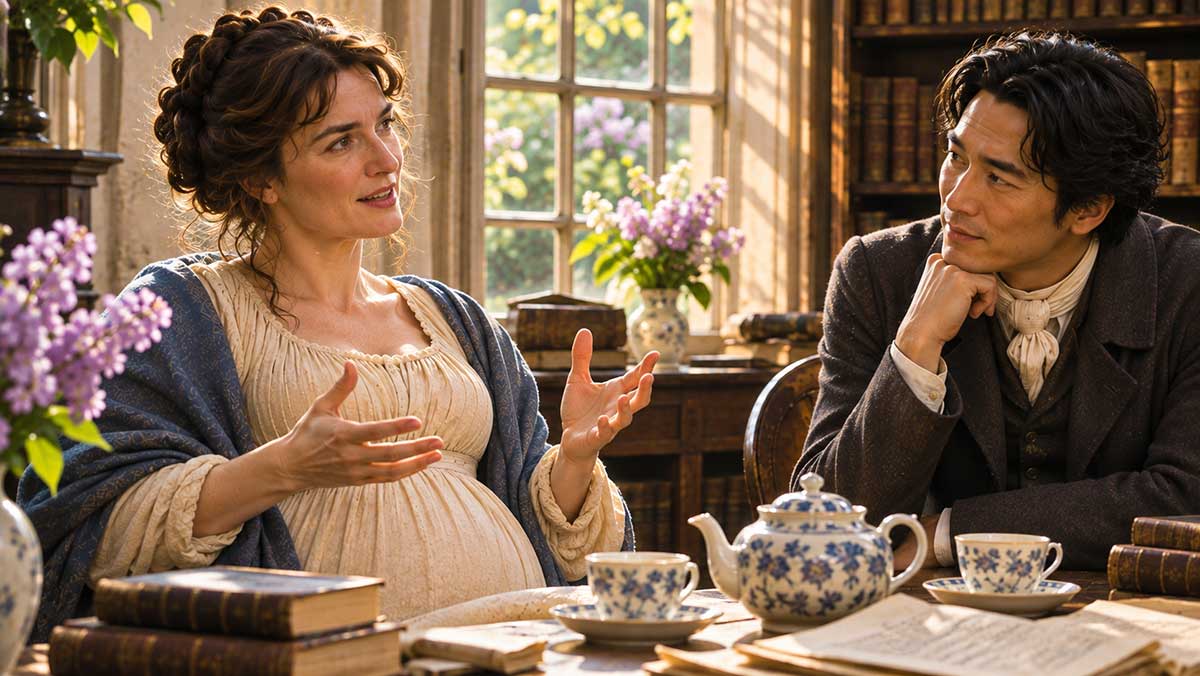
It was shortly after four fifteen when we returned to No. 29, The Polygon. The afternoon sunlight had moved across the sitting room, illuminating a portion of Mary's writing table that had previously remained in shadow.
She placed her shawl upon a chair and arranged for another pot of tea.
Mary Wollstonecraft
William will probably remain occupied with his writing for another hour or two. We have discovered that domestic affection need not require uninterrupted conversation.
Nick Sasaki
You maintain separate places in which to work?
Mary Wollstonecraft
Yes. His study is sufficiently near that we may enjoy one another's company without continually interrupting one another's occupations.
There are occasions when I have something of considerable importance to communicate to him.
There are other occasions when I merely wish to communicate something.
I am attempting to become more proficient at distinguishing between the two.
She laughed and invited me to sit.
Question 1: You and William Godwin both questioned conventional marriage. What persuaded you to marry, and what kind of marriage are you attempting to create?
Nick Sasaki
Some of your readers might find your decision to marry rather surprising, particularly given William's published criticisms of marriage.
Mary Wollstonecraft
Some of our acquaintances have found it surprising enough.
A philosopher may express an opinion concerning an institution and subsequently discover that living within society requires decisions more complicated than the opinion itself.
Nick Sasaki
Did marriage represent a compromise with your principles?
Mary Wollstonecraft
In certain respects, it did.
I am expecting another child. The circumstances under which children enter society may considerably influence the treatment they receive.
William and I might entertain particular opinions concerning marriage, but society does not undertake to alter its customs merely to accommodate our opinions.
Nick Sasaki
Then your decision involved considerations beyond your personal relationship.
Mary Wollstonecraft
Naturally.
It would be rather selfish to demand that a child endure every inconvenience arising from its parents' philosophical convictions.
Yet our marriage does not establish that I approve of every law concerning married women.
Nick Sasaki
Which of those laws troubles you most?
Mary Wollstonecraft
Consider the circumstances of a woman who possesses property or earns money through her own exertions.
Upon marriage, the law may deprive her of much of the authority she previously exercised over her affairs.
She enters an institution intended to unite two people, yet their legal circumstances become remarkably unequal.
I would wish affection to unite them without the law rendering one subordinate to the other.
Nick Sasaki
Do you believe your arrangement with William offers a practical example of a different kind of marriage?
Mary Wollstonecraft
I hope it may.
But you must allow us considerably more than two months before presenting our household as a model for humanity.
She smiled.
William possesses habits that occasionally inconvenience me. I have no doubt that he could furnish an equally extensive account of mine.
Nick Sasaki
Does it help that you share many philosophical interests?
Mary Wollstonecraft
It provides us with subjects upon which to disagree intelligently.
There is considerable pleasure in conversing with a person who regards one's opinions as worthy of examination.
I would find it much less agreeable if William admired everything I wrote merely from affection for me.
Nick Sasaki
You would prefer criticism?
Mary Wollstonecraft
When it is deserved.
I make no promise concerning the cheerfulness with which I receive it.
We both laughed.
But I would wish him to regard my literary occupation as something possessing value independently of our marriage.
And I owe him the same consideration.
Question 2: What would you say to people who believe that marriage, parenthood, and family responsibilities necessarily conflict with personal freedom?
Nick Sasaki
There's a difficulty I keep returning to.
When people marry or become parents, they accept responsibilities that may prevent them from doing many things they previously enjoyed.
A mother may abandon an opportunity she deeply desires to attend to her children. A father may undertake work he dislikes to provide for his family.
Can we really describe such circumstances as freedom?
Mary Wollstonecraft
We must enquire what we consider freedom to consist in.
If it consists exclusively in pursuing whatever inclination occupies us at a particular moment, then every serious occupation will diminish it.
The writing of a book requires me to neglect numerous agreeable diversions.
Yet I would scarcely describe myself as less free on account of having undertaken to write it.
Nick Sasaki
But children don't always require our attention at convenient moments.
Mary Wollstonecraft
I have observed that circumstance.
She glanced toward the adjoining room.
Their requirements possess a remarkable indifference to literary arrangements.
Nick Sasaki
And once someone becomes a parent, those responsibilities cannot simply be abandoned.
Mary Wollstonecraft
Nor ought they to be.
A child enters our society without having requested the circumstances of its existence. It possesses claims upon those who have occasioned that existence.
I would consider it a very imperfect conception of liberty that permitted adults to disregard such claims whenever they became inconvenient.
Nick Sasaki
What concerns me is that these responsibilities have historically fallen much more heavily upon women.
Mary Wollstonecraft
And that concerns me exceedingly.
Gentlemen frequently describe maternal affection as one of the most admirable sentiments of human nature. Yet some appear reluctant to undertake the inconveniences associated with paternal affection.
I would wish a father to possess a more substantial acquaintance with his children than an occasional inspection of their accomplishments.
Nick Sasaki
Would greater participation by fathers make society more equal?
Mary Wollstonecraft
It might make fathers more virtuous.
That would be a considerable improvement in itself.
A man who attends to the needs of his children acquires occasions for patience, tenderness, and the correction of his own selfishness.
Why should women possess exclusive opportunities for cultivating those qualities?
Nick Sasaki
In my century, many fathers take an active role in raising their children.
Mary Wollstonecraft
I am pleased to hear it.
But I hope they do not regard their participation as an extraordinary favour conferred upon their wives.
The children are theirs too.
She poured more tea into my cup.
There is another consideration. We frequently speak of domestic duties as though every household possessed sufficient resources to perform them comfortably.
What of the woman who must earn her bread and attend to several children? What of the family in which illness deprives one parent of the means of working?
Affection alone cannot remedy every difficulty arising from poverty.
Nick Sasaki
Then a more equal society would require changes outside the household too.
Mary Wollstonecraft
Certainly.
Women must possess respectable means of maintaining themselves. Children must receive instruction that does not depend entirely upon the wealth of their parents.
And we ought to examine laws and customs that leave people unnecessarily exposed to misery.
Benevolence is an admirable disposition, but I would prefer arrangements that occasion less suffering to begin with.
Question 3: When you think about the society in which your children might someday live, what changes would you most hope to see?
Nick Sasaki
There are several developments in my century that I think you would be pleased to discover.
Women have become physicians, scientists, university professors, judges, novelists, and leaders of nations.
Many universities educate women and men together. In numerous countries, women can vote, own property independently, and enter professions that were once almost exclusively occupied by men.
Mary Wollstonecraft
Women practise medicine?
Nick Sasaki
Millions of women work in medicine throughout the world.
Mary Wollstonecraft
That affords me particular satisfaction.
I have long considered it absurd that women should be discouraged from acquiring medical knowledge when they are so frequently entrusted with the care of the sick.
And women participate in government?
Nick Sasaki
Yes. Some have become prime ministers and presidents.
Mary Wollstonecraft
Have they proved more just than the gentlemen who preceded them?
Nick Sasaki
Some have been admirable leaders. Others have made serious mistakes.
Mary Wollstonecraft
Then they appear to have demonstrated their membership in the human species.
She laughed heartily.
I never supposed that admitting women to public occupations would immediately produce a society composed of saints.
Nick Sasaki
What would you consider a greater achievement than women entering those professions?
Mary Wollstonecraft
That their entrance should cease to occasion astonishment.
I would wish a woman who possesses medical abilities to be educated in medicine without being obliged to establish the intellectual capacities of her entire sex before attending to her first patient.
Let her be judged upon her conduct and abilities, as an individual.
Nick Sasaki
And what would you wish for your own children?
Mary considered the question.
Mary Wollstonecraft
I hope Fanny will acquire a sincere interest in something beyond the arrangements of her own happiness.
I wish her to experience the pleasure of discovering things, of assisting other people, and of employing abilities that become more useful through cultivation.
I would be pleased if she became accomplished in some occupation.
But I would be more concerned that she became a good human being.
Nick Sasaki
What about the child you're expecting?
Mary smiled and rested a hand upon her dress.
Mary Wollstonecraft
Much the same.
Though I confess that I have entertained numerous plans for the education of this little creature without yet possessing the slightest acquaintance with its disposition.
Perhaps it will prove entirely indifferent to the occupations I recommend.
Nick Sasaki
Would that disappoint you?
Mary Wollstonecraft
Possibly. Parents are not exempt from vanity.
But I would hope to discover what interests the child rather than continually lament that it does not resemble my expectations.
If it possesses a talent for literature, I would encourage it. If its interests lie elsewhere, I hope I possess sufficient sense to encourage those too.
I looked at the unfinished pages upon her writing table. Somewhere in the future lay another manuscript, written by a daughter she had yet to meet.
Nick Sasaki
I think your children would have much to learn from you.
Mary Wollstonecraft
And I expect I have much to learn from them.
Closing
The clock was approaching five. Outside, a carriage passed along the road, and the voices of children could be heard through the open window.
Nick Sasaki
Mary, we've spent this afternoon discussing education, political justice, friendship, love, and family.
Is there one thing you would ask the people of my century to examine in their own lives?
Mary Wollstonecraft
I would ask them to consider the people whose liberty depends in some measure upon their conduct.
Their children. Their husbands and wives. Those whom they employ. Those whose circumstances afford them fewer advantages.
We are frequently attentive to the restrictions other people impose upon us.
I suspect we might profit from examining the restrictions we impose upon them.
Nick Sasaki
That's a question worth asking ourselves.
Thank you for sharing so much of your afternoon with me, and for allowing me to challenge some of your convictions.
Mary Wollstonecraft
I would have found our conversation considerably less interesting had you agreed with everything I said.
She accompanied me to the doorway.
Mary Wollstonecraft
Now, if you will excuse me, I have several pages that require correction before William returns.
Nick Sasaki
Of course. I wish you happiness with your family and success with your writing.
Mary Wollstonecraft
Thank you, Mr. Sasaki.
There is still a great deal I wish to accomplish.
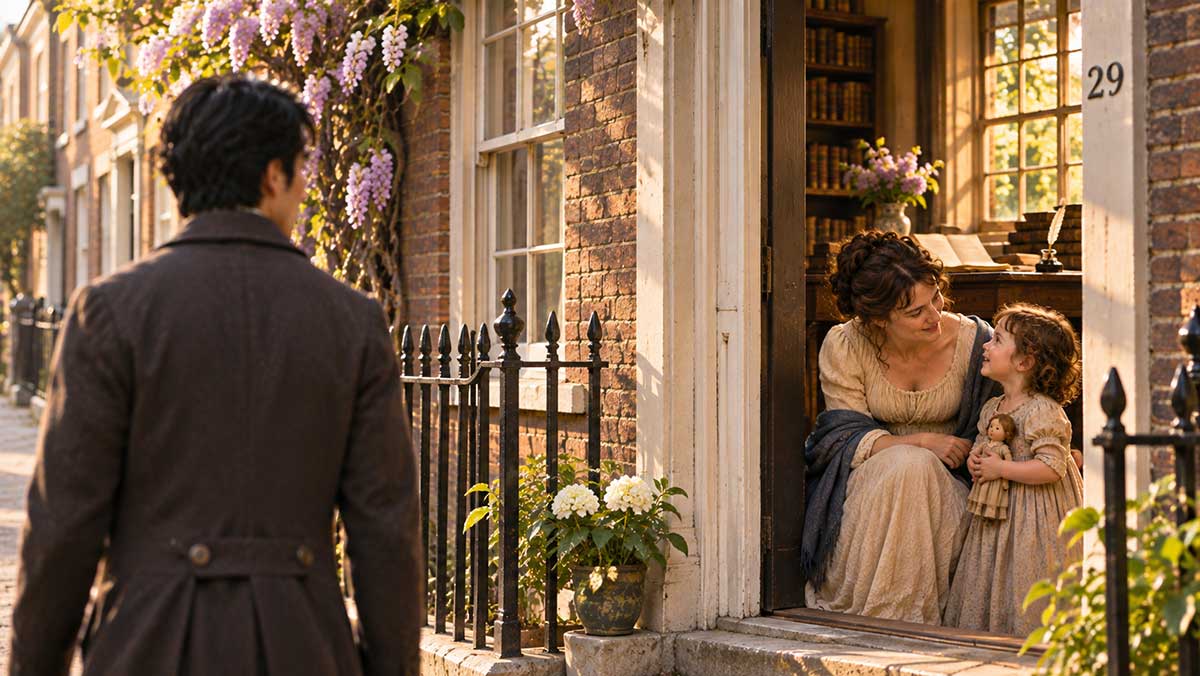
As I stepped outside, Fanny appeared in the passage. Mary bent to listen to something her daughter wished to tell her.
I continued along The Polygon beneath the lingering afternoon sunlight.
Behind me, a mother listened to her child, an unfinished manuscript awaited its author, and Mary Wollstonecraft had another evening of work ahead of her.
Final Thoughts
What stayed with me after this imaginary afternoon with Mary Wollstonecraft was her refusal to separate freedom from moral responsibility. She did not advocate a life without obligations, affection, or commitments. She questioned whether human beings could fulfill those responsibilities with dignity when they were denied the opportunity to exercise their own judgment.
Her criticism of education remains particularly relevant. We may no longer encounter many of the restrictions imposed upon women in eighteenth-century England, yet the desire for approval continues to influence our decisions. Social media, professional competition, and public expectations can encourage us to become more concerned with appearing admirable than with developing qualities worthy of admiration. Wollstonecraft's A Vindication of the Rights of Woman invites us to examine the difference.
Her political philosophy raises another uncomfortable question. Can we oppose injustice without becoming unjust ourselves? Her response to Edmund Burke in A Vindication of the Rights of Men challenged inherited privilege and selective compassion. Her experiences during the French Revolution remind us that admirable political aspirations do not automatically produce admirable conduct. The principles we defend must remain applicable to our own actions and those of our allies.
Perhaps the most personally meaningful part of our conversation was the discussion of love. Mary experienced profound emotional suffering, yet her life and writings invite us to distinguish vulnerability from submission. Loving another person may expose us to disappointment and grief. It need not require us to abandon our conscience, interests, or dignity. There is room for both affection and independent judgment within a meaningful relationship.
I was particularly moved by her hopes for the child she was expecting. That child would become Mary Shelley, the author of Frankenstein and an influential literary figure in her own right. Wollstonecraft could not have known what her daughter would accomplish. Her imagined hopes remind us that educating a child is less about determining their future than giving them the opportunity to discover it.
More than two centuries after Wollstonecraft's death, many of the opportunities she advocated have become available to women. Yet legal equality and educational access do not automatically create independent thinkers or compassionate citizens. Her philosophy asks something further of us: to examine our own prejudices, accept responsibility for our conduct, and recognize the human potential of people whose circumstances differ from ours.
Perhaps the most revealing measure of our commitment to freedom is how we treat those whose choices we can influence. Do we encourage our children to develop their own judgment, or expect them to fulfill our ambitions? Can we love someone without requiring their agreement? Can we defend our convictions without denying the humanity of those who oppose them? And what might change in our families and societies if we became as concerned with protecting the freedom of others as we are with protecting our own?
Fictional Conversation Disclaimer: The preceding conversation and its personal observations are fictional interpretations of Mary Wollstonecraft's life and philosophy. They are intended to encourage thoughtful reflection rather than represent her exact historical statements or establish undocumented personal beliefs.
Short Bios:
Mary Wollstonecraft (1759–1797) was an English philosopher, writer, educator, and early advocate for women's rights. Her influential work A Vindication of the Rights of Woman (1792) challenged unequal education and argued for women's intellectual, moral, and economic independence. Her writings examined political justice, marriage, religious morality, commerce, and human happiness. She was the wife of philosopher William Godwin and the mother of Mary Shelley, author of Frankenstein. Learn more about her life and philosophy through the Stanford Encyclopedia of Philosophy.
Nick Sasaki is the creator of ImaginaryTalks, a platform that brings historical figures, philosophers, authors, and contemporary thinkers together through fictional conversations. His work explores enduring human questions concerning personal growth, moral responsibility, relationships, peace, and the possibilities of a more compassionate society. Through imaginative storytelling, he connects ideas from different centuries and cultures with the challenges of contemporary life. Explore his work at ImaginaryTalks.com
Leave a Reply