
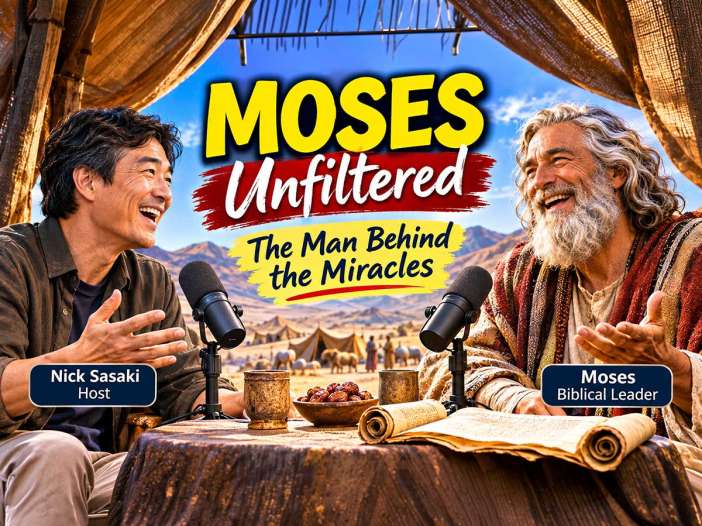
Introduction
Moses freed a nation, confronted Pharaoh, watched the sea open, and spent forty years leading the Israelites through the wilderness. Yet when the Promised Land was finally in sight, he wasn't allowed to enter.
How does a man devote nearly his entire life to a mission and then find himself standing outside its destination?
That question sits at the heart of this imaginary conversation.
We know Moses from the extraordinary events recorded in Exodus, Numbers, and Deuteronomy. We know far less about the man who lived through them: the baby hidden in a basket on the Nile, the prince raised in Pharaoh's household, the fugitive who spent forty years with sheep, and the reluctant old man who argued with a burning bush.
In this fictional interview, Nick Sasaki meets Moses over five evenings at a shepherd's fire, in an imagined place outside ordinary time that looks a great deal like Midian. Moses tells his own story, from the palace to the wilderness, from the golden calf to the rock at Kadesh, with more dry humor than most people expect from a prophet. Aaron's explanation of the golden calf comes up more than once.
Beneath the humor are questions that still matter. Why do people resist freedom when freedom requires uncertainty? Why do we repeat the mistakes we swore we'd never make again? Can a faithful man fail in one exhausted moment and still be faithful?
And what happens when the future you spent your life preparing belongs to someone else?
Disclaimer: This is a fictional interview inspired by the biblical narratives. The setting, conversations, humor, memories, and emotions attributed to Moses are creative interpretations, not historical records or claims of spiritual communication. Where the Bible is silent or interpreters disagree, the editorial notes say so.
Topic 1: Moses, You Grew Up in a Palace. How Did You End Up Talking to a Bush?
The first evening. A small fire burns in a hollow of rocks. Beyond it, a flock of sheep shifts in the dark. The place looks like the hills of Midian, though neither man could say exactly where or when they are. Nick Sasaki sets a small recorder on a flat stone between them. Moses, an old man with a shepherd's staff across his knees, studies it with mild suspicion.
Round 1: The Boy Who Belonged to Two Worlds
Nick Sasaki: Moses, I've been looking forward to this. Thanks for sitting down with me.
Moses: Thank you, Nick. Though I must admit, this is a rather unusual arrangement.
Nick Sasaki: The microphone?
Moses: Mostly the idea that people will hear us without being here.
Nick Sasaki: That's pretty much how podcasts work.
Moses: In my day, if you wanted people to hear something, you gathered them together.
Nick Sasaki: And apparently you were pretty good at gathering people.
Moses: Gathering them was one thing. Getting them to agree on where we were going was another.
Nick Sasaki: We'll get to that.
Moses: I suspected we would.
Nick Sasaki: I want to start before you could remember anything. What did they tell you about how you were born?
Moses: That I was born at the worst possible time to be a Hebrew boy. Pharaoh had ordered our sons thrown into the Nile. My mother hid me for three months. Then I got too loud to hide.
Nick Sasaki: Babies tend to do that.
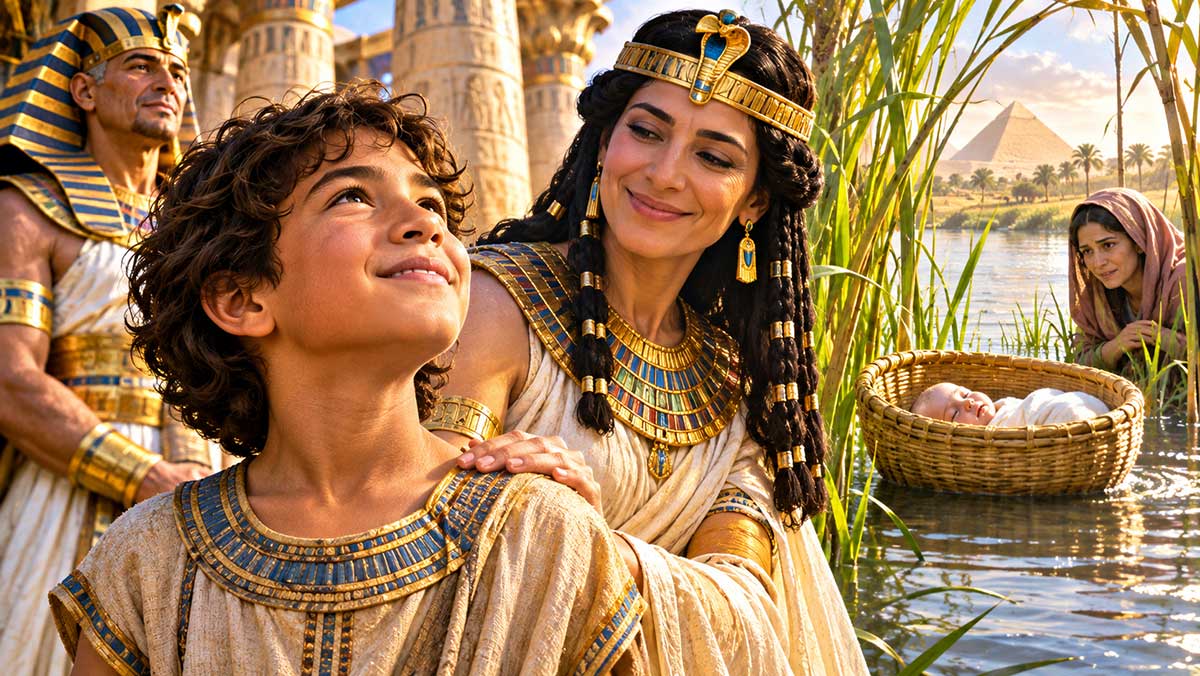
Moses: So I'm told. She made a basket out of papyrus, sealed it with tar and pitch, put me inside, and set it among the reeds at the edge of the river. My sister stood a little way off to see what would happen to me.
Nick Sasaki: I keep thinking about your mother in that moment. People usually tell it as the woman who put Moses in a basket, and then the story moves on. But she had no idea how it would end.
Moses: None.
Nick Sasaki: Was it courage or desperation?
Moses: Perhaps both. Those two things often meet when someone is trying to protect a child.
Nick Sasaki: Here's what gets me. People talk about faith as if it means being sure everything will work out. Your mother wasn't sure of anything. She just did the most loving thing she could and then let go of the basket.
Moses: You make letting go sound like the hard part.
Nick Sasaki: I think it usually is. Love that holds on is easy to understand. Love that lets go and can't control what happens next is harder.
Moses: She would have liked you. She would also have told you that she didn't feel brave. She felt she had no other choice.
Nick Sasaki: And Miriam was watching.
Moses: Miriam was always watching. When Pharaoh's daughter found the basket and felt sorry for the crying baby inside, my sister walked right up to a princess and asked whether she'd like a Hebrew woman to nurse him. Then she ran and fetched our mother.
Nick Sasaki: So your own mother got paid to raise you.
Moses: By Pharaoh's household. I've always thought that was one of God's better jokes.
Nick Sasaki: That's a lot of presence of mind for a young girl.
Moses: More than most adults would have managed. She was my older sister, Nick. She never let me forget it, either.
Nick Sasaki: Then you grew up in the palace. What was that like?
Moses: Comfortable. I won't pretend otherwise. Good food, good teachers, safety. People bowed when I passed.
Nick Sasaki: You're not going to apologize for it?
Moses: Why would I? The question isn't whether comfort is pleasant. It's what you're willing to overlook to keep it.
Nick Sasaki: And what did you overlook?
Moses: For a long time, the brickyards. You can live very close to suffering and not see it, if the walls are thick enough.
Nick Sasaki: Did you love the woman who raised you? Pharaoh's daughter?
Moses: She pulled me out of the river when her own father wanted boys like me drowned. She gave me my name. How could I not?
Nick Sasaki: That complicates things. An Egyptian saved your life while Egypt was enslaving your people.
Moses: That's what makes human conflicts so difficult. We speak of groups as though everyone in them were the same. My life was saved by an Egyptian princess and by Hebrew women who disobeyed Pharaoh. I belonged to both stories before I belonged to either.
Round 2: The Day Moses Lost Everything
Nick Sasaki: Then came the day everything changed.
Moses is quiet for a moment. He turns the staff slowly in his hands.
Moses: I was grown. I went out to see my people at their work. I'd known about the forced labor for years, but that day I watched it. I saw an Egyptian beating a Hebrew, one of my own kin.
Nick Sasaki: What did you do?
Moses: I looked this way and that way. When I saw no one, I struck the Egyptian down and hid him in the sand.
Nick Sasaki: You looked around first.
Moses: I've had a long time to think about that. A man who looks around first knows something is wrong with what he is about to do. I told myself it was justice. If it had been justice, I wouldn't have needed the sand.
Nick Sasaki: Was it anger? Did you think you were protecting him? Did you just lose control?
Moses: All of those, and none of them is a good enough answer. I saw something unbearable, and I acted like a man who had never once been told no.
Nick Sasaki: That's an honest way to put it.
Moses: It took me forty years to be able to put it that way.
Nick Sasaki: And the next day?
Moses: The next day I went out again, and two Hebrews were fighting each other. I asked the one in the wrong why he was hitting his neighbor. He looked at me and said, "Who made you a prince and a judge over us? Do you mean to kill me the way you killed the Egyptian?"
Nick Sasaki: Ouch.
Moses: That was when I knew it was known. And that was when I understood something worse. I had imagined myself as their deliverer. They saw a dangerous man from the palace with blood on his hands.
Nick Sasaki: Can I offer you my own view of that moment? You may not like it.
Moses: I've rarely liked the important ones.
Nick Sasaki: I believe God had a plan to free your people much sooner. You were raised in the palace, you cared about them, and you were ready to act. If they had trusted you and united with you that day, I think the whole course of history could have been shorter. When they rejected you, the opportunity was lost, and it took forty more years to come back around.
Moses considers this for a long moment.
Moses: You make it sound as if they failed me.
Nick Sasaki: Partly, yes.
Moses: Nick, my introduction to my people was a dead Egyptian in the sand. What exactly were they supposed to unite with? A prince with a temper who wouldn't stay to answer for what he'd done?
Nick Sasaki: Then you'd say the missed opportunity was yours.
Moses: I'd say before you ask why they failed to trust me, ask what I had done to earn that trust. If God was waiting, perhaps He wasn't waiting for them to become ready. Perhaps He was waiting for me.
Nick Sasaki: I can live with that. It doesn't change what I believe. It might change who I think was holding things up.
Moses: Then we're both holding a piece of it.
Nick Sasaki: Pharaoh heard about the killing?
Moses: He tried to have me killed. So I ran.
Nick Sasaki: Did you take anything with you?
Moses: Probably less than I wished I'd brought.
Nick Sasaki: Where did you go?
Moses: East, as far from Pharaoh's reach as I could get, to Midian. I sat down by a well because I didn't know where else to sit. Some shepherds came and drove off seven sisters who were trying to water their father's flock. And apparently I had learned nothing, because I stood up and drove off the shepherds.
Nick Sasaki: You did it again.
Moses: Yes. But that time nobody died, and the sheep got their water. The girls ran home and told their father an Egyptian had rescued them.
Nick Sasaki: An Egyptian.
Moses: In Egypt I was too Hebrew. In Midian I was too Egyptian. I had left the palace partly because I wanted to stand with my people. Then I arrived somewhere new, and everyone thought I was the enemy I'd just fled.
Nick Sasaki: That sounds lonely.
Moses: Their father, Jethro, didn't think so. He asked his daughters why they had left the man standing at the well, and told them to invite me to eat. I stayed for forty years. I married his daughter Zipporah. We named our first son Gershom, because I said, "I have been a stranger in a strange land."
Round 3: Forty Years of Sheep, Then a Burning Bush
The fire pops. A ewe wanders close, looks at Nick's recorder, and wanders away again.
Nick Sasaki: Forty years with sheep. Some people would call that wasted time.
Moses: Some people have never kept sheep.
Nick Sasaki: I'm not criticizing sheep.
Moses: Good. They're sensitive animals.
Nick Sasaki: Are they?
Moses: Some are. Others seem determined to prove they have no interest in your plans.
Nick Sasaki: That sounds like good preparation for leading people.
Moses: I didn't know it at the time. You learn patience with sheep, or you learn to hate them. You learn that the flock moves at the speed of the slowest lamb. You learn to find water before anyone is thirsty.
Nick Sasaki: Did you think about Egypt during those years?
Moses: At first, every day. Then less. You can't forget what you saw in the brickyards. But a man can stop looking back for a while, if there's enough in front of him. There were children growing, sheep lambing, quarrels with my father-in-law about grazing. Forty years can't be described with one emotion.
Nick Sasaki: We tend to treat the Midian years as a waiting room before the real story starts.
Moses: To me, they were the real story for forty years. I didn't know there was going to be another one.
Nick Sasaki: Then you were around eighty.
Moses: And I went after a stray up toward Horeb, the mountain of God. There was a bush on fire, and it wasn't burning up. I said to myself, "I'll go over and see this strange sight." Curiosity has always been one of my weaknesses.
Nick Sasaki: Or one of your strengths.
Moses: That depends on the day. A voice called my name twice out of the fire. It told me to take off my sandals, because the ground I was standing on was holy. Then it said, "I have seen the misery of my people in Egypt. I have heard them crying out. I know their sufferings."
Nick Sasaki: How did that feel?
Moses: Like something I'd buried in the sand for forty years being dug up again. God had heard the cries I had stopped listening for. And then He said, "So now, go. I am sending you to Pharaoh."
Nick Sasaki: The young Moses saw injustice and acted immediately. The old Moses got the clearest call imaginable and started asking questions.
Moses: I'd learned what happens when I act first.
Nick Sasaki: How many questions?
Moses: Several. First I said, "Who am I, that I should go to Pharaoh?" Then, "When they ask me your name, what do I tell them?" He told me: I AM WHO I AM. Then I said they wouldn't believe me. He turned my staff into a snake.
Nick Sasaki: This staff?
Moses glances down at it.
Moses: One very like it. Then I told Him I had never been a good speaker. I was slow of speech and slow of tongue.
Nick Sasaki: And when that didn't work?
Moses: I said, "Please, Lord. Send someone else."
Nick Sasaki: Moses, at what point does this stop being a conversation and become an attempt to decline the assignment?
Moses: About there.
Nick Sasaki: How did God take it?
Moses: Not well. But He didn't send someone else. He sent my brother Aaron with me, to speak when I couldn't.
Nick Sasaki: Your older brother.
Moses: My older brother, who was already on his way to meet me. That part of the arrangement I hadn't expected.
Nick Sasaki: Was it reassuring?
Moses: Mostly. Aaron could talk to anyone. That would prove to be both his greatest gift and, much later, a problem.
Nick Sasaki: And then you had to go home and tell your wife.
Moses: Yes.
Nick Sasaki: How do you explain that? You've built a life together. You have children. Then one day you come home and say God spoke to you from a burning bush, and you're moving the family back to the country where you're wanted for murder.
Moses: I asked Jethro first. I said I wanted to go back to my people in Egypt and see whether any of them were still alive. He said, "Go in peace."
Nick Sasaki: And Zipporah?
Moses: Some conversations between a husband and wife belong to them. She came. That tells you something about her.
Nick Sasaki: Fair enough. One more question about your mother. Do you think she lived to see what you became?
Moses: I don't know. I've wondered.
Nick Sasaki: That's what makes me sad. She saved you as a baby, then watched you become an Egyptian prince, then heard you'd killed a man and vanished. She may never have known how the story turned out.
Moses: She wasn't the only one. Miriam watched over me. Pharaoh's daughter pulled me out of the river. The Hebrew midwives refused Pharaoh's order to kill the boys. My life depended on women who did something brave before I was old enough to do anything at all. Most of them never saw what came of it.
Nick Sasaki: People do something loving and never find out how much it mattered.
Moses: Most of the time, I think. It doesn't make it matter less.
Nick Sasaki: So you went back to Egypt at eighty to face the most powerful man in the world.
Moses: With a staff, a brother, and no idea what I was doing. And Nick, I think you'll find that Pharaoh and I had very different ideas about how that meeting should end.
Topic 2: Moses vs. Pharaoh, The World's Most Stubborn Negotiation
The second evening. The same fire, the same hollow in the rocks. One of the sheep has settled close to Nick's recorder and appears to be guarding it.
Round 1: The Most Uncomfortable Homecoming in Egyptian History
Nick Sasaki: Last time, we left you walking back into Egypt after forty years away.
Moses: Still wondering what I'd agreed to.
Nick Sasaki: Most people who return to a place after forty years go to see old friends. You went to confront the ruler.
Moses: Aaron and I gathered the elders first. Aaron spoke, I showed them the signs, and they believed. They bowed down and worshiped when they heard God had seen their misery. That was the best day I would have for a long time.
Nick Sasaki: And then the palace.
Moses: The palace. I had grown up in those halls. I knew which corridors were cool in the afternoon. Now I walked in as an old shepherd and told the king of Egypt, "This is what the Lord, the God of Israel, says: Let my people go, so that they may hold a festival to me in the wilderness."
Nick Sasaki: What did he say?
Moses: "Who is the Lord, that I should obey him?"
Nick Sasaki: Not a promising start.
Moses: He didn't see a prophet. He saw two old Hebrews making an outrageous demand in the middle of his working day. And he did what powerful men do when someone asks for freedom. He made the work harder.
Nick Sasaki: The straw.
Moses: Until then, the Egyptians had supplied straw for the bricks. That same day he ordered that the Hebrews gather their own straw, and still make the same number of bricks. When they fell short, their foremen were beaten.
Nick Sasaki: So you arrive to begin their liberation, and their lives immediately get worse.
Moses: The foremen came straight to Aaron and me. They said, "May the Lord look on you and judge you! You've made us a stench to Pharaoh, and put a sword in his hand to kill us."
Nick Sasaki: What did you do?
Moses: I went to God and complained. I said, "Lord, why have you brought trouble on this people? Is this why you sent me? Ever since I went to Pharaoh, he has brought trouble on them, and you have not rescued your people at all."
Nick Sasaki: You said that to God?
Moses: I'd spent forty years talking to sheep. By then I was used to saying exactly what I thought.
Nick Sasaki: I'm a little relieved, honestly. People picture you as calm and certain from the bush onward.
Moses: People picture a great many things. God answered me. He said I would see what He would do to Pharaoh. I took that message back to the people, and they wouldn't listen, because their spirit was broken and their slavery was cruel.
Nick Sasaki: That's something I want to keep in mind for the rest of these conversations. It's easy to criticize people for doubting. It's different when you've been beaten every day of your life.
Moses: Keep it in mind. You'll need it when we reach the wilderness.
Round 2: Pharaoh Says No. Again.
Nick Sasaki: Then the signs. Aaron throws down his staff and it becomes a serpent.
Moses: And Pharaoh's magicians threw down theirs, and theirs became serpents too. Then Aaron's staff swallowed theirs. Pharaoh watched his own wise men lose, and he still said no.
Nick Sasaki: Then the plagues. I've always been curious about the frogs.
Moses: Of all the plagues, that's the one you want to discuss?
Nick Sasaki: Just for a minute. Frogs everywhere. Bedrooms, kitchens, ovens.
Moses: In the beds, Nick. In the kneading bowls. You'd sit down to eat and something would croak under your bread.
Nick Sasaki: And Pharaoh calls you in and begs you to ask God to take them away.
Moses: He did. So I told him he could have the honor of choosing when. I asked, "When shall I pray for the frogs to leave you?"
Nick Sasaki: And he says, "Tomorrow."
Moses: Tomorrow.
Nick Sasaki: Why tomorrow? If frogs were all over my house, I'd want them gone immediately.
Moses: Perhaps he had become attached to them.
Nick Sasaki: I doubt that.
Moses: Then I'm as puzzled as you are. My best guess is that a proud man would rather spend one more night with frogs than admit he needs help tonight.
Nick Sasaki: That's more true than I'd like.
Moses: And when the frogs died and the relief came, he hardened his heart again. That happened over and over. The plague would come. He would beg. I would pray. The plague would lift. And the moment he could breathe, he would change his mind.
Nick Sasaki: Here's what troubles me. Sometimes the story says Pharaoh hardened his own heart. Sometimes it says God hardened Pharaoh's heart. I don't believe God overrides a person's freedom. If He did, it wouldn't be fair to punish Pharaoh for what God made him do.
Moses: You believe that because you've thought about it at a distance. I stood in front of him ten times.
Nick Sasaki: And?
Moses: And I never once saw a puppet. I saw a man who wanted something more than he wanted his country to stop suffering. Whatever God was doing in that heart, Pharaoh was doing it too. I won't explain to you how both are true. I'm not sure I could. But I won't tell you he was helpless. He chose, and he kept choosing.
Nick Sasaki: So you'd say both.
Moses: I'd say a man can keep refusing until refusing is all that's left of him. Whether you call that God hardening him or him hardening himself may be two ways of describing the same terrible thing.
Nick Sasaki: I'm not fully satisfied with that.
Moses: Good. Neither am I. But I was there.
Nick Sasaki: People do it too, don't they? In smaller ways. A family argument, a feud, a war. There's a point where someone could stop, apologize, choose differently. And the longer they wait, the harder it gets.
Moses: There comes a point when admitting defeat feels worse than the disaster itself. Pharaoh reached it. His own officials told him, "Don't you realize Egypt is ruined?" And he still wouldn't let us go.
Nick Sasaki: When we read about the plagues, it's easy to picture just you and Pharaoh. But ordinary Egyptian families were caught in the middle.
Moses: I've never forgotten that. The hail fell on Egyptian farmers. The darkness fell on Egyptian children. And the last plague, the night of the firstborn, I won't make a speech about it. There was a loud wailing in Egypt, because there was not a house without someone dead. I heard that cry.
Nick Sasaki: Did you feel you'd defeated him?
Moses: No. I felt that a night of freedom had come wrapped in grief. Our children were alive and theirs were not. You don't walk out of a night like that celebrating, whatever songs come later.
Nick Sasaki: Liberation, surrounded by suffering.
Moses: That's the truth of it. Pharaoh sent for us in the night and said, "Go." The Egyptians urged us out of the country. We left so quickly the bread dough hadn't risen.
Nick Sasaki: What was it like? The departure itself?
Moses: Families gathering what they could carry. Children trying to keep up. Old people looking back at the only home they'd ever known, even if it had been a prison. And we carried the bones of Joseph with us, because centuries before, he had made our ancestors swear they would take him out of Egypt when God came for them.
Nick Sasaki: You kept a four-hundred-year-old promise in the middle of the night.
Moses: Some promises you carry out of a burning house.
Round 3: The Sea, the Fear, and the First Signs of Trouble
Nick Sasaki: Then Pharaoh changed his mind. Again.
Moses: The man was consistent in one respect. He sent his chariots after us, and they caught us camped by the sea. Water in front of us. Egypt's army behind.
Nick Sasaki: How did the people react?
Moses: They turned on me in a heartbeat. Someone shouted, "Were there no graves in Egypt, that you brought us out here to die in the desert?"
Nick Sasaki: No graves in Egypt? That's an incredible line.
Moses: I've always admired its precision. Egypt was famous for its graves.
Nick Sasaki: Did you tell them you were afraid too?
Moses: Sometimes honesty helps. But announcing every fearful thought to a panicked crowd is not particularly useful. I told them, "Do not be afraid. Stand firm and you will see the deliverance the Lord will bring you today. The Lord will fight for you. You need only to be still."
Nick Sasaki: Were you still?
Moses: Not inside. And God said to me, "Why are you crying out to me? Tell the people to move on." Then He told me to raise my staff and stretch my hand over the sea.
Nick Sasaki: What was that like?
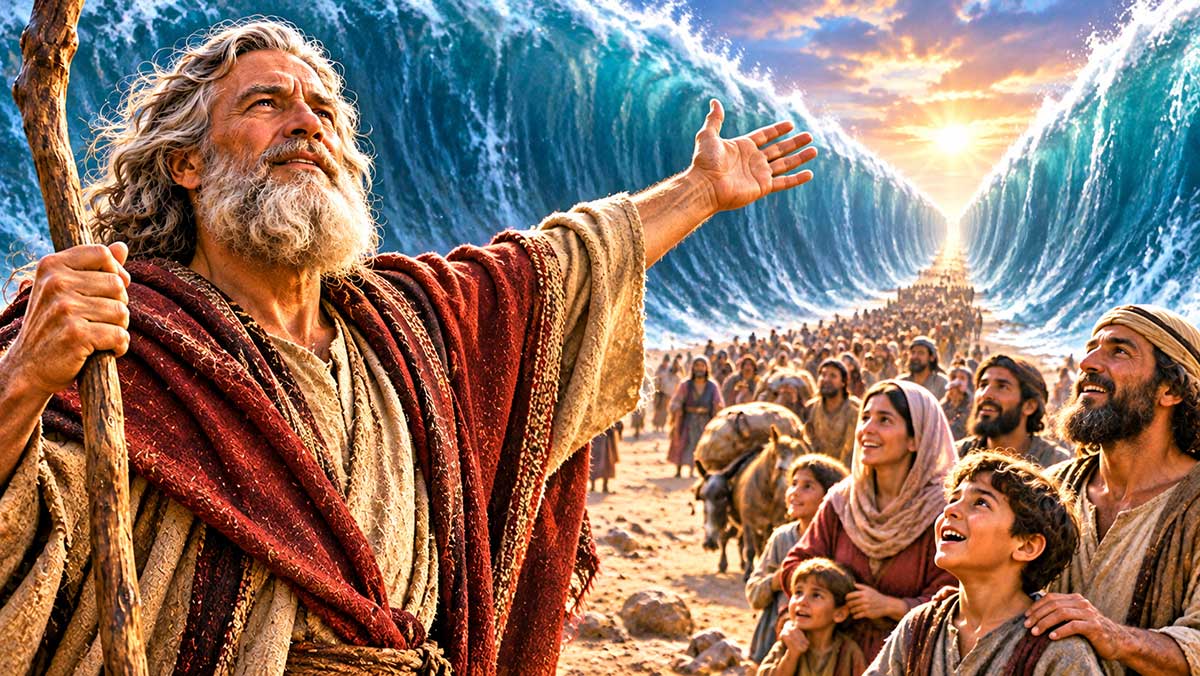
Moses: The wind blew all night, a strong east wind. By morning there was a path, with walls of water on either side. And a whole nation of frightened people, six hundred thousand men besides the women and children, had to decide whether to walk into it.
Nick Sasaki: Some of them must have hesitated.
Moses: I would have worried about the ones who didn't. We crossed. The chariots followed. And then the waters came back.
Nick Sasaki: I want to acknowledge something. The story celebrates Israel's deliverance, but those soldiers had families too.
Moses: They did. I won't pretend I grieved for them that morning the way I grieve for them now. That morning I was looking at people who had been slaves the day before, standing on the far shore alive. But time teaches you to see more of a story than you could bear to see while you were in it.
Nick Sasaki: And Miriam?
Moses smiles.
Moses: Miriam picked up a tambourine. All the women followed her, dancing, and she sang, "Sing to the Lord, for he is highly exalted. Horse and rider he has hurled into the sea." The girl who stood by the reeds and watched over a basket was now an old woman leading a nation in song.
Nick Sasaki: She'd come a long way from the riverbank.
Moses: We all had. And three days later, we couldn't find water, and the people were complaining again.
Nick Sasaki: Three days?
Moses: Three days. Nick, the sea opened on Tuesday, and by Friday they were asking who put me in charge.
Nick Sasaki: Moses, one last question for tonight.
Moses: Go ahead.
Nick Sasaki: Did you know, standing on that shore, how hard the next forty years would be?
Moses: If I'd known, I might have asked God for a bigger flock of sheep instead. No. I knew it would be difficult. Nobody could have guessed how difficult.
Topic 3: Forty Years in the Desert with the World's Toughest Tour Group
The third evening. A wind has come up, and Moses has moved the fire behind a larger rock. He has also, without comment, moved the recorder away from the sheep.
Round 1: Manna, Complaints, and the Problem with Free Food
Nick Sasaki: Moses, I was thinking about something after our last conversation. You spent forty years trying to get out of Egypt, and then another forty trying to get everybody somewhere else.
Moses: Put that way, it sounds like poor planning.
Nick Sasaki: People talk about the wilderness as if it were one long camping trip.
Moses: A camping trip ends. Imagine moving a city that never stops being a city. Babies being born. Old men dying. Arguments about whose tent is too close to whose. Every morning, a nation waking up and asking what we're doing today.
Nick Sasaki: Where did the trouble start?
Moses: Three days after the sea, as I said. We found water at a place called Marah, and it was too bitter to drink. The people grumbled, I cried out to the Lord, and He showed me a piece of wood. I threw it into the water and the water turned sweet.
Nick Sasaki: And that solved it?
Moses: For that day. Then the food ran out, and they told me, "If only we had died by the Lord's hand in Egypt! There we sat around pots of meat and ate all the bread we wanted."
Nick Sasaki: Pots of meat. As slaves.
Moses: Fear has a very generous memory. And then God sent the manna.
Nick Sasaki: I have so many questions about the manna.
Moses: I've noticed you have so many questions about everything.
Nick Sasaki: What was it actually like?
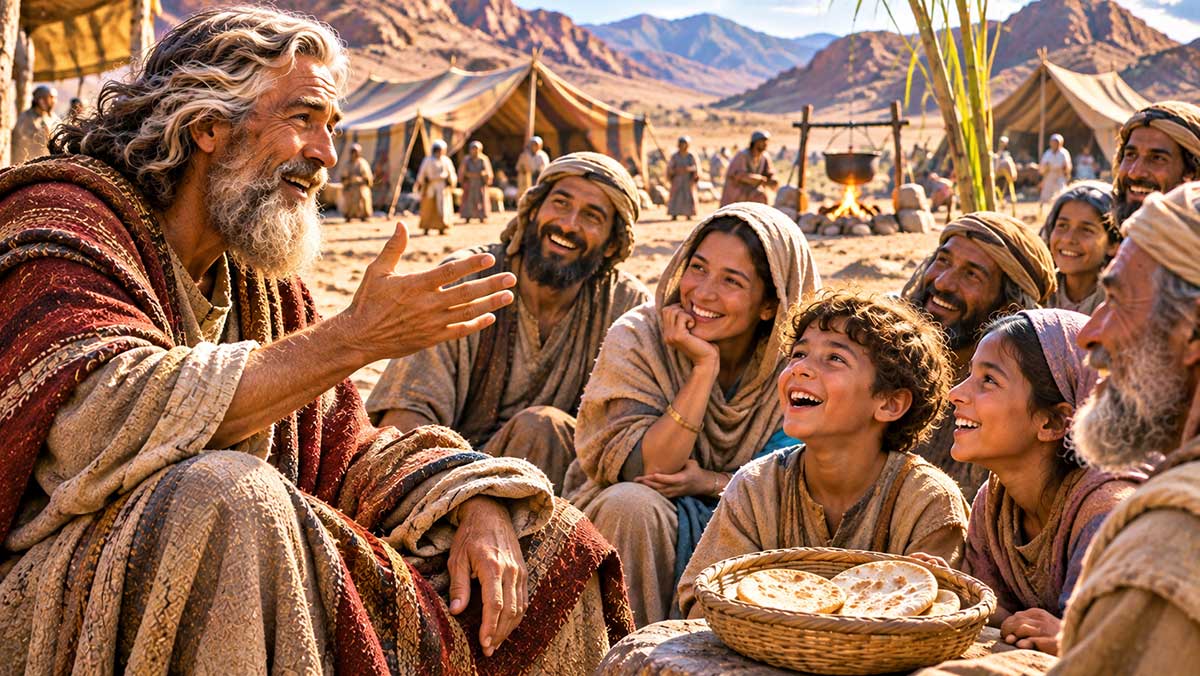
Moses: In the morning, when the dew lifted, there were thin flakes like frost all over the ground. The people looked at it and said, "What is it?" That's what the name means. It was white, like coriander seed, and it tasted like wafers made with honey.
Nick Sasaki: That sounds wonderful.
Moses: The first morning, it was a miracle. A few months later, they were looking at the ground thinking, "This again?"
Nick Sasaki: Did anybody try cooking it differently?
Moses: Everybody. They ground it, boiled it, baked it into cakes. Some said it tasted like something made with olive oil. A nation of a million cooks, all trying to make a miracle more interesting.
Nick Sasaki: And people could only gather enough for one day.
Moses: Except on the sixth day, when they gathered double, so no one had to work on the Sabbath. If anyone tried to keep it overnight on an ordinary day, by morning it was full of worms and smelled terrible.
Nick Sasaki: Someone must have tried.
Moses: Several someones. I was angry with them.
Nick Sasaki: But I can see why they did it. You're in the desert. You don't know if tomorrow will bring anything. Saving extra feels like common sense.
Moses: That's what made it so hard to teach. They weren't simply disobedient. They were frightened. They'd spent their whole lives never knowing whether there would be enough.
Nick Sasaki: So how do you teach people to trust that tomorrow's food will come?
Moses: You can't eat tomorrow's manna today.
Nick Sasaki: That's a good line.
Moses: It wasn't intended as a line.
Nick Sasaki: And eventually they wanted something else entirely.
Moses: They remembered the fish they ate in Egypt for nothing. The cucumbers, the melons, the leeks, the onions, the garlic. They stood at the entrances of their tents weeping for leeks.
Nick Sasaki: I've seen that. Somebody leaves a terrible job, then six months later starts talking about how great the old office was.
Moses: Perhaps they miss the cafeteria.
Nick Sasaki: That's possible.
Moses: Memory can be selective. They didn't miss the whips. They missed the garlic.
Round 2: The Day Moses Admitted He Couldn't Handle Everyone
Nick Sasaki: How do people picture you, do you think?
Moses: How do they picture me?
Nick Sasaki: Standing on a mountain, holding a staff, looking calm and wise.
Moses: That's a very flattering collection of moments. You should have seen me the day of the leeks.
Nick Sasaki: Tell me.
Moses: I went to God and said things I'm not proud of, and I'm not ashamed of either. I said, "Why have you brought this trouble on your servant? Did I conceive all these people? Did I give birth to them, that you tell me to carry them in my arms, as a nurse carries an infant? Where can I get meat for all of them? I cannot carry them alone. The burden is too heavy for me. If this is how you are going to treat me, please, kill me now."
Nick is quiet for a moment.
Nick Sasaki: You asked God to kill you.
Moses: I asked Him to take the weight off me one way or another. I didn't stop believing in Him. I stopped believing I could do it alone. Those aren't the same thing.
Nick Sasaki: That's important. People think faith means never saying anything like that.
Moses: Then they haven't read the prayers of people who had real faith. God didn't strike me down for it. He told me to gather seventy elders, and He took some of the spirit that was on me and put it on them, so they could share the burden.
Nick Sasaki: And your father-in-law had already told you something similar.
Moses: Jethro. He visited us in the wilderness, brought Zipporah and my sons, and watched me sit from morning until evening judging every quarrel in the camp. He said, "What you are doing is not good. You will wear yourself out, and these people too." He told me to appoint capable, honest men over thousands, hundreds, fifties, and tens, and bring only the hardest cases to me.
Nick Sasaki: A Midianite priest teaching the prophet of Israel how to organize.
Moses: God uses whoever is wise enough to speak up. Usually a father-in-law.
Nick Sasaki: What happened when the spirit came on the elders?
Moses: Two of them, Eldad and Medad, had stayed back in the camp, and the spirit came on them anyway. They started prophesying among the tents. A young man ran to tell me, and Joshua, who had served me since he was a boy, said, "Moses, my lord, stop them!"
Nick Sasaki: What did you say?
Moses: I said, "Are you jealous for my sake? I wish that all the Lord's people were prophets, and that the Lord would put his Spirit on them."
Nick Sasaki: That's remarkable. Pharaoh wanted everyone dependent on him. You wanted to be less necessary.
Moses: I had carried enough to know that a people who depend on one man for everything aren't free. They've only changed masters.
Nick Sasaki: Did that make it easier? Sharing the burden?
Moses: The work, yes. Not the loneliness. And not long after, the hardest criticism came from the two people I least expected.
Nick Sasaki: Miriam and Aaron.
Moses: My sister and my brother. They began talking against me because of the Cushite woman I had married. And then they said what was really on their minds: "Has the Lord spoken only through Moses? Hasn't he also spoken through us?"
Nick Sasaki: That must have hurt.
Moses: More than the leeks. These weren't strangers. Miriam had stood by the river for me. Aaron had stood beside me in front of Pharaoh. And now they were saying I thought too much of myself.
Nick Sasaki: Can I ask about your wife? The Cushite woman.
Moses: You can ask.
Nick Sasaki: Who was she?
Moses: She was my wife. People have argued about where she came from far more than they ever asked who she was. I'd rather you remember that than any of their arguments.
Nick Sasaki: That's fair. What happened with Miriam?
Moses: God called the three of us to the tent of meeting and rebuked them. When the cloud lifted, Miriam's skin was white with disease, like snow. Aaron turned to me and begged me not to hold their foolishness against them.
Nick Sasaki: What did you do?
Moses: I cried out, "Please, God, heal her!" I didn't think about what she had said. I thought about the girl at the river.
Nick Sasaki: Was she healed?
Moses: After seven days outside the camp. And the people didn't move on until she was brought back in. A whole nation waited for my sister.
Nick Sasaki: I love that detail.
Moses: So did I.
Nick Sasaki: Did you ever wish you could just sit down with the two of them without the mission, the people, or who was in charge?
Moses: Often.
Nick Sasaki: Just have dinner.
Moses: Just dinner.
Nick Sasaki: No complaints. No arguments about who God talks to.
Moses: That would have been a welcome change.
Nick Sasaki: You don't think the three of you could manage one peaceful dinner?
Moses: We were siblings, Nick.
Nick Sasaki: Fair enough. And by the way, I noticed the book calls you the humblest man on the face of the earth, right in the middle of that chapter.
Moses: I've heard that.
Nick Sasaki: Did you write that line?
Moses: Nick, I'm far too humble to answer that question.
Round 3: The Spies, the Fear, and the Forty Years Nobody Planned
Nick Sasaki: Then you finally reached the edge of Canaan.
Moses: We came to Kadesh, in the wilderness of Paran. The land God had promised was just ahead. I sent twelve men to explore it, one leader from each tribe, Joshua and Caleb among them. They were gone forty days.
Nick Sasaki: What did they bring back?
Moses: A single cluster of grapes so large it took two men to carry it on a pole. Pomegranates and figs. They said, "It does flow with milk and honey. Here is its fruit."
Nick Sasaki: So far, so good.
Moses: Then they said, "But." The cities were fortified. The people were giants. Ten of the twelve said, "We seemed like grasshoppers in our own eyes, and we looked the same to them."
Nick Sasaki: Two people can look at the same land and one sees a gift and the other sees a death sentence.
Moses: Caleb silenced the crowd and said, "We should go up and take possession of the land, for we can certainly do it." But the ten kept spreading their report, and by night the whole camp was weeping. They said, "If only we had died in Egypt. Let's choose a leader and go back."
Nick Sasaki: After everything.
Moses: After the sea, the manna, the water from the rock at Horeb. They were ready to stone Joshua and Caleb for saying we could do what God had promised.
Nick Sasaki: Let me push back a little. These people had been enslaved for generations. Expecting them to turn into a courageous, independent nation in a year or two may have been unrealistic. Slavery teaches you to survive by obeying whoever has the whip. Then suddenly they're told to trust an invisible God and attack walled cities.
Moses: You've been saying that since our second evening.
Nick Sasaki: I mean it.
Moses: I know you do. And I agree with half of it. I understood their fear better than anyone. I had been afraid at the bush. But understanding someone's fear doesn't mean every choice they make in fear is without consequence. A frightened man can still choose wrong. And when they chose, they didn't only refuse the land. They wanted to kill the two men who believed.
Nick Sasaki: What was the consequence?
Moses: God said that generation would not enter. They would wander one year for each of the forty days the spies had explored the land, until they died in the wilderness. Their children, the ones they said would become plunder, would be the ones to go in.
Nick Sasaki: How did you feel?
Moses: As though I'd climbed a long hill carrying a sick lamb, and at the top someone told me the pasture was forty years further on. I didn't know then that I wouldn't reach it either.
Nick Sasaki: And the children who grew up in the wilderness?
Moses: They grew up knowing only manna and tents and their parents' regret. They'd face choices their parents had refused. I loved them for that. They hadn't been broken by Egypt the same way.
Nick Sasaki: We describe those years as wandering. But people were living whole lives.
Moses: Marriages. Births. Funerals. Children learning to walk on sand. There were evenings when the camp was quiet, the children were asleep, and for a short time no one needed anything from me. I would sit outside my tent and look at the stars God had shown Abraham.
Nick Sasaki: Did you start expecting the worst from them?
Moses: At times. But a leader who expects nothing good from people stops noticing the good they actually do. I would remind myself of Sinai, long before Kadesh. When we built the tabernacle there, people brought gold, cloth, and skill. Those same people gave so freely we had to tell them to stop. And later, some of them would stand outside their tents crying for Egyptian leeks.
Nick Sasaki: They weren't just complainers.
Moses: No. They were capable of faithfulness and generosity. They were capable of fear and rebellion. Sometimes on the same day.
Topic 4: Moses, You Left Them Alone and They Built a Golden Calf?
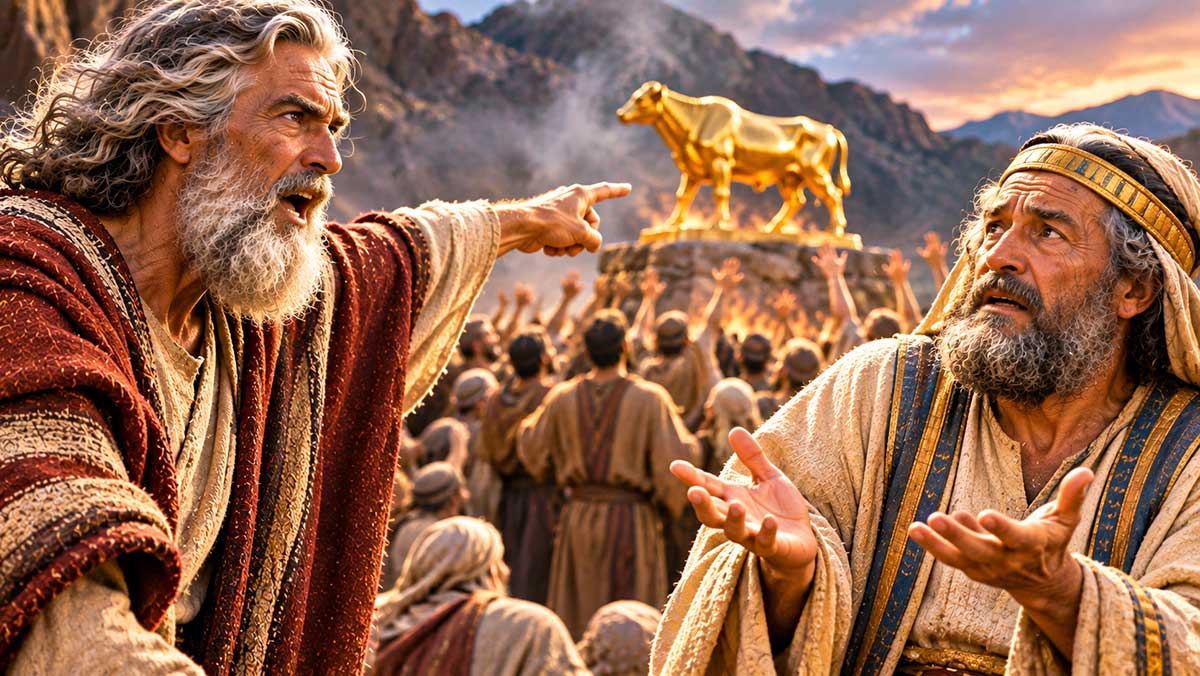
The fourth evening. The wind has dropped. The fire is low and steady, and Moses has been staring into it for some time before Nick speaks.
Round 1: Forty Days on the Mountain. What Could Possibly Go Wrong?
Nick Sasaki: Moses, you look like you already know what we're talking about tonight.
Moses: I've been dreading it all day. I find I'd rather talk about Pharaoh.
Nick Sasaki: Let's start on the mountain, then. Before anything went wrong.
Moses: Sinai. The whole mountain was covered in smoke, because the Lord had come down on it in fire. It trembled. The people had stood at the foot of it and heard the voice, and they were so frightened they begged me to go up alone and tell them what God said. "Speak to us yourself," they said, "but do not have God speak to us, or we will die."
Nick Sasaki: So you went up.
Moses: With Joshua part of the way. I left Aaron and Hur in charge of the camp. I was on the mountain forty days and forty nights.
Nick Sasaki: What was that like?
Moses: I won't try to describe all of it to you. Some of it I don't have words for even now. There were the tablets, and instructions for the tabernacle, down to the color of the curtains. And there was the silence of being with God for that long, with no one asking me for anything. It was the closest thing to rest I had in forty years.
Nick Sasaki: And down below?
Moses: Down below, they gave up on me. They went to Aaron and said, "Come, make us gods who will go before us. As for this fellow Moses who brought us up out of Egypt, we don't know what has happened to him."
Nick Sasaki: That's an interesting expression. Not "Moses is late." Not "We should send someone to look for him." Just, "We don't know what happened to this man."
Moses: Forty days, Nick. I'd been gone forty days, and to them I was already a stranger they used to know.
Nick Sasaki: Here's what I don't understand. These people had seen the sea open. They'd heard God's voice from the mountain. They'd agreed to the covenant. How do you go from that to an idol in a month?
Moses: Have you noticed that people sometimes return to old habits after an experience they once described as life-changing?
Nick Sasaki: I have.
Moses: In Egypt they saw gods they could look at. The God who brought them out had no face. And the one man who seemed to speak for Him had vanished into the smoke. They wanted something they could see in front of them when the road got dark.
Nick Sasaki: So the calf wasn't just about rejecting God. It was about being frightened without a visible leader.
Moses: They depended on me for everything. Water, food, judgments, the voice of God. When I disappeared, they didn't know who they were without me. I've often wondered whether I let them lean on me too much.
Nick Sasaki: That's a strange contradiction. They wanted something greater than themselves, but they made it themselves.
Moses: Out of their own earrings.
Nick Sasaki: We still do that. We may not build golden calves, but we put enormous trust in things we've made. Institutions, ideologies, leaders, money.
Moses: And then you bow down to them and call it worship.
Nick Sasaki: And the strangest part is that they thought they were doing something sacred.
Moses: Aaron built an altar in front of the calf and announced, "Tomorrow there will be a festival to the Lord." To the Lord. Not to some Egyptian god. They took my God's name and put it on a calf. When people know they're doing wrong, at least there's some awareness. When they've convinced themselves they're doing something holy, they can go a very long way without questioning it.
Round 2: Aaron, the Calf, and an Explanation Nobody Believed
Nick Sasaki: How did you find out?
Moses: God told me, there on the mountain. He said, "Go down, because your people, whom you brought up out of Egypt, have become corrupt."
Nick Sasaki: Your people.
Moses: I noticed that too. When they were faithful, they were His people. When they made a calf, they were mine.
Nick laughs despite himself.
Nick Sasaki: I'm sorry. That's actually funny.
Moses: It's funny now. And then He said something that wasn't funny at all. "Now leave me alone, so that my anger may burn against them and I may destroy them. Then I will make you into a great nation."
Nick Sasaki: He offered to start over with you.
Moses: He offered me what any ambitious man would want. A new nation, descended from me. No more complaints. No more grumbling about the food.
Nick Sasaki: Were you tempted?
Moses: I didn't let myself find out. I pleaded with Him instead. I said, "Why should the Egyptians say you brought them out to kill them in the mountains? Remember Abraham, Isaac, and Israel, to whom you swore by your own self." And the Lord relented.
Nick Sasaki: You argued with God for the same people who'd just replaced you with a calf.
Moses: They were still the people I had been sent to bring home. I couldn't trade them in for a better family.
Nick Sasaki: Then you came down.
Moses: With the two tablets in my hands, written by the finger of God. Joshua met me partway and said, "There is the sound of war in the camp." I said, "It's not the sound of victory, and it's not the sound of defeat. It's the sound of singing."
Nick Sasaki: And then you saw it.
Moses: I saw the calf, and the dancing. And I threw the tablets down and broke them at the foot of the mountain.
Nick Sasaki: What did that feel like?
Moses: Like watching forty days of my life shatter on the rocks. Some people say I broke them as a sign that the covenant had been broken. That may be true. But I won't pretend I stood there calmly composing a symbol. I was furious. I had been holding God's own writing, and I had come down to find them dancing around jewelry.
Nick Sasaki: Do you regret breaking them?
Moses: I've never been sure. I regret what made me do it.
Nick Sasaki: What did you do with the calf?
Moses: I burned it in the fire, ground it to powder, scattered it on the water, and made them drink it.
Nick Sasaki: That seems like a strange way to discourage idolatry.
Moses: It was a very effective way to make a point about what their god was worth. They had made it, and they could swallow it.
Nick Sasaki: And then you turned to Aaron.
Moses: I said, "What did these people do to you, that you led them into such great sin?"
Nick Sasaki: And Aaron said?
Moses: First, "Do not be angry, my lord. You know how prone these people are to evil."
Nick Sasaki: He blamed the people.
Moses: Of course. Then he told me they'd asked him to make gods, and so he'd told them to bring him their gold. And then he said the sentence that has followed my brother through all of history. "They gave me the gold, and I threw it into the fire, and out came this calf."
Nick Sasaki: Moses, I have to ask. Did he actually expect you to believe that?
Moses: I've had a very long time to think about that question.
Nick Sasaki: And?
Moses: I've concluded that he hoped I'd be too tired to argue.
Nick Sasaki: Just came out.
Moses: Fully formed. Ears, hooves, everything. My brother could talk to anyone, Nick. That was his gift, and that day it failed him completely.
Nick Sasaki: And yet you prayed for him.
Moses: God was angry enough with Aaron to destroy him, and I prayed for him then too. He was my brother. He'd stood beside me in front of Pharaoh when I couldn't speak.
Nick Sasaki: This is where I have my own conviction. I believe forgiveness doesn't mean pretending the harm was acceptable. It means not letting resentment run the rest of your life. You couldn't pretend Aaron hadn't done it. But you also couldn't work beside him for forty years hating him.
Moses: You say that as if it were a decision I made once.
Nick Sasaki: Wasn't it?
Moses: I made it a hundred times. Every time he stood at the altar in the vestments of the high priest, I remembered him standing at a different altar. Forgiveness isn't something you do on the day. It's something you keep doing every morning, like gathering manna. Yesterday's forgiveness doesn't feed you today.
Nick Sasaki: That's better than my version.
Moses: Yours is true. Mine is just more tired.
Round 3: The Leader Who Refused to Walk Away
Nick Sasaki: There's a darker part of this chapter I can't skip.
Moses: The Levites.
Nick Sasaki: You stood at the gate of the camp and said, "Whoever is for the Lord, come to me." The Levites came, and you sent them through the camp with swords. About three thousand people died that day.
Moses is silent for a long moment.
Moses: I won't make that day smaller than it was, and I won't explain it away for you. I believed then that the people were out of control and the covenant itself was at stake. That is how I understood what was required. You live with a day like that. You don't get to put it down.
Nick Sasaki: Can I say what troubles me? People have used stories like this to justify violence against anyone they decide is unfaithful.
Moses: Then hear me clearly. Nick, I killed a man in Egypt and fled. Later, I struck a rock when I had been instructed to speak to it. My story doesn't give me grounds to claim perfect judgment. And no one should take what happened at Sinai as permission to harm people today because they disagree with them.
Nick Sasaki: Thank you for saying that.
Moses: It needed to be said by me, not about me.
Nick Sasaki: And after that day?
Moses: I went back up the mountain. I said to God, "These people have committed a great sin. They have made themselves gods of gold. But now, please forgive their sin. And if not, then blot me out of the book you have written."
Nick Sasaki: You offered to be erased.
Moses: I meant it. If He would not carry them, I didn't want to be carried without them.
Nick Sasaki: You'd just come down from the most extraordinary encounter with God a person could have. Your brother had failed you. People had died. And your response was to put your own name on the line for them.
Moses: What else was there? I was their shepherd. A shepherd who saves himself and leaves the flock isn't a shepherd. He's just a man with a stick.
Nick Sasaki: It's easy to care about people when they're cooperative. Much harder when they've done something that makes you furious.
Moses: Sometimes helping them means confronting them. Sometimes it means pleading for them. Sometimes it means admitting that you yourself have failed.
Nick Sasaki: Did God answer?
Moses: Not all at once. There was a time when He said He would send an angel ahead of us but would not go with us Himself. I told Him, "If your Presence does not go with us, do not send us up from here." I wasn't going to lead them anywhere without Him.
Nick Sasaki: And then you asked for something for yourself.
Moses: I did. Not for the people that time. For me. I said, "Show me your glory."
Nick Sasaki: What happened?
Moses: He said no one could see His face and live. So He put me in a cleft of the rock, covered me with His hand while He passed by, and let me see only His back. And He proclaimed His name: "The Lord, the Lord, the compassionate and gracious God, slow to anger, abounding in love and faithfulness." I had just watched what His anger could do. And the first thing He wanted me to know about Him was mercy.
Nick Sasaki: And the tablets?
Moses: I carved two new ones myself, like the first, and carried them up the mountain again. Another forty days. He wrote the words again. When I came down that time, my face was shining, and the people were afraid to come near me. I had to wear a veil.
Nick Sasaki: The second tablets. A second chance.
Moses: The first ones were made by God. The second ones I had to cut with my own hands. I think about that more than I used to.
Nick Sasaki: Moses, one last question for tonight.
Moses: You said that last time.
Nick Sasaki: I meant it last time, too.
Moses: Go ahead.
Nick Sasaki: You mentioned the rock earlier. Speaking to it instead of striking it.
Moses looks into the fire for a long moment.
Moses: Tomorrow, Nick. That one deserves its own evening.
Topic 5: Moses, You Led Everyone Home. Why Couldn't You Go In?
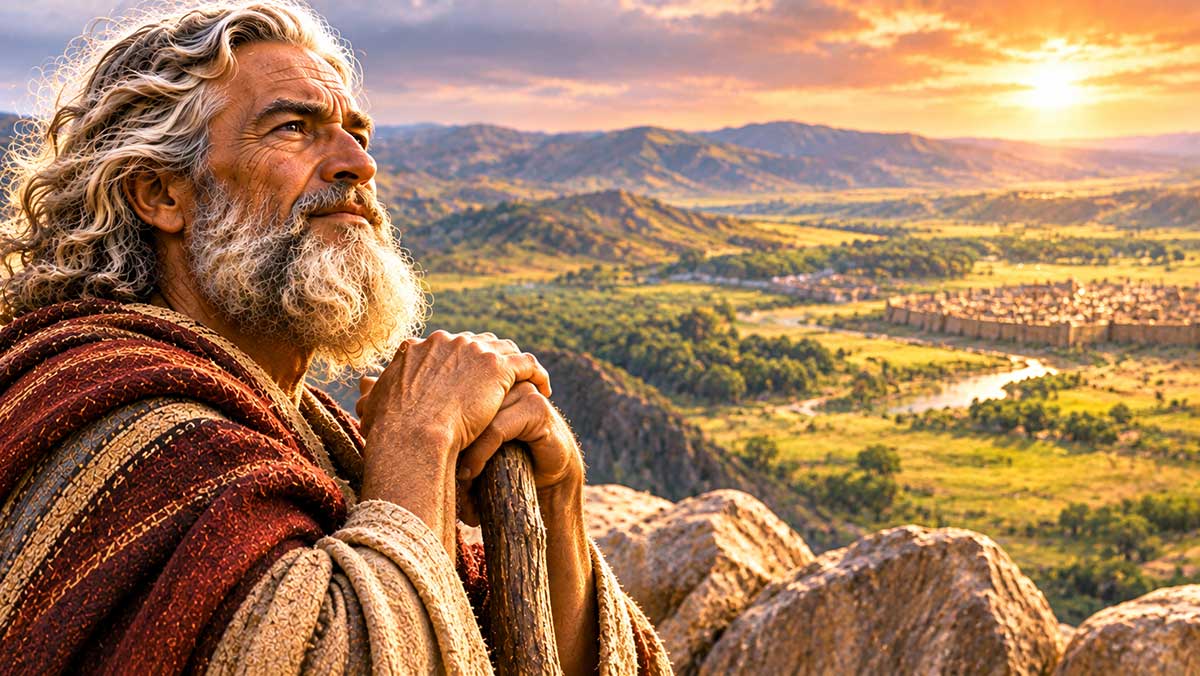
The fifth evening. Moses has built the fire higher than usual. He sits closer to it, the staff upright beside him, as if he wants his hands near something solid.
Round 1: One Rock, Two Strikes, and Forty Years of Regret
Nick Sasaki: Moses, there's something about your story that's bothered me for a long time.
Moses: I suspect I know what it is.
Nick Sasaki: You led them out of Egypt. You stood up to Pharaoh. You carried them for forty years. And after all that, you weren't allowed to go in.
Moses: You're not the first to be bothered by it.
Nick Sasaki: Does it bother you when people bring it up?
Moses: It's a fair question. It's also personal.
Nick Sasaki: Last night, you said the rock deserved its own evening.
Moses: Then let me tell it properly, from the beginning. We had come back to Kadesh, near the end of the forty years. And there, Miriam died.
Nick Sasaki: Wait. Your sister had just died?
Moses: We buried her there.
Nick Sasaki: The same sister who watched over you in the reeds.
Moses: The same. She knew me before I had a staff. Before anyone called me a leader. Before I had so many people asking me questions. To everyone else I was the prophet who spoke with God. To Miriam I was her little brother who had once been too loud to hide.
Nick Sasaki: I don't think I ever paid attention to that detail before.
Moses: Most people don't. The water is more dramatic than a funeral.
Nick Sasaki: Did you have time to grieve?
Moses: No. We had barely covered her grave when the people came to us. There was no water. They said, "If only we had died when our brothers fell dead before the Lord! Why did you bring us up out of Egypt to this terrible place?"
Nick Sasaki: Out of Egypt. Again.
Moses: Again.
Nick Sasaki: I was trying not to say that.
Moses: You were thinking it.
Nick Sasaki: I was.
Moses: So was I. Forty years, Nick. Forty years of the same words. And these weren't even the people who had come out of Egypt, most of them. They were their children, saying their parents' lines.
Nick Sasaki: But they really were thirsty.
Moses: They were. That's what I have to remember. It wasn't a complaint about the menu. No water in the desert kills children first. Aaron and I went to the entrance of the tent of meeting and fell facedown, and the glory of the Lord appeared to us.
Nick Sasaki: What did He tell you to do?
Moses: To take the staff, gather the assembly, and speak to the rock before their eyes. Speak to it, and it would pour out its water.
Nick Sasaki: Speak to it.
Moses: Speak to it. So I took the staff. Aaron and I gathered them in front of the rock. And I looked out at that crowd, and I said, "Listen, you rebels. Must we bring you water out of this rock?"
Nick Sasaki: We.
Moses: I've heard that word every day since.
Nick Sasaki: And then?
Moses: Then I raised my hand and struck the rock with the staff. Twice.
Nick Sasaki: Why twice? Did the first strike fail?
Moses is quiet for a while.
Moses: I've asked myself that more than any other question. Here is the most honest answer I have, and it's mine, not a law of heaven. Once before, at Horeb, near the beginning, God had told me to strike a rock, and water came. So maybe my hand did what it remembered. Maybe I was grieving and furious and forty years tired, and the first blow wasn't enough to empty out what I felt. I don't know. A man can carry his own reasons for a long time and still not see all of them.
Nick Sasaki: But the water came.
Moses: Abundantly. The people drank, and their animals drank. If you'd been standing in that crowd, you'd have thought it was one of my better days.
Nick Sasaki: And it wasn't.
Moses: The Lord said to Aaron and me, "Because you did not trust in me enough to honor me as holy in the sight of the Israelites, you will not bring this community into the land I give them."
Nick Sasaki: That's the reason He gave.
Moses: That's the reason He gave. I've never added to it in His name, and I won't start tonight. Everything else I tell you about why is my own reflection, an old man trying to understand.
Nick Sasaki: Then I'm going to tell you mine, because I've been carrying it since the first evening. I think it was too harsh.
Moses: Go on.
Nick Sasaki: You'd just buried your sister. You'd carried these people through forty years of complaints. You'd been furious before and God had worked with you. And here's what really gets me. Every time the people failed, you stood between them and God. After the calf, you offered to be erased for them. After the spies, you pleaded for them. And again and again, God relented. But when you failed, one time, in one exhausted moment, nobody pleaded for you. The man who interceded for everyone had no one to intercede for him.
Moses looks at him for a long moment.
Moses: You've thought about this.
Nick Sasaki: For years. Even one of the Psalms says it went badly for you because of them. They provoked your spirit, and you spoke rashly. They pushed you there.
Moses: I know that psalm. And I'll tell you something you won't like.
Nick Sasaki: Go ahead.
Moses: I said it myself. Years later, standing on the plains of Moab, I told the people, "Because of you the Lord was angry with me also, and said, You shall not enter it either."
Nick Sasaki: So you blamed them too.
Moses: I did. I was an old man speaking to the children of the people who had worn me down, and I wanted them to understand what it had cost. It was true. It was not the whole truth.
Nick Sasaki: What was the rest?
Moses: The rest is that I was not standing in that crowd as a tired old man. I was standing there as the one who speaks for God. They had seen me at the sea, on the mountain, with my face shining under a veil. When the one who stands closest to God shouts "you rebels" and strikes the rock as if the miracle depended on his arm, what does the crowd learn about God?
Nick Sasaki: That He's as angry as you are.
Moses: Or that the water comes from Moses. Either way, a lie about God, told with my hands. And you want God to excuse me because I was grieving. But think about what that would teach. If the people are punished for their failures and their leader is forgiven for his, they learn that the rules are for little people. I've seen enough kings to know where that ends.
Nick Sasaki: That's a strong answer. I still don't think it's proportionate. You gave Him forty years of your life, after eighty years of getting ready. One afternoon cost you the thing you lived for.
Moses: I didn't say it was easy to bear. I said I understand why the one who speaks for God is held to the strictest account.
Nick Sasaki: Understanding isn't the same as agreeing.
Moses: No. And I'll admit something to you. I didn't agree at first either.
Nick Sasaki: You asked Him to reconsider.
Moses: I begged. I said, "Sovereign Lord, you have only begun to show your servant your greatness. Let me go over and see the good land beyond the Jordan." And He said, "That is enough. Do not speak to me anymore about this matter."
Nick Sasaki: That's hard to hear.
Moses: It was harder to hear it.
Nick Sasaki: Were you angry with God?
Moses: I was grieved. I was frustrated. I wanted that land with everything left in me. I still have a question I've never had answered, and I've stopped expecting an answer. But I never stopped believing He was good. Faith doesn't require us to pretend a painful outcome isn't painful.
Nick Sasaki: That's what I was hoping you'd say.
Moses: Then perhaps you should have asked that question first.
Nick Sasaki: We would have missed the rock.
Moses: I'm not sure I would have objected.
Nick Sasaki: And Aaron?
Moses: The same judgment fell on him. And before that year was out, I walked him up Mount Hor. I took off his priestly garments and put them on his son Eleazar, and Aaron died there on the top of the mountain. The people mourned him thirty days.
Nick Sasaki: Your sister and your brother, in the same season.
Moses: The girl from the river and the man who spoke for me when I couldn't. Both gone, and I was still walking.
Round 2: Joshua Gets the Job Moses Spent Forty Years Preparing For
Nick Sasaki: So someone else would take them in.
Moses: I asked God for that myself. I said, "May the Lord appoint someone over this community, so that the Lord's people will not be like sheep without a shepherd."
Nick Sasaki: Sheep again.
Moses: Forty years in Midian. They never quite leave you.
Nick Sasaki: And He chose Joshua.
Moses: Joshua, son of Nun. He had been with me since he was a young man. He went up the mountain with me. He was one of the two spies who said we could do it, and they nearly stoned him for it. When I laid my hands on him in front of the whole assembly, I could feel how young his shoulders still were to me.
Nick Sasaki: Was that hard? Handing over the work of your life?
Moses: It was the right thing and it was the hardest thing. For forty years they came to me. Now I had to stand there while they turned and looked at him. I said to him, in front of all Israel, "Be strong and courageous. The Lord himself goes before you. He will never leave you nor forsake you. Do not be afraid."
Nick Sasaki: Were you saying that to him or to yourself?
Moses: Both. You understand the question better than you pretend to.
Nick Sasaki: Did you worry he'd fail? Or that the children would repeat their parents' mistakes?
Moses: Every day. I gave them warning after warning. I told them to write the words on their doorposts and teach them to their children when they sat at home and when they walked along the road. But I couldn't live their lives for them. Fear of their future mistakes couldn't be a reason to deny them their future.
Nick Sasaki: I think this is the hardest part of any life's work. You prepare something for decades, and the moment it's ready, it belongs to someone else.
Moses: If it never belongs to someone else, it wasn't really work for them. It was work for you.
Round 3: Mount Nebo, the Promised Land, and the Question Moses Never Answered
Nick Sasaki: How old were you at the end?
Moses: A hundred and twenty. I told them, "I am no longer able to lead you." But my eyes were still good, and my strength hadn't gone. It wasn't my body that stopped me at the Jordan.
Nick Sasaki: And then the mountain.
Moses: I climbed Mount Nebo, from the plains of Moab, to the top of Pisgah, across from Jericho. And the Lord showed me the whole land. Gilead as far as Dan. The hills of Naphtali. Ephraim and Manasseh. All of Judah, to the western sea. The Negev. The valley of Jericho, the City of Palms.
Nick Sasaki: You could see it.
Moses: He said, "This is the land I promised. I have let you see it with your eyes, but you will not cross over into it."
Nick Sasaki: What did you feel, standing there?
Moses: I'll keep some of that for myself, Nick. I'll tell you only that I wasn't alone on that mountain.
Nick Sasaki: And then you died there.
Moses: And He buried me in a valley in Moab, and no one has ever found the grave. I've always been grateful for that. People would have built a shrine to the wrong thing.
Nick Sasaki: Did you leave Zipporah and your sons any words?
Moses: Those words were for them.
Nick Sasaki: Fair enough. There's something else I want to ask before we finish. Your death wasn't the last time you appeared in the Bible.
Moses: You're thinking of another mountain.
Nick Sasaki: The Transfiguration. Moses and Elijah appear with Jesus. And Luke says you were talking with him about his departure, which he was about to accomplish in Jerusalem. The Greek word Luke uses for departure is exodos. Exodus.
Moses smiles slowly.
Moses: I'd heard that.
Nick Sasaki: You stood on Nebo looking at a land you couldn't enter. Then, in the Gospels, you're standing in it, talking about another exodus.
Moses: Christians have found great meaning in that, and I understand why. I won't tell you what lies beyond death, Nick. Some things a man is not given to say. But I'll tell you that I've never believed God wastes anything.
Nick Sasaki: I find hope in that. People feel their lives are unfinished. Dreams they couldn't fulfill. Relationships they couldn't repair. They wonder whether death closes every door.
Moses: Hope can help a person face what remains unfinished. But don't let it become an excuse to neglect what you can still do today.
Nick Sasaki: Moses, let me ask one last question.
Moses: You've said that several times during these conversations.
Nick Sasaki: Have I?
Moses: Yes.
Nick Sasaki: I'll try to mean it this time.
Moses: Go ahead.
Nick Sasaki: If you could speak to the Israelites one more time, not as their leader, not as the man who received the commandments, just as Moses, what would you want to tell them?
Moses: I'd want them to remember that they were once strangers and slaves.
Nick Sasaki: Why that?
Moses: Their own suffering should have taught them compassion for others who suffer. Not to keep them trapped in the past, but to help them treat the stranger differently than Egypt treated them.
Nick Sasaki: What else?
Moses: I'd tell them not to mistake being chosen for being superior. Responsibility is not the same thing as privilege.
Nick Sasaki: And their children?
Moses: Teach them what matters. But give them reasons to care, not simply rules to repeat.
Nick Sasaki: Sometimes I wonder why we make it so difficult to live together.
Moses: Perhaps we become so concerned with defending our own group that we forget the humanity of the people outside it. So ask people one question, Nick. Ask them whether the people they disagree with are still worthy of compassion.
Nick Sasaki: That's a difficult question.
Moses: It is.
Nick Sasaki: Moses, thank you. I've learned a great deal from these conversations.
Moses: I've enjoyed them too, Nick.
Nick Sasaki: Even all my questions?
Moses: Most of them.
Nick Sasaki: Most?
Moses: You did spend a surprising amount of time asking about manna.
Nick Sasaki: I was curious about the food.
Moses: I noticed.
Nick Sasaki: And Aaron's golden calf.
Moses: That too.
Nick Sasaki: I still can't believe his explanation.
Moses: Nick, Aaron isn't here to answer any further questions.
Nick Sasaki: Fair enough.
Moses: Though I suspect you'd have had several.
Nick Sasaki: Definitely.
Moses: Then perhaps it's fortunate for Aaron that this interview was with me.
Nick Sasaki: Moses, before you go, there's one image I keep returning to.
Moses: Which one?
Nick Sasaki: You standing on Mount Nebo, looking at the Promised Land.
Moses: Yes.
Nick Sasaki: I used to think it was simply a sad ending.
Moses: And now?
Nick Sasaki: I still think it's sad. But I see something else too.
Moses: What's that?
Nick Sasaki: The people were going to cross the Jordan. Joshua was ready. Children who'd grown up in the wilderness would finally have a home.
Moses: Yes.
Nick Sasaki: You wouldn't be there to see it happen, but you helped make it possible.
Moses: I was part of what brought them to that point.
Nick Sasaki: Does that bring you peace?
Moses: I think it would bring gratitude. And perhaps some sadness that I couldn't go with them.
Nick Sasaki: Both.
Moses: Both.
Nick Sasaki: You know, that's probably the most human answer you could give.
Moses: I'm glad you think so.
Nick Sasaki: Thank you, Moses.
Moses: Thank you, Nick.
Nick Sasaki: One last thing.
Moses: There it is again.
Nick Sasaki: Sorry. I really mean it this time.
Moses: I'm listening.
Nick Sasaki: If you could stand on that mountain again, knowing everything you know now, would you still have gone back to Egypt?
Moses: ...
Nick Sasaki: You don't have to answer immediately.
Moses: I know.
Nick Sasaki: Take your time.
Moses: I'd think about the people who were freed. The children who grew up outside slavery. The families who had a future their parents could barely have pictured.
Nick Sasaki: And the suffering?
Moses: I wouldn't pretend it hadn't happened.
Nick Sasaki: Your mistakes?
Moses: I wouldn't pretend those hadn't happened either.
Nick Sasaki: So would you go?
Moses: Nick, if I could return to that burning bush, I'd still have questions.
Nick Sasaki: The same questions?
Moses: Perhaps better ones.
Nick Sasaki: And after asking them?
Moses: I think I'd pick up my staff.
Final Thoughts: What Moses Never Got to Finish
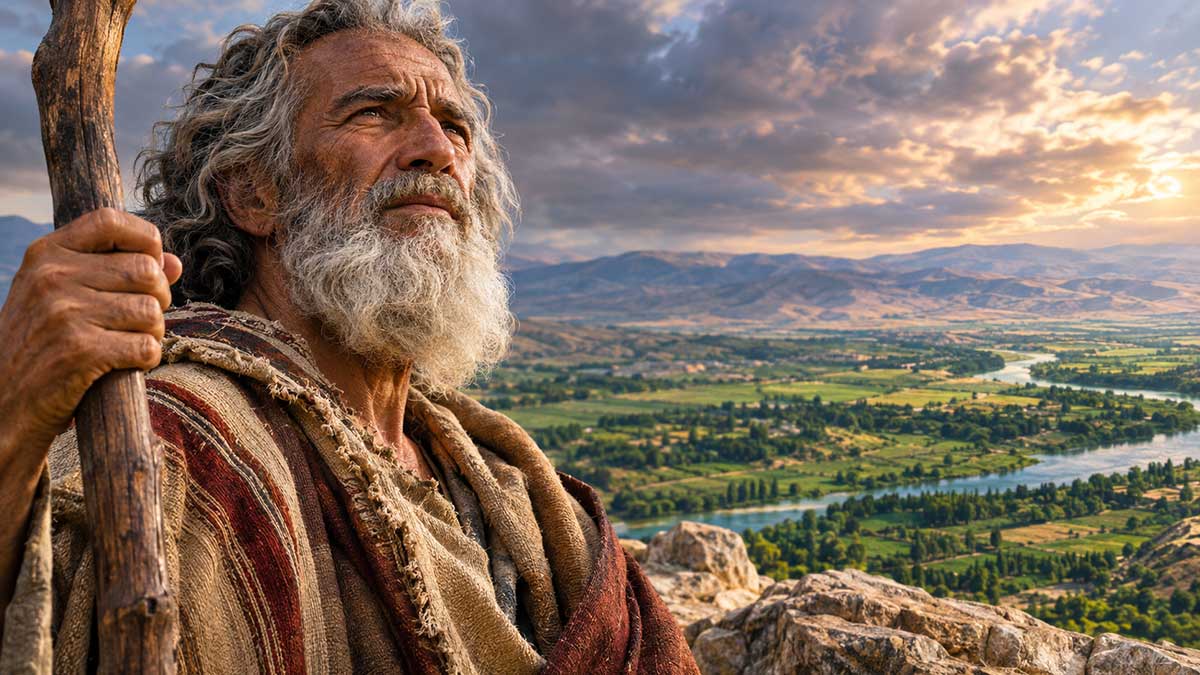
Most of us will never stand on a mountain looking at a land we're not allowed to enter. But nearly everyone knows the feeling of a life's work that ends just short of where we hoped it would.
Moses' story doesn't let us off easily. He wasn't a flawless man who received an unfair sentence, and he wasn't a failure who got what he deserved. He was someone who carried other people for decades, failed in a moment when he was worn down, pleaded for a second chance, and was told no. And he still prepared the next leader, still blessed the people who had worn him down, and still climbed the mountain.
That raises questions that have nothing to do with ancient deserts. Who in your life has carried you through years of your complaints? Who is quietly preparing a future they may not be there to see? And what would it take for you to keep faith with a calling when the ending isn't the one you wanted?
Perhaps the hardest lesson in this story is that a meaningful life isn't measured only by what we finish. Sometimes it's measured by what we hand on, and how well we teach the people who come after us to see one another.
Disclaimer: These reflections draw on a fictional portrayal of Moses and on selected biblical passages. They are literary and theological reflections, not claims about Moses' unrecorded thoughts, God's intentions beyond what scripture states, or the nature of life after death.
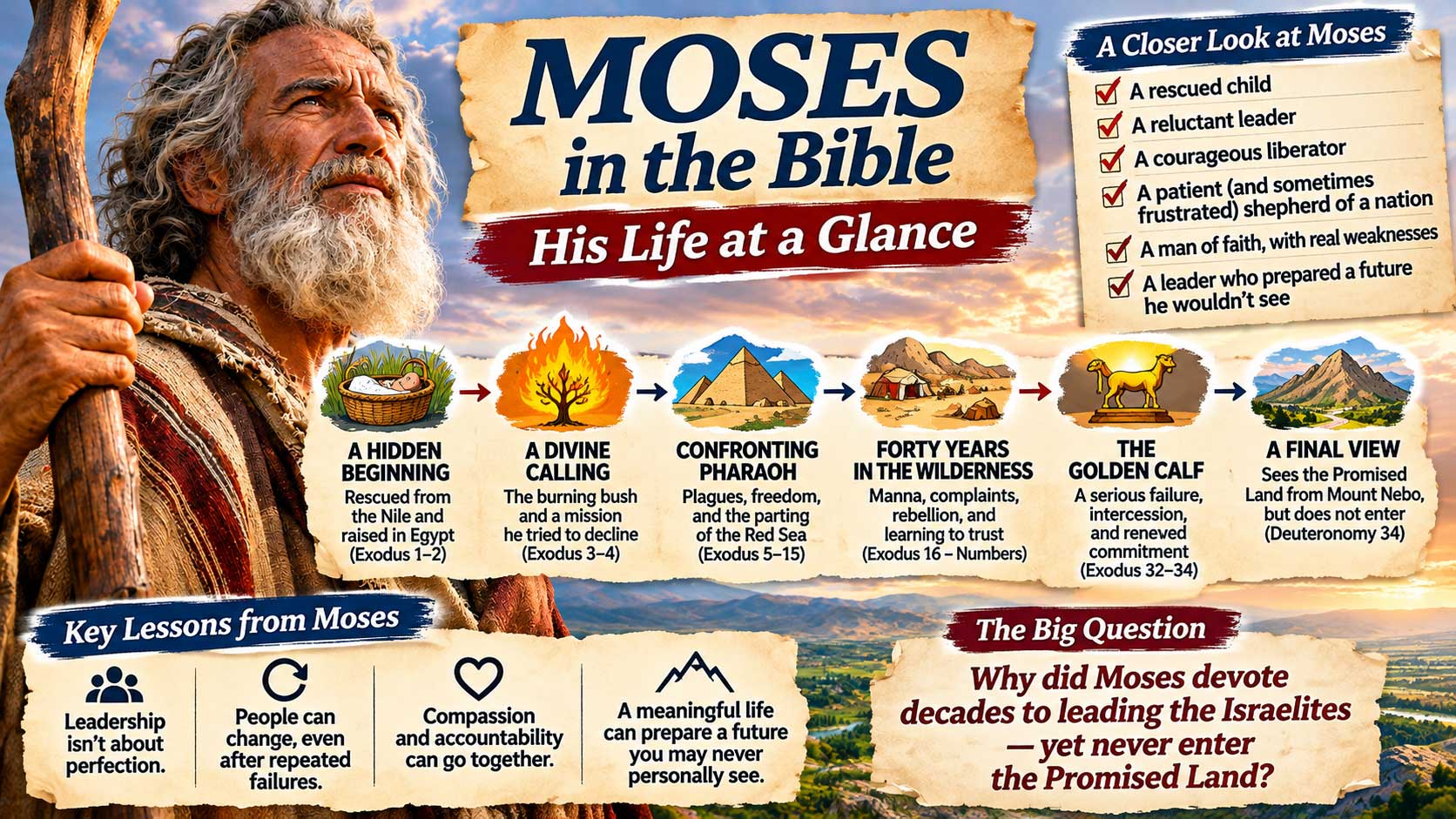
Frequently Asked Questions About Moses
Why couldn't Moses enter the Promised Land?
According to Numbers 20, God told Moses to speak to a rock to bring out water for the thirsty Israelites at Kadesh. Instead, Moses spoke harshly to the people and struck the rock twice. God said that because Moses and Aaron did not trust Him enough to honor Him as holy before the people, they would not lead the community into the land. Deuteronomy adds that Moses pleaded to cross over and was refused.
Who was Moses' wife?
Exodus names Zipporah, a daughter of the Midianite priest Jethro (also called Reuel), as Moses' wife and the mother of his sons Gershom and Eliezer. Numbers 12 mentions a "Cushite woman" Moses had married. Interpreters disagree about whether she was Zipporah or a second wife; the text does not say.
How old was Moses when he died?
Deuteronomy 34:7 says Moses was 120 years old when he died, and that his eyesight and strength had not failed. Exodus 7:7 says he was 80 when he confronted Pharaoh.
Where is Moses buried?
Deuteronomy 34 says Moses died on Mount Nebo in the land of Moab and was buried in a valley there, but that "to this day no one knows where his grave is." A traditional memorial site stands on Mount Nebo in present-day Jordan, but no burial place has been identified.
Did the Exodus really happen?
This is debated. Many archaeologists and historians find little direct evidence for an exodus of the size and kind described in the Bible, while others argue that a smaller historical event may lie behind the tradition. For Jews and Christians, the Exodus remains a foundational story of liberation and covenant regardless of how historians assess it.
Short Bios:
Moses is the central human figure of the Exodus narrative and one of the most influential prophets in the Abrahamic traditions. According to the Hebrew Bible, he led the Israelites out of Egyptian bondage, received the covenant law at Mount Sinai, and guided the community through the wilderness. His life is recounted across the Torah, particularly Exodus through Deuteronomy. This interview presents an imagined, conversational version of Moses rather than a historical reconstruction of his personality.
Nick Sasaki is the creator of ImaginaryTalks.com, a platform exploring meaningful questions through fictional conversations with historical, cultural, literary, and spiritual figures. His interviews combine curiosity, gentle humor, and thoughtful discussion to help readers consider familiar stories from fresh human perspectives.
Leave a Reply