


Introduction
What if the most damaging voice in your life belongs to someone you've trusted for years?
Yourself.
You're not good enough.
You've disappointed everyone.
You'll never change.
Perhaps you've heard these words so often that they no longer sound like opinions. They sound like facts.
But what if they aren't true?
In his bestselling book Winning the War in Your Mind: Change Your Thinking, Change Your Life, pastor Craig Groeschel challenges readers to confront destructive thoughts and replace them with God's truth.
It's a powerful message.
But it raises an uncomfortable question.
What happens when your mind knows the truth, but your heart still believes the lie?
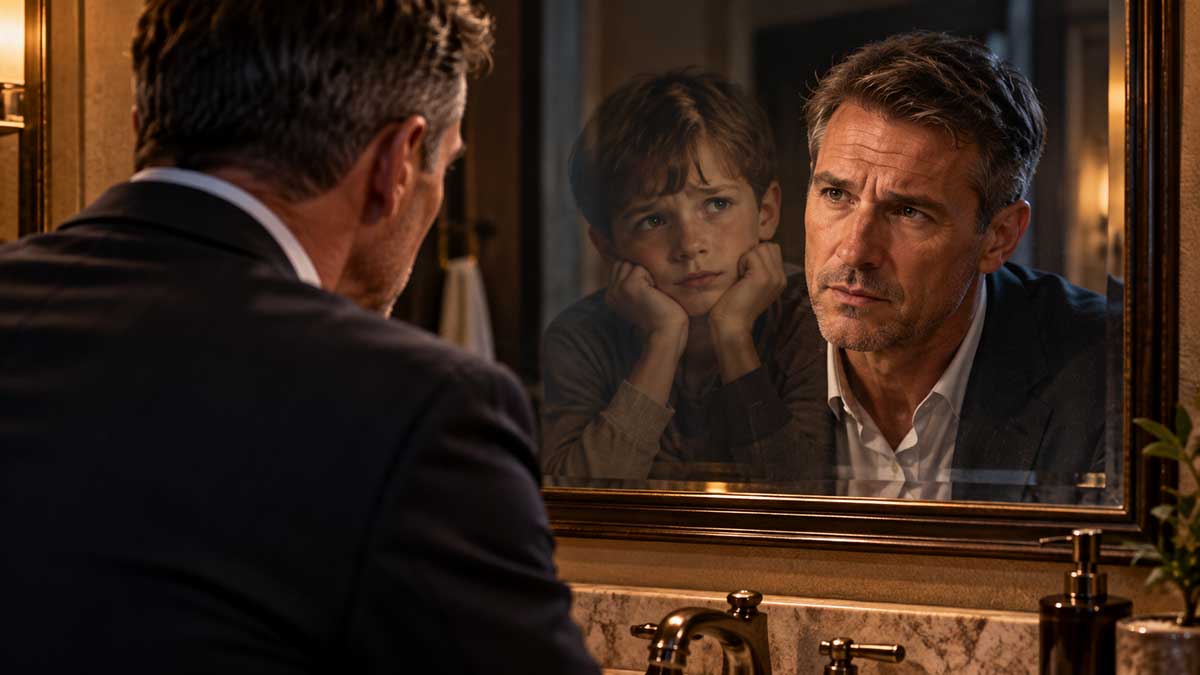
Imagine a successful businessman who has spent fifty years trying to prove he's worthy of love.
A father who loves his adult son so deeply that he cannot stop trying to control his future.
And a widow who prayed faithfully for her husband's recovery, only to lose him and wonder why God didn't answer.
Can changing our thoughts really help us face such painful experiences?
To explore this question, we bring Groeschel into an imagined conversation with three extraordinary thinkers.
Judith S. Beck, a leading expert in cognitive behavioral therapy, understands how deeply rooted beliefs can shape our emotions and behavior.
Kristin Neff, a pioneering researcher in self-compassion, asks whether our efforts to correct negative thinking might sometimes become another way of criticizing ourselves.
And C. S. Lewis, whose Christian writings explored faith, suffering, and love, brings a perspective shaped by both intellectual conviction and personal grief.
Would these four thinkers agree about what it means to renew the human mind?
Could psychology deepen our understanding of faith?
And when our prayers go unanswered, can we still find the peace Groeschel writes about?
Their conversation begins with a question that may be more personal than the author expects.
"Craig, before we talk about winning the war in our minds, tell us about the war you were fighting in yours."
Editor's note: This is an imagined expert discussion inspired by the participants' published ideas. The conversation did not actually occur, and the dialogue should not be interpreted as their verified statements or endorsements.
Topic 1: The Lies We Believe: Who Are We Really?
Rain tapped gently against the library windows. A fire burned in the stone fireplace, casting shifting shadows across the bookshelves. Five people sat around a wooden table. In the center lay a copy of Craig Groeschel's Winning the War in Your Mind.
The moderator opened the book, then looked at its author.
Moderator: Craig, before we talk about how to win the war in our minds, I'd like to know something about the war you were fighting in yours.
You've been a pastor, a husband, a father, and the leader of a large church. From the outside, people might assume you have a pretty good life.
But you've spoken about struggling with negative thinking and self-doubt.
What was happening inside you that people couldn't see?
Craig Groeschel: I think that's part of the problem. People see what you're doing, but they don't necessarily see what you're believing.
You can be doing well in one area of life and still be losing battles in your mind.
You can have people who love you, people who respect you, and still hear that internal voice saying you're not enough.
And here's what I came to recognize: I was allowing certain thoughts to shape how I experienced my life.
They weren't all true. But I'd thought them so often that they felt true.
That's what I wanted people to recognize through this book. You don't have to believe everything you think.
Judith Beck: That's a very useful distinction. In cognitive behavioral therapy, we talk about automatic thoughts. They're the interpretations that appear almost instantly in response to a situation.
Someone doesn't return your call, and you think, "They're upset with me."
You make a mistake, and you think, "I'm incompetent."
These thoughts can feel like observations, when they're actually interpretations.
Craig Groeschel: Exactly. And when those interpretations become habitual, they start shaping your identity.
Kristin Neff: Craig, can I ask you something?
When you were struggling with those thoughts, how did you feel about yourself for having them?
Craig Groeschel: What do you mean?
Kristin Neff: I mean, did you ever become frustrated with yourself for not being more confident? For not having more faith?
Sometimes people experience a painful thought, and then they add another layer of suffering by judging themselves for having it.
"I'm afraid."
And then, "I shouldn't be afraid. What's wrong with me?"
Now they're suffering twice.
Craig Groeschel: I think that's a real danger. And I certainly don't want people to feel condemned for struggling.
My concern is what happens when we agree with destructive thoughts and let them direct our lives.
Kristin Neff: I appreciate that. I just want to make sure the person doesn't become another enemy in the process.
C. S. Lewis, who had been listening quietly, leaned forward.
C. S. Lewis: Perhaps we ought to distinguish between the thought and the thinker.
A man may have a foolish thought without being a fool. He may experience fear without being a coward.
Indeed, if the mere presence of fear were evidence of failure, courage would be a rather unnecessary virtue.
Moderator: That's interesting. Craig, your title is Winning the War in Your Mind. But what exactly are we fighting?
Are we fighting thoughts? Fear? The devil? Ourselves?
Craig Groeschel: The battle is against the lies that keep us from living in God's truth.
Let me give you an example.
Someone thinks, "I'll never change."
They've struggled with the same problem for years. Maybe they've failed repeatedly.
Eventually, that thought becomes more than a description of their past. It becomes a prediction about their future.
They stop trying.
But what if that thought isn't true? What if God has more for their life than they've allowed themselves to believe?
That's why I believe we need to identify the lie and replace it with truth.
Judith Beck: I agree with examining that belief. But I'd want to ask the person some questions before deciding it's false.
What does "never change" mean to them?
Have they changed in other areas?
What have they tried?
What obstacles are they facing?
Sometimes the most helpful intervention isn't simply saying, "That's not true." It's helping someone discover why the conclusion may be inaccurate.
Craig Groeschel: And I think those questions can be very valuable.
Moderator: Let me make this harder.
Suppose someone says, "I'm a terrible father."
And suppose he really has been a terrible father. He's been impatient, controlling, absent when his children needed him.
Is that thought a lie?
The room became quiet.
Judith Beck: That's an excellent example of why precision matters.
We would distinguish between behavior and identity.
"I've behaved in ways that hurt my children" may be accurate.
"I'm a terrible father, and that's all I am or ever will be" is a much broader conclusion.
We don't need to deny the first statement to challenge the second.
Kristin Neff: And compassion doesn't mean telling him he did nothing wrong.
In fact, self-compassion can make it easier to accept responsibility.
If acknowledging a mistake means declaring yourself worthless, you'll naturally want to defend yourself.
But if you can say, "I did something harmful, and I'm still a human being capable of learning," then you have room to change.
C. S. Lewis: There is a curious difference between repentance and despair.
Repentance says, "I have done wrong, and I must turn from it."
Despair says, "I am wrong in my very being, and there is no point in turning anywhere."
One can lead to transformation. The other may leave a man staring at himself forever.
Craig Groeschel: That's exactly why identity matters so much.
If someone believes they're beyond redemption, they may never take the steps that would allow their life to change.
But if they believe God hasn't given up on them, they can begin again.
Moderator: So we're not replacing truth with pleasant thoughts. We're replacing false conclusions with a more complete truth.
Judith Beck: Yes. And sometimes that more complete truth includes something uncomfortable.
Moderator: Which brings me to a question I think many readers will have.
How do we know what to believe?
Craig, you say we should replace lies with God's truth.
Judith, you say we should examine evidence.
Kristin, you emphasize compassion.
And Lewis, you keep bringing us back to the moral and spiritual meaning of things.
What happens when these approaches seem to disagree?
Craig Groeschel: I would start with Scripture.
For me, God's Word is the foundation. Feelings change. Circumstances change. Opinions change.
But I believe God's truth gives us something reliable to stand on.
Judith Beck: And I respect that this is your religious framework.
From a psychological perspective, I would examine whether a belief is accurate, useful, and consistent with the person's actual experience.
Those approaches can sometimes lead to similar conclusions, though they don't use identical methods.
Kristin Neff: I'd add that how we approach the truth matters.
You can tell someone something accurate in a way that humiliates them.
Or you can help them face the same truth with kindness.
The content matters, but so does the emotional environment in which change takes place.
C. S. Lewis: And one must be careful not to confuse truth with whatever happens to be comforting.
There are truths that are terribly uncomfortable.
A man may need to recognize his pride, his selfishness, or the harm he has caused.
But Christian faith does not leave him there.
The recognition of sin is not meant to be the final chapter of his existence.
Moderator: Craig, could there be a danger that someone uses Scripture to avoid facing something painful?
For example, someone says, "I'm not angry. The Bible tells me to forgive."
But they're clearly angry.
Craig Groeschel: Yes, I think that can happen.
I wouldn't want someone pretending an emotion doesn't exist.
If you're angry, acknowledge that you're angry.
The question is what you're going to do with that anger, and what beliefs are influencing it.
Kristin Neff: That's an important distinction.
You can accept the presence of anger without accepting every story your anger tells you.
Judith Beck: Exactly. Emotions provide information, but they don't automatically prove that our interpretations are correct.
Moderator: So if I'm angry with someone, I don't have to pretend I'm not angry. But I don't have to believe every accusation that comes into my mind, either.
Craig Groeschel: Right. You can acknowledge what you feel and still choose what you believe and how you respond.
The moderator glanced down at a folded sheet of paper beside his notebook.
Moderator: I want to share something.
This is a fictional letter, but it represents a struggle I think many people recognize.
He unfolded the paper.
Moderator: "Dear Craig,
I've spent most of my life believing I'm not good enough.
My father was a good man in many ways, but he rarely told me he was proud of me. When I brought home a good grade, he asked why it wasn't better.
When I became successful, I thought I'd finally feel worthy. But nothing changed.
I'm married now. I have children who love me. People respect me at work.
Yet every morning, I wake up feeling like the little boy who disappointed his father.
I've prayed. I've memorized Scripture. I've told myself that God loves me.
But I still don't believe it.
What am I doing wrong?"
The moderator lowered the paper.
Moderator: Craig, what would you say to him?
Craig Groeschel: First, I'd want him to know that I hear the pain in what he's saying.
And I'd want him to understand that struggling to believe something doesn't mean he's failing God.
If he's spent decades hearing that he's not enough, that belief may be deeply rooted.
I wouldn't expect him to erase it overnight.
But I would encourage him not to give up on the truth simply because it doesn't feel true yet.
He can begin to challenge that old belief. He can remind himself of what Scripture says about his worth. He can practice responding differently when that familiar voice appears.
And I'd want him to know that change can take time.
Kristin Neff: Could I say something to that little boy?
Moderator: Please.
Kristin Neff: I'd want him to know that he shouldn't have had to earn his father's delight.
A child shouldn't have to become exceptional to feel lovable.
And I'd want the adult man to understand something.
The part of him that still feels inadequate isn't necessarily resisting healing.
That part may still be waiting for the kindness it never received.
Sometimes we spend years trying to silence our pain when what we really need is to turn toward it with compassion.
Craig Groeschel: I agree that compassion matters.
But I would still want him to recognize that the old belief doesn't have to define him.
Kristin Neff: Yes. And perhaps compassion is one way he can begin believing that.
Judith Beck: I'd want to understand how that belief operates in his present life.
When his wife compliments him, does he dismiss it?
When his children express affection, does he assume they don't really know him?
When he makes a small mistake, does he treat it as proof that his father was right?
Those patterns matter.
He may need opportunities to test his assumptions through experience, not simply repeat a new statement.
Moderator: So even when love is right in front of him, he might not be able to receive it?
Judith Beck: That's possible.
He may interpret new experiences through an old belief.
Part of the work would be helping him notice when he's doing that.
C. S. Lewis had been staring at the fire. He spoke quietly.
C. S. Lewis: I find myself thinking about the father's voice.
It has been many years, perhaps, since that father asked why the boy had not done better.
Yet the question is still being asked.
Only now the father need not be present. The son has learned to ask it of himself.
Moderator: That's heartbreaking.
C. S. Lewis: Yes.
And I wonder whether the man has come to believe that God speaks with his father's voice.
That the Almighty is perpetually disappointed, forever asking why he has not done better.
Craig Groeschel: That's a profound point.
If someone believes God sees them the way a critical parent saw them, that can distort their entire spiritual life.
C. S. Lewis: Then perhaps the man does not merely need a new opinion about himself.
He may need to discover that the Father he prays to is not the father whose approval he could never secure.
For a moment, nobody answered.
Moderator: Craig, let me ask you something.
Suppose this man continues practicing everything you recommend.
He challenges the lies. He studies Scripture. He repeats the truth.
Six months later, he still wakes up feeling inadequate.
Has he lost the war?
Craig Groeschel: No.
And I think that's important.
The presence of a struggle doesn't mean you've lost.
The fact that he's recognizing those thoughts and challenging them may already represent progress.
He may still feel inadequate, but perhaps he no longer lets that feeling determine every decision.
Perhaps he begins accepting a compliment instead of rejecting it.
Perhaps he becomes less defensive when someone criticizes him.
Perhaps he starts treating himself and others differently.
Those changes matter.
Judith Beck: I appreciate that distinction. We shouldn't measure progress solely by whether an unwanted thought disappears.
We can look at how strongly someone believes it, how frequently it occurs, how they respond to it, and whether it interferes with their life.
Kristin Neff: And whether they can experience the thought without attacking themselves for having it.
Moderator: Lewis, would you call that victory?
C. S. Lewis: I would hesitate to measure a soul's progress as though we were keeping score at a sporting event.
But I should think a man who has begun to respond to his weakness with greater honesty, courage, and humility has not remained where he was.
Moderator: There's something I keep thinking about.
This man has spent his entire life trying to become good enough.
Perhaps he's even approaching this book the same way.
He wants to become good enough at changing his thoughts.
Good enough at believing Scripture.
Good enough at having faith.
What if he's turned spiritual growth into another examination he must pass?
Kristin Neff: That's precisely the trap I worry about.
Self-improvement can become another form of self-rejection.
The underlying message becomes, "Once I fix myself, then I'll deserve kindness."
But what if kindness isn't the reward for changing?
What if it's part of what makes change possible?
Craig Groeschel: I don't think we have to choose between compassion and transformation.
God's grace isn't something we earn by getting every thought right.
And the fact that we're loved doesn't mean we stop growing.
I would want that man to experience both truths.
He is loved now.
And his life can still change.
Judith Beck: That's a meaningful combination. Acceptance of the person and examination of the belief.
C. S. Lewis: Indeed. Love does not require us to remain unchanged. Nor must we become perfect before we can be loved.
The rain had grown heavier. The moderator looked again at the letter.
Moderator: I think the line that stays with me is this: "I've told myself that God loves me. But I still don't believe it."
He knows the words.
He can repeat them.
He may even agree with them intellectually.
But somewhere inside, he still feels like that disappointed little boy.
Craig, I wonder whether this brings us to something your book is trying to teach, but that may be harder than readers expect.
We can recognize a lie.
We can learn the truth.
But how does that truth travel from our minds into the places where we've been wounded?
Craig Groeschel: That's where the daily work begins.
Recognizing the truth is a beginning, not the end.
We have to return to it. Practice it. Let it shape our choices.
And sometimes we need other people to help us work through what we've carried for years.
Kristin Neff: And we need patience with the parts of ourselves that haven't caught up.
Judith Beck: We need to look at the deeper beliefs and the experiences that continue reinforcing them.
C. S. Lewis: And perhaps we must allow for the possibility that the heart cannot always be hurried.
Moderator: Then maybe the first victory isn't waking up one morning and never hearing that old voice again.
Maybe it's hearing the voice and recognizing, for the first time, that it doesn't have the authority we once gave it.
Craig Groeschel: That's a beginning worth celebrating.
The moderator folded the letter carefully and placed it beside the book.
Moderator: There's one thing that troubles me, though.
The man in that letter might begin to believe he's worthy of love. He might genuinely accept that truth.
But tomorrow, his father could call and criticize him again.
Or his wife could say something that reminds him of his childhood.
And suddenly, all those old feelings could return.
He looked around the table.
Moderator: So what happens when we know the truth, but our hearts still react as though the lie were true?
Judith Beck leaned forward, preparing to answer. Kristin Neff glanced toward Craig. Lewis set down his cup.
Outside, the rain continued against the windows.
Topic 2: When Knowing the Truth Isn't Enough

The rain had softened. The fire was burning lower now, and the five people around the table seemed less like strangers discussing a book and more like friends who had begun trusting one another with difficult questions.
Judith Beck leaned forward, returning to the question the moderator had left hanging.
Judith Beck: There's something I want to clarify before we go further. When someone recognizes that a belief is inaccurate, that doesn't necessarily mean the belief has stopped influencing them.
Imagine someone who grew up believing that love must be earned through achievement. As an adult, they may intellectually recognize that their spouse loves them unconditionally. Yet the moment they make a mistake, they feel ashamed.
That doesn't mean they're refusing to accept the truth. It means the old belief is deeply established.
Moderator: So their mind has changed, but their emotions haven't?
Judith Beck: Sometimes. But I'd put it a little differently. Their conscious belief may have changed, yet other underlying beliefs remain active.
We don't have just one thought operating at a time.
Craig Groeschel: And that's why I believe renewing the mind has to become a daily practice. You don't necessarily undo decades of destructive thinking with one good decision.
If you've spent thirty years telling yourself you're worthless, you may need to spend a long time practicing a different way of thinking.
Kristin Neff: I agree that practice matters. But I want to return to something we touched on earlier.
What happens when a person has been practicing for years and still feels the same pain?
Do we keep telling them to practice harder?
Craig Groeschel: No. Not necessarily.
Kristin Neff: Then what do we tell them?
Craig Groeschel: We tell them that healing isn't always a straight line. We encourage them to keep pursuing truth, but we don't make their progress a test of their worth.
And sometimes they need help beyond what they can do alone.
C. S. Lewis: I suspect we have all encountered people who know perfectly well what they ought to feel and are quite unable to feel it.
Indeed, I have occasionally been such a person myself.
The others smiled.
C. S. Lewis: Knowledge is a remarkable gift. But it is not a switch by which we may instantly illuminate every dark corner of the human heart.
Moderator: Let me give you a situation.
A father has an adult son. The son is twenty-two, intelligent, kind, and capable. But he's decided to take a different direction in life from the one his father hoped for.
Perhaps he's leaving college for a year. Perhaps he's choosing a career his father doesn't understand.
The father tells himself, "He's an adult. It's his life. I should respect his decisions."
He knows that.
But every time the subject comes up, he becomes anxious, frustrated, and controlling.
Why?
Judith Beck: I'd want to know what the father's automatic thoughts are when his son tells him about his plans.
Does he think, "My son is ruining his future"?
Or perhaps, "If I don't intervene, something terrible will happen"?
Or even, "If he makes the wrong decision, I've failed as a father"?
Those thoughts can produce very different emotional responses.
Moderator: Let's say it's the last one.
"If my son makes a mistake, I've failed as a father."
Judith Beck: Then we're getting closer to the underlying belief.
The father may be treating his son's choices as evidence of his own worth.
Craig Groeschel: And that's a heavy burden to place on a child.
Moderator: But isn't that what parents do? They worry about their children. They want them to succeed.
Craig Groeschel: Of course. Loving your children means caring about their future.
But there's a difference between caring about their future and believing you're responsible for controlling every outcome.
You can offer guidance. You can pray. You can share your experience.
But you can't live their lives for them.
Kristin Neff: I wonder what the father is afraid of losing.
Moderator: His son's future?
Kristin Neff: Perhaps. But maybe something else.
For twenty years, being a father has meant protecting this child, guiding him, making decisions, keeping him safe.
Now the son is becoming independent.
The father may be experiencing a kind of grief.
The relationship is changing, and he doesn't know what his role is anymore.
C. S. Lewis: That is an interesting possibility.
We sometimes mistake the pain of losing control for the pain of losing love.
A father may say, "I'm afraid my son will fail."
But beneath that, he may be asking, "If he no longer needs me to direct his life, what place do I have in it?"
Moderator: That's painful.
Craig Groeschel: It can be. And I think it's important for parents to recognize that their children's independence isn't necessarily a rejection of them.
Judith Beck: But we shouldn't assume every parent is motivated by fear of losing importance. Some are responding to genuine risks.
If a son is making a decision with serious consequences, the father's concern may be reasonable.
The question is whether his response is effective and proportionate.
Kristin Neff: That's fair.
Moderator: So how does the father change?
Craig, let's apply your Rewire Principle.
Craig Groeschel: I'd encourage him to identify the thoughts that are driving his reactions.
If he's thinking, "My son's future depends entirely on me," he can challenge that belief.
He might begin reminding himself, "I can love my son, guide him, and pray for him, but I cannot control his life."
Then he has to practice that truth.
Not just when he's sitting quietly reading a book.
When his son tells him something he doesn't want to hear.
That's where the change becomes real.
Judith Beck: I'd take it one step further.
I'd encourage him to conduct a behavioral experiment.
Moderator: What would that look like?
Judith Beck: Suppose his son announces a decision the father disagrees with.
Instead of immediately giving advice, the father asks, "What led you to that decision?"
Then he listens without interrupting.
He observes what happens.
Does the conversation become less defensive? Does his son explain more? Does the relationship feel different?
The father is gathering new evidence that he can remain involved without taking control.
Craig Groeschel: I like that. You're putting the new belief into action.
Kristin Neff: And I'd want him to prepare for the anxiety that may come afterward.
He might have a wonderful conversation, then spend the next three hours worrying.
That doesn't mean the experiment failed.
He can acknowledge, "I'm scared. I love my son. I don't know what will happen."
He doesn't need to attack himself for feeling afraid.
C. S. Lewis: Nor does he need to turn his fear into an instruction for his son.
The moderator paused.
Moderator: Could you explain that?
C. S. Lewis: Certainly.
A father may say, "I am frightened."
That is a statement about the father.
But when he says, "You must change your life so that I will no longer be frightened," he has made his son responsible for curing the father's anxiety.
Those are quite different things.
Moderator: That's a powerful distinction.
Craig Groeschel: And it's one that can change a relationship.
Moderator: Let me challenge you, Craig.
Suppose the father follows all this advice. He listens. He stops trying to control his son.
And then his son makes a terrible mistake.
Perhaps he loses a year. Perhaps he wastes money. Perhaps he gets hurt.
Won't the father think, "I should have stopped him"?
Craig Groeschel: He might.
But the possibility that someone we love will make a mistake doesn't give us the ability to control their future.
And sometimes people learn through experiences we would never have chosen for them.
Judith Beck: I'd be careful with that last point. Some mistakes have serious, irreversible consequences.
Respecting autonomy doesn't mean withholding information about genuine dangers.
The father can express concern clearly, offer practical help, and establish appropriate boundaries.
The important question is whether he's responding to the actual situation or to catastrophic predictions.
Kristin Neff: And whether he can remain loving if his son does make a mistake.
Moderator: That may be the hardest part.
It's easy to say, "I respect your freedom," when everything works out.
But what if it doesn't?
C. S. Lewis: Then the father discovers whether he wished his son to become a free human being, or merely a successful extension of himself.
The words settled over the table.
Moderator: Lewis, that's a rather uncomfortable question.
C. S. Lewis: Most useful questions are, at least occasionally.
Craig Groeschel: But I think we need to be careful not to condemn the father. He may be doing the best he knows how.
Kristin Neff: Thank you, Craig. I was about to say something similar.
Parents are human beings. They make mistakes. They worry. They sometimes try to control situations out of love and fear.
We can challenge the behavior without shaming the person.
Moderator: So the father needs compassion, too.
Kristin Neff: Absolutely.
He may need to grieve the future he imagined for his son.
And then make room for the future his son is actually choosing.
Moderator: I want to move from this father to something even more difficult.
What happens when the person we're struggling with hasn't simply disappointed us, but hurt us?
Suppose someone betrayed your trust.
You know that holding on to resentment is affecting your life.
You pray. You tell yourself you should forgive.
But every time you see that person, the anger returns.
Craig, is that another thought pattern we need to rewire?
Craig Groeschel: It can be.
If we keep replaying the offense, rehearsing what someone did, imagining what we'd like to say to them, we can deepen our resentment.
But forgiveness doesn't mean pretending the offense didn't happen.
It doesn't mean saying the behavior was acceptable.
And it doesn't automatically mean restoring the relationship.
Judith Beck: That's an important distinction.
We should examine what the person believes forgiveness requires.
If they think, "I must never feel angry again," they're setting an unrealistic standard.
If they think, "Forgiving means I have to trust this person again," they may resist forgiveness for good reasons.
Kristin Neff: I'd want to know whether the anger is protecting something.
Sometimes people are afraid that if they release their anger, they're abandoning the person they were when they were hurt.
As though letting go means saying, "What happened to me didn't matter."
Moderator: That's an interesting way of putting it.
Kristin Neff: Pain deserves acknowledgment.
If someone has been mistreated, we shouldn't rush past that experience to reach a spiritually acceptable conclusion.
Craig Groeschel: I agree that the pain matters.
But I also believe that resentment can become a prison.
We can acknowledge the wrong and still decide not to let bitterness control the rest of our lives.
C. S. Lewis: Perhaps we should distinguish forgiveness from the restoration of trust.
One may forgive a man for stealing and still be wise enough not to leave one's purse unattended in his company.
Moderator: So forgiveness doesn't require forgetting?
C. S. Lewis: Certainly not.
Memory is not necessarily the enemy of charity.
Judith Beck: And the emotional response may diminish gradually.
A person might decide to forgive long before they stop experiencing anger when reminded of the event.
Moderator: Then can someone genuinely forgive while still feeling hurt?
Craig Groeschel: I believe so.
Forgiveness can be a decision we continue practicing.
The feelings may take longer.
Kristin Neff: And healing may involve more than a decision. It may require grieving what was lost.
Moderator: I want to return to the father and son for a moment.
Suppose the father realizes that he has been controlling.
He goes to his son and says, "I'm sorry. I've been trying to make you live the life I wanted for you."
The son says, "Thank you, Dad."
But then he adds, "I don't want to talk about my plans with you anymore. I need some distance."
What should the father do?
Craig Groeschel: That's difficult.
But if the son needs space, the father may have to respect that.
He can apologize sincerely. He can express his love.
But he can't demand immediate restoration of trust.
Judith Beck: And he should examine the thought that may follow: "I've lost my son forever."
That may be a catastrophic prediction rather than a fact.
Kristin Neff: I'd want him to recognize that his apology was still meaningful, regardless of his son's immediate response.
He did something courageous.
He acknowledged his behavior.
Now he has to tolerate the uncertainty.
C. S. Lewis: An apology offered only on the condition that it produces forgiveness is not quite the gift we imagine it to be.
Moderator: So he has to let his son decide whether to accept it.
C. S. Lewis: Yes.
And perhaps he must learn that love sometimes waits without knowing whether the door will open again.
For a long moment, the only sound was the fire.
Moderator: I wonder whether this is where Groeschel's Reframe Principle becomes most meaningful.
Not changing the facts.
Not pretending the son isn't hurt.
But changing what the father believes his role must be.
Craig Groeschel: Exactly.
The father may have believed, "My job is to keep my son from making mistakes."
Perhaps he can begin thinking, "My job is to love my son, guide him when I can, and remain faithful even when I can't control the outcome."
That's a different way of seeing the same relationship.
Judith Beck: And he can practice behaviors that support that new perspective.
Kristin Neff: Without expecting himself to stop worrying overnight.
Moderator: Lewis, you've been unusually quiet.
C. S. Lewis: I've been thinking about how difficult it is to love a person who is becoming someone we did not expect.
We often say we love someone unconditionally.
But sometimes we have a very detailed picture of who that person ought to become.
And when they depart from the picture, we experience it almost as a betrayal.
Moderator: Do you think that's because we love our picture more than the person?
C. S. Lewis: Sometimes, perhaps.
But I wouldn't be too severe with the parent.
The picture may have been painted with genuine affection.
A father imagines his son graduating, finding meaningful work, building a family, living a happy life.
There is nothing wicked in hoping for those things.
The difficulty begins when the imagined future becomes more precious than the living person standing before him.
Craig Groeschel: That's beautifully said.
Kristin Neff: And heartbreaking, too.
The father may need to say goodbye to a dream he loved.
But he doesn't have to say goodbye to his son.
Moderator: That may be the most important distinction we've made tonight.
The moderator looked down at his notebook.
Moderator: Let me see whether I can put this into words.
The father began with the belief, "If my son makes the wrong choice, I've failed."
He replaced it with, "My son is responsible for his own life."
But that new thought didn't immediately remove his fear.
So he practiced listening instead of controlling.
He learned to tolerate uncertainty.
And perhaps, gradually, he discovered that his relationship with his son could become something different.
Not a relationship where the father directs every decision.
But one where the son knows he can return without being judged.
Craig Groeschel: That's the kind of transformation I'm talking about.
Changing our thinking changes how we live.
Judith Beck: And changing how we behave can reinforce the new thinking.
Kristin Neff: Especially when we allow ourselves to be imperfect during the process.
C. S. Lewis: There is a certain freedom in discovering that one need not govern another person's life in order to love them.
Moderator: Craig, I want to ask one final question before we move on.
What if the father does all of this, and his son never comes back?
What if the relationship remains distant?
What if the circumstances don't improve?
Has the father still changed his life?
Craig Groeschel: Yes, I believe he can have changed.
He may not get the outcome he hoped for.
But he can become a different kind of father.
More patient. More trusting. Less controlled by fear.
He can learn to love without demanding a particular response.
And he can find peace in knowing that he's doing what he can, while trusting God with what he cannot control.
Moderator: But doesn't that raise another question?
If changing our thoughts doesn't guarantee that our circumstances improve, what exactly are we trying to achieve?
Happiness?
Peace?
Freedom?
Kristin Neff: Perhaps the ability to remain present with life as it actually is.
Judith Beck: The ability to respond effectively, even when circumstances are difficult.
C. S. Lewis: The ability to remain faithful to what is good, whether or not the world rewards us for it.
Craig Groeschel: And the freedom to experience God's presence and truth without being ruled by destructive thinking.
The moderator considered their answers.
Moderator: Four answers. Different, but perhaps not incompatible.
He glanced toward the window. The rain had stopped, leaving droplets clinging to the glass.
Moderator: We've talked about changing our beliefs, changing our habits, and changing how we love.
But there's something we haven't fully confronted.
What happens when none of that changes the circumstances?
When the person we love doesn't return.
When the illness doesn't improve.
When the prayer we've prayed for years remains unanswered.
He turned toward Craig.
Moderator: Your book speaks about rejoicing, about prayer and praise, about experiencing God's peace.
But how do we rejoice when our hearts are still breaking?
Craig rested his hands on the table. For once, he did not answer immediately.
The fire crackled softly in the silence.
Topic 3: What Does a Renewed Mind Make Possible?

The fire had burned down to a bed of glowing embers. Outside the library windows, the rain had finally stopped. The garden was dark, but the wet branches reflected the soft light from the room.
Craig Groeschel had not yet answered the moderator's final question.
How do we rejoice when our hearts are still breaking?
Craig Groeschel: I think we have to begin by recognizing what rejoicing actually means.
It doesn't mean pretending everything is wonderful.
It doesn't mean denying grief or acting as though disappointment isn't real.
For me, rejoicing means remembering who God is, especially when my circumstances make it difficult to see beyond what's happening.
I can be hurting and still believe God is good.
I can be afraid and still pray.
I can be disappointed and still choose to trust Him.
Moderator: But isn't that difficult for someone who has prayed for years and seen nothing change?
Craig Groeschel: Of course it is.
And I wouldn't want to minimize that.
But I think there's a difference between believing God will give us everything we ask for and believing God will be with us regardless of what happens.
C. S. Lewis: I should like to linger on that distinction.
We often approach prayer with an expectation that the answer will confirm God's affection for us.
We ask for something precious, perhaps the recovery of someone we love, and when it does not happen, we begin to wonder whether we have been abandoned.
But surely the existence of suffering cannot, by itself, settle the question of whether God loves us.
Moderator: That's a difficult thing to tell someone who has just lost a child.
C. S. Lewis: Indeed. And I should be reluctant to tell it to them at that moment.
There are times when an argument, however sound, is a very poor substitute for sitting beside someone in their sorrow.
Kristin Neff: I'm glad you said that.
Sometimes we become so eager to help people find meaning that we forget they need permission to feel what they're feeling.
Grief isn't a failure of perspective.
It's a response to losing someone or something that mattered deeply.
Judith Beck: And we need to distinguish emotional pain from the interpretations that may intensify it.
If someone loses a loved one, the sadness is entirely understandable.
But if they conclude, "I'll never experience anything meaningful again," that's a prediction we might gently examine.
Not to remove the grief, but to prevent an additional belief from narrowing their future.
Moderator: Craig, would you agree with that distinction?
Craig Groeschel: Absolutely.
I don't think God expects us to become emotionally numb.
Jesus wept. That's one of the clearest examples we have that grief and faith aren't opposites.
Moderator: That's interesting. Jesus knew about God's love, and yet he cried.
Craig Groeschel: Yes.
Moderator: Then perhaps tears aren't evidence that we've lost the battle in our minds.
Craig Groeschel: No. I don't believe they are.
C. S. Lewis: It would be a strange Christianity indeed that regarded tears as proof of spiritual defeat.
The moderator turned a page in his notebook.
Moderator: I want to introduce someone else into our conversation.
Not a real guest, but a fictional reader whose situation may feel familiar.
Her name is Margaret. She's sixty-eight.
For forty-two years, she was married to a man she loved deeply. They had three children. They built a life together.
Then her husband became ill.
She prayed every day. Her church prayed. Her children prayed.
He died anyway.
Six months later, Margaret still sits at the kitchen table every morning and sets out two cups of coffee before remembering that she's alone.
She knows what Scripture says about hope.
She believes God loves her.
But she tells a friend, "I don't want to hear another person tell me that God has a plan. I just want my husband back."
The room fell silent.
Moderator: Craig, if Margaret were sitting here, what would you say?
Craig Groeschel: I think I'd begin by listening.
I wouldn't rush to explain why her husband died.
I don't know why.
And I wouldn't tell her she should be over her grief.
Forty-two years of marriage is a lifetime of shared memories.
Of course she's hurting.
I might ask her to tell me about him.
What was he like? What made her laugh? What does she miss most?
Kristin Neff: That's a beautiful place to begin.
Craig Groeschel: And when she's ready, perhaps we could talk about how God might be present with her in the middle of that pain.
Not as an explanation for why it happened.
But as someone she can turn to while she's hurting.
Moderator: Would you ask her to rejoice?
Craig Groeschel: Not in the way people sometimes use that word.
I wouldn't tell her to celebrate her husband's death.
But I might gently remind her that she can be grateful for the love they shared, even as she grieves losing him.
And that gratitude doesn't have to replace her sorrow.
Kristin Neff: I think that's an important distinction.
People can experience more than one emotion at a time.
She might feel grateful for forty-two years of marriage and devastated that those years have ended.
Both feelings can be true.
C. S. Lewis: And perhaps the two are inseparable.
The depth of her grief tells us something about the depth of her love.
We ought not to speak as though the grief were merely an unfortunate error in her thinking.
Judith Beck: I'd be interested in how Margaret interprets her grief.
If she believes, "I'm still crying after six months, so I'm not coping properly," that belief could add shame to her suffering.
We might help her recognize that grief doesn't follow a fixed timetable.
Moderator: But what if Margaret says something more troubling?
What if she says, "I prayed so hard. I believed God would heal him. And now I don't know whether I can trust God anymore."
Craig Groeschel: I'd want her to know that she can bring that disappointment to God.
The Psalms are full of people crying out in confusion, fear, and sorrow.
Faith doesn't require pretending we understand everything.
C. S. Lewis: Nor does love require that we never question the beloved.
There are forms of religious language that seem almost frightened of honesty.
As though God might be offended by the discovery that we are suffering.
But surely a God who knows the human heart is not surprised by what He finds there.
Moderator: So Margaret can be angry with God?
Craig Groeschel: She can be honest with God about her anger.
I think there's a difference between bringing our pain to Him and turning away from Him entirely.
Kristin Neff: And I wouldn't want her to feel ashamed of that anger.
Anger is often part of grief.
Sometimes it comes from the sense that something precious has been taken from us.
Judith Beck: We should be careful not to tell her what she must feel or believe at this stage.
If she's questioning her faith, she may need time to explore those questions without pressure.
Moderator: Lewis, you've written about grief yourself.
Did knowing your Christian beliefs protect you from the pain of losing your wife?
C. S. Lewis looked toward the dying fire.
C. S. Lewis: No.
And I should distrust any account of faith that promised such protection.
When one loses someone deeply loved, the familiar world becomes unfamiliar.
The ordinary things are often the most painful.
A chair. A room. A habit of turning to speak to someone who is no longer there.
One discovers that grief is not merely an idea to be corrected.
It is an absence that enters nearly every part of life.
Moderator: Then what did faith do for you?
C. S. Lewis: I would not pretend that it made the suffering easy.
Perhaps faith gives us a place to bring our questions, even when the answers do not come.
But I would be wary of claiming that every sorrow must quickly yield a lesson.
Sometimes the most faithful thing a person can do is endure the day before them.
Craig Groeschel: I think that's important.
And I would add that renewing our minds can help us endure those days.
Not by removing the loss, but by reminding us that the loss isn't the entirety of our story.
Moderator: Judith, is that what psychologists mean by reframing?
Judith Beck: It can be one form of reframing.
But we have to be careful.
We don't want Margaret to think, "My husband's death was actually a good thing."
That would be an inappropriate conclusion to impose on her.
Instead, we might help her develop a more balanced belief.
For example, "My life has changed in a devastating way, and I don't yet know what my future will look like. But I may still find moments of connection and meaning."
That belief acknowledges the loss without making hopeless predictions.
Kristin Neff: And she doesn't have to believe it perfectly every morning.
Some days she may wake up and feel that nothing will ever be good again.
On those days, perhaps she needs kindness more than correction.
Moderator: Craig, that brings me to a concern.
Your book is called Winning the War in Your Mind.
For someone like Margaret, could that title create another burden?
Could she begin thinking, "I should be winning, but I'm still grieving"?
Craig Groeschel: I can see how someone might interpret it that way.
But that's not the message I want people to receive.
The battle isn't against grief itself.
It's against destructive thinking that keeps us trapped.
If Margaret is sad because she loved her husband, that's not a lie.
But if she begins believing that her life has no value anymore, or that God has abandoned her, those are beliefs I'd want to help her examine.
Kristin Neff: I appreciate that.
I'd still want us to be gentle about the word "trapped."
Sometimes a person isn't trapped in grief. They're simply grieving.
Craig Groeschel: That's fair.
C. S. Lewis: Perhaps the distinction lies between suffering and despair.
One may suffer terribly without surrendering the possibility that goodness still exists.
Moderator: And perhaps that's where we're getting closer to the meaning of peace.
Not a life without suffering.
But a life in which suffering doesn't erase every other possibility.
The moderator glanced toward the window. A faint gray light had begun to appear beyond the trees.
Moderator: Craig, let me ask something about your Rejoice Principle.
You encourage prayer and praise.
But can someone genuinely praise God when they feel nothing?
Craig Groeschel: Yes, I believe they can.
Praise isn't simply an emotional reaction to good circumstances.
It's a decision to recognize God's character.
There are times when we feel grateful and joyful.
And there are times when we choose to pray even when our emotions haven't caught up.
Judith Beck: That distinction between feelings and actions is psychologically meaningful.
People don't always need to wait until they feel motivated before engaging in an activity that reflects their values.
Sometimes taking a constructive action can influence emotional experience over time.
Kristin Neff: But we should leave room for the possibility that the action doesn't immediately make them feel better.
Judith Beck: Certainly.
C. S. Lewis: And I should think prayer offered in sorrow may be no less sincere than prayer offered in happiness.
Indeed, sometimes it costs a person considerably more.
Moderator: What if Margaret says, "I don't feel thankful today"?
Craig Groeschel: Then she can tell God that.
Maybe her prayer is simply, "God, I don't know what to say. Please help me."
I think that's a real prayer.
Moderator: That's a much gentler picture of winning a war than I expected.
Craig Groeschel: I think people sometimes misunderstand spiritual discipline.
It's not about pretending we're stronger than we are.
It's about learning to depend on God and choosing truth when our thoughts pull us somewhere destructive.
Moderator: I want to ask all of you a question.
Suppose Margaret never stops missing her husband.
Ten years from now, she still thinks about him every morning.
She still cries sometimes.
But she's begun volunteering at a community center.
She spends time with her grandchildren.
She listens to younger widows who are struggling.
She laughs again, sometimes unexpectedly.
And she still talks to God, though she admits she doesn't understand why her husband died.
Has she won the war in her mind?
Judith Beck: I wouldn't define her experience in terms of winning or losing.
But I would say she's developed the ability to engage meaningfully with life despite ongoing grief.
That's significant.
Kristin Neff: I'd say she's learned to carry her sorrow with greater compassion.
She hasn't abandoned her love for her husband.
She's found ways to extend that love into the rest of her life.
C. S. Lewis: I should be reluctant to declare victory over grief, as though love itself were an adversary.
But if she has learned to love the living without ceasing to love the dead, I should think something beautiful has occurred.
Craig Groeschel: And I would say that's a picture of transformation.
Her circumstances didn't become what she wanted.
But her thinking, her faith, and her choices helped her continue living with purpose.
She's not defined only by what she lost.
Moderator: So perhaps a renewed mind doesn't always change what happened to us.
It changes what remains possible afterward.
Craig Groeschel: Yes.
The moderator closed his notebook, but nobody moved to leave.
Moderator: There's something I've been thinking about since our first conversation.
We began with a man who believed he wasn't worthy of love.
Then we talked about a father who wanted to control his son's future.
Now we've talked about a widow who lost the person she loved most.
Three very different struggles.
But I wonder whether there's a common thread.
The first man needed to learn that his worth wasn't determined by his achievements.
The father needed to learn that love didn't require control.
And Margaret needed to discover that grief didn't mean her life had lost all meaning.
In each case, changing their thinking wasn't simply about feeling better.
It changed how they related to themselves, to other people, and to God.
Judith Beck: That's a reasonable observation.
Our beliefs influence how we interpret experiences and how we respond to them.
When those beliefs change, our relationships and behavior can change, too.
Kristin Neff: And I think compassion is central to that process.
The man who feels inadequate needs compassion for himself.
The father needs compassion for his own fear and for his son's independence.
Margaret needs compassion for her grief.
Craig Groeschel: And I believe God's truth can guide each of them.
Not simply toward a different way of thinking, but toward a different way of living.
C. S. Lewis: Which raises a rather interesting question.
What is the purpose of becoming a better thinker?
Surely it cannot be merely to admire the improvement of our own thoughts.
Moderator: What do you think the purpose is?
C. S. Lewis: To become more fully the sort of person we were meant to be.
And from a Christian perspective, that must involve love.
Love of God, and love of our neighbors.
A man may have a remarkably orderly mind and still be intolerably selfish.
Craig Groeschel: I agree.
If our thinking changes but our lives don't reflect that change, something is missing.
Moderator: Then let me ask the question I think brings us back to the heart of Craig's book.
What does a changed life actually look like?
Is it someone who never worries?
Someone who never gets angry?
Someone who always feels confident?
Craig Groeschel: No.
I think it's someone who recognizes when destructive thoughts are influencing them and learns to respond differently.
Someone who becomes more grounded in God's truth.
Someone who can experience greater freedom, joy, and peace.
And someone whose choices increasingly reflect what they believe.
Judith Beck: I'd describe it as greater flexibility.
The person can recognize an automatic thought without immediately accepting it.
They can examine the situation, consider other interpretations, and choose an effective response.
Kristin Neff: I'd describe it as a kinder relationship with oneself.
Not a life without mistakes or pain, but a life where those experiences don't automatically lead to self-condemnation.
C. S. Lewis: And I should hope it includes a growing capacity to turn one's attention away from oneself.
There is a peculiar form of imprisonment in being perpetually occupied with one's own inadequacies, achievements, fears, and disappointments.
Sometimes freedom begins when we become sufficiently secure in being loved that we can concern ourselves with loving someone else.
Craig nodded slowly.
Craig Groeschel: I like that.
Because if changing our thinking helps us become more loving, more faithful, more generous, and more present with people, then it's doing something meaningful.
Moderator: Craig, may I ask you one last question?
Craig Groeschel: Of course.
Moderator: Suppose someone reads your book and takes away only one lesson.
Not all four principles.
Not every exercise.
Just one thing.
What would you most want them to carry into tomorrow morning?
Craig looked at the book resting on the table.
Craig Groeschel: I'd want them to recognize that they don't have to be controlled by every thought that enters their mind.
They can identify what's destructive.
They can turn toward God's truth.
And they can begin practicing a different way of thinking.
Not because they're perfect.
Not because change is easy.
But because they're not powerless.
Their past doesn't have to determine every part of their future.
And the thoughts they've believed for years don't have to define the rest of their lives.
Moderator: Even if they still feel afraid?
Craig Groeschel: Even then.
Moderator: Even if they're still grieving?
Craig Groeschel: Yes.
Moderator: Even if someone they love never changes?
Craig Groeschel: Yes.
They may not control the outcome.
But they can choose how they respond.
And I believe God can help them find peace in that.
The moderator sat quietly for a moment.
Moderator: I think I understand something now that I didn't when we began.
When I first saw the title Winning the War in Your Mind, I pictured someone fighting until every negative thought was defeated.
But perhaps the real victory is different.
The thoughts may still come.
Fear may still visit.
Grief may remain.
People we love may disappoint us.
But those experiences don't have to determine who we become.
Kristin Neff: And we don't have to fight ourselves to grow.
Judith Beck: We can learn to respond to our thoughts with greater awareness and flexibility.
C. S. Lewis: And perhaps, in time, with greater humility and love.
Craig Groeschel: That's a life worth pursuing.
The moderator looked toward the window.
Morning light had begun to reach the garden. The rain had left the leaves shining, and somewhere beyond the trees, a bird began calling.
Moderator: Then perhaps the question isn't whether we'll ever have another negative thought.
Perhaps it's what we'll do when the next one arrives.
Will we believe it without question?
Will we let it tell us who we are?
Will we allow it to decide how we treat the people we love?
Or will we recognize that we have another choice?
No one answered immediately.
Craig reached for his book, then left it on the table.
Craig Groeschel: And tomorrow morning, when that choice comes, we get another opportunity to practice.
The moderator smiled.
Moderator: I like that.
Not one final victory that makes every future struggle disappear.
A new opportunity, every day, to live a little more truthfully, faithfully, and lovingly.
Outside, the first sunlight broke through the clouds.
The five remained at the table for a little longer, speaking quietly as the room filled with morning light.
Final Thoughts: When Winning Doesn't Mean the Pain Disappears

When we began this imaginary conversation, I thought we were going to explore a fairly straightforward question.
How do we stop believing the negative thoughts that hold us back?
Craig Groeschel's Winning the War in Your Mind offers a compelling Christian approach: identify destructive thinking, replace lies with God's truth, and practice renewing our minds.
But as Judith Beck, Kristin Neff, and C. S. Lewis brought their perspectives into the discussion, I found myself thinking about something deeper.
What if the greatest victory isn't changing what happens to us, but changing how we respond to what happens?
Consider the successful businessman who had spent most of his life trying to earn his father's approval.
He had money, recognition, and a loving family.
Yet inside, he still felt like a little boy who wasn't good enough.
His problem wasn't a lack of success.
It was that he had allowed someone else's judgment to become his own identity.
Then there was the father who couldn't stop worrying about his adult son.
He believed he was acting out of love. And in many ways, he was.
But his fear had begun to interfere with the very relationship he wanted to protect.
Perhaps the most meaningful realization for him was this:
It's not my job to change him. I can love and appreciate who he is.
That doesn't mean we stop offering guidance or expressing concern.
It means recognizing that love and control are not the same thing.
Sometimes loving someone requires us to trust them with a future we cannot predict.
And then there was Margaret.
Of all the people we encountered in these conversations, her story stayed with me the longest.
For forty-two years, she shared her mornings with her husband.
When he became ill, she prayed for his recovery.
He died anyway.
Now she sits at the kitchen table, sometimes preparing two cups of coffee out of habit.
One for herself.
One for the man who will never walk into that room again.
What does it mean to renew your mind when your heart is broken?
I don't think Margaret needs someone to tell her to stop grieving.
Her grief is not a lie.
Her love was real. Her loss is real. And the empty chair is real.
But perhaps there is another thought quietly forming beneath her sorrow.
If I allow myself to be happy again, does that mean I've stopped loving him?
That is a thought worth questioning.
Judith Beck's approach helps us distinguish between painful reality and the meanings we attach to it.
Kristin Neff reminds us that suffering deserves compassion, not another layer of self-judgment.
C. S. Lewis's reflections on grief remind us how deeply love and loss are connected.
And Groeschel's Christian message invites us to seek God's truth and presence even when our circumstances remain painful.
These perspectives do not answer every question.
They certainly do not explain why Margaret's husband died.
But perhaps they can help her discover something she has not yet allowed herself to believe.
Finding joy again would not mean she loved her husband any less.
It might mean that the love they shared is still helping her live.
What I Take Away From This Conversation
I appreciate that Groeschel's book does not present the renewal of the mind as a purely intellectual exercise.
His message is spiritual. It calls us to examine what we believe, return to biblical truth, and practice new patterns of thought through faith, prayer, and praise.
Our imagined experts add valuable perspectives, particularly about emotional habits, self-compassion, and the difference between suffering and self-condemnation.
But what moves me most is how these ideas might change our relationships.
The businessman could learn to appreciate himself without another achievement.
The father could learn to love his son without demanding that he follow the life he had imagined.
And Margaret could learn that continuing to live does not mean abandoning the person she has lost.
None of these changes requires the past to be rewritten.
None guarantees a future without pain.
Yet each opens the possibility of living with greater freedom and love.
Perhaps that is one of the most meaningful ways to understand the promise of Winning the War in Your Mind.
We may not be able to control every thought that enters our minds. But we can learn to question the thoughts that tell us we are unworthy, that love requires control, or that grief has taken away our right to experience joy.
I imagine Margaret waking up one morning and walking into her kitchen.
She reaches for two cups, as she has done for forty-two years.
Then she pauses.
She gently puts one back.
Not because she has forgotten her husband.
Not because she no longer misses him.
But because, for the first time, she understands that making one cup of coffee does not mean leaving their love behind.
She sits beside the window.
The morning sunlight falls across the table.
There are tears in her eyes.
And then, remembering something her husband once said, she smiles.
Perhaps winning the war in our minds isn't about never feeling pain again.
Perhaps it's about discovering that even in the presence of pain, we are still free to love, to hope, and to welcome another morning.

Short Bios:
Craig Groeschel — Pastor and Author
Craig Groeschel is the founder and senior pastor of Life.Church and the author of Winning the War in Your Mind: Change Your Thinking, Change Your Life. His work focuses on Christian faith, leadership, spiritual growth, and practical ways to renew destructive patterns of thinking through biblical truth.
Official website: https://www.craiggroeschel.com/
Judith S. Beck — Cognitive Behavioral Therapy Expert
Judith S. Beck, PhD, is a psychologist, author, and president of the Beck Institute for Cognitive Behavior Therapy. Her work explores how deeply held beliefs influence emotions and behavior, and how cognitive behavioral therapy can help people develop healthier ways of thinking and responding.
Professional website: https://beckinstitute.org/
Kristin Neff — Self-Compassion Researcher
Kristin Neff, PhD, is a psychologist and pioneering researcher in self-compassion. Her work examines how responding to suffering and personal shortcomings with kindness rather than harsh self-criticism can support emotional well-being and resilience.
Official website: https://self-compassion.org/
C. S. Lewis — Christian Writer and Thinker
C. S. Lewis (1898–1963) was a British writer, literary scholar, and influential Christian thinker. His books, including Mere Christianity, The Problem of Pain, The Four Loves, and A Grief Observed, explore faith, love, suffering, and the human search for meaning.
Author website: https://www.cslewis.com/
Editorial disclosure: This article is an imagined expert discussion inspired by the participants' published ideas. The meeting and dialogue are fictional and do not represent actual quotations, conversations, or endorsements.
Leave a Reply