
Introduction
What if you could spend an afternoon with Marie Curie, away from the Nobel Prize ceremonies, the famous photographs, and the history books? What would she tell you about the life she had lived, the people she had loved, and the discoveries that had changed humanity's conception of matter? And if she could return to her childhood in Warsaw, knowing everything that awaited her, would she choose the same life again?
Most of us know Marie Curie as the scientist who discovered polonium and radium with Pierre Curie. She became the first woman to receive a Nobel Prize and remains the only person to have received Nobel Prizes in both Physics and Chemistry. Yet behind these extraordinary achievements was a young woman who struggled to obtain an education, supported her sister's ambitions, and left her homeland to pursue her intellectual interests. Her Nobel Prize biography reveals a life of scientific achievement shaped by remarkable personal circumstances.
There was another side to Marie that deserves our attention. She loved cycling through the French countryside with Pierre, spending time outdoors with her daughters, and sharing the excitement of scientific discovery. Her marriage was a partnership between two accomplished individuals who found happiness in pursuing questions neither could fully answer. Their story reminds us that scientific achievement can emerge from affection, companionship, and shared curiosity.
Her life contained profound sorrow. Pierre's sudden death in 1906 left her with two young daughters and unfinished research. Five years later, she received her second Nobel Prize amid a public scandal that exposed her private life to intense scrutiny. The American Institute of Physics historical exhibition on Marie Curie provides valuable historical context for these difficult years, revealing a woman whose experiences were far more complicated than her public image suggests.
During the First World War, Marie applied her scientific knowledge to a different purpose. She helped establish mobile radiological units, trained personnel, and brought diagnostic equipment to medical facilities treating wounded soldiers. Her work demonstrated what can happen when scientific knowledge meets an immediate human need.
Our fictional conversation takes place in late May 1933 at the Radium Institute in Paris, whose history is preserved by the Musée Curie. Marie is sixty-five years old. She has experienced international recognition, personal tragedy, motherhood, public condemnation, and the satisfaction of seeing younger scientists pursue new discoveries. She remains deeply interested in the questions that science has yet to answer.
Across five intimate conversations, we explore her childhood in Poland, her love for Pierre, her scientific discoveries, her experiences as a widow and mother, her struggle for dignity, and her hopes for future generations. We meet a woman capable of affection, humor, independence, and intellectual wonder, rather than simply a figure of extraordinary achievement.
Perhaps the most revealing question we can ask Marie Curie is not how she became so successful. It is whether, knowing the joys and sorrows that accompanied her choices, she would choose the same life again. Her imagined answer invites us to examine what makes our own lives worth living.
Fictional Conversation Disclaimer
This interview is a fictional reconstruction inspired by Marie Curie's documented life, scientific achievements, writings, correspondence, and historical accounts. The meeting with Nick Sasaki, spoken dialogue, gestures, private reflections, and precise atmospheric details are creative interpretations, not authentic historical quotations or evidence of Marie Curie's personal endorsement.
Topic 1: The Girl Who Wanted to Know
Opening
Paris, late May 1933. Beyond the busy streets of the Latin Quarter, the Radium Institute stood in relative quiet, its laboratories and offices surrounding a small garden. Inside, researchers worked with glass vessels, electrical instruments, and substances whose remarkable properties were still being investigated. Europe was experiencing considerable political and economic uncertainty, yet within these rooms, the patient work of scientific discovery continued.
In a modest office furnished with an oak desk, wooden chairs, books, and scientific papers, sixty-five-year-old Marie Curie examined a set of handwritten figures. Her graying hair was gathered simply, and she wore a dark, practical dress. There was little in her appearance to suggest that she was one of the most celebrated scientists alive.
A gentle knock interrupted her concentration. She placed her pencil beside the papers, removed her spectacles, and invited her afternoon visitor inside.
Marie Curie: Monsieur Sasaki?
Nick Sasaki: Please, call me Nick. Thank you for making time for me, Madame Curie.
Marie: Then perhaps you may call me Marie. Please sit down. I was just examining some measurements.
Nick: Am I interrupting something interesting?
Marie: Everything becomes interesting when the numbers refuse to agree with what one expects.
Nick: Is that a good thing or a bad thing?
Marie: That depends upon whether one has made a mistake.
Nick: And if you haven't?
Marie: Then one has something worth investigating.
Nick: I love that. Most of us get frustrated when things don't turn out the way we expect. You seem to get excited.
Marie: Not immediately. One must check the arithmetic first.
Nick laughed. Marie smiled and moved the papers to one side.
Nick: I've been looking forward to this conversation. Everyone knows you as the woman who discovered radium and received two Nobel Prizes. But I'm curious about the person who existed long before any of that happened.
Marie: There was certainly a long period during which nobody would have considered me remarkable.
Nick: That's exactly where I'd like to begin. A little girl named Maria growing up in Warsaw.
Marie: Manya, my family called me.
Nick: Manya?
Marie: Yes. It has been many years since I heard someone call me that.
Question 1: What was life like for a little girl growing up in a country where even education could become an act of resistance?
Nick: Marie, when you think about your childhood in Warsaw, what comes to mind first?
Marie: My family. There were five children, and I was the youngest. My father taught mathematics and physics, and my mother directed a school for girls. Books and education were ordinary parts of our household.
We were not wealthy, but my parents possessed something they considered worth passing on to their children.
Nick: A love of learning?
Marie: Yes, and a sense of responsibility. My father believed that education was something no political authority could entirely take away from a person.
At that time, Poland did not exist as an independent state. Warsaw was governed by Russia, and our schools were subject to Russian authority.
There were things we learned at school and things we learned at home.
Nick: What do you mean?
Marie: Our own history, for example. The history of Poland was not something the authorities wished Polish children to study freely. The Russian language was imposed upon much of our education.
Some teachers found ways to teach us what they were officially forbidden to teach.
Nick: So a history lesson could actually put a teacher in danger?
Marie: Certainly. Children learned quite early that there were subjects one discussed differently depending upon who was present.
Nick: That's difficult for me to comprehend. A child having to think about whether it's safe to speak her own language or discuss her country's history.
Marie: It was the circumstance into which we were born. We did not know another arrangement.
But it gave education a significance that went beyond examinations.
Nick: Did your father introduce you to science?
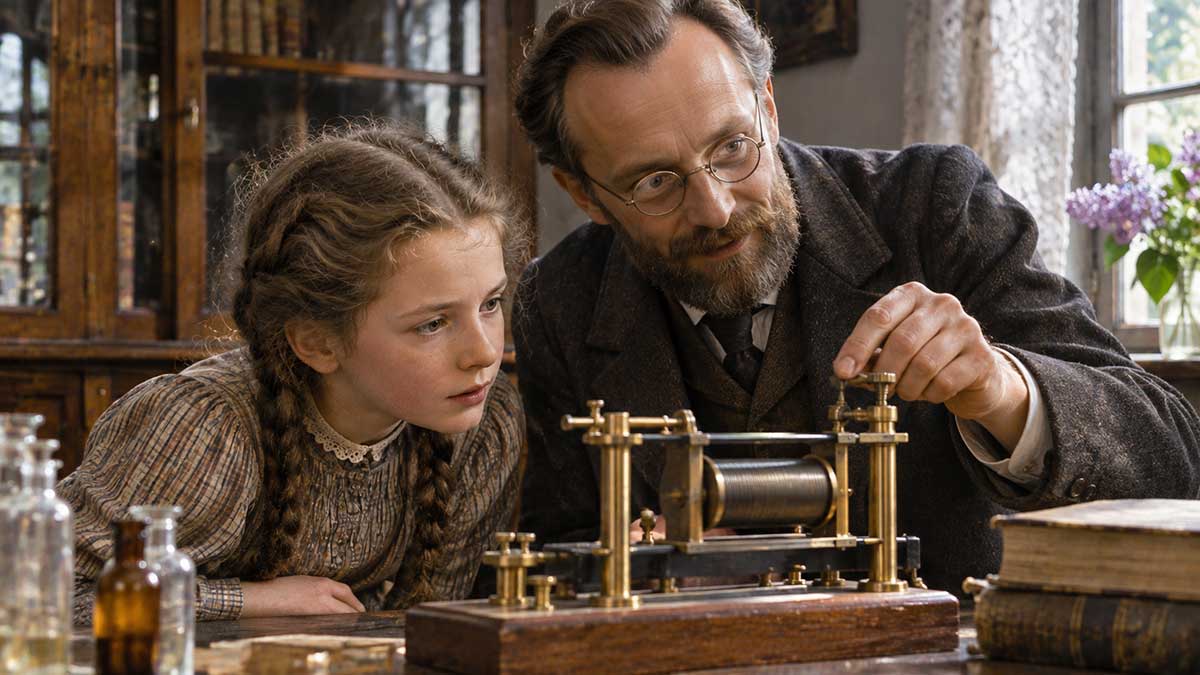
Marie: He did. I remember his scientific instruments. There was a cabinet containing apparatus used for teaching physics. As a child, I found those objects fascinating.
Some were brought home after the authorities removed experimental instruction from the schools where he taught.
Nick: What did you find fascinating about them?
Marie: They belonged to a subject I did not yet comprehend. I wanted to know what they were for and what they could demonstrate.
A child sees an object and asks what it does. A scientist, if she retains some of that curiosity, continues asking such questions throughout her life.
Nick: Were you one of those children who drove their parents crazy asking questions?
Marie: I suspect my father would have preferred questions to silence.
Nick: That's a wonderful answer.
Marie: He was a teacher. He had some practice in answering them.
Nick: What about your mother? What was she like?
Marie's expression softened.
Marie: She was a woman of considerable intelligence and dignity. She had responsibilities of her own, yet she was deeply devoted to her family.
Unfortunately, my memories of her are inseparable from her illness.
She suffered from tuberculosis. There were precautions she had to observe around her children. Affection was complicated by the danger of infection.
Nick: How old were you when she died?
Marie: Ten.
Nick: Ten. And you had already lost one of your sisters?
Marie: Yes. My eldest sister, Zofia, died of typhus two years earlier.
It was a difficult period for our family.
For a moment, Marie looked down at her hands. Nick waited before speaking again.
Nick: I have children of my own. Ten seems terribly young to experience that much loss.
Marie: It is young. But children continue to grow, regardless of what happens around them. There are lessons to prepare, examinations to pass, and people who still need one's affection.
My father had lost his wife. My brothers and sisters had lost their mother. None of us experienced the loss alone.
Nick: Did losing your mother change your religious beliefs?
Marie: My mother was a religious woman. My father approached many questions differently.
As I grew older, I found myself increasingly unable to accept certain religious explanations. The questions of suffering and death were not easily resolved for me.
Nick: Did science eventually give you the answers religion couldn't?
Marie: Science gave me methods for investigating certain questions. It did not explain why my mother had to die when she did.
Those are different matters.
Nick: I'm glad you made that distinction.
Marie: It would be unreasonable to demand from physics an explanation of every human sorrow.
Nick: When you were a little girl, did you already know that you wanted to become a scientist?
Marie: No. I knew that I wanted to learn. That is rather different from knowing what profession one will pursue.
At fifteen, I completed my secondary education. I received a gold medal, which pleased my father greatly.
But receiving a medal did not create a university at which I could continue my studies.
Nick: Women couldn't attend the university in Warsaw?
Marie: Not under the arrangements that existed then.
One could demonstrate considerable ability and still discover that the next door was closed.
Nick: What did you do?
Marie: We looked for another door.
Question 2: You spent years helping your sister become a doctor before you could pursue your own education. Did you ever worry that your opportunity might never come?
Nick: Your sister Bronisława wanted to study medicine, and you wanted to study science. Neither of you had much money. How did you work that out?
Marie: Bronya and I understood that our father could not finance both our educations abroad. We had to find another arrangement.
She would go to Paris first. I would earn money and help support her studies. When she was established, she would help me.
Nick: That's an incredible agreement between two sisters.
Marie: It was a practical agreement.
Nick: But you were giving up years of your own life.
Marie: I was postponing my studies, not abandoning them.
There was an important difference.
Nick: How did you earn the money?
Marie: I worked as a governess, teaching children in private households. It was respectable employment for an educated young woman, and it offered a means of saving money.
I continued studying independently whenever my circumstances permitted.
Nick: What subjects?
Marie: Mathematics, physics, and chemistry. I read what I could obtain. There were gaps in my education that I needed to fill before attempting university examinations.
Nick: And you participated in something called the Flying University?
Marie: Yes. There were private educational circles in Warsaw that offered instruction outside the official system. Their activities had to be conducted discreetly.
Women could attend lectures and study subjects that were otherwise difficult for them to pursue.
Nick: The name makes it sound like something out of an adventure novel.
Marie: It was considerably less comfortable than an ordinary university.
Nick: No permanent classrooms?
Marie: The arrangements could change. The important thing was that the teaching continued.
Nick: What strikes me is how many people were cooperating simply to make education possible.
Marie: That was necessary. We could not wait for the authorities to provide everything we needed.
There were people willing to teach and people eager to learn. Between them, something could be accomplished.
Nick: During your years as a governess, you fell in love with a young mathematician, didn't you?
Marie: Kazimierz Żorawski.
Nick: What happened?
Marie: He was the son of the family for whom I worked. We were young, and there was affection between us.
His family did not approve of the possibility of marriage.
Nick: Was it a question of social class?
Marie: In considerable part, yes. A governess was not regarded as a suitable wife for their son.
Nick: That must have hurt.
Marie: Naturally.
Nick: Did you consider giving up your plans for Paris if the marriage had become possible?
Marie considered the question.
Marie: At that age, I did not possess a complete plan for my life. There were several possibilities before me, and not all of them could be reconciled.
I had responsibilities to my sister and my family. I wanted an education. I had personal attachments.
It would be inaccurate to describe my younger self as someone concerned exclusively with science.
Nick: That's something people might find surprising about you.
Marie: Why should it be surprising? I was a young woman.
Nick: Fair point. We tend to look at famous people backward. We know what they eventually became, so we assume everything they did was leading toward that outcome.
Marie: One does not live one's life backward.
Nick: That's very true.
Marie: At twenty, I did not know that I would discover radium. I did not know Pierre Curie. I did not know that I would spend most of my adult life in France.
I knew only the circumstances immediately before me.
Nick: Were there moments when you became discouraged?
Marie: Certainly. Years of waiting can become very long.
I was fortunate that my sister and I had made an agreement. Her progress was something I could observe. It made my own plans more concrete.
Nick: So when Bronya succeeded, it wasn't a reminder that you were falling behind?
Marie: Her success was part of our arrangement. Why would I wish her to fail?
Nick: I suppose some people would become jealous.
Marie: I wanted her to become a physician. I wanted to study science. There was no necessary contradiction between those ambitions.
Nick: And eventually she kept her promise.
Marie: She did. She married a Polish physician, Kazimierz Dłuski, and established herself in Paris. She invited me to join them.
By then, the possibility of studying at the university had become real.
Nick: Do you ever think about how different your life might have been without your sister?
Marie: Of course. My education was made possible through the efforts of several people.
My father, my sister, teachers, and others who encouraged me contributed to it.
One must be careful when describing an accomplishment as entirely one's own.
Nick: I like hearing that from someone whose name is known throughout the world.
Marie: A name on a scientific paper does not tell you everything that made the work possible.
Nick: So, in 1891, after all those years of waiting, you finally got on a train to Paris.
Marie: Yes. I was nearly twenty-four.
Nick: Were you frightened?
Marie: I had many practical concerns. My French was not yet sufficient for every difficulty I would encounter. My financial resources were limited. I knew that my preparation was imperfect.
But I had wanted to go for a very long time.
The prospect of attending university was far more interesting than remaining where I was.
Question 3: You were poor, cold, and often hungry in Paris, yet you remembered those years with affection. What made you so happy?
Nick: Marie, this is one of the parts of your life I find most fascinating. You finally arrived in Paris, but you weren't living comfortably. You had very little money, your room was cold, and you were studying almost constantly.
Yet when you wrote about those years, you described them with affection. Why?
Marie: For the first time, I could devote nearly all my time to the subjects I wished to study.
Initially, I lived with Bronya and her husband. They were very kind to me, but their home was some distance from the university. I eventually rented a small room nearer my studies.
It was not particularly comfortable.
Nick: How uncomfortable are we talking?
Marie: In winter, it could become extremely cold. I sometimes had insufficient fuel for heating.
I prepared simple meals for myself. There was little money for anything unnecessary.
Nick: What did you eat?
Marie: Bread, butter, tea, eggs, and whatever else I could afford. I was not particularly attentive to the preparation of meals.
Nick: You were too busy studying?
Marie: Frequently.
Nick: I have to ask. Did you ever look around at your room and think, "What on earth have I done?"
Marie: I had already spent several years considering what I wished to do. Arriving in Paris did not make me reconsider it merely on account of a cold room.
Nick: But you must have missed your family.
Marie: Certainly. I missed Poland and the people I loved.
Happiness does not require the absence of every difficulty.
There were lectures to attend, books to read, and problems that occupied my thoughts. I had access to an education that had once seemed very distant.
That gave me considerable satisfaction.
Nick: What was the university like for a young woman studying physics?
Marie: There were very few women. The instruction was demanding, and I discovered that I needed to improve my preparation considerably.
I was particularly conscious of the mathematical knowledge required.
Nick: Were the male students more advanced than you?
Marie: Some were better prepared. That was a circumstance I had to address through study.
Nick: Did you feel you had something to prove?
Marie: I wished to pass my examinations and acquire the knowledge necessary for scientific work.
If I had devoted too much attention to what other students thought of me, I would have had less time for mathematics.
Nick: That's probably a healthy way to look at it.
Marie: It was a necessary way to look at it.
Nick: And you ended up finishing first in physics?
Marie: In 1893, yes. The following year, I obtained my degree in mathematics, ranking second.
Nick: Second? What happened there?
Marie looked at him with an expression of mild amusement.
Marie: Someone performed better.
Nick laughed.
Nick: I walked right into that one.
Marie: You did ask.
Nick: What was it about physics that you loved so much? Was there something particular that drew you to it?
Marie: I liked the relationship between observation and reasoning.
You could examine a phenomenon, make measurements, and attempt to discover the principles governing it.
Mathematics permitted you to express relationships with a precision that ordinary language could rarely achieve.
There was great satisfaction in finding that something apparently complicated could be described by a clear physical principle.
Nick: Can you give me an example that someone like me could follow?
Marie: Consider a pendulum.
Nick: A weight swinging back and forth?
Marie: Yes. You might observe several pendulums of different lengths and wonder what determines the time required for each oscillation.
You can measure their motion, compare the results, and discover a relationship between the length of the pendulum and its period.
What initially appears to be a simple movement contains a physical principle that can be investigated and expressed mathematically.
Nick: And the exciting part is discovering the rule behind something everybody can see?
Marie: Precisely. Familiar phenomena are not necessarily well understood merely through familiarity.
Nick: I think I can see why you loved it. You could spend your entire life looking at ordinary things and never run out of questions.
Marie: That has certainly been my experience.
Nick: Did you have any enjoyment outside studying during those Paris years? Did you walk around the city, visit cafés, or spend time with friends?
Marie: I had Polish acquaintances and friends. I enjoyed conversation and the company of people interested in intellectual matters.
I was not much occupied with fashionable Parisian society. My resources and interests did not lead me in that direction.
But one did not require a great deal of money to appreciate a walk through the city or a pleasant afternoon outdoors.
Nick: What did Paris feel like compared with Warsaw?
Marie: It was a city in which I could attend the university and pursue scientific instruction.
That difference was immensely significant to me.
Yet Paris did not replace Warsaw in my affections. I continued to think about returning to Poland.
Nick: You didn't originally intend to spend the rest of your life in France?
Marie: No. I hoped that my education might enable me to contribute something to my own country.
France offered me opportunities that were unavailable in Poland, but my attachment to Poland remained.
Nick: So you were standing between two possible futures.
Marie: Yes, though I did not think of it in quite those terms at the time.
I was still trying to establish myself scientifically.
Nick: Looking back, do you wish someone had made those student years easier for you?
Marie: Better living conditions would certainly have been welcome. There is no particular scientific merit in being cold or inadequately nourished.
A student should have sufficient food, proper accommodation, and the necessary books and instruments.
I would wish those things for any young person undertaking serious studies.
Nick: That's interesting. You value what those years gave you, but you wouldn't necessarily recommend the hardship.
Marie: Exactly. It was the opportunity to learn that made those years valuable to me, not the absence of heating.
Nick: I think that's a distinction a lot of people need to hear.
Marie: It is one reason I have become interested in the conditions under which younger researchers work.
A person may possess considerable scientific ability and still accomplish very little if the necessary facilities are unavailable.
Nick: You experienced that firsthand.
Marie: Many scientists have.
Nick: Did you have a particular scientific dream when you finished university?
Marie: I wanted to undertake research. In 1894, I received an opportunity to investigate the magnetic properties of different kinds of steel.
I needed laboratory space and suitable equipment.
A Polish acquaintance, Professor Józef Kowalski, suggested that he introduce me to a physicist who might be able to help.
Nick: And that physicist was Pierre?
Marie: Yes. Pierre Curie.
Closing
Outside the office window, the afternoon sunlight had shifted across the garden. A researcher passed through the corridor carrying a notebook, and somewhere in the building a door opened and closed.
Marie glanced briefly at the scientific papers she had set aside. Nick noticed that her expression had changed at the mention of Pierre. There was a quiet warmth in her face.
Nick: It's remarkable. You spent years trying to get to Paris, finally earned your degrees, and were preparing to return to Poland. Then someone introduced you to a physicist who might help you find laboratory space.
Marie: That was the original purpose of the introduction.
Nick: Laboratory space. That's how one of the most extraordinary scientific partnerships in history began?
Marie: Scientific arrangements sometimes have unexpected consequences.
Nick: Apparently so. What was your first impression of him?
Marie leaned back slightly in her chair.
Marie: He was a rather unusual man.
Nick: Unusual in what way?
Marie: Well, he was not particularly interested in the things that occupied most men of his age. His thoughts were very often elsewhere.
Nick: Thinking about physics?
Marie: Frequently.
Nick: I suspect you didn't consider that a disadvantage.
Marie smiled.
Marie: No. I understood it rather well.
Topic 2: The Man Who Shared Her Dream
Opening
The afternoon continued at the Radium Institute. Through the office windows, the garden offered a quiet contrast to the laboratories where researchers investigated the properties of radioactive substances. Inside the building, instruments descended from the pioneering work of Pierre and Marie Curie were helping another generation of scientists measure phenomena that had once seemed inexplicable.
Marie rose from her chair and invited Nick to accompany her into the adjoining laboratory. Glass vessels, measuring apparatus, and carefully arranged notebooks occupied the work surfaces. The surroundings were considerably better equipped than the improvised facilities in which she and Pierre had conducted their earliest investigations.
She stopped beside an electrical measuring instrument. For a moment, the conversation seemed to bring together two different periods of her life: the established scientist directing an institute in 1933 and the young Polish researcher who had once struggled to find a suitable place to conduct an experiment.
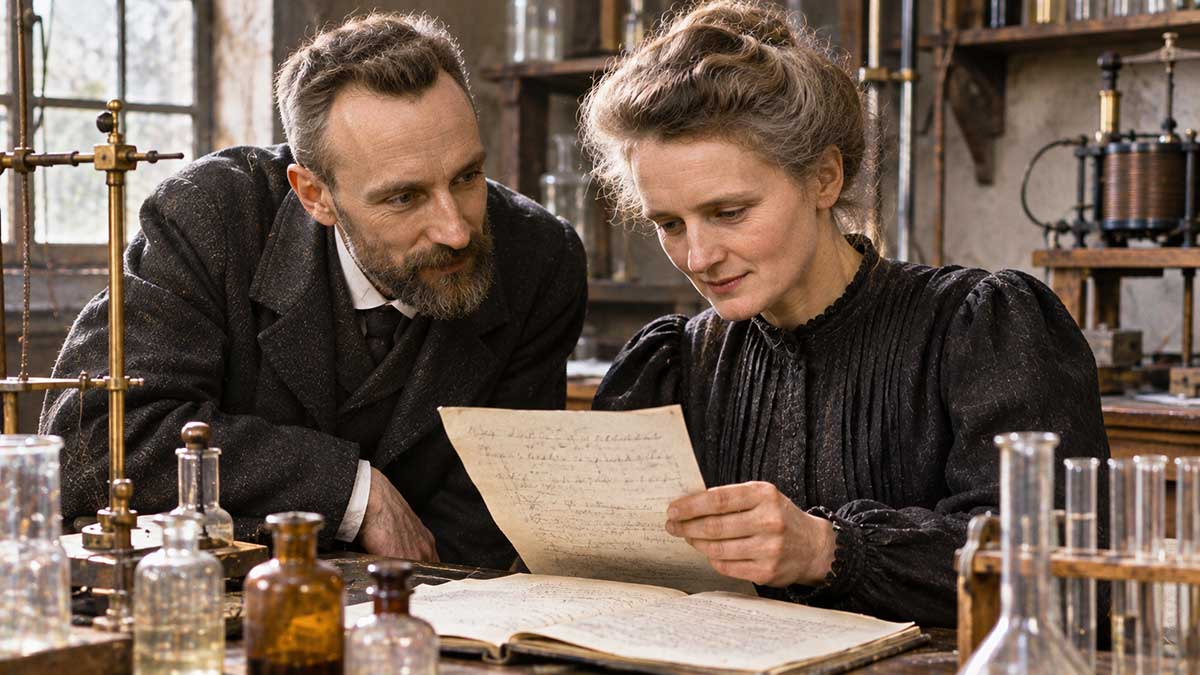
Marie Curie: Pierre and his brother Jacques developed instruments that made remarkably sensitive electrical measurements possible. Their earlier investigations proved extremely useful in my research.
Nick Sasaki: So, before you became his wife, you were interested in his equipment?
Marie turned to him with an amused expression.
Marie: I was interested in obtaining somewhere to work. The equipment was a separate consideration.
Nick: And the man himself?
Marie: That required further investigation.
Nick: Naturally. A proper scientific approach.
Marie laughed quietly.
Marie: I would not recommend applying laboratory methods to every personal decision.
Nick: Fair enough. But I'm curious about that first meeting. You had no intention of marrying a French physicist when you came to Paris.
Marie: None whatsoever.
Nick: Yet here we are, standing in an institute that bears the history of your work together.
Marie: Life occasionally makes arrangements quite different from those we intended.
Question 4: When you first met Pierre, what attracted you to him as a man rather than simply as a scientist?
Nick: Take me back to 1894. You're twenty-six years old, you've completed your studies, and you're introduced to Pierre Curie. What did you notice about him?
Marie: His manner was very simple. There was something sincere about him. He did not appear particularly concerned with impressing people.
Our first conversations concerned scientific matters, which suited us both.
Nick: Was he shy?
Marie: In certain circumstances, yes. He was not a man who sought social attention. He could become so occupied with a scientific problem that other matters received very little consideration.
Nick: That sounds familiar.
Marie: We had certain similarities.
Nick: What was he investigating when you met him?
Marie: He had conducted important work on crystals with his brother Jacques. They discovered that mechanical pressure applied to certain crystals could produce electrical effects.
Pierre was pursuing investigations into magnetism when I became acquainted with him.
Nick: So he was already a serious scientist in his own right.
Marie: Certainly. His scientific accomplishments preceded our marriage by many years.
He possessed a particularly beautiful way of thinking about physical problems. He was interested in symmetry, relationships, and the fundamental properties of matter.
Nick: Did you find his intelligence attractive?
Marie: Intelligence alone would not have been sufficient.
Nick: What else was there?
Marie: His character. His sincerity. His lack of pretension.
I felt that I could speak to him without having to present myself as someone different from the person I was.
Nick: That's a rare experience.
Marie: It was valuable to me.
He took my scientific ambitions seriously. I did not have to explain why I wished to continue working or persuade him that my education mattered.
Nick: At that time, was it unusual for a man to feel that way about a woman?
Marie: It was certainly not an attitude one could take for granted.
There were men who admired educated women but expected their intellectual activities to become secondary after marriage.
Pierre did not propose such an arrangement.
Nick: What did he propose?
Marie: A shared life in which we could continue our work.
Nick: That sounds almost like a scientific partnership with a marriage attached.
Marie: There was affection, Nick.
Nick: I'm relieved to hear that.
Marie smiled.
Marie: We were human beings before we were collaborators.
Nick: But you didn't immediately accept him, did you?
Marie: No. I still intended to return to Poland.
My education had been made possible through considerable effort by my family. I had hoped to use what I learned in France to contribute to my own country.
Remaining in Paris was not a simple decision.
Nick: How did Pierre respond to that?
Marie: He understood that Poland mattered to me. In his correspondence, he expressed the hope that we might find a way to share our lives without abandoning the ideals that were important to either of us.
He was prepared to consider considerable changes to his own circumstances.
Nick: Including moving to Poland?
Marie: He was willing to contemplate it, yes.
Nick: That's quite a statement from someone who had already established a scientific career in France.
Marie: It indicated the seriousness of his intentions.
But the practical difficulties were considerable. Scientific opportunities in Poland were limited, particularly for a woman in my position.
Nick: Did you feel that choosing Pierre meant choosing France over Poland?
Marie: That was one of the difficulties I had to resolve.
I came to recognize that remaining in France did not require me to cease being Polish.
I could maintain my attachment to my country and continue my scientific work elsewhere.
Nick: And eventually you married in July 1895.
Marie: Yes. It was a simple civil ceremony.
Nick: I've read that you didn't wear a traditional wedding dress.
Marie: I preferred a dress that could be useful afterward.
Nick: In the laboratory?
Marie: It was a practical dark-blue dress. I had little reason to acquire a garment that would serve me for only one day.
Nick: Most brides probably wouldn't approach their wedding clothes quite that way.
Marie: Perhaps they had different requirements.
Nick: What did you do for your honeymoon?
Marie: We traveled by bicycle.
Nick: Seriously?
Marie: Yes. We had obtained bicycles and enjoyed traveling through the countryside.
Nick: Two physicists riding bicycles through rural France. That's a beautiful picture.
Marie: We enjoyed being outdoors. We liked the countryside, the freedom of traveling independently, and the simplicity of those excursions.
Nick: Did you manage to leave physics behind?
Marie: Not entirely, I suspect.
Nick: I knew it.
Marie: But there was no obligation to discuss science every moment of the day. We could appreciate a pleasant road, a forest, or a quiet place to rest.
Nick: Were those some of your happiest memories?
Marie looked briefly through the laboratory window.
Marie: Those excursions were very dear to me.
Our lives later became more complicated. There were children, teaching responsibilities, research difficulties, and public attention.
In those earlier years, we possessed a simplicity that was difficult to recover afterward.
Nick: What was an ordinary evening like in your home? Did you cook dinner and then sit around discussing the properties of crystals?
Marie: There were meals to prepare and household matters to attend to. Neither of us had much interest in elaborate domestic arrangements.
We did discuss scientific questions at home. Sometimes a problem that had occupied one of us during the day continued to occupy us in the evening.
Nick: Did you ever disagree?
Marie: Naturally. Agreement is not a requirement of scientific cooperation.
Nick: Who usually won?
Marie: The evidence, one hoped.
Nick: That's probably the safest way to settle an argument between two physicists.
Marie: It is considerably more satisfactory than deciding according to temperament.
Nick: You make it sound like a remarkably peaceful marriage.
Marie: We had our difficulties. We had limited resources, demanding responsibilities, and periods of considerable fatigue.
But there was a fundamental agreement between us concerning the kind of life we wished to lead.
That mattered greatly.
Nick: Then, in 1897, your first daughter arrived.
Marie: Irène.
Nick: How did becoming parents change things?
Marie: It introduced responsibilities that could not be postponed until an experiment was completed.
A child has requirements of her own.
Nick: Children are famously uninterested in research schedules.
Marie: Indeed.
Pierre's father was a physician, and his assistance became very valuable to us. We were fortunate to have his support.
Nick: So this extraordinary scientific partnership was developing at the same time you were learning how to be parents.
Marie: Yes. Scientific work does not occur outside ordinary human life.
There were appointments, meals, illnesses, household expenses, and a little girl who required attention.
Our investigations had to exist within those circumstances.
Nick: And somewhere in the middle of all that, you decided to investigate a mysterious phenomenon that hardly anybody understood.
Marie: Henri Becquerel's uranium rays.
Nick: That's what I'd love you to explain to me.
Question 5: Can you take me through the moment when your measurements suggested that something existed that science had never identified?
Marie moved closer to the measuring apparatus and indicated several of its components.
Marie: We must begin with Becquerel.
Nick: He discovered radioactivity before you?
Marie: He discovered that uranium compounds emitted radiation spontaneously. His observations in 1896 provided the starting point for my investigations.
Wilhelm Röntgen had discovered X-rays the previous year, and there was considerable interest in these unusual forms of radiation.
Nick: What made Becquerel's discovery different?
Marie: Uranium emitted its rays without requiring illumination or another apparent external stimulus.
That was a remarkable circumstance.
Nick: So the material itself was producing something?
Marie: Yes. The radiation appeared to arise from the substance itself.
I wanted to investigate the phenomenon quantitatively.
Nick: Meaning you wanted to measure it?
Marie: Precisely. It was insufficient merely to establish that the rays existed. I wished to determine their intensity and examine how that intensity varied under different conditions.
Nick: How could you measure something you couldn't see?
Marie: The rays affected the air through which they passed, making it capable of conducting a small electrical current.
With sufficiently sensitive apparatus, one could measure that current.
Pierre and Jacques's earlier work on piezoelectricity provided a means of making such measurements with considerable precision.
Nick: So you were measuring an electrical effect produced by the radiation?
Marie: Exactly.
The apparatus permitted me to compare different substances rather than relying upon visual impressions.
Nick: What did those comparisons reveal?
Marie: One of the first significant findings was that the intensity of the radiation from uranium compounds depended principally upon the quantity of uranium present.
The chemical combination in which the uranium existed did not appear to determine its activity.
Nick: Why was that such a big deal?
Marie: Chemical reactions ordinarily involve changes in the arrangement and combination of atoms.
If the radiation remained a characteristic of uranium regardless of its chemical combination, that suggested that its origin was connected with the uranium atom itself.
Nick: Not the particular chemical compound?
Marie: Correct.
Nick: And scientists at that time didn't really know what was happening inside an atom?
Marie: Our knowledge was considerably more limited than it is today.
The atom had long been regarded as a fundamental unit of matter. Discoveries around the end of the nineteenth century were beginning to alter that conception.
Radioactivity contributed to this change.
Nick: That's astonishing. You were investigating something that suggested the atom wasn't quite what people thought it was.
Marie: Yes, but such conclusions had to be supported by observations.
One must distinguish an interesting possibility from an established result.
Nick: What happened next?
Marie: I investigated other substances. Thorium compounds exhibited similar activity, a finding reached independently by Gerhard Carl Schmidt.
This suggested that uranium was not unique in possessing the property.
I used the term radioactivity to describe the phenomenon.
Nick: You actually introduced that word?
Marie: Yes.
Nick: A word that eventually became part of everyday language.
Marie: At the time, it was simply necessary to have a suitable term for the property we were investigating.
Nick: Then you started examining minerals?
Marie: Among the substances I investigated were pitchblende and chalcolite, both containing uranium.
Certain samples exhibited greater activity than I expected from their uranium content.
Nick: How much greater?
Marie: Some were several times more active than metallic uranium.
Nick: Wait a minute. If uranium was the source of the radiation, how could a mineral containing uranium produce more radiation than the uranium itself?
Marie: That was precisely the difficulty.
Nick: So something wasn't adding up.
Marie: Yes.
There were several possibilities to consider. The measurements might have been incorrect. Some chemical or physical circumstance might have influenced the result. Or the minerals might contain another substance possessing greater activity than uranium.
Nick: How did you eliminate the other possibilities?
Marie: I repeated the measurements and examined additional materials.
I prepared artificial chalcolite from known constituents. Its activity corresponded to what one would expect from its uranium content.
The naturally occurring mineral behaved differently.
Nick: That's brilliant.
Marie: It was a useful comparison.
Nick: You're basically saying that when you made the mineral yourself from known ingredients, the mysterious extra activity disappeared.
Marie: That is a reasonable way to describe the result.
Nick: Which suggested there was something in the natural mineral that you hadn't put into the artificial one.
Marie: Exactly.
Nick: What did you feel when you realized that?
Marie: It was a very interesting possibility.
Nick: Marie, that's the understatement of the century.
She smiled.
Marie: At that stage, I had not established the existence of a new element. I had established a reason to investigate whether one might be present.
Nick: Were you excited?
Marie: Certainly. But excitement could not substitute for further work.
Nick: Did you immediately tell Pierre?
Marie: We discussed the results. He became sufficiently interested in the problem to interrupt his own investigations and join mine.
Nick: That's a pretty significant decision. He had his own research, his own scientific interests, and he decided that what you were investigating was worth pursuing together.
Marie: Yes. We believed there was a possibility of discovering something new.
We began separating the mineral into different chemical fractions and examining their activity.
Nick: How does that work?
Marie: Different elements possess different chemical properties. Through chemical procedures, one can separate substances according to those properties.
After each separation, we measured the activity of the resulting fractions.
If the activity became concentrated in a particular fraction, that gave us information about the chemical behavior of the substance responsible.
Nick: So the radiation itself was helping you track something you couldn't otherwise identify?
Marie: Yes. Its activity served as a means of following it through the chemical operations.
Nick: Almost like having a signal from something hidden inside the material.
Marie: That is a useful comparison.
Nick: And the first new element was polonium?
Marie: In July 1898, we announced evidence for a new radioactive substance associated chemically with bismuth.
We proposed the name polonium.
Nick: After Poland.
Marie: Yes.
Nick: That must have been deeply personal.
Marie: Poland did not exist as an independent country at that time. I wished its name to appear in connection with the discovery.
Nick: A country missing from the political map would have its name permanently associated with a chemical element.
Marie: That was meaningful to me.
Nick: Did you already know there was another element in the mineral?
Marie: Our investigations continued. We found another highly active substance associated chemically with barium.
In December 1898, Pierre, Gustave Bémont, and I announced evidence for the existence of radium.
Spectroscopic observations by Eugène Demarçay provided further support.
Nick: You mentioned two other scientists there. I think most people assume it was just you and Pierre.
Marie: Scientific work frequently involves contributions from several people.
Our collaborators possessed knowledge and abilities that were valuable to the investigation.
Nick: So announcing the existence of radium wasn't the same as having a piece of pure radium sitting on your desk?
Marie: Not at all.
We had evidence of its existence, but obtaining sufficiently purified material was an entirely different undertaking.
Nick: How difficult was that?
Marie: Extremely difficult.
The proportion of radium in the mineral was exceedingly small. We required large quantities of material and repeated chemical separations.
Nick: What sort of quantities?
Marie: We processed considerable quantities of residues from uranium extraction. The work eventually involved tons of material.
Nick: Tons?
Marie: Yes.
Nick: To obtain something you could barely see?
Marie: The quantities of radium compounds we ultimately obtained were very small in comparison with the original material.
Nick: That's almost difficult to comprehend.
Marie: There was much repetitive work. Chemical operations had to be performed, sometimes under uncomfortable conditions.
We received assistance from others, including people who helped with the industrial processing of the residues.
Nevertheless, a great deal remained to be done in our laboratory.
Nick: Was that the famous shed where you and Pierre worked?
Marie: Yes. It was a former dissecting room made available to us. Its facilities were very inadequate for the work.
The roof was imperfect. The temperature could become unpleasant. Ventilation and equipment presented difficulties.
Nick: Yet you've described those years as some of the happiest of your life.
Marie: They were.
Nick: How?
Marie: We were investigating a phenomenon that interested us profoundly.
Every successful separation, every measurement that provided additional information, brought us a little nearer to establishing what these substances were.
We were tired, certainly. There were difficulties that we would gladly have avoided.
But the work itself gave us tremendous satisfaction.
Nick: Was there ever a moment when you and Pierre looked at each other and realized, "We've actually done it"?
Marie: There was no single moment that completed the investigation.
There were successive stages. Establishing evidence for the new elements, obtaining purer compounds, determining atomic weight, investigating their properties.
In 1902, I obtained sufficiently purified radium chloride to determine the atomic weight of radium with much greater confidence.
The isolation of metallic radium came later, in 1910, through work I conducted with André Debierne.
Nick: That's an important distinction.
Marie: Yes. Discovery is often described as a moment. In experimental science, it may occupy years.
Nick: I've heard stories about the two of you visiting the laboratory at night to look at the glowing substances.
Marie: We did enjoy returning to the laboratory in the evening.
Certain preparations exhibited a remarkable luminosity. Their faint light was particularly visible in the darkness.
It was a beautiful sight.
Nick: What did it look like?
Marie: A gentle luminosity emerging from the preparations. In the darkness, one could distinguish their positions without ordinary illumination.
There was something very pleasing about seeing the results of our investigations in that form.
Nick: You and Pierre standing there together, looking at something hardly anyone had seen before.
Marie: We were very happy in those moments.
Nick remained silent for several seconds.
Nick: I can see why.
Question 6: You and Pierre could have sought exclusive patent rights over your radium extraction method. Why did you choose to share it?
The two returned to Marie's office. She moved a small stack of correspondence from the corner of her desk and sat down. From the adjoining rooms came the faint sound of researchers continuing their afternoon work.
Nick: There's a decision you and Pierre made that I find extraordinary. You had discovered something of enormous scientific interest, something that eventually became incredibly valuable. Yet you didn't patent your method of extracting radium.
Marie: No. We published the procedures and made the information available to others.
Nick: Did you discuss the possibility of patenting it?
Marie: We considered the question of how the information should be communicated. Our preference was that other scientists and interested parties should have access to the methods.
We did not wish to reserve the process for our exclusive benefit.
Nick: But you weren't wealthy.
Marie: Certainly not.
Nick: You had a daughter, inadequate laboratory facilities, and years of difficult work behind you. Surely the money could have made your lives much easier.
Marie: It could have improved our circumstances.
Nick: Did that tempt you?
Marie: We were interested in obtaining better conditions for our investigations. That was a very real concern.
But we did not regard exclusive ownership of the process as the arrangement we wished to pursue.
Nick: Why?
Marie: Other investigators needed access to radioactive substances. There were questions in physics, chemistry, and medicine that could not be investigated without suitable material.
Restricting access to the procedures would not have served the scientific development we hoped to encourage.
Nick: Were you already thinking about the medical possibilities?
Marie: They became increasingly apparent during the investigations.
But one must not misunderstand the original purpose of the work.
We did not begin our research with a medical treatment in mind. We were studying a physical phenomenon.
Nick: That's what fascinates me. You followed a question, and the answer turned out to have applications you couldn't have predicted.
Marie: That is one of the reasons fundamental research deserves support.
A scientific investigation may initially appear to have no practical application. Its significance may become apparent only after additional discoveries have been made.
Nick: What happens if society only funds research that can produce an immediate financial return?
Marie: Many important investigations would become difficult to undertake.
One cannot always determine the practical consequences of knowledge before acquiring that knowledge.
Nick: So you have to allow scientists to be curious?
Marie: Curiosity must be accompanied by serious work, proper methods, and adequate facilities.
But yes, there must be freedom to investigate questions whose eventual usefulness is uncertain.
Nick: Did Pierre feel the same way?
Marie: Very much so.
He possessed little interest in accumulating wealth. He wished to have the conditions necessary to conduct his research.
Nick: There's something almost contradictory about your situation. You didn't want to become rich from radium, but you desperately needed money to continue investigating it.
Marie: That distinction is important.
Scientific work requires resources. Laboratories must be constructed, instruments purchased, materials obtained, and researchers supported.
We were not opposed to obtaining money for those purposes.
Nick: You just weren't particularly interested in becoming wealthy yourselves.
Marie: Our personal requirements were relatively modest.
Nick: Did you ever regret the decision not to patent the process?
Marie: There were occasions when the difficulty of obtaining sufficient resources became very frustrating.
But I would distinguish that difficulty from a regret about making scientific information available.
I wished for better support for research. I did not wish for less communication between investigators.
Nick: That makes sense.
Then came 1903. You finished your doctorate, and suddenly you, Pierre, and Henri Becquerel were awarded the Nobel Prize in Physics.
Marie: Yes.
Nick: Did you know that there had been discussions about recognizing Pierre and Becquerel without including you?
Marie: I became aware of the circumstances.
Pierre had communicated his position concerning the importance of my contribution.
Nick: He made it clear that your work needed to be recognized?
Marie: Yes. The investigations into radioactive substances had begun with my research. He considered it appropriate that this should be acknowledged.
Nick: What did that mean to you personally?
Marie: It was consistent with his character.
Pierre was concerned with the scientific facts of the matter. He knew how the investigations had originated and how they had developed.
Nick: I love that he didn't treat your success as something that diminished his own.
Marie: There was no scientific reason for him to do so.
His accomplishments were his own. Mine were mine. Much of our later work was shared.
Nick: Did winning the Nobel Prize change your relationship?
Marie: The attention surrounding it changed our circumstances considerably.
Nick: In a good way?
Marie: In certain respects. Recognition could assist us in obtaining better facilities.
But the interruption of our ordinary lives was considerable.
Nick: Journalists?
Marie: Journalists, visitors, correspondence, requests for meetings. People wished to see us, speak with us, photograph us, and learn details of our personal lives.
It became difficult to preserve the quiet necessary for our work.
Nick: So the very thing most people would consider the greatest reward for your work actually made it harder to do the work.
Marie: There were advantages and disadvantages.
We were grateful for the recognition. But there were days when we would have preferred to be left in the laboratory.
Nick: Did the two of you ever consider disappearing into the countryside for a few weeks?
Marie: We enjoyed doing so whenever our circumstances permitted.
Nick: Back on the bicycles?
Marie: Sometimes.
Nick: No journalists following you down the road?
Marie: One hoped not.
Nick laughed.
Nick: You know, I came here expecting to ask you about scientific achievement. But the more you tell me about Pierre, the more interested I become in your ordinary life together.
Marie: It was an ordinary life in many respects.
We had our work, our children, our friends, and our difficulties.
Nick: Your second daughter, Ève, was born in 1904, wasn't she?
Marie: Yes, in December.
Nick: You had two little girls, international recognition, and the prospect of better scientific facilities. Did it feel as though life was finally becoming easier?
Marie: There were reasons for optimism.
Pierre had obtained a professorship at the Sorbonne. There was a possibility of improving the conditions of our research.
Our family had grown.
We had many things still to do.
Nick: What were you looking forward to most?
Marie: Continuing our investigations under more satisfactory conditions.
And having sufficient time for our family.
Those were very reasonable hopes.
Nick: Did you and Pierre ever talk about growing old together?
Marie was quiet for a moment.
Marie: We had every reason to expect that there would be many more years of work before us.
We were still relatively young.
Nick: You were thirty-eight when he died.
Marie: Yes.
Nick: And Pierre was forty-six.
Marie nodded.
Closing
The office had grown quieter. Beyond the window, the afternoon light rested upon the garden, and the sounds of the institute seemed more distant than before.
Nick looked at the scientific papers on Marie's desk. Earlier, they had spoken about her childhood ambitions and the freedom she discovered in Paris. Now those papers seemed connected to another story: years of shared work with a man who had understood her aspirations and helped her pursue them.
Nick: Marie, when people read about the two of you, they usually encounter the dates, the discoveries, and the Nobel Prize.
But listening to you, I keep thinking about those evenings in the laboratory and those bicycle rides through the countryside.
Marie: Those were important parts of our life.
Nick: If you could experience one of those ordinary days again, without changing anything, would you?
Marie looked at him thoughtfully.
Marie: There are many days from those years that I would be very glad to experience again.
Nick: Nothing extraordinary would have to happen?
Marie: No. I would not require another discovery.
Nick smiled gently.
Nick: Just another day together.
Marie nodded.
Marie: That would be quite sufficient.
For a little time, neither spoke. Nick did not feel any need to fill the silence.
Eventually, Marie adjusted the papers in front of her.
Marie: We had expected to continue working together for many years.
There was still so much that we wished to investigate.
Nick: And then came that April day in 1906.
Marie: Yes.
Nick: Would you mind telling me about what happened afterward? Not just how you continued your scientific work, but how you managed the ordinary things. Coming home, seeing your daughters, returning to the laboratory.
Marie rested her hands upon the desk.
Marie: The ordinary things were sometimes the most difficult.
Nick: I can believe that.
She looked briefly toward the garden before turning back to him.
Marie: There were two little girls at home. Irène was eight, and Ève was not yet two.
Whatever had happened to me, their lives were continuing.
Nick: And they needed their mother.
Marie: Yes. They did.
Topic 3: The Laboratory Without Pierre
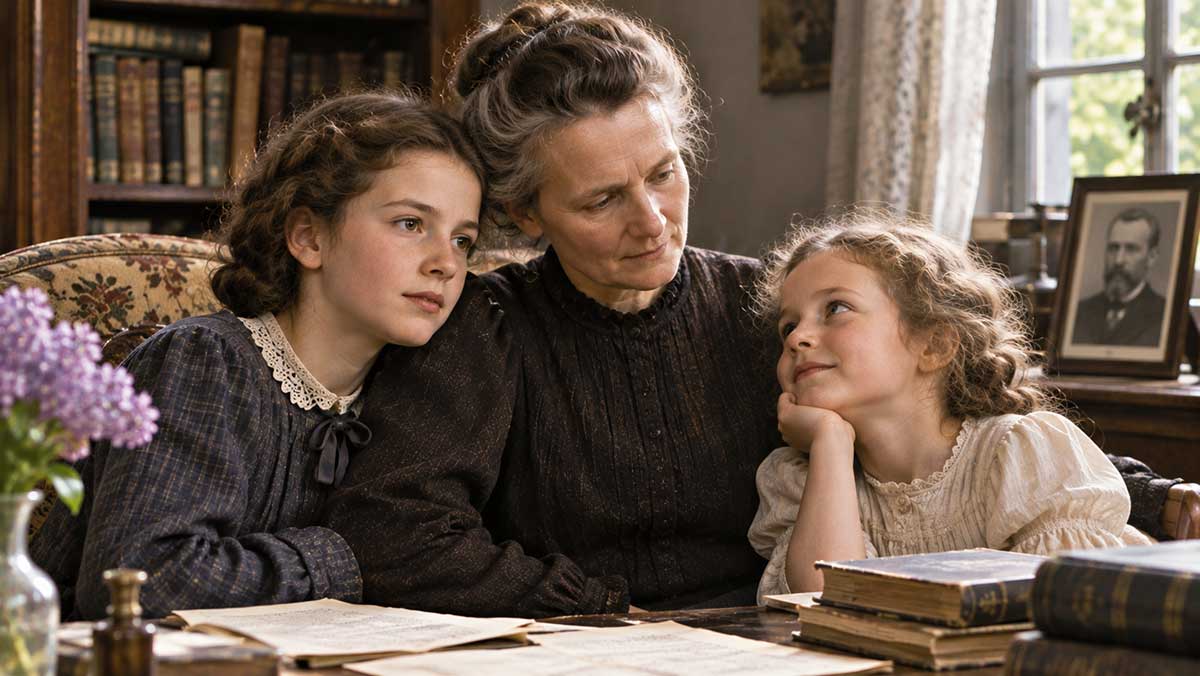
Opening
The afternoon light had softened over the garden of the Radium Institute. Inside Marie Curie's office, the wooden furniture and neatly arranged scientific papers gave little indication of the personal tragedies its occupant had endured. Nearly twenty-seven years had passed since Pierre's death, yet the scientific institution surrounding her owed much to the work they had begun together.
In April 1906, Paris had been a city of horse-drawn carriages, crowded streets, and increasingly visible automobiles. Pierre's sudden death in a street accident had left Marie with two young daughters, unfinished scientific investigations, and an uncertain professional future. She was thirty-eight years old.
Nick shifted slightly in his chair. The conversation had been filled with laughter and scientific excitement only minutes earlier. Now he found himself reluctant to disturb the memories Marie had been sharing.
Nick Sasaki: Marie, before we talk about what happened, there's something I want to ask you.
Marie Curie: Yes?
Nick: When you speak about Pierre today, does it still hurt?
Marie considered the question without immediately answering.
Marie: There are memories that give me considerable pleasure. There are others that remain difficult.
I would not wish to lose the pleasant ones merely to avoid the pain associated with them.
Nick: That's a difficult balance, isn't it?
Marie: I do not know that one necessarily achieves a balance.
One learns to live with the circumstances that exist.
Nick: Twenty-seven years is a long time.
Marie: It is.
Irène is now older than I was during some of our earliest investigations. Ève is a grown woman.
Sometimes it is through observing one's children that one becomes most conscious of the passage of time.
Nick: And yet you can still remember those evenings in the laboratory.
Marie: Very clearly.
Question 7: After Pierre died, what was it like to return to the place where you had spent so much of your life together?
Nick: April 19, 1906. Was it an ordinary day before you received the news?
Marie: There was nothing about the morning that suggested what would happen.
Pierre had been attending to his usual responsibilities. There were matters concerning his teaching and scientific work.
We had no reason to expect that the day would be different from any other.
Nick: He was crossing a street when the accident happened?
Marie: Yes. He was struck by a horse-drawn vehicle near the Pont Neuf.
His injuries were fatal.
Nick: Did you have any opportunity to see him before he died?
Marie: No.
There was no opportunity to prepare oneself, no illness during which one might gradually recognize what was approaching.
He was alive, and then he was gone.
Nick lowered his eyes for a moment.
Nick: I don't think anyone can really prepare for something like that.
Marie: No.
Nick: What happened when you received the news?
Marie: I found it extremely difficult to accept.
There was a distinction between hearing what had happened and comprehending what it meant.
The information was perfectly clear. Its consequences were almost impossible to grasp.
Nick: You could understand the words, but not the reality behind them.
Marie: Yes.
There were arrangements to be made. People came to assist us. Pierre's family was present.
I was grateful for their assistance.
Nick: Did you want people around you, or did you want to be alone?
Marie: There were occasions when solitude was preferable. There were others when the presence of family was necessary.
I could not have given you a consistent answer during those days.
Nick: That's understandable.
I've read that you kept a private diary after Pierre died. You addressed some of the entries directly to him.
Marie: I did write to him.
Nick: What did writing to him give you?
Marie: I would prefer not to discuss everything contained in those pages.
Nick: Of course.
Marie: But there were things I wished to say to Pierre for which there was no longer an ordinary means of communication.
Writing permitted me to express them.
Nick: Were there moments when you almost forgot that he was gone?
Marie: Habits do not disappear immediately.
When one has lived and worked with another person for years, there are countless small circumstances in which one has become accustomed to that person's presence.
A scientific result might ordinarily have been discussed with him. A difficulty might have been brought to his attention.
The circumstances remained. He did not.
Nick: That must have been especially difficult in the laboratory.
Marie: Yes.
There were investigations that belonged to our shared work. There were instruments he had used and questions we had discussed.
Returning to those things was not a simple experience.
Nick: Did you ever consider leaving science altogether?
Marie: I cannot say that I made a careful examination of every possible future during that period.
There were responsibilities before me. Our investigations were unfinished. I had two children.
Decisions had to be made, regardless of whether I felt prepared to make them.
Nick: Were you concerned about supporting your daughters financially?
Marie: Certainly.
Scientific work was my profession. I needed to establish circumstances in which I could continue that work and provide for my family.
Nick: The French government offered you a pension after Pierre's death, didn't it?
Marie: A pension was proposed. I declined it.
Nick: Why?
Marie: I was capable of undertaking professional work. I wished to continue doing so.
There was a possibility of assuming responsibilities at the university, and that seemed a more appropriate arrangement for me.
Nick: Some people might see that as extraordinary determination.
Marie: It was a practical decision, too.
I had been educated for scientific work. I had experience in research and teaching. I did not wish those abilities to become unused.
Nick: Did continuing your research make you feel closer to Pierre?
Marie looked at the papers on her desk.
Marie: His contribution remained present in much of the work.
But I would not describe scientific research merely as a means of preserving his memory.
It had been important to me before I met him. It remained important afterward.
Nick: I'm glad you said that. You weren't simply continuing his dream. You had a dream of your own.
Marie: We had shared many scientific interests. That did not mean our individual interests had ceased to exist.
Nick: Did you ever become angry that life had taken him away just when your circumstances were beginning to improve?
Marie: We had experienced many years of inadequate facilities. Pierre had finally obtained a position that offered better possibilities.
We had two daughters. There were investigations we wished to undertake.
Certainly, I regretted that he would not experience what we had worked to achieve.
Nick: He never saw this institute.
Marie: No. He did not.
The institute was established years after his death.
Nick: What would he have thought of it?
Marie glanced around the office.
Marie: I suspect he would have been interested in the equipment.
Nick: More than the building?
Marie: Very much more.
Nick: He'd probably walk straight past the entrance and ask where the laboratory was.
Marie: That would not have surprised me.
A small smile appeared on her face.
Nick: I wish he could have seen it.
Marie: So do I.
For several moments, the room was silent.
Nick: Marie, people sometimes say that work can heal grief. Did you find that to be true?
Marie: Work can occupy one's attention. It can provide useful responsibilities and bring one into contact with other people.
But I would hesitate to describe it as a remedy for bereavement.
A scientific investigation may succeed. That success does not alter what has happened in one's personal life.
Nick: You could make an extraordinary discovery and still wish Pierre were sitting beside you.
Marie: Certainly.
Nick: Did that ever make success feel less satisfying?
Marie: Scientific satisfaction and personal sorrow can exist at the same time.
There is no necessity for one to eliminate the other.
Nick: That's something I hadn't really considered.
Marie: Human experience is not always arranged into separate compartments.
Nick: And within months, you were preparing to stand in front of Pierre's students.
Marie: Yes. The university had made its decision.
Question 8: When you stood before Pierre's students for the first time, everyone must have wondered what you would say. Why did you begin with physics?
Nick: November 5, 1906. I would have loved to have been present in that lecture hall.
Marie: There were quite enough people present without you.
Nick laughed.
Nick: I've heard that the room was crowded with students, journalists, and people who were curious to see what would happen.
Marie: There was considerable public interest.
The appointment of a woman to undertake such teaching responsibilities at the Sorbonne was unusual.
Pierre's death had attracted considerable attention, too.
Nick: Were you nervous?
Marie: I was conscious of the responsibility involved.
I had prepared the lecture carefully. I knew the subject I intended to discuss.
Nick: Did you know that people were expecting you to say something about Pierre?
Marie: I was aware that some people might expect such remarks.
Nick: But you didn't begin with a tribute to him.
Marie: No.
Nick: You began discussing physics.
Marie: It was a physics lecture.
Nick smiled.
Nick: I suppose that's a perfectly reasonable explanation.
Marie: The students were there to receive instruction. That was the responsibility I had accepted.
Nick: But this wasn't an ordinary lecture. You were taking over the teaching of the man you had loved, in front of people who knew exactly what had happened.
Marie: That circumstance was present without my having to describe it.
Nick: Did you feel that continuing his course was itself a form of tribute?
Marie: I wished to continue the teaching seriously.
Pierre had devoted considerable attention to his lectures. It would have been inappropriate to treat the occasion merely as a public ceremony.
There was scientific material to be taught.
Nick: What did you discuss that day?
Marie: The development of physical theories concerning electricity and the properties of matter.
Physics was undergoing considerable change. New discoveries had introduced questions that required us to reconsider earlier conceptions.
It was an interesting period in which to teach the subject.
Nick: I love that you can still get excited about the subject of that lecture.
Marie: The questions were interesting then. Many remain interesting today.
Nick: Did you enjoy teaching?
Marie: I enjoyed teaching students who wished to learn.
Preparing a lecture can be useful to the person giving it. One must arrange ideas clearly and examine whether the explanations are satisfactory.
A difficulty that appears insignificant during one's own research may become apparent when a student asks a question.
Nick: Were you a demanding teacher?
Marie: I expected students to work.
Nick: That's a diplomatic answer.
Marie: Physics is not a subject one learns merely by attending lectures.
Nick: Did you have much patience with students who struggled?
Marie: A student who struggles with a difficult problem may be making a serious effort.
That is quite different from a student who makes no effort at all.
Nick: So you didn't mind someone asking what might appear to be a simple question?
Marie: A simple question can reveal a considerable difficulty in one's explanation.
I would prefer that the student ask it.
Nick: Good. That makes me feel much better about some of the questions I've been asking you today.
Marie: You have survived them rather well.
Nick laughed.
Nick: Thank you. I'll take that as a compliment.
Marie: You may.
Nick: When you took over Pierre's teaching responsibilities, did you think about the historical significance of being the first woman to do so at the Sorbonne?
Marie: I was aware that the appointment was unusual.
But I had spent many years wishing to undertake scientific work under satisfactory conditions. I was more occupied with the responsibilities of the position than with its historical significance.
Nick: Were there colleagues who didn't believe a woman should have that position?
Marie: There were certainly people who considered certain academic positions more appropriate for men.
Such opinions were familiar to women pursuing higher education.
Nick: Did that make you angry?
Marie: It could be irritating, particularly when opinions concerning one's abilities were formed without reference to one's actual work.
But I could not devote all my attention to correcting other people's prejudices.
There were experiments to conduct and students to teach.
Nick: Did younger women begin approaching you for advice?
Marie: Over the years, I received letters and inquiries from women interested in scientific study.
Some faced difficulties in obtaining suitable education or laboratory positions.
I was familiar with those difficulties.
Nick: Did you feel a responsibility to them?
Marie: I wished capable people to have opportunities to undertake useful work.
It would have been unreasonable for me to forget the obstacles I had encountered when I was young.
Nick: When did your position become a full professorship?
Marie: In 1908.
The teaching responsibilities had begun in 1906. The formal appointment as professor came later.
Nick: Two years after Pierre's death.
Marie: Yes.
Nick: And your scientific work continued throughout that period.
Marie: There were many questions concerning radioactive substances that remained unresolved.
We needed better measurements of their properties, improved methods of preparation, and more reliable standards for comparison.
Nick: You eventually published a major work on radioactivity in 1910.
Marie: My Traité de radioactivité.
It was an attempt to organize the knowledge that had accumulated in the field.
There had been considerable progress since Becquerel's first observations.
Nick: Was it difficult writing such a comprehensive scientific work with everything else you had going on?
Marie: It required time.
But there was a need for a systematic presentation of the subject. Radioactivity had become an area of investigation involving many researchers in different countries.
Nick: Were there discoveries by other scientists that surprised you?
Marie: Certainly. Ernest Rutherford and Frederick Soddy had made particularly significant contributions to the theory of radioactive transformations.
Their work helped establish that radioactive processes could involve the transformation of one element into another.
Nick: Something that would have sounded almost impossible to an earlier generation of scientists.
Marie: Yes. The evidence required a substantial reconsideration of earlier ideas concerning the permanence of chemical elements.
Nick: Did you ever experience disappointment when someone else solved a problem you had been working on?
Marie: Scientific priority matters, particularly when considerable work has been devoted to an investigation.
But the establishment of a reliable result is valuable regardless of who establishes it.
One cannot reasonably wish for science to remain ignorant merely to preserve a question for oneself.
Nick: That's a very generous attitude.
Marie: It is a necessary attitude if scientific knowledge is to progress.
Nick: Did you ever wish Pierre were there to discuss some of those later developments?
Marie: Many times.
There were discoveries that would have interested him greatly.
I could often recognize questions to which he would have devoted considerable attention.
Nick: You knew the kinds of problems that would excite him.
Marie: After years of working together, yes.
Nick: Did your students ever remind you of him?
Marie: Occasionally, a student would become so occupied with a question that everything else appeared to have been temporarily forgotten.
Pierre possessed that characteristic.
Nick: And so do you, from what I can tell.
Marie: I have been accused of it.
Nick: By whom?
Marie smiled.
Marie: My daughters, on occasion.
Question 9: Irène followed you into science, but Ève chose music and writing. What did you want most for your daughters?
Nick: I'd really like to talk about Irène and Ève. I think people know much more about your laboratory than your home.
Marie: That is probably appropriate. My scientific work is a public matter. Much of our family life is not.
Nick: I respect that. I'm interested in what it was like raising two daughters whose lives turned out to be so different.
Marie: They were very different children.
Irène showed considerable interest in mathematics and scientific subjects. Ève's interests developed in other directions.
Their differences became increasingly apparent as they grew older.
Nick: How old were they when Pierre died?
Marie: Irène was eight. Ève was sixteen months old.
Nick: So Irène had memories of her father, but Ève was too young to have many of her own.
Marie: Yes. Their experiences of his absence were necessarily different.
Nick: Did you find it difficult being both a scientist and a mother?
Marie: There were difficulties in arranging one's time.
Children require attention at hours that are not determined by the convenience of scientific experiments.
I had assistance, for which I was very grateful.
Nick: Pierre's father?
Marie: Yes. Eugène Curie was extremely devoted to his granddaughters.
He had been a physician. He possessed experience, patience, and a genuine interest in their development.
His presence was of great assistance to our family, particularly during those years.
Nick: Was he living with you?
Marie: He was part of our household. The children benefited considerably from his care.
Nick: It sounds as though he gave them some stability after losing their father.
Marie: His affection was very valuable to them.
He remained an important presence in their lives until his death in 1910.
Nick: That's another loss for the family.
Marie: Yes.
Nick: Did you ever feel that your scientific work was taking too much time away from your daughters?
Marie: There were occasions when I wished I possessed more time for several responsibilities.
But there are only so many hours in a day.
The question was how to arrange them satisfactorily.
Nick: That's a problem parents still struggle with.
Marie: I doubt it is a new problem.
Nick: No, probably not.
You did something rather unusual with Irène's education. You created a kind of educational cooperative with other scientists.
Marie: Several of us were dissatisfied with certain aspects of the instruction available to our children.
We wished to provide them with opportunities for direct observation, practical experiments, and more individual attention.
A group of parents organized lessons in subjects for which we possessed particular knowledge.
Nick: So these children were being taught by some of the leading scientists in France?
Marie: Some of their teachers were certainly distinguished scientists.
Jean Perrin participated, and Paul Langevin was involved. Other parents contributed instruction in different subjects.
Nick: What did you teach?
Marie: Physics.
Nick: Naturally.
Marie: I wished the children to observe phenomena themselves rather than merely memorize descriptions of them.
Nick: What kinds of experiments would you give them?
Marie: We investigated ordinary physical phenomena using apparatus that the children could handle.
Questions involving liquids, pressure, temperature, and measurement could be approached through practical observation.
The children were encouraged to examine what occurred and explain their observations.
Nick: So instead of telling them the answer, you let them discover it?
Marie: We attempted to give them the means of reaching an answer.
There is considerable pleasure in discovering a relationship through one's own observations.
Nick: I would have loved that kind of education.
Marie: You might have found certain exercises less agreeable than you suppose.
Nick: You're probably right. Especially the mathematics.
Marie: Mathematics would have been necessary.
Nick: There goes my enthusiasm.
Marie laughed.
Nick: Did Irène enjoy those lessons?
Marie: She possessed a natural aptitude for scientific subjects.
She was serious in her work and could concentrate for considerable periods.
Nick: Did she remind you of yourself?
Marie: In certain respects.
But she possessed her own character. It would be inaccurate to regard her merely as a continuation of mine.
Nick: What was it like when she became old enough to work beside you?
Marie: It was a new kind of relationship.
During the war, she acquired practical experience in radiological work. Later, she pursued scientific investigations of her own.
She became a colleague with whom one could discuss experimental results.
Nick: Did you ever have difficulty separating your role as her mother from your role as a scientist?
Marie: Scientific results must be examined according to the same requirements regardless of who presents them.
It would not have assisted Irène if I had accepted an unsatisfactory measurement merely through maternal affection.
Nick: Was she comfortable disagreeing with you?
Marie: Irène was quite capable of expressing disagreement.
Nick: I bet she was.
Marie: She possessed definite opinions.
Nick: Did you ever find yourself thinking, "She's just like her father"?
Marie: There were characteristics in her that reminded me of Pierre.
Her seriousness, her interest in physical questions, and certain aspects of her temperament.
But she has developed into a scientist in her own right.
Nick: And now she's married to Frédéric Joliot.
Marie: Yes. They married in 1926.
They are conducting interesting investigations together.
Nick: Another married scientific partnership in the family.
Marie: It appears so.
Nick: Does watching them work together bring back memories of you and Pierre?
Marie: Occasionally.
But their scientific circumstances are different from those we encountered.
They have questions of their own to investigate.
Nick: Do you think they'll discover something significant?
Marie: They are working on interesting problems.
One must await the results before making such judgments.
Nick: Spoken like a scientist.
Marie: It would be premature to announce discoveries that have not yet been made.
Nick: Fair enough.
Now, Ève. From what I know about her, she seems quite different from both you and Irène.
Marie: Very different in her interests.
She has musical ability. She has devoted considerable attention to the piano and has interests in literature and other artistic activities.
Nick: Did you ever wonder where those interests came from in a household filled with scientists?
Marie: A household containing scientists need not produce scientists exclusively.
Nick: That's a relief for Ève.
Marie: I would hope so.
Nick: Did you enjoy listening to her play the piano?
Marie: Yes. It is a pleasure to observe one's children developing abilities that one does not possess to the same degree oneself.
Nick: Were you musical?
Marie: I would not have recommended that anyone attend a musical performance given by me.
Nick laughed.
Nick: Finally, something Marie Curie isn't exceptionally good at.
Marie: There are many such things, I assure you.
Nick: Did you encourage Ève to pursue music professionally?
Marie: I wished her to develop her abilities seriously.
The precise form her life would take was something she would have to determine.
Nick: Did it matter to you that she wasn't interested in becoming a scientist?
Marie: I saw no reason why she should undertake scientific work if her interests lay elsewhere.
Scientific research demands considerable attention and effort. It would be an unfortunate occupation for someone who possessed no genuine interest in it.
Nick: So you never felt that your daughters needed to carry on the Curie name through scientific achievements?
Marie: A family name is not a sufficient reason for choosing a profession.
Irène's scientific interests are genuine. Ève's artistic interests are genuine.
I would prefer that neither of them pretend to possess interests merely to satisfy expectations associated with their parents.
Nick: That's a wonderful thing for a parent to recognize.
I have five children, and one of the things I've learned is that you can raise children in the same household and still discover five completely different people.
Marie: Indeed. Parents occasionally seem surprised by that circumstance.
Nick: We are.
Marie: Children have a rather inconvenient habit of possessing personalities of their own.
Nick: They certainly do.
Marie: It is fortunate that they do.
Nick: Was there something you wanted both your daughters to experience, regardless of what they chose to do?
Marie: I wished them to be educated, capable of independent judgment, and able to undertake responsibilities of their own.
I wished them to possess interests that gave their lives satisfaction.
And, naturally, I wished them to be healthy.
Nick: Did you encourage physical activities?
Marie: Very much so. I considered physical exercise and time outdoors valuable for children.
Their education was not intended to consist entirely of books and examinations.
Swimming, cycling, and other activities were worthwhile.
Nick: So the woman who spent hours in a laboratory made sure her daughters got outside?
Marie: I enjoyed being outdoors myself.
There was no contradiction between scientific work and appreciating the countryside.
Nick: What were your family holidays like?
Marie: We spent time away from Paris whenever circumstances permitted.
There were opportunities for walking, swimming, and enjoying places quite different from our ordinary surroundings.
Those periods were valuable to us.
Nick: Were you able to forget about your research during those holidays?
Marie: Not entirely.
Nick: I suspected that.
Marie: But it was possible to put aside certain responsibilities for a time.
Nick: Did your daughters ever complain that you were working too much?
Marie: They were quite capable of expressing their preferences.
Nick: I can picture Ève telling you to put down a scientific paper and come listen to her play.
Marie smiled.
Marie: I would not consider such a request unreasonable.
Nick: Would you put the paper down?
Marie: That might depend upon the paper.
Nick burst into laughter, and Marie joined him.
Nick: That's probably the most truthful answer you've given me all afternoon.
Marie: I had hoped the others were reasonably truthful.
Nick: They were. But that one sounds particularly familiar to me as a parent.
Marie reached for a glass of water.
Nick: When you look at your daughters today, what gives you the greatest satisfaction?
Marie: They have become adults capable of directing their own lives.
They possess interests, friendships, responsibilities, and abilities that are their own.
I can take pleasure in observing their development without expecting their lives to reproduce mine.
Nick: Do you ever wish Pierre could see the women they've become?
Marie lowered the glass.
Marie: Certainly.
He knew Irène as a little girl. Ève was still an infant.
There are many things about their lives that he never had the opportunity to discover.
Nick: What do you think would surprise him most?
Marie: Perhaps the extent to which they differ from one another.
He would have enjoyed discovering their personalities as they developed.
Nick: And seeing Irène working in physics?
Marie: That would have interested him greatly.
Nick: And Ève at the piano?
Marie: I think he would have been very pleased to listen.
Nick nodded.
Nick: I wish he could have been there for both.
Marie: Yes.
Closing
A faint sound of footsteps came from the corridor. Marie glanced at the clock and then at the garden outside her window. The afternoon was passing, yet neither she nor Nick appeared particularly concerned with bringing their conversation to an end.
On the desk lay correspondence concerning the work of the institute. Somewhere beyond the office, younger scientists were pursuing investigations that would have been impossible without discoveries made decades earlier. Marie's professional responsibilities had continued through bereavement, motherhood, and years of scientific change.
Nick: You know, Marie, when I first arrived, I thought I would be speaking to a woman whose entire life had been defined by science.
Marie: Has your impression changed?
Nick: Considerably.
I keep thinking about your father bringing scientific instruments home, your sister helping you get to Paris, Pierre riding beside you on a bicycle, and your daughters growing up in that household.
There are so many people in your story.
Marie: Naturally. I did not live in isolation.
Nick: That's easy to forget when history presents us with a single famous name.
Marie: A biography necessarily selects certain events. The ordinary circumstances of a life are more difficult to convey.
Nick: I'm glad we're talking about them.
Marie: So am I.
Nick smiled.
Nick: There's something else I've been wondering about.
By 1911, you had already experienced tremendous personal loss. You had established yourself at the Sorbonne, continued your research, raised your daughters, and accomplished scientific work that was receiving international recognition.
Did you think your life was finally becoming more settled?
Marie: There were reasons to hope that it might.
Nick: But it didn't happen that way.
Marie: No.
Her expression became more serious.
Nick: That was the year you received your second Nobel Prize.
Marie: Yes.
Nick: And it was the same year that newspapers began publishing details of your private life.
Marie rested her hands together.
Marie: It was a particularly disagreeable period.
Nick: I'd like to ask you about it, if you're comfortable discussing it.
I don't want you to feel that you have to defend yourself to me.
Marie studied his expression for a moment.
Marie: There are certain matters I would prefer to leave private.
Nick: Of course.
Marie: But there are aspects of what happened that may be worth discussing.
Nick: Then let's talk about those.
Topic 4: When the World Celebrated and Condemned Her
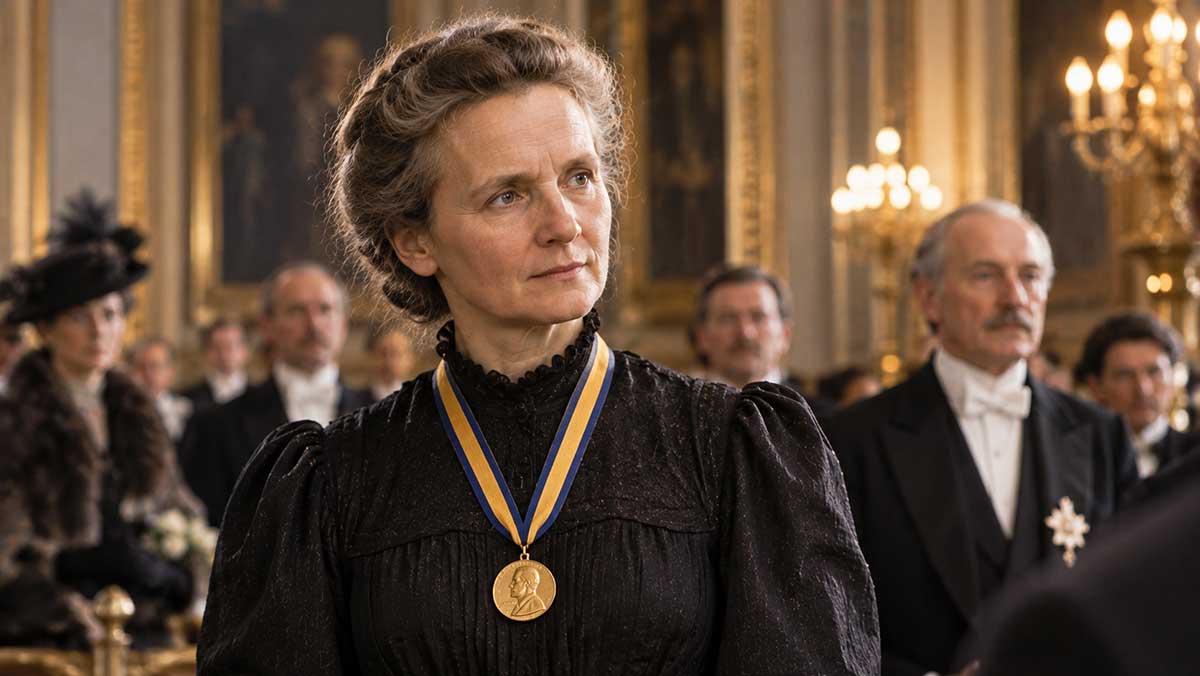
Opening
Paris in 1911 was a city proud of its scientific achievements and cultural sophistication, yet deeply divided over questions of nationality, religion, and the changing position of women in society. Newspapers competed fiercely for readers, and public controversies could turn personal reputations into matters of national debate. For a foreign-born woman occupying a prominent position in French science, professional recognition offered little protection from prejudice.
Twenty-two years later, in the quiet office of the Radium Institute, Marie Curie sat across from Nick. The woman who had once found herself surrounded by hostile reporters now directed an internationally respected research institution. Her second Nobel Prize remained an extraordinary scientific achievement, but the circumstances surrounding it belonged to a particularly painful chapter of her life.
A passing cloud briefly softened the light entering the office. Nick leaned forward, conscious that the questions he was about to ask concerned matters quite different from the scientific discoveries they had discussed earlier.
Nick Sasaki: Marie, there's something almost unbelievable about what happened to you in 1911.
Marie Curie: It was an unfortunate year in several respects.
Nick: You were about to receive a second Nobel Prize. No person had ever received two before. And at practically the same time, people were questioning whether you deserved to be respected at all.
Marie: They were discussing matters that had little connection with the investigations for which the prize was awarded.
Nick: Did you find that distinction difficult to maintain when everything was happening around you?
Marie: It was a distinction I considered necessary.
Nick: Before we discuss it, I want you to know something. I'm interested in what you experienced. I'm not here to decide whether every decision you made was right or wrong.
Marie: I appreciate that.
Nick: I think there's something we can learn from what happened without turning your private life into another public examination.
Marie: That would be preferable to what occurred at the time.
Nick: Then perhaps we should begin before the newspaper scandal. You had applied for membership in the French Academy of Sciences.
Marie: Yes. In January of that year.
Question 10: In 1911, you were being recognized for extraordinary scientific achievements and attacked personally by the newspapers. How did you live with those two realities?
Nick: By January 1911, you had already received a Nobel Prize in Physics, become a professor at the Sorbonne, and conducted years of important research. Yet your application to the Academy of Sciences became controversial.
Marie: There had never been a woman admitted to the Academy. My candidacy raised questions that extended beyond my scientific qualifications.
Nick: People were actually debating whether a woman should be permitted to join?
Marie: Yes. There were members who supported my candidacy and others who opposed it.
Unfortunately, much of the public discussion concerned the fact that I was a woman rather than the nature of my work.
Nick: Who were you competing against?
Marie: Édouard Branly, a distinguished physicist whose investigations contributed to the development of wireless communication.
Nick: So he was a legitimate candidate in his own right?
Marie: Certainly. His scientific contributions deserved recognition.
It would be unfair to suggest otherwise merely on account of the circumstances surrounding the election.
Nick: How close was the vote?
Marie: Very close. Monsieur Branly was elected.
Nick: Were you disappointed?
Marie: Naturally. I would not have presented my candidacy had I been entirely indifferent to the result.
Nick: Did you consider applying again?
Marie: No. I had other responsibilities to which I preferred to devote my attention.
Nick: Was it the rejection itself that bothered you, or the nature of the debate surrounding it?
Marie: The Academy had the right to select its members. I could accept that another scientist had been elected.
What I found less satisfactory was the introduction of considerations unrelated to scientific accomplishment.
Nick: Your nationality, for example?
Marie: Yes. There were people who continued to regard me principally as a foreigner, regardless of my years of work in France.
Nick: You had lived here for nearly twenty years.
Marie: By then, France had become the country in which I conducted my scientific work. My children had been born here. Pierre was French.
Yet I remained Polish by birth and affection.
I saw no reason why those circumstances should be incompatible.
Nick: Some of the newspaper attacks even suggested that you were Jewish, didn't they?
Marie: Yes. Certain newspapers made that allegation.
It was incorrect, but its incorrectness was hardly the most objectionable aspect of it.
Nick: What do you mean?
Marie: Had I been Jewish, that circumstance would have had no bearing upon the validity of my scientific investigations.
The allegation was employed as a means of discrediting me. That was the objectionable matter.
Nick: So correcting the accusation wouldn't have addressed the underlying prejudice.
Marie: Precisely.
Nick: It's remarkable how quickly a scientific question can become something completely unrelated to science.
Marie: The election demonstrated that scientific institutions were not entirely separated from the prejudices existing in society.
Scientists are human beings. Their judgments are not necessarily free from considerations that have little scientific relevance.
Nick: And later that year, things became much more personal.
Marie adjusted her position in the chair.
Marie: Yes.
Nick: Paul Langevin had been a student of Pierre's and was an accomplished physicist himself.
Marie: Paul was a very able physicist. His investigations concerning magnetism and other physical phenomena were highly regarded.
We had known one another for many years.
Nick: He had a wife and four children.
Marie: Yes.
Nick: And your relationship with him became the subject of public controversy.
Marie: Private correspondence was obtained and published without my permission.
The newspapers presented the circumstances in a manner calculated to attract attention.
Nick: Would you be comfortable telling me how that relationship began?
Marie remained silent for a moment.
Marie: I would prefer not to discuss the intimate circumstances of that relationship.
Nick: Of course.
Marie: There were other people involved. Some are still living. I do not think a public discussion of every private detail would serve a useful purpose.
Nick: I understand.
What I'm curious about is what happened when something private suddenly became public property.
Marie: It was a very disagreeable experience.
There were allegations concerning my conduct, my nationality, my character, and even the circumstances of Pierre's death.
Some statements were entirely false.
Nick: People actually tried to connect your relationship with Paul to Pierre's death?
Marie: Certain accounts attempted to suggest circumstances for which there was no factual basis.
Pierre had died in an accident in 1906. The events that became the subject of controversy occurred years afterward.
Nick: That's a particularly cruel accusation.
Marie: It was very painful.
Nick: And the newspapers were publishing your private letters?
Marie: Portions of correspondence appeared in the press. Matters that had belonged to private communication became available for public discussion.
People who knew very little about the circumstances formed quite definite opinions concerning them.
Nick: Did you read what they were writing?
Marie: It was difficult to remain unaware of it.
There were newspapers, conversations, letters, and people bringing information to one's attention.
Nick: Could you still go about your ordinary life?
Marie: Not satisfactorily.
The controversy affected my household and the people close to me. There was considerable hostility.
Nick: I've read accounts of people gathering outside your home.
Marie: There were occasions when the situation became sufficiently unpleasant that it was necessary to make other arrangements for our safety and comfort.
Nick: You had two daughters at home. Irène was fourteen, and Ève was almost seven.
Marie: Yes.
Nick: Did they know what was happening?
Marie: Irène was old enough to recognize that something serious was occurring. Ève was considerably younger.
I would prefer not to describe their private experiences during that period.
Nick: That's fair.
I keep thinking about the difference between being criticized for something you've done and having strangers gather outside your home, where your children are.
Marie: There was no reason for children to be subjected to such circumstances.
Whatever opinions people held concerning me, my daughters had done nothing to justify their involvement.
Nick: Did you feel that France had turned against you?
Marie: I would not make such a statement.
There were people who behaved very badly. There were others who behaved with extraordinary kindness.
It would be unjust to confuse the conduct of certain individuals with that of an entire country.
Nick: Who stood beside you?
Marie: Several friends and colleagues offered assistance.
Marguerite Borel was particularly kind during that difficult period. Hertha Ayrton, in England, was another person whose friendship became very valuable to me.
Nick: Hertha was a scientist herself, wasn't she?
Marie: Yes. She conducted important investigations concerning electric arcs and other physical phenomena.
She was a woman of considerable ability and independence.
Nick: Did having friends who understood the scientific part of your life make a difference?
Marie: Their scientific interests were valuable, but their kindness was a separate matter.
A person does not require a knowledge of physics to recognize when another person is in difficulty.
Nick: That's true.
Marie: At such times, ordinary acts of assistance can become particularly significant.
A place to stay. Someone willing to help with practical arrangements. A person who does not insist upon discussing the circumstances at every opportunity.
Nick: Someone who lets you be yourself for a little time.
Marie: Yes.
Nick: Did you ever feel tempted to publish your own account and respond to everything that was being said?
Marie: There would have been considerable difficulty in correcting every allegation.
Responding to one newspaper might have produced several further articles in another.
The controversy seemed capable of sustaining itself without much assistance from me.
Nick: That's a very accurate description of how public scandals work.
Marie: There were scientific matters requiring my attention. I did not wish my entire existence to become a response to newspaper articles.
Nick: And right in the middle of all this, you received news from Stockholm.
Marie: Yes.
Nick: The Nobel Prize in Chemistry.
Marie: It was recognition of work that had occupied a considerable part of my life.
Question 11: When you were advised not to attend your second Nobel Prize ceremony, what made you decide to go anyway?
Nick: Let me get the timing right. In November 1911, you were awarded the Nobel Prize in Chemistry for your work involving radium and polonium.
Marie: Yes. The award recognized the discovery of those elements, the isolation of radium, and investigations concerning its nature and compounds.
Nick: This wasn't simply another prize for the same work you had done in 1903.
Marie: No. The earlier prize concerned investigations into radiation phenomena. The later award recognized achievements in chemistry, including work undertaken after Pierre's death.
Nick: So you had received the highest scientific recognition in two different disciplines.
Marie: That was the circumstance.
Nick: How did you react when you learned about it?
Marie: I was pleased that the work had received recognition.
The investigations had required many years. There were difficulties that had occupied us for considerable periods.
It was gratifying that the scientific significance of the results had been acknowledged.
Nick: Were you able to celebrate?
Marie: The circumstances were not particularly favorable for celebration.
Nick: That's putting it mildly.
Marie: There were several matters requiring attention at the time.
Nick: Then you received correspondence from Svante Arrhenius.
Marie: Yes.
Nick: A Nobel Prize-winning scientist himself.
Marie: A distinguished physical chemist.
Nick: And he suggested that you shouldn't come to Stockholm to accept the prize?
Marie: He expressed concern about the circumstances surrounding the controversy. He advised against my attending the ceremony until the allegations had been addressed.
Nick: What did you think when you read that?
Marie: I considered that the scientific basis of the award had not changed.
The investigations had been conducted. The results had been published. Other scientists had examined them.
The newspaper controversy did not alter those circumstances.
Nick: Did you think he was trying to protect the Nobel institution?
Marie: I cannot tell you everything that influenced his judgment.
He was evidently concerned about the difficulties that might arise from my presence at the ceremony.
I did not agree with his proposed solution.
Nick: You wrote back to him.
Marie: Yes. I explained my position.
Nick: What was the central point you wanted him to understand?
Marie: That the prize had been awarded for scientific work.
Questions concerning my private life belonged to a different matter. I did not consider that they should determine whether the scientific award was accepted.
Nick: Did you worry that attending might make the controversy worse?
Marie: There were already considerable difficulties.
I did not see how remaining absent from the ceremony would establish anything concerning the scientific work.
Nick: Were you afraid that staying away would imply you accepted the accusations?
Marie: I did not wish my acceptance of a scientific distinction to depend upon the outcome of a public controversy unrelated to the research.
That would have established an arrangement I considered unsatisfactory.
Nick: Let me ask you something. Suppose a scientist had behaved badly in their personal life. Would you still believe their scientific discoveries deserved recognition?
Marie: If the discoveries were genuine, their scientific validity would remain.
A correct determination of an atomic weight does not become incorrect through an objectionable act committed by the person who determined it.
Nick: That's a very clear distinction.
Marie: It does not mean that personal conduct is beyond criticism.
It means that different questions require different forms of judgment.
Nick: So acknowledging someone's scientific contribution doesn't necessarily mean approving of everything that person has done.
Marie: Certainly not.
The reverse is equally true. Personal admiration for a scientist cannot establish the correctness of an experiment.
Nick: That's interesting. You wouldn't want your work accepted simply on the strength of your reputation, either.
Marie: No. That would be poor scientific practice.
Nick: Did Arrhenius eventually accept your decision?
Marie: I attended the ceremony. The award was presented, and I delivered my Nobel lecture.
Nick: Who accompanied you?
Marie: My sister Bronya and my daughter Irène.
Nick: Bronya was there?
Marie: Yes.
Nick smiled at the unexpected connection.
Nick: The same sister whose medical education you helped finance when you were working as a governess.
Marie: The same one.
Nick: That's incredible. Two young sisters in Poland making an agreement about how they might obtain an education. And years later, one of them is accompanying the other to Stockholm to receive a second Nobel Prize.
Marie: Our circumstances had certainly changed.
Nick: Did the significance of that strike you at the time?
Marie: I was very glad to have her company.
Bronya knew much about the difficulties that had preceded my scientific career. There was little need to explain those circumstances to her.
Nick: And Irène was fourteen. What an experience for her.
Marie: It was an unusual experience for a girl of that age.
Nick: Did you worry about bringing her into such a public situation?
Marie: I was conscious of the circumstances.
But there was no reason for the scientific ceremony itself to be regarded as something from which she needed to be excluded.
Nick: What do you remember about Stockholm?
Marie: The ceremonies were formal. There were meetings, conversations, and arrangements associated with the award.
I was particularly occupied with the scientific lecture.
Nick: What did you discuss?
Marie: Radium and the new concepts in chemistry that had arisen from the investigation of radioactive substances.
The discoveries had introduced questions concerning the nature and transformation of chemical elements.
Nick: So after everything that had been written about you, you stood before an audience and talked about chemistry.
Marie: That was the subject of the lecture.
Nick: It reminds me of your first lecture at the Sorbonne after Pierre died.
Marie: The circumstances were quite different.
Nick: True.
Marie: At Stockholm, I wished to explain the significance of a body of scientific work.
There was no reason to substitute another subject for it.
Nick: Did you mention Pierre?
Marie: Yes. His contribution to the discovery of the radioactive elements was fundamental.
Much of the work for which the prize was awarded had its origins in our investigations together.
Nick: Did it feel strange accepting the prize without him?
Marie: There were aspects of the recognition that I would have been very glad to share with him.
But the later investigations had required additional work, and it was necessary to explain how that work had developed.
Nick: What was the most satisfying part of the scientific achievement for you?
Marie: The establishment of radium as a chemical element through the determination of its properties.
The early measurements had suggested that a highly radioactive substance existed. Obtaining sufficiently purified compounds and eventually isolating the metal gave the investigations a much firmer chemical foundation.
Nick: So there was a question you began investigating in the 1890s, and more than a decade later, you could present a much more complete answer.
Marie: Yes. Though many further questions remained.
Nick: Did receiving the prize make you feel vindicated?
Marie: Scientifically, the recognition was gratifying.
Personally, the circumstances were not resolved merely through receiving a medal.
Nick: I suppose people sometimes expect a moment of triumph to erase everything that came before it.
Marie: Life does not necessarily provide such convenient arrangements.
Nick: Did you bring the medal home and put it somewhere special?
Marie: It was an object associated with an important scientific distinction.
But there were more immediate matters requiring attention when I returned.
Nick: You really don't seem particularly attached to medals.
Marie: A medal cannot conduct an experiment.
Nick laughed.
Nick: I think that's the most Marie Curie answer possible.
Marie: It can, perhaps, assist in obtaining support for someone who wishes to conduct one.
Nick: There we go. You found a practical use for it.
Marie: Recognition can be useful when it is directed toward useful purposes.
Question 12: Do you believe a person can be accountable for imperfect private decisions without losing the right to dignity and fairness?
Nick paused before asking his next question. The conversation had moved between the scientific achievements of 1911 and the personal circumstances surrounding them. He wanted to acknowledge the distinction Marie had drawn without overlooking the fact that other people had been affected.
Nick: Marie, there's something I don't want us to lose sight of.
Marie: What is that?
Nick: Paul had a wife, Jeanne, and four children. Whatever happened between the adults, there were other people whose lives were affected.
Marie: Yes.
Nick: I don't think we can discuss what happened to you fairly without recognizing that they had their own experiences of those events.
Marie: That is reasonable.
Nick: But I don't want to ask you to speak on their behalf.
Marie: Nor would I attempt to do so.
Nick: Do you think it's possible to acknowledge that people may have been hurt by our decisions without accepting every accusation made against us?
Marie: Those are separate matters.
The fact that certain allegations are false does not establish that every decision made by a person was necessarily correct.
Nor does the existence of a personal difficulty justify every action taken by those who wish to publicize it.
Nick: So there doesn't have to be one entirely innocent person and one entirely guilty person in every difficult human situation.
Marie: Human relationships are frequently more difficult to describe than that.
Nick: Were you ever frustrated by how confidently strangers seemed to know what everyone involved was thinking?
Marie: There were people who expressed considerable certainty concerning matters of which they possessed very little direct knowledge.
That was particularly apparent in the newspapers.
Nick: It's interesting hearing a scientist talk about this. You spent your life requiring evidence before reaching conclusions. Then suddenly you became the subject of conclusions made without much evidence at all.
Marie: There was certainly a difference between the methods.
Nick: Did that make you lose faith in people's ability to judge fairly?
Marie: I would not extend the judgment to everyone.
As I mentioned, there were people whose conduct during that period was very generous.
Nick: Tell me more about Hertha Ayrton. I find her particularly interesting.
Marie: Hertha was an accomplished investigator. She had encountered difficulties of her own in obtaining recognition for her scientific work.
She possessed a very independent character.
Nick: What was she like as a person?
Marie: Direct. Intelligent. Energetic.
She was interested in scientific matters and in questions concerning the position of women.
One did not have difficulty discovering her opinion on a subject.
Nick: That sounds like someone I'd enjoy talking to.
Marie: I suspect you would.
Nick: Did the two of you discuss what had happened in France?
Marie: There were matters we discussed privately.
But I appreciated that our friendship was not limited to those circumstances.
There were scientific questions, family matters, and ordinary interests about which we could converse.
Nick: You stayed with her in England during your recovery?
Marie: Yes. In 1912, my health required considerable attention.
I had undergone medical treatment, and a period away from my ordinary responsibilities was beneficial.
Hertha's hospitality was very valuable.
Nick: What was it like for someone accustomed to working constantly to have to stop?
Marie: Not particularly agreeable.
Nick: I suspected that.
Marie: There were investigations I wished to continue. Correspondence accumulated. Arrangements concerning the future laboratory required attention.
But there were limitations imposed by my physical condition.
Nick: Were you good at following medical advice?
Marie gave him a slightly questioning look.
Marie: I attempted to follow the advice that appeared reasonable.
Nick: That sounds like a complicated patient.
Marie: You would have to consult the physicians.
Nick laughed.
Nick: Did being away from Paris give you a sense of relief?
Marie: It was pleasant to be removed from certain difficulties.
The surroundings were different. There was less interruption, and I had the company of friends.
Nick: Did you enjoy being near the sea?
Marie: Yes. I have always appreciated the sea.
There is a particular pleasure in being outdoors after spending considerable periods in laboratories and offices.
Nick: I think people would be surprised how often you've mentioned the countryside, cycling, swimming, and the sea during our conversation.
Marie: Why?
Nick: The popular image of you is someone who never leaves the laboratory.
Marie: That would be a rather unfortunate arrangement.
Nick: For someone who loved her work as much as you did?
Marie: Loving one's work does not prevent one from appreciating fresh air.
Nick: Fair enough.
Did your time in England help you decide what you wanted to do next?
Marie: There was already much scientific work before me.
The arrangements for the Radium Institute had been developing for some time. I wished to see them completed.
There were questions concerning the organization of research, the provision of facilities, and the preparation of radioactive materials.
Nick: Was this institute something you had been hoping for since those early years in the shed with Pierre?
Marie: The precise arrangement had developed later.
But the need for better scientific facilities had been apparent to us for many years.
Nick: Did you ever think about leaving France permanently after what happened?
Marie: My work, my family, and many of my friendships were established here.
I maintained close connections with Poland and continued to be interested in scientific developments there.
But there were responsibilities in France that I wished to fulfill.
Nick: You didn't want the events of 1911 to determine where you spent the rest of your life.
Marie: There were more substantial considerations involved in that decision.
Nick: When you eventually returned to your scientific work, were people still talking about the scandal?
Marie: Some continued to do so.
But scientific investigations were continuing in many countries. There were results to examine, questions to discuss, and arrangements to make.
The subject occupied less of my ordinary existence as time passed.
Nick: Did you ever receive apologies from people who had treated you badly?
Marie: I would prefer not to make an inventory of the conduct of particular individuals.
Nick: That's fair.
Marie: Some relationships changed. Others continued. There were people with whom I had very satisfactory professional relations afterward.
Nick: Including Paul Langevin?
Marie: Paul remained a physicist of considerable ability.
His scientific work continued to deserve attention.
Nick: And that's where you'd prefer to leave it?
Marie: Yes.
Nick: Then we'll leave it there.
Marie nodded appreciatively.
For a moment, Nick studied the room around them. The institute was not a monument to a flawless person. It was a working scientific establishment, created through years of effort, cooperation, institutional support, and personal difficulties that could never be fully conveyed by a list of accomplishments.
Nick: There's one more thing I want to ask about this period.
Marie: Yes?
Nick: When you were recovering, did you ever have a day when you simply enjoyed being alive without feeling that you needed to accomplish something?
Marie considered the question.
Marie: Certainly. There are pleasures that require very little accomplishment.
A pleasant conversation. Time spent outdoors. Receiving a letter from someone dear to you.
Nick: You didn't have to discover another chemical element?
Marie: Two had already provided a considerable amount of work.
Nick laughed, and Marie smiled.
Nick: I like that answer.
Marie: I have no objection to an agreeable afternoon.
Nick: I'm glad to hear it.
Closing
The sound of a door closing somewhere in the corridor returned their attention to the institute around them. Marie glanced toward a collection of papers concerning the laboratories. The conversation had covered some of the most difficult circumstances of her adult life, yet the afternoon had not become entirely somber.
By 1914, the Radium Institute was nearing the beginning of its scientific activities. Marie had spent years seeking facilities that would permit sustained research into radioactive substances. Just as those facilities were becoming available, Europe entered a war that would interrupt scientific work and transform the responsibilities of millions of people.
Nick: So you recovered your health, returned to your work, and were finally getting the kind of laboratory you had wanted for years.
Marie: Yes. The institute offered possibilities that had previously been unavailable to us.
Nick: You must have been looking forward to conducting research without constantly worrying about inadequate facilities.
Marie: There were many investigations we hoped to undertake.
The organization of the laboratories required considerable attention, but the prospects were very satisfactory.
Nick: And then, in the summer of 1914, war broke out.
Marie: Yes.
Nick: What happened to the institute?
Marie: The circumstances changed very quickly. Many men were mobilized. Scientific activity was interrupted, and there were immediate concerns regarding the safety of valuable materials.
Nick: Including your radium?
Marie: Yes. I transported the institute's radium to Bordeaux for safekeeping.
Nick: And then you returned to Paris?
Marie: I did.
Nick: You could have stayed away from the danger.
Marie: There were useful things that could be done in Paris.
Nick: That's what I find remarkable about this next part of your life. After everything you'd experienced, you could have devoted yourself entirely to your research. Instead, you began working on something that would help wounded soldiers.
Marie: The medical requirements were considerable.
Radiological equipment existed, but it was not available in many places where it was urgently needed.
Nick: So you decided to bring the equipment to the patients?
Marie: That became one of the practical objectives.
Nick: Did you know how to organize something like that?
Marie: Not at first. There were several things I needed to learn.
Nick: Including how to drive a car?
Marie: Among other things.
Nick smiled.
Nick: Marie Curie, two-time Nobel Prize winner, learning how to operate a motor vehicle and organize mobile medical facilities.
Marie: A Nobel Prize is not particularly useful when one encounters a mechanical difficulty with an automobile.
Nick: I'm beginning to think there's a whole side of you that most people have never discovered.
Marie: It was a period in which many people found themselves undertaking activities they had not previously expected to undertake.
Nick: I'd love to hear how you did it.
Marie moved her chair slightly closer to the desk.
Marie: We should begin with the difficulties physicians encountered when examining wounded men.
Nick: What couldn't they see?
Marie: Often, precisely what they needed to know before operating.
She reached for a sheet of paper.
Marie: Perhaps I can explain it more clearly with a drawing.
Topic 5: The Discoveries She Would Never Live to See
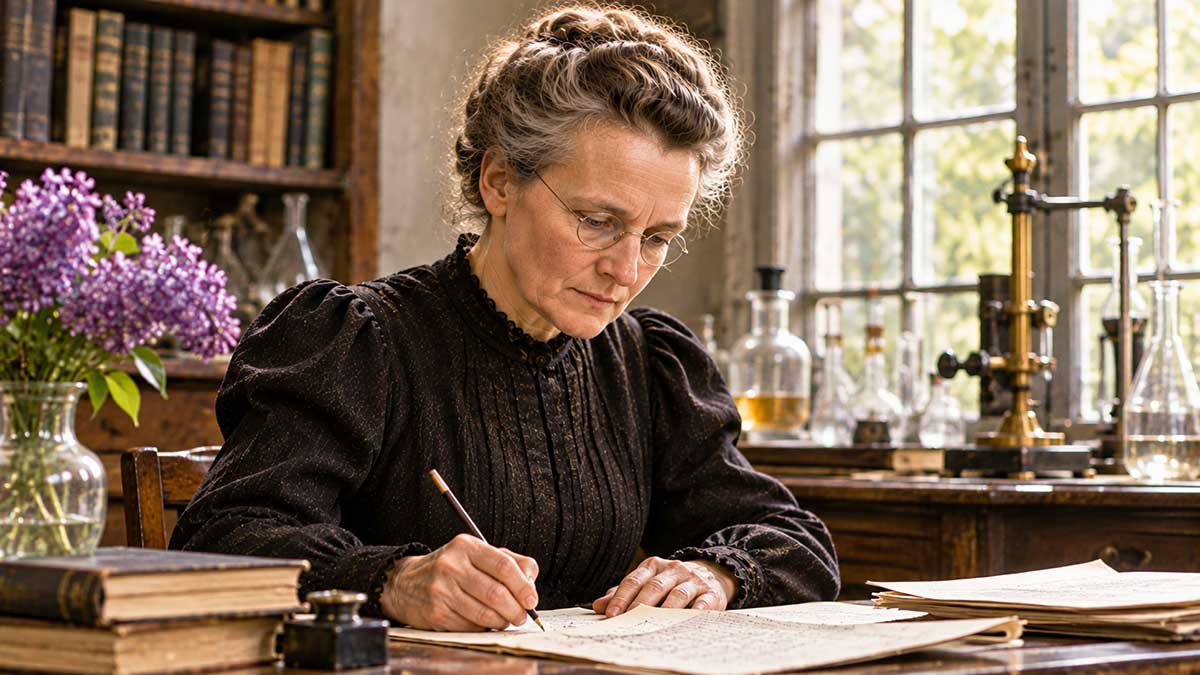
Opening
The late afternoon sun illuminated the garden of the Radium Institute. Beyond Marie Curie's office, young researchers continued their investigations into the properties of radioactive substances. The institute had become a meeting place for scientists from different countries, many of whom had been children when Marie and Pierre first announced the discovery of radium.
Nineteen years earlier, in August 1914, France had entered a war for which its medical services were inadequately prepared. Thousands of wounded soldiers arrived at hospitals where physicians frequently lacked the equipment necessary to locate bullets, metal fragments, and damaged bones. Marie recognized that existing scientific knowledge could address an immediate human need.
Now, in the spring of 1933, she drew a simple outline of an injured arm on a sheet of paper. Nick moved his chair closer to the desk, curious to see how a physicist who had spent years investigating invisible radiation had become involved in military medicine.
Marie Curie: Suppose a man arrives at a hospital with a fragment of metal somewhere inside his arm.
Nick Sasaki: All right. The surgeon knows there's something inside, but he doesn't know exactly where it is?
Marie: Precisely. Examining the wound may provide some information, but it may be insufficient to determine the position of the fragment.
Nick: So the surgeon might have to operate without knowing exactly what he's looking for.
Marie: That could introduce unnecessary difficulties and dangers.
She drew another line across the outline of the arm.
Marie: With suitable radiological equipment, one could obtain an image revealing the position of the foreign object. Additional observations could assist in determining its location more accurately.
Nick: Which would allow the surgeon to make a much more informed decision.
Marie: Yes.
Nick: And the technology already existed when the war began?
Marie: It did. The difficulty was making it available where it was needed.
Nick: So this wasn't a problem that required you to discover something new.
Marie: No. It required us to make better use of something already known.
Nick: That's a very different kind of scientific challenge.
Marie: It was. And a rather urgent one.
Question 13: When the war began, what made you leave your familiar scientific work and devote yourself to helping wounded soldiers?
Nick: Marie, you've spent years trying to establish this institute. You've finally obtained the facilities you've wanted, and then Europe goes to war. What were those first weeks like?
Marie: There was considerable uncertainty. Many of the men associated with scientific institutions were mobilized. Ordinary activities were interrupted.
The medical services were confronted with requirements far greater than those for which they had prepared.
It became apparent that radiology could provide valuable assistance.
Nick: Were hospitals already using X-rays?
Marie: Some were. But the equipment was distributed very unevenly.
Large hospitals might possess suitable installations. Smaller facilities, temporary hospitals, and medical units nearer the wounded frequently did not.
There was a considerable difference between the existence of a scientific technique and its availability to a physician who needed it.
Nick: How did you decide what to do?
Marie: I began examining the practical requirements.
Equipment had to be obtained. Electrical supplies had to be arranged. People had to be trained to operate the apparatus.
Transportation presented another difficulty.
Nick: That's an entirely different set of problems from what you'd been doing in the laboratory.
Marie: Yes. Knowledge of physics was useful, but it was insufficient by itself.
Nick: Did you have much experience with medical radiology before the war?
Marie: Not sufficient experience for everything I wished to undertake.
I needed to become more familiar with medical applications, anatomy, electrical installations, and the practical circumstances under which physicians worked.
Nick: So you were a Nobel Prize-winning scientist who suddenly had to become a student again.
Marie: There was no reason to suppose that receiving a scientific distinction had provided me with knowledge of every subject.
Nick: I wish more people thought that way.
Marie: It would have been particularly unfortunate to pretend to possess knowledge that I did not have when wounded men were involved.
Nick: What was the idea behind the mobile X-ray vehicles?
Marie: If a hospital could not obtain a permanent radiological installation, it might be possible to bring suitable equipment to it.
An automobile could carry the necessary apparatus. With an appropriate electrical arrangement, examinations could be conducted at locations that otherwise lacked such facilities.
Nick: Where did you get the automobiles?
Marie: Through various forms of assistance. There were organizations and individuals willing to provide vehicles, equipment, or financial support.
The Union des Femmes de France helped with the establishment of an early mobile installation.
Considerable cooperation was necessary.
Nick: Were people immediately enthusiastic about your idea?
Marie: Some recognized its usefulness quite readily. Others were less familiar with what radiology could accomplish.
There were administrative difficulties, questions concerning equipment, and practical arrangements that required attention.
Nick: I can picture you going from office to office trying to persuade people to give you cars and electrical equipment.
Marie: There was a considerable amount of that activity.
Nick: Were you good at asking people for things?
Marie: I became more experienced.
Nick: That's a very diplomatic answer.
Marie: It was necessary to explain what the equipment would accomplish. Once people understood the medical requirements, some were quite willing to assist.
Nick: Did you really learn to drive and maintain an automobile?
Marie: I learned to drive and acquired some knowledge of mechanical matters.
It was useful to possess sufficient independence to deal with ordinary difficulties encountered during travel.
Nick: What would you do if the car broke down?
Marie: Attempt to determine what was wrong with it.
Nick: Of course. Another experiment.
Marie: An experiment with rather inconvenient consequences if one failed.
Nick laughed.
Nick: Did you enjoy driving?
Marie: Under more agreeable circumstances, perhaps. During the war, the principal consideration was reaching the place where the equipment was required.
Road conditions were not always satisfactory.
Nick: Were you ever frightened?
Marie: There were circumstances in which one had reason to be concerned.
But there were many people undertaking responsibilities under considerably more dangerous conditions than mine.
Nick: What struck you most when you first began visiting the hospitals?
Marie put down her pencil.
Marie: The number of wounded men and the difficulties faced by the physicians responsible for them.
There was an enormous amount of work to be done, frequently with inadequate resources.
One became conscious of the value of equipment that, under ordinary circumstances, might have seemed quite unremarkable.
Nick: An X-ray machine could make an enormous difference to someone lying on a hospital bed.
Marie: It could provide information that assisted the physician in deciding how to proceed.
That information could prevent unnecessary operations or help make necessary operations more precise.
Nick: Did you ever see a patient's reaction when a doctor finally located the fragment that had been causing him pain?
Marie: There were occasions when the results of an examination were received with considerable relief.
But one must remember that the radiological examination was only part of the medical treatment.
The physicians and nurses carried responsibilities extending far beyond our own.
Nick: Did the experience change the way you thought about science?
Marie: It demonstrated very clearly the importance of practical applications.
A scientific instrument could provide information of immediate significance to another human being.
There was considerable satisfaction in making that information available.
Nick: Was that satisfaction different from discovering a new element?
Marie: Quite different.
In fundamental research, one may spend years attempting to answer a question whose practical consequences remain uncertain.
During the war, the purpose of much of our work was immediately apparent.
Both forms of activity possess value.
Nick: And you brought Irène into this work.
Marie: Yes. She was seventeen when the war began.
She acquired training in radiological methods and became capable of undertaking considerable responsibilities.
Nick: Seventeen. That's remarkable.
Marie: She was serious and capable.
She possessed the scientific preparation necessary to learn the work, and she developed considerable practical experience.
Nick: Were you nervous about your teenage daughter working under wartime conditions?
Marie: Naturally, I was concerned for her welfare.
But Irène was no longer a small child. She was capable of acquiring useful skills and exercising judgment.
Nick: Did working together bring you closer?
Marie: It gave us responsibilities that we could discuss and undertake together.
There was satisfaction in seeing her become competent in work that was genuinely useful.
Nick: Was she ever more confident than you were?
Marie: Irène could be quite confident.
Nick: I get the impression that the Curie women aren't easily intimidated.
Marie: I would prefer that they be adequately prepared rather than merely confident.
Nick: That's probably better advice.
Marie: Confidence is of limited assistance when an electrical installation is functioning incorrectly.
Nick: I knew we'd get back to the equipment.
Marie smiled.
Nick: How many of these mobile radiology vehicles did you eventually help establish?
Marie: Approximately twenty mobile installations were organized through our efforts.
There were numerous permanent radiological installations established or improved during the war, too.
The training of personnel became particularly important.
Nick: How many people did you train?
Marie: Around one hundred and fifty women received instruction through the courses organized at the institute during the war.
They learned the principles and practical methods necessary to undertake radiological examinations.
Nick: So your contribution wasn't limited to operating the equipment yourself. You were creating people who could carry on the work without you.
Marie: That was indispensable.
One person could visit only a limited number of hospitals. Training others permitted the work to be conducted in many places.
Nick: I've heard estimates that around a million wounded soldiers benefited from radiological examinations during the war.
Marie: The total number of examinations conducted by the radiological services was very considerable.
But that work belonged to many people and institutions. It would be incorrect to attribute all of it to our mobile installations or to my own activities.
Nick: That's fair. Still, it's extraordinary to think about how much suffering could be reduced through the wider effort.
Marie: It was useful work.
Nick: Marie, you have a very modest way of describing extraordinary things.
Marie: The circumstances required the work. We possessed certain abilities that could be applied to it.
There was no particular need to describe the arrangement in more elaborate terms.
Nick: Did you receive letters from any of the people you helped?
Marie: There were expressions of appreciation from physicians and others with whom we worked.
Such communications were agreeable, particularly when they indicated that an installation was continuing to function satisfactorily.
Nick: You wanted to know that the equipment was still helping people.
Marie: Certainly. Establishing an installation was insufficient if it could not continue operating.
Nick: What happened when the war ended?
Marie: There was a considerable amount of scientific work awaiting attention.
The institute had been established shortly before the war, and its research activities had been interrupted.
It was necessary to develop the laboratories and obtain the resources required for sustained investigations.
Nick: After four years of helping wounded soldiers, you were finally able to return to the questions you'd wanted to investigate.
Marie: Yes.
Nick: Did the laboratory feel different afterward?
Marie: The scientific questions remained interesting.
But the experience of the war had demonstrated certain requirements that deserved continued attention, particularly the relationship between physical research and medicine.
There was much to be accomplished in both areas.
Question 14: How should humanity approach scientific discoveries that can help people but can cause serious harm?
Nick looked again at the drawing on Marie's desk. The invisible rays they had discussed earlier could reveal injuries hidden within the human body. Yet the same broad field of investigation had exposed researchers and medical personnel to dangers that were still imperfectly understood.
Nick: There's something I've been wanting to ask you since we started discussing radioactivity.
Marie: What is that?
Nick: You discovered substances with extraordinary medical possibilities. But those substances can injure people, too.
When did you begin to recognize that?
Marie: The biological effects of radiation became apparent relatively early in the investigations.
Becquerel experienced an injury associated with carrying a radioactive preparation. Pierre conducted observations concerning the effects of radiation upon the skin.
Such effects demonstrated that these substances could produce considerable changes in living tissues.
Nick: Pierre deliberately exposed his skin to radiation?
Marie: He investigated its effects and observed the resulting injury.
At the time, there was considerable interest in determining the biological properties of these substances.
Nick: That sounds dangerous.
Marie: It was.
Our knowledge of the consequences was much less complete than it is now.
Nick: Did you and Pierre realize that working with radioactive substances over many years might cause serious illness?
Marie: The immediate effects of certain exposures became evident.
The consequences of repeated or prolonged exposure were more difficult to establish.
One must distinguish between an injury that can be observed shortly after exposure and effects that may develop over a considerable period.
Nick: So you knew some of the dangers, but not necessarily the full extent of them.
Marie: That is correct.
There has been considerable investigation of these matters, but questions remain.
Nick: Did you ever become concerned about your own exposure?
Marie: Certainly. Researchers working with radioactive substances have reason to take precautions.
The difficulties associated with such work cannot be ignored.
Nick: Looking back at those early years in the shed, would you have done things differently with the knowledge you have today?
Marie: There are procedures we would have conducted differently had more information and better facilities been available.
That is true of many scientific investigations.
Methods improve as knowledge increases.
Nick: I think people sometimes romanticize those early experiments. The glowing preparations, the long hours, the inadequate laboratory.
But there was a real physical cost involved.
Marie: The beauty of a phenomenon does not establish its harmlessness.
Nick: That's a sentence worth thinking about.
Marie: One should not confuse admiration for a scientific phenomenon with a judgment concerning the conditions under which it should be investigated.
Nick: Did the dangers ever make you wish you had chosen a different subject?
Marie: I would have preferred that the dangers be better understood and the conditions of investigation more satisfactory.
The scientific questions themselves remained of considerable interest.
Nick: So the solution isn't necessarily to stop investigating dangerous things.
Marie: It is necessary to investigate them intelligently and with appropriate precautions.
A substance capable of producing an injury may, under carefully determined circumstances, possess therapeutic value.
The question concerns the conditions under which it is employed.
Nick: How did doctors begin using radium to treat disease?
Marie: Observations of the biological effects of radiation suggested that it might be possible to act upon certain diseased tissues.
Physicians investigated those possibilities, particularly in the treatment of certain tumors.
It required cooperation between physicists, chemists, and medical specialists.
Nick: Did you work directly with physicians here at the institute?
Marie: The institute was established with both scientific and medical research in mind.
My laboratory has concentrated upon the physical and chemical investigations. The medical and biological work has developed in association with the laboratory directed by Professor Claudius Regaud.
The relationship between those activities is valuable.
Nick: So you might investigate the properties of a radioactive substance, and a physician could investigate what that substance does to living tissue.
Marie: Yes. Each investigation can provide information useful to the other.
But the requirements of medical treatment must be determined by people possessing the necessary medical knowledge.
Nick: Were there medical claims about radium that concerned you?
Marie: There have been exaggerated expectations concerning its applications.
A substance possessing remarkable properties may attract claims that are not supported by sufficient evidence.
One must establish what it can accomplish through careful investigation.
Nick: Did it bother you seeing radium promoted commercially in products that had little scientific justification?
Marie: Scientific discoveries should not be employed as substitutes for evidence concerning the usefulness of a particular preparation.
The presence of a remarkable substance does not establish that every proposed application is beneficial.
Nick: People hear that something is scientifically advanced and assume it must be good for them.
Marie: That is an unfortunate assumption.
Nick: Especially when someone is selling it.
Marie: Commercial claims require examination just as other claims do.
Nick: Do scientists have a responsibility for how their discoveries are used?
Marie considered the question carefully.
Marie: Scientists have responsibilities concerning the accuracy of their investigations and the communication of their results.
When dangers become apparent, those dangers should be investigated and communicated.
But the applications of scientific knowledge frequently involve decisions made by many people outside the laboratory.
Nick: Can a scientist always anticipate those applications?
Marie: Certainly not.
When I began investigating uranium rays, I could not have provided a complete account of the uses to which radioactive substances would eventually be put.
Such knowledge did not yet exist.
Nick: Does that uncertainty worry you?
Marie: It is an unavoidable circumstance of investigating something new.
One cannot know every consequence of knowledge before acquiring it.
Nick: But if a discovery can be misused, should that change whether we pursue it?
Marie: That depends upon the nature of the investigation and the circumstances involved.
I would hesitate to establish a universal rule based upon the possibility that knowledge might be employed badly.
Ignorance presents dangers of its own.
Nick: That's a good point.
Marie: Improved knowledge of a harmful phenomenon may permit people to protect themselves from it.
It may reveal applications that were previously unsuspected.
The investigation itself must be conducted responsibly.
Nick: You seem to believe that curiosity and responsibility need each other.
Marie: Curiosity without adequate methods produces unreliable conclusions.
Knowledge without consideration of its applications may create difficulties.
There is work to be done in both respects.
Nick: Do you ever get frustrated that people are more interested in what science can produce immediately than in the questions scientists are investigating?
Marie: There is a tendency to judge investigations according to their apparent usefulness.
That usefulness is frequently difficult to predict.
Some of the most interesting developments in science have arisen from investigations whose practical significance was not evident at the beginning.
Nick: Radium being a perfect example.
Marie: Yes.
The original investigation concerned the radiation emitted by certain substances. We did not undertake it with a complete medical program already established.
The medical applications became possible through the development of knowledge.
Nick: How do you persuade someone to finance research when you can't tell them what the result will be?
Marie: One can explain the scientific significance of the questions, the methods proposed for investigating them, and the abilities of the people undertaking the work.
But one should not promise discoveries that have not been made.
Nick: That probably makes fundraising difficult.
Marie: It does on occasion.
Nick: You experienced that yourself when you traveled to America.
Marie: Yes. In 1921.
Nick: Tell me about that. You were internationally famous for discovering radium, but you didn't have sufficient radium for your own laboratory.
Marie: Radium was exceedingly expensive.
The quantities available for research were limited, and there were many investigations requiring suitable material.
Madame Marie Mattingly Meloney, an American journalist, became interested in the circumstances.
Nick: What did she do?
Marie: She helped organize a campaign in the United States to obtain funds for the purchase of a gram of radium.
Many American women contributed to the effort.
Nick: One gram. People across an entire country raising money for one gram of material.
Marie: Its value was considerable.
Nick: And President Harding presented it to you?
Marie: Yes. At the White House.
Nick: What was that experience like for someone who doesn't particularly enjoy public attention?
Marie: There were numerous ceremonies and public engagements.
I found certain aspects of the visit tiring.
But the generosity of the people who contributed to the campaign was very moving.
Nick: I've read that you were concerned about making certain the radium belonged to the laboratory rather than to you personally.
Marie: I wished its ownership to be arranged in a manner consistent with its scientific purpose.
It was intended to serve research.
Nick: You didn't want it to become a personal possession that might eventually be inherited by your daughters.
Marie: Its usefulness depended upon its availability to scientific investigators.
That was the purpose for which the funds had been contributed.
Nick: Then you returned to America in 1929 for another campaign.
Marie: Yes. That effort concerned the acquisition of radium for the institute in Warsaw.
Nick: Poland had regained its independence by then.
Marie: It had.
Nick: The little girl who had to study Polish history discreetly was now helping establish a research institute in an independent Poland.
Marie smiled.
Marie: It was a development that gave me considerable satisfaction.
Nick: And your sister Bronya was involved again?
Marie: Very much so. She devoted great effort to the establishment of the institute.
There were many people in Poland whose contributions made its creation possible.
Nick: You attended its opening last year?
Marie: Yes, in May 1932.
Nick: What was it like standing there?
Marie: There was much work still to be undertaken, but the existence of the institute represented a very satisfactory beginning.
Polish physicians and scientists would have opportunities to conduct investigations and develop medical applications within their own country.
Nick: You finally got to do something for Poland that you had wanted to do since you were a young woman.
Marie: In a form rather different from what I had anticipated at that age.
Nick: That's beautiful.
Marie glanced toward the garden.
Marie: The circumstances had changed considerably.
Nick: When you look at the young scientists working here today, what do you hope they'll accomplish?
Marie: I hope they will investigate questions that interest them and contribute reliable results.
There are many properties of radioactive substances that require further study.
New experimental methods are creating possibilities that were unavailable to us thirty years ago.
Nick: Is there something particularly exciting happening in physics right now?
Marie: The discovery of the neutron last year was of considerable significance.
James Chadwick's investigations have introduced new possibilities for examining atomic nuclei.
There is much interest in the interactions of different particles with matter.
Nick: Does that feel like the beginning of another major period of discovery?
Marie: There are reasons to expect interesting developments.
But the precise nature of those developments remains to be established.
Nick: You must love that feeling.
Marie: It is a very agreeable circumstance to have interesting questions before one.
Nick: After all these years, you're still excited about what you don't know.
Marie: There is no shortage of such things.
Question 15: Marie, after everything you've experienced, if you could return to that young girl in Warsaw, would you choose the same life again?
The afternoon had grown late. Marie suggested that they spend a little time in the garden before Nick departed. They stepped outside, leaving the scientific papers and instruments behind. The air was mild, and the trees offered a welcome change from the enclosed rooms of the institute.
For several moments, they walked without discussing science. Nick thought about the young Polish woman who had arrived in Paris with limited resources and no certainty about her future. He looked at Marie beside him, now sixty-five, still occupied with scientific questions and the responsibilities of an institution she had helped establish.
Nick: Marie, I've been thinking about a question since before I arrived today.
Marie: Have you?
Nick: Yes. I've deliberately saved it until now.
Marie: I hope it does not require a particularly lengthy calculation.
Nick laughed.
Nick: No mathematics involved. At least, I don't think so.
Marie: That is encouraging.
Nick: If you could return to Warsaw and become that young girl again, knowing everything you know today, would you choose the same life?
Marie continued walking for a few steps before answering.
Marie: Everything I know today?
Nick: Everything. The years of waiting, your education, meeting Pierre, discovering polonium and radium, having your daughters, losing Pierre, the difficulties of 1911, the war.
Would you choose it all again?
Marie: That is a rather difficult question.
Nick: I know.
Marie: You have included circumstances that were not matters of choice.
I did not choose to lose my mother. I did not choose Pierre's death. I did not choose the war.
It would be difficult to describe those events as parts of a life I had selected.
Nick: That's true. Perhaps I'm asking whether you would make the same choices, knowing what some of their consequences would be.
Marie: Certain choices, certainly.
I would wish to receive an education. I would wish to undertake scientific work.
I cannot readily conceive of a life in which I had no opportunity to investigate the questions that interested me.
Nick: And Pierre?
Marie stopped beside a garden path.
Marie: I would be very glad to meet Pierre again.
Nick: Knowing that you would eventually lose him?
Marie: I would prefer that he live.
Nick: Of course.
Marie: But the fact that our life together ended much earlier than we had expected does not make those years less valuable.
I would not wish them to have been absent from my life.
Nick nodded slowly.
Nick: That's what I was wondering.
Marie: There were many things we enjoyed together.
There were our daughters. There was our scientific work. There were friendships and ordinary pleasures.
Those things existed. Nothing that happened afterward can make them cease to have existed.
Nick: Do you think you would have been happy if you'd never become famous?
Marie: Fame was not a condition of my happiness.
Had I been able to undertake interesting scientific work under satisfactory circumstances, I would have considered that a very agreeable life.
Nick: Without the Nobel Prizes?
Marie: Certainly.
Nick: Without anyone knowing your name outside a small group of scientists?
Marie: That arrangement would have possessed certain advantages.
Nick: Fewer interviews?
Marie looked at him.
Marie: Perhaps.
Nick laughed.
Nick: I'll try not to take that personally.
Marie: This one has been quite agreeable.
Nick: I'm glad to hear it.
They resumed walking.
Nick: Is there anything you wish you had done more of?
Marie: There were occasions when I would have liked more time with my family.
There were places I would have enjoyed visiting and periods of rest that would have been welcome.
There were scientific investigations for which I wished to have better facilities.
I doubt that any person reaches my age without recognizing things that might have been arranged differently.
Nick: Do you wish you had spent less time working?
Marie: I would have preferred that certain work be conducted under better conditions.
Much time was occupied by difficulties that did not contribute directly to the scientific investigation.
Obtaining equipment, securing materials, arranging facilities.
Under more satisfactory circumstances, some of that time might have been available for other activities.
Nick: Including more bicycle rides with Pierre?
Marie: Yes. That would have been pleasant.
Nick: More time with Irène and Ève?
Marie: Certainly.
Nick: I think people sometimes look at your achievements and conclude that they need to sacrifice everything else if they want to accomplish something significant.
Marie: I would not recommend unnecessary sacrifice.
There is considerable satisfaction in scientific work, but it does not follow that every difficulty associated with that work is desirable.
A laboratory should be properly equipped. Researchers should possess adequate resources. Their health deserves attention.
Those arrangements are beneficial to science itself.
Nick: So you wouldn't want a young woman today to deliberately recreate the hardships you experienced in Paris.
Marie: Certainly not.
I would prefer that she have a comfortable room, sufficient food, good instruction, and access to a satisfactory laboratory.
There would still be plenty of difficult scientific questions for her to investigate.
Nick: I love that.
Marie: Difficulty in solving a scientific problem is quite sufficient. One need not introduce additional difficulties unnecessarily.
Nick: Marie, what would you say to a young person who possesses genuine curiosity but doesn't believe they're intelligent enough to become a scientist?
Marie: I would suggest that they begin studying the subjects that interest them.
It is difficult to determine one's abilities without developing them.
A person may discover that a subject initially considered inaccessible becomes comprehensible through instruction and practice.
Nick: And if they discover that science isn't really what they love?
Marie: Then they may discover another occupation better suited to their abilities and interests.
There is no requirement that every intelligent person become a physicist.
Nick: Ève would probably agree with you.
Marie: I expect she would.
Nick: What about someone who begins studying later in life? Someone who feels they've already missed their opportunity?
Marie: There may be practical limitations associated with particular circumstances.
But acquiring knowledge does not become undesirable merely on account of one's age.
There are subjects I am still attempting to learn.
Nick: At sixty-five?
Marie: Naturally.
Nick: What are you studying at the moment that you don't yet understand?
Marie: There are developments in nuclear physics that require considerable attention.
New observations are being made, and the interpretation of some of them remains uncertain.
I wish to remain familiar with the work.
Nick: Do you ever feel overwhelmed by how quickly science is changing?
Marie: It can be difficult to remain informed concerning every development.
That is one reason scientific cooperation is valuable.
No individual can undertake all the investigations or possess all the knowledge relevant to a developing field.
Nick: You must have seen an extraordinary change in our conception of matter during your lifetime.
Marie: Yes. When I began my studies, many of the phenomena now familiar to physicists were unknown.
The electron, radioactive transformations, the structure of the atomic nucleus.
Our conception of matter has undergone considerable changes.
Nick: And you were right in the middle of those changes.
Marie: I contributed to certain investigations.
Many others contributed to different parts of the development.
Nick: Do you ever wonder what scientists will discover fifty or a hundred years from now?
Marie: Frequently.
Nick: What do you hope they'll discover?
Marie: I would be very interested to know what further investigations will reveal concerning the structure of matter.
There are questions that presently appear extremely difficult and may eventually become quite ordinary parts of scientific knowledge.
That has occurred many times.
Nick: Doesn't it frustrate you that you won't be able to see everything humanity eventually discovers?
Marie: No individual possesses sufficient time to observe the entire development of science.
There were scientists whose work made my investigations possible, yet they did not live to see what became of that work.
The circumstances will be similar for us.
Nick: So someone you will never meet might discover something that wouldn't have been possible without your research.
Marie: That is quite possible.
And that person will depend upon the contributions of many other investigators.
Nick: Does that give you a sense of connection with people who haven't been born yet?
Marie: Scientific knowledge is transmitted from one generation to another.
We receive information established through the efforts of people who preceded us. We attempt to improve it and make it available to those who follow.
There is satisfaction in contributing to that activity.
Nick: Is that what you would like your legacy to be?
Marie: I would prefer that the work remain useful.
Nick: More than being remembered?
Marie: A name may be remembered without much knowledge of the work associated with it.
I would consider the continuation of useful investigations more satisfactory.
Nick: Suppose a hundred years from now, a little girl learns about you in school. She sees your photograph and discovers that a woman from Poland became a scientist at a time when women had very few opportunities.
What would you want that little girl to take from your story?
Marie stopped again.
Marie: I would hope that her opportunities are better than mine were.
Nick: And if she wants to become a scientist?
Marie: I would hope she receives good instruction.
That she is permitted to investigate the subjects that interest her.
That her abilities are judged according to her work.
Nick: Would you want her to become another Marie Curie?
Marie: No.
Nick: No?
Marie: She will possess circumstances and interests of her own.
There would be little advantage in requiring her to reproduce my life.
Nick: You'd rather she discover something that you never discovered.
Marie: That would be very satisfactory.
Nick smiled.
Nick: I think that's one of the most generous things you've said today.
Marie: Is it?
Nick: Yes. You don't want the next generation to repeat what you accomplished. You want them to go further.
Marie: That is the purpose of continuing an investigation.
If subsequent researchers merely repeated everything we had established, scientific progress would be rather limited.
Nick: You make generosity sound like perfectly ordinary scientific reasoning.
Marie: Perhaps it is.
They approached a bench near the garden path and sat for a few minutes.
Nick: Can I ask you one final personal question?
Marie: Certainly.
Nick: Are you happy, Marie?
She looked across the garden before answering.
Marie: At this particular moment?
Nick: Yes. Right now.
Marie: It has been a pleasant afternoon.
Nick: That's a good start.
Marie: My daughters are well. There is interesting work being conducted at the institute. There are friends with whom I enjoy spending time.
There are difficulties, naturally.
But there are things that give me considerable satisfaction.
Nick: And tomorrow?
Marie: Tomorrow there are several matters requiring attention.
Nick: More scientific papers?
Marie: Among other things.
Nick: You're still looking forward to going back to the laboratory.
Marie: Certainly.
Nick: Then perhaps that's the answer to my original question.
Marie: Which question?
Nick: Whether you would choose this life again.
You're sixty-five years old. After everything you've experienced, you're still looking forward to discovering something tomorrow.
Marie considered his words.
Marie: I would choose the opportunity to learn again.
I would choose many of the people who have been part of my life.
There are sorrows I would gladly have been spared.
I cannot give you an answer that makes every circumstance desirable.
Nick: I wouldn't expect you to.
Marie: But I have had the opportunity to undertake work that interested me profoundly.
I have known people whose affection was very dear to me.
Those are considerable reasons for gratitude.
Nick: That's a beautiful answer, Marie.
Marie: It is the answer I can give you.
Closing
The shadows had lengthened across the garden. Inside the institute, researchers were completing their afternoon activities, and a few members of staff were preparing to leave. Marie rose from the bench, and Nick accompanied her back toward the entrance of the building.
Neither spoke for a moment. Their conversation had traveled from nineteenth-century Warsaw to the laboratories of twentieth-century Paris, through scientific discoveries, family life, bereavement, public controversy, and wartime service. Yet Marie seemed less interested in reviewing what had already been accomplished than in returning to the questions that remained unanswered.
Nick: Marie, when I arrived today, I thought I was going to meet one of the greatest scientists in history.
Marie: And did you?
Nick: I did. But I think I met someone even more interesting.
Marie: Who was that?
Nick: Manya.
Marie smiled at the childhood name she had mentioned earlier.
Nick: The little girl who wanted to know what her father's scientific instruments did. I don't think she ever really disappeared.
Marie: I suppose certain interests have remained with me.
Nick: I'm glad they did.
They reached the entrance.
Nick: Thank you for telling me about Pierre, your daughters, and all those parts of your life that people rarely get to hear about.
Marie: You have asked a considerable number of questions.
Nick: Too many?
Marie: Some were quite interesting.
Nick laughed.
Nick: Coming from you, I'll consider that high praise.
Marie: You may.
Nick: I wish we could have another afternoon together.
Marie: There are certainly subjects we have not discussed.
Nick: I haven't even asked you to explain the neutron properly.
Marie: That might require another afternoon.
Nick: Then I'll have to do some reading before I return.
Marie: That would be useful.
Nick extended his hand. Marie took it warmly.
Nick: Thank you, Marie.
Marie: Thank you, Nick. I have enjoyed our conversation.
Nick: Take good care of yourself.
Marie: And you.
Nick walked through the entrance and turned once more toward the building. Marie gave him a small wave before returning inside.
Back in her office, the papers she had been examining earlier remained on the desk. There were measurements to review, correspondence to answer, and scientific questions awaiting further investigation.
She sat down, put on her spectacles, and picked up her pencil.
There was still something she wanted to know.
Final Thoughts
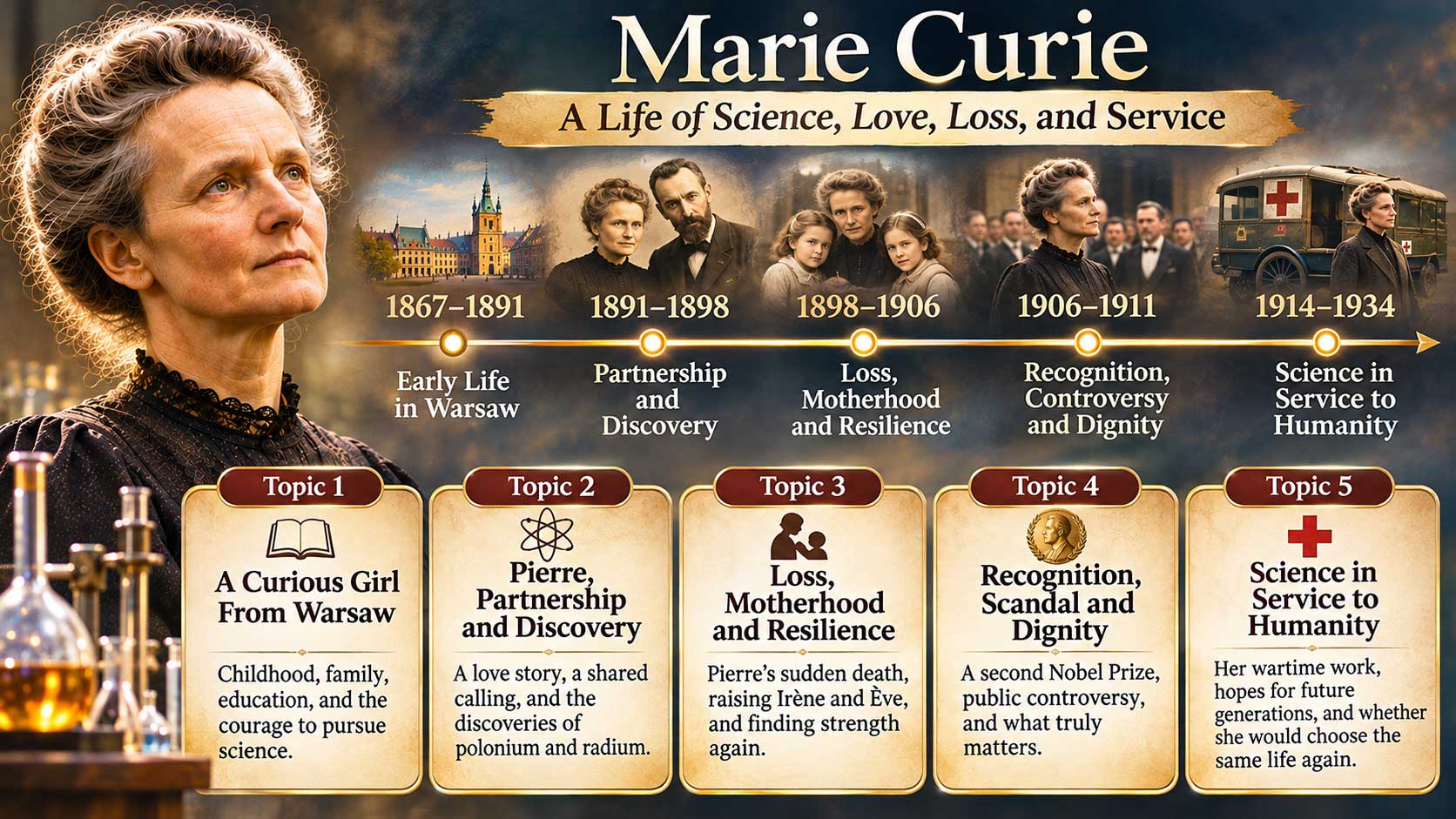
When I sat down with Marie Curie in this fictional afternoon in Paris, I expected to meet a brilliant scientist whose life had been defined by extraordinary discoveries. Instead, I encountered a woman whose greatest pleasure seemed to come from something remarkably simple: the opportunity to learn. Beneath the international recognition, the two Nobel Prizes, and the scientific institutions she helped establish, there remained a little Polish girl fascinated by her father's scientific instruments.
What touched me most was her relationship with Pierre. Their bicycle excursions, their evening visits to the laboratory, and their shared enthusiasm for unanswered questions revealed a beautiful dimension of their marriage. Marie's own account of their life together, available in her book Pierre Curie, offers a personal perspective on their partnership. They experienced the happiness of pursuing meaningful work together without losing their individual identities.
I was equally moved by her relationship with Irène and Ève. One daughter became a scientist, the other pursued artistic and literary interests. Their different paths remind me that loving our children does not require them to reproduce our achievements or fulfill our ambitions. Sometimes the greatest gift we can give them is the freedom to discover who they wish to become.
Marie's experiences in 1911 raised a difficult question about how we judge other people. Human beings can accomplish extraordinary things and still face criticism concerning their personal decisions. We do not have to excuse every mistake to recognize someone's dignity. Marie's 1911 Nobel lecture stands as a historical record of the scientific contributions that deserved recognition independently of the controversy surrounding her.
Her wartime work reminded me that knowledge acquires another dimension when it becomes useful to someone in need. Marie did not have to invent X-rays to make an extraordinary contribution to medicine. She recognized a practical problem and devoted her abilities to addressing it. Sometimes service begins by recognizing how much good can be accomplished with knowledge that already exists.
I keep returning to her generosity regarding future generations. In January 1934, several months after our fictional meeting, Irène and Frédéric Joliot-Curie discovered artificial radioactivity. Their achievement earned them the 1935 Nobel Prize in Chemistry, which Marie did not live to witness. There is something deeply moving about contributing to discoveries whose full significance extends beyond one's own lifetime.
Marie Curie died on July 4, 1934, at the age of sixty-six. Her death from aplastic anemia is widely associated with prolonged exposure to ionizing radiation. Yet I would hesitate to describe her life simply as a sacrifice for science. She experienced intellectual freedom, companionship, motherhood, friendship, and the pleasure of discovering things that had previously been unknown. Those experiences deserve to be remembered alongside her hardships.
Would Marie Curie choose the same life again? We cannot know her actual answer. But I find myself returning to the final scene of our fictional conversation. After saying goodbye, she returns to her office, sits at her desk, puts on her spectacles, and picks up her pencil. She has already accomplished more than most people could hope to achieve in several lifetimes. Yet tomorrow matters to her for a wonderfully simple reason.
There is still something she wants to know.
Fictional Conversation Disclaimer
The preceding interview and its final reflections are creative interpretations of Marie Curie's historical life and scientific legacy. Her responses, private emotions, humor, and reflections on her choices are fictional rather than documented statements. Readers are encouraged to consult her original writings, scientific publications, correspondence, and credible historical biographies for her authentic views.
Short Bios:
Marie Curie (1867–1934)
Marie Skłodowska Curie was a Polish-born physicist and chemist whose pioneering research transformed the scientific study of radioactivity. Born in Warsaw under Russian rule, she moved to Paris in 1891 to pursue higher education at the Sorbonne.
Working with her husband, Pierre Curie, she discovered the radioactive elements polonium and radium in 1898. In 1903, she shared the Nobel Prize in Physics with Pierre Curie and Henri Becquerel. In 1911, she received the Nobel Prize in Chemistry for her discoveries and investigations involving radioactive elements.
She became the first woman to receive a Nobel Prize, the first person to receive two Nobel Prizes, and remains the only person awarded Nobel Prizes in two different scientific disciplines.
During the First World War, she organized mobile radiological facilities and trained personnel to assist medical teams treating wounded soldiers. She helped establish scientific research institutions in Paris and Warsaw, contributing to advances in physics, chemistry, and medicine.
Marie was the mother of Irène Joliot-Curie, who later received the Nobel Prize in Chemistry, and Ève Curie, a pianist, writer, journalist, and humanitarian. She died on July 4, 1934, leaving a scientific legacy that continues to influence research and medical treatment.
Nick Sasaki
Nick Sasaki is the creator of ImaginaryTalks.com, a platform devoted to fictional conversations with influential historical figures, thinkers, scientists, spiritual leaders, and contemporary personalities.
His conversational approach combines historical research, intellectual curiosity, personal reflection, and creative storytelling. Through these fictional encounters, he seeks to explore the human experiences behind extraordinary accomplishments and bring meaningful ideas from different generations into conversation.
In this interview, Nick approaches Marie Curie with the curiosity of someone interested in her scientific achievements and the woman behind them, exploring her childhood, marriage, motherhood, personal struggles, humanitarian contributions, and enduring love of discovery.
Leave a Reply