


Introduction
What if Jesus Christ came into this world not to die, but to live, to love, and to fulfill a dream that began with the creation of humanity?
For two thousand years, Christians have contemplated the meaning of Jesus' crucifixion. His suffering, sacrifice, and resurrection stand at the center of Christian faith.
But there is another question, one that is rarely asked.
What kind of life did Jesus himself hope to live?
When the Apostle Paul described Jesus as the last Adam in 1 Corinthians 15, he connected Christ's mission to the very beginning of human history.
And in Genesis 1 and 2, God creates man and woman, blesses them, and establishes the foundation of human family life.
What if these two stories are more deeply connected than we have traditionally considered?
What if Jesus came as the Second Adam to restore God's original ideal of love, marriage, family, and human happiness?
Could Jesus have hoped to marry, raise children, and establish a family that would become the foundation of a world united in God's love?
And if such a future was possible, what might he have felt when the path before him led instead to the cross?
In this deeply personal imaginary interview, Nick Sasaki sits down with Jesus Christ to explore questions that reach beyond familiar theological explanations.
Their conversation begins with God's original dream for humanity, moves through Jesus' possible hopes as the Second Adam, and examines the painful misunderstandings surrounding his ministry.
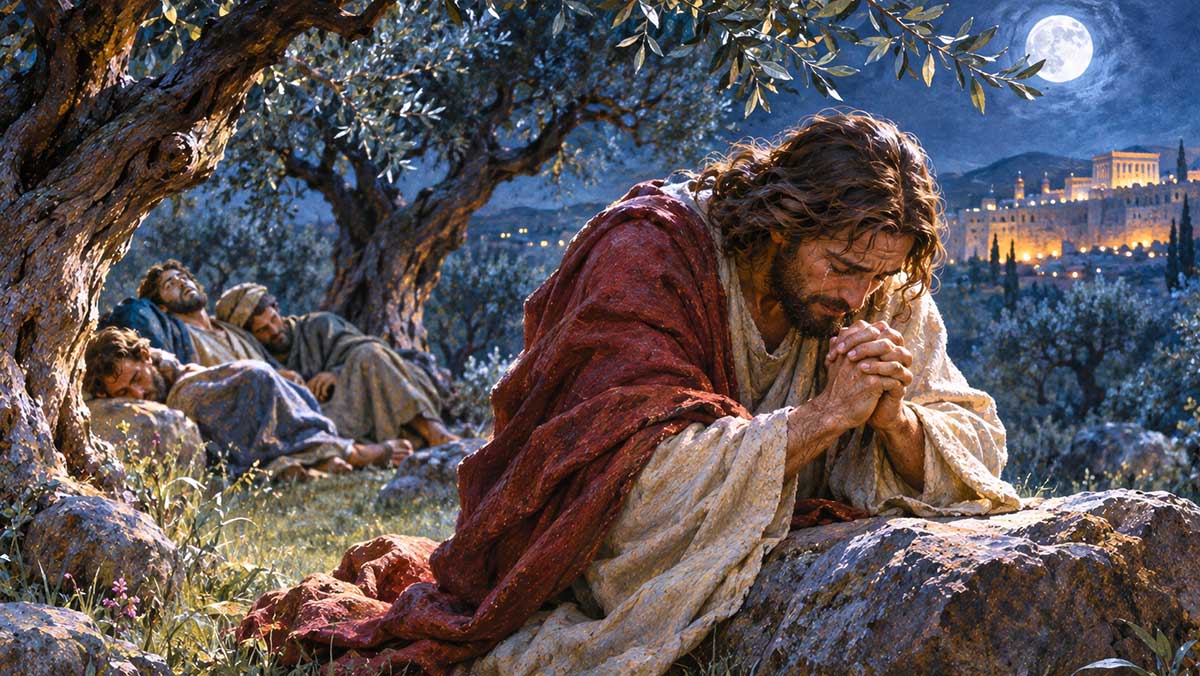
Then comes Gethsemane.
In Matthew 26:36-46, Jesus prays in anguish, asking whether the cup before him might pass.
What was happening in his heart?
Was he grieving only his approaching death? Or might his sorrow have included a dream for humanity that remained unfulfilled?
And perhaps the most intimate question of all: Did Jesus want to bring happiness to his Heavenly Father?
This is not simply a conversation about what Jesus did for humanity.
It is an invitation to consider what Jesus may have wanted for God, for the people he loved, and for the world he hoped to see.
Disclaimer: This is a fictional interview created for spiritual and theological reflection. The dialogue does not represent actual statements by Jesus Christ. The hypothesis that Jesus originally intended to marry and establish an ideal family reflects a particular theological interpretation associated with Unification theology, not an established historical fact or a doctrine shared by all Christian traditions.
Topic 1: Before the Fall, What Was God's Original Dream?

Question 1: Jesus, What Did Your Heavenly Father Truly Want When He Created Humanity?
Nick Sasaki Jesus, before we talk about your life, your mission, or the cross, I want to go much further back.
I want to go all the way to the beginning.
When I read Genesis, I see God creating the heavens and the earth, the oceans, the mountains, the animals, and finally human beings.
And after creating humanity, God blesses Adam and Eve.
For a long time, I thought of creation mainly as an expression of God's greatness.
But now I wonder whether there was something much more personal behind it.
I have five children. When I think about what makes me happy as a father, it isn't simply that my children respect me or listen to me.
I want them to be happy. I want them to experience love. I want them to have meaningful relationships and lives filled with joy.
Sometimes, just seeing one of my children genuinely happy is enough to make me happy.
And that makes me wonder about God.
Jesus, when your Heavenly Father created human beings, what was He hoping to experience?
Was He looking for creatures who would worship Him?
Or was He hoping to have children He could love, children who would grow up and share His happiness?
Jesus Nick, you have begun with a question that reaches into the heart of everything we will discuss.
When people think about God, they often begin with His greatness.
They imagine the Creator of the universe, the One who commands the stars, the One whose wisdom exceeds human comprehension.
There is truth in recognizing God's greatness.
But when I taught my disciples how to pray, I did not begin by asking them to contemplate the distance between themselves and the Creator.
I taught them to say, "Our Father."
Consider what that means.
A king may have subjects who obey him. A master may have servants who carry out his instructions.
But a father has a different relationship with his children.
His concern reaches beyond their obedience.
He cares about who they become.
He rejoices when they grow in wisdom, compassion, and love.
And when they suffer, their suffering matters to him.
You spoke about your children. Let me ask you something.
When your first child was born, did you look at that child and wonder how much honor the child would bring you?
Nick Sasaki (laughing softly) No, of course not.
I was just amazed.
Here was this tiny human being.
I couldn't believe that I was holding my own child.
Jesus And what did you want for that child?
Nick Sasaki I wanted her to be healthy, happy, and loved.
I wanted her to have a wonderful life.
Jesus Before she could speak, before she could obey your instructions, before she could accomplish anything, you already loved her.
Nick Sasaki Yes.
Jesus Then you have experienced something that may help you contemplate the Father's love.
Love does not begin when the beloved becomes useful.
It does not begin when the beloved proves worthy.
A child is loved before the child has accomplished anything.
When I spoke about the Father who knows what His children need before they ask, I wanted people to recognize a love that precedes their achievements.
When I spoke about the shepherd searching for one lost sheep, I wanted them to see that no individual was insignificant.
And when I spoke about the father running to embrace his returning son, I wanted them to recognize the joy of restored love.
Nick Sasaki That changes the way I think about creation.
God didn't create us merely to test whether we would obey Him.
He wanted a relationship.
Jesus A relationship of love cannot be reduced to a test.
Obedience matters, but obedience without love does not express the fullness of a relationship.
Think of a child who follows every instruction because he is terrified of his father.
Would you call that the ideal relationship between parent and child?
Nick Sasaki No. That would make me terribly sad.
I wouldn't want my children to be afraid of me.
I would want them to trust me.
Jesus And would you want them to remain children forever, unable to make decisions, unable to love others, unable to develop their own character?
Nick Sasaki No. I want them to grow into mature, loving adults.
Jesus Then consider the meaning of spiritual maturity.
If humanity was created for communion with God, perhaps maturity is not merely learning more about God.
It is becoming capable of expressing the love that comes from God.
A child receives love.
A mature person learns to give love freely.
And love becomes richer when it is shared.
Nick Sasaki Jesus, I think this is where the meaning of salvation begins to change for me.
If God's original desire was to have loving children, then salvation must mean restoring that relationship.
Not simply escaping punishment.
Jesus The image of returning home can help you understand reconciliation.
But there is something else.
When a lost child returns home, the story does not end at the doorway.
The child must learn to live in the household again.
To trust.
To forgive.
To love the other members of the family.
The restoration of a relationship is not merely a declaration.
It becomes a way of life.
Nick Sasaki So God's original dream was not just that each person would have a relationship with Him.
It was that His children would love one another.
Jesus Remember the two commandments I placed together.
Love God.
Love your neighbor.
If the Father loves all His children, how could love for the Father remain separate from love for those children?
Nick Sasaki (quietly) Then perhaps God's greatest happiness is seeing His children love each other.
Jesus Think about what brings you joy when your own children care for one another.
Nick Sasaki That's true.
When I see my children helping each other, or laughing together, it means more to me than almost anything.
And when they're fighting or hurting each other, that hurts me too.
Jesus Then let that experience deepen your compassion.
When you look at another human being, consider that you are looking at someone whose life matters to the Father.
Even someone who does not share your beliefs.
Even someone whose choices you struggle to understand.
Even someone you have called an enemy.
Nick Sasaki Jesus, I think I'm beginning to see why you taught people to love their enemies.
If God is the Father of all humanity, then even my enemy is someone God loves.
Jesus And that recognition changes what love asks of you.
It does not mean approving every action.
It does not mean abandoning justice.
It means refusing to forget the humanity of the person before you.
Nick Sasaki Then God's original dream must have been much bigger than a beautiful garden.
It was a world where every human being knew they were loved, and where that love shaped every relationship.
Jesus That is a meaningful way to contemplate the Kingdom of God.
But now, Nick, let us consider the place where human beings first learn what love means.
The family.
Question 2: Was the Family Meant to Be the Place Where God's Love Becomes Complete?
Nick Sasaki Jesus, this is something I've been thinking about for a long time.
Genesis says God created humanity male and female.
Then God said it was not good for man to be alone.
And Adam and Eve were blessed to be fruitful and multiply.
I don't think those details are accidental.
I believe God wanted human beings to experience different kinds of love through the family.
First, we experience love as children.
Then we learn love through brothers and sisters.
Later, a man and woman can unite as husband and wife.
And when they become parents, they experience another dimension of love.
When I look at that progression, I wonder whether the family was intended to be the place where God's love becomes fully expressed.
What do you think?
Jesus Nick, consider how different relationships teach different expressions of love.
A child begins life dependent on the care of others.
Before the child can understand the meaning of sacrifice, someone has already sacrificed for that child.
Before the child can express gratitude, someone has already given love.
As the child grows, relationships become more complex.
Brothers and sisters learn that the world does not revolve around one person.
They learn to share attention, possessions, and affection.
They encounter jealousy, competition, and misunderstanding.
But they can learn forgiveness and reconciliation.
Nick Sasaki That's certainly true.
Having five children, I've seen plenty of those lessons.
Sometimes I think siblings are each other's greatest teachers.
Jesus They can be.
And when two people enter marriage, they encounter another opportunity.
They are invited to love someone who is neither their parent nor their child, but a person with a distinct history, personality, hopes, and weaknesses.
Marriage can teach people to move beyond self-centered desire.
But that transformation does not happen automatically.
A wedding ceremony does not create mature love.
Love must be practiced.
Nick Sasaki That's an important distinction.
Sometimes people think getting married is the achievement itself.
But perhaps marriage is where the real work begins.
Jesus A relationship becomes meaningful through the love expressed within it.
A husband who treats his wife without kindness has not fulfilled love merely by becoming a husband.
A parent who uses authority to frighten a child has not fulfilled love merely by having children.
The form of a relationship matters, but its spirit matters deeply.
Nick Sasaki Then what about parental love?
I feel that becoming a parent changes something fundamental inside a person.
Before having children, you can think mostly about your own happiness.
But once you have a child, suddenly another person's happiness can become more important than your own.
Jesus Parenthood can reveal a dimension of self-giving love.
A parent may spend a sleepless night caring for a sick child.
The child may never know how much was sacrificed.
Yet the parent continues to care.
There is a kind of joy in giving that cannot be measured by what one receives in return.
But remember that people can express such love in many relationships.
Some never marry.
Some cannot have children.
Some lose their families.
Others dedicate their lives to caring for people who are not related to them.
Their capacity for love is not diminished by those circumstances.
Nick Sasaki I agree.
And yet, I still feel there is something profoundly significant about God creating Adam and Eve together.
It seems to suggest that the original ideal involved a man and woman united in love.
Jesus The creation account certainly gives marriage a significant place.
When I spoke about marriage, I referred to the beginning, to the creation of male and female and the union of two becoming one flesh.
But the meaning of love must never be reduced to possession or status.
Two people become truly united when they learn to care for one another as persons of equal dignity.
Nick Sasaki Jesus, may I ask something about God Himself?
If God is our Heavenly Father, then when a husband and wife genuinely love one another, does God experience joy through their love?
Jesus Think about your own experience as a father.
When your children grow into people who can love others deeply, does that bring you joy?
Nick Sasaki Absolutely.
Sometimes more than anything they could accomplish professionally.
Jesus Then you understand why love should not be treated as a minor part of spiritual life.
A person may possess great knowledge and still fail to love.
A person may achieve wealth and recognition yet remain unable to care for those closest to him.
What would such achievements mean if love were absent?
Nick Sasaki Very little.
Jesus This is why I spoke so often about the heart.
Not merely outward behavior.
Not merely religious status.
But the inner life from which actions arise.
Nick Sasaki Jesus, I want to connect this with your own life, but perhaps we should save that for later.
If the family was so central to God's original purpose, I wonder what that meant for you as the Second Adam.
Jesus We will come to that question.
But before we do, there is something you must consider.
What happens when love is damaged?
What happens when trust is broken?
What happens when the children of a loving parent turn away from one another?
Nick Sasaki That brings us to the Fall.
Jesus Yes.
And to the sorrow that can exist wherever there is love.
Question 3: Jesus, Did God Suffer When Adam and Eve Fell?
Nick Sasaki Jesus, I have always found the story of Adam and Eve heartbreaking.
People often talk about the Fall as the beginning of sin.
They talk about disobedience, punishment, and separation from God.
But I keep thinking about the Father's heart.
If God created Adam and Eve as His beloved children, and if He hoped they would grow into mature people capable of building a beautiful family, then their Fall must have been more than the violation of a commandment.
It must have been the loss of something God dearly loved.
As a father, I know that when a child makes a mistake, I don't simply think about the rule that was broken.
I worry about the child.
I worry about the consequences.
And sometimes I feel helpless because I cannot make another person choose the right path.
Did God experience sorrow when Adam and Eve turned away from Him?
Jesus Nick, the Scriptures often speak of God using the language of human relationships.
The prophets describe God's love for His people in terms of a father caring for a child.
In Hosea, God is portrayed as teaching Israel to walk, holding the child in His arms, and caring for those who did not recognize the source of that care.
There is tenderness in that image.
And there is sorrow.
Nick Sasaki I remember that passage.
It sounds almost like a parent remembering when a child was very young.
Jesus Yes.
And consider the father in the parable of the lost son.
The younger son leaves home.
He wastes what he has received.
He experiences hunger and humiliation.
But when he returns, the father does not stand at a distance demanding that the son first prove his worth.
He runs to meet him.
Nick Sasaki I love that story.
But something strikes me now.
We usually focus on the son.
His mistakes.
His suffering.
His return.
But what about the father during all the time the son was gone?
Jesus That is a question worth asking.
Nick Sasaki He must have missed his son.
Perhaps every morning he looked down the road.
Perhaps every evening he wondered whether his son was hungry or cold.
Perhaps he worried that the son might never come home.
Jesus The parable does not describe every day of the father's waiting.
But the welcome reveals the depth of his love.
Nick Sasaki Jesus, that makes me think about God in a different way.
If humanity has been separated from God for thousands of years, perhaps we have spent those thousands of years asking God to comfort us without considering His longing for His children.
Jesus The language of longing can help you contemplate the seriousness of separation.
But remember that God is not simply a human parent enlarged to infinite size.
The Scriptures speak of His faithfulness, wisdom, and steadfast love in ways that exceed human limitations.
Still, the image of a loving father can teach you something essential.
Love does not become indifferent simply when the beloved turns away.
Nick Sasaki Then could we say that the history of salvation is the history of God trying to bring His children home?
Jesus That image expresses an important part of reconciliation.
But there is another dimension.
The lost son must learn to live as a son again.
And the older brother must learn to rejoice that his brother has returned.
Nick Sasaki That's interesting.
The older brother was physically at home, but perhaps his heart was far from his father.
Jesus Exactly.
He obeyed.
He worked.
He remained.
Yet he struggled to share his father's joy.
Nick Sasaki So being close to God isn't simply about following religious rules.
It's about sharing God's heart.
Jesus Consider how easily people can become concerned with proving their own righteousness.
They may obey outwardly and still look upon others with contempt.
They may speak about God's love and refuse to forgive.
They may defend religious traditions and forget the people those traditions are meant to serve.
Nick Sasaki Jesus, is that part of what you were trying to change when you came?
You wanted people to understand the Father's heart, not simply obey commandments out of fear.
Jesus I wanted people to love God with all their hearts and to love their neighbors as themselves.
Those commandments are not separate from the law's deepest purpose.
They express its heart.
Nick Sasaki Then perhaps the tragedy of the Fall was that human beings lost their ability to love in the way God intended.
They became separated from God, and then they began hurting one another.
Jesus The story of Genesis moves quickly from the alienation of Adam and Eve to the violence between Cain and Abel.
That progression is worth considering.
Broken relationships do not remain isolated.
They can spread through families and communities.
Nick Sasaki That's true.
And the reverse should be possible too.
If love is restored in one family, perhaps it can spread outward.
From parents to children.
From brothers and sisters to neighbors.
From communities to nations.
Jesus Love can grow through the example of those who practice it.
A small act of reconciliation may influence more people than the person who begins it realizes.
Nick Sasaki Jesus, I think I'm beginning to understand why God's original dream and the salvation of humanity might be the same thing.
God wanted a world of love.
Human beings turned away from that love.
And salvation means returning to the relationship God intended from the beginning.
Jesus That is a meaningful way to describe the restoration of love.
But Nick, I want you to consider something.
If you truly believe that God loves every human being as His child, what does that mean for the way you treat someone you dislike?
Nick Sasaki It means I cannot simply dismiss that person.
Even if I disagree with them.
Even if they have hurt me.
I have to recognize that they matter to God.
Jesus And what does it mean for the way you treat your own family?
Nick Sasaki (pausing) It means I have to practice that love at home.
Not just talk about it.
I suppose it's easier to speak about loving humanity than to love someone who has disappointed you personally.
Jesus Sometimes the people closest to you reveal how much more you have to learn about love.
They know your weaknesses.
They can hurt you deeply.
And you can hurt them.
But those relationships can become places where patience, humility, and forgiveness grow.
Nick Sasaki Jesus, may I share something?
When I think about God as our Father, I sometimes feel sad.
Not just sad for humanity.
Sad for God.
I think about how much happiness He must have wanted to share with His children.
And I wonder how much of that happiness has been lost through human suffering and conflict.
I imagine a father watching his children fight, knowing they could have loved one another.
And I wonder whether God has been waiting all this time for His children to finally understand His heart.
Jesus Nick, what happens in your own heart when you think about the Father in that way?
Nick Sasaki I feel that I want to comfort Him.
I know that sounds strange.
Usually we ask God to comfort us.
But I want to do something that makes Him happy.
I want Him to look at humanity and feel joy.
I want Him to see His children loving one another.
Jesus Then let that desire become part of how you live.
If you want to honor the Father's love, begin by loving those whom He loves.
If you want to bring peace, practice reconciliation.
If you want families to become places of joy, care for the relationships entrusted to you.
Nick Sasaki (quietly) Jesus, I think that is what I have been trying to understand.
God didn't create humanity because He needed servants.
He wanted children.
He wanted love.
He wanted a family.
And when that love was lost, He did not stop loving us.
Jesus The image of the Father welcoming the lost child reminds us that love continues to seek reconciliation.
Nick Sasaki Then Jesus, I want to ask something that has been growing in my heart throughout this conversation.
If God's original dream was a world of love centered on the family, and if humanity lost that dream through the Fall, then someone had to come and restore it.
Someone had to show what a human being fully united with God could become.
And Paul called you the last Adam.
(He looks at Jesus.)
Jesus, when you came into this world as the Second Adam, were you hoping to fulfill the very dream that Adam and Eve had failed to realize?
And if so, did that dream include a life of love, marriage, children, and a family of your own?
Jesus Nick, now we are approaching a question that reaches into the meaning of my mission and the mystery of what it means to be fully human.
You have spoken about the Father's dream.
You have spoken about the happiness He intended for His children.
Now you are asking what that dream meant for my own life.
Before we answer, I would like you to think carefully about one thing.
When you imagine the life I might have lived, are you thinking primarily about the happiness I might have received?
Or about the love I might have been able to give?
Nick Sasaki (after a long pause) I think both, Jesus.
And perhaps that's why this question means so much to me.
I don't believe those two things were meant to be separated.
I think your happiness, your Father's happiness, and humanity's salvation could have been part of the same beautiful dream.
And I want to know whether that was the life you came to live.
This fictional conversation draws on Genesis 1-4, Hosea 11, Luke 15, Matthew 22, John 15, Romans 5, and 1 Corinthians 15. The family-centered interpretation of the Second Adam and the imagined emotional reflections are theological and creative explorations, not documented statements by Jesus.
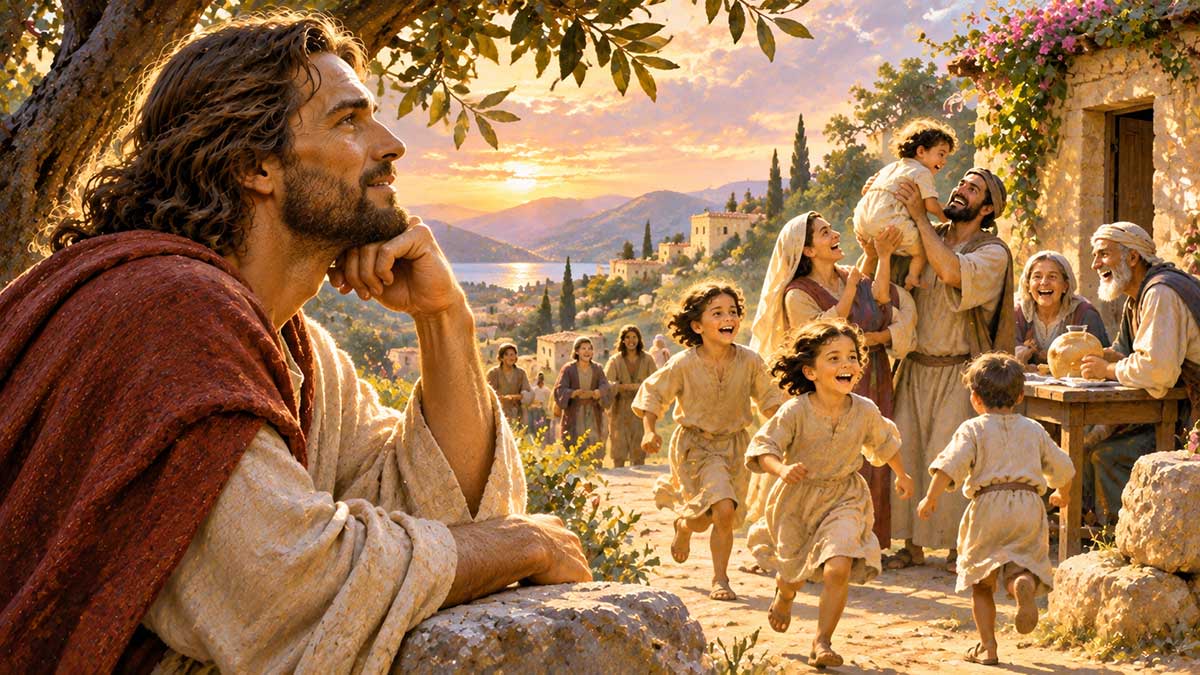
Topic 2: Jesus, What Kind of Life Did You Dream of Living?
Question 1: Jesus, What Did Your Heavenly Father Truly Want When He Created Humanity?
Nick Sasaki Jesus, before we talk about your life, your mission, or the cross, I want to go much further back.
I want to go all the way to the beginning.
When I read Genesis, I see God creating the heavens and the earth, the oceans, the mountains, the animals, and finally human beings.
And after creating humanity, God blesses Adam and Eve.
For a long time, I thought of creation mainly as an expression of God's greatness.
But now I wonder whether there was something much more personal behind it.
I have five children. When I think about what makes me happy as a father, it isn't simply that my children respect me or listen to me.
I want them to be happy. I want them to experience love. I want them to have meaningful relationships and lives filled with joy.
Sometimes, just seeing one of my children genuinely happy is enough to make me happy.
And that makes me wonder about God.
Jesus, when your Heavenly Father created human beings, what was He hoping to experience?
Was He looking for creatures who would worship Him?
Or was He hoping to have children He could love, children who would grow up and share His happiness?
Jesus Nick, you have begun with a question that reaches into the heart of everything we will discuss.
When people think about God, they often begin with His greatness.
They imagine the Creator of the universe, the One who commands the stars, the One whose wisdom exceeds human comprehension.
There is truth in recognizing God's greatness.
But when I taught my disciples how to pray, I did not begin by asking them to contemplate the distance between themselves and the Creator.
I taught them to say, "Our Father."
Consider what that means.
A king may have subjects who obey him. A master may have servants who carry out his instructions.
But a father has a different relationship with his children.
His concern reaches beyond their obedience.
He cares about who they become.
He rejoices when they grow in wisdom, compassion, and love.
And when they suffer, their suffering matters to him.
You spoke about your children. Let me ask you something.
When your first child was born, did you look at that child and wonder how much honor the child would bring you?
Nick Sasaki (laughing softly) No, of course not.
I was just amazed.
Here was this tiny human being.
I couldn't believe that I was holding my own child.
Jesus And what did you want for that child?
Nick Sasaki I wanted her to be healthy, happy, and loved.
I wanted her to have a wonderful life.
Jesus Before she could speak, before she could obey your instructions, before she could accomplish anything, you already loved her.
Nick Sasaki Yes.
Jesus Then you have experienced something that may help you contemplate the Father's love.
Love does not begin when the beloved becomes useful.
It does not begin when the beloved proves worthy.
A child is loved before the child has accomplished anything.
When I spoke about the Father who knows what His children need before they ask, I wanted people to recognize a love that precedes their achievements.
When I spoke about the shepherd searching for one lost sheep, I wanted them to see that no individual was insignificant.
And when I spoke about the father running to embrace his returning son, I wanted them to recognize the joy of restored love.
Nick Sasaki That changes the way I think about creation.
God didn't create us merely to test whether we would obey Him.
He wanted a relationship.
Jesus A relationship of love cannot be reduced to a test.
Obedience matters, but obedience without love does not express the fullness of a relationship.
Think of a child who follows every instruction because he is terrified of his father.
Would you call that the ideal relationship between parent and child?
Nick Sasaki No. That would make me terribly sad.
I wouldn't want my children to be afraid of me.
I would want them to trust me.
Jesus And would you want them to remain children forever, unable to make decisions, unable to love others, unable to develop their own character?
Nick Sasaki No. I want them to grow into mature, loving adults.
Jesus Then consider the meaning of spiritual maturity.
If humanity was created for communion with God, perhaps maturity is not merely learning more about God.
It is becoming capable of expressing the love that comes from God.
A child receives love.
A mature person learns to give love freely.
And love becomes richer when it is shared.
Nick Sasaki Jesus, I think this is where the meaning of salvation begins to change for me.
If God's original desire was to have loving children, then salvation must mean restoring that relationship.
Not simply escaping punishment.
Jesus The image of returning home can help you understand reconciliation.
But there is something else.
When a lost child returns home, the story does not end at the doorway.
The child must learn to live in the household again.
To trust.
To forgive.
To love the other members of the family.
The restoration of a relationship is not merely a declaration.
It becomes a way of life.
Nick Sasaki So God's original dream was not just that each person would have a relationship with Him.
It was that His children would love one another.
Jesus Remember the two commandments I placed together.
Love God.
Love your neighbor.
If the Father loves all His children, how could love for the Father remain separate from love for those children?
Nick Sasaki (quietly) Then perhaps God's greatest happiness is seeing His children love each other.
Jesus Think about what brings you joy when your own children care for one another.
Nick Sasaki That's true.
When I see my children helping each other, or laughing together, it means more to me than almost anything.
And when they're fighting or hurting each other, that hurts me too.
Jesus Then let that experience deepen your compassion.
When you look at another human being, consider that you are looking at someone whose life matters to the Father.
Even someone who does not share your beliefs.
Even someone whose choices you struggle to understand.
Even someone you have called an enemy.
Nick Sasaki Jesus, I think I'm beginning to see why you taught people to love their enemies.
If God is the Father of all humanity, then even my enemy is someone God loves.
Jesus And that recognition changes what love asks of you.
It does not mean approving every action.
It does not mean abandoning justice.
It means refusing to forget the humanity of the person before you.
Nick Sasaki Then God's original dream must have been much bigger than a beautiful garden.
It was a world where every human being knew they were loved, and where that love shaped every relationship.
Jesus That is a meaningful way to contemplate the Kingdom of God.
But now, Nick, let us consider the place where human beings first learn what love means.
The family.
Question 2: Was the Family Meant to Be the Place Where God's Love Becomes Complete?
Nick Sasaki Jesus, this is something I've been thinking about for a long time.
Genesis says God created humanity male and female.
Then God said it was not good for man to be alone.
And Adam and Eve were blessed to be fruitful and multiply.
I don't think those details are accidental.
I believe God wanted human beings to experience different kinds of love through the family.
First, we experience love as children.
Then we learn love through brothers and sisters.
Later, a man and woman can unite as husband and wife.
And when they become parents, they experience another dimension of love.
When I look at that progression, I wonder whether the family was intended to be the place where God's love becomes fully expressed.
What do you think?
Jesus Nick, consider how different relationships teach different expressions of love.
A child begins life dependent on the care of others.
Before the child can understand the meaning of sacrifice, someone has already sacrificed for that child.
Before the child can express gratitude, someone has already given love.
As the child grows, relationships become more complex.
Brothers and sisters learn that the world does not revolve around one person.
They learn to share attention, possessions, and affection.
They encounter jealousy, competition, and misunderstanding.
But they can learn forgiveness and reconciliation.
Nick Sasaki That's certainly true.
Having five children, I've seen plenty of those lessons.
Sometimes I think siblings are each other's greatest teachers.
Jesus They can be.
And when two people enter marriage, they encounter another opportunity.
They are invited to love someone who is neither their parent nor their child, but a person with a distinct history, personality, hopes, and weaknesses.
Marriage can teach people to move beyond self-centered desire.
But that transformation does not happen automatically.
A wedding ceremony does not create mature love.
Love must be practiced.
Nick Sasaki That's an important distinction.
Sometimes people think getting married is the achievement itself.
But perhaps marriage is where the real work begins.
Jesus A relationship becomes meaningful through the love expressed within it.
A husband who treats his wife without kindness has not fulfilled love merely by becoming a husband.
A parent who uses authority to frighten a child has not fulfilled love merely by having children.
The form of a relationship matters, but its spirit matters deeply.
Nick Sasaki Then what about parental love?
I feel that becoming a parent changes something fundamental inside a person.
Before having children, you can think mostly about your own happiness.
But once you have a child, suddenly another person's happiness can become more important than your own.
Jesus Parenthood can reveal a dimension of self-giving love.
A parent may spend a sleepless night caring for a sick child.
The child may never know how much was sacrificed.
Yet the parent continues to care.
There is a kind of joy in giving that cannot be measured by what one receives in return.
But remember that people can express such love in many relationships.
Some never marry.
Some cannot have children.
Some lose their families.
Others dedicate their lives to caring for people who are not related to them.
Their capacity for love is not diminished by those circumstances.
Nick Sasaki I agree.
And yet, I still feel there is something profoundly significant about God creating Adam and Eve together.
It seems to suggest that the original ideal involved a man and woman united in love.
Jesus The creation account certainly gives marriage a significant place.
When I spoke about marriage, I referred to the beginning, to the creation of male and female and the union of two becoming one flesh.
But the meaning of love must never be reduced to possession or status.
Two people become truly united when they learn to care for one another as persons of equal dignity.
Nick Sasaki Jesus, may I ask something about God Himself?
If God is our Heavenly Father, then when a husband and wife genuinely love one another, does God experience joy through their love?
Jesus Think about your own experience as a father.
When your children grow into people who can love others deeply, does that bring you joy?
Nick Sasaki Absolutely.
Sometimes more than anything they could accomplish professionally.
Jesus Then you understand why love should not be treated as a minor part of spiritual life.
A person may possess great knowledge and still fail to love.
A person may achieve wealth and recognition yet remain unable to care for those closest to him.
What would such achievements mean if love were absent?
Nick Sasaki Very little.
Jesus This is why I spoke so often about the heart.
Not merely outward behavior.
Not merely religious status.
But the inner life from which actions arise.
Nick Sasaki Jesus, I want to connect this with your own life, but perhaps we should save that for later.
If the family was so central to God's original purpose, I wonder what that meant for you as the Second Adam.
Jesus We will come to that question.
But before we do, there is something you must consider.
What happens when love is damaged?
What happens when trust is broken?
What happens when the children of a loving parent turn away from one another?
Nick Sasaki That brings us to the Fall.
Jesus Yes.
And to the sorrow that can exist wherever there is love.
Question 3: Jesus, Did God Suffer When Adam and Eve Fell?
Nick Sasaki Jesus, I have always found the story of Adam and Eve heartbreaking.
People often talk about the Fall as the beginning of sin.
They talk about disobedience, punishment, and separation from God.
But I keep thinking about the Father's heart.
If God created Adam and Eve as His beloved children, and if He hoped they would grow into mature people capable of building a beautiful family, then their Fall must have been more than the violation of a commandment.
It must have been the loss of something God dearly loved.
As a father, I know that when a child makes a mistake, I don't simply think about the rule that was broken.
I worry about the child.
I worry about the consequences.
And sometimes I feel helpless because I cannot make another person choose the right path.
Did God experience sorrow when Adam and Eve turned away from Him?
Jesus Nick, the Scriptures often speak of God using the language of human relationships.
The prophets describe God's love for His people in terms of a father caring for a child.
In Hosea, God is portrayed as teaching Israel to walk, holding the child in His arms, and caring for those who did not recognize the source of that care.
There is tenderness in that image.
And there is sorrow.
Nick Sasaki I remember that passage.
It sounds almost like a parent remembering when a child was very young.
Jesus Yes.
And consider the father in the parable of the lost son.
The younger son leaves home.
He wastes what he has received.
He experiences hunger and humiliation.
But when he returns, the father does not stand at a distance demanding that the son first prove his worth.
He runs to meet him.
Nick Sasaki I love that story.
But something strikes me now.
We usually focus on the son.
His mistakes.
His suffering.
His return.
But what about the father during all the time the son was gone?
Jesus That is a question worth asking.
Nick Sasaki He must have missed his son.
Perhaps every morning he looked down the road.
Perhaps every evening he wondered whether his son was hungry or cold.
Perhaps he worried that the son might never come home.
Jesus The parable does not describe every day of the father's waiting.
But the welcome reveals the depth of his love.
Nick Sasaki Jesus, that makes me think about God in a different way.
If humanity has been separated from God for thousands of years, perhaps we have spent those thousands of years asking God to comfort us without considering His longing for His children.
Jesus The language of longing can help you contemplate the seriousness of separation.
But remember that God is not simply a human parent enlarged to infinite size.
The Scriptures speak of His faithfulness, wisdom, and steadfast love in ways that exceed human limitations.
Still, the image of a loving father can teach you something essential.
Love does not become indifferent simply when the beloved turns away.
Nick Sasaki Then could we say that the history of salvation is the history of God trying to bring His children home?
Jesus That image expresses an important part of reconciliation.
But there is another dimension.
The lost son must learn to live as a son again.
And the older brother must learn to rejoice that his brother has returned.
Nick Sasaki That's interesting.
The older brother was physically at home, but perhaps his heart was far from his father.
Jesus Exactly.
He obeyed.
He worked.
He remained.
Yet he struggled to share his father's joy.
Nick Sasaki So being close to God isn't simply about following religious rules.
It's about sharing God's heart.
Jesus Consider how easily people can become concerned with proving their own righteousness.
They may obey outwardly and still look upon others with contempt.
They may speak about God's love and refuse to forgive.
They may defend religious traditions and forget the people those traditions are meant to serve.
Nick Sasaki Jesus, is that part of what you were trying to change when you came?
You wanted people to understand the Father's heart, not simply obey commandments out of fear.
Jesus I wanted people to love God with all their hearts and to love their neighbors as themselves.
Those commandments are not separate from the law's deepest purpose.
They express its heart.
Nick Sasaki Then perhaps the tragedy of the Fall was that human beings lost their ability to love in the way God intended.
They became separated from God, and then they began hurting one another.
Jesus The story of Genesis moves quickly from the alienation of Adam and Eve to the violence between Cain and Abel.
That progression is worth considering.
Broken relationships do not remain isolated.
They can spread through families and communities.
Nick Sasaki That's true.
And the reverse should be possible too.
If love is restored in one family, perhaps it can spread outward.
From parents to children.
From brothers and sisters to neighbors.
From communities to nations.
Jesus Love can grow through the example of those who practice it.
A small act of reconciliation may influence more people than the person who begins it realizes.
Nick Sasaki Jesus, I think I'm beginning to understand why God's original dream and the salvation of humanity might be the same thing.
God wanted a world of love.
Human beings turned away from that love.
And salvation means returning to the relationship God intended from the beginning.
Jesus That is a meaningful way to describe the restoration of love.
But Nick, I want you to consider something.
If you truly believe that God loves every human being as His child, what does that mean for the way you treat someone you dislike?
Nick Sasaki It means I cannot simply dismiss that person.
Even if I disagree with them.
Even if they have hurt me.
I have to recognize that they matter to God.
Jesus And what does it mean for the way you treat your own family?
Nick Sasaki (pausing) It means I have to practice that love at home.
Not just talk about it.
I suppose it's easier to speak about loving humanity than to love someone who has disappointed you personally.
Jesus Sometimes the people closest to you reveal how much more you have to learn about love.
They know your weaknesses.
They can hurt you deeply.
And you can hurt them.
But those relationships can become places where patience, humility, and forgiveness grow.
Nick Sasaki Jesus, may I share something?
When I think about God as our Father, I sometimes feel sad.
Not just sad for humanity.
Sad for God.
I think about how much happiness He must have wanted to share with His children.
And I wonder how much of that happiness has been lost through human suffering and conflict.
I imagine a father watching his children fight, knowing they could have loved one another.
And I wonder whether God has been waiting all this time for His children to finally understand His heart.
Jesus Nick, what happens in your own heart when you think about the Father in that way?
Nick Sasaki I feel that I want to comfort Him.
I know that sounds strange.
Usually we ask God to comfort us.
But I want to do something that makes Him happy.
I want Him to look at humanity and feel joy.
I want Him to see His children loving one another.
Jesus Then let that desire become part of how you live.
If you want to honor the Father's love, begin by loving those whom He loves.
If you want to bring peace, practice reconciliation.
If you want families to become places of joy, care for the relationships entrusted to you.
Nick Sasaki (quietly) Jesus, I think that is what I have been trying to understand.
God didn't create humanity because He needed servants.
He wanted children.
He wanted love.
He wanted a family.
And when that love was lost, He did not stop loving us.
Jesus The image of the Father welcoming the lost child reminds us that love continues to seek reconciliation.
Nick Sasaki Then Jesus, I want to ask something that has been growing in my heart throughout this conversation.
If God's original dream was a world of love centered on the family, and if humanity lost that dream through the Fall, then someone had to come and restore it.
Someone had to show what a human being fully united with God could become.
And Paul called you the last Adam.
(He looks at Jesus.)
Jesus, when you came into this world as the Second Adam, were you hoping to fulfill the very dream that Adam and Eve had failed to realize?
And if so, did that dream include a life of love, marriage, children, and a family of your own?
Jesus Nick, now we are approaching a question that reaches into the meaning of my mission and the mystery of what it means to be fully human.
You have spoken about the Father's dream.
You have spoken about the happiness He intended for His children.
Now you are asking what that dream meant for my own life.
Before we answer, I would like you to think carefully about one thing.
When you imagine the life I might have lived, are you thinking primarily about the happiness I might have received?
Or about the love I might have been able to give?
Nick Sasaki (after a long pause) I think both, Jesus.
And perhaps that's why this question means so much to me.
I don't believe those two things were meant to be separated.
I think your happiness, your Father's happiness, and humanity's salvation could have been part of the same beautiful dream.
And I want to know whether that was the life you came to live.
This fictional conversation draws on Genesis 1-4, Hosea 11, Luke 15, Matthew 22, John 15, Romans 5, and 1 Corinthians 15. The family-centered interpretation of the Second Adam and the imagined emotional reflections are theological and creative explorations, not documented statements by Jesus.
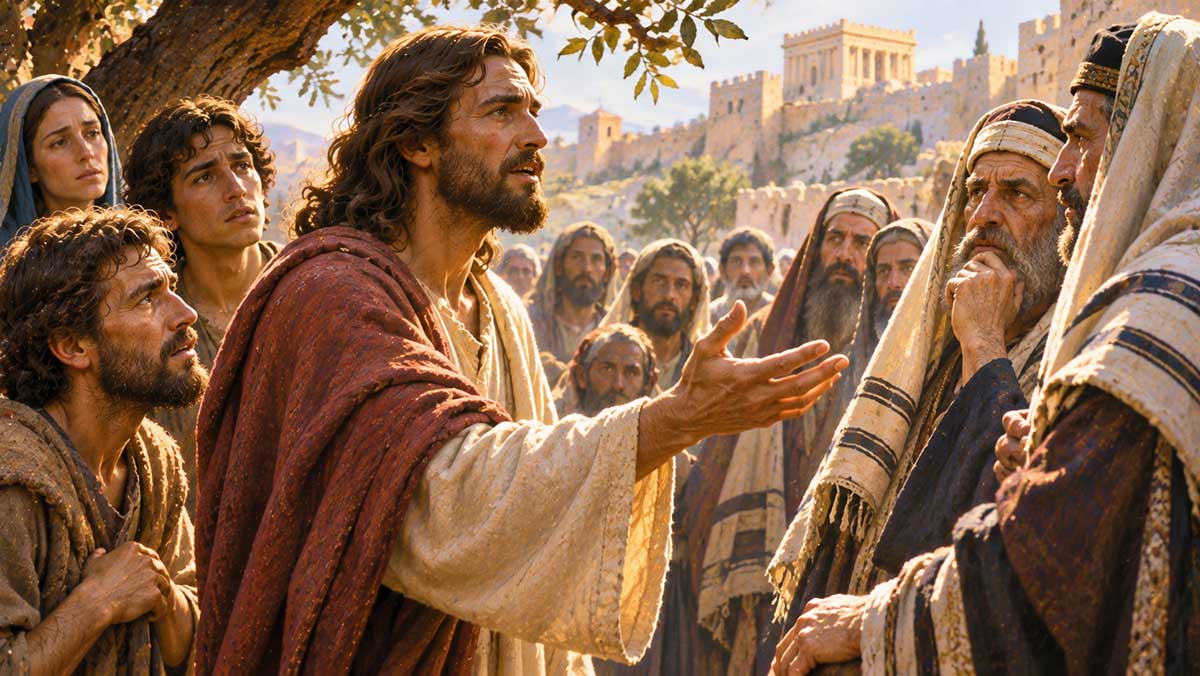
Topic 3: Why Didn't the People You Loved Understand You?
Question 1: Jesus, What Did Your Heavenly Father Truly Want When He Created Humanity?
Nick Sasaki Jesus, before we talk about your life, your mission, or the cross, I want to go much further back.
I want to go all the way to the beginning.
When I read Genesis, I see God creating the heavens and the earth, the oceans, the mountains, the animals, and finally human beings.
And after creating humanity, God blesses Adam and Eve.
For a long time, I thought of creation mainly as an expression of God's greatness.
But now I wonder whether there was something much more personal behind it.
I have five children. When I think about what makes me happy as a father, it isn't simply that my children respect me or listen to me.
I want them to be happy. I want them to experience love. I want them to have meaningful relationships and lives filled with joy.
Sometimes, just seeing one of my children genuinely happy is enough to make me happy.
And that makes me wonder about God.
Jesus, when your Heavenly Father created human beings, what was He hoping to experience?
Was He looking for creatures who would worship Him?
Or was He hoping to have children He could love, children who would grow up and share His happiness?
Jesus Nick, you have begun with a question that reaches into the heart of everything we will discuss.
When people think about God, they often begin with His greatness.
They imagine the Creator of the universe, the One who commands the stars, the One whose wisdom exceeds human comprehension.
There is truth in recognizing God's greatness.
But when I taught my disciples how to pray, I did not begin by asking them to contemplate the distance between themselves and the Creator.
I taught them to say, "Our Father."
Consider what that means.
A king may have subjects who obey him. A master may have servants who carry out his instructions.
But a father has a different relationship with his children.
His concern reaches beyond their obedience.
He cares about who they become.
He rejoices when they grow in wisdom, compassion, and love.
And when they suffer, their suffering matters to him.
You spoke about your children. Let me ask you something.
When your first child was born, did you look at that child and wonder how much honor the child would bring you?
Nick Sasaki (laughing softly) No, of course not.
I was just amazed.
Here was this tiny human being.
I couldn't believe that I was holding my own child.
Jesus And what did you want for that child?
Nick Sasaki I wanted her to be healthy, happy, and loved.
I wanted her to have a wonderful life.
Jesus Before she could speak, before she could obey your instructions, before she could accomplish anything, you already loved her.
Nick Sasaki Yes.
Jesus Then you have experienced something that may help you contemplate the Father's love.
Love does not begin when the beloved becomes useful.
It does not begin when the beloved proves worthy.
A child is loved before the child has accomplished anything.
When I spoke about the Father who knows what His children need before they ask, I wanted people to recognize a love that precedes their achievements.
When I spoke about the shepherd searching for one lost sheep, I wanted them to see that no individual was insignificant.
And when I spoke about the father running to embrace his returning son, I wanted them to recognize the joy of restored love.
Nick Sasaki That changes the way I think about creation.
God didn't create us merely to test whether we would obey Him.
He wanted a relationship.
Jesus A relationship of love cannot be reduced to a test.
Obedience matters, but obedience without love does not express the fullness of a relationship.
Think of a child who follows every instruction because he is terrified of his father.
Would you call that the ideal relationship between parent and child?
Nick Sasaki No. That would make me terribly sad.
I wouldn't want my children to be afraid of me.
I would want them to trust me.
Jesus And would you want them to remain children forever, unable to make decisions, unable to love others, unable to develop their own character?
Nick Sasaki No. I want them to grow into mature, loving adults.
Jesus Then consider the meaning of spiritual maturity.
If humanity was created for communion with God, perhaps maturity is not merely learning more about God.
It is becoming capable of expressing the love that comes from God.
A child receives love.
A mature person learns to give love freely.
And love becomes richer when it is shared.
Nick Sasaki Jesus, I think this is where the meaning of salvation begins to change for me.
If God's original desire was to have loving children, then salvation must mean restoring that relationship.
Not simply escaping punishment.
Jesus The image of returning home can help you understand reconciliation.
But there is something else.
When a lost child returns home, the story does not end at the doorway.
The child must learn to live in the household again.
To trust.
To forgive.
To love the other members of the family.
The restoration of a relationship is not merely a declaration.
It becomes a way of life.
Nick Sasaki So God's original dream was not just that each person would have a relationship with Him.
It was that His children would love one another.
Jesus Remember the two commandments I placed together.
Love God.
Love your neighbor.
If the Father loves all His children, how could love for the Father remain separate from love for those children?
Nick Sasaki (quietly) Then perhaps God's greatest happiness is seeing His children love each other.
Jesus Think about what brings you joy when your own children care for one another.
Nick Sasaki That's true.
When I see my children helping each other, or laughing together, it means more to me than almost anything.
And when they're fighting or hurting each other, that hurts me too.
Jesus Then let that experience deepen your compassion.
When you look at another human being, consider that you are looking at someone whose life matters to the Father.
Even someone who does not share your beliefs.
Even someone whose choices you struggle to understand.
Even someone you have called an enemy.
Nick Sasaki Jesus, I think I'm beginning to see why you taught people to love their enemies.
If God is the Father of all humanity, then even my enemy is someone God loves.
Jesus And that recognition changes what love asks of you.
It does not mean approving every action.
It does not mean abandoning justice.
It means refusing to forget the humanity of the person before you.
Nick Sasaki Then God's original dream must have been much bigger than a beautiful garden.
It was a world where every human being knew they were loved, and where that love shaped every relationship.
Jesus That is a meaningful way to contemplate the Kingdom of God.
But now, Nick, let us consider the place where human beings first learn what love means.
The family.
Question 2: Was the Family Meant to Be the Place Where God's Love Becomes Complete?
Nick Sasaki Jesus, this is something I've been thinking about for a long time.
Genesis says God created humanity male and female.
Then God said it was not good for man to be alone.
And Adam and Eve were blessed to be fruitful and multiply.
I don't think those details are accidental.
I believe God wanted human beings to experience different kinds of love through the family.
First, we experience love as children.
Then we learn love through brothers and sisters.
Later, a man and woman can unite as husband and wife.
And when they become parents, they experience another dimension of love.
When I look at that progression, I wonder whether the family was intended to be the place where God's love becomes fully expressed.
What do you think?
Jesus Nick, consider how different relationships teach different expressions of love.
A child begins life dependent on the care of others.
Before the child can understand the meaning of sacrifice, someone has already sacrificed for that child.
Before the child can express gratitude, someone has already given love.
As the child grows, relationships become more complex.
Brothers and sisters learn that the world does not revolve around one person.
They learn to share attention, possessions, and affection.
They encounter jealousy, competition, and misunderstanding.
But they can learn forgiveness and reconciliation.
Nick Sasaki That's certainly true.
Having five children, I've seen plenty of those lessons.
Sometimes I think siblings are each other's greatest teachers.
Jesus They can be.
And when two people enter marriage, they encounter another opportunity.
They are invited to love someone who is neither their parent nor their child, but a person with a distinct history, personality, hopes, and weaknesses.
Marriage can teach people to move beyond self-centered desire.
But that transformation does not happen automatically.
A wedding ceremony does not create mature love.
Love must be practiced.
Nick Sasaki That's an important distinction.
Sometimes people think getting married is the achievement itself.
But perhaps marriage is where the real work begins.
Jesus A relationship becomes meaningful through the love expressed within it.
A husband who treats his wife without kindness has not fulfilled love merely by becoming a husband.
A parent who uses authority to frighten a child has not fulfilled love merely by having children.
The form of a relationship matters, but its spirit matters deeply.
Nick Sasaki Then what about parental love?
I feel that becoming a parent changes something fundamental inside a person.
Before having children, you can think mostly about your own happiness.
But once you have a child, suddenly another person's happiness can become more important than your own.
Jesus Parenthood can reveal a dimension of self-giving love.
A parent may spend a sleepless night caring for a sick child.
The child may never know how much was sacrificed.
Yet the parent continues to care.
There is a kind of joy in giving that cannot be measured by what one receives in return.
But remember that people can express such love in many relationships.
Some never marry.
Some cannot have children.
Some lose their families.
Others dedicate their lives to caring for people who are not related to them.
Their capacity for love is not diminished by those circumstances.
Nick Sasaki I agree.
And yet, I still feel there is something profoundly significant about God creating Adam and Eve together.
It seems to suggest that the original ideal involved a man and woman united in love.
Jesus The creation account certainly gives marriage a significant place.
When I spoke about marriage, I referred to the beginning, to the creation of male and female and the union of two becoming one flesh.
But the meaning of love must never be reduced to possession or status.
Two people become truly united when they learn to care for one another as persons of equal dignity.
Nick Sasaki Jesus, may I ask something about God Himself?
If God is our Heavenly Father, then when a husband and wife genuinely love one another, does God experience joy through their love?
Jesus Think about your own experience as a father.
When your children grow into people who can love others deeply, does that bring you joy?
Nick Sasaki Absolutely.
Sometimes more than anything they could accomplish professionally.
Jesus Then you understand why love should not be treated as a minor part of spiritual life.
A person may possess great knowledge and still fail to love.
A person may achieve wealth and recognition yet remain unable to care for those closest to him.
What would such achievements mean if love were absent?
Nick Sasaki Very little.
Jesus This is why I spoke so often about the heart.
Not merely outward behavior.
Not merely religious status.
But the inner life from which actions arise.
Nick Sasaki Jesus, I want to connect this with your own life, but perhaps we should save that for later.
If the family was so central to God's original purpose, I wonder what that meant for you as the Second Adam.
Jesus We will come to that question.
But before we do, there is something you must consider.
What happens when love is damaged?
What happens when trust is broken?
What happens when the children of a loving parent turn away from one another?
Nick Sasaki That brings us to the Fall.
Jesus Yes.
And to the sorrow that can exist wherever there is love.
Question 3: Jesus, Did God Suffer When Adam and Eve Fell?
Nick Sasaki Jesus, I have always found the story of Adam and Eve heartbreaking.
People often talk about the Fall as the beginning of sin.
They talk about disobedience, punishment, and separation from God.
But I keep thinking about the Father's heart.
If God created Adam and Eve as His beloved children, and if He hoped they would grow into mature people capable of building a beautiful family, then their Fall must have been more than the violation of a commandment.
It must have been the loss of something God dearly loved.
As a father, I know that when a child makes a mistake, I don't simply think about the rule that was broken.
I worry about the child.
I worry about the consequences.
And sometimes I feel helpless because I cannot make another person choose the right path.
Did God experience sorrow when Adam and Eve turned away from Him?
Jesus Nick, the Scriptures often speak of God using the language of human relationships.
The prophets describe God's love for His people in terms of a father caring for a child.
In Hosea, God is portrayed as teaching Israel to walk, holding the child in His arms, and caring for those who did not recognize the source of that care.
There is tenderness in that image.
And there is sorrow.
Nick Sasaki I remember that passage.
It sounds almost like a parent remembering when a child was very young.
Jesus Yes.
And consider the father in the parable of the lost son.
The younger son leaves home.
He wastes what he has received.
He experiences hunger and humiliation.
But when he returns, the father does not stand at a distance demanding that the son first prove his worth.
He runs to meet him.
Nick Sasaki I love that story.
But something strikes me now.
We usually focus on the son.
His mistakes.
His suffering.
His return.
But what about the father during all the time the son was gone?
Jesus That is a question worth asking.
Nick Sasaki He must have missed his son.
Perhaps every morning he looked down the road.
Perhaps every evening he wondered whether his son was hungry or cold.
Perhaps he worried that the son might never come home.
Jesus The parable does not describe every day of the father's waiting.
But the welcome reveals the depth of his love.
Nick Sasaki Jesus, that makes me think about God in a different way.
If humanity has been separated from God for thousands of years, perhaps we have spent those thousands of years asking God to comfort us without considering His longing for His children.
Jesus The language of longing can help you contemplate the seriousness of separation.
But remember that God is not simply a human parent enlarged to infinite size.
The Scriptures speak of His faithfulness, wisdom, and steadfast love in ways that exceed human limitations.
Still, the image of a loving father can teach you something essential.
Love does not become indifferent simply when the beloved turns away.
Nick Sasaki Then could we say that the history of salvation is the history of God trying to bring His children home?
Jesus That image expresses an important part of reconciliation.
But there is another dimension.
The lost son must learn to live as a son again.
And the older brother must learn to rejoice that his brother has returned.
Nick Sasaki That's interesting.
The older brother was physically at home, but perhaps his heart was far from his father.
Jesus Exactly.
He obeyed.
He worked.
He remained.
Yet he struggled to share his father's joy.
Nick Sasaki So being close to God isn't simply about following religious rules.
It's about sharing God's heart.
Jesus Consider how easily people can become concerned with proving their own righteousness.
They may obey outwardly and still look upon others with contempt.
They may speak about God's love and refuse to forgive.
They may defend religious traditions and forget the people those traditions are meant to serve.
Nick Sasaki Jesus, is that part of what you were trying to change when you came?
You wanted people to understand the Father's heart, not simply obey commandments out of fear.
Jesus I wanted people to love God with all their hearts and to love their neighbors as themselves.
Those commandments are not separate from the law's deepest purpose.
They express its heart.
Nick Sasaki Then perhaps the tragedy of the Fall was that human beings lost their ability to love in the way God intended.
They became separated from God, and then they began hurting one another.
Jesus The story of Genesis moves quickly from the alienation of Adam and Eve to the violence between Cain and Abel.
That progression is worth considering.
Broken relationships do not remain isolated.
They can spread through families and communities.
Nick Sasaki That's true.
And the reverse should be possible too.
If love is restored in one family, perhaps it can spread outward.
From parents to children.
From brothers and sisters to neighbors.
From communities to nations.
Jesus Love can grow through the example of those who practice it.
A small act of reconciliation may influence more people than the person who begins it realizes.
Nick Sasaki Jesus, I think I'm beginning to understand why God's original dream and the salvation of humanity might be the same thing.
God wanted a world of love.
Human beings turned away from that love.
And salvation means returning to the relationship God intended from the beginning.
Jesus That is a meaningful way to describe the restoration of love.
But Nick, I want you to consider something.
If you truly believe that God loves every human being as His child, what does that mean for the way you treat someone you dislike?
Nick Sasaki It means I cannot simply dismiss that person.
Even if I disagree with them.
Even if they have hurt me.
I have to recognize that they matter to God.
Jesus And what does it mean for the way you treat your own family?
Nick Sasaki (pausing) It means I have to practice that love at home.
Not just talk about it.
I suppose it's easier to speak about loving humanity than to love someone who has disappointed you personally.
Jesus Sometimes the people closest to you reveal how much more you have to learn about love.
They know your weaknesses.
They can hurt you deeply.
And you can hurt them.
But those relationships can become places where patience, humility, and forgiveness grow.
Nick Sasaki Jesus, may I share something?
When I think about God as our Father, I sometimes feel sad.
Not just sad for humanity.
Sad for God.
I think about how much happiness He must have wanted to share with His children.
And I wonder how much of that happiness has been lost through human suffering and conflict.
I imagine a father watching his children fight, knowing they could have loved one another.
And I wonder whether God has been waiting all this time for His children to finally understand His heart.
Jesus Nick, what happens in your own heart when you think about the Father in that way?
Nick Sasaki I feel that I want to comfort Him.
I know that sounds strange.
Usually we ask God to comfort us.
But I want to do something that makes Him happy.
I want Him to look at humanity and feel joy.
I want Him to see His children loving one another.
Jesus Then let that desire become part of how you live.
If you want to honor the Father's love, begin by loving those whom He loves.
If you want to bring peace, practice reconciliation.
If you want families to become places of joy, care for the relationships entrusted to you.
Nick Sasaki (quietly) Jesus, I think that is what I have been trying to understand.
God didn't create humanity because He needed servants.
He wanted children.
He wanted love.
He wanted a family.
And when that love was lost, He did not stop loving us.
Jesus The image of the Father welcoming the lost child reminds us that love continues to seek reconciliation.
Nick Sasaki Then Jesus, I want to ask something that has been growing in my heart throughout this conversation.
If God's original dream was a world of love centered on the family, and if humanity lost that dream through the Fall, then someone had to come and restore it.
Someone had to show what a human being fully united with God could become.
And Paul called you the last Adam.
(He looks at Jesus.)
Jesus, when you came into this world as the Second Adam, were you hoping to fulfill the very dream that Adam and Eve had failed to realize?
And if so, did that dream include a life of love, marriage, children, and a family of your own?
Jesus Nick, now we are approaching a question that reaches into the meaning of my mission and the mystery of what it means to be fully human.
You have spoken about the Father's dream.
You have spoken about the happiness He intended for His children.
Now you are asking what that dream meant for my own life.
Before we answer, I would like you to think carefully about one thing.
When you imagine the life I might have lived, are you thinking primarily about the happiness I might have received?
Or about the love I might have been able to give?
Nick Sasaki (after a long pause) I think both, Jesus.
And perhaps that's why this question means so much to me.
I don't believe those two things were meant to be separated.
I think your happiness, your Father's happiness, and humanity's salvation could have been part of the same beautiful dream.
And I want to know whether that was the life you came to live.
This fictional conversation draws on Genesis 1-4, Hosea 11, Luke 15, Matthew 22, John 15, Romans 5, and 1 Corinthians 15. The family-centered interpretation of the Second Adam and the imagined emotional reflections are theological and creative explorations, not documented statements by Jesus.
Topic 4: Jesus, What Broke Your Heart in Gethsemane?
Question 1: Jesus, What Did Your Heavenly Father Truly Want When He Created Humanity?
Nick Sasaki Jesus, before we talk about your life, your mission, or the cross, I want to go much further back.
I want to go all the way to the beginning.
When I read Genesis, I see God creating the heavens and the earth, the oceans, the mountains, the animals, and finally human beings.
And after creating humanity, God blesses Adam and Eve.
For a long time, I thought of creation mainly as an expression of God's greatness.
But now I wonder whether there was something much more personal behind it.
I have five children. When I think about what makes me happy as a father, it isn't simply that my children respect me or listen to me.
I want them to be happy. I want them to experience love. I want them to have meaningful relationships and lives filled with joy.
Sometimes, just seeing one of my children genuinely happy is enough to make me happy.
And that makes me wonder about God.
Jesus, when your Heavenly Father created human beings, what was He hoping to experience?
Was He looking for creatures who would worship Him?
Or was He hoping to have children He could love, children who would grow up and share His happiness?
Jesus Nick, you have begun with a question that reaches into the heart of everything we will discuss.
When people think about God, they often begin with His greatness.
They imagine the Creator of the universe, the One who commands the stars, the One whose wisdom exceeds human comprehension.
There is truth in recognizing God's greatness.
But when I taught my disciples how to pray, I did not begin by asking them to contemplate the distance between themselves and the Creator.
I taught them to say, "Our Father."
Consider what that means.
A king may have subjects who obey him. A master may have servants who carry out his instructions.
But a father has a different relationship with his children.
His concern reaches beyond their obedience.
He cares about who they become.
He rejoices when they grow in wisdom, compassion, and love.
And when they suffer, their suffering matters to him.
You spoke about your children. Let me ask you something.
When your first child was born, did you look at that child and wonder how much honor the child would bring you?
Nick Sasaki (laughing softly) No, of course not.
I was just amazed.
Here was this tiny human being.
I couldn't believe that I was holding my own child.
Jesus And what did you want for that child?
Nick Sasaki I wanted her to be healthy, happy, and loved.
I wanted her to have a wonderful life.
Jesus Before she could speak, before she could obey your instructions, before she could accomplish anything, you already loved her.
Nick Sasaki Yes.
Jesus Then you have experienced something that may help you contemplate the Father's love.
Love does not begin when the beloved becomes useful.
It does not begin when the beloved proves worthy.
A child is loved before the child has accomplished anything.
When I spoke about the Father who knows what His children need before they ask, I wanted people to recognize a love that precedes their achievements.
When I spoke about the shepherd searching for one lost sheep, I wanted them to see that no individual was insignificant.
And when I spoke about the father running to embrace his returning son, I wanted them to recognize the joy of restored love.
Nick Sasaki That changes the way I think about creation.
God didn't create us merely to test whether we would obey Him.
He wanted a relationship.
Jesus A relationship of love cannot be reduced to a test.
Obedience matters, but obedience without love does not express the fullness of a relationship.
Think of a child who follows every instruction because he is terrified of his father.
Would you call that the ideal relationship between parent and child?
Nick Sasaki No. That would make me terribly sad.
I wouldn't want my children to be afraid of me.
I would want them to trust me.
Jesus And would you want them to remain children forever, unable to make decisions, unable to love others, unable to develop their own character?
Nick Sasaki No. I want them to grow into mature, loving adults.
Jesus Then consider the meaning of spiritual maturity.
If humanity was created for communion with God, perhaps maturity is not merely learning more about God.
It is becoming capable of expressing the love that comes from God.
A child receives love.
A mature person learns to give love freely.
And love becomes richer when it is shared.
Nick Sasaki Jesus, I think this is where the meaning of salvation begins to change for me.
If God's original desire was to have loving children, then salvation must mean restoring that relationship.
Not simply escaping punishment.
Jesus The image of returning home can help you understand reconciliation.
But there is something else.
When a lost child returns home, the story does not end at the doorway.
The child must learn to live in the household again.
To trust.
To forgive.
To love the other members of the family.
The restoration of a relationship is not merely a declaration.
It becomes a way of life.
Nick Sasaki So God's original dream was not just that each person would have a relationship with Him.
It was that His children would love one another.
Jesus Remember the two commandments I placed together.
Love God.
Love your neighbor.
If the Father loves all His children, how could love for the Father remain separate from love for those children?
Nick Sasaki (quietly) Then perhaps God's greatest happiness is seeing His children love each other.
Jesus Think about what brings you joy when your own children care for one another.
Nick Sasaki That's true.
When I see my children helping each other, or laughing together, it means more to me than almost anything.
And when they're fighting or hurting each other, that hurts me too.
Jesus Then let that experience deepen your compassion.
When you look at another human being, consider that you are looking at someone whose life matters to the Father.
Even someone who does not share your beliefs.
Even someone whose choices you struggle to understand.
Even someone you have called an enemy.
Nick Sasaki Jesus, I think I'm beginning to see why you taught people to love their enemies.
If God is the Father of all humanity, then even my enemy is someone God loves.
Jesus And that recognition changes what love asks of you.
It does not mean approving every action.
It does not mean abandoning justice.
It means refusing to forget the humanity of the person before you.
Nick Sasaki Then God's original dream must have been much bigger than a beautiful garden.
It was a world where every human being knew they were loved, and where that love shaped every relationship.
Jesus That is a meaningful way to contemplate the Kingdom of God.
But now, Nick, let us consider the place where human beings first learn what love means.
The family.
Question 2: Was the Family Meant to Be the Place Where God's Love Becomes Complete?
Nick Sasaki Jesus, this is something I've been thinking about for a long time.
Genesis says God created humanity male and female.
Then God said it was not good for man to be alone.
And Adam and Eve were blessed to be fruitful and multiply.
I don't think those details are accidental.
I believe God wanted human beings to experience different kinds of love through the family.
First, we experience love as children.
Then we learn love through brothers and sisters.
Later, a man and woman can unite as husband and wife.
And when they become parents, they experience another dimension of love.
When I look at that progression, I wonder whether the family was intended to be the place where God's love becomes fully expressed.
What do you think?
Jesus Nick, consider how different relationships teach different expressions of love.
A child begins life dependent on the care of others.
Before the child can understand the meaning of sacrifice, someone has already sacrificed for that child.
Before the child can express gratitude, someone has already given love.
As the child grows, relationships become more complex.
Brothers and sisters learn that the world does not revolve around one person.
They learn to share attention, possessions, and affection.
They encounter jealousy, competition, and misunderstanding.
But they can learn forgiveness and reconciliation.
Nick Sasaki That's certainly true.
Having five children, I've seen plenty of those lessons.
Sometimes I think siblings are each other's greatest teachers.
Jesus They can be.
And when two people enter marriage, they encounter another opportunity.
They are invited to love someone who is neither their parent nor their child, but a person with a distinct history, personality, hopes, and weaknesses.
Marriage can teach people to move beyond self-centered desire.
But that transformation does not happen automatically.
A wedding ceremony does not create mature love.
Love must be practiced.
Nick Sasaki That's an important distinction.
Sometimes people think getting married is the achievement itself.
But perhaps marriage is where the real work begins.
Jesus A relationship becomes meaningful through the love expressed within it.
A husband who treats his wife without kindness has not fulfilled love merely by becoming a husband.
A parent who uses authority to frighten a child has not fulfilled love merely by having children.
The form of a relationship matters, but its spirit matters deeply.
Nick Sasaki Then what about parental love?
I feel that becoming a parent changes something fundamental inside a person.
Before having children, you can think mostly about your own happiness.
But once you have a child, suddenly another person's happiness can become more important than your own.
Jesus Parenthood can reveal a dimension of self-giving love.
A parent may spend a sleepless night caring for a sick child.
The child may never know how much was sacrificed.
Yet the parent continues to care.
There is a kind of joy in giving that cannot be measured by what one receives in return.
But remember that people can express such love in many relationships.
Some never marry.
Some cannot have children.
Some lose their families.
Others dedicate their lives to caring for people who are not related to them.
Their capacity for love is not diminished by those circumstances.
Nick Sasaki I agree.
And yet, I still feel there is something profoundly significant about God creating Adam and Eve together.
It seems to suggest that the original ideal involved a man and woman united in love.
Jesus The creation account certainly gives marriage a significant place.
When I spoke about marriage, I referred to the beginning, to the creation of male and female and the union of two becoming one flesh.
But the meaning of love must never be reduced to possession or status.
Two people become truly united when they learn to care for one another as persons of equal dignity.
Nick Sasaki Jesus, may I ask something about God Himself?
If God is our Heavenly Father, then when a husband and wife genuinely love one another, does God experience joy through their love?
Jesus Think about your own experience as a father.
When your children grow into people who can love others deeply, does that bring you joy?
Nick Sasaki Absolutely.
Sometimes more than anything they could accomplish professionally.
Jesus Then you understand why love should not be treated as a minor part of spiritual life.
A person may possess great knowledge and still fail to love.
A person may achieve wealth and recognition yet remain unable to care for those closest to him.
What would such achievements mean if love were absent?
Nick Sasaki Very little.
Jesus This is why I spoke so often about the heart.
Not merely outward behavior.
Not merely religious status.
But the inner life from which actions arise.
Nick Sasaki Jesus, I want to connect this with your own life, but perhaps we should save that for later.
If the family was so central to God's original purpose, I wonder what that meant for you as the Second Adam.
Jesus We will come to that question.
But before we do, there is something you must consider.
What happens when love is damaged?
What happens when trust is broken?
What happens when the children of a loving parent turn away from one another?
Nick Sasaki That brings us to the Fall.
Jesus Yes.
And to the sorrow that can exist wherever there is love.
Question 3: Jesus, Did God Suffer When Adam and Eve Fell?
Nick Sasaki Jesus, I have always found the story of Adam and Eve heartbreaking.
People often talk about the Fall as the beginning of sin.
They talk about disobedience, punishment, and separation from God.
But I keep thinking about the Father's heart.
If God created Adam and Eve as His beloved children, and if He hoped they would grow into mature people capable of building a beautiful family, then their Fall must have been more than the violation of a commandment.
It must have been the loss of something God dearly loved.
As a father, I know that when a child makes a mistake, I don't simply think about the rule that was broken.
I worry about the child.
I worry about the consequences.
And sometimes I feel helpless because I cannot make another person choose the right path.
Did God experience sorrow when Adam and Eve turned away from Him?
Jesus Nick, the Scriptures often speak of God using the language of human relationships.
The prophets describe God's love for His people in terms of a father caring for a child.
In Hosea, God is portrayed as teaching Israel to walk, holding the child in His arms, and caring for those who did not recognize the source of that care.
There is tenderness in that image.
And there is sorrow.
Nick Sasaki I remember that passage.
It sounds almost like a parent remembering when a child was very young.
Jesus Yes.
And consider the father in the parable of the lost son.
The younger son leaves home.
He wastes what he has received.
He experiences hunger and humiliation.
But when he returns, the father does not stand at a distance demanding that the son first prove his worth.
He runs to meet him.
Nick Sasaki I love that story.
But something strikes me now.
We usually focus on the son.
His mistakes.
His suffering.
His return.
But what about the father during all the time the son was gone?
Jesus That is a question worth asking.
Nick Sasaki He must have missed his son.
Perhaps every morning he looked down the road.
Perhaps every evening he wondered whether his son was hungry or cold.
Perhaps he worried that the son might never come home.
Jesus The parable does not describe every day of the father's waiting.
But the welcome reveals the depth of his love.
Nick Sasaki Jesus, that makes me think about God in a different way.
If humanity has been separated from God for thousands of years, perhaps we have spent those thousands of years asking God to comfort us without considering His longing for His children.
Jesus The language of longing can help you contemplate the seriousness of separation.
But remember that God is not simply a human parent enlarged to infinite size.
The Scriptures speak of His faithfulness, wisdom, and steadfast love in ways that exceed human limitations.
Still, the image of a loving father can teach you something essential.
Love does not become indifferent simply when the beloved turns away.
Nick Sasaki Then could we say that the history of salvation is the history of God trying to bring His children home?
Jesus That image expresses an important part of reconciliation.
But there is another dimension.
The lost son must learn to live as a son again.
And the older brother must learn to rejoice that his brother has returned.
Nick Sasaki That's interesting.
The older brother was physically at home, but perhaps his heart was far from his father.
Jesus Exactly.
He obeyed.
He worked.
He remained.
Yet he struggled to share his father's joy.
Nick Sasaki So being close to God isn't simply about following religious rules.
It's about sharing God's heart.
Jesus Consider how easily people can become concerned with proving their own righteousness.
They may obey outwardly and still look upon others with contempt.
They may speak about God's love and refuse to forgive.
They may defend religious traditions and forget the people those traditions are meant to serve.
Nick Sasaki Jesus, is that part of what you were trying to change when you came?
You wanted people to understand the Father's heart, not simply obey commandments out of fear.
Jesus I wanted people to love God with all their hearts and to love their neighbors as themselves.
Those commandments are not separate from the law's deepest purpose.
They express its heart.
Nick Sasaki Then perhaps the tragedy of the Fall was that human beings lost their ability to love in the way God intended.
They became separated from God, and then they began hurting one another.
Jesus The story of Genesis moves quickly from the alienation of Adam and Eve to the violence between Cain and Abel.
That progression is worth considering.
Broken relationships do not remain isolated.
They can spread through families and communities.
Nick Sasaki That's true.
And the reverse should be possible too.
If love is restored in one family, perhaps it can spread outward.
From parents to children.
From brothers and sisters to neighbors.
From communities to nations.
Jesus Love can grow through the example of those who practice it.
A small act of reconciliation may influence more people than the person who begins it realizes.
Nick Sasaki Jesus, I think I'm beginning to understand why God's original dream and the salvation of humanity might be the same thing.
God wanted a world of love.
Human beings turned away from that love.
And salvation means returning to the relationship God intended from the beginning.
Jesus That is a meaningful way to describe the restoration of love.
But Nick, I want you to consider something.
If you truly believe that God loves every human being as His child, what does that mean for the way you treat someone you dislike?
Nick Sasaki It means I cannot simply dismiss that person.
Even if I disagree with them.
Even if they have hurt me.
I have to recognize that they matter to God.
Jesus And what does it mean for the way you treat your own family?
Nick Sasaki (pausing) It means I have to practice that love at home.
Not just talk about it.
I suppose it's easier to speak about loving humanity than to love someone who has disappointed you personally.
Jesus Sometimes the people closest to you reveal how much more you have to learn about love.
They know your weaknesses.
They can hurt you deeply.
And you can hurt them.
But those relationships can become places where patience, humility, and forgiveness grow.
Nick Sasaki Jesus, may I share something?
When I think about God as our Father, I sometimes feel sad.
Not just sad for humanity.
Sad for God.
I think about how much happiness He must have wanted to share with His children.
And I wonder how much of that happiness has been lost through human suffering and conflict.
I imagine a father watching his children fight, knowing they could have loved one another.
And I wonder whether God has been waiting all this time for His children to finally understand His heart.
Jesus Nick, what happens in your own heart when you think about the Father in that way?
Nick Sasaki I feel that I want to comfort Him.
I know that sounds strange.
Usually we ask God to comfort us.
But I want to do something that makes Him happy.
I want Him to look at humanity and feel joy.
I want Him to see His children loving one another.
Jesus Then let that desire become part of how you live.
If you want to honor the Father's love, begin by loving those whom He loves.
If you want to bring peace, practice reconciliation.
If you want families to become places of joy, care for the relationships entrusted to you.
Nick Sasaki (quietly) Jesus, I think that is what I have been trying to understand.
God didn't create humanity because He needed servants.
He wanted children.
He wanted love.
He wanted a family.
And when that love was lost, He did not stop loving us.
Jesus The image of the Father welcoming the lost child reminds us that love continues to seek reconciliation.
Nick Sasaki Then Jesus, I want to ask something that has been growing in my heart throughout this conversation.
If God's original dream was a world of love centered on the family, and if humanity lost that dream through the Fall, then someone had to come and restore it.
Someone had to show what a human being fully united with God could become.
And Paul called you the last Adam.
(He looks at Jesus.)
Jesus, when you came into this world as the Second Adam, were you hoping to fulfill the very dream that Adam and Eve had failed to realize?
And if so, did that dream include a life of love, marriage, children, and a family of your own?
Jesus Nick, now we are approaching a question that reaches into the meaning of my mission and the mystery of what it means to be fully human.
You have spoken about the Father's dream.
You have spoken about the happiness He intended for His children.
Now you are asking what that dream meant for my own life.
Before we answer, I would like you to think carefully about one thing.
When you imagine the life I might have lived, are you thinking primarily about the happiness I might have received?
Or about the love I might have been able to give?
Nick Sasaki (after a long pause) I think both, Jesus.
And perhaps that's why this question means so much to me.
I don't believe those two things were meant to be separated.
I think your happiness, your Father's happiness, and humanity's salvation could have been part of the same beautiful dream.
And I want to know whether that was the life you came to live.
This fictional conversation draws on Genesis 1-4, Hosea 11, Luke 15, Matthew 22, John 15, Romans 5, and 1 Corinthians 15. The family-centered interpretation of the Second Adam and the imagined emotional reflections are theological and creative explorations, not documented statements by Jesus.
Topic 5: Jesus, Can We Still Fulfill Your Father's Dream?
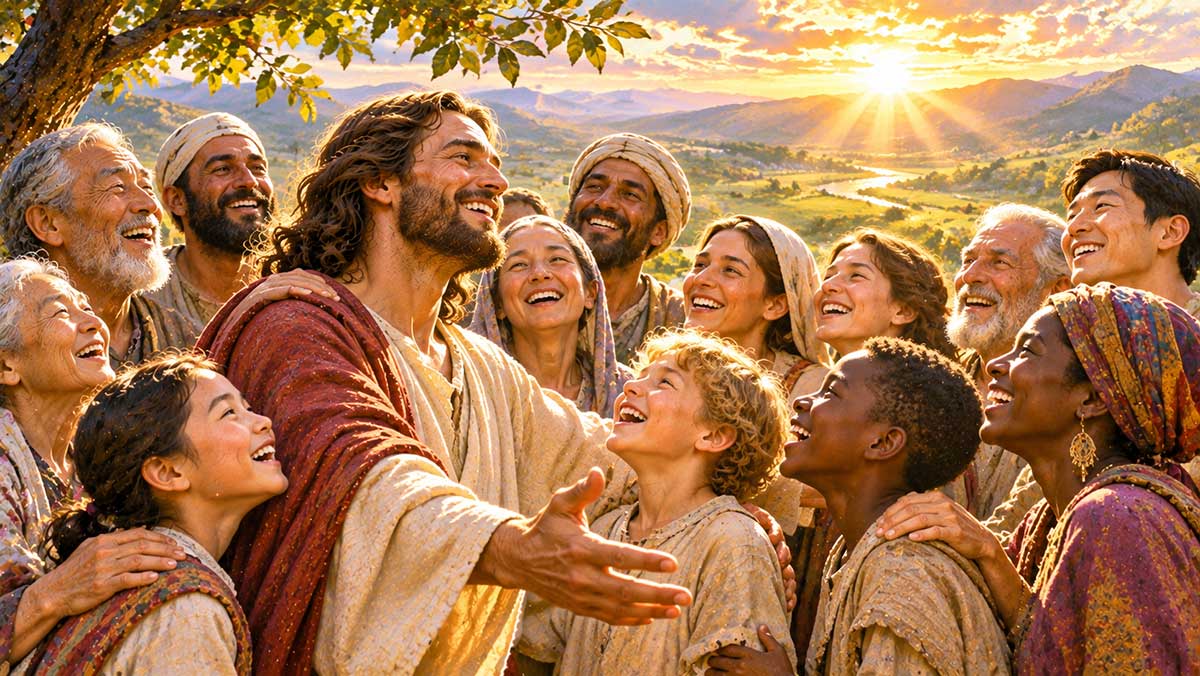
Question 1: Jesus, What Did Your Heavenly Father Truly Want When He Created Humanity?
Nick Sasaki Jesus, before we talk about your life, your mission, or the cross, I want to go much further back.
I want to go all the way to the beginning.
When I read Genesis, I see God creating the heavens and the earth, the oceans, the mountains, the animals, and finally human beings.
And after creating humanity, God blesses Adam and Eve.
For a long time, I thought of creation mainly as an expression of God's greatness.
But now I wonder whether there was something much more personal behind it.
I have five children. When I think about what makes me happy as a father, it isn't simply that my children respect me or listen to me.
I want them to be happy. I want them to experience love. I want them to have meaningful relationships and lives filled with joy.
Sometimes, just seeing one of my children genuinely happy is enough to make me happy.
And that makes me wonder about God.
Jesus, when your Heavenly Father created human beings, what was He hoping to experience?
Was He looking for creatures who would worship Him?
Or was He hoping to have children He could love, children who would grow up and share His happiness?
Jesus Nick, you have begun with a question that reaches into the heart of everything we will discuss.
When people think about God, they often begin with His greatness.
They imagine the Creator of the universe, the One who commands the stars, the One whose wisdom exceeds human comprehension.
There is truth in recognizing God's greatness.
But when I taught my disciples how to pray, I did not begin by asking them to contemplate the distance between themselves and the Creator.
I taught them to say, "Our Father."
Consider what that means.
A king may have subjects who obey him. A master may have servants who carry out his instructions.
But a father has a different relationship with his children.
His concern reaches beyond their obedience.
He cares about who they become.
He rejoices when they grow in wisdom, compassion, and love.
And when they suffer, their suffering matters to him.
You spoke about your children. Let me ask you something.
When your first child was born, did you look at that child and wonder how much honor the child would bring you?
Nick Sasaki (laughing softly) No, of course not.
I was just amazed.
Here was this tiny human being.
I couldn't believe that I was holding my own child.
Jesus And what did you want for that child?
Nick Sasaki I wanted her to be healthy, happy, and loved.
I wanted her to have a wonderful life.
Jesus Before she could speak, before she could obey your instructions, before she could accomplish anything, you already loved her.
Nick Sasaki Yes.
Jesus Then you have experienced something that may help you contemplate the Father's love.
Love does not begin when the beloved becomes useful.
It does not begin when the beloved proves worthy.
A child is loved before the child has accomplished anything.
When I spoke about the Father who knows what His children need before they ask, I wanted people to recognize a love that precedes their achievements.
When I spoke about the shepherd searching for one lost sheep, I wanted them to see that no individual was insignificant.
And when I spoke about the father running to embrace his returning son, I wanted them to recognize the joy of restored love.
Nick Sasaki That changes the way I think about creation.
God didn't create us merely to test whether we would obey Him.
He wanted a relationship.
Jesus A relationship of love cannot be reduced to a test.
Obedience matters, but obedience without love does not express the fullness of a relationship.
Think of a child who follows every instruction because he is terrified of his father.
Would you call that the ideal relationship between parent and child?
Nick Sasaki No. That would make me terribly sad.
I wouldn't want my children to be afraid of me.
I would want them to trust me.
Jesus And would you want them to remain children forever, unable to make decisions, unable to love others, unable to develop their own character?
Nick Sasaki No. I want them to grow into mature, loving adults.
Jesus Then consider the meaning of spiritual maturity.
If humanity was created for communion with God, perhaps maturity is not merely learning more about God.
It is becoming capable of expressing the love that comes from God.
A child receives love.
A mature person learns to give love freely.
And love becomes richer when it is shared.
Nick Sasaki Jesus, I think this is where the meaning of salvation begins to change for me.
If God's original desire was to have loving children, then salvation must mean restoring that relationship.
Not simply escaping punishment.
Jesus The image of returning home can help you understand reconciliation.
But there is something else.
When a lost child returns home, the story does not end at the doorway.
The child must learn to live in the household again.
To trust.
To forgive.
To love the other members of the family.
The restoration of a relationship is not merely a declaration.
It becomes a way of life.
Nick Sasaki So God's original dream was not just that each person would have a relationship with Him.
It was that His children would love one another.
Jesus Remember the two commandments I placed together.
Love God.
Love your neighbor.
If the Father loves all His children, how could love for the Father remain separate from love for those children?
Nick Sasaki (quietly) Then perhaps God's greatest happiness is seeing His children love each other.
Jesus Think about what brings you joy when your own children care for one another.
Nick Sasaki That's true.
When I see my children helping each other, or laughing together, it means more to me than almost anything.
And when they're fighting or hurting each other, that hurts me too.
Jesus Then let that experience deepen your compassion.
When you look at another human being, consider that you are looking at someone whose life matters to the Father.
Even someone who does not share your beliefs.
Even someone whose choices you struggle to understand.
Even someone you have called an enemy.
Nick Sasaki Jesus, I think I'm beginning to see why you taught people to love their enemies.
If God is the Father of all humanity, then even my enemy is someone God loves.
Jesus And that recognition changes what love asks of you.
It does not mean approving every action.
It does not mean abandoning justice.
It means refusing to forget the humanity of the person before you.
Nick Sasaki Then God's original dream must have been much bigger than a beautiful garden.
It was a world where every human being knew they were loved, and where that love shaped every relationship.
Jesus That is a meaningful way to contemplate the Kingdom of God.
But now, Nick, let us consider the place where human beings first learn what love means.
The family.
Question 2: Was the Family Meant to Be the Place Where God's Love Becomes Complete?
Nick Sasaki Jesus, this is something I've been thinking about for a long time.
Genesis says God created humanity male and female.
Then God said it was not good for man to be alone.
And Adam and Eve were blessed to be fruitful and multiply.
I don't think those details are accidental.
I believe God wanted human beings to experience different kinds of love through the family.
First, we experience love as children.
Then we learn love through brothers and sisters.
Later, a man and woman can unite as husband and wife.
And when they become parents, they experience another dimension of love.
When I look at that progression, I wonder whether the family was intended to be the place where God's love becomes fully expressed.
What do you think?
Jesus Nick, consider how different relationships teach different expressions of love.
A child begins life dependent on the care of others.
Before the child can understand the meaning of sacrifice, someone has already sacrificed for that child.
Before the child can express gratitude, someone has already given love.
As the child grows, relationships become more complex.
Brothers and sisters learn that the world does not revolve around one person.
They learn to share attention, possessions, and affection.
They encounter jealousy, competition, and misunderstanding.
But they can learn forgiveness and reconciliation.
Nick Sasaki That's certainly true.
Having five children, I've seen plenty of those lessons.
Sometimes I think siblings are each other's greatest teachers.
Jesus They can be.
And when two people enter marriage, they encounter another opportunity.
They are invited to love someone who is neither their parent nor their child, but a person with a distinct history, personality, hopes, and weaknesses.
Marriage can teach people to move beyond self-centered desire.
But that transformation does not happen automatically.
A wedding ceremony does not create mature love.
Love must be practiced.
Nick Sasaki That's an important distinction.
Sometimes people think getting married is the achievement itself.
But perhaps marriage is where the real work begins.
Jesus A relationship becomes meaningful through the love expressed within it.
A husband who treats his wife without kindness has not fulfilled love merely by becoming a husband.
A parent who uses authority to frighten a child has not fulfilled love merely by having children.
The form of a relationship matters, but its spirit matters deeply.
Nick Sasaki Then what about parental love?
I feel that becoming a parent changes something fundamental inside a person.
Before having children, you can think mostly about your own happiness.
But once you have a child, suddenly another person's happiness can become more important than your own.
Jesus Parenthood can reveal a dimension of self-giving love.
A parent may spend a sleepless night caring for a sick child.
The child may never know how much was sacrificed.
Yet the parent continues to care.
There is a kind of joy in giving that cannot be measured by what one receives in return.
But remember that people can express such love in many relationships.
Some never marry.
Some cannot have children.
Some lose their families.
Others dedicate their lives to caring for people who are not related to them.
Their capacity for love is not diminished by those circumstances.
Nick Sasaki I agree.
And yet, I still feel there is something profoundly significant about God creating Adam and Eve together.
It seems to suggest that the original ideal involved a man and woman united in love.
Jesus The creation account certainly gives marriage a significant place.
When I spoke about marriage, I referred to the beginning, to the creation of male and female and the union of two becoming one flesh.
But the meaning of love must never be reduced to possession or status.
Two people become truly united when they learn to care for one another as persons of equal dignity.
Nick Sasaki Jesus, may I ask something about God Himself?
If God is our Heavenly Father, then when a husband and wife genuinely love one another, does God experience joy through their love?
Jesus Think about your own experience as a father.
When your children grow into people who can love others deeply, does that bring you joy?
Nick Sasaki Absolutely.
Sometimes more than anything they could accomplish professionally.
Jesus Then you understand why love should not be treated as a minor part of spiritual life.
A person may possess great knowledge and still fail to love.
A person may achieve wealth and recognition yet remain unable to care for those closest to him.
What would such achievements mean if love were absent?
Nick Sasaki Very little.
Jesus This is why I spoke so often about the heart.
Not merely outward behavior.
Not merely religious status.
But the inner life from which actions arise.
Nick Sasaki Jesus, I want to connect this with your own life, but perhaps we should save that for later.
If the family was so central to God's original purpose, I wonder what that meant for you as the Second Adam.
Jesus We will come to that question.
But before we do, there is something you must consider.
What happens when love is damaged?
What happens when trust is broken?
What happens when the children of a loving parent turn away from one another?
Nick Sasaki That brings us to the Fall.
Jesus Yes.
And to the sorrow that can exist wherever there is love.
Question 3: Jesus, Did God Suffer When Adam and Eve Fell?
Nick Sasaki Jesus, I have always found the story of Adam and Eve heartbreaking.
People often talk about the Fall as the beginning of sin.
They talk about disobedience, punishment, and separation from God.
But I keep thinking about the Father's heart.
If God created Adam and Eve as His beloved children, and if He hoped they would grow into mature people capable of building a beautiful family, then their Fall must have been more than the violation of a commandment.
It must have been the loss of something God dearly loved.
As a father, I know that when a child makes a mistake, I don't simply think about the rule that was broken.
I worry about the child.
I worry about the consequences.
And sometimes I feel helpless because I cannot make another person choose the right path.
Did God experience sorrow when Adam and Eve turned away from Him?
Jesus Nick, the Scriptures often speak of God using the language of human relationships.
The prophets describe God's love for His people in terms of a father caring for a child.
In Hosea, God is portrayed as teaching Israel to walk, holding the child in His arms, and caring for those who did not recognize the source of that care.
There is tenderness in that image.
And there is sorrow.
Nick Sasaki I remember that passage.
It sounds almost like a parent remembering when a child was very young.
Jesus Yes.
And consider the father in the parable of the lost son.
The younger son leaves home.
He wastes what he has received.
He experiences hunger and humiliation.
But when he returns, the father does not stand at a distance demanding that the son first prove his worth.
He runs to meet him.
Nick Sasaki I love that story.
But something strikes me now.
We usually focus on the son.
His mistakes.
His suffering.
His return.
But what about the father during all the time the son was gone?
Jesus That is a question worth asking.
Nick Sasaki He must have missed his son.
Perhaps every morning he looked down the road.
Perhaps every evening he wondered whether his son was hungry or cold.
Perhaps he worried that the son might never come home.
Jesus The parable does not describe every day of the father's waiting.
But the welcome reveals the depth of his love.
Nick Sasaki Jesus, that makes me think about God in a different way.
If humanity has been separated from God for thousands of years, perhaps we have spent those thousands of years asking God to comfort us without considering His longing for His children.
Jesus The language of longing can help you contemplate the seriousness of separation.
But remember that God is not simply a human parent enlarged to infinite size.
The Scriptures speak of His faithfulness, wisdom, and steadfast love in ways that exceed human limitations.
Still, the image of a loving father can teach you something essential.
Love does not become indifferent simply when the beloved turns away.
Nick Sasaki Then could we say that the history of salvation is the history of God trying to bring His children home?
Jesus That image expresses an important part of reconciliation.
But there is another dimension.
The lost son must learn to live as a son again.
And the older brother must learn to rejoice that his brother has returned.
Nick Sasaki That's interesting.
The older brother was physically at home, but perhaps his heart was far from his father.
Jesus Exactly.
He obeyed.
He worked.
He remained.
Yet he struggled to share his father's joy.
Nick Sasaki So being close to God isn't simply about following religious rules.
It's about sharing God's heart.
Jesus Consider how easily people can become concerned with proving their own righteousness.
They may obey outwardly and still look upon others with contempt.
They may speak about God's love and refuse to forgive.
They may defend religious traditions and forget the people those traditions are meant to serve.
Nick Sasaki Jesus, is that part of what you were trying to change when you came?
You wanted people to understand the Father's heart, not simply obey commandments out of fear.
Jesus I wanted people to love God with all their hearts and to love their neighbors as themselves.
Those commandments are not separate from the law's deepest purpose.
They express its heart.
Nick Sasaki Then perhaps the tragedy of the Fall was that human beings lost their ability to love in the way God intended.
They became separated from God, and then they began hurting one another.
Jesus The story of Genesis moves quickly from the alienation of Adam and Eve to the violence between Cain and Abel.
That progression is worth considering.
Broken relationships do not remain isolated.
They can spread through families and communities.
Nick Sasaki That's true.
And the reverse should be possible too.
If love is restored in one family, perhaps it can spread outward.
From parents to children.
From brothers and sisters to neighbors.
From communities to nations.
Jesus Love can grow through the example of those who practice it.
A small act of reconciliation may influence more people than the person who begins it realizes.
Nick Sasaki Jesus, I think I'm beginning to understand why God's original dream and the salvation of humanity might be the same thing.
God wanted a world of love.
Human beings turned away from that love.
And salvation means returning to the relationship God intended from the beginning.
Jesus That is a meaningful way to describe the restoration of love.
But Nick, I want you to consider something.
If you truly believe that God loves every human being as His child, what does that mean for the way you treat someone you dislike?
Nick Sasaki It means I cannot simply dismiss that person.
Even if I disagree with them.
Even if they have hurt me.
I have to recognize that they matter to God.
Jesus And what does it mean for the way you treat your own family?
Nick Sasaki (pausing) It means I have to practice that love at home.
Not just talk about it.
I suppose it's easier to speak about loving humanity than to love someone who has disappointed you personally.
Jesus Sometimes the people closest to you reveal how much more you have to learn about love.
They know your weaknesses.
They can hurt you deeply.
And you can hurt them.
But those relationships can become places where patience, humility, and forgiveness grow.
Nick Sasaki Jesus, may I share something?
When I think about God as our Father, I sometimes feel sad.
Not just sad for humanity.
Sad for God.
I think about how much happiness He must have wanted to share with His children.
And I wonder how much of that happiness has been lost through human suffering and conflict.
I imagine a father watching his children fight, knowing they could have loved one another.
And I wonder whether God has been waiting all this time for His children to finally understand His heart.
Jesus Nick, what happens in your own heart when you think about the Father in that way?
Nick Sasaki I feel that I want to comfort Him.
I know that sounds strange.
Usually we ask God to comfort us.
But I want to do something that makes Him happy.
I want Him to look at humanity and feel joy.
I want Him to see His children loving one another.
Jesus Then let that desire become part of how you live.
If you want to honor the Father's love, begin by loving those whom He loves.
If you want to bring peace, practice reconciliation.
If you want families to become places of joy, care for the relationships entrusted to you.
Nick Sasaki (quietly) Jesus, I think that is what I have been trying to understand.
God didn't create humanity because He needed servants.
He wanted children.
He wanted love.
He wanted a family.
And when that love was lost, He did not stop loving us.
Jesus The image of the Father welcoming the lost child reminds us that love continues to seek reconciliation.
Nick Sasaki Then Jesus, I want to ask something that has been growing in my heart throughout this conversation.
If God's original dream was a world of love centered on the family, and if humanity lost that dream through the Fall, then someone had to come and restore it.
Someone had to show what a human being fully united with God could become.
And Paul called you the last Adam.
(He looks at Jesus.)
Jesus, when you came into this world as the Second Adam, were you hoping to fulfill the very dream that Adam and Eve had failed to realize?
And if so, did that dream include a life of love, marriage, children, and a family of your own?
Jesus Nick, now we are approaching a question that reaches into the meaning of my mission and the mystery of what it means to be fully human.
You have spoken about the Father's dream.
You have spoken about the happiness He intended for His children.
Now you are asking what that dream meant for my own life.
Before we answer, I would like you to think carefully about one thing.
When you imagine the life I might have lived, are you thinking primarily about the happiness I might have received?
Or about the love I might have been able to give?
Nick Sasaki (after a long pause) I think both, Jesus.
And perhaps that's why this question means so much to me.
I don't believe those two things were meant to be separated.
I think your happiness, your Father's happiness, and humanity's salvation could have been part of the same beautiful dream.
And I want to know whether that was the life you came to live.
This fictional conversation draws on Genesis 1-4, Hosea 11, Luke 15, Matthew 22, John 15, Romans 5, and 1 Corinthians 15. The family-centered interpretation of the Second Adam and the imagined emotional reflections are theological and creative explorations, not documented statements by Jesus.
Final Thoughts: What If Understanding Jesus Means Understanding God's Dream?

We began this conversation with a question that seemed almost too personal to ask.
What kind of life did Jesus want to live?
For centuries, Christians have expressed gratitude for his sacrifice. They have contemplated his suffering, celebrated his resurrection, and sought salvation through his teachings and example.
Yet this imaginary conversation invited us to consider another dimension of his life: the possibility that Jesus carried a dream for humanity that was inseparable from his love for his Heavenly Father.
The first question took us back to creation.
Before sin, before suffering, before the need for salvation, what did God want?
Perhaps the answer begins with love.
A Father who desires to share joy with His children. Human beings growing in love, forming meaningful relationships, and creating families where kindness, trust, and compassion become part of everyday life.
From that perspective, salvation becomes more than the forgiveness of wrongdoing.
It becomes the restoration of what love was originally meant to accomplish.
The second question brought us to Jesus as the Second Adam.
If Adam and Eve were meant to establish a family centered on God's love, could Jesus have come to fulfill that original ideal?
This possibility raises questions about marriage, parenthood, and the ordinary happiness Jesus might have experienced.
The Gospels do not tell us that Jesus planned to marry or have children. The imagined possibility should not be confused with historical evidence.
Yet the question itself encourages us to consider something that can be overlooked when discussing great religious figures.
Their humanity.
Their friendships.
Their joys.
Their experiences of love and sorrow.
The third question concerned the people surrounding Jesus.
Mary, John the Baptist, Peter, the disciples, and the religious communities of his time each had their own expectations, responsibilities, and limitations.
The conversation reminded us how easily sincere people can misunderstand one another.
It invited us to approach those misunderstandings with compassion rather than blame.
Then came Gethsemane.
Perhaps the most moving part of our conversation was not the speculation about what Jesus might have lost.
It was the realization that, during a moment of profound anguish, Jesus asked his friends to remain with him.
And they fell asleep.
There is something painfully human about that scene.
Sometimes love does not require an explanation.
Sometimes it requires us to remain present.
To listen.
To recognize another person's sorrow without rushing to turn it into a lesson.
But the conversation did not end in the garden.
It returned to the question that began everything.
Can humanity still fulfill God's original dream?
If God is the Parent of all humanity, then perhaps our greatest responsibility is to learn to recognize one another as members of the same human family.
That does not mean abandoning our cultures, religions, or convictions.
It means refusing to let those differences erase another person's dignity.
It means practicing reconciliation without ignoring injustice.
It means recognizing that love begins with the relationships closest to us and grows through our willingness to care for others.
For me, this conversation leaves a deeply personal question.
I cannot return to Gethsemane and sit beside Jesus.
I cannot change the events of two thousand years ago.
And I cannot know with certainty what kind of personal future Jesus may have envisioned.
But I can ask whether I am living in a way that reflects the love he taught.
Am I listening to my family?
Am I trying to understand people who disagree with me?
Am I helping bring people together, or contributing to their division?
Am I treating God's children as people worthy of love?
Perhaps the most meaningful way to honor Jesus is not simply to contemplate his suffering, but to take seriously the love he demonstrated.
And perhaps one of the greatest gifts we can offer our Heavenly Father is a world in which His children begin to recognize one another.
Not as strangers.
Not as enemies.
But as brothers and sisters.
One Family Under God.
The question that began this interview was, "Jesus, what kind of life did you want to live?"
The question I carry away is different.
"Knowing what Jesus lived for, what kind of life will I choose to live?"
Disclaimer: These final reflections arise from a fictional conversation exploring biblical themes, imagined emotions, and a family-centered interpretation of Jesus' mission. They are not historical testimony or a claim to speak on behalf of Jesus. Christian traditions differ significantly concerning the Second Adam, the purpose of the crucifixion, and the relationship between salvation and God's original purpose of creation.
What if Jesus Christ came into this world not to die, but to live, to love, and to fulfill a dream that began with the creation of humanity?
For two thousand years, Christians have contemplated the meaning of Jesus' crucifixion. His suffering, sacrifice, and resurrection stand at the center of Christian faith.
But there is another question, one that is rarely asked.
What kind of life did Jesus himself hope to live?
When the Apostle Paul described Jesus as the last Adam in 1 Corinthians 15, he connected Christ's mission to the very beginning of human history.
And in Genesis 1 and 2, God creates man and woman, blesses them, and establishes the foundation of human family life.
What if these two stories are more deeply connected than we have traditionally considered?
What if Jesus came as the Second Adam to restore God's original ideal of love, marriage, family, and human happiness?
Could Jesus have hoped to marry, raise children, and establish a family that would become the foundation of a world united in God's love?
And if such a future was possible, what might he have felt when the path before him led instead to the cross?
In this deeply personal imaginary interview, Nick Sasaki sits down with Jesus Christ to explore questions that reach beyond familiar theological explanations.
Their conversation begins with God's original dream for humanity, moves through Jesus' possible hopes as the Second Adam, and examines the painful misunderstandings surrounding his ministry.
Then comes Gethsemane.
In Matthew 26:36-46, Jesus prays in anguish, asking whether the cup before him might pass.
What was happening in his heart?
Was he grieving only his approaching death? Or might his sorrow have included a dream for humanity that remained unfulfilled?
And perhaps the most intimate question of all: Did Jesus want to bring happiness to his Heavenly Father?
This is not simply a conversation about what Jesus did for humanity.
It is an invitation to consider what Jesus may have wanted for God, for the people he loved, and for the world he hoped to see.
Disclaimer: This is a fictional interview created for spiritual and theological reflection. The dialogue does not represent actual statements by Jesus Christ. The hypothesis that Jesus originally intended to marry and establish an ideal family reflects a particular theological interpretation associated with Unification theology, not an established historical fact or a doctrine shared by all Christian traditions.
Final Thoughts: What If Understanding Jesus Means Understanding God's Dream?
We began this conversation with a question that seemed almost too personal to ask.
What kind of life did Jesus want to live?
For centuries, Christians have expressed gratitude for his sacrifice. They have contemplated his suffering, celebrated his resurrection, and sought salvation through his teachings and example.
Yet this imaginary conversation invited us to consider another dimension of his life: the possibility that Jesus carried a dream for humanity that was inseparable from his love for his Heavenly Father.
The first question took us back to creation.
Before sin, before suffering, before the need for salvation, what did God want?
Perhaps the answer begins with love.
A Father who desires to share joy with His children. Human beings growing in love, forming meaningful relationships, and creating families where kindness, trust, and compassion become part of everyday life.
From that perspective, salvation becomes more than the forgiveness of wrongdoing.
It becomes the restoration of what love was originally meant to accomplish.
The second question brought us to Jesus as the Second Adam.
If Adam and Eve were meant to establish a family centered on God's love, could Jesus have come to fulfill that original ideal?
This possibility raises questions about marriage, parenthood, and the ordinary happiness Jesus might have experienced.
The Gospels do not tell us that Jesus planned to marry or have children. The imagined possibility should not be confused with historical evidence.
Yet the question itself encourages us to consider something that can be overlooked when discussing great religious figures.
Their humanity.
Their friendships.
Their joys.
Their experiences of love and sorrow.
The third question concerned the people surrounding Jesus.
Mary, John the Baptist, Peter, the disciples, and the religious communities of his time each had their own expectations, responsibilities, and limitations.
The conversation reminded us how easily sincere people can misunderstand one another.
It invited us to approach those misunderstandings with compassion rather than blame.
Then came Gethsemane.
Perhaps the most moving part of our conversation was not the speculation about what Jesus might have lost.
It was the realization that, during a moment of profound anguish, Jesus asked his friends to remain with him.
And they fell asleep.
There is something painfully human about that scene.
Sometimes love does not require an explanation.
Sometimes it requires us to remain present.
To listen.
To recognize another person's sorrow without rushing to turn it into a lesson.
But the conversation did not end in the garden.
It returned to the question that began everything.
Can humanity still fulfill God's original dream?
If God is the Parent of all humanity, then perhaps our greatest responsibility is to learn to recognize one another as members of the same human family.
That does not mean abandoning our cultures, religions, or convictions.
It means refusing to let those differences erase another person's dignity.
It means practicing reconciliation without ignoring injustice.
It means recognizing that love begins with the relationships closest to us and grows through our willingness to care for others.
For me, this conversation leaves a deeply personal question.
I cannot return to Gethsemane and sit beside Jesus.
I cannot change the events of two thousand years ago.
And I cannot know with certainty what kind of personal future Jesus may have envisioned.
But I can ask whether I am living in a way that reflects the love he taught.
Am I listening to my family?
Am I trying to understand people who disagree with me?
Am I helping bring people together, or contributing to their division?
Am I treating God's children as people worthy of love?
Perhaps the most meaningful way to honor Jesus is not simply to contemplate his suffering, but to take seriously the love he demonstrated.
And perhaps one of the greatest gifts we can offer our Heavenly Father is a world in which His children begin to recognize one another.
Not as strangers.
Not as enemies.
But as brothers and sisters.
One Family Under God.
The question that began this interview was, "Jesus, what kind of life did you want to live?"
The question I carry away is different.
"Knowing what Jesus lived for, what kind of life will I choose to live?"
Disclaimer: These final reflections arise from a fictional conversation exploring biblical themes, imagined emotions, and a family-centered interpretation of Jesus' mission. They are not historical testimony or a claim to speak on behalf of Jesus. Christian traditions differ significantly concerning the Second Adam, the purpose of the crucifixion, and the relationship between salvation and God's original purpose of creation.
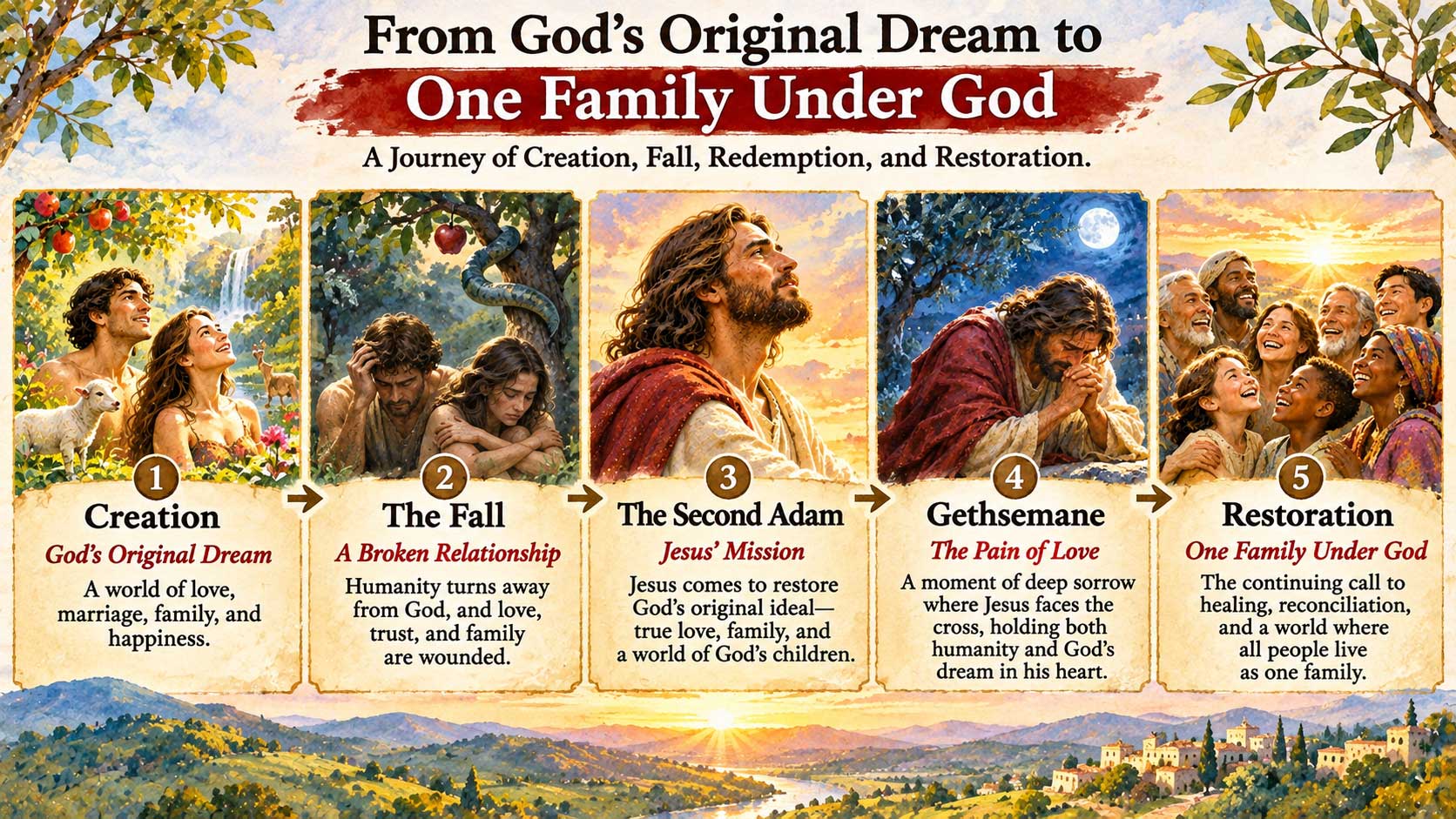
Short Bios:
Jesus of Nazareth was a first-century Jewish religious teacher whose life and teachings became the foundation of Christianity. Christians believe he is the Messiah and Son of God, whose death and resurrection are central to humanity's salvation. His teachings on love, forgiveness, compassion, the Kingdom of God, and reconciliation have influenced religious and ethical thought for approximately two thousand years. This imaginary interview explores his life through biblical accounts and theological interpretations, including the Second Adam and the possibility of restoring God's original ideal of family and love. Learn more through Encyclopaedia Britannica's biography of Jesus.
Nick Sasaki is the creator of ImaginaryTalks.com, a platform that brings historical figures, spiritual teachers, philosophers, and influential thinkers together through imagined conversations. Drawing on his experiences in Japan and the United States, his interests include spirituality, human relationships, reconciliation, and the possibility of building a more peaceful world. Through ImaginaryTalks, he seeks to encourage meaningful reflection, deeper compassion, and greater understanding across religious, cultural, and national boundaries. His guiding vision is a world in which humanity recognizes itself as One Family Under God.
Leave a Reply